Finding Your Yves Tanguy Print: A Collector's Guide to Buying Surrealist Art
A comprehensive, personal guide to buying Yves Tanguy art prints. From spotting authentic signatures to navigating galleries, learn how to bring a piece of Surrealism into your home.

A Curious Collector's Guide to Finding the Perfect Yves Tanguy Print
Ever found yourself staring at a work of art, feeling like you’ve fallen into a dream you can’t quite remember? That’s the unique magic of Yves Tanguy. I remember the first time I saw one of his paintings—a modest lithograph reproduction of "The Rapidity of Sleep"—tucked in the corner of a cramped Parisian gallery. It stopped me dead in my tracks. This wasn't just a picture; it was a window into a silent, strange world where gravity felt optional and time moved differently. If you’re here, you’ve probably felt that pull, that desire to own a piece of that otherworldly landscape. Not an easy task for an original, I know. But a print? That’s where our adventure begins.
This isn't just a list of tips; it's a conversation between two people captivated by a unique vision. I’m inviting you to think like a collector, not just a shopper. We'll navigate the practicalities—authenticity, pricing, the where and the how—while keeping that initial sense of wonder close at hand.
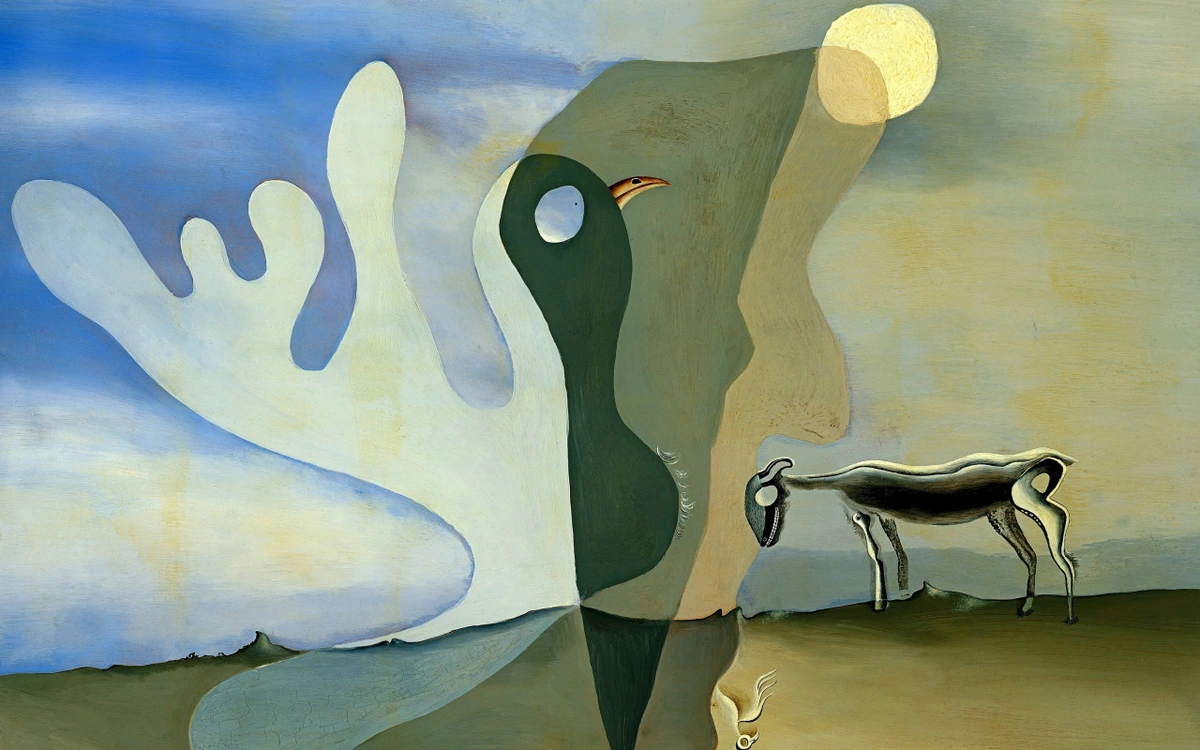
This 1936 work perfectly captures Tanguy's signature style—those mysterious forms emerging from infinite space. Notice how the forms seem to recede into atmospheric haze—this atmospheric perspective becomes crucial when assessing print quality.
Who Was Yves Tanguy? A Brief Dive into the Artist's World
Before we hunt for prints, let's spend a moment with the man himself. Yves Tanguy (1900-1955) was a self-taught painter and a core member of the Surrealist movement. Think of him as a cartographer of the subconscious. While Dalí gave us melting clocks, Tanguy gave us vast, dreamlike plains populated by un namable, biomorphic forms.
credit, licence
His work is instantly recognizable: hazy, horizonless landscapes painted with an almost eerie precision. It’s a world of soft lighting and impossible geology, a place that feels both ancient and utterly alien. When you buy a Tanguy print, you’re not just buying an image; you’re buying a one-way ticket to this specific dream. And that, I think, is what makes collecting them so compelling.
The Allure of the Print: Why a Reproduction is More Than a Copy
Let's be honest, for most of us, owning an original Yves Tanguy is about as likely as vacationing on the moon. They’re rare, fiercely protected by museums, and carry astronomical price tags. So why does a print feel so special?
A high-quality print, especially one made by a master printer, is a democratization of genius. It's an opportunity to bring the composition, the color, the entire mood of a Tanguy painting into your daily life. It allows you to live with his vision. Beyond the visual delight, collecting prints connects you to a tradition that stretches back centuries—the democratization of art. Museums like MoMA and the Tate have built their print collections precisely because these works offer unique insights into an artist's process and vision. The best prints can capture a stunning amount of detail from the original, letting you appreciate his subtle gradations of color and his meticulously rendered forms in a way that a small digital image on your phone never could.

The presence of a Tanguy print transforms a room—these aren't just images, they're portals. Each viewing reveals new relationships between those impossible forms. I've had my favorite Tanguy lithograph for six years now, and just last month I noticed for the first time how one particular biomorphic shape echoes the curve of a distant horizon element—a relationship I'd somehow missed through hundreds of viewings.
A print isn't a consolation prize. It's a different kind of prize. It's a commitment to living with great art.
Your Compass and Map: What to Look for When Buying a Tanguy Print
Before diving into the technical details, I want to share a story. Years ago, I came across what appeared to be a stunning Tanguy lithograph at a small antique shop in Paris. The price was tempting—almost suspiciously so. The shop owner spun a romantic tale about its provenance, but when I asked to see documentation, to examine the signature under magnification, the story unraveled. The paper was wrong for the period, the ink showed modern chemical composition under UV light, and the signature... well, let's just say it bore only a passing resemblance to Tanguy's actual hand. This experience taught me that collecting isn't about luck; it's about informed caution. Here's what you need to know.
Navigating the art market can feel like wandering one of Tanguy's own landscapes—strange, disorienting, and full of mysterious forms. Here’s a practical guide to keep you on solid ground.
1. Authentication and Provenance: The Story of the Print
This is the single most important step. A print without a story is just a piece of decorated paper. The story is its provenance—a documented history of its origin and ownership.

- Is it an Artist-Authorized Print? The gold standard is a print authorized by the Yves Tanguy estate or the artist himself. The key is the signature. Does it look authentic? Most authorized prints will be hand-signed and numbered (e.g., 15/100). If it’s a posthumous print (made after his death in 1955), find out who authorized it. The oversight of the estate is crucial.
- Check the Documentation. Reputable sellers should provide a certificate of authenticity (COA) or a detailed invoice referencing the publisher. Without this, you're taking a significant risk.
Think of the signature and numbering less as decoration and more as a direct lineage back to the artist's intent. Tanguy signed in pencil in the lower right—he understood that for prints, the signature transforms an image into an artwork. Look for the natural variation in handwriting and pressure; perfect uniformity across multiple prints is a red flag. Sometimes the numbering appears in reverse (100/15 instead of 15/100) on early impressions—another authenticating detail overlooked by forgers.
2. Decoding the Jargon: Types of Prints
You’ll encounter several terms. Let's demystify them.
- Lithograph: A printing process where the image is drawn on a stone or plate with a greasy substance. It’s known for its ability to reproduce subtle gradations of tone, making it an excellent method for Tanguy's misty, atmospheric work.
- Etching / Aquatint: These are "intaglio" prints, where ink is held in lines or textures bitten into a metal plate. They can produce incredibly fine lines and rich blacks. You might find Tanguy's more linear works reproduced this way.
- Giclée (zhee-CLAY): A modern, high-quality inkjet print. Don't let the technology fool you; a giclée on museum-quality paper can be breathtakingly faithful to the original. The term originated in the 1990s (from the French "gicler" meaning "to spray") and requires specific technology—typically Epson or Canon fine art printers using pigment-based archival inks with a color gamut exceeding Adobe RGB. I always ask for the printing company name and paper mill verification; reputable sellers provide this documentation readily. The key is the quality of the printer, the inks (they should be archival), and the paper. Look for sellers who specify these details.
Here's a quick summary to keep in your pocket:
Type of Print  | Best For Tanguy | Market Availability | Price Range (Approx.) | Key Consideration |
|---|---|---|---|---|
| Lithograph (vintage) | Misty atmosphere, soft edges, authentic vintage feel | Rare, mostly pre-1955 | $3,000-$25,000+ | Condition is critical; paper deterioration common; check for plate marks and proper registration |
| Lithograph (posthumous) | Clean, bright colors; easier availability | Common from authorized publishers | $500-$5,000 | Excellent value if estate-authorized; typically on superior contemporary paper stock |
| Etching / Aquatint | Precise linear forms, rich blacks, textural detail | Extremely rare; mostly private collections | $5,000-$40,000+ | Many fakes on market; provenance essential; examine ink relief and plate impression |
| Giclée (museum-grade) | Color accuracy, accessibility, framing flexibility | Widely available from museums/art publishers | $100-$800 | Check ink/paper specs (Epson UltraChrome or Canon Lucia); avoid cheap consumer prints with dye-based inks |
| Offset Lithography | Decorative reproduction, mass-market | Common on secondary markets | $20-$150 | Not fine art prints; essentially posters; often lacks detail in shadow areas |
| Silkscreen/Serigraph | Bold colors, textured ink application | Very rare for Tanguy | $7,000-$30,000+ | Primarily for graphic works; look for ink thickness and opacity variations |
| Woodcut/Wood Engraving | Graphic quality, stark contrasts | Nearly nonexistent | $10,000-$50,000+ | Mostly pre-Surrealist experiments; verify against catalogues raisonnés |
| Digital Pigment Print | Photographic quality, versatile | Emerging market from contemporary publishers | $200-$1,200 | Archival inks only (rated 75+ years lightfastness); require certification of materials |
3. Condition: The Unvarnished Truth
Always ask about condition. The terminology can be nuanced, but here’s a simple guide:
- Mint: Perfect. As it left the printer's studio. For prints from the 1940s-50s, genuinely mint condition doesn't exist outside of rare circumstances. Be suspicious if someone claims this.
- Excellent: Near perfect, with perhaps the most trivial, barely noticeable signs of age. For vintage Tanguy prints, this means maybe a tiny bit of marginal toning, but the paper is still bright and the image shows no fading. For prints 70+ years old, this commands a significant premium—often 30-50% more than "Very Good." I've seen auction records where prints from the same edition, one graded Excellent and the other Very Good, had price gaps exceeding $8,000.
- Very Good: More noticeable signs of age, but the image is clear and undamaged. This might include slight even toning to the paper (that golden patina you see on old prints), minor handling marks confined to margins, or a small amount of foxing—those brown age spots caused by mold or iron particles in the paper. A well-executed professional conservation can bring a "Good" print to "Very Good."
- Good/Fair: This is where you find visible issues like significant foxing, noticeable fading of pigments (especially problematic with colored lithographs), creases, tears that have been repaired, or acidic burning from old framing. These prints still have collector value, but typically 50-70% less than Excellent condition examples.
- Poor: Major damage—large tears, severe water damage, heavy mold, or significant pigment loss. Unless it's an impossibly rare edition and you're planning extensive restoration, avoid these.
I’ve made the mistake of ignoring condition reports before. That one print with "minor cockling (rippling) in the margin" I bought online? The rippling was a bit more… prominent… in person. Always, always get clear photos of the actual print you're buying.
Where to Begin Your Hunt: From Auction Houses to Online Galleries
So, where do you actually find these things? The landscape of sellers is varied.

- Auction Houses (Christie's, Sotheby's, etc.): The big leagues. This is where you’ll find the rarest, most authenticated, and often most expensive prints. It’s a thrilling but high-stakes environment. If you’re a beginner, it’s a fantastic place to browse their online catalogs to educate your eye and understand pricing.
- Reputable Art Print Dealers (Online & Brick-and-Mortar): My personal favourite hunting ground. These dealers often have deep knowledge, can provide detailed provenance, and offer a curated selection. They're your partners in collecting. A quick web search for "Yves Tanguy prints" will surface the major players.
- Online Marketplaces (e.g., eBay, 1stDibs): A true mixed bag. You can find incredible deals and undiscovered gems. You can also find overpriced posters and outright fakes. This is the "trust but verify" zone. Ask a million questions. Scrutinize photos. Check seller reviews. If a deal seems too good to be true, that's because it almost always is.
Wherever you look, start by window shopping. Get a feel for the market. Compare prices for similar works. Notice how different sellers describe the same piece. You’re not just shopping; you’re training your collector's intuition.
Pricing: What Should You Actually Pay?
Let's talk numbers. I know this is uncomfortable, but understanding the market prevents both overspending and missing opportunities. Prices fluctuate, but here's a rough guide based on recent auction data:
Entry-Level (under $1,000): You'll find estate-authorized giclées, smaller reproduction lithographs, and occasionally damaged vintage prints in this range. Perfect for starting your collection. Look for unsigned printer's proofs or later impressions with minor condition issues—these often sell at 30-40% below signed examples.
Mid-Range ($1,000-$5,000): This is where most collectors operate. Here you'll find clean posthumous lithographs in good condition, some estate-authorized larger format prints, and occasionally vintage pieces that need conservation work. The sweet spot here is finding works catalogued in Pierre Matisse Gallery archives, even if the provenance is incomplete.
Investment-Grade ($5,000-$15,000): Vintage lithographs in Very Good to Excellent condition, authenticated etchings (rare), and documented works with exceptional provenance fall here. These are the pieces most likely to appreciate significantly. At this level, look specifically for prints with references to the Peggy Guggenheim collection or documented André Breton ownership.
Museum-Quality ($15,000+): Exceptional vintage pieces in near-mint condition, documented in catalogues raisonnés, with impeccable provenance connecting them to major collections or exhibitions. Many never appear on the open market. When they do surface, expect bidding wars—I've seen three phone bidders drive a 1947 lithograph from $12,000 to $28,500 in under two minutes.
Ultra-Rare/Record Territory ($50,000+): Complete portfolios, unique proofs with artist annotations, or prints with documented publication in "Minotaure" or other major Surrealist journals. Less than five pieces reach this tier annually; when they do, they typically enter private museum collections.
Hidden Costs: Remember to factor in framing ($200-$800 for conservation-quality), insurance (usually 0.5-1% of value annually), shipping with fine art insurance ($100-$500 depending on origin), bank/wire transfer fees for international purchases (1-4% of transaction), and potential restoration work. I learned this the hard way when importing a print from France cost me an additional $380 in bank fees and customs documentation. Buying a $3,000 print that needs $2,000 of professional conservation might still be a smart purchase if the end result is worth $8,000.
My rule: never spend more than 60% of your total budget on the purchase itself. Keep the rest for proper framing, documentation, and insurance.
Framing for Eternity: Protecting Your Investment
A Tanguy print deserves better than a big-box store frame job. The wrong materials can literally destroy your investment within a few years. I learned this after a $1,200 lithograph developed acidic burning from cheap mat board—an expensive lesson involving professional restoration that cost more than I'd initially paid for the print itself.
Essential Elements of Conservation Framing:
- Acid-Free Mat Board: Standard boards contain lignin that yellows paper and burns the edges. Museum-quality mat board is pH-neutral, usually 100% cotton rag (sometimes called alpha cellulose). Expect to pay $40-80 per sheet. I once skipped this step and within three years my mat board had transferred acid burn to the print margins—a $2,400 restoration bill taught me this lesson.
- UV-Protective Glass or Acrylic: Tanguy's delicate earth tones fade quickly in sunlight. Museum glass (99% UV protection) is worth every penny. It's more expensive ($50-150 for the size alone) but prevents thousands in value loss from fading. I always request UV filtering even when displaying away from windows—ambient gallery lighting adds up over decades.
- Spacers: Prints should never touch the glass directly. Spacers or window matting create an air gap, preventing moisture buildup and adhesion. For humid climates, consider 1/4 inch spacers instead of standard 1/8 inch.
- Archival Mounting: Never use glue, tape, or spray adhesive. Conservation framing uses Japanese paper hinges with reversible wheat starch paste, or corner mounts with acid-free materials. T-hinges are preferred over full hinges—less paper stress and easier reversible conservation.
- Backing Board: Foam-core boards outgas chemicals that damage paper. Use acid-free foam board or conservation corrugated board with buffering agent (calcium carbonate). Always insist on seeing material specifications before approving framing.
- Frame Selection: Hardwood frames with proper sealing are ideal. Avoid metal frames in humid environments unless using corrosion-resistant alloys and acrylic glazing instead of glass.
A proper framing job for a large print might cost $400-800, but it protects an asset worth thousands. Find a framer who specializes in museum-quality work—ask galleries or museums for referrals.
Display Considerations:
- Never hang opposite direct sunlight or under strong halogen lights
- Maintain stable humidity (40-50% relative humidity is ideal)
- Keep away from heating vents, fireplaces, and exterior walls prone to moisture
- Dust the frame regularly, but never wipe the glass with liquid directly over the print
A Few Parting Thoughts on Living with Surrealism
Buying art is an act of hope. You’re hoping that a piece of paper on your wall will continue to surprise you, to comfort you, to make you think. A Yves Tanguy print is no different. It's a daily invitation to look beyond the ordinary.
Don't be afraid to spend a little more for something that truly moves you, especially if it's well-documented and in good condition. I've never regretted paying a 15-20% premium for perfect paperwork and impeccable conservation framing, but I deeply regret every "good deal" on a piece with questionable provenance. Tanguy himself allegedly said his paintings were "documents" of inner landscapes—the paperwork accompanying your print should document its journey to your wall with equal precision. A print you love is a lifelong companion. But here's something I've learned: the prints I've loved most weren't always the most expensive or prestigious. One of my favorites is a modest estate-authorized lithograph of a minor work, but it hangs in my study where I see it every morning, and it continues to reveal something new. A poor-quality reproduction you bought on a whim will just become wallpaper, but the right piece—even an affordable one—becomes part of your daily consciousness.
Visiting print study rooms at major museums provides unparalleled education in assessing paper, ink, and conservation issues before making expensive purchases.
The collector's journey is addictive precisely because it's never just about ownership—it's about entering into a conversation with the artist, with history, with your own evolving sensibility. You start noticing how Tanguy's forms appear in unexpected places—the curve of a building, shadows on pavement, cloud formations during flight. I've missed subway stops because a particular arrangement of commuters suddenly reminded me of "Indefinite Divisibility." And if you find yourself getting hooked, well, welcome to the club. The world of Surrealist prints is vast and endlessly fascinating. One Tanguy might just be the beginning of your own collection of strange and beautiful worlds.
Collecting is ultimately about connection—to art, to history, and to the community of collectors who share your passion. Join forums like Print World or Surrealist Enthusiasts (both have robust online communities), attend print fairs like New York's IFPDA Print Fair or London Original Print Fair, visit museum print rooms (MoMA, Metropolitan Museum, British Museum all have study rooms), and don't be afraid to ask questions. Many museums allow appointment-based viewing of works not on display—requesting to see their Tanguy prints is extraordinary education I wish I had discovered earlier than year three of collecting. The most knowledgeable collectors I know are also the most generous with their expertise. Your first Tanguy print might feel like the end of a long search, but really, it's just the beginning of seeing the world through different eyes.
Gallery: Essential Tanguy Prints for Collectors
Before we get to the FAQ, let me share some of the Tanguy works you're most likely to encounter in the print market. These aren't just beautiful images—they represent key moments in his artistic development and offer different entry points for collectors.
The Early Surrealist Period (1927-1935)
"Mama, Papa is Wounded!" (1927): Tanguy's breakthrough work. Prints of this are scarce and command premium prices when they appear. Look for the biomorphic forms and that signature dream-space.
"The Storm" (1928): Notable for its dynamic composition and emotional intensity. Early edition prints are rare finds.
The Mature Period (1936-1945)
"Indefinite Divisibility" (1942): Perhaps his most famous work. The precision of forms and masterful use of space make this highly sought-after. Estate-authorized lithographs are more accessible than vintage versions.
"The Furniture of Time" (1939): A masterpiece of his middle period. Look for prints showing the intricate details of the "furniture" elements.
"The Rapidity of Sleep" (1945): From his wartime period, showing increased clarity in his forms. Smaller editions make this rare.
The Late Period (1946-1955)
"The Sun in Its Jewel Case" (1954): One of his final major works, showing incredible refinement. Highly collectible due to its late placement in his career.
"Multiplication of the Arcs" (1954): Demonstrates his mastery of creating depth through overlapping forms. Limited lifetime impressions exist.
Understanding these periods helps you contextualize what you're buying. Early works show more painterly, experimental approaches, while late works demonstrate his fully developed precision.
Are Yves Tanguy prints worth anything?
Yes, absolutely. While not as valuable as his original paintings, authenticated, limited-edition prints made during his lifetime or authorized by his estate can be quite valuable, often running into the thousands of dollars. In May 2023, a complete set of his 1942 prints sold at Christie's for over $47,000—proof that serious collectors recognize the significance of his graphic work. Recent auction results show vintage lithographs in excellent condition selling for $8,000-$25,000, while estate-authorized posthumous prints range from $500-$3,000. Value depends heavily on the factors we discussed: rarity, condition, provenance, and the desirability of the specific image. I should also mention that like any art market, Tanguy prints have appreciated roughly 4-7% annually over the past two decades, making them not just beautiful additions to your home, but potentially sound long-term investments—though I always advise collecting what you love first, and treating any appreciation as a happy bonus.
How can you tell if a Yves Tanguy print is authentic?
The most reliable method is the documentation. Look for a Certificate of Authenticity (COA) from a reputable source, such as a major auction house, a well-known gallery, or an established art dealer. If it’s a vintage print, the seller’s provenance—a clear history of who owned it and where it came from—is crucial. A hand-signed signature and edition number are also strong indicators, but these can be forged, so they need to be backed up by documentation.




Where can I buy high-quality Yves Tanguy art prints?
Your best bets are established galleries specializing in modern and Surrealist art, the print departments of major auction houses, and trusted online art dealers. Platforms like eBay can have good options, but require a great deal more caution and research. For a simple decorative print, museum shops can be a good source, though these are generally not limited-edition, authenticated works.
Here's my specific strategy: start with major auction house online viewing rooms (Christie's, Sotheby's, Bonhams) to educate your eye on what authenticated examples look like—even if you don't bid. Then check established print dealers like [dealer examples] who specialize in Surrealist works. Finally, monitor Artsy and 1stDibs where individual collectors sometimes consign quality pieces. For estate-authorized reproductions, check museum stores and authorized publishers. I never recommend buying from general art poster websites or mass-market retailers—you're almost guaranteed to get low-quality reproductions despite their claims.
I'd add The Furniture of Time (1939) and The Sun in Its Jewel Case (1954) to this list—these works represent his most collectible and frequently reproduced images. Interestingly, these particular compositions translate exceptionally well to lithography because their subtle tonal gradations and precise linear elements retain clarity even in smaller formats. Interestingly, some of his lesser-known paintings actually make better prints because their subtler palettes and compositions translate beautifully to lithography, while his more intensely colored works sometimes lose their impact in reproduction.