
What Does 'Gold Standard' Really Mean in Art? A Curator's Perspective
What does 'gold standard' really mean in art? Unpack the term's journey from literal materials to the ultimate benchmark of quality, influence, and value in both historical and contemporary contexts.

What Does 'Gold Standard' Really Mean in Art? A Curator's Perspective
I've spent more than two decades working in museums and galleries, and if there's one phrase I hear more than any other—usually from collectors, occasionally from artists, and almost always with that particular mix of reverence and uncertainty—it's "the gold standard." We throw this term around like we all agree on what it means. But do we? When you're standing in front of a painting and someone whispers, "Now that's the gold standard," what are they actually saying?
Think about it. We use this term across countless fields — medical research, financial systems, even dog shows — to signal something that represents the absolute pinnacle, the benchmark against which all others are measured. Yet in art, where standards are famously slippery and subjective, invoking "the gold standard" feels both more loaded and more confusing.
Is it about money? Prestige? Some mysterious quality that only experts can detect? Or could it be that the gold standard itself is a kind of collective delusion — a story we tell ourselves to make sense of beauty that defies easy explanation?
The truth, I've discovered, is both simpler and more complex. The gold standard in art isn't a single, static thing. It's a conversation—one that's been happening for centuries, constantly shifting, endlessly debatable, and absolutely essential for understanding why some works endure while others fade into obscurity. It's about what a culture chooses to value, preserve, and venerate at any given moment in time.
Today, I want to take you behind the velvet rope of curatorial thinking and unpack this phrase completely. We'll explore where it came from, how it functions in the real world of museums and markets, and—most importantly—what it means for how we experience art today.
1. Breaking Down the Metaphor: More Than Just 'Good'
Let's start with the obvious question: why "gold"? The term itself is a historical metaphor, borrowed from economics. Until the 20th century, many national currencies were backed by physical gold reserves—the "gold standard" meant your paper money represented something tangible, valuable, and universally recognized. In art, the metaphor works similarly, but with far more interesting complications.
When curators talk about a gold standard, we're usually referring to one (or more) of these four distinct but interconnected ideas:
Technical Mastery: The Skill Argument
This is perhaps the most straightforward interpretation. Technical gold standard refers to works that demonstrate complete command of materials and methods. Think of a Renaissance master's ability to render human anatomy with near-photographic accuracy, or an Impressionist's revolutionary handling of light and color. It's about virtuosity—the kind of skill that makes other artists shake their heads in disbelief.
But here's where it gets complicated immediately. Whose techniques count as "masterful"? For centuries, European oil painting techniques were treated as the universal standard, while the intricate ink work of Japanese ukiyo-e masters or the refined calligraphy of Chinese literati painting were often treated as decorative crafts rather than serious art. The recognition that different cultures developed equally sophisticated but completely different technical traditions is a relatively recent development in Western art history.
Historical Significance: The 'First' or 'Best'
Some works become gold standards because they represent a pivotal moment in art history. Picasso's Les Demoiselles d'Avignon isn't just a painting; it's a declaration that changed everything that came after. Marcel Duchamp's Fountain fundamentally questioned what could even be considered art. These pieces are benchmarks because they mark before-and-after moments in the cultural timeline.
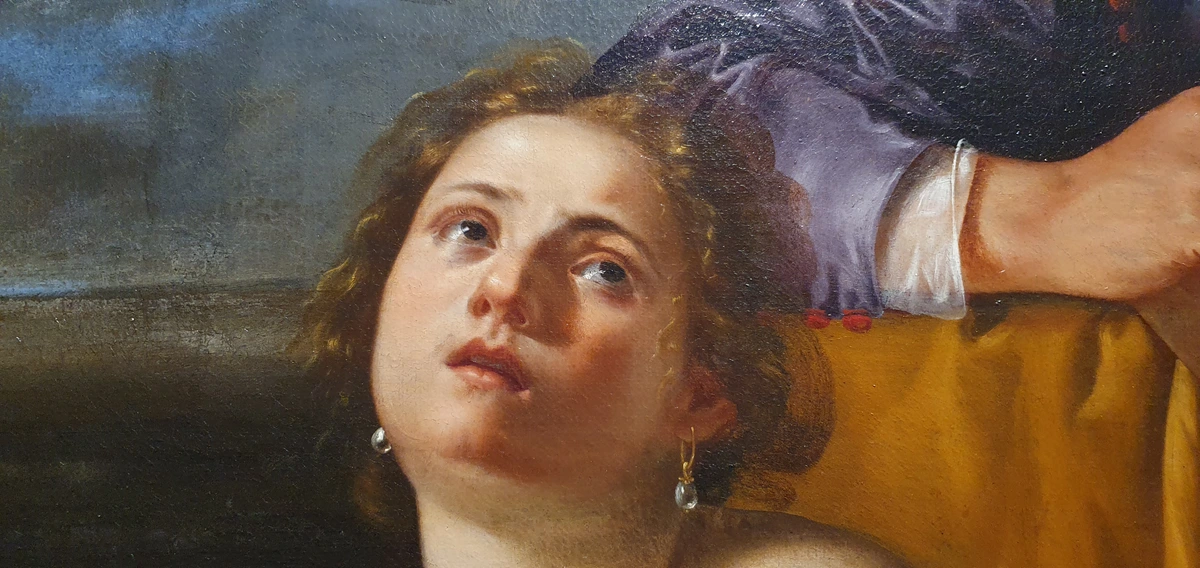
The tricky part is that "historical significance" often gets rewritten. Artemisia Gentileschi, one of the most accomplished painters of the Baroque period, was essentially written out of art history for centuries, her achievements attributed to her father or other male contemporaries. Only in recent decades have we begun to recognize that her work didn't just participate in Baroque painting—it helped define its gold standard of psychological intensity and technical daring.
Market Validation: The Price Tag Reality
We can't pretend economics don't matter. When a work commands extraordinary prices at auction or through private sales, it inevitably affects its status. The recent surge in prices for works by female artists like Georgia O'Keeffe or Joan Mitchell doesn't just reflect changing tastes—it creates a new standard of desirability that influences collecting patterns and museum acquisitions for decades.

Yet market validation can be deeply misleading. I've watched talented artists' careers stall because their work doesn't fit easily into recognizable market categories, while mediocre work by artists with better marketing or gallery representation commands astonishing prices. The market is driven by confidence, scarcity, and social signaling as much as—and often more than—artistic achievement. Which means the market's gold standard often has more to do with financial elite's search for safe assets than with genuine innovation or quality.

Cultural Endurance: The Test of Time
Perhaps the most meaningful gold standard is durability. How does a work hold up across centuries, through changing tastes, political upheavals, and cultural revolutions? Vermeer's quiet domestic scenes were nearly forgotten for 200 years before being "rediscovered" in the 19th century. Today, they're universally recognized as masterpieces. That's a gold standard earned through persistence.
But "endurance" itself isn't neutral. Which works survive depends heavily on which works get preserved, copied, displayed, and written about. Ancient Greek bronze sculptures were melted down for weaponry; most pre-Columbian codices were destroyed by Spanish conquerors; countless works by women artists were lost to attics and anonymity. What we call "the test of time" is often really "the test of which works were lucky enough to be deemed worthy of preservation by people in power."

2. A Brief History of Changing Standards
This is where it gets really interesting. The gold standard in art has never been static. What constituted "good art" in 15th-century Florence would have bewildered a 19th-century Parisian, and would probably feel alien to someone walking through a contemporary art fair today.
From Craft to Genius: The Renaissance Revolution
In medieval Europe, artists were considered craftsmen—highly skilled, yes, but still part of the guild system alongside stonemasons and goldsmiths. The Renaissance changed everything by introducing the concept of the artist as individual genius. Suddenly, technical skill merged with intellectual ambition, and the gold standard shifted from mere craftsmanship to the demonstration of both disegno (design/intellectual conception) and colore (color/execution).
The Salon System and Academic Standards
By the 17th and 18th centuries, the French Academy had essentially codified a gold standard for painting. Certain subjects (history painting) were considered inherently superior to others (still life, genre scenes). Specific technical approaches—modeling forms through careful gradations of light and shadow, composing along rigorous geometric principles—became non-negotiable for serious artists. If you wanted your work to be taken seriously, these were the rules.

The 19th-Century Revolt: Impressionism and Beyond
Then came the rebels. The Impressionists—Monet, Renoir, Degas, and their circle—weren't just painting differently; they were fundamentally challenging the Academy's gold standard. Their loose brushwork, everyday subject matter, and radical approach to color were initially dismissed as amateurish. Yet within a few decades, Impressionism became the new gold standard, and suddenly it was the Academic painters who looked outdated.
The 20th-Century Explosion: Multiple Standards
The past century has seen the complete fragmentation of any singular gold standard. We now have:
- Modernist purity (the formal innovations of Picasso, Matisse, Mondrian)
- Conceptual rigor (the intellectual framework of Duchamp, Conceptual Art)
- Abstract Expressionist intensity (the emotional force of Pollock, Rothko, de Kooning)
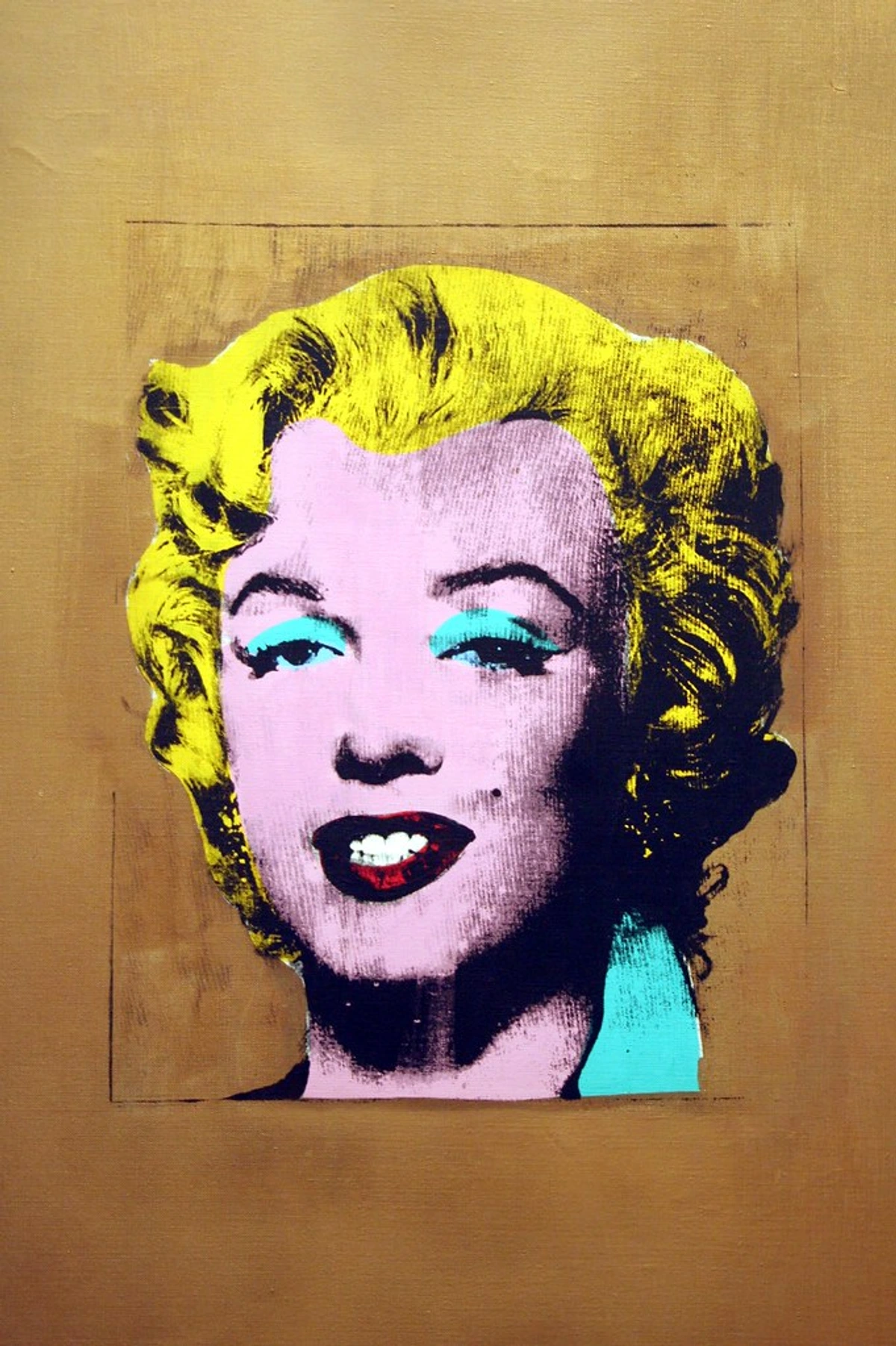
- Pop Art accessibility (the cultural critique of Warhol, Lichtenstein)
- Minimalist reduction (the essential forms of Judd, Flavin, André)
Each movement established its own criteria for excellence, its own version of what "matters" in art. This doesn't mean "anything goes"—far from it. Instead, we now have multiple gold standards operating simultaneously, each with its own internal logic and critical framework.
5. The Global Gold Standard: Expanding Beyond Western Traditions
Any meaningful discussion of artistic standards today must grapple with the uncomfortable reality that for centuries, "art history" meant European art history. The gold standards I've mentioned so far—Renaissance painting, French Impressionism, Abstract Expressionism—emerged from a relatively narrow geographic and cultural context. But what happens when we look beyond this tradition?
African Art: From "Primitive" to Foundational
For much of the 20th century, Western museums displayed African masks and sculptures as "primitive art" or ethnographic artifacts, while simultaneously, artists like Picasso and Matisse were being profoundly influenced by these same objects. The gold standard for African art was, paradoxically, its influence on European modernism rather than its own cultural and aesthetic achievements.
Today, we're witnessing a profound shift. Scholars like Susan Vogel and museums like the Metropolitan Museum's African Art department have helped illuminate the sophisticated aesthetic philosophies, technical innovations, and cultural meanings embedded in works from cultures across the African continent. What we're discovering is that these traditions developed their own gold standards—standards based on spiritual efficacy, communal meaning, and the transformation of ordinary materials into objects of extraordinary power.
Asian Art: The Politics of Ink and Empty Space
Similarly, Asian art traditions operated according to completely different gold standards than their European counterparts. In Chinese literati painting, the highest achievement wasn't realistic representation but the artist's ability to convey inner spirituality and philosophical understanding through brushwork. The concept of qi yun sheng dong (spirit resonance generating movement) represented a gold standard that had no real equivalent in European art until the rise of Abstract Expressionism—and even then, the philosophical foundations were completely different.
Japanese ukiyo-e woodblock prints achieved a gold standard that was simultaneously technical (the extraordinary precision and complexity of multi-block printing), aesthetic (the sophisticated use of flat planes of color and dramatic foreshortening), and cultural (the depiction of urban life and entertainment culture). These prints were enormously influential on European modernists—Van Gogh copied Hiroshige prints obsessively—yet for decades, they were treated in the West as decorative curiosities rather than serious artistic achievements.

Indigenous Art: Process, Community, and Continuity
Indigenous art traditions from Australia, the Americas, Polynesia, and beyond often operate according to gold standards that are fundamentally alien to Western art's emphasis on individual genius and original creation. In many indigenous contexts, the gold standard involves faithful transmission of traditional forms and techniques, connection to ancestral knowledge, and the ability to innovate within established parameters rather than breaking radically with tradition.
Consider Australian Aboriginal painting. The gold standard here might involve both maintaining the connection to inherited Dreaming stories and visual languages while finding ways to make these traditions speak to contemporary experience. The global art market has been slow to recognize these different standards—often preferring work that looks "authentically traditional" while dismissing contemporary innovations by indigenous artists as insufficiently "pure." But indigenous artists themselves are increasingly asserting their right to define their own gold standards, creating work that bridges ancient knowledge and contemporary reality.
3. Who Decides? The Ecosystem of Taste-Making
If you're feeling overwhelmed by all these competing standards, you're not alone. The natural next question is: who actually gets to decide? The answer is complicated because it's never just one person or institution. Instead, it's an entire ecosystem that includes:
Artists Themselves: Peer Validation
Long before curators or critics weigh in, artists are constantly evaluating each other's work. When a respected artist champions a younger peer, or when a particular studio practice becomes influential within artistic communities, you're witnessing the earliest stages of standard-formation. The notoriously difficult painter Willem de Kooning once told a young artist, "You have to change to stay the same"—a statement that became something of a gold standard for artistic evolution within the New York School.

Critics and Theorists: Putting Words to Vision
Art criticism gives language to visual experience. Critics like Clement Greenberg didn't just describe Abstract Expressionism; they created the intellectual framework that made it legible as serious art. Greenberg's concept of "purity"—painting that concerned itself only with its own essential properties (flatness, color, shape)—became a gold standard for modernist painting for decades.

Curators and Museums: Institutional Legitimacy
When a museum acquires a work, exhibits it prominently, or includes it in their permanent collection, they're making a powerful statement about its significance. Curators act as gatekeepers, but also as interpreters—our exhibitions literally create contexts that can elevate certain artists or movements to gold-standard status. The Museum of Modern Art's early commitment to Abstract Expressionism is a perfect example of institutional taste-making with lasting consequences.

Collectors and the Market: Economic Power
Money talks, and in the art world, it talks loudly. When major collectors like Peggy Guggenheim or the Rubell family commit to particular artists, they don't just support those artists financially; they signal to the broader market that this work matters. The recent emergence of African art as a major collecting category didn't happen in a vacuum—it followed decades of dedicated collecting by individuals who saw value where others didn't.

Public Reception: Popular Validation
Never underestimate the power of popular response. While blockbuster exhibitions might seem like simple entertainment, they create cultural moments that cement certain works in public consciousness. The massive success of the Metropolitan Museum's "Heavenly Bodies: Fashion and the Catholic Imagination" exhibition didn't just introduce many visitors to contemporary fashion as art—it created a new standard for how fashion could be displayed and understood in a museum context.
This entire ecosystem functions through a kind of feedback loop: artists create, critics interpret, curators select, collectors invest, and publics respond. Each element influences the others, and over time, certain works emerge as touchstones—the gold standards that we use to measure everything else.
What's fascinating to me, after two decades in this field, is how fragile and contingent this ecosystem really is. A single influential curator's passion can elevate an entire movement. A wealthy collector's death and subsequent bequest can instantly transform a museum's collection priorities. A documentary film can create a popular groundswell that forces institutions to pay attention to previously marginalized artists.
I've watched this happen in real time. The recent re-evaluation of Hilma af Klint as a pioneer of abstract art—despite the fact that she was creating non-representational paintings years before Kandinsky—only happened because a few persistent scholars kept her work visible, eventually convincing major museums to exhibit it. Now her work is influencing a new generation of artists who see her not as an historical footnote, but as a gold standard for spiritual abstraction.
4. Case Studies: Gold Standards Across Different Mediums and Cultures
Let's make this concrete by looking at how gold standards operate in specific contexts:

The Power of Architecture: Frank Lloyd Wright's Fallingwater
Architecture presents a particularly interesting case because its gold standards involve functionality, innovation, and aesthetic achievement simultaneously. Frank Lloyd Wright's Fallingwater isn't just beautiful—it fundamentally reimagined the relationship between domestic space and natural environment. The house demonstrates technical innovation (cantilevered concrete construction), aesthetic daring (the integration of natural rock formations into interior spaces), and cultural endurance (it remains one of the most visited and influential houses in the world). It established a new gold standard for how architecture could respond to landscape rather than simply occupying it.
Painting: The Enduring Power of Vermeer's 'Girl with a Pearl Earring'
Vermeer's small masterpiece demonstrates how a work can achieve gold standard status across all four of our criteria. Technically, it's an extraordinary demonstration of oil painting technique—the way light seems to emerge from the canvas itself, the impossible delicacy of the pearl's rendering, the psychological depth conveyed through a single sidelong glance. Historically, it represents the absolute peak of Dutch Golden Age painting. Economically, it's priceless (though it sold for very little during Vermeer's lifetime). And culturally, it's endured for over 350 years, inspiring novels, films, and countless artistic responses.
Sculpture: Michelangelo's 'David' as Monument
Michelangelo's David represents a different kind of gold standard: monumental achievement in stone. The sculpture demonstrates not just technical mastery (carving such a large figure from a single block of marble was unprecedented), but also a new understanding of human anatomy and psychological presence. Earlier representations of David had shown him victorious over Goliath; Michelangelo chose the moment before battle, capturing tension and determination. This shift from narrative action to psychological moment became a new gold standard for sculpture.

Photography: The Multiple Standards of a Young Medium
Because photography emerged relatively recently (compared to painting and sculpture), we can watch its gold standards develop in something like real time. Ansel Adams's landscape photography established technical precision and tonal range as one gold standard. Henri Cartier-Bresson's "decisive moment" became another—capturing life as it unfolds, with perfect composition achieved intuitively. Cindy Sherman's conceptual self-portraits created yet another standard, where photography became a vehicle for exploring identity, representation, and the artifice of images themselves.
What's striking about photography's gold standards is how quickly they can shift. Dorothea Lange's Migrant Mother was immediately recognized as a gold standard for documentary photography because it managed to be simultaneously specific (this woman, this moment, this suffering) and universal (the dignity of hardship, the weight of responsibility). Yet it took decades for the ethical questions around this image—the subject's lack of consent, the aestheticization of poverty—to become part of how we evaluate documentary photography's gold standards.

Contemporary Art: The Challenge of 'Untitled'
Contemporary art presents the most complex case because we're still watching these gold standards emerge. Felix Gonzalez-Torres's "Untitled" (Perfect Lovers)—two identical clocks set to the same time, gradually falling out of sync—has achieved something like gold standard status as a work that's simultaneously minimal, conceptual, and deeply emotional. It demonstrates how contemporary gold standards can emerge from unexpected combinations: formal restraint paired with personal content, everyday materials transformed into profound meditation on love and mortality.
The challenge for contemporary art is that we often can't know which works will achieve gold standard status until decades later. I remember seeing early works by Kara Walker in the 1990s and recognizing their power immediately, but I couldn't have predicted how profoundly they would reshape our understanding of American history, race, and the medium of silhouette itself. Sometimes contemporary gold standards announce themselves with unmistakable force; other times, they emerge quietly, gradually revealing their significance through sustained engagement and critical reflection.
6. The Living Gold Standard: Influence on Contemporary Practice
This is where abstract discussions of art history become immediately relevant to working artists today. Contemporary practice is in constant dialogue with historical gold standards, whether artists are embracing those standards, subverting them, or creating entirely new ones.
Reference, Homage, and Dialogue
Many contemporary artists engage directly with historical gold standards through quotation, reference, or outright appropriation. Kehinde Wiley's portraits of contemporary Black subjects in poses borrowed from Old Master paintings represent one approach—taking the gold standard of European portraiture and literally replacing its subjects. This isn't imitation; it's a conversation across centuries, using historical language to make contemporary points about power, representation, and visibility.
Subversion and Critique
Other artists deliberately work against established gold standards to make critical points. Kara Walker's silhouette installations use an 18th-century artistic technique (paper cutting) to create profoundly contemporary meditations on race, power, and American history. By choosing a form associated with genteel decoration and filling it with violent, sexual, historically charged imagery, Walker creates a productive tension—her work gains power precisely because it violates our expectations of what this medium "should" do.

Creating New Standards Through Innovation
Some of the most exciting contemporary artists aren't just working with established media; they're creating entirely new ones. Artists like Rafael Lozano-Hemmer work with interactive technologies, creating installations that respond to viewers' presence, movements, or biometric data. These works establish their own gold standards—ones based on participation, data visualization, and the creation of collective experiences rather than individual objects.
The Democratization of Standards
Perhaps the most significant contemporary shift is the democratization of gold standard-setting itself. Social media, artist-run spaces, and online platforms create opportunities for artists and audiences to participate in taste-making directly, bypassing traditional institutional gatekeepers. This doesn't eliminate the concept of gold standards, but it does create a more diverse, multivoiced conversation about what excellence looks like.
7. Navigating Gold Standards as an Artist or Art Lover
If you're an artist reading this, you might be wondering: Do I need to care about gold standards? And if so, how do I engage with them productively without losing my own voice? If you're an art lover, you might be curious about how to develop your own sense of which standards resonate with you. Here are some practical thoughts:
For Artists: Study, Absorb, Transform
Knowing art history isn't about imitation—it's about understanding the conversation you're entering. The artists I've seen make the most profound work aren't those who ignore or reject historical gold standards; they're the ones who study them deeply, absorb what's useful, and then find ways to transform those standards through their own unique perspective and experience. You don't need to reinvent the wheel, but you should definitely know what wheels look like and how they function.

Contemporary artists like Julie Mehretu demonstrate this beautifully. Her large-scale abstract works clearly engage with the gold standards of Abstract Expressionism—the scale, the gestural energy, the ambition to create visually overwhelming experiences—but she transforms these standards by incorporating architectural drawings, urban planning diagrams, and references to global migration and political conflict. The result is work that's simultaneously in conversation with historical gold standards and unmistakably contemporary in its concerns and visual language.
For Collectors: Trust Your Eye, Educate Your Mind
The most interesting collectors I know are always learning. They develop strong personal taste—they know what moves them—but they remain curious about why certain works function as they do. They study art history not to acquire those works themselves (most gold standard works by Old Masters are either in museums or priced beyond reach), but to understand the broader context of contemporary practice. They look for contemporary artists who are engaging seriously with these deeper conversations, even if those artists haven't yet achieved institutional recognition.
The evolution of the Rubell family's collection is a perfect example of this approach in action. Starting in the 1960s, Don and Mera Rubell began acquiring work by then-unknown artists like Keith Haring and Jean-Michel Basquiat. They weren't necessarily looking for work that fit established gold standards; they were looking for work that felt urgent and alive. Decades later, their collection—now stewarded by their daughter Jennifer—includes work by Cindy Sherman, Kara Walker, and Kehinde Wiley, artists who have since become gold standards in their own right. The most visionary collectors I know operate less like connoisseurs of established taste and more like ethnographers of emerging cultural moments.
For Everyone: The Importance of Multiple Canons
One of the healthiest developments in contemporary art is the recognition that there are multiple canons, not just one. We're finally paying serious attention to art by women, artists of color, LGBTQ+ artists, and artists from outside Europe and North America. This doesn't mean abandoning the concept of excellence; it means recognizing that excellence can take many forms and emerge from many different cultural contexts.

I've been particularly excited to see how museums are grappling with this challenge. Some institutions are working to acquire work by previously marginalized artists; others are rehanging their permanent collections to put different traditions in conversation with each other. The Metropolitan Museum's "Before Yesterday We Could Fly" exhibition, which inserted contemporary works by Black artists into the American Wing's period rooms, created a kind of temporal and cultural dialogue that felt both radical and overdue. This curatorial approach suggests a new gold standard for how museums can make their collections speak to contemporary audiences while honoring historical complexity.

8. Frequently Asked Questions
I've spent years discussing these questions with students, collectors, and fellow curators. Here are some of the most common points of confusion or curiosity that arise:
Q: Is the 'gold standard' just a fancy way of saying 'expensive'?
A: Not at all, though the two often overlap. Price reflects rarity, condition, provenance, and current market demand, but many works that are historically significant aren't particularly valuable on the open market (and vice versa). I've seen museum-worthy works by important artists sell for surprisingly modest prices simply because they're not in fashion at that particular moment. The gold standard is about achievement, innovation, and influence—sometimes that translates to money, but not always and not necessarily.
Q: Can contemporary art be a 'gold standard,' or does that only apply to historical work?
A: Absolutely! We use the term "canon formation" to describe the ongoing process through which contemporary works gradually achieve gold standard status. This happens through museum acquisitions, critical attention, inclusion in art history courses, and influence on younger artists. Some contemporary works are clearly on their way to achieving this status (Gonzalez-Torres's clocks, Walker's silhouettes), while others will take longer to assess. It's worth remembering that many now-famous artists—Van Gogh being the classic example—were completely overlooked in their own time.
Q: Isn't the whole concept of 'gold standard' elitist and exclusionary?
A: This is a crucial question. Historically, yes—the gold standard has been dominated by European men, and the institutions that maintain these standards (major museums, auction houses, prestigious galleries) have often perpetuated exclusionary practices. However, the contemporary art world is actively working to expand and diversify our understanding of excellence. We're seeing more attention to women artists, artists of color, and artists from previously marginalized communities. The goal isn't to abandon the concept of excellence, but to recognize that excellence exists in many different forms and cultural contexts.
Q: How can I develop my own eye for quality in art?
A: Look at as much art as possible, both in person and through high-quality reproductions. Read about art history and contemporary criticism, but also trust your own responses. Ask yourself: What makes me stop and look more closely? What holds my attention over time? What challenges my assumptions? Visit museums and galleries regularly, talk to other art lovers, and be open to changing your mind. Developing an eye takes time and effort, but it's incredibly rewarding.
Q: Are digital art and NFTs changing the gold standard?
A: Digital art is certainly creating new conversations about gold standards—questions about permanence, ownership, display, and medium-specificity are all being actively debated. Contemporary artists working with digital media are establishing their own criteria for excellence. I will note, however, that the rapid commercial speculation that characterized NFTs in recent years often had more to do with financial bubbles than with genuine artistic achievement. Significant digital art, like all significant art, tends to involve serious conceptual rigor and technical innovation.
Artists like Rafael Lozano-Hemmer have been creating extraordinary digital installations for decades—works that use technology to create collective experiences and explore the relationship between bodies, data, and public space. These works establish gold standards based on interaction, participation, and the intelligent use of emerging technologies. The question isn't whether digital art can achieve gold standard status, but whether our critical and institutional frameworks are sophisticated enough to recognize it when it does.

9. The Psychology of Standards: Why We Need Them (And Why They Trouble Us)
Before we conclude, I want to address something fundamental about the psychology of gold standards in art. Why do we keep returning to this concept, even when we know how problematic it can be?
The Comfort of Categories
Human beings are natural categorizers. We need ways to organize the overwhelming complexity of visual experience. Gold standards give us mental filing cabinets—places to put our encounters with art, ways to distinguish between "important" and "unimportant," "good" and "bad," "museum-worthy" and "decorative." This isn't necessarily elitist or wrong; it's how our brains process the world.
I've noticed that even the most open-minded art lovers—people who are theoretically committed to the idea that "anything can be art"—still make distinctions. We might reject traditional hierarchies based on medium or subject matter, but we still find ourselves drawn to certain works more than others, still find ourselves trying to articulate what makes one painting "work" while another leaves us cold. The question isn't whether we should have standards, but whether we can develop standards that are flexible, inclusive, and responsive to the full range of human creativity.

The Anxiety of Influence
For artists, gold standards can create enormous anxiety. If you're a young painter today, how do you create work that feels meaningful when you know you're operating in the shadow of giants like Vermeer, Matisse, or Rothko? How do you find your own voice when art history seems to demand either perfect mastery of established forms or radical innovation that breaks all the rules?
The answer, I think, lies in recognizing that influence isn't the same as imitation. Every significant artist in history has engaged deeply with the gold standards of their predecessors, but the ones we remember found ways to make that engagement generative rather than limiting. They used the gold standards as springboards, not cages.
10. Closing Thoughts: The Gold Standard as Compass, Not Cage
As I sit here in my office, surrounded by catalogues and installation shots from exhibitions past, I find myself thinking about the gold standard differently than I did when I started in this field. What once felt like a rigid set of rules—this is great art, that isn't—now feels more like a compass.
The gold standard isn't a cage that limits what art can be. It's a map that shows us where we've been, which helps us understand where we might go next. It's a conversation that spans centuries, connecting a fresco painter in Renaissance Florence to a conceptual artist in contemporary Lagos. It's a way of paying attention—of recognizing when something truly extraordinary happens, whether that's technical innovation, conceptual breakthrough, emotional intensity, or some impossible combination of all three.
When I walk through a contemporary art fair now, I find myself looking less for work that fits existing gold standards and more for work that seems to be creating its own criteria for excellence. I'm drawn to artists who clearly know art history but aren't paralyzed by it—artists who can simultaneously honor and gently subvert the traditions they've inherited.








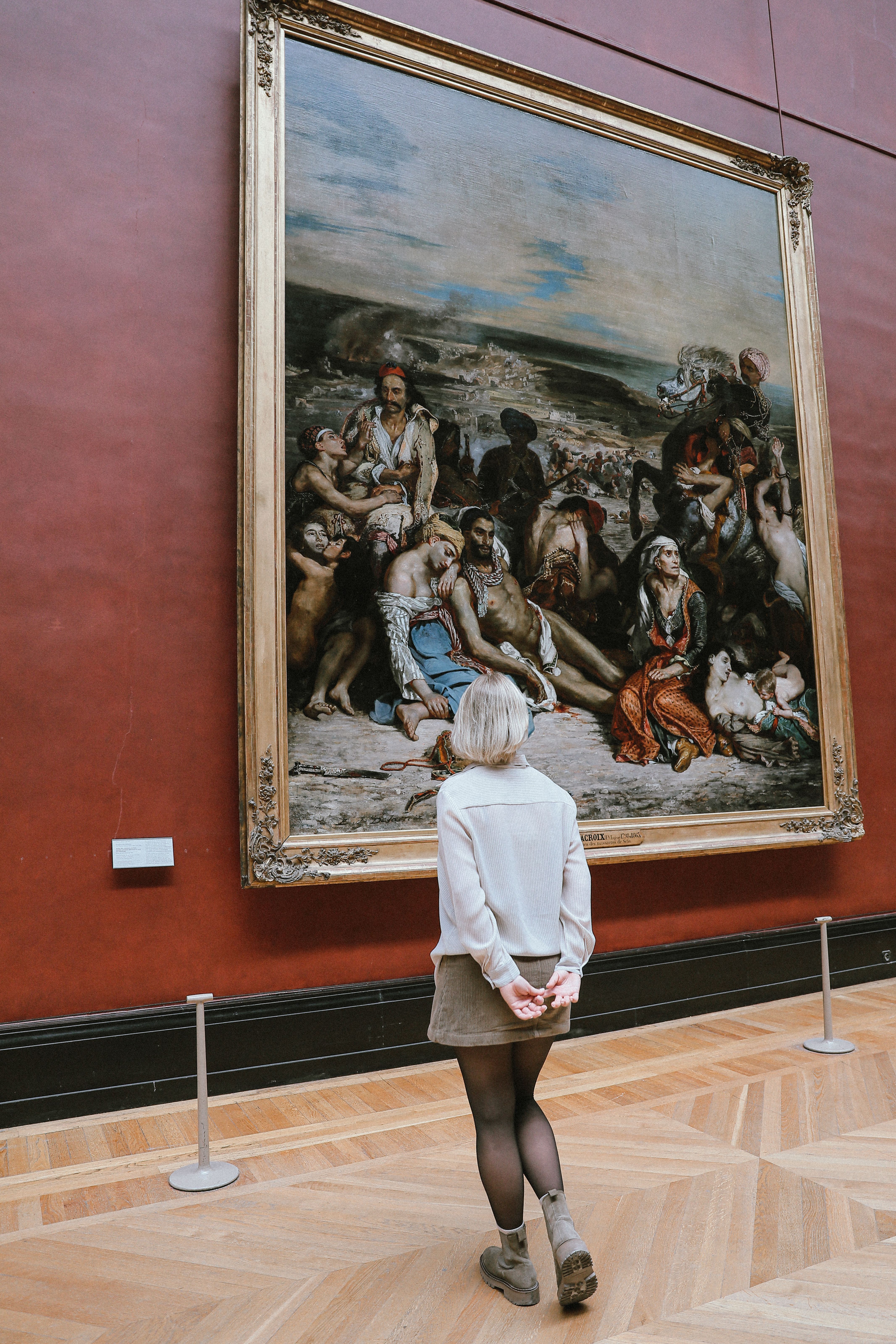





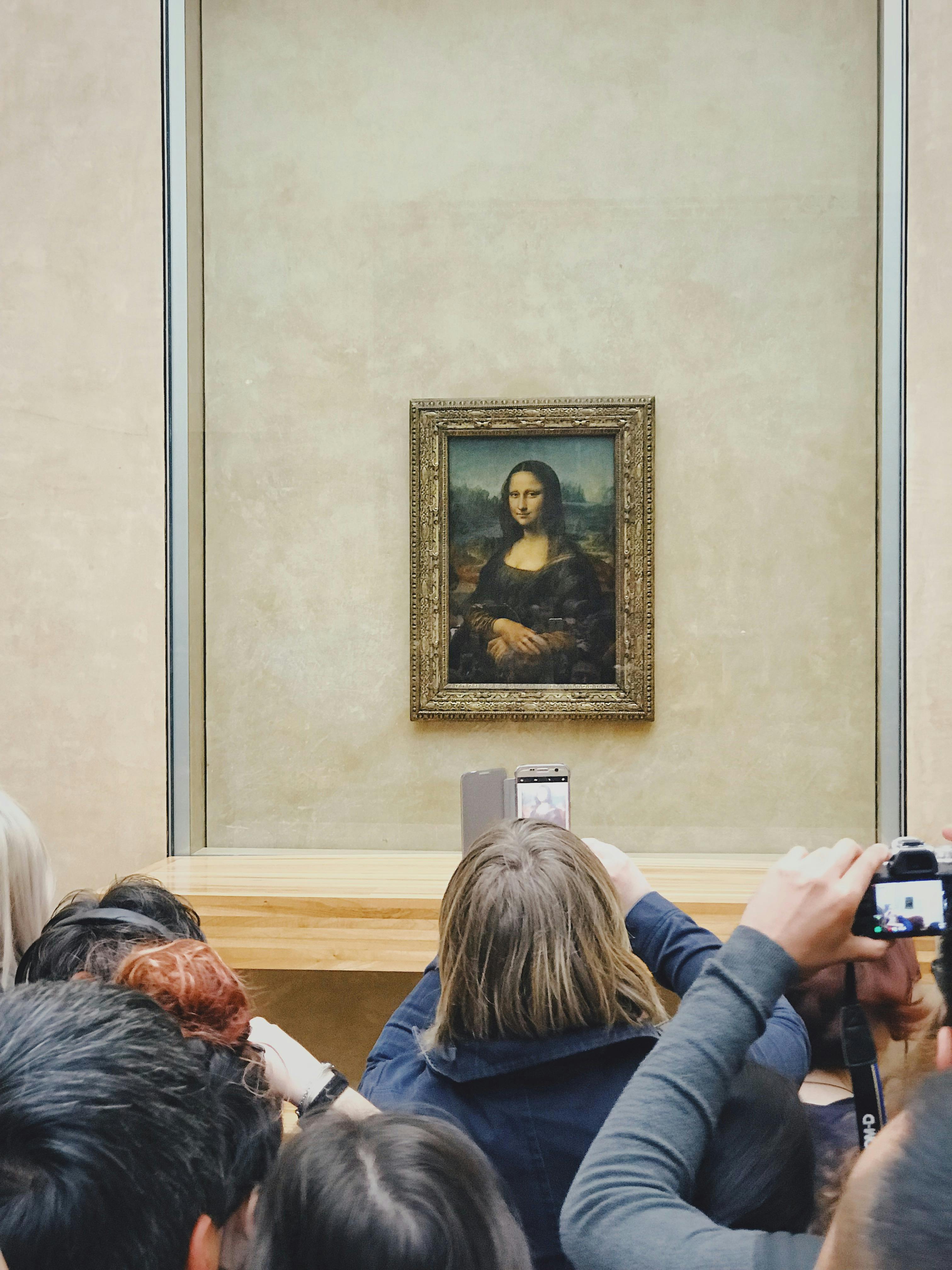


I sometimes think about all the artists whose work will never hang in major museums, who will never command high prices at auction, but who are nonetheless making extraordinary things. Some of my most profound experiences as a curator have come from discovering work in artist-run spaces, graduate thesis exhibitions, or community galleries—work that reminded me why I fell in love with art in the first place.
I remember encountering a small sculpture in a Brooklyn warehouse gallery years ago—a delicate construction of found wood and wax that seemed to breathe with its own quiet presence. The artist had never had a solo show, never sold a work for more than a few hundred dollars. But standing in front of that piece, I felt the same prickling awareness of genuine artistic intelligence that I've felt in front of major museum masterpieces. The piece didn't fit any obvious gold standards—it was too small, too modest, too seemingly casual—but it had achieved something rare and real.
The gold standard matters, but so does our willingness to remain open to surprise, to the possibility that the next shift in what we consider excellent might come from somewhere completely unexpected. History shows us that yesterday's rebels often become today's masters, and today's rebels will likely become tomorrow's gold standards.
So when you hear someone describe a work as "the gold standard," by all means, pay attention. But also remember: that standard is alive, evolving, and constantly being renegotiated by artists, audiences, and yes—curators like me who are still thrilled every time we encounter something that makes us see the world differently.
The most exciting developments in contemporary art often happen at the edges of our awareness—in the small galleries, the online spaces, the artist collectives that haven't yet attracted institutional attention. The next gold standard might be taking shape right now in a studio that nobody's heard of yet, created by an artist who's never been reviewed in a major publication. The real challenge for any art lover—amateur or professional—is to stay awake to those possibilities while also honoring the extraordinary achievements that have already earned their place in the conversation.
If there's one thing I hope you take away from this exploration, it's that the gold standard matters most not as a final judgment, but as an invitation to deeper looking, thinking, and feeling. The best art doesn't just meet existing standards—it helps us understand why we needed those standards in the first place, and shows us what we might need next.
The conversation continues.