Bernini's Saint Teresa Sculpture: The Ecstasy You Can Feel
Explore Bernini's revolutionary marble sculpture capturing Saint Teresa's divine ecstasy. Dive into history, technique, and why it still moves us today.

Bernini's Saint Teresa Sculpture: The Ecstasy You Can Feel
I’ll admit it: I wasn’t always a Baroque art fan. Too much drama, I used to think. Too many gold frames and saints looking perpetually shocked. But then I saw Bernini’s Saint Teresa in Ecstasy at the end of a narrow Roman street, tucked away in a little church that felt more like a theater. And wow. It wasn’t just a statue; it was a physical experience. You stand there, and you almost feel the marble vibrate with feverish divine rapture, a sensory overload in the best possible way. Confession time? That sculpture redefined how I experience art. It’s why I want to talk about it—not as some dry relic, but as a living, breathing, almost unnervingly human masterpiece. It’s one of those rare works that doesn’t just ask to be looked at; it demands to be felt with your whole nervous system. So let’s explore what makes Bernini’s work so magnetic, and why, four centuries later, it still feels like a lightning bolt captured in stone, a testament to the enduring power of art as an emotional conduit. This article will be your ultimate guide—whether you're an art history student cramming for an exam, a curious traveler planning a Roman pilgrimage, or just someone who wants to understand why a 17th-century sculpture can still make a modern heart skip a beat.

The Backstory: More Than Marble
To truly grasp the Cornaro Chapel, we need to talk about Mannerism, the style that preceded the Baroque. By the 16th century, Renaissance harmony felt played out. Mannerist artists like Parmigianino and Giambologna started twisting forms, elongating figures, and creating weird, artificial compositions—art that felt more like a stylish puzzle than a window onto reality. If the Renaissance was a perfect harmonic chord, Mannerism was a jazzy, discordant riff. It was visually impressive but lacked emotional punch.
Before we dive into the sculpture itself, a tiny detour. Imagine this: it’s the 1640s. You’re in Rome. The Catholic Church has just survived the Protestant Reformation and is bouncing back with full force. Their secret weapon? Counter-Reformation art. The idea? Make art so emotional, so visceral, that it stops you in your tracks and whispers, 'Come back to faith.' This was the age of the Council of Trent (1545–1563), where the Church doubled down on art's power to instruct and inspire the faithful. Theologians and bishops laid out new ground rules for religious art in response to Protestant critiques of idolatry and imagery. They demanded clarity, emotional immediacy, and doctrinal correctness. It had to be visually understandable to the illiterate, emotionally stirring enough to reconvert wayward souls, and theologically sound. The Decree on the Invocation, Veneration, and Relics of Saints, and on Sacred Images (1563) was the Catholic Church's artistic manifesto. It effectively became the creative brief for a generation of artists, transforming Catholic sacred spaces into immersive theaters of divine persuasion. This wasn't just art; it was affective theology in visual form, designed to bypass intellectual argument and hit you in the gut. The result? A century of the most emotionally manipulative, technically dazzling, and psychologically penetrating art ever created. And no one played this game better than Gian Lorenzo Bernini. This decree effectively made artists the church's chief propagandists, creating a cultural arms race of divine persuasion. Enter Gian Lorenzo Bernini. Pope Urban VIII’s favorite artist, he wasn’t just a sculptor; he was a Baroque rockstar, a theatrical genius who treated marble like stage curtains. He designed buildings, fountains, and even stage sets—his work was everywhere. His medium was stone, but his real medium was motion, emotion, pure drama. He was the archetypal 'uomo universale,' a universal man of the arts who treated the city of Rome as his personal canvas, transforming it from a medieval town into the spectacular capital of the Catholic world.
And where did he aim this rocket launcher of spiritual emotion? Straight at the heart of the Cornaro Chapel in Santa Maria della Vittoria, Rome. Commissioned by Cardinal Federico Cornaro, a wealthy Venetian patrician and former Patriarch of Venice, the project was a statement. The Cardinal was from a powerful family—a dynasty of Doges and cardinals—and this chapel was their side-chapel, a private celestial theater for their theatrical piety. The choice of Saint Teresa was also a political one; she had just been canonized in 1622, a superstar of the Counter-Reformation, making her a perfect subject for a powerful cardinal's legacy. She was a new saint for a resurgent church, and aligning Cornaro's name with hers was a clear political and spiritual power move, much like modern cultural branding. Bernini didn’t just deliver a statue; he created an immersive theatrical set, an early form of installation art. He tore down the existing chapel decorations and rebuilt the entire space around his vision. The chapel itself becomes part of the story, with viewing balconies carved into the side walls where Cornaro family members (again, in marble) watch the scene unfold, deeply engrossed in conversation, as if debating the miracle itself. This was radical. For the first time, an artist treated an entire chapel as a single, unified work of art—a Gesamtkunstwerk (total work of art) that merged architecture, painting, sculpture, and even optics into one overwhelming spiritual experience. His process was meticulous. Bernini started with small, energetic clay models (bozzetti) to work out the composition's dynamism. He commissioned painters to create oil sketches of the proposed scene, which he presented to Cardinal Cornaro for approval. It wasn't enough for the sculpture to be beautiful; it had to function as the climax of a carefully orchestrated architectural narrative. He was directing a play where every element—from the way light entered the hidden window to the expressions on the spectator saints—was part of the script. He even designed a hidden window to light the scene from above, a literal spotlight powered by the Roman sun. It was a masterful use of architecture and light to create a "theatrical machine" for the soul. This was the original 4D art experience, a Gesamtkunstwerk—a total work of art—centuries before Wagner ever thought to put the term on paper. Bernini transformed a private vision into a public, communal spectacle, forever altering the relationship between art, architecture, and viewer. Genius, right? It feels less like decorating a chapel and more like directing a play where the climax is the salvation of a human soul. Anyway, where was I? Right—Teresa. Who was she?
The Woman Behind the Ecstasy: Saint Teresa of Ávila
To understand the sculpture, we must first understand the woman it immortalizes—a figure of immense historical and spiritual gravity. Teresa de Cepeda y Ahumada (1515–1582), known to history as Saint Teresa of Ávila, was a 16th-century Spanish mystic, Carmelite nun, and a Doctor of the Church. She was no ordinary saint. She was a force of nature in an era when women had little public power.
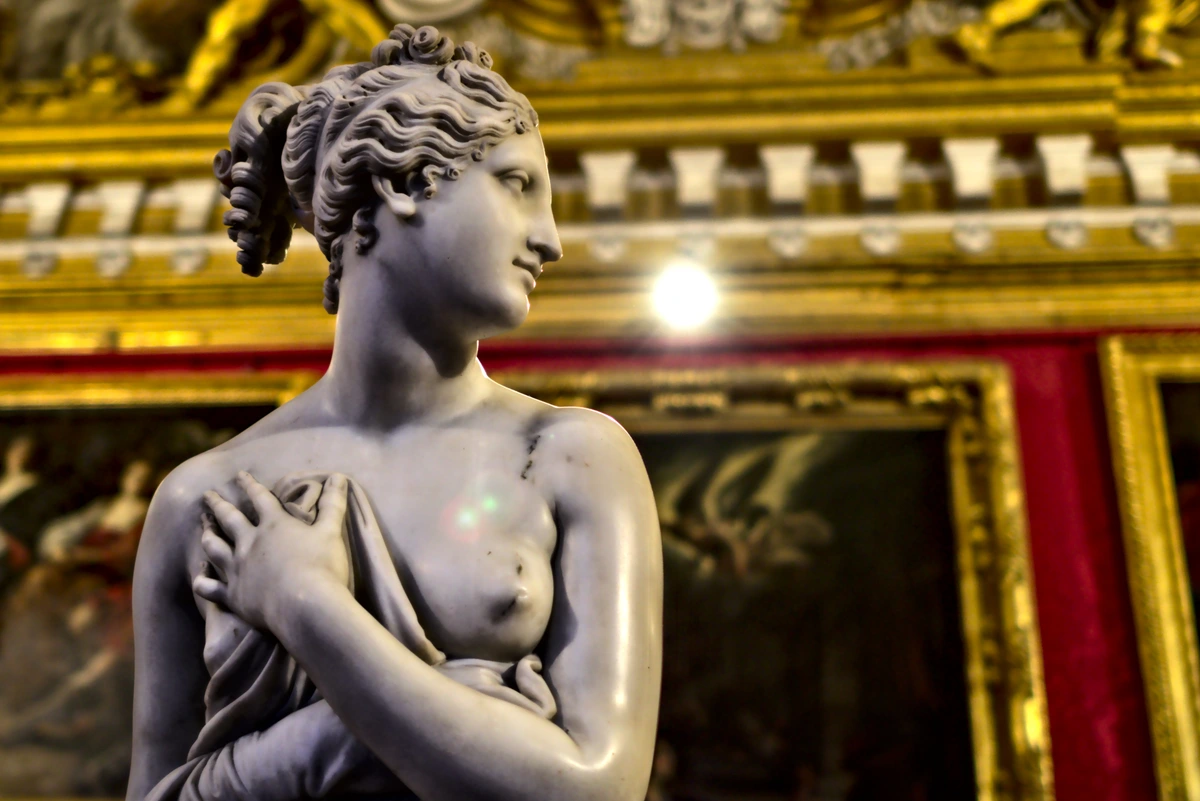
Who is this woman, and why is she looking like she just won the lottery? Or, you know, encountered God? She’s Saint Teresa of Ávila, a 16th-century Spanish mystic, nun, and Doctor of the Church—a rare honor, making her one of only four women to hold that title. No lightweight, Teresa. She was a force of nature, a reformer who took on her own Carmelite order to bring it back to a life of simplicity and poverty. Her life was a whirlwind of administrative work, travel, and writing, all fueled by intense, physical visions that left her debilitated and transported. She wasn't just a passive mystic; she was a brilliant organizer and a reformer with almost frightening levels of energy. At a time when the Carmelite order had grown lax and worldly, Teresa launched a counter-revolution. She founded the Discalced (meaning 'barefoot') Carmelites, a reformed branch committed to poverty, cloister, and contemplative prayer. Her spiritual autobiography, The Life of Teresa of Jesus, is a raw, deeply personal account of her mystical journey. Her other seminal works, The Way of Perfection and The Interior Castle, are masterpieces of Christian mystical literature that remain required reading for anyone interested in contemplative spirituality, describing the soul's progressive journey toward union with God. She wrote with startling psychological insight, mapping the inner landscape of prayer with the precision of a cartographer charting an unexplored continent. Her most famous vision, and the one that would define her iconography for centuries? An angel piercing her heart with a golden arrow. This wasn't a gentle, poetic image; in her autobiography, she described it as a visceral, almost fatal encounter with divine love, causing her to cry out in a mix of unbearable pain and infinite sweetness. It's a moment where physical sensation and spiritual revelation merge, a central theme in mystical traditions across cultures.
Her own words, from her autobiography, describe it best—and frankly, they’re far more intense than you might expect from a saint:
"I saw in his hand a long spear of gold, and at the iron's point there seemed to be a little fire. This he plunged into my heart several times... and left me all on fire with a great love of God. The pain was so great that I screamed aloud; but at the same time I felt such infinite sweetness that I wished the pain to last forever. It was not a corporeal, but a spiritual pain, though the body had some share in it—even a considerable share."
This wasn't just any feeling. It was transcendent ecstasy—a paradox of pleasure and pain, the agonizing sweetness of divine union. Theologians call this unio mystica, the soul's direct, transformative union with God, a state of being that transcends rational understanding, the ultimate goal of contemplative prayer. It’s heady stuff, and it was all recorded by Teresa herself. Bernini? He saw the challenge. How do you carve that? How do you capture an invisible, soul-shattering, semi-erotic experience in cold, hard marble? He had to translate a deeply internal, subjective event that Teresa herself could barely describe into a universal visual language that any pilgrim could grasp intuitively. It was the ultimate artistic challenge. He didn’t just represent it; he made you feel its tremors through stone. Imagine trying to sculpt pure electricity, to give form to a feeling that by its very nature is formless. That’s what faced him.

The Sculpture Up Close: Anatomy of an Ecstasy
Let's get technical—because Bernini's technical skill is precisely what makes the magic feel... well, not like magic. Like pure, undiluted reality. This isn't your typical serene Madonna statue. It's a forensic study of mystical transcendence disguised as divine theater, a masterclass in making the intangible tangible through sheer sculptural audacity.
Bernini pulls off several impossible feats here that still make sculptors scratch their heads—and frankly, after seeing it, they feel almost supernatural. He proves that marble isn't just a material; in the right hands, it's a medium for passion, a vessel for the soul, and a canvas for light itself.
Okay, let’s talk turkey—or rather, marble. This isn't your typical serene Madonna statue. It’s a masterclass in turning stone into pure sensation, a lesson in how to make the intangible tangible, a principle explored in the history of sculptural technique. Bernini pulls off three incredible feats here that still make sculptors scratch their heads—and honestly, after seeing it, they still feel a little impossible. He proves that marble isn't just a material; in the right hands, it's a medium for passion, a vessel for the soul, and a canvas for light itself:
- Theatrical Composition: Forget static poses. Teresa is collapsing, almost mid-faint, suspended in a impossible moment of rapture. An angel hovers above, not solidly grounded, but appearing to float on a cloud Bernardino radiates downward. The fabric? Look at it. It isn’t draped; it’s whipped into a frenzy, clinging to her body like it’s alive with static electricity, with wrinkles so deep you can feel the texture. Bernini pioneered this use of deeply undercut, swirling drapery, a technique he perfected to create maximum surface area for dynamic shadow-play. Bernini isn’t just carving figures; he’s choreographing a frozen moment of divine violence and surrender. He creates a diagonal line of energy, from the angel’s poised arrow down through Teresa’s swooning body. It’s a literal bolt of spiritual lightning captured in stone. Compositions like this, built on sharp diagonals, are a hallmark of the Baroque, breaking free from the stable horizontals and verticals favored by Renaissance masters. It’s like Michelangelo met Shakespeare in a snow globe.
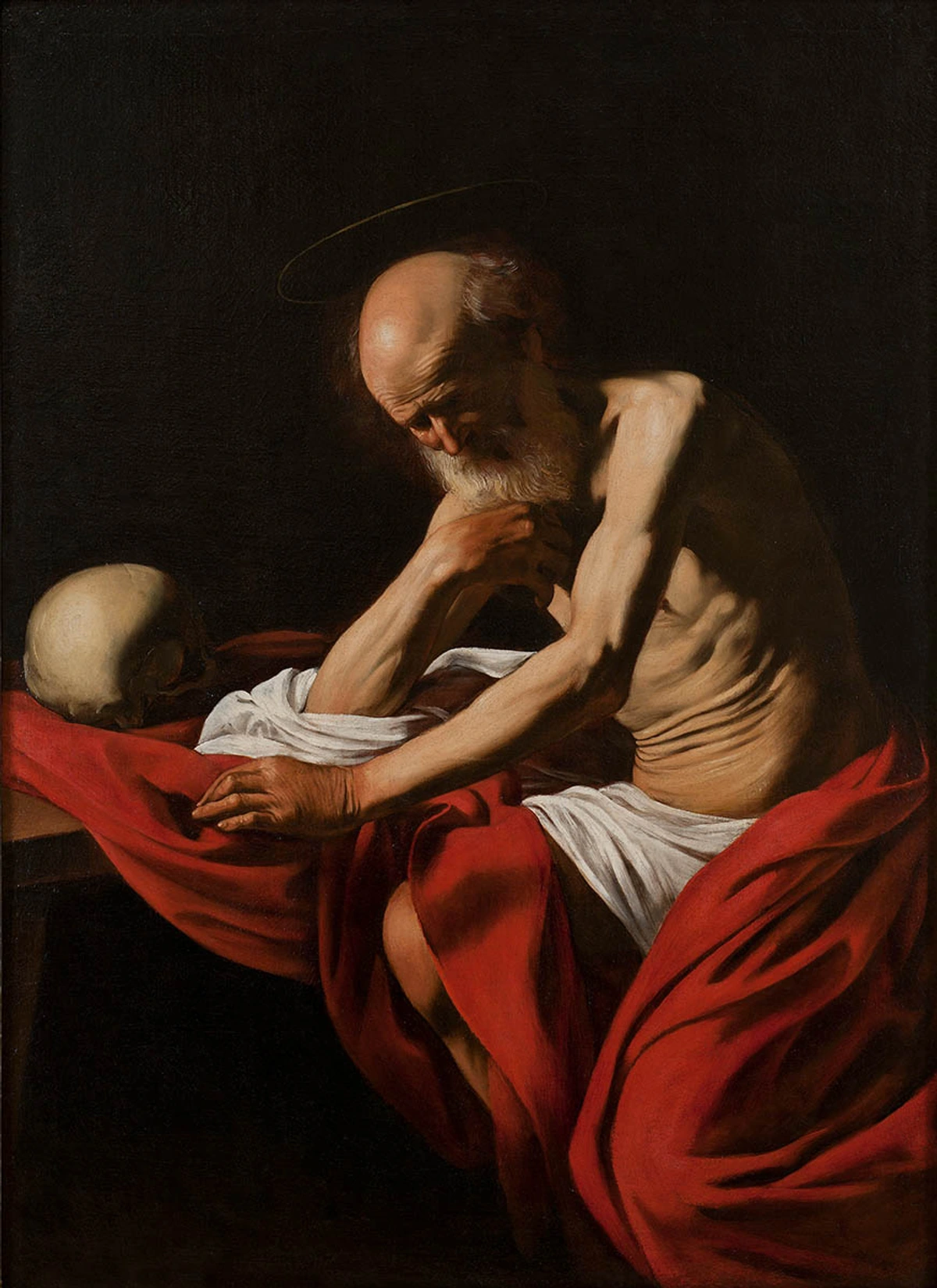
- Emotional Realism: Look closely at her face. Is it pleasure? Pain? Both? Ecstasy comes from the Greek ekstasis, meaning “to stand outside oneself,” and that’s exactly what Bernini carved. Her mouth is slightly open in a gasp, her eyes are rolled back under half-closed lids, her hands and feet are limp with surrender. Her entire body is aslack, a total relinquishing of physical control that signifies the ultimate spiritual submission, a pose that screams vulnerability and transcendence simultaneously. It’s not stylized sainthood; it’s raw, almost primal human sensation. You believe she’s actually experiencing this. He used light—carving delicate folds and polished surfaces—to reflect light onto her face, amplifying the intensity. The pale marble of her face seems to glow, almost translucent. It’s light as a special effect, a divine spotlight engineered into the sculpture itself. He was a master of chiaroscuro, using dramatic contrasts of light and shadow to heighten emotion, similar in effect to how painters like Caravaggio used it in their canvases, proving sculptors could be painters in three dimensions.
- The Immersive Stage: The genius isn’t just Teresa. Look at the sides. Those are the Cornaro family, carved in high relief, in their boxes (like theater balconies!), intently witnessing the scene. They are rendered in a rough, sketchy style (non-finito), which makes the hyper-realism of Teresa and the angel pop even more, as if they are emerging from a dream-state into sharp, miraculous focus. They aren't passive observers; they lean in from the shadows, gesture, react as if discussing the miracle in a hushed, urgent conference. They turn the chapel into a stage, the viewer into an audience member. They are the bridge between our world and Teresa's ecstasy. It's a brilliant move—by showing witnesses within the artwork, Bernini gives us permission to stare, to be drawn into the tableau, and to participate in this sacred, theatrical moment. This device, which breaks the fourth wall of sculpture, had a profound influence on later theatrical and cinematic storytelling. He controls your entire visual journey, transforming a private vision into a public, communal spectacle.
From Renaissance to Baroque: A Sculptural Revolution
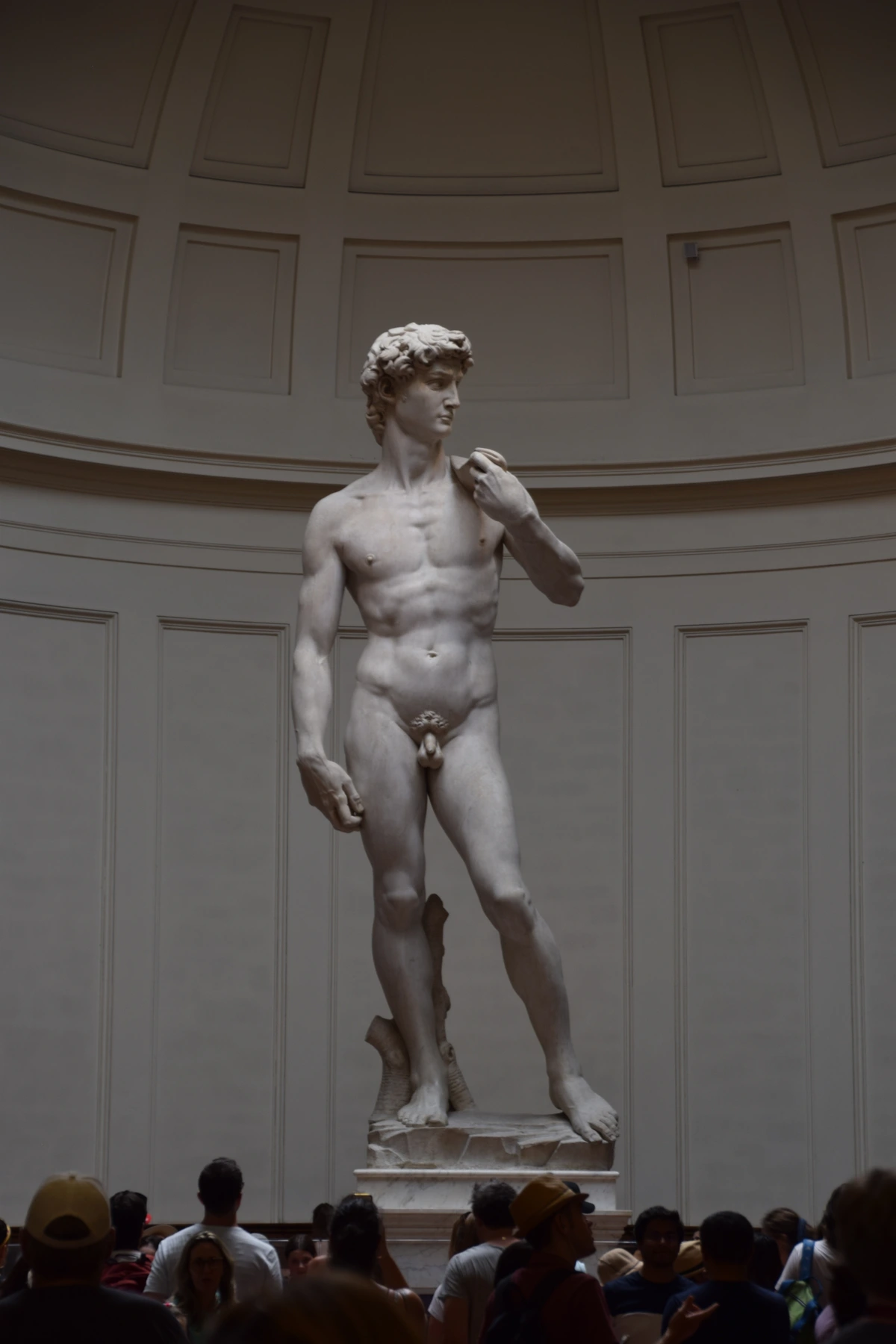
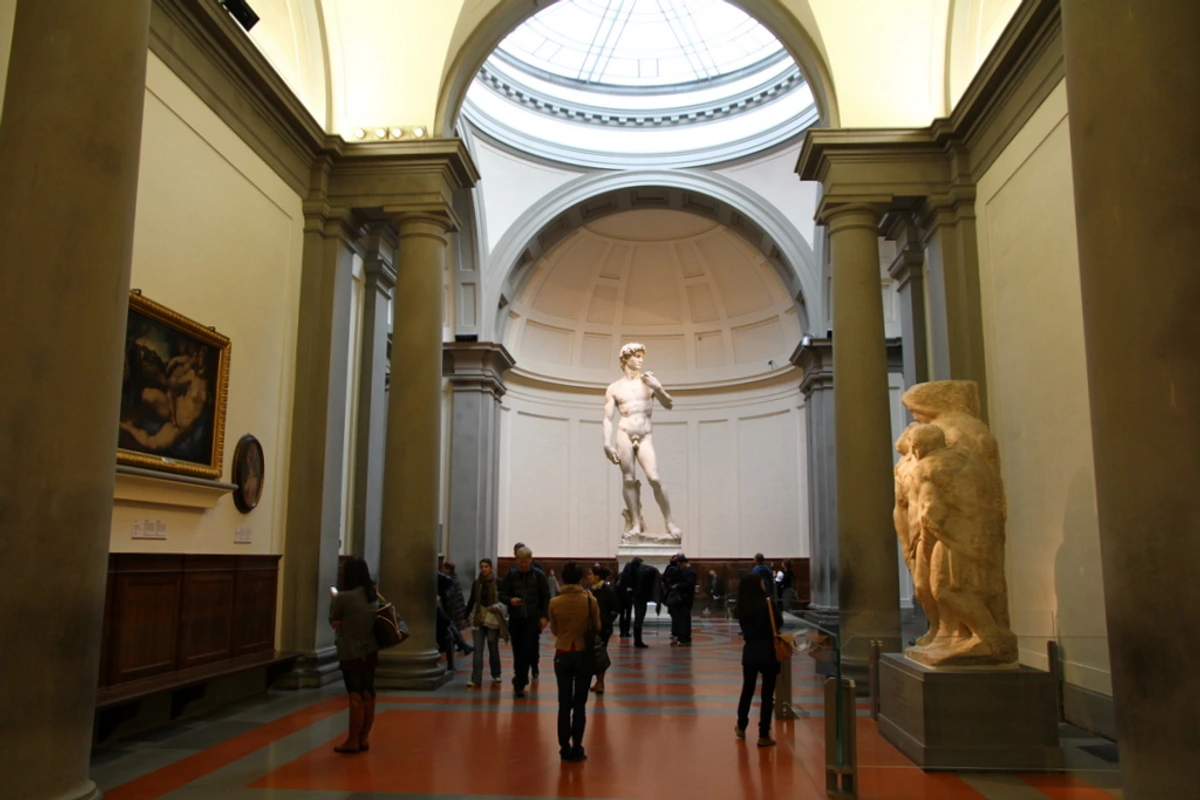
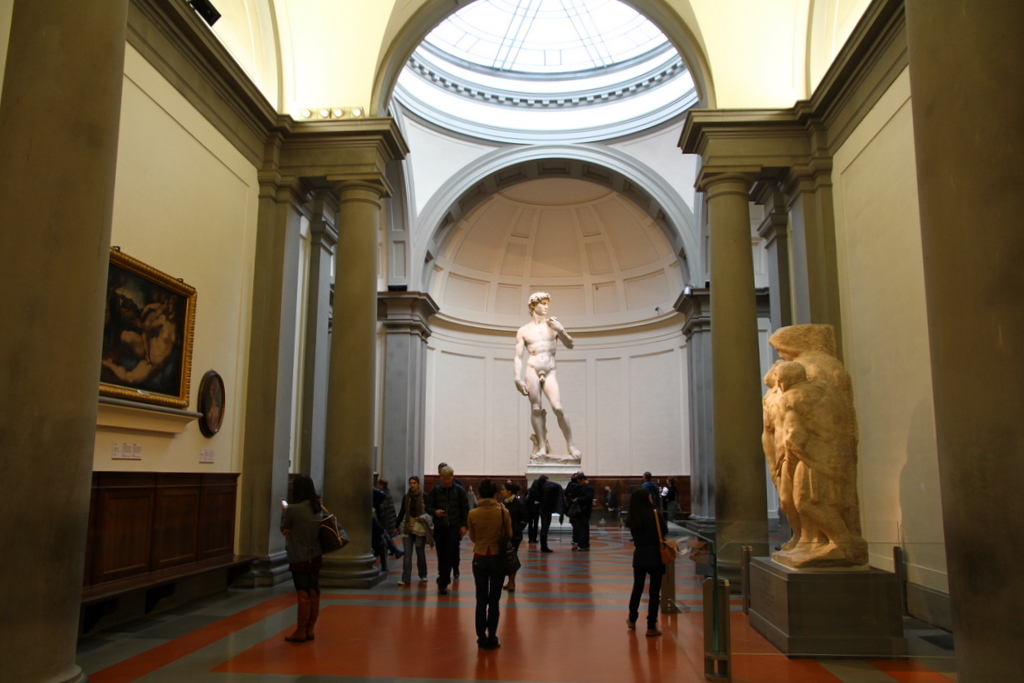
To fully appreciate Bernini's radicalism, we must place him in the context of the sculptural traditions he inherited and then exploded. The journey from Michelangelo's David to Bernini's Ecstasy of Saint Teresa is a journey from the ideal to the real, from the intellectual to the emotional. What happened in the intervening century—a period dominated by Mannerism—was crucial.
To understand how radical Bernini's approach was, we need to see how he completely shattered Renaissance ideals. Where Michelangelo and his contemporaries sought balanced perfection (even when depicting drama, as in the Laocoön), Bernini chased raw emotional authenticity and psychological immediacy. But the bridge between them was Mannerism. Artists like Giambologna (with his spiraling Rape of the Sabine Women) showed how to inject violent motion into sculpture. They explored complex poses and exaggerated human forms, but often the result felt emotionally cold—more like a virtuoso athletic performance than a genuine human drama. Bernini took Mannerism's dynamism and Mannerism's love of complexity, stripped away the artificiality, and poured in a torrent of raw, recognizable human emotion. Bernini didn't just break from the Renaissance; he absorbed and surpassed Mannerism. Let's break it down:
Feature  | Traditional Sculpture (Pre-Baroque) | Bernini's Saint Teresa |
|---|---|---|
| Pose | Stable, symmetrical, idealized (contrapposto) | Dynamic, asymmetrical, collapsing, energy in motion |
| Emotion | Calm, composed, serene | Overwhelming ecstasy, ambiguous, psychological realism |
| Material Use | Smooth drapery, solid forms | Textured, deeply carved drapery mimicking motion |
| Interaction | Self-contained figures, isolated | Engages viewer, theatrical setting with witnesses |
| Narrative | Implied story, symbolic | Tells a specific, unfolding dramatic event |
| Light | General illumination | Actively manipulated, reflecting off polished surfaces |
| Viewer's Role | Passive observer | Active participant, drawn into the narrative scene |
| Theology | Static, dogmatic representation of faith | Dynamic, personal, emotional experience of faith |
| Action | Depicts a state of being (being a saint) | Depicts an event (experiencing a moment) |
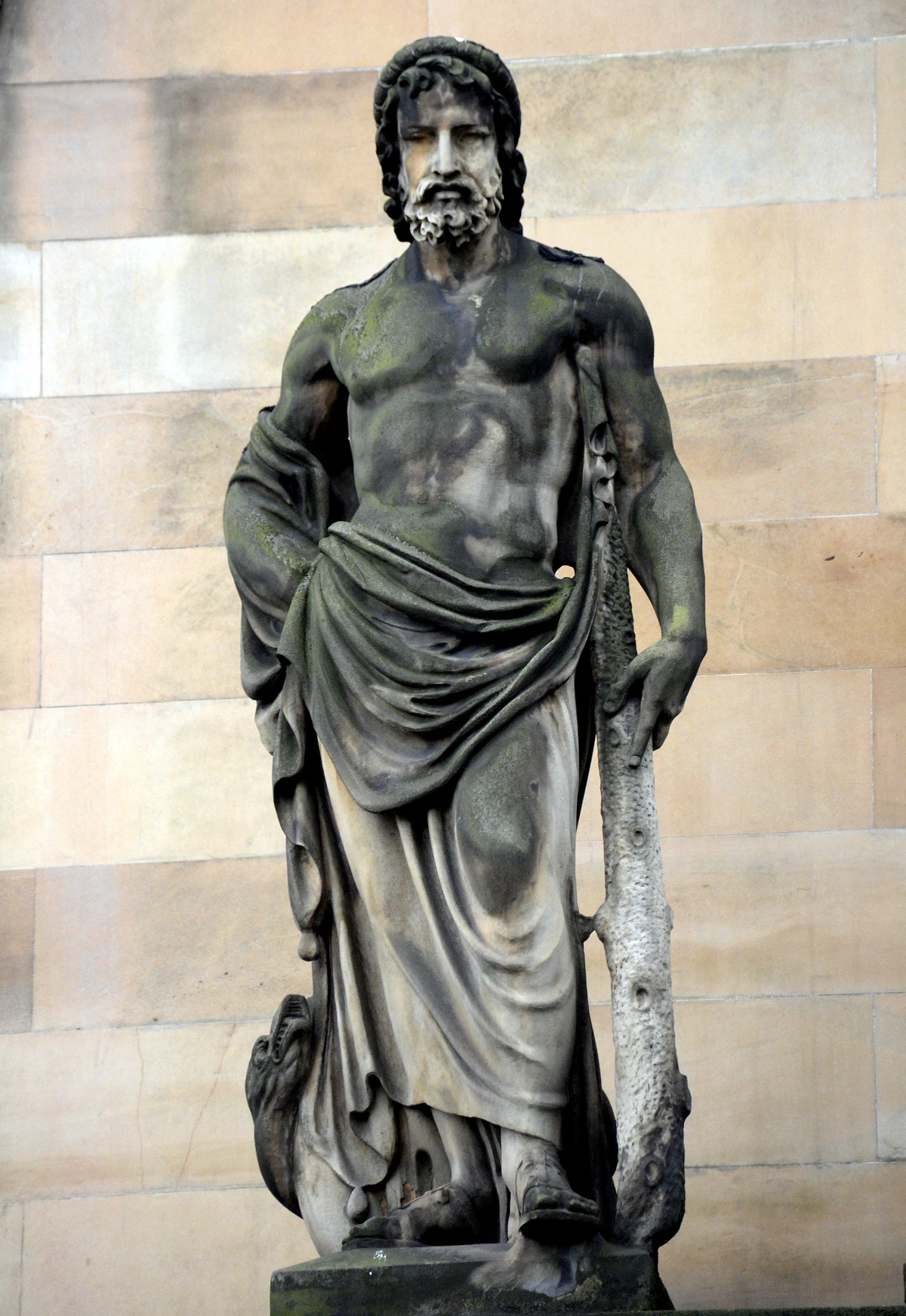
Look at the "Viewer's Role" row—that's the real game-changer. Renaissance sculpture largely treated viewers as respectful guests quietly admiring art from a distance. Bernini grabs you by the collar and pulls you into the action. He turned passive observation into active participation, prefiguring everything from immersive theater to modern VR experiences.
And that last row—depicting being versus experiencing—that's the heart of the Counter-Reformation. This was the new Catholic theology made visible: faith wasn't just about intellectual assent; it was about personal, emotional, gut-level encounter with the divine. The Council of Trent's decrees on art specifically called for images that could 'instruct and confirm in the articles of faith,' and move the faithful to 'adore and love God and cultivate piety.' The Church wanted you to feel God, not just know about God. Bernini became their chief evangelist of emotion, turning every chapel into an affective machine designed to produce a specific spiritual response in the viewer.
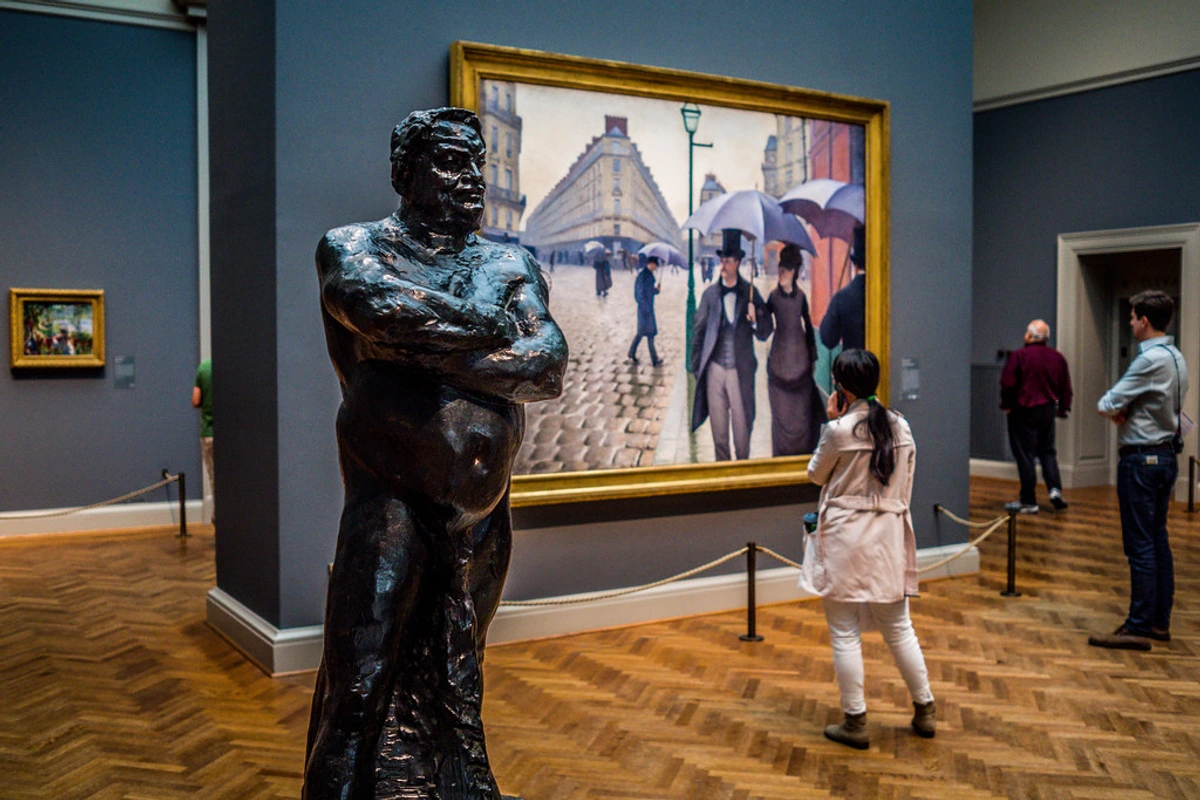
Notice Michelangelo's approach to drapery and pose—controlled, architectural, rational. Now compare that to Bernini's absolute chaos of fabric and emotion.
Why It Still Matters: The Enduring Shock of Ecstasy
So it's dramatic. So it's innovative. Why does this sculpture still grab us by the throat? Why do tourists and pilgrims keep squeezing into that tiny Roman chapel, craning their necks in the dim light, phones held high like digital votive candles? It's because Bernini tapped into something universal and timeless: the human capacity for awe, for passion, for losing yourself in something greater.
So it’s dramatic. So it’s innovative. Why does it still grab us? It’s because Bernini tapped into something universal and timeless: the human capacity for awe, for passion, for losing oneself in something greater. We’ve all felt it, that moment when the world falls away and you’re consumed by a single, overwhelming sensation—love, grief, joy, the climax of a symphony, the final page of a perfect book. It's the psychological state of flow, or what religious scholars call the numinous—an encounter with a wholly other, transcendent power. Whether it’s religious ecstasy, artistic flow, or just the shivers you get during a great piece of music—it’s the same language Bernini sculpted into marble centuries ago. He proved art doesn’t have to be pretty or comfortable to be powerful. It needs to be felt, to bypass the brain and speak directly to the nerve endings. That universal, shuddering language makes Teresa's 17th-century vision feel as immediate and real as the pulse in your own wrist.

Its impact? It was a revolution, changing how sculpture was made and experienced. It became THE definitive example of Baroque theatricality, influencing artists from Rubens, whose own swirling, flesh-toned canvases owe a debt to Bernini's dynamism, to modern filmmakers and set designers, who borrow his techniques for staging emotional climaxes on screen, proving his visual language is truly timeless. It’s been endlessly copied, parodied, and referenced (hello, the dream sequences in Wes Anderson’s The Grand Budapest Hotel?). Painters like Caravaggio, with his stark, dramatic lighting, and sculptors like Antonio Canova in the following centuries, set off a chain reaction through Rococo art and beyond. While Canova would later react against the Baroque with his cool, Neoclassical restraint, his work still grapples with the legacy of emotional authenticity that Bernini so forcefully established. The idea that art could be an enveloping, multi-sensory, emotional event? That's Bernini's legacy. He pioneered the concept of an immersive art installation long before the term existed, creating an environment where architecture, sculpture, and light conspired to produce a specific, overwhelming physiological response in the viewer. It’s not just a masterpiece; it’s arguably one of the most influential sculptures in Western art. It confronts you with a question: what moves you? What makes your own heart flutter, your own breath catch? That’s the profound, unnerving, and deeply human conversation Bernini started in a quiet Roman chapel, and it’s a conversation that is far from over, a question we can explore through contemporary art today.
Planning Your Pilgrimage: A Practical Guide to Visiting Teresa
Ready to feel the tremors for yourself? The Cornaro Chapel isn't in the Vatican or some sprawling museum complex. It's in the relatively small church of Santa Maria della Vittoria, tucked away on Via XX Settembre, near the Repubblica metro stop in central Rome. That intimacy is precisely what makes it so powerful—there's nowhere to hide from the drama. This isn't an art experience you casually browse past; it's an encounter you have to actively seek out.
Okay, practical stuff. Want to feel the tremors for yourself? The Cornaro Chapel is in Rome, inside the small church of Santa Maria della Vittoria, located on Via XX Settembre, near the Repubblica metro stop. It’s not the sprawling Louvre or the Vatican Museums, but it’s arguably more impactful because it’s an intimate explosion in a relatively quiet, unassuming space. This contrast heightens the drama, a principle of theatrical staging commonly used in effective exhibition design to this day. The small scale forces the drama right up to your face.
Tip: Go early morning (right when it opens) or late afternoon to avoid tour crowds. The church is usually open from around 8:30 AM to 12:00 PM and 3:30 PM to 6:00 PM, but check the latest times before you go. Mondays can be particularly quiet. Sit in one of the chapel pews directly in front of the sculpture. Let the scene wash over you. Take 10 minutes just to look at Teresa, then 10 minutes to observe the Cornaro patrons. Notice the contrast between their animated discussion and her solitary rapture. It’s designed for contemplation, after all. Look at the expressions of the Cornaro family. Watch how the light changes—the hidden window makes the sculpture look completely different depending on the time of day. Mid-morning light is often best, transforming the gilded bronze rays into shimmering threads of heavenly fire and casting a celestial glow on Teresa's face. Bring a small pair of opera glasses or a camera with a good zoom. You will not believe the details you can see up close—the individual strands of hair on the angel's head, the translucent quality of Teresa's fingernails, the delicate, almost weightless texture of her wimple. These are details that transform stone into flesh. And while you're there, maybe let the experience inspire you? Find your own form of creative expression, whether it's painting, writing, or simply being open to the unexpected inspirations around you. Art has a funny way of sparking more art. Bernini is just the start; the modern collections at a place like Zen Museum's Collection show how artists today are still chasing that same electric charge of feeling that he carved into marble.
The Enduring Conversation: Your Questions, Answered
Okay, let's get into the weeds. You've probably got burning questions—I certainly did after my first encounter. Let's tackle the most common ones, plus some deeper cuts that reveal why this sculpture keeps generating conversation centuries later. This is where we get into the technical wizardry, the juicy historical debates, and yes, the slightly uncomfortable questions that hover around this artwork like incense smoke.
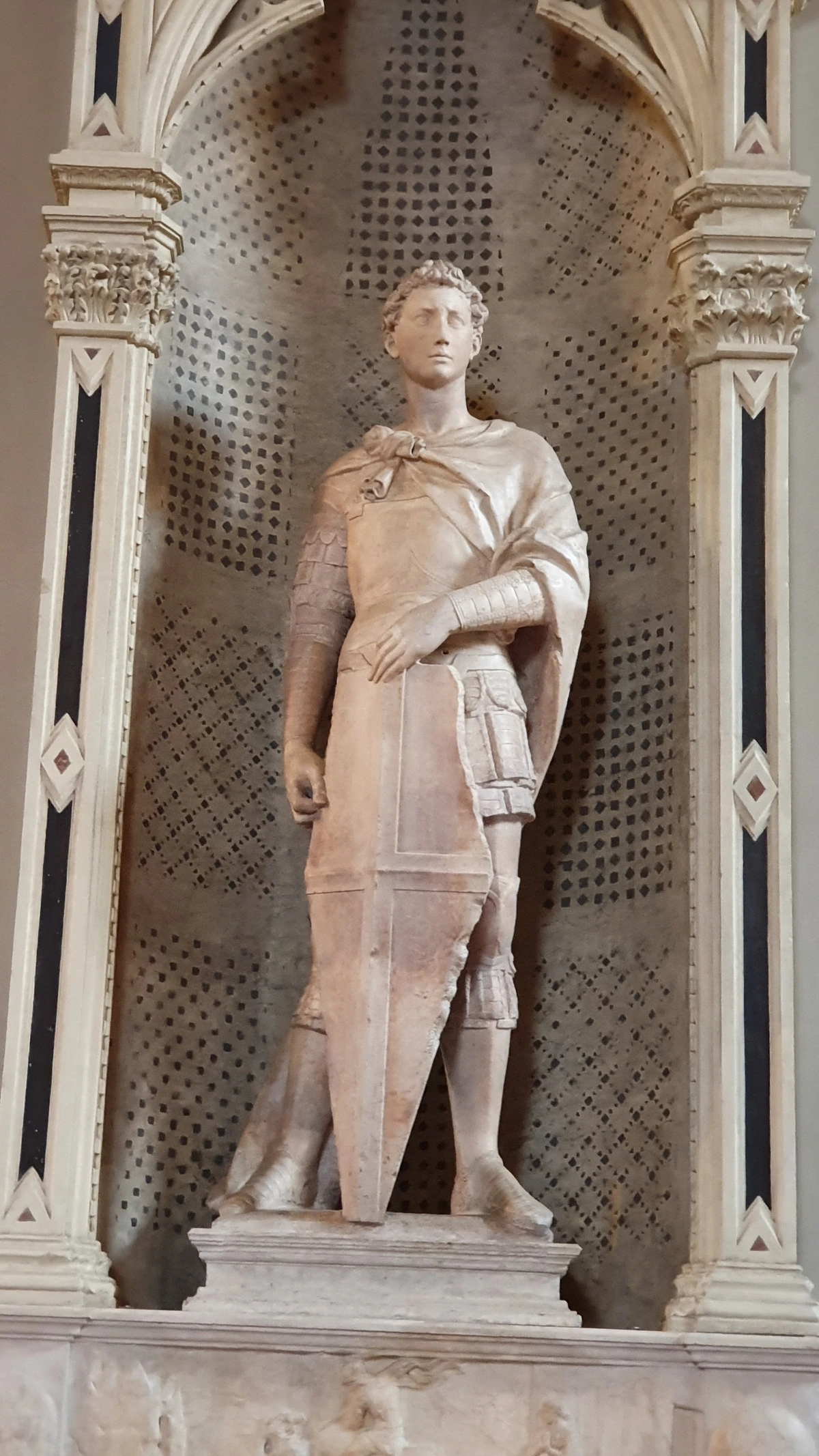
Q: Is the entire sculpture really carved from marble?
A: Yes, the central figures—Teresa and the angel—are carved entirely from a single block of Carrara marble, the same legendary stone Michelangelo used for David. But here's where it gets interesting: the "golden rays" behind them are actually made of gilded bronze (more on that later). What makes the marble so unbelievable is Bernini's mastery of surface treatment, a technique he pioneered called morbidezza—an Italian word meaning "softness." It refers to the astonishing way he could make marble appear to have the soft, yielding quality of living flesh. For Teresa's face and hands, he used progressively finer abrasives—moving from rough sandstone to cork and even dogfish skin—to achieve that translucent, wax-like sheen that seems to glow from within. For the chaotic drapery, he used claw chisels and deep-drilling techniques to create those impossibly shadow-filled folds. It's alchemy disguised as sculpture—he turned geology into theology.
Q: What's the angel holding, exactly?
A: A golden arrow. This directly references Saint Teresa's own writings about the angel piercing her heart with it. It represents the “fire of divine love” inducing her ecstasy. Bernini makes the arrow look like it’s just pierced her, suspended in that moment of penetration. The arrow itself isn’t real gold; Bernini polished the marble to a high, metallic sheen to simulate it, a brilliant bit of artistic trickery.
Q: Was Saint Teresa actually okay with being depicted like this?
A: It’s a fascinating question. Teresa wrote passionately about her visions, emphasizing the spiritual joy over the physical sensation. Bernini definitely leaned into the physical drama. Whether she’d approve of the overt sensuality... well, she might have blushed! But given her own intense, borderline-erotic descriptions, she’d likely recognize the core truth of the experience being captured, even if amplified. Bernini was aiming for a profound emotional truth, not just pious decorum.
Q: How long did it take Bernini to make this?
A: He worked on the entire chapel from 1647 to 1652. About five years. But this wasn't five years of solo labor. Bernini ran a highly efficient workshop—one of the most productive and organized artistic enterprises in history. He functioned as a director or conductor, designing the overall composition and carving the most critical parts himself (especially Teresa's face and hands), while delegating other sections to his skilled team of specialist carvers. Sculptors like Giuliano Finelli, who had previously worked for Bernini's rival Francesco Mochi, and Andrea Bolgi were instrumental in realizing the master's vision. This collaborative, almost industrial-scale production allowed Bernini to execute complex, multi-figure projects at a speed that would be unthinkable for a single artist. It was a full-scale artistic enterprise, a powerhouse operation that enabled him to transform Rome. It was a full-scale artistic enterprise, like a modern film production with a visionary director at the helm. It was a labor of intense focus, funded by a Cardinal who wanted the world to remember his name for eternity.
Q: Was this considered scandalous when it was unveiled?
The debate over whether Teresa's face was overly sensual raged for centuries. In the 1800s, French writer Stendhal visited the chapel and felt compelled to defend the sculpture, arguing that only a "corrupted" mind could see anything impure in it. He wrote, "Passion here is so noble, so far above humanity, that it requires a soul of stone to find any idea of earthly love in the rapture of Saint Teresa." Even today, guides in the church sometimes feel the need to preemptively address the sculpture's sensuality, explaining that it depicts a spiritual, not a physical, act. The very fact that this debate continues is a testament to Bernini's success. He did not create a safe, sanitized image. He created a dangerously ambiguous one, one that lives in the uncomfortable space between pain and pleasure, body and soul, the human and the divine.
A: This is one of my favorite historical debates, because the answer isn't simple. Was it scandalous? Not exactly—there wasn't a public outcry or attempts to destroy it. But was it controversial? Absolutely. The criticism centered on decorum—the question of what was appropriate to show in a sacred space. Some conservative churchmen felt Teresa's expression was too physical, too ambiguous between spiritual ecstasy and sexual rapture. One contemporary critic quipped that she looked "more possessed than ecstatic." Even into the 19th century, prominent art critics like John Ruskin denounced it as "immodest." But Bernini and his powerful patrons defended it as legitimate representation of authentic mystical experience (backed by Teresa's own explicit writings). The controversy points to the sculpture's radical nature: it dared to show the messy, human, physical reality of encountering the divine, rather than the sanitized piety people expected. Bernini essentially won the argument—after Teresa, raw emotion became central to Catholic art, big time.
Q: How did Bernini physically carve marble to achieve that floating fabric effect?
A: Magic. Okay, fine—extremely methodical, back-breaking magic. The process reveals just how technically revolutionary Bernini was:
- Clay Model (Bozzetto): Everything started with a full-scale clay model where Bernini worked out the composition, gestures, and emotional dynamics.
- Pointing and Rough-Out: Using a pointing machine (a Renaissance 3D copying tool), measurements were transferred from clay to marble block. Assistants would rough out the basic forms with heavy chisels and mallets.
- Bernini's Personal Intervention: This is where the master took over. For the famous drapery folds, Bernini pioneered techniques like deep undercutting with claw chisels and multi-axis drilling—drilling holes from multiple directions to create those impossible-looking floating fabric sections. He wasn't afraid to remove huge amounts of marble, leaving dangerously thin sections that create translucent effects.
- Surface Alchemy: For Teresa's skin, he used progressively finer abrasives (sandstone → cork → dogfish skin) to achieve that eerie, translucent wax-like sheen. For the fabric, he used different tools to create varied textures—smooth for close-fitting areas, deeply carved for dramatic shadows.
- Light-Manipulation Carving: This is crucial—Bernini carved with the chapel's specific light source in mind. He left slight tool marks in strategic places that would catch the hidden window's light, enhancing the shimmering effect. He was painting with shadow, using marble like stained glass.
It was a perfect marriage of technical skill, artistic audacity, and profound understanding of optics—sculpture as physics experiment and mystical vision combined.

Q: What's the deal with the golden rays behind them?
A: Pure theatrical genius. Those rays are made of gilded bronze, not marble. They catch and reflect the light from Bernini's hidden window, creating the illusion of divine radiance flooding the scene. This was more than just a cool effect; it was a sophisticated piece of Counter-Reformation theology made manifest. The Council of Trent had explicitly mandated that sacred art should represent saints 'as if in glory,' often surrounded by light. Artists were required to depict the Virgin Mary and the saints 'especially with that clearness and brightness which denotes the glory of the triumphant Church.' Bernini took this instruction and ran with it, creating a veritable explosion of divine light. He wasn't just decorating a chapel; he was providing sculptural proof of Teresa's sanctity, making her 'glory' visible through a shower of sculpted, gilded light. It’s a subtle but incredibly important detail that separates heaven from earth in the narrative of the sculpture. This was the real kicker—proof Bernini was thinking like a stage designer and a special effects wizard. By using a different, more reflective material, he made the divine light look different from the earthly marble. It’s a subtle but incredibly important detail that separates heaven from earth in the narrative of the sculpture.
Q: How much did this artistic masterpiece actually cost?
A: Buckle up—the numbers are staggering. Cardinal Federico Cornaro commissioned the entire Cornaro Chapel project (not just the Teresa sculpture) at a total cost of 12,000 Roman scudi. To put that into perspective:
- A skilled Roman stonemason earned roughly one scudo per week
- That means the chapel cost the equivalent of 230 years of skilled labor
- In modern purchasing power, we're talking multiple millions of dollars—potentially $10-20 million in today's money
But for a Venetian cardinal of the Cornaro dynasty, this was more than just a religious commission; it was a strategic political act. It was competitive patronage at its finest. The Cornaros were locked in a perpetual power struggle with other great Italian families—and commissioning a breathtaking chapel was a move on the cultural chessboard. They weren't just buying art; they were buying memory, legacy, and a form of spiritual authority that translated into real-world influence.
Where did this fortune come from? The Cornaro family were Venetian aristocracy with fingers in everything profitable: the spice trade, silk manufacturing, banking, and state administration. They essentially ran Venice's economy. The chapel was their spiritual flex—using worldly riches to secure otherworldly prestige.
Breaking it down:
Component | Estimated Cost (scudi) | Modern Equivalent |
|---|---|---|
| Architecture & construction | ~4,000 | Structural work |
| Central sculptural group | ~3,500 | Bernini's genius |
| Stucco work & decoration | ~2,000 | Ornate details |
| Gilded bronze rays | ~1,000 | Gold & materials |
| Side relief sculptures | ~1,500 | Additional carving |
This was a monumental investment designed to ensure the Cornaro family name would be remembered for eternity, linked with one of the most spectacular artistic achievements of the age. It was religious devotion, political statement, and family branding all rolled into one marble-and-gold package. When you look at Teresa, you're also looking at the economic power of Renaissance Venice personified in stone.
The Final Word: Art That Shakes Your Soul
Standing before Bernini’s Saint Teresa isn't an intellectual exercise. It’s a visceral one. You see the stone, but you feel the tremor, the weight of that divine, agonizing sweetness. It confronts us with the raw, unnerving power of human passion at the moment it intersects with the divine. You witness a sculptor capturing an invisible, personal soul-shaking event and making it shockingly, uncomfortably real. That’s the enduring power of the work. It connects us across centuries to the core human experience of being overwhelmed—by love, by beauty, by faith, by the sheer, terrifying wonder of existence. It’s a feeling captured in the Greek concept of ekstasis—'to stand outside oneself'—a rapturous departure from the mundane world that resonates far beyond any single religion or creed, whether you're swept away by a sunset, a piece of music, or the presence of something infinitely greater than yourself. It reminds us that art’s highest purpose isn’t just decoration; it’s revelation. It’s a mirror held up to our own potential for rapture and transcendence. Bernini didn’t just create a statue; he created an empathy machine, a device to make you feel what another human felt centuries ago, proving that the deepest tremors of the soul are timeless.
His work also connects to deeper streams of art history. He proved art doesn’t have to be pretty or comfortable to be powerful. It needs to be felt, to bypass the brain and speak directly to the nerve endings. That universal, shuddering language makes Teresa's 17th-century vision feel as immediate and real as the pulse in your own wrist.
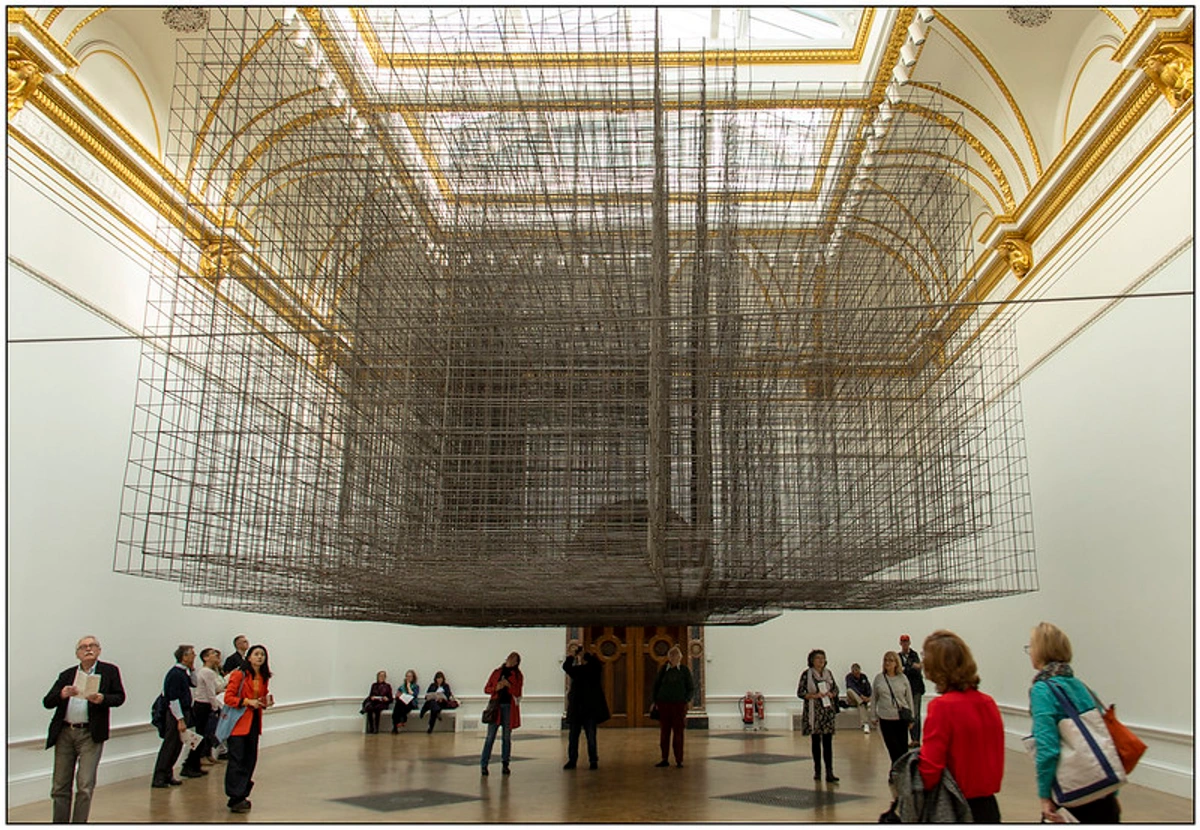





Feeling inspired? The quest to capture profound feeling in art continues. Explore contemporary works that build on this legacy at Zen Museum's Collection or delve deeper into the intersection of art and spirituality on our Den Bosch Museum project page. Dive deeper into artistic timelines and innovations throughout history via our interactive timeline. Art isn't just history; it's happening now, and it’s waiting for you to feel it.