
The Ecstasy of Saint Teresa: Unraveling a Masterpiece of Baroque Passion
Dive deep into Bernini's iconic sculpture of Saint Teresa to decode its spiritual symbolism, artistic innovation, and enduring emotional impact.

The Ecstasy of Saint Teresa: Unraveling a Masterpiece of Baroque Passion
Have you ever stood before a work of art and felt your own breath catch in your throat? That sudden, electric stillness when everything else fades and you're left facing something that feels utterly alive? That's what happens when you step into Rome's Santa Maria della Vittoria and come face-to-face with Gian Lorenzo Bernini's The Ecstasy of Saint Teresa. Completed between 1647 and 1652, the work was installed in its purpose-built theatrical setting in the Cornaro Chapel in 1652. For over 370 years, this marble vision has left viewers spellbound—or deeply unsettled. Commissioned by the Venetian Cardinal Federico Cornaro for his family's funerary chapel, this relatively small sculpture—standing less than 12 feet high in its niche—represented a radical departure from traditional devotional imagery. The way light caresses translucent stone, the almost unbearable intimacy of that moment frozen in time, the sheer audacity of carving what looks like pure physical rapture. It's considered one of the sculptor's greatest masterpieces, embodying the dramatic essence of the High Roman Baroque.
But here's the thing I've learned after staring at photos and reading accounts: most of us walk away with more questions than answers. Is this sacred ecstasy or erotic transcendence? And why does it feel so shockingly modern despite being carved in the 1640s? Let's peel back the marble layers together. We'll explore not just what Bernini created, but why it continues to tear down the artificial wall between body and spirit, human and divine. This isn't just an analysis; it's an investigation into how marble can bleed, breathe, and whisper the secrets of divine love. ## The Counter-Reformation Stage: Art as a Weapon of Faith
So why here? Why now? Bernini didn't create in a vacuum. His work is inseparable from the Counter-Reformation, the Catholic Church's sweeping response to the Protestant Reformation. Think of it as a massive, centuries-long campaign to win back the hearts and minds of the faithful. Protestants had rejected the veneration of saints, the cult of relics, and the use of lavish imagery, which they viewed as idolatrous. The Catholic Church, in turn, doubled down on these very things, turning them into powerful instruments of its revitalized identity. Art wasn't just decoration; it was a weapon—a tool for propaganda, education, and emotional control, designed to awe the mind and inflame the heart.
The Council of Trent, which concluded in 1563, laid down the law: art should be clear, powerful, and emotionally resonant. It should inspire piety, not confusion. It should depict the mysteries of the faith in a way that was both accessible to the illiterate and theologically sound for the learned. The goal was to create a sensational, immersive experience that would leave no doubt about the power and glory of the one true Church. In this climate, mysticism wasn't just tolerated; it was actively promoted as a potent symbol of direct, personal, and undeniable contact with the divine.
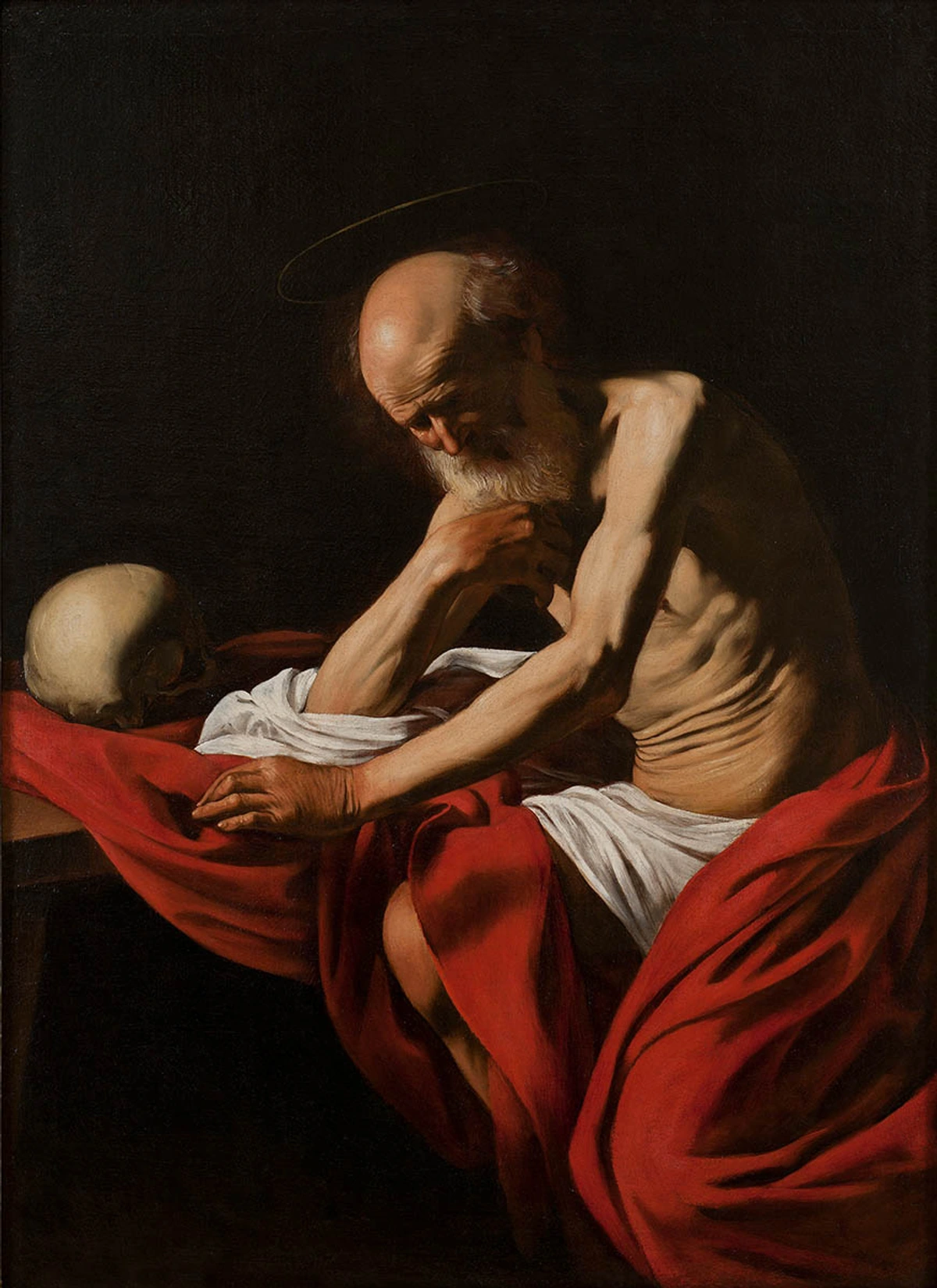
This was the world that produced Saint Teresa. Her intense, visionary spirituality became a poster child for the Counter-Reformation. She was proof that God still spoke directly to his most devoted servants, bypassing the institutional debates that had fractured Christendom. Her canonization in 1622 was a major event, a strategic declaration by the Church that this kind of passionate, embodied faith was the authentic path.
Bernini's genius was to take the Church's new artistic mandate and push it to its absolute limit. He gave the Counter-Reformation its ultimate artistic expression. His Ecstasy wasn't just a pretty picture for a chapel; it was a theological argument carved in marble. It was an immersive demonstration of divine presence so vivid and overwhelming that it dared anyone to look at it and claim that mystical experiences weren't real. He took the Church's propaganda and turned it into high art.
The Woman, The Myth, The Visionary: Teresa of Ávila
Born in 1515, Teresa de Cepeda y Ahumada grew up in a Spain fractured by religious tension. After entering the Carmelite order, she was struck by a series of debilitating illnesses that left her partially paralyzed for three years. During her slow recovery, her spiritual life intensified, and she began to experience the visions that would define her legacy. She wasn't just a passive recipient of divine grace; she was a tenacious and brilliant leader. Her life was a constant battle against physical frailty, political opposition, and the rigid gender roles of her time. In her autobiography, she often speaks of her early life with a kind of wry self-deprecation, confessing her youthful vanity and worldly interests before her complete conversion. This makes her relatable; she wasn't born a saint, she became one through struggle.
Teresa's greatest worldly achievement was the reform of the Carmelite order. She established the "Discalced," or shoeless, Carmelites, a stricter branch that emphasized a return to a life of poverty, simplicity, and intense prayer. Founding convents against immense political and ecclesiastical opposition, she became one of the most powerful and influential women of the 16th century. Her written works, especially The Life of Teresa of Jesus, her spiritual autobiography The Way of Perfection, and the mystical masterpiece The Interior Castle, remain foundational texts of Christian mysticism. Her writing is disarmingly direct and honest, filled with practical advice and vivid, almost embarrassing detail. She was canonized as a saint in 1622, just forty years after her death, and declared a Doctor of the Church in 1970 for her profound theological insights—a rare honor for a woman.

Teresa of Ávila: The Woman Behind the Visions
Before we dive into Bernini’s vision, let’s get acquainted with the woman behind the marble. Saint Teresa of Ávila was a 16th-century Spanish mystic, Carmelite nun, and writer who documented her intense spiritual experiences in her autobiography The Life of Teresa of Jesus. What makes her fascinating is how visceral her descriptions were:

"I saw in his hand a long spear of gold, and at the iron point there seemed to be a little fire. He appeared to me to be thrusting it at times into my heart..."
She wasn’t talking metaphorically. Teresa described physical sensations: warmth, piercing pain, waves of heat that left her trembling with what she called "spiritual delight." These weren’t gentle devotions; they were full-body encounters with the divine. For Teresa, this was the culmination of her life's spiritual journey—a path marked by severe illness, intense prayer, and groundbreaking reforms within the Carmelite order. Her visions were the fuel for her mysticism. But what I find so compelling is her unwillingness to sugarcoat the experience. She openly wrote about her own doubts, her fear that the visions were demonic, and the exhausting toll they took on her body. This wasn’t pious, sanitized faith; it was raw, messy, and deeply human.
Bernini didn’t just read these words—he channeled them. He translated Teresa’s internal chaos into visible, tangible art. He chose the single most controversial and powerful passage, transforming words into a visual language that could be understood by a largely illiterate populace. He knew this wasn't just about one woman's vision; it was about every person's capacity for transcendent love.
Bernini’s Masterstroke: Where Theology Meets Theatre
Gian Lorenzo Bernini wasn’t just a sculptor; he was a Baroque rockstar, a multi-talented virtuoso whose career spanned nearly seven decades. By the time Cardinal Federico Cornaro commissioned him for the family chapel in the early 1640s, Bernini was at the peak of his powers, having already created the breathtaking baldachin over the high altar of St. Peter's Basilica. He turned Santa Maria della Vittoria’s Cornaro Chapel into a 360-degree drama. The Ecstasy isn’t孤立; it’s the climax of a staged production, designed from the ground up as a complete aesthetic experience.
Saint or Superstar: The Man Behind the Magic
To understand the audacity of this piece, you need to understand Bernini's Rome. Imagine a city pulsating with the energy of the Counter-Reformation, a place where the Catholic Church sought to reaffirm its power through overwhelming, emotionally charged art. This was Bernini's stage. Patronized by Pope Urban VIII Barberini, he wasn't just an artist; he was a cultural force. In many ways, Pope Urban VIII was not just a patron but a co-conspirator, giving Bernini unprecedented access to papal projects and endorsing his theatrical, emotive style as the official artistic language of the Church. He operated like a modern-day film director, commanding teams of assistants, directing architectural spectacles, and even writing and staging plays. His work ethic was the stuff of legend; he reportedly once chided a prince for keeping him from his daily work. This wasn't just a job for him; it was a divine calling. What often goes unmentioned is the political savvy required to navigate papal Rome. Bernini survived and thrived under eight different popes, a testament to his skill not just with a chisel, but in the art of courtly politics. Contemporary accounts describe him as a man of immense charm, wit, and fiery temper, capable of both intense loyalty and bitter rivalry. He lived and breathed his work, often sleeping only a few hours a night, driven by a belief that his talent was a direct gift from God that he was obligated to use to its fullest.

The Architecture of Ecstasy: A Stage for a Miracle
Bernini designed the entire chapel, treating it not as a static box but as a dynamic volume of space. Light streams down from an unseen window, a specific fenestra celestiale (heavenly window), strategically placed to illuminate Teresa like a divine spotlight. A hidden gilded metal sheet, meticulously scored with lines to resemble radiating light, amplifies the sun's rays, creating the illusion of shimmering divine intervention. The white marble clouds, seemingly weightless, appear to part around her and the angel. X-ray fluorescence studies of the chapel have revealed traces of the original gilding, confirming that the effect was even more brilliant and opulent in the 17th century than it appears today.
But the true brilliance lies in the audience. Bernini positioned members of the Cornaro family in sculpted relief within opera box-style balconies on the side walls. They're not just decorative elements; they're spectators to the divine event, just like you. This meta-theatrical device blurs the line between art and reality, pulling you into the narrative as a co-witness to Teresa's ecstasy. Bernini wanted you to feel like you’d stumbled upon a private revelation, making your presence part of the piece itself.
The Gesamtkunstwerk: Combining Arts into a Single Vision
The genius of the Cornaro Chapel is its status as a gesamtkunstwerk, a German term meaning "total work of art." Bernini didn't just create a sculpture; he orchestrated an entire environment where sculpture, architecture, painting, and light combine to create a single, overpowering emotional experience. You don't just look at the sculpture; you are in the event. The frescoed ceiling opens up to a painted sky, the hidden window provides the celestial spotlight, the sculpted spectators guide your reaction, and the central group hits you with the full force of its narrative and technical power. It’s an early form of immersive installation art, designed to short-circuit your intellect and speak directly to your senses. Frankly, he was three centuries ahead of his time.
Marble Made Flesh: The Sculptor's Alchemy
Let’s break down Bernini's technical wizardry. Teresa lies back on a cloud, her mouth parted in a gasp that seems to freeze a moment between pain and pleasure. An angel, with delicate, feathered wings, hovers above her, armed with that golden spear. Bernini's choice of a clean-shaven, almost androgynous angel was a deliberate departure from traditional iconography, focusing the viewer's attention on the act itself, not the identity of the messenger. This ambiguity was crucial, transforming the figure from a specific cherub into a universal personification of divine love. It's a deeply personal messenger, one that seems to exist solely for this intimate transaction with Teresa, stripping the moment of any celestial bureaucracy.
The tour de force is Teresa's drapery. Her heavy Carmelite robe is carved so thinly you can see the folds of her legs and the tension in her toes underneath, a technical feat that flaunts Bernini's mastery. He achieved this effect, known as panneggio bagnato (wet drapery), by using progressively finer rasps and abrasives, then polishing the marble to create translucent passages. Some sections are so thin they are almost transparent, a gamble that required flawless marble and an absolutely steady hand. Notice the subtle differentiations in texture: the polished, almost waxy smoothness of Teresa's face and hands, the roughly chiseled clouds for contrast, and the deep undercutting that creates pockets of shadow, heightening the drama. The deep folds on her outer habit are carved with deep, aggressive shadows, a powerful contrast to the smooth inner garment, which is almost perfectly translucent and reveals her body in a way that was meant to shock.
Modern analysis suggests he used veined "statuario" grade Carrara marble, the finest available, quarried from locations like Colonnata. Art historians like Irving Lavin have pointed out how the natural grey veining in the marble may have been strategically used by Bernini to echo Teresa’s own description of her veins "burning with love," transforming a natural imperfection into a stroke of symbolic genius. This wasn't realism—it was hyper-reality, an emotional truth carved into stone. Every fold, every shadow, every vein of marble serves the single goal of making you, the viewer, feel the divine touch on your own skin.
The Power of the Unfinished: Bernini's Non-Finito Technique
Look closer at the clouds and the lower portions of Teresa's robes. While her face and hands are polished to a high sheen, other areas remain rough, retaining the marks of the chisel and the claw chisel. This is a deliberate artistic choice known as non-finito, or "the unfinished." Michelangelo pioneered it, but Bernini used it masterfully. By contrasting the finished and unfinished, he creates a dynamic visual rhythm, guiding the viewer's eye. The roughness of the cloud emphasizes the ethereal softness of the saint's skin, while also suggesting the chaos from which divine visions emerge. It was a statement of virtuosity: Bernini could afford to leave parts seemingly incomplete because the sheer mastery of the finished parts left no doubt as to his genius.
Symbolism Deep Dive: What’s Really Happening?
The angel doesn’t look like he’s attacking Teresa. His expression is tender, almost meditative. His grip on the arrow—technically a dardo d'oro (golden dart)—is firm but not violent. And Teresa? She's not resisting. Her hands are limp and open, her body arched in complete surrender. Her left foot dangles, a detail of utter abandon that speaks volumes. This isn’t pain—it’s bliss. This is the Transverberation, the mystical "wounding of the heart" by divine love. Bernini captures not the moment of piercing, but the suspended climax, the spiritual orgasm where the soul is said to unite with God. But what are the details whispering? Let's decode them. Bernini filled the scene with symbolic urgency. The swirling, disorganized folds of the saint's outer robe, contrasting with the smoother undergarment, could symbolize the chaos of earthly life being shed to reveal a more purified spiritual state underneath. Even the cloud she rests on is not a passive base but an active element, suggesting she is being carried by a divine current, not merely floating.
Look, too, at what isn't there. The heavy, block-like base common to so many sculptures of the period has been replaced by a swirling vortex of marble cloud. There's a sense of disorientation here, a feeling of the ground literally giving way beneath her. This isn't just a spiritual experience, it's a physical one, happening in a space that defies the laws of nature.
The Cultural Climate: Affective Spirituality and the Body
You have to understand the air Bernini was breathing. The 17th century was steeped in what theologians called Affective Spirituality. Think of it as faith experienced through the physical senses—touch, sight, sound, and feeling. It was a radical shift from the more intellectual, distant faith of the medieval period. The early Jesuits, for instance, developed meditative practices that required practitioners to mentally "compose the place," to imagine themselves physically present at scenes from the Bible, feeling the cold of the stable in Bethlehem or the heat of the sun on Calvary. This was the era of the Counter-Reformation, and the Catholic Church, through decrees from the Council of Trent, actively championed art as a tool to re-engage the hearts and bodies of its followers. It was a direct response to the Protestant critiques that Catholicism had become too cold, idolatrous, and ritualistic. Theologians like St. John of the Cross, Teresa's own protégé, wrote extensively about the "dark night of the soul" and the "living flame of love," providing a theological framework for her ecstatic experiences. They wanted worshippers to experience the divine, and that’s precisely what Teresa described—a full-body, overwhelming physical encounter with God.
Bernini wasn’t inventing this eros-meets-agape tension; he was channeling a major cultural and theological undercurrent. He was deeply influenced by the writings of figures like St. John of the Cross, who also used the language of sensual love to describe union with the divine. The eroticism we perceive today was, in the 17th-century mind, simply the most accurate vocabulary available to describe a love so intense it transcended human understanding. The body was seen as the vessel through which divine truths could be accessed and expressed. In fact, many female mystics of the period, from St. Catherine of Siena to St. Teresa, described their encounters in explicitly physical terms, which provided a powerful precedent for Bernini's daring vision. This literary tradition, known as mystical theology, gave artists like Bernini the license to explore the physicality of divine experience in ways that would have been unthinkable just a century earlier.
Now let's examine the specific symbolic vocabulary Bernini employs:
Element  | Meaning | Emotional Impact |
|---|---|---|
| Golden Arrow/Dardo | The dardo d'oro symbolizes divine penetration and mystical union; the fire represents the consuming love of God. | Creates a potent mix of rapture, vulnerability, and spiritual intimacy, blurring the boundaries between love and pain. |
| Angel's Smile | Serenity and gentleness, representing divine benevolence and love, not aggression. This challenges the viewer's expectation of a fearsome divine encounter. | Humanizes the divine, transforming it into an encounter of pure, loving grace rather than a moment of terror. |
| Open Mouth & Limp Hands | Physical signs of ek-stasis ("standing outside oneself"); the soul is transported beyond the body. Abandonment, not agony. | Invokes profound empathy from the viewer, forcing an emotional connection to this highly intimate and raw moment. |
| Thinly Carved Drapery | Bares the body while covering it, embodying the paradox of physicality in spiritual experience. | Suggests a spiritual nakedness, reinforcing themes of divine intimacy and making the spiritual physically tangible. |
| Cloud Base | Represents the boundary between the earthly and heavenly realms, a liminal space where miracles occur. | Blurs the distinction between reality and vision, making the supernatural event feel immediate and palpably real. |
| Hidden Gilded Light | Represents God's unseen presence and intervention; light becomes a theatrical manifestation of divine grace. | Creates a mystical, ethereal aura that elevates the sculpture from mere statue to a staged, sacred event. |
| Cornaro Spectators | Embodies the act of witnessing faith and the role of the audience in validating the miraculous. | Breaks the fourth wall, making the chapel visitor complicit in the divine drama, turning observation into participation. |
Bernini’s genius? He made theology sensorial. Teresa’s body wasn’t just a container for her soul—it was her experience. In the 17th-century Catholic Church, female mysticism was a dangerous path. Theologians constantly scrutinized figures like Teresa, trying to discern if their visions were divine or delusional, or even diabolical. The line between divine ecstasy and earthly hysteria was perilously thin. Bernini countered this skepticism visually: This isn’t lust. It’s love. Pure, ecstatic, spiritual love. Notice no genitalia, no tension—just transcendence. He presents a vision so raw, yet so devoid of carnal suggestion, that it validates Teresa's experience as authentically, mystically divine. He was her ultimate theological defender in marble. This visual argument was amplified by another stroke of genius: the positioning of the Cornaro family. By making them witnesses, he's not just inviting us to believe Teresa's ecstasy; he's showing us the social mechanism of how such visions were accepted. Their calm, reasoned discussion—eternally frozen in their marble boxes—serves as a deliberate counterpoint to Teresa's chaotic rapture, grounding the irrational moment in a framework of rational validation.
A Moment of Suspension: Capturing the Climax Before the Release
Art critics often point out that Bernini chose not to depict the arrow's initial piercing or the moment of aftermath. Instead, he carved the second of complete spiritual and physical surrender that occurs in between. The arrow hovers, almost touching but not quite. Teresa's body tenses in anticipation of a divine touch that is simultaneously a wounding. It is the ultimate pathetic fallacy: her body responds to a spiritual force with a physical reaction. This suspended animation creates an unbearable tension. As a viewer, you are caught in that same moment of held breath. You can't look away because you are waiting, with Teresa, for the release—an event that Bernini ensures will never, ever come. It is a brilliant narrative trick, turning a static block of marble into a story with an eternal, unresolved cliffhanger.
Why Four Centuries Haven't Dimmed Its Power
I've watched countless people stand before this sculpture, whether in person or through the flickering screen of a documentary. Their reactions are always, without fail, visceral. Some call it deeply erotic, others purely divine, and many are caught in a state of confused, silent awe. Why does this Renaissance-era sculpture continue to provoke such intense, often polarized, reactions? The answer is simple: Because Bernini refused to sanitize mysticism. He revealed it as messy. Human. Think about Teresa’s words again—"piercing," "burning," "delight." These aren’t sterile theological terms. They belong to the language of the body. Bernini dared to sculpt faith not as a placid ideal, but as a physical, overwhelming, and even disorienting force.
The sculpture's power lies in its radical ambiguity. It forces us to confront our own dualities: body and soul, pleasure and pain, sacred and profane. It asks us whether our categories for these experiences are even large enough to contain the truth of human sensation. It feels shockingly modern because it speaks to an eternal human condition—the paradox that our most profound moments often arrive in the guise of their opposite.
In an age where spirituality often gets sanitized into self-help platitudes, the Ecstasy serves as a potent, unsettling reminder. It tells us the divine can feel like a collision. Like an arrow in the heart. Like fire in the veins. It doesn’t ask for politeness. It demands surrender.
The sculpture is a mirror. For some, it reflects wish-fulfillment, a tangible representation of their own deepest longings. For others, it reflects their most profound skepticism. This is the mark of a masterpiece: it doesn't resolve its own tension. Instead, it holds it, eternally, inviting every new generation to wrestle with it anew.
The Restoration Debate: Preserving Patina or Revealing Radiance?
An intense debate simmers among art historians and conservators: should the sculpture be cleaned? For centuries, a patina of grime and candle soot has accumulated, subtly muting the brilliant white Carrara marble and softening the shadows Bernini so carefully carved. Proponents of a light restoration argue that removing this layer would reveal the original dazzling radiance and deepen the contrast, making the divine spotlight all the more dramatic. They point to successful cleanings of other Baroque masterpieces, like Antonio Corradini's veiled sculptures, which revealed surprising details once centuries of grime were removed.
Opponents, however, passionately resist. The patina, they argue, is part of the work's 370-year history, and aggressive cleaning risks destroying the delicate non-finito passages and polished surfaces. It’s a battle between historical preservation and aesthetic restoration, between seeing the sculpture as its 17th-century audience did versus accepting it as a living object that has aged. When you see it today, you are seeing it with the accumulated history literally written on its surface. Frankly, I think the patina adds a layer of mystery—the work seems to emerge from a dream, not a harshly lit stage. There's also a scientific argument: some conservators warn that modern cleaning agents could react unpredictably with the marble or the ancient glues and pins used in its construction, potentially causing irreversible damage.

From Chapel to Canvas: The Ripple Effect of a Revolution
This piece didn't just define Baroque art's essence: drama, emotion, theatricality. It became its unreachable zenith. Artists like Caravaggio had pioneered the psychological drama of tenebrism, but Bernini made it performative. He wasn't content with a static image; he built an entire world. He merged sculpture with architecture, painting, and stagecraft in a gesamtkunstwerk—a total work of art—that wouldn't be seen again until the grand opera houses of the 19th century.
The legacy is staggering. You can trace a direct line from the swirling, ecstatic figures of the Cornaro Chapel to the dynamic marble masterpieces of artists across Europe. His influence crossed mediums. The dramatic lighting of Baroque painting owes him a debt. Later sculptors like Antonio Canova tried to capture a similar sensual grace in his The Ecstasy of Saint Teresa by Canova is a fascinating, later interpretation. Rodin's writhing figures in The Gates of Hell are unthinkable without Bernini's precedent. Modern cinema might be his most pervasive inheritor. The way a director like Steven Spielberg uses light as a narrative force, or the heightened emotional peaks in a film by Pedro Almodóvar—they've unconsciously absorbed Bernini's language of sensation. We can even see his influence in the work of modern artists like Bill Viola, whose video installations often use slow-motion and extreme close-ups to capture what he calls "transcendent moments" in a way that feels deeply indebted to Bernini's focus on suspended emotional climax.
The Counter-Example: Canova’s Neoclassical Take
A century after Bernini, the Neoclassical sculptor Antonio Canova created his own version of The Ecstasy of Saint Teresa. Commissioned by Pope Pius VII for the same church, it was a deliberate artistic statement, an attempt to correct what the Neoclassical movement saw as the excesses and melodrama of the Baroque. Where Bernini's Teresa is spontaneous, dynamic, and emotionally explosive, Canova's is serene, idealized, and composed. Canova's angel is ethereal and poised, his Teresa a calm, classical beauty. There is no theatrical collapse, no hidden window, no family of spectators. It's the same subject, but two completely different worlds. Canova rejected Bernini’s approach, stating that sculpture should embody "ideal beauty" and "noble simplicity" rather than capture a fleeting, violent emotion. Seeing them both is a masterclass in the history of art, illustrating the pendulum swing of aesthetic philosophy from emotional extremism back to rational order. But ask yourself: which one do you remember? Which one haunts your thoughts? That’s the power of the Baroque.
Your Encounter: A Visitor's Guide to the Cornaro Chapel
So you're planning a trip to Rome. A visit to the Cornaro Chapel is a pilgrimage, a moment to step out of the Roman chaos and into a single, controlled breath of marble and light.
Before You Go: Timing and Tips
Here are a few non-negotiable tips to make your visit meaningful:
- Go early. This is non-negotiable. The chapel is small, and busloads of tourists descend after 10 AM. Arrive right when Santa Maria della Vittoria opens for a chance at a moment of genuine intimacy with the sculpture. It's on the bustling Via XX Settembre, an unassuming facade hiding one of Rome's greatest treasures.
- Sit. Use the small pews. The Cornaro family’s carved marble "box seats" flank the main altar. They’re not just decoration—they make you complicit in witnessing Teresa’s vision. Bernini planned this. You are an actor in his divine play. Take a moment to notice their reactions; they're a Greek chorus of silent witnesses.
- Look up. Bernini painted the vault of the chapel's ceiling with an illusionistic fresco of an open sky filled with angels and floating putti. It's a meta-commentary on spectatorship. We, and the angels, are all voyeurs to this intensely private moment, yet the divine heart of the vision remains just beyond our grasp.
- Find the light. If you can, visit on a sunny afternoon. The chapel's artificial lighting can't compare to the original effect of the natural light streaming down from the hidden window, striking the gilded rays and setting the marble ablaze. Watch how the quality of the marble changes with the sun's movement.
- Bring binoculars. You won't get close to the sculpture, but with a small pair of binoculars, you can study the intricate details: the translucent drapery, the angel's delicate wings, the subtle carving of Teresa's face. It's a game-changer for your appreciation of Bernini’s technical skill.
- Download a 3D tour app beforehand. While nothing replaces the real thing, some apps offer high-resolution 3D scans of the sculpture, allowing you to explore details that are impossible to see from the chapel floor.
- Visit the gift shop last. Don’t buy a postcard first. Let the real, unmediated image burn itself into your memory before you look at the reproductions.
Frequently Asked Questions About Bernini's Masterpiece
Here are some of the most common questions people have when they first encounter this incredible work, along with the answers to help you see it in a new light.
The Sculpture, the Vision, and the Visions
Q: Is this based on a real woman's experience? A: Absolutely. Saint Teresa of Ávila was one of the most influential figures of the Catholic Reformation. A 16th-century Spanish Carmelite nun, she was a powerful theologian, a reformer, and a writer who documented her mystical experiences with unsettling, physical detail. The sculpture isn't a generic symbol; it's a specific interpretation of the words of a real woman who lived, wrote, and felt these things.
Q: Why does Teresa look like she’s in pain? A: This is the most common question, and it cuts to the heart of the sculpture's power. The word "ecstasy" comes from the Greek ek-stasis, which literally means "to stand outside oneself." That's the state Bernini is showing. Teresa's parted lips, closed eyes, and swooning posture were the established artistic vocabulary for overwhelming spiritual rapture. The "pain" you see isn't torment; it's the almost unbearable intensity of a bliss so profound it transcends everyday feeling. Bernini visualized a pleasure so total, so all-consuming, that it borrows the language of its opposite.
Q: Was the sculpture controversial? A: The short answer is yes, but not for the reasons you might think. The debate wasn't about nudity but about theological and artistic propriety. Could, or should, a mystical union with God be depicted with such visceral, sensual intensity? Some contemporaries found it "too theatrical" and inappropriate for a sacred space. Its survival is a testament to Bernini's towering reputation. He was the Pope's favorite, and that gave him immense creative freedom to push boundaries that other artists wouldn't dare touch. Critics complained that he was treating a sacred chapel like a theater, a critique that Bernini himself likely saw as a compliment to the immersive power of his art. The Cardinal who commissioned it, Federico Cornaro, was himself a figure of some controversy, having been appointed by a Pope who was seen as favoring his Venetian allies—so the chapel was seen by some as a political statement as much as a religious one.
Q: Was Bernini accused of creating erotic art? A: This is a tricky one. While the word "erotic" in its modern sense wasn't used, the accusation of excessive sensuality was definitely in the air. Church officials and rival artists sometimes criticized the piece for its "theatricality" and perceived impropriety. The Church of the Counter-Reformation was wary of art that could be misunderstood or lead the faithful astray. The sculpture's power lies in walking that razor's edge. However, Teresa’s own intensely physical writings were a powerful defense for Bernini's interpretation. He could always point to her and say, "I am not inventing this; I am merely making visible what she wrote." It certainly didn't hurt that he was the undisputed master of Rome and a favorite of the papacy. In the art world, then as now, influence and talent can protect radical visions.
Q: How did Bernini create the famous glowing effect? What's the light trick? A: This is Bernini the theatrical genius at his best. There is a hidden window—a fenestra celestiale—high up in the dome of the chapel, invisible from the main viewing area. Natural light streams through this window and strikes a hidden, gilded metal sheet with carved, radiating lines, placed behind the sculptural group. The result is a shower of golden, shimmering rays that bathe the white marble figures, making them appear to be lit from within by a divine source. Bernini and his contemporaries called it "lume riflesso" or “borrowed light.” He didn't just represent divinity; he weaponized architecture and physics to stage a real-time miracle of light. What's truly brilliant is that this effect changes throughout the day, making the sculpture an active, living performance rather than a static object. Morning light provides a soft glow, while midday sun can make the rays appear almost blindingly intense, and the setting sun bathes the whole scene in a warm, reddish-gold light.
Seeing and Experiencing the Masterpiece
Q: Is it worth seeing in person, or are photos enough? A: Without a doubt, see it in person. The experience cannot be replicated. A photo flattens the sculpture into a two-dimensional object. Standing in the chapel immerses you in a total environment. You feel the scale, see the way the light dances on the marble, understand how the Cornaro family spectators interact with the central scene. You become part of the art. Photos are a souvenir; the real encounter is a memory that stays with you.
Q: Are there good copies or replicas I can see if I can't get to Rome? A: Absolutely. While nothing rivals the original, there are excellent ways to study this masterpiece. The Victoria & Albert Museum in London has a magnificent full-size plaster cast made in the 19th century. It's displayed in a well-lit gallery, allowing you to walk around it and examine the incredible details up close in a way that's impossible in the dark chapel. In Rome itself, the Museo di Roma at Palazzo Braschi also houses some interesting preparatory models and terracotta bozzetti (sketches) by Bernini himself, offering a glimpse into his sculptural process. Alternatively, high-resolution 3D scans and detailed photography, like those found in some interactive museum apps, can offer a different kind of close-up study, revealing tool marks and textures invisible to the naked eye. However, they all lack the chapel’s essential theatricality, the magic of the "borrowed light," and the profound feeling of standing within Bernini's complete vision.
Final Thoughts: More Than Marble
Bernini didn’t carve a saint. He carved the tension between flesh and spirit, body and soul, human and divine. He asked: What does joy that feels like pain look like? And he answered with marble. For all its theatricality, the Ecstasy feels intensely human because Teresa’s struggle is universal: the ache to be loved wholly, completely, overwhelmingly. It's a work of art that makes you rethink what you think you know about faith, prompting questions that echo long after you've left the chapel:
- How thin is the line between sacred and profane?
- How can we express transcendent love without relying on the language of the body?
- How much of our experience of the divine is tied to our physical selves?
- Why are we still so haunted by this image nearly 400 years after it was made?
- If you were one of the Cornaro family members in their marble box, what would be running through your mind as you watched?
These questions don't have easy answers, and Bernini's genius lies in never offering one. He simply holds the question up to the light of a hidden window, so it can glow in the dark of a Roman chapel, and dance before our eyes, forever suspended between a gasp and a sigh.
Next time you stand before a dramatic work of art, any work of art that makes your heart skip, ask yourself these questions: What’s the hidden story? Where is the light coming from? What is the artist trying to make you feel in your bones, not just your brain? Great art, like Bernini's Ecstasy, doesn't just please the eye. It interrogates the soul. It leaves you breathless—and, if you let it, a little bit more alive, a little bit more changed.
The Echo in Modern Consciousness: From 'Angels & Demons' to TikTok
The Ecstasy of Saint Teresa has permeated popular culture far beyond the confines of art history. It was a central, plot-driving symbol in Dan Brown’s blockbuster novel Angels & Demons, where its sensual spirituality was contrasted with the story’s scientific rationalism. On a lighter note, the sculpture is a recurring star in memes and social media, where Teresa’s expression is often humorously captioned to reflect modern states of being, from the shock of a work deadline to being overwhelmed by choice at a restaurant. Even on TikTok, short-form videos capture the moment visitors first see the work, preserving their expressions of awe and confusion for a new generation.
This widespread cultural recognition is a testament to the work’s universal emotional core. Bernini carved something so fundamentally human that it resonates whether you know a thing about the Council of Trent or not. He tapped into a shared emotional vocabulary that transcends time, proving that the divine can be found in a viral video just as surely as it can in a silent chapel. The sculpture has become a kind of universal signifier for 'inexpressible feeling,' a ready-made image for any moment too big for words.
Explore More Baroque Wonders
Dive deeper into historical artistic revelations through our interactive timeline or visit Zenmuseum’s Den Bosch location for immersive experiences reinterpreting iconic masterpieces: Den Bosch Museum.
Recommended Reading and Viewing
To truly understand the world that produced this masterpiece, immerse yourself in the words that inspired it. I highly recommend reading Saint Teresa’s autobiography, The Life of Teresa of Jesus (also known as The Book of Her Life). It’s available in many modern translations, including accessible Penguin Classics editions. You’ll find her voice is as direct, passionate, and surprisingly modern as Bernini’s sculpture.
For a deeper dive into the artist, Franco Mormando’s biography, Bernini: His Life and His Rome, is an excellent and highly readable choice. It destroys the myth of the solitary genius and paints a vivid picture of Bernini the man: ambitious, brilliant, and deeply embedded in the political and cultural intrigue of his time. If you want to dive into the sculptures themselves, Rudolf Wittkower’s Gian Lorenzo Bernini: The Sculptor of the Roman Baroque is the gold standard for technical and stylistic analysis, despite being written decades ago. For those interested in the feminist and psychoanalytic critiques of the work, artists and writers like Adrian Stokes and Leo Bersani have offered fascinating, if controversial, interpretations of Teresa’s ecstasy as a site of gendered power dynamics.








Lastly, for a focused study of the Cornaro Chapel itself, art historian Irving Lavin's classic, Bernini and the Unity of the Visual Arts, offers a masterful analysis of how Bernini fused sculpture, painting, and architecture into a single, cohesive vision. To witness how these themes translate into more modern forms of expression, explore the Timeline of Art History.