
The Art of a Nation at War: Painting & Propaganda in the Spanish Civil War
A deep and personal dive into the art and propaganda of the Spanish Civil War, from Picasso's agony in 'Guernica' to the revolutionary photography of Robert Capa. Discover how this conflict reshaped modern art.

A Canvas of Chaos: How the Spanish Civil War Forged a New Art
Have you ever walked through a quiet museum gallery, everything neatly chronologically arranged, and felt a bit... bored? I know I have. That tidy line of art history, from one -ism to the next, can feel so predictable. But then you hit a moment like the Spanish Civil War, and suddenly, that line snaps like a twig under a tank track. This wasn't a historical event that artists merely illustrated from a safe distance; it was a furnace that melted down every old idea about art's purpose and forged something entirely new, raw, and necessary from the wreckage.
Think of it this way: most art movements are born in studios and salons, a kind of aesthetic debate among peers. The Spanish Civil War dragged that debate into the streets, the trenches, and the bombed-out ruins of cities. It was no longer about brushstrokes or theories; it was a gut-punch question of survival, ideology, and the very soul of a nation. For three brutal years, from 1936 to 1939, Spain became a canvas of chaos, a stage where the great ideological battles of the 20th century—Fascism, Communism, and Democracy—fought their first bloody real-world battle, with artists, writers, and photographers as both witnesses and combatants. For three brutal years, from 1936 to 1939, Spain became a canvas of chaos, a stage where the great ideological battles of the 20th century—Fascism, Communism, and Democracy—fought their first bloody real-world battle, with artists, writers, and photographers as both witnesses and combatants.
This is the story of what happens when a canvas becomes a frontline, when a sculpture becomes a political statement, and when art stops being just something you look at and starts being something that looks right back at you, demanding you take a side. It’s a story of propaganda, yes, but it's also a story of a profound, collective human scream. It’s about how a canvas can become a crime scene, how a photograph can become a moral test, and how artists found themselves on the front lines of a battle for the very soul of reality. This is a chapter in art history where beauty and horror, conviction and despair, meet in a violent embrace.
Let's walk through this incredible, harrowing moment together, from the cluttered intellectual cafes of pre-war Madrid to the bombed-out streets of Guernica.
Before we dive in, I want to acknowledge something. When we talk about art history, it’s easy to get lost in the "isms"—Cubism, Surrealism, and so on. The Spanish Civil War is where those "isms" hit the pavement. This isn't just a story about paintings; it's about what happens when the studio becomes a trench, when the brush becomes a weapon, and when the canvas becomes a witness. The war asked artists a question they couldn't ignore: Is your art an ornament for the powerful, or is it a voice for the voiceless? The answer changed everything.
The Intellectual's Dilemma: Art vs. Action
For years, Spain's intelligentsia had wrestled with the age-old question in cafes and journals: what is art for? Was it a pure aesthetic pursuit, a realm of beauty divorced from the grime of politics? Or did it carry a deep social responsibility to improve the lives of the masses? The coup of July 1936 transformed this philosophical debate from a parlor game into a gut-wrenching reality. It was a stark, unavoidable ultimatum.
Suddenly, the hot air of intellectual debate was replaced by the cold, sharp shock of military revolt. Imagine a whole generation of thinkers—poets, painters, playwrights—who had to stop arguing and start doing, their words and brushes suddenly a matter of life and death. There was no comfortable neutrality when your neighbor's house was being shelled or your colleagues were being rounded up. For many, this was the moment art stopped being a mere object of contemplation and became a weapon, a shield, or a voice for the voiceless. This forced choice created a painful schism; friendships that had lasted decades were shattered overnight based on political allegiance. The question was no longer "What do you create?" but "Which side are you on?" That choice, made in those fraught summer days of 1936, would define their work, their legacy, and often their very lives, forever.
The Stage is Set: A Nation's Identity in Flames
Before we dive into the art, you have to understand the air these artists were breathing. The 1930s in Spain wasn't just a prelude to war; it was a country tearing itself in two over fundamental questions. I think of it like a family table where every dinner conversation is an argument about the future—except this family had an army, and the arguments ended with artillery. This wasn't a simple left-versus-right political fight; it was a clash of fundamentally incompatible worldviews about Spain's past, present, and future.
What many don't realize is how deeply these tensions were woven into the fabric of everyday life. The 1930s were a decade of political assassinations, failed coups, and violent street clashes. Working-class groups like the socialist Unión General de Trabajadores (UGT) and the anarcho-syndicalist Confederación Nacional del Trabajo (CNT) faced off against the monarchist Renovación Española and the fascist Falange Española. Spain was a tinderbox, a pressure cooker of clashing visions for the nation's soul, a conflict that makes our modern political divides feel tepid by comparison.
The Divided Landscape of 1930s Spain
It was a pressure cooker of clashing visions for the nation's soul, a conflict that makes our modern political divides feel tepid by comparison. Here are the key players:

The Second Spanish Republic (1931-1936): Established after King Alfonso XIII fled the country in the face of widespread republican electoral victories, the Republic was a bold, high-stakes experiment. Imagine a government trying to drag a deeply traditional, agrarian society into the modern age almost overnight. Its key reforms included:
- Secularism: Stripping the Catholic Church of its immense power, wealth, and influence over public life. This famously included removing crucifixes from schools, which many conservatives saw as a declaration of war on the nation's soul.
- Land Reform: Attempting to break up the vast, unproductive estates (latifundios) of the aristocracy and redistribute them to the millions of landless peasants who worked in near-feudal conditions.
- Military Reform: Seeking to reduce the bloated, politically meddlesome officer corps and closing the general military academy.
- Labor Rights: Introducing legislation for an eight-hour workday and legalizing trade unions, empowering the working class.
- Autonomy: Granting regions like Catalonia and the Basque Country a long-desired degree of self-governance, a radical idea for a historically centralized state.
- Women's Rights: Granting women the right to vote in 1931, making Spain a pioneer in Europe, and expanding their access to education and professional life.
To its supporters, the Republic was the Spain of hope, of progress, a future untethered from its ancient anchors of church and monarchy. To its enemies, it was chaos incarnate—a godless, anarchic threat to everything Spain was supposed to be. The army, the church, and the landed elite saw these reforms not as progress, but as an existential attack. The very idea of land reform was seen as theft, and secularism a direct assault on the soul of the nation. The Republic was also plagued by internal divisions between moderate socialists, radical communists, and anti-statist anarchists, making it a fragile coalition. The stage was set for a fight not just over land or power, but for Spain’s very identity.
The Nationalist Faction: This opposing force was a potent, if unlikely, alliance united by their hatred of the Republic. It was a cocktail of:
- Monarchists (Carlists & Alfonsists): Who wanted to restore the king and the old hierarchical order. The Carlists, based in Navarre, were particularly staunch, ultra-traditionalist Catholics who dreamed of a theocratic state.
- Conservative Catholics: Who saw the Republic's secularism as a war on God and viewed the church's loss of influence as a national tragedy. They were horrified by the anti-clerical violence that saw churches and monasteries burned, especially after the coup.
- Falangists (Falange Española): Spain's homegrown fascist party, founded by José Antonio Primo de Rivera, which idolized Mussolini and sought a totalitarian, nationalist, and imperial state.
- The Military: Many high-ranking officers, a "state within a state," viewed the government's reforms (especially regarding regional autonomy) as a direct assault on the unity and order of the Spanish nation.
On July 17, 1936, a group of these generals, led by figures including Francisco Franco, Emilio Mola, and José Sanjurjo, launched a military coup from their garrisons in North Africa. I find it chilling to think about—a phone call, a code word, and suddenly barracks across the country, from Morocco to mainland Spain, are in revolt. But the plan didn't work perfectly. Crucially, the coup failed to take key cities like Madrid and Barcelona. Instead of a swift victory, the uprising stalled, and what was meant to be a quick decapitation of the government escalated into a brutal, full-scale civil war. The world watched, horrified, as Spain became a proxy battleground where the great ideological forces of the 20th century—Democracy, Fascism, and Communism—fought their first major battle. It was a rehearsal for the Second World War, with the Spanish people as the first audience.
The Role of Foreign Powers: Ideological Battleground
While the war was deeply Spanish in its origins, it was rapidly internationalized. This wasn't just a local conflict; it was a global preview of the catastrophic war that would soon engulf the entire world. The great powers of the era chose their sides, turning the Iberian Peninsula into a laboratory for their ideologies and their new weapons of war.
- Nazi Germany and Fascist Italy: Hitler and Mussolini saw Franco as a natural ally. They provided the Nationalists with cutting-edge military technology, including bombers like the Junkers Ju 52 and the infamous Condor Legion, as well as tanks and "advisors." For Germany, Spain was a testing ground for new weapons and tactics of aerial terror.
- The Soviet Union: Stalin chose to support the Republic, but his aid was a double-edged sword. While the USSR sent tanks, aircraft, and military advisors, they also sought to subordinate the Republican cause to Soviet strategic interests, often meddling in internal Republican politics and brutally suppressing anarchist and Trotskyist groups like the POUM. The gold reserves of the Bank of Spain were sent to Moscow in exchange for this support, a controversial act that still sparks debate.
- The Policy of Non-Intervention: The Western democracies, like Britain, France, and the United States, adopted a policy of official neutrality, banning the sale of arms to either side. While morally defensible as an attempt to contain the conflict, this policy disproportionately harmed the Republic, which was the legitimate, elected government. It left them starved of resources while Franco's forces were well-supplied by their fascist allies.
This foreign intervention supercharged the conflict, turning it from a civil war into a global ideological proxy war and sealing the Republic's eventual fate.
This clash wasn't just political; it was a gut-wrenching conflict over identity. And artists, writers, and intellectuals were caught right in the middle, forced to choose a side. There was no comfortable neutrality when your neighbor's house was being shelled. Some, like the philosopher José Ortega y Gasset, chose self-imposed exile, unable to support either side. The playwright Ramón del Valle-Inclán, who died just before the war, wrote prophetically of the "two Spains," a nation eternally divided. The poet Antonio Machado famously fled on foot across the border to France, dying in exile weeks later, saying "These blue days and this sun of childhood." The intellectual class was shattered, a diaspora of thought and creativity, scattered by the unforgiving winds of war.
The Republican Cause: Art as a Weapon for the People
If the Nationalists saw culture as a thing to be preserved, the Republic saw it as a tool to be deployed. Think about propaganda today—a targeted ad, a viral video. The Republic was a pioneer in this. They understood, almost instinctively, that to win, they needed to win hearts and minds, both at home and abroad. This wasn't about subtlety; it was about survival. They needed to frame their struggle not as a messy internal conflict, but as a clear, heroic battle of democracy against the dark forces of fascism. Every poster, every pamphlet, every mural, was a piece of that framing.
The Republican government and its affiliated unions (like the socialist UGT and the anarchist CNT-FAI) acted with astonishing speed. Within days of the coup, they were commissioning artists, setting up presses, and turning cultural production into an industry of persuasion. It was an unprecedented fusion of art and state power, a direct response to the existential threat they faced. This was the birth of some of the most powerful propaganda art of the 20th century. The posters that papered the walls of Madrid and Barcelona were not subtle. They were urgent, direct, and visually electric, drawing heavily on the bold, graphic language of Russian Constructivism and German Expressionism, transforming Spanish streets into what felt like one immense, open-air political rally.
The Birth of a Visual Battle Cry
What's fascinating is the sheer speed at which this happened. Within weeks of the military coup, the Republican Ministry of Public Instruction and Health, along with various trade union and political party organizations, began commissioning artists en masse. It was less like a government program and more like a cultural explosion. This wasn't art for a gallery; this was art for the street, the factory, and the trench. It was a decentralized, frantic, and incredibly creative explosion of visual communication, a desperate attempt to give form to a collective fear and rage.
Let's look at a few key characteristics of this art:
credit, licence
- Heroic, Idealized Figures: Artists depicted workers, peasants, and militiamen as towering, powerful figures. They were modern-day Davids, standing against the Goliath of fascism. These weren't portraits of specific individuals; they were symbols of the collective will of the people.
- Bold, Symbolic Colors: Color was not just aesthetic; it was code. Red (for the blood of the workers and the socialist cause), black (representing the darkness of fascism and anarchism), and the colors of the Republican flag (red, yellow, and purple) dominated. The palette was brutally simple, immediately emotional, and impossible to ignore as it screamed from every wall.
- Urgent, Clamorous Typography: The text on these posters was as crucial as any image. Forget clean, digital fonts; this was an age of visceral creation. Every letter was drawn by hand, and one could almost feel that hand shaking with rage, fear, or desperate hope. Slogans like '¡No Pasarán!' (They Shall Not Pass!) and '¡Ayuda a Madrid!' (Help Madrid!) were rendered in dynamic, angular fonts that felt like they were being physically shouted from the page. You didn't just read the poster; you felt its impact in your gut.
Josep Renau: The Republic's Cultural General
While many artists contributed, one figure stands out as the architect of this visual war: Josep Renau. Appointed Director of Fine Arts for the Republic in 1936, Renau wasn't just an administrator; he was a cultural general. He believed fiercely in the power of art as a political agitator. He orchestrated a visual campaign that he saw as every bit as crucial as any military maneuver on the battlefield. I imagine him not in an office, but in a command center, but instead of maps, the walls are covered in posters.
Renau was a master of photomontage, creating searing collages that spliced together images of fascist leaders with symbols of decay and capitalist greed, morphing political figures into literal monsters. Franco's face was superimposed over a vulture, a Falangist was rendered as a monstrous insect. These were not subtle critiques; they were visual Molotov cocktails. But Renau's greatest contribution was his overarching vision. As a kind of cultural general, he organized exhibitions, commissioned vast murals, and directed a flood of propaganda designed to do three simple, deadly serious things: inspire action, fuel a visceral rage against the enemy, and solidify a sense of shared destiny among the Republic's diverse and often fractious supporters. For him, the wall of a building was no different from the page of a newspaper—it was all territory to be won in the battle for the soul of the nation.
Beyond the Poster: Murals, Pamphlets, and Street Art
The Republican visual campaign was a masterclass in environmental saturation, a multi-front war for the public consciousness that went far beyond the two-dimensional poster. It was an attempt to turn the entire Republican zone into a living, breathing work of revolutionary art.
- Murals: Breathtaking, monumental murals erupted on the sides of government buildings and union headquarters, often executed by anonymous collectives. These weren't individual acts of expression; they were massive, community-driven projects aimed at inspiring an entire populace on a grand scale. They transformed the very architecture of cities like Barcelona and Valencia into a permanent, public reminder of the revolutionary spirit.
- Pamphlets and Newspapers: Simple, crude woodcut illustrations—harkening back to medieval broadsheets—were the bulletins of the revolution at a local level. Where resources for high-quality lithographic posters were scarce, artists would carve directly into wood or linoleum, allowing for rapid, inexpensive, and emotionally direct reproduction of powerful graphic images for newspapers, pamphlets, and handbills.
- Stamps and Currency: Even the most mundane objects became carriers of ideology. The Republic issued postage stamps and paper money featuring heroic workers, robust peasants, and symbols of progress, turning everyday economic life into a constant, quiet reinforcement of their values.
This was art that didn't just hang on a wall; it was the wall, the street, and the stamp. It was shouting for its life. This total saturation of the visual environment is a lesson in how art can become a constant, living part of a society's struggle.
The Masters Speak: Goya's Ghost and Picasso's War Cry
While anonymous and lesser-known artists were creating posters in the streets, some of Spain's most famous sons were dragged into the conflict, their work forever changed by its horrors. This is the part of the story I find most compelling, where the individual artistic voice confronts the monolithic force of history. Their art served a different purpose. It wasn't about instructing the masses on a street corner; it was about capturing the inexpressible truth of the war and broadcasting it to a global audience, forcing the world to bear witness.
Goya's Ghost: The Haunting Precedent of War
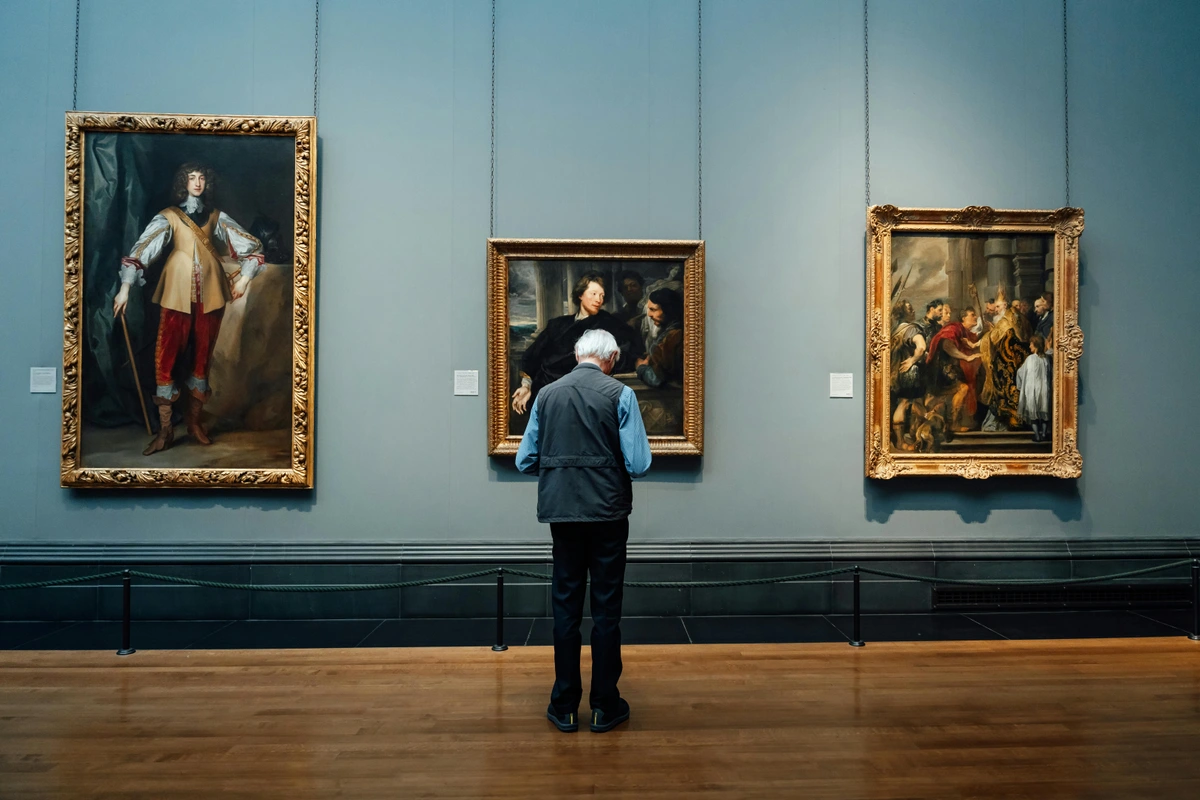
Francisco de Goya, though he died over a century before the war, was an unavoidable, spectral presence. You couldn't walk through the Prado Museum during the war without feeling his eyes on you. It’s strange to think of art having a ghost, but Goya’s work is exactly that—a restless, angry spirit that never found peace. His series of prints, The Disasters of War (created in secret during the brutal Peninsular War of 1808-1814), was not a painting of heroic battles. It was a searing, unflinching indictment of murder, rape, and famine—the raw, unheroic truth of what war does to people, stripped of all glory. He famously inscribed "I saw this" on one of his preparatory drawings, a personal testimony to the reality of the violence.
For Republican artists, Goya was a prophet. His prints, filled with dismembered bodies and faces contorted in agony, were terrifyingly relevant. They drew a direct, blood-red line from the savagery he witnessed under Napoleon to the fascist bombings and executions happening outside their own windows. He was the proof that this wasn't new; this was Spain's tragic, recurring nightmare. He was the country's artistic conscience, a constant, grim reminder that they had seen this darkness before, and that art's most vital function could be to testify, to scream, and to remember. In a way, Goya gave them permission to be angry, to be brutal, to show the ugliness without apology. His influence was a moral anchor, grounding their contemporary horror in a long Spanish tradition of defiant artistic witness against inhumanity.
Guernica: Picasso's Howl of Conscience
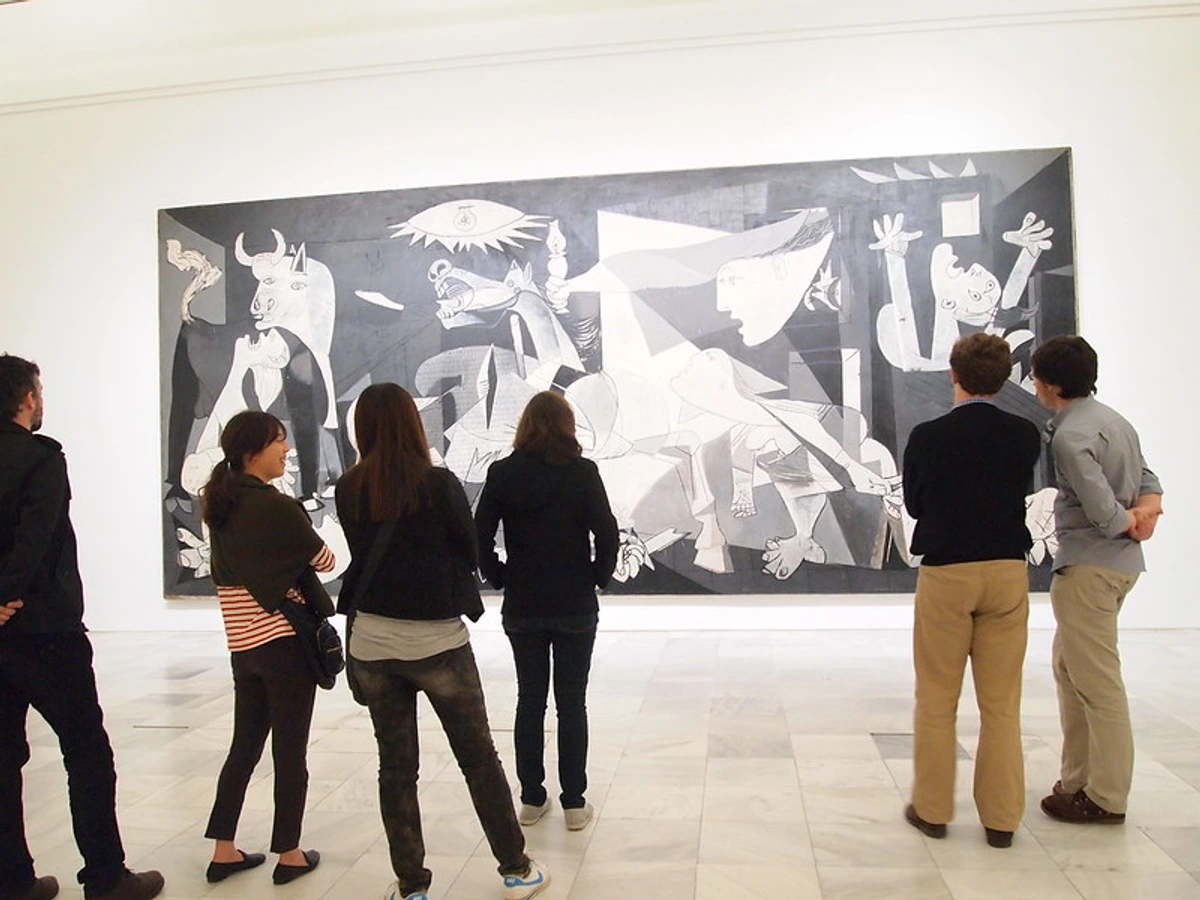
And then there was Pablo Picasso. When Franco's Nationalist forces, with help from Nazi Germany's Condor Legion, bombed the civilian market town of Guernica in broad daylight on April 26, 1937, the world was shocked. It was one of the first times in modern history a civilian population was subjected to such deliberate, terror-bombing aerial warfare. The Spanish Republican government, desperate for international condemnation and support, commissioned Picasso to create a large mural for the Spanish Pavilion at the Paris World's Fair.
What emerged was not a literal depiction of the bombing. Instead, Picasso gave the world a timeless, universal image of suffering that people still puzzle over, are shocked by, and are drawn to today. It's an image that lodges in your brain and refuses to leave.
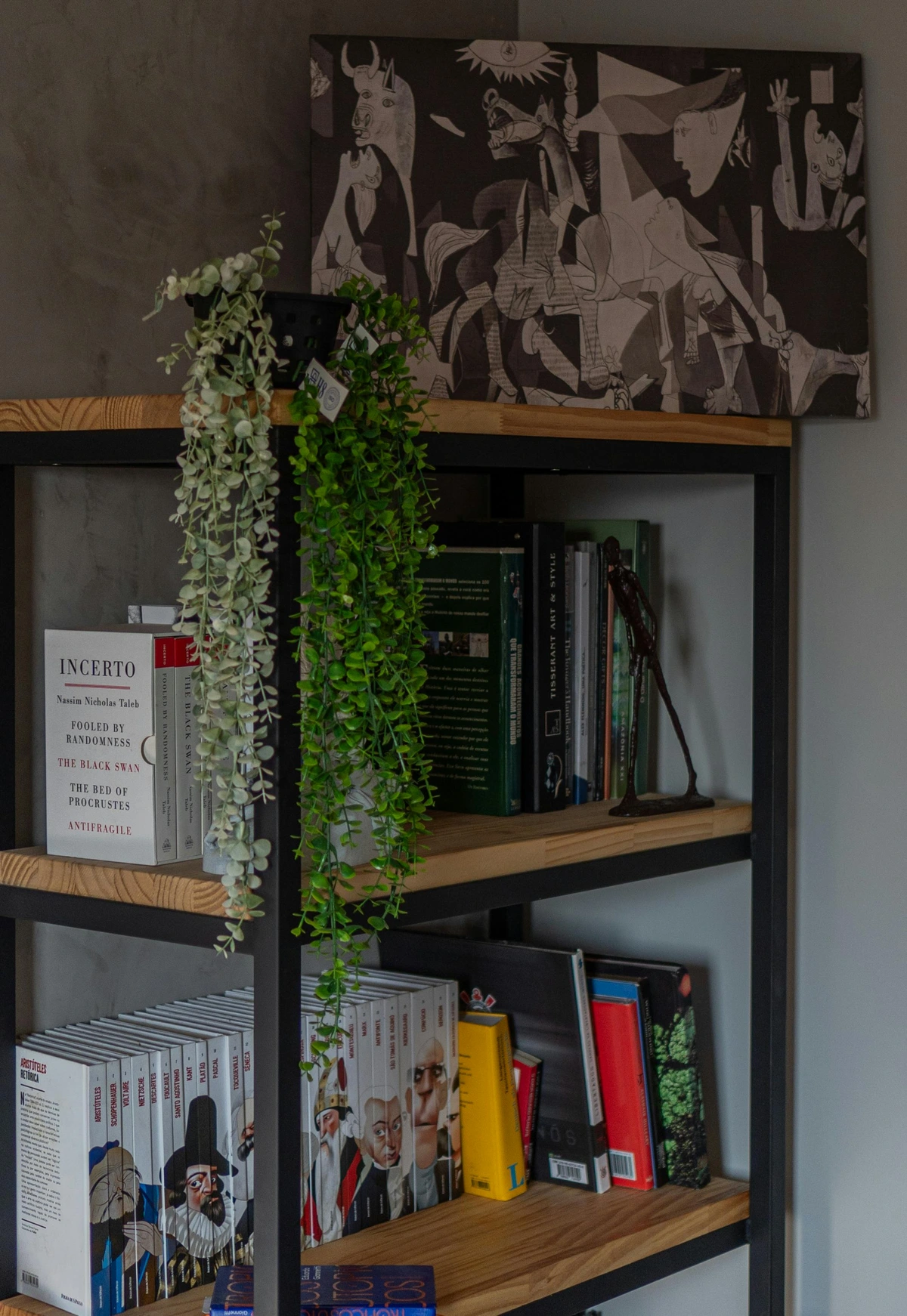
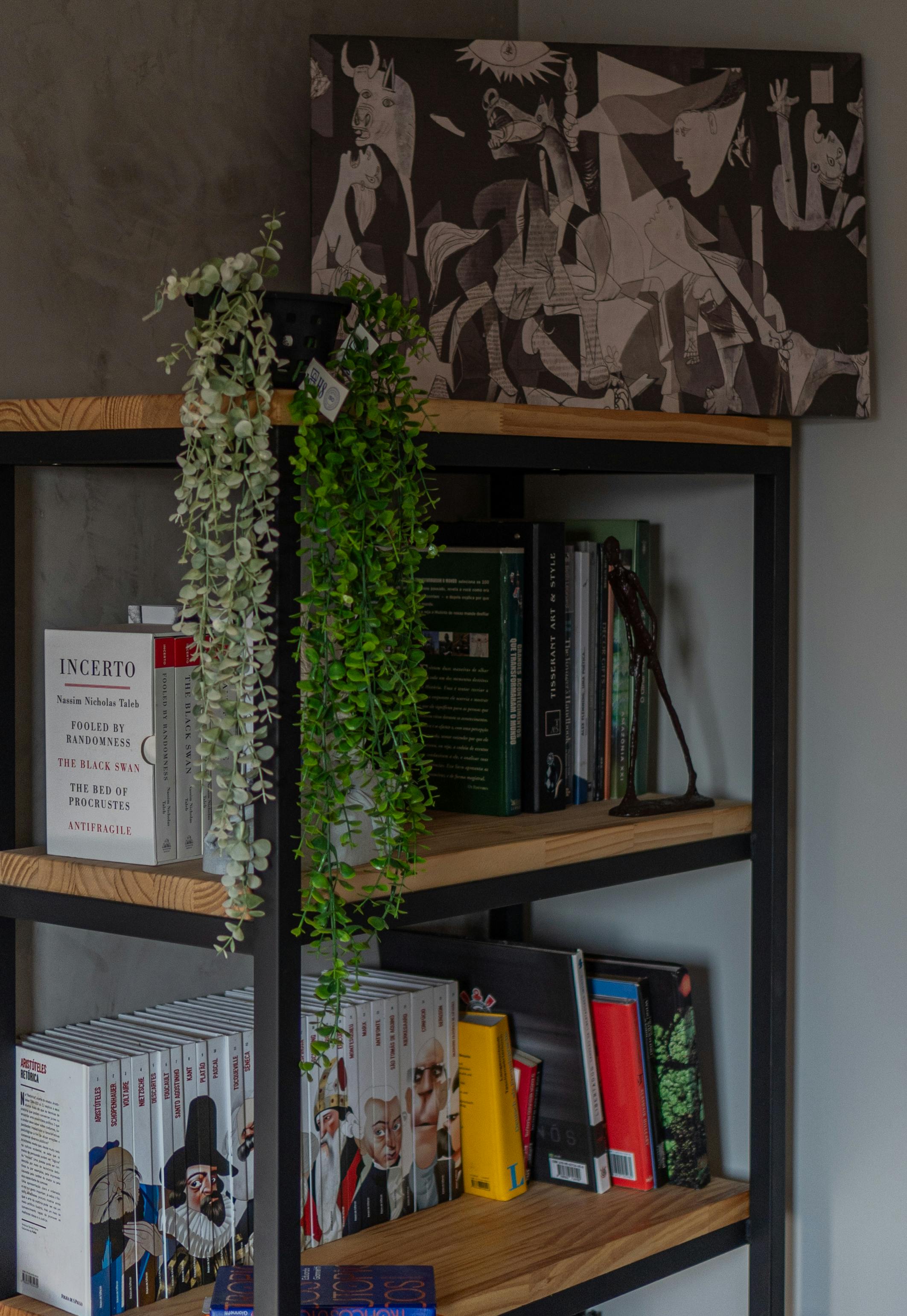
Guernica is a masterpiece of agony. Its carefully chosen palette—black, white, and grey, like the harsh contrasts of a newspaper photograph—forces you to focus on the raw emotion without the distraction of color. At its center, a screaming horse, a symbol of the suffering Spanish people, rears in panic. To the left, a grief-stricken mother cradles her dead child, her head thrown back in a silent, anguished scream that mirrors the horse's. A dismembered soldier lies on the ground, his broken sword a testament to the Republic's struggle. A ghostly bull, one of Picasso's personal symbols, seems to stand witness, impassive amid the chaos. And over it all, an electric bulb in the shape of an all-seeing eye illuminates the carnage, a cold and indifferent sun.

credit, licence
Guernica is the anti-poster. It doesn't offer a heroic solution or a chiseled savior. It offers no hope, no slogan, no path to victory. It is simply a testimony, a permanent record of a scream. It forces the viewer to confront the visceral, incomprehensible reality of violence against the innocent. While the posters in Barcelona were shouting "¡No Pasarán!", Guernica was whispering, "Look. Just look at what has been done." This is the power of the individual artist—to step outside the immediate demands of propaganda and create something that captures the human condition itself.
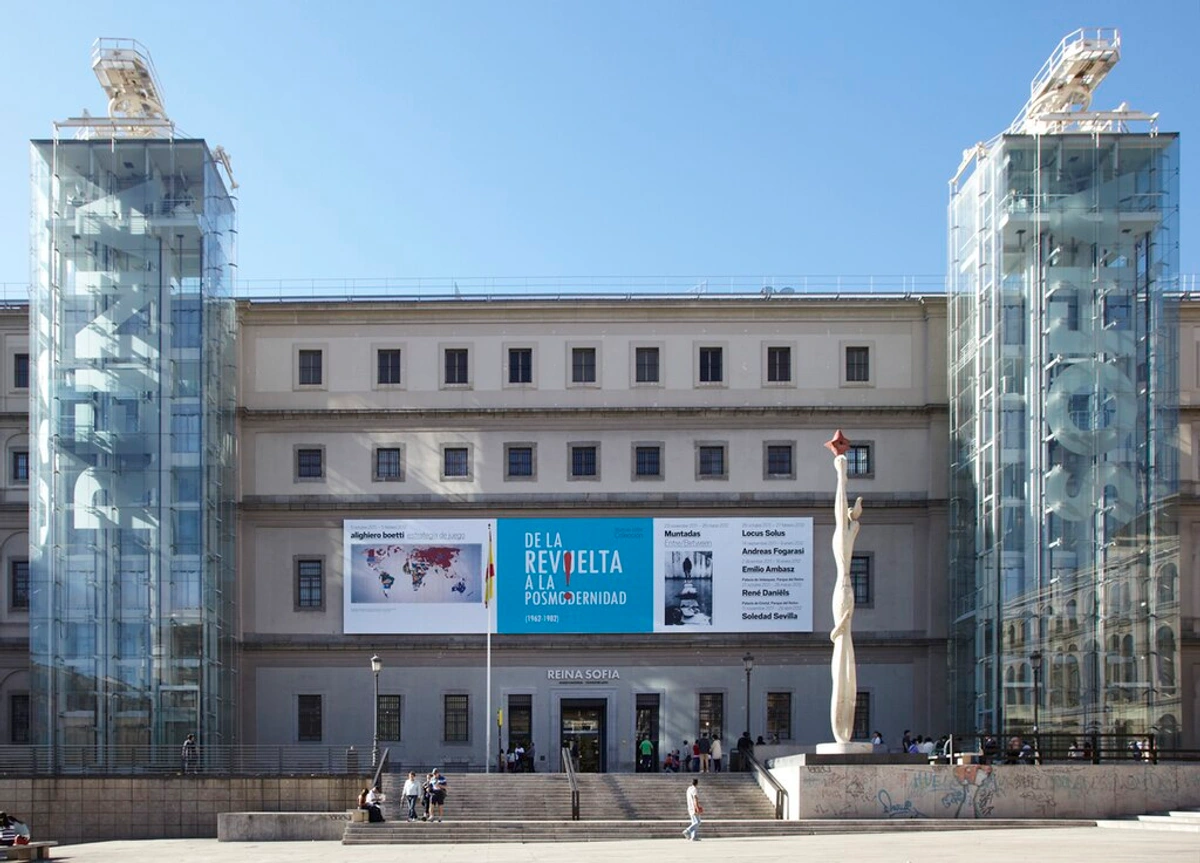
It transformed the specific tragedy of one Basque town into a permanent symbol of all war's brutality. When it was unveiled at the Paris Fair, it delivered a deeply unsettling moral challenge to the world, one that continues to resonate today for anyone who sees it, whether in a history book or standing before it in Madrid's Reina Sofía museum. The painting itself went on an epic journey. Picasso decreed it could not return to Spain until democracy was restored. It spent decades at the Museum of Modern Art in New York, becoming a global icon before finally making its way home in 1981, six years after Franco's death. It is painting as conscience, and one of the most powerful anti-war statements ever made.
Through a Lens, Darkly: Photography's Naked Truth
While painting and printmaking captured the emotional and ideological fire of the war, photography did something else: it offered a shocking, unblinking claim to truth. For the first time in a major conflict, the camera was there not just to document troop movements, but to capture the terror on a civilian's face, the defiance of a soldier, and the bewildered stare of a child whose world had just been blown apart. This was a revolutionary shift in how we see conflict.
Or did it? I find this question endlessly fascinating. We live in an age of deepfakes and AI-generated images, where we know the camera can lie with breathtaking sophistication. The Spanish Civil War, however, was the crucible of modern photojournalism, and with it, the birth of the ethical debate about its nature. The camera's claim to objective truth was first truly tested here. We now understand that the lens always has a point of view, a frame, a choice made by the photographer. The story of photography in this war is the story of that fundamental struggle between objective fact and subjective framing, of searing truth and powerful propaganda.
Robert Capa, the Hungarian-born photojournalist (born Endre Friedmann), became one of the most famous names to emerge from the conflict. His photograph, The Falling Soldier (or Loyalist Militiaman at the Moment of Death, Cerro Muriano, September 5, 1936), purportedly capturing the very moment a Republican militiaman is struck by a fatal bullet, became an icon. It was visceral, immediate, and it seemed to do what no painting could: bring the viewer to the very precipice of death. It was the ultimate "decisive moment," a phrase that would later become the mantra of photojournalism.

credit, licence
The image, however, has been dogged by decades of controversy. Was it staged? Was the soldier really shot, or was he merely stumbling? Scholars have pored over the terrain, historical records, and even the shadows in the photo itself, with some concluding it was more likely taken during a staged training exercise than in the heat of combat. The debate itself, though, is a testament to the power and peril of the medium. It forces us to ask the most uncomfortable question: even if it was staged, does it still tell the truth about the war? Whether brilliant fact or brilliant fiction, The Falling Soldier established a new, raw aesthetic for war photography—a shaky, grainy, close-up, intimate style that thrust the viewer into the thick of the danger. Capa's famous motto was, "If your photographs aren't good enough, you're not close enough." He got dangerously close. This was the birth of what we might now call embedded journalism, a practice that fundamentally changed our relationship with warfare, trading a god's-eye view for a soldier's peril.
Another giant, Gerda Taro, Capa's partner both professionally and romantically, was a pioneer in her own right, tragically becoming one of the first female photojournalists to be killed in action. Her work captured the daily life and resilience of Republican soldiers with a profound humanity.
And then there was David Seymour (Chim), whose work for the Republican cause provided the visual evidence for their struggle, and Agustí Centelles, a Catalan photojournalist who documented the war from the front lines, creating an invaluable archive of the conflict. These photographers exposed an international audience to the stark reality of modern warfare. Their images were evidence, propaganda, and art, all at once, forever blurring the lines between objective truth and subjective storytelling. They proved the camera could be a weapon, a witness, and a heartbreaker all at once.
The Neglected Witness: The Battle to Save the Prado
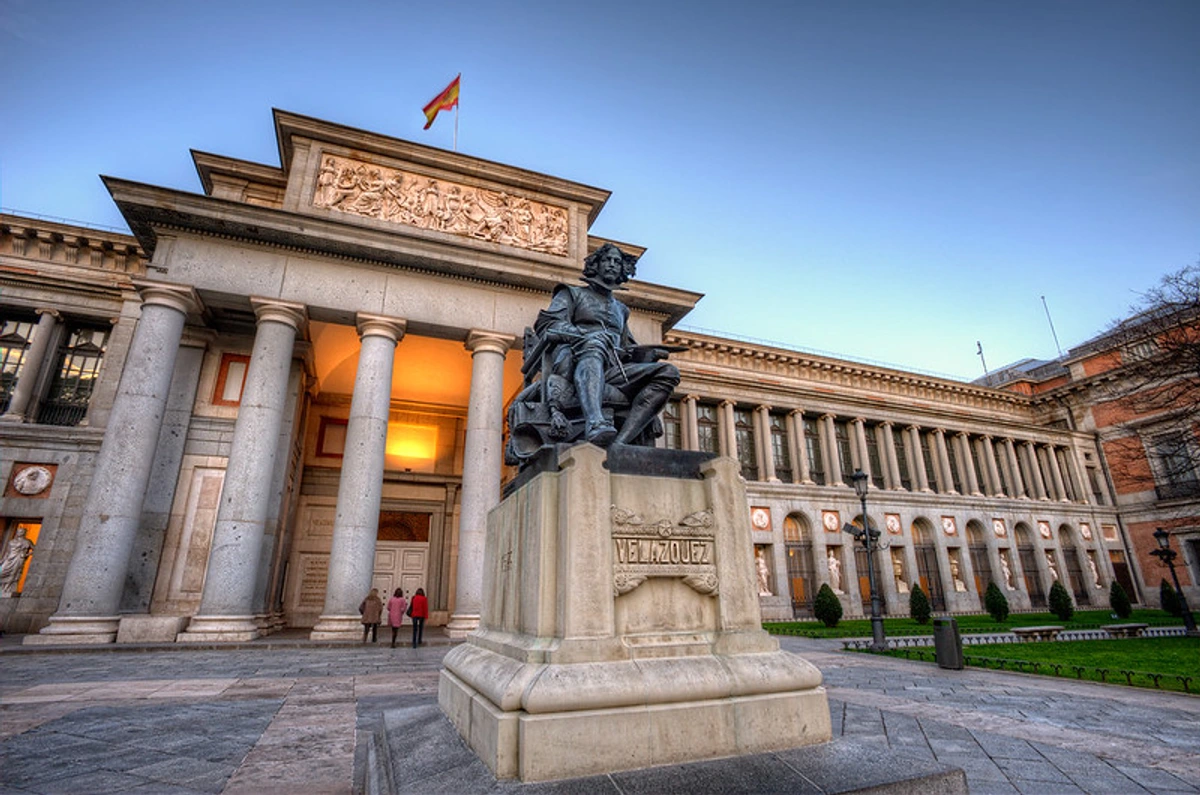
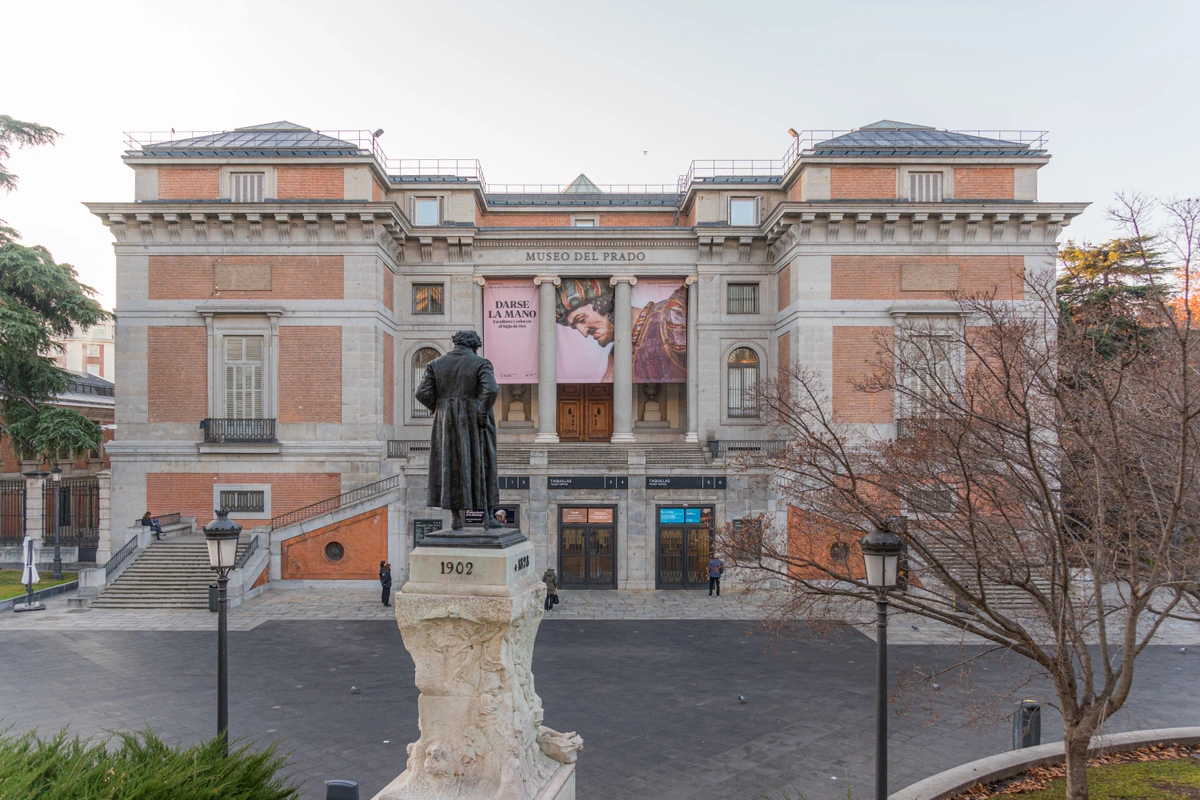
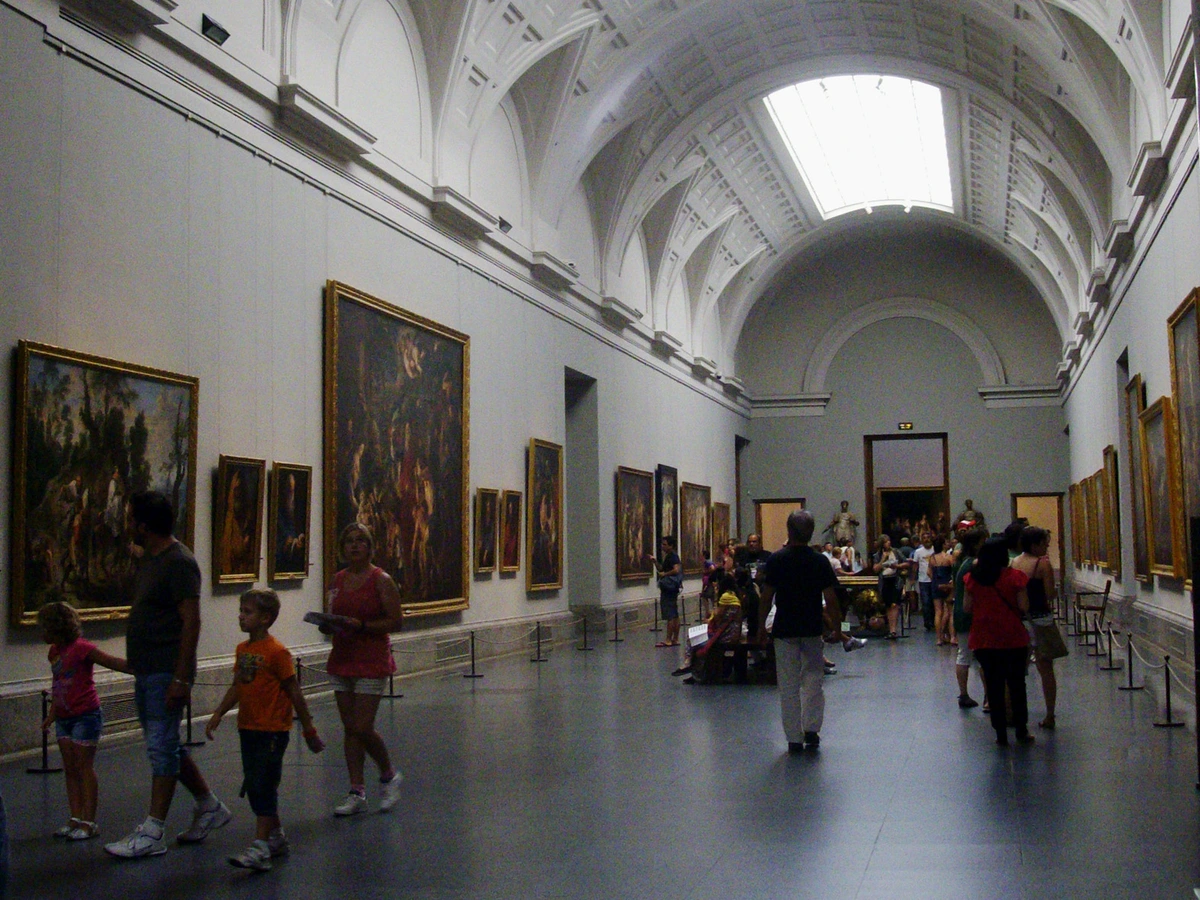
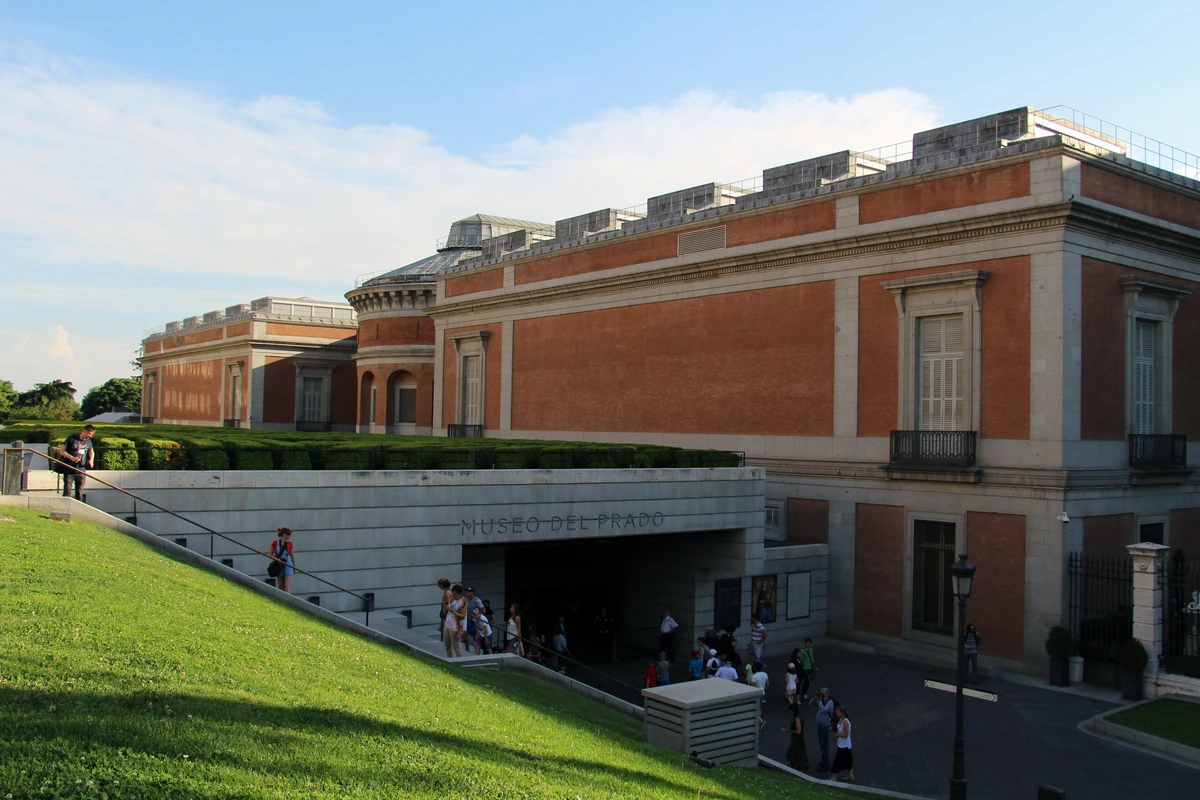
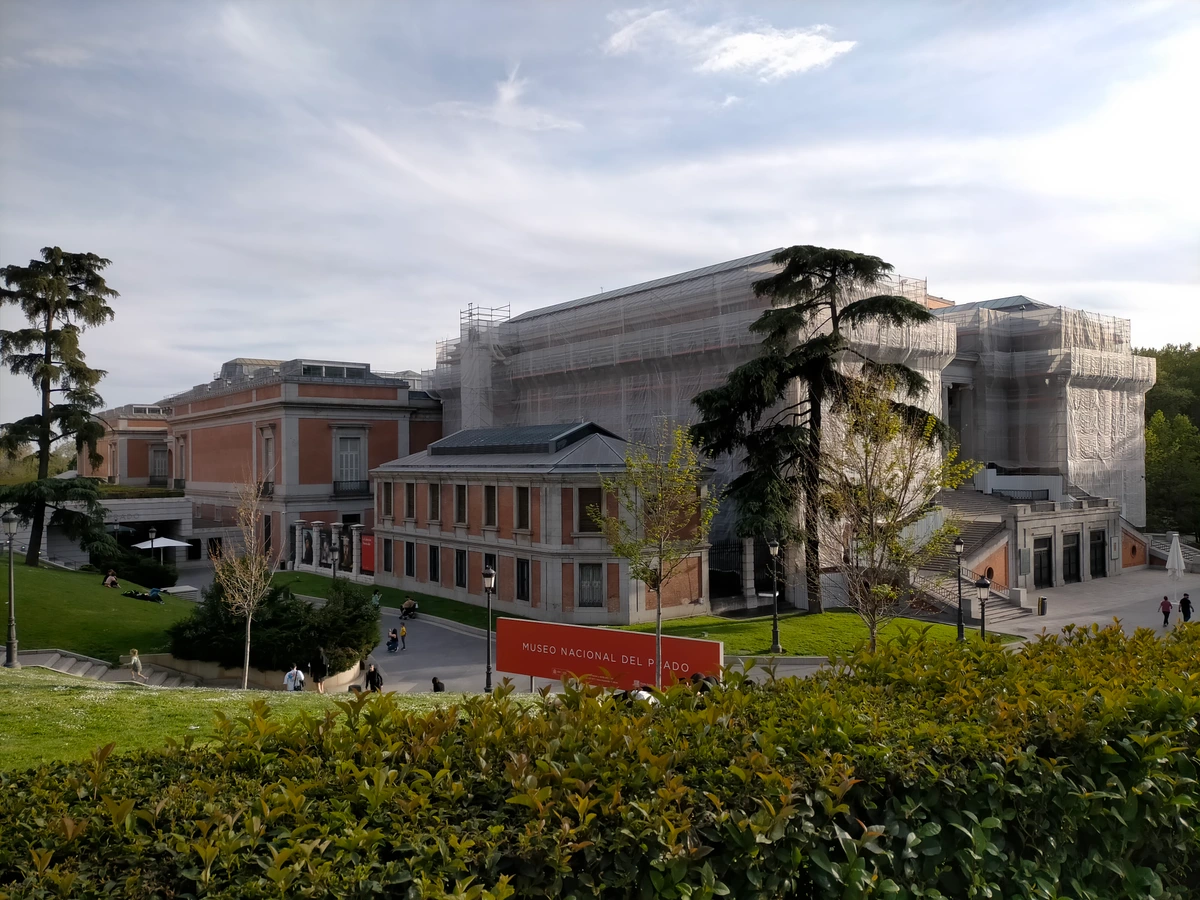
You can't talk about art in this war without talking about what almost happened to the Prado. It sits in the heart of Madrid, which was under Republican control and under constant siege by Nationalist forces. The museum was hit by shells multiple times, and the Casón del Buen Retiro, a secondary building, was severely damaged. Suddenly, the museum wasn't a temple to art; it was a giant target. I think about the curators who worked there, watching their city fall apart, knowing that they were guarding the soul of the nation. Inside were the masterpieces of Velázquez, El Greco, and, of course, Goya. These paintings were, in a way, hostages to the conflict.
The Republican government, led by the head of the Prado's board and Director of Fine Arts, made an incredible, heroic decision amidst the chaos: they would not let Spain's artistic soul be destroyed. They would evacuate the collection. In a meticulously planned operation, curators, packers, and volunteers worked around the clock in a desperate race against time and falling shells, carefully crating up over 1,800 of the most important paintings, including works by Velázquez, El Greco, and Goya. The crates were loaded onto a convoy of trucks for a daring, clandestine journey out of the besieged city, first to Valencia, then to Barcelona, and finally to the relative safety of the League of Nations headquarters in Geneva, Switzerland. It's one of the most dramatic, and least-talked-about, art stories of the entire war. While artists on the front lines were creating new messages for the present, this army of curators, drivers, and bureaucrats was saving the foundational messages of Spanish art itself. They proved that preserving the past can be as revolutionary an act as fighting for the future, a quiet but profound act of defiance against the forces of nihilistic destruction.
The Other Side of the Canvas: Art of the Nationalist Faction
The Nationalist side, under the leadership of General Francisco Franco, approached art and culture with a fundamentally different philosophy. While the Republic saw art as a revolutionary weapon, the Nationalists saw it as an anchor—a way to preserve a conservative, Catholic, and hierarchical vision of Spain. They waged a war on two fronts: a military one against the Republican army, and a cultural one against modernity itself.
Their entire cultural project was a rejection of the modernist experimentation, the avant-garde chaos, and the perceived "degeneracy" that had flourished under the Republic. They weren't interested in a dialogue; they were interested in a restoration—a cultural reset to a time before secularism and liberalism had, in their eyes, poisoned the nation. Their art was a tool for ideological purification, a way to re-establish what they saw as the true, eternal values of Spain: God, Country, and Tradition. The ultimate goal was a unified, monolithic state with a single, approved artistic style to match its singular political vision: an aesthetic echo of the slogan "España, Una, Grande y Libre" (Spain, One, Great, and Free).
The Aesthetics of Order: Nationalist Propaganda
If Republican posters screamed revolution, Nationalist posters spoke in a voice of stern, divine authority. Their imagery was rooted in an idealized, mythic past, drawing heavily on:
- Religious Iconography: The Catholic faith was the central pillar of the Nationalist visual identity. Paintings, sculptures, and posters depicted Christ the King, the Virgin Mary (often as the patroness and protectress of the troops), and various saints blessing the Nationalist forces. Soldiers were shown not just as fighters, but as crusaders, their cause sanctified by God himself. This provided a powerful moral counterpoint to the Republic's godless secularism, framing the conflict as a holy war, a Cruzada or Crusade, against the forces of "godless communism." The war's official name on their side was the "Glorious Uprising," a divinely ordained mission to save the soul of Spain.
- Heroic Realism and Neoclassicism: Forget the fractured planes of Picasso. Nationalist art favored a clear, legible, and heroic realist style, often borrowing the grandiosity of neoclassical sculpture. Soldiers were depicted as chiseled, stoic, and larger-than-life figures, their uniforms immaculate, their resolve absolute. They were not individuals but archetypes of strength, discipline, and unwavering national pride.
- Traditionalist Imagery: The ideal was the strong, patriarchal family, the virtuous peasant tilling the soil, and a life anchored by the rhythms of the church calendar. The Nationalist aesthetic looked backward to a carefully curated vision of Spain's imperial golden age, promoting an orderly, homogeneous nation, free from the "diseases" of regional separatism and the chaos of liberal individualism.
The Cultural Stakes: Degenerate Art vs. True Spain
This wasn't just a difference in taste; it was a war for Spain's cultural identity. The Republic embraced the fractured, anxious, but revolutionary language of Modernism—the art of the now, the new, the experimental. The Nationalists championed a clear, orderly, and nationalistic neoclassicism. They saw modern art not as progress, but as a disease, a symptom of the moral decay they were fighting to eradicate.
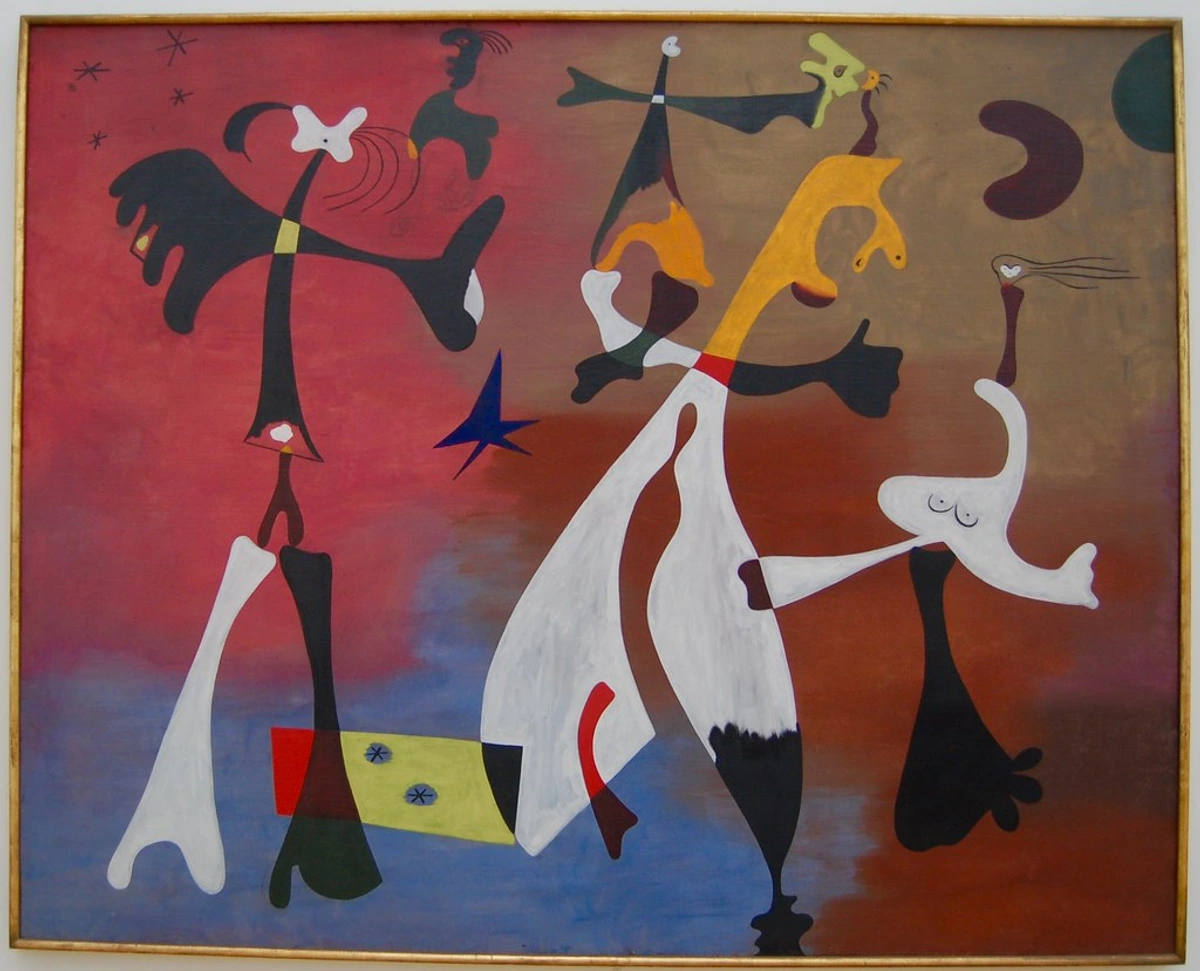
The parallels with the Nazi regime's notorious campaign against "degenerate art," or Entartete Kunst, are chilling and direct. In fact, the Nationalists didn't just echo this sentiment; they actively enforced it as official state policy after winning the war. Art that was abstract, experimental, or politically challenging was deemed a pollutant, a direct attack on the nation's spirit. Picasso, Miró, Dalí—these were not celebrated artists in the Nationalist narrative; they were branded as traitors to their country and its eternal values. To win the war was to have your art defined as the true art of Spain, to control the schools, the museums, the entire national narrative. It meant a systematic erasure of the vibrant, diverse, and revolutionary cultural landscape of the Republic from public memory. Seeing both sides' output is the only way to really grasp how high those cultural stakes were. This was a battle for the country's soul, fought with brushes as much as with bullets, a stark reminder that aesthetic choices can be profoundly, and terrifyingly, political.
Franco's Vision: Aesthetics of a New State
The Nationalist art project wasn't just wartime propaganda; it was a blueprint for the aesthetics of Franco's future Spain. The regime's art aimed to:
- Build a "New Spain" from an "Old" Past: Its iconography harkened back to an idealized, pre-modern era, glorifying the imperial might of the 16th century and the rigid social hierarchy of a devout, rural Catholic society. It was a future that looked suspiciously like a carefully edited past.
- Establish Franco as a Providential Leader: Franco was not just a general; he was portrayed as a Caudillo, a divinely appointed leader sent to save Spain. His image evolved from a military commander into a paternal, almost messianic figure—the savior of the nation from the clutches of Bolshevism.
- Promote a Singular National Identity: This vision actively suppressed the rich regional diversity of Spain. It fiercely opposed the autonomous movements of Catalonia and the Basque Country, promoting an absolute, unified Spanish identity where only Castilian Spanish was the language of culture and politics.
This cultural program was a holistic weapon, designed to be deployed not just on the battlefield, but in the classroom, the church, and the public square for decades to come.
A Legacy Carved in Stone and Mind: The War's Lasting Impact
Franco's forces won the war in 1939, establishing a dictatorship that would last until his death in 1975. It's almost impossible to imagine now, the long, dark, cultural shadow that fell over the country. The artistic legacy of the Republican conflict was systematically buried, censored, or forced into exile. The vibrant, revolutionary art of the Republic was replaced by a stultifying official culture of heroic realism and religious kitsch, a visual echo of the regime's rigid, joyless control. Museums were cleansed of modern works, and an entire generation of artists was effectively erased from the nation's history books. Picasso's Guernica was the most famous exile, its name forbidden, its image suppressed for decades. For an entire generation of Spaniards, their most iconic painting of the war was a piece of their own history they were forbidden to see, a ghost haunting their national psyche. This cultural amnesia was a deliberate state policy, a way to build Franco's "New Spain" on a foundation of enforced forgetting.
And yet, the art refused to die. Its influence was too powerful, its truth too potent to be contained. It survived in whispered memories, in smuggled prints, and in the work of artists who carried the searing experience of the war with them into exile. It became a ghost that haunted the Franco regime and a beacon for those secretly fighting against it. The art of the Spanish Civil War morphed from a partisan tool into a universal symbol of resistance against all forms of oppression.
The unflinching brutality captured by Goya and Picasso laid the groundwork for what would become art's direct confrontation with trauma in the later 20th century. The fusion of personal anguish and political commitment seen in their work became a model for generations of politically engaged artists—from the brutal figurative painting of the post-war period in Europe to the anti-war art of the Vietnam era and the fearless activist art of today. They created a new language for screaming.
Photography, in particular, was never the same. The work of Capa, Taro, and their peers established the modern standard for photojournalism—not just as an objective record, but as a powerful act of moral witness. They proved that the camera, in the right hands, could be the most devastating weapon of all.
The Spanish Civil War was a brutal lesson. It taught us that art isn't always a simple escape. Sometimes, it's a record of the escape we couldn't make, a testament to what was lost, and a reminder, in stark black and grey, of the faces of the fallen.

The Unheard Voices: Women in the War of Images
While the history books are filled with the names of male artists, the war also saw an incredible, and often overlooked, contribution from women. For the first time, Spanish women were active participants in the public sphere, and this was reflected in art. Female artists and illustrators, often working within the anarchist CNT-FAI unions or the Communist party, created powerful graphics and posters.
Mujeres Libres and the Visual Revolution
Artists like Pepita Inglés and collectives like Mujeres Libres (Free Women) were at the forefront. Their art wasn't just decoration; it was a direct call to action. They used bold, dynamic graphics to advocate for women's rights, mobilization, literacy programs, and social revolution. Their posters and illustrations depicted women not as passive victims waiting to be saved, but as fighters on the front lines, as factory workers fueling the war economy, and as political agents in their own right. This was a radical visual statement for its time, shattering the traditional Madonna/whore dichotomy. On the Nationalist side, the visual representation of women was starkly different, often confined to traditional, saintly, or domestic roles, reinforcing the regime's vision of a conservative, patriarchal social order. By looking at the art created by and about women, you get a much richer, more complete picture of the war's true social dimension.
The Written Front: Poetry and the Power of the Word
Art wasn't just visual. The war produced a torrent of powerful poetry that could be memorized, recited in the trenches, and passed hand-to-hand like contraband ammunition.
- Federico García Lorca: Spain's most famous poet was assassinated by Nationalist forces in the war's opening days, his murder turning him into an instant martyr and a potent symbol of the Republic's brutal silencing.
- Miguel Hernández: A self-taught poet who went from goatherd to soldier, Hernández wrote fiery, accessible verses like Viento del pueblo (Wind of the People), which became anthems for the Republican cause. He died in a Francoist prison.
- Antonio Machado: An older, revered poet who staunchly supported the Republic, famously walking across the border into France during the mass exodus of 1939, dying in exile just days later. His last verses are heartbreaking testimonies of loss.
- "Guerrilla Theatre": Stages were built from rubble in bombed-out towns, and companies like "La Barraca" brought theater directly to soldiers and civilians, offering moments of catharsis, propaganda, and defiant humanity amid the carnage.
This was art that you could carry in your head and your heart, a different kind of weapon in the fight for the soul of Spain.
Theater and Poetry: The Spoken War
Art wasn't just on walls or film. It was in the air. The war produced a vibrant culture of theater and poetry that was every bit as powerful as the visual arts. The Republican side, in particular, organized "guerrilla theater" troupes that traveled to the front lines, performing plays to boost the morale of the troops. Imagine it: a stage built from scrap wood in a bombed-out village, actors performing under the threat of an air raid. Poets like Antonio Machado and Miguel Hernández became national icons, their verses passed from hand to hand like contraband. Their work wasn't just lyrical; it was immediate, often written in the heat of battle, capturing a raw urgency that painted a thousand pictures.
The Poets Who Died for Their Words
The power of the word came with a terrible price. Federico García Lorca, perhaps Spain's greatest modern poet and playwright, was arrested and executed by Nationalist forces in the early days of the war. His death was not just a murder; it was a symbolic act of cultural annihilation, an attempt to kill the soul of the liberal, artistic Spain he represented. His body was thrown into an unmarked grave, a ghostly act that mirrors the fate of thousands, and his works were banned under Franco. Miguel Hernández, the "people's poet" who rose from a goatherd to a literary giant, fought for the Republic and would later die of tuberculosis in a Francoist prison in 1942, a martyr to the cause. On the other side, establishment poets like José María Pemán penned verses that framed the Nationalist cause as a holy crusade. This was a conflict where the word, spoken and sung, was a weapon as powerful as any rifle—and just as likely to get you killed.
A Nation Divided, A World Watching: International Aid and Artists
The war wasn't just a Spanish affair. It was a global magnet for artists and activists. The famous International Brigades, volunteers from over 50 countries who came to fight for the Republic, were a testament to this. But alongside the soldiers came artists. The Mexican muralist José Clemente Orozco created powerful works in support of the Republic. In Britain, the young sculptor Henry Moore was so moved by the images of civilians hiding from bombs in the London Tube during the Blitz (a direct echo of the Spanish war) that he created his iconic, sheltering figures. The war was watched and interpreted by artists worldwide, becoming a universal symbol of the struggle against fascism and the horror of modern war.
The Global Artistic Response: From Hemingway to Hughes
Artists worldwide felt compelled to respond to Spain's agony. In Mexico, muralist Diego Rivera condemned the fascist onslaught in his politically charged frescoes. In the United States, Ernest Hemingway moved beyond reportage to write For Whom the Bell Tolls, the most famous literary testament to the war's tragedy, and co-produced the propaganda film The Spanish Earth. The African-American poet Langston Hughes traveled to Spain as a correspondent, penning verses that explicitly linked the fight against Franco to the struggle against racism in America. For Hughes and many others, the battle in Spain was part of a global fight for human dignity.
This international response, however, was far from simple. While many saw the Republic as the bulwark of democracy, the rise of Stalinist influence created deep, violent schisms within the Republican coalition. George Orwell's Homage to Catalonia provides a searing first-hand account of this internal conflict, detailing how Soviet-backed communists brutally suppressed allies like the anarchist and Trotskyist POUM militia. This political complexity is vital for understanding the conflict's art—it wasn't a simple story of good versus evil, but a messy, tragic struggle where different visions of the future clashed violently within the same army.
Legacy Beyond Spain: A Global Symbol
The visual language forged in the Spanish Civil War did not end in 1939. Its impact rippled out across the world. The stark, graphic style of Republican posters directly influenced anti-fascist propaganda in World War II and beyond. The image of the defiant, heroic worker or militiaman became a staple of political art from Vietnam to the anti-apartheid movement. The idea of 'Guernica'—that a single work of art could capture the universal horror of war—became a benchmark for political art. Every time an artist wades into the messy arena of conflict, they walk in the footsteps of Goya, Picasso, Capa, and Taro.
The Artists Who Never Came Home: A Legacy of Exile
A crucial, and often tragic, part of this story is the fate of the artists who survived the war but lost their Spain. The great exodus of talent in 1939 cast a long shadow.
- Mexican Sanctuary: Many, including the propagandist Josep Renau, found a new home and a new canvas in Mexico. They contributed to the vibrant Mexican muralism movement, embedding their republican ideals into a new national story.
- Fading in Distant Lands: Others who fled to France were interned in dreadful refugee camps. Some eventually made it to the United States or the USSR, but many struggled to find their place, their work forever defined by a lost homeland. Their art became a testament to displacement, a recurring theme in the 20th century. This diaspora ensured that the story of Republican Spain would be told, even if it was silenced within Spain itself.
The Aftermath: Art in the Shadow of Franco
When the war ended in 1939, Spain became a cultural desert. Franco's victory meant the suppression of all the vibrant, modernist art that had flourished under the Republic. Museums were purged, books were burned, and the great minds of the country were either killed or scattered in exile. For the next four decades, official art in Spain was a predictable parade of heroic realism and religious piety, with any hint of modernism labeled "degenerate" and dangerous. But even in this silence, the memory of the war's art lived on. It became a secret, precious heritage, passed down in families and among dissidents. The art of the Spanish Civil War didn't just die; it went underground, waiting for the moment it could breathe again.
Conclusion: A Canvas of Conscience
I began by saying that the Spanish Civil War broke the neat line of art history. I think it did more than that; it proved that a line was the wrong way to think about art in the first place. This conflict forced art out of its comfort zone and into the firing line. It stripped away the pretensions of pure aesthetics and confronted artists with the starkest of choices.
The story of art in this conflict is a messy, heartbreaking, and inspiring story of what happens when creativity collides with catastrophe. From the bold, shouting posters of the Republic to the silent, screaming figures of Guernica, artists were forced to ask themselves the most difficult question of all: What is art for?
The art of the Spanish Civil War is their answer, carved in paint, ink, and silver nitrate. It is a testament to the power of the human spirit to create meaning, even in the face of its own destruction. It's a story that tells us art is never just a picture on a wall. Sometimes, it's the wall itself, shouting for its life. And sometimes, it's the quiet, enduring promise that even in the darkest hours, the conscience of a nation can still be seen, if you know where to look.
A Few Questions You Might Have...
Is it true that Picasso's Guernica was once hung in the Museum of Modern Art in New York?
Yes, absolutely. Picasso refused to allow the painting to return to Spain until the country was a free democracy again. It was entrusted to the Museum of Modern Art (MoMA) in New York in 1939 and became one of the museum's most famous and influential pieces. It toured the world, its message growing louder with each stop. It only made its long-awaited journey back to Spain in 1981, six years after Franco's death. Its long exile made it not just a masterpiece, but a symbol of art's endurance over dictatorship—a promise that the truth would eventually come home.
What was the main difference between Republican and Nationalist propaganda art?
Think of it as a clash of two opposing worldviews, rendered in visual form.
Feature  | Republican Art | Nationalist Art |
|---|---|---|
| Style | Modernist, Avant-Garde (Cubism, Constructivism) | Traditional, Academic, Heroic Realism |
| Focus | The collective, the future, the people's struggle | The leader, the past, the nation's glory |
| Character | Dynamic, chaotic, emotional, urgent | Orderly, monumental, idealized, stoic |
| Imagery | Workers, peasants, militia, protest, innovation | Soldiers, saints, the Virgin Mary, historic battles |
| Message | Us vs. Them, Fight for a new world | We are one, Return to tradition and order |
| Ultimate Goal | Mobilize the population for social revolution | Consolidate power and affirm a traditional, hierarchical state |
Republican art was generally modernist, dynamic, and forward-looking. It celebrated the collective power of "the people" and used bold, emotional graphics to inspire action. Nationalist art was typically traditional, orderly, and looked to Spain's Catholic and imperial past for its imagery. It emphasized heroism, faith, and the strength of the nation under a single leader. It was a clash between a fractured, revolutionary future and an idealized, singular past. One side painted the world they wanted to create; the other painted the world they believed had been stolen from them.
Why did the Spanish Civil War attract so many international writers and artists?
The war was seen by many around the world as the first major battle in a global struggle between democracy and fascism. It felt like the world was holding its breath, and Spain was the epicenter. As the democracies of Europe and America remained officially neutral (the policy of "non-intervention"), many individuals felt a personal call to action. It became a cause célèbre for the international left, a chance to put their ideals into practice. Writers like George Orwell and Ernest Hemingway, and photographers like Robert Capa and Gerda Taro, went to Spain to witness the fight firsthand, believing the future of freedom was being decided there. Orwell's book Homage to Catalonia, Hemingway's For Whom the Bell Tolls, and Pablo Neruda's passionate poetry are just a few of the lasting literary works born from their experiences. For these idealistic men and women, Spain was the front line of the future, the place where one had to take a stand.








What happened to the art created by exiled Republicans after the war?
Much of it was preserved by the artists themselves and their families in their countries of exile, primarily in France, Mexico, and the Soviet Union. For decades, this art was largely invisible within Spain, a cultural ghost haunting the nation's memory. After Franco's death and the transition to democracy, Spain began the long process of 'recovering its historical memory,' which included rediscovering and repatriating this lost exilic art, now recognized as a vital part of its cultural heritage. It's a powerful story of a nation reuniting with the creative souls it had been forced to cast out. The pain of this exile is a story in itself, a testament to a creative legacy that, like the saved masterpieces of the Prado, endured against all odds.