It's Just a Painting. Can It Stop a War? Picasso's 'Guernica' and the Weight of a Scream
A deep dive into Picasso's 'Guernica'. We'll decode its potent symbols, unravel its chaotic composition, and confront the brutal history that made it the 20th century's most powerful anti-war cry.

It's Just a Painting. Can It Stop a War? Picasso's 'Guernica' and the Weight of a Scream
I want you to do something strange with me for a moment. I want you to imagine a scream. Not the short, sharp yelp you let out when you stub your toe, but a deep, total-body scream that comes from a place of pure horror. A sound so immense and filled with anguish that it ceases to be a sound at all; it becomes a physical thing, a solid object hanging in the air.
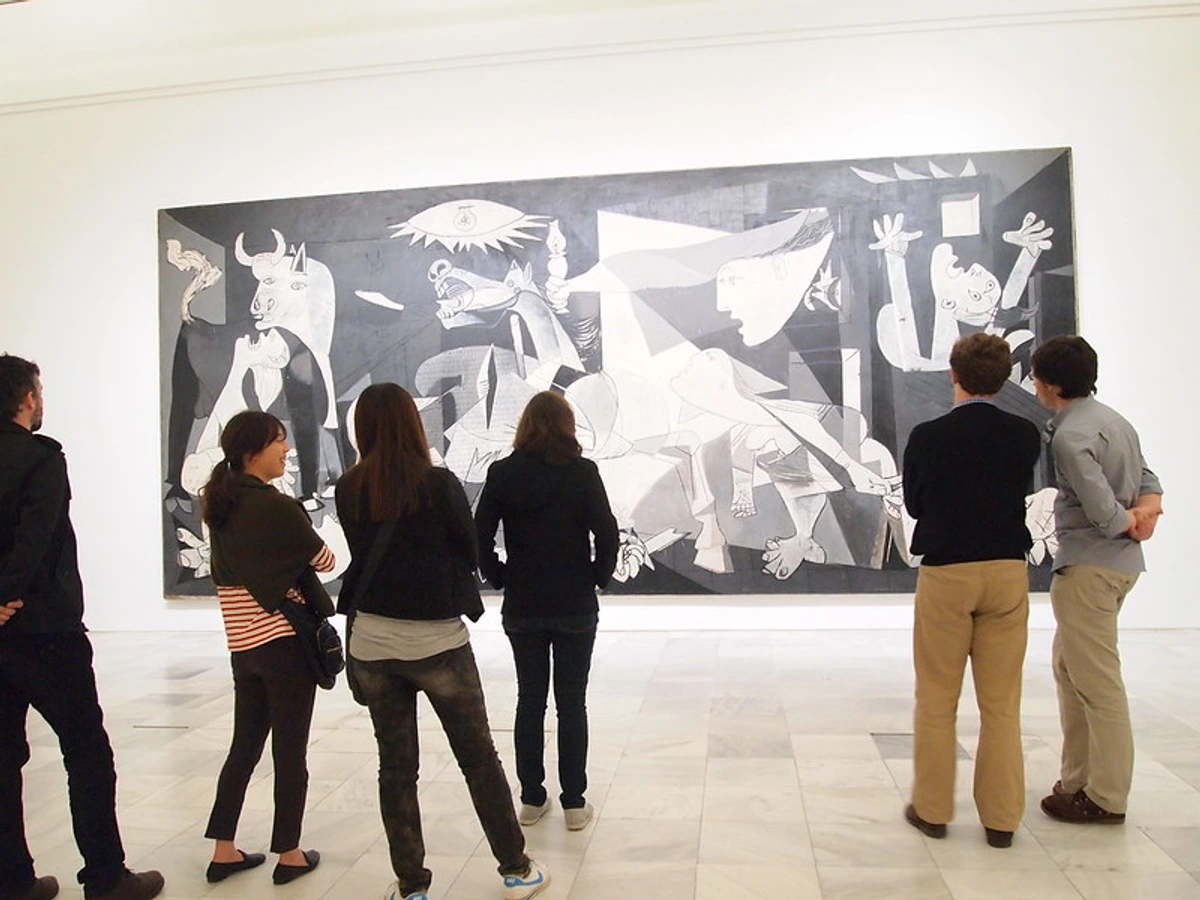
That, to me, is what Pablo Picasso’s Guernica feels like. It doesn't ask for your attention politely. It doesn't hang on a wall so much as it occupies the room, confronting you with an eleven-foot-tall avalanche of grief, rage, and chaos. It’s a painting that many people have heard of, but I wonder how many have really looked at it. It feels like you’ve walked into a room where that silent scream is still vibrating in the walls. You don't understand it at first. You’re just overwhelmed by the noise of it.
Today, we’re going to move past the initial shock. We’re going to step into that room, and together, we'll break down this 11-foot-tall monument to human suffering. We'll ask the hard questions: What does it all mean? Can a painting, devoid of color and splattered with chaos, truly be one of the most important political artworks ever created?
The short answer is yes, and the long answer is the story of a town, a tyrant, an event that changed modern warfare, and an artist who found his conscience in a torrent of black ink.
The Unforgivable Monday: The Bombing of Guernica
To understand the painting, you have to understand the event that birthed it like a scar on the canvas of history. Most history feels distant, like a black-and-white photograph. The bombing of Guernica feels like a raw, open wound. It was a Monday. April 26th, 1937. Market day. The town of Gernika (as it's known in Basque) was full of civilians—farmers selling their wares, families stocking up for the week. Children playing in the square. It was not a military target. It was a test—a chillingly efficient experiment in shattering human lives and communities, designed to see what terror, when unleashed without constraint, could achieve.
Background to the Outrage: The Spanish Civil War
You can't just drop into that Monday in April without a little context. Think of Spain in the 1930s not as a country, but as a pressure cooker. The Spanish Civil War, which began in 1936, was essentially a brutal struggle between two Spains. On one side was the democratically elected government of the Second Spanish Republic, a coalition of liberals, socialists, and regional separatists. On the other was a rebellion of right-wing Nationalists, led by General Francisco Franco, who were backed by the Catholic Church, monarchists, and a significant portion of the army.
This wasn't just a local squabble. It was a proxy war, a chilling preview of the larger ideological conflict that would soon engulf the world. Franco's Nationalists received massive military support from Nazi Germany and Fascist Italy. The Republicans, in turn, were aided by the Soviet Union and the International Brigades—idealistic volunteers from around the globe who saw fascism as a global threat.
The Basque Country, where Gernika sits, fiercely defended its autonomy and ancient rights. To Franco and his Nationalist forces, this made the Basques a primary target for their centralizing, authoritarian vision of Spain. The attack on Gernika wasn't just an act of war; it was an act of political annihilation.
General Francisco Franco, the leader of the Nationalist rebels fighting to overthrow Spain's democratic government, gave his permission. He wanted to crush the spirit of the Basque resistance and break the Basque people's will to fight. His allies, Nazi Germany’s Luftwaffe, under the command of Colonel Wolfram von Richthofen (cousin of the infamous Red Baron), saw an opportunity to try out their new theories of terror bombing. The idea was simple and barbaric: you don’t just bomb soldiers, you bomb everything. You destroy homes, schools, and hospitals to create such a profound and paralyzing fear that the enemy’s will to fight simply evaporates.
It's mind-bending to step back and realize this was a test run—a clinical, calculated experiment in mass murder. The men who planned this were pioneers of a new kind of horror, one that would soon engulf the entire world in the Blitz and the bombardment of cities like Coventry, Dresden, and Tokyo. For over three hours, Heinkel He 111 bombers and Junkers Ju 52 aircraft, some with Italian markings, dropped high-explosive bombs to destroy buildings and then incendiary devices to create a firestorm—a hellish vortex of flame designed to consume everything. Eyewitnesses described the air filled with the screams of people and animals, the crackle of flames, and the sickening thud of explosions on soft earth and softer flesh.
The bombing was methodical. Wave after wave of aircraft systematically destroyed the town center, focusing on the market square where the most people were gathered. The attack stripped war of any pretense of chivalry or honor. It revealed a new, terrifying reality: in modern warfare, the distinction between soldier and civilian could be deliberately erased. Gernika was the proof of concept for a doctrine of pure, unadulterated terror from the skies.
When it was over, Gernika was ashes. The town was left a smoldering ruin, with the iconic Basque oak tree, a symbol of their ancient freedoms, somehow still standing amidst the devastation—a small, defiant miracle. The Basque government reported that over 1,600 civilians were killed, though modern historians have revised the number down to around 300-400—still a staggering and senseless slaughter. The horrific nature of the attack—targeting a defenseless civilian population on a market day—sent shockwaves across Europe and beyond. But the exact number is almost beside the point. The point was the message: we can reach you anywhere, at any time, and there is nothing you can do to stop it.
News of the atrocity spread quickly, largely thanks to the courageous reporting of journalist George Steer in The Times of London. His unflinching account exposed the lie that retreating Republican soldiers had destroyed the town, a lie Franco's regime continued to peddle for decades. International outrage was immediate. The bombing of Gernika became a symbol of fascist brutality, a rallying cry for the Republican cause.
Picasso, a Spaniard living in Paris, was already a world-renowned artist, famous for his often playful and complex Cubist works. Yet, he had long declared himself apolitical, preferring the studio to the soapbox. This changed when he received a commission from the Spanish Republican government to create a mural for the Spanish Pavilion at the upcoming 1937 Paris World’s Fair. It was a significant request, an opportunity to represent his homeland on an international stage. For months, he struggled with what to paint, sketching vague allegories of the artist's studio—a bull, a horse, and a dying matador—but the concept felt lifeless, detached. Then, on May 1st, he read Steer's harrowing reports in a French newspaper. His artistic paralysis shattered, replaced by a cold, white-hot fury. This was no longer about art for an exhibition; this was a scream on canvas, a weapon he felt compelled to wield in the name of his suffering countrymen.
Deconstructing the Scream: A Section-by-Section Breakdown of Guernica
Picasso chose a stark, jarring palette of black, white, and grey. He said it was to convey the grim, photographic reality of the newspaper reports he was reading. Color would have been a distraction, a lie. This was not a scene for beauty; it was a document of abject horror, a visual autopsy of a town's agony. But it's more than that. Picasso famously stated, "If all the ways I have been along were marked on a map and joined up with a line, it might represent the route of a labyrinth." Guernica is a labyrinth, a chaotic puzzle of grief where every twisted form is a piece of a shattered world.
Let's break down this 11-foot-wide masterpiece of mourning piece by piece. We’ll examine the key actors in this three-act tragedy of bull, horse, and humanity. The painting's structure is that of a frieze, a modern, chaotic echo of ancient Greek pediments depicting epic battles. Yet here, the battle isn't between heroes, but between humanity and senseless destruction.
The Duality of the Bull and the Horse
In the psychic heart of the painting are two beasts, locked in a mortal struggle that feels both ancient and immediate. On the left stands the bull, a symbol of brutal, unthinking force. Some interpret it as Franco's Nationalism, others as the unstoppable tide of fascism. Picasso himself was famously ambiguous, but he suggested the bull represented "brutality and darkness." Its tail, rendered as wisps of smoke, seems to merge with the surrounding chaos, while its stoic, impassive gaze speaks of an ancient, indifferent power. It's the immovable, timeless cruelty of the attack, set against a backdrop of very human suffering.
Juxtaposed with the bull is the wounded horse, the true emotional core of the piece. It staggers in the center of the canvas, its body pierced by a spear or splinter from a shattered building. Its neck is contorted in a manner that is physically impossible, thrown back in a scream of pure agony. I see its wide, rolling eye and gaping mouth as the epicenter of the entire painting's horror. This is the suffering of the people of Guernica manifest as an animal—a symbol of the vibrant, innocent life that was so cruelly targeted. The horse doesn't represent the military or the government; it represents the civilian population, brutalized and sacrificed. Look closely, and you'll see its mouth is filled with sharp, dagger-like teeth, an unnatural detail that speaks of a corrupted, pained existence. Beneath it, a dead soldier lies dismembered, his hand clutching a broken sword next to a single, delicate flower—a fragile symbol of hope amidst overwhelming despair.
The Brutalized and the Bereaved: The Human Figures
Flanking the central beastial drama are the human figures, each a universe of pain in their own right. On the far left, a mother cradles her dead child, her head thrown back in an almost soundless wail of grief. Her tongue is a sharp, pointed shard, a detail that transforms her sorrow into something sharp and violent. This is the Pietà of Guernica, a universal image of maternal loss that echoes down the centuries.
To the right, a woman is trapped in a burning building, her arms outstretched in a futile plea for help. Below her, another figure staggers into the scene, seemingly fleeing the flames towards a central light. Her pose is one of impossible contortion, her body bent at an inhuman angle as if the very air around her is warping under the heat of the bombs. These figures ground the painting's symbolic animals in the very real, physical terror experienced by the townspeople.
The Eye and the Bulb: A Modern Gaze on an Ancient Tragedy
High above the chaos, a single, stark electric light bulb illuminates the entire scene, a chillingly artificial sun. Beside it, a woman leans from a window, holding a gas lamp—a flicker of feeble, old-world light all but swallowed by the harsh, modern glare. Is the bulb the bomb that fell from the sky? Is it a hostile, technological eye? Or is it the harsh, unforgiving flash of photojournalism, exposing the atrocity for the world to see? This duality of light is crucial. The warm, human light has been defeated by the cold, electric eye of impersonal destruction.
The Language of Agony: Cubism, Symbolism, and Line
Guernica is a monumental work of art, but it's not realistic in any traditional sense. Picasso drew upon his entire career to forge a new visual language for suffering. The painting is a final, virtuoso statement of Synthetic Cubism. The room is flattened, bodies are fractured into jagged shards, and perspectives are splintered and multiple. A single figure might show both a frontal and a profile view simultaneously. This isn't about what a scene looks like from one vantage point; it's about conveying the total, multi-faceted experience of chaos and terror. It forces you to see the event from all sides at once, to feel the confusion and disorientation of being in the middle of it.
The heavy outlines and the stark, newsprint-like monochrome palette are a direct nod to Picasso's source of inspiration: the grainy, black-and-white photographs in the daily newspapers. He was turning the documentation of the event into the event itself. Even the textures are simulated to look like newsprint.
Looking closer, the lines themselves tell a story. Jagged, sharp lines dominate the composition, suggesting the shrapnel and splintered wood of the explosions. The only vaguely rounded, softer forms belong to the supplicating hands of the victims and the body of the dead child, a poignant contrast that highlights the vulnerability of flesh against the cruelty of steel.
Another recurring motif is the mouth. Almost every figure has their mouth wide open, a silent chorus of screams. But look at them. Picasso doesn't just draw a simple oval—he often renders the soft palate and uvula, turning the throat into a dark, tooth-filled void. These mouths are jagged, sharp, and violent. They aren't just sounds; they are wounds. In a surrealist fashion, he transforms an expression of pain into a weapon of pain.
Let's not forget the hand. In Guernica, hands are rarely just resting. They are outstretched, clenched, or splayed in agony. The dead soldier's hand is severed, yet still grasping his broken sword. Another hand, at the bottom right, seems to clutch at the ground as if trying to pull itself from the wreckage. They are symbols of humanity, of creativity and connection, that have been cruelly dismembered or incapacitated by violence, adding another layer to the painting's profound despair.
From Atrocity to Icon: The Journey of Guernica
The story of Guernica doesn't end when Picasso laid down his brush. In many ways, that's where it truly begins. The painting was unveiled at the Spanish Pavilion of the 1937 Paris World's Fair. In a pavilion that was a modernist architectural marvel in its own right, filled with other works celebrating Spanish industry and culture, Guernica stood as a brutal, jarring truth. It didn't just depict an atrocity; it was an indictment, a political statement that transcended the status of a mere artwork.
Initially, the critical reception was mixed. Some found it ugly, incomprehensible, a chaotic mess of forms. This is perhaps the crucial test of Guernica. It refuses to be a passive, aesthetically pleasing object. It's a confrontation. But it did what all great political art does: it forced a conversation. It forced people to confront the reality of the war in Spain, making the distant conflict viscerally present. It became the face of the Spanish Republic's struggle, a powerful piece of anti-fascist propaganda in the court of world opinion.
With Franco's victory in 1939, Guernica could not return to Spain. Picasso decreed that the painting should not go to Spain until democracy and liberty were restored. And so began its long exile. The painting embarked on an extensive tour across Europe and the United States to raise funds and awareness for Spanish Republican refugees. It was shown in London, Copenhagen, and various cities in the US.
In 1939, it arrived at the Museum of Modern Art (MoMA) in New York, beginning a 42-year loan that would cement its status as a universal icon of anti-war sentiment. MoMA became its guardian and its primary stage. There, generation after generation was confronted by its immense power. It was no longer just about a specific town in Spain; it became a potent symbol against all war, invoked during the Vietnam conflict and other global crises. The painting was protected under bulletproof glass and treated with the reverence of a sacred object, its meaning constantly debated and expanded.
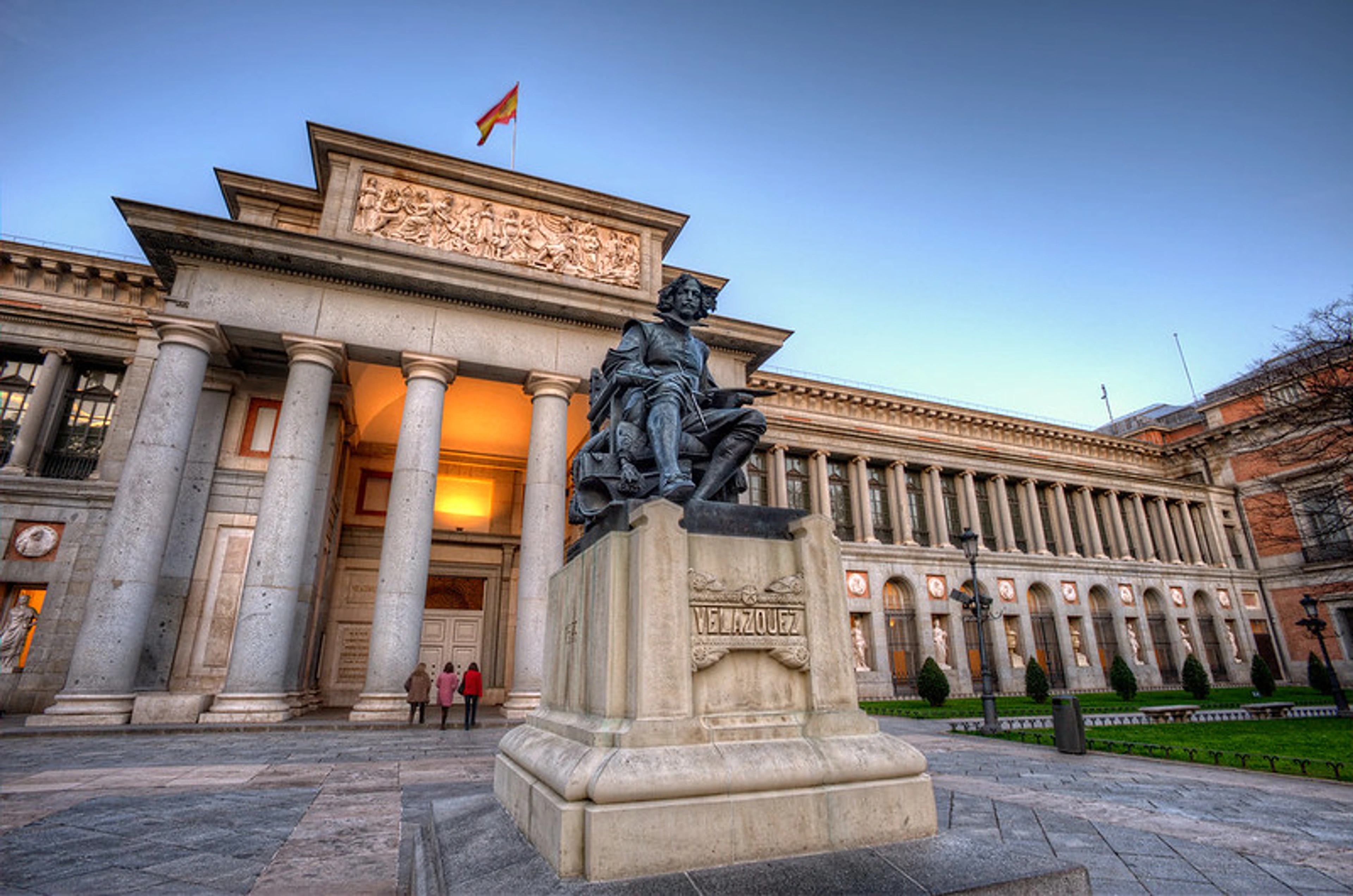
Franco died in 1975, but the painting's return was a complex and politically charged affair. Spain had to prove its democratic transition was secure. Finally, in 1981, six years after Franco's death and after nearly half a century in exile, Guernica made its final journey home to a newly democratic Spain. It was flown to Madrid and installed in the Casón del Buen Retiro, an annex of the Prado Museum. This was significant; Picasso had insisted the painting be housed in the Prado, placing it in direct conversation with the great masterpieces of Spanish art history—Velázquez, Goya, and El Greco. He saw it as part of that lineage of profound Spanish artistic expression.
The Unanswered Question: Can Art Change the World?
This brings us back to the question we started with. It's an uncomfortable one. Did Guernica stop the Spanish Civil War? No, Franco still won. Did it prevent the even greater horrors of World War II that were just over the horizon? Plainly, no. So, in a purely pragmatic sense, you could argue it failed. Tyrants continued to be tyrants, and bombs continued to fall.
But you'd be missing the point entirely. To measure Guernica's success in military outcomes is like measuring a scream's success in stopping a punch mid-swing. A scream isn't an action; it's a reaction. It's a pure, unfiltered signal that something profoundly wrong is happening. Guernica is that signal made permanent. Its power isn't in its ability to halt an event, but in its ability to bear witness, to crystallize a moral outrage so powerful that it can be understood across cultures and generations.
It gives a face to suffering. It turns statistics—"300 civilians killed"—into a mother holding her dead child, a horse screaming in agony, a town shattered into jagged fragments. By making the horror concrete, it makes it unforgettable.
And in that act of remembering lies its true power. Guernica forces us to confront the very worst of what we are capable of, not as a historical event, but as a perpetual possibility. It forces us to ask what we would do, how we would act. It makes passivity harder. It stands as a permanent testament to the idea that even in the face of overwhelming brutality, the human spirit can still create, can still scream, can still say, "This happened. Do not look away."
I see Guernica as a moral anchor. In a world saturated with images of conflict, where our sense of outrage can become dulled by the relentless news cycle, it remains an undiminished beacon of conscience. We remember Gernika today not just because it was bombed, but because Picasso painted it. He forged an image so powerful it became the event's permanent echo in our collective memory. That is the profound, if intangible, power of art. It may not stop a war, but it can win the battle for memory.
Legacy and Influence: An Enduring Symbol for Peace
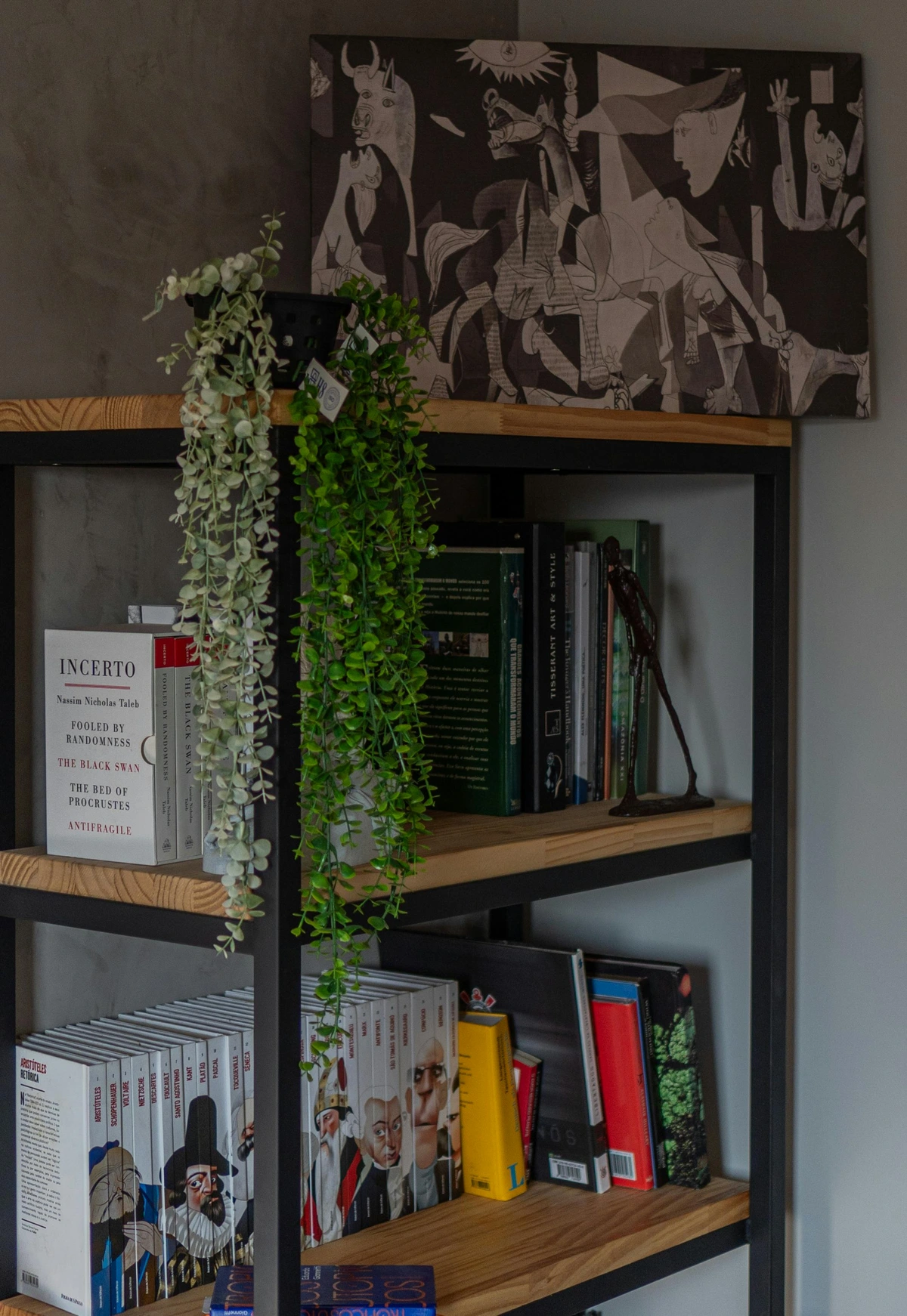
Guernica did more than just hang on a museum wall; it seeped into the very fabric of global culture. Its imagery has been endlessly reproduced, adapted, and referenced, becoming a universal shorthand for the horror of war and the courage of protest. During the Vietnam War, anti-war activists adapted its figures for posters and placards. When Colin Powell went to the UN in 2003 to make the case for the Iraq War, journalists pointedly noted that a tapestry version of Guernica in the UN headquarters was covered up, as if its accusatory gaze was too powerful to be faced.
Artists continue to engage with it, either through direct homage or by using its fragmented aesthetic to speak about contemporary conflict and displacement. It serves as a powerful reminder that the artist's role in society can be that of a truth-teller and a witness, even when that truth is almost unbearable to look at. The painting challenges artists and viewers alike to consider the social and political responsibilities of creative expression. It proves that an image, wielded with clarity and conviction, can become a more powerful historical document than any written account.
FAQs About Picasso's Guernica
Some questions come up again and again. Let's tackle them directly.
What is the main message of Guernica?
The main message is a powerful, unequivocal condemnation of the brutality of war, specifically the fascist bombing of the civilian town of Gernika. It seeks to capture the raw, anguished suffering of innocent people and to serve as a permanent record of an atrocity, ensuring that the world would not forget. It is a visceral protest against the dehumanizing nature of modern, technological warfare.
Why did Picasso paint Guernica in black and white?
Picasso intentionally chose a monochromatic palette of black, white, and grey to mimic the stark, factual quality of newspaper photographs. He felt color would be a distraction, an unnecessary aesthetic element that would soften the brutal reality he was depicting. In his own words, color would have been a 'lie.' The starkness forces the viewer to confront the event's horror directly, without any decorative filter.
Why is the Guernica painting so famous?
Its fame rests on several pillars. It is a masterwork by one of the 20th century's most important artists. It is a powerful fusion of radical modern art (Cubism) with raw, accessible political content. Its role as a potent anti-war symbol and its dramatic, decades-long exile before returning to a democratic Spain have given it a powerful story. It stands not just as a painting, but as a historical event in its own right, a testament to the power and responsibility of art.
What do the bull and the horse in Guernica symbolize?
The bull is generally interpreted as a symbol of brute, unthinking force—an embodiment of Franco's Nationalism or the unstoppable cruelty of fascism. Picasso described it as representing 'brutality and darkness.' The horse, gored and screaming in agony, represents the suffering of the Spanish people, particularly the innocent civilians of Guernica. It is the emotional heart of the painting, its scream the central sound.
Where is the painting Guernica located?
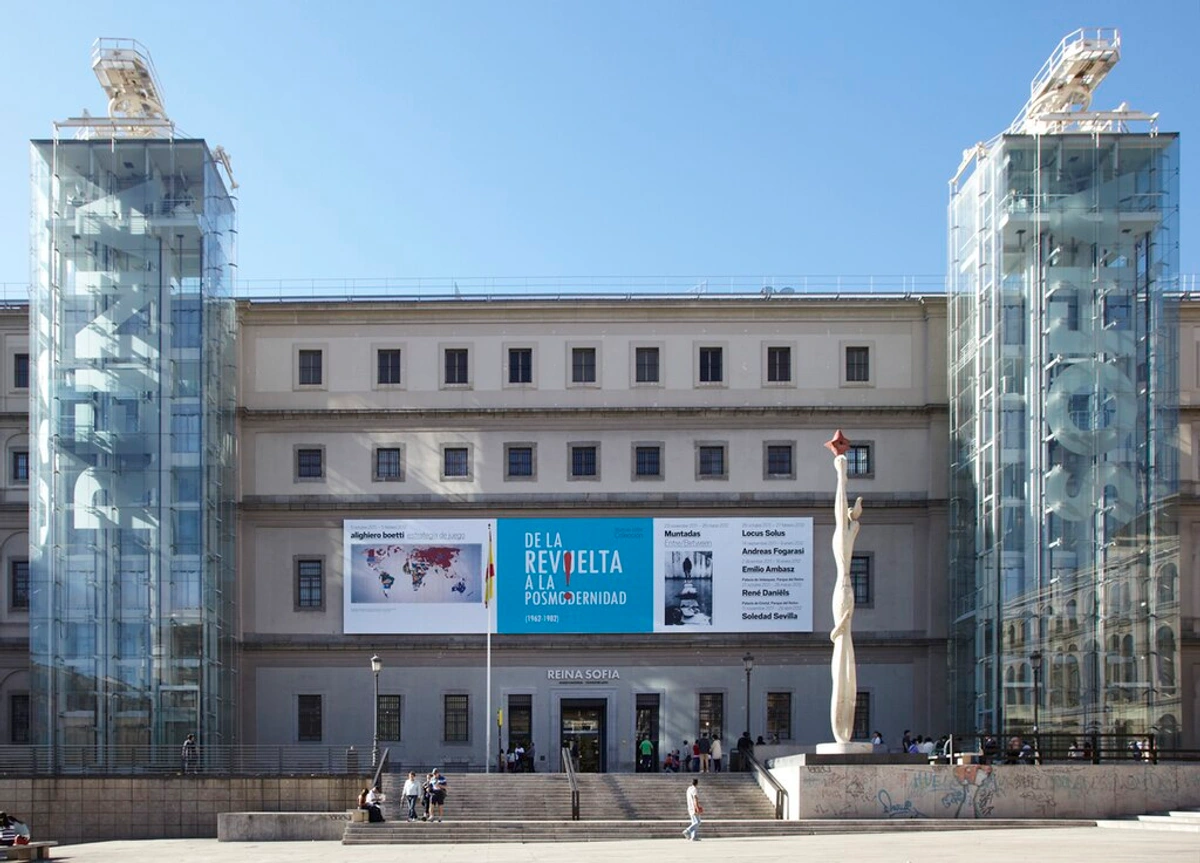
Today, the original oil painting resides in the Museo Nacional Centro de Arte Reina Sofía in Madrid, Spain. It is displayed as the centerpiece of the museum's collection.
Conclusion: The Unending Echo of a Scream
We started by imagining a scream. A sound so profound it becomes an object. Guernica is that object. It is a painting, yes, but it is also a historical document, a political statement, a howl of collective grief, and a permanent monument to conscience.




Picasso took the specific tragedy of a single Basque town and forged it into a universal symbol. He answered the question of whether a painting can stop a war not by preventing violence, but by ensuring that the memory of that violence—and its moral cost—would never die. It stands as a stark reminder that the role of the artist can be to scream the truth so loudly that the world cannot pretend not to hear it, not for a single moment, not for a single generation.