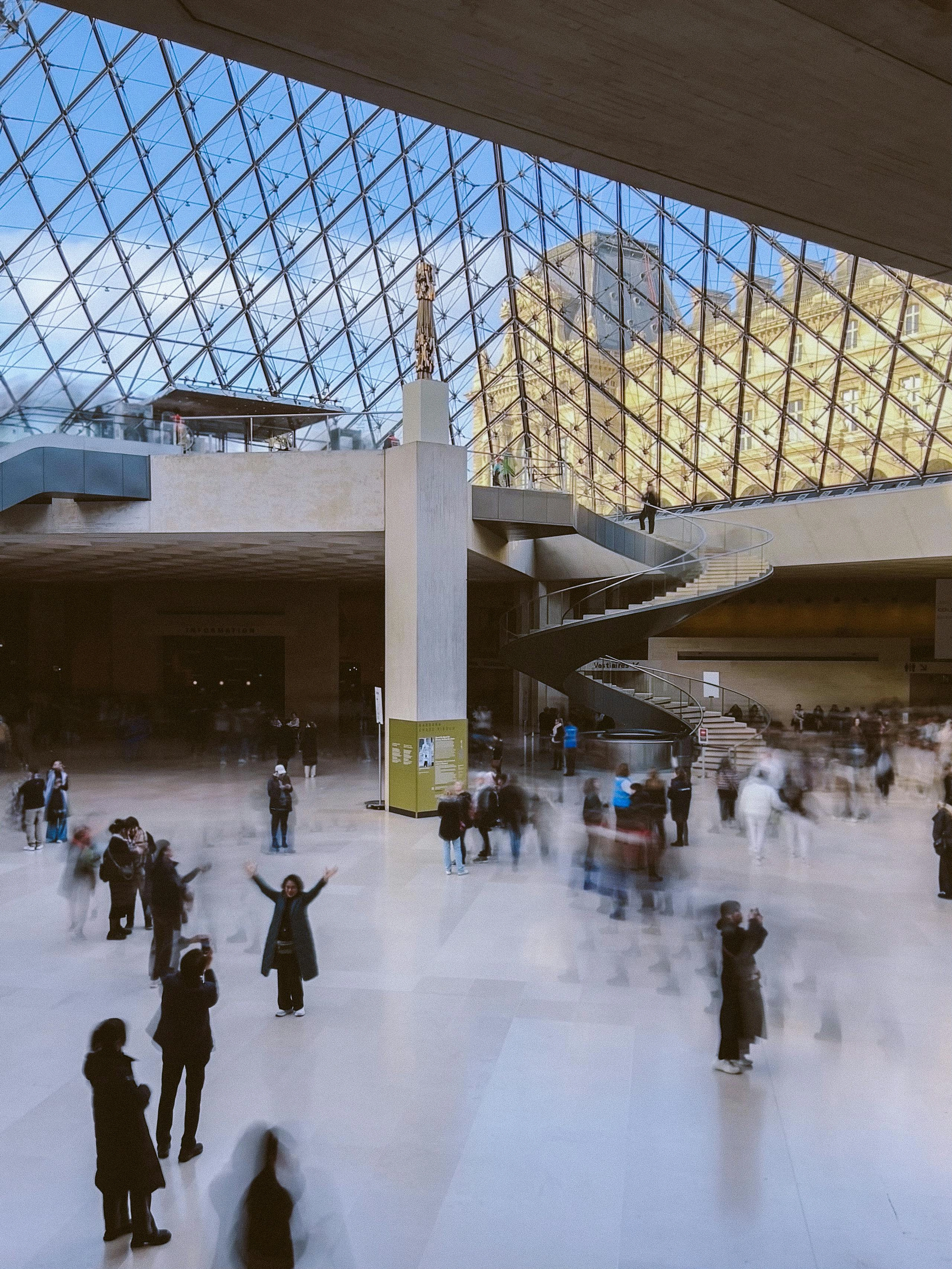
Elevating Your Ascent: A Personal Guide to Choosing Art for Your Staircase
Transform your staircase from a functional path into a captivating art journey. I share my hard-won insights and practical strategies for selecting, placing, and illuminating art on this unique, dynamic canvas.

Elevating Your Ascent: A Personal Guide to Choosing Art for Your Staircase
You know, it's funny how often we treat our staircases as mere transitional zones – a functional path from one floor to the next, a place where laundry piles up, or maybe where a lone forgotten shoe lives. But I've always seen them differently. To me, a staircase is a journey, a vertical canvas just begging for a story, a splash of personality. And frankly, leaving it bare is like serving a magnificent cake without frosting. Who does that?
I remember when I first started thinking about art for my own staircase. It felt daunting, I won't lie. All those angles, the awkward heights, the sheer amount of wall space! My initial instinct was just to slap up a few random prints, hoping for the best. Big mistake. It looked... well, it looked like I'd slapped up a few random prints. That's when I realized this wasn't just another wall; it was a unique beast demanding its own thoughtful approach. So, if you're wrestling with your own stairwell decor dilemmas, trust me, I've been there, and I've got some hard-won insights to share about turning that everyday ascent into something truly special.
The Unique Canvas: Understanding Your Staircase's Vibe
Before you even think about picking out a piece, let's chat about what makes a staircase such a peculiar (and wonderful) space for art. It's not like decorating a flat wall in your living room or bedroom; this space has its own set of rules and rewards. From my perspective, elevating a staircase with art is an act of transforming the mundane into the meaningful.
Verticality & Movement: Art in Motion
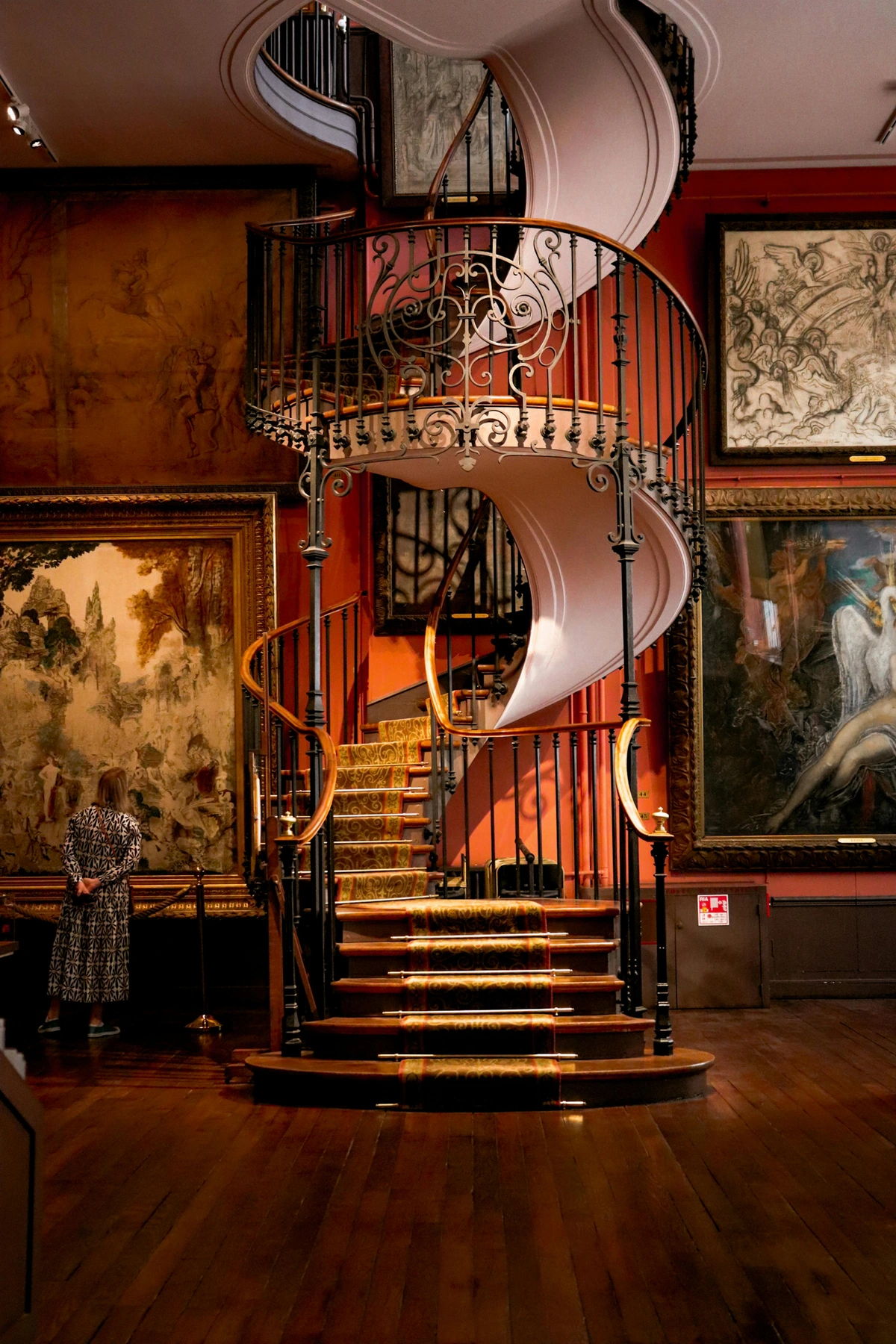
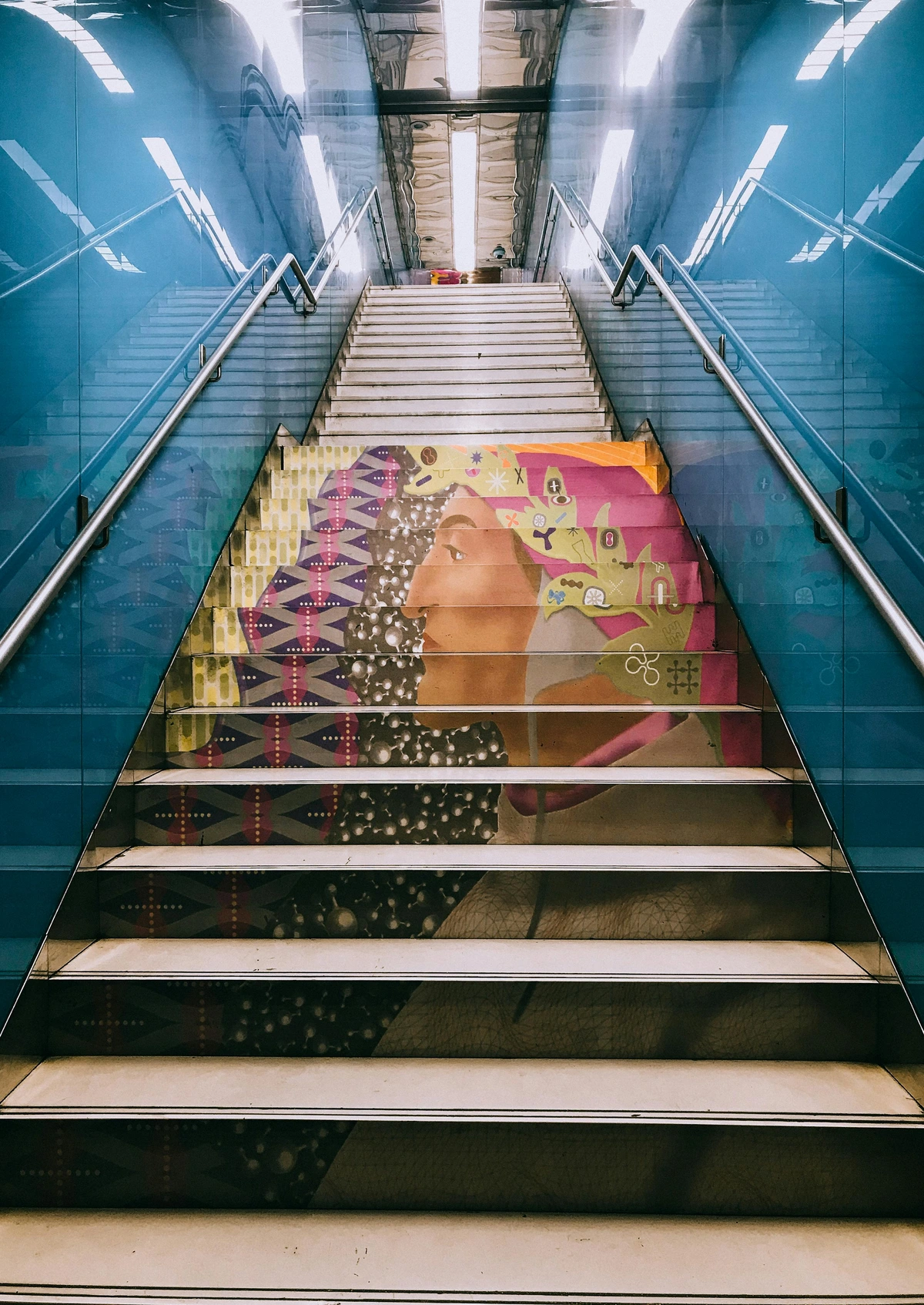
Unlike a stationary wall, a staircase is all about movement. You're walking up or down, your perspective constantly shifting. This means the art you choose needs to either embrace that dynamic flow or offer a compelling focal point that draws the eye, rather than just being a static object. I often find myself gravitating towards pieces that have a sense of rhythm or an abstract quality that changes as you move past it. Think about how a piece with strong vertical lines or an energetic composition can mirror the act of climbing, or how a series of impressionistic works might offer new details with each step. Abstract art, in particular, with its non-representational forms, is a natural fit here, inviting varied interpretations as you ascend.
https://images.zenmuseum.com/art/262/scan.jpeg, https://creativecommons.org/public-domain/
Lighting Challenges: A Shifting Spotlight
Ah, lighting. The bane of many a decorator's existence, and staircases often amplify the struggle. You might have a skylight blasting natural light at certain times of day, or perhaps it's a darker corner relying solely on artificial light. I've found that art with good depth and a matte or satin finish can handle varied lighting better, as glare can significantly diminish the viewing experience on glossy pieces, especially with angled spotlights. If you're serious about showcasing your art, consider UV-protective, anti-reflective glazing for framed pieces, and explore professional art lighting solutions like adjustable track lighting or subtle picture lights that can be angled to minimize harsh reflections. For more detailed insights, you might find my guide on how to choose the right lighting to enhance your abstract art collection quite illuminating.
Scale & Proportion: The Jenga Tower of Decor
This is where I used to get seriously stuck. How big should it be? How far apart? The scale of a staircase wall can be massive, but then you have the steps interrupting things. My personal rule of thumb (which I learned the hard way when a tiny print got utterly swallowed by a vast wall, looking like a misplaced postage stamp) is to lean slightly larger than you think you need. A tiny print gets swallowed whole. The visual weight of the artwork needs to hold its own against the expanse of the wall and the architectural elements of the staircase. Think of visual weight like the boldness of a color or the intricacy of a design – a vibrant, detailed piece holds more visual weight than a pale, minimalist one. And remember, the empty space around the art is just as important as the art itself. It provides breathing room, a visual exhale.
For narrow staircases, don't despair! I recommend sticking to smaller, simpler pieces or a vertical arrangement of one or two slender artworks. Avoid anything too bulky or protruding that might impede movement. A single, powerful vertical abstract could work wonders without feeling cramped, drawing the eye upwards without encroaching on the limited space. Sometimes, less truly is more. For general tips on how to decorate a house, you could always check out my article on how to decorate a house.
Foot Traffic & Interaction: Touchy-Feely Art? Maybe Not.
Consider how much traffic your staircase gets. If it's a bustling family highway, perhaps a delicate, easily bumped sculpture isn't the best idea. I prefer framed prints or canvases that are relatively flush with the wall. And while I love a tactile experience, a high-traffic area might not be the place for art that begs to be touched, unless it's genuinely robust. For more in-depth advice on art for busy zones, you might find my thoughts on choosing art for high-traffic areas durability tips useful.
Considering the View from All Angles
Here’s a trick I learned: don't just consider how a piece looks when you're directly in front of it. A staircase is a multi-angle viewing experience. Think about how the art appears from the landing above, the hall below, and as you pass it at different heights. This perspective shift can reveal new aspects of the artwork, so choose pieces with compositions that remain interesting and balanced from various viewpoints.
Art as a Wayfinding Tool
For larger homes or multi-story layouts, art can subtly guide guests. A distinct, perhaps bold, piece or a curated cluster at a key landing can help guests navigate by marking different zones, moods, or directions. It's a delightful way to merge aesthetics with subtle functionality, turning art into an intentional part of your home's flow.
Color and Mood: Setting the Tone for Your Ascent
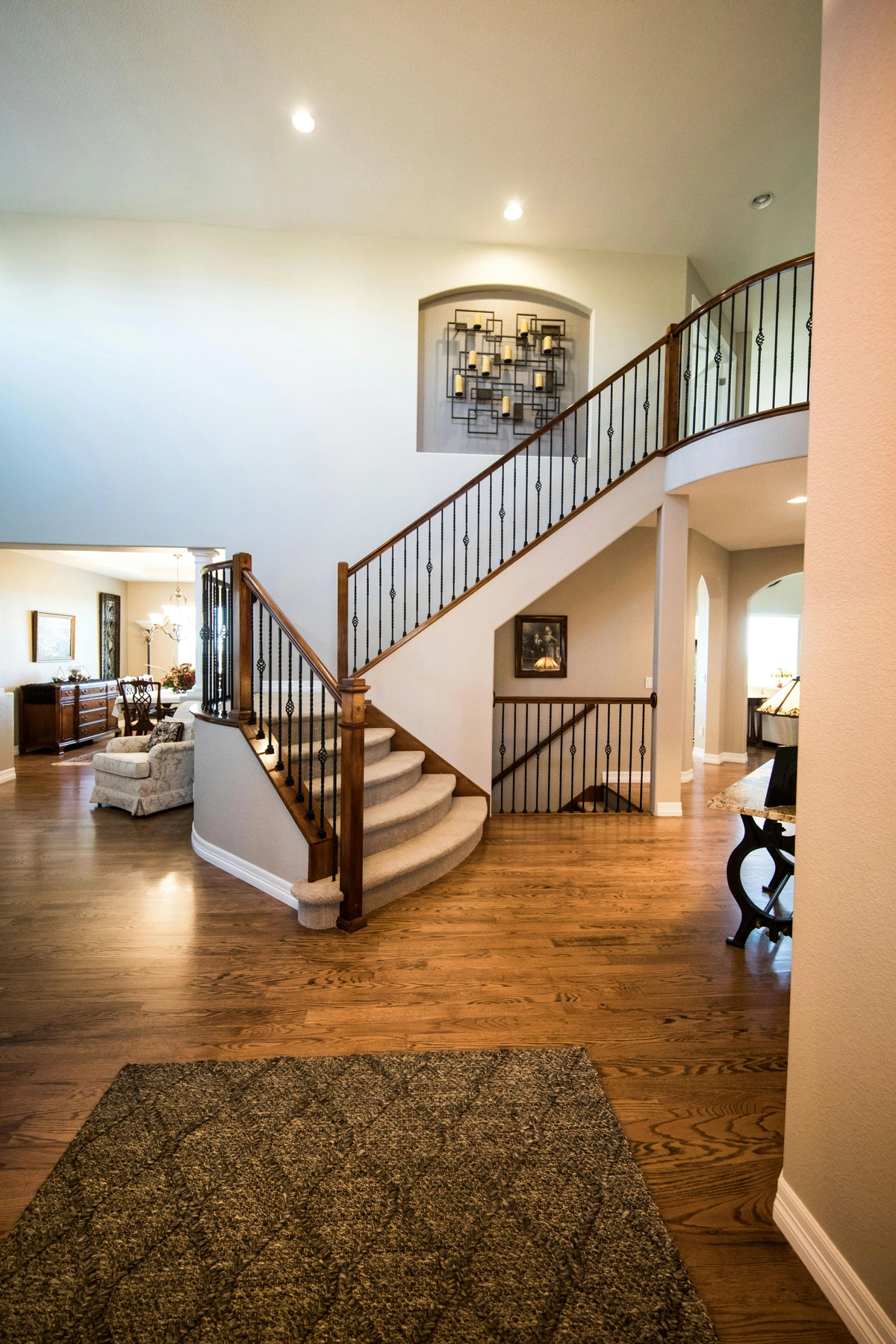
Don't underestimate the power of color. Your staircase art's palette can either harmonize seamlessly with your home's existing decor, creating a serene and continuous flow, or it can serve as a deliberate contrast. A vibrant, unexpected pop of color can instantly become a focal point, injecting energy and personality into an otherwise neutral space. I often play with bold hues to create that instant 'wow' factor. Consider how certain colors can evoke calmness (blues, greens) or energy (reds, oranges), shaping the emotional journey of your climb. This is also where you might consider a minimalist approach – sometimes a stark, monochromatic piece speaks volumes in a contemporary setting, serving as a quiet counterpoint to a bustling home.
https://images.zenmuseum.com/art/448/picture.jpg, https://creativecommons.org/public-domain/
Considering the Art Medium: Beyond Just What You See
The material and finish of your art are just as crucial as its visual appeal, especially in the dynamic environment of a staircase. Oil on canvas offers rich textures but might require specific lighting to avoid shadows. Acrylics are versatile and durable, often easier to clean. Framed prints, particularly with UV-protective and anti-glare glazing, offer protection from sunlight and dust, which can accumulate more rapidly in open staircase areas. Mixed media pieces can be incredibly engaging but might demand a less trafficked spot if delicate. I always suggest thinking about longevity and ease of maintenance – how will this piece hold up over time to dust, temperature fluctuations, and potential bumps? A matte varnish on canvases or a smooth, sealed frame finish will make cleaning a breeze.
My Go-To Strategies for Staircase Art Selection
Now that we've dissected the unique characteristics of this vertical canvas, let's explore some of my favorite ways to adorn it. This is where the fun (and the personal expression) truly begins.
The Gallery Wall, Reimagined for Stairs
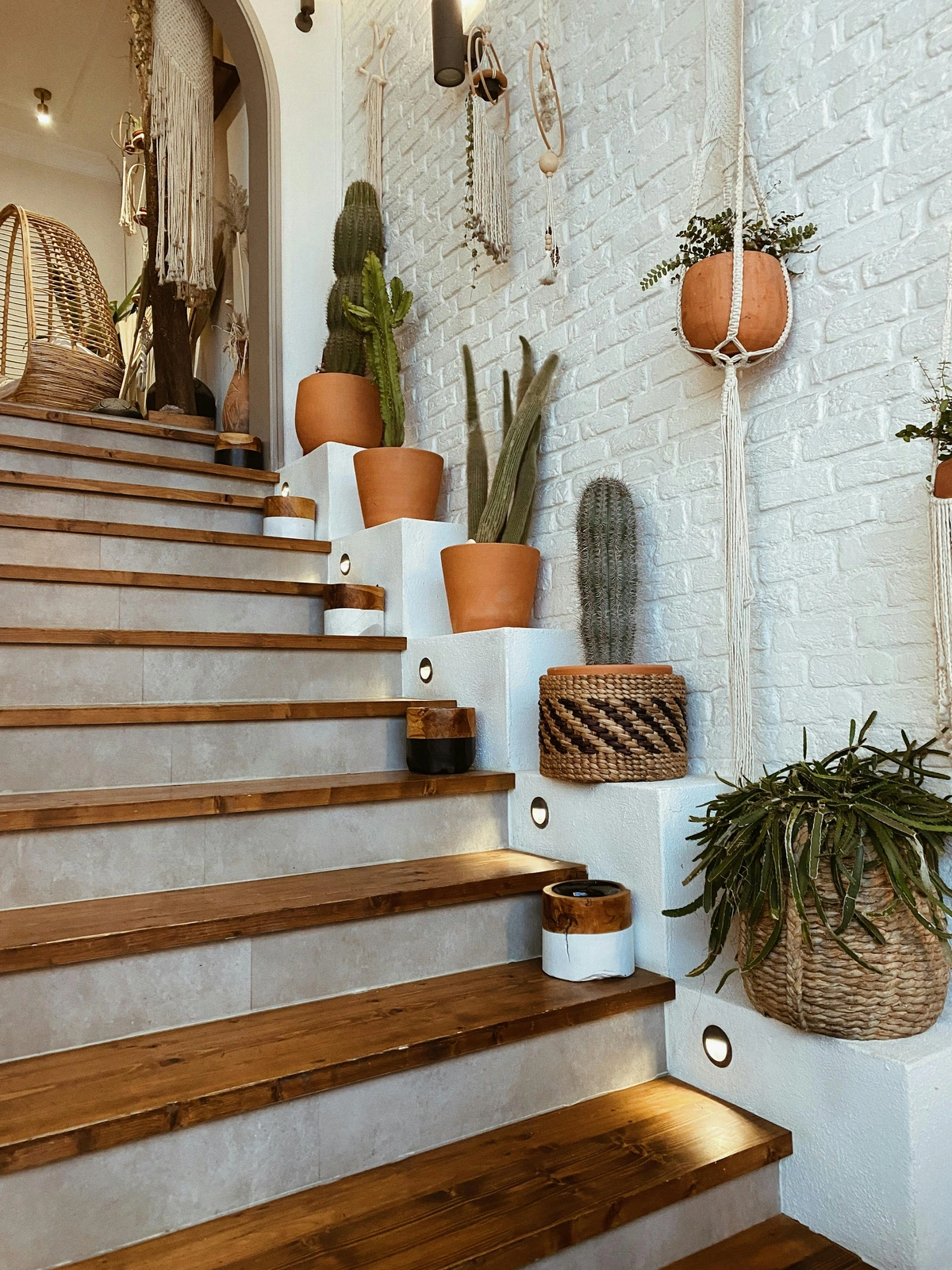
This is a classic for a reason, but it needs a twist for staircases. Instead of a rigid grid, think of it as a flowing narrative. I like to start with a central piece – usually a medium to large one – and then build outwards and upwards, following the line of the staircase.
Here’s how I approach it:
- Start with a focal point: Choose one anchor piece, often at eye level from a central step or landing.
- Follow the incline: Imagine an invisible line running parallel to your handrail and arrange pieces along that axis.
- Mix and match (with caution): Different frame sizes and styles can add character, but I usually try to unify them with a common color palette or a similar artistic theme to avoid visual chaos. This creates a visual narrative that unfolds with each step, turning a daily commute into a mini-exhibition.
- Mind the clearance: Remember to consider the height of each piece in relation to the steps directly below it, ensuring there's a consistent visual clearance for safety and aesthetics.
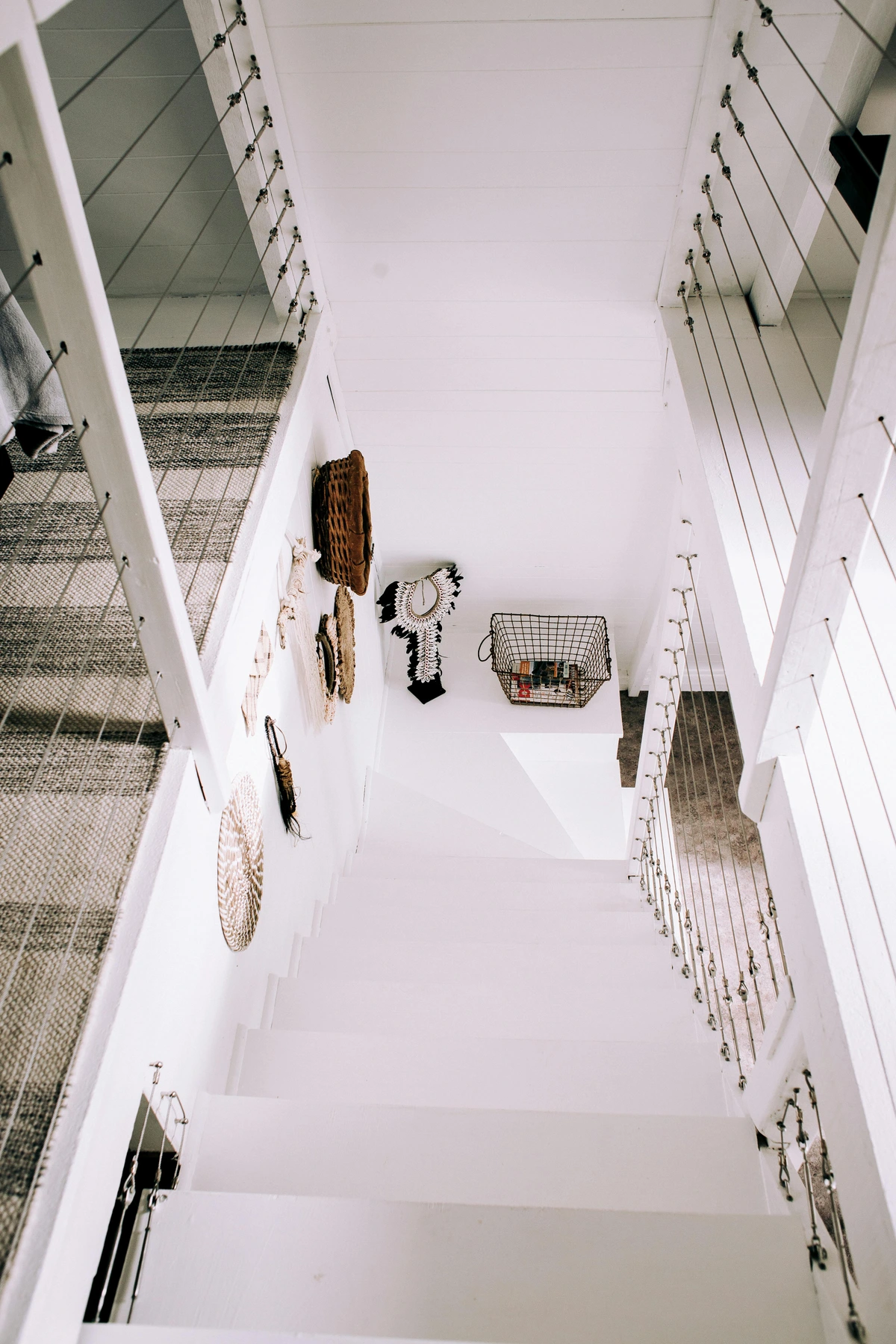
https://images.pexels.com/photos/6773811/pexels-photo-6773811.jpeg, https://creativecommons.org/public-domain/
Statement Piece Power: Less is Sometimes More
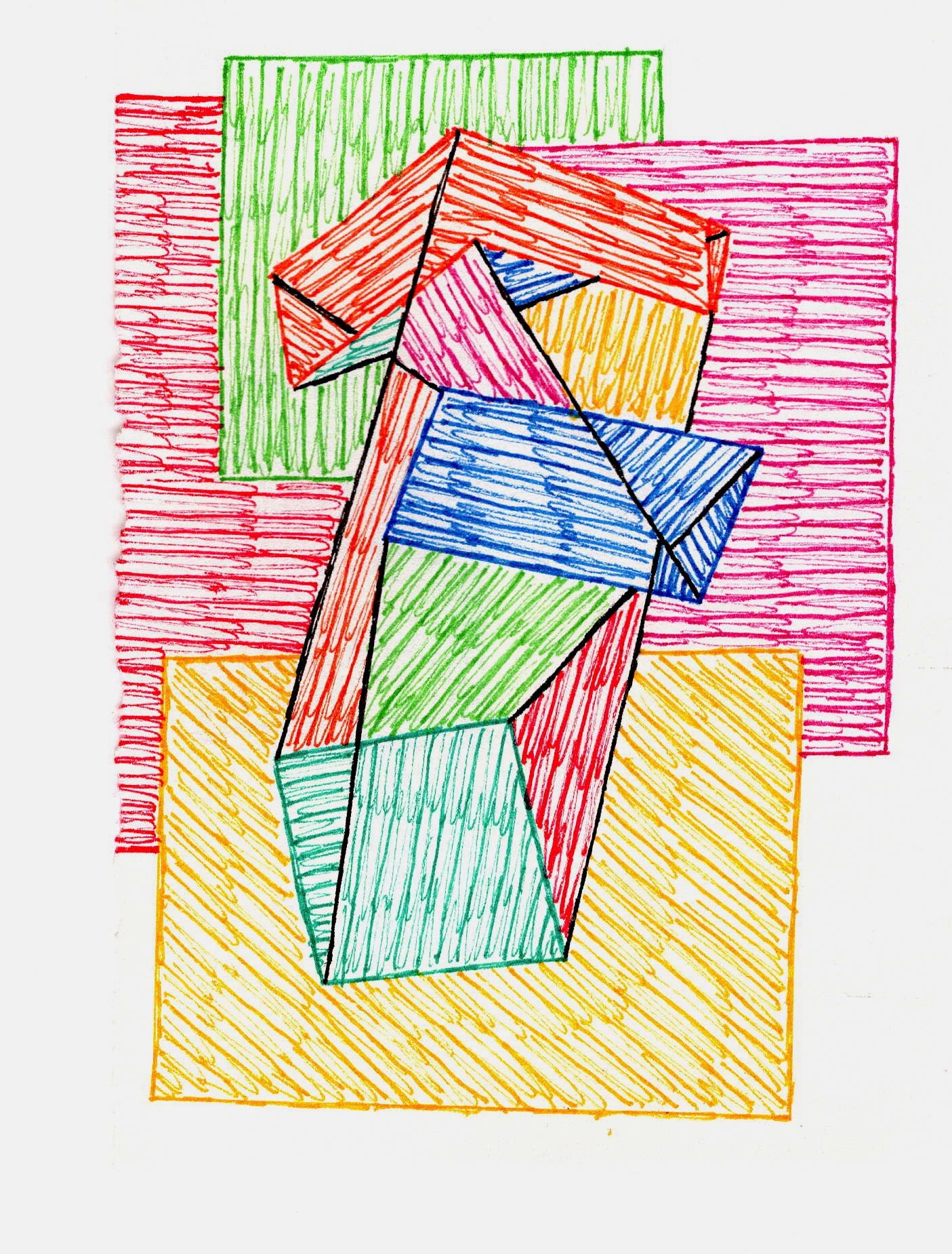
Sometimes, one large, impactful piece is all you need, especially on a landing or a very wide, grand staircase. I once saw an enormous abstract canvas filling almost an entire landing wall, and it just stopped me in my tracks. It made the space feel like an art gallery, rather than just a pass-through. If you have a passion for bold, contemporary art for wall, a single large piece can speak volumes. Just be sure it's substantial enough not to look lost – aim for a piece that occupies at least two-thirds of the available wall width or a significant portion of its height, commanding attention without overwhelming. This can be particularly effective in minimalist or industrial interiors, creating a powerful focal point.
Here's an example of the kind of bold, abstract piece I love for creating impact, demonstrating how a singular vision can truly transform a space:
https://images.zenmuseum.com/art/280/scan.jpeg, https://creativecommons.org/public-domain/
Curated Clusters: When Theme is Everything
Another approach I adore is creating a cluster of two or three related pieces. Maybe it's a diptych or triptych, or perhaps several smaller pieces by the same artist that share a common visual language. This works beautifully when you want to tell a mini-story or explore a particular theme without going full gallery wall. It brings a sense of intimacy and thoughtfulness to the space, allowing for a focused visual conversation. Think about a series of abstract art for small spaces maximizing impact in compact areas arranged vertically to draw the eye up.
Abstract Flow: My Personal Fave
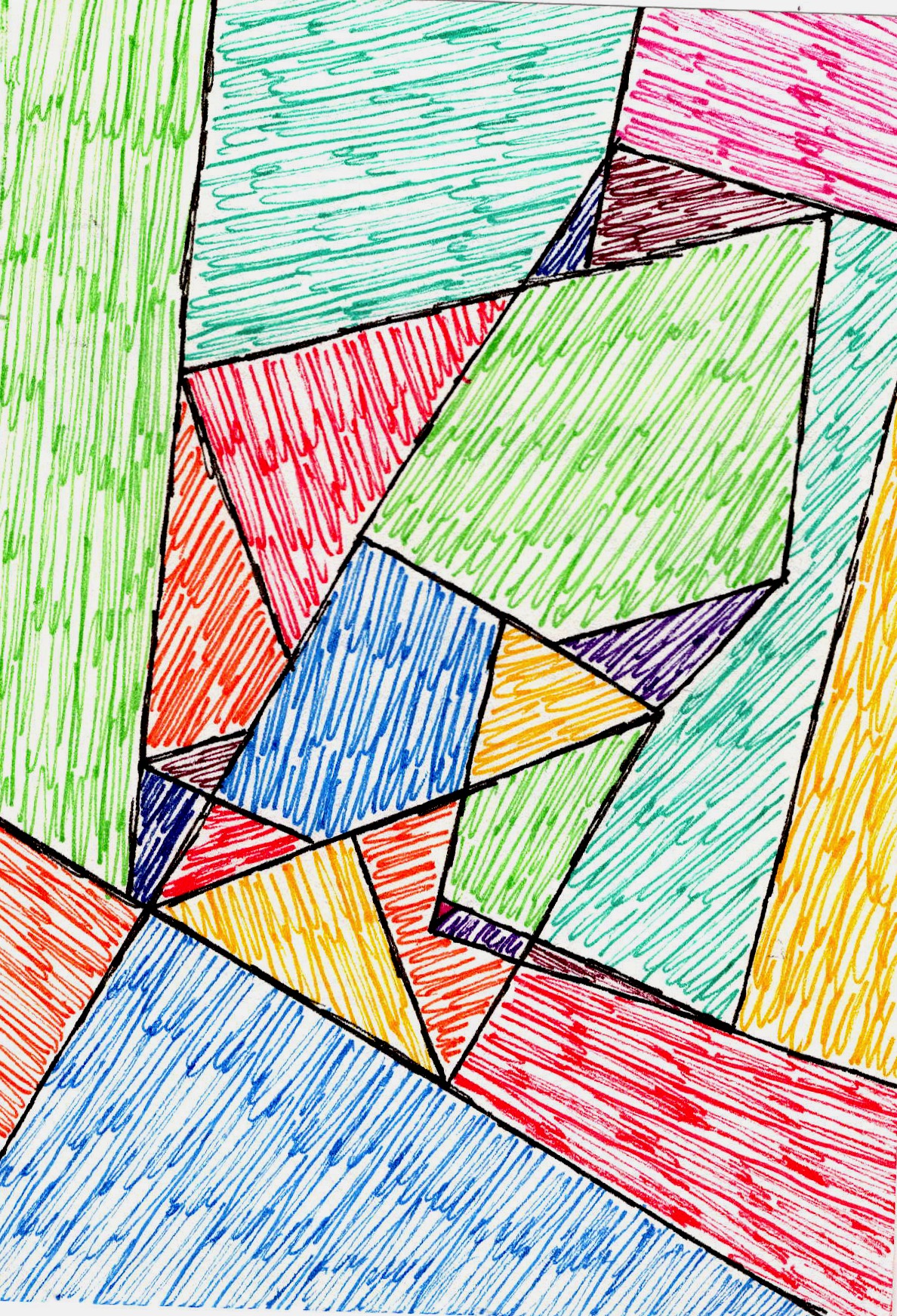
I'm biased, I admit, but I think abstract art is made for staircases. Its non-representational nature means you can appreciate it from various distances and angles without needing to "understand" a specific scene. The colors, lines, and shapes can create a wonderful sense of movement and energy that perfectly complements the ascending and descending path. For me, it's not just about aesthetics; it's about how these forms subtly shift my mood or spark a tiny moment of imaginative escape during an otherwise mundane journey. Whether it's geometric abstraction with its clean lines mirroring architectural elements, or lyrical abstraction with its fluid forms creating a sense of serene motion, the possibilities are endless. I often feature pieces in my own artist's journey that would be fantastic for this purpose, and for more on the history and evolution of this dynamic style, check out the definitive guide to the history of abstract art key movements artists and evolution.
Consider how the lines and colors in this piece could guide the eye up a wall, embodying that sense of upward motion:
https://images.zenmuseum.com/art/182/scan.jpeg
Quick Action Plan for Your Staircase Art
Feeling overwhelmed? Don't be! Here's a quick roadmap to get you started:
- Assess Your Space: Understand your staircase's unique features, lighting, and traffic.
- Define Your Vibe: What mood do you want to create? Energetic, serene, grand, personal?
- Choose Your Strategy: Gallery wall, statement piece, or curated cluster?
- Select Your Art: Pick pieces that resonate with your vision and the staircase's characteristics.
- Plan Your Placement: Trust your eye more than strict rules, but keep safety in mind.
Practicalities: Don't Just Hang It, Place It
So, you've chosen your art. Fantastic! But even with the perfect pieces, execution matters. A lot. This is where we ensure your vision comes to life safely and beautifully.
Eye Level on an Incline: The Trickiest Part
This is the big one. General rule of thumb for flat walls is to hang art so the center is at eye level (around 57-60 inches from the floor). On a staircase, you're dealing with an incline. My advice? Don't overthink precise measurements for every piece. Instead, imagine an invisible diagonal line running up the wall, parallel to your handrail. Aim to center your art along that line, keeping the bottom edge of the frames roughly 4-6 inches above the highest point of the step directly below it. So, as you stand on a step, the art above it should feel comfortably placed. Step back, walk up and down, and adjust. It's often more about feel than rigid math; trust your eye and take multiple vantage points – from the top landing, the bottom, and each step – to find that sweet spot. It's a bit like when I'm decorating with art in a home office boosting creativity and focus, where the 'feel' of the space dictates placement as much as any rule.
Installation Tips: Safety First (and Don't Be Me!)
I've had my share of near-misses with ladders and power tools – let's just say a slightly crooked frame is preferable to a trip to the emergency room – so take it from me: safety first! Invest in a sturdy step ladder or, even better, get a friend to spot you (and tell you if it's crooked). Using picture hanging strips or anchors is crucial for heavier pieces, especially if you're in a lively household. You don't want your beautiful art becoming a projectile!
Beyond the Walls: Sculptural & 3D Elements
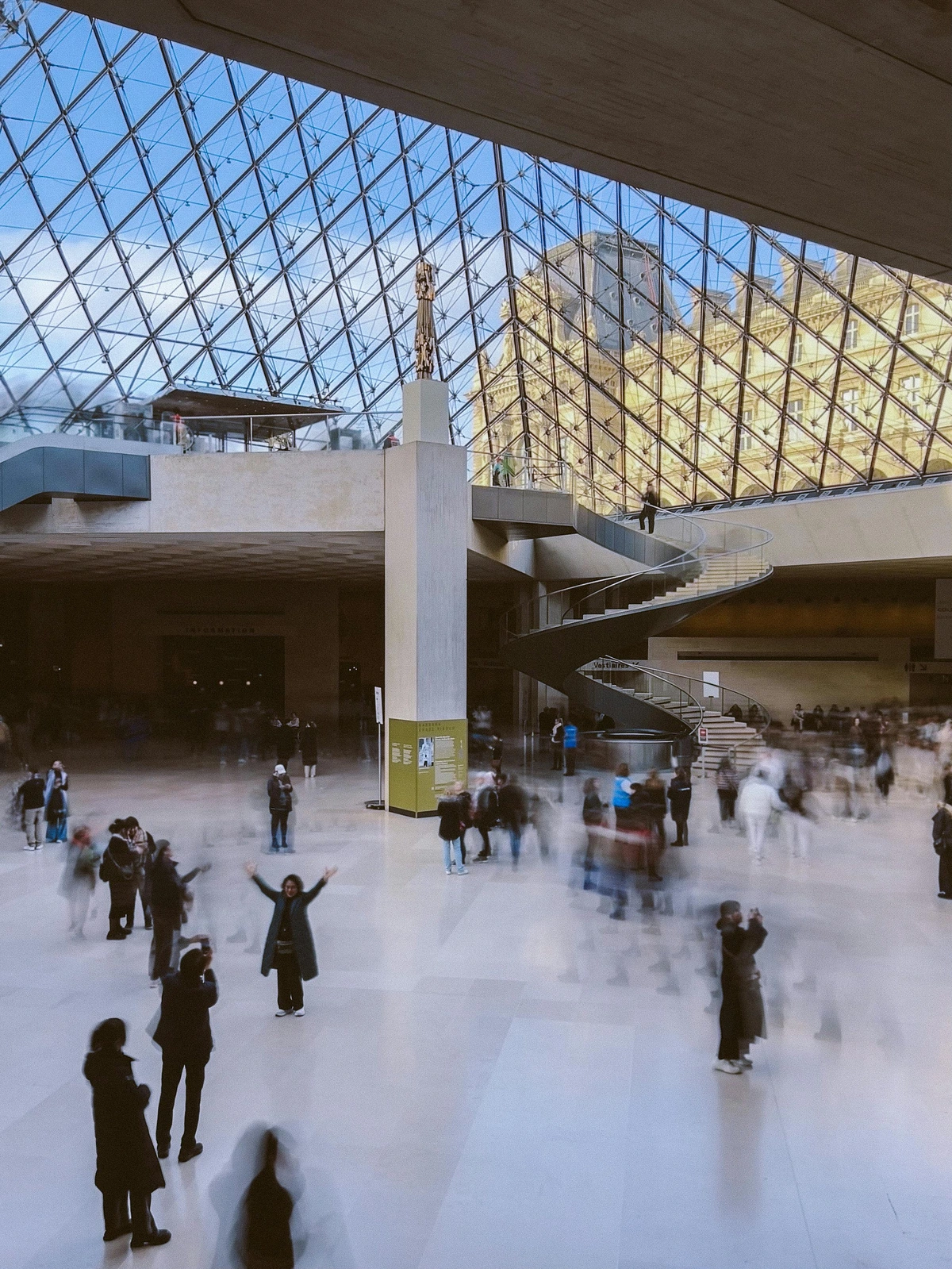
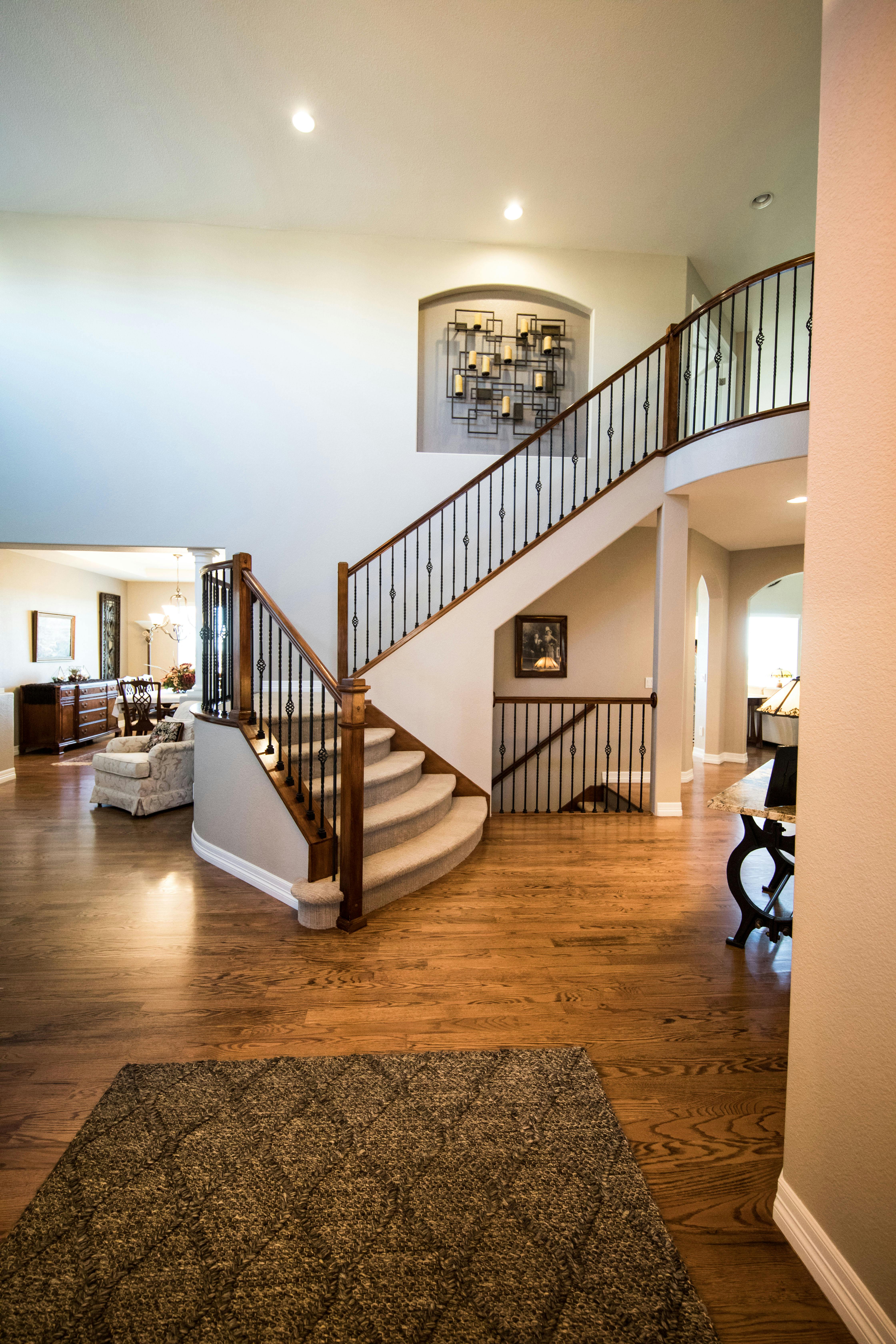
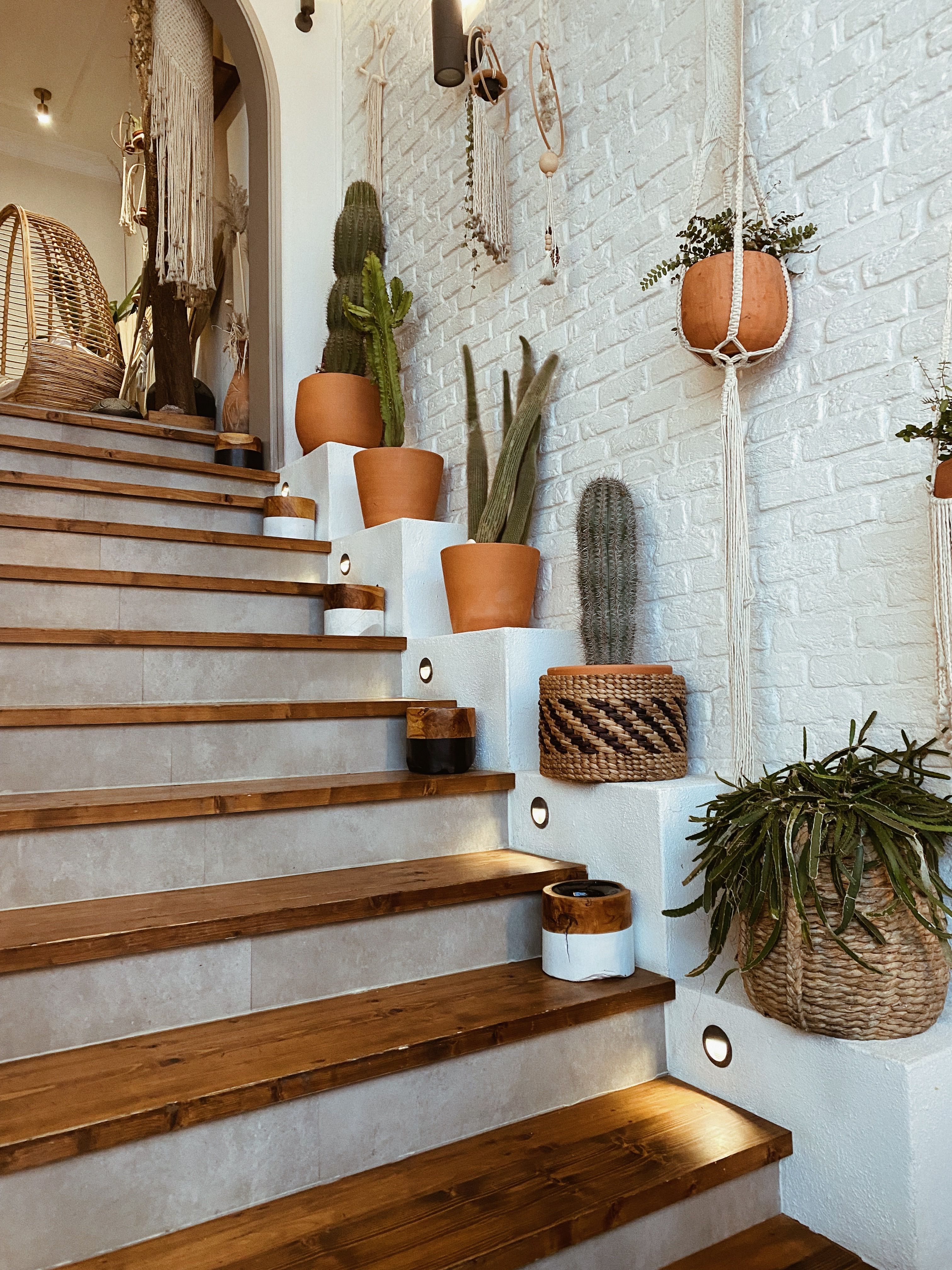
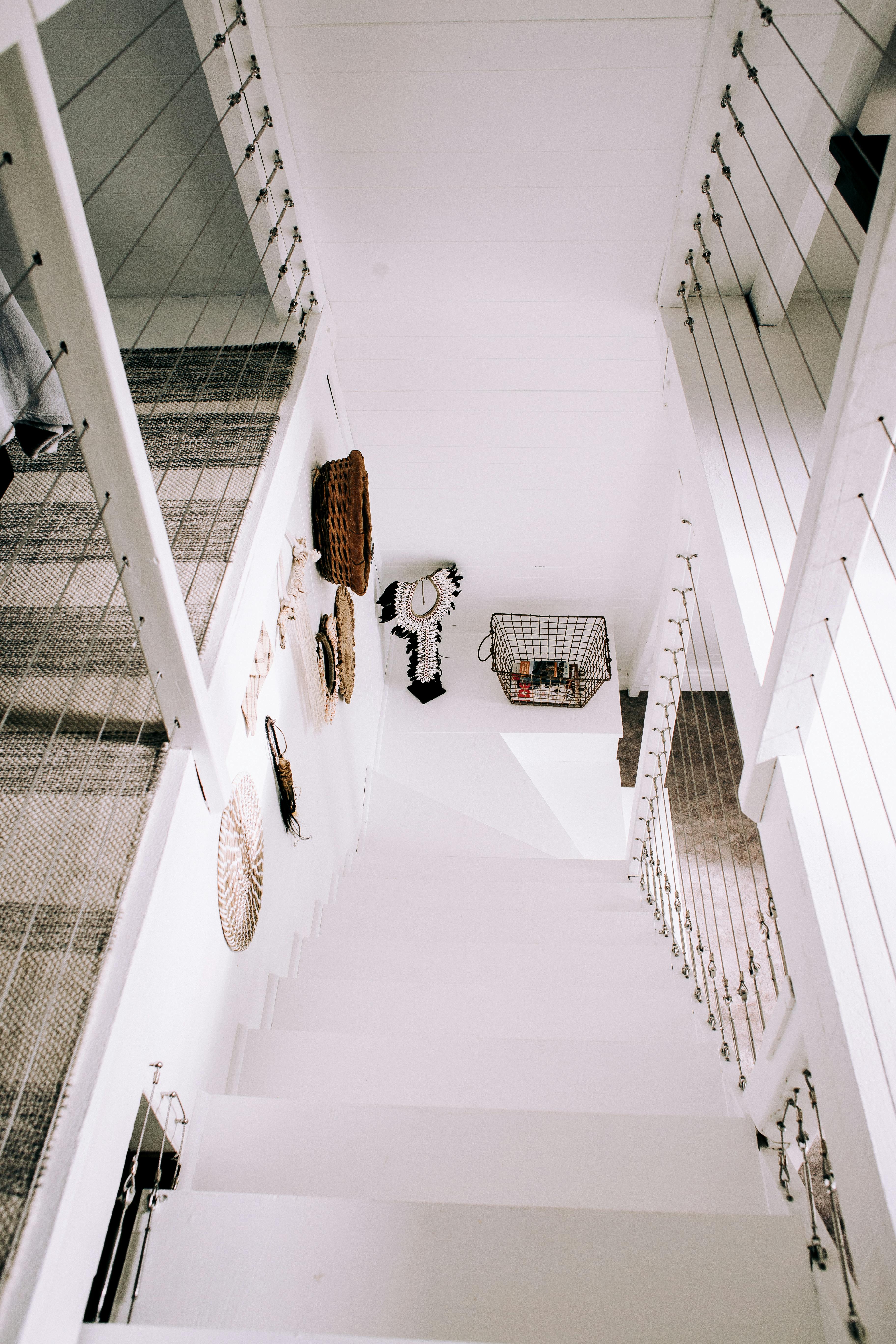
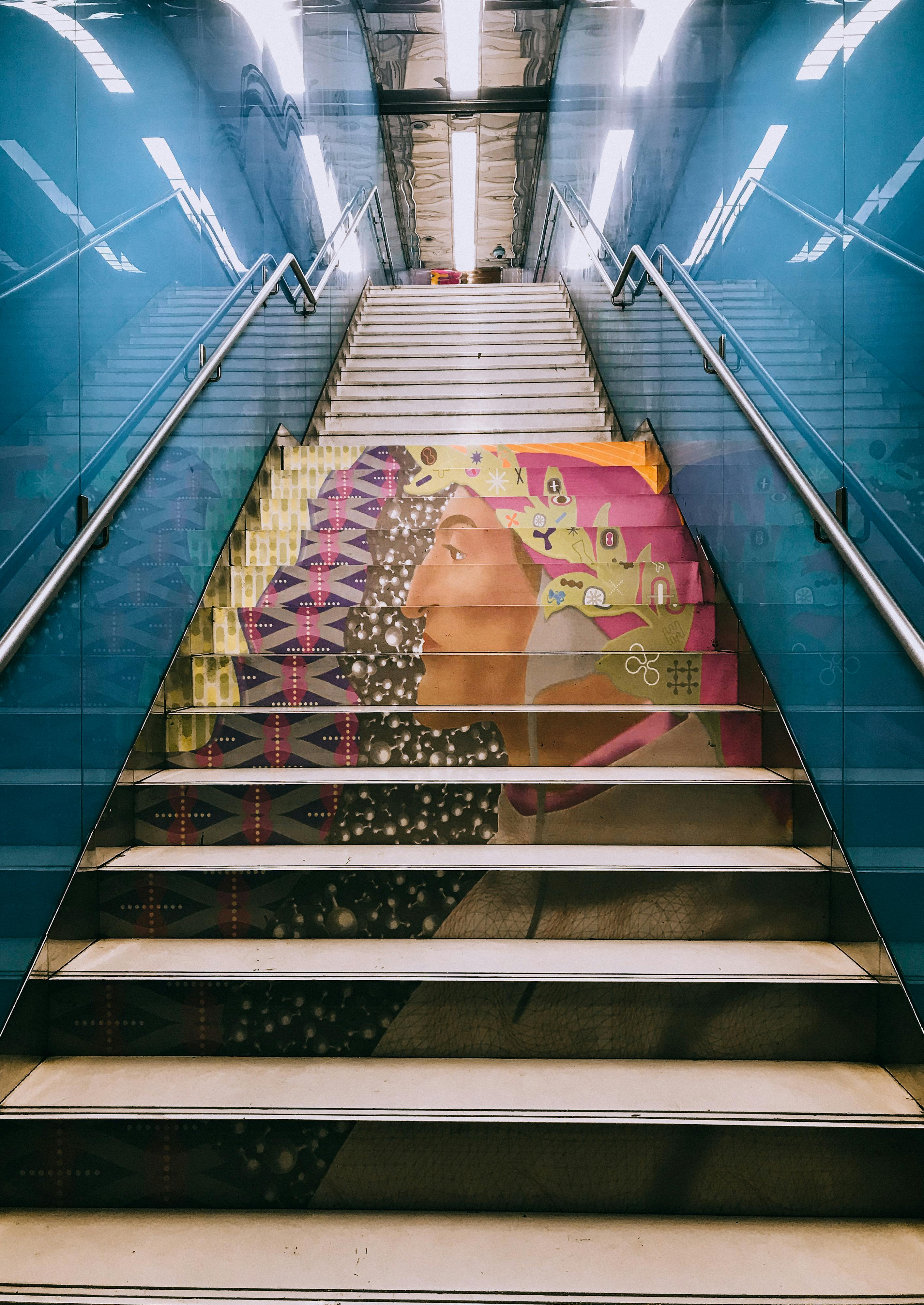
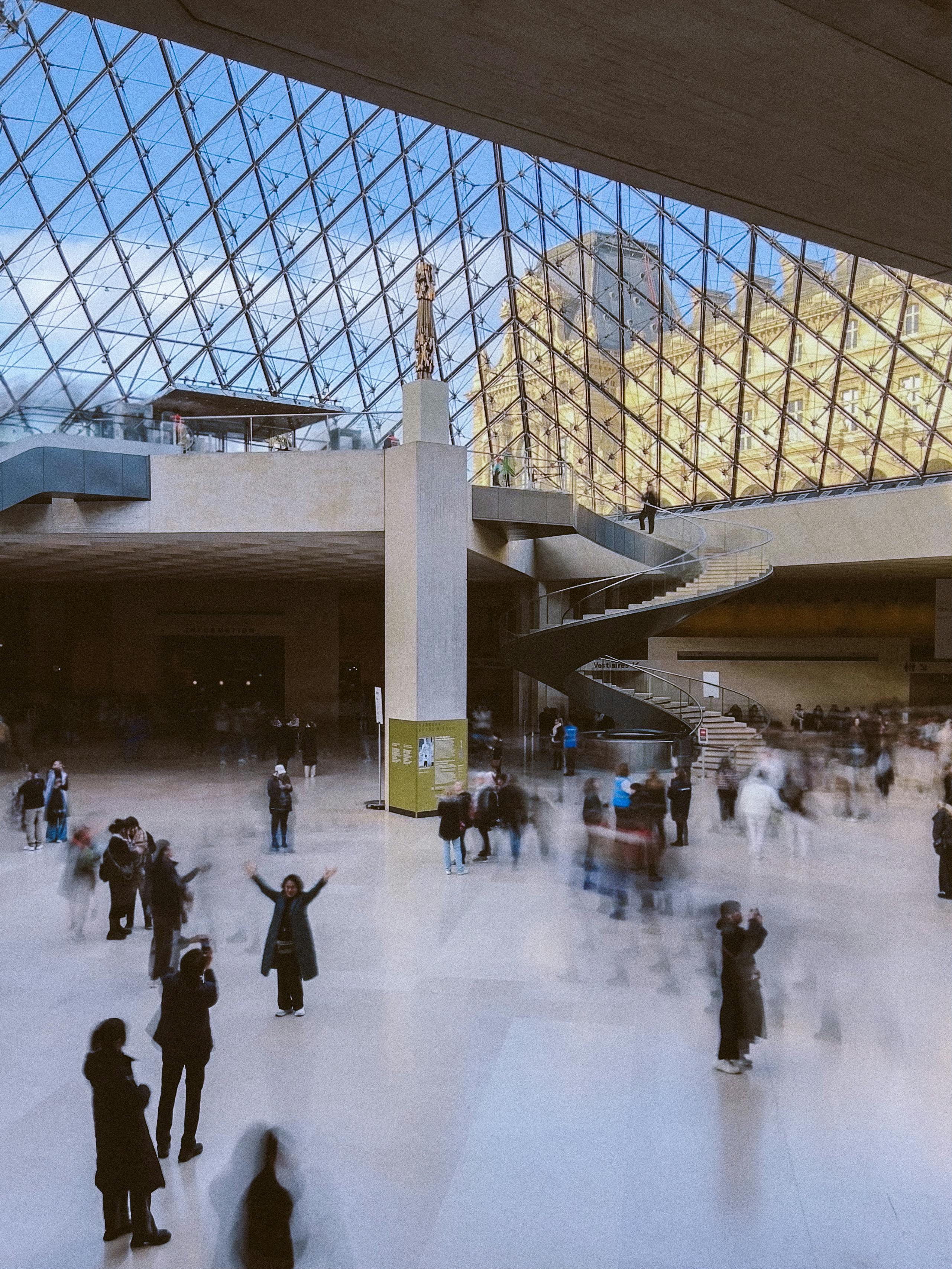
While we've mostly focused on wall art, don't forget the power of three-dimensional pieces! For spacious landings, a small-scale sculpture or a decorative vase can add an unexpected layer of artistry. But why stop there? Consider wall-mounted sculptures that add depth and shadow play along the ascent, or even kinetic sculptures that subtly shift with air currents, adding another layer of dynamic movement. Even unique banister designs, if they're particularly artistic, can function as sculptural elements, turning the architecture itself into a piece of art. Incorporating such elements can transform a staircase into a truly multi-sensory experience. For deeper guidance on this, check out my article on how to incorporate sculptural art into modern interiors.

https://images.zenmuseum.com/art/448/picture.jpg
A Nod to History: The Evolution of Staircase Art
It's fascinating to consider that decorating staircases isn't a new phenomenon. In fact, grand staircases throughout history have been prime locations for artistic expression, signaling status, power, and storytelling. Think of the Baroque and Rococo eras, where opulent palaces featured elaborate ceiling murals extending from the landings, intricate frescoed walls, and even a gallery of ancestral portraits lining the ascent. These weren't just decorative; they were carefully curated journeys designed to impress. During the Victorian era, stairwells often hosted a mix of landscape paintings, botanical prints, and family photographs, reflecting a more personal, yet still formal, aesthetic. While our modern homes might not have the same scale, the principle remains: the staircase is a prime location for visual impact. Understanding this lineage helps us appreciate the enduring opportunity we have to make these transitional spaces truly sing, blending contemporary aesthetics with a timeless tradition of elevating our everyday paths.
FAQs from My Own Decorating Headaches (and Yours, Probably)
I've been asked these (and asked myself these) countless times. Consider this my rapid-fire round of wisdom.
Q: How high should I hang art on a staircase wall?
A: Aim for the center of the art (or the collection) to roughly follow your natural eye level as you ascend/descend. A good starting point is to ensure the bottom edge of frames is about 4-6 inches above the highest point of the step directly below it. Walk up and down to check the visual flow from various angles – it’s more about the overall feel than strict adherence to a single measurement.
Q: Can I mix different styles of art?
A: Absolutely! In fact, I encourage it. The trick is to find a unifying element – perhaps a consistent color palette, similar frame styles, or a shared theme (like all landscapes, or all abstracts) – that ties everything together. This prevents it from looking chaotic and gives it a curated feel. It's similar to decorating with art in industrial interiors where varied textures and pieces come together to create a cohesive, intriguing space.
Q: What kind of lighting should I use?
A: If possible, integrated picture lights above key pieces can dramatically highlight your art. Otherwise, general ambient lighting from sconces or overhead fixtures should be sufficient. Just be mindful of glare on glossy finishes; matte or satin finishes often perform better under varied lighting. For darker staircases, consider warmer LED lights to create an inviting glow. My article on the art of display how to light and position abstract art for maximum impact has more tips.
Q: What about framed photographs?
A: Framed photographs can be absolutely stunning on a staircase! They lend a deeply personal touch, transforming your ascent into a journey through memories. For a cohesive look, I suggest unifying them with similar frames (color, material, or style) and considering a consistent filter or editing style for the photos themselves. Mixing sizes can add visual interest, but maintaining a theme or color scheme will prevent it from looking disjointed. It's a fantastic way to tell your family's story.
Q: How do I deal with artwork in a very dark staircase?
A: A dark staircase can actually be a fantastic opportunity to create drama. Opt for artwork with vibrant, high-contrast colors or metallic accents that catch even subtle light. Backlit art or pieces with integrated lighting can be incredibly effective. Also, strategic use of warmer-toned ambient lighting (sconces, recessed lights) can illuminate the art and make the space feel more inviting, rather than cavernous.
My Final Ascent: A Thought on Art and Your Journey Home
Ultimately, choosing art for your staircase is about more than just filling a wall. It's about enhancing a daily journey, turning a functional space into something beautiful, thoughtful, and uniquely you. It's a chance to tell a story, to invite contemplation, or simply to add a burst of joy to an often-overlooked area of your home. It’s a bit like my experience developing my museum in 's-Hertogenbosch; every strategic decision, from the grand architectural choices to the placement of a single piece, was about creating an immersive and meaningful experience. Just as the museum invites visitors on a journey of discovery, your staircase art is waiting to be discovered, step by thoughtful step.
So, take your time, experiment, and don't be afraid to break a few "rules" if it feels right. After all, art is deeply personal, and your home should reflect that. Your staircase art is waiting to be discovered. If you're looking for inspiration, feel free to browse my art for sale – you might find the perfect piece to start your staircase transformation.