Blue Horse I
Dive into the soul of Expressionism with Franz Marc’s "Blue Horse." Our deep-dive analysis explores the painting's spiritual color symbolism, its revolutionary role in the Blue Rider movement, and why this iconic work continues to captivate.

A Deep Dive into the Soul of Franz Marc's ‘Blue Horse’: A Personal Reflection
Have you ever looked at a work of art and felt it was vibrating on a frequency you couldn’t quite hear? That's the feeling I get every single time I stand before Franz Marc's Blue Horse I. It’s more than just a painting; it's a window into a different way of seeing the world, one where color isn't just a visual quality but a spiritual language. Today, I want to unpack that feeling with you, not with dry academic theory, but by walking you through my own journey of understanding this iconic masterpiece.
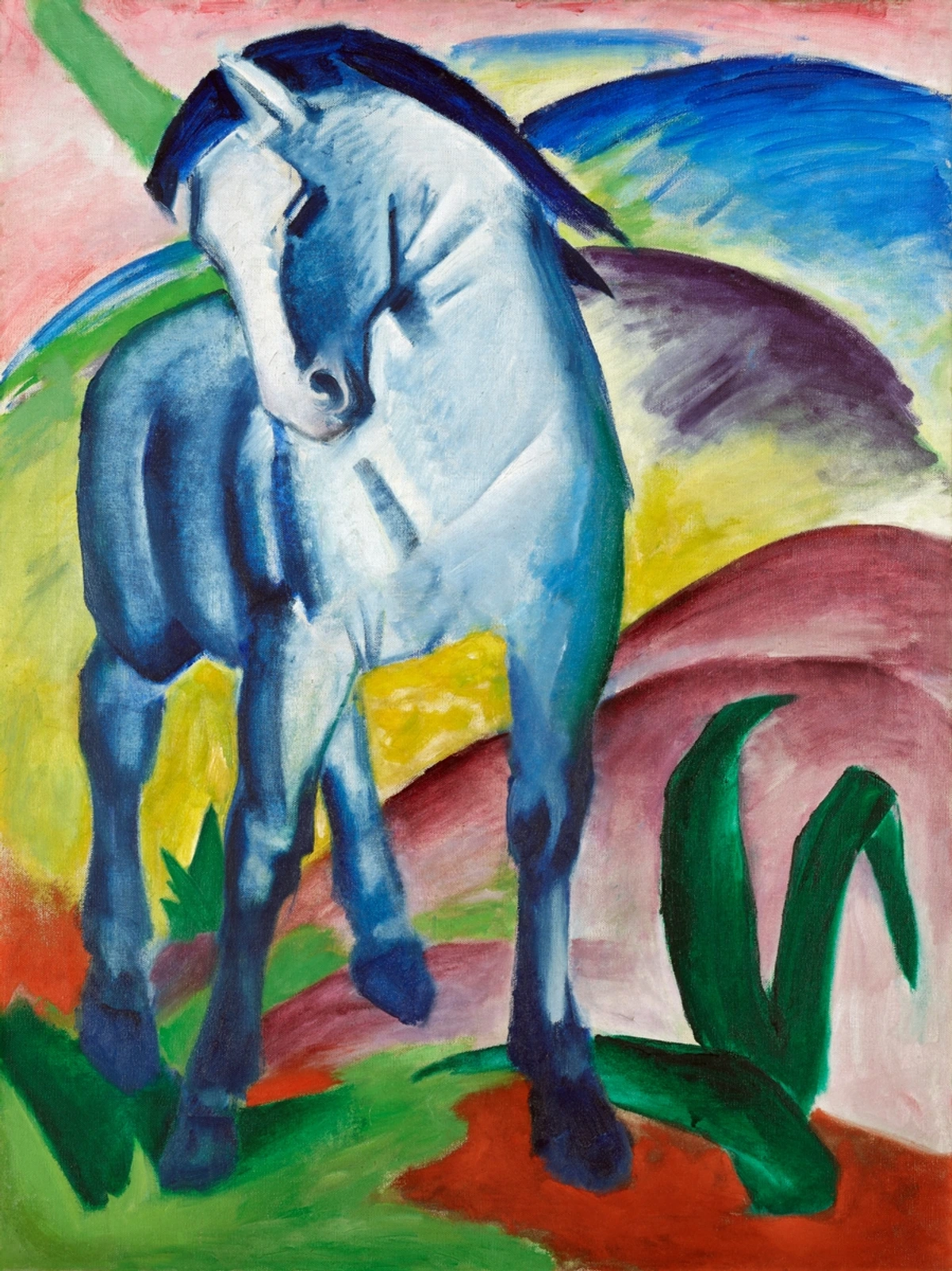
This isn't just about a horse; it's about a man's desperate, beautiful search for a purer, more honest reality in the years leading up to the cataclysm of World War I. Marc's art emerged from a time of immense political tension and societal upheaval in Germany. The pre-war era was marked by rapid industrialization and a growing sense of spiritual alienation, a theme he wrestled with constantly. It's no coincidence his search for authenticity culminated in these animal representations just as human civilization seemed to be losing its way. The painting, completed in 1911, is a direct response to this perceived spiritual decay. The horse isn’t merely an animal; it’s a counter-argument to the soul-crushing march of progress.
The World Through Blue-Tinted Glasses: The Mind of Franz Marc
It’s easy to see an artist’s mature work and assume it sprung fully formed from their imagination. But the path to the Blue Horse was a winding one, marked by intellectual restlessness and profound aesthetic conversions. Understanding that journey is key to appreciating the monumental leap he made.
The Artist's Formative Years: From Munich to Paris
To fully grasp the revolution Marc wrought, we need to understand his journey. Born in Munich in 1880, Franz Marc initially toyed with theology, a path that speaks to his lifelong preoccupation with the spiritual. However, by 1900, he abandoned it for art, enrolling at the Munich Academy of Fine Arts. His early works were conventional, rooted in the naturalistic traditions of the time. Landscapes from this period show a talented, if unremarkable, painter finding his way.
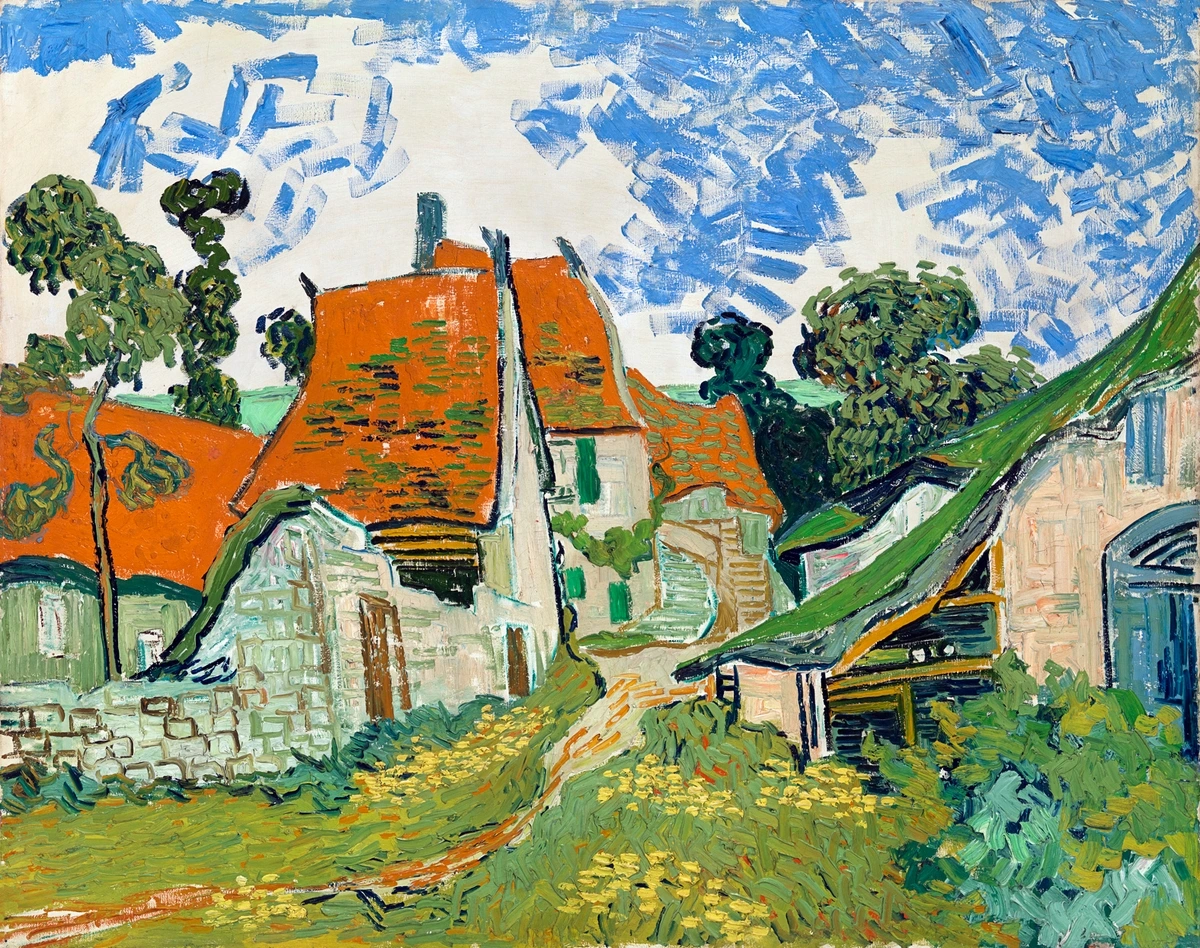
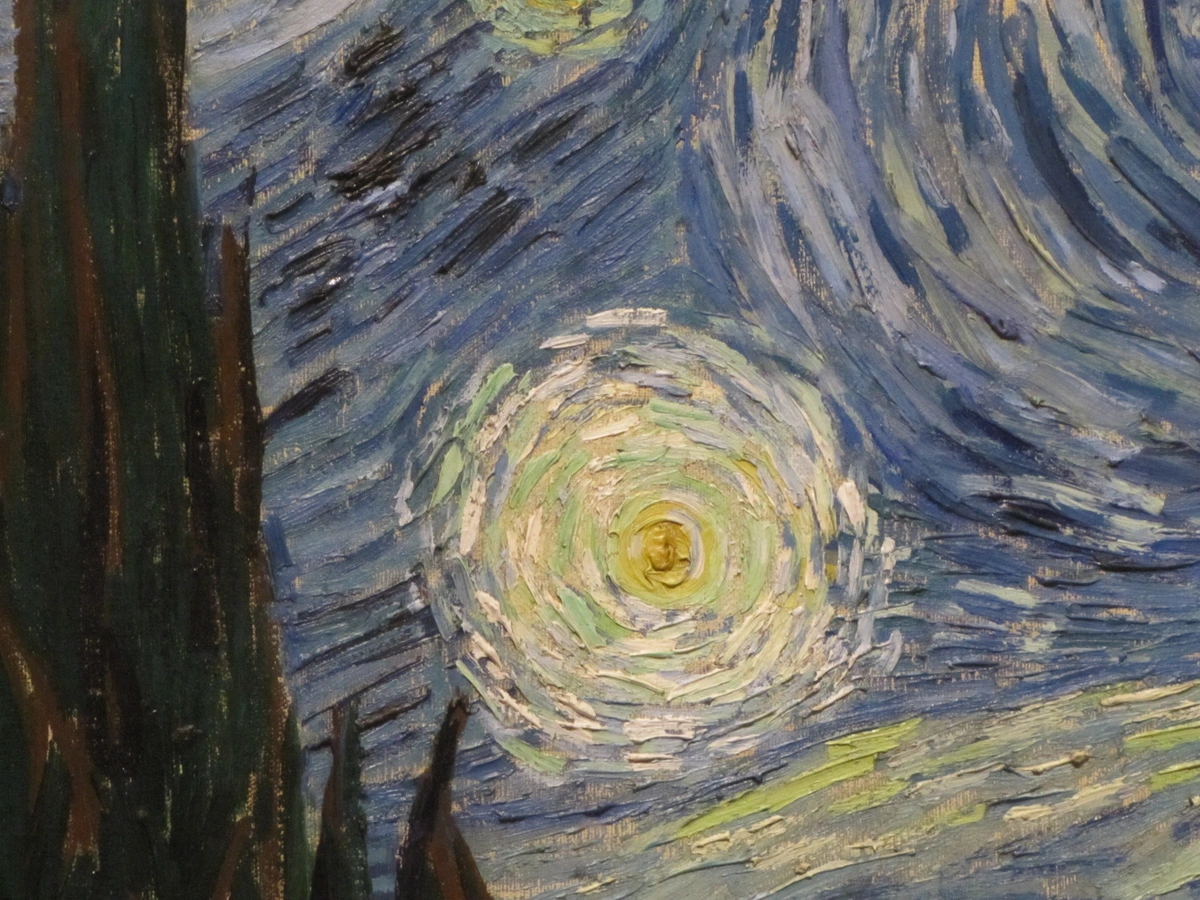
The critical turning point came during two trips to Paris between 1903 and 1907. There, he encountered the raw energy of Post-Impressionism and the groundbreaking work of Vincent van Gogh and Paul Gauguin.
Imagine it. A young artist, trained in the sober, meticulous traditions of German academies, suddenly confronted with Van Gogh's tormented brushstrokes and symbolic use of color. It was a revelation. It was as if a door had been blown open. Marc saw that paint could do more than describe a field; it could scream the agony of existence or sing the silent hymn of a starry night. This exposure catalyzed his shift away from mere representation toward a more profound, emotional truth.
Later, in 1912, he would see the work of Robert Delaunay and the Italian Futurists, an encounter that pushed his work toward even greater abstraction and dynamism. But it was that first, visceral shock in Paris that set him on his path.
To understand the horse, you first have to understand the mind of the man who painted it. By the time he co-founded Der Blaue Reiter, Marc wasn't interested in simply replicating what his eyes saw. He believed the modern, industrialized world of early 20th-century Germany had become ugly and spiritually bankrupt.
This feeling of alienation wasn’t unique to Marc. Artists across Europe were grappling with the psychological fallout of modernity. But Marc’s solution was uniquely profound. He sought something more elemental than the anxieties of city life. He found it in nature, particularly in animals, whom he saw as innocent, pure, and still connected to a spiritual plane that humanity had forsaken. This wasn't a casual preference; it was a deeply philosophical and artistic imperative.
Marc's Artistic Philosophy and Pantheism
The 19th century, in its lust for progress, had seemingly severed the link between the human soul and the natural world. Thinkers like Friedrich Nietzsche had declared "God is dead," and in that vacuum, artists like Marc sought a new kind of divinity. He found it not in scripture, but in the unspoiled essence of a grazing deer or the piercing gaze of a horse. His paintings were an attempt to build a bridge back to this primal, spiritual energy.
"Is there a more mysterious idea for an artist than the conception of how nature is mirrored in the eyes of an animal?" he once asked. This wasn't a rhetorical flourish; it was the core of his artistic project. He was trying to see the world from the inside out, to inhabit a consciousness untouched by human anxiety and ambition. The painting was the vehicle for this extraordinary act of empathy.
This philosophical pivot wasn't just theoretical; it demanded a complete break from artistic convention. It's what separates his work from earlier animaliers.
Consider this. We’re so conditioned to seeing the world through a human lens, where animals are either pets, food, or spectacles. Marc wanted to shatter that hierarchical view. He was trying to see the world from the inside out, to inhabit a consciousness untouched by human anxiety and ambition. The painting was the vehicle for this extraordinary act of empathy.
When you look at historical animal painters like George Stubbs, whose horses are marvels of anatomical precision, you see a different goal. For Stubbs, the horse was a magnificent biological and cultural object—a symbol of human power and progress. For Marc, it was a vessel for a universal soul. This radical shift from exterior depiction to interior evocation is what makes him a central figure in the story of modern art. It's the difference between studying a subject and attempting to become it.
His rejection of anthropocentrism was radical for its time. We're so conditioned to seeing the world through human eyes, Marc's work forces you to shed that anchoring perspective and imagine the world as another being might experience it – the wind through fur, the scent of the earth, the silent communion of a herd. It's about stripping away the ego and finding a more universal vibration. I sometimes think about how my own work tries to capture a feeling rather than a scene, and I see a direct, if distant, echo of Marc's quest in that desire to bypass the literal and go straight for the emotional gut-punch.
For Marc, art was a bridge to this lost paradise. He once wrote that he was seeking to “heighten his feeling for the organic rhythm of all things” and to “pantheistically” feel the earth’s vibration. This wasn't just poetic fluff; it was his creative mission statement. His practice involved intense study and communion with animals, often observing them for hours to capture not just their anatomy, but their "inner pulsation".
I think about that phrase—"inner pulsation"—a lot. It’s not about a heartbeat. It’s about the energetic signature of a living thing, its spirit. Marc was a hunter of spirits, and the canvas was his medium. This belief in art's transcendental power placed him firmly within the German Expressionist movement's most radical wing. It’s this unwavering conviction that gives his work its immense emotional weight, setting him apart from contemporaries like Ernst Ludwig Kirchner, who mined the alienation of city life, or even Paula Modersohn-Becker, whose figures, while powerful, remained more grounded in a tangible, earthly reality.
This evolution is laid bare in his paintings from 1909 to 1911. In works like Zwei Pferde (Two Horses, 1909), you can still see the influence of Impressionism, with its dappled light and naturalistic coloring. It's a capable, even beautiful painting, but it’s a horse you recognize. Fast forward just two years to Blue Horse I, and the transformation is staggering. The representational world has been shattered, replaced by a symbolic one where color and form are the primary subjects.
Think about that leap. In two years, a talented artist became a revolutionary one. It's a breathtaking acceleration of artistic thought, showing how Marc shed the conventions of reality piece by piece in his relentless pursuit of a more profound, spiritual truth. He wasn’t just developing a style; he was discovering a new way to see.
Decoding the Palette: The Alchemy of Marc's Color Theory
Let’s get right to the obvious question: why is the horse blue? To dismiss it as mere fancy is to miss the entire intellectual framework Marc constructed. He wasn't just decorating – he was encoding profound philosophical ideas into every brushstroke.
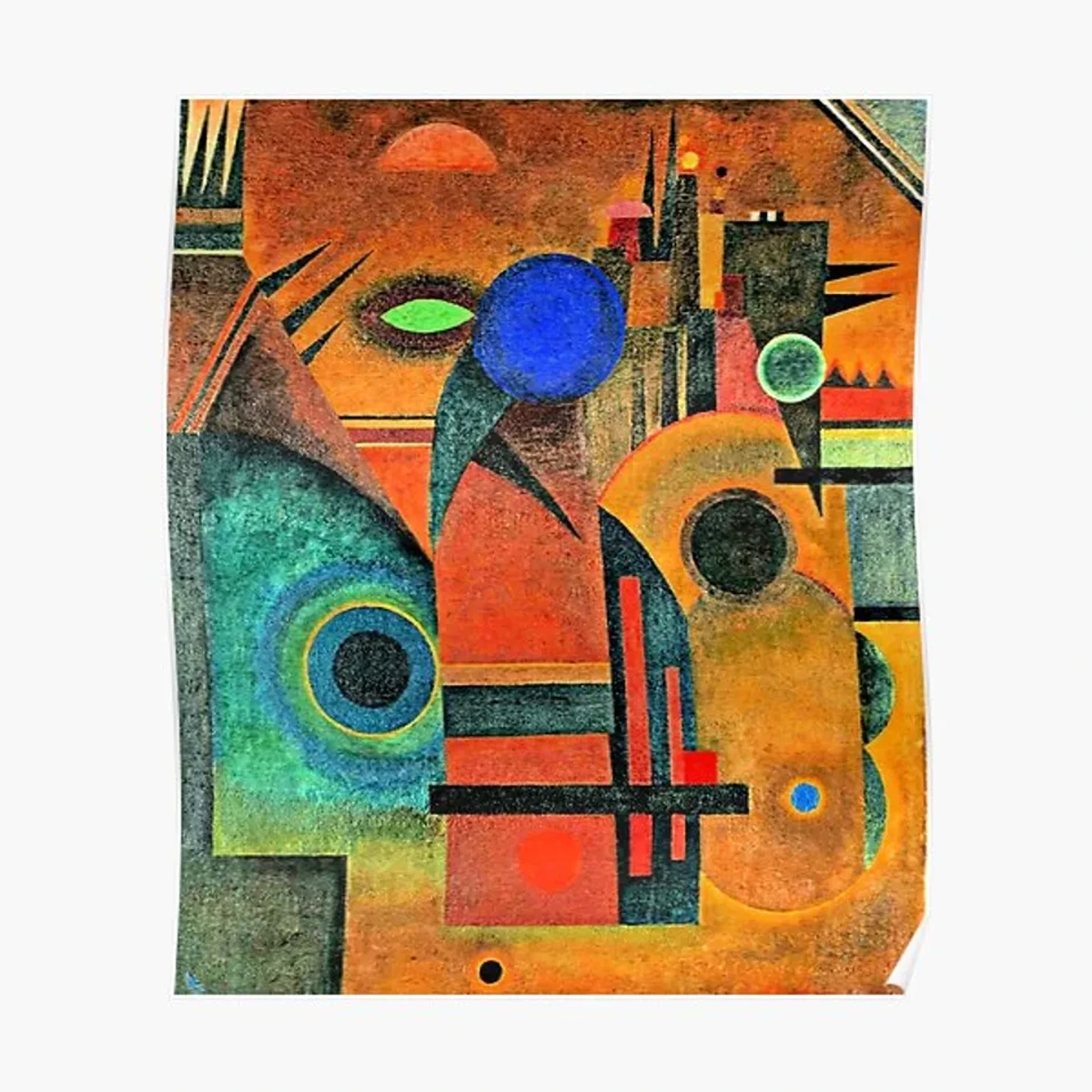
His close friend, Wassily Kandinsky, was also exploring the spiritual properties of color, famously linking it to the soul and the sound of music. But Marc's system was his own. He wasn’t just interested in the emotional vibration of a single color; he was creating a whole relational system, a personal theology of the palette where colors interacted like forces of nature. He developed a system assigning specific emotional, spiritual, and even gendered meanings to each hue. This isn't just art history trivia; this is the cipher you need to crack the painting's code.
Franz Marc's Color Psychology System
Marc's writings, particularly his letters and notes, clearly outline his symbolic color theory, transforming his palette into a profound philosophical and emotional tool. Let's dissect its core tenets:
Color  | Marc's Principle | Meaning & Symbolism | Artistic Application |
|---|---|---|---|
| Blue | Masculine | Spirituality, intellect, austerity, truth | Represents the divine, the transcendent, and the contemplative mind. It's Marc's ultimate color for the soul. The ultimate spiritual hue. |
| Yellow | Feminine | Joy, sensuality, warmth, earthiness | Evokes the sun, vitality, feminine energy, and the pure joy of existence found in nature. |
| Red | Material | Brutality, violence, the heavy weight of the physical world | Signifies the raw, often harsh, physical reality that Marc felt humanity was trapped within. |
| Green | Material/Synthesis | Nuance, harmony, the merging of blue and yellow | Used to create balance and transition between the spiritual (blue) and the earthly (yellow). It represents the natural world as a point of synthesis. |
This system wasn't a rigid formula but a fluid guide. For instance, his use of red evolved. While often signifying brutality, it could also represent warmth and life-affirming energy when juxtaposed with yellow. His 1912 work Deer in the Forest II demonstrates this beautifully. The dominant blue deer is enveloped in a grove of warm reds and browns, creating a sense of nurturing, earthy enclosure rather than violence. It shows you can't just apply his definitions like a mathematical formula; you have to feel the relationship between the colors in each specific painting. A red next to a blue feels very different from a red next to a yellow. He was a painter of relationships, not just symbols.
Mulling over these definitions, I'm struck by Marc's directness. He's not just using color for effect; he's literally building a new vocabulary for spiritual expression. It's akin to a composer using musical notes to craft a symphony of the soul.
For Marc, blue was the masculine principle, representing spirituality, austerity, and the mind. Yellow was the feminine principle, symbolizing sensuality, warmth, and joy. Red was the color of the material world, brutal, heavy, and often violent.

So, the titular blue of the horse isn't a whim. It's a philosophical statement. It strips the animal of its physical, earth-bound nature and transforms it into a monumental, spiritual being. The blue is a declaration: this is not a horse as we see it, but a horse as we should feel it—a vessel of contemplation, a symbol of a deeper existence that Marc found lacking in the human sphere. Contrast this with his use of red in works like The Fate of the Animals, where violent, slashing reds depict the destructive force of the material world. Blue Horse I exists as its serene, spiritual opposite, a hymn to untouched divinity. It's a visual thesis on the conflict between the material and the spiritual, painted in the years just before that conflict would consume Europe.
Now, look at the brushstrokes. They aren't trying to hide. The paint is applied in bold, visible slabs. This is the very definition of German Expressionism. The goal isn't photographic realism; the goal is to transmit raw emotion directly from the artist's mind to the canvas, and from the canvas to you. The distorted form and unnatural color are a direct assault on the senses, a visual scream: "This isn't just what a horse looks like; this is what a horse feels like to my soul."
This privileging of inner reality over outer representation is what defines Marc as a true pioneer. His colors don't describe light; they generate feeling, bypassing the rational mind to speak directly to the viewer's psyche.
I’ve always believed color is the fastest route to emotion in a painting. You can read a story in the lines, but you feel the story in the color. Marc was a master of this. He was trying to make painting do what music does: create a pure, wordless emotional response. He wanted you to feel the horse’s spirit, not just see its body.
The Blue Rider: More Than a Painting, A Movement
Blue Horse I (1911) didn't emerge from a vacuum. It was a cornerstone of Der Blaue Reiter (The Blue Rider), a revolutionary art movement co-founded by Marc and his friend, the enigmatic Wassily Kandinsky. This wasn’t a formal art group with a headquarters and a membership list; it was a gathering of kindred spirits united by a desire to unleash art from the chains of realism. They deliberately avoided a rigid manifesto.
Instead of rules, they had conversations. Instead of a doctrine, they had an almanac. Their 1912 Der Blaue Reiter almanac is one of the most fascinating art books ever published. It’s a chaotic, brilliant anthology featuring everything from medieval German woodcuts and children's drawings to tribal art from the South Pacific and Egyptian shadow puppets. To them, a child's naive scribble held as much spiritual potential as a sophisticated academic masterpiece. It was about finding a universal, primal language of the soul, and they found it in the unfiltered creativity of the untrained mind. It was less a school and more a heated conversation about art's future, happening at the dawn of abstraction.
Think of them as the pioneers of abstract art. They weren’t a formal group but a gathering of kindred spirits. Alongside Marc and Kandinsky, the circle included artists like the lyrical August Macke, whose work celebrated sensual joy in vibrant patterns, and the under-appreciated Gabriele Münter, whose landscapes had a powerful, simplified emotional directness. The Blue Horse I wasn’t just a subject; it was a declaration of artistic war on convention. They aspired to create a visual language as emotionally resonant as music, where colors and forms could elicit profound feelings without referencing the visible world. Kandinsky famously called this "Composition." It was a radical departure from centuries of art that had to tell a story.
They profoundly believed that music, art, and spirituality were intertwined. Kandinsky tried to make paintings that were the visual equivalent of a symphony, and Marc was doing the same, but his symphony was a hymn to the natural world. This wasn't just theory. Their 1912 Der Blaue Reiter almanac is proof. It's a chaotic, brilliant anthology featuring everything from medieval German woodcuts to children's drawings to tribal art from the South Pacific. To them, a child's naive drawing held as much spiritual potential as a sophisticated academic masterpiece. It was about finding a universal, primal language of the soul.
This equalizing view of creative expression was profoundly influential. It shattered the hierarchy of high and low art, suggesting that artistic power came from spiritual sincerity, not technical polish. It provided a crucial intellectual foundation for later movements like Dada, who also embraced the non-sensical, and most significantly, Abstract Expressionism. The idea that a painting could be a direct record of an artist's emotional state, a kind of visual psychology, finds its roots in the philosophy of Der Blaue Reiter. Artists like Jackson Pollock and Mark Rothko, who prioritized raw, subconscious expression, were the direct heirs to Kandinsky and Marc's spiritual quest.
A Universe of Shape and Line: Marc's Geometric Abstraction
Beyond color, Marc’s use of form is just as radical. His work is a masterclass in distilling organic life into a powerful, symbolic language of geometry. We've talked about the what of the color, but the how of the shape is equally important.
Notice how the horse's body is simplified into powerful, sweeping curves. The lines are rhythmic, almost like they’re moving to a slow, steady pulse. The entire form is a study in purposeful distortion. Look at the horse's legs – thick and columnar, conveying immense stability and weight, while the arch of its neck and back create a flowing, lyrical curve that suggests grace and contained power. It's a masterful synthesis of strength and elegance, achieved through strategic simplification. There’s a wonderful tension between the solid, monumental weight of the creature and the dynamic, flowing lines that define it.
Marc achieves this by merging angular, crystalline structures with soft, organic curves. Look closely at the background. Those aren't random shapes; they're fractured, geometric planes that echo the internal structure of the horse itself. He literally breaks down nature into its essential geometric components, abstracting reality to intensify its emotional impact. This isn't just an outline of a horse; it's a diagram of its spiritual energy.
This approach provides a fascinating counterpoint to Cubism. While Picasso and Braque were fracturing objects from multiple viewpoints to analyze the physical world, Marc was fracturing them to reveal an emotional and spiritual reality hidden beneath the surface. For the Cubists, a guitar was an object to be deconstructed. For Marc, a horse was a spiritual force to be channeled. Both movements were revolutionary, but their intentions were worlds apart: one sought to analyze reality, the other to transcend it.
The background is a crystalline landscape of greens, yellows, and reds. It’s not a specific place; it's an emotional landscape that reflects the inner state of the horse itself. Marc deliberately avoids linear perspective, flattening the image so the horse and its environment exist on the same plane, vibrating in unison.
This is a key move. By flattening the space, he denies the viewer a comfortable, distanced viewpoint from which to inspect the subject. There’s no window to look through; we are thrust into the painting's world. The entire canvas becomes a holistic organism where the line between subject and background dissolves, creating a symbiotic unity that heightens the emotional impact.
A Search for Something Sacred
When I talk about this painting, what I'm really talking about is a search for the sacred in a world that feels like it's losing its soul. Marc painted these horses as a form of prayer. They are totems of a simpler, more authentic existence, icons on the altars of nature.
I sometimes feel that a lot of art today is about pointing at something and saying "Look at this!" Marc's art is about closing your eyes and trying to become that thing. In the flowing forms and soulful eyes of his horses, he was trying to capture a universal spirit that connects all living things. Visiting his works is akin to a pilgrimage—an opportunity to stand before an artifact of profound spiritual seeking and reconnect with something primal.
This wasn't just an artistic choice; it was an escape from a world he found profoundly disenchanted. The run-up to WWI was a pressure cooker of nationalism and industrial alienation. Marc's pantheistic blue horse stands as a powerful act of resistance against that dehumanizing tide.
And then, the ultimate tragedy. In 1914, believing the war would be a purifying, spiritual event that would cleanse Europe of its materialistic decadence, Marc volunteered for the German army. He was killed by shrapnel at the Battle of Verdun in 1916. It’s a devastatingly ironic end for an artist who sought to escape the very violence that consumed him. That knowledge tinges every viewing of the Blue Horse with a deep, quiet melancholy.
This quest feels incredibly modern to me. We live in an age of digital noise and manufactured reality. Marc’s Blue Horse I is a powerful reminder to look beyond the surface, to feel the world instead of just observing it. It encourages us to reconnect with that deep, natural rhythm he was always talking about.
Every time I feel overwhelmed by the clutter of daily life, or find myself mindlessly scrolling through a feed, I think about that blue horse, standing as a monument to a different way of being. In a world saturated with fleeting digital imagery, the slow, contemplative presence of a work like Blue Horse I offers a much-needed counterpoint.
Interestingly, the horse itself has transcended the canvas. It has become a cultural icon, a widely recognized symbol of artistic spirit reproduced on everything from postcards to coffee mugs. I have mixed feelings about this. On one hand, that kind of popularity can flatten an image, sanding off its rough, shocking edges until it becomes just another pretty picture. On the other hand, it also proves the painting's power: Marc's blue horse has successfully embedded itself in our collective visual consciousness, which is a remarkable achievement for any work of art.
This search for authenticity is probably part of why we're drawn to expressive, colorful art today. There's a desire to cut through the noise. You can see this same impulse—this need to feel a deeper connection through color and form—in the ethereal, shifting planes of a Mark Rothko painting, or the chaotic, energetic fields of a Jackson Pollock drip painting. If you're drawn to the emotional power of works like Marc's, you might find it interesting to follow that thread and see where it leads in contemporary art.
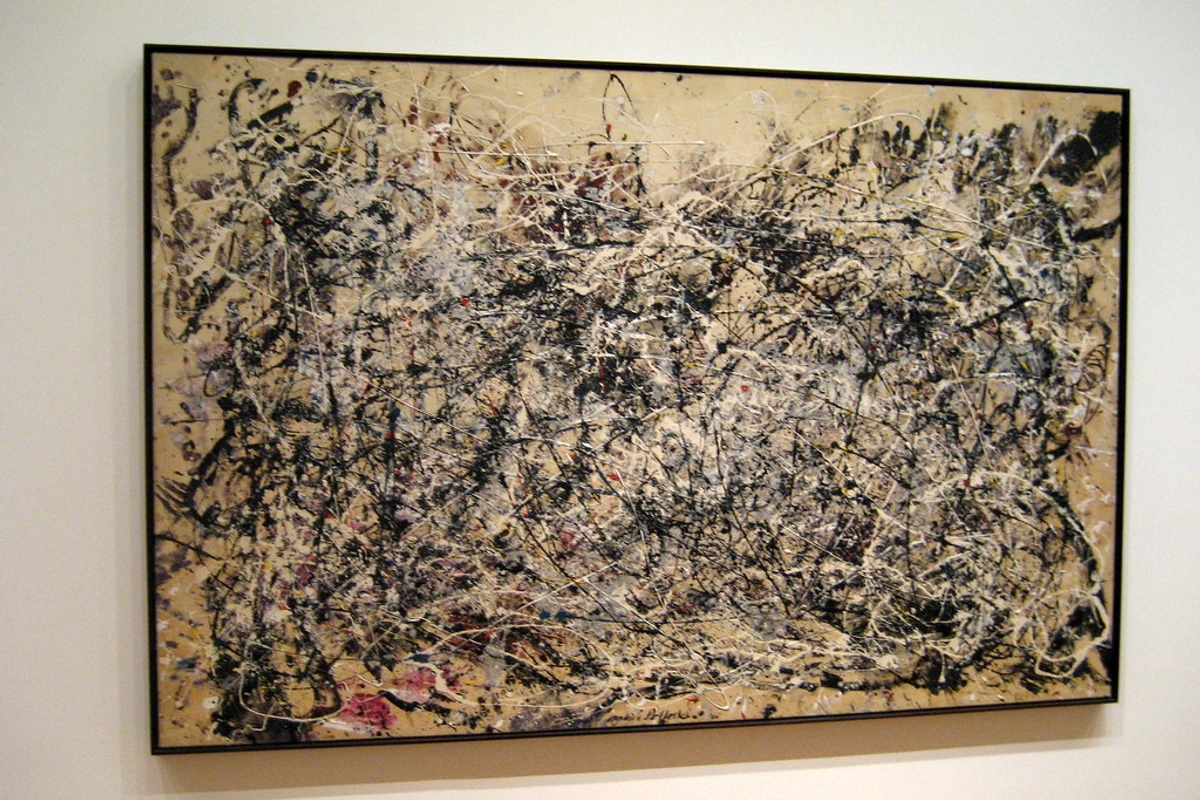
If Marc's use of symbolic color resonates with you, the journey from his blue horses to the color-soaked canvases of Mark Rothko is a direct one. It’s a direct line from Marc's blue spirituality to our modern fascination with color as an emotional trigger. Seeing works like Joan Mitchell's gestural, nature-inspired abstractions reminds me of that crucial turn towards pure, unfiltered feeling that Marc pioneered.

A Legacy in Conversation: The Blue Horse's Enduring Relevance
Before we get to the questions, I want to spend a moment reflecting on what Blue Horse I asks of us today. What does it mean to look at this painting in a world facing its own upheavals, from climate change to political division? Marc's search for a "primal" connection feels less like a nostalgic escape and more like a vital, urgent plea.
The painting is a testament to the power of empathy—not just empathy for other people, but for the entire living world. Marc was trying to find a perspective outside the human bubble, to feel the world as another creature might. In that act, he created a model for art's highest purpose: not to decorate, but to teach us how to see and feel differently. He offers a form of spiritual resistance. In a world obsessed with the new, the fast, and the superficial, the quiet, contemplative weight of the blue horse is a profound act of dissent. It stands as a monument to the idea that the most important things are not seen with the eyes, but felt with the soul.
Frequently Asked Questions (FAQ)
What is the main meaning of Franz Marc's Blue Horse?
The primary meaning of Blue Horse I is that of a spiritual icon created in response to a world Marc saw as spiritually bankrupt. For Marc, blue symbolized the masculine principle—intellect, truth, and the divine. By painting the horse blue, he elevates the animal from a mere earthly creature into a monumental symbol of transcendence. It's his vision of a purer, more authentic reality found in nature, a reality he felt humanity had lost. The work is a cornerstone of German Expressionism, directly challenging the materialistic, industrialized world of the early 20th century. It serves as a powerful reminder of art's capacity to move beyond mere representation into the realm of profound emotional and spiritual communication.
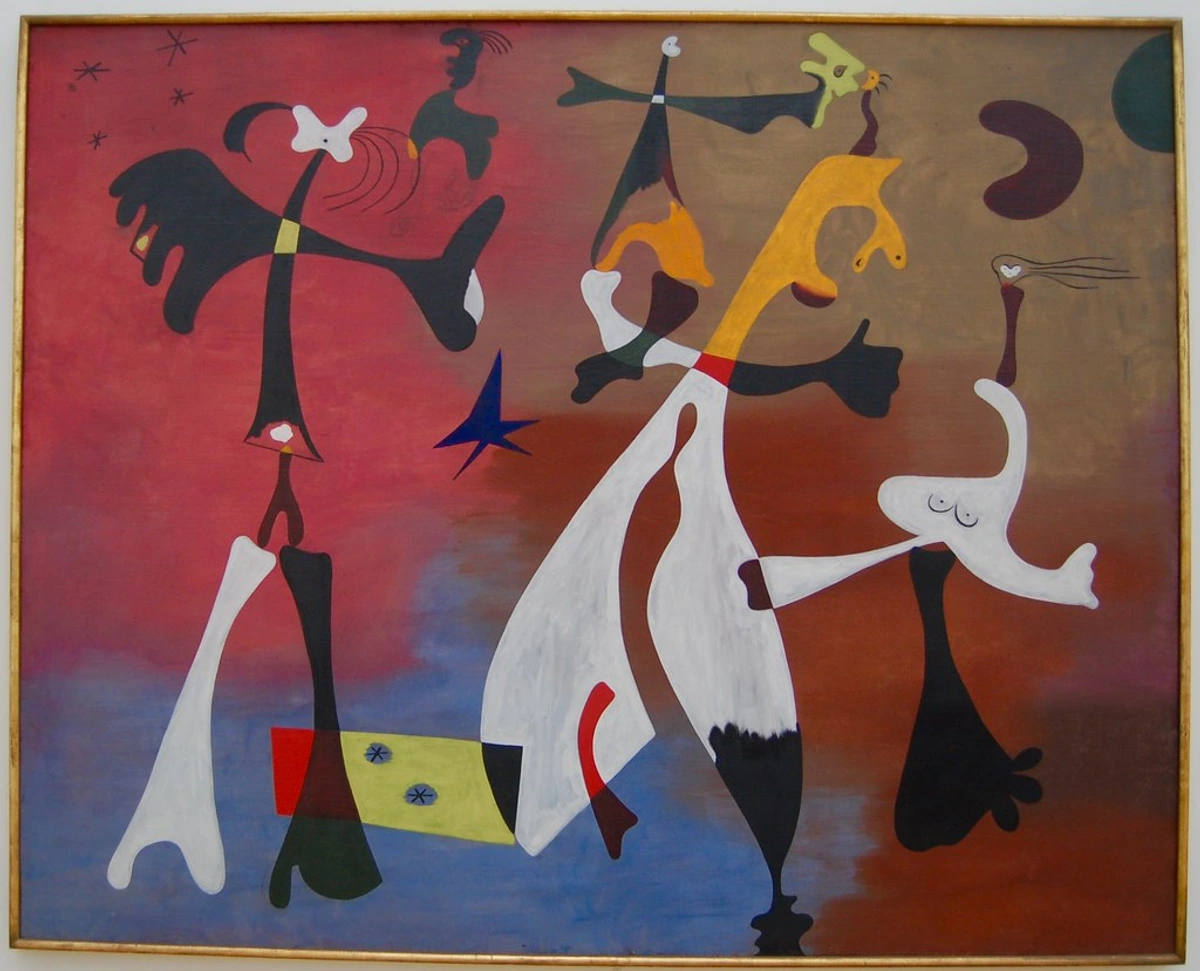
From a technical perspective, its meaning also lies in its daring to use color symbolically rather than descriptively. This act was a radical move that helped pave the way for the dominance of abstract art for much of the 20th century by proving that meaning could reside purely in color and form, without needing a realistic subject.
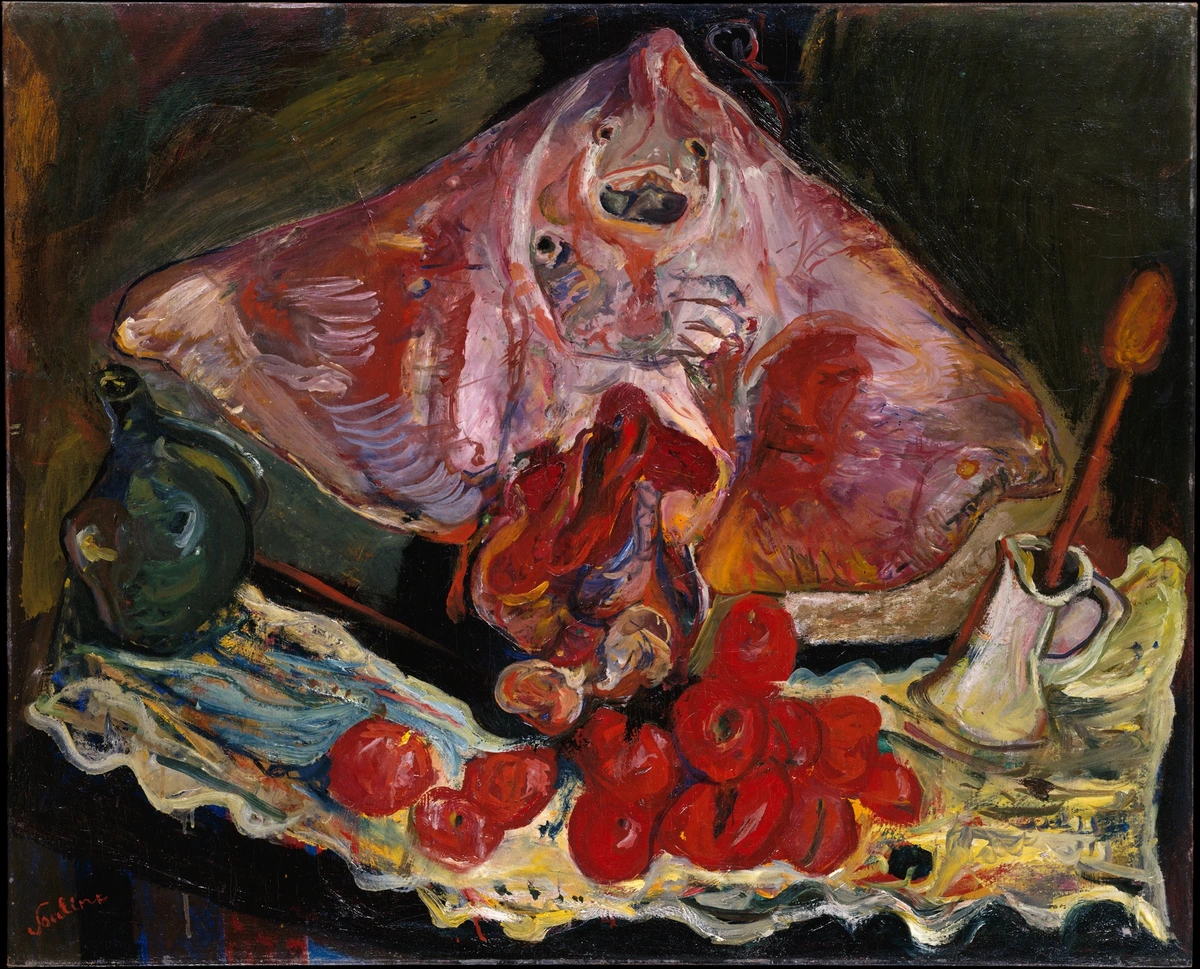
Why did Franz Marc paint animals like horses so often?
Marc painted animals, particularly horses, because he saw them as embodiments of a divine purity lost to humanity. He sought "the organic rhythm of all things," and in animals, he found creatures living that rhythm instinctively. They represented a fusion of primordial power, grace, and unspoiled consciousness. He wasn't painting their physical forms; he was trying to access and convey their inner essence or being. This contrasted with artists like Henri Rousseau, whose animal scenes were more decorative than philosophical.
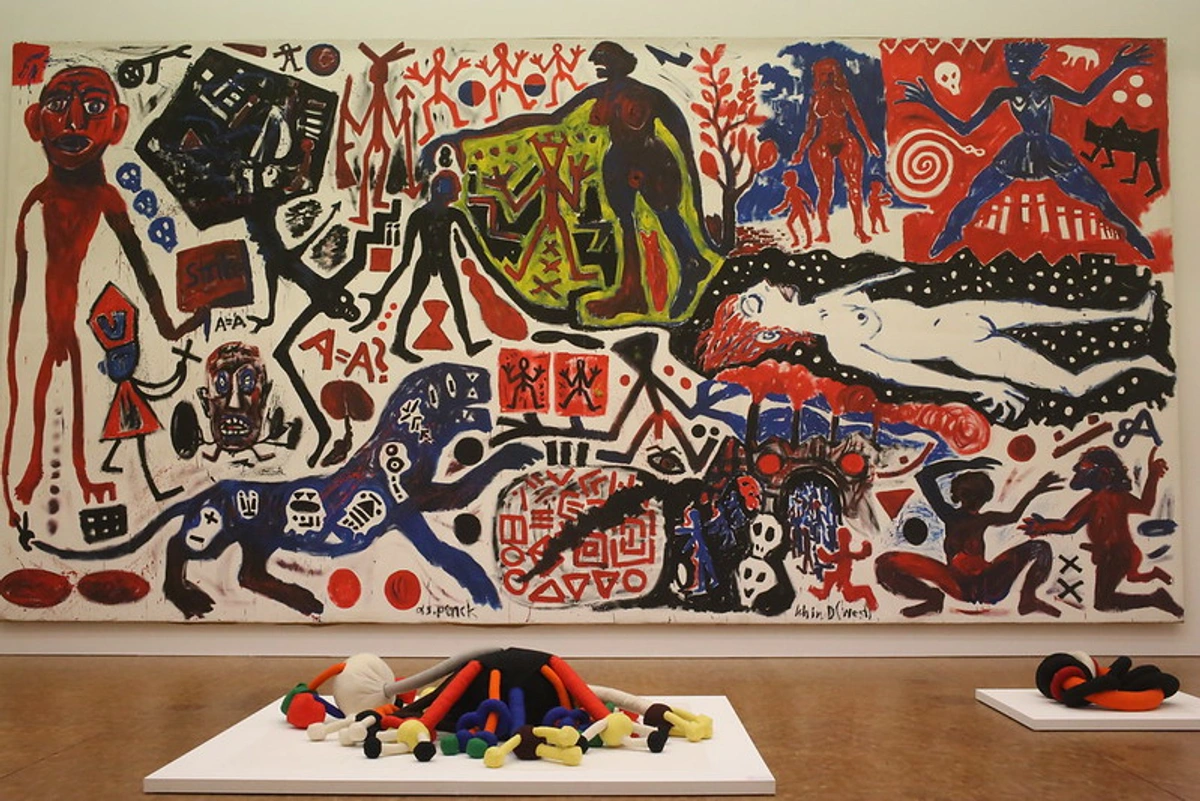
This contrasted sharply with the work of other artists exploring animal life at the time, such as the Fauvist Henri Rousseau, whose jungle scenes, while dreamlike, are more decorative and less overtly philosophical than Marc's spiritually charged compositions.
What does 'Blue Horse I' tell us about the artistic movement of Expressionism?
It serves as a quintessential example of German Expressionism's core tenets. This movement prioritized the artist's subjective emotional response over any objective depiction of reality. Blue Horse I accomplishes this brilliantly through its stark distortion of form and its symbolic, non-realistic use of color. The painting's emotional intensity comes directly from Marc's inner landscape, rather than from the external world. It demonstrates Expressionism's radical break from Western artistic tradition, declaring that the most important thing for art to communicate is not how the world looks, but how it feels to the artist's soul.
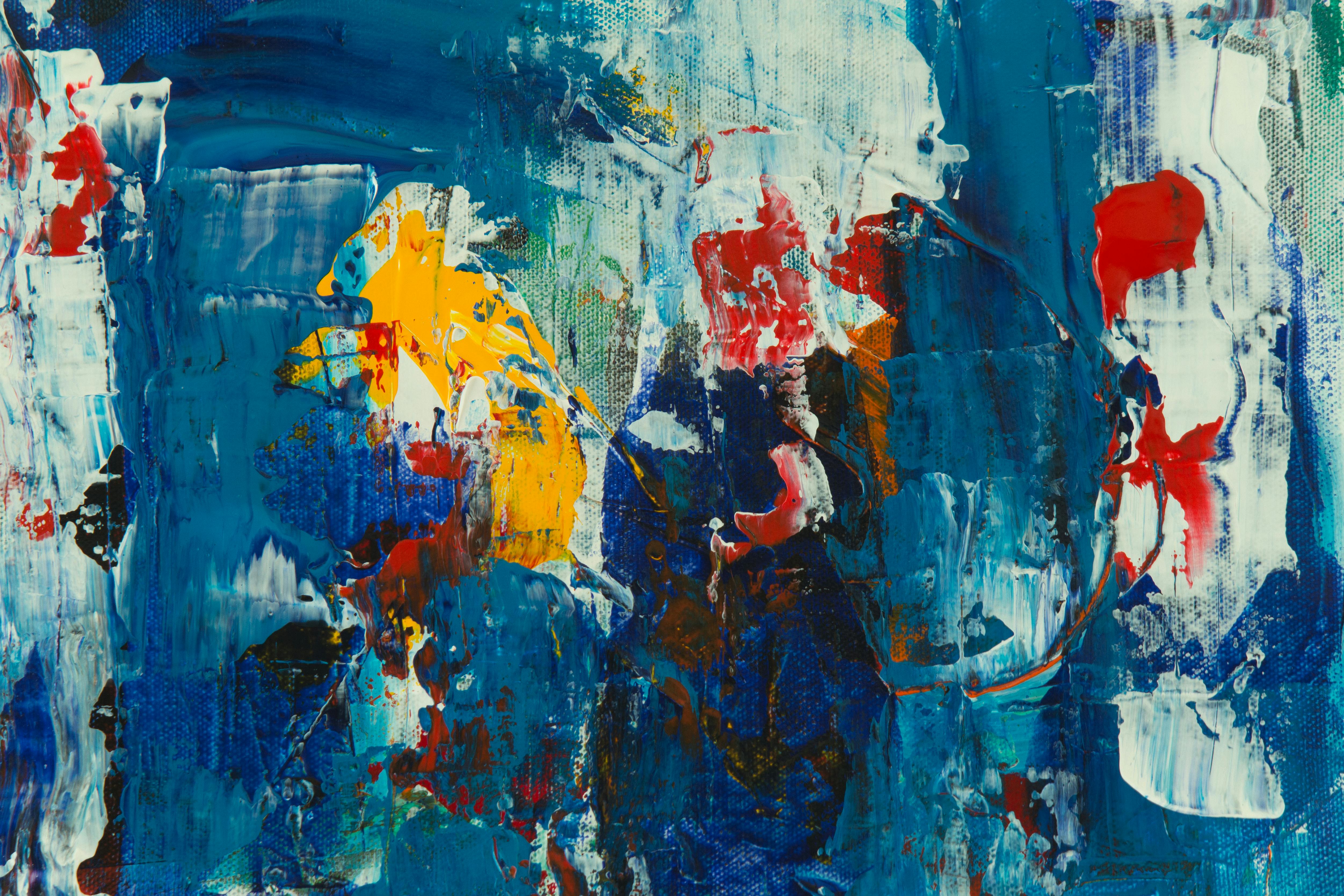






It firmly distinguishes German Expressionism from its French counterpart, Fauvism. While both groups used bold, non-naturalistic color, the Fauves used it for decorative harmony, whereas Marc and his German contemporaries used it to express spiritual angst and psychological intensity. This painting is a clear statement of that difference: color as a vehicle for inner turmoil, not just visual pleasure.