
Art in a Minimalist Bedroom: Intentional Design for Serene Sanctuaries
Discover how to choose and display art in a minimalist bedroom. This guide covers abstract forms, tactile mediums, purposeful placement, and harmonious palettes to create a truly serene and personal haven without clutter.

Choosing Art for a Minimalist Bedroom: Intentionality, Serenity & Personal Style
If there's one thing I've always yearned for, it's that sanctuary of calm a minimalist bedroom promises. You know the one: where the day's chaos just... disappears, leaving behind a sigh of relief you can almost feel. For the longest time, I had a secret hang-up, a little voice whispering that "minimalist" meant "no art allowed." I pictured sterile, empty spaces, and frankly, my artistic soul needs expression, even in my most tranquil corners. The puzzle? How to welcome art without inviting clutter, without turning a haven into a haphazard collection. It felt like walking a tightrope. But after a lot of thought – and a few too many 'oops, that's too much' moments that ended with me re-boxing pieces – I think I've finally landed on a philosophy that doesn't just tolerate art in a minimalist setting, it celebrates its purposeful presence. This isn't just a guide; it's my journey into finding that delicate balance, making deliberate choices, and letting art truly elevate a personal haven. So, if you're looking to imbue your serene space with a quiet sense of self, a story only you can tell, you've come to the right place. We'll explore how to define a minimalist bedroom, my personal philosophy for integrating art, and practical tips for choosing and displaying pieces that truly enhance your sanctuary.
Defining the Minimalist Bedroom: Where Purposeful Art Finds Its Soul
If you've ever felt that tension between wanting a pared-back space and fearing it might lack soul, trust me, you're not alone. For me, a minimalist bedroom isn’t about cold austerity; it’s about intentionality and thoughtful curation. Think less about strict rules and more about the guiding principles of Scandinavian design—where functionality meets inherent beauty, often emphasizing natural light, organic forms, and a muted, earthy palette—or even the subtle appreciation found in Wabi-sabi. Now, Wabi-sabi, if you've never dipped your toes in its serene waters, is a Japanese aesthetic that embraces imperfection, impermanence, and incompleteness. It finds beauty in the natural world's honest forms, the subtle patina of age, the quiet strength of unrefined materials. Imagine a beautifully cracked ceramic vase where gold repairs (kintsugi) highlight its history, a piece of sun-bleached driftwood, or a textile with a slightly uneven weave; these pieces, by their very nature, embody Wabi-sabi. For art, this could translate to a painting with visible, honest brushstrokes, a piece of raw, unfinished wood art, or textiles that celebrate their natural fibers and subtle irregularities. These elements can bring that same raw, understated elegance into a minimalist bedroom. It’s about stripping away the superfluous to highlight what truly matters: a space designed for calm, rest, and clarity. And I’ve come to realize that carefully chosen art can absolutely enhance all of those things. It’s not about absence; it’s about purposeful presence. It’s about adding depth, a focal point, a whisper of personality that says, “This is my haven,” without screaming for attention. Beyond calm, art can foster a quiet sense of connection, spark gentle memories, or even subtly aid in winding down for sleep or waking up refreshed. If you're delving deeper into the philosophy of living with less, I’ve put some thoughts together on the whole concept in my ultimate guide to minimalism. It really helps ground the conversation about purposeful design and why decluttering your life can open up space for what genuinely matters, including the right art. Oh, and if you’re curious about how art fits into the broader minimalist movement, you might also find my definitive guide to minimalism in art beyond the canvas an interesting read.
My Philosophy: Intentionality Over Emptiness
With that understanding of what a minimalist sanctuary truly means, my personal philosophy for integrating art into such a space became clear: Every piece of art in a minimalist bedroom needs to earn its place. It’s not just decoration; it’s an anchor, a mood-setter, a quiet conversation starter. I tend to think about quality over quantity, and how each piece contributes to the overall feeling of peace and introspection. This isn’t the place for a sprawling gallery wall, lovely as those are elsewhere. This is where art becomes a meditation, a single note in a symphony of calm. True intentionality means asking yourself: does this piece, in its subject, composition, and even the artist's underlying message, genuinely resonate with the calm I seek? Does it add to the serenity, or does it merely fill a void? It's a subtle but crucial distinction.
Embracing Abstract Art: My Go-To for Serene Spaces
But what kind of art actually works in a serene, minimalist bedroom? I’ve found that abstract art is often a perfect fit for these spaces. Why? Because it invites contemplation without dictating a narrative. It allows your mind to wander, to find your own meaning in shapes, lines, and colors, which is exactly what I want when I’m unwinding. It's not loud; it's evocative. More than that, abstract pieces, especially those with clean lines or soothing color fields—think Rothko's expansive color fields or the serene grids of a Mondrian—can reinforce the sense of order and balance central to minimalism. They can even mimic natural forms—the gentle curve of a hill, the subtle flow of water—without literal representation, fostering a deep sense of calm. Historically, movements like Suprematism and De Stijl, with their focus on pure geometric forms and primary colors, laid the groundwork for how abstraction could convey universal truths and a sense of order, influences that subtly echo in today's minimalist aesthetics.
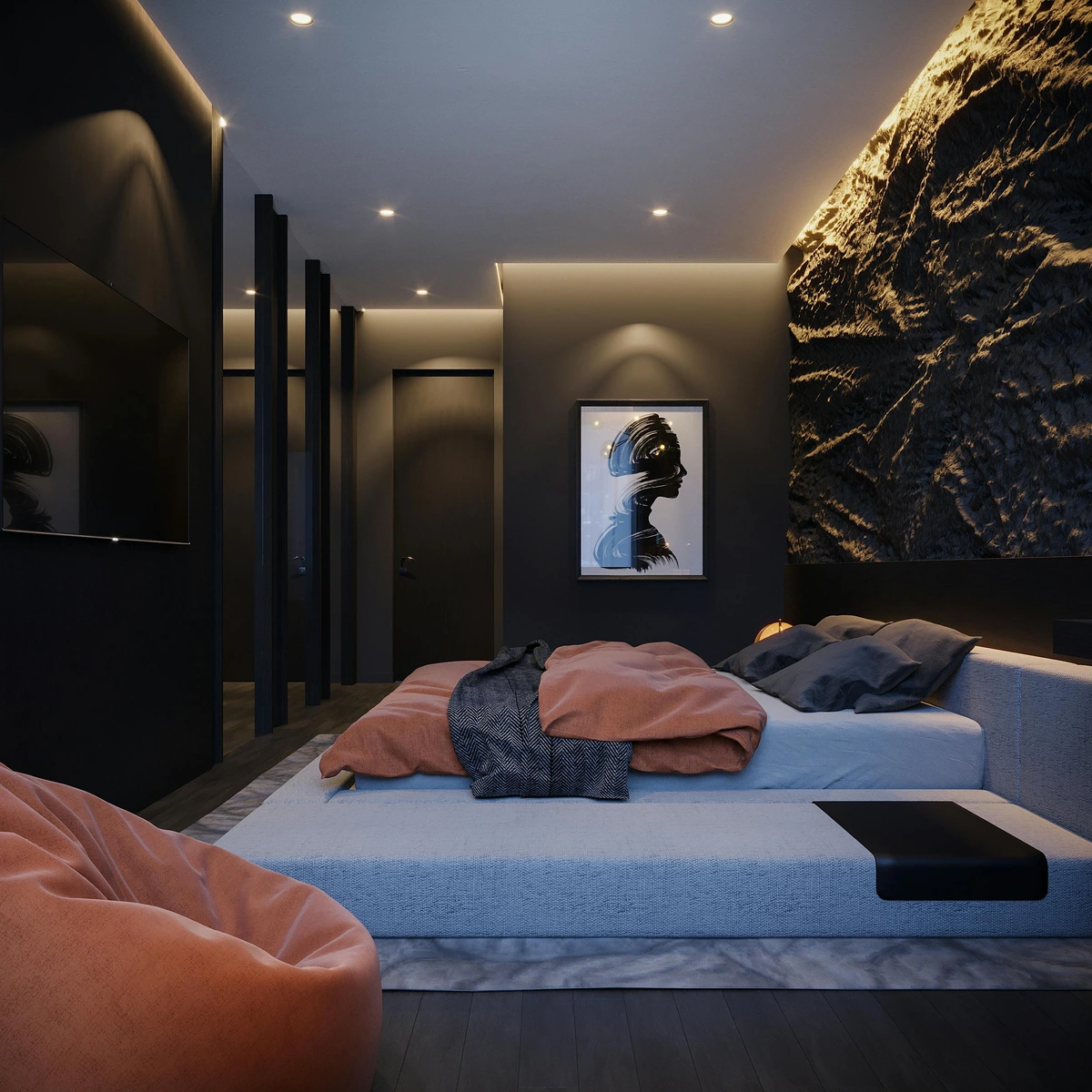
If you're curious about different approaches, I delve into how to approach abstract art and its various expressions in other articles. For more on this, you might also enjoy my thoughts on abstract art for modern minimalist homes: a guide to curated spaces. It goes into the why a bit more, particularly how it integrates with contemporary aesthetics.
The Power of Negative Space: Art in the Silence
Building on the idea of purposeful presence, this is where the concept of "less is more" really comes alive. Just as we value uncluttered floors and surfaces in a minimalist bedroom, we can appreciate negative space in art—the empty areas around and between the subjects of an image. This isn't just a design trick; it taps into something deeper. Think of it like this: in music, the silence between notes is just as crucial as the notes themselves, allowing the melody to breathe. Or, imagine a single, perfectly ripe apple on a vast, empty white table; the space around it amplifies its presence. In art, negative space is a deliberate compositional tool used by artists to create focus, emphasize a subject, or simply provide visual breathing room. When chosen carefully, art that incorporates significant negative space can actually enhance the feeling of openness and calm in a room. It gives your eyes a place to rest, mirroring the quiet simplicity of the minimalist design itself. It's about allowing the silence to create space for your thoughts to simply be.
For a deeper dive into how this powerful element shapes abstract art, you might find my article on the role of negative space in abstract art quite insightful.
Beyond Canvas: Exploring Mediums and Texture
When we think of art, we often picture a painting or print. But in a minimalist bedroom, exploring different mediums can add incredible depth and warmth without visual noise. Imagine a raw silk tapestry in earthy tones, its slubby texture inviting a gentle touch, or a meticulously crafted ceramic piece with an organic glaze that shifts under light, reflecting subtle imperfections. A carefully chosen sculpture in unpolished wood, perhaps with visible grain and natural knots, offers a grounding, tactile presence. Even a thoughtfully chosen photographic print, perhaps a monochrome landscape or an abstract architectural study, can offer a quiet, reflective quality. It's not just about what you see, but what you feel or imagine touching. The tactile experience and the unique way light plays on different surfaces add richness without busyness, subtly inviting a deeper sensory engagement that’s perfect for a restful space. Don't underestimate the power of a single, well-chosen textile piece or a sculptural element to soften the edges of a minimalist room.
Framing with Purpose: Less is More
Even the frame of a piece of art contributes to its overall impact. For a minimalist aesthetic, I lean towards simplicity. Sometimes, no frame at all works best, letting the art speak for itself, perhaps mounted on a float frame. If a frame is necessary, choose thin, clean lines in neutral tones—white, black, or natural wood. Pay attention to the frame's material too; a sleek metal or natural wood frame will always feel more integrated than an ornate, glossy, or overly textured one. The goal is for the frame to protect and subtly elevate the artwork, not to compete with it or add visual clutter. It’s another layer of intentionality, ensuring every element supports the peaceful atmosphere.
The Art of Scale & Placement: Finding the Right Fit
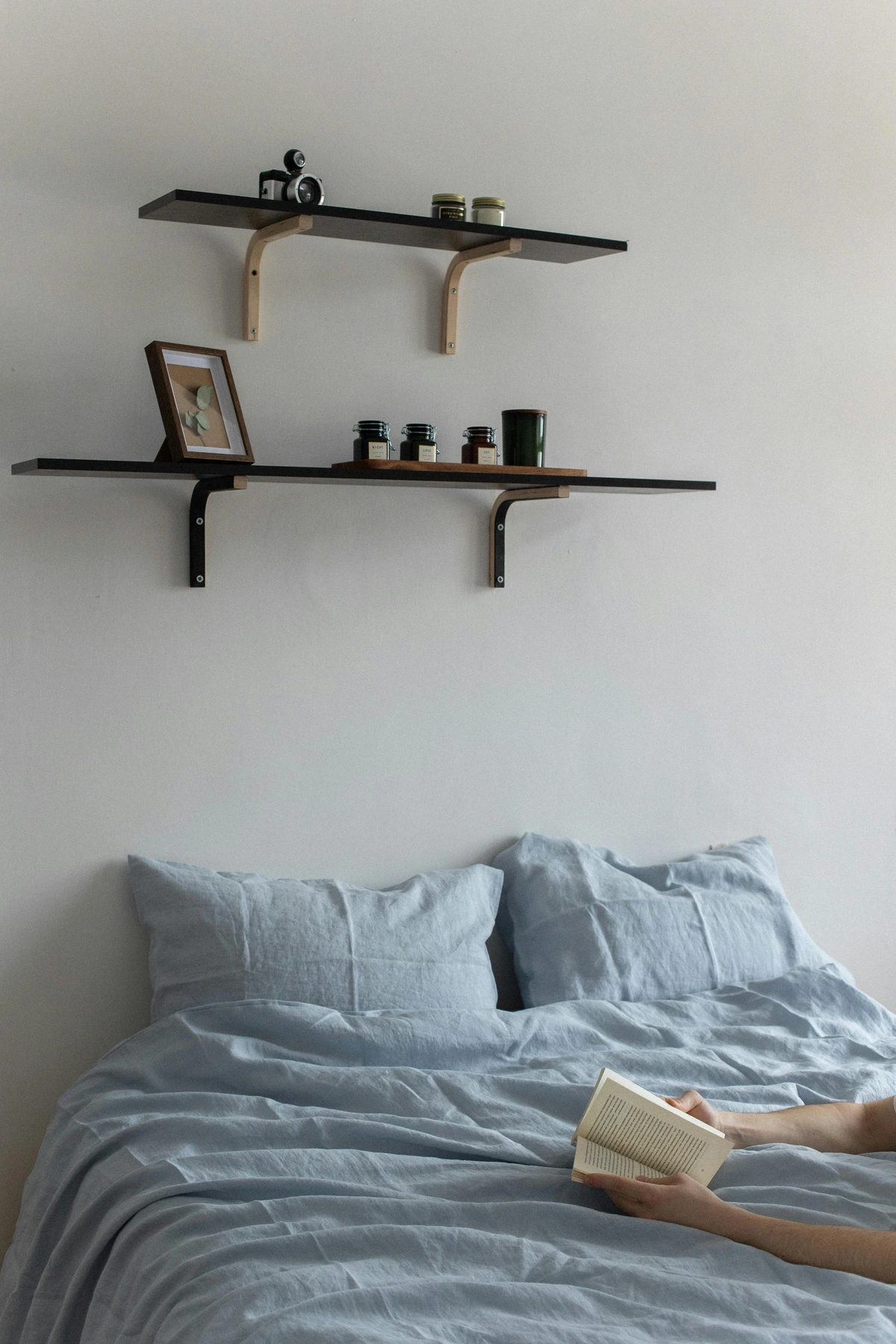
So, you’ve picked your perfect piece and its understated frame. Now, where do you put it, and how big should it be? Getting the scale right for art in a minimalist bedroom is, dare I say, crucial. A tiny piece on a vast wall can feel lost, while an oversized one can overwhelm the carefully cultivated calm. And speaking of space, it’s not just the art’s scale, but the room's scale too. A sprawling loft might welcome a larger, singular statement, while a cozy nook could benefit from a more intimately scaled piece. I often opt for a single, substantial piece that acts as a focal point over the bed or on a prominent wall. It should feel balanced, not dominating. Think about the size of your furniture, especially your bed. The artwork shouldn't be wider than your headboard, for instance. Placement at eye level (for standing) often works best, allowing the art to comfortably engage with the viewer without being too high or too low, creating an effortless visual flow. A useful trick? If you're unsure, try creating a digital mockup of the art in your space, or temporarily tape a piece of paper cut to the art's dimensions on the wall to visualize the scale.
A Whisper of Form: When Figurative Art Fits
"Can I really have figurative art in a minimalist bedroom?" I hear you ask. And my answer is a resounding, "Absolutely!" But with a caveat. If you're going this route, I suggest opting for a single piece that is highly stylized and simplified. Think the serene, elongated lines of a Constantin Brâncuși sculpture, a monochromatic figure study with delicate lines, or perhaps a simplified, almost abstract, interpretation of the human form reminiscent of early modernist sketches or elegant Japanese ink wash paintings. Consider artists like Ellsworth Kelly for his reductive forms, or even the fluid, simplified figures often seen in Matisse's line drawings, like those from his "Jazz" series. Contemporary artists like Agnes Martin (for her subtle, repetitive forms) or a minimalist portrait artist like Alex Katz (known for his stark, flat figures) also offer relevant approaches. The key is to avoid busy scenes or overly detailed realism—no elaborate historical narratives or crowded streetscapes here. It should still maintain that contemplative, calming quality, perhaps with a limited, muted color palette that integrates seamlessly into your serene space, allowing for quiet reflection rather than narrative engagement. For more insights into minimalist artist Agnes Martin, explore my ultimate guide to Agnes Martin.
Color Consciousness: Limited Palettes & Bold Statements
When it comes to color in art for these spaces, my personal journey has led me to two distinct, yet equally valid, paths:
The Emotional Impact of Color: More Than Just Hues
Before we dive into specific palettes, it's worth considering the sheer emotional power of color, even in a minimalist context. Blues can evoke profound calm, connecting us to vast skies and tranquil waters—ideal for encouraging sleep. Greens often bring a sense of nature and renewal, perfect for a rejuvenating space, fostering a feeling of balance. Warm neutrals—think soft beiges, creams, and muted terracottas—can wrap a room in coziness and a grounded feeling, providing a sense of security. Conversely, cool grays and blues can contribute to a crisp, airy feel, promoting mental clarity. Understanding this underlying psychology allows us to choose art that doesn't just look good, but feels right for our personal haven, subtly influencing our mood for rest or peaceful waking. It’s a bit like choosing a trusted friend; you want their presence to enhance your peace, not disrupt it. For a deeper dive into how colors affect our moods, you might find my article on the psychology of color in abstract art quite insightful.
The Soothing Symphony of a Limited Palette
I often lean towards pieces with a limited, soothing palette. Think muted tones, soft greys, gentle blues, or earthy neutrals. These seamlessly integrate into the minimalist aesthetic, enhancing the tranquility without jarring the senses. They create a harmonious environment, allowing the eye to glide effortlessly across the room, promoting relaxation. This is about creating an enveloping sense of calm. Don't forget the power of monochromatic art too; a piece rendered in varying shades of a single color or in simple black and white can offer incredible depth and sophistication without any visual clutter, reinforcing that serene, contemplative mood. It’s like a quiet hum, rather than a loud chord, allowing your mind to truly rest. To truly master color in your chosen art, consider exploring the definitive guide to understanding color theory in abstract art.
The Intentional Pop: A Bold Statement Piece
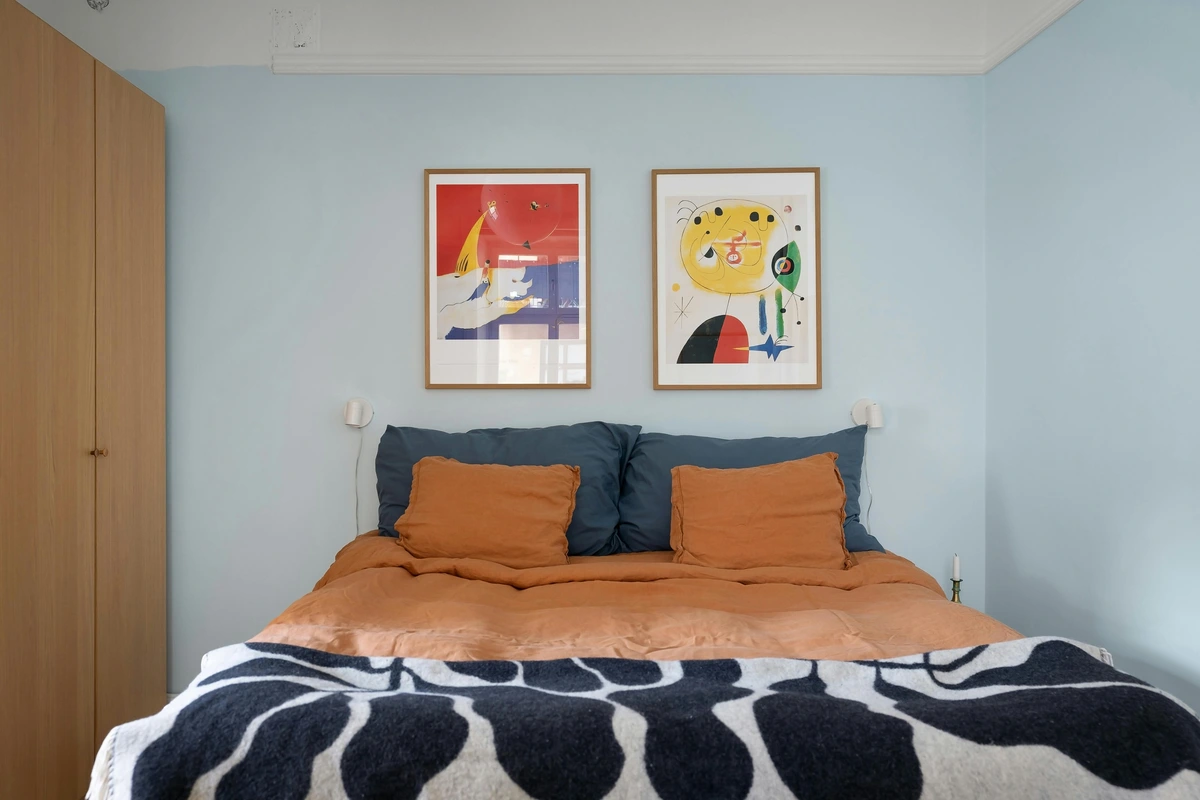
But here's where my quirky side comes in: sometimes, a single, carefully chosen piece with a vibrant, bold color can be an incredible statement. It’s an intentional pop, a burst of energy in an otherwise calm space, and it works precisely because it’s solitary and thoughtfully placed. This isn't just about throwing a bright color in; it’s about harnessing the power of contrast to create a truly singular focal point, an unexpected visual anchor that energizes without overwhelming. Imagine a minimalist room in soft whites and greys, with one perfectly positioned abstract piece featuring a rich, deep indigo or a fiery orange. It doesn't scream for attention; it commands it, offering a singular focal point that energizes without overwhelming. It says, "This room has a pulse, but it knows how to breathe." (And yes, my own colorful abstract art often finds its way into minimalist settings, precisely for this kind of intentional, joyful contrast).


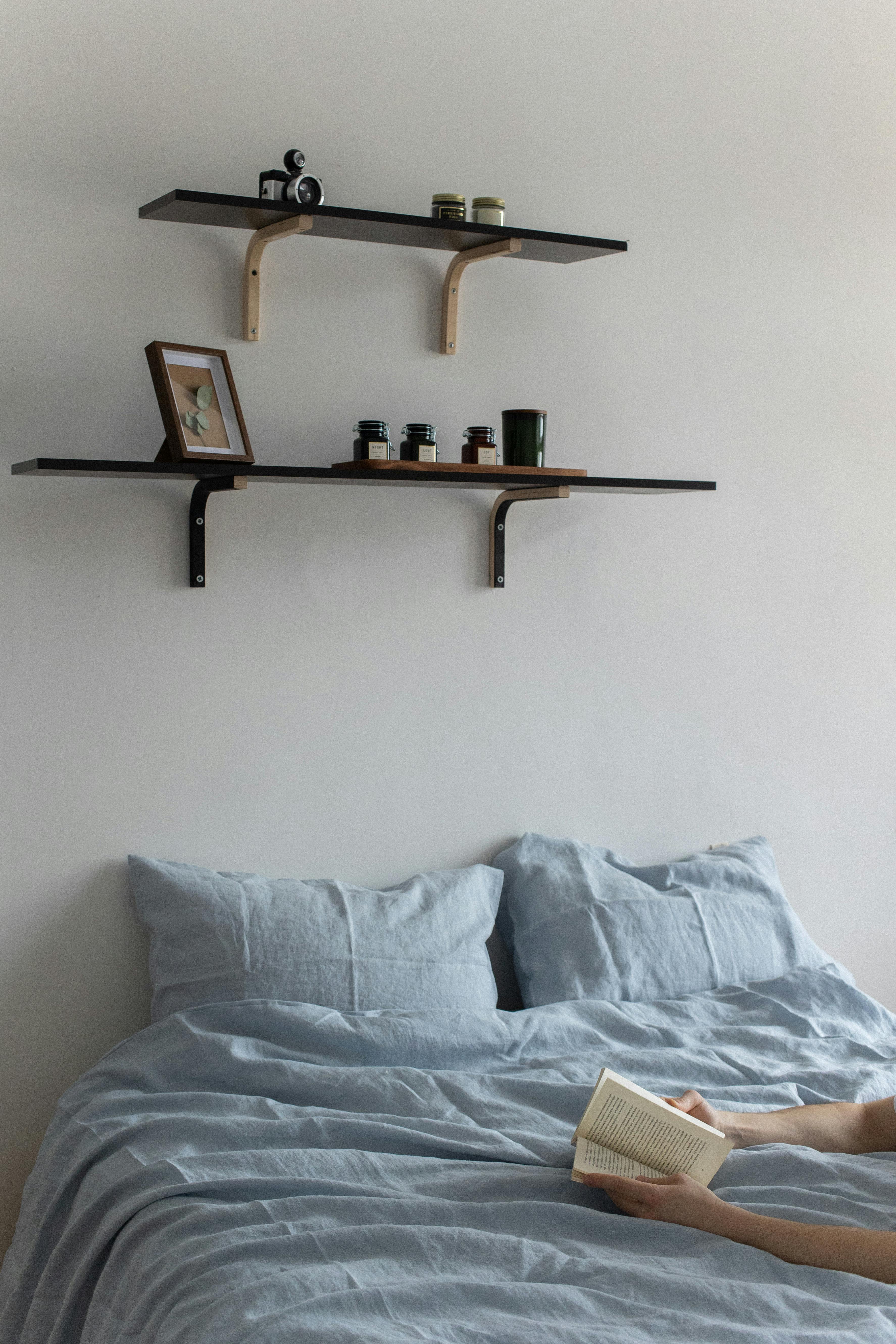
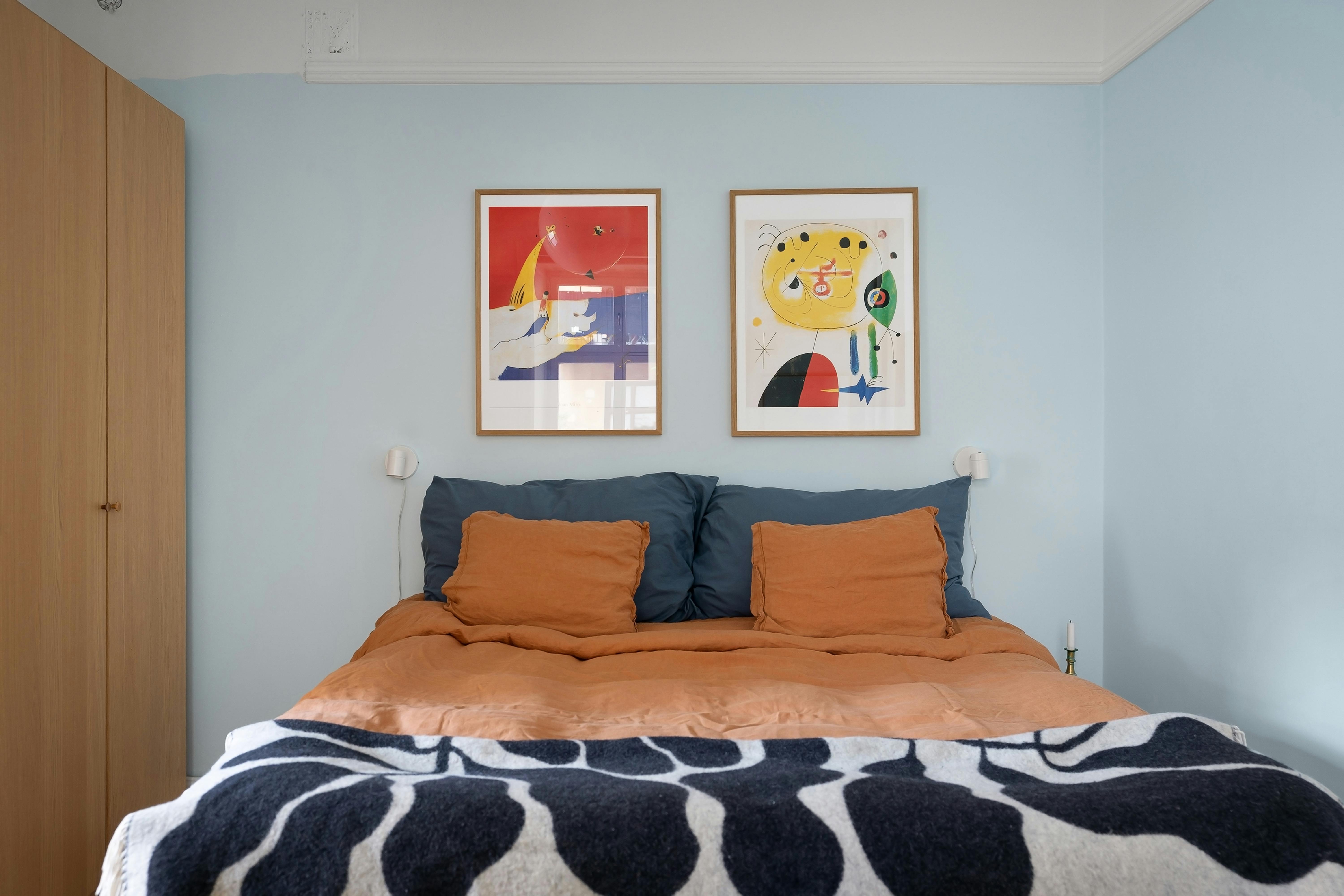
More Than Just Abstract: Other Quietly Compatible Styles
While abstract art is my personal go-to, it’s not the only player on the minimalist field. With the right intentionality, other styles can absolutely sing in a serene bedroom setting. Consider:
- Minimalist Landscape Photography: Think sweeping, uncluttered vistas, perhaps a distant horizon line or a solitary tree against a vast sky, rendered in soft focus or muted tones by artists like Hiroshi Sugimoto or Michael Kenna. The key here is extreme simplicity and a limited color palette, letting the negative space of the sky or water dominate. These pieces connect us to nature without busyness, promoting a sense of expansive calm.
- Stylized Botanical Prints: Not your grandmother's floral patterns! I'm talking about single, elegant leaves, simplified plant forms, or even a subtle branch captured in clean lines or a muted watercolor wash. Look for illustrations reminiscent of scientific botanical drawings, or the understated elegance of Japanese sumi-e paintings of plants. These bring a touch of the organic world indoors, offering life and freshness without overwhelming the senses.
- Architectural Abstracts/Studies: Focus on the clean lines, forms, and interplay of light and shadow on buildings, often presented in monochrome or with a very limited palette. These can echo the structural simplicity of minimalist design.
The Play of Light & Shadow: An Unseen Element of Art
Beyond color, form, and texture, there's a subtle yet profound element that transforms art in a minimalist bedroom: light and shadow. In a pared-back space, where every detail is heightened, the way light interacts with an artwork can become part of the piece itself. Imagine the gentle morning sun casting soft shadows across a sculptural wall hanging, or the focused beam of an evening spotlight illuminating the texture of a canvas, revealing depths you hadn't noticed before. Artists often consider how light will play on their work, and in a minimalist setting, this interaction is amplified. It's not just about brightening a piece; it's about harnessing the subtle dance of luminosity and shade to create movement, emphasize form, and evoke mood. Choosing art that thoughtfully utilizes contrast, or has a surface that beautifully catches and diffuses light, can add immense visual interest and a dynamic quality without introducing clutter. For a deeper understanding of this captivating element, explore the definitive guide to understanding light in art.
My Journey with Art: A Personal Breakthrough
My journey to finding art for my minimalist bedroom has been one of discovery and quiet joy. I remember one particularly stubborn blank wall that haunted me for months. I tried a few pieces that felt... off. Too busy, too loud, too much. I was almost ready to give up and declare that wall permanently 'zen empty.' (Honestly, my artistic soul probably just needed a nap, but I digress.) Then, one crisp autumn afternoon, I stumbled upon a simple, textural abstract piece in muted blues and grays – just two large, overlapping forms, a whisper of a landscape. It wasn't love at first sight, more like a quiet recognition. It didn't demand attention; it simply was. I hung it, tentatively at first, convinced I'd be re-boxing it by week's end. But as the days turned into weeks, I realized it had settled into the room as if it had always belonged. It offered depth without distraction, a focal point that calmed rather than stimulated. It was the perfect single note in my symphony of calm. And that, I've learned, is the magic of intentional art in a minimalist space. It’s not about filling walls, but about enriching life, one thoughtful, soulful piece at a time. Reflecting on this, much like the broader arc of my creative development shown in my artistic timeline, has been incredibly rewarding.
Finding & Choosing Your Intentional Piece: A Practical Guide
So, you’re convinced art belongs in your minimalist bedroom, but where do you actually find that perfect piece, and how do you know it’s the one? It doesn't have to be daunting or expensive:
Acquiring Your Art
- Support Emerging Artists: Explore local art fairs, student exhibitions, or online platforms dedicated to new talent. You might discover a unique, affordable piece and connect with its creator's vision. Platforms like Saatchi Art or Etsy can be goldmines for this.
- Limited Edition Prints: Many established and emerging artists offer limited edition prints of their work. This is an accessible way to own high-quality art without the price tag of an original painting. These prints often have a controlled production run, meaning a consistent standard of quality, which aligns well with the considered nature of minimalism. It’s also how I offer many of my own artworks for sale, making intentional art accessible.
- Vintage & Second-hand Finds: With a keen eye, you can discover hidden gems at flea markets, antique shops, or online marketplaces. Look for pieces that resonate with your aesthetic and can be re-framed if necessary. Sometimes a simple, abstract landscape from decades past can be perfectly integrated. Consider the piece's provenance; knowing its history can add a quiet layer of meaning.
- DIY & Personal Creations: Don't underestimate the power of your own hands. A simple, large canvas painted with a soothing color field, a textured plaster piece, or even a beautifully pressed botanical arrangement can be incredibly personal and perfectly minimalist. The act of creating itself can be a meditative, intentional process.
Your Personal Checklist for Selection
With all these ideas swirling around, how do you actually choose the piece for your minimalist bedroom? I've found it helps to ask myself a few guiding questions:
- Does this piece evoke a feeling of peace and calm? This is paramount for a bedroom. If it stirs anxiety or too much energy, it’s probably not the right fit. Remember, this is about respite, not stimulation.
- Does it complement the existing textures and colors in my room? Not necessarily match, but harmonize. Think about the quiet dialogue between the art and your linens, walls, or furniture. Does it feel like a natural extension of your chosen aesthetic?
- Does it hold personal meaning without being distracting? It could be a connection to nature, a memory, or an abstract concept that resonates deeply with you.
- Have I considered the artist's intent? Understanding the story or message behind a piece can deepen your connection and ensure it aligns with the peaceful sanctuary you're creating. The meaning should be quiet and personal, not something that demands constant analytical thought before bed.
- Does it possess a timeless quality that will resonate with me for years, avoiding fleeting trends? A minimalist space thrives on longevity.
- Does it contribute to the overall feeling of sanctuary? Ultimately, this is the core question. If it doesn't, it's probably best to pass.
Practicalities of Display: Nurturing Your Haven's Art
Choosing the art is one thing, but how you care for and display it also matters. To preserve your chosen pieces and maintain the serene atmosphere:
- Avoid Direct Sunlight: Prolonged exposure can fade colors and damage materials. Position your art where it receives indirect, gentle light, or use UV-filtering glass if direct light is unavoidable.
- Thoughtful Lighting: How does the light interact? Natural light is wonderful, but strategic artificial lighting (dimmable, indirect spotlights) can transform a piece, especially in the evening, without creating harsh glares. Think of it as painting with light, enhancing the art's presence after dark.
- Consider Room Acoustics: A large, unframed canvas, for instance, can subtly absorb sound, contributing to a quieter, more intimate feel. This might seem like a small detail, but in a sparse room, every element contributes to the overall sensory experience.
- Ensure Good Airflow: For framed pieces, especially, adequate air circulation behind the artwork prevents moisture buildup and potential mold, safeguarding the piece and promoting a healthy environment.
- Humidity Control: Fluctuations in humidity can damage artworks, especially those on canvas or paper. Maintain a relatively stable environment (around 45-55% relative humidity) to prevent warping, cracking, or mold growth. A simple hygrometer can help you monitor this.
- Secure Hanging: Ensure all artwork is securely fastened, especially over a bed. Peace of mind is, after all, a cornerstone of minimalism – you don't want to wake up to a crashing frame!
- Gentle Cleaning & Care by Medium: Dust your artwork regularly with a soft, dry cloth or a soft-bristled brush. Avoid harsh chemicals or water unless specifically instructed by a conservator. For paper prints, use archival-quality frames and avoid touching the print surface. Canvas can often be gently dusted, but avoid moisture. Textiles might require very gentle vacuuming with a specialized attachment or professional cleaning, while ceramics can usually be wiped with a slightly damp cloth, taking care with delicate glazes.
Embracing Your Unique Narrative: The Subjective Art of Minimalism
Ultimately, the beauty of a minimalist bedroom, and the art within it, lies in its deeply personal nature. My 'rules' are really just observations from my own journey, a path I've walked over many years. Don't let strict interpretations of minimalism stifle your innate desire for expression. It's about finding your unique balance, allowing for a whisper of imperfection, and letting your chosen art tell your quiet story within your sanctuary. It’s a dialogue, a dance between intentionality and intuition. The true masterpiece is the feeling of peace you create, and the art you choose is simply a reflection of that profound inner calm. I hope your journey is just as rewarding.