
WPA Art: Unseen Force of Hope in America's Great Depression
Discover how WPA & New Deal art transformed America's Great Depression. Explore American Scene Painting, the Federal Art Project, and key artists who forged national identity & resilience.

The Unseen Force: Art's Essential Role in America's Great Depression (WPA, New Deal & American Scene Painting)
I know what you're probably thinking: when the economy tanks, art's the first thing on the chopping block. It’s easy to see art as something... extra. A luxury for good times, a splash of color when the walls are already secure. But I've learned that when everything else falls apart, when the national economy collapses and millions are out of work, art doesn't just pack up and go home. In fact, sometimes, it becomes an essential worker, an 'unseen force' vital for resilience and the enduring human spirit.
I used to think creativity would be the first thing to go, fading into the background like an old photograph, a frivolous pursuit. But when you look at the Great Depression in America, something truly wild and remarkable happened. Art didn't just survive; it was put to work. The government, in an almost unbelievable move, decided that creativity wasn't a luxury but a vital part of the nation's recovery – a job, a purpose, and a mirror held up to a country in crisis. This isn't just art history; it's a profound story about what we truly value when everything else falls apart, a powerful reminder that even in the bleakest moments, the human spirit yearns to create and connect. This article will explore the government's groundbreaking intervention through the Works Progress Administration (WPA), and the powerful artistic movements that defined America's visual identity during this challenging era.

Finding America in Art: The American Scene Painters
Before the government stepped in with its unprecedented programs, a powerful artistic sentiment was already brewing across the United States. It was called American Scene Painting. For a long time, the American art world had its eyes glued to Europe, chasing after the latest trends from Paris. Think Cubism, Surrealism, and all the exciting, often abstract, movements brewing across the Atlantic. American Scene Painting was a conscious, sometimes stubborn, decision to turn around and look at home. It was as if artists collectively declared, 'Enough about Europe! What's happening in Iowa? What does life look like in a New York tenement? What are the stories of our own backyards?'
This movement celebrated the landscapes, people, and daily life of the United States. It wasn't one single style, but more of an attitude – a deep yearning to define a unique American artistic identity in a time of profound national self-reflection. This manifested in a widespread embrace of recognizable, often narrative-driven, realism, a style the public could easily understand and connect with, especially when navigating such uncertainty. And it generally split into two fascinating, and sometimes conflicting, camps.
Two Sides of the Same Coin: Regionalism and Social Realism
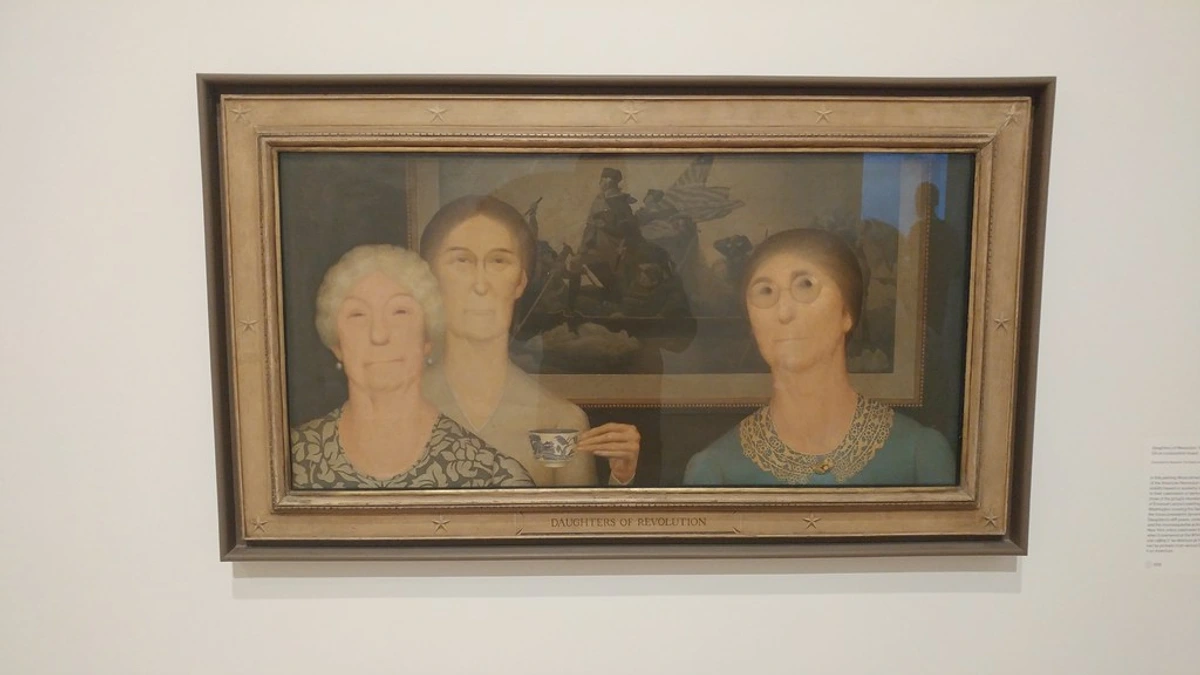
On one hand, you had the Regionalists, who focused on the rural heartland, particularly the Midwest. They often painted scenes that were nostalgic and romanticized, celebrating the virtues of simple, hardworking farm life. It was a vision of an idealized, stable America in a time of great instability, perhaps offering a comforting escape from the harsh realities for many. Their work, however, sometimes faced criticism for potentially overlooking the deep agricultural crisis and poverty of the time, presenting a somewhat whitewashed view that, to some, minimized the true struggles of farmers. Grant Wood's Daughters of Revolution, for example, offers a wry critique of self-importance rather than direct social commentary, highlighting the movement's tendency towards observation over activism. I remember once thinking all Regionalist art was just simple farm scenes, but then you see the subtle complexities, the quiet dignity, and it's quite something.
On the other hand, the Social Realists turned their gaze to the cities and the struggles of the urban working class. Their work was often overtly political, depicting strikes, poverty, and social injustice with a raw, critical eye. They weren't painting an ideal America; they were painting the America they saw, warts and all, often actively engaging with labor movements by creating powerful visual propaganda or documenting specific strikes and protests. They used art as a tool for advocacy and documentation, sometimes stirring controversy for their perceived radicalism or direct critiques of societal structures. Ben Shahn's The Passion of Sacco and Vanzetti exemplifies this movement's commitment to social justice and direct confrontation of difficult truths.
Here’s a quick breakdown of these two influential branches of American Scene Painting:
Feature  | Regionalism | |
|---|---|---|
| Subject Matter | Rural life, farming, small towns, American folklore, idealized landscapes | Urban life, factories, labor strikes, poverty, social injustice, political themes |
| Tone | Often nostalgic, sentimental, comforting, idealized, traditional | Critical, political, documentary-style, confrontational, often bleak |
| Key Artists | Grant Wood, Thomas Hart Benton, John Steuart Curry | Ben Shahn, Philip Evergood, Raphael Soyer, William Gropper |
| Geographic Focus | Primarily the American Midwest, rural South | Primarily East Coast and industrial cities, urban centers |
| Primary Mediums | Murals, easel paintings, prints | Murals, easel paintings, prints, photography |
| Key Philosophy/Goal | Celebrate American heritage, provide stability, evoke national pride | Advocate for social change, expose injustice, document hardship |
The Unthinkable Idea: A New Deal for Artists
Imagine this: you're an artist in the 1930s. The roaring twenties, with its flirtation with European avant-garde and a nascent art market, are a distant memory. Now, you’re probably starving. Your patrons have lost their fortunes. Galleries are closing faster than you can say "Abstract Expressionism" (a movement that would come much later, but the sentiment fits). Then, the government shows up and says, 'We need you... to paint. To sculpt. To teach. To design stage sets. And we're going to pay you a weekly wage for it.' It sounds almost too good to be true, doesn't it? A truly radical notion that art could be a job, not just a passion – a lifeline for creative professionals.
This wasn't just charity; it was a revolutionary declaration that cultural labor was as valuable as any other. This perspective was groundbreaking, especially in an era where the arts were often viewed as secondary or merely entertainment. It stemmed from President Franklin D. Roosevelt's broader philosophy that the New Deal should not only build physical infrastructure (like roads and bridges through the WPA) but also bolster the nation's spiritual and cultural infrastructure. Artists, writers, musicians, and actors were unemployed citizens, just like factory workers or farmers, and their skills were seen as essential to national morale, identity, and perhaps even as a bulwark against social unrest. The idea that art could prevent social upheaval? Sounds wild, but in desperate times, any form of constructive engagement and cultural connection can be a lifesaver, providing dignity and purpose.
Under the WPA's umbrella were several cultural programs: the Federal Art Project (FAP), the Federal Theatre Project, the Federal Writers' Project, and the Federal Music Project. These initiatives collectively employed hundreds of thousands of creative professionals across the country. My mind often goes to the sheer breadth of this ambition. The FAP, specifically, ran from 1935 to 1943. It was the largest and most ambitious public art project the United States had ever seen. Employment was managed through state and local art commissions, ensuring broad reach, and while selection varied, the general goal was to employ artists based on need and skill. Thousands of artists were employed, including names that would later become legendary, like Jackson Pollock and Mark Rothko. It's quite something to imagine these future titans of abstraction painting post office murals, isn't it? (They worked on more conventional projects before they became the abstract giants we know; their abstract tendencies weren't aligned with the FAP's public accessibility goals, but the program provided a crucial lifeline for their survival and artistic development).
The Democratization of Art: Art For the People
The goal wasn't just to give artists a paycheck (though that was certainly a lifesaver). It was about the democratization of art. The FAP was tasked with creating art for the people, placing it in public spaces like schools, post offices, hospitals, and government buildings across the country. This was revolutionary. Suddenly, you didn't need to go to a fancy museum in a big city to see original art. It was right there in your town, telling stories you recognized, reflecting your community back at you. This didn't just expose people to art; it gave them ownership over it, a sense of shared cultural identity and pride, especially in smaller, more isolated communities. Imagine a small town in rural Kansas suddenly having a vibrant mural depicting its founding history in its post office – that's a tangible piece of shared heritage, a source of local pride that fostered connection during a fragmented time. It’s a bit like giving everyone a piece of a giant, shared puzzle; each local artwork a unique, cherished fragment.
This led to a surge in public murals, a practice heavily influenced by the great Mexican muralists like Diego Rivera. What I find fascinating is how this art wasn't just decorative; it was a form of visual storytelling techniques in narrative art, using bold compositions, accessible symbolism, and often sequential imagery to communicate directly with an audience, many of whom might have struggled with literacy. These murals often depicted scenes of local history, industry, and the daily lives of American workers, offering both comfort and a sense of shared purpose during incredibly tough times. Mexican muralists, with their monumental scale, social themes, and simplified yet powerful forms, offered a compelling model for public art that resonated with the FAP's goals of accessibility and community engagement. Techniques like fresco painting, though challenging, were sometimes employed, offering a durable and public-facing medium.
Beyond murals, the FAP also commissioned sculptures, graphic designs (like public health posters, park service maps, and community event announcements), theatrical sets, and even supported photography projects through collaboration with other New Deal agencies like the Farm Security Administration (FSA). One notable FAP initiative was the Index of American Design, which employed artists to meticulously document American decorative arts and folk crafts through detailed watercolor renderings. This incredible undertaking preserved a visual record of the nation's material culture, capturing everything from Shaker furniture and Navajo textiles to weather vanes and carved decoys. It was crucial for preserving skills and designs that might otherwise have been lost due to economic hardship, affirming that even seemingly humble objects hold significant cultural value. The sheer breadth of this initiative, employing diverse artists across various mediums, truly transformed artists into cultural preservationists.
Key Artists Who Defined the Era
You can't talk about this period without getting to know the people who held the brushes, the cameras, and the chisels. These artists, many directly supported by or profoundly influenced by the New Deal ethos and the American Scene movement, became the visual poets of their time, capturing the very soul of America in crisis. It's truly fascinating to see how their individual styles coalesced to form a collective national portrait, a powerful act of collective memory.
Regionalist Voices
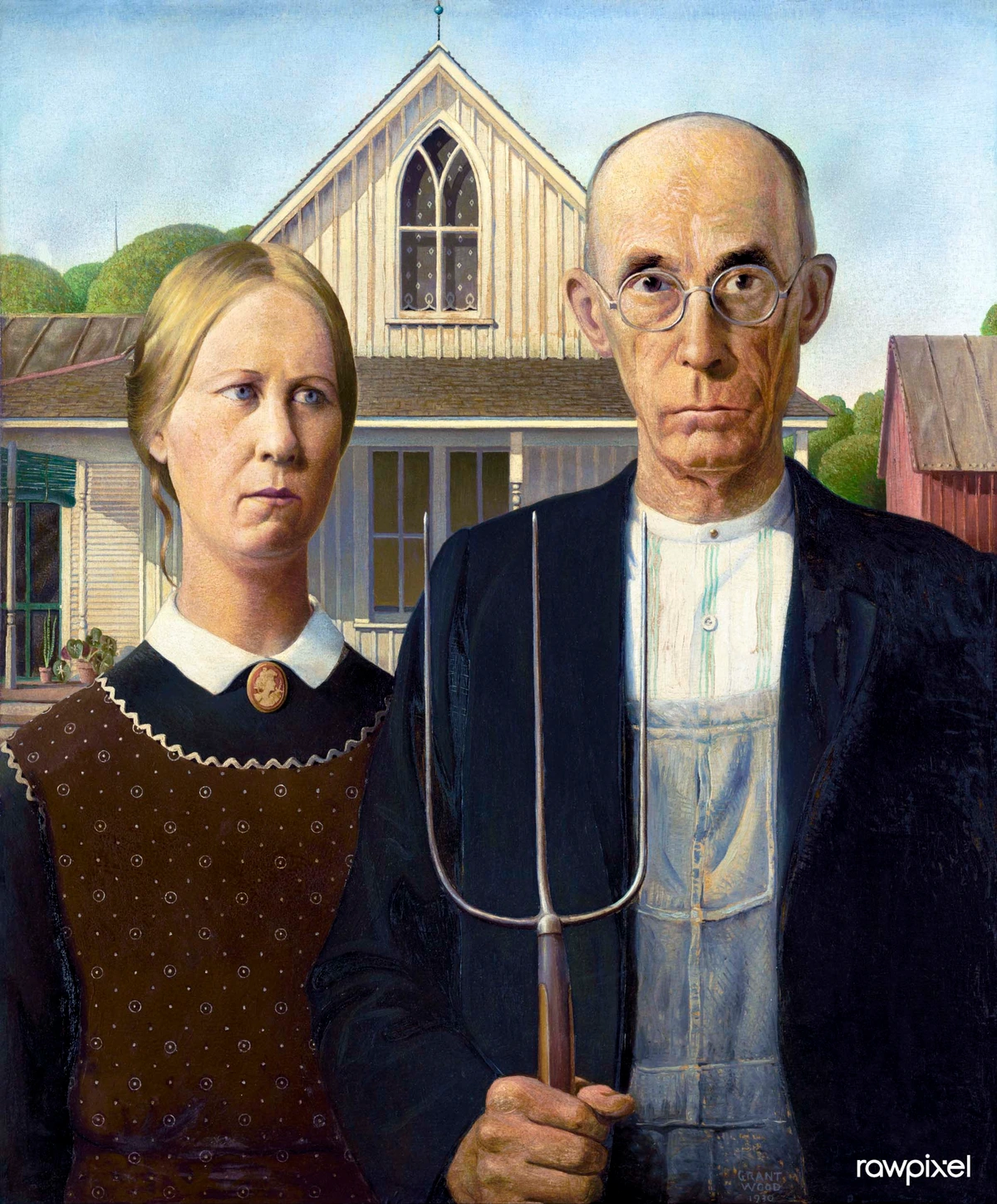
Grant Wood (1891-1942) Known as 'the painter of the Midwest,' Wood is perhaps the most recognizable face of Regionalism. You absolutely know his painting American Gothic—that stern-looking farm couple with the pitchfork. It's become one of the most parodied paintings in history, but at its heart, it’s a powerful statement about American stoicism and resilience, a visual emblem of rural endurance. His other works, like The Midnight Ride of Paul Revere or The Story of Johnny Appleseed, also capture a distinctly American historical or folkloric narrative, rendered with his characteristic crisp, almost illustrative precision. His art feels both deeply personal and universally American, almost like a cherished family album.
Thomas Hart Benton (1889-1975) If Wood's work is still and composed, Benton's is a whirlwind. His paintings and murals are full of dynamic, swirling, muscular figures that seem to burst with energy. He wanted to capture the restless, brawling spirit of America, from its mythology to its modern industry. His style, seen in monumental works like his A Social History of the State of Missouri murals or The Arts of Life in America series, was distinctly American, rejecting European academic traditions in favor of a homegrown dynamism. I always feel a surge of energy just looking at his compositions; they seem to hum with the pulse of a nation grappling with its identity, a raw, unvarnished energy.
Documenting Hardship: A New Deal Lens
Dorothea Lange (1895-1965) While technically a photographer working for another crucial New Deal agency, the Farm Security Administration (FSA), Lange's work is inseparable from the art of the Depression. Her photograph Migrant Mother is arguably the single most iconic image of the era, capturing the human toll of the crisis with profound empathy. Her images, like White Angel Breadline or Destitute Pea Pickers in California, weren't just records; they were calls to action, revealing the faces behind the statistics and stirring public conscience. Her work, alongside that of fellow FSA photographer Walker Evans, is a masterclass in capturing inner turmoil through portraiture and documentary realism. I look at her photos and can almost feel the weight of those lives, a reminder of art's power to bear witness.
Capturing the National Mood
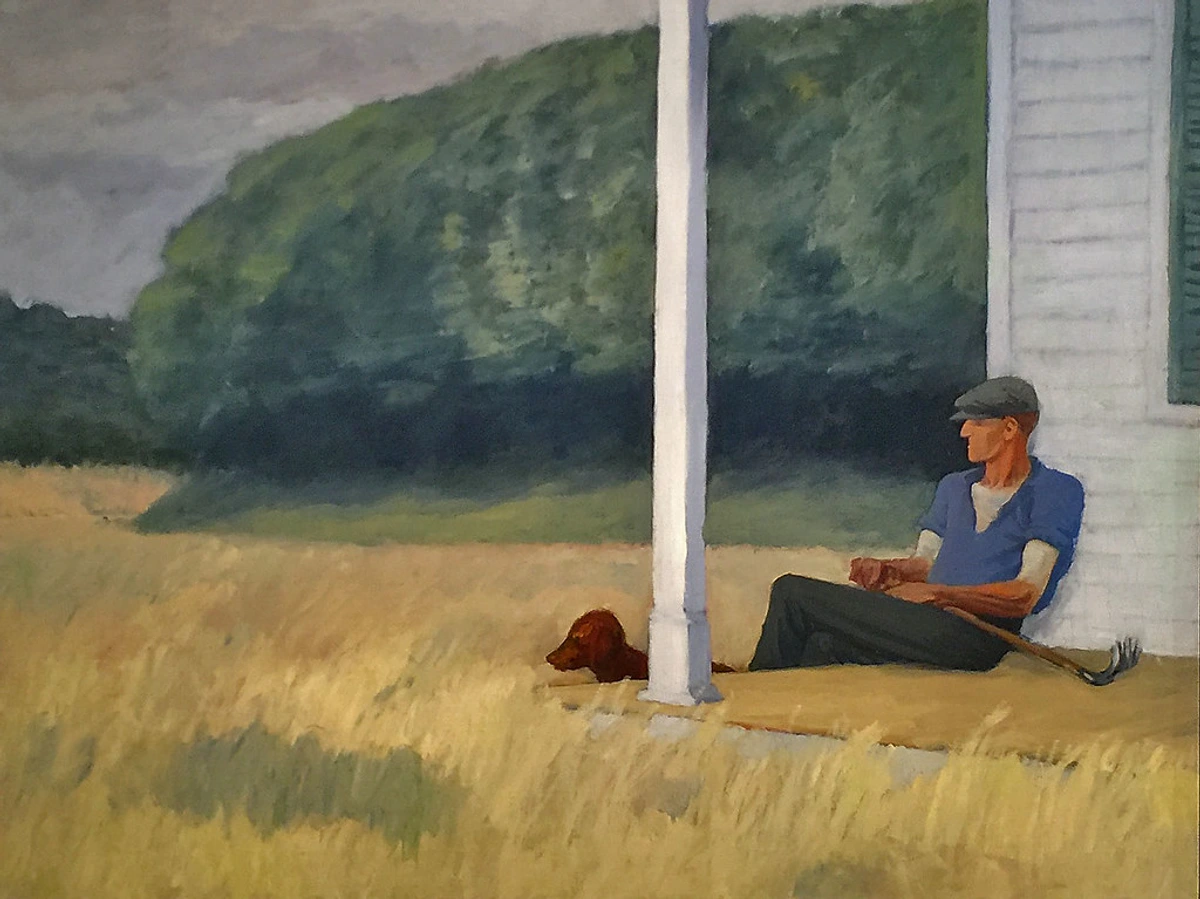
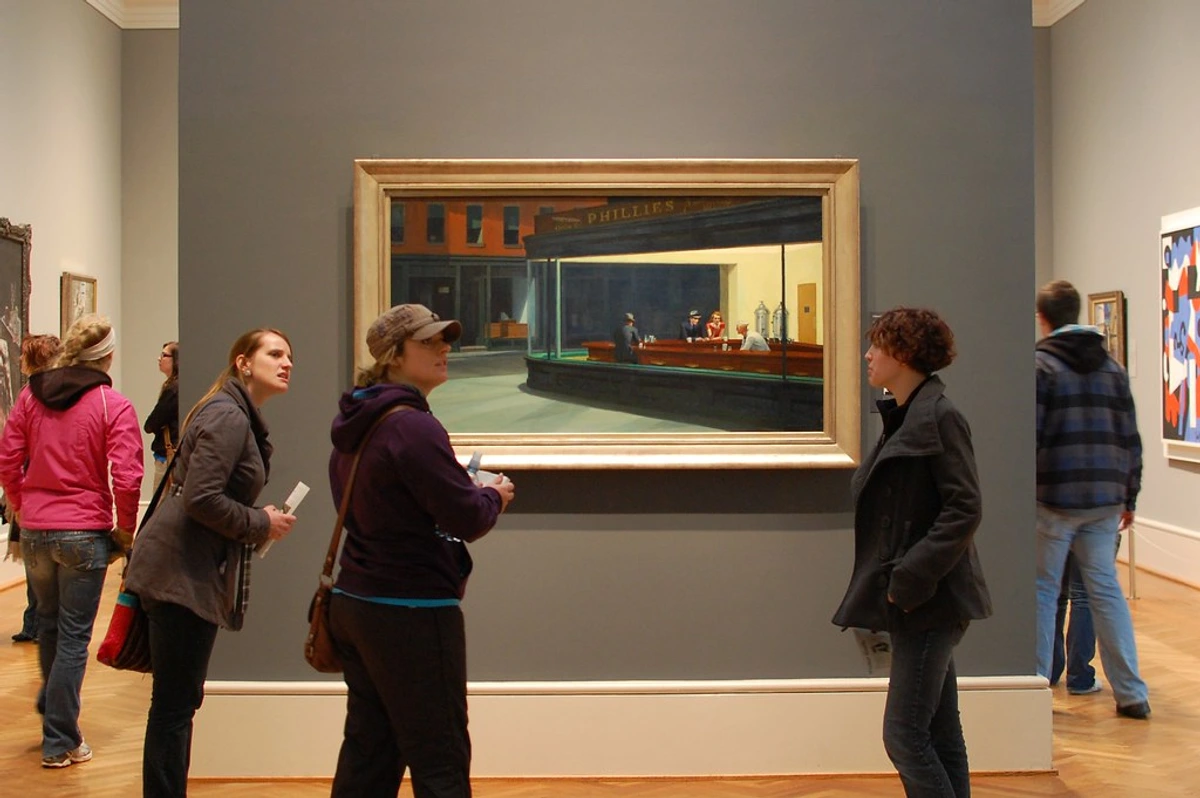
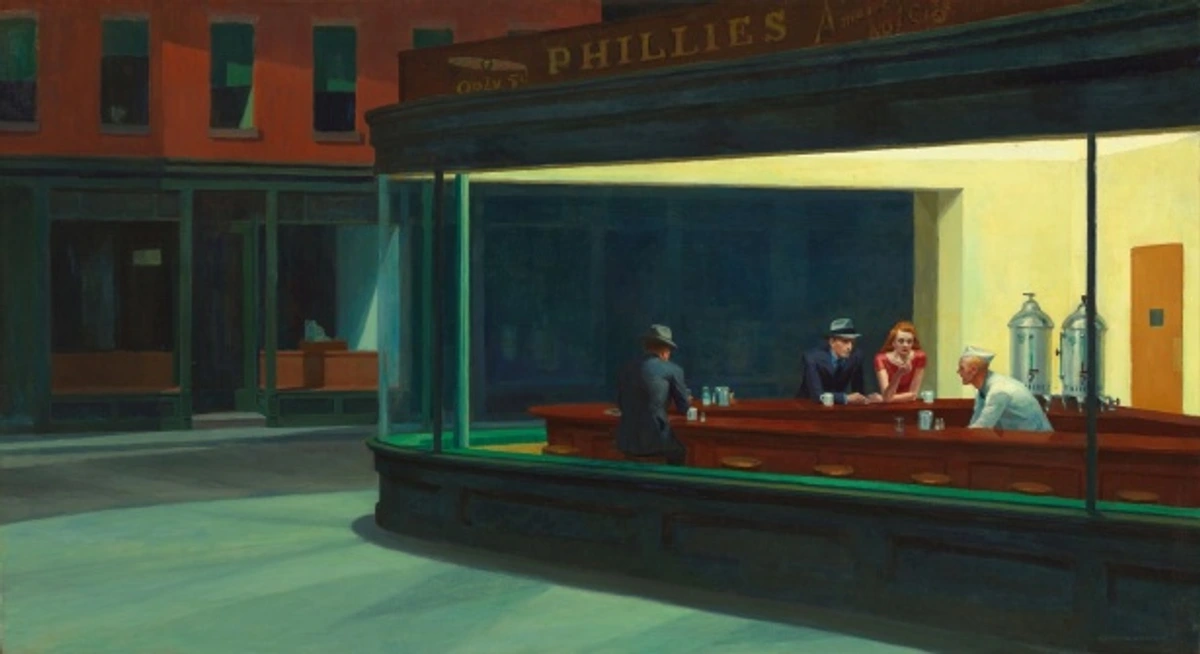
Edward Hopper (1882-1967) Hopper is a fascinating case. He wasn't a WPA artist and often stood apart from the main movements, but his paintings are perhaps the most potent expression of the era's mood. His scenes of lonely individuals in diners, offices, and hotel rooms (Nighthawks being the most famous, or Automat) capture a profound sense of isolation and alienation that resonated deeply during a time of national anxiety. This urban solitude echoed the breakdown of traditional community, the psychological toll of unemployment, and a pervasive sense of being a small, insignificant cog in a giant, impersonal machine. He stripped away narrative specifics to reveal universal feelings, a poignant reflection of the individual struggle amidst widespread hardship. His work reminds me that even in collective crisis, personal quietude and introspection can be intensely powerful.
Jacob Lawrence (1917-2000) Part of the generation that emerged from the Harlem Renaissance, Lawrence received crucial support from the WPA's Federal Art Project early in his career. His epic 60-panel Migration Series, which chronicles the mass movement of African Americans from the rural South to the industrial North, is one of the monumental achievements of 20th-century American art. It’s a powerful, narrative-driven work that tells a vital American story of struggle, hope, and determination, offering a perspective often overlooked in mainstream art history and powerfully illustrating the social and economic shifts of the era. His bold use of color and simplified forms, while not overtly abstract in the European sense, created a dynamic visual language that was both accessible and deeply impactful, making complex history resonate with broad audiences.
The Lasting Legacy: Why This Art Still Haunts and Inspires
So, what did it all amount to? The Federal Art Project officially ended as the country shifted its focus to World War II, a new national emergency replacing the old. Funding dried up, and artists pivoted to war efforts, often creating propaganda or instructional art. But its impact was permanent. The WPA arts projects, despite occasional criticisms regarding artistic freedom, perceived political leanings, or debates over quality versus quantity, established an unprecedented model for government cultural support. It's a legacy that continues to inform how we think about public art and the role of the artist in society. I mean, can you imagine our cities without public murals today? That impulse, that belief in art belonging to the public, started right here, an unseen force that shaped our cultural landscape.
Here's how I see its enduring significance:
- It forged a national visual identity. For the first time, America had a vast, public catalog of its own image, its own stories, and its own people. This was art that reflected America back to Americans, forging a collective sense of who they were, from the farm fields to the factory floors. Think of how many small-town post offices still feature a mural depicting local industry or history – that's the FAP's handiwork, connecting communities through shared visual narratives.
- It democratized art and made it essential. It cemented the idea that art belongs to everyone, not just the wealthy. The FAP brought original, high-quality art directly into the daily lives of ordinary citizens, often those who had never stepped foot in a museum. This ethos lives on in public murals, community art projects, and even arts education initiatives today, reinforcing the idea that creativity is a fundamental human right and a public good, not a frivolous add-on. It truly shifted the cultural understanding of art from an elite pursuit to a communal necessity. The thought of art being an essential service during the bleakest of times still amazes me.
- It validated art as real labor. It established a precedent for government support of the arts and affirmed that creative work is real, valuable work. This wasn't charity; it was employment. This groundbreaking recognition helped shape future arts funding models, fostered a greater respect for the artist's role in the national economy and cultural fabric, and shifted the public perception of artists from bohemian outsiders to contributing members of society. For many artists, it was the first time they were paid a consistent wage for their craft, offering a dignity previously unattainable.
The spirit of WPA art—art that is public, socially engaged, and tells a story—is a direct ancestor to modern street art and political murals. Artists like Banksy, who use public walls to comment on social and political issues with sharp wit and often critical eyes, are walking directly in the footsteps of the Social Realists. It's a continuous thread of art as commentary, art as community, and art as a catalyst for thought. What a powerful legacy to leave behind, don't you think? And in an era increasingly fascinated by fleeting digital assets like NFTs, the enduring, tangible presence of these public artworks serves as a poignant reminder of art's fundamental role in community and shared human experience, a stark contrast to the ephemeral.
FAQ: Your Questions Answered About Great Depression Art
What was the main purpose of the WPA Federal Art Project?
The primary purpose of the Federal Art Project (FAP) was twofold: first, to provide employment for artists during the Great Depression, offering them a weekly wage and restoring dignity to their professions. Second, and equally crucial, was to make art accessible to the general public by commissioning murals, sculptures, graphic designs, and other works for public buildings like schools, post offices, and hospitals across the country. It also aimed to foster national pride and morale by reflecting local histories and American life, serving as a unifying force.
American Scene Painting vs. Regionalism: What's the difference?
This can be tricky, but it's important to differentiate. American Scene Painting is the broad, umbrella term for any art that focused on distinctly American subjects and themes, intentionally moving away from European artistic influence. Regionalism is one specific branch within American Scene Painting that particularly focused on idealized, rural Midwestern life, often with a nostalgic or romanticized tone. The other main branch was Social Realism, which depicted urban and industrial struggles with a critical eye. So, all Regionalism is American Scene Painting, but not all American Scene Painting is Regionalism.
Who are the most famous artists from the Great Depression era?
Key figures from this era include prominent Regionalists like Grant Wood (of American Gothic fame) and Thomas Hart Benton, as well as influential Social Realists such as Ben Shahn and Philip Evergood. Documenting the human impact were photographers like Dorothea Lange (Migrant Mother) and Walker Evans, both working for New Deal agencies. Artists like Edward Hopper, for his poignant urban scenes capturing the era's mood, and Jacob Lawrence, with his powerful Migration Series supported by the WPA, also produced their most iconic work during this period, deeply reflecting its spirit.
What role did photography play during the Great Depression?
Photography played a crucial, often heart-wrenching, role during the Great Depression, primarily through the efforts of agencies like the Farm Security Administration (FSA). Photographers such as Dorothea Lange and Walker Evans were commissioned to document the harsh realities of rural poverty, migration, and the lives of ordinary Americans. Their powerful images, often distributed widely, served not only as historical records but also as instruments of social reform, influencing public opinion and garnering support for New Deal programs. They brought the unseen struggles of millions into the homes of those more fortunate, fostering empathy and a collective call for change.
Did the WPA Federal Art Project support abstract art?
While the FAP's primary focus was on accessible, figurative, and narrative art for the public, reflecting American themes, it did employ artists who would later become Abstract Expressionists, such as Jackson Pollock and Mark Rothko. At the time, however, they primarily worked on more conventional projects (like easel painting and murals) to earn their wages. The program prioritized clear, relatable messaging for a broad public struggling with tangible problems, making directly abstract or avant-garde works less common. Nevertheless, the FAP was broad enough to encompass various artistic expressions, providing essential support that allowed these artists to survive and develop their individual styles, which would later lead to abstract breakthroughs.
Where can I see WPA art today?
It's all over the place, which was the whole point! Many post offices, schools, and courthouses built in the 1930s and early 1940s still have their original WPA murals or sculptures. The artworks were distributed widely across communities, making them truly public. Major museums across the U.S. also have extensive collections of art from the Federal Art Project, often acquired after the program ended. Keep an eye out when you visit historical public buildings; you might discover a hidden gem telling a story from nearly a century ago! Online archives and local historical societies are also excellent resources to find WPA art in your area.
My Final Thoughts
Looking back at the art of the Great Depression, I'm struck by its sheer necessity. This wasn't art for art's sake (though that's a perfectly valid pursuit, of course). This was art as a record of survival, art as a community service, art as a weekly paycheck that put food on the table. It wasn't always subtle or avant-garde, but it was profoundly human, a testament to resilience, and undeniably impactful. It truly demonstrates how art, in its purest form, can be an indispensable tool for national healing and identity formation, an almost invisible, yet foundational, pillar of recovery.
It serves as a powerful reminder that creativity isn't a frivolous add-on to society. Sometimes, it's the very thing that helps us understand who we are, especially when times are tough. That thread of art being a fundamental act of hope, a shared language that transcends hardship, deeply resonates with my own [artistic timeline]. The idea of art being for everyone, and art being a source of connection and reflection, deeply informs how I approach my own work. Just as the WPA aimed to provide a shared language of hope through accessible art, my abstract pieces, though different in form and era, seek to evoke a similar sense of introspection, resilience, and connection in viewers. Making something—anything—is a fundamental act of hope, a shared language that transcends hardship, and that, I think, is a beautiful legacy to carry forward.


If this deep dive into the art of the Great Depression has sparked your interest in art's power to adapt and inspire, perhaps you'd like to explore how contemporary art continues to tell vital stories. You can always buy some of my work to bring that creative spirit into your own space, or learn more about my journey at the Den Bosch Museum.