Minimalist Art Movement Explained: More Than Meets the Eye
An engaging and comprehensive exploration of the Minimalist art movement. Discover its core principles, major artists, and lasting impact on modern art and culture, with a personal, narrative voice.

Minimalist Art Isn't Boring, You're Just Not Looking Closely Enough
Exploring the profound depths of a misunderstood movement.
We've all been there. You're in a massive, white-walled gallery, standing in front of a giant canvas painted a single, solid color. Or maybe it's a perfect metal cube sitting silently on the floor. And the thought creeps in: 'My kid could have made this.' I get it. I used to think that, too. It’s a reasonable reaction, born from a lifetime of being told that art is about skill, about representation, about capturing a moment or telling a story. Minimalism throws all of that out the window and asks you to meet it halfway, in the quiet space between the object and your own perception.
Minimalism can feel like a prank played by the art world on the rest of us. But what if I told you that the point isn't the object itself, but what happens in the space around it—and inside your own head? The blank canvas isn't empty; it's a stage. It's a common first impression, one the art world often does little to dispel with its hushed tones and high price tags. But the initial frustration you feel isn't a sign of failure—it's the beginning of the conversation the art wants to have with you. The question isn't "Can my kid do this?" but "Why am I having this reaction?" This internal shift is the key. It's the moment you stop expecting the art to entertain you and start realizing you have a role to play. It’s a confrontational question, one that shifts the focus from the object’s creation to your own process of seeing. What happens in your mind when all the usual signposts—a face, a landscape, a story—are stripped away? That internal experience, the raw act of perception, becomes the true subject of the work.
This is the profound, and often misunderstood, world of the Minimalist art movement. It’s not about having less to say. It's about clearing away the noise so you can hear the quiet things you've been ignoring. It's an art of ideas, not just of things. Let's pull back the curtain. Because once you understand the rules of the game, a world of profound intellectual and sensory experience opens up. It’s a game of presence, of space, and of your own conscious awareness.
How Minimalism Changed the Art World
The arrival of Minimalism was less of an introduction and more of an earthquake. After the intensely personal, psychological dramas of Abstract Expressionism, artists were looking for a way out of what they saw as self-indulgent romanticism. Minimalism offered a new path, one based on reason, logic, and clarity. This wasn't just a new style; it was a fundamental critique of everything that came before it, a direct challenge to the idea that art must be a vehicle for the artist's soul or a window into another world. For the first time, the gallery space itself, the "white cube," was treated as an active component of the artwork, not just a neutral container. This shift redefined the relationship between the viewer, the object, and the space they shared, laying the groundwork for everything that followed.
Here's a quick look at the seismic shift that occurred:
Feature  | Abstract Expressionism (Pre-Minimalism) | Minimalism (The New Paradigm) |
|---|---|---|
| Subject | The artist's inner world, emotion, gesture. | The object itself; form, material, space. |
| Artist's Role | Expressive, god-like creator. | Designer, fabricator, conceiver. |
| The Object | A record of an action; a window to a feeling. | A literal fact; an object in its own space. |
| Viewer's Role | Empathize, interpret, decode the emotion. | Experience, perceive, be aware of your own body in space. |
| Materials | Traditional (oil paint, canvas, bronze). | Industrial (steel, Plexiglas, fluorescent lights). |
| Space | An illusionary, pictorial space. | The literal, physical space of the gallery. |
What Is Minimalism, Anyway? The Big Idea Behind the Simple Shape
Before we call it a scam and walk away, let's define our terms. Minimalism, also known as Minimal Art, Literalist Art, or ABC Art, is a movement that emerged primarily in New York in the late 1950s and 1960s. It was a reaction—a rebellion, really—against the messy, emotional chaos of Abstract Expressionism. Its roots, however, stretch back further to early 20th-century movements that questioned art's role, such as the stark geometries of Russian Suprematism and the "less is more" ethos of the Bauhaus and De Stijl.
Imagine the painterly explosions of Jackson Pollock or the tortured, visceral drama of Willem de Kooning. The Minimalists looked at that and essentially said, "No more drama. No more soul-searching on the canvas." They wanted to remove the artist's personal feelings from the work. The art wasn't a diary entry; it was a fact. A statement about form, color, space, and light. Nothing more, nothing less. A painting about paint, a sculpture about the very air it displaces. The Minimalist work wasn't a picture of something; it was something. This radical shift from illusion to fact was perhaps the movement's most significant contribution. It forced painting and sculpture to look at themselves, to question their own fundamental nature.
The art critic Barbara Rose nailed it in 1965 when she described it as an art that doesn't "allude to anything beyond its literal presence." The cube is a cube. The stripe is a stripe. But in that simplicity lies a universe of complexity, waiting for you to bring it to life. In this radical re-framing, Minimalism echoed earlier minimalist movements in music and literature, stripping away ornamentation to focus on fundamental structures.
The Core Principles: The Rules of the Game (Or Lack Thereof)
Think of Minimalism as a set of guiding principles rather than a strict rulebook. It's a mindset. These principles aren't a checklist for artists but a framework for you, the viewer, to understand the intellectual shift that was happening. Here are the foundational ideas that separate a pile of bricks from a pile of bricks by Carl Andre.
Elimination and Reduction
This is the big one. The core tenet is to strip away everything that is non-essential. If it doesn't serve the core idea of the artwork—the shape, the material, the space—it gets cut. This means no symbolism, no hidden meanings, and no narrative. The goal is to arrive at the pure essence of the object. It's about creating a one-to-one relationship between the viewer and the object, free from any metaphorical interference. What you see really is what you get, but what you get is a direct, unmediated experience.
Anonymity of the Artist
The Abstract Expressionists were rock stars. Their personalities, their brushstrokes, their very souls were on display. Minimalists wanted to do the opposite. They sought to erase their own "hand," or personal touch, from the work. Critic Hal Foster noted this created a new kind of relationship with the viewer, one based on the viewer's experience in real space and time, not on deciphering the artist's emotional state. They used industrial materials and fabrication methods to create pristine, impersonal objects. You weren't supposed to feel the artist's angst; you were supposed to experience the object on its own terms. It's the difference between a hand-thrown clay pot and a factory-made glass.
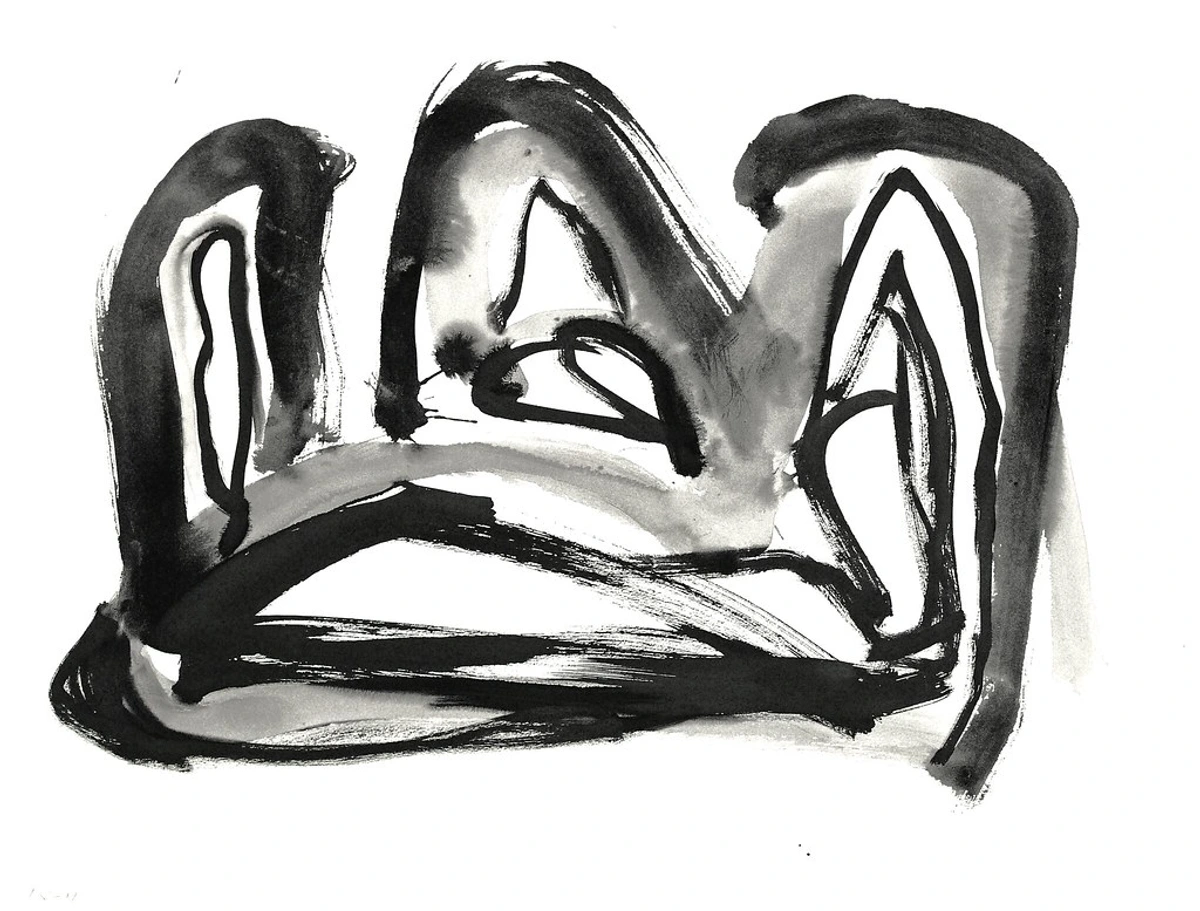
Emphasis on Objecthood
This is a crucial, brain-bending concept, most forcefully articulated by critic Michael Fried in his 1967 essay "Art and Objecthood." He saw this as a negative, calling it "theatrical," but the Minimalists embraced it. The Minimalists were making objects, not pictures. Traditionally, a painting was a window into another world. Minimalist art refuses to be a window. It aggressively declares its own physical reality. It shares the same space as you. The artwork's physical presence—its weight, its scale, its relationship to your own body in the room—is the entire point. This focus on the viewer's temporal experience, on walking around and through the work, heightened the importance of the gallery space—the "stage" on which the object performed.
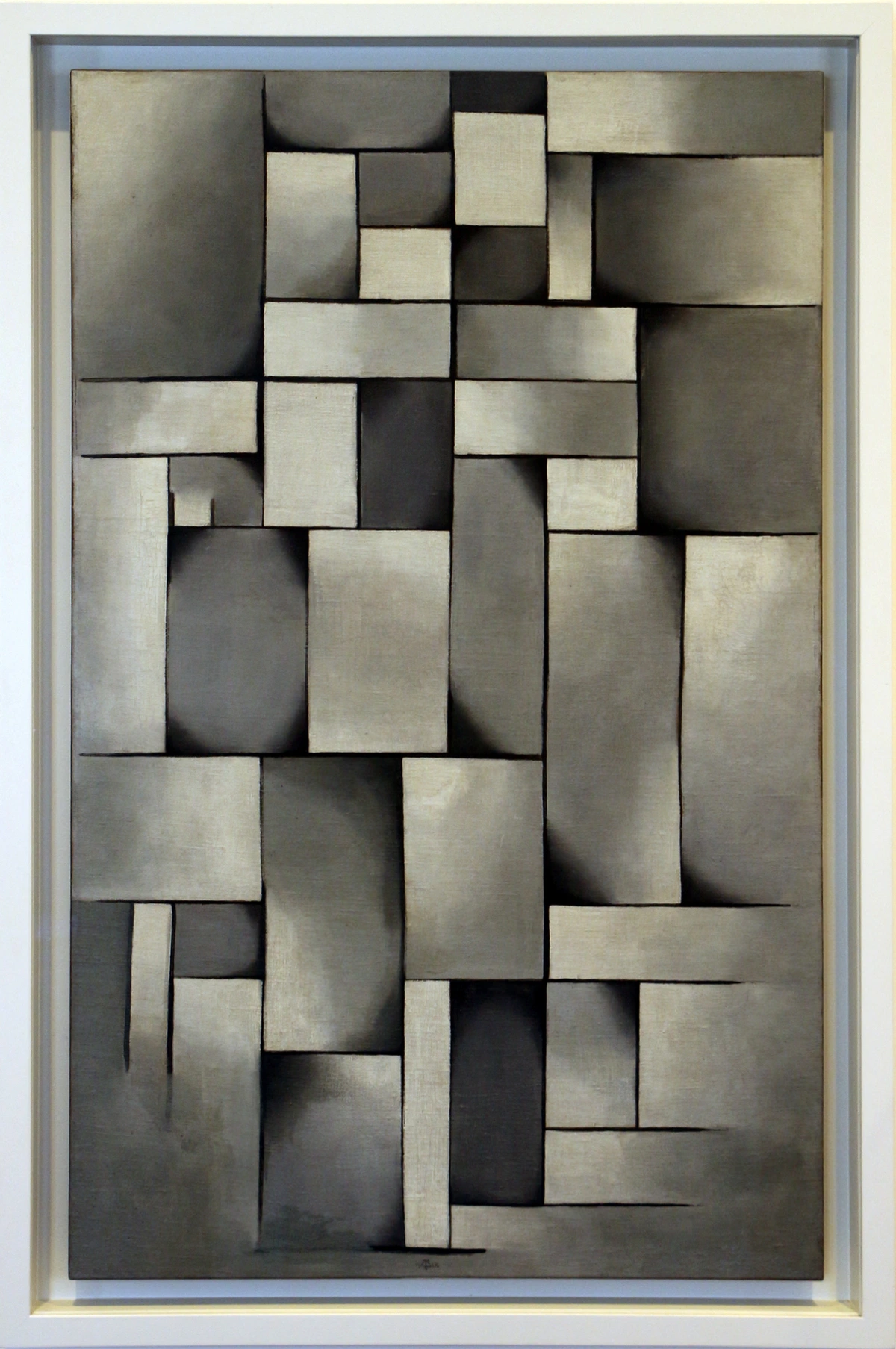
Industrial Materials
Out were the oil paints and bronze of tradition. In were the materials of the modern world: sleek Plexiglas, cold rolled steel, fluorescent light tubes, and simple plywood. These materials were chosen because they were common, un-precious, and unburdened by centuries of art history. They were neutral, possessing a kind of radical banality. They weren't hiding behind old-world prestige. The directness and accessibility of these materials were crucial for artists looking to democratize the art experience. This was a decisive break from the myth of the artist as a master craftsman toiling in a studio. By sending their designs to factories to be fabricated, they were aligning themselves with architecture and design, suggesting that a work of art could be the result of a clear plan executed with industrial precision.
Repetition and Geometry
Look at any piece of Minimalist art and you'll see geometry in its purest form: squares, cubes, rectangles. Artists often used repeated, modular units. Think of the grid. This repetition wasn't just a pattern; it was a way to emphasize the work's structure and avoid any single point of focus. The whole object was the subject. This approach was liberating, suggesting that a work of art could be endlessly extended or arranged in new ways, like the simple components in a child's building block set. The grid, a form explored by artists from Piet Mondrian to Agnes Martin, became a powerful device, not as a representation of anything, but as a declaration of flatness and non-hierarchy, where no single element holds more importance than another.
The Founding Voices: Who Were the Minimalists?
This wasn't a formal group with a manifesto, but a collection of brilliant, independent minds arriving at similar conclusions at the same time. The term "Minimalism" was actually coined by the philosopher and art critic Richard Wollheim in a 1965 essay, but many of the artists themselves, especially Donald Judd, actively disliked the label. They preferred terms like "Primary Structures." This semantic resistance highlights a key point: they weren't aiming for an aesthetic of 'less' but for a radical objectivity. While many contributed, a few figures stand as the pillars of the movement. Others, like Tony Smith, whose monumental steel sculptures predated the main wave, or Anne Truitt, whose painted wooden columns explored subtle color relationships, were also instrumental. It was a chorus of voices questioning the same fundamental assumptions from different angles.



- Donald Judd: Arguably the most iconic voice. He rejected the term "Minimalism," and honestly, I can see why. He's the one who gave us those impeccably crafted, hollow metal boxes—his "specific objects." For Judd, the simple, repeated form was the only honest way to create, allowing the work to exist without reference to anything beyond itself.
- Dan Flavin: He turned the humble fluorescent light tube into a medium for art, using its colored light to transform architectural space. He didn’t sculpt the light; he sculpted with light, demonstrating how an industrial material could be used to create profound, even spiritual, experiences.
- Agnes Martin: Her work is quieter, a bridge between the contemplative and the Minimalist. She meticulously painted delicate, large-scale grids on canvas, creating shimmering fields of almost-imperceptible lines. Her work wasn't about geometry, but about the pursuit of perfect, transcendent beauty.
- Frank Stella: A crucial early figure. His "Black Paintings" from the late 1950s—stripes of black paint separated by thin lines of bare canvas—were a slap in the face to the art world. When asked about the meaning, he famously said, "What you see is what you see." And that was the whole point. These paintings established the canvas not as a representation of something else, but as a literal, physical object in its own right. Stella wasn't painting black stripes; he was using black paint to expose the structure of the canvas itself, turning the painting inside out. He later moved into shaped canvases that further challenged the traditional rectilinear picture plane, making it clear that the painting was a physical object before it was an image.
- Carl Andre: He's the one who famously laid bricks on the floor in 1966, a piece called "Equivalent VIII". The media called it a scandal when the Tate Gallery acquired it years later. But he was making a radical statement: the arrangement of materials in a space, with no carving or modeling, could be a complete and valid sculpture. This approach emphasized the role of place and arrangement over traditional craftsmanship. His work wasn't on the floor; it was the floor, creating a new kind of horizontal plane for the viewer to consider.
- Robert Morris: A hugely influential artist and theorist. His gray, geometric plywood sculptures emphasized the viewer's perception and movement. He also wrote critical essays, such as "Notes on Sculpture," that helped define the movement's intellectual foundation. His work, like the plywood L-beams in his "Untitled" series, explored how a single form can appear radically different depending on your vantage point, forcing you to question what you're actually seeing versus what you know you're seeing.
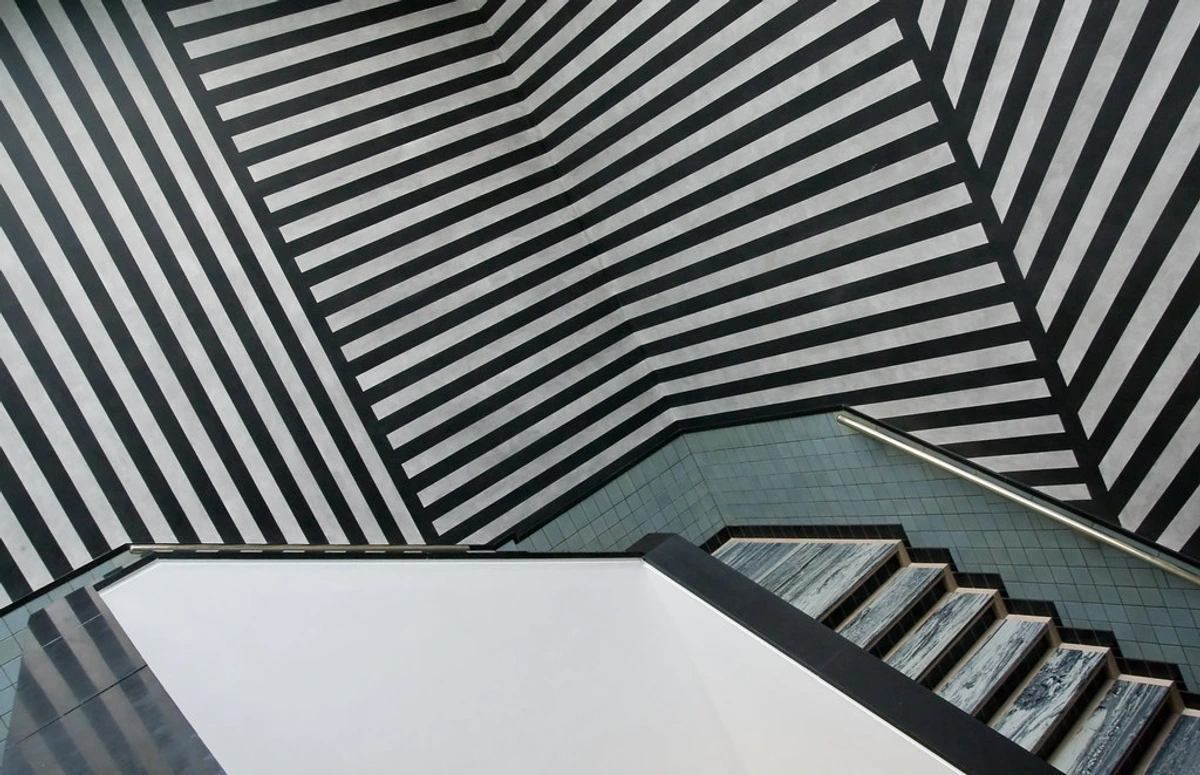
- Sol LeWitt: The master of the conceptual. For LeWitt, the idea was the machine that made the art. His wall drawings began with a simple set of instructions (e.g., "Lines from the midpoints of the four sides, to points on the four sides..."). The execution could be carried out by anyone, completely removing his own hand and emphasizing the supremacy of the concept. This separation of the idea from the execution was a radical democratic gesture, suggesting that the art could exist in multiple places at once, executed by different hands, as long as the core idea was faithfully followed.