The Artist's Dilemma: Knowing When to Put Down the Brush and Let the Art Breathe
Every artist faces it: When is a painting truly finished? Dive into the psychological battle against perfectionism, discover tangible signs your artwork is complete, and learn practical strategies to stop overworking your creations. Embrace the beauty of 'just shy of perfect' with this authoritative guide.

The Artist's Dilemma: Knowing When to Put Down the Brush and Let the Art Breathe
I have a graveyard of paintings in my studio. No, they're not necessarily bad paintings. They're ghosts, if I'm being honest with myself. They are the victims of the most dangerous phrase in an artist's vocabulary: "Just one more thing." Ever felt that pull?
I remember one piece, a chaotic swirl of blues and deep indigos. It felt electric. It was alive, vibrant, practically humming off the canvas. But that little voice, the one that whispers sweet nothings about perfection, insisted a single streak of yellow would make it perfect. An hour later, the electricity was gone. Replaced by a muddy, overworked mess. I’d killed it. Sound familiar?
This is, without a doubt, one of the hardest parts of being an artist. It's not about mastering a brushstroke or learning color theory. It's a psychological battle against your own ambition, perfectionism, and that nagging fear that it isn't quite good enough. When is it truly done?

The Siren's Call of 'More' (And the Psychology Behind It)
Why is it so incredibly hard to stop? For me, it boils down to a few things. Sometimes, I'm just so in love with the process itself that I don't want it to end. The act of creation is a beautiful escape, a flow state where time dissolves. Declaring a piece 'finished' feels like closing a door on that world, and who wants to do that?
Other times, it’s fear, pure and simple. Fear that it isn't good enough. This is where the Dunning-Kruger effect can subtly creep in – that cognitive bias where individuals with low ability at a task overestimate their own ability. Early in a painting, we might overestimate our ability to "fix" or "improve" it, leading to a relentless pursuit of 'more' that actually detracts. We think 'more' automatically equals 'better' – more detail, more layers, more complexity.
We chase an imaginary ideal instead of listening to what the painting actually needs. The truth is, often the most powerful statements are the simplest ones. A single, confident line can have more impact than a thousand fussy details. This relentless urge to tinker can also be linked to the Zeigarnik effect, where incomplete tasks linger in our minds more persistently than completed ones, driving that nagging feeling to "just add one more thing" and push it over the edge.
This is where experience helps, sure, but it never completely solves the problem. You can see the evolution of this struggle, these constant internal negotiations, throughout my own artistic /timeline.
credit, licence
Redefining 'Finished': The Power of Letting Go
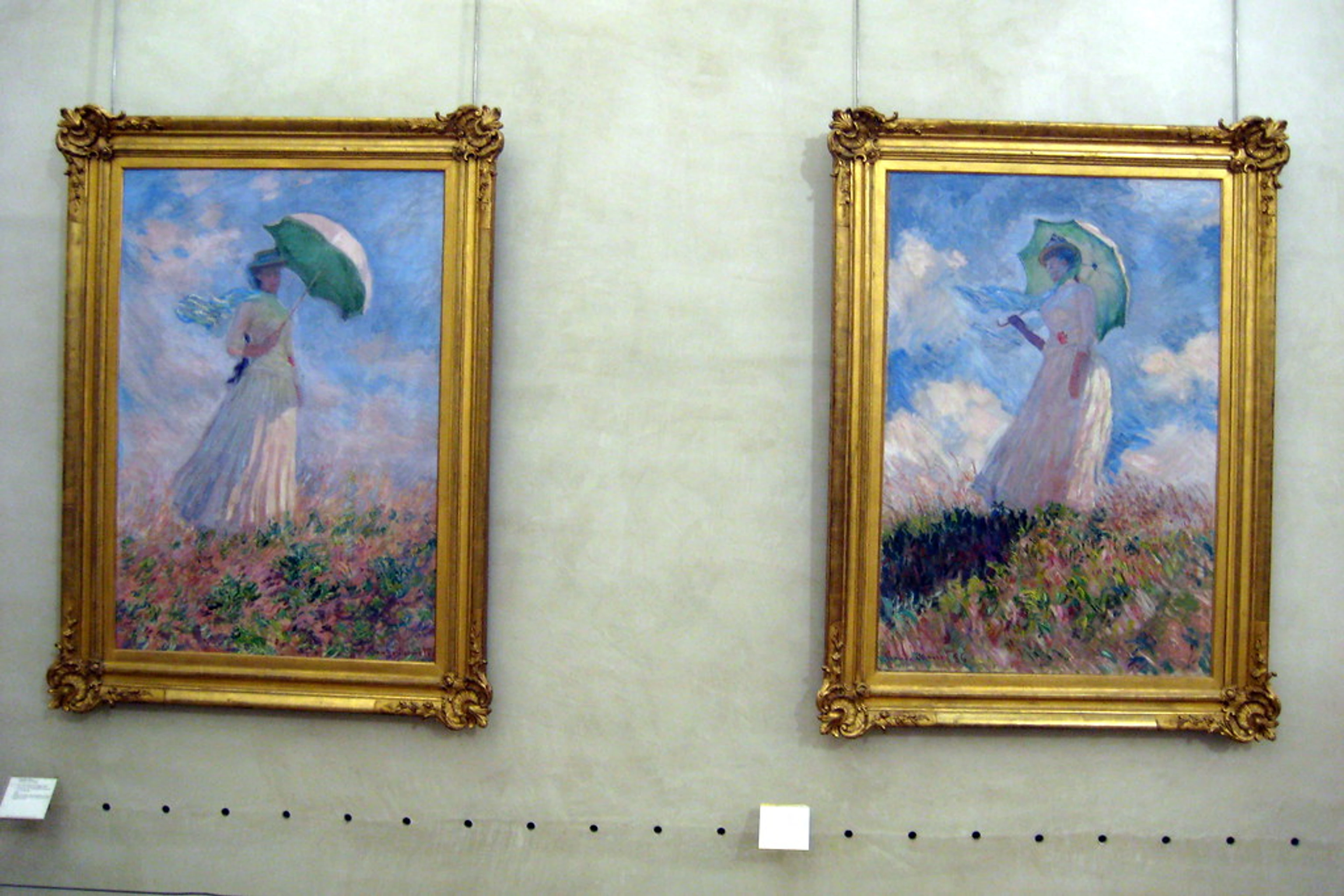
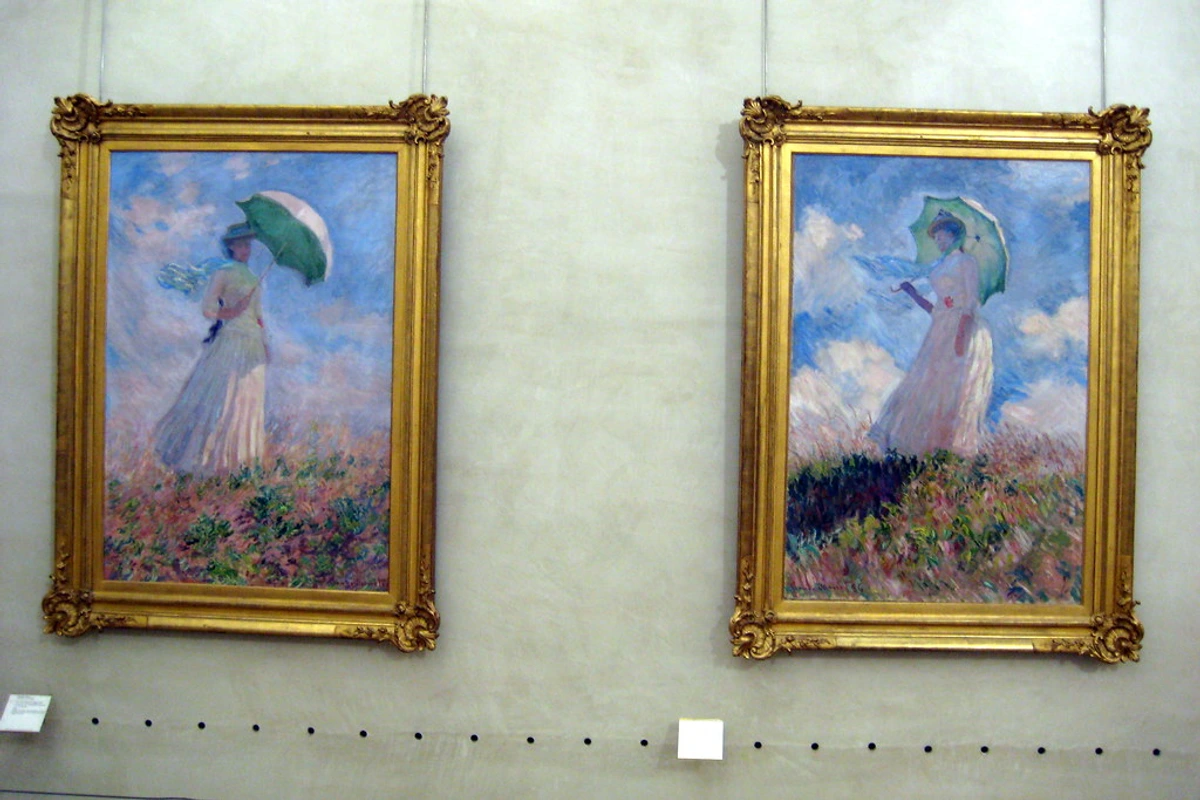
Perhaps the goal isn't a mythical state of 'perfection' at all. What if 'finished' simply means you've brought the painting as far as your current skills and vision will allow? It’s a snapshot of who you were as an artist in that very moment. Think of how artists throughout history have approached this. The meticulous detail of a Renaissance master like Leonardo da Vinci stands in stark contrast to the suggestive brushstrokes of an Impressionist like Claude Monet. Both are 'finished' in their own right, but the definition shifts with artistic intent.
Accepting this is incredibly freeing. It means you can let go and move on to the next piece, where you'll be a slightly different artist with a new set of problems to solve. The goal isn't to create one perfect painting, but to engage in a lifelong practice of creating. Each finished piece is just a stepping stone, a moment captured.
Some of my favorite pieces, the ones that now hang in places like the /den-bosch-museum or are available for others to own from my website, are the ones I stopped working on just before I thought they were perfect. They retain a spark of energy and spontaneity, that raw aliveness that would have been scrubbed away by one more "improvement." That's the power of the 'just shy of perfect' state – it leaves room for the viewer to participate, to complete the image in their own mind.
Listening to the Conversation (And Recognizing When It Ends)
I've come to think of painting as a conversation. In the beginning, I'm doing all the talking—laying down big ideas, bold colors, and initial shapes. The canvas is just listening, soaking it all in.
But as the painting develops, it starts to talk back. It tells you what it needs. A little more warmth here, a darker value there to create depth. The real magic happens when it becomes a balanced dialogue. Your hand, your eye, your intuition – they're all responding to what the painting is whispering.
So, how do you know when the conversation is over, when the canvas goes quiet? For me, it's when the painting stops asking for things. It feels settled, resolved. Adding anything more would feel like interrupting, like adding noise to a perfectly orchestrated silence. But how do you translate that intuitive dialogue into concrete observations? Here are some tangible clues:
Tangible Clues Your Artwork is Complete
Sign  | What to Look For (and what it means) |
|---|---|
| Unity & Harmony | Do all the elements feel like they belong together? Does your eye move around the piece smoothly, without getting stuck or distracted? This is all about good composition in abstract art. Nothing should feel jarring or out of place; the painting has solved its own internal issues. |
| Emotional Impact | Step back. Forget the technique, forget the struggle. How does it make you feel? Does it convey the emotion or idea you started with? If the feeling is there, powerful and resonant, you're probably done. This is the whole point of using the emotional language of color. |
| The 'Breathing Room' Test | Is there space for the viewer's eye to rest? Or is every single corner filled with frantic energy? Great art needs moments of quiet, areas of less visual information that allow the eye to wander and return. It's about achieving a sense of balance in the composition, a push and pull of energy and calm. |
| Problem Solving | Usually, every brushstroke is an answer to a question. "This corner feels empty," or "These colors are fighting." You know you're finished when there are no more problems to solve; the painting has achieved its intended expression. |
| Loss of Energy | Are your colors starting to get muddy? Have crisp edges become soft and indistinct? Does the initial spontaneity feel labored and contrived? These are signs you're overworking, scrubbing away the very lifeblood of the piece. |
Some of the most iconic works of art are often debated as to their 'finished' state. Take Jackson Pollock's drip paintings, for instance. To some, they might appear as raw, unfinished chaos. Yet, for many, their power lies precisely in that unbridled energy and intentional abstraction, a clear artistic choice to stop when the canvas achieved a dynamic balance of form and motion.
Practical Tricks to Force Yourself to Stop
Okay, intuition is great, but sometimes your brain is like a toddler demanding more candy, and you have to be the adult. We all get caught in the loop. These aren't just tricks; they're practical tools for building self-awareness around your creative process. Here are my go-to methods for stopping the madness:
- Turn it Around: Literally. Face the painting to the wall for a few days, or even a week. When you turn it back, you'll see it with fresh eyes, devoid of the immediate memory of every struggle. If nothing immediately screams "I'm broken!" or "I absolutely need this!", it's probably done.
- The Phone Test: Take a picture of it with your phone. Seeing it as a small thumbnail, or even in black and white, is brutally honest. It flattens the image and forces you to see the overall composition and value structure, not the tiny details you've been obsessing over.
- Work on Multiple Pieces: This is a big one for me. When I have 3-4 paintings going at once, I'm less likely to over-invest my nervous energy into one. I can move from one to another, which provides a natural cooling-off period for each piece. It's like having multiple conversations running simultaneously.
- Cover It Up: If turning it to the wall isn't an option, throw a sheet over it. Out of sight, out of mind. The physical barrier creates a psychological one, too.
- Sign It: This is a powerful psychological statement. The act of putting your signature on a piece says, "I declare this complete." Sometimes I even sign it provisionally in my head. If it still feels right the next day, if there are no lingering doubts, then that's the final signature. It's a way of asserting your authority over the creative beast.
These methods aren't about denying your creative impulses, but rather about creating a buffer, a moment of objective distance that allows true intuition to emerge. It's about letting those happy accidents, those spontaneous sparks of energy, remain intact rather than being scrubbed away in the pursuit of an elusive perfection.



FAQ: Knowing When a Painting is Finished
How do you know if you're overworking a painting?
Your colors start getting muddy or dull, the initial energy and vibrancy are gone, and you find yourself adding tiny, meaningless details out of habit or anxiety. The textures might become overworked, obscuring underlying forms. It feels labored instead of intuitive. You're no longer solving problems; you're just adding noise and taking away. Your approach to color mixing can quickly go south if you overwork a painting.
Is it okay to leave a painting 'unfinished' on purpose?
Absolutely. Sometimes a painting's power lies in its rawness, its suggestive quality, or its expressive strokes. It can be a conscious aesthetic choice, a statement of intent. The key is that you decided it was finished in that state, not that you abandoned it out of frustration. Many artists embrace the beauty of intentional looseness, as explored in the art of intuitive painting.
Can you ever go back to a 'finished' painting?
There are no hard and fast rules! Some artists do, often with great success. Personally, I try not to. I prefer to see each piece as a document of a specific time, a moment in my artistic journey. I'd rather take what I've learned and apply it to a new canvas. But if a painting has been bothering you for years and you see a clear, undeniable way to improve it, who's to stop you? It's your art, after all.
What's the difference between a minimalist painting and an unfinished one?
The difference lies entirely in intention and resolution. A minimalist painting achieves its goal with very few elements; every line, color, and negative space is deliberate and essential, creating a complete statement with economy. An unfinished painting, by contrast, hasn't yet reached its intended state or resolution. It's a goal not yet met, whereas minimalism is a goal achieved with precision and restraint, showcasing its own distinct abstract art style.
What role does external criticism or feedback play in knowing when a piece is finished?
External feedback can be a double-edged sword. While a fresh pair of eyes can sometimes spot an imbalance or suggest a subtle refinement you missed, it can also introduce new doubts or push you to 'fix' something that was already perfectly resolved. Ultimately, the decision of 'finished' must come from your own internal dialogue with the artwork. Trust your gut. Feedback is data; your intuition is the interpreter.
Are there unique challenges to knowing when digital art is finished?
Yes, absolutely. The ease of the "undo" button in digital art can make the temptation to endlessly tweak even stronger. There's less finality, less commitment with each 'brushstroke,' which can lead to endless revisions without ever reaching a definitive conclusion. It requires even more discipline and a clear vision to declare a digital piece truly done, as the physical constraints of traditional media aren't there to naturally limit the process. You can always go back and buy a print on my /buy page.
Ultimately, learning when a painting is finished is a skill you develop over time, just like mixing colors or preparing a canvas. It requires a bit of brutal honesty and a lot of self-trust. The painting will tell you when it's done. Your task is to quiet the internal critic, to create space for the painting's own voice to be heard. And when you do hear that quiet assurance, have the courage to put the brush down, step back, and let your art breathe. That, my friend, is where the true magic lies.