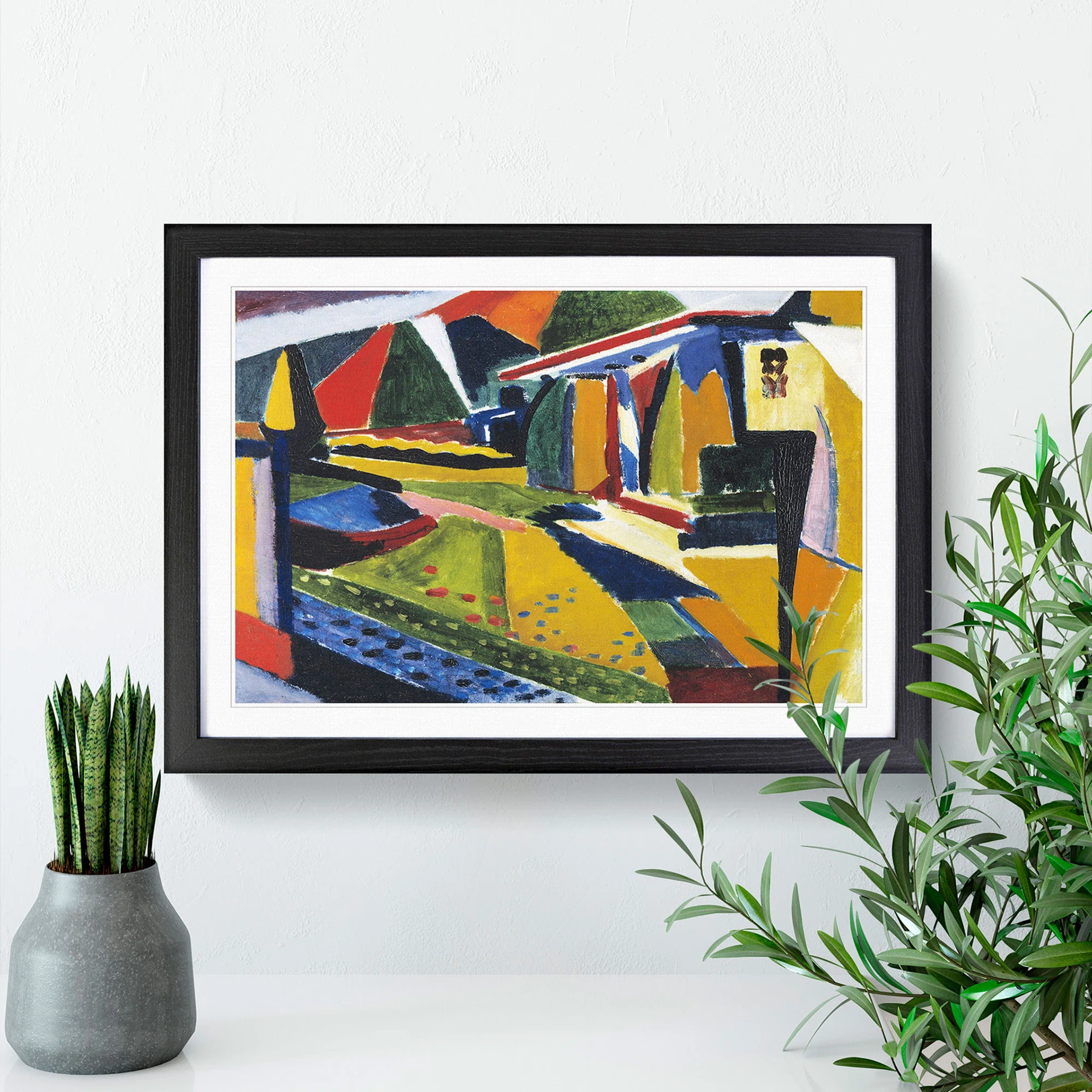
Decoding Sayen Modernist Vibrancy: Color, Form & The Energy of Early 20th Century
Uncover the explosive color, dynamic forms & revolutionary spirit of Henry Lyman Sayen's Modernist art. A deep dive into his vibrant legacy.

Decoding Sayen Modernist Vibrancy: Color, Form & The Energy of Early 20th Century
Have you ever stood in front of a painting and felt an almost physical jolt? Not because of the subject matter, necessarily, but because of pure, unadulterated energy radiating from the canvas? That’s the immediate, visceral impact of Henry Lyman Sayen’s work for me. It’s not subtle. It doesn’t whisper. It shouts with color and rhythm. And honestly? I was a bit intimidated by Modernism at first. All those ‘isms’ – Fauvism, Futurism, Cubism – it felt like art code I couldn't crack. Sayen, though? He feels like the doorkeeper who smiles, hands you a key, and says, “Don’t overthink it. Feel the pulse.”
So, let’s pull up a chair. Forget the textbooks for a moment (we’ll get there). Let’s talk about why Sayen’s brushstrokes feel like music, how his colors defy the quiet landscape tradition that came before him, and where the raw, electric power of his art fits into the grand story of 20th-century creativity. We’re dissecting the vibrant revolution that was Henry Lyman Sayen.
The Roots of a Revolutionary: Sayen’s Context is Everything
Understanding Sayen demands we understand his world – the artistic earthquake happening around him in the early 1900s. He wasn’t painting in a vacuum; he was diving headfirst into the chaos of modernity itself.
The European Crucible: Fauvism & Futurism Collide
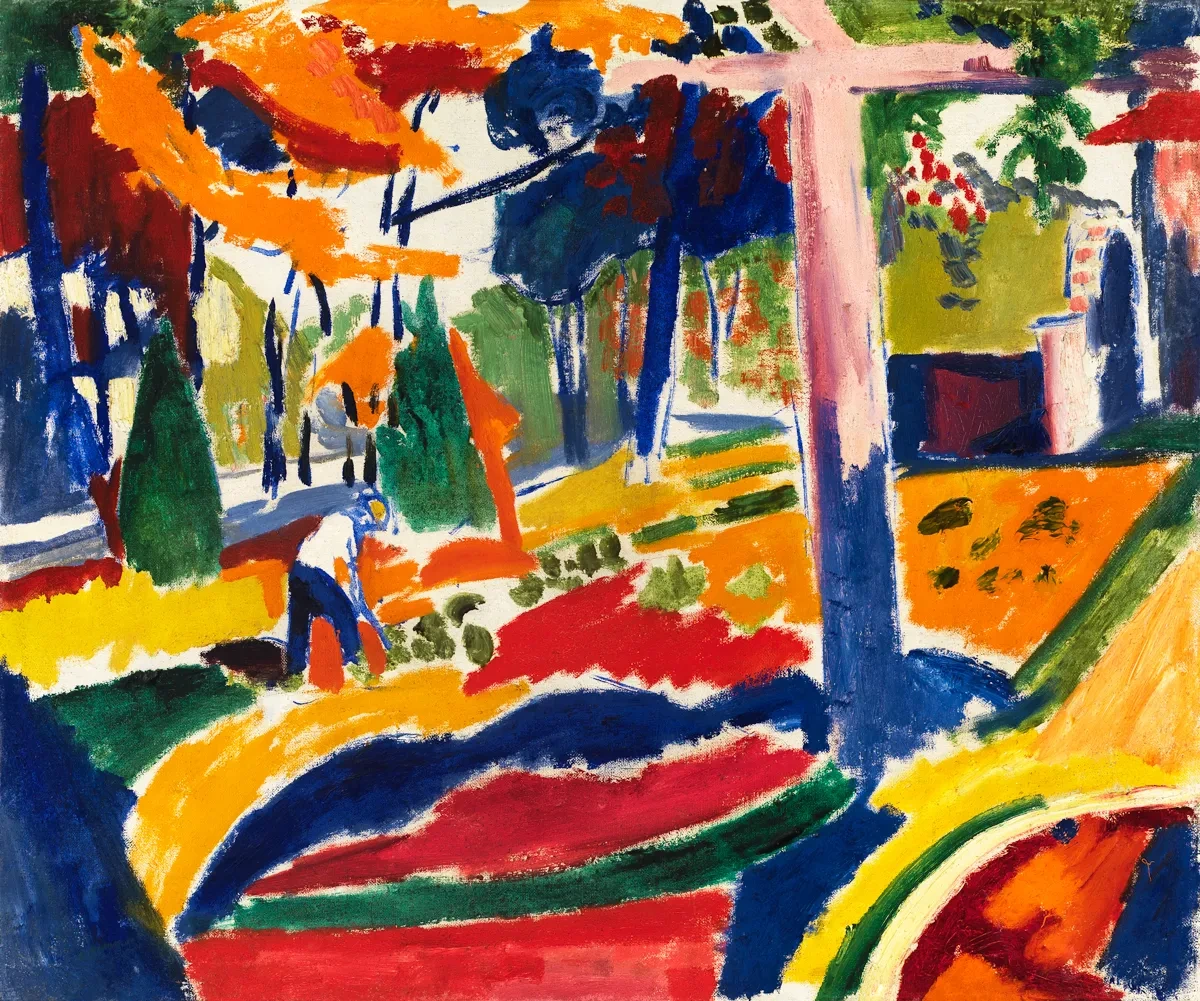
When Sayen traveled to Europe in those pre-WWI years, he didn’t just dip his toes in the art ocean; he dove off the high board into the deep end of Paris. This was the epicenter of everything new. He encountered the Fauves (“wild beasts”), artists like Matisse and Derain, who were famously, joyously reckless with color. Forget realistic skies, shadows, and flesh tones; these artists used color purely for emotional impact and expressive power. A tree wasn’t green; it was alive with cadmium yellow, cobalt blue, and intense red if it needed to be.
Simultaneously, he absorbed the Futurists. Led by figures like Boccioni and Severini, Futurism was obsessed with movement, speed, energy, and the dynamism of modern life – factories, trains, the buzz of the cityscape. They fragmented forms, used repeating angles, and created a sense of motion blur long before it was a photography trick. It was anti-traditional, celebrating the machine age.
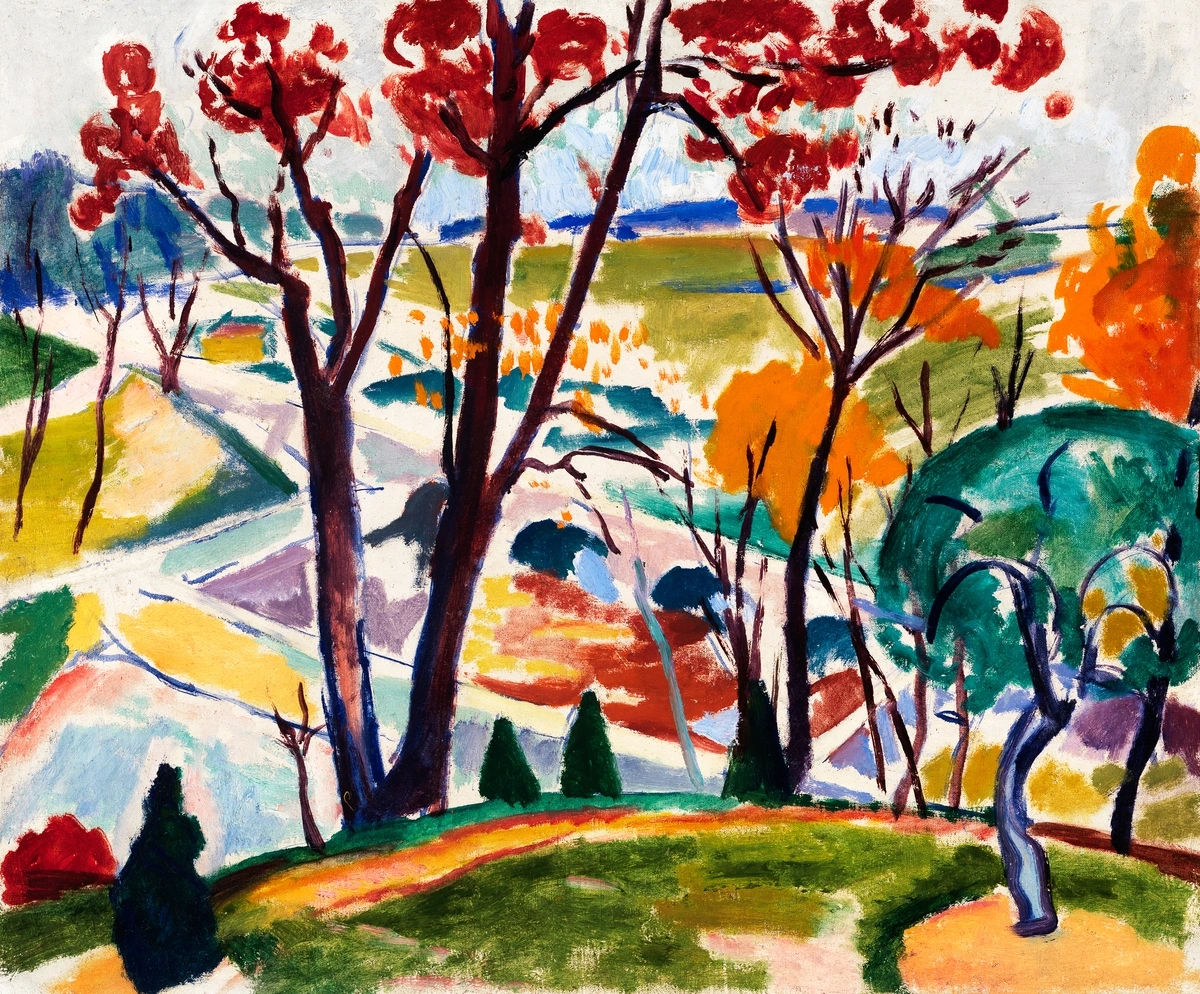
Sayen, bless him, grabbed the brightest paint pots from Fauvism and the frantic energy from Futurism and shook them together. He came home not just with souvenirs, but with a whole new visual language. He wasn’t copying; he was synthesizing. He saw how pure color (Fauvism) and dynamic form (Futurism) could work in tandem to create something fundamentally new and intensely American, even as it drew directly on European avant-garde roots.
The American Canvas: Modernity Takes Root
Why did this European infusion land so powerfully here? America itself was undergoing a seismic shift. Cities were growing taller, faster – think of Eadweard Muybridge’s motion studies of locomotives, the Chicago World’s Fair, the rise of industrial power. There was a palpable sense of breaking away from European conventions, not just politically, but culturally and artistically. Landscape painting that depicted serene, sublime nature felt… quaint. It didn’t capture the beat of the new.
Sayen’s art felt like the visual soundtrack to this new America. His landscapes weren’t always peaceful; they could feel dynamic, charged, even slightly unsettling in their vibrancy. His cityscapes, though less numerous, crackle with potential energy. He captured the feeling of modernity – the noise, the speed, the disorientation, and the sheer exhilarating possibility – in a way few others were doing at the time on American soil. He was translating the European revolution into an American idiom.
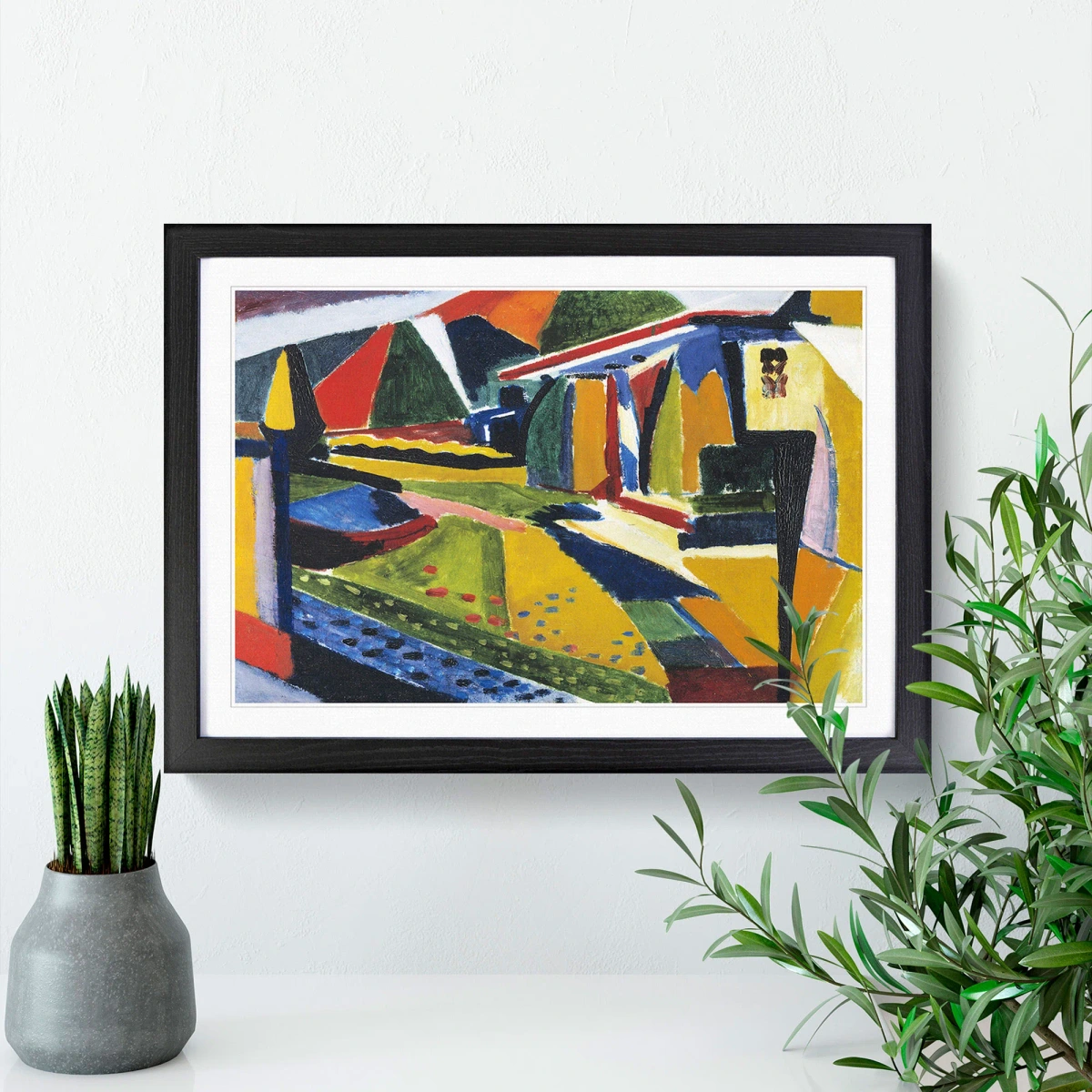
Sayen’s Own Unique Spectrum: More Than Just Imitation
Here’s the thing that truly fascinates me. While deeply influenced by both Fauvism and Futurism, Sayen wasn’t just a pastiche artist. He developed his own signature, something distinctly Henry Lyman Sayen. It’s in the way he handles the figure – often elongated, almost like stylized dancers or puppets, imbued with a certain graceful awkwardness. It’s in his sense of space, which can feel compressed and pushed forward, pulling you into the frame, or surprisingly open and airy. There’s a lightness, even in his boldest work, a lyrical quality that’s all his own. He took the revolutionary tactics and used them to explore his own unique corner of wonder and human experience.
Inside the Studio: Sayen's Toolkit – Exploding the Rules
Okay, enough context. Let’s get hands-on. What actually makes a Sayen painting say “Sayen”? It’s the deliberate shattering of traditional rules applied with incredible technical skill and a fearless eye. He didn’t just bend; he broke.
The Color Revolution: Beyond the Rain Wheel
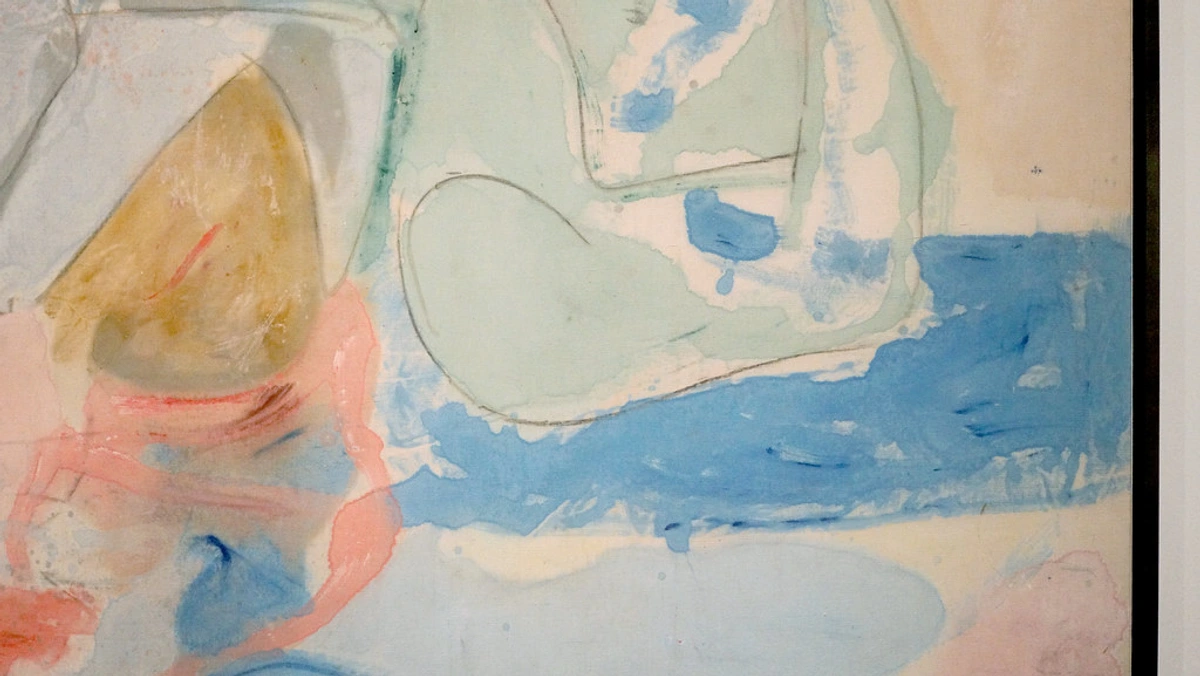
If there’s one word screamed at you from a Sayen canvas, it’s COLOR. And I don’t mean subtle, harmonious color palettes.
- Unapologetic Brightness: He deployed pure, undiluted pigments with gusto. Imagine a sunset that isn’t orange and pink, but electric cadmium red, cobalt blue, and viridian green all clashing and vibrating together. This wasn’t about accurate depiction; it was about creating visual vibration. He understood that complementary colors (red/green, blue/orange, yellow/purple) placed next to each other create maximum visual energy.
- Non-Literal Application: Oh, the sky wasn’t blue? Fine. The grass wasn’t green? Who cares? In Sayen’s hands, color became an independent language describing mood, rhythm, and form, not just reality. A face could be rendered in shades of purple and green, forcing you to see the structure of the features, not just your ingrained idea of flesh tones. It was liberating and, at the time, shocking.
- Creating Depth (or Not): Traditional painters used cool colors (blues) for distance and warm colors (yellows, reds) for foreground. Sayen loved to invert this! He’d push a warm yellow band of trees in front of a cool purple mountain range, shattering conventional perspective and creating an expressive, flat-yet-deep plane of pure sensation. He was the master of controlled chaos on the spectrum.
Form in Flux: Capturing the Unseen Motion
Color is the what; form is the how. Sayen, borrowing heavily from Futurism, made form dance.
The Physics of Motion: Capturing Time on Canvas
Sayen's approach to form was deeply influenced by the scientific understanding of motion that was emerging in his time. The work of photographers like Eadweard Muybridge, who captured motion through sequential photography, and the emerging science of physics all contributed to a new understanding of how movement works in the real world. Sayen translated these scientific concepts into visual art.
His fragmented forms and multiple perspectives aren't just stylistic choices – they represent an attempt to capture the essence of motion itself. When we see a moving object in real life, our eyes don't capture a single, static image; they take in multiple angles and positions in rapid succession. Sayen's paintings try to replicate this experience, giving us a sense of movement even in a static medium. This was a revolutionary idea that would influence generations of artists, from the Cubists to the Abstract Expressionists.
- Fragmentation & Multiplicity: He’d often depict a figure or object not as a single solid entity, but as a series of overlapping, slightly shifted views. Think of a moving dancer – your eye catches different angles in rapid succession. He tried to paint that simultaneity, breaking forms into facets and angles, suggesting motion even in a static image. A tree branch might be rendered as a cluster of energetic, angular strokes rather than a smooth line.
- Dynamic Lines & Brushwork: Forget the smooth, invisible brushstrokes of academic painting. Sayen’s stroke is present, bold, and directional. He used short, choppy strokes, long, sweeping curves, and thick impasto (paint applied heavily so it stands out from the canvas) to create texture and rhythm. His lines often swirl, converge, or explode outwards, guiding your eye across the canvas like a current in a stream. This isn’t calm water; it’s a rushing river.
- Compression & Pushing Forward: Frequently, Sayen would compress his space, pushing elements towards the viewer. This creates an immediate, almost confrontational presence. You’re not looking at the scene; you feel in the midst of it, caught in the energy vortex he’s conjured.
Subject Matter: The Familiar, Transfigured
Interestingly, despite the revolutionary style, Sayen’s subjects weren’t always exotic or avant-garde. He painted familiar things:
- Landscapes: Gardens, fields, trees – quintessential American subjects. But they’re vibrantly transformed. Trees become pulsating clusters of color and rhythm. Fields become tapestries of overlapping greens, blues, and yellows.
- Portraits & Figures: Often friends, family, dancers. But they’re not captured in photorealistic stillness. They feel alive, caught mid-movement, their forms elongated and stylized, their rendered features expressing more emotion than strict realism ever could.
- Interiors: Still lifes and domestic scenes, but infused with the same electric charge where a vase of flowers becomes a symphony of competing colors and light.
The revolutionary power wasn’t just in the what he painted, but in the how he painted it, the radically different lens he used to view the everyday.
Experiencing Sayen Today: A Guide to Looking & Feeling
So, how do we actually approach a Sayen painting, whether we’re in a museum or looking at high-quality reproductions? Since we can’t touch the raw paint or stand before the physical scale, we need to sharpen our virtual senses.
How to Look Beyond the “Pretty Colors”
- Let the First Hit Wash Over You: Don’t analyze immediately. Stand back and ask: What is the dominant feeling? Is it joyful chaos? Gentle rhythm? Electric tension? Let the color vibration hit your senses first. What colors are shouting the loudest?
- Find the Movement: Look for the flow. Do your eyes move easily across the canvas, or is your path blocked? Do the brushstrokes swirl like a whirlpool or stab forward like an exclamation mark? Trace the dominant lines – are they calm curves or aggressive angles? Try to see the motion the artist is depicting, even if the subject is stationary.
The Rhythm of Composition: Reading Like Music
Sayen's paintings have a musical quality – they have rhythm, tempo, and dynamics. Here's how to "read" a Sayen painting like a musical score:
- Tempo: Is the painting fast and energetic (allegro) or slow and contemplative (adagio)? The speed and direction of the brushstrokes will tell you.
- Rhythm: Are there repeating patterns or motifs that create a sense of beat? Look for repeated shapes, colors, or directional movements.
- Dynamics: Are there moments of intensity (forte) and moments of calm (piano)? Notice how areas of high contrast and intense color contrast with areas of softer, more subtle treatment.
- Phrase Structure: Just like music has phrases (groups of notes that go together), paintings have compositional units. Look for how Sayen groups elements together and creates transitions between these groups.
- Spot the Color Battles: Identify the complementary colors (red/green, blue/orange, yellow/purple). Where are they clashing? Where are they harmonizing? Notice how these areas pop or vibrate. Does a blue next to an orange make that area feel hotter or closer than the surroundings? How does he use color to push or pull?
- Deconstruct the Form: Look at the figures or objects. Are they fragmented? Seen from multiple angles at once? Exaggerated in length or width? How does the stylization (the departure from strict realism) change how you feel about the subject? Does it make the dancer feel more ethereal? Does it make the tree feel more alive or more imposing?
- Consider the Silence: What feels missing? There’s often a lack of deep, realistic shadows (chiaroscuro), fine photographic detail, or atmospheric perspective. How does the absence of这些 traditional elements contribute to the overall flatness, vibrancy, or modern feel?
Why Does Sayen Still Matter? The Enduring Buzz
In an age of digital art and infinite filters, why does Sayen’s early 20th-century explosion of color and form feel so relevant?
- The Pure Power of Color: He reminds us that color isn’t just decoration; it’s fundamental emotion, rhythm, and structure. In a world saturated with muted palettes and subtle design, his unapologetic vibrancy is a jolt of pure artistic voltage.
- Finding Energy in the Everyday: His ability to transform the mundane into the magical through his lens is a powerful lesson in perception. He didn’t need grand, epic subjects; he made the familiar feel profound and dynamic. We can apply that same energy to our own surroundings.
- The Freedom of Form: He proved that art doesn’t have to be a perfect replica of reality to be deeply expressive. By breaking rules and playing with form, he created new ways to see and feel. That spirit of experimentation and innovation is timeless.
- A Bridge Between Eras: He’s a crucial figure understanding the progression from European Impressionism/Fauvism/Futurism to the development of distinctively Modernist, and later Abstract Expressionist, tendencies in America. He’s a key piece in the puzzle of how art became what it is today.
Sayen’s work isn’t a relic; it’s a living, buzzing conduit of creative energy. It’s a reminder that sometimes, to see the future, we have to look back at those who fearlessly painted forward.
Where the Legacy Leads: Connecting to the Contemporary Pulse
Looking at Sayen’s fearless use of vibrant non-representational color and dynamic compositional energy, it’s impossible not to feel a resonance with currents running through contemporary art movements. His spirit lives on, albeit transformed.
While we maintain a degree of healthy skepticism about certain newer technologies – the volatility and speculative nature of something like the NFT market, for instance – the underlying impulse of Sayen feels vital. The pursuit of expressive authenticity through bold color, energetic form, and breaking established conventions continues to drive contemporary artists. It’s less about a specific medium or technology (be it oil paint on canvas or pixels on a screen, or even a blockchain token) and more about the audacity to see and express the world differently. His work reminds us that the core of impactful art often lies in that very audacity, transcending the tools of the time. Seeing a piece by a contemporary artist who, like Sayen, isn't afraid to let color sing and crackle with raw feeling? That’s a direct line back to the revolutionary spirit that fueled Sayen’s own brush. The desire to capture and convey a sense of life, movement, and emotion – authentically, powerfully, without apology – that timeless impulse is Sayen's true inheritance. It’s a legacy not tied to a specific technology, but to the enduring human need for vibrant expression.
Frequently Asked Questions (FAQ) About Henry Lyman Sayen
Question  | Answer Summary |
|---|---|
| Who was Henry Lyman Sayen? | An American artist (1875-1918) key in introducing early European Modernist styles (especially Fauvist color & Futurist dynamism) to America. Known for vibrant, energetic landscapes and figures. |
| What artistic movements influenced Sayen? | Primarily Fauvism (bold, non-naturalistic color) and Futurism (depicting speed, energy, modernity, fragmented forms). |
| What is Sayen's most famous painting? | While he wasn't a one-hit wonder, “The Brook” (1911) and “Dancers” (c. 1912-1914) are frequently cited as iconic examples of his style – vibrant, rhythmic figures and landscapes. |
| How does Sayen differ from other American Modernists of his time? | He arrived earlier with European avant-garde influences than later giants like Stella or O'Keeffe. His style is a unique blend of Fauvist color explosion and Futurist dynamism, distinct from pure Cubism or Precisionism. |
| Where can I see Henry Lyman Sayen's artwork? | His works are held in major museums including the Smithsonian American Art Museum (Washington D.C.), the Philadelphia Museum of Art, the Denver Art Museum, and the Worcester Art Museum (Massachusetts). Check their online collections for current exhibitions. |
| Was Sayen successful during his lifetime? | Yes, he exhibited widely (including the Armory Show in 1913!) and gained recognition, though his career was tragically cut short by his death at 42 during the influenza pandemic. His legacy grew significantly after his death. |
| What are the key characteristics of a Sayen painting? | 1. Unapologetically Bright, Complementary Colors. 2. Dynamic, Fragmented Forms suggesting Motion. 3. Bold, Visible Brushwork & Textural Impasto. 4. Stylized Figures/Landscapes. 5. Compressed Depth & Rhythmic Composition. |
| How did Sayen's personal life influence his art? | His relationships, travels (especially to Europe), and experiences during the early 20th century's rapid changes all influenced his subjects and the energetic quality of his work. |
| What was the typical size of a Sayen painting? | Varies widely, from small intimate works to larger canvases, though many are medium-sized (around 24x36 inches or similar). |
| How many paintings did Sayen create in his lifetime? | It's difficult to determine an exact number, but he was quite prolific during his active years (roughly 1905-1918), creating hundreds of works. |
| What mediums did Sayen primarily work in? | Primarily oil on canvas, though he also experimented with other mediums and techniques during his brief but prolific career. |
| Did Sayen have any notable students or apprentices? | While not known for having formal students, Sayen's work influenced many younger American modernists through exhibitions and his presence in art circles. |
| What themes are most common in Sayen's work? | Landscapes (especially gardens and natural scenes), figures and dancers, and occasional cityscapes and still lifes. |
| How did Sayen's style evolve over time? | His work became increasingly bold and experimental over time, moving from more representational beginnings to fully modernist expression. |
| Are there any controversies surrounding Sayen's work? | Generally no major controversies, though his radical departure from traditional style was controversial when first exhibited. |
| What makes Sayen's work distinctive from European Fauves/Futurists? | His uniquely American perspective, lyrical quality, and balance between European influence and personal vision. |
| What conservation challenges do Sayen's paintings present? | His heavy impasto and use of early 20th-century pigments present specific challenges for conservators, requiring specialized techniques for cleaning and preservation. |
| How was Sayen affected by World War I? | He served as a camouflage artist in the US Army during WWI (using his skills to break up ship outlines!). Tragically, he died in 1918 at only 42, a victim of the global influenza pandemic shortly after the war ended. His full potential was unrealized. |
| What was Sayen's role in the development of American modernism? | He was a crucial bridge figure who brought European avant-garde techniques to America and helped lay the groundwork for the distinctly American modernist movement that would follow. |
| How do Sayen's landscapes compare to traditional American landscape painting? | Unlike the serene, sublime landscapes of the Hudson River School, Sayen's landscapes are dynamic, energetic, and emotionally charged, reflecting the modern world rather than idealized nature. |
The Final Brushstroke
Looking at Henry Lyman Sayen feels a bit like discovering a hidden frequency – a channel where the static of convention fades and pure, vibrant energy comes through. He reminds us that art isn't always about mastering the rules, but sometimes about having the courage to shatter them spectacularly with color and rhythm.
His work is a testament to the fact that revolution comes in many forms. For Sayen, it was a revolution of the eye, translating the jarring excitement of a new century onto canvas with unbridled joy and fearless experimentation. He didn’t just paint scenes; he painted sensations. He painted the thrum of the city, the dance of light in a garden, the very pulse of modernity itself.


So next time you encounter a Sayen painting, or any work that grabs you by the lapels and shakes your senses, don't just look. Feel it. Trace the vibrant colors. Follow the dynamic lines. Let the energy wash over you. And maybe, just maybe, you’ll see the world a little differently afterwards. Now, that’s art leaving a mark. And honestly? There’s nothing more powerful than that.