
A Sunday on La Grande Jatte: Seurat's Dotted Revolution, Modernity's Paradox, and Your Ultimate Guide
Unlock Georges Seurat's 'La Grande Jatte.' Explore its revolutionary Divisionist technique, profound social commentary on modern Parisian life, and the enduring paradoxes woven into every meticulously placed dot. Your definitive resource.

A Sunday with Seurat: Unpacking the Dots of La Grande Jatte, a Masterpiece of Observation and Science, and Your Ultimate Guide to Modernity's Paradox
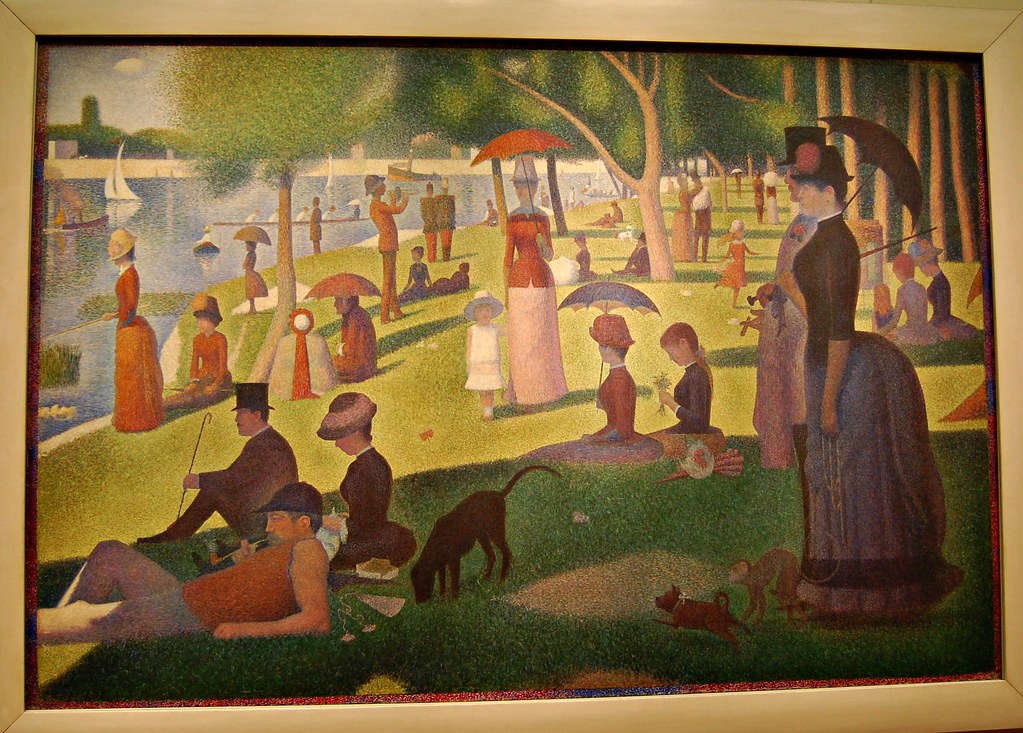
Imagine standing before a canvas so vast it feels like a portal, yet upon closer inspection, it dissolves into a universe of tiny worlds—dots. This is the captivating paradox of Georges Seurat's A Sunday on La Grande Jatte, a masterpiece that is as much a scientific experiment as it is a serene, yet subtly unsettling, vision of modern life. I’ve been lucky enough to stand in front of this painting a few times at the Art Institute of Chicago, and let me tell you, the first thing that hits you is the sheer scale. It’s enormous, over ten feet wide. You feel like you could just step into it, feel the gentle breeze, hear the distant chatter. But then you get closer, and the second thing hits you: it’s all just dots. Thousands upon thousands of them, shimmering like a carefully crafted mosaic. It’s like a visual puzzle, a meticulous construction that challenges how we see and understand art itself. What is it about these tiny dots that still captivates us over a century later, and what hidden stories do they tell about a seemingly tranquil Sunday afternoon? It's a profound commentary on modern urban life, social isolation, the burgeoning leisure class, and a scientific exploration of color and light, making it a study of society's façade and its underlying tensions. In this article, we will pull back the curtain on this revolutionary masterpiece, offering the most comprehensive exploration of its technique, social commentary, and the meticulous vision behind every single dot, making it your definitive guide to this iconic work.
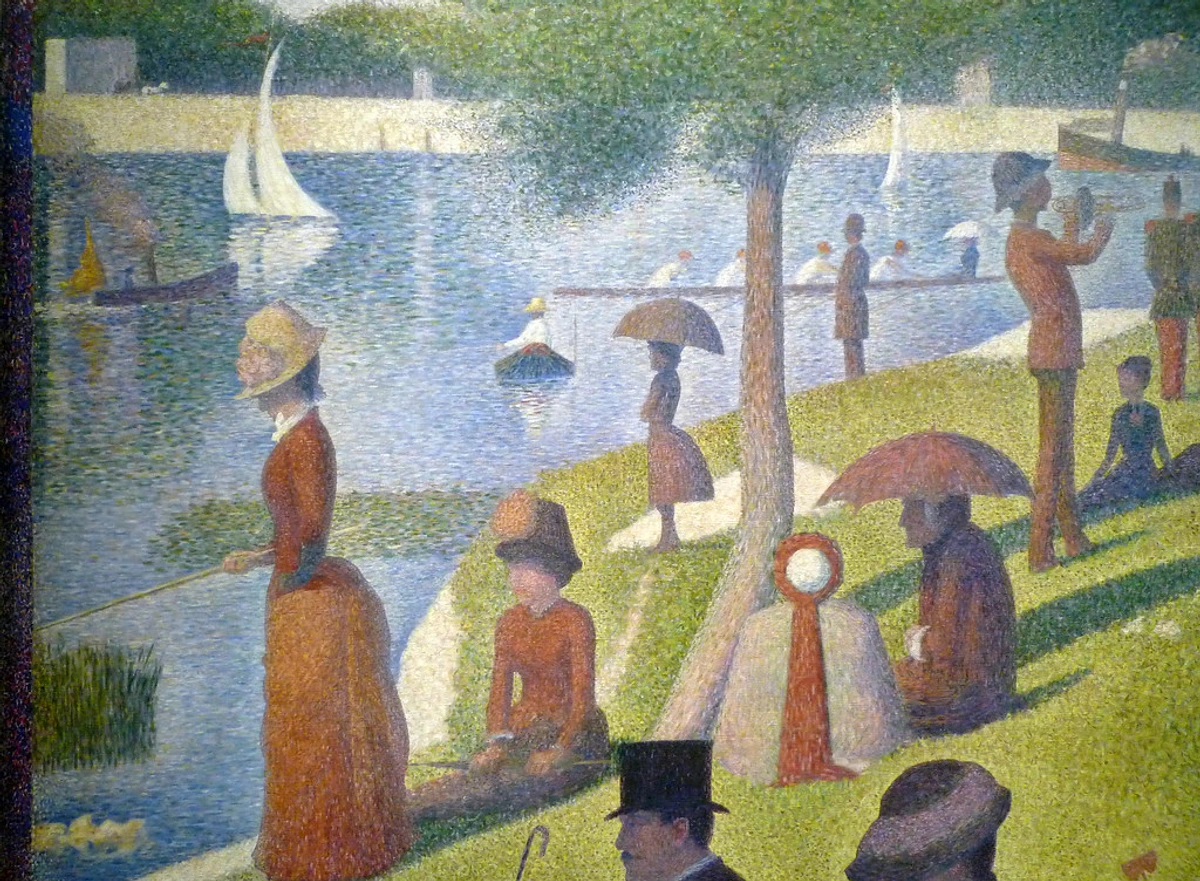
A Sunday on La Grande Jatte — 1884 by Georges Seurat is one of those cornerstone pieces of art history. It's more than just a pleasant park scene; it’s a quiet revolution captured on canvas, a scientific manifesto disguised as a lazy Sunday afternoon. It’s a painting that feels both perfectly calm and strangely tense at the same time, and I want to explore why. So, let's grab a metaphorical parasol, find a spot on the grass, and try to figure out what’s really going on here.
Stepping Back to 1884 Paris: Where Science, Society, and Industry Met the Canvas
To really get this painting, you have to picture Paris in the 1880s. The Eiffel Tower wasn't even built yet, but the city was buzzing with modernity. This was the Belle Époque, a time of relative peace and booming industry under the newly established Third Republic. It was an era of progress and optimism, fueled by new technologies like photography, which was profoundly changing how people viewed and captured reality. Beyond photographs, the city saw the rise of department stores, grand boulevards, and expanding public transport, making leisure spots like the island of La Grande Jatte in the Seine more accessible to a wider populace. Steel production was transforming infrastructure, electricity was beginning to illuminate the streets, and early experiments in cinema were hinting at new ways of seeing. It was a time of spectacle and observation, ripe for an artist with a keen, almost scientific eye.
It was also a time of rigid social structures, even amidst this progress. A new social class, the bourgeoisie, had emerged with something previous generations didn't have much of: widespread leisure time. And what did they do with it? They promenaded. They flocked to public spaces, not just for relaxation, but also to solidify their newfound status—to see and be seen. These public displays of leisure were a stage for modern life, and Seurat was there to document it, albeit with a detached, almost anthropological eye, keenly observing the subtle class tensions and evolving social dynamics of this new urban anonymity. His detachment wasn't indifference; it was a deliberate artistic stance, allowing him to analyze rather than emote, to dissect the fabric of society with the precision of a scientist. In La Grande Jatte, Seurat observes without judgment, but also without overt warmth, allowing us, the viewers, to ponder the implications of such organized leisure and the pervasive sense of individual isolation within the crowd. This sense of urban alienation, where individuals are physically close but socially distant, was a growing concern of the era and feels remarkably prescient today – a key paradox of modernity.
Artistically, the Impressionists had already blown the doors off the traditional art world with their blurry, light-filled canvases. They were all about capturing a fleeting moment, a feeling. Seurat saw what they were doing, respected it, but thought, "I can make this more permanent, more structured. I can use science." He wasn't just reacting to a style; he was immersing himself in contemporary scientific research on color theory, particularly the works of chemists like Michel Eugène Chevreul and physicists like Ogden Rood and Hermann von Helmholtz. Chevreul's principle of "simultaneous contrast"—how adjacent colors mutually influence our perception of them, often making complements appear more vibrant—was particularly revolutionary. Seurat was determined to apply their findings to the canvas, also taking advantage of new, more stable chemical paints and pigments that offered previously unseen vibrancy, such as cadmium yellows and cobalt blues. He was part of the next wave, the Post-Impressionists, who took the ideas of Impressionism and pushed them in new, more personal and structured directions, seeking a greater sense of permanence and intellectual rigor.
Seurat's artistic journey towards La Grande Jatte wasn't a sudden leap. He meticulously prepared, having trained rigorously at the prestigious École des Beaux-Arts, where he studied classical art, geometry, and the works of Old Masters. This formal academic background is crucial to understanding the underlying structure and order in his seemingly revolutionary compositions. His early masterpiece, Bathers at Asnières (1884), completed just before La Grande Jatte, already showcased his intellectual curiosity. Bathers portrays working-class men enjoying leisure on the opposite bank of the Seine, creating a powerful social and aesthetic juxtaposition with the bourgeois scene of La Grande Jatte. While Bathers still exhibits visible brushstrokes and a certain Impressionistic spontaneity, its figures possess a classical monumentality and a more ordered composition, hinting at the systematic approach Seurat would fully realize in La Grande Jatte. He saw art and science not as separate disciplines, but as integral tools for exploring and expressing modern reality.
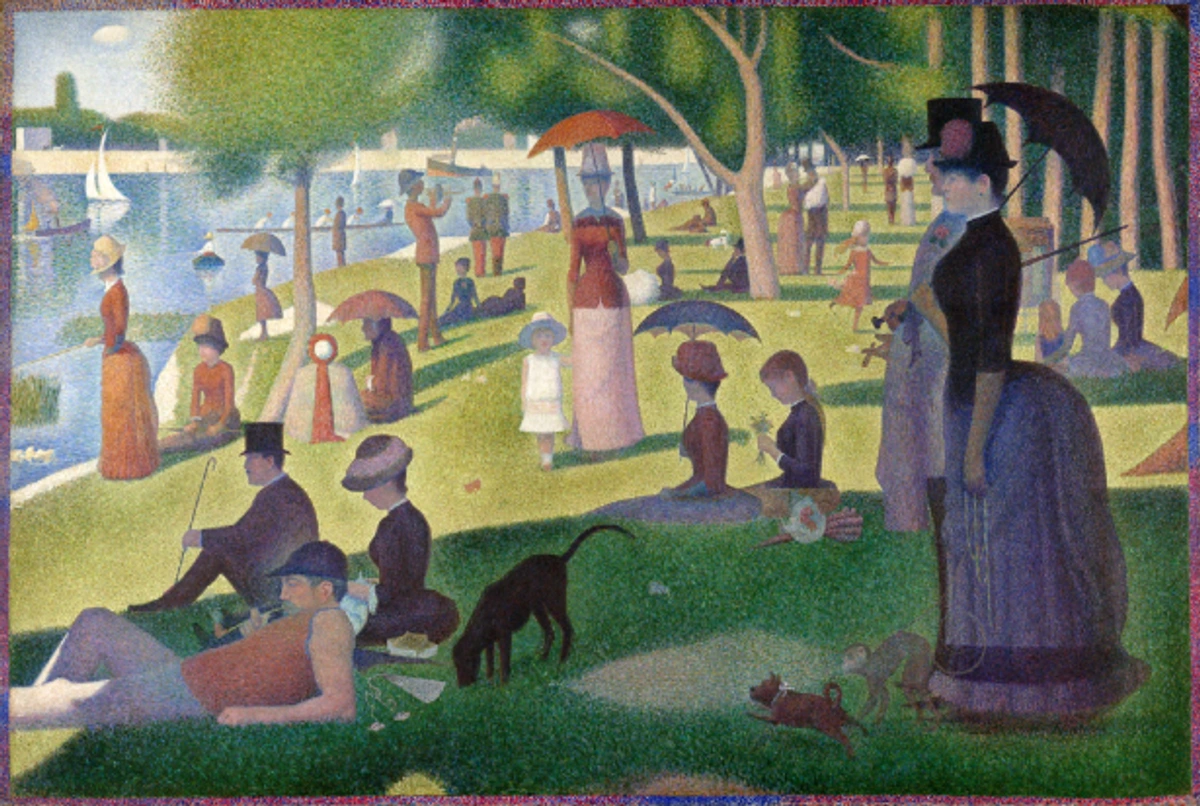
The Dot Revolution: Divisionism, Pointillism, and Seurat's Scientific Canvas
This vibrant Parisian backdrop provided the perfect canvas for Seurat to explore a radical new artistic language, one rooted in both observation and scientific principle. He developed a technique he called Divisionism or Chromo-luminarism, terms he preferred because they highlighted the systematic, scientific division of color and the emphasis on light. Divisionism, in essence, is the underlying scientific principle: the systematic separation of color into individual pigment components, applied in distinct strokes or points, with the aim of optical mixing in the viewer's eye. We all know its more catchy, albeit less precise name: Pointillism, which refers specifically to the application of these small, distinct dots. You can read a full breakdown of the Georges Seurat Pointillism technique if you want the nitty-gritty details, but for now, let's just say it was revolutionary.
Understanding Optical Mixing and Seurat's Palette
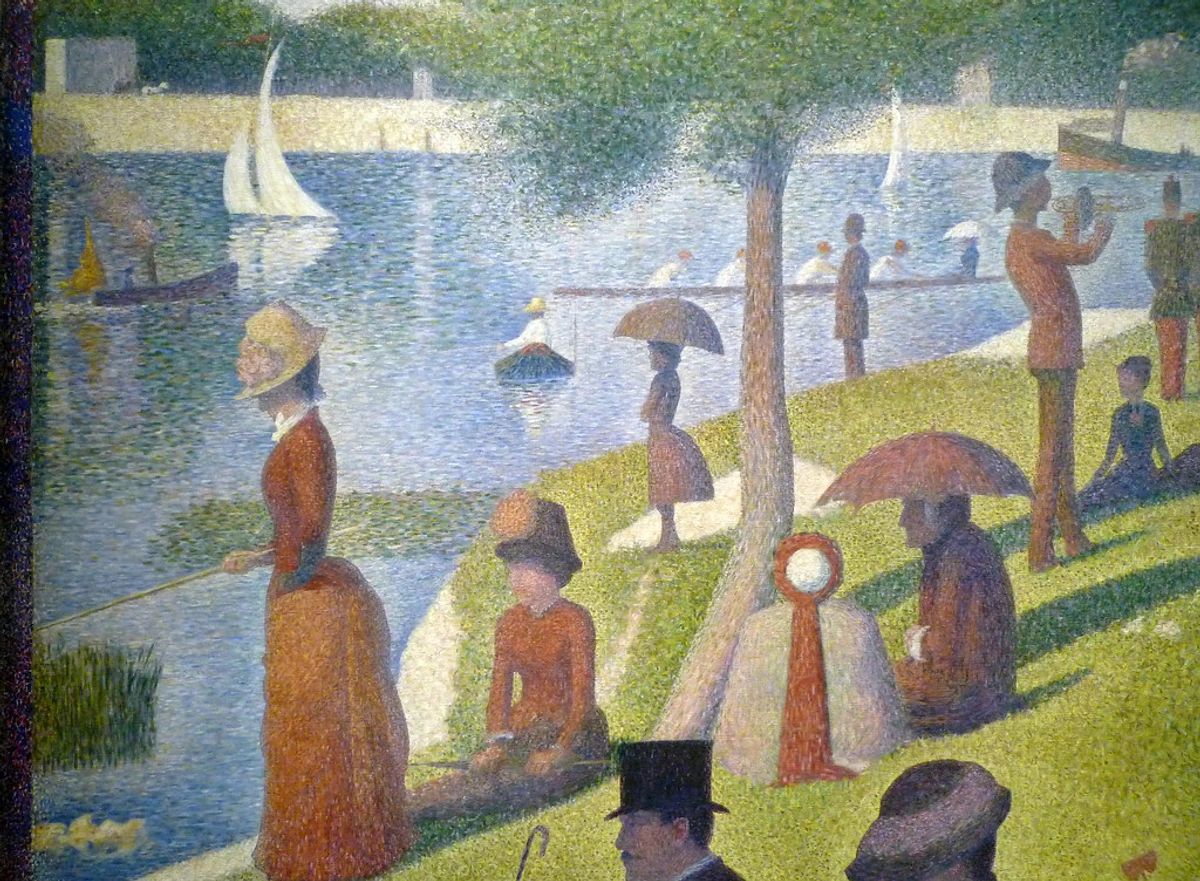
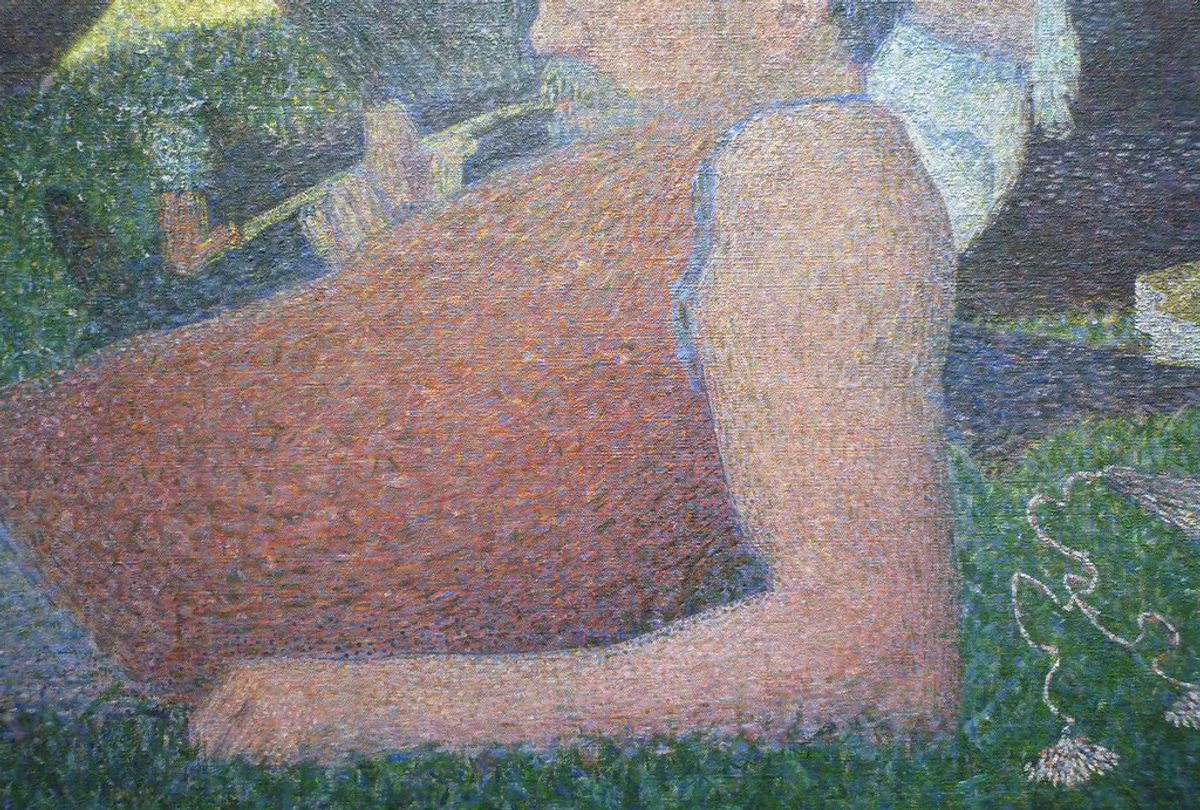
The core idea is fascinating, and honestly, a little mind-bending. Instead of mixing, say, blue and yellow on a palette to make green, Seurat would place tiny, distinct points of pure blue and pure yellow right next to each other on the canvas. From a distance, your eye—or more accurately, your brain—does the mixing for you. This is called optical mixing, and it's a cornerstone of the Pointillism art technique. Think about the screen you're looking at right now: individual pixels of red, green, and blue light blend in your eye to form a full-color image. Seurat's theory was that this method would produce more vibrant, luminous colors than mixed pigments ever could, shimmering with an almost internal light due to the unadulterated purity of each dot interacting with its neighbor in the viewer's retina. The availability of new, chemically stable synthetic pigments during the late 19th century also played a crucial role, providing Seurat with a palette of intensely pure and consistent colors previously unavailable to artists. This allowed him to achieve the unparalleled vibrancy he sought. While it promised unparalleled vibrancy, it also introduced challenges; critics sometimes found the dots too distracting up close, and the process itself was incredibly time-consuming, limiting the number of major works Seurat could produce in his short life. For Seurat, the scientific rigor and the luminous results justified the immense effort, even if it meant two painstaking years of dot-by-dot application for La Grande Jatte alone. It's estimated that the canvas contains millions of these tiny, deliberate applications of pigment.
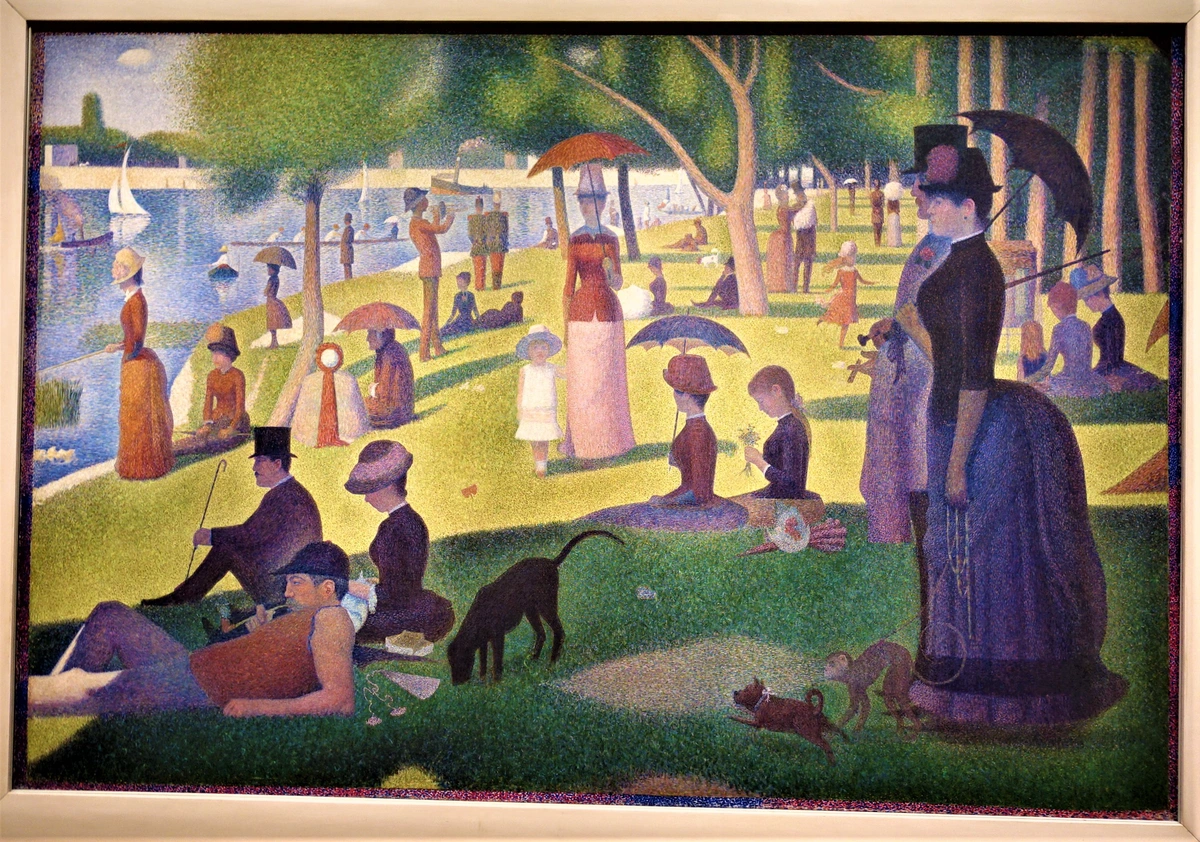
credit, licence
It was a radical departure from the spontaneous brushwork of the Impressionists. I mean, can you imagine the patience required? My own artistic timeline shows a lot of experimentation, often a chaotic explosion of ideas, but this level of systematic application, dot by dot, for two years straight, and with so many preliminary studies... Look, my discipline is a mess on most days, but the one thing that works is when I truly believe in the concept. Seurat clearly did. He resisted the urge to just smudge it all together, and the result is nothing short of breathtaking. This wasn't just about painting dots; it was a conceptual re-imagining of how color and light could be rendered, a commitment to a scientific ideal that still resonates with me when I approach my own complex, intricate pieces. The sheer physical labor of painting such a monumental canvas, applying millions of individual marks, speaks volumes about his dedication and almost obsessive precision—a true testament to the artist as scientist.
Pointillism vs. Impressionism: A Tale of Two Visions
Here’s a quick table to break down the key differences, helping you understand the magnitude of Seurat's shift and the profound philosophical departure from his predecessors:
Feature  | Pointillism (Neo-Impressionism) (e.g., Seurat's "La Grande Jatte") | Impressionism (e.g., Monet's "Impression, Sunrise") |
|---|---|---|
| Approach | Methodical, detached, highly planned, emphasis on objective scientific principles | Emotional, intuitive, emphasis on artist's subjective perception |
| Goal | To create a scientific, ordered, and permanent structure of light and color; achieve maximum luminosity through optical mixing | To capture the feeling and fleeting light of a momentary scene; convey atmospheric sensation |
| Brushwork | Tiny, distinct, uniform dots of pure color, creating a shimmering surface | Quick, visible, often thick, spontaneous strokes, suggesting movement and immediacy |
| Color Mixing | In the viewer's eye (Optical Mixing) | Primarily on the palette, with some wet-on-wet on canvas |
| Key Effect | Creates luminosity and a vibrant, shimmering surface, often with a sense of stillness | Evokes atmosphere and immediate sensation, dynamic and fluid |
| Subject Matter/Focus | Often depicts modern life and leisure with a detached, analytical view; explores social dynamics | Depicts modern life, landscapes, and everyday scenes with an emphasis on changing light and atmosphere |
A Deep Dive into the Canvas: Composition, Character, and Critique
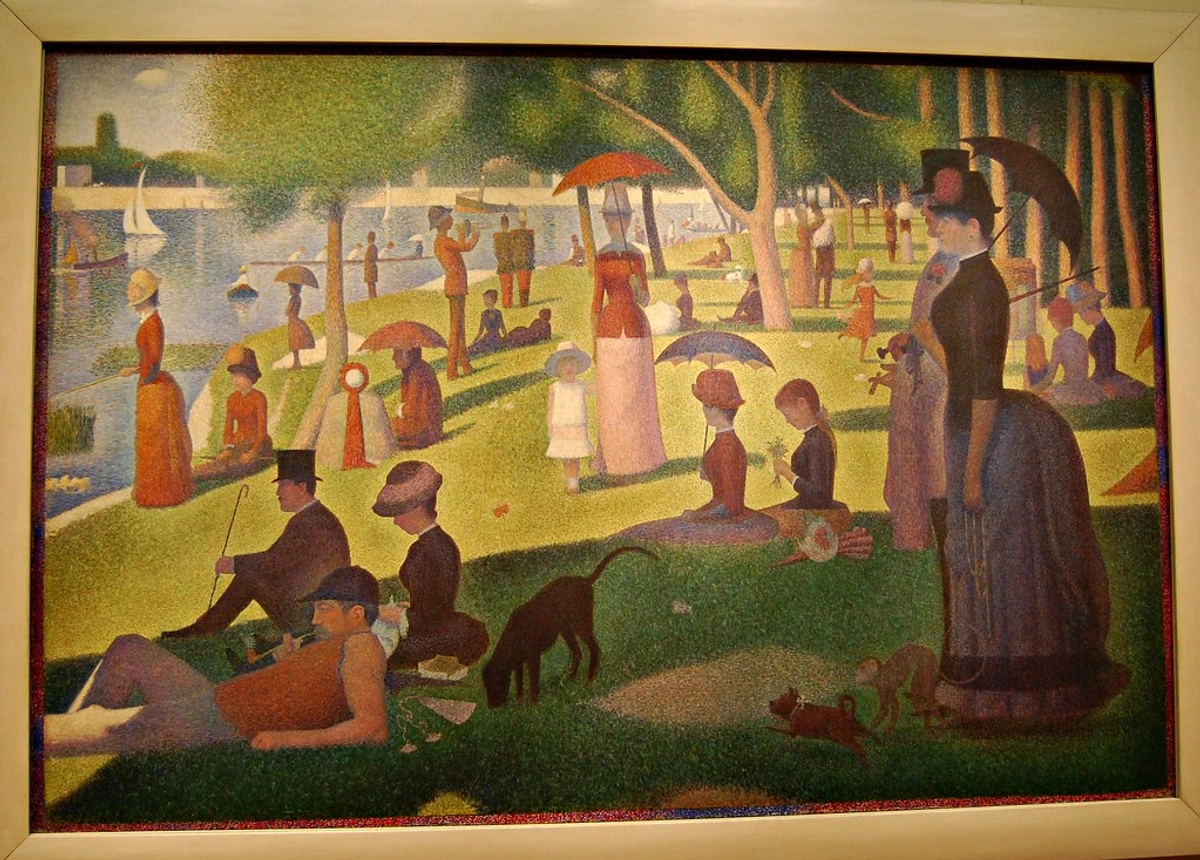
Okay, let's step into the painting itself, beyond the dots. Seurat didn't just paint a random crowd; he composed it like a Greek frieze or an architectural blueprint, carefully placing every figure with almost mathematical precision. His meticulous vision extended to every element, from the fall of light and shadow—rendered with astonishing luminosity through optical mixing—to the atmospheric perspective that defines the distant river. This is where we really feel that paradox of modernity: a scene of relaxed leisure, meticulously constructed and strangely static.
Compositional Rigor: A Frozen Moment, A Rigid Geometry
The whole thing is built on a rigid geometry of lines and shapes, drawing heavily from classical compositions and even the flattened, processional forms of Egyptian friezes. The strong vertical lines of the trees and the standing figures are crossed by the strong horizontal lines of the shadows and the riverbank. This creates an undeniable sense of stability and order, yet it also fosters a feeling of profound stillness, almost unnatural. These people aren't interacting; they are frozen in time, almost like mannequins arranged in a highly artificial diorama of Parisian life. Seurat’s deliberate choice of such a formal, almost classical composition wasn't accidental. It was his way of imposing order on the fleeting reality of modern life, reflecting a desire for permanence and structure in a rapidly changing world. This meticulous, almost clinical arrangement is precisely why the painting feels both perfectly calm and strangely tense at the same time. The rigid composition denies them natural interaction, creating an unnerving silence, a sense of isolated individuals sharing the same space but not truly connecting. It’s a subtle commentary on the emerging anonymity and superficiality of modern urban existence, reflecting Seurat’s detached, almost anthropological, view of society. He observes them without judgment, but also without warmth, allowing the viewer to ponder the implications of such organized leisure and the social façade it presents.
Seurat's Palette and Monumental Scale: The Tools of the Scientist-Artist
Before we meet the characters, let's consider the physical scale of this work: over 10 feet wide and nearly 7 feet tall. This monumental size itself is part of its impact, demanding attention and creating an immersive environment. The sheer act of applying millions of tiny points of color over such a vast area reinforces Seurat's dedication to his scientific method. His palette, though based on a systematic breakdown of color, was a carefully curated selection of vibrant, pure pigments that, when optically mixed, would achieve unparalleled luminosity. He meticulously experimented with various complementary color pairings, like blue and orange, and red and green, placing them side-by-side to intensify their visual vibration in the viewer's eye. This wasn't just about dots; it was about orchestrating a chromatic symphony across a grand stage, a meticulously planned scientific experiment on a colossal scale.
A Cast of Characters: Seurat's Social Tableau and the Paradox of Leisure
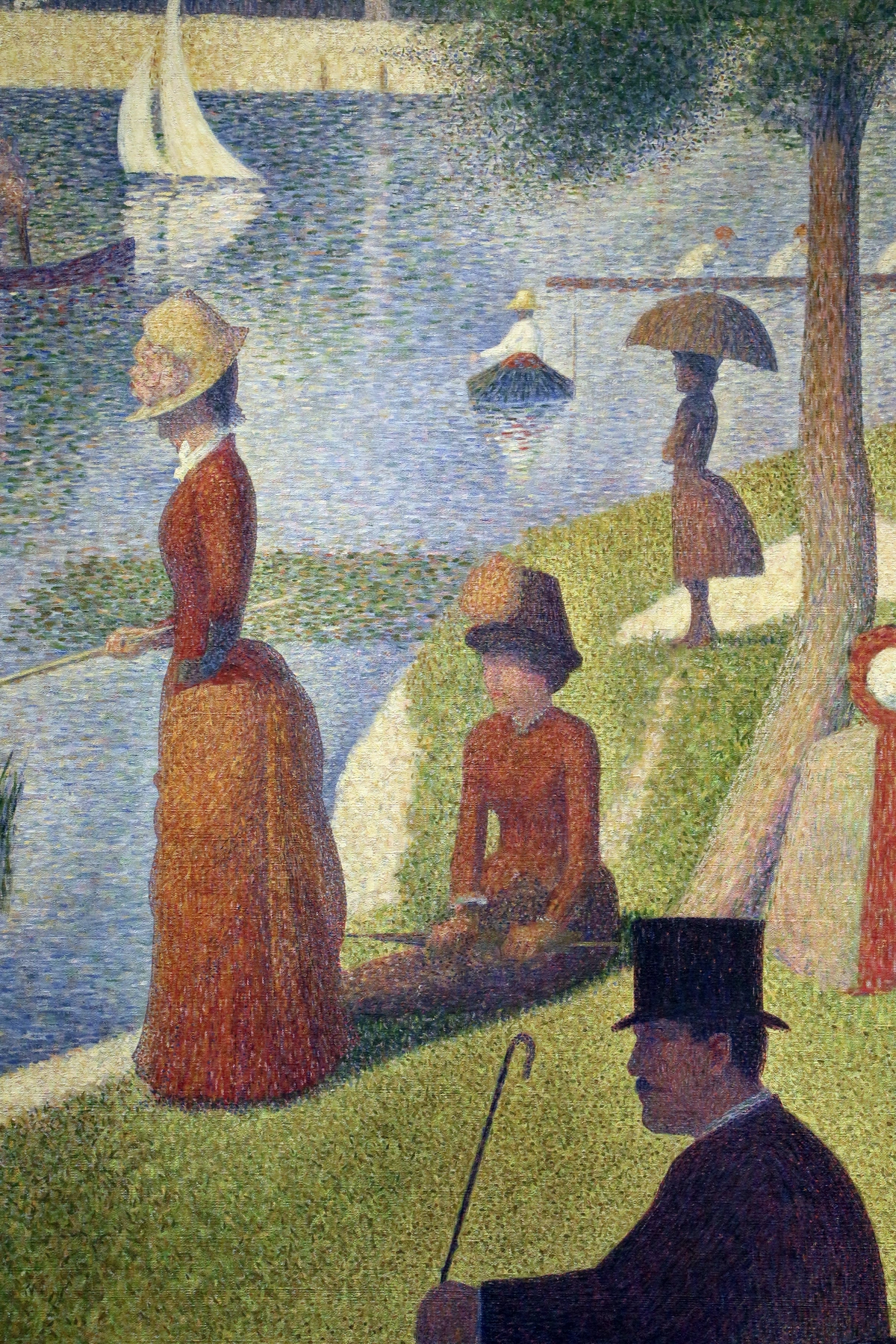
Seurat populated his island with a collection of social "types" from different classes, each contributing to the tableau of modern Parisian leisure. He deliberately chose this mix to reflect the diverse, yet often segregated, nature of public life in the city, and the emerging paradox of leisure: a time meant for freedom and connection, often becoming a stage for performance, conformity, and isolation. The overall message seems to be a subtle critique, or at least a detached observation, of the new social order where people coexist in public spaces but remain profoundly isolated, each playing a role in the grand theater of modern life. Let's meet a few of them and delve into what they might represent:
- The Main Couple (Bourgeoisie): The elegant woman on the right with the elaborate bustle and the man in the top hat are the painting's anchors, representing the newly affluent bourgeois class displaying their wealth and status. She famously has a monkey on a leash, an exotic pet that was a status symbol for the wealthy but also, historically, a symbol of folly, vanity, or even vice in art. This detail adds a layer of subtle ambiguity to her pristine image, perhaps hinting at the moral complexities beneath the façade of bourgeois respectability and a fascination with the "exotic" that often accompanied wealth in the Belle Époque. It’s a classic Seurat touch, blending the visually precise with the subtly symbolic, revealing the tensions behind the polished surface.
- The Little Girl in White (Innocence/Future): In the dead center of the painting, she is the only figure who stares directly out at us, the viewers. She's often seen as a symbol of innocence, a link between the painted world and our own, or even a future generation observing the scene, perhaps untainted or unburdened by the social rituals surrounding her. Her direct gaze is a rare moment of connection in an otherwise disconnected scene, a quiet challenge to the viewer to observe the scene more deeply.
- The Woman Fishing (Working Class/Hidden Realities): On the left, a less elegantly dressed woman is fishing. At the time, "fishing" (pêcher) was sometimes a slang term for prostitution (pécher, meaning "to sin"), especially when referring to women alone in public spaces. This deliberate pun, if intentional (and given Seurat’s intellectual bent, it’s highly probable), strongly suggests a mixing of social classes in public spaces and a glimpse into the less 'respectable' forms of leisure for working-class women in 19th-century Paris, highlighting the hidden economies and subtle moral ambiguities of the city. Beyond this, her simple act of fishing contrasts sharply with the performative leisure of the bourgeoisie, perhaps symbolizing a more authentic, less adorned connection to nature, or even a quiet defiance of social norms and the societal façade.
- The Musician (Isolation in the Crowd): A man in the background is playing a horn, but you can't hear a thing. This contributes to the strange, silent-movie feel of the scene, emphasizing the visual over the auditory, and the overall sense of disconnect that pervades the entire composition. It’s a poignant reminder of the isolation within the crowd.
- The Military Man (Order/Surveillance): A soldier in uniform, adding to the diverse crowd, represents order and the state, a reminder of the structured society even in moments of leisure, and perhaps the underlying control and surveillance within public spaces.
- The Bathers (Working Class Contrast): On the far bank, visible across the sparkling river, muscular men are bathing. These figures are a direct visual and social contrast to the buttoned-up bourgeoisie on the main bank, representing the working class or a more 'natural,' less constrained form of leisure. This also explicitly links La Grande Jatte to Seurat's earlier monumental work, Bathers at Asnières, solidifying Seurat's interest in the class dynamics of modern leisure. The fact that the bourgeois on La Grande Jatte ignore them reinforces the class segregation—another key element of modernity's paradox.
Hier’s a look at some of the key figures and what they might represent, reflecting Seurat's keen observation of society:
Figure | Description | Potential Symbolism & Social Context |
|---|---|---|
| Woman with Monkey | An upper-class woman with an exotic pet, in fashionable attire. | Represents the new wealthy bourgeoisie and their display of status; the monkey can symbolize luxury, exoticism, vanity, folly, or even a hidden, mischievous nature/vice, hinting at societal hypocrisy and the era's fascination with the 'other.' |
| Girl in White | The central figure, looking directly at the viewer. | Innocence, the future, or a direct link to the audience, inviting us to contemplate the scene. Her direct gaze breaks the tableau's frozen, impersonal quality, offering a rare moment of connection. |
| Fishing Woman | A working-class woman engaged in leisure, less formally dressed. | The pun on "pêcher" (fishing/to sin) subtly implies prostitution, reflecting the presence and social positioning of different classes, particularly women, in public leisure spaces and the hidden, often darker, side of Parisian life. It also contrasts with bourgeois leisure, hinting at a more authentic engagement with nature or quiet defiance. |
| The Bathers | Muscular men bathing in the river on the far bank. | A direct contrast to the buttoned-up bourgeoisie on the main bank, representing the working class or a more 'natural,' less constrained form of leisure. This also explicitly links La Grande Jatte to Seurat's earlier monumental work, Bathers at Asnières (1884), which depicts working-class men enjoying leisure on the opposite bank of the Seine, creating a powerful social juxtaposition. |
| Military Man | A soldier in uniform, adding to the diverse crowd. | Represents order and the state, a reminder of the structured society even in moments of leisure, and perhaps the underlying control and surveillance within public spaces. |
The Painted Frame: Seurat's Obsessive Detail and Optical Integration
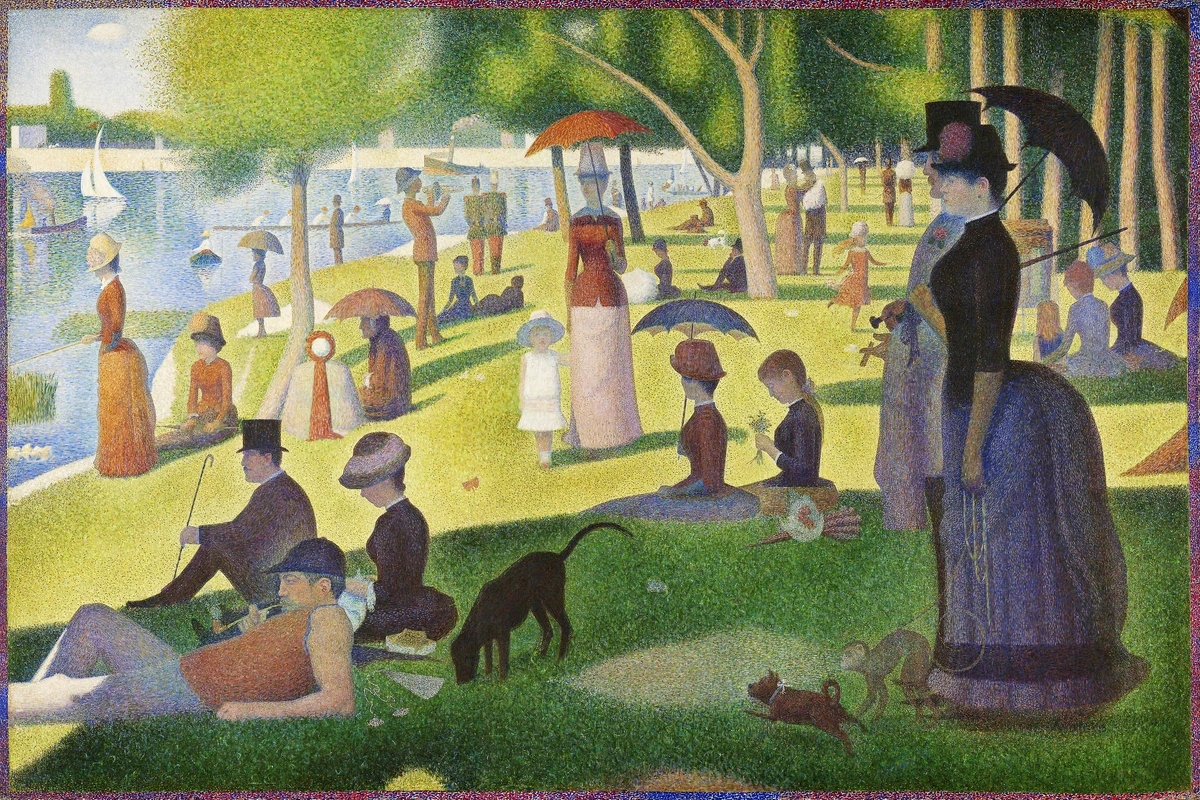
One of the most fascinating details for me, and something most people miss, is Seurat's approach to the frame itself. This wasn't an afterthought; it was an integral part of his scientific vision. He was so obsessed with color theory that he painted a border of inverted-color dots directly onto the canvas, around the entire edge. A blue dot would be surrounded by orange dots, a red one by green dots, and so on. He did this to control how the colors in the painting would transition to the frame, ensuring the optical effect was perfect right to the very edge. This complementary color border was designed to intensify the perceived luminosity and vibrancy of the central image, making the colors pop even more. Unlike traditional frames which often create a hard boundary, Seurat’s painted border ensured a seamless, optically integrated experience, a final, meticulous touch in his scientific approach to art. It's almost like he was saying, "This artwork doesn't stop where the canvas ends; it extends into your perception, influencing even the very edges of what you see." That’s next-level dedication, truly a testament to his scientific rigor and his belief that the artwork's optical power extended beyond its central image, drawing the viewer deeper into its illusion.
Unpacking Common Interpretations and Enduring Questions: Your Comprehensive FAQ
Like any monumental artwork, La Grande Jatte has gathered its share of interpretations and even a few myths. Understanding these helps us appreciate its complexity.

Is A Sunday on La Grande Jatte just a pretty park scene?
Reality: While visually appealing—indeed, its beauty is part of its power—it’s a profound commentary on modernity, industrialization, and the changing social fabric of Paris. Seurat wasn't just observing; he was analyzing the evolving nature of public space, the emergence of the leisure class, and the subtle tensions beneath the surface of apparent tranquility. It draws you in with its serene beauty, only to make you question the underlying social dynamics. It depicts how people coexist, or fail to coexist, in new public spaces, often detached and anonymous, despite their physical proximity—a true embodiment of the paradox of modernity.
Is Pointillism simply painting with dots?
Reality: Not at all! It's a highly sophisticated, scientifically grounded technique rooted in Divisionism (or Chromo-luminarism, as Seurat preferred) where colors are systematically separated into their constituent hues and then "mixed" by the viewer's eye (optical mixing). The specific application of dots is the method of Pointillism, not the entire underlying scientific theory of Divisionism; it's about the precise interaction of pure colors to achieve greater luminosity and a scientifically precise visual effect, far beyond mere decoration. It's why this painting is so famous: for its revolutionary Pointillism technique, its monumental scale, and its iconic, almost dreamlike depiction of 19th-century Parisian life. It marked a turning point between Impressionism and the more structured, analytical movements that led to modern art, representing the true synthesis of art and science.
How long did it take to paint La Grande Jatte?
Reality: It took Georges Seurat about two painstaking years to complete, from 1884 to 1886. This included countless preliminary sketches and smaller oil studies, many of which he did on-site at the park before retreating to his studio to painstakingly apply the dots. That’s a testament to his dedication, and probably why he only produced a handful of major works like The Circus or Chahut in his short life, which tragically ended at the age of 31. His work ethic was truly exceptional, demonstrating an unparalleled commitment to his scientific artistic vision.
Where can I see A Sunday on La Grande Jatte today?
Reality: It is one of the most prized pieces in the permanent collection of the Art Institute of Chicago in the United States. If you ever get the chance, standing in front of it is an experience unlike any other, revealing new details and optical effects the closer you look. It's a pilgrimage for art lovers, a chance to connect directly with a pivotal moment in art history. It's an experience that no digital reproduction, however high-resolution, can truly replicate. While digital art and NFTs attempt to capture and disseminate artworks, they fundamentally offer a different, often less tangible, experience compared to the painstaking physical labor and optical engineering that defines Seurat's original creation.
How does Seurat's exploration of urban isolation resonate today?
Reality: Seurat's observations of people coexisting in public spaces yet remaining profoundly disconnected feel remarkably prescient in our contemporary world. In an age of social media, crowded digital spaces, and increasing urban density, the painting's quiet commentary on anonymity, superficial interaction, and the individual's place within a large, seemingly unified society remains highly relevant. It invites us to reflect on our own forms of modern isolation, whether it's the digital alienation of scrolling through feeds or the subtle distances we maintain in bustling city centers. It serves as a timeless mirror to the paradox of being together, yet alone.
The Legacy of a Sunday Afternoon: A Quiet Revolution's Enduring Impact
This relentless dedication to his vision—from the scientific application of color to the meticulous composition and even the painted frame—didn't go unnoticed. When La Grande Jatte was first exhibited in 1886 at the eighth and last Impressionist exhibition, it was a sensation. Critics were sharply divided: some mocked its rigid, "Egyptian" style, finding its static figures too artificial and lacking emotional warmth, while others, like the influential critic Félix Fénéon, hailed it as the future of art. Seurat had officially launched a new movement: Neo-Impressionism, and with artists like Paul Signac (who further developed Divisionist theories and methods), Henri-Edmond Cross, Maximilien Luce, and even a brief foray by Camille Pissarro into the style, it gained significant traction. His dedication to structural rigor also influenced other Neo-Impressionists to further explore the scientific principles of color and light in their own works, pushing the boundaries of what art could be.
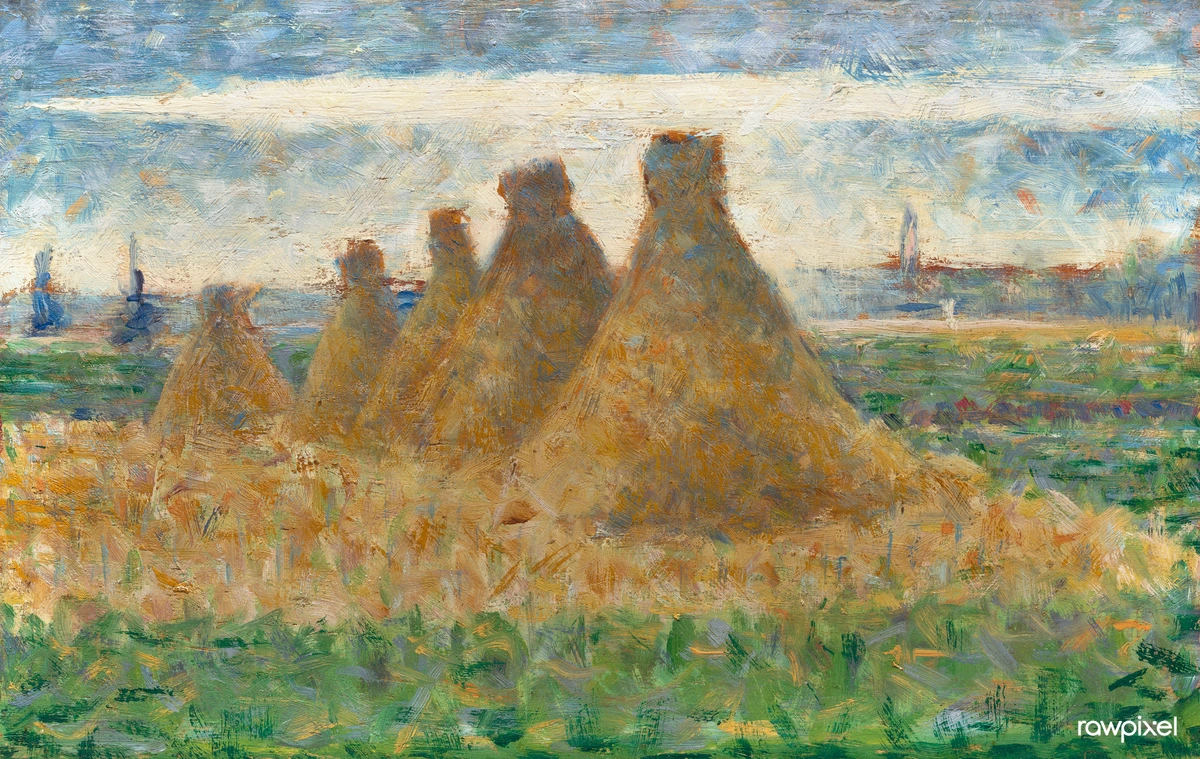
Its influence rippled through the art world, touching everything from the vibrant color experiments of the Fauvists (who, unlike Seurat's scientific approach, embraced non-naturalistic color for its emotional and subjective impact, liberating color from its descriptive role) to the structural rigor that paved the way for later movements. While not a direct stylistic parent, Seurat's systematic approach to breaking down and reassembling visual reality, his emphasis on structure over pure spontaneity, provided a crucial stepping stone towards the analytical deconstruction seen in early Cubism. His fragmentation of forms into smaller units and exploration of different planes of color conceptually laid groundwork for artists to break down objects into geometric shapes and explore multiple viewpoints. This systematic breakdown of visual reality, even into abstract elements of color and form, can be seen as a conceptual precursor to various abstract art movements. Even movements like Symbolism and nascent Art Nouveau had to contend with the bold intellectual and formal challenges posed by Neo-Impressionism, finding inspiration in its systematic approach or reacting against its rigid structure. Its precise, almost graphic quality also had an unquantifiable impact on emerging forms of illustration and poster design, a testament to its broad and subtle reach.
And its legacy extends far beyond art galleries. You've probably seen it referenced in pop culture, most famously in the film Ferris Bueller's Day Off and Stephen Sondheim's Pulitzer Prize-winning musical, Sunday in the Park with George. These references highlight the painting's enduring visual impact and its status as an icon of artistic innovation and a symbol of a particular kind of intellectual, romanticized leisure.




This painting's methodical, dot-by-dot creation is a powerful idea. The concept of building a complex, vibrant world from the smallest possible units is something that still fascinates artists today, myself included. It’s a slow, meditative process that I often reflect on in my own journey in art, like when I'm developing a new color palette or experimenting with intricate patterns for a piece, a process you can sometimes trace across my artistic timeline. I think there’s a quiet power in such intense, focused effort, even in a world that often demands instant gratification. And while digital reproductions or NFTs might attempt to capture elements of such works, they can never fully replicate the direct, optical experience that Seurat so meticulously engineered, nor the painstaking, physical labor that defines its creation. It's a reminder that true artistic depth often lies in the tangible, in the deliberate touch of the artist's hand, rather than in mere digital representation.
Connecting the Dots: A Final Reflection and Your Invitation to Deeper Observation
In the end, La Grande Jatte is a magnificent paradox. It’s a painting of leisure that was created with immense, painstaking labor. It’s a scene full of people who seem completely alone, isolated within their own meticulously rendered spaces. It's a scientific diagram that is also a work of profound beauty, a testament to the idea that rigor and emotion aren't mutually exclusive in art. Seurat wasn’t just painting a park; he was painting a new way of seeing the world—ordered, complex, shimmering with optical illusions, and made up of a million tiny, brilliant moments. Over a century later, this monumental work remains a beacon, not just for its scientific innovation and social commentary, but for its sheer, undeniable presence. It encourages us to look closer, not just at the canvas, but at the world around us, to find the hidden harmonies and subtle tensions that make up our own 'Sunday afternoons,' and perhaps, to find new ways to connect those dots ourselves. That's the enduring power of La Grande Jatte—a timeless invitation to deeper observation and reflection. We'd love to hear your reflections on La Grande Jatte and its enduring relevance. Share your thoughts with us, and perhaps, explore some of my own artworks that are inspired by similar themes of light, color, and intricate detail.