
David Alfaro Siqueiros: Muralism's Thunderous Innovator
Explore the explosive life, radical techniques, and enduring legacy of Mexican muralism giant David Alfaro Siqueiros.

David Alfaro Siqueiros: Muralism's Thunderous Innovator
Ever stood before a massive mural feeling the raw energy vibrate through the wall? That’s David Alfaro Siqueiros’ legacy. I know what you’re thinking: "Isn’t that just fancy wall painting?" Oh honey, you’re in for a revelation. Siqueiros wasn’t decorating cafes—he was detonating revolutions in paint. And the craziest part? His techniques still shake up contemporary artists today, including the kind of fearless color explosions happening at buy. Let’s crash the party of 20th-century art history together.
Siqueiros wasn’t just an artist; he was a force of nature. His murals weren’t just paintings—they were manifestos, declarations of war against oppression, and celebrations of the human spirit. His work transcended the boundaries of traditional art, merging politics, history, and raw emotion into a visual symphony that still resonates today.

The Man Who Painted Revolutions
David Alfaro Siqueiros burst onto the scene in 1896 in Chihuahua, Mexico, and frankly, he never learned to tone it down. While others twiddled their brushes gently, Siqueiros wielded art like a sledgehammer. He was a card-carrying communist who thought art shouldn’t be locked in gilded cages. Instead, it should roar in public spaces—courtyards, government buildings, wherever the masses could see it. His life? One wild ride: fought in the Mexican Revolution, got exiled multiple times, landed in jail for his politics, and once even got arrested while painting. Now that’s commitment to your craft.
What made him different? He treated murals not as decorations but as weapons of mass persuasion. Forget passive observation—Siqueiros demanded active participation. His works pulsed with fury and hope, depicting indigenous heroes, fallen workers, and the chaos of class struggle. One minute he’s glorifying a peasant uprising; the next, he’s condemning capitalist greed. Talk about your emotional whiplash.
Early Life and Influences
Siqueiros' early life was marked by the tumultuous events of the Mexican Revolution, which deeply influenced his artistic vision. Growing up in a time of political upheaval, he witnessed firsthand the struggles of the working class and the indigenous people of Mexico. These experiences shaped his belief that art should be a tool for social change, not just aesthetic pleasure. His education at the San Carlos Academy in Mexico City further honed his skills, but it was the revolution that truly defined his purpose.
The Political Firebrand
Siqueiros wasn’t just an artist; he was on a one-man crusade against injustice. His radical politics weren’t just background noise—they were the canvas itself. In 1922, he helped launch the Mexican Mural Renaissance alongside Diego Rivera and José Clemente Orozco, but with way more explosives (figuratively, mostly).
He famously declared, "Art is a powerful weapon for social transformation." And he meant it. Murals like The Epic of American Civilization at Dartmouth College don’t just tell history—they rewrite it with indigenous voices front and center. His work got him kicked out of the US twice. How’s that for making an impression?
The Role of Art in Social Movements
Siqueiros believed that art had a responsibility to reflect and amplify the struggles of the people. His murals were not just artistic expressions but political statements that challenged the status quo. By depicting the struggles of the working class and indigenous communities, he aimed to inspire collective action and solidarity. His work remains a testament to the power of art in driving social change.
Unleashing Unconventional Techniques
Siqueiros was the mad scientist of muralism. While other muralists stuck to traditional brushes, he was busy inventing new ways to make paint scream. Remember how I mentioned those "explosions"? That’s his revolutionary toolkit:

- Airbrushing: He adapted industrial spray guns for massive-scale work, creating velvety gradients and misty effects no brush could ever replicate. Imagine the mess—but the results? Divine.
- Accidental Chemistry: Siqueiros accidentally mixed paint on wet plaster and discovered a mind-blowing technique called "polyvoyance." By applying pigment while the plaster was still damp, he got colors to seep into the wall instead of sitting on top. The result? Murals that looked like they were crying beauty from their very pores.
- Modern Materials: He scoffed at ancient paint. Siqueiros pioneered using DuPont’s Pylox enamel and other industrial chemistry wonders. His murals didn’t just look modern—they were practically indestructible.
Ever tried painting a ceiling while lying on a scaffolding? That’s normal for muralists. But Siqueiros? He invented portable spray rigs. And when everyone else painted from left to right? He went right to left. Why? Because he refused to contaminate wet paint with his hand movements. The man was obsessive.
The Impact of Siqueiros' Techniques
Siqueiros' techniques didn't just change the way murals were created; they influenced the broader art world. His use of industrial materials and innovative methods paved the way for modern street art and large-scale installations. Artists today continue to draw inspiration from his fearless experimentation and commitment to pushing the boundaries of what art can achieve.
Iconic Works You Should Know
Siqueiros’ murals aren’t art history footnotes—they’re still alive, breathing fire and challenging us:
- The March of Humanity (Mexico City): A sprawling, multi-panel epic depicting humanity’s struggle. It’s so big you practically need a hiking trail to see it all. The energy? Like watching a crowd charge at you. Seriously.
- Portrait of the Bourgeoisie (Mexico City): A savage satire where capitalists and priests mutate into grotesque figures. It’s art as a boxing match.
- _ América Tropical _ (Los Angeles): His US mural masterpiece, depicting an indigenous crucified under an American eagle. Got whitewashed within years. Today? It’s painstakingly uncovered. Sometimes justice takes a century.
- The Epic of American Civilization (Dartmouth College): A mural that reimagines history with indigenous voices at the forefront, challenging traditional narratives and celebrating cultural resilience.
- Cuauhtémoc Against the Myth (Mexico City): A powerful depiction of the last Aztec emperor, symbolizing resistance and defiance against colonial oppression.
Muralism vs. Easel Art: Why It Still Matters
I get it—most of us buy art for walls we own. But hear me out: Siqueiros’ rebellion remains the gold spark for why public art changes us. Muralism isn’t just about size; it’s about accessibility. When art escapes galleries and screams in the streets, it democratizes creativity. No velvet ropes, no ticket prices—just raw connection.
And guess what? Modern abstract artists like the ones at den-bosch-museum still bow to this spirit. Their colorful chaos? That’s Siqueiros’ DNA in motion—unapologetic, electrifying, and impossible to ignore. His legacy isn’t just on Mexican walls; it’s in every artist who believes art should roar, not whisper.
The Democratization of Art
Siqueiros' belief in the power of public art to reach the masses has had a lasting impact on the art world. By bringing art out of the galleries and into the streets, he made it accessible to everyone, regardless of their social or economic status. This democratization of art has inspired countless artists to create works that speak directly to the people, challenging the traditional boundaries of the art world.
The Technical Toolkit of a Muralist
How does anyone even do this? Let’s break Siqueiros’ secret weapons:
Technique  | How Siqueiros Used It | Modern Impact |
|---|---|---|
| Airbrushing | Industrial spray guns for velvety gradients | Automotive art, large-scale installations |
| Polyvoyance | Pigment seeping into wet plaster | Fresco revival, weatherproof artworks |
| Pylox Enamel | Industrial paint for durability | Street art murals, public commissions |
| Multi-Persona Work | Large teams with specialists | Community art projects, collaborative murals |
The Troubled Genius: Controversy and Legacy
Siqueiros wasn’t a saint. His fanaticism sometimes blinded him. He was accused of attempted murder (plotting against Trotsky!) and struggled with ego. But his genius? Undeniable. He mentored Jackson Pollock and pushed abstract expressionism into new realms. His techniques fundamentally changed how we think about scale, texture, and public space.
He died in 1974, leaving behind a visual cacophony of rage and beauty. Today, murals everywhere—from Berlin to Rio—are his grandchildren. His work isn’t just revolutionary history; it’s a blueprint for using art as a weapon of change. And yes, that idea still terrifies the comfortable and inspires the restless.
The Influence on Modern Art
Siqueiros' influence extends far beyond his lifetime. His mentorship of Jackson Pollock and his role in shaping abstract expressionism are just the beginning. His techniques and philosophies continue to inspire artists who use their work to challenge societal norms and advocate for change. From street artists to muralists, Siqueiros' legacy lives on in the bold, unapologetic voices of those who refuse to be silenced.
Frequently Asked Questions About Siqueiros
Q: How is Siqueiros different from Diego Rivera?
Rivera painted romanticized history with Aztec gods dancing. Siqueiros? He painted class warfare with machine guns and industrial paint. Rivera celebrated the past; Siqueiros detonated the present. Rivera was a poet; Siqueiros was a Molotov cocktail.
Q: Were his techniques really that innovative?
Absolutely. Forget brushes—Siqueiros used blowtorches, spray guns, and accidental chemistry his whole career. His "polyvoyance" technique alone made murals immortal. Museums today still struggle to replicate it.
Q: Why was he arrested so often?
The list: communism, attempting to assassinate Leon Trotsky (yep, that one), weaponizing art against dictators... Siqueiros believed art should start revolutions, not sell greeting cards. Police disagreed.
Q: Can I see his murals today?
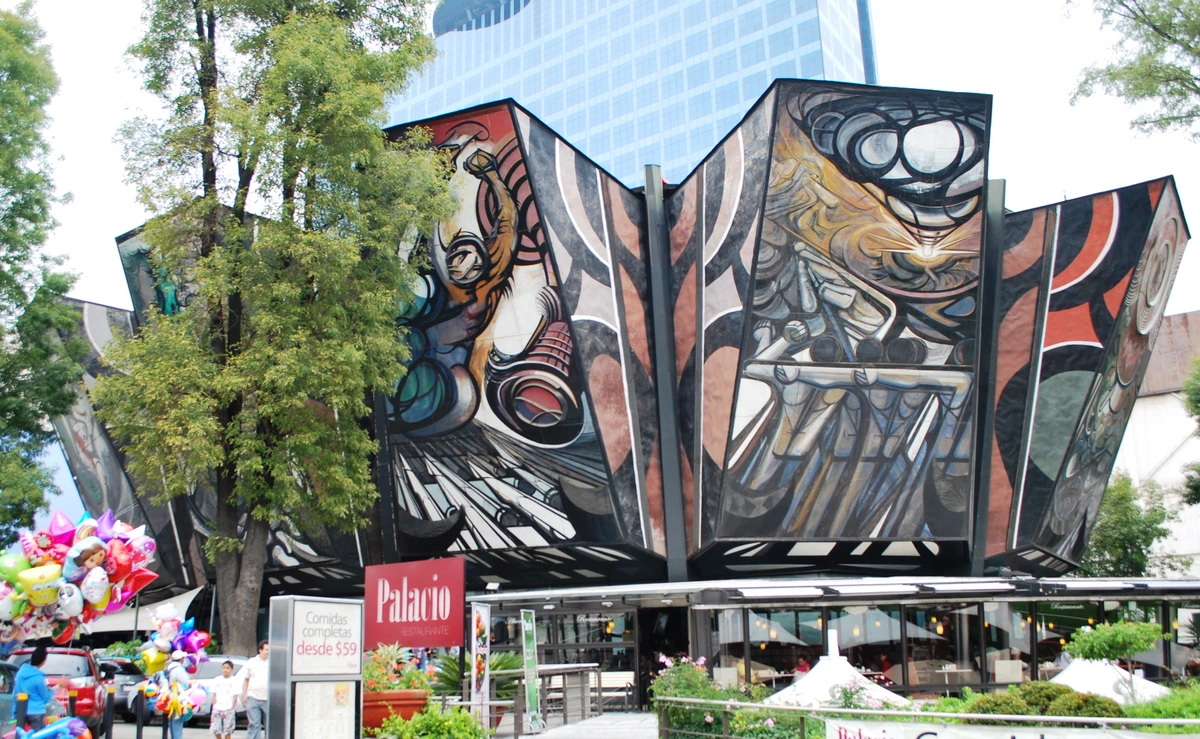
Yes! Mexico City is the Siqueiros theme park (start with the Polyforum Siqueiros). Los Angeles revealed América Tropical after decades under whitewash. The work at Dartmouth is a pilgrimage site. Just bring strong neck muscles.
Q: Did he influence modern artists?
Immensely. Jackson Pollock called him a master. Contemporary street artists—think Banksy’s scale or Kobra’s color palettes—all owe a debt to Siqueiros’ bombastic language. His refusal to be ignored? That’s every artist’s DNA.
Q: What is the significance of Siqueiros' use of industrial materials?
Siqueiros' use of industrial materials like Pylox enamel was revolutionary. It allowed his murals to withstand the test of time and the elements, making them more durable and long-lasting. This innovation has influenced modern street art and public installations, where durability is key.

Q: How did Siqueiros' political beliefs shape his art?
Siqueiros' political beliefs were the driving force behind his art. His commitment to communism and social justice fueled his desire to create murals that were accessible to the masses and that challenged the status quo. His art was a tool for activism, and his political beliefs were inseparable from his artistic vision.
Q: What is the legacy of Siqueiros today?
Siqueiros' legacy is one of fearless innovation and unapologetic activism. His techniques and philosophies continue to inspire artists who use their work to challenge societal norms and advocate for change. His murals remain powerful symbols of resistance and resilience, reminding us that art can be a weapon of change.
Conclusion: Why Siqueiros Still Screams
Walking through a Siqueiros mural isn’t an art experience—it’s a revolution you can touch. He proved that art doesn’t need to whisper; it can clap thunder. His life was messy, his politics were dangerous, and his techniques crackle with electricity.
So next time you see a mural dominating a wall, remember the rebel who taught us that art isn’t decoration—it’s disruption. That kind of fearless energy? It’s why contemporary artists still dance on his shoulders, bold color by bold color. And isn’t that the point? To remind us that art should never, ever play nice. Now go shake something up.






For a deep dive into artistic revolutions, explore the timeline of movements that changed everything.