
Dada Art Movement
Discover Dada's rebellious spirit—absurdity, techniques like readymades & collage—and how it inspires today's abstract art. The ultimate guide.

Dada Art Movement: Characteristics, Techniques, and Its Enduring Legacy
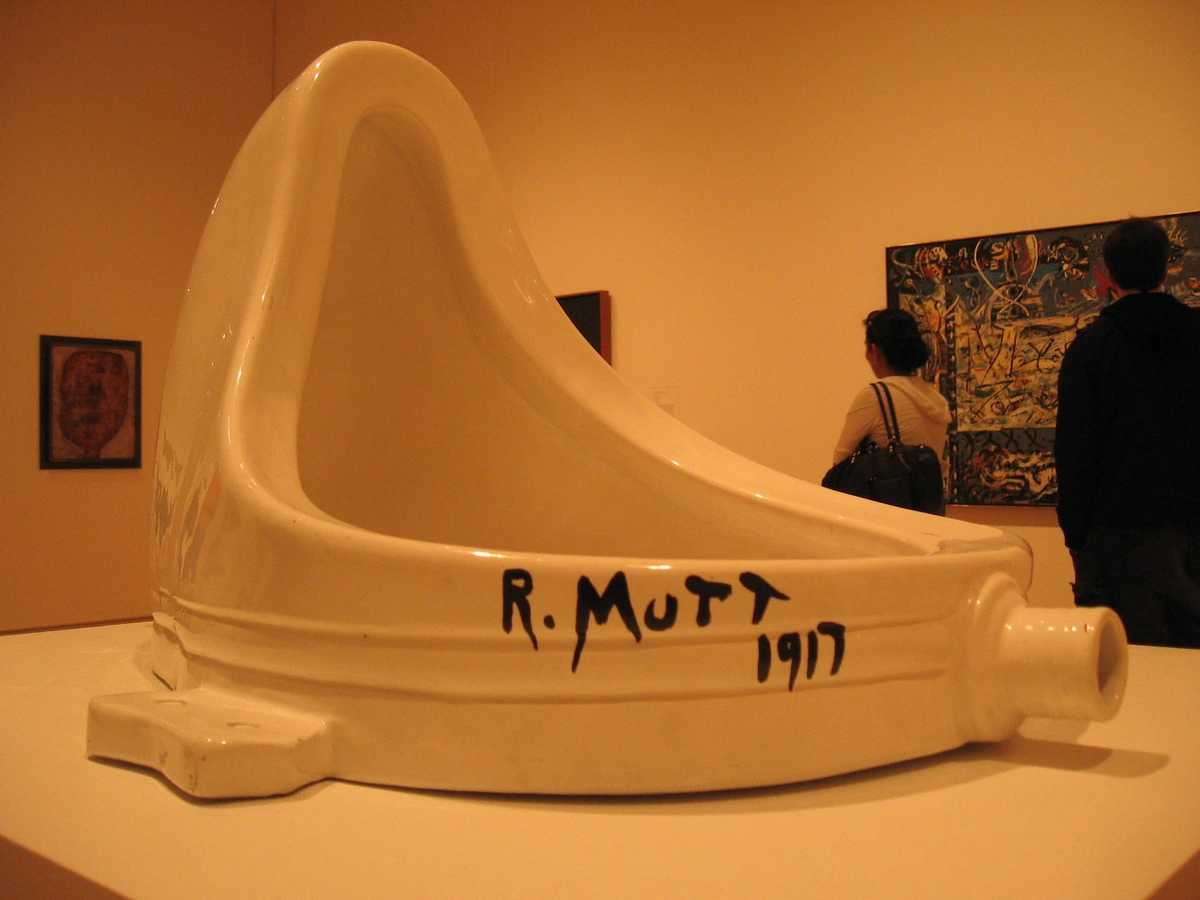
Let me tell you about when I first truly understood Dada. I’d spent hours staring at a blank canvas, frustrated because the art world kept screaming 'rules exist for a reason'. Then I read about Marcel Duchamp’s Fountain—a signed urinal—and it hit me: what if the biggest rebellion wasn’t breaking rules, but refusing to play at all? That’s Dada in a nutshell: beautiful, messy, and gloriously absurd like a toddler explaining philosophy.
Origins: When Sanity Became Optional
Imagine Europe in 1916. The world was tearing itself apart in the Great War, and artists looked at the 'rationality' that had led millions into the trenches and decided, quite literally, to lose their minds. This wasn't just art—this was psychological survival. How do you make sense of a world where logic had become a weapon of mass destruction? You don't. You embrace nonsense.
The movement was born in neutral Zurich, Switzerland, at a place called Cabaret Voltaire. Picture this: a smoky room filled with poets, painters, and performers who'd fled the war. They weren't trying to create 'art' as anyone understood it. They were screaming, singing nonsense words, and gluing random objects together. The name 'Dada' itself—legend has it they found it by randomly sticking a knife into a dictionary—perfectly captures the spirit: it means nothing, it means everything, it's just a sound a baby makes.
But here's what fascinates me: Dada wasn't just a reaction to war. It was a reaction to the entire Western cultural project. For centuries, we'd been told that reason, order, and progress were the pinnacle of human achievement. Then the 20th century arrived with its factories, its bombs, and its propaganda, and suddenly all that 'progress' looked like a death cult. Dada looked at the ruins and laughed.
The Core Philosophy: Anarchy as Art
If I had to distill Dada into one sentence, it would be this: systematic distrust of all systems. The Dadaists believed that any ideology, any -ism, any grand narrative that claimed to have all the answers was inherently dangerous. They'd seen where such certainty led—straight to the battlefields of Verdun and the Somme.
This wasn't nihilism, exactly. It was more like radical skepticism turned into a creative practice. The Dadaists weren't saying nothing matters; they were saying that the things we're told matter—beauty, truth, meaning—are just cultural constructions that can be deconstructed, rearranged, and made absurd.
They were the original culture jammers, long before the term existed. They understood that the most powerful weapon against a corrupt system isn't a better system—it's ridicule.
Key Figures: The Beautiful Madmen
Every movement needs its characters, and Dada had some of the most gloriously unhinged minds in art history. These weren't just artists; they were performance artists of their own lives.

Hugo Ball and Emmy Hennings: The Founders
The story begins with Hugo Ball, a German poet who fled to Zurich and started the Cabaret Voltaire with his partner Emmy Hennings. Ball would perform in bizarre cardboard costumes, reciting sound poems—words stripped of meaning, pure phonetic noise. Imagine standing in a room in 1916 hearing someone declaim:
"gadji beri bimba glandridi lauli lonni cadori..."
It sounds like incantation. It sounds like madness. It was both.
Hennings, meanwhile, was a cabaret singer and performer whose haunting voice and presence gave the early Dada gatherings their nocturnal, otherworldly atmosphere. Together, they created a space where anything could happen—and usually did.
Tristan Tzara: The Movement's Electric Eel
If Ball was Dada's heart, Tristan Tzara was its nervous system—all crackling energy and unpredictable movement. Tzara, a Romanian poet, became Dada's most visible spokesperson. He wrote manifestos that were themselves works of art, declaring things like "Dada means nothing" while somehow making that nothing sound like the most important thing in the world.
I love Tzara's method for creating a Dada poem: take a newspaper article, cut out each word, put them in a bag, shake it, then pull them out one by one. The result is your poem. It's the ultimate democratization of art—anyone can do it, and the results are always surprising.
Marcel Duchamp: The Gentlest Anarchist
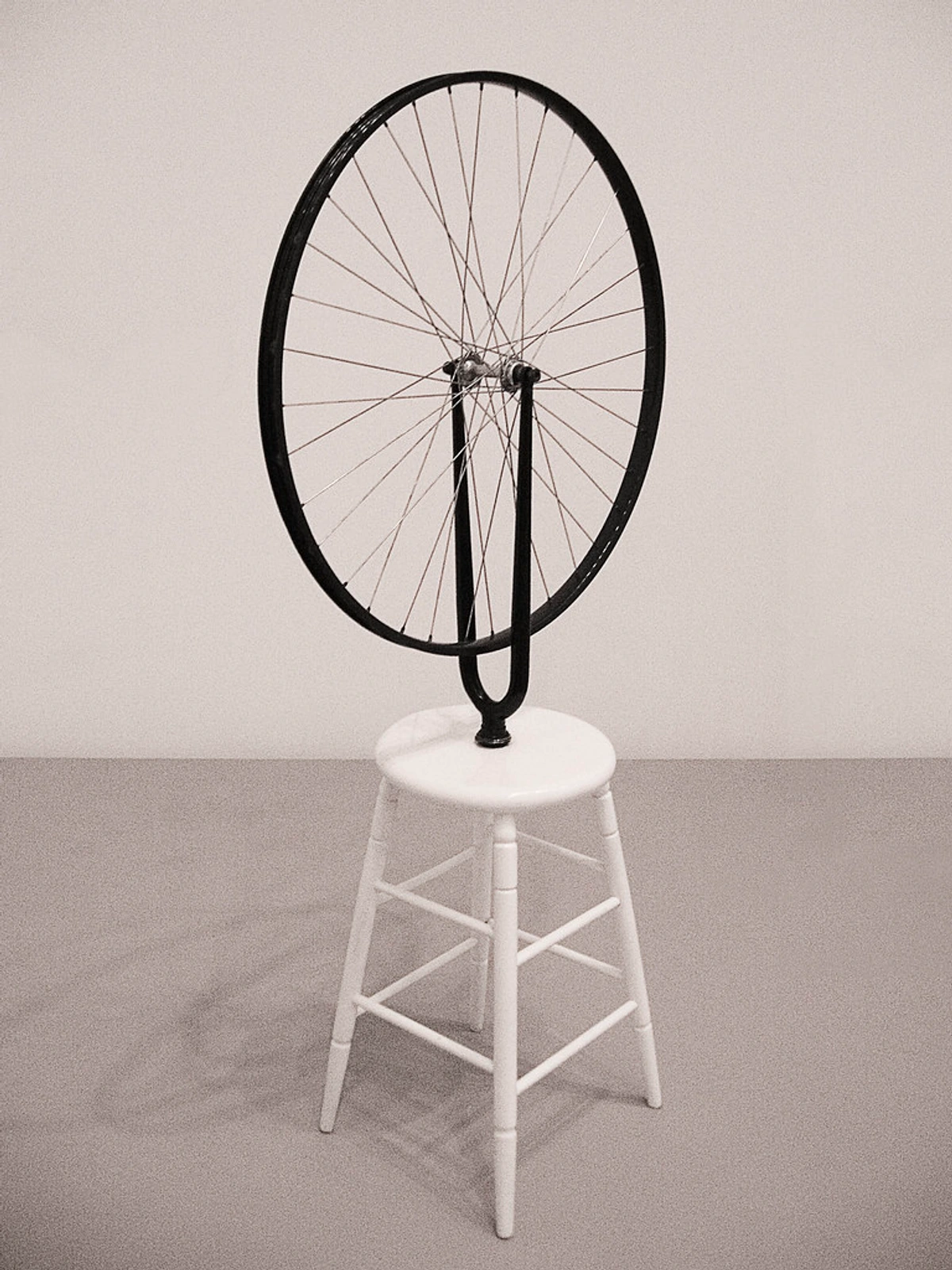
Marcel Duchamp might be the most famous Dadaist, though he'd probably hate that label. He was less interested in the noise and chaos of Zurich Dada and more fascinated by the philosophical implications of what they were doing. His great innovation was the readymade—taking ordinary, mass-produced objects and declaring them art simply by choosing them.
His most infamous readymade, Fountain (1917), was literally a urinal signed "R. Mutt." When the Society of Independent Artists rejected it from their exhibition, Duchamp revealed his real point: who decides what's art? The artist? The institution? The person who manufactures urinals?
What I find fascinating about Duchamp is that he wasn't trying to shock people (though he did). He was genuinely asking questions about the nature of creativity, authorship, and aesthetic value. In a world where factories were churning out identical objects, what did it mean to be an "original" artist? Maybe the most creative act was simply pointing at something and saying, "Look at this differently."
Hans Arp: The Master of Chance
Jean (Hans) Arp took Dada's love of randomness and made it beautiful. He would create collages by dropping pieces of torn paper onto a larger sheet, gluing them wherever they fell. The results were these wonderfully organic, asymmetrical compositions that felt both planned and accidental.
Arp believed that chance was a creative force equal to human intention. In a world ruled by rigid planning and military precision, surrendering to randomness felt like the ultimate act of liberation. His work reminds me that not everything needs to be controlled to be meaningful.
Hannah Höch: Cutting Up the World
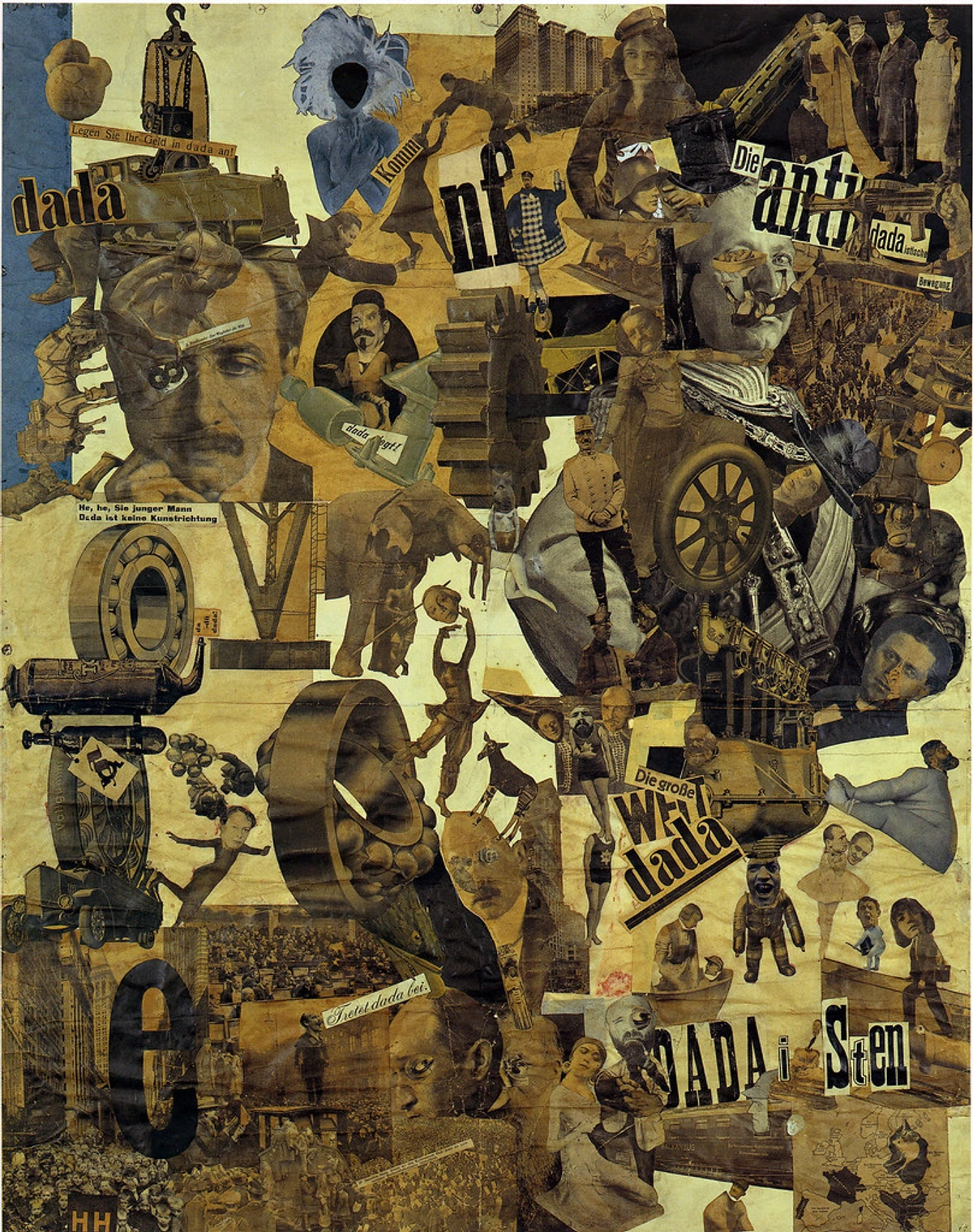
Hannah Höch was the sole woman in the Berlin Dada group, and she brought a perspective that her male colleagues often missed. Her weapon of choice was the photomontage—cutting up photographs from newspapers and magazines to create these surreal, often savage commentaries on Weimar Germany.
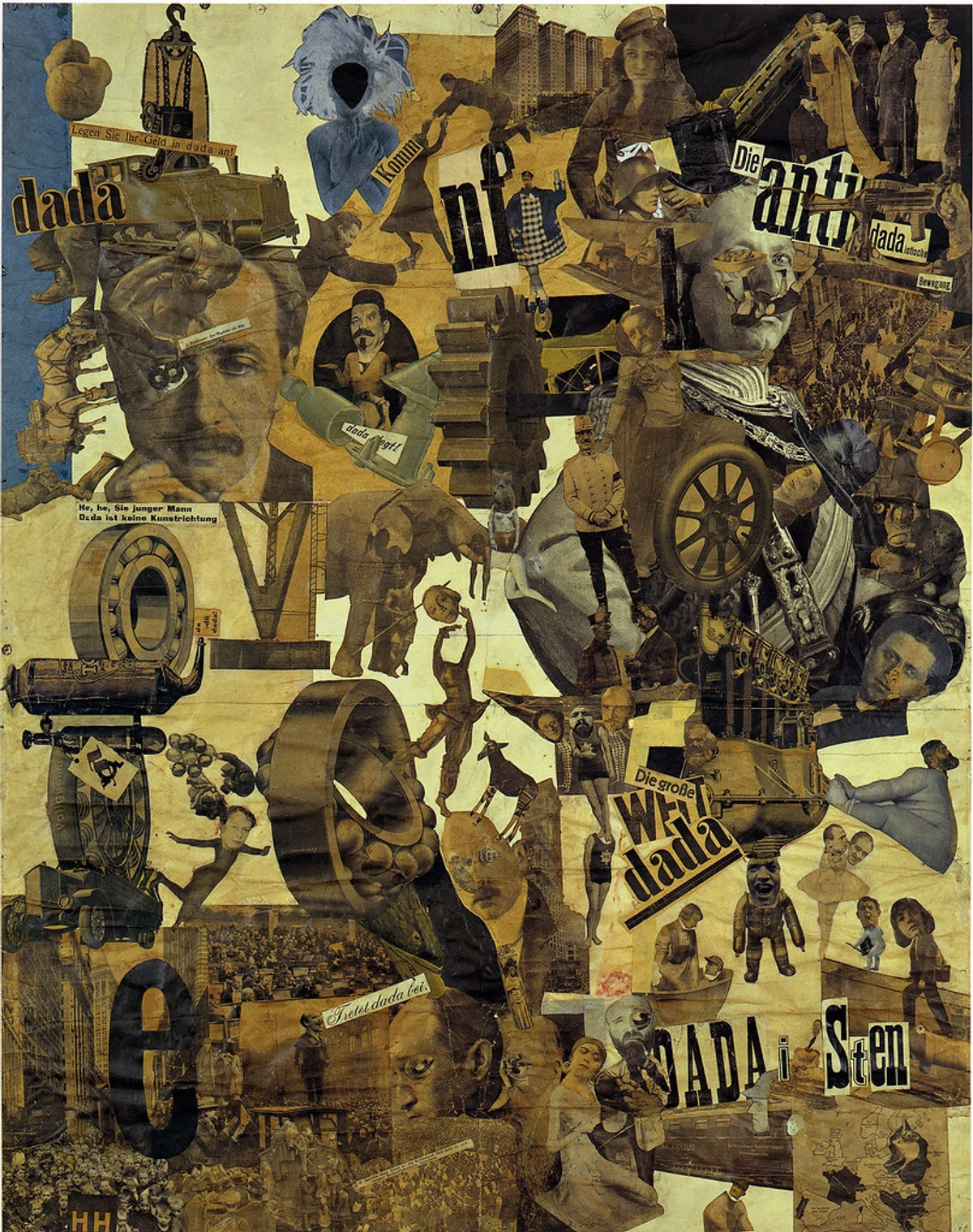
Her masterpiece, Cut with the Kitchen Knife Dada Through the Last Weimar Beer-Belly Cultural Epoch of Germany (1919), is exactly what it sounds like: a chaotic jumble of politicians, dancers, machines, and Dada artists, all sliced apart and reassembled. Höch wasn't just playing with form; she was showing how the language of mass media could be hijacked and turned against itself.
What strikes me about Höch is how contemporary her work feels. We live in an age of Photoshop and deepfakes, but Höch was already there a century ago, showing us that every image is a construction that can be deconstructed.
Man Ray: Painting with Light and Shadow
Man Ray (born Emmanuel Radnitzky) was America's contribution to Dada, though he made his name in Paris. He was a painter, sculptor, and photographer who seemed to delight in confusing all three categories. His "rayographs"—photograms made by placing objects directly onto photosensitive paper—created these mysterious, ghostly images that looked like X-rays of dreams.
Man Ray understood something crucial: photography was supposed to document reality, so what happened when you used it to document unreality? His answer was to turn the darkroom into a theater of the impossible.
Other Notable Figures
- Francis Picabia: A shape-shifting provocateur who moved between abstract painting, mechanical diagrams, and scandalous manifestos. His work often looked like technical drawings for machines that served no purpose—perfect metaphors for a civilization that had lost its way.
- Raoul Hausmann: The "Dadasopher" of Berlin, Hausmann was a theorist, polemicist, and creator of photomontages who helped shape the movement's intellectual foundations.
- Kurt Schwitters: Working mostly in isolation in Hanover, Schwitters created his own version of Dada called "Merz"—collages made from the debris of urban life: tram tickets, bits of wire, newspaper fragments. His masterpiece was the Merzbau, an entire room that he spent years transforming into a walk-in collage.
The diversity of these figures tells you something important: Dada wasn't a style or a technique. It was an attitude that could manifest in infinite ways.
Dada Techniques: How to Make Art Without Making "Art"
Dada artists developed a toolkit of techniques designed to systematically undermine everything art was supposed to be. These weren't just methods; they were acts of creative sabotage.
Readymades: The Art of Selection
As I mentioned with Duchamp, the readymade was perhaps Dada's most radical innovation. But it's worth pausing to think about what this really meant. Before Duchamp, the artist's hand was sacred. Craft mattered. Skill mattered. The readymade said: none of that matters. The concept is everything. The idea wasn't just to shock, but to fundamentally question the systems of value and meaning we take for granted. If a factory-made urinal could be art, what couldn't be?
Duchamp's readymades weren't about the objects themselves—they were about the act of choosing. When he selected a bottle rack or a urinal, he was performing a kind of alchemy, transforming industrial garbage into art through sheer willpower (and a signature). This act of selection—what he called "aesthetic anesthesia"—forced viewers to confront their own assumptions about creativity and originality.
The art world has never really recovered from this. Walk into any contemporary art museum today, and you'll see the ghost of Fountain everywhere. Damien Hirst's shark in formaldehyde, Tracey Emin's unmade bed, Jeff Koons' vacuum cleaners—they're all playing Duchamp's game. They're all asking the same fundamental question: who gets to decide what art is? The readymade didn't just add a new technique to the artist's toolbox; it permanently destabilized the very definition of art, opening the door for everything from Pop Art's celebration of consumer culture to the dematerialized practices of Conceptual Art in the 1960s.
Collage and Photomontage: Reality Cut and Pasted
The Dadaists were masters of scissors and glue. While collage had existed before, they transformed it into a language of political critique and psychological exploration.
Photomontage took this a step further. Artists like Höch and Hausmann would raid illustrated magazines,cutting out images of politicians, soldiers, and celebrities, then reassembling them into impossible scenarios. The result was a visual equivalent of their sound poems: familiar elements made strange, meaningful symbols rendered absurd.
Think about what this meant in the 1920s. Photography was still relatively new, and people tended to believe what they saw in pictures. Photomontage revealed the lie. It showed that photographs were just as manipulable as paintings, that "objective" reality could be sliced up and reassembled to say anything at all.
Assemblage: The Beauty of Found Objects
Related to collage but in three dimensions, assemblage involved gathering discarded objects—machine parts, broken toys, scraps of wood—and combining them into sculptures. These weren't traditional sculptures meant to represent something beautiful; they were archaeological digs through the debris of modern life. Each object carried the history of its use, its own patina of time and touch, which the artist recontextualized into a new, often jarring, poetic whole.
Schwitters' Merz works are the ultimate example. He called himself the "Merz" artist because the word came from a fragment of a newspaper ad for the "Kommerz- und Privatbank" he was using in a collage. His works were like urban fossils, preserving the random detritus of a civilization in aesthetic form. He famously transformed his own house into the Merzbau, a constantly evolving walk-in collage that eventually consumed the entire interior, creating a grotto-like environment of plaster, wood, and found objects.
What I find moving about assemblage is its democratic impulse. Schwitters wasn't going to marble quarries or bronze foundries. He was picking things up off the street. It's art that says: you don't need special materials or training. You just need to pay attention to the world around you.
Automatic Drawing and Chance Operations
Many Dada artists, particularly Arp, embraced automatic drawing—creating without conscious planning, letting the hand move randomly across the page. The goal was to bypass rational thought and access something more primal, more authentically creative.
This connected to their interest in chance operations. Whether it was Tzara's word-in-a-bag method or Arp's dropped-paper collages, they were fascinated by the creative potential of surrendering control. After a war planned down to the last detail, embracing randomness felt like a return to sanity.
Performance and Provocation
Dada wasn't something you just looked at—it was something that happened to you. The Cabaret Voltaire was a multimedia experience: poetry readings that turned into shouting matches, dances that looked like seizures, music made from pots and pans.
These performances were designed to break down the barrier between artist and audience. They wanted to create situations where anything could happen, where the distinction between art and life dissolved in a frenzy of noise and movement.
The Dadaists understood something that many contemporary artists forget: art isn't just about objects. It's about experience, presence, the shared energy of people in a room together.

Dada Around the World: A Global Rebellion
While Zurich was the birthplace, Dada quickly spread across Europe and to New York, mutating as it went. Each city put its own spin on the movement.
Berlin Dada: Political and Angry
Berlin Dada was the most overtly political incarnation. While Zurich Dada was playful and absurdist, Berlin Dada was furious. This makes sense when you consider the context: Germany had lost the war, the Kaiser had fled, and the country was sliding into chaos. The Dadaists in Berlin—figures like George Grosz, John Heartfield, and Raoul Hausmann—saw themselves as political activists as much as artists.
Heartfield (who Anglicized his name from Helmut Herzfeld) created some of the most powerful political art of the century. His photomontages were weapons. One famous example shows a Nazi with his spine replaced by a stack of coins, his mouth opening to reveal Hitler's face. This was protest art designed to be printed in newspapers and pasted on walls, not hung in museums.
Berlin Dada eventually collapsed under external pressure and internal disagreements. Some members, like Grosz, drifted toward the Communist Party. Others, like Heartfield, continued their political activism. But the urgency of their work—art as survival, art as resistance—established a template that would influence decades of political art to come.
Cologne Dada: The Poetic Strain
Cologne developed a more literary, poetic version of Dada. Centered around Max Ernst, Cologne Dada was less explicitly political and more interested in tapping into the unconscious. Ernst's collages are like pages torn from the world's weirdest dream diary—fragmented, mysterious, psychologically charged.
It was also in Cologne that one of Dada's most infamous incidents occurred. In 1920, an exhibition was held in a pub bathroom. Visitors had to enter through a urinal and were given an ax to destroy the works if they didn't like them. Unsurprisingly, the show was shut down by the police almost immediately. But the gesture was pure Dada: turning the exhibition space itself into a provocation.
Paris Dada: The Intellectual Turn
When Dada arrived in Paris, it found a city already buzzing with artistic innovation. Paris Dada quickly became more intellectual, more literary than its German or Swiss counterparts. Led by figures like André Breton, Louis Aragon, and Paul Éluard, Paris Dada was closely connected to avant-garde poetry and literature.

The Paris group published magazines, organized elaborate "manifestation" events that often ended in riots, and engaged in increasingly bitter internal feuds. The most significant of these was between Tzara and Breton. Tzara wanted to keep Dada pure—permanent revolution, perpetual negativity. Breton was searching for something more positive, a way forward.
This tension would eventually lead to Dada's demise and the birth of Surrealism. In 1924, Breton published the Surrealist Manifesto, effectively declaring that the age of pure negation was over. It was time to explore the constructive possibilities of the unconscious.
New York Dada: The American Exception
While Europe was tearing itself apart, a different kind of artistic revolution was happening in New York. Figures like Marcel Duchamp (who moved to New York in 1915), Francis Picabia, and Man Ray created an American version of Dada that was less political and more conceptual.
New York Dada was fascinated by the machine age, by the sheer energy and chaos of modern urban life. Picabia's paintings often looked like diagrams for impossible machines. Duchamp was working on The Large Glass, his masterpiece of conceptual art, a work that would take him eight years to complete (and remained officially unfinished).

What made New York Dada unique was its embrace of American popular culture. While European Dadaists were reacting against their high-culture traditions, the Americans found themselves in a culture that was already mass-produced, commercial, and democratic. Their work wasn't about rejecting tradition; it was about making art in a world where tradition had never really existed in the same way.
The End of Dada (And Why It Never Really Ended)
By the mid-1920s, Dada as a coherent movement was effectively over. The internal tensions, particularly between Tzara and Breton, had become irreconcilable. When Breton published the Surrealist Manifesto in 1924, effectively declaring that the age of pure negation was over and it was time to explore the constructive possibilities of the unconscious, he was essentially giving Dada a proper burial. Other factors contributed: the political situation in Germany became untenable for many Dadaists, and as the 1920s roared on, a certain edge of urgency faded.
But to say Dada ended is to fundamentally misunderstand it. Dada was never a style to be outgrown or a set of rules to be abandoned. It was a virus that permanently infected the artistic bloodstream. The more determinedly it tried to negate everything, the more it ended up creating. Dada's techniques—collage, the readymade, photomontage—became standard tools of modern art. Its attitude of skepticism toward authority and institutions became the default stance of the avant-garde. And its insistence that art could be anything, made by anyone, anywhere, permanently democratized the creative act.
In many ways, Dada was too successful for its own good. It demolished the old building of art, but in doing so, it revealed the foundations on which the new one would be built. The artists who had been Dadaists moved on—many to Surrealism, others to new forms of abstraction or political art—but they carried the movement's DNA with them. The negation of Dada became the ground zero for everything that followed.
The Enduring Legacy: Dada's Ghost in Contemporary Art
It's impossible to understand contemporary art without understanding Dada. The movement's influence is everywhere, from the most prestigious museums to the most obscure artist-run spaces.
From Fluxus to Punk
In the 1960s, the Fluxus movement picked up where Dada left off. Artists like Yoko Ono, George Maciunas, and Nam June Paik created events and objects that were playful, anti-commercial, and deeply influenced by Dada's spirit of interdisciplinary experimentation.

Later, in the 1970s, punk rock would channel Dada's aggressive anti-establishment energy. The Sex Pistols were essentially performing Dada when they appeared on television and swore at the interviewer. Punk fashion, with its safety pins and ripped clothing, was a kind of wearable Dada—taking the discarded materials of consumer culture and turning them into statements of refusal.
Even the DIY ethos of punk—"here are three chords, now form a band"—owes something to Dada's democratization of art making. Anyone can do it, and that's exactly the point.
Conceptual Art and Institutional Critique
The readymade permanently changed art by introducing the idea that the concept could be more important than the object. This paved the way for Conceptual Art in the 1960s and 70s. Artists like Sol LeWitt, Lawrence Weiner, and Joseph Kosuth weren't interested in making beautiful objects; they were interested in making interesting propositions about the nature of art itself.
This led directly to what became known as institutional critique—art that questions the institutions (museums, galleries, art markets) that give art its meaning and value. When Andrea Fraser performs as a museum docent, or when Hans Haacke reveals the business connections of museum trustees, they're playing out ideas that Dada introduced a century ago.
The Dadaists were asking: What is an artist? What is art? Who decides? These questions have become the central preoccupation of much contemporary art. Every artist who has ever wondered whether their practice is legitimate, whether their work matters, whether the art world is worth participating in, is walking in the Dadaists' footsteps.
Remix Culture and Digital Dada
We live in the age of remix culture, and in many ways, we're all Dadaists now. When you make a meme by combining an image with text, when you create a TikTok video that samples sounds and visuals from pop culture, when you use Photoshop to put your friend's face on a historical painting—you're using techniques that Hannah Höch and Raoul Hausmann pioneered. The tools have changed—we use smartphones instead of scissors and glue—but the impulse is identical: to seize the visual language of mass culture and use it to make something personal, subversive, or simply strange.
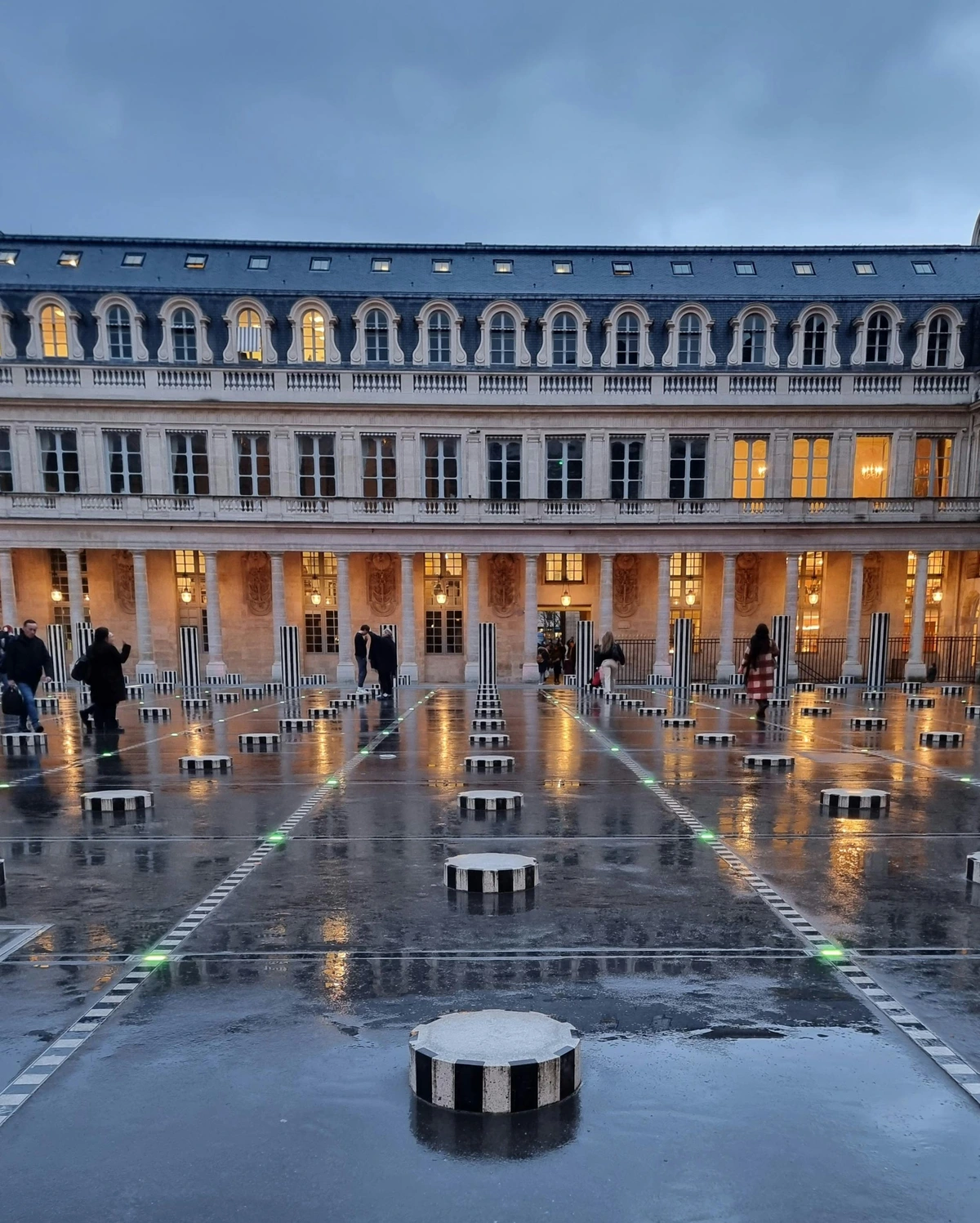
The internet is the ultimate Dada machine. It's a constant stream of decontextualized images, absurd juxtapositions, meaningless signage that somehow means everything. Social media platforms thrive on the kind of visual noise and conceptual chaos that the Dadaists could only have dreamed of. Think about it: a single tweet can contain a fragment of a news story, an emoji, and a quote from a movie, all layered together in a way that defies traditional narrative logic. It's pure photomontage, updated for the age of the timeline.

What I find fascinating is how the most Dadaist contemporary artists aren't necessarily self-conscious about their Dada lineage. They might not even know who Tristan Tzara was. But they've absorbed Dada's lessons through the cultural osmosis of living in a world where the movement's once-radical propositions have become common sense.
Contemporary Artists Keeping the Spirit Alive
Several contemporary artists explicitly engage with Dada's legacy. Martha Rosler creates photomontages that update Hannah Höch's techniques for the age of global warfare and consumer culture. Christian Marclay makes compositions from found sounds and images that feel like updated versions of Tzara's cut-up poems. Ai Weiwei channels Dada's political urgency and love of the readymade.

And it's not just "fine art." Banksy's anonymous interventions, his satirical edge, his willingness to use any medium as long as it communicates—that's pure Dada. The Yes Men, who create fake websites and give satirical presentations at corporate conferences, are essentially performing political Dada in the digital age.
Even comedy has been shaped by Dada. Think of Monty Python's absurd sketches, Andy Kaufman's meta-performances that blurred the line between comedy and discomfort, or Tim and Eric's deliberately amateurish, surreal television shows. They're all working in Dada's tradition of using absurdity to reveal the absurdity of the world around us.
Why Dada Still Matters Today
All of this might be interesting history, but why should you care about a hundred-year-old art movement in 2024? Because we're living through our own version of 1916—a moment when the promises of progress and rationality feel like they're failing us.
Dada in the Age of Information Overload
The Dadaists were responding to the first wave of modern media: newspapers, telegraphs, propaganda. They were drowning in information that felt disconnected from reality. Sound familiar?
Today we're drowning in information that is actively disconnected from reality. Algorithms feed us content designed to provoke maximum engagement, regardless of truth. Deepfakes make it impossible to trust our eyes. Political discourse has become a performance of outrage and absurdity. We're living in the world the Dadaists warned us about—and they might be able to help us navigate it.
Dada's lesson is simple: when language becomes a weapon, when images become propaganda, the appropriate response is to make them meaningless, to strip them of their power through absurdity and misdirection. It's not about escaping reality; it's about creating enough distance to see it clearly.
Dada Against Digital Conformity
The internet promised to democratize creativity, and in many ways it has. But it has also created new pressures to conform, to optimize, to perform for algorithms. Every platform has its own grammar, its own logic of what gets seen and what disappears. We're all performing a version of ourselves designed for maximum visibility.

Dada offers an alternative. It says: embrace the un-optimized, the awkward, the deliberately unprofessional. Make work that confuses the algorithm, that refuses to deliver clear messages or easy engagement. Create things for the sake of creating them, not for the sake of being seen creating them.
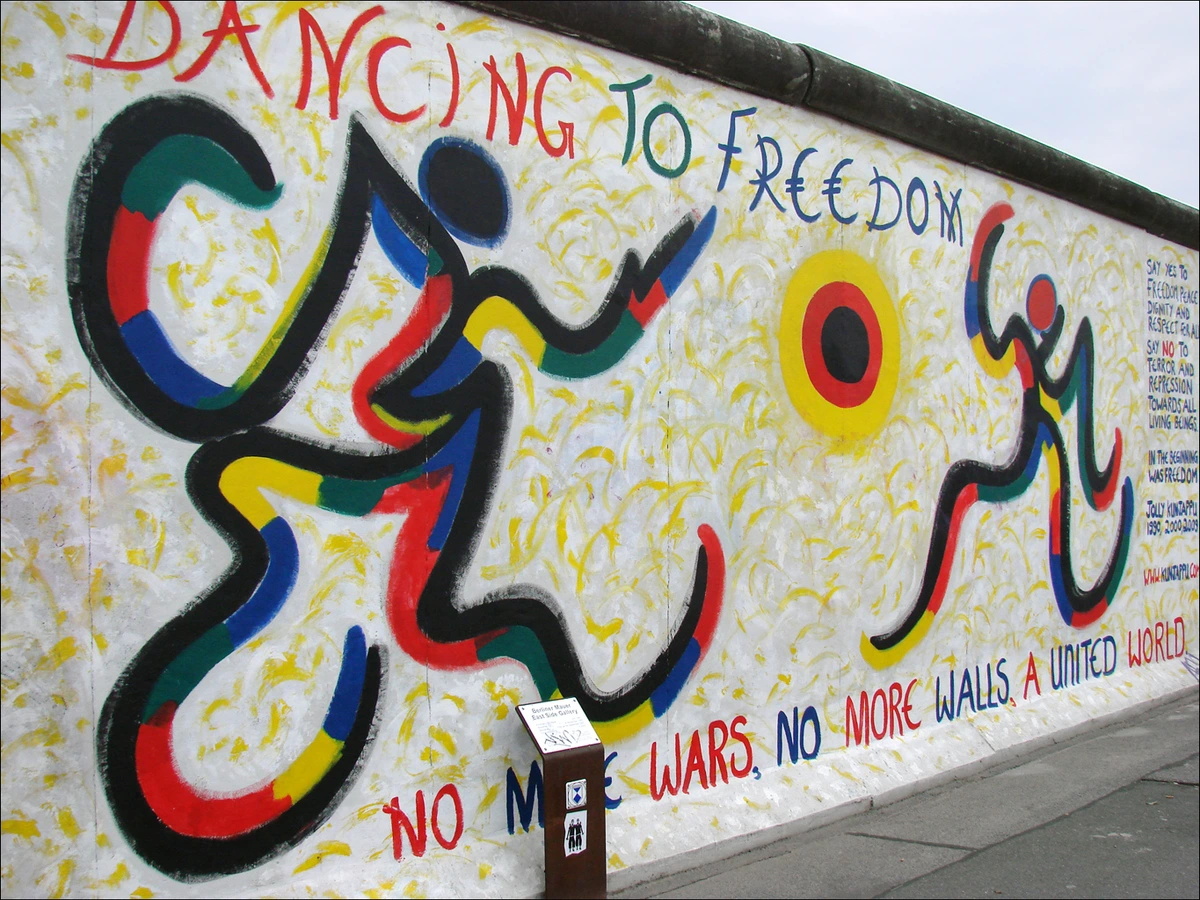
In an age of personal branding and curated identities, there's something deeply radical about making art that refuses to mean anything, that refuses to be useful, that refuses to participate in the logic of the market or the attention economy.
The Therapeutic Value of Absurdity
But perhaps most importantly, Dada is a survival strategy. When the world feels overwhelming, when the problems seem too big to solve, when the news cycle feels like a feedback loop of horror and outrage, sometimes the only healthy response is to laugh.
This isn't about escapism. It's about finding sanity in insanity. The Dadaists weren't nihilists; they were traumatized people who had discovered that the only way to respond to absurd violence was with absurd creativity. They built a lifeboat out of nonsense and invited everyone to climb aboard.
There's a reason Dada continues to resonate during times of crisis. After 9/11, after the financial collapse of 2008, during the COVID-19 pandemic—in each case, artists and ordinary people turned to modes of expression that felt distinctly Dada. Memes, zines, absurdist performances. When the world stops making sense, the reasonable response is to stop making sense back.

How to Make Your Own Dada Art Today
You don't need fancy materials or formal training to be a Dadaist. In fact, having less of both might be an advantage. Here's how to start thinking like a Dada artist in the 21st century.
The 24-Hour Art Challenge
Set aside a day—literally 24 hours—and make one piece of art every hour. The rule is: you can't think about it beforehand, and you can't spend more than 15 minutes on any one piece. Use whatever materials are immediately available: your phone's camera, random objects around you, text messages, Google image searches. The goal isn't to make 'good' art; it's to make a lot of art quickly, without time for self-censorship or second-guessing.
What you'll discover is that when you remove the pressure to be profound, you become surprisingly creative. Most of what you make will be garbage. That's the point. Every once in a while, you'll hit on something strange and beautiful that you never would have discovered through careful planning.
The Digital Readymade
Take a screenshot of something—anything—on your phone or computer. It could be a text message, an ad, an error message, your home screen. Print it out (or don't). Sign it with a fake name. Frame it. You've just made a modern version of Duchamp's Fountain. You've declared that something mass-produced and meaningless is now art, simply by choosing it.
Better yet: do this with twenty different screenshots and hang them in your bathroom. Invite your friends over and don't explain what they are. See what happens. (My guess: they'll spend more time thinking about those screenshots than they would about a 'real' painting hanging in a gallery.)
The Cut-Up Manifesto
Find a news article about something you care about. Cut it up into individual words (or use a digital version and randomize the text). Rearrange them. What do these new combinations reveal about the original text? What do they hide? You might find that the nonsense poetry you create is more honest than the carefully edited news story.
I tried this once with an article about climate change. The original was full of cautious language and carefully balanced quotes. The cut-up version was full of urgent, strange phrases that felt more honest about my actual feelings of panic and confusion.
Destroy Your Art
Make a drawing. Now crumple it up, cover it in coffee stains, rip it, partially burn it (safely!), or throw it in the mud. Photograph the result. You've just turned destruction into creation. You've broken down the distinction between making and unmaking.
This exercise can be surprisingly liberating. Most of us are taught to protect our creations, to treat them as precious. But sometimes the most interesting things happen when we let go of that preciousness and embrace decay, accident, and violence as part of the creative process.

Create a Meaningless App
If you have basic coding skills, try creating an app or website that serves no purpose. Maybe it's a button that plays a random sound when you click it. Maybe it's a page that displays the current time in a made-up time zone. Maybe it's a program that deletes itself after 24 hours. The goal is to make something that defies all the principles of good design and user experience. You're not trying to solve a problem; you're creating a beautifully useless object for the digital age.
In a world where technology is optimized for productivity and profit, creating a truly useless piece of software might be the most radical thing you can do.
Why These Exercises Work
All of these exercises have one thing in common: they're designed to break you out of the mindset that art needs to be meaningful, beautiful, or skillful. They're about embracing randomness, chance, and absurdity as creative forces.
Most importantly, they're about reminding yourself that you don't need permission to be creative. You don't need expensive materials, formal training, or institutional validation. You just need to be willing to play, to experiment, to fail spectacularly, and to find meaning in the meaningless.















Comparing Dada to Other Art Movements
To better understand what made Dada unique, it's helpful to see how it related to other movements of its time and since. I've put together a comparison table that might help clarify the distinctions. Imagine Europe in 1916. The world was recovering from the Great War, and artists looked at the 'rationality\