Dürer's Melencolia I: Masterpiece of Creative Struggle & Genius
Unravel Albrecht Dürer's 'Melencolia I,' a Renaissance masterpiece. Explore its symbolism of creative struggle, Neo-Platonism, and the paradox of genius, connecting with the modern artist's mind.

Melencolia I: Dürer's Profound Allegory of Creative Struggle, Genius, and the Modern Mind
Ever stood before a blank canvas, a universe of ideas in your head, but your hands feel like lead? That exquisite, maddening paralysis is precisely what Albrecht Dürer captured in his monumental 1514 copper engraving, Melencolia I. I know that feeling intimately. Just last week, I sat in my studio, canvas staring back at me, a kaleidoscope of abstract forms like swirling nebulae or fragmented cityscapes whirling in my mind, yet my brush felt like a foreign object. That magnificent frustration of a mind buzzing with potential, yet strangely unable to translate it into reality – that’s the specific agony Melencolia I doesn't just ask for your attention; it demands it, pulling you into its orbit with a strange, magnetic force.
This substantial 24 x 18.8 cm original copper engraving has been tacked to my studio corkboard for years, a constant, glorious, maddening presence. Its sheer depth, the way it refuses easy answers, is exactly why it earned a spot in my creative sanctuary – and sometimes, battleground. Some days, I look at that winged figure, slumped in profound thought, and feel an immediate, deep connection to that struggle when ideas overflow but execution stalls. Other days, I simply ponder, with a wry smile, "What on earth were you truly wrestling with, Albrecht?" This isn't merely an old print; it's a direct mirror to the timeless human condition of creative and intellectual struggle, a profound echo of a masterpiece that has captivated thinkers for centuries.
It’s this maddening ambiguity, this layered complexity – a face conveying profound introspection, hinting at both immense intellect and an overwhelming weariness – that makes me love it so fiercely. It’s a testament to the messy, non-linear process of creation, mirroring my own artistic journey, often documented on my [/timeline]. The more I’ve delved into Dürer’s world – a world profoundly shaped by the pervasive revival of Neo-Platonism (a philosophical current stemming from the Renaissance rediscovery of classical texts, particularly Plotinus. It posits that the physical world is an imperfect reflection of a divine, ideal realm emanating from the One, and human thought can ascend to grasp these higher, perfect truths through contemplation, moving from sensory experience to intellectual and spiritual insight. This was a revolutionary idea contrasting sharply with the medieval emphasis on earthly sin and divine judgment, and heavily influenced Renaissance art theory's pursuit of ideal beauty and form) and the broader Humanist movement (which celebrated human potential and achievements, but also confronted humanity's limitations. It emphasized virtù, or excellence in character and accomplishment through personal effort and a balanced engagement with the world, not just passive piety. Humanism shifted focus from solely theological concerns to human experience and potential, often through empirical observation, a radical departure from medieval scholasticism) – the more I’m convinced this ambiguity was entirely intentional.
These intellectual currents, stemming from the Renaissance rediscovery of classical texts by thinkers like Plato, Aristotle, and particularly Plotinus (whose writings were central to Neo-Platonism), profoundly shifted the understanding of human capability and spiritual yearning. This was a radical departure from purely theological frameworks, opening up new avenues for Dürer, a quintessential polymath (a person whose expertise spans a significant number of different subject areas, from art to science, botany, cartography, and even fortifications), to speak directly to the profound intellectual and emotional landscape of his time, and surprisingly, ours too.
This engraving is more than just art; it's a profound inquiry into the human condition, an artistic puzzle I've spent years pondering. If you've ever seen this work, you know its pull. It doesn't just invite you to look; it demands you try and solve its puzzle. It’s dense with details: tools scattered in disarray, a peculiar, emaciated dog, a geometric solid that looks like it crash-landed from another dimension, and that central winged figure. It’s the visual equivalent of a genius-level sudoku where you're not sure you even have all the rules, and even if you did, solving it might not unlock the universe’s ultimate secrets – much like the melancholic mind grappling with overwhelming truths. That’s its magic, its enduring enigma. This isn't just a depiction of melancholy; it * embodies* the very intellectual struggle of trying to grasp complex truths and the frustrating limitations of human reason. To truly understand this profound frustration, we must first turn our attention to the enigmatic heart of the engraving.
The Winged Figure of Genius: Dürer's Portrait of Intellectual Burden
To truly understand this enduring enigma, we must first confront its central, unforgettable figure: the winged being of genius. The undisputed star of the show is the winged figure, often identified as an angel, slumped deep in thought. But this is no serene, heavenly being. Look closely at the face – it's a perfect picture of intellectual frustration, a deep, introspective brooding that feels almost tangible. This isn't passive sadness; it’s an active, burning agony of a mind overflowing with potential yet strangely paralyzed. Her wings suggest a capacity for soaring thought and divine inspiration, yet her slumped posture and inert tools portray the heavy burden of genius. It's truly a profound depiction of the paradox of genius: that immense intellect can lead not only to brilliant ideas but also to profound struggle and creative block, a kind of "analysis paralysis" long before the term existed. All around her, the very tools of creation and science lie scattered, unused. The compass, a symbol of precise drafting and measurement, is held loosely, almost forgotten. Her heavy head rests on a fist, a classic pose of profound contemplation. It’s the perfect portrait of a creative block, a moment where the mind is teeming with brilliant ideas but paralyzed by the inability to channel them into action.
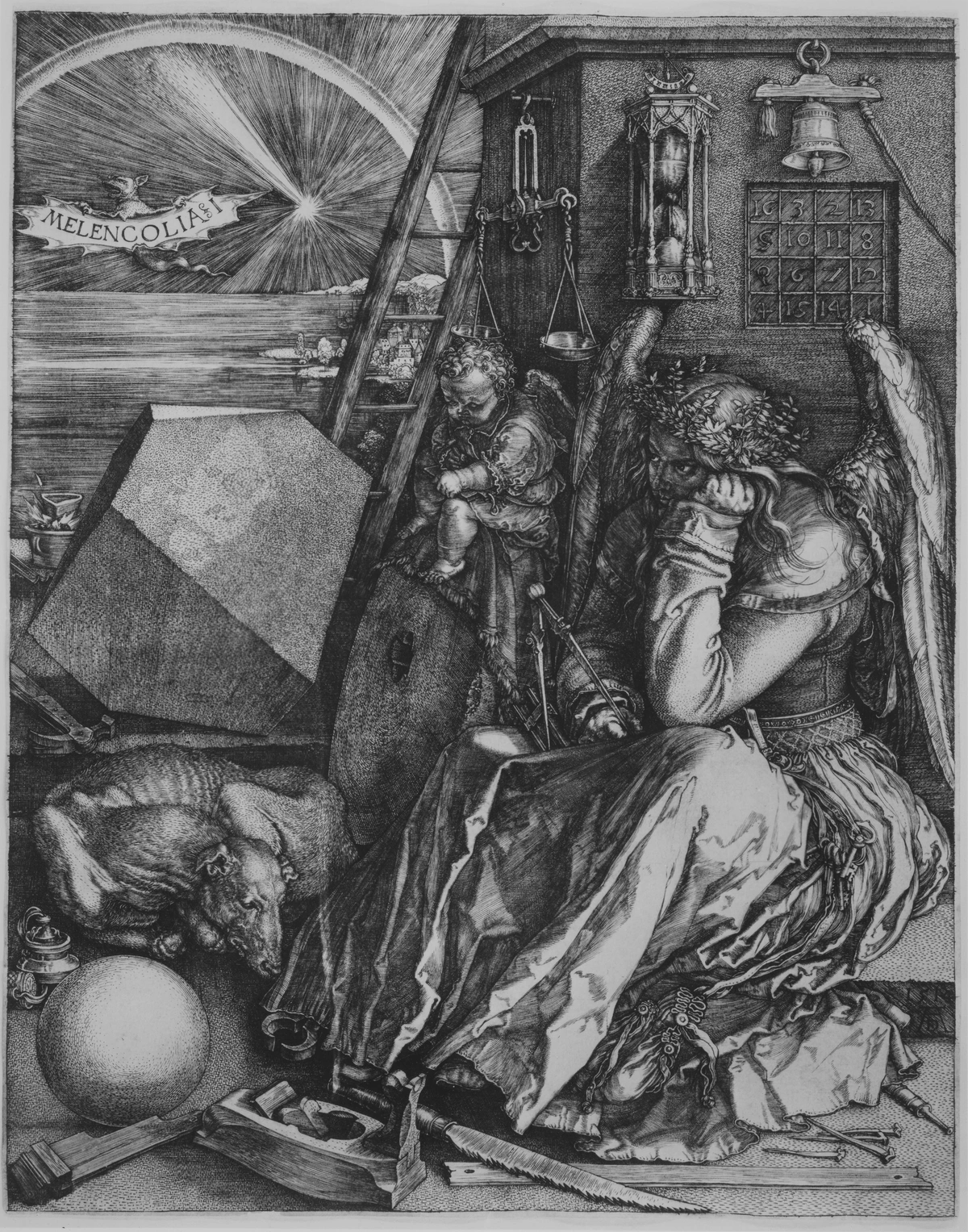
I’ve certainly been there. You've probably been there too. You have all the tools, all the skills, all the ideas swirling in your head, but you just can't make the crucial connection. You're overwhelmed, paralyzed by the sheer possibility. I vividly remember one particular painting where I had the perfect vision – the colors meticulously laid out, the composition clear – but my brush simply couldn't capture the essence of it. It was like my hand forgot how to translate my mind's brilliance. That’s the specific agony Dürer has perfectly captured: the state of 'melancholy' as it was understood in the Northern Renaissance – not merely common sadness, but the intense, brooding introspection associated with profound intellectual and artistic genius. This Northern Renaissance, unlike its Italian counterpart which often prioritized classical idealism, human anatomy, and balanced compositions, frequently focused more on meticulous detail, complex symbolism, and intense religious or emotional sentiment. While key famous Renaissance artists like Leonardo da Vinci and Michelangelo championed idealized forms, Dürer's polymathic genius and detailed engraving are a quintessential example of the Northern approach, where the inner psychological realm was explored with unparalleled depth. The burgeoning printing press, incidentally, played a crucial role in democratizing access to these complex ideas through vernacular languages, accelerating intellectual exchange across Europe.
To truly grasp this radical re-evaluation, we need to understand the prevailing medical and philosophical ideas of his time. This Renaissance understanding was deeply rooted in humoral theory, an ancient medical system that believed the body was governed by four primary fluids or 'humors': blood (sanguine), phlegm (phlegmatic), yellow bile (choleric), and black bile (melancholic). While an excess of black bile was generally associated with illness, madness, and despair, during Dürer's time, there was a radical re-evaluation. Influenced by classical texts, particularly those reinterpreted by thinkers like the Florentine Neo-Platonist Marsilio Ficino, melancholy became paradoxically linked to exceptional creativity and intellectual prowess. Ficino, in his De vita triplici (Three Books on Life), even spoke of furor divinus – a "divine madness" or ecstatic state that could accompany melancholy, granting unique access to higher truths and inspiring genius. This shift was groundbreaking; it transformed melancholy from a mere affliction into a mark of profound depth and a prerequisite for true intellectual insight. For an artist, this concept might resonate with the intense, almost out-of-body feeling of a creative "flow state" where ideas pour forth, yet the preceding and subsequent moments can be riddled with doubt and struggle. The era itself, remember, was marked by an explosion of new ideas in science, philosophy, and art, which, while exhilarating, also brought an acute awareness of humanity's limitations and the vastness of the unknown.
This is the weight of a mind that sees the vastness of the universe but feels powerless to fully grasp it, that struggles to translate grand visions into tangible reality. While Rodin's The Thinker embodies a serene, almost detached philosophical contemplation with its smooth, idealized form, Dürer's figure is consumed by a more active, frustrated intellectual struggle, her face etched with profound weariness, the tools of her trade lying inert. I often think of it as the ultimate brain-fog, where the thoughts are immense but the connection to action is severed, a profound psychological paralysis in the face of limitless potential. This very specific, very human feeling echoes the core of humanism in Renaissance art, a period where human intellect was both celebrated and confronted with its own limits. For Dürer, a polymath himself deeply involved in geometry, proportion, theoretical art, perspective, scientific studies of anatomy, optics, and astronomy, and pioneering Albrecht Dürer's Printmaking Techniques, this struggle would have been acutely personal. Throughout his life, Dürer constantly pushed boundaries – from his father's early influence as a goldsmith, imbuing him with a lifelong appreciation for meticulous craftsmanship and precision, to his extensive travels in Italy (absorbing new ideas on perspective and ideal forms, contrasting with Northern realism, which prioritized meticulous detail and intense psychological expression) and the Netherlands – always striving for knowledge and technical perfection. His influential theoretical treatises like Underweysung der Messung (Treatise on Measurement, 1525) and Vier Bücher von menschlicher Proportion (Four Books on Human Proportion, 1528) are testaments to his rigorous intellectual pursuit. These works, in which he attempted to impose perfect mathematical order and scientific rigor on art, ironically underscore the very struggle depicted in Melencolia I: the human mind's painstaking effort to codify and perfect a world that often defies such neat categorization. He knew this frustration firsthand; even Dürer, a master of definitive guide printmaking techniques, documented moments of creative despair and self-doubt in his letters, writing "What is beautiful I do not know." This candid admission perfectly encapsulates the very uncertainty explored in Melencolia I, a sentiment many artists still wrestle with today.
And speaking of technical perfection, the very medium of Melencolia I, copper engraving, perfectly mirrors this struggle. It's a painstaking, precise process requiring immense control and patience – a perfect metaphor for the intellectual labor and the potential for frustration in striving for artistic and scientific perfection. Unlike painting, which allows for gradual adjustments and corrections, engraving demands irreversible precision with every mark of the burin (a specialized tool for cutting lines into metal). One slip of the burin, or an ill-considered etching needle stroke, and the perfection is marred; a stark parallel to the melancholic's fear of imperfection, even paralysis in the face of it. Have you ever worked on a project where one irreversible mistake could ruin everything, and the pressure felt overwhelming? That's the essence of Dürer's medium and his message here.
Decoding the Title: Why "Melencolia I"?
Now, here’s where Dürer gets particularly clever. The "I" in the title is widely believed to link to a three-part classification of melancholy, not explicitly by Dürer himself, but by the German humanist Cornelius Agrippa. This classification was detailed in his highly influential work De occulta philosophia (On Occult Philosophy), published concurrently with Dürer’s engraving in 1531 (though Dürer's was 1514, Agrippa's ideas were certainly circulating within the same robust intellectual currents of the time, likely through manuscript exchanges and intellectual discourse among scholars and artists). Agrippa was a fascinating and controversial figure: a physician, philosopher, astrologer, and occultist who synthesized various mystical traditions, from Neo-Platonism to Hermeticism, Kabbalah, numerology, and even alchemy, exploring the hidden structures of the cosmos and the human soul. His work was a profound compendium of esoteric knowledge, seeking to bridge the visible world with invisible influences, and it captivated Renaissance intellectuals. Dürer’s profound engagement with complex symbolism, mathematics, and cosmic forces aligns perfectly with this shared intellectual ecosystem.
It’s crucial to understand that while Dürer was certainly aware of these profound philosophical currents, he was likely not directly illustrating Agrippa’s specific text. Rather, both Dürer and Agrippa were deeply steeped in the same rich intellectual environment of their time – a shared fascination with ancient texts, astrology, numerology, alchemy, and the relentless search for divine knowledge. This common intellectual ground explains the striking parallels, and Dürer's choice of 'I' powerfully places his own artistic struggle within a widely recognized philosophical framework that offered a comprehensive way of understanding temperament, genius, and even a connection to celestial influences. Think of it as a shared intellectual ecosystem, where thinkers like Agrippa provided a map to understand internal states that Dürer, through his art, could illustrate with unparalleled depth.
Later art historians, like Erwin Panofsky and Fritz Saxl, in their seminal work Dürer's Melencolia I: An Allegory of Renaissance Criticism (1923), extensively explored this connection, solidifying Agrippa's classification as a key to understanding Dürer's profound intellectual statement. Their scholarship cemented the idea that Dürer was not merely depicting a mood, but engaging with a complex philosophical and psychological model of genius.
Agrippa's Three Types of Melancholy
Let’s break down Agrippa’s influential types of melancholy, which, for me, often feel like a progression or different facets of the same profound internal state:
- Melancholy I (Imaginative): This type afflicted artists, artisans, and craftsmen. Their imagination was strong, allowing them to conceive great works, but their reason or mind struggled to keep pace with the execution, leading to creative paralysis and a deep sense of dissatisfaction with their own creations. This description fits Dürer's winged figure perfectly, embodying the struggles of the famous Renaissance artists of his time, and indeed, of any era. Dürer’s choice to depict this first type is telling, as it speaks directly to the creative challenges he likely faced himself. It was also notably linked to furor divinus or "divine madness," a concept championed by Marsilio Ficino, suggesting that melancholic individuals could experience ecstatic states granting them unique access to higher truths, often perceived as an artist's intense "flow state."
- Melancholy II (Rational): The affliction of scholars, statesmen, and intellectuals, whose powerful reason could lead to intense philosophical angst and an overwhelming awareness of the world's complexities, often resulting in an inability to act decisively. This is a melancholy born from the sheer weight of knowledge and the limitations of applying logic to an irrational world.
- Melancholy III (Mental/Spiritual): The deepest and most profound form, associated with theologians and those experiencing divine rapture or spiritual torment. This form could manifest as prophetic visions or profound mental distress, blurring the lines between divine inspiration and outright madness. This is where the human mind truly grapples with the divine, often at great personal cost. It is also the type most directly associated with furor divinus, where the melancholy-induced frenzy, often described by Ficino as a pathway to higher insight, could lead to profound spiritual insights or ecstatic visions.
By titling his work Melencolia I, Dürer seems to be engaging in a profound act of self-classification, a spiritual self-portrait of his own artistic temperament. It’s a vulnerable and incredibly modern thought for the 1500s – a recognition of the artist's unique psychological landscape. This was groundbreaking because it shifted focus from external, divine causes of genius to the internal, psychological struggles of the individual artist. He was acknowledging that even profound artistic talent came with its own unique set of mental burdens, embodying the concept of "intellectual virtue" not as a serene state, but as a hard-won struggle. The year 1514, embedded in the engraving, marks a period of immense artistic output and intellectual exploration for Dürer, making this deep dive into the creative psyche particularly significant. This piece stands as evidence of Dürer's remarkable self-awareness and willingness to depict the complexities of the human condition, a hallmark of the emerging modern mind. What does it say about us that we still grapple with such internal classifications today, even without the humoral theory?
Dürer's Meisterstiche: A Philosophical Triptych of Virtues
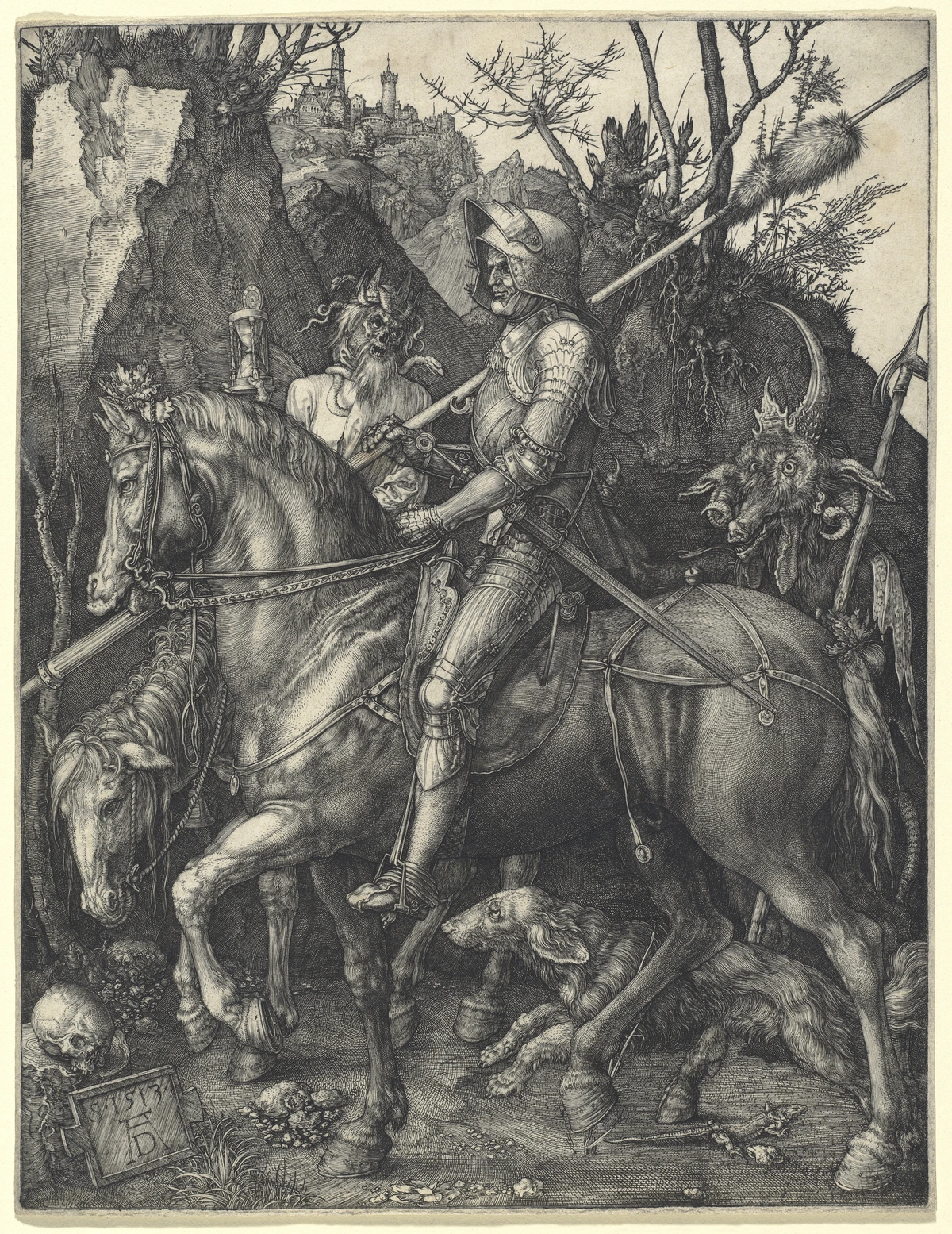
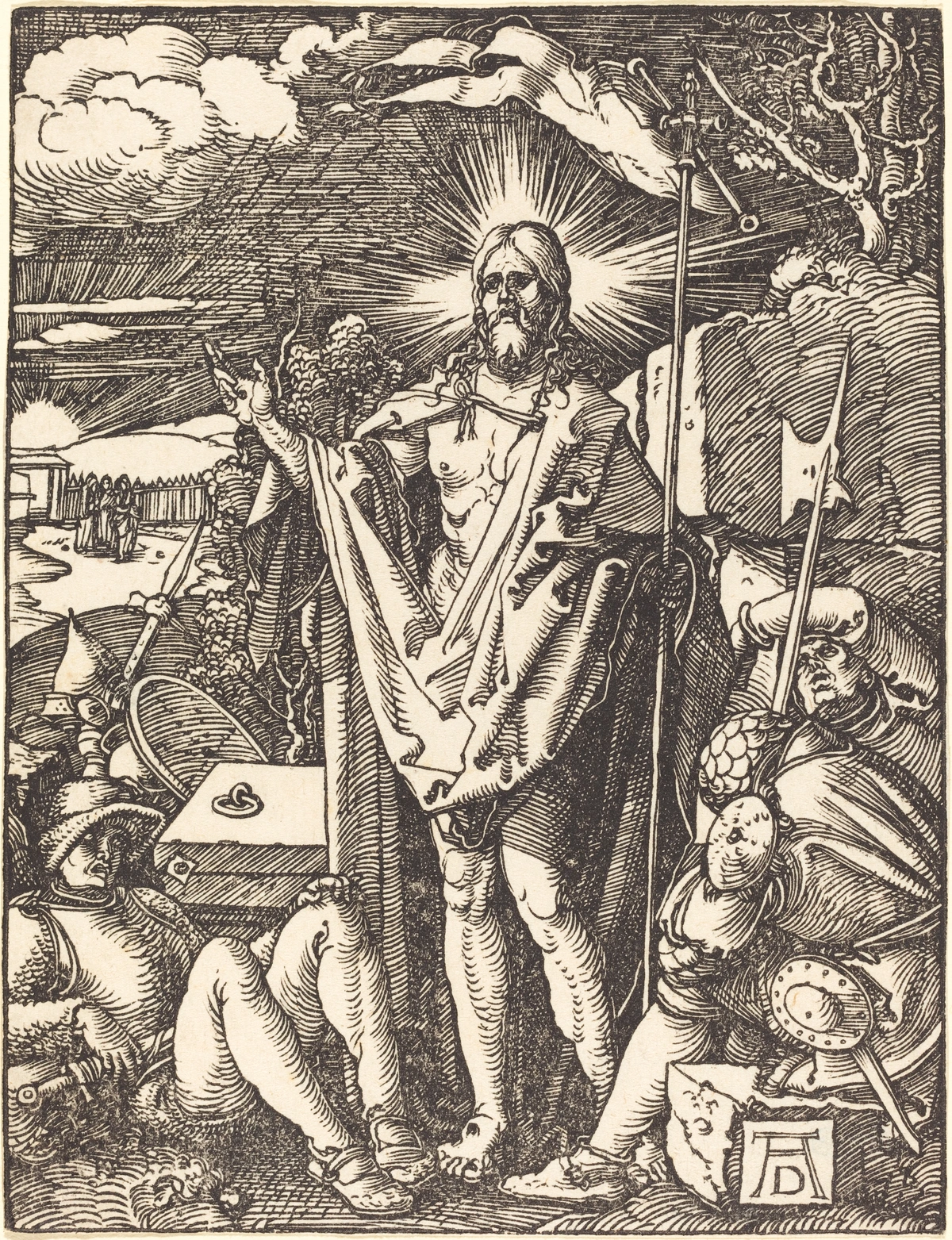
Before we dive into the labyrinth of symbols, it's vital to recognize that Melencolia I doesn't stand alone as a singular expression of Dürer's genius. It is part of a grander conceptual project, forming a profound triptych of human experience alongside two other equally masterful engravings. These three prints, created between 1513 and 1514, are more than just individual works; they represent a didactic exploration of human virtues and the human condition, often considered Dürer's most profound philosophical statements in print, a true philosophical summation. The term Meisterstiche, meaning "master engravings" in German, speaks to their exceptional technical skill and profound artistic and intellectual ambition. They stand as a powerful testament to Dürer's deep philosophical engagement and unmatched technical mastery. Interestingly, these Meisterstiche were highly valued even during Dürer's lifetime, contributing significantly to his fame and influence across Europe. Dürer's choice of depicting moral, theological, and intellectual virtue reflects a comprehensive Renaissance concern with the paths to human excellence and salvation, mirroring contemporary philosophical and theological frameworks that often divided human perfectibility into these three distinct realms.
Let's look at their chronological order and thematic focus:
The Three Meisterstiche
Artwork Title  | Creation Year | Virtue Represented | Core Theme | Impact/Representation |
|---|---|---|---|---|
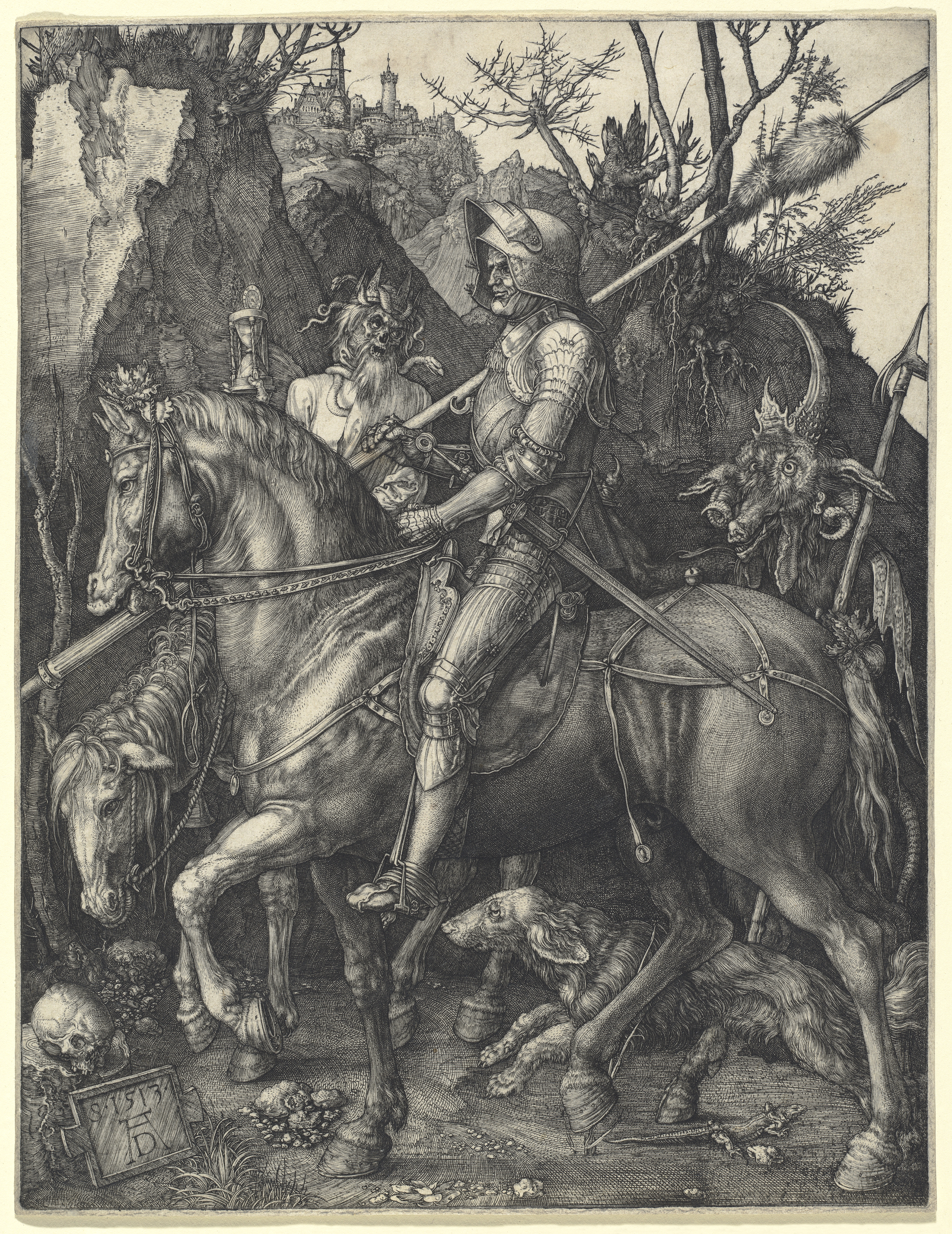
| Knight, Death, and the Devil | 1513 | Moral Virtue | Fortitude, unwavering faith, righteousness | Depicts a knight riding steadfastly, unperturbed by evil, embodying active, virtuous living. |
| Saint Jerome in his Study | 1514 | Theological Virtue | Scholarly contemplation, spiritual devotion | Shows a scholar finding peace and purpose in diligent study and intellectual discipline. |
| Melencolia I | 1514 | Intellectual Virtue | Creative struggle, burden of genius, paralysis | Confronts the internal battle of the creative mind, the agonizing pause between vision and execution. |
Some scholars even interpret this trio as representing the three main human capacities: action (Knight), contemplation (Jerome), and the difficult, often frustrating, act of creation (Melencolia). This trio is a testament to Dürer's monumental ambition to capture the full spectrum of human striving and the challenging paths to achieving these virtues, highlighting that even intellectual genius comes with its own profound burdens. It’s Dürer asking: how do we achieve greatness when the mind is our greatest asset, and our greatest challenge? Melencolia I, specifically, emphasizes that intellectual pursuit, while noble, comes with its unique psychological weight, a counterpoint to the more straightforward virtues of action and serene contemplation. It's almost as if Dürer is exploring the very prerequisites and pitfalls of human striving for excellence.
Dürer's Enigmatic Canvas: A Labyrinth of Symbols and the Melancholic Mind
Okay, let's be honest: the background of Melencolia I is where things get truly wild. Dürer didn’t just add a few props; he created an entire symbolic landscape, a dense allegorical escape room that demands our understanding of symbolism in Renaissance art. It’s not just a backdrop; it’s a visual labyrinth, an intellectual treasure hunt. This is where you, the viewer, become an active participant, piecing together layers of meaning. It’s as if Dürer opened up the melancholic mind and laid out its contents for us to decipher. Every object, no matter how small, whispers a story about intellect, despair, and the often-frustrating pursuit of knowledge. It's a testament to the era's fascination with hidden meanings, Neo-Platonist ideas of the ideal world, and the belief that the universe was structured by divine harmony. Let's dive into some of the most compelling objects and consider what they might say to our own creative minds, seeking not just facts, but the emotional and intellectual experience of this artwork.
Key Symbols in Dürer's Melencolia I
Symbol | Common Renaissance Interpretation | Potential Meaning in Melencolia I | Related Themes | Historical Context/Origin |
|---|---|---|---|---|
| The Polyhedron | Geometry, mathematical perfection, rational knowledge | The limits of human understanding and the imperfections of the physical world compared to divine ideals (Artificialia vs. Naturalia); a complex mathematical challenge | Limits of Reason, Imperfection of Human Endeavor, Creative Approximation | Ancient Greek geometry; Renaissance focus on perspective and Plato's Timaeus; Dürer's own geometric treatises. |
| The Sphere | Divine order, eternity, cosmic perfection | Higher, unattainable knowledge, standing in stark contrast to human striving; elusive truth; ideal Platonic Forms | Divine Aspiration, Inaccessible Perfection, Ideal Beauty | Platonic ideals; Ptolemaic cosmology; concept of the music of the spheres; contrasting Artificialia. |
| Scattered Tools | Craftsmanship, creation, practical knowledge | Unrealized potential, creative block, earthly knowledge falling short of divine inspiration; the tools of action rendered inert (e.g., burin, etching needle) | Creative Block, Unfulfilled Potential, Disconnect Between Mind and Hand, Stalled Virtù | Common workshop implements; artist's tools, particularly printmaking tools; linked to Artificialia. |
| Emaciated Dog | Fidelity, loyalty, keen senses, melancholy | Melancholic temperament, listlessness, languor, reflecting the draining nature of intellectual obsession; Saturnine influence; dormant intellect | Draining Genius, Quiet Suffering, Saturnine Gloom, Internal Observation | Humoral theory; classical associations with hounds and Hecate; astrological treatises; often linked to Saturn. |
| The Ladder | Aspiration, ascent to knowledge/enlightenment, Jacob's Ladder | A stalled journey, the impossibility of reaching higher truths; a profound spiritual longing unaddressed or temporarily blocked | Unattainable Ideals, Spiritual Longing, Suspended Progress, Blocked Ascent | Biblical narrative (Jacob's Ladder); Neo-Platonic philosophical ascent; a path not taken. |
| The Bell | Passage of time, a call to action, death | Inaction, stagnation, moments frozen in reverie; a memento mori against a backdrop of paralysis, its silence emphasizing the unheeded call to action | Procrastination, Mortality, Temporal Stagnation, Unheard Call | Ecclesiastical use; city life; medieval allegories of time; reinforces the melancholic's inaction. |
| The Hourglass | Time passing, mortality, urgency | Relentless march of time, the futility of inaction, fleeting creative moments slipping away; the finite nature of creative life | Passing Time, Urgency of Creation, Existential Awareness, Lost Moments | Ancient timekeeping; common memento mori; often linked to Saturn's slow passage. |
| The Magic Square | Divine harmony, intellectual prowess, hidden order, numerology | Underlying cosmic order, Dürer's mathematical genius; a glimmer of hope or a testament to reason within chaos, often associated with Saturn's mystical power | Hidden Order, Intellectual Depth, Cosmic Structure, Melancholic Attunement | Ancient Chinese, Indian, Arabic mathematics; Renaissance occultism; Pythagorean numerical philosophy; year 1514 embedded. |
| The Bat | Darkness, madness, melancholy, nocturnal creature | Reinforces the central theme, hinting at the influence of Saturn and esoteric knowledge; the banner announces the figure's state | Saturnine Influence, Esoteric Wisdom, Emblem of Melancholy, Cosmic Framing | Medieval folklore; astrological associations with Saturn; a creature of chthonic realms; frames the scene. |
| The Putto | Innocence, playfulness, artistic genius in embryo | The active, lighter side of creation; a contrast to the melancholic adult or a yearning for unburdened inspiration; youthful productivity (ingenium vs. studium), actively engaged in calculation or drawing | Unburdened Creation, Youthful Genius, Active Intuition, Counterpoint to Paralysis | Classical antiquity; Renaissance art conventions for allegorical figures, often representing ingenium (natural talent) vs. studium (laborious study). |
| Celestial Phenomena | Astrology, divine omens, cosmic influence | The pervasive influence of the stars, fate, or intellectual inquiry into the cosmos; harbingers of change or overwhelming cosmic data; comet/rainbow | Cosmic Forces, Fate, Divine Omens, Information Overload, Macrocosmic Influence | Ptolemaic astronomy; widespread astrological belief; portents in classical and medieval texts; linked to Saturn's power. |
| The Millstone | Labor, grinding, burden, weight of the world | The weight of intellectual pursuits, the constant effort and burden of profound thought; the pressure of work uncompleted; the heavy toll of genius | Intellectual Burden, Relentless Labor, Unfinished Tasks, The Grind of Thought | Agricultural tool; metaphor for toil and the cyclical nature of thought and effort. |
| The Window | Glimpse of the outside world, perspective, hope | A view of potential, unattainable perfection, or merely a reminder of the world beyond internal struggle; ignored external reality, inability to participate | External World, Unattainable View, Internal Focus, World Beyond | Artistic convention for depicting depth and outside world; a symbol of escape or inaccessible clarity; ignored by the figure. |
Let's delve into a few of these in more detail, exploring how they speak to the melancholic mind, often grouped by their overarching themes:
Symbols of Intellectual Pursuit and its Limits
- The Polyhedron & The Sphere: This strange, multi-faceted geometric solid, often called Dürer's solid or a truncated rhombohedron (a complex, irregular polyhedron with rhombic faces that have been cut off at several vertices), represents the complexities of geometry and the rational world. It’s a feat of three-dimensional mathematical rendering, a testament to Dürer’s mastery of perspective, painstakingly documented in his treatises like Underweysung der Messung (Treatise on Measurement, 1525), where he sought to apply scientific rigor to art. The adjacent Sphere, a perfect form, often representing divine order or cosmic perfection, stands in stark contrast.This juxtaposition is classic Dürer: human ingenuity striving for Artificialia (man-made knowledge, imperfect representations, and the products of human craft in the polyhedron), confronting the unattainable Naturalia (divine, ideal, eternal truths, and the perfection of nature in the sphere). The polyhedron, though geometrically complex, appears slightly irregular, symbolizing the limits of human understanding and the imperfections of the physical world compared to divine perfection. Think of it as a meticulously crafted blueprint that, once built, reveals tiny, unavoidable flaws. The sphere, representing absolute, unblemished perfection, remains unattainable because it exists in a realm beyond human capacity to create or fully grasp, a reminder that human intellect, no matter how profound, can only ever approximate divine harmony. Can you recall a time when your own painstaking efforts still felt a step removed from true perfection, leaving you with a similar melancholic awareness of the gap between ideal and reality? It's a fundamental tension for any artist.
- The Magic Square: This is arguably the showstopper of hidden meaning, a testament to Dürer’s own formidable mathematical genius. It's a 4x4 grid of numbers where every row, column, diagonal, and even the four corner cells and the four central squares, all add up to the number 34. Dürer cleverly embedded the year of the engraving, 1514, in the two middle cells of the bottom row (15 and 14), adding a personal and temporal layer to its meaning. This mathematical marvel represents divine order, intellectual prowess, and a hidden, intricate structure to the universe – a concept deeply rooted in Renaissance numerology and occult philosophy, which believed numbers held mystical power. Magic squares, in fact, have ancient origins, appearing in Chinese texts as early as 650 BCE and later gaining popularity in Arabic and Indian mathematics before arriving in Europe, often used in talismans and associated with planetary influences, particularly those of Saturn. Dürer's inclusion suggests that even in profound despair, there's an underlying, complex order to the cosmos that perhaps the melancholic mind is uniquely attuned to perceive – a mind like Dürer's, obsessed with perfect proportions and hidden structures. The magic square, for me, acts almost like a counterpoint to the central figure’s paralysis; it’s a tiny beacon of perfect, rational order in a landscape of creative chaos, hinting that even when the body is still, the mind can still apprehend ultimate harmonies and seek the elegant structure that underpins reality. Does its perfect order offer a glimmer of hope or a reminder of the universe's indifference to our personal struggles, challenging us to find meaning in precision even amidst overwhelming thought?
Symbols of Inaction and Time
- Scattered Tools: A plane, a saw, nails, a ruler, a hammer, a pair of pincers, a carpenter’s square – these are the precise tools of a carpenter, an architect, a craftsman, the very instruments of earthly creation. One can also discern specific printmaking tools like a
burin, ascraper, or anetching needle, emphasizing Dürer's own medium. They lie unused and discarded, not necessarily out of laziness, but as poignant symbols of unrealized potential or earthly knowledge that falls short of divine inspiration. The very act of creation, typically associated with these tools, is suspended. This isn't laziness; it's the agony of a mind that has conceived the perfect form but is paralyzed in its execution. These are the tools for Artificialia, for shaping the imperfect physical world, rendered inert by overwhelming thought and the inability to manifest virtù in action – the excellence in character and accomplishment through personal effort. The silent accusation of these idle instruments is palpable, a heavy weight on the creative spirit.The compass in the figure's hand, loosely held, further emphasizes this, representing the tools of measurement and intellectual inquiry rendered inert by profound, overwhelming thought. While a compass in Renaissance art typically symbolized precision and intellectual order, here, its loose grip signifies the failure of such order to overcome creative block.
I can relate to this so much. There are days my studio looks like a bomb went off – brushes everywhere, half-finished canvases, paint dried on the palette, the faint smell of turpentine and frustrated ambition lingering in the air. I’ve even had a few glorious accidents turn into interesting pieces, but usually, it's just the quiet agony of wanting to create but feeling a disconnect between the vision and the execution. It makes you want to grab those tools and just do something, anything! It's a reminder that even the most famous Renaissance artists faced their own versions of creative block, a struggle for artistic expression that transcends centuries. Sometimes, it's just the sheer overwhelm of possibilities, the impossibility of perfecting the internal vision. It's a silence that screams with all the thoughts that can't quite make it onto the canvas, a profound psychological paralysis in the face of limitless potential. It's that moment where you look at your perfectly organized Liquitex Basics acrylic paint set and think, 'Why bother?' This inaction is further underscored by the large millstone (symbolizing the weight of intellectual pursuits and uncompleted labor) and the glimpse of an outer world through a window in the background – a view of a town or landscape under celestial light. This window represents the potential for productive labor and external engagement, both ignored by the figure's profound introspection. It’s a powerful visual essay on the burden of unfulfilled virtù.
- The Ladder: Reaching into the sky, the ladder typically symbolizes aspiration, spiritual ascent, or a connection between the earthly and divine (think Jacob's Ladder from the biblical narrative, a common motif in Renaissance art representing a direct link to God). Here, however, it stands largely unused, its purpose unfulfilled, suggesting a stalled journey towards higher knowledge or the sheer impossibility of reaching ultimate truths through human effort alone. For an artist yearning for divine inspiration but stuck in earthly limitations, this unused ladder is particularly poignant, representing a path to enlightenment temporarily or perhaps permanently blocked by overwhelming thought and intellectual paralysis. It’s the visual equivalent of having a map to the stars, but your car won’t start, leaving you grounded and frustrated.
- The Bell & The Hourglass: These two objects are stark reminders of the relentless passage of time. The hourglass relentlessly measures time, highlighting mortality and the urgency of action, yet the figure remains motionless. The bell, often used to mark time, call to prayer, or signal an event, hangs silent, its potential clang unheard, further emphasizing the figure's inaction and the stagnation of the moment. Together, they create a poignant memento mori (a reminder of death and the fleeting nature of life) against a backdrop of paralysis, reminding us that even genius has a finite window for creation. Time slips by, and the melancholic mind is caught in its own temporal prison. What opportunities are we letting slip away while caught in our own thoughts?
Symbols of Melancholic Temperament and Cosmic Influence
- The Emaciated Dog: This seemingly listless dog, curled up and largely ignored, often symbolizes fidelity or loyalty in Renaissance art. However, in Melencolia I, its gaunt appearance and passive demeanor are thought to directly embody the melancholic temperament itself – a state of languor, inactivity, and quiet suffering. Its emaciation further suggests the draining nature of intellectual obsession or creative block, reflecting a depletion of energy that comes with profound internal struggle. It might also represent a keen, though currently dormant, intellect, suggesting that the melancholic mind, even in its stillness, holds a deep potential for insight and sensitive perception, a quiet observer of internal and external worlds. In some esoteric interpretations, the dog can be explicitly linked to Saturn, the planet governing melancholy, reflecting the burdensome and introspective qualities associated with its influence. Does this creature remind you of the quiet, almost invisible toll that deep creative immersion and intellectual pursuit can take on the physical self? It certainly makes me want to make sure I eat enough, and perhaps for the figure, get back to work!
- The Bat: This nocturnal creature, often associated with darkness, madness, and the night, hangs in the sky, unfurling a banner with the title "Melencolia I." Its presence emphatically reinforces the central theme, suggesting that melancholy is not just an internal state but a pervasive, almost cosmic condition. The bat, a creature of hidden spaces and twilight, carrying the title, seems to imply that this very darkness and introspection frames or announces the intellectual state depicted. In the Renaissance, the bat was also strongly linked to the influence of Saturn, the planet traditionally associated with melancholic individuals. Saturn, a slow-moving, cold, and heavy planet, was believed to confer both profound intellectual genius and deep introspection, but also misfortune, gloom, and a tendency towards solitary contemplation and even obsession. It hints at the hidden, esoteric knowledge that the melancholic mind, attuned to darkness and introspection, might uniquely perceive.
- The Putto: Often overlooked, a small winged figure (a putto) sits atop the millstone, actively engaged in writing, drawing, or calculation. This is a stark contrast to the brooding Melancholia. This figure, often symbolizing youthful genius or the lighter, more active aspect of creation, provides a crucial counterpoint. Art historians like Panofsky interpret the putto as representing ingenium, or natural, unburdened talent, a foil to the adult Melancholia who grapples with studium, the laborious, intellectual application of talent. It’s as if the putto is busily trying to make sense of the very chaos the main figure is paralyzed by, perhaps sketching the geometric solid, or diligently recording complex calculations. It suggests that creative energy, while sometimes paralyzed in the adult, also exists in a more playful, productive, and unburdened form. It's the active foil to the main figure's contemplative inaction, perhaps representing the intuitive, easier form of creation that the main figure yearns for but cannot currently access, or even a past, less burdened version of the artist. It’s that part of you that just wants to scribble and play, unburdened by perfection, an echo of pure inspiration.
- Celestial Phenomena & Saturn's Grasp: In the background, a comet or meteor blazes across the sky alongside a rainbow – natural phenomena that in the Renaissance were often interpreted as divine omens, harbingers of change, or powerful signs of celestial influence on human temperament and events. For instance, comets were often seen as portents of great upheaval or divine judgment (a literal sign from the heavens), while rainbows symbolized divine promise or a bridge between heaven and earth. Dürer, like many of his contemporaries, was deeply fascinated by astrology, which posited that heavenly bodies directly influenced earthly affairs and human character. While Saturn's pervasive influence is central to melancholy, Renaissance astrology also considered the interplay of all planets, each contributing unique qualities, creating complex individual temperaments and destinies. For instance, Jupiter might bring ambition, Venus love, Mars aggression – but Saturn's gravity was always paramount in the melancholic's chart. The presence of these dramatic celestial elements, especially linked to Saturn’s dominant influence, further deepens the cosmic scope of Melencolia I, suggesting it’s not just an individual state but a reflection of universal, inescapable forces. This meticulous inclusion hints at the pervasive belief in the interconnectedness of the human microcosm with the vast, mysterious macrocosm. Do these celestial bodies represent fate, or merely another layer of overwhelming cosmic data for the melancholic mind to process, contributing to its paralysis? In our modern age, I can't help but draw parallels to information overload – the constant deluge of data, news, and digital stimuli that can leave us feeling equally overwhelmed and paralyzed, much like Dürer’s figure grappling with the vast, unfathomable cosmos. It makes you wonder how much our screens contribute to modern melancholy.
Looking at all this, you realize Dürer was a master of packing dense meaning into every square inch. The sheer density of information, the multiple layers of symbolism, can be overwhelming – and that’s precisely the point. The melancholic mind is often overwhelmed by data, symbols, and possibilities, leading to a kind of glorious, frustrating paralysis. It’s a state I think many contemporary artists and thinkers can still deeply identify with, an experience of creative and intellectual saturation that transcends the centuries, making Melencolia I a truly timeless work.
Alternative Interpretations and Scholarly Debates
While the interpretation presented here, heavily influenced by Panofsky and Saxl's Neo-Platonic and astrological readings, is widely accepted, Melencolia I has, over centuries, been subject to various other scholarly debates and alternative interpretations. The very ambiguity of the work allows for a rich tapestry of potential meanings.
- Personal Grief or Critique: Some argue that Dürer might have been less concerned with a precise classification of melancholy and more with a generalized portrayal of intellectual despair or the artist's personal struggles following the death of his mother, or even a critique of overly rigid systems of thought.
- Alchemical Readings: Others have explored potential alchemical readings, suggesting that the diverse tools, geometric shapes, and celestial phenomena hint at an alchemist's workshop. The melancholic figure might be seeking a transformative spiritual or material truth through processes like
calcination(breaking down),dissolution(liquefaction), orcoagulation(solidification) – stages often associated with profound mental and physical states in alchemical philosophy. - Limitations of Scientific Pursuits: Scholars like Heinrich Wölfflin and Fedja Anzelewsky have suggested readings focused on the limitations of specific scientific or mathematical pursuits of the era, rather than a broad philosophical statement on melancholy itself. This ongoing dialogue only deepens the engraving's allure, reminding us that great art often poses more questions than it answers. For contemporary artists, engaging with these diverse interpretations can open new avenues for understanding their own creative processes and struggles, demonstrating the enduring relevance of Dürer's work.
Frequently Asked Questions (FAQ)
Here are some common questions about Dürer's enigmatic masterpiece, Melencolia I:
What is the magic square in Melencolia I?
It’s a remarkable 4x4 grid of numbers where every row, column, diagonal, and specific other combinations (like the four corner cells or the four central cells) consistently add up to the number 34. Dürer cleverly embedded the year of the engraving, 1514, in the two middle cells of the bottom row (15 and 14), adding a subtle personal touch. This mathematical marvel symbolizes underlying divine order, intellectual prowess, and a hidden, intricate structure to the universe – a concept deeply rooted in Renaissance numerology and occult philosophy, which believed numbers held mystical power and were connected to cosmic harmonies (like the Pythagorean concept of the music of the spheres). It testifies to the melancholic mind's unique ability to apprehend profound cosmic structures, even amidst apparent chaos; it's a small island of perfect, rational order in a sea of creative struggle.
What does the title Melencolia I mean?
"Melencolia" refers to melancholy, a temperament associated with introspection, sadness, and uniquely, artistic and intellectual genius during the Renaissance, often influenced by humoral theory and Neo-Platonism. The "I" specifically points to the first of three types of melancholy described by the German humanist Cornelius Agrippa in De occulta philosophia. This 'Imaginative' type was linked to artists and craftsmen, characterized by a powerful imagination struggling to reconcile with reason and execution, often leading to creative paralysis and profound dissatisfaction. This type was also notably linked to furor divinus or "divine madness," a concept championed by Marsilio Ficino, suggesting that melancholic individuals could experience ecstatic states granting them unique access to higher truths. Dürer’s use of this classification was a profound act of artistic self-reflection, placing his own creative struggles within a recognized philosophical framework.
What is the strange geometric shape in the engraving?
It's a complex three-dimensional polyhedron, often identified as Dürer's solid or a truncated rhombohedron. This is a highly irregular, many-faced solid, a feat of advanced mathematical and geometric principles that Dürer meticulously studied and wrote about in his theoretical treatises, like Underweysung der Messung. However, its slightly irregular appearance also suggests the limits of human knowledge, or Artificialia (man-made, imperfect representations), and the imperfections of the physical world compared to a higher, divine perfection, or Naturalia (ideal, eternal truths). It leaves the melancholic mind in perpetual contemplation of these inherent limitations, a reminder that human intellect, no matter how profound, can only ever approximate divine harmony.
Why are the tools in Melencolia I unused?
The scattered, unused tools (compass, plane, saw, hammer, burin, etc.) symbolize creative paralysis or intellectual stagnation. They represent the potential for creation and earthly knowledge that the melancholic figure is currently unable to utilize. This highlights the theme of creative block, unrealized potential, and the profound frustration that can accompany intense intellectual thought, where the mind is rich with ideas but unable to execute them. They are poignant reminders of stalled ambition and the disconnect between vision and action that any artist can relate to. The burden of virtù without the ability to apply it.

What is the winged figure in Melencolia I?
The central winged figure is widely interpreted as a personification of Melancholy, not a traditional serene angel. Her wings suggest a capacity for soaring thought and divine inspiration, yet her slumped posture, introspective gaze, and inert tools portray the heavy burden and profound frustration that often accompany intense intellectual and creative genius. She embodies the profound weight of knowledge and the struggle to actualize it, a universal representation of artistic and intellectual struggle, specifically classified as Agrippa's 'Imaginative' type of melancholy. She is a powerful symbol of the paradox where immense potential leads to paralysis, a genius burdened by its own potential.

What are Dürer's "Meisterstiche"?
Dürer's "Meisterstiche" (master engravings) refer to a trio of highly significant prints he created between 1513 and 1514: Knight, Death, and the Devil, Saint Jerome in his Study, and Melencolia I. These works form a conceptual project, serving as profound allegories for different aspects of a virtuous human life:
- Knight, Death, and the Devil represents moral virtue (fortitude and unwavering faith).
- Saint Jerome in his Study embodies theological virtue (scholarly contemplation and devotion).
- Melencolia I focuses on intellectual virtue (the creative struggle and burden of genius).
The term, from German, literally means "master engravings," denoting their exceptional artistic and technical achievement. They showcase Dürer's unparalleled technical mastery and his deep philosophical engagement with the human condition, illustrating the varied paths and burdens of human striving.
How does Melencolia I relate to other works by Dürer?
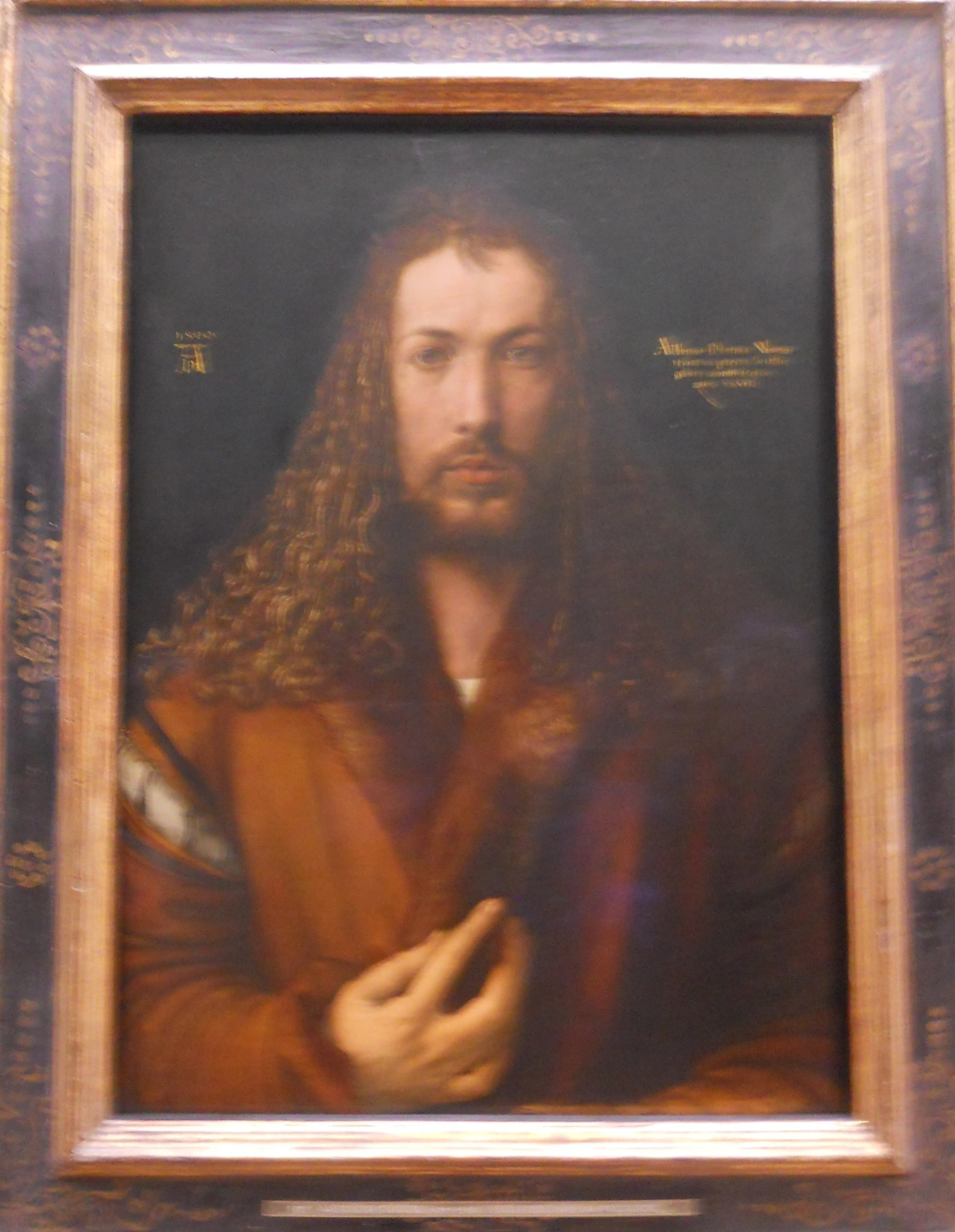
Melencolia I is considered one of Dürer's three "Meisterstiche" (master engravings), alongside Knight, Death, and the Devil and Saint Jerome in his Study, forming a profound, didactic exploration of human virtues and the complex internal states associated with genius. Dürer’s broader theoretical works on geometry and human proportion, such as Underweysung der Messung and Vier Bücher von menschlicher Proportion, further illuminate his intellectual rigor, which is both celebrated and questioned within Melencolia I. His many self-portraits, for instance, often reveal a similar intensity of gaze and deep self-awareness, hinting at the introspection inherent in his creative process, making Melencolia I a kind of psychological self-portrait. This piece continues to influence discussions on art and its meaning, as seen in institutions like the Den Bosch Museum, which often feature Renaissance works.
What were the prevailing medical beliefs about melancholy during Dürer's time?
During Dürer's time in the Renaissance, medical understanding was largely based on the ancient humoral theory, which posited that the human body and temperament were governed by four main fluids: blood (sanguine), phlegm (phlegmatic), yellow bile (choleric), and black bile (melancholic). An imbalance in these humors was believed to cause various ailments. While an excess of black bile was traditionally associated with negative conditions like illness, madness, and deep despair, the Renaissance saw a radical re-evaluation. Influential thinkers, especially Neo-Platonists like Marsilio Ficino, reinterpreted classical texts to link melancholy paradoxically with exceptional creativity and profound intellectual prowess. This shift, exemplified by Ficino's concept of furor divinus ("divine madness" or ecstatic state), transformed melancholy from a mere affliction into a potential mark of genius, suggesting it granted unique access to higher truths and inspired artistic or intellectual insight.
Where can one see Melencolia I?
As a highly influential and iconic print, Melencolia I is part of many major museum collections around the world. Prominent institutions such as the British Museum in London, the Metropolitan Museum of Art in New York, the Rijksmuseum in Amsterdam, the Albertina in Vienna, and the Städel Museum in Frankfurt all hold copies. The Den Bosch Museum may also feature exhibitions or discussions related to Dürer or Renaissance printmaking. Due to its delicate nature as an engraving, it may not always be on permanent display, but it is frequently featured in special exhibitions dedicated to Dürer or Renaissance printmaking, making it a globally accessible masterpiece.

What are the most debated symbols in Melencolia I?
Virtually every object in Melencolia I has been subject to scholarly debate due to Dürer's intentional ambiguity and rich symbolism. However, the polyhedron (its exact geometric form and meaning), the magic square (its astrological significance and connection to Dürer's personal life and the embedding of 1514), and the identity and exact state of the winged figure itself are among the most intensely discussed. The disarray of the tools (especially their specific printmaking relevance) and the species and demeanor of the emaciated dog also frequently spark discussion. These debates highlight the enduring mystery and intellectual challenge embedded in the engraving, demonstrating Dürer's genius in crafting a work that continually invites new interpretations across centuries.
How does Melencolia I relate to modern concepts like imposter syndrome or creative burnout?
Dürer's Melencolia I resonates profoundly with modern concepts like imposter syndrome and creative burnout. The winged figure, with her immense capacity for thought yet paralyzed in action, perfectly embodies the imposter syndrome – the feeling of intellectual fraud despite evidence of competence. She possesses all the tools and potential but is burdened by self-doubt and the inability to translate vision into reality. Similarly, the overwhelming density of symbols, the feeling of intellectual saturation, and the draining nature of profound thought directly mirror creative burnout, where an artist is mentally exhausted and unable to create, despite a rich internal world. The piece suggests that these struggles are not new, but timeless aspects of the creative and intellectual condition, making Dürer's work surprisingly contemporary.
Enduring Resonance and Lasting Legacy: Why Melencolia I Still Haunts Us Today
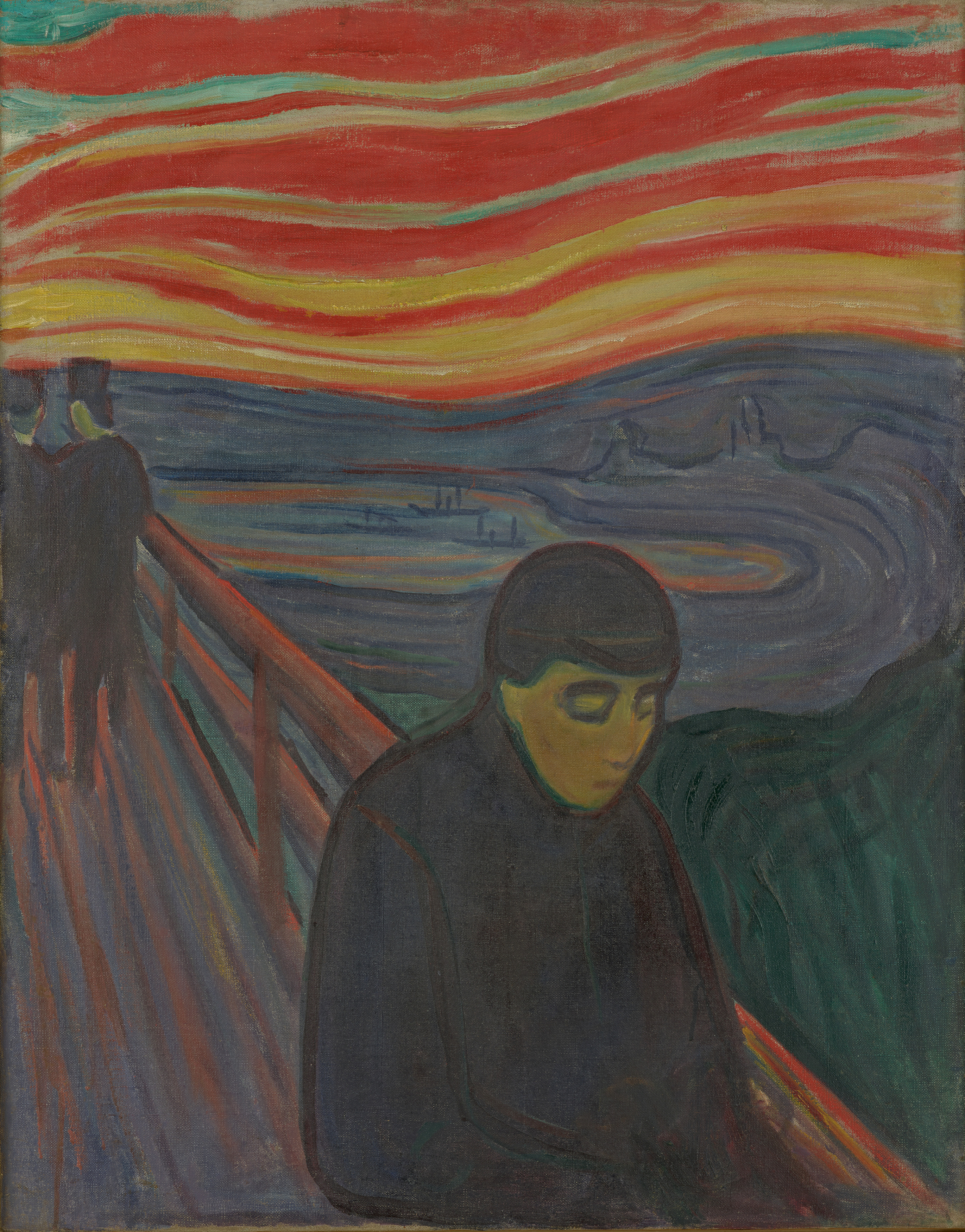
Harking back to that first glance, after we've painstakingly peeled back the layers of Dürer's meticulous symbolism, we are left not just with historical insight, but with a profound and haunting resonance that reaches into our own lives. Melencolia I endures because it doesn’t offer easy answers. It validates the profound human feeling of being stuck, that agonizing pause between vision and execution. It tells us that frustration, doubt, and the feeling of being overwhelmed are not just modern problems; they are part of the fundamental creative human condition, a timeless struggle for meaning and expression. Centuries later, the raw emotion of intellectual despair and the burden of genius resonate deeply, much like modern concepts of "imposter syndrome," "analysis paralysis," or creative "burnout" in our hyper-connected digital age, and echo the raw emotionality found in works like Edvard Munch's 'Despair'. Both works capture an intense, almost physical manifestation of psychological torment.

This engraving, for me, is a powerful reminder that the path of creation is rarely a straight line. It's messy, full of abandoned tools, moments of doubt, and strange geometric shapes that don’t quite make sense at first glance. I've had entire weeks where I felt like Dürer's figure, just staring blankly at my canvas, all the colors and forms in my head refusing to materialize. Sometimes, the most profound thing you can do is just sit there, head in hand, and think – allowing the chaos to coalesce, or simply accepting the pause. It acknowledges the inherent beauty in that struggle, the depth of emotion that accompanies genuine intellectual pursuit, a sentiment echoed in Symbolism's exploration of subjective realities, Surrealism's dive into the subconscious, the raw emotionality of Abstract Expressionism by artists like Mark Rothko and Francis Bacon, or contemporary figures exploring information overload, digital fatigue, and the conceptual artists who prioritize the idea over its execution, or even question the role of human creativity in the age of AI. Artists like Jenny Saville, with her deeply psychological portraits, or Bill Viola, with his meditative video installations exploring human states, continue Dürer's legacy of profound introspection. It’s why art discussions in galleries continue to thrive around such works, because we all seek to connect with these universal human experiences and the timeless questions they pose. The maddening ambiguity Dürer crafted so carefully continues to challenge and reflect our own internal landscapes, especially in an age of information overload and constant demands for 'productivity.' The melancholic pause can be a necessary, albeit frustrating, part of growth, a precursor to modern psychological exploration in art.
The impact of Melencolia I extends far beyond its immediate Renaissance context. It has profoundly influenced countless artists, writers, and thinkers across centuries. From poets like Goethe and authors like Balzac, who referenced its themes, to later Symbolist artists such as Odilon Redon and Max Klinger who found kinship in its enigmatic mood, Dürer's engraving cemented itself as the archetypal representation of intellectual and creative melancholy. Its visual complexity and philosophical depth have ensured its place in academic discourse, regularly being reinterpreted through lenses ranging from art history and psychology to philosophy and even early modern science. The enduring economic value of Dürer's prints, often fetching high prices at auction, further underscores their lasting significance and collector interest, solidifying his status as a master whose influence continues unabated. It has even appeared in popular culture, in films and novels, subtly shaping our collective understanding of genius and its burdens.
Finding Your Own Way Through the Creative Pause
If Dürer's figure resonates with you, know that this pause, this struggle, is a vital part of the creative process. It's in these moments of apparent inactivity that ideas often coalesce, problems are silently solved, and new perspectives emerge. I've found it invaluable to step away from the easel and let my mind wander, much like Dürer himself, who integrated complex observations and philosophical currents into his work. Instead of fighting the 'brain-fog,' perhaps embrace it as a period of deep contemplation. Sometimes, stepping away from the tools and allowing for quiet introspection is precisely what unlocks the next breakthrough. The very act of engaging with complex art like Melencolia I can be a form of creative processing in itself. It's a reminder that true virtù in artistic pursuit isn't just about constant output, but about the quality and depth of the internal journey. I remember a particularly stubborn painting that sat unfinished for months, a source of quiet exasperation. It wasn't until I stopped forcing it and allowed my subconscious to work that the solution emerged almost fully formed. Melencolia I is a masterpiece not because it’s perfect, but because it’s so perfectly human in its beautiful, intellectual, and creative mess. It’s an enduring testament to Dürer’s profound insight into the human psyche and the burdens of genius, solidifying his legacy as a bridge between Northern European and Italian Renaissance art and a pioneer of printmaking.
And in that, it connects us across centuries to the universal highs and lows of the creative spirit – a spirit I constantly wrestle with and celebrate in my own art. Perhaps my abstract works, with their vibrant forms and complex layers, are a modern echo of Dürer's own attempts to grapple with the intangible. I invite you to explore my gallery to see how I translate these complex emotions into vibrant, abstract forms, or perhaps even find a piece to buy that resonates with your own journey of creative introspection. How do you navigate your own moments of creative paralysis, and what does Dürer's figure teach you about embracing the productive pause?