Who Was Alfred Stieglitz? The Photographer Who Changed Art Forever
Discover how Alfred Stieglitz revolutionized photography as art and championed modernist masters. The ultimate guide to his legacy.

Who Was Alfred Stieglitz? The Photographer Who Changed Art Forever
Imagine standing in a gallery where a photo isn’t just a picture—it’s a passionate, trembling declaration of beauty. That’s the world Alfred Stieglitz built. I’ve spent countless hours staring at his work—like The Steerage with its geometric chaos, or Georgia O’Keeffe’s sensual blooms—and thought: How did a man born in 1866 make a blurry, smelly cityscape feel more alive than reality itself? Stieglitz wasn’t just a photographer; he was a relentless advocate, a stubborn visionary who dragged photography into the museum and poured art into our everyday moments.
The Man Who Refused to Keep Quiet
Picture this: A young Stieglitz in Berlin, 1887, clutching a bulky camera, trying to explain to stuffy academics why photography deserved the same reverence as oil paints. They laughed. Photography? That mechanical device? It was for postcards, not galleries. But Stieglitz heard something different. He saw poetry in foggy windows, drama in train tracks, and transcendence in the mundane. This was before smartphones, before Instagram—he was fighting for recognition when most thought photography was just science.
His life reads like a manifesto:
- Born: January 1, 1866, Hoboken, New Jersey (to German-Jewish parents)
- Died: July 13, 1946, New York City
- Rebellious Legacy: Founder of revolutionary art spaces, husband to Georgia O’Keeffe, and tireless champion of "truth-to-medium"
I remember feeling this resistance myself. Early in my own art journey, I’d get those patronizing smiles when I said I worked with abstract color. "But what’s it of?" they’d ask. Stieglitz faced similar questions, except his critics didn’t just misunderstand his art—they dismissed his entire medium.
The Battle for Photography’s Soul
Stieglitz fought on two fronts: technical perfection and artistic rebellion.
The Technical Revolution: Beyond the Camera
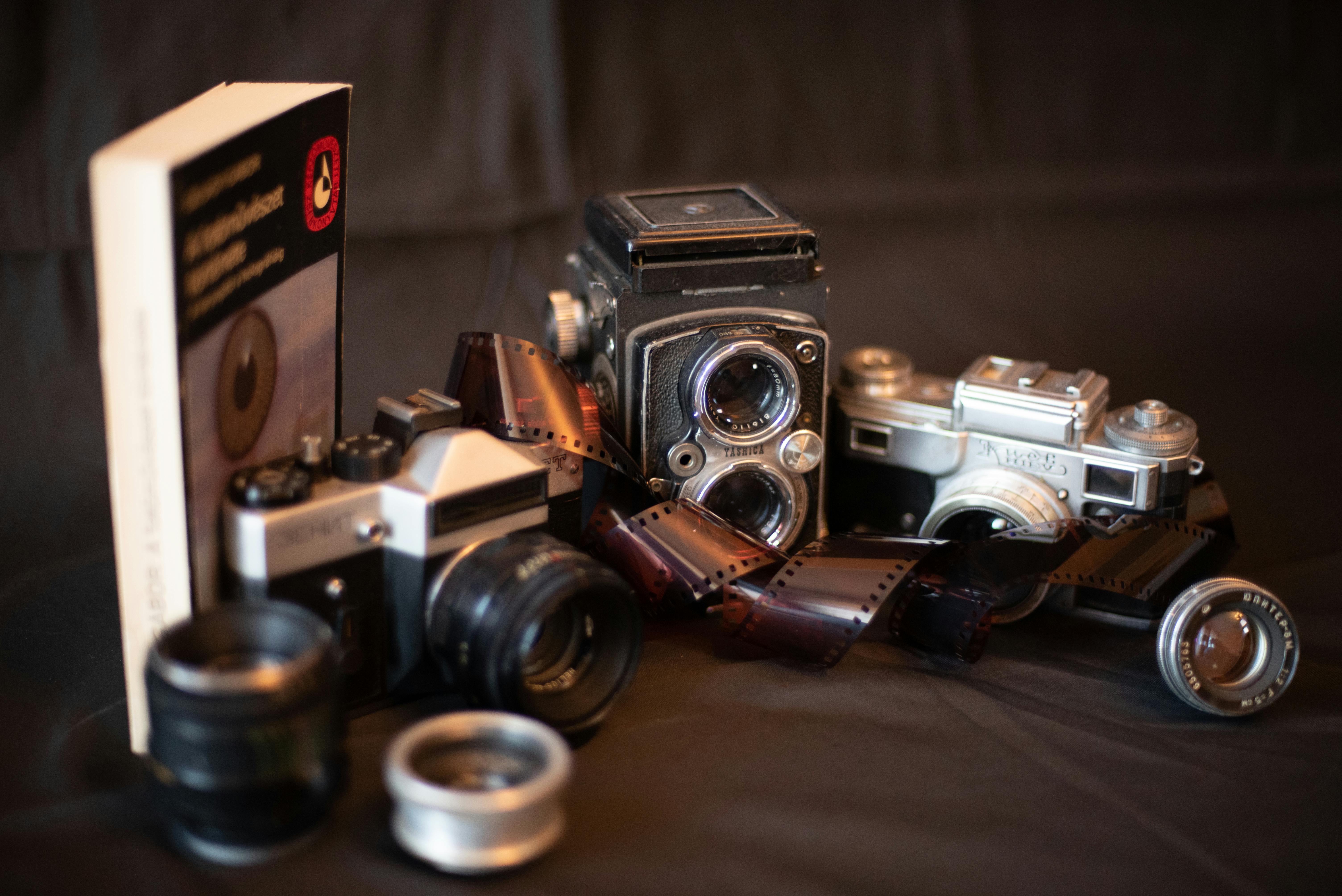
What many overlook is how Stieglitz was simultaneously a technical innovator and an artistic purist. While other photographers were busy making their images look like paintings (the pictorialist approach), Stieglitz was pushing the technical boundaries of what photography could do. He experimented with different printing processes—platinum, gum bichromate, photogravure—each chosen not for its ability to mimic other media, but for its unique visual qualities.
His technical innovations were revolutionary:
- Platinum printing: Used platinum salts instead of silver, resulting in prints with a matte finish, incredible archival stability, and tonal range that no other process could match
- Camera portraiture: He developed techniques for capturing unposed moments, using natural light and long exposures to reveal the inner truth of his subjects
- Large format cameras: He worked with 8x10 view cameras, requiring careful composition and technical mastery that became part of his artistic signature
I remember reading about his darkroom techniques and being amazed at the level of precision involved. This wasn't just about taking pictures—it was about mastering an entire craft from lens to print.
Pictorialist Dreams vs. Modernist Reality
In the 1890s, the "elite" style was Pictorialism—photos that mimicked watercolors or etchings, often with soft focus and manipulated prints. Think moody Victorian ladies in velvets. It was respectable, safe, and… boring. Stieglitz mastered it, then set out to destroy it. Why? Because he believed photography had its own language. "Why force it into a dress?" he’d ask himself. "Let it speak in its own voice."
His shift began with The Steerage (1907). This photo of steerage-class immigrants feels like a Cubist poem. Clunky machinery, textured clothes, striped clothing—no soft focus, no prettiness. Just unvarnished life. Critics hated it. But to photographers, it was a gunshot start. This was Straight Photography: clear, honest, unapologetic. Years later, I showed print collectors his City of Ambition (1910)—that grid-like urban wilderness, that brutalist sky—and they’d pause. "But why keep the chimneys?" They’re part of the symphony, I’d reply. Stieglitz would’ve nodded.
The Galleries That Defied Conventions
Now, imagine renting a gallery in Manhattan called "291" and filling it with European modernists before America even knew their names. That’s Stieglitz’s audacity. In 1905, when Cézanne and Matisse were labeled "barbarians," Stieglitz showed them. When Rodin refused to travel, Stieglitz brought his drawings to New York. His tiny, cramped space smelled of turpentine and rebellion.
Years later, I visited artists’ studios and saw their desperation for walls. Stieglitz was the wall. His later galleries—An American Place—became sanctuaries for trailblazers like Georgia O’Keeffe, Arthur Dove, and John Marin. He didn’t just show their work; he believed in it when collectors called it ugly or incomprehensible. That’s when I realized: Great artists need great advocates. They need someone like a curator at a museum like den-bosch-museum, who saw what others couldn’t.
An American Place: The Second Generation
After 291 closed in 1917 due to financial pressures and the outbreak of World War I, Stieglitz didn't give up. In 1929, he opened "An American Place," a larger, more sophisticated gallery that focused exclusively on American artists. This wasn't just a continuation—it was an evolution.
An American Place represented Stieglitz's mature vision:
- American Focus: Shifted from European imports to homegrown American talent
- Long-term Relationships: Worked deeply with a core group of artists rather than rotating exhibitions
- Educational Mission: Gallery doubled as a space for critical discourse and artistic development
- Commercial Sustainability: Developed more sustainable business practices while maintaining artistic integrity
The gallery featured a tight-knit community of artists who became known as the "Stieglitz Circle":
Artist  | Relationship to Stieglitz | Artistic Contribution | Key Works at An American Place |
|---|---|---|---|
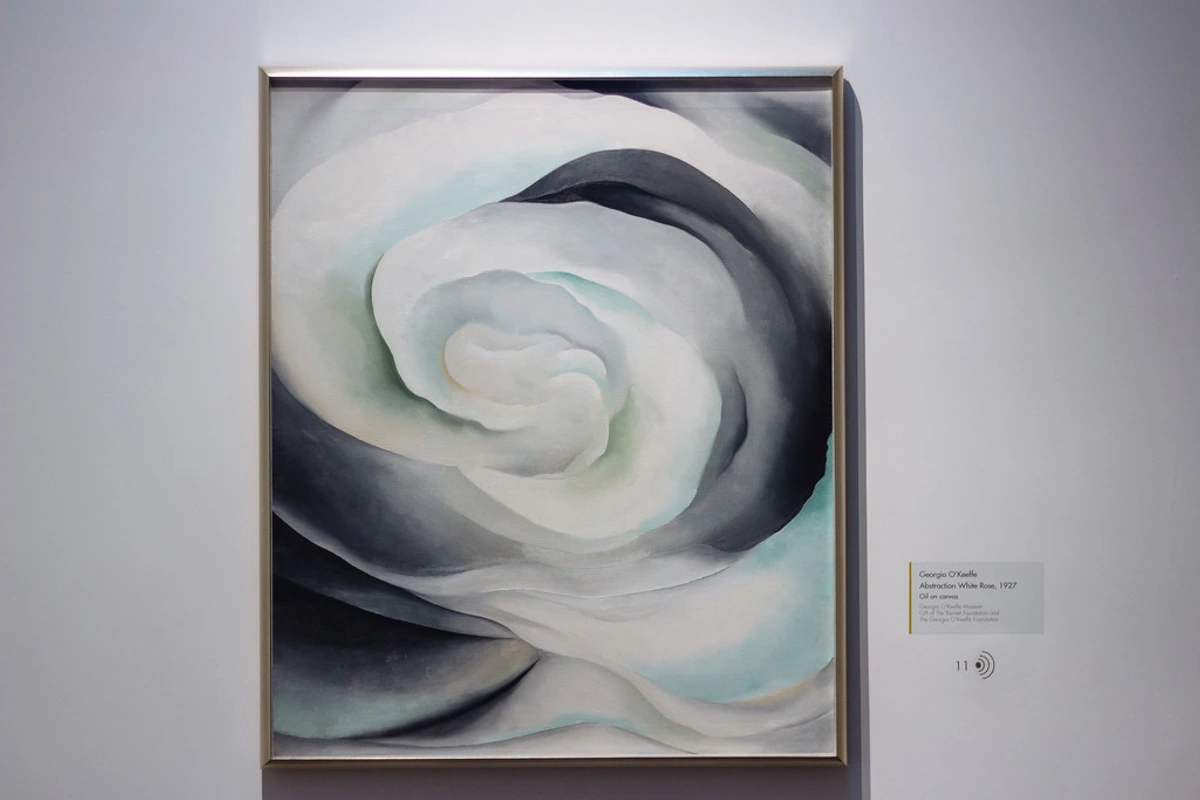
| Georgia O'Keeffe | Wife and muse | Abstract botanicals and landscapes | Black Iris, Ram's Head White Hollyhock |
| Arthur Dove | Close friend and protégé | Nature-based abstractions | Fog Horns, Me and the Moon |
| John Marin | Longtime collaborator | Abstract urban scenes | Brooklyn Bridge series, Manhattan paintings |
| Marsden Hartley | Fellow modernist | Abstract symbolism | War Motif series, German period works |
| Charles Demuth | Gallery artist | Precisionist cityscapes | My Egypt, I Saw the Figure 5 in Gold |
| Paul Strand | Student turned colleague | Straight photography pioneer | Wall Street, Blind Woman |
What made An American Place special was its atmosphere. Unlike the commercial galleries of today, it felt more like a living room where serious art conversations happened. Stieglitz would spend hours discussing philosophy, literature, and music with visitors, believing that art couldn't exist in a vacuum. I've always admired this holistic approach—how true art appreciation involves understanding the entire cultural ecosystem that produces it.
Camera Work: The Bible of Photographic Art
In 1903, Stieglitz launched Camera Work, a art quarterly that was part magazine, part revolution. Each issue was a luxury—handmade photogravures, essays on philosophy, and reproductions of Picasso along with Steiglitz’s own work. It was ridiculously expensive. Most issues died printing-press costs, but Stieglitz kept it going for 15 years. Why? Because he needed to prove photography wasn’t inferior. He printed words from thinkers like Gertrude Stein beside images by Edward Steichen, creating a dialogue between arts.
I found myself dog-earring my own copy of old art journals, asking: Where’s this cultural conversation today? Between digital and analog? Color and monochrome? Stieglitz merged mediums like no one else—he showed O’Keeffe’s paintings next to his photos, declaring, "It’s all one language."
Stieglitz’s Key Techniques and Philosophy
To understand his genius, look at his toolkit:
Technique | What It Did | Why It Mattered |
|---|---|---|
| Platinum prints | Used platinum salts for rich, matte tones | Elevated prints beyond "mere" reprints |
| Camera Portraiture | Captured subjects unposed, raw emotions | Made photos rival classical paintings |
| Equivalent | Abstract scenes expressing inner states | Proved photos could be psychological |
| Gallery curation | Hung art innovatively (eye-level, lighting) | Transformed how art was experienced |
He called it "Equivalents" when photos weren’t of something, but signified something—like his cloud photos that felt like abstract portraits of the soul. Revolutionary.
Why He Still Matters Today
Stieglitz’s battles feel eerily familiar. In a world where filters make everyone a "photographer," he’d ask: Where’s the art? Where’s the risk? I see parallels in abstract art—like the bold, textured work on /buy—where color and form speak louder than literal representation. Stieglitz paved that road. He taught us that art isn’t always pretty. It’s honest. It forces us to see.
His love story with O’Keeffe adds intrigue—he promoted her fiercely while their bond deepened. This dynamic duo challenged art’s gender norms. His 300+ portraits of her? Less about documenting and more about revealing a muse as an artist herself. Their partnership reads like a collaborative manifesto.




FAQ: Everything You Wanted to Know About Stieglitz
Q: Was Stieglitz rich? He inherited wealth but lost it in the 1928 stock market crash. Galleries closed, Camera Work died—Yet he kept teaching, writing, and championing artists. Poverty fueled his rebellion.
Q: Who were the "291" group artists? Think of them as the Avant-Garde Avengers: Georgia O’Keeffe, Marsden Hartley, Charles Demuth, Paul Strand, and European icons like Rodin, Brancusi, and Matisse. Stieglitz called them "the pioneers." Critics called them "crazy."
Q: What happened to his photos? Major collections reside at the Metropolitan Museum of Art, National Gallery of Art, and the Beinecke Rare Book & Manuscript Library at Yale. Many were preserved by his niece, Barbara Engelhardt.
Q: How did he change photography legally? His exhibitions and essays shifted photography from "craft" to "fine art." Courts later cited his work to declare photography legally copyrightable as art. Not small potatoes!
Q: Should I see his work in person? Absolutely. Prints like Spring Showers (1901) have a tactile depth no digital scan can capture. If you’re in New York, the Met’s photography wing is a pilgrimage site. Check out timeline for art history moments—Stieglitz anchors the early 1900s section.
Q: Did he ever get tired of fighting? Friends noted his exhaustion in later years. Yet he’d still stay up till dawn talking art with young photographers. Burnout came—but quitting didn’t. That’s the lesson: Change takes stubbornness.
The Unseen Focus: Legacy Beyond the Frame
Stieglitz’s greatest portrait isn’t of a person—it’s the American art world itself. He built museums with his voice. He proved that medium isn’t destiny—whether it’s pigment, pixels, or platinum. Next time you scroll past an image that stops you, pause. Ask: Is it just a picture? Or a vibration? That’s the question Stieglitz lived. And that? That’s art.