Decoding Rossetti: The Hidden Meanings in His Symbolic Art
Explore the rich symbolism and mythological references in Dante Gabriel Rossetti's art. Uncover the hidden meanings behind his lush, romantic compositions.

Decoding Rossetti: The Hidden Meanings in His Symbolic Art
I remember the first time I stood in front of a Rossetti painting. It was like stepping into a dream—rich colors, intricate details, and a sense of mystery that pulled me in. But what really fascinated me were the hidden meanings, the symbols tucked away in every corner. Let’s dive into the world of Dante Gabriel Rossetti and uncover the secrets behind his symbolic art.
Rossetti’s work is not just about aesthetics; it’s a tapestry of stories, emotions, and ideas. Each brushstroke carries weight, and every symbol invites interpretation. Whether you’re an art enthusiast or a curious observer, understanding Rossetti’s symbolism offers a deeper appreciation of his genius.
Why Study Rossetti’s Symbolism?
Rossetti’s art is a gateway to understanding the Victorian era’s fascination with symbolism, mythology, and emotional depth. His works are not merely decorative; they are narratives that reflect his personal experiences, literary influences, and the cultural milieu of his time. By studying his symbolism, we gain insight into the complexities of human emotion and the power of artistic expression.
The Life and Times of Dante Gabriel Rossetti
Dante Gabriel Rossetti was a key figure in the Pre-Raphaelite Brotherhood, a group of artists who sought to return to the detailed, vibrant style of art that predated Raphael. Born in 1828, Rossetti’s work was deeply influenced by his love for literature, mythology, and medieval culture. His paintings are not just visually stunning; they are narratives filled with symbolism.
Rossetti’s early life was marked by a passion for poetry and art, which he pursued with equal fervor. His family, particularly his sister Christina Rossetti, also a poet, played a significant role in shaping his artistic vision. The Pre-Raphaelite Brotherhood, founded in 1848, provided Rossetti with a platform to challenge the artistic norms of the time and explore themes that resonated with his personal beliefs and experiences.
The Pre-Raphaelite Brotherhood
The Pre-Raphaelite Brotherhood was founded in 1848 by Rossetti, William Holman Hunt, and John Everett Millais. The group aimed to revive the detailed and vibrant style of art that predated Raphael, emphasizing realism, rich colors, and intricate details. Their works often depicted themes from literature, mythology, and medieval culture, reflecting a desire to break free from the rigid traditions of academic art.
Early Influences and Education
Rossetti’s education was unconventional, shaped by his father’s scholarly pursuits and his own voracious reading habits. He attended the Royal Academy Schools, where he honed his technical skills, but his true education came from his immersion in literature and poetry. His early exposure to Dante Alighieri’s works, in particular, left a lasting impression on his artistic sensibilities.
Rossetti’s love for literature extended beyond Dante. He was deeply influenced by the works of William Shakespeare, John Keats, and other Romantic poets. This literary foundation not only shaped his artistic themes but also inspired him to write poetry himself, further enriching his creative expression.

Literary and Artistic Synergy
Rossetti’s dual passion for poetry and painting created a unique synergy in his work. His literary influences often found visual expression in his paintings, while his artistic themes were echoed in his poetry. This interplay between visual and literary art allowed Rossetti to explore complex emotions and narratives in a way that was both innovative and deeply personal.
Personal Relationships and Their Impact
Rossetti’s relationships, especially with Elizabeth Siddal and Jane Morris, profoundly influenced his art. Siddal, his wife and muse, was a recurring figure in his paintings, embodying themes of love, loss, and longing. Her tragic death in 1862 left a lasting impact on Rossetti, reflected in the melancholic undertones of his later works. Jane Morris, another muse, inspired some of his most iconic paintings, including Proserpine and The Blessed Damozel.
Rossetti’s personal life was marked by tumultuous relationships that often mirrored the themes in his art. His affair with Jane Morris, the wife of his friend William Morris, added layers of complexity to his work. These relationships were not just personal but also artistic collaborations, as both Siddal and Morris contributed to the Pre-Raphaelite movement in their own right.
The Role of Muses in Art
The concept of the muse has played a significant role in the history of art. For Rossetti, his muses were not merely passive subjects but active participants in his creative process. Their influence extended beyond their physical presence in his paintings; they shaped the emotional and thematic depth of his work, making them integral to his artistic vision.

Key Symbols in Rossetti’s Art
The Use of Flowers
Flowers are a recurring motif in Rossetti’s work. Each type of flower carries its own meaning:

- Roses: Often symbolize love and beauty, but also transience and mortality.
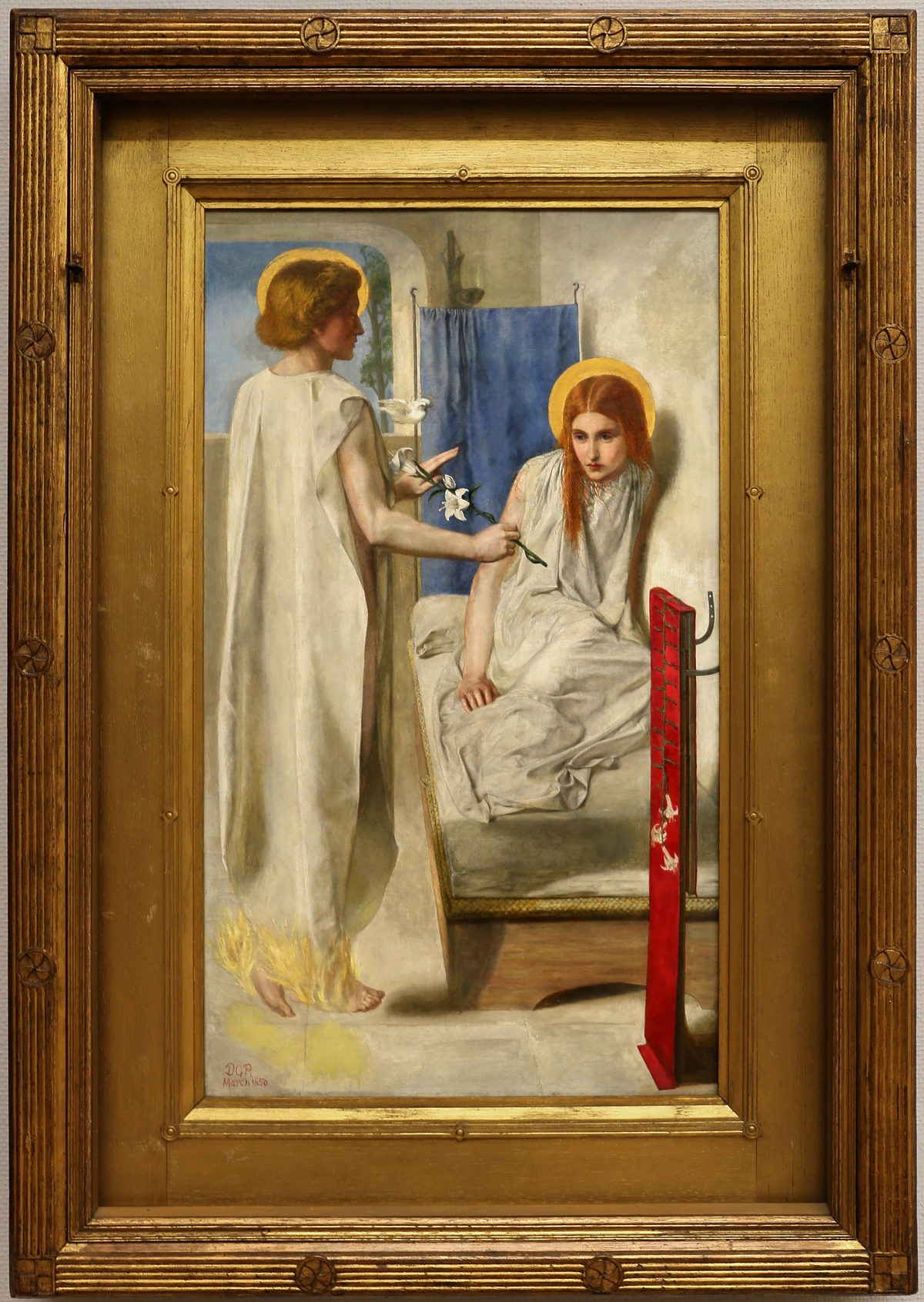
- Lilies: Represent purity and innocence.
- Poppies: Signify sleep and death, often linked to the opium use prevalent in Rossetti’s circle.
- Iris: Symbolizes hope and faith, often used to convey a sense of renewal.
Flowers in Rossetti’s paintings are not merely decorative; they serve as visual metaphors that deepen the narrative. For example, the juxtaposition of roses and lilies in a single composition can evoke themes of love and purity, while poppies introduce a darker, more contemplative tone.
Rossetti’s use of flowers was also influenced by the Victorian language of flowers, a symbolic system where specific flowers conveyed particular emotions or messages. This added another layer of meaning to his work, allowing viewers to interpret his paintings through a cultural lens.
The Language of Flowers in Victorian Culture
The Victorian era saw a fascination with the language of flowers, where specific blooms were assigned meanings and used to convey messages. This cultural phenomenon influenced not only art but also literature and social customs. Rossetti’s incorporation of this symbolism in his paintings reflects the broader cultural trends of his time.

Animals and Birds
Animals and birds also play a significant role in Rossetti’s symbolism:
- Doves: Represent peace and the Holy Spirit, often seen in religious contexts.
- Peacocks: Symbolize immortality and renewal, reflecting Rossetti’s fascination with mythological themes.
- Butterflies: Signify transformation and the fleeting nature of life.
Rossetti’s use of animals and birds was not limited to their symbolic meanings. He often depicted them in intricate detail, showcasing his technical skill and deep appreciation for nature. These elements added a sense of realism and depth to his paintings, making them more immersive for the viewer.
Symbolism of Nature in Art
Nature has long been a source of inspiration and symbolism in art. For Rossetti, animals and birds were not just decorative elements but carriers of deeper meanings. Their inclusion in his paintings reflects his belief in the interconnectedness of nature and human experience, a theme that resonates with many artists across different eras.
Mythological References
Rossetti was deeply influenced by mythology, particularly Greek and Arthurian legends. His paintings often depict scenes from these myths, imbued with his own interpretations and symbols.
- Proserpine: In Rossetti’s depiction of Proserpine, the pomegranate she holds is a symbol of her bond to the underworld.
- The Lady of Shalott: This Arthurian figure is often shown with a loom, symbolizing her isolation and artistic creation.
Mythology provided Rossetti with a rich tapestry of stories and symbols that he could reinterpret through his unique lens. His depictions often blend traditional elements with personal and contemporary themes, creating a dialogue between the past and the present.
Rossetti’s fascination with mythology extended to his poetry, where he often explored similar themes. His poem The Blessed Damozel is a prime example, depicting a celestial figure longing for her earthly lover. This interplay between his visual and literary works added depth to his artistic vision.
The Role of Mythology in Victorian Art
The Victorian era saw a revival of interest in classical and medieval mythology, driven by a fascination with the past and a desire to find meaning in ancient stories. Rossetti’s work reflects this cultural trend, as he drew inspiration from myths to explore universal themes of love, loss, and destiny. His reinterpretations of these stories often infused them with a modern sensibility, making them relevant to his contemporaries.
This revival of mythology was not unique to Rossetti. Many Victorian artists and writers sought inspiration from ancient myths, using them to explore contemporary issues and emotions. This cultural movement allowed artists like Rossetti to connect with a broader audience, as their works resonated with the shared cultural heritage of their time.
The Role of Women
Women in Rossetti’s paintings are not just muses; they are symbols of complex emotions and ideas. They often represent love, beauty, and tragedy, reflecting Rossetti’s own tumultuous relationships.
Rossetti’s portrayal of women is multifaceted, ranging from ethereal and idealized figures to grounded and emotionally resonant characters. His depictions often challenge traditional gender roles, presenting women as powerful and independent entities in their own right.
Rossetti’s women are not passive subjects; they are active participants in the narratives he creates. Their expressions, poses, and interactions with other elements in the painting convey a sense of agency and depth that was revolutionary for its time. This progressive approach to feminine symbolism was a hallmark of the Pre-Raphaelite movement, which sought to break free from the rigid traditions of academic art.

The women in Rossetti’s art are not passive subjects; they are active participants in the narratives he creates. Their expressions, poses, and interactions with other elements in the painting convey a sense of agency and depth that was revolutionary for its time.
Feminine Symbolism in Victorian Art
The portrayal of women in Victorian art was often constrained by societal norms, which dictated that women should be depicted as virtuous, submissive, and domestic. Rossetti’s work challenged these conventions by presenting women as complex, autonomous beings with their own desires and struggles. This progressive approach to feminine symbolism was a hallmark of the Pre-Raphaelite movement, which sought to break free from the rigid traditions of academic art.

Rossetti’s portrayal of women was not just a personal choice but also a reflection of broader societal changes. The Victorian era saw the rise of the women’s suffrage movement and increased awareness of women’s rights. Rossetti’s work, along with that of other Pre-Raphaelite artists, contributed to this cultural shift by presenting women in a more nuanced and empowering light.

Examples of Rossetti’s Symbolic Art
Beata Beatrix

This painting is a tribute to Rossetti’s wife, Elizabeth Siddal, who died tragically young. The dove, a symbol of the Holy Spirit, and the sundial, representing the passage of time, add layers of meaning to this poignant work.
The composition of Beata Beatrix is rich with symbolism, from the dove’s placement to the ethereal glow surrounding the figure. Each element invites the viewer to reflect on themes of love, loss, and transcendence.
Rossetti’s use of color in Beata Beatrix is particularly striking. The warm, golden tones create a sense of divine light, while the cooler blues and greens add a sense of melancholy. This interplay of colors enhances the emotional depth of the painting, drawing the viewer into the narrative.
The Blessed Damozel

This painting is inspired by Rossetti’s poem of the same name and depicts a celestial figure gazing down from heaven. The use of light and color creates a sense of divine presence and spiritual longing.
The Blessed Damozel is a prime example of Rossetti’s ability to blend visual and literary art. The painting’s composition, with the figure leaning over a balcony, creates a sense of yearning and longing. The intricate details, such as the flowers and jewels adorning the figure, add to the painting’s richness and depth.
Proserpine
!Proserpine by Dante Gabriel Rossetti
credit, licence
In this painting, Proserpine holds a pomegranate, a symbol of her bond to the underworld. The rich colors and intricate details draw the viewer into her story.
How to Interpret Rossetti’s Symbols
Interpreting Rossetti’s symbols can be a rewarding experience. Here are some steps to help you:
- Look for Recurring Motifs: Notice the flowers, animals, and objects that appear frequently in his work.
- Research Mythological References: Understanding the myths behind his paintings can provide deeper insight.
- Consider the Context: Think about the historical and personal context of Rossetti’s life and how it might influence his art.
- Analyze Color and Composition: Pay attention to the use of color and the arrangement of elements in the painting. These can provide clues to the underlying themes and emotions.
Symbolism in Rossetti’s Poetry
Rossetti was not only a painter but also a poet. His poetry often mirrors the themes and symbols found in his paintings. For example, his poem The Blessed Damozel explores themes of love, longing, and the afterlife, much like his painting of the same name.
Rossetti’s poetry is rich with symbolism and emotional depth. His sonnets, in particular, are known for their intricate structure and profound themes. By exploring his poetry, readers can gain a deeper understanding of the symbols and motifs that appear in his visual art.
The Influence of Literature
Rossetti’s love for literature, particularly the works of Dante Alighieri, is evident in his art. His paintings often reference literary themes and characters, adding another layer of meaning to his work.
Rossetti’s literary influences extended beyond Dante. He was deeply inspired by the works of William Shakespeare, John Keats, and other Romantic poets. These literary connections enriched his artistic vision, allowing him to explore complex themes and emotions in his paintings.
The Role of Color
Color plays a crucial role in Rossetti’s symbolism. The vibrant hues he uses are not just for aesthetic appeal but also to convey emotions and themes. For example, the use of red can symbolize passion and love, while blue can represent melancholy and introspection.
Rossetti’s use of color was influenced by the Pre-Raphaelite Brotherhood’s emphasis on realism and detail. He often used rich, jewel-like tones to create a sense of depth and luminosity in his paintings. This attention to color added to the emotional resonance of his work, making it more immersive for the viewer.
FAQ
What are some common symbols in Rossetti’s art?
Some common symbols include flowers like roses and lilies, mythological references, and the depiction of women as complex figures. Animals and birds, such as doves and peacocks, also play significant roles in his symbolism.
How can I learn more about Rossetti’s symbolism?
Reading about his life and the historical context of his work can provide valuable insights. Visiting museums and studying his paintings in person can also enhance your understanding. Exploring his literary works and poems can further deepen your appreciation of his artistic vision.

Are there any modern artists who use similar symbolism?
Yes, many contemporary artists draw inspiration from Rossetti’s use of symbolism. You can explore their work to see how these themes continue to evolve. Artists like [/finder/page/contemporary-artists] often incorporate rich symbolism and narrative depth in their compositions.

What is the significance of the Pre-Raphaelite Brotherhood in Rossetti’s work?
The Pre-Raphaelite Brotherhood was a group of artists who sought to revive the detailed and vibrant style of art that predated Raphael. Rossetti’s involvement in this movement significantly influenced his artistic style and thematic choices, emphasizing realism, rich colors, and intricate details.

How did Rossetti’s personal life influence his art?
Rossetti’s personal life, particularly his relationships with Elizabeth Siddal and Jane Morris, had a profound impact on his art. His experiences of love, loss, and longing are reflected in the emotional depth and symbolic complexity of his paintings.

What role did literature play in Rossetti’s artistic vision?
Literature played a significant role in shaping Rossetti’s artistic vision. His love for poetry and mythology influenced his choice of themes and symbols, allowing him to create works that were rich in narrative and emotional depth. His own poetry, in particular, provided a platform for exploring similar themes to those in his paintings.
How can I interpret the symbolism in Rossetti’s paintings?
To interpret Rossetti’s symbolism, start by identifying recurring motifs such as flowers, animals, and mythological references. Research the myths and cultural context behind these symbols to gain deeper insights. Analyzing the use of color and composition can also provide clues to the underlying themes and emotions in his work.
Conclusion
Rossetti’s art is a treasure trove of hidden meanings and rich symbolism. By understanding the context and symbols in his work, you can appreciate the depth and complexity of his paintings. Whether you’re an art enthusiast or just curious, diving into Rossetti’s world is a journey worth taking.












If you’re inspired by Rossetti’s use of symbolism, you might also enjoy exploring the works of other artists who use similar techniques. Check out our collection of contemporary art at /buy or visit the /den-bosch-museum for more insights.
Rossetti’s legacy continues to inspire artists and art lovers alike. His ability to blend symbolism, mythology, and personal experience into his work has left an indelible mark on the art world. By exploring his paintings and poetry, we can gain a deeper understanding of the human experience and the power of artistic expression.
Further Exploration
For those interested in delving deeper into Rossetti’s world, consider visiting museums that house his works or exploring his literary contributions. His poetry, in particular, offers a unique perspective on the themes and symbols that define his artistic vision. Additionally, studying the broader context of the Pre-Raphaelite movement can provide valuable insights into the cultural and artistic trends of the Victorian era.