Polyptych: Ultimate Guide to Multi-Panel Art History & Modern Use
Explore polyptychs, from Renaissance altarpieces and their meticulous craft to contemporary multi-panel art, digital expressions, and cultural impact. Your authoritative guide to expansive visual storytelling.

What Is a Polyptych? Unfolding Art's Grandest Multi-Panel Narratives
I still remember the first time I truly felt a polyptych. It wasn't just seeing a picture in a book; it was standing utterly dwarfed before a colossal altarpiece in a quiet European cathedral. The sheer scale of the panels stretched across the altar, each meticulously painted scene a window into a different, sacred moment. The air itself seemed to vibrate with the weight of its story, all coalescing into one vast, overwhelming narrative. That overwhelming, multi-layered experience was my first true encounter with the profound power of the polyptych – a visual symphony, a cognitive journey across multiple canvases demanding deep engagement and revealing a truth too grand for a single frame.
For years, like many, I thought triptychs were the apex of multi-panel complexity. You get a central story, two supporting wings, and that feels complete, a neat package, doesn't it? But then you encounter a sprawling, magnificent beast of an artwork, a visual epic with panels that seem to go on forever, an entire cinematic universe unfolding before your eyes. That, my friend, is a polyptych. It's where individual scenes contribute to a grander narrative, much like how a character's journey unfolds across multiple films in a modern blockbuster series, or how distinct chapters build a sprawling novel. So, what exactly is this multi-paneled marvel, and why did artists, both historical and contemporary, feel the need to use so many panels to tell their stories?

At Its Core: Defining the Multi-Panel Masterpiece
To truly appreciate its narrative power, let's first establish a clear understanding of what it is. At its heart, the definition is quite straightforward. A polyptych (from the Greek poly- meaning "many" and ptychē, meaning "fold" or "panel") is a single work of art composed of more than three panels. That's it. If it has four or more hinged or conceptually related panels, you're looking at a polyptych.
While specific terms exist for works with more panels, they're not always essential for everyday conversation. I rarely use them myself, preferring the simplicity of 'polyptych' as the go-to umbrella term for anything that goes beyond a triptych (three panels) or a diptych (two panels). Still, for clarity, here’s a quick overview:
Term  | Number of Panels | Description |
|---|---|---|
| Diptych | 2 | Two panels, usually hinged. |
| Triptych | 3 | Three panels, typically with a central panel and two wings. |
| Quadriptych | 4 | Four panels (less commonly used, often falls under polyptych). |
| Pentaptych | 5 | Five panels. |
| Hexaptych | 6 | Six panels. |
| Octaptych | 8 | Eight panels. |
| Polyptych | >3 (4 or more) | The overarching term for any work with more than three panels. |
The phrase "conceptually related panels" is key here, especially for modern works. Imagine a series of distinct yet interconnected photographs, each telling a small part of a larger story – like individual chapters in a novel that, when read together, form one overarching narrative. Or think of a digital art installation where multiple screens display related but distinct animations, all intended to be absorbed as a single, evolving experience. It means individual panels intended to be displayed together to form a single, unified artistic statement, even if not physically hinged. For instance, a sequence of prints depicting a journey, a fragmented portrait across several canvases, or even a collection of abstract works where the colors and lines flow from one to the next, demanding to be seen as a whole. The intention is to create a cohesive experience, not just a collection of separate pieces, like four random landscapes accidentally hung next to each other.
Why So Many Panels? The Historical Purpose and Meticulous Craft
But beyond the mere count of panels, what drove artists to embrace such monumental formats, especially in historical contexts? Polyptychs weren't just a profound artistic ambition; they served an essential, often ritualistic, purpose, especially during the late Middle Ages and the Renaissance. The vast majority were created as altarpieces for churches – grand artistic installations placed on or behind the altar. In a time when most of the congregation couldn't read, art was the primary vehicle for storytelling, a true visual powerhouse, and the altarpiece was its most potent form. I often think of them as the medieval equivalent of a blockbuster film franchise, but with a much higher spiritual stakes.
The Enduring Purpose: Altarpieces as Visual Bibles
An altarpiece had to be a visual bible, a sermon in paint. A single panel could only hold so much information, limiting the scope of the narrative. But with a polyptych, an artist could depict complex theological narratives, such as:
- The entire life of Christ, unfolding chronologically across panels, or specific aspects of the Trinity. Imagine the Passion story, for instance: one panel might depict the Last Supper, the next Christ's agony in the garden, followed by the betrayal, the crucifixion, and finally, the joyous resurrection, each a distinct scene but part of one grand, redemptive arc.
- The comprehensive story of a particular saint, from birth to martyrdom and miracles.
- Key moments from the Old and New Testaments, allowing for intricate theological dialogues.
- Portraits of the church patrons who funded the work, often cleverly placed within a holy scene, ensuring their eternal salvation and public legacy—a bit of quid pro quo, if you ask me, and a smart way to leave a lasting mark.
This expansive format allowed for a richness of iconography and symbolism. Each panel, while part of a greater whole, could convey specific allegories or biblical scenes, with the collective meaning becoming profoundly deeper than any single image. It was a complete world in miniature, designed to inspire awe and devotion, and sometimes, a little visual overload to emphasize the divine complexity.
The Meticulous Craft: Building a Monumental Story
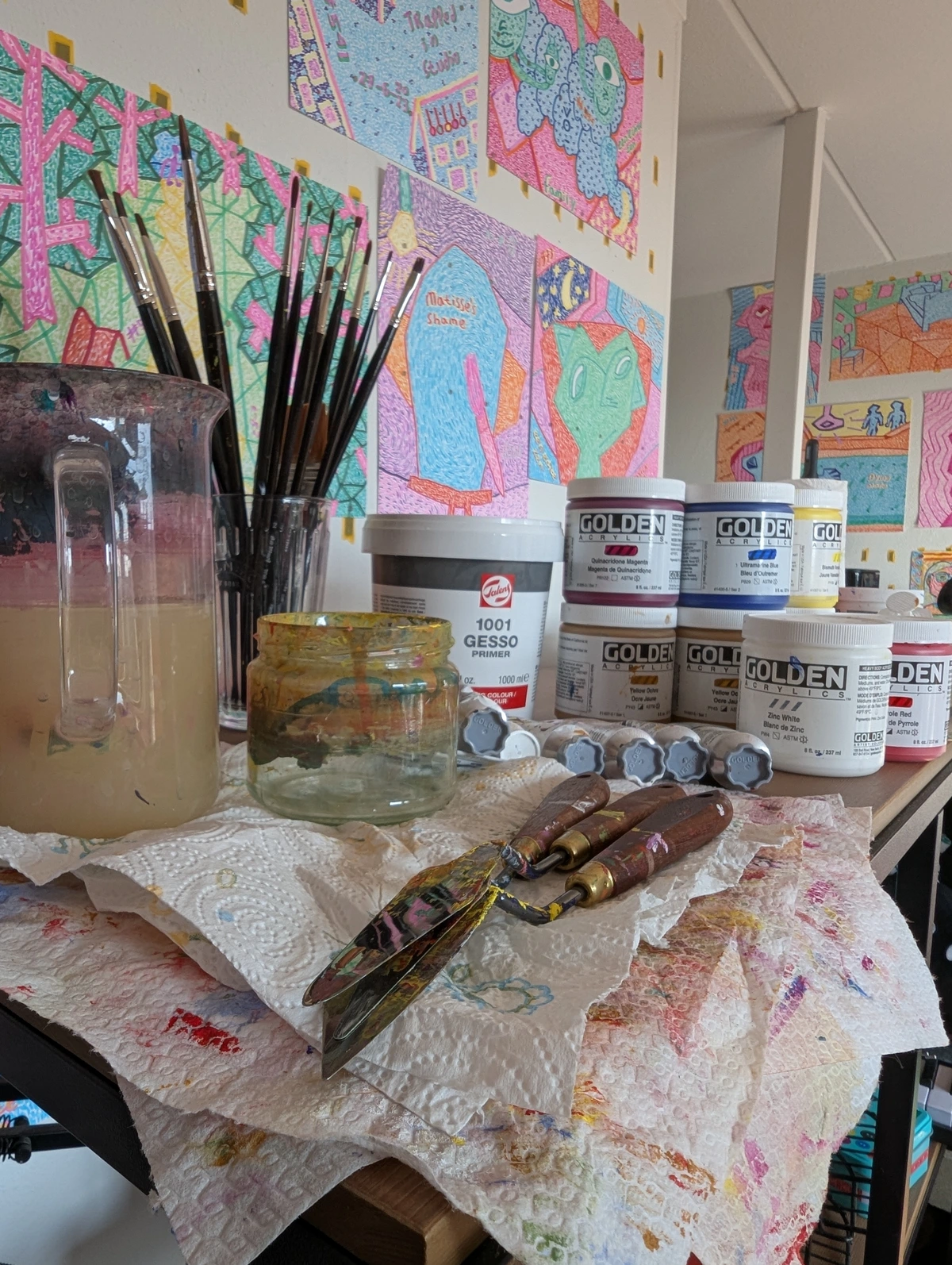
Creating these monumental works was a painstaking endeavor, often involving entire workshops and years of labor. The process began with carefully prepared wood panels, typically oak or poplar, which were then smoothed and joined. Within a workshop, specialized artisans might handle the carpentry, preparing the wood with meticulous joinery to ensure panels fit perfectly and could withstand centuries of opening and closing without warping. Artists would then apply multiple layers of gesso (a mixture of plaster and glue) to create a pristine, bright white surface, ideal for painting and gilding. I always think of gesso as setting the stage; a good foundation is everything in art (and life, for that matter). It's like the canvas's primer, a blank slate ready for magic – a fundamental step that always reminds me of the patience required in art. You can learn more about this foundational process in our guide on how to apply gesso to canvas.
Early polyptychs were predominantly painted with tempera (pigment mixed with egg yolk), known for its vibrant, luminous colors and fine detail. Crucially, gold leaf was extensively used, not merely for decoration but for its profound symbolic meaning, representing divine light, heaven, and spiritual radiance. Later, the pioneering use of oil paints by Northern Renaissance masters like the Van Eyck brothers introduced unprecedented richness, smoother transitions, and greater illusionism. Oil allowed for a nuanced capture of light and texture, adding another dimension to their visual splendor and significantly expanding the artist's expressive toolkit.

The intricate joinery and hinging of the panels were also a feat of engineering, allowing the artworks to be dynamic and, dare I say, almost performative. Imagine the structural integrity required for massive wooden panels to open and close smoothly for centuries! These massive works were often designed to be interactive, though not in the way we might think today. Hinged panels, sometimes referred to as wings, allowed them to be opened and closed, revealing different scenes depending on the liturgical season. For example, the outer panels of a polyptych might depict the somber scenes of Christ's suffering and sacrifice during Lent, encouraging contemplation and penitence. But come Easter, these panels would swing open dramatically to reveal brilliant, joyous depictions of the Resurrection and the glory of heaven, transforming the mood of the entire space. Below the main panels, a horizontal section called a predella often featured smaller, narrative scenes that elaborated on the main themes, enriching the entire visual experience. It was interactive storytelling for a pre-digital age, evolving with the rhythm of the year and the spiritual journey of the community.
Beyond the artistic and spiritual, there was a profoundly practical side to creating works of this monumental scale in multiple parts. Imagine trying to transport a single, massive piece of wood or canvas, hundreds of years ago, across bumpy roads or through narrow church doors. Impossible! Building a polyptych in hinged sections made it a logistical marvel, far easier to transport and assemble, allowing artists to undertake projects that would have been physically unfeasible as a single, contiguous work. The sheer cost of materials and labor also meant these were often grand commissions, reflecting the wealth and piety of their patrons. The advent of the printing press also contributed to the decline of the altarpiece as the primary visual storytelling tool, as printed images became a more accessible way to disseminate religious narratives. This shift also coincided with a change in patronage from the Church to wealthy individual collectors, who often favored smaller, singular artworks suitable for domestic interiors. The evolving aesthetic preferences of later periods, like the Baroque, which often emphasized a singular, dramatic focal point, further contributed to the polyptych's gradual shift from a primary form to a more specialized one.

Key Historical Polyptychs: Where Grand Narratives Unfold
To really grasp the scale and impact of these multi-panel paintings, you have to look at the masterpieces. They are some of the most ambitious projects in the history of art, showcasing incredible detail and complex narrative structures. Each one offers a unique window into the artistic, spiritual, and social concerns of its time. I find myself returning to these again and again, always discovering a new detail or a hidden layer of meaning. These are the kinds of pieces that don't just hang on a wall; they command the space, demanding your full attention and taking you on a journey.
Artwork | Artist | Year | Location | Enduring Legacy & Artistic Impact |
|---|---|---|---|---|
| Ghent Altarpiece | Hubert and Jan van Eyck | 1432 | St. Bavo's Cathedral, Ghent | A cornerstone of Northern Renaissance art, revolutionary for its hyper-realism, luminous use of oil paint, and intricate theological program. Often described as 'seeing the world for the first time' due to its unprecedented detail, its dramatic history of theft and recovery only adds to its legendary status. Its twelve panels, when fully open, reveal a vast celestial court, with God the Father presiding over a gathering of saints, apostles, and angels—a breathtaking vision of divine order and human redemption, and a testament to Flemish artistic genius. Jan van Eyck's mastery of oil paint, seen here and in singular works like the Arnolfini Portrait, fundamentally changed painting. |
| Isenheim Altarpiece | Matthias Grünewald | 1512-1516 | Unterlinden Museum, Colmar | Known for its intense emotional power and harrowing depiction of the Crucifixion on the outer panels, contrasting sharply with the joyful Resurrection within. Designed for a hospital chapel, it offered profound solace and hope to the sick and dying. The visceral suffering depicted on the exterior would have deeply resonated with its ailing viewers, allowing them to feel a shared humanity with Christ's agony, while the inner panels offered vivid scenes of rebirth and triumph over death, making the shift from suffering to glory deeply impactful and a testament to art's therapeutic potential. |
| Beaune Altarpiece | Rogier van der Weyden | 1445-1450 | Hospices de Beaune, Beaune | A stunning example of Early Netherlandish painting, commissioned for a hospital for the poor. Its nine panels depicting the Last Judgment are rich in symbolism and moral instruction for the dying, creating a powerful sense of introspection and existential reflection that still resonates today. The central panel dramatically shows Christ in judgment, with Archangel Michael meticulously weighing souls, determining their eternal fate, surrounded by apostles and saints. The side panels depict the saved ascending to heaven and the damned descending into hell, all beautifully preserved. |
| Maestà | Duccio di Buoninsegna | 1308-1311 | Museo dell'Opera del Duomo, Siena | Though primarily known for its grand, multi-panel front depicting the Madonna and Child enthroned, Duccio's Maestà was a monumental altarpiece with numerous predella panels and pinnacles telling scenes from the life of Christ and the Virgin. Its intricate narrative structure and revolutionary use of narrative sequence across its many panels profoundly influenced Italian painting, showcasing a shift towards greater naturalism and emotional expression in the pre-Renaissance era, laying groundwork for future artistic developments in the multi-panel format. |
| St. Vincent Panels | Nuno Gonçalves | 1470s | National Museum of Ancient Art, Lisbon | Unique for its six large panels depicting St. Vincent and a cross-section of 15th-century Portuguese society. Remarkable for its detailed portraiture and enigmatic representation of various social classes and historical figures—from royalty and knights to fishermen and monks—it offers a direct, almost documentary-like window into its time and the diverse community that revered the saint. These panels are a fascinating group portrait, showcasing the societal structure and collective devotion, standing as a national treasure. |
Beyond the West: Multi-Panel Art Across Cultures
While the polyptych as a specific altarpiece format is deeply rooted in Western art history, the concept of multi-panel storytelling is a universal human impulse. Across different cultures, artists have found ways to expand narratives beyond a single frame, revealing shared approaches to visual storytelling.
- East Asian Folding Screens (Byōbu): From Japan and China, folding screens served both practical (room dividers, windbreaks) and artistic purposes. Often composed of six or eight panels, these screens were painted with continuous landscapes, historical scenes, or literary narratives. While not hinged to open and close like altarpieces, the successive panels encouraged a 'reading' from right to left (or vice-versa), creating a sequential visual journey that transformed an interior space. These are, in essence, secular polyptychs, grand narratives unfolding across multiple surfaces.
- Narrative Wall Paintings/Murals: Many ancient cultures, from Egyptian tomb paintings to Roman frescoes, used sequential panels or registers on walls to depict epic stories, historical events, or religious myths. While not physically 'folding,' these are conceptually polyptychs, where distinct scenes contribute to a larger, overarching visual epic across an expansive surface.
This demonstrates that the desire to tell stories too big for one canvas, to immerse the viewer in a more expansive world, is a fundamental human drive, manifesting in diverse and beautiful forms worldwide.
The Polyptych in the Modern Era: Beyond Altarpieces and Towards New Expressions
After the Renaissance, while single-canvas paintings became the dominant mode (simpler to transport, easier to sell, changing patronage, I suppose), the polyptych never truly vanished. Instead, it underwent a fascinating metamorphosis. Modern and contemporary artists have creatively revisited the multi-panel format, often detaching it from religious storytelling and embracing new forms of abstract art or conceptual narratives. The decline of the altarpiece as a necessity simply opened the door for new interpretations, allowing the polyptych to become a vehicle for deeply personal, social, and political statements. It's like an old song remixed for a new generation; the core structure is there, but the message is entirely fresh.
Reinterpreting the Multi-Panel Format: New Narratives for Contemporary Art
Artists today might use a polyptych format to explore a myriad of concepts, offering a viewing experience far different from their historical counterparts:
- Explore a sequence or passage of time: Imagine a visual diary unfolding before you, each panel capturing a slight shift in light over a landscape from dawn to dusk, or the evolving emotions on a face over time. I’ve seen contemporary artists use this to depict the subtle growth of a plant or the gradual decay of an object, turning a single moment into a slow-motion narrative. This kind of work truly asks us to slow down and consider each fragment, a meditation on change itself, or perhaps a non-linear exploration of memory. Techniques here might involve subtle color gradients across panels, variations in texture, or even incorporating fragmented text that changes from panel to panel to imply temporal shifts.

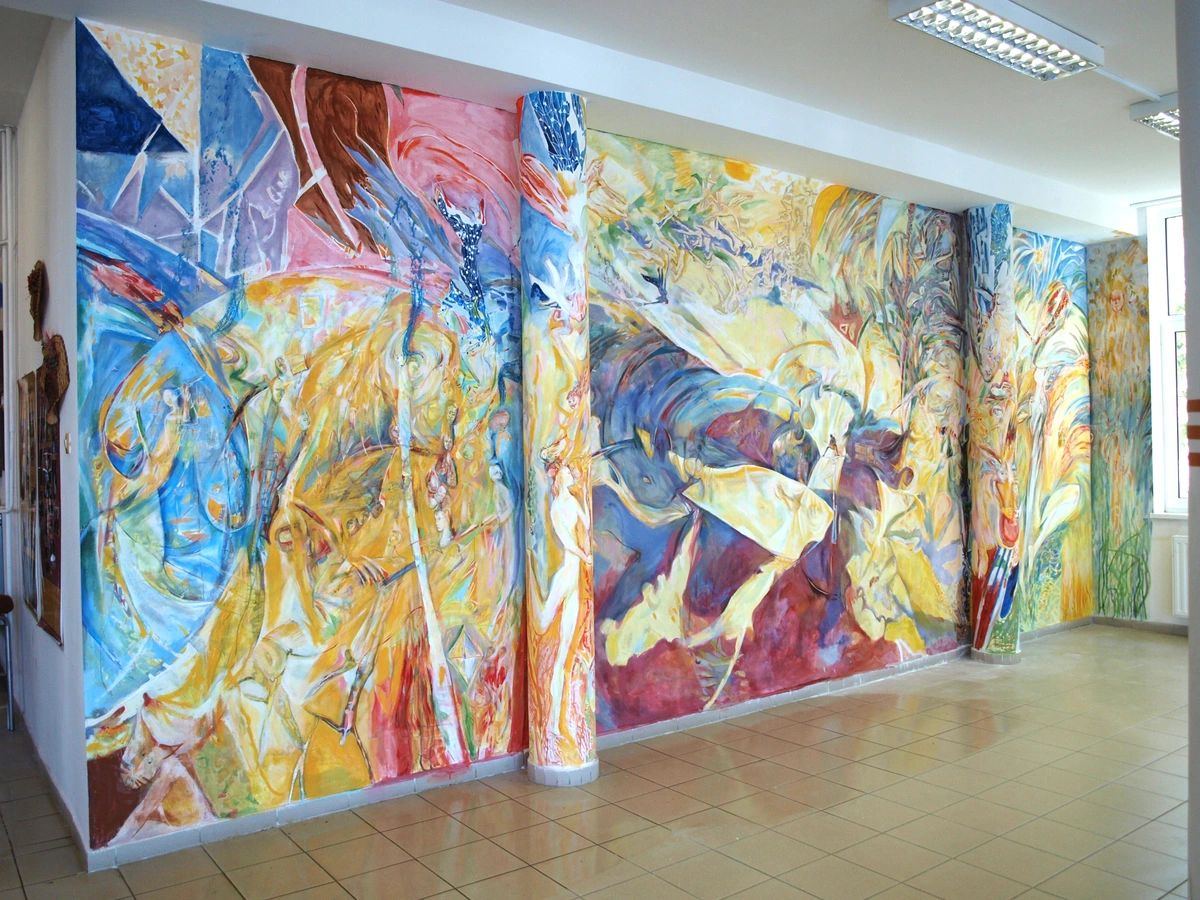
- Create an immersive environment: It's like stepping into a painted world. A large polyptych can wrap around the viewer, filling their peripheral vision and creating an experience that a single canvas simply can't. A contemporary abstract artist might use several large panels to create an environment where colors and shapes flow seamlessly from one to the next, literally pulling the viewer into a vast, encompassing visual experience. The intention is to envelop, rather than just present, creating a dialogue with the space it inhabits and offering a truly unique cognitive journey.

- Break down a single subject: An artist can show the same object or person from multiple viewpoints simultaneously, echoing movements like Cubism. Think of a portrait where one panel shows the subject's calm face, another their hands gesturing, a third a detail of their clothing, all contributing to a fragmented yet holistic understanding, or even revealing hidden layers of identity. In my own work, I often find myself drawn to this idea of fragmentation – how individual elements, though separate, contribute to a larger, more complex truth, much like the pieces of a dream forming a coherent feeling. This approach actively invites the viewer to mentally reassemble the parts, making them an active participant in the narrative. Techniques like collage, fragmentation of images, or superimposed elements across panels are commonly used here.

- Juxtapose different ideas or images: Here, the gaps between the panels—often called the gutters—become as important as the panels themselves. They don't just separate; they create visual pauses, generate tension, or invite the viewer to actively bridge the narrative gaps. These gutters can act as silent narrators, forcing connections or highlighting disjunctions between disparate images and creating a unique rhythm and a deeper sense of contemplation. It’s a powerful use of negative space to define the positive, a deliberate emptiness that forces the mind to construct meaning. An artist might intentionally use contrasting styles, like a hyperrealistic panel next to a gestural abstract one, or have an element subtly bleed across the divide to create an intentional visual bridge or challenge.
Polyptychs in Sculpture, Installation, and New Media
Beyond traditional painting, the multi-panel concept extends beautifully into other mediums. Think of a series of photographic prints displayed together to tell a story, or a sculptural installation composed of several distinct, yet interdependent, elements that create a larger narrative. Even in printmaking, artists might create a sequence of large-scale woodcuts or screen prints, each a panel in a grander visual statement.
In the realm of sculpture and installation art, the polyptych format takes on a three-dimensional life. Artists create environments where multiple discrete elements, when viewed together, form a cohesive statement. These can be seen as three-dimensional, spatial polyptychs, where the viewer literally walks into the narrative, blurring the lines between artwork and experience. Here, the physical space between the elements becomes an active part of the artwork itself, orchestrating the viewer's movement and perception, and creating a dialogue with the architecture of the space.
In today's digital age, some artists are pushing boundaries further, exploring multi-screen or interactive polyptychs. This can involve interactive narratives where user choices affect which panels are displayed, generative art that creates evolving visual sequences across multiple digital surfaces, or even the use of augmented reality (AR) to layer digital panels onto physical spaces, inviting viewers to engage with art in entirely new, dynamic ways, sometimes even generating narrative through viewer interaction. The polyptych format is also a direct ancestor to modern sequential art forms like graphic novels and comic books, demonstrating art's continuous evolution in storytelling.
On a wonderfully pragmatic note, I remember struggling to move a single, very large canvas once; it was a nightmare of doorframes and tight corners. Creating a massive work in several pieces makes it far easier to transport and install, a logistical marvel that still allows for monumental scale. Imagine trying to get a 10-foot by 5-foot single canvas up a winding staircase – impossible! But five 2-foot panels? Suddenly, the monumental becomes manageable, opening up possibilities for truly enormous contemporary works in spaces previously inaccessible.
Contemporary Artists Embracing the Polyptych
While the Renaissance gave us the monumental altarpieces, the modern era has seen artists reinterpret the polyptych for diverse expressive purposes. Here are a few ways contemporary artists are keeping the multi-panel tradition alive:
- David Hockney: Known for his photographic collages which often act as a deconstructed, multi-viewpoint take on a single scene, blurring the lines between photography and painting, and effectively creating conceptual polyptychs. He offers a fragmented yet comprehensive perspective, much like the original Cubist impulse.
- Gerhard Richter: Many of his abstract paintings are composed of multiple panels, sometimes allowing for different color studies or textural explorations to exist within a unified framework, creating a dynamic visual experience that shifts as the viewer moves.
- Kara Walker: Often uses multi-panel, room-sized silhouette installations to create vast, immersive narratives that explore themes of race, gender, sexuality, and violence in American history. Her works physically wrap around the viewer, demanding interaction with her unsettling, powerful stories.
The Viewer's Role: Actively Constructing Meaning
One of the most compelling aspects of the polyptych, whether ancient or modern, is how it inherently invites the viewer into an active role. Unlike a single, static image, a multi-panel work doesn't just present a scene; it presents a series of related scenes or fragments that demand mental assembly. As you move from panel to panel, your mind is constantly constructing connections, bridging the "gutters," and interpreting the relationships. You're not just a passive observer; you're an active participant in weaving the narrative tapestry, much like reading a story where each chapter deepens your understanding and forces you to synthesize meaning. This active engagement is a core part of its enduring power.
Key Terminology: Your Polyptych Lexicon
To make sure we're all on the same page, here's a quick glossary of key terms related to multi-panel art:

- Altarpiece: A work of art, typically a painting or sculpture, placed on or behind an altar in a Christian church.
- Diptych: A work of art consisting of exactly two panels.
- Gesso: A white paint mixture consisting of a binder (like glue) mixed with chalk, gypsum, pigment, or any combination of these. It's applied to surfaces as a primer for painting.
- Gold Leaf: Thin sheets of gold used for gilding, often applied to paintings and sculptures for decorative and symbolic purposes, especially in historical polyptychs to represent divine light.
- Gutters: The physical or conceptual spaces between individual panels in a multi-panel artwork, which can play a role in the viewer's interpretation or narrative flow.
- Hexaptych: A work of art consisting of exactly six panels.
- Octaptych: A work of art consisting of exactly eight panels.
- Pentaptych: A work of art consisting of exactly five panels.
- Polyptych: Any single work of art composed of more than three panels (four or more), often hinged or conceptually linked. This is the overarching term for multi-panel works beyond a triptych.
- Predella: The horizontal section or platform at the base of an altarpiece, often decorated with smaller narrative scenes that elaborate on the main themes.
- Quadriptych: A work of art consisting of exactly four panels (less commonly used, typically falls under polyptych).
- Tempera: A permanent, fast-drying painting medium consisting of colored pigment mixed with a water-soluble binder medium, usually egg yolk. Popular before the widespread use of oil paint.
- Triptych: A work of art consisting of exactly three panels, typically with a central panel and two wings.
- Wings: The hinged side panels of a triptych or polyptych, which can be opened and closed to reveal different scenes.
Frequently Asked Questions (FAQ)
What's the difference between a triptych and a polyptych?
The difference is simply the number of panels. A triptych has exactly three panels. A polyptych has more than three panels (so, four or more). Simple, right? It's like the difference between a trio and a larger ensemble; one is clearly defined by three, the other is more expansive and covers anything beyond that.
What is the most famous polyptych?
While 'most famous' is always a fun and highly subjective debate, the Ghent Altarpiece by Hubert and Jan van Eyck is undoubtedly a top contender, if not the most renowned. Its sheer scale, revolutionary use of oil paint, intricate detail, and dramatic history (it's one of the most stolen artworks ever!) solidify its legendary status. It's famous not just for its beauty but its profound influence on Northern Renaissance painting and its role in Flemish cultural identity. Other strong contenders that often come up in conversation include Matthias Grünewald's profoundly moving Isenheim Altarpiece, celebrated for its intense emotional impact and its unique function in a hospital setting, and Duccio's monumental Maestà, which revolutionized Italian painting with its intricate narrative structure.
Can a polyptych be abstract?
Absolutely! The format is about the number of panels, not the subject matter. Many contemporary artists use the polyptych to explore abstract ideas, allowing colors, shapes, and textures to flow, contrast, or build a rhythm across different sections. Think of it as a visual symphony spread across multiple movements, where each panel contributes a unique note to the overall composition. It's a powerful way to delve into themes of fragmentation, connection, and the expansive nature of a single artistic thought, inviting the viewer to create their own connections across the visual gaps.

Are polyptychs always hinged together?
Historically, yes, especially altarpieces, which were physically hinged to allow for dynamic display during different liturgical seasons and for practical reasons like transport. However, in modern art, a polyptych can also refer to a series of separate canvases or panels intended to be displayed together in a specific arrangement to form a single, cohesive conceptual work. The intention of unity and the artist's deliberate choice to break a single artistic statement across multiple elements is what binds them as a polyptych, whether physically joined or conceptually linked. It's about the artistic statement, not just the physical connection, a distinction I find crucial when exploring contemporary multi-panel works. The gaps between these un-hinged panels can even be intentional narrative devices, as discussed earlier, forcing the viewer to bridge the visual space.











What materials were commonly used for historical polyptychs?
Traditionally, polyptychs were crafted using tempera paint on meticulously prepared wood panels, often enhanced with layers of gesso and lavish gold leaf. Tempera, mixed with egg yolk, allowed for crisp lines and luminous colors. Later, the revolutionary introduction of oil paints, particularly in the Northern Renaissance, transformed the possibilities. Oil allowed for richer, deeper colors, subtler gradations of light and shadow, and greater realism, creating a sense of depth and atmosphere that tempera couldn't achieve. This evolution in materials dramatically expanded the visual splendor and narrative capabilities of polyptychs, enabling artists to capture the world with unprecedented realism and emotional resonance.
What do you call a four-panel painting?
A four-panel painting is technically called a quadriptych, but this term is rarely used outside of very specific art historical contexts. It typically falls under the more common and inclusive classification of a polyptych. Most people, myself included, will just call it a polyptych, reserving the more specific terms for when they are truly necessary for academic precision. It’s a bit like calling every multi-panel comic book a graphic novel; technically different, but often the broader term covers it.
Why This Matters Today: The Enduring Power of Multi-Panel Storytelling
The polyptych, whether a centuries-old altarpiece or a contemporary installation, speaks to a fundamental human desire: to tell stories too vast for a single frame. The way separate panels come together to form a larger, more complex narrative is a powerful metaphor for how we understand the world – through fragmented experiences that coalesce into a coherent whole. Think about how we consume information today, endlessly scrolling through feeds, each post a 'panel' in a larger, often chaotic, personal narrative. The polyptych demands a more intentional, contemplative engagement, reminding us of the richness that comes from stitching together disparate visual information.
In my own artistic journey, the challenge of how individual elements, though distinct, can contribute to a grander, more profound truth continues to inspire me. It’s a format that demands attention, invites contemplation, and rewards deeper engagement, pushing both the artist and the viewer to look beyond the obvious and embrace the expansive. This enduring power of fragmented narratives to create a grander truth is something that deeply inspires my own artistic practice, where I often explore sequences and juxtapositions to tell stories that evoke emotion and connection.
The polyptych, in all its iterations, is a powerful testament to art’s ability to transcend a single frame and tell big, sprawling stories. It asks us to slow down, to engage not just with one image, but with a complex tapestry where each panel, each "fold," deepens the narrative. Whether it’s a centuries-old altarpiece revealing the divine, a modern abstract installation reflecting on the fragmented nature of our experience, or a digital multi-screen artwork pushing new boundaries, the polyptych invites us into a world too grand for one canvas alone. It’s this expansive vision, this relentless pursuit of telling a bigger story, and the intriguing challenge of how separate pieces can form a greater whole, that still resonates deeply in my own artistic practice, pushing the boundaries of what a single piece can convey and always seeking to offer more than meets the eye. If you're interested in art that tells a story across multiple dimensions, you can browse some available pieces to [/buy] or explore my artistic journey on my [/timeline].