Jasper Johns: The Man Behind Flags and the Birth of Neo-Dada
Discover Jasper Johns' revolutionary art, his role in Neo-Dada and Pop Art, and why his flag paintings changed modern art forever. The ultimate biography of an American icon.

The Revolutionary Gaze of Jasper Johns: From Flags to the Fabric of Reality
I remember the first time I saw one of Jasper Johns' Flag paintings in person. It was smaller than I’d imagined—maybe three feet wide—but it hit me like a physical force. Not because it depicted something grand or heroic, but because it felt like a puzzle I couldn’t solve. A flag. Something so familiar it had become invisible. Familiar, yet suddenly, totally alien. Why would anyone spend months meticulously rendering this everyday object? Why did it unsettle me so deeply? It’s a question that doesn’t have a simple answer, and that is precisely the point of his entire career.
That moment was my introduction to Johns’ unique genius: his ability to take the mundane, turn it inside out, and force us to see it anew. He wasn’t painting a picture of a flag; he was presenting the flag as a problem, a question about perception, symbolism, and reality itself. It was a quiet revelation that knocked the wind out of the art world’s prevailing assumptions, standing at the crossroads of Abstract Expressionism and Pop Art. At the time, the New York art scene was dominated by the emotional, gestural heroics of painters like Jackson Pollock and Willem de Kooning. Their work was all about the artist's subjective, inner turmoil. Johns did something radically different. Instead of looking inward, he looked at the world—at the flags we pledge allegiance to, the numbers we count with, the targets we aim at. He asked us to question what we think we know.
That encounter sparked a deep dive into one of America’s most enigmatic and influential artists. What I discovered wasn’t just a biography, but a story of rebellion, perception, and how a quiet Southerner rewrote the rules of modern art. We'll dissect his masterpieces, decode his methods, and uncover the profound questions he raised about meaning and the objects that shape our world. We will delve into his revolutionary techniques, explore the creative engine of his partnership with Robert Rauschenberg, and trace the continuous evolution of his work into the 21st century. This is more than just a guide; it’s an exploration of how a flag can become a cornerstone of 20th-century art history, and how the questions Johns first posed still resonate with artists and thinkers today.
The story of Jasper Johns isn’t just a story of paintings. It’s a story about how we see—or fail to see—the world right in front of us. And it all started with a simple, brilliant, world-shaking question: "What is a flag?" Johns spent his life answering that question, not with words, but with objects that arrest our gaze and scramble our assumptions. He proved that art doesn’t need fireworks or grand pronouncements to be revolutionary; it just needs a new way of looking.
Let's explore the life and world of Jasper Johns together. We'll walk through his biography, decode his key artworks, analyze the Neo-Dada movement he pioneered, and trace his lasting impact on contemporary art. We will also examine his pivotal collaborations, his influence on Zen Dageraad Visser's work, and the key museums where you can experience his art firsthand. By the end, you'll see why a simple flag became a cornerstone of 20th-century art history, and why his humble questions still resonate so deeply with artists and thinkers today.
The Alchemist's Beginnings: From South Carolina to the New York Crucible
Jasper Johns' origin story defies the cliché of the born-and-bred gallery artist. He was born on May 15, 1930, in Augusta, Georgia, but grew up in the rural, sandy flatlands of Allendale, South Carolina. It was about as far from a hotbed of artistic revolution as one could imagine—a world of quiet farms and small-town routines. His childhood was largely solitary; his parents divorced when he was young, and he was subsequently raised by his grandparents and an aunt. This detachment from a conventional family structure perhaps nurtured the sense of independence and critical distance that would later define his art. He described his early years as a time when he had to "decide to become an artist" because it wasn’t a path laid out for him—there were no artists in his family, no museums in his town.
He moved to New York City in 1953 at the age of 23 with little more than $35 in his pocket and a head full of half-formed ideas. The leap sounds almost reckless, doesn't it? To abandon the familiar rhythms of the rural South for the chaotic, competitive fervor of New York's art scene. The city at that time was the epicenter of the art world, dominated by the loud, gestural heroics of Abstract Expressionism—the "action painters" like Jackson Pollock and Willem de Kooning who ruled the galleries and critical discourse. Johns arrived not as a disciple, but as a quiet skeptic, armed with a profound lack of formal training. He had attended a total of just three semesters at the University of South Carolina. There was no prestigious art degree, no apprenticeship under a famous master.
Instead, his real education came from the commercial world of downtown Manhattan, a stark contrast to the hallowed halls of art schools detailed in our guide on formal art education. He took odd jobs in bookstores and apprenticed as a commercial artist, even designing shop windows for Tiffany & Co. Those early gigs were lessons in a different kind of language: the language of objects, advertising, and display. They taught him precision, discipline, and how an object’s context radically manipulates its meaning and perception. Gluing price tags onto department store mannequins wasn’t just menial labor; it was a crash course in how society assigns value, a question that would haunt his art for decades.
What’s even more fascinating is his formal training—or the profound lack thereof. He attended a total of just three semesters at the University of South Carolina before moving to New York. There was no prestigious art degree, no apprenticeship under a famous master.
I often wonder if those years spent handling mundane, mass-produced items planted the very seeds for his later work—paintings of flags, numbers, targets, and even the ale cans he’d later cast in bronze. His experience in commercial art gave him a deep appreciation for craft and precise execution, a sensibility that stands in stark contrast to the spontaneous, gestural style of his Abstract Expressionist predecessors. It's fascinating, isn't it, how those formative experiences—so far removed from the elite art world—became the very foundation of his revolutionary approach? While others looked to the soul, he looked to the sale rack, the sidewalk, and the discarded object, finding in them a different kind of truth.

The Alchemy of the Familiar: Deconstructing the Flag
The real breakthrough came one night in 1954-55, when Johns painted his first Flag after waking from a dream in which he saw himself painting a large American flag. This wasn’t just an act of painting; it was an act of dissecting an entire concept, a cultural icon. Each brushstroke became a philosophical argument: What is this thing we pledge allegiance to? What is its meaning beyond its symbolism? Why do we revere it, or why do we sometimes burn it?
Johns’ genius was in choosing a symbol so universally known, so psychologically and politically overdetermined, that it resisted any single, simple interpretation. The flag was no longer just a flag; it was a mirror held up to the viewer, reflecting their own assumptions, patriotism, or skepticism. He was challenging the very nature of seeing and knowing. By presenting an object that was both a painting and a depiction of a symbol, Johns collapsed the distinction between the two. The painting doesn’t represent the flag; in a strange, conceptual way, it is the flag—a thing to be looked at, rather than looked through. It forces us to confront our relationship with the symbol itself, regardless of whether we feel patriotism or disdain.
I love that. He took the one thing everyone claimed to "know"—this symbol of national identity—and rendered it strange, unknowable, almost alien. The flags are anything but simple patriotic tributes. They are psychological investigations, clinical dissections of a cultural nerve. Layer by deliberate layer, Johns employed an ancient technique called Encaustic, mixing hot beeswax with pigment and applying it to the canvas. The wax dried almost instantly, trapping the marks of each stroke and encasing them like amber.
The resulting surface was dense, tactile, and strangely final. It felt weathered, almost archaeological, as if he’d unearthed the flag from some forgotten future. He would often embed snippets of newspaper clippings or bits of collage in the wax, creating a literal history beneath the surface. This painstaking, slow-burn method stood in stark opposition to the spontaneous, energetic drips of his Abstract Expressionist peers. If Pollock was jazz improvisation, Johns was classical composition—deliberate, layered, and hauntingly precise.
The Encaustic Alchemy: Painting with Wax
To understand the physical presence of a Johns flag, you have to understand his revival of encaustic. This ancient technique, used by Greek and Egyptian artists, involves melting beeswax and mixing it with powdered pigments. The molten mixture is then applied to the canvas, and it dries almost instantly, solidifying each brushstroke in a translucent tomb. This wasn’t just an aesthetic choice; it was a philosophical one. The encaustic process turned the painting into an object, not just an image. It created a thick, palpable surface that you could almost feel with your eyes.
I think of it as an act of deliberate defiance against the ephemeral, emotional drips of Abstract Expressionism. Where a Pollock feels urgent and fleeting, a Johns feels built, considered, and permanent. He would often embed fragments of newspaper or other materials into the wax, creating a literal, archaeological history just beneath the surface. These hidden layers connect the symbol to the real-world context from which it was lifted. The painting becomes a kind of time capsule, preserving not just an image, but the very process of its making.
A Closer Look: Flag (1954-55)
Let’s zoom in on that first, groundbreaking painting. It’s not a depiction of a flag; it’s an object that is a flag. Johns chose a subject that was already two-dimensional, already a design. By painting it, he collapsed the distance between the sign and the thing it signifies. The iconic red, white, and blue is present, which is precisely what makes it so unsettling. If he had painted it in green and orange, it would have been an abstraction. By using the "correct" colours, he forces us to confront the real symbol on its own, newly strange terms.

The Engine Room: Neo-Dada and the Bridge to Pop Art
This is where the story gets truly juicy, the moment Johns and his peers decided to rewrite the rulebook. Johns, along with his partner and artistic soulmate Robert Rauschenberg and the avant-garde composer John Cage, spearheaded what would become Neo-Dada. The cultural air in 1950s New York was thick with the fumes of Abstract Expressionism—the dominant, chest-beating style of the day. Think Jackson Pollock’s explosive action paintings and Willem de Kooning’s wild, violent brushstrokes. Art was about the artist's heroic, tortured inner self, splashed across the canvas in a frenzy of emotion. It was all about the grand, existential gesture, the mark of the individual genius.
Johns, Rauschenberg, and Cage said no. They rejected that emotional grandeur, that Romantic agony. Their rebellion was different. It wasn’t just a different style; it was a different worldview. Instead of turning inward to the soul, they turned outward—to the world of everyday objects, the overlooked detritus of postwar American life. They embraced the readymade, a concept borrowed from the original Dada movement of the 1910s pioneered by Marcel Duchamp. Everyday objects were pulled from the world and placed in an artistic context, forcing a confrontation between art and life, between the special and the ordinary.
So, instead of soul-searching, they scavenged. They found their subjects in the world around them. This audacious spirit is perfectly captured in Johns’ bronze-cast ale cans, which looked so real they were almost unnerving in their fidelity. It was the same spirit that animated Rauschenberg's iconic “Combines,” those chaotic assemblages stuffed with tires, goats, and bed quilts, teetering on the edge of chaos. And it infused John Cage’s infamous composition 4'33″—four minutes and thirty-three seconds of literal silence, where the 'music' wasn't what the performer played, but the ambient coughs, rustles, and breaths of the concert hall itself.
The Neo-Dada Insurrection: A Quiet Riot Against the Art World
The art world of the 1950s demanded a certain kind of theatrics, a performance of inner turmoil. The Neo-Dadaists—Johns, Rauschenberg, and their circle—said a quiet, firm "no." They rejected that emotional grandeur, that Romantic agony. Their rebellion was different, more of a raised eyebrow than a clenched fist. Instead of turning inward to the soul, they turned outward—to the world of everyday objects, the overlooked detritus of postwar American life. They embraced the readymade, a concept borrowed from the original Dada movement of the 1910s, where everyday objects were pulled from the world and placed in an artistic context, forcing a confrontation between art and life.
So, instead of soul-searching, they scavenged. Johns' bronze-cast ale cans looked so real they were unnerving. Rauschenberg's “Combines” were chaotic assemblages stuffed with tires and bed quilts. John Cage’s composition 4'33″ was four minutes and thirty-three seconds of silence. This wasn’t a cynical prank; it was a radical statement for the time: art doesn’t need to be special to be profound. The profound could be found in our coffee cups, our street signs, and even in our boredom. It was a seismic shift. Suddenly, the artist's job wasn’t to express their unique soul, but to select and frame something from the world, making us question the very categories of “art” and “not-art.” The artist became a questioner, a philosopher of the everyday.
But wait—aren’t these the pioneers of Pop Art? The answer is a fascinating "yes, but." Johns and Rauschenberg are often labeled the "godfathers of Pop Art." They provided the crucial bridge from the introspective agony of Abstract Expressionism to the irony-drenched world of consumer culture.
The Philosophical Divide: Johns vs. Warhol
The critical difference, and it's a profound one, lies in their tone. Johns and Rauschenberg's Neo-Dada was cool, analytical, and deeply philosophical. Johns took pre-existing, universal signs (flags, numbers) and, through his detached process, made us question their fundamental meaning, rendering them alien and strange. He was a phenomenologist of the commonplace.
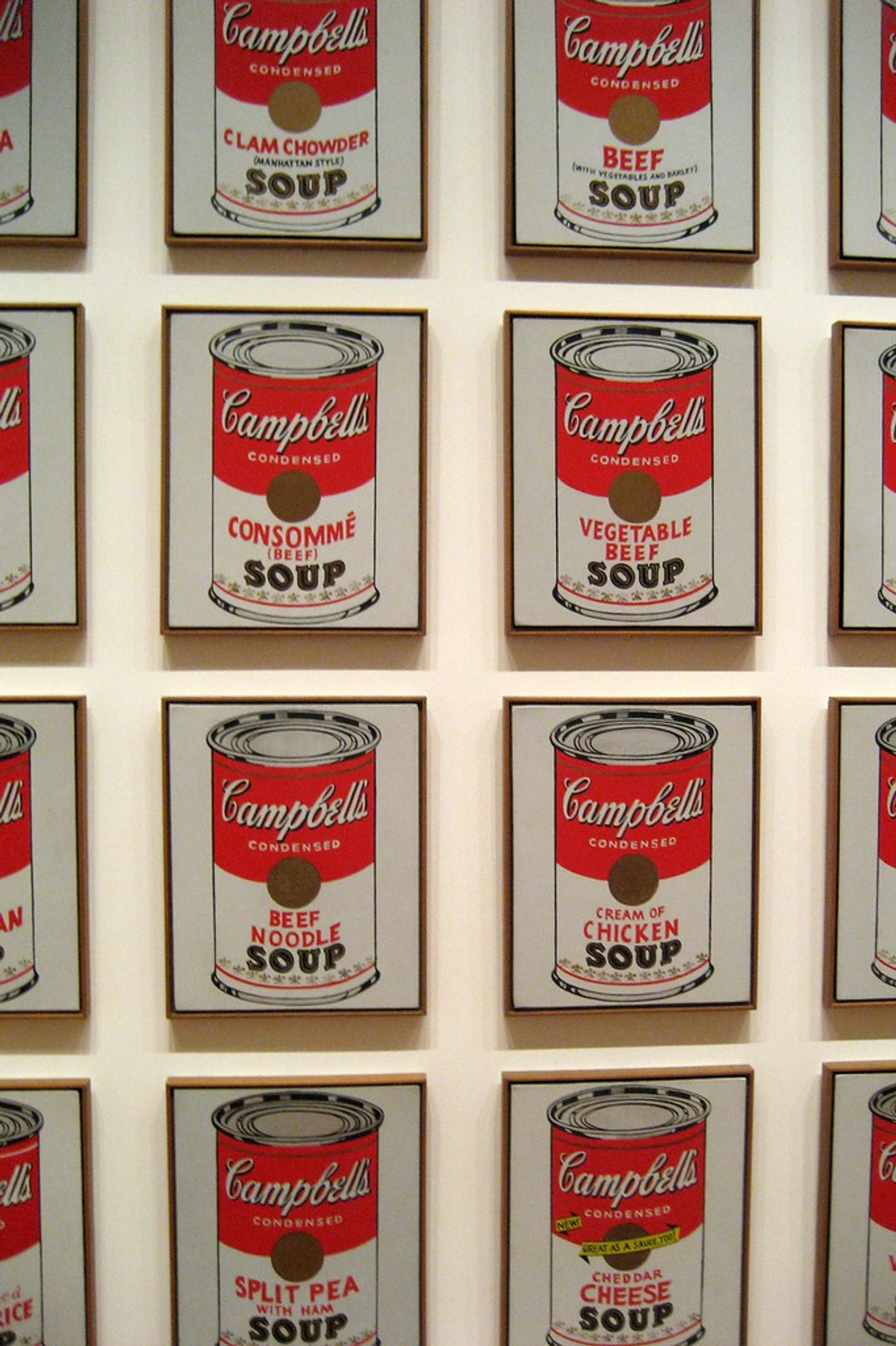
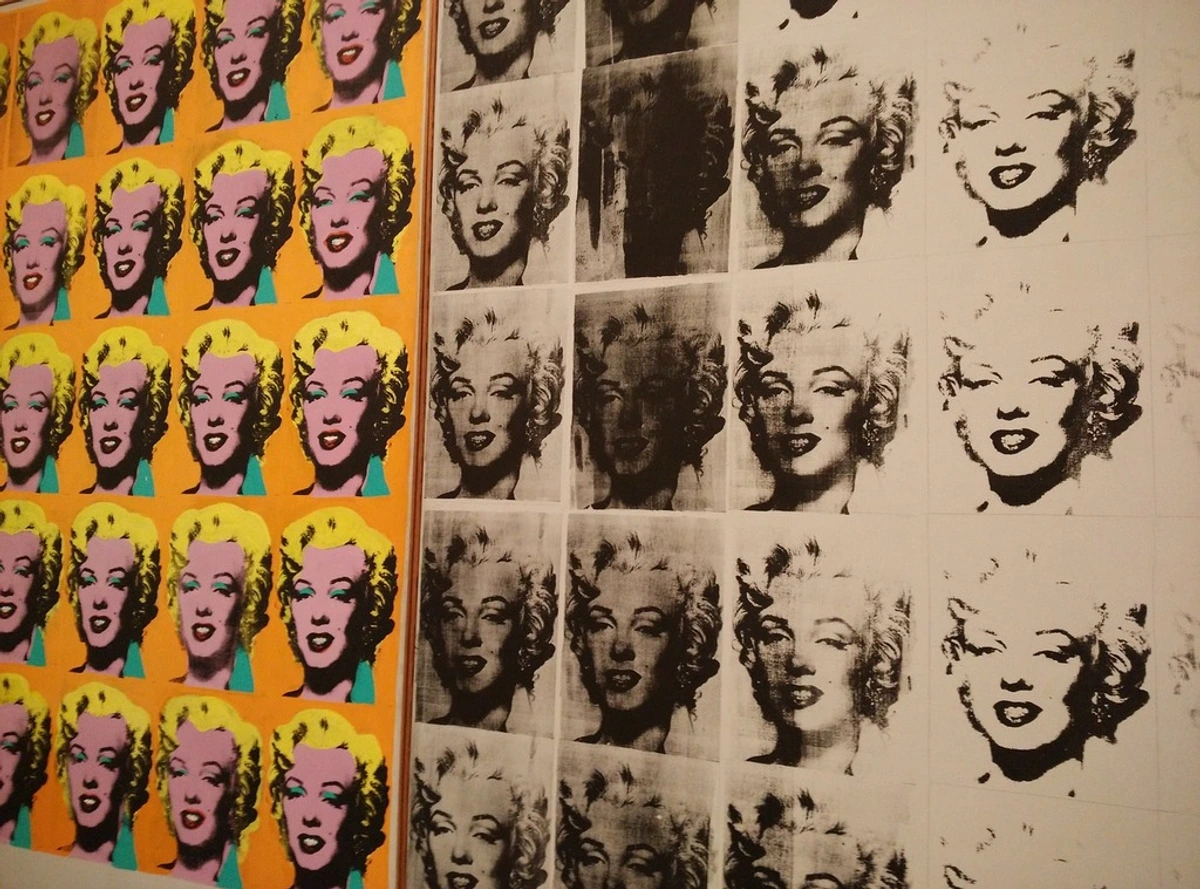
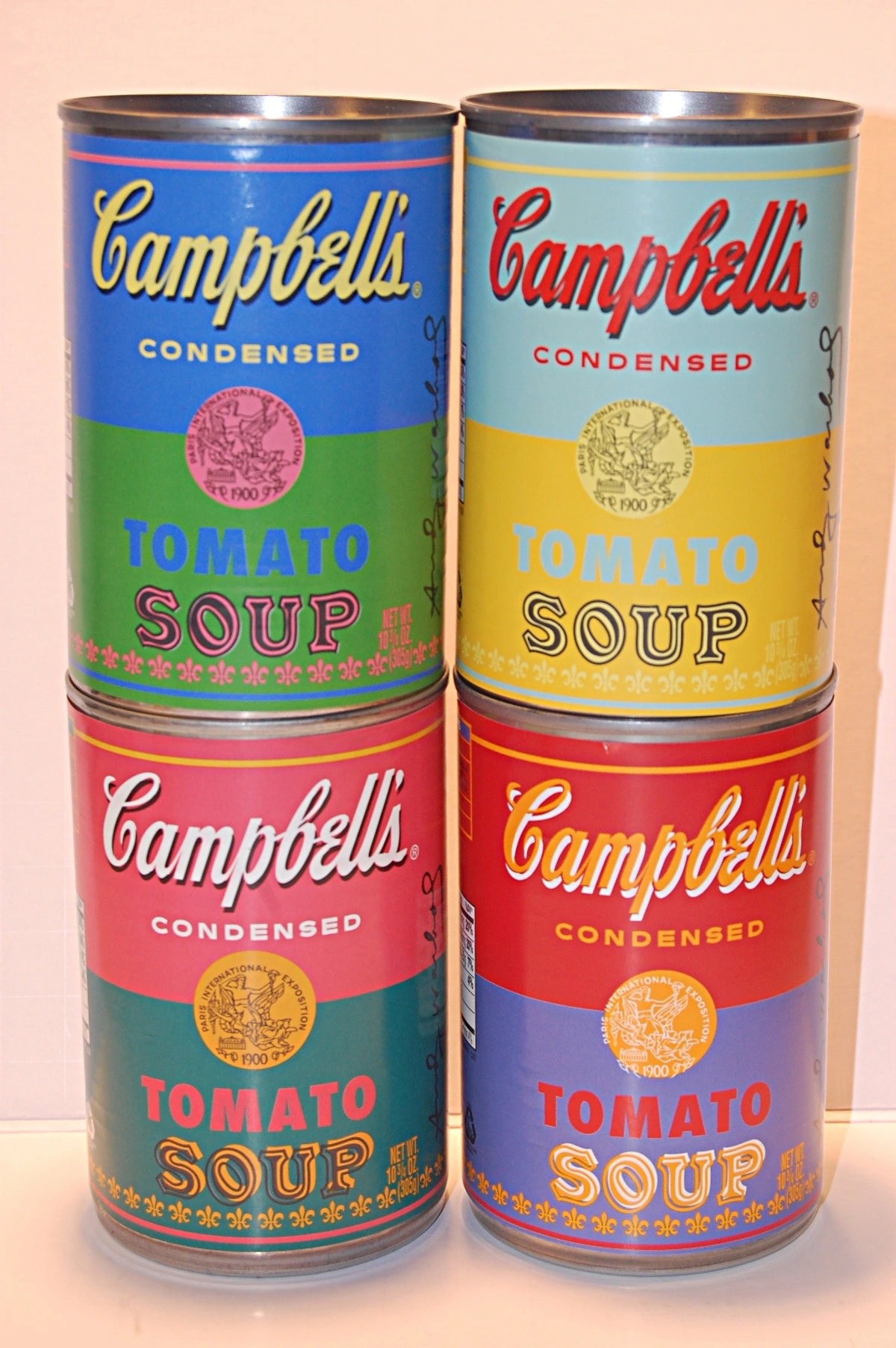
Warhol and the Pop artists who followed in the 1960s took pre-existing consumer products (Campbell's soup cans, Marilyn Monroe) and turned them back into icons of their own, but this time commenting on desire, fame, and mass production. Johns asked, "What is a flag?" Warhol asked, "What happens when a soup can becomes a religious icon?" They were both looking at the symbols of American life, but Johns was looking at the operating system, while Warhol was looking at the user interface.
This philosophical divergence is perfectly captured in their choice of materials. Johns used the ancient, labor-intensive, and highly tactile encaustic, his surfaces a record of slow, deliberate thought. Warhol embraced the cool, mechanical, and infinitely replicable technique of screenprinting, his surfaces a record of mass production and media saturation. One explored the nature of perception and objecthood; the other, the nature of fame, desire, and consumption.
Key Artworks: A Deeper Look at the Canon
Johns' work isn't a series of statements; it's a single, long conversation, with each piece building upon, questioning, or subtly undermining the last. He creates his own private vocabulary of forms—flags, targets, numbers, crosshatches—and then spends years, sometimes decades, turning them over and over in his hands, searching for a new facet to reveal. Let's take a closer look at a few of his most pivotal works to understand the evolution of his thinking.
Flag (1954-55)
The one that started it all. This wasn't just a painting of a flag; it was an event, a detonation of sorts. By choosing a symbol so politically and emotionally charged, a veritable lightning rod of meaning, Johns forced the viewer into an impossible, deeply uncomfortable position. Is it an act of patriotism, a cynical critique, or something entirely outside that binary? The use of encaustic adds a physical, almost archaeological weight, making the flag feel less like an ephemeral image and more like a relic, something dug up from the future. It set the stage for his entire career—the found object, the philosophical question, the materially dense surface, all wrapped into one. Art critic Leo Steinberg famously described it as "a thing which is irresolvably both." That's the genius of it. It's a painting and an object, a symbol and the sign of that symbol, all at once.
Target with Four Faces (1955)
Another masterclass in conceptual unsettling. The target draws the eye, but the row of plaster casts of a face's lower half along the top simultaneously humanizes and anonymizes the work. It's about the act of looking, about focus and blindness. The fact that these are partial faces, with the eyes obscured by the wooden box lid, turns the viewer from an observer into a participant, implicated in the act of seeing, or failing to see.
Painted Bronze (Ale Cans) (1960)
Perhaps the ultimate Neo-Dada statement of his early career, and one of the slyest pranks in art history. Johns cast two Ballantine Ale cans in bronze and painted them with exquisite, trompe-l'oeil precision to look exactly like the discarded, slightly battered originals. The sheer absurdity of the labor-intensive process—casting a mundane, mass-produced object in a classical, 'eternal' material like bronze—is the entire point. It asks provoking questions about value, permanence, and authenticity. What makes art 'art'? Is it the material, the labor, the context, or the idea? What separates the unique, handcrafted sculpture from the mass-produced commodity it perfectly mimics? These unassuming cans are a monumental sculpture hiding in plain sight, a quiet, witty argument about perception that continues to resonate with artists working today, like those who explore the boundaries of sculpture and objecthood.
Map (1961)
Here, Johns took another pre-existing system—the map of the United States—and subjected it to his painterly process. The encaustic application breaks down the familiar outlines of the states into an abstract study of color, line, and texture. It's a powerful meditation on how we understand and represent the world. Can a map, a diagram, ever be neutral? Johns suggests that all systems of representation are filtered through the subjective hand of the artist.
Usuyuki (1977-78)
This piece is a highlight of his 'crosshatch' period, and it signals a major shift in his thinking. Named after a Japanese kabuki play about transience and fleeting beauty, Usuyuki is a departure from the highly recognizable icons of his past. Here, he moves into pure, abstract pattern. The interwoven lines create a shimmering, flickering effect, almost like light on water or heat haze rising from a summer road. It demonstrates his ability to invest a simple, found motif with incredible complexity and emotional resonance, proving his philosophical inquiry could flourish even without an overt symbol. The artist became a questioner, a philosopher of the everyday, finding new questions in the rhythm of a simple line. It's a reminder that abstraction doesn't have to be about nothing; it can be about everything—light, time, perception, and mortality itself.
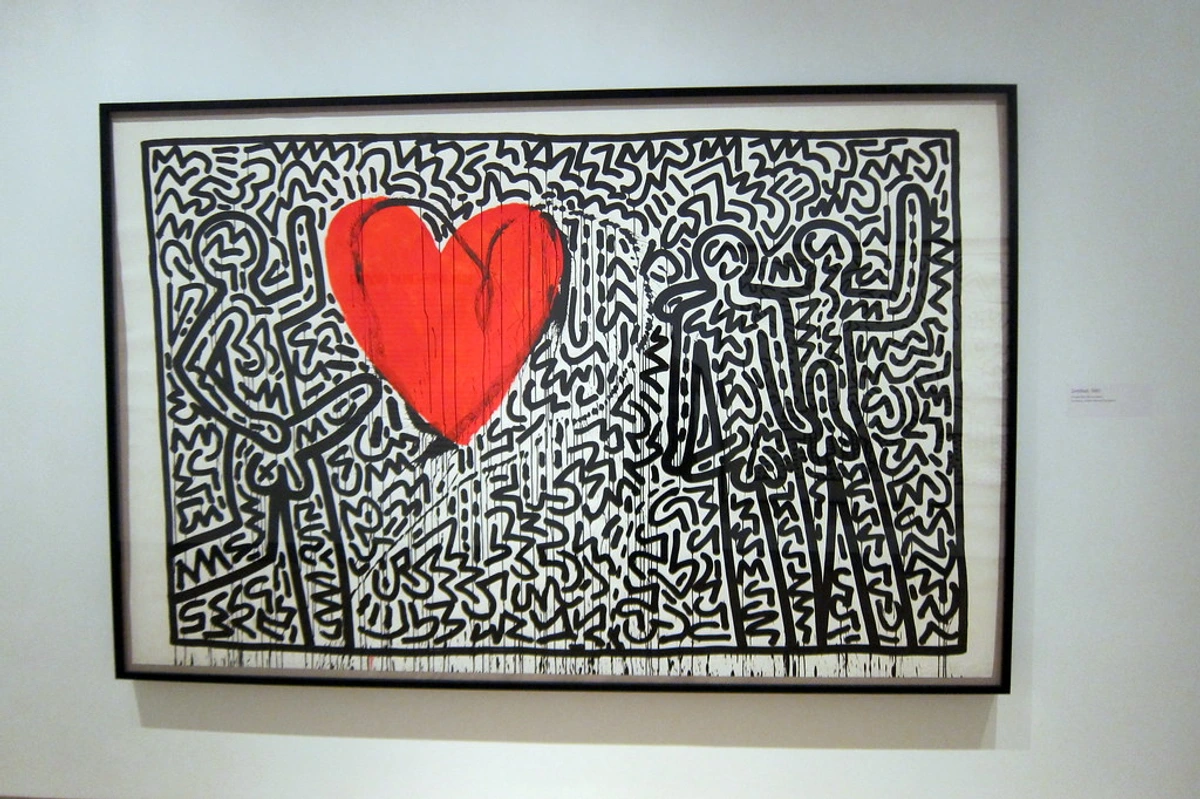
Warhol was louder, more openly commercial, and saturated with media-savvy irony. He seemed to celebrate the shiny surface of consumer life while simultaneously critiquing its emptiness. Johns, on the other hand, remained more cerebral and private. He wasn't commenting on consumerism so much as he was probing the fundamental mechanics of perception itself. Both were revolutionaries, yes, but one was a philosopher-king questioning the nature of reality, while the other was a media-sage documenting its most seductive surfaces.
The Bridge to Pop: Johns vs. Warhol
So, if Johns paved the way for Pop Art, why isn't he a Pop artist himself? The distinction is subtle but profound, and it all comes down to the artist's stance.
Feature  | Jasper Johns | |
|---|---|---|
| Subject Matter | Universal signs (flags, targets, numbers) | Mass media icons (soup cans, celebrities) |
| Tone | Cool, analytic, intellectual, detached | Campy, ironic, openly commercial, media-obsessed |
| Materials | Labor-intensive: Encaustic, bronze, collage | Mechanical: Screenprinting, acrylic, synthetic |
| Artist's Role | The Philosopher: Questions what we see and know | The Sociologist: Documents the world we consume |
| Core Question | "What is seeing?" | "What is desiring?" |
| Legacy | Redefined the meaning of artistic process and labor | Massified celebrity culture and blurred art with business |

Think of it this way: Johns takes a flag and makes you ask, "What is a flag? What does it mean to look at one?" Warhol takes a soup can and makes you ask, "What does it mean to want one? What does it mean that this object is a symbol of my culture?" Johns probes the structure of perception; Warhol probes the mechanics of desire and media. Johns was the quiet philosopher who made Warhol's loud, brilliant party possible.
Decoding the Iconography: Targets, Numbers, and Crosshatches
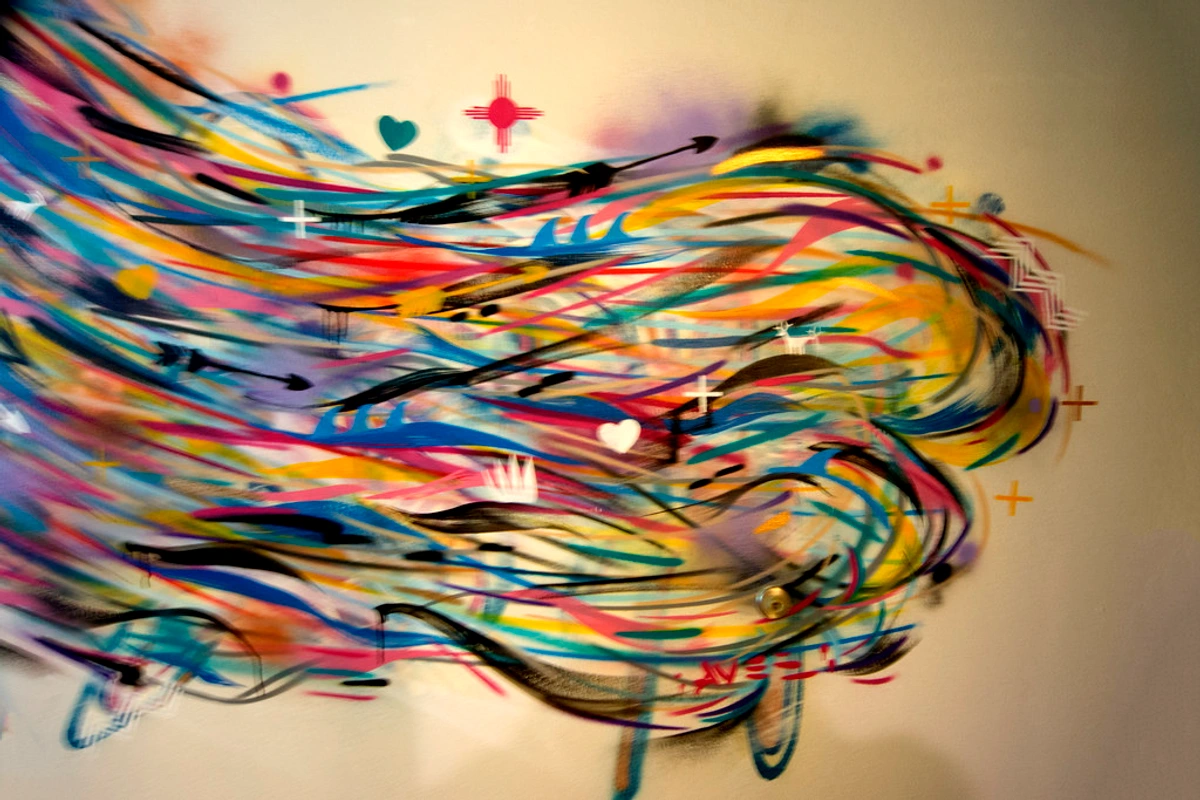
After the flags, Johns didn’t stop. He continued his patient, obsessive mining of the familiar, building a vocabulary of universal signs. Each motif became a new laboratory for his questions about seeing and knowing. He systematically stripped these common symbols of their function, forcing the viewer to confront them as pure objects of perception. It was as if he were asking: “If we can’t use this thing, what is it, really?” It was this relentless re-contextualization of the mundane that influenced later generations of artists to see the potential for meaning in the world around them, a mindset visible in the playful abstraction of artists whose work is featured alongside his in museum collections today.
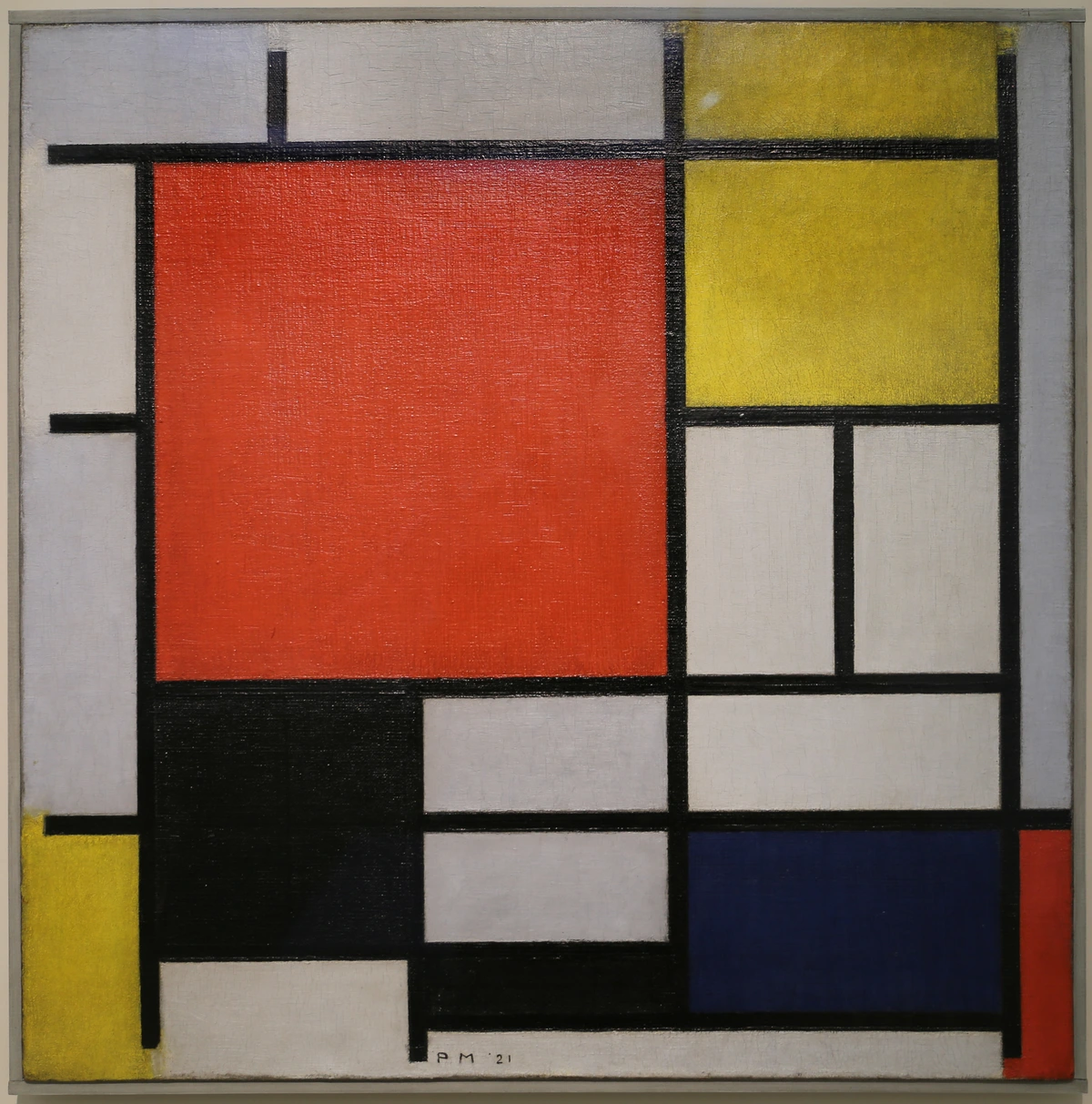
Targets: The Paradox of Sight and Blindness
He painted targets—those concentric circles that seem to pull your eyes into their dead center. But Johns’ targets are odd. They aren’t for shooting; they’re for looking. They force a confrontation with the act of seeing itself. He would often attach small wooden boxes to the canvas (in works like Target with Four Faces), containing plaster casts of body parts. These additions were jarring, disrupting the purity of the target and reminding us of the body doing the looking.
These unsettling juxtapositions ask questions about perception: What does it mean to aim your gaze? What do we see when we are blind to everything outside the target? It’s a paradox, turning a symbol of focus into a meditation on blindness. Works like Target with Four Faces (1955) and Green Target (1955) became icons of this inquiry. John Cage famously owned Target with Four Faces, and it’s not hard to see why a composer interested in silence and chance would be drawn to such a Zen-like investigation of attention and perception.
Numbers and Letters: The Arbitrary Nature of Meaning
The Tyranny of the Grid: Numbers and Letters
Then came the numbers (0-9) and later, letters and alphabets. Johns would repeat them over and over, sometimes in neat, rigid grids, sometimes bleeding into one another in a chaotic jumble. They are familiar but stripped of their function. This series toyed with the arbitrary nature of meaning. The number '5' is just a symbol; we all agree on its value. But isolated and repeated, it becomes a strange, mute object, a visual sound without a referent. Johns was probing the foundations of our shared language, asking what’s left when the practical meaning is removed. In a way, he was doing for signs what Marcel Duchamp did for objects: taking them out of their context and forcing us to confront their essential absurdity and beauty as things-in-themselves.
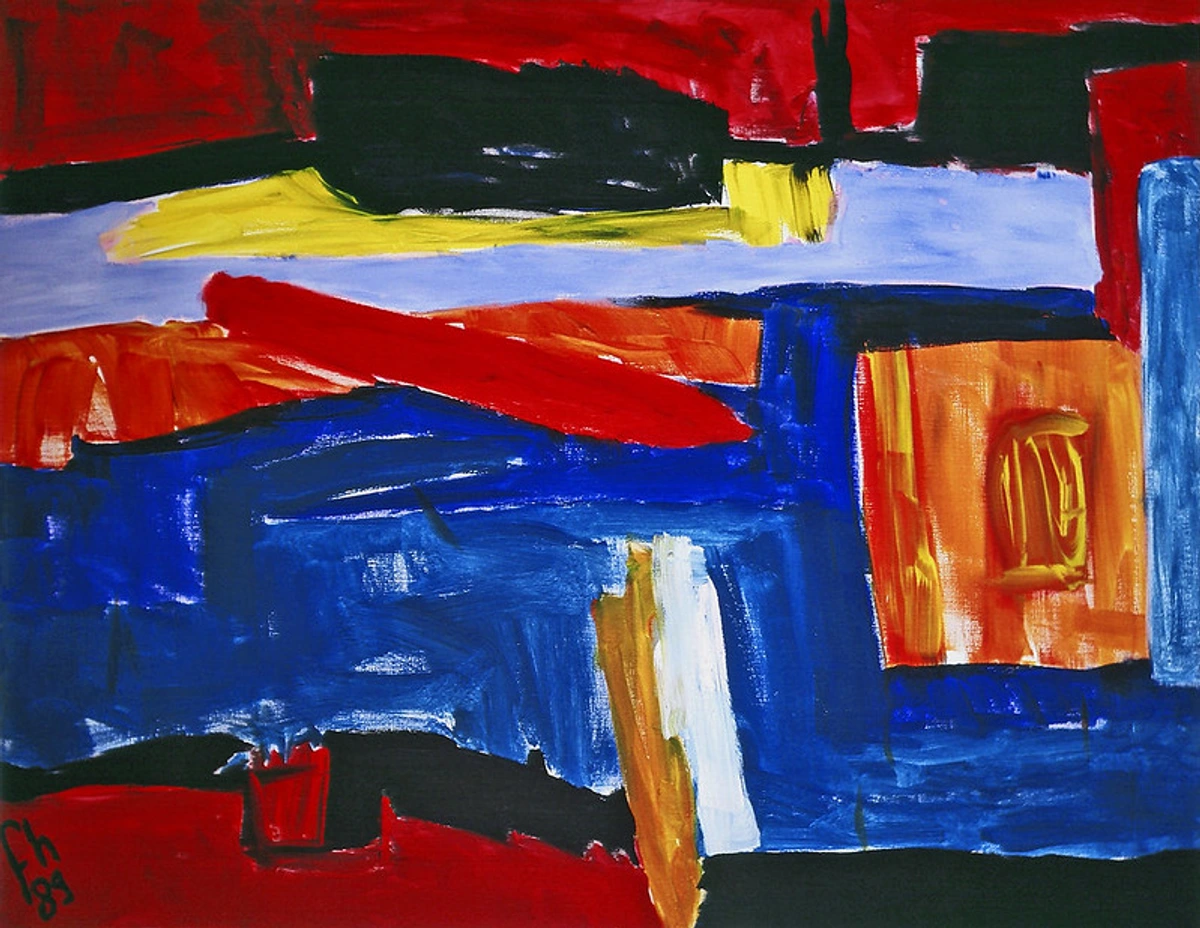
Crosshatches: A Diary in Gesture and Later Work
The Crosshatch Code: Abstraction and Autobiography
In the 1970s, after exhaustively exploring familiar signs, Johns moved into more abstract territory with his crosshatch series, celebrated in works like Usuyuki (1977-78). These paintings are filled with dense, interlocking patterns of parallel and perpendicular lines—part Rorschach test, part construction-site scaffolding, part secret code. The crosshatch pattern was a found motif, something he saw painted on a passing car, which immediately captivated him as a ready-made structure. He used it as a kind of pre-existing armature, much like the flag, to explore pure process.
This 'late period' wasn't just a formal exercise. In the 1980s and beyond, works like his Seasons series began to introduce overtly autobiographical motifs and haunting references to his own earlier art, creating a kind of visual memoir. His Catenary series (from 1997) took this even further, abandoning the rectangular canvas altogether and draping strings across the picture plane, a quiet farewell to traditional painting and an exploration of gravity, line, and the inevitable pull of time.
The resulting works feel almost meditative, a record of a state of mind that is both focused and free. This wasn’t a story about a recognizable object anymore; it was a story about the very act of making marks. This exploration continued into his later career, where themes of memory, regret, and the passage of time became more prominent. His work from the 1980s onward, such as the Seasons series, introduced autobiographical elements and motifs from his own earlier work, creating a kind of visual memoir. His Catenary series (from 1997) abandoned the rectangular canvas altogether, draping strings across the work, a quiet farewell to traditional picture-making and an exploration of gravity and line.
The Pearl Street Crucible: Johns, Rauschenberg, and the Creative Engine of Neo-Dada
The story of Jasper Johns in the 1950s is inextricably linked with that of Robert Rauschenberg. For seven crucial years (1954-1961), they were romantic partners, studio neighbors, and one another’s most rigorous critic and creative spark. Rauschenberg later called it “the closest thing since Pollock and de Kooning to a joint declaration of independence.” Their collaboration wasn’t just a personal partnership; it was the very engine of Neo-Dada, a creative dialogue that changed art history. They lived and worked in the same building on Pearl Street in Lower Manhattan, in a kind of creative feedback loop.
They shared ideas, materials, and a shared frustration with what they saw as the emotional histrionics of Abstract Expressionism. Rauschenberg was the more gregarious and wildly experimental of the two, a scavenger who created his chaotic, object-filled “Combines” that threatened to spill off the canvas. Johns was the quieter, more methodical thinker, a chess player who pared his subject matter down to a few essential, resonant signs. Rauschenberg’s work was additive; he brought the world in. Johns’ was reductive; he boiled the world down to its essence. Yet, they were two sides of the same coin, a perfect creative dyad.
The Two-Man Avant-Garde: Art vs. Thought
Their creative symbiosis had tangible results. When Rauschenberg began his famously audacious “Erased de Kooning Drawing” (1953), it was Johns who reportedly framed the work, providing the final, institutionalizing touch that transformed an act of destruction into a new form of creation. When Johns painted his first “Flag,” it was Rauschenberg who was his immediate audience, his primary sounding board.
Art historians often cite a succinct, brilliant difference between their approaches: Rauschenberg operated in the gap between art and life, while Johns operated in the gap between art and thought. Rauschenberg brought the outside world—tyres, goats, quilts, dirt—into his art, collapsing the boundary. Johns took the world’s most familiar signs and subjected them to rigorous, philosophical scrutiny, collapsing the boundary between a concept and its representation. They were attacking the same problem—the stale conventions of art—from two different, complementary angles.
Their influence on each other can't be overstated. Rauschenberg's boldness may have given Johns the confidence to pursue his own quiet, radical path, while Johns' focus may have provided a philosophical anchor for Rauschenberg's wilder experiments.
Legacy and Lasting Impact: Why Johns Still Matters Today
Why does a flag painted in 1954 still feel so urgent? Why does a bronze pair of beer cans from 1960 continue to challenge and delight? Because Jasper Johns fundamentally changed the rules of the game, not just for artists, but for anyone who looks at the world. His influence is a quiet hum beneath the surface of contemporary art, but its vibrations are everywhere.
Where to See the Work of Jasper Johns: A Traveler's Guide
You can't fully grasp the texture and presence of a Jasper Johns painting from a screen. The dense, waxy skin of an encaustic work, the subtle shadows cast by a bronze ale can, the way a Map shimmers from a distance—these are things you have to experience in person. Luckily, his work is held in nearly every major museum collection in the world. If you're planning an art pilgrimage, here are some essential destinations. I think of it as a tour of the landmarks of 20th-century art history, all centered on this one man.
- The Museum of Modern Art (MoMA), New York: This is ground zero. MoMA holds an unparalleled collection of his early masterpieces, including the Flag (1954-55) he dreamt into existence, the unsettling Target with Four Faces (1955), and the legendary Map (1961). With multiple examples of his flags, targets, and numbers, a visit here is a comprehensive education in his foundational years. Standing in front of these works, you can trace the birth of a new way of thinking in American art.
- The Metropolitan Museum of Art, New York: The Met provides a slightly different, often more classical context for his work. Their collection includes important pieces like White Flag (1955-58), a ghostly, monochromatic version of his most famous subject, allowing you to see how he played with variations on a theme.
- The Whitney Museum of American Art, New York: As champions of American art, the Whitney has consistently showcased Johns, often with a focus on his works on paper and prints. They hold a vast collection of his drawings and prints, revealing the meticulous process behind his seemingly simple images. It's a must-visit to understand the artist as a disciplined craftsman, not just a conceptual innovator.
- The Art Institute of Chicago: A major repository of 20th-century art, the AIC holds Johns' pivotal painting Numbers in Color (1958-59). This piece is a perfect example of his fascination with systematic repetition and chance, a work that feels both rigorously planned and surprisingly dynamic.
- The National Gallery of Art, Washington, D.C.: Boasting one of the most significant collections of modern American art, the NGA has numerous drawings, prints, and paintings by Johns. Their collection allows for a deep dive into the technical side of his practice, from his early experiments to his late-career masterworks.
- Tate Modern, London: Across the pond, the Tate holds key works that help tell the story of Pop Art's European reception, with Johns often positioned as the intellectual forebear to figures like Andy Warhol.
Before you visit, it's always a good idea to check the museum's online collection database. Major works often travel for special exhibitions, so a quick check can save you from disappointment. Standing in front of these pieces, you'll finally understand—it's not just a flag. It's a question made of wax and pigment, and it's still waiting for an answer.
The Enduring Questions: A Jasper Johns FAQ
What is the significance of the flag paintings?
They are famous because they took an unassailable national symbol and rendered it an object of cool, methodical artistic scrutiny. Johns forced viewers to confront their own emotional baggage tied to the flag—patriotism, skepticism, confusion—all by painting it with precise detachment. They fundamentally challenged the barrier between a real-world object and its artistic representation, between a symbol and the thing itself.
How is his work classified? Neo-Dada or Pop Art?
He’s the bridge, not quite either. Johns co-founded Neo-Dada—the return to everyday objects and the readymade—and provided the crucial intellectual spark for Pop Art. But his work lacks Pop’s celebration of consumer culture. He’s more interested in the philosophy of perception. Think of him as the cool, analytical philosopher who made Pop Art’s louder, more ironic statements possible.
Did he work in other mediums beyond painting?
Johns constantly experimented. He famously cast sculptures in bronze, creating works like his seminal Two Ballantine Ale Cans (1960) and a bronze flashlight. He incorporated collage by embedding newspapers in encaustic, and experimented with lead and bitumen in his later work. He is also a master printmaker, having created hundreds of lithographs, etchings, and screenprints, often using these mediums to re-explore motifs like flags and targets in series.
What is his influence on artists today?
Johns taught artists that subject matter doesn’t need to be “original” to be profound. You can paint a flag, print a number, or replicate a target. The magic happens in the process, context, and the questions raised. This democratized art-making and opened doors for countless movements, from Pop and Minimalism to Conceptual Art, influencing generations of artists like Christopher Wool, Cady Noland, and Richard Prince.
Can you explain the encaustic technique?
Encaustic is an ancient technique using melted beeswax mixed with colored pigment. Johns revived it for his flags because it gave his work a rich, textured, and durable surface that looked weathered and timeless. The molten wax would trap fragments of newsprint under thin layers, creating an archaeological depth and a physical “skin” that opposed the illusionism of traditional painting and emphasized the painting as a self-contained object.
Who were his major influences?
While he stood apart from his immediate predecessors, Johns was deeply influenced by the conceptual wit of Marcel Duchamp and the readymade. He shared the avant-garde spirit of composer John Cage, a close friend who championed chance and the beauty of the everyday. He also looked to earlier modern masters like Pablo Picasso for their formal vocabulary. But the most direct and transformative influence was his creative and romantic dialogue with his partner, Robert Rauschenberg. That relationship wasn't just a footnote in his biography; it was the crucible in which his entire artistic identity was forged.
How much is a Jasper Johns painting worth?
Jasper Johns is one of the most valuable artists in the world. His paintings and sculptures consistently fetch astronomical sums at auction. His iconic Flag (1958) was sold in a private sale for a reported $110 million in 2010, and other major works have sold for tens of millions at public auction, cementing his status as a blue-chip investment as well as an artist of immense historical importance.
The Final Layer: Conclusion - The Gaze of Jasper Johns
Jasper Johns never set out to be a firebrand revolutionary. He was, and remains, an observer. His entire career can be seen as the patient, methodical practice of asking simple, childlike questions that turn out to have no simple answers: What is a flag? What is a number? What does it really mean to see?
In his quiet studio, meticulously applying wax and pigment, he answered these questions not with words, but with objects that arrest our gaze and scramble our assumptions. He proved that art doesn’t need fireworks or grand pronouncements to be revolutionary—it just needs a new way of looking. His genius was in holding up a mirror to the most familiar things in our world and revealing the strangeness, complexity, and profound uncertainty that was there all along.
He redefined what it meant to be an artist. He wasn’t an Expressionist, pouring his soul onto the canvas. He was a thinker, an editor, a selector, and a questioner. He took the rules of art and quietly, systematically, dismantled them, replacing grand gestures with a humble, relentless inquiry. He didn’t tell us what to think; he gave us the tools to think differently. He never set out to be a firebrand revolutionary; he was an observer, a master of patient, methodical inquiry.



His legacy is not a single style, but a new way of thinking, a new lens through which to view the world. He handed artists a permission slip to ask different kinds of questions, to find the profound in the familiar, and to understand that the labor of making is itself a form of thinking. He stands as a pivotal figure, a quiet giant whose influence radiates outwards, touching every corner of contemporary art, inspiring movements from Conceptual Art to the appropriation art of the 1980s.
Next time you pass a flag on a government building, a beer can in the recycling bin, or a series of numbers on a clock, take a second. Don’t just ask what it is. Ask what it does to you. What memories does it trigger? What power does it hold over you? That small, quiet disruption of your everyday perception—that moment of noticing the unnoticed—is Johns’ greatest gift to all of us. He wasn’t just making art; he was teaching us all how to see.
And in that quiet, revolutionary act of re-perception, his legacy continues to unfold, urging us to find the extraordinary hidden within the most ordinary corners of our world. It's a lesson that art doesn't have to shout to be heard. Sometimes, the most powerful statements are those made in a whisper. If these ideas of finding meaning in the mundane resonate with you, you can explore contemporary works that carry on this spirit of inquiry in our collection.