Iron Age Art History Guide: From Craft to Canvas
Dive deep into the art of the Iron Age, from the mysterious Celts to the Vikings and Romans. Discover the stories behind ancient artifacts and see their surprising echoes in modern art today.

Iron Age Art: A Journey from Ancient Forges to the Modern Canvas
Have you ever held a piece of jewelry that felt impossibly old? I’m not talking about your grandmother’s brooch, though that’s special too. I’m talking about something that hums with a history so deep it makes the centuries feel thin. That’s the feeling I get when I look at Iron Age art. It’s a strange and wonderful thing, isn’t it? To be so captivated by a style of art that was forged, quite literally, thousands of years ago, in a world we can scarcely imagine. Yet here I am, a contemporary abstract artist, finding more inspiration in the twisting La Tène patterns of a Celtic torc than in half the galleries I visit. It’s a stark contrast to, say, the emotive distortions of a Francis Bacon painting, but the core impulse—to externalize an inner vision—feels identical. Let’s figure out why that is. Along the way, we’ll explore how this ancient artistry isn’t just a relic, but a living dialogue between materials, makers, and meaning—one that still pulses in the studios of artists grappling with abstraction, pattern, and the power of a single line to hold a universe.
The Big Picture: What Was the Iron Age?
Let's get our bearings first. When we talk about the Iron Age, we're not talking about a single, monolithic culture. We're talking about a technological era that swept across Europe and beyond, lasting roughly from 1200 BC to 1 AD, though these dates shift dramatically depending on your geography. The key invention? The mastery of smelting iron ore to create tools and weapons that were stronger and more durable than anything bronze could offer. This wasn't just a tech upgrade; it was a societal earthquake that reshaped everything from agriculture to warfare. I like to think of the discovery of iron like the first time an artist discovers a new, more vibrant pigment—suddenly, the entire palette of what's possible changes, from the furrow of a plow to the edge of a sword.
This shift rippled outwards, defining the major cultures whose art we still marvel at today: the fierce and intricate world of the Celts, the seafaring and symbolic Vikings, and the disciplined, propagandistic Romans who eventually conquered much of this world. But it wasn't just about them. This was a global phenomenon, with incredible ironworking cultures emerging independently in places like ancient China (during the Zhou and Han Dynasties) and across India, where the famous Iron Pillar of Delhi stands as a monument to their mastery. In Africa, the Nok culture was producing elaborate terracotta sculptures and iron tools in modern-day Nigeria as early as 500 BC, proving this technological spark was not confined to one continent.
Unlocking the Visual Language of the Iron Age
What does Iron Age art look like? If you had to sum it up in a word, that word might be ornate. Forget simple lines. This was an art of abundance, of filling every available surface with meaning. For the artist, it’s a masterclass in negative space and complex composition. Imagine trying to tell a story not with a single image, but with a rhythmic, flowing pattern—a challenge that feels surprisingly close to composing a piece of modern abstract art with geometric shapes. It's an embodied mathematics, a rhythmic ordering of chaos.
The dominant style has a name: Celtic La Tène, named after a site in Switzerland where many artifacts were found. It’s characterized by an obsession with ambiguity—where does the pattern end and the animal begin? It’s an art of controlled chaos, of three main motifs that I find myself unconsciously sketching in the margins of my notebooks:
- Spirals and Trumpet Curves: These aren't just decorative. They’re thought to represent the journey of life, the cycles of nature, or the sun. They have a hypnotic, pulling quality that draws the eye in and never lets it settle. It’s visual rhythm at its most primal, a visual echo of natural forms like ferns and galaxies. Think about the Golden Ratio or the Fibonacci sequence—these mathematical principles were at play in their compositions, creating a harmony that feels both discovered and invented.
- Interlacing: Endless knots and woven patterns that symbolize eternity, interconnectedness, and the complex paths of fate. To create something like this requires incredible planning; you can't just wing it. It speaks to a deep understanding of geometry and flow, a mathematical beauty that feels both chaotic and perfectly ordered.
- Zoomorphism: The animal world was a constant source of inspiration. But these weren't just pictures of animals. They were stylized, mythic beasts with elongated bodies and flowing, plant-like limbs, often merging with the geometric patterns around them. It's abstract, it's organic, and it's breathtakingly modern in its complexity.
And what drove them to create this? It was almost never art for art's sake. It was art for ceremony, for status, and for religion. A shield was a spiritual ward, a sword was an extension of the warrior's soul, and a comb was a way to ward off the unclean. Every object had a job beyond its surface. A torc wasn't just a necklace; it was a declaration of your place in the tribe. The intricate patterns on a shield were as much a spiritual ward as they were decoration. This is something I think about a lot with my own work—what is the unseen purpose behind the visible form? When you look at a piece, are you seeing just a painting, or are you seeing an artifact of a personal ritual, a statement of identity, a ward against the chaos of a blank canvas?

A Tour of the Great Iron Age Cultures and Their Masterpieces
The Celts: Masters of Metal and Mystery
The Celts were the undisputed masters of the La Tène style. Their art feels intensely alive, as if the metal itself was growing. You see it in the swirling designs of the Witham Shield, a masterpiece of repoussé (hammered) bronze from England. It’s not just a piece of armor; it’s a canvas displaying a fantastical boar with a flowing, vegetal body. It’s abstract, it’s organic, and it’s breathtakingly modern in its complexity. Artifacts like these weren’t conceived as 'art' in our modern sense, but as objects charged with power and meaning. Artifacts like these weren’t conceived as 'art' in our modern sense, but as objects charged with power and meaning.
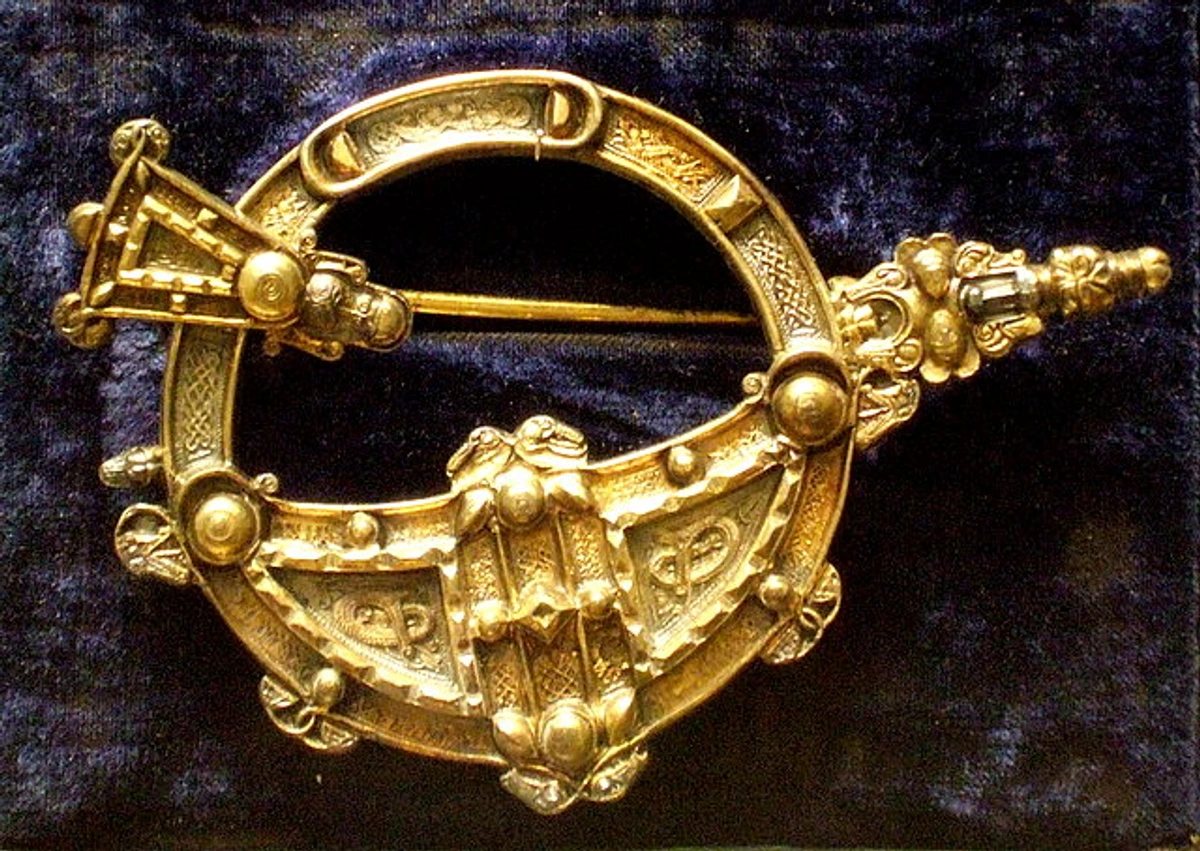
But beyond the flashy showpieces, the Celts imbued even their most personal items with a sacred geometry. The Tara Brooch, which I find myself coming back to, is a marvel of early Irish craftsmanship. Its surface is a dense symphony of interlocking patterns and impossibly thin gold filigree, yet it's structured around a simple, perfect circle. It’s a reminder that even the most maximalist art relies on a skeleton of harmony and proportion. The brooch was found not at Tara, but on a beach in County Meath, a single object surviving centuries in the earth—a testament to its material strength and a poignant reminder of the stories we’ll never know.
Probably the most iconic of all Celtic artifacts is the Gundestrup Cauldron. Found in a Danish bog, this massive silver vessel is a puzzle. Its panels are crammed with gods, warriors, and mythical beasts, including the famous horned figure, Cernunnos, sitting in a meditative pose. Was it a ritual vessel for a sacred feast? A votive offering? We can only guess, and that air of mystery is part of its power. It reminds me that art doesn't have to reveal all its secrets at once.

The Battersea Shield, found in the Thames, is another example where defensive function meets extraordinary artistry. The swirling designs, created with the enamel the Celts perfected, are purely abstract. Its form is hauntingly biomorphic, suggesting a face or a body without explicitly depicting one. This purposeful ambiguity is what makes it so compelling to me. Why choose abstraction for an object of war? Perhaps to render it more than human, to transform it into an instrument of divine will. This is abstraction not as decoration, but as a form of spiritual protection.
The Vikings: The Narrative of the North
The Vikings were the storytellers of the Iron Age. Their art, especially from the 8th century onwards, is less about abstract patterns and more about a stylized, dynamic representation of their myths. They had several distinct styles that evolved over time: the Oseberg style with its gripping beasts, the Borre style with its distinctive knotwork, and the elegant Urnes style, with its ribbon-like animals intertwined in graceful combat. It’s controlled, but filled with latent energy, like a coiled spring. These weren't just decorative phases; they were a visual evolution that mirrored the Viking world’s expansion and changing beliefs.
Viking art was meant to be seen on everything from massive runestones to the prows of their longships. The famous Oseberg ship burial contained a treasure trove of carved wooden posts and a cart, all adorned with the gripping beast style—animals with wide, staring eyes, their bodies contorted into impossibly complex knots. It's an art of motion and myth, designed to carry the stories of their gods and heroes across the seas. There was also the Jellinge style, with its pronounced animal heads, transitional phases leading to the serene, balanced Urnes style.
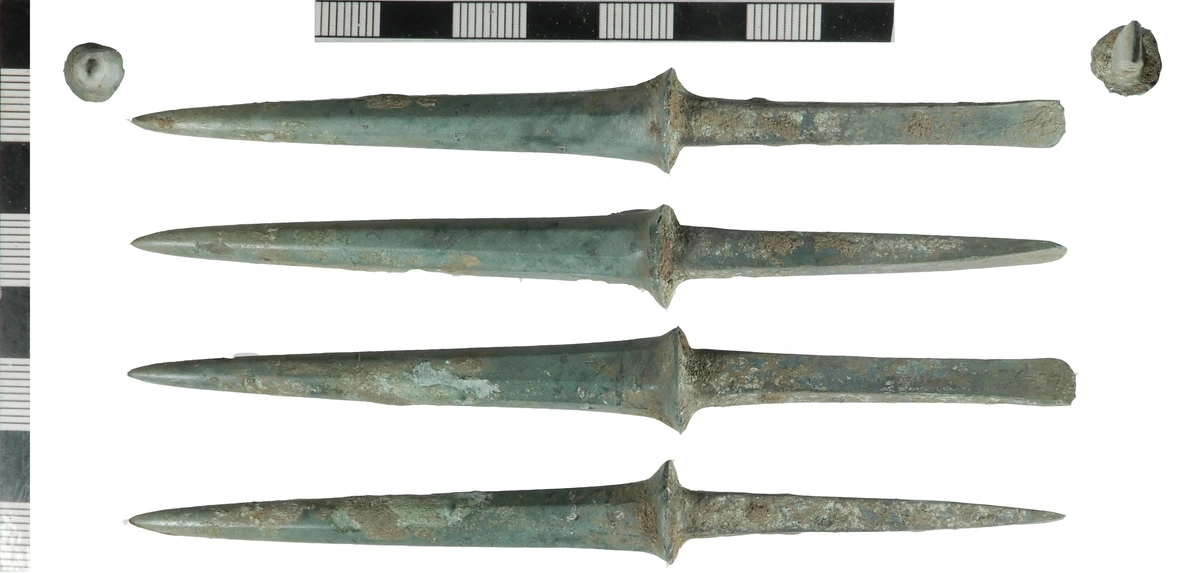
They also created incredible small-scale art. Intricately carved bone combs, stunningly ornate jewelry, and even their everyday tools were often decorated. This pervasive sense of aesthetics, where even a functional object deserves to be beautiful, is something that deeply resonates with me. A mundane object like the Gjermundbu helmet, one of the very few nearly complete Viking helmets ever found, is a lesson in minimalism—its simple, clean lines and functional design speak to a different kind of artistic philosophy, one where beauty is found in utility. No horns, no frills—just pragmatic protection. It makes you realize our popular image of a Viking is often pure fantasy.
Beyond the 'Barbarians': Rome and the East
Let’s be clear, the Romans were a different beast entirely. Their art was about power, propaganda, and realism. A Roman statue was designed to show you exactly what an emperor looked like (or what he wanted you to think he looked like), and a triumphal arch told a clear story of conquest and dominance. Consider the Bronze Wolf, an Etruscan symbol later adopted by Rome, embodying a raw power that was distinctly different from the more abstract Celtic or Viking styles.
And yet, the merging of these cultures created some of the most interesting art of the period. Romano-Celtic art is a fascinating hybrid. You get the gods and realism of Rome combined with the intricate, pattern-filled styles of the Celts. Statues of the Roman god Mercury, for instance, might be found decorated with the interlacing patterns of a Celtic deity. It’s a powerful reminder that art is always in conversation with the art around it. A statue of the horned god Cernunnos might wear Roman-style drapery, a visual truce between two worlds.
Meanwhile, in China, the Iron Age saw the rise of the Han Dynasty, whose artisans were masters of jade carving and lacquerware. The Bi disc, a circular disk with a central hole, is a perfect example. It's a symbol of heaven, and its simple, perfect form speaks to a completely different artistic philosophy—one of elegant minimalism compared to the Celtic love of maximalist detail. It shows that there are many ways to find the sacred in art. And in India, the Dhar iron pillar, standing for over 1600 years without rusting, is a silent testament to a metallurgical sophistication we can barely comprehend. And in India, the Dhar iron pillar, standing for over 1600 years without rusting, is a silent testament to a metallurgical sophistication we can barely comprehend.
The Artist's Toolkit: How Did They Do It?
This is the part that makes you appreciate these ancient creators as true masters of their craft. They didn’t have power tools or a catalogue of supplies. They had fire, hammers, and incredible patience. Their workshop was the world—a charcoal-fired forge, a bed of clay, perhaps a simple anvil. Yet with these, they created objects that continue to define what we mean by 'art'. And they did it while innovating constantly.
- Metalworking: This was the core. We're talking about casting (pouring molten metal into molds), forging (hammering heated metal into shape), and repoussé (hammering designs from the reverse side to create a raised image on the front). Forging was an art of repetition and judgment; one wrong strike could shatter a piece. Casting, especially for complex objects like the Gundestrup Cauldron, required precise engineering of clay molds and an intimate understanding of how metal flows as it cools. It was, in many ways, a form of performance art with fire.
- Lost-Wax Casting: A particularly genius technique. The artist would create a model in wax, encase it in clay, and then melt the wax out, leaving a perfect hollow mold for the molten metal. This allowed for an incredible level of detail and was likely used for the finest jewelry and figurines. Think of it as an ancient form of 3D printing, where the original is destroyed to create a unique, perfect copy.
- Enameling (or Champlevé): The Celts were pioneers of this, inlaying molten glass into channels carved or cast into metal to create brilliant, jewel-like colors. The effect is stunning and surprisingly durable, a testament to their sophisticated understanding of material science (or, more likely, generations of trial and error passed down as craft). It’s almost like painting with fire and glass. The process involves heating the metal and powdered glass in a kiln, a dance with heat that requires immense skill to not shatter the piece. The process involves heating the metal and powdered glass in a kiln, a dance with heat that requires immense skill.
- Wood and Bone Carving: Particularly for the Vikings, this was a primary medium. Using simple chisels and knives, they brought entire mythologies to life on ships and everyday objects. We often forget just how much of their art was on wood that has simply rotted away. What survives, like the Oseberg carvings, represents a tiny fraction of their total artistic output. The Great Ship at Oseberg is a floating art gallery, its posts carved with animal heads and geometric shapes.
- Filigree and Granulation: They were expert jewellers, weaving gold and silver into intricate forms using techniques like filigree (fine wire work) and granulation (decorating with tiny metal balls). To achieve this with a charcoal-fired forge is just mind-boggling. Granulation, in particular, is a famously difficult process where tiny spheres of gold are fused onto a surface without melting them, a secret that was lost for centuries. It’s a testament to an intuitive, almost magical understanding of metallurgy.
The Unbroken Chain: Why Iron Age Art Still Matters
So why does this ancient art, born in smoke-filled forges and carved by the light of oil lamps, matter to us today? It’s because the questions they were asking are the same questions artists are still asking. How do you make the invisible world of spirit and belief visible? How do you find a pattern in the chaos of nature? How can a simple object carry the weight of an entire identity? It’s a conversation across millennia. When I paint, those ancient rhythms and the trust in the viewer’s imagination inform every mark. They didn’t over-explain. They trusted the work to speak, a radical act that feels more necessary than ever in our oversaturated world.
When I’m working on a new painting, struggling with abstraction and representation, I often think of the Gundestrup Cauldron. It tells a story, but it doesn't hold your hand. It requires you to bring your own imagination to the table. That’s a lesson in respect for your audience. It fights the modern impulse to explain everything, to caption every symbol. It trusts the viewer to be an active participant in the meaning-making process, a radical act of faith in the power of art itself. It’s a reminder to stop over-explaining and just let the work be.
The influence is everywhere if you look. It’s in the swirling tattoos that have become part of modern culture, directly inspired by Celtic designs. It’s in the bold, symbolic artwork that defines modern fantasy genres. You can see its DNA in the intricate illustrations of the Book of Kells, and even in the sinuous, natural forms of Art Nouveau architecture—a testament to the endurance of the 'line as life' philosophy. The Celtic Revival of the 19th century wasn’t just a romantic reimagining; it was a reawakening of ancient principles of design in book arts, jewelry, and architecture. And for me, it's in the understanding that a line isn't just a line. It can be a journey, a symbol, a piece of a much larger, more beautiful tapestry.
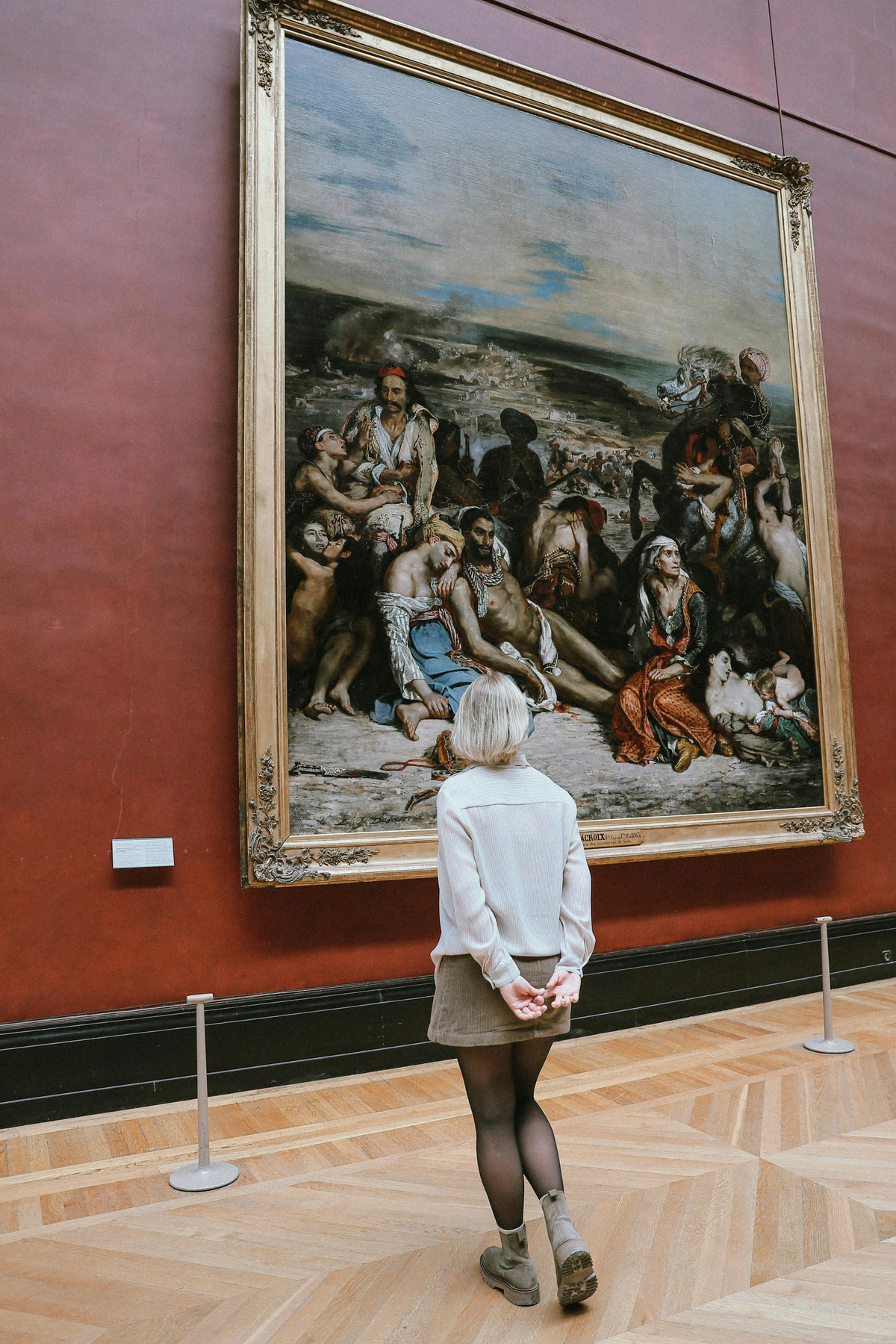
Marie-Lan Nguyen, CC BY 2.5



Frequently Asked Questions about Iron Age Art
What is Iron Age art?
A term used to describe the various styles of art and decoration created across Europe and beyond from roughly 1200 BC to 1 AD. It includes the highly abstract, flowing styles of the Celts, the narrative-driven work of the Vikings, and the classical realism of the Romans. It's not a single style, but a period of incredible artistic diversity driven by the revolutionary technology of iron smelting.
What are the key characteristics of Celtic art?
The Celtic La Tène style is famous for its complex geometric patterns. Look for three main things: spirals and trumpet curves, intricate interlacing and knots, and stylized animals known as zoomorphism. The goal was often to fill the entire surface with meaningful, flowing designs, creating a sense of abundant, contained energy. It's a maximalist approach to sacred geometry.
What was the purpose of art in the Iron Age?
This art was rarely just decorative. It served deeply symbolic and practical purposes. It could be a sign of status (like a gold torc), a religious offering, a form of spiritual protection on a shield, or a way to tell mythological stories (as seen on Viking runestones). In essence, art was woven into the fabric of daily life, belief, and identity. It was functional magic.
Which materials were commonly used?
Artists were masters of their materials. The most common were bronze, gold, and iron for metalwork. They also extensively used wood and bone for carving (especially the Vikings), and perfected techniques like enameling (champlevé), where molten glass was fused to metal. Beyond this, they worked with terracotta (Nok culture), exquisite jade (China), and other precious materials like amber and coral for inlays.
Are there famous Iron Age art pieces I can see?
Absolutely! Some of the most famous include:
- The Gundestrup Cauldron: A stunning silver cauldron filled with mysterious godly imagery. (National Museum of Denmark)
- The Battersea Shield: A magnificent bronze shield found in the River Thames, a masterpiece of form and abstraction. (British Museum)
- The Oseberg Ship: A Viking burial ship with fantastically carved wooden posts and animal-head carvings. (Viking Ship Museum, Oslo)
- The Tara Brooch: An intricate Irish masterpiece of gold filigree and amber. (National Museum of Ireland)
- The Witham Shield: A stunning example of early repoussé work featuring a mythical boar. (British Museum)
Did Iron Age art influence modern artists?
Yes, profoundly. The Celtic Revival of the 19th century brought these ancient patterns back into fashion, influencing everything from book illustrations to architecture, particularly the Arts and Crafts movement. Today, their influence can be seen in modern design, fantasy art, tattooing, and the work of abstract artists exploring ancient symbols. The ethos of 'art in everyday life' championed by the movement owes a great deal to the pervasive artistry of the Iron Age.
Who came first, the Celts or the Vikings?
The Celts came first. The core Celtic cultures flourished during the middle of the Iron Age (c. 450 BC – 1 BC). The Viking Age is a later historical period, beginning around 793 AD, after the main European Iron Age. While they lived in different eras, they were both heirs to earlier Northern European artistic traditions, and you can see clear stylistic links in their use of animal motifs and intricate patterning.
Conclusion: A Line Across Time
What I find so compelling about Iron Age art is its fearless complexity. It dares to be visually noisy, to layer meaning upon meaning. It treats a sword or a shield not just as a tool, but as a piece of the cosmos you could hold in your hands. As an artist today, it's a liberating reminder that our work can be more than just a picture. It can be a story, a symbol, and a legacy cast in bronze, stone, and pigment, meant to outlast us all. If you’re interested in how these ancient themes of connection and flow find their way into my own contemporary work, you can explore my timeline or see the pieces available /buy.