Lotus Flower Symbolism in Art History: A Personal Exploration
Join me as I unravel the rich, multifaceted symbolism of the lotus flower across ancient cultures and art forms. From Egyptian rebirth to Eastern enlightenment, discover its enduring meaning.

Lotus Flower Symbolism in Art History: A Personal Exploration
I've always been drawn to flowers in art. You know, sometimes I look at a lotus flower, all serene and perfect, and I just… sigh. It's gorgeous, right? For the longest time, I thought that was pretty much it – a beautiful flower. Turns out, I was missing out on a whole universe of meaning. The more I dove into art history, the more I realised the lotus isn't just a pretty face; it's a silent storyteller, a symbol so profound it's woven into the very fabric of human belief. It’s a bit like discovering a hidden narrative in a piece of abstract art – suddenly, everything shifts.If you've ever wondered about the deeper meanings behind nature's artwork, you might find my thoughts on understanding the symbolism of flowers in art history interesting too. But let's get back to the lotus, shall we? Its story is a particularly fascinating one.
The Paradox of Purity: Growing from the Mud
The most striking aspect of the lotus, for me, is its origin story. It emerges pristine and beautiful from the murky, muddy waters. Think about that for a second. This incredibly pure, untouched blossom pushes through the absolute mess at the bottom. It's a bit like us, isn't it? Navigating the messy bits of life, the struggles, the doubts – yet still having the capacity to rise above, to create something beautiful, to find clarity.
The Lotus as a Metaphor for Human Resilience
This paradox – beauty emerging from difficulty – has made the lotus a powerful metaphor for the human condition across cultures. Consider these parallels:
Human Experience  | Lotus Equivalent | |
|---|---|---|
| Childhood challenges | Lotus growing through mud | Early adversity can become foundation for strength |
| Creative blocks | Lotus bud waiting to open | Periods of incubation precede breakthroughs |
| Personal transformation | Lotus emerging from water | Rising above old limitations to new awareness |
| Spiritual awakening | Lotus opening to the sun | Expanding consciousness and divine connection |
| Overcoming trauma | Lotus emerging clean from mud | Purification through difficult experiences |
What I find particularly moving is how this natural process mirrors psychological and spiritual development. The lotus doesn't resist the mud; it uses it. The nutrients from decay become the foundation for new growth. This suggests that our own difficulties aren't obstacles to be avoided but raw materials for transformation.
The Lotus in Modern Psychology
Contemporary psychology has embraced lotus symbolism in several ways:

- Positive Psychology: The lotus represents post-traumatic growth – how difficult experiences can lead to greater strength and wisdom
- Mindfulness Practice: Lotus imagery is used to cultivate non-judgmental awareness and present-moment focus
- Art Therapy: Creating lotus art helps individuals process emotions and visualize transformation
- Trauma Recovery: The lotus journey becomes a metaphor for healing and emerging whole
In my own artistic timeline, I've noticed that periods of greatest creative growth often follow challenging times. The lotus reminds me that this isn't coincidence – it's how transformation works. The mud is not the enemy; it's the necessary context for the beauty that follows.
This inherent purity and resilience in the face of adversity is perhaps the most universal theme the lotus carries. It's a quiet testament to enduring grace, which, I have to admit, resonates deeply with my own artistic process – sometimes you have to get a little messy to make something truly clean and striking.
The Biological Miracle Behind the Symbolism
Interestingly, what appears to be mystical symbolism has a fascinating biological basis. The lotus flower has evolved remarkable adaptations that make it practically waterproof. Its surface is covered with microscopic bumps that create a superhydrophobic effect, causing water to bead up and roll off, taking dirt and debris with it. This natural self-cleaning mechanism is known as the "lotus effect" – a phenomenon that engineers have actually studied to create self-cleaning surfaces.
Imagine that – the very thing that makes the lotus symbolize purity isn't just poetic metaphor; it's actual, observable science. The lotus doesn't just emerge clean from the mud; it actively repels contamination. It's like nature's own purification system, working 24/7 to maintain its pristine appearance. How cool is that? It makes you wonder how much of what we consider "symbolic" in art might actually have roots in observable, natural phenomena that artists intuitively recognized and celebrated.
Ancient Egypt: Birth, Rebirth, and the Sun
The first place I truly encountered the lotus as a powerful symbol was in the art of Ancient Egypt. They were obsessed with it, and honestly, who can blame them? For the Egyptians, the lotus was synonymous with creation, rebirth, and the sun.

The Lotus in Egyptian Creation Myths
Egyptian mythology contains several creation stories involving the lotus, each emphasizing different aspects of its symbolic power:
Creation Myth | Lotus Role | Symbolic Meaning | Artistic Representation |
|---|---|---|---|
| Atum-Ra Creation | Atum emerges from lotus flower in primordial waters | Self-creation, divine emergence | Ra depicted as scarab beetle emerging from lotus |
| Nile Flood Myth | Lotus blooms with annual Nile flooding | Renewal, agricultural abundance | Relief scenes showing lotuses and flood waters |
| Isis and Osiris | Lotus associated with Isis's magic and rebirth | Resurrection, magical power | Tomb paintings showing Isis with lotus wands |
| Daily Solar Cycle | Lotus opens/closes with sun's rising/setting | Eternal cycle, divine timing | Amulets and talismans depicting solar lotus |
The Egyptian word for lotus, "seshen," was closely related to concepts of eternity and permanence, which explains why it became such a powerful symbol for their beliefs about the afterlife and the cyclical nature of existence.
Imagine the scene: each evening, the flower would close and sink beneath the water, only to re-emerge and bloom with the first rays of dawn. It was a perfect, living metaphor for the sun's daily cycle, and by extension, for life, death, and resurrection. Pharaohs often carried lotuses as symbols of their divine authority and connection to the cosmos. You'll see it everywhere – in tomb paintings, on papyri, in architectural designs.
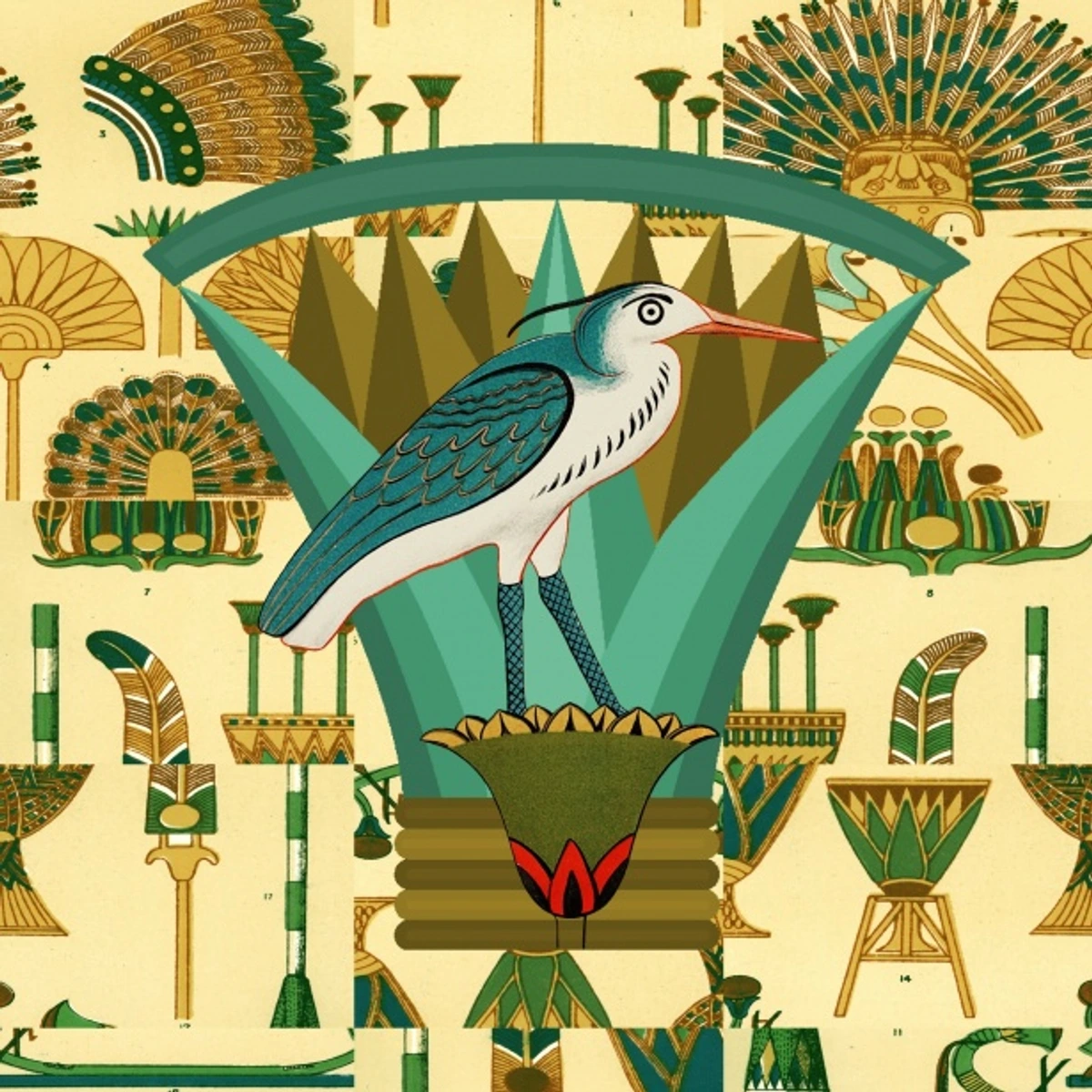
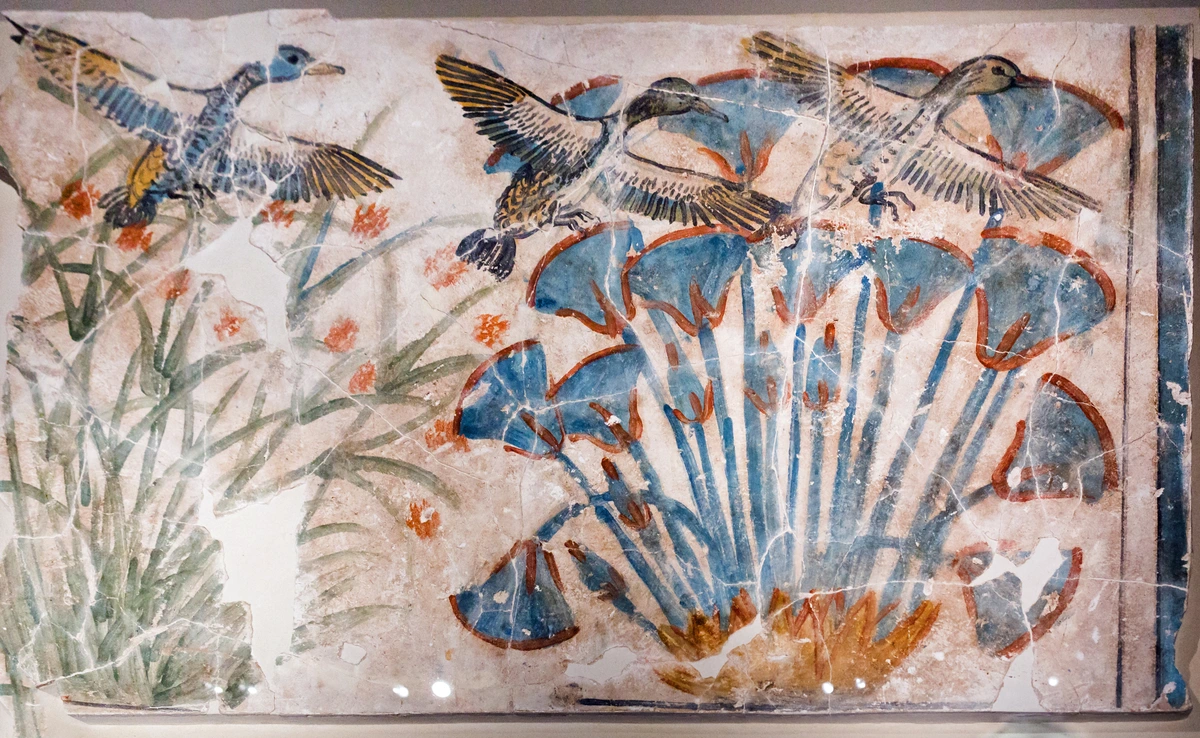
It's mind-boggling how one flower could encapsulate such fundamental beliefs. Just like this ancient depiction, often showing a bird on a lotus, symbolizing creation and the world emerging from primeval waters.
The Blue Lotus vs. The White Lotus
Ancient Egyptian art actually distinguishes between two types of lotus, each with its own significance:
Lotus Type | Color | Symbolism | Common Depictions |
|---|---|---|---|
| Blue Lotus (Nymphaea caerulea) | Blue/Purple | Intoxication, healing, sexuality, rebirth | Offered to gods, used in rituals, associated with drunkenness and ecstasy |
| White Lotus (Nymphaea lotus) | White | Purity, enlightenment, creation | Associated with Ra, used in temple offerings, symbolizing the sun's rebirth |
The blue lotus was particularly fascinating to me when I first learned about it. It wasn't just a symbol – it was actually used ritually! Archaeologists have found evidence that Egyptians would soak blue lotus flowers in wine, creating a ceremonial drink that induced euphoric states. This explains why you see so many depictions of people holding blue lotuses in relaxed, almost intoxicated poses. It wasn't just about death and rebirth; it was about the ecstatic experience of connecting with the divine through altered consciousness.
The East: Enlightenment, Divinity, and Fertility
Moving eastward, the lotus's symbolism only deepens, particularly in the rich spiritual traditions of India, China, and Japan.
India: Hinduism, Buddhism, and Spiritual Awakening
In India, the lotus is practically revered. In Hinduism, deities like Vishnu, Brahma, and Lakshmi are often depicted seated upon or holding a lotus, signifying their divinity, purity, and spiritual power. It's the ultimate seat of enlightenment.
The Hindu Lotus Trinity
The association of the lotus with Hindu deities follows a specific symbolic hierarchy:
Deity | Lotus Association | Symbolic Meaning | Artistic Depiction |
|---|---|---|---|
| Vishnu | Lotus emerging from navel | Cosmic creation, universal consciousness | Often seated on a lotus throne, holding lotus flower |
| Lakshmi | Lotus as throne and attribute | Wealth, prosperity, divine feminine | Standing or seated on lotus, showering coins from right hand |
| Brahma | Lotus as birthplace | Creation, divine intellect | Emerging from lotus navel, holding scriptures and water pot |
| Saraswati | White lotus | Knowledge, arts, wisdom | Often holding a book and rosary, seated on white lotus |
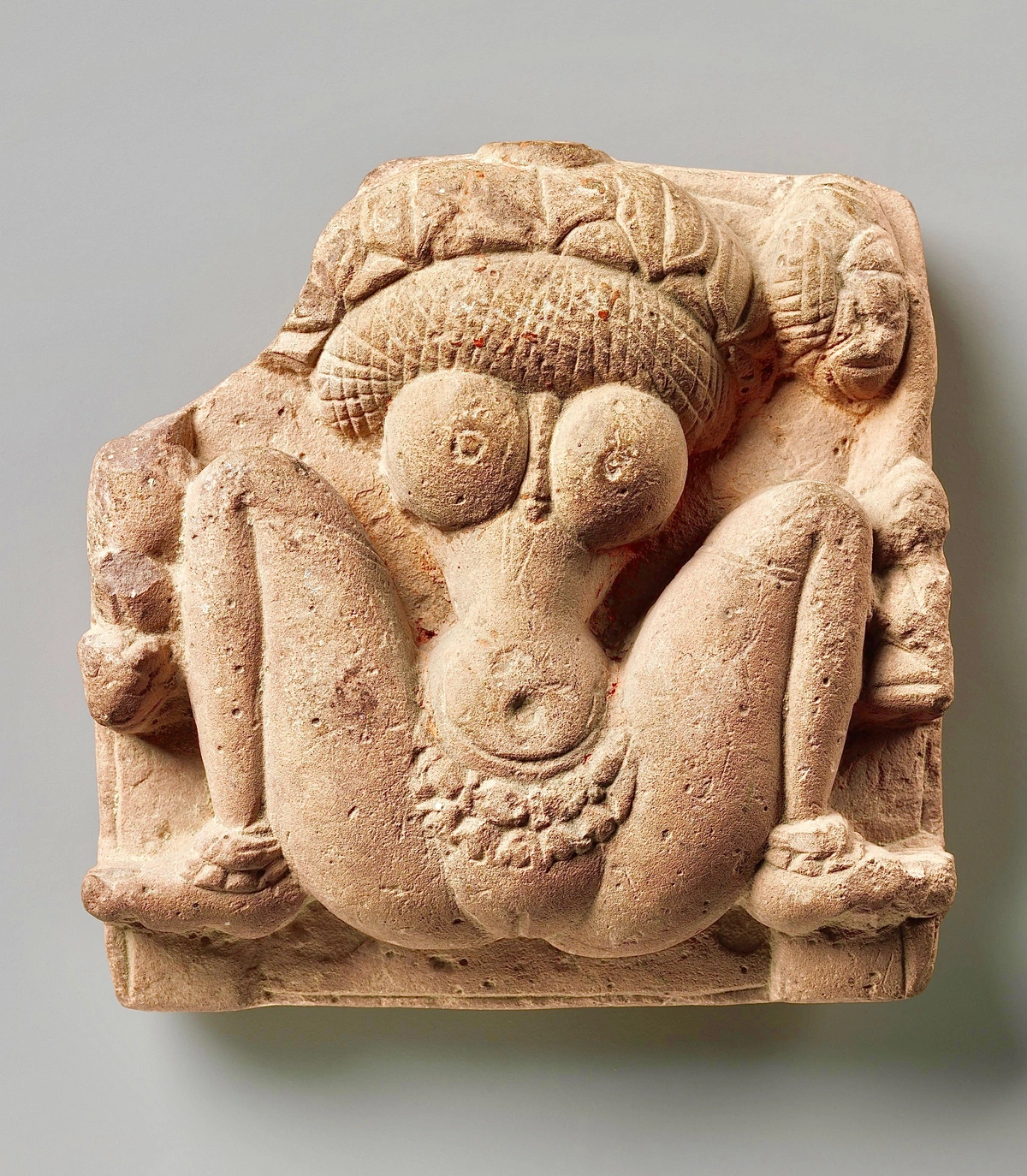
The lotus also takes on a strong fertility aspect, sometimes represented in a more abstract, almost primal form. This 6th-century relief from Madhya Pradesh, India, of Lajja Gauri – a fertility goddess – is a striking example, where the lotus represents the source of life itself. A powerful, if somewhat confronting, visual, wouldn't you agree?
In Buddhism, the lotus is one of the most sacred symbols, representing purity of the body, speech, and mind as it floats above the muddy waters of attachment and desire. It’s all about spiritual awakening and achieving Nirvana. Each stage of the lotus – from bud to full bloom – can represent different levels of enlightenment.

China & Japan: Elegance, Perfection, and the Cycle of Life
Further east, in China and Japan, the lotus maintains its association with purity and spiritual awakening but also emphasizes elegance, perfection, and the cycle of life. It's frequently found in classical paintings, poetry, and decorative arts, often alongside other natural elements like birds and fish, creating scenes of tranquil beauty.

Korean Lotus Symbolism
While often overshadowed by Chinese and Japanese traditions, Korean art also has rich lotus symbolism:
- Buddhist Temples: Lotus motifs in temple architecture and artwork
- Royal Court Art: Lotus imagery in court paintings and decorative arts
- Folk Traditions: Lotus patterns in traditional Korean crafts and textiles
- Modern Korean Art: Contemporary artists reinterpreting lotus symbolism in new ways
Lotus in Indigenous Cultures
Beyond the major civilizations, many indigenous cultures around the world have developed their own relationships with water plants that carry similar symbolic weight to the lotus:
Indigenous Culture | Equivalent Plant | Symbolic Meaning | Cultural Contexts |
|---|---|---|---|
| Native American | Water lily, sacred water plants | Purification, connection to water spirits | Ritual ceremonies, healing practices, storytelling |
| Australian Aboriginal | Water lilies in Dreamtime stories | Creation, ancestral connection | Rock art, ceremonial body paint, oral traditions |
| African Traditional | Sacred water lilies, water hyacinth | Life force, spiritual cleansing | Ritual baths, divination practices, community ceremonies |
| Native South American | Victoria amazonica (giant water lily) | Cosmic order, feminine power | Creation myths, shamanic practices, community gatherings |
| Siberian Indigenous | Arctic water plants | Survival, adaptation to harsh environments | Ritual objects, traditional medicine, storytelling |
What's remarkable is how these diverse cultures, separated by oceans and millennia, independently developed similar symbolic systems around water plants. This suggests something fundamental about human psychology – our tendency to see water plants as symbols of purity, transformation, and connection to the divine.
Many of these indigenous traditions view water plants not just as symbols, but as living relatives with their own agency and wisdom. This relational approach differs from the more symbolic approach in many mainstream traditions, offering a more integrated understanding of humanity's place within the natural world.
In recent years, indigenous lotus and water plant symbolism has gained renewed attention as part of broader efforts to preserve traditional knowledge and cultural practices. Contemporary indigenous artists are increasingly incorporating these ancient symbols in new ways, creating a dialogue between traditional wisdom and modern artistic expression.
Southeast Asian Lotus Traditions
Southeast Asian cultures have developed their own unique lotus symbolism:
Country | Lotus Symbolism | Artistic Traditions | Cultural Practices |
|---|---|---|---|
| Thailand | Royal purity, Buddhist enlightenment | Temple murals, royal regalia | Lotus offerings, meditation cushions |
| Cambodia | Angkor Wat temple symbolism | Khmer temple carvings, apsara dancers | Temple rituals, dance performances |
| Vietnam | Heroism, resilience | Lacquerware, silk painting | Lotus tea ceremonies, folk poetry |
| Laos | Spiritual merit, Buddhist devotion | Temple decorations, manuscript illumination | Almsgiving ceremonies, merit-making |
| Myanmar | Buddhist enlightenment, royal power | Temple paintings, lacquer art | Donation of lotus flowers, merit transfer |

The Lotus in Pacific Island Cultures
Even in Pacific Island cultures where true lotuses don't grow naturally, similar symbolism appears with local aquatic plants:
- Hawaii: Similar concepts of purity and emergence from water
- Polynesia: Water-based spiritual symbolism with parallel themes
- Indonesia: Blending of Hindu-Buddhist lotus symbolism with local traditions
The Chinese Lotus in Literature and Poetry
Chinese literature has elevated the lotus to a powerful poetic symbol, particularly in the works of Tang Dynasty poets:
"The lotus grows from the mud yet remains unstained, Its stem rises straight through the water. Fragrance drifts from afar, though no one picks it, The wind stirs its leaves, green and cool."
This famous poem captures the essence of lotus symbolism in Chinese culture – the moral purity that can exist even in worldly contexts, the upright character that maintains integrity despite external pressures, and the quiet dignity that doesn't seek recognition or reward.
Chinese painting traditions developed specific techniques for depicting the lotus:
- Gongbi: meticulous detail work showing individual petals and leaves
- Xieyi: expressive, spontaneous brushwork capturing the "spirit" rather than exact form
- Shanshui landscape: lotus as part of broader natural harmony
The Japanese Tea Ceremony and Lotus Symbolism
In Japan, the lotus became deeply integrated into the chanoyu (tea ceremony), where every element carries symbolic meaning:
Tea Ceremony Element | Lotus Symbolism | Cultural Significance |
|---|---|---|
| Lotus-shaped tea bowl | Purity, enlightenment | The vessel that holds the essence of tea becomes a symbol of spiritual container |
| Lotus incense burner | Purification of space | Creates sacred atmosphere before ceremony begins |
| Lotus-scroll paintings | Mindfulness, presence | Reminds participants to be fully present in the moment |
| Lotus-patterned textiles | Elegance, tradition | Connects modern practice to ancient cultural roots |
The tea ceremony itself becomes a meditation on lotus themes – the transformation of powdered tea into something beautiful, the purity of intention in each movement, and the mindfulness of being fully present in the moment.
I especially love the way Japanese artists capture its delicate yet resilient nature. It's not just a flower; it's a philosophical statement.

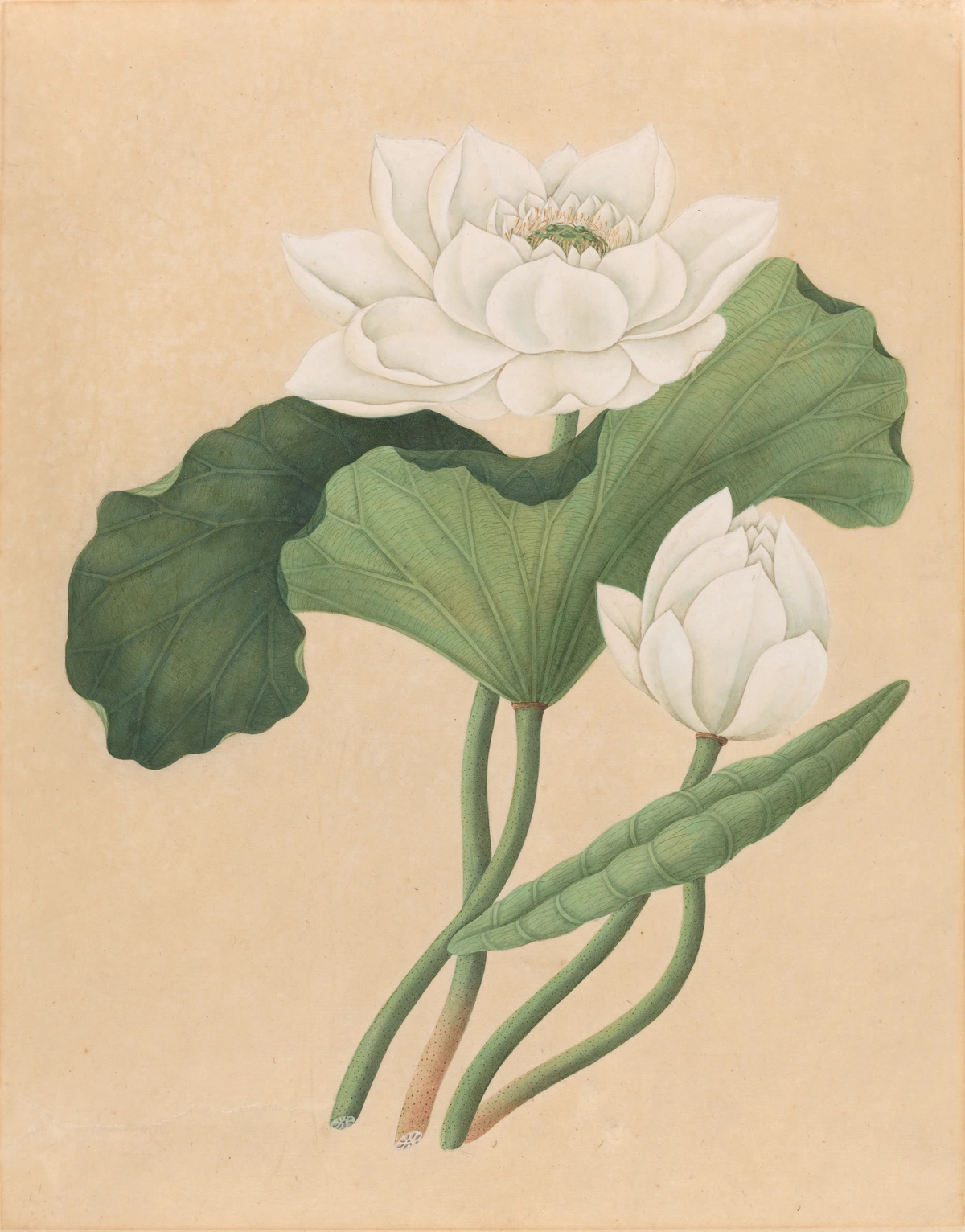
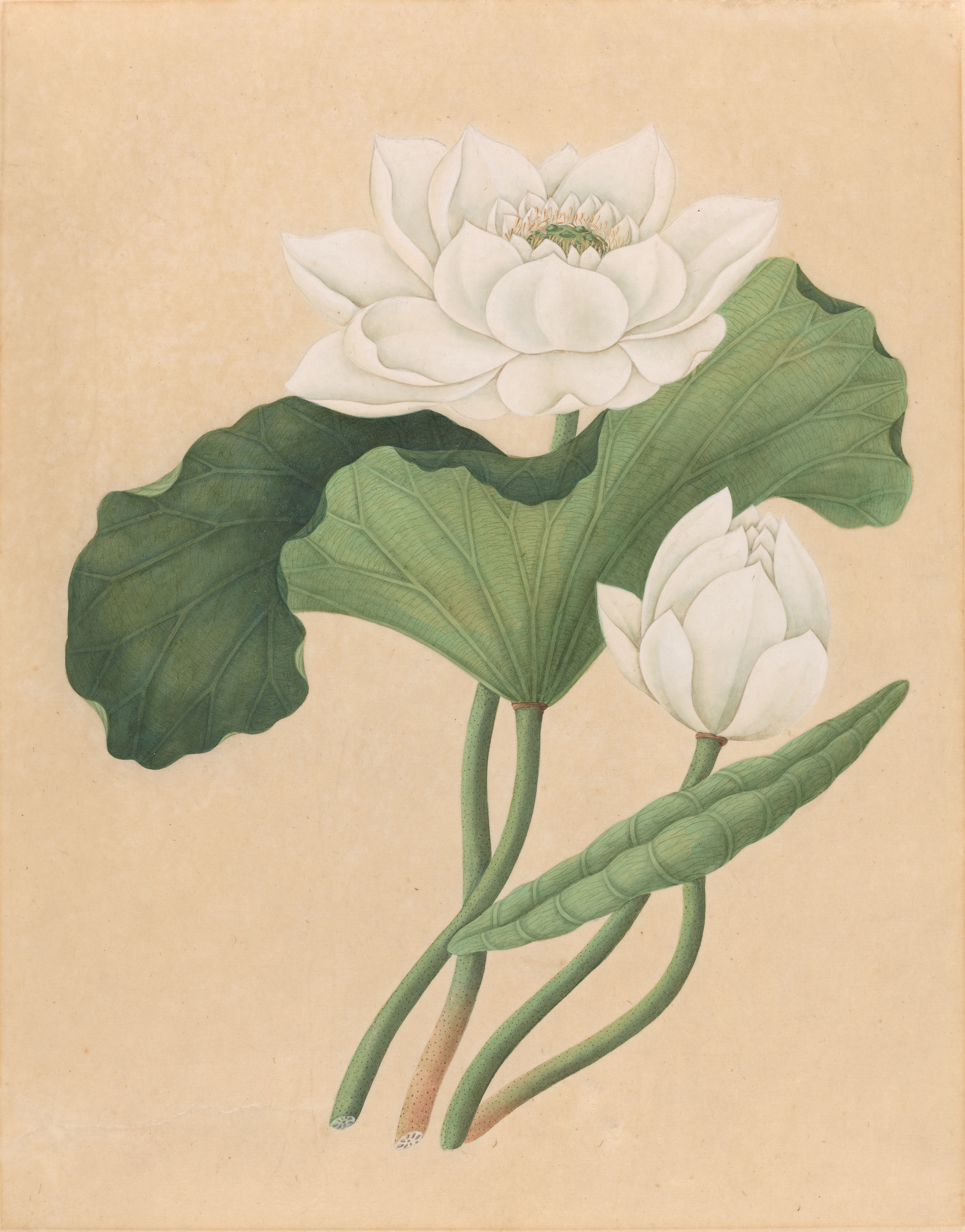
And here's a beautiful example from a 19th-century British perspective, capturing the East Indian Lotus. It shows how its beauty and symbolic power transcend cultural boundaries, inspiring artists across the globe.
 credit,
licence
credit,
licence
Timeline of Lotus Symbolism Through History
To better understand the evolution of lotus symbolism, let's look at how its meaning has developed across different historical periods:
Historical Period | Primary Cultural Context | Key Symbolic Developments | Artistic Mediums |
|---|---|---|---|
| Ancient Egypt (3000-30 BCE) | Religious, royal, funerary | Creation myths, solar cycle, afterlife | Tomb paintings, temple reliefs, papyrus, jewelry |
| Ancient Mesopotamia (3000-539 BCE) | Royalty, divine connection | Power symbols, fertility, protection | Cylinder seals, palace decorations, amulets |
| Ancient Greece (800-146 BCE) | Mythological, aesthetic | Dionysian ecstasy, beauty, pleasure | Vase painting, sculpture, poetry, decorative arts |
| Ancient Rome (500 BCE-476 CE) | Practical, decorative | Status symbols, garden design, medicine | Mosaics, frescoes, architectural ornament, coins |
| India (1500 BCE-present) | Spiritual, religious | Enlightenment, divine perfection, cosmic order | Temple sculpture, ritual objects, dance, music |
| China (2000 BCE-present) | Philosophical, artistic | Harmony, moral purity, intellectual refinement | Painting, calligraphy, poetry, garden design, ceramics |
| Japan (500 CE-present) | Zen, aesthetic | Impermanence, mindfulness, wabi-sabi | Tea ceremony, ink painting, haiku, garden design |
| Medieval Europe (500-1500 CE) | Christian, symbolic | Purity, resurrection, heavenly bliss | Illuminated manuscripts, cathedral decorations, tapestries |
| Renaissance Europe (1400-1600 CE) | Humanist, scientific | Knowledge, worldly success, cultural exchange | Botanical illustrations, still life paintings, decorative arts |
| Modern Era (1800-present) | Global, eclectic | Cultural fusion, personal meaning, artistic experimentation | Painting, sculpture, photography, digital art, installation |
This timeline shows how lotus symbolism has adapted and evolved as it traveled across cultures and time periods. While core themes like purity and transformation remain consistent, the specific meanings and artistic expressions change dramatically based on cultural context and historical circumstances.
The Lotus in Artistic Expression (And My Own)
This is where it gets really interesting for someone like me, who tinkers with abstract forms and colors. How do you capture such deep symbolism without being overly literal? Artists throughout history have found myriad ways, from incredibly detailed botanical illustrations to stylized patterns in architecture and textiles.

Modern and Contemporary Lotus Art
Contemporary artists continue to find new ways to explore lotus symbolism in the modern world:
- Digital Artists: Creating lotus-inspired generative art that evolves and transforms over time
- Environmental Artists: Using lotus imagery to comment on ecological issues and water conservation
- Performance Artists: Incorporating lotus themes in body art and movement pieces about transformation
- Street Artists: Using lotus imagery in urban environments to create moments of beauty and reflection
- Installation Artists: Creating immersive experiences that evoke the lotus journey from mud to light
Lotus Symbolism in Film and Media
The lotus has also found its way into modern visual storytelling:
- Films: Directors like Ang Lee and Zhang Yimou use lotus imagery to represent spiritual transformation and cultural identity
- Music Videos: Artists like Björk and Madonna incorporate lotus symbolism in visual storytelling
- Video Games: Games like "Journey" and "Flower" use lotus-inspired mechanics to explore themes of transformation
- Animation: Studio Ghibli films often feature lotus-like imagery to convey purity and spiritual themes
What's fascinating is how these modern interpretations maintain the core symbolism while adapting it to contemporary contexts and mediums, showing that the lotus continues to speak to each new generation in ways that feel relevant and meaningful.
Practical Applications of Lotus Symbolism
Beyond its artistic and spiritual significance, lotus symbolism has numerous practical applications in modern life. These applications draw on the lotus's core themes of transformation, purity, and resilience to address contemporary challenges and opportunities.
Lotus in Daily Life and Personal Development
The lotus offers a powerful metaphor for personal growth that many people find helpful:

Life Challenge | Lotus Metaphor | Practical Application |
|---|---|---|
| Overcoming adversity | Growing through mud | Developing resilience skills, reframing negative experiences |
| Finding purpose | Opening to the sun | Setting meaningful goals, aligning actions with values |
| Managing stress | Rising above water surface | Mindfulness practices, stress-reduction techniques |
| Personal transformation | Bud to full bloom | Embracing change, celebrating growth milestones |
| Maintaining purity | Self-cleaning mechanism | Setting healthy boundaries, practicing self-care |
| Cultivating patience | Daily growth cycle | Accepting slow progress, enjoying the process |
Many people find that simply visualizing themselves as a lotus – growing through challenges while maintaining their essential nature – can provide emotional comfort and practical guidance during difficult times.
Lotus in Healthcare and Wellness
The practical applications of lotus symbolism extend into healthcare and wellness practices:
- Art Therapy: Creating lotus-themed art helps patients process trauma and visualize healing
- Mindfulness Programs: Lotus imagery is used in meditation apps and relaxation techniques
- Trauma Recovery: The lotus journey serves as a metaphor for healing from psychological wounds
- Physical Rehabilitation: Patients recovering from injuries often use lotus imagery to symbolize their return to wholeness
- Palliative Care: Lotus symbolism helps patients find meaning and peace in end-of-life transitions
Lotus in Education and Personal Growth
Educators and personal development coaches have embraced lotus symbolism as a teaching tool:
- Character Education: Using the lotus to teach virtues like resilience, purity, and transformation
- Leadership Training: Lotus principles inspire leaders who can remain centered amidst chaos
- Creativity Workshops: The lotus metaphor helps artists and innovators embrace the creative process
- Conflict Resolution: Lotus imagery reminds people to rise above petty disputes
- Environmental Education: The lotus serves as a model for sustainable living and ecological balance
Lotus in Business and Professional Development
Even in the business world, lotus symbolism has found practical applications:
- Corporate Values: Companies use lotus principles to emphasize growth, purity, and resilience
- Leadership Development: Executives study lotus symbolism to develop balanced, ethical leadership styles
- Team Building: Lotus metaphors help teams navigate change and maintain unity
- Innovation Processes: The lotus journey inspires creative problem-solving approaches
- Corporate Social Responsibility: Lotus principles guide sustainable business practices
The practical applications of lotus symbolism show how ancient wisdom can continue to provide meaningful guidance in modern life. Whether used for personal growth, healthcare, education, or business, the lotus offers a universal framework for understanding transformation, maintaining purity, and finding beauty in challenging circumstances.
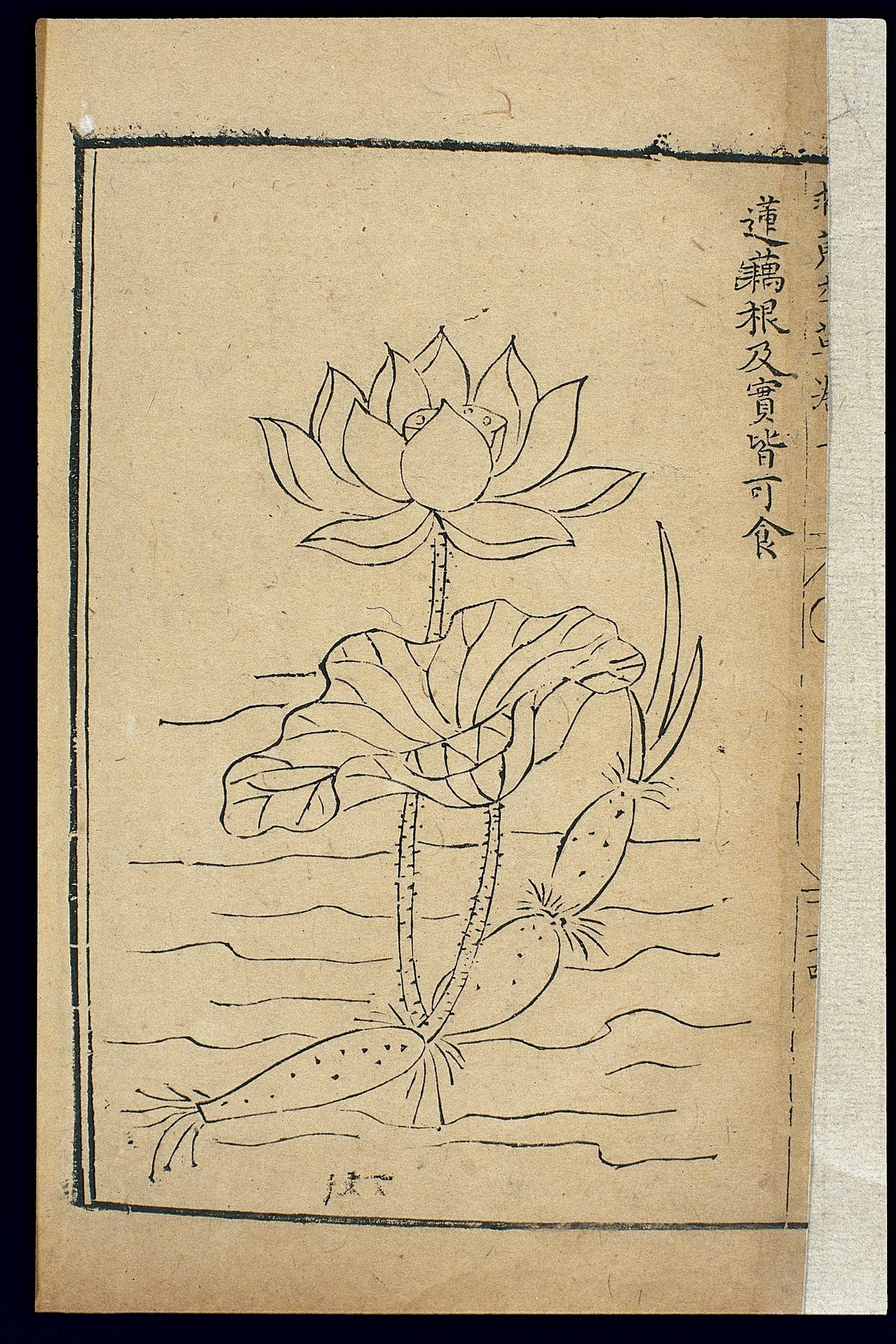
The lotus challenges us to look beyond the surface, to find the essence. It’s a challenge I often ponder when creating my own pieces, hoping to infuse that same sense of wonder into my abstract art prints. This design drawing from Laurelton Hall shows a more stylized approach, breaking down the lotus into its fundamental, decorative elements. It’s fascinating to see how the form can be distilled while retaining its inherent beauty.
 credit,
licence
credit,
licence
Enduring Resonance: Why We Still Care
What strikes me most about the lotus is its timeless appeal. Despite originating in specific cultural contexts, its core messages – purity, rebirth, enlightenment, resilience – are universally understood and sought after. It’s a symbol of hope, a reminder that even from the most challenging circumstances, beauty and wisdom can emerge. Reflecting on these symbols sometimes feels like a journey through my own artistic timeline, seeing how themes evolve and resonate across different stages of life and creation. It reminds me that art, like the lotus, often holds layers of meaning waiting to be discovered. Perhaps that's why, when I visit the museum in 's-Hertogenbosch, I often find myself looking for these subtle nods to nature's profound stories, not just in ancient works, but also in contemporary pieces.
Additional Frequently Asked Questions
Lotus vs Other Sacred Plants: A Comparative Analysis
The lotus is often compared to other sacred plants in different traditions, each carrying its own unique symbolic weight:
Sacred Plant | Primary Cultural Context | Core Symbolism | Artistic Representations |
|---|---|---|---|
| Lotus | Buddhism, Hinduism, Ancient Egypt | Enlightenment, purity, transcendence | Meditation thrones, deity thrones, mandalas |
| Rose | Christianity, Persian poetry | Love, martyrdom, beauty | Religious art, love poetry, heraldic designs |
| Lily | Christianity, ancient Greece | Purity, virginity, majesty | Annunciation scenes, funerary art, temple decoration |
| Palm | Ancient Near East, Christianity | Victory, peace, eternal life | Triumphal arches, paradise scenes, martyrdom |
| Oak | Celtic, Norse traditions | Strength, endurance, wisdom | Sacred groves, druidic symbols, Viking mythology |
| Willow | Chinese, Japanese traditions | Flexibility, healing, resilience | Poetry, garden design, therapeutic practices |
| Cherry Blossom | Japanese, East Asian | Impermanence, beauty, transience | Poetry, painting, seasonal festivals |
| Cactus | Southwestern American, Mexican | Endurance, protection, adaptation | Desert art, indigenous symbolism, modern design |
| Mistletoe | Norse, European traditions | Life, fertility, protection | Winter solstice celebrations, romantic traditions |
| Bamboo | Chinese, Japanese traditions | Resilience, flexibility, integrity | Calligraphy, garden design, musical instruments |
What's fascinating about this comparison is how different plants became symbolic of different human qualities and spiritual ideals based on their observable characteristics and cultural contexts. The lotus's unique ability to rise above water while maintaining purity gave it a symbolic power that few other plants could match.
What is the difference between lotus and water lily symbolism?
Many people confuse lotuses with water lilies, but they carry different symbolic meanings across cultures:
Feature | Lotus (Nelumbo) | Water Lily (Nymphaea) | Symbolic Difference |
|---|---|---|---|
| Growth Habit | Leaves and flowers rise above water | Leaves float on water surface | Lotus represents transcendence; water lily represents floating beauty |
| Cultural Origin | Asia, Egypt, Americas | Primarily Europe, Americas | Lotus has broader cross-cultural symbolism |
| Religious Significance | Strong Buddhist/Hindu/Egyptian ties | Primarily decorative in most cultures | Lotus carries deeper spiritual weight |
| Biological Structure | Seed pods poke above water, distinctive circular leaves | No seed pods above water, rounded leaves | Lotus structure reinforces its "rising" symbolism |
Lotus Flower Symbolism in Art: Techniques and Styles
Different artistic traditions have developed distinctive techniques for depicting the lotus, each reflecting cultural values and aesthetic principles:
Depiction Techniques | Cultural Philosophy | Notable Examples | |
|---|---|---|---|
| Egyptian Hieroglyphics | Stylized, symbolic representation | Divine perfection, eternal truth | Temple reliefs, papyrus illustrations |
| Indian Temple Sculpture | Three-dimensional, architectural integration | Cosmic order, divine presence | Temple carvings, deity thrones |
| Chinese Painting | Brushwork technique, negative space | Harmony with nature, moral integrity | Song dynasty scrolls, literati painting |
| Japanese Ink Painting | Minimalist, expressive brushstrokes | Impermanence, wabi-sabi aesthetics | Zen paintings, haiga illustrations |
| Persian Miniature | Detailed, decorative patterns | Paradise imagery, divine geometry | Book illustrations, royal manuscripts |
| European Botanical Illustration | Scientific accuracy, detailed rendering | Empirical observation, natural philosophy | Renaissance herbals, scientific texts |
| Modern Abstract Art | Simplified forms, color symbolism | Emotional expression, spiritual essence | Abstract expressionism, color field painting |
| Digital Art | Generative algorithms, interactive elements | Technological transcendence, participatory experience | NFT art, virtual reality installations |
Lotus in Different Artistic Mediums
The lotus has been depicted in virtually every artistic medium throughout history:
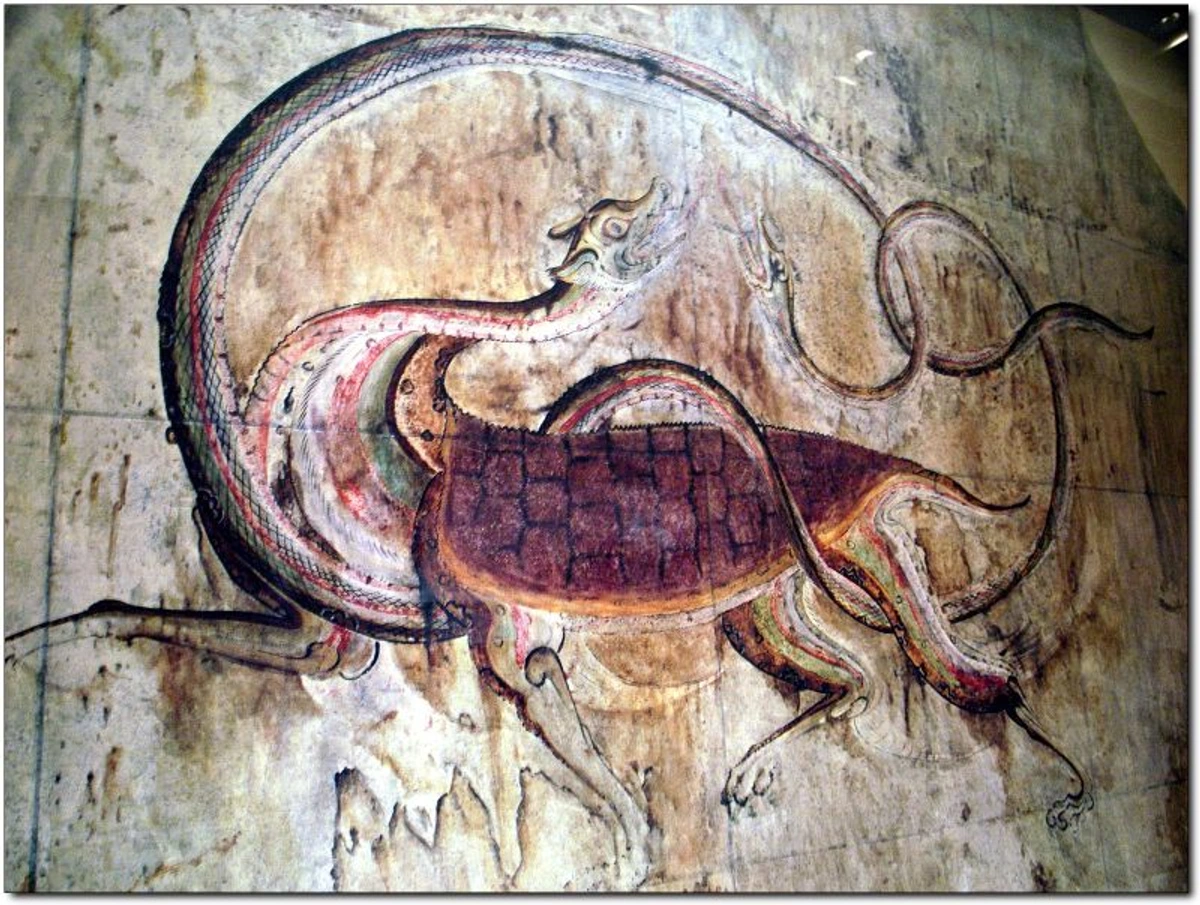
- Painting: From ancient tomb paintings to contemporary canvases
- Sculpture: Three-dimensional representations in stone, wood, metal, and clay
- Textiles: Woven patterns, embroidery, and fabric designs
- Ceramics: Pottery, tiles, and porcelain featuring lotus motifs
- Jewelry: Lotus-shaped pendants, earrings, and decorative elements
- Architecture: Structural elements and decorative ornamentation
- Performance Art: Dance, theater, and body art incorporating lotus themes
- Sound Art: Musical compositions inspired by lotus imagery and growth patterns
Each medium offers unique possibilities for expressing lotus symbolism, allowing artists to explore different aspects of its meaning and significance.
How does lotus symbolism appear in dreams?
In dream interpretation, the lotus generally represents spiritual awakening, purity of intention, and emotional transformation. The specific meaning depends on the context:
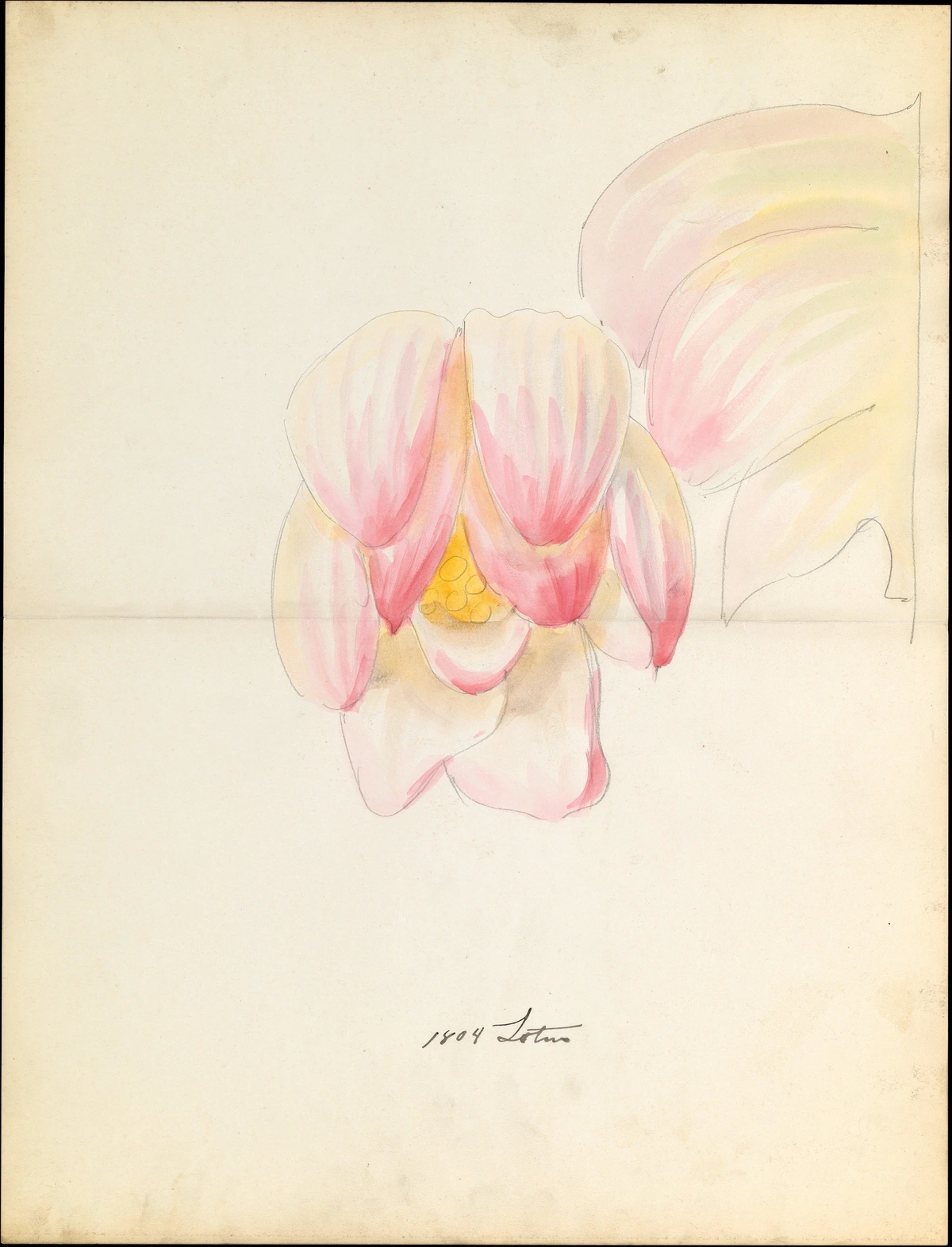
- Blooming lotus: Spiritual enlightenment, new beginnings, the unfolding of potential
- Closed lotus bud: Unfulfilled potential, preparation for growth, hidden talents
- Muddy lotus: Overcoming difficult circumstances, transformation through adversity
- Multiple lotuses: Abundance, spiritual community, many paths to enlightenment
- Walking on lotuses: Spiritual mastery, ability to remain pure in worldly situations
- Eating lotus: Assimilating spiritual wisdom, integrating new knowledge
- Planting lotus: Beginning new spiritual practices, setting intentions for growth
- Withered lotus: Missed opportunities, spiritual stagnation, need for renewal
- Colorful lotus: Joyful spiritual experiences, diverse spiritual paths
- Golden lotus: Ultimate enlightenment, divine connection, complete awakening
Psychologically, lotus dreams often occur during periods of personal transformation or when the dreamer is contemplating deeper meaning in their life. From a Jungian perspective, the lotus in dreams can represent the individuation process – the psychological journey toward wholeness and integration of the conscious and unconscious mind.
The Lotus in Children's Art and Education
nThe lotus has become an important symbol in children's art and education, where its themes of growth and transformation are particularly accessible:
Educational Context | Lotus Application | Developmental Benefits |
|---|---|---|
| Early Childhood Education | Simple lotus coloring books, growth stories | Motor skills, emotional awareness, basic concepts of life cycles |
| Elementary Art Classes | Lotus painting techniques, nature observation | Creativity, scientific observation, cultural awareness |
| Middle School Literature | Lotus-themed writing assignments, poetry analysis | Literary analysis, metaphorical thinking, emotional expression |
| High School Biology | Lotus as case study in plant biology and ecology | Scientific literacy, environmental awareness, research skills |
| Special Education | Lotus-themed sensory activities, therapeutic art | Emotional regulation, sensory integration, self-esteem building |
Children naturally connect with the lotus's growth story – something small and hidden emerging into something beautiful and visible. This narrative resonates with their own experiences of learning and development.
Lotus in Environmental Education
nEnvironmental educators use the lotus as a powerful teaching tool:
- Water Quality Education: The lotus's ability to thrive in muddy, polluted water demonstrates nature's resilience and provides a case study for ecosystem health
- Climate Change Awareness: The lotus's adaptation to changing water levels serves as a metaphor for climate adaptation
- Habitat Conservation: Lotus wetlands provide habitat for diverse species, teaching biodiversity concepts
- Sustainable Design: Lotus-inspired solutions for water filtration and ecological restoration
- Cultural Ecology: How different cultures have used and revered the lotus throughout history
The lotus helps children understand that beauty can come from difficult circumstances and that nature has amazing solutions to environmental challenges. This hopeful message is particularly important in environmental education, which can sometimes feel overwhelming or discouraging.

Interestingly, while the specific meanings vary, there's a remarkable convergence around themes of transformation, purity, and spiritual elevation. This cross-cultural consistency suggests something fundamental about the human experience that the lotus flower happens to embody perfectly. The lotus flower symbolizes purity, rebirth, enlightenment, resilience, and divinity across various cultures. In Ancient Egypt, it was linked to the sun and creation. In Hinduism and Buddhism, it represents spiritual awakening, purity of mind, and divine beauty.
Why does the lotus flower grow in mud?
The lotus grows in mud as its roots are anchored in the silty bottom of ponds and rivers. Despite its muddy origins, the flower emerges clean and untainted above the water, symbolizing purity, spiritual growth, and the ability to rise above adversity.
Is the lotus flower a symbol of rebirth?
Yes, the lotus flower is a strong symbol of rebirth, particularly in Ancient Egyptian mythology, where its daily cycle of opening and closing mirrored the sun's journey and represented creation and resurrection. In many Eastern traditions, it symbolizes spiritual rebirth and enlightenment.
Do different lotus colors have different meanings?
Absolutely! While the general symbolism remains, specific colors can add nuance. The color of the lotus flower often carries additional layers of meaning that enrich its basic symbolism:
Lotus Color | Primary Symbolism | Secondary Meanings | Cultural Associations | Artistic Usage |
|---|---|---|---|---|
| White Lotus | Purity, spiritual perfection | Mental clarity, divine birth, enlightenment | Buddhism, Hinduism, Egyptian funerary art | Meditation imagery, deity thrones, purity symbols |
| Pink Lotus | Historical Buddha, divine truth | Compassion, love, spiritual awakening | Primarily Buddhism, especially Tibetan | Buddha imagery, temple decorations, meditation focus |
| Red Lotus | Love, compassion, passion | Heart opening, vital energy, respect | Hinduism, Buddhism, Chinese culture | Love poetry, romantic art, heart-centered meditation |
| Blue Lotus | Wisdom, knowledge, intelligence | Logic, intellect, cosmic understanding | Ancient Egypt, Hinduism, Tibetan Buddhism | Ritual scenes, educational imagery, wisdom symbols |
| Purple Lotus | Mysticism, spirituality | Higher consciousness, spiritual attainment | Tibetan Buddhism, Hinduism | Esoteric art, meditation practices, spiritual teaching |
| Golden/Yellow Lotus | Supreme wisdom, enlightenment | Spiritual achievement, complete realization | Hinduism (especially Vishnu), Buddhism | Deity iconography, enlightenment scenes, sacred geometry |
Color Combinations and Their Meanings
Interestingly, many artistic traditions combine different lotus colors to create layered symbolic meanings:

- Blue and White: Represents the union of wisdom and compassion, a core concept in Mahayana Buddhism
- Red and Pink: Symbolizes the integration of worldly love and divine compassion
- Multi-colored Lotus: Often represents the totality of spiritual experience, encompassing all aspects of enlightenment
Contemporary Color Symbolism
In modern art and design, these traditional color meanings have been expanded and sometimes reinterpreted:

- White Lotus: Used in minimalist and contemporary art to represent simplicity, purity of intention, and the "blank canvas" of the mind
- Pink Lotus: Has become a symbol of self-love and emotional healing in wellness communities
- Red Lotus: Often used in feminist art to represent female passion, strength, and spiritual power
- Blue Lotus: Popular in digital and technology-themed art to represent innovation, knowledge, and the "digital enlightenment" of our age
The beauty of lotus color symbolism is its flexibility – while rooted in ancient traditions, it continues to evolve and find new meanings in contemporary contexts, much like the lotus itself, which adapts and thrives in changing environments.

A Final Thought
So, next time you see a lotus, whether in a painting or just in your mind's eye, take a moment. It's more than a flower; it's a whispered story from millennia of human longing and striving, a perfect metaphor for finding grace amidst the chaos, and honestly, a constant source of inspiration for me.
The Lotus as a Mirror for Our Own Lives
What I've come to realize is that the lotus isn't just a symbol out there in the world – it's also a mirror. When we contemplate the lotus, we're really contemplating our own capacity for growth, purity, and transformation. Each petal that opens represents a new insight, each stage of growth mirrors our own spiritual journey.
This is why I find myself returning to lotus imagery again and again in my work. It's not just about creating beautiful pictures; it's about creating a visual language that speaks to that universal human experience of emerging from difficulty. We all have our muddy waters – our struggles, our doubts, our pain. And we all have the capacity, like the lotus, to rise above them, not by rejecting what came before, but by integrating it, transforming it, allowing it to become the foundation for something beautiful.

The Lotus in Your Own Creative Journey
If you're an artist or creative person, I encourage you to spend some time with lotus imagery, not just as subject matter, but as philosophy. Ask yourself:
- What are my "muddy waters" – the challenges that fuel my creativity?
- How can I transform difficulty into beauty rather than trying to escape it?
- What does "purity" mean in my artistic practice – authenticity, simplicity, intention?
- How can I capture the essence of transformation in my work without being literal?
These questions, inspired by the lotus, can help deepen your creative practice and give your work more meaning and resonance.
The Eternal Conversation
Ultimately, the lotus represents an eternal conversation between humanity and the natural world, between the material and the spiritual, between what we are and what we might become. It's a conversation that has been happening for thousands of years, and it continues today in our art, our spiritual practices, our daily lives.
When I look at ancient Egyptian tomb paintings, or Hindu temple sculptures, or Japanese ink paintings, I'm not just looking at art from the past. I'm seeing the same universal questions being asked, the same yearnings expressed, the same search for meaning and transcendence that we still feel today. The lotus connects us across time and space, reminding us that we're part of something much larger than ourselves.
















So the next time you encounter a lotus – in art, in nature, or in your imagination – remember: you're participating in that ancient, ongoing conversation. You're adding your own chapter to the story of human striving, your own petal to the eternal flower of human consciousness.
And that, my friends, is the real magic of the lotus. It's not just a symbol of something transcendent; it's an invitation to become more transcendent ourselves.