Developing Intellectual Rigor in Art: A Guide for Artists
A practical, personal guide for artists on cultivating intellectual rigor to deepen their creative practice, from research methods to developing a conceptual framework that resonates.

Developing Artistic Intellectual Rigor: From Hunch to Hypothesis
We've all been there. Standing in front of someone—a gallery owner, a critic, or just a curious friend—when they ask the looming question: "What's the idea behind it?" and feeling your stomach do a little flip. We can point to the canvas and explain the colors, the brushstrokes, the feeling we were chasing, but that question can tie our tongues. Welcome. We're in the same boat.
I've learned that intellectual rigor isn't a cage for your creativity; it's the trellis that allows it to climb higher than you ever imagined. It's the difference between an image that's merely beautiful and one that holds a universe of meaning inside it. It’s the difference between an image that's merely beautiful and one that holds a universe of meaning. It's not about sounding smart. It's about thinking clearly, digging deeper, and discovering the profound questions that fuel your art long after the initial inspiration fades. This is a guide to building that trellis for yourself.
I've learned that intellectual rigor isn't a cage for your creativity; it's the trellis that allows it to climb higher than you ever imagined. It’s the difference between an image that's merely beautiful and one that holds a universe of meaning. It's not about sounding smart. It's about thinking clearly, digging deeper, and discovering the profound questions that fuel your art long after the initial inspiration fades. This is a guide to building that trellis for yourself.

What Is Intellectual Rigor in Art? (And Why Your Inner Rebel Hates It)
Let's get the misconception out of the way first. When I say "intellectual rigor," I'm not talking about making art that's dry, academic, or only understandable with a Ph.D. in critical theory. That's just bad communication. Think of it like building a fire. Your initial creative spark—that raw, intuitive want to create—is the match. But a match alone only gives you a brief flash and some smoke. Intellectual rigor is the process of gathering kindling, arranging the logs, and shielding the flame from the wind. It's the work that turns a fleeting spark into a sustained, powerful fire that can keep you warm for a long, long time.
I still remember my first critique in art school. I brought in a painting I was proud of—all wild, passionate brushstrokes and gut feeling. "It's about... oppression," I mumbled. My professor just looked at me and said, "Okay, which oppression? The weight of what, specifically?" I froze. I had the fire, but no structure to keep it burning. The feeling was there, but the thought wasn't. That moment taught me something crucial: rigor isn't about replacing feeling with thinking. It's about making your feelings count.
It involves learning how to ask better questions of yourself and your work, developing a research practice that feels less like homework and more like play, and building a conceptual framework—a personal philosophy, really—that gives your work a backbone of steel. When that framework is solid, your artistic choices stop being random and start feeling inevitable. Suddenly, you're not just painting a blue square; you're exploring the cultural history of a color, the geometry of a society, or the emotional weight of an empty space. Your art becomes less about what you're depicting and more about what you're investigating.
This is about transforming your creative practice from a series of beautiful accidents into a deliberate, sustained inquiry. The artist who asks "What red should I use?" is at a different starting line than the one who asks, "What shade most accurately conveys the slow burn of quiet resentment?" Both might arrive at the same color, but only one will know why.
The Artist's Manifesto for Deeper Research
Research. For an artist, that word can feel like a dusty, grey cubicle we're being forced to enter. It sounds like the opposite of freedom, like homework assigned by a joyless teacher. But the most radical creative act is often to reframe the things that scare us. But what if research was an adventure? What if it was less about reading dry textbooks and more about becoming a detective of your own fascinations? This is where we swap the lab coat for a magnifying glass.

Your process doesn't start at the easel. It starts when you give yourself permission to fall down a rabbit hole. And I mean a real rabbit hole—the kind where you go to look up 'Byzantine mosaics' and wake up three hours later knowing everything there is to know about the history of concrete and the architectural preferences of Justinian I. I’m not just talking about looking at other art, although that’s a part of it. I'm talking about reading poetry to understand rhythm, studying mycelium networks to grasp connectivity, or watching old sci-fi films to see how worlds are built. Art is about connection, and rigorous research is the act of building a richer web of connections to draw from.
To make it tangible, here is a simple framework I return to again and again for building a research practice that fuels my work:
- Define Your Territory: Don't just have a subject. Have a domain. Instead of "paintings about the ocean," try "the aesthetics of fluid dynamics" or "archival family photos from coastal towns." This isn't just semantics; it's the difference between having a topic and having a territory you can explore, map, and own as an artist.
- Cast a Wider Net: Once you have your territory, collect everything that touches it. This isn't about finding direct references. It's about gathering unexpected ingredients. If your territory is "memory," your net might catch neuroscience articles about how smell triggers recall, old recipes in your grandmother's handwriting, interviews with architects about dementia-friendly design, and the way light falls in a specific room at 4 PM. A friend of mine working on 'decay' ended up reading about fungal networks, Russian prison tattoos, and rust. All of it went into the work. The broader the net, the richer the catch.
- Synthesize the Strange: This is the most crucial step. Now, you connect the dots that no one else sees. What does your grandmother's recipe have to do with neuroscience? How does the architect's logic of space inform the way you represent memory in a painting? This synthesis of seemingly unrelated ideas is where your unique artistic voice begins to crystallize.
- Visual Note-Taking: Your sketchbook should be a hybrid lab journal and scrapbook, a place for chaos to cohere. Don't just draw. Paste, write, diagram, and map out ideas. Use it to physically manifest the strange connections you're making. A strong page in my sketchbook might have a mathematical graph next to a color palette next to a line from a poem. These juxtapositions spark new ideas you couldn't have found by thinking in a straight line. Years later, you can flip back through these pages and find a fully formed idea you didn't even realize you were having at the time. I have sketches for paintings I'm making now that started as a random sentence glued into a journal five years ago. That's the magic of a good archive.
Building Your Internal Critic's Gym
There's a voice in every artist's head that whispers, 'Who are you to make this?' or 'This has been done before.' Most advice tells you to ignore it or shut it down. I'm going to suggest the opposite: put that voice through a rigorous workout. Turn your internal critic from a heckler in the stands into a world-class sparring partner.
Instead of asking, 'Is this any good?'—a question that leads to paralysis—start asking questions that lead to clarity and development. This is about shifting from judgment to inquiry.
Instead of asking, "Is this any good?"—a question that leads to paralysis—start asking questions that lead to clarity and development.
- Swap "Why?" for "How?" and "What if?" "Why am I using this color?" can be a dead end, trapping you in self-doubt—trust me, I've stared at a canvas for hours that way. "How does this color change the emotional temperature of the piece?" and "What if I used its direct complement instead?" are questions that propel you into experimentation and analysis, pushing the work forward rather than paralyzing you. It's the difference between a depressive episode and a scientific inquiry.
- From "I like this" to "It works because..." This is the toughest but most rewarding step. Train yourself to articulate why a choice is successful. "That brushstroke works because it creates a sense of urgent, chaotic energy that contrasts with the stillness of the rest of the composition." This simple act of justification builds tremendous intellectual muscle. It's the difference between having a preference and having a position. Over time, your intuition and your intellect begin to align, and you start making choices from a place of deep knowing rather than just a vague feeling.
- Cultivate "Productive Self-Skepticism": Don't just doubt; doubt with purpose. When that inner critic whispers "This is derivative," train it to continue the thought: "...because the composition too closely mirrors X artist's work. What if I inverted their structure, or inserted a jarring element they would never use?" This reframes criticism as constructive challenge, a puzzle to solve rather than a judgment to absorb. It's the difference between your critic being a brick wall and a springboard.
- Separate Drafting from Refining: Give yourself permission for a "stupid phase"—a no-judgment period where any mark is valid. I often tell myself, "For the next two hours, I'm allowed to make the ugliest, most nonsensical art imaginable." The rigor comes later, in the editing and selecting. It's much easier to ask rigorous questions of a canvas already full of possibilities than it is to ask them of a terrifying white void.
You'll know your critic is in shape when their feedback starts helping you instead of hurting you. They'll move from "This is terrible" to "This section is unresolved because..." which is information you can actually use. This is the practice that transforms making arbitrary choices into making intentional choices.

From Passive Appreciation to Active Analysis
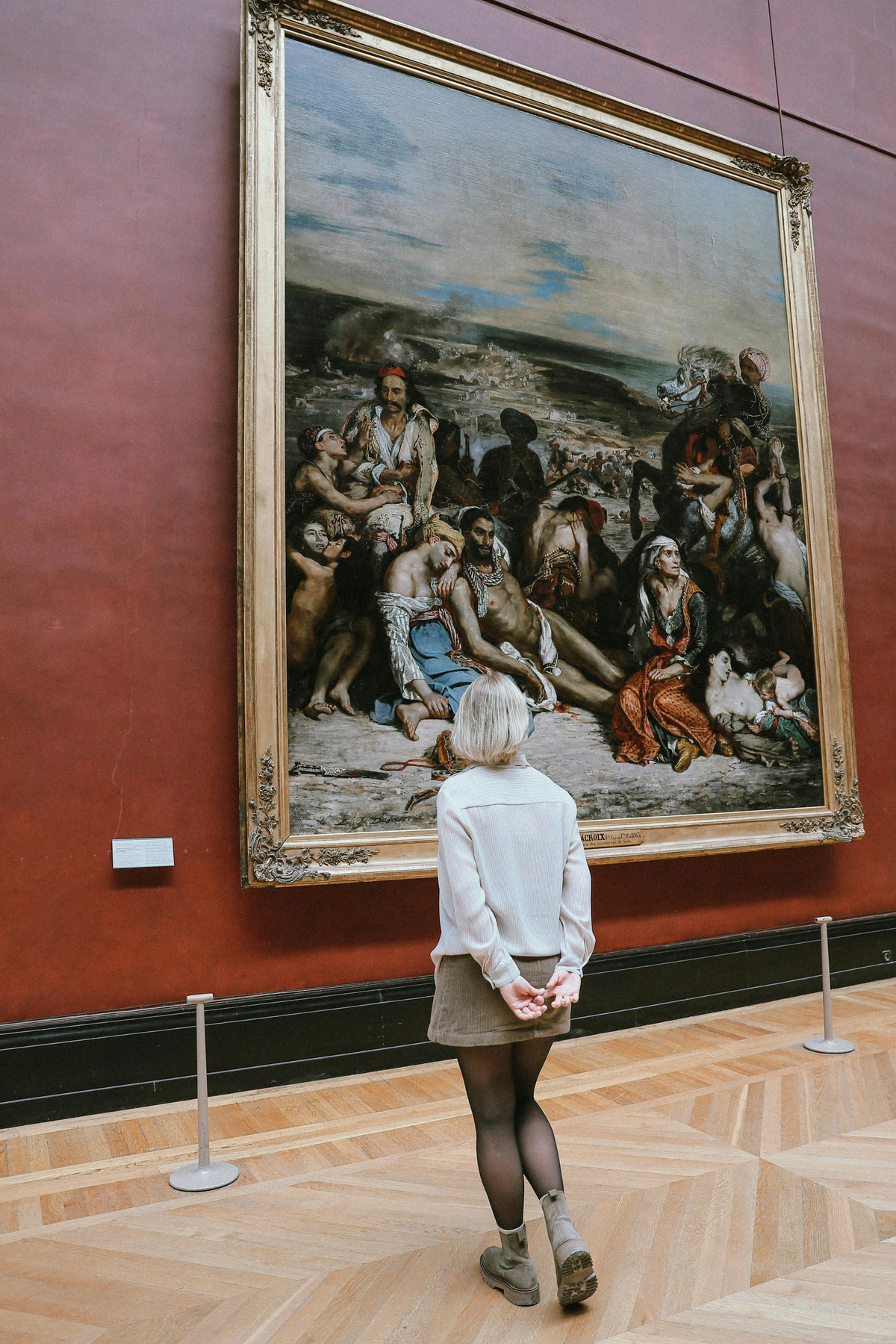
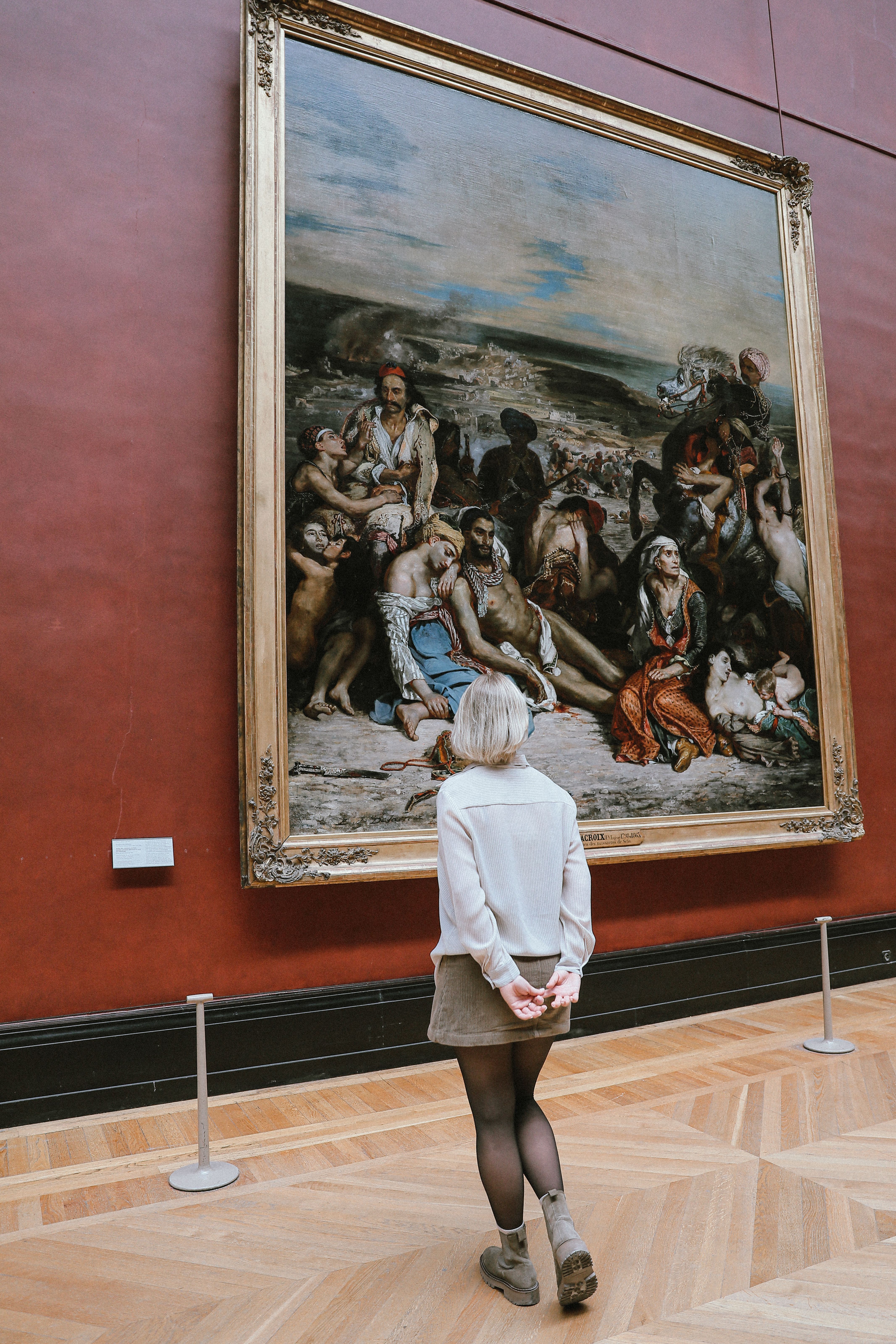
Looking at art is a skill, and it's one that's completely separate from just liking or disliking something. I used to wander through museums, having a gut reaction and moving on. It felt shallow. It was like only ever reading the first page of a book. I was consuming, not comprehending. To develop rigor, you have to learn to deconstruct what you see, to peel back the layers and understand the machinery that creates an effect. It’s about rewiring your brain to analyze as much as it appreciates.
I think of this process in three stages: Observe, Analyze, Synthesize.
- Observe (The Inventory): Set aside your opinions. Just inventory. What are the literal components in front of you? List every color you see. Note textures, from slick gloss to gritty impasto. What is the composition—a tight grid, a chaotic splash, a lonely object in an empty field? Is it massive, forcing you to step back, or tiny, drawing you in? This is pure data collection, the objective foundation for everything that follows.
- Analyze (The Mechanism): Now ask 'how.' This is where you dismantle the machinery of the piece. How does the artist use directional lines to pull your gaze across the canvas? How does the choice of a rough, aggressive texture versus a smooth, ethereal wash create a completely different feeling? How do the formal elements (line, color, form, light) create tension, harmony, or rhythm with one another? Don't just notice the elements; notice their relationships.
- Synthesize (The Meaning): This is the leap from mechanism to meaning. Based on your inventory and analysis, what is the work doing? What is it trying to communicate or make you feel? Are there symbols hidden in plain sight? Does it evoke a mood, challenge a belief, or tell a story without words? Crucially, what specific choices is the artist making to elicit that feeling in you? When you can do this with others' work, you can start doing it with your own. You become the first, and most important, member of your own audience.
Once you can do this with others' work, you can start doing it with your own. You become the first, and most important, member of your own audience.
Your Work's North Star: The Conceptual Framework
If intellectual rigor is the trellis, your conceptual framework is the blueprint for it. It’s the constellation of your core ideas, your recurring questions, and the themes you can't seem to escape. It sounds intimidating, but it’s really just the answer to a simple question: "What are you really making your work about?"
Imagine your art as a conversation you're having with the world. The conceptual framework is the central topic of that conversation. It ensures that every piece you make is a sentence or a paragraph in a larger, more meaningful story, rather than a disconnected shout into the void.
The Element  | The Question It Answers | An Example for an Artist |
|---|---|---|
| Central Concept/Question | What fundamental puzzle am I trying to solve? What is the deep itch I need to scratch? | How can I visually represent the feeling of a fading memory, or the weight of unspoken history in a landscape? |
| Themes & Motifs | What recurring images or ideas will I use to explore my concept? What are my visual anchors? | Decay, erasure, blurred figures, archival family photographs, the geometry of urban architecture, fragmented patterns. |
| Formal & Material Choices | How do my materials and methods serve my concept? What is the logic of my process? | Using translucent washes to suggest disappearance, sanding layers to mimic forgetting, incorporating text from found documents, choosing a palette of industrial greys to evoke a specific city. |
| Context & Audience | Where does this work live, and who is it for? What is the conversation I want to start? | Placing the erasure paintings in a dimly lit room to force intimacy, addressing an audience familiar with loss, or creating public art to challenge a community's view of its own history. |
Don't expect to sit down and write this out perfectly on a Tuesday afternoon. It takes shape over months and years, through the very process of research and self-questioning we've been discussing. It emerges from the work itself. It's a living document that evolves as you do, like a map you're constantly redrawing as you explore new territory. The goal isn't to create a rigid set of rules, but to understand the deep, magnetic pull—the central obsession—that draws you to the studio in the first place. A framework provides focus without limiting freedom. It tells you when to say 'no' to a fleeting idea that doesn't serve the larger conversation, saving your energy for the ones that do.
An Exercise in Framework Building
If you're staring at a blank page, try this. Get a large piece of paper or open a new digital document. Divide it into four quadrants. Label them: Themes, Materials, Questions, Inspirations. Spend ten minutes frantically filling each quadrant with whatever comes to mind. Don't censor yourself. In Themes, write all the big ideas that haunt you. In Materials, list everything you love to touch. In Questions, write every 'what if' you've ever had. In Inspirations, name the artists, writers, scientists, or places that fundamentally shift your perspective. Now, step back. The constellation of ideas across those four quadrants—that's the raw, messy, brilliant starting point of your conceptual framework.
FAQs About Developing Intellectual Rigor
Won't all this thinking 'kill the magic' and make my art feel stiff?
This is the most common and understandable fear. In my experience, the opposite happens. Rigor doesn't replace intuition; it provides a sturdy foundation for it to leap from. When you understand the 'why' behind your work, your intuitive choices become more confident and powerful. The magic isn't in the mystery; it's in the mastery.
My work is purely emotional and intuitive. Does this apply to me?
Absolutely. Intellectual rigor isn't an enemy of emotion; it's a tool to articulate and deepen it. It helps you understand why you're drawn to certain emotions and how to express them in a way that can be felt by others, transforming a purely personal feeling into a universal experience. It's about serving the emotion, not suppressing it.
How do I find time for research and deep thinking with a busy studio practice?
Think of it less as a separate task and more as an integrated part of your creative cycle. It's not all research all the time. For me, it's about cycles. I might spend a week or two in a deep research and idea-generation phase, filling sketchbooks and reading, with no pressure to produce a finished piece. Then, I'll transition into a 'making' phase where that accumulated knowledge is there to support my hands-on work. The truth is, you don't find time, you steal it in small handfuls. Read a poem while you're waiting for your coffee to brew. Listen to a lecture on Roman engineering while you're stretching canvases. The 15-minute work break is the artist's secret weapon. Rigor thrives on consistency, not grand gestures. The goal isn't to read a book a week; it's to keep the faucet of curiosity dripping, constantly.
Where do I even start if I feel like I have no ideas?
Start with your obsessions. What can't you stop thinking about, looking at, or noticing? It doesn't have to be profound. It could be the way light reflects off a puddle, a line from a song, or a story your grandfather told you once. An obsession, no matter how small, is a seed. Plant it, nurture it with research and questions, and see what grows. The problem isn't a lack of ideas; it's our dismissal of the 'small' ones. We're waiting for a lightning bolt of genius when we should be tending to the small, persistent sparks. If you're truly stuck, give yourself a small creative constraint. For a week, you're only allowed to paint things that are yellow. You'd be amazed at how a silly, arbitrary rule can force you to see the world in a new way and uncover what you're actually interested in.
Is there a recommended booklist or resource to kickstart this journey?
While there's no single perfect list, a few books have profoundly shaped my thinking about art and process. Consider these: Art & Fear by David Bayles & Ted Orland, for its honest look at the creative process (it's like a warm, tough-love letter to every artist); Ways of Seeing by John Berger, for fundamentally reframing how we look at images; and The Creative Act: A Way of Being by Rick Rubin, which argues that creativity is less about doing and more about being receptive. I also recommend keeping a 'commonplace book'—a notebook where you collect quotes, ideas, and observations from your reading. It's research you curate for yourself.
Beyond books, start curating other resources. Find a few art blogs that do deep dives, follow historians on social media, and watch documentaries not for plot, but for set design. Put yourself in the path of curious information.
How do I talk about my art's concept without sounding pretentious?
The key is to ground abstract concepts in concrete, relatable terms. Instead of, 'This piece interrogates the dialectical relationship between presence and absence,' try, 'I was thinking about how we feel the shape of things by the space around them—like the silence after a phone call ends. This painting is my attempt to capture that feeling.' You don't have to dumb it down, just translate it from academic jargon into genuine human language. Keep it honest. Talk about your process, your questions, and your failures. Authenticity is the opposite of pretension.
Sometimes the best answer is to show, not tell. If you're stuck, describe the physical process. "I built this up in 20 layers, sanding each one, because I wanted it to feel like a memory being worn down over time," tells me more about your concept than most artist statements I've read. It connects the idea directly to the physical object. People get that.
The First Step: Don't Just Make Art, Build a Practice
Intellectual rigor isn't a destination; it's the quality of the journey. It's the difference between being a hobbyist who occasionally makes something beautiful and being a dedicated artist who consistently explores the depths of their vision. It’s what gives your work staying power, both for you and for the people who experience it.
The goal isn't to have an airtight, perfect theory for everything. The goal is to be more awake, more curious, and more intentional in the sacred act of creation. So the next time you're in the studio, before you pick up a brush, ask yourself the hardest, best question you can think of. The rest will follow.
Building a practice means you show up even when you don't have a "good idea." You show up to think, to play, to analyze, and yes, to fail. It's about creating a rhythm where research, making, and reflection become a single, continuous motion. The amateur waits for inspiration; the professional knows that inspiration is what happens when your mind is rigorously at play. It's not magic; it's muscle memory for your brain.
Beyond the Studio: Engaging with the World to Fuel Your Art
I took a ceramics class once on a whim, and for months afterward, every painting I made felt like a pot. I wasn't painting pots, but I was thinking in clay. I was working with form in a way I hadn't before—the weight, the curve, the texture. A good cross-disciplinary study can give you a new set of eyes. It breaks the tyranny of your own habits.
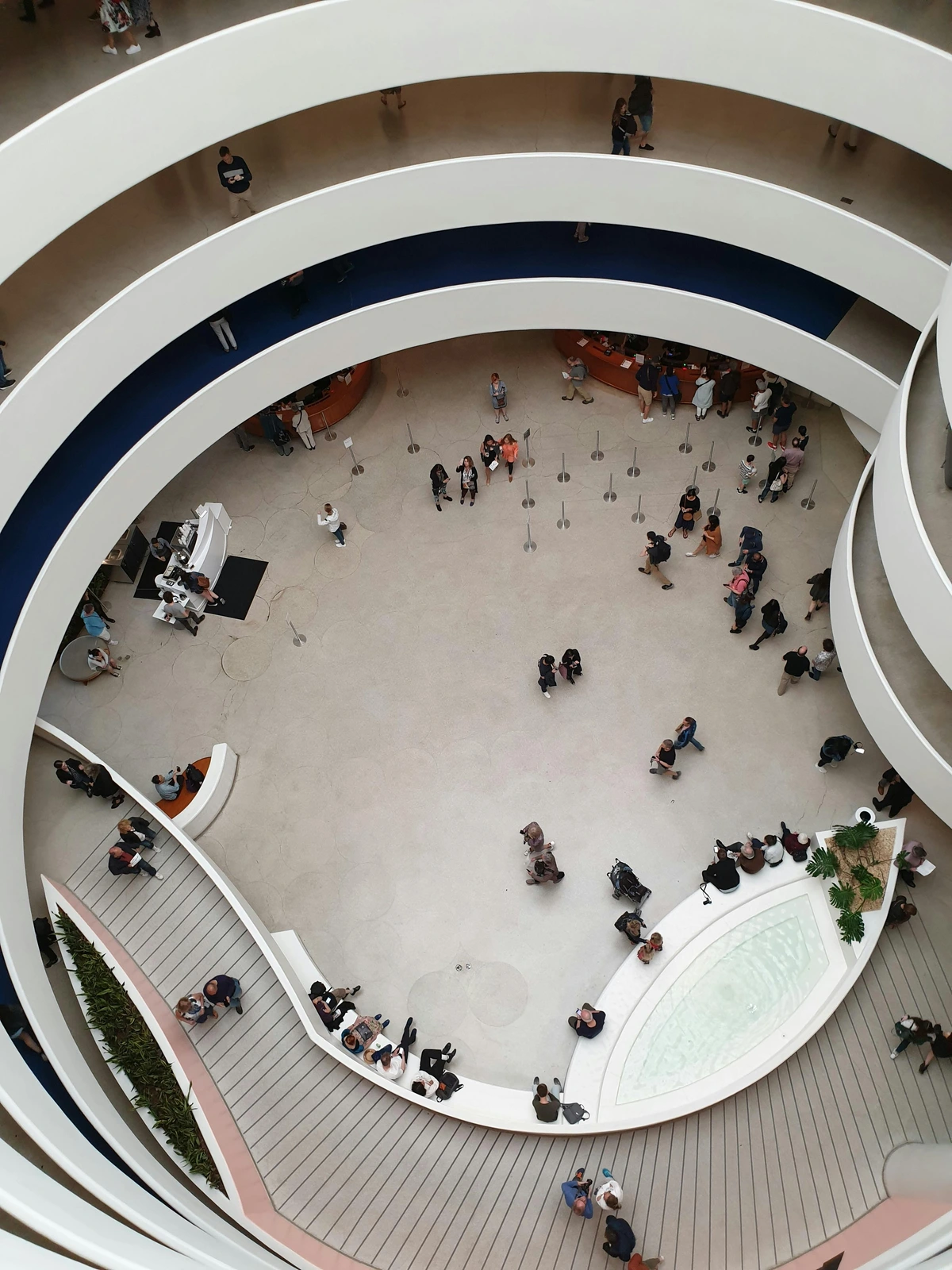
Developing rigor isn't just an internal process; it involves how you engage with the world. This means learning to see artistic intent everywhere—in the design of a building, in the pacing of a film, in the way a city is planned.
Cultivating Cross-Disciplinary Curiosity
Your artistic vocabulary expands when you steal from other fields. Don't just study painters. Study how a chef constructs a menu (contrast, pacing, surprise), how a musician uses silence, how a programmer builds elegant code, or how a choreographer thinks about bodies in space. Each field has its own inner logic, its own grammar. Steal that grammar, rather than just the style, and you'll innovate in ways you never expected. Most artists steal the style (how it looks). The rigorous artist steals the operating system (how it thinks). It’s the difference between copying a guitar solo and understanding the theory of music that makes it work, so you can write your own. It's the difference between being influenced by someone and learning a new way to think.
The Role of Critical Discourse
Find your people. Join a critique group, attend artist talks, start a blog, or even have regular conversations with a trusted friend. Being forced to articulate your ideas for others is one of the fastest ways to clarify them. There's something about having to explain your weird little brain-child to another living human that forces a level of coherence silent studio time rarely can. It’s the difference between thinking you have an idea and actually having one. Feedback isn't about validation; it's about being seen, being understood, and having your blind spots illuminated. A good critic doesn't tell you if your work is 'good'; they tell you what they see, and that act of being seen is invaluable. It's a gut check against solipsism. It confirms that your meticulously crafted emotional signal is, in fact, being sent and received, and not just bouncing around the echo chamber of your own head. It's the most direct way to confirm you're in a conversation and not a monologue.
Case Studies in Rigor: How Artists Build Meaning
Sometimes the best way to understand a concept is to see it in action. Here are a few examples of how intellectual rigor translates into studio practice.
One of the most common fallacies is that conceptual artists are heady and disinterested in craft, while formalists or expressionists are all intuition and no thought. The reality is that the best work, regardless of style, exists at the intersection of both. Read that again. Rigor isn't a style; it's an approach. It's the internal logic that makes a chaotic splash feel intentional and a minimalist grid feel profound. The following artists couldn't be more different, but their disciplined inquiry binds them.
Case Study: Agnes Martin and the Pursuit of the Sublime
Agnes Martin’s serene, grid-based paintings might look simple. You could be forgiven for thinking, "I could do that." But you'd be missing the point entirely. Her work is the result of a rigorous lifetime of intellectual and spiritual exploration. She wasn't just 'making grids'; she was meticulously crafting an experience of the sublime, informed by her deep study of Taoist philosophy. Her work wasn't minimalist for the sake of style; it was an attempt to remove all ego and distraction to allow pure feeling to emerge.
- Her Research: Eastern philosophy, nature, music, mathematics.
- Her Framework: A belief that true art 'represents concrete reality without invention' and invokes an emotion in the viewer. She was chasing what she called "the abstract sublime."
- The Rigor: Her famous 6x6 foot canvases were measured and taped to perfection. The soft pencil lines were drawn with the aid of a ruler, a process that required immense patience and concentration. This painstaking technical process was in service of a transcendent goal. It wasn’t just about the line; it was about the state of mind required to draw it perfectly—a form of meditation.
Martin teaches us that rigor can be a spiritual practice. Her art wasn't about depicting nature; it was about achieving a state of grace that reflected nature. Her work forces a difficult question: Can a painting be an object of thought and a vehicle for transcendence? Her entire career is an answer in the affirmative.
Case Study: Robert Rauschenberg and the Combines
Opposite to Martin's meditative approach, Robert Rauschenberg's 'Combines' embody rigor through radical inclusion. He famously said he worked in the gap between art and life. For Rauschenberg, research wasn't about books; it was about actively engaging with the world around him, particularly the chaos and energy of 1950s New York City.
- His Research: The detritus of urban life—newspaper clippings, traffic signs, stuffed animals, furniture.
- His Framework: A belief that a painting could be part of a larger reality, rather than just a window onto it.
- The Rigor: The rigor was in the choices. Why this specific tire and not another? How does a taxidermied eagle interact with a splatter of paint? His seemingly chaotic work was the product of intense, deliberate decisions about form, symbol, and material interaction.
A Practical Toolkit for Daily Practice
Knowing the theory is important, but art gets made in the mess of the daily. It's easy to feel motivated after reading a great article, and completely lost on a random Tuesday morning. Knowing the theory is one thing; applying it daily is another. Here are some actionable tools and prompts I actually use in my own studio to cultivate rigor when inspiration is being shy. Think of these as personal trainers for your brain.
Knowing the theory is one thing; applying it daily is another. Here are some actionable tools and prompts you can incorporate into your routine to cultivate rigor.
Weekly Prompts to Deepen Your Inquiry
Use these prompts as starting points for sketchbook entries, new experiments, or simply to keep your mind engaged throughout the week.












- The Lens of a Stranger: If someone who knew nothing about art saw your work, what is the very first thing they would say? What single word would they use? Start from that place.
- Forced Connection: Pick two random objects in your studio. Spend 10 minutes writing or sketching how they are connected. The more illogical the connection, the better.
- The Failure Log: Keep a log of 'failures.' But instead of just noting them, analyze them. What did you learn from each one? What unexpected path did it open up? Treat failure as data, not as an ending.
- Steal the Method, Not the Look: Choose an artist you admire. Don't copy their style. Instead, research their process. How did they work? What were their rules? Now, apply that process to your own subject matter.
A 30-Minute Ritual to Refine Your Concept
When you feel stuck, this timed ritual can break you out of it.
- Minutes 1-10: Free-write. No stopping, no thinking, just stream-of-consciousness writing about the piece you're working on or the idea you're chasing. Don't lift your pen.
- Minutes 11-20: Circle the five most potent words or phrases from your free-write.
- Minutes 21-30: Use those five words to create a new sentence or a 'mission statement' for your piece. This sentence is your North Star for the day's work.
Measuring Your Growth: Signs of Deepening Rigor
Developing intellectual rigor is a slow process, and its effects can be subtle. You might not suddenly start making 'smarter' art, but you will notice shifts in your practice and your mindset. It’s like becoming a better cook; you don't suddenly start making Michelin-star meals, but you find yourself instinctively reaching for the right spice, understanding why a sauce broke, and trusting your gut a little more each day. It's an internal shift that slowly manifests externally.
Signs That You're Developing a More Robust Practice
- You become less precious. You see a 'failed' piece not as a disaster, but as a critical experiment that taught you something. I have a closet full of canvases that are three or four paintings deep. Each layer is a lesson. You can ruthlessly paint over it, knowing the process was more valuable than the product.
- Your obsessions become clearer. You start to notice that seemingly disparate projects are actually orbiting the same central question. You're not just making things; you're building a body of work. I call this finding your creative north star.
- You talk about your work with more confidence. You can discuss the 'what' and the 'how' without hesitation, because you've done the hard work of understanding your own intentions. You're not guessing anymore; you're reporting from the front lines of your own experience.
- Other people's opinions matter less. You have your own internal compass of success, calibrated by your conceptual framework. You're no longer working for praise; you're working to solve your own questions. The noise of the art world starts to fade into the background.
- Your creative process feels more resilient. When you hit a block, you don't just wait for inspiration. You have a toolkit—research, sketching, critique, analysis—to actively unblock yourself. You learn to transform not-knowing from a dead end into a starting point.
- You start seeing methodologies everywhere. A well-edited film, a beautifully designed park bench, a perfectly organized spice rack—they all become case studies in intent and rigor. The world transforms from a collection of objects into a library of solutions to creative problems.
In the end, developing intellectual rigor is about becoming a more mindful, intentional, and resilient artist. It's a lifelong commitment, but one that pays dividends not just in the quality of your art, but in the depth of your engagement with the world. It's about turning your art practice into a true practice—a discipline of constant inquiry, growth, and discovery.
It's practice that lets you stand in front of that canvas, brush in hand, and know that the question "What's the idea behind it?" is not a test you might fail, but the very beginning of the most interesting conversation you'll have all day. And you'll be ready for it.