
The Resilient Revolutionary: A Biography of Camille Pissarro
Dive deep into the life of Camille Pissarro, the 'father of Impressionism'. This isn't just a list of dates; it's a story of resilience, radical ideas, and the birth of modern art, told with a personal touch.

Camille Pissarro: The Stubborn Gardener Who Painted the World Anew
It’s easy to look at a famous painting and see a masterpiece, perfectly formed and inevitable. That’s our first mistake. What I find far more interesting is the dirt under the artist’s fingernails—the failures, the mundane struggles, the sheer stubbornness it takes to see the world differently. And if you want a masterclass in creative stubbornness, you need to know the story of Camille Pissarro. This is the man they called the “father of Impressionism,” which sounds grand and a little dusty. But he was really more of a gardener. He planted the seeds of a revolution, tended to a whole generation of artists, and patiently waited for a new kind of beauty to take root. I think a lot about what it means to truly see the world. We glance, we categorize, we move on. But Pissarro taught us to stare, to loiter with intent, to understand that the same dirt road could contain a universe of color depending on the time of day, the season, the moisture in the air. In our era of instant images, his relentless pursuit of a deeper truth feels more radical than ever.
If you're seeking to understand the man behind the brush, you'll find his story is a testament to perseverance and profound observation. For a broader look at his role, you can refer to a Camille Pissarro Impressionism guide.

The Oldest of the Young Turks
Pissarro was born on the island of St. Thomas in the Danish West Indies in 1830. Let's just pause on that for a second. While many of his future friends were being born in the heart of France, Pissarro’s first world was one of Caribbean sunlight and colonial commerce, a world away from the grey Parisian winters. I often think this outsider’s eye, trained on a different quality of light, was his secret weapon from the very beginning. He wasn't programmatically French, and his art would never be about the grand, historical subjects that the establishment adored.
At the age of twelve, his father sent him to a boarding school near Paris, a move that would change everything. It was here, walking the French countryside as a teenager, that he fell in love with the rural landscape he would paint for the rest of his life. He wasn't interested in the heroic or the mythological; he was fascinated by the way light fell on a dirt road after a rainstorm.
The great conflict of his early life was the one between his soul and his father's ledger. His family expected him to join the business. He tried, I’ll give him that. He worked as a cargo clerk back in St. Thomas for five years. But the pull was too strong. In 1855, he made the decision that every aspiring artist both dreams of and fears: he abandoned his stable path, left his family bewildered, and moved to Paris to become a painter. He was 25. By the standards of the Parisian art scene, where prodigies were celebrated, he was practically ancient. But Pissarro’s story was never going to be about precocious genius; it was about the long game.
This period of his life was a masterclass in self-directed learning. Unable to stomach the rigidity of the École des Beaux-Arts, he became a fixture in free studios, like the Académie Suisse, where he met future Impressionists like Claude Monet and Paul Cézanne. He spent countless hours copying Old Masters in the Louvre, a practice he'd continue throughout his life, studying the works of Courbet, Corot, and Delacroix.
His early work shows the profound influence of Jean-Baptiste-Camille Corot. It was Corot who advised young artists to 'pincer le ton,' or 'seize the tone' of a landscape. Pissarro took this to heart, developing a disciplined yet passionate approach to capturing the nuances of light and atmosphere. He was a student, but always on his own terms, filtering every lesson through his own relentless search for a more honest and direct way of painting.
Early Influences and Artistic Roots
Before Pissarro became a revolutionary, he was a student of tradition. I find this part of his story particularly interesting because it shows us that every great innovator starts by learning the rules they will eventually break. His time in Paris introduced him to the revolutionary landscape painters of the Barbizon school—artists like Jean-François Millet and Théodore Rousseau, who dared to paint nature directly, on its own terms, rather than as a backdrop for some mythological drama.
But his most significant early mentor was Jean-Baptiste-Camille Corot. Corot's advice to "seize the tone" of a landscape wasn't just about color; it was about capturing the emotional weight of a place. Pissarro took this to heart. His early works, exhibited at the Salon, show the clear influence of Corot's silvery, atmospheric style. He learned to build a composition with a firm structural foundation, a lesson that would serve him well when his brushstrokes became looser and more gestural. This period also saw him studying the Old Masters in the Louvre, particularly the earthy realism of Courbet. He was piecing together his own visual language from the very best of the past, but always with an eye toward a more immediate, unfiltered truth.
The Rejection of the Salon and the Birth of a Rebel
For any artist in mid-19th century France, the annual Paris Salon was the only stage that mattered. Having your work accepted was a ticket to reputation and sales. Having it rejected meant obscurity. For years, Pissarro played by the rules, submitting his more traditionally-styled landscapes. He had some minor success, but more often than not, he faced the sting of rejection. He was caught between the Academic world, which demanded polished historical fantasies, and his own growing conviction that truth lay in the humble, everyday world around him.
It was a frustrating, demoralizing period. He wasn't yet the Pissarro we know. He was an artist searching for his voice in a system designed to silence unconventional ones. He developed a deep-seated resentment for the Salon's jury system, calling it arbitrary and conservative. This wasn't just sour grapes; it was the birth of his radicalism. He began to realize that changing the art world from within was impossible. If he and his friends were going to succeed, they couldn't just ask for a seat at the establishment's table; they would have to build their own.
The Path to Pontoise: Finding the Modern Landscape
In Paris, Pissarro was a student of himself. He briefly attended the École des Beaux-Arts, but found the atmosphere stifling. The official art doctrine, known as Academic art, demanded historical, religious, or mythological scenes. The brushwork was expected to be smooth, slick, and invisible—a flawless surface where the artist's hand was erased. The landscape was just a backdrop for a staged drama. This infuriated Pissarro. It felt like a lie. To him, the drama was in the landscape itself—in the changing light, the toil of the peasants, the simple geometry of a village street. He was, in essence, trying to paint truth instead of spectacle. To understand this context better, you might want to read about what is Realism in art or see how other famous artists who used impasto expressed themselves.
It's hard to overstate how radical this was. For centuries, great art was defined by its subject matter: a Roman battle, a Greek myth, a biblical scene. The idea that a muddy country lane in Pontoise, with its anonymous peasants, was a worthy subject for a major painting was, to the establishment, absurd. Pissarro's choice to paint the humble and the everyday was as much a political statement as an aesthetic one. It declared that the lives of ordinary people were as complex and significant as the lives of kings and gods.
He found his spiritual home in the countryside, particularly in the villages along the Oise river valley, such as Louveciennes and, most importantly, Pontoise. He wasn't a city painter. He needed the honest texture of the earth, the rhythm of the seasons. He moved his growing family—he had married his mother's maid, Julie Vellay, in 1871—to Pontoise, seeking a lower cost of living and direct access to his subject matter.
In Pontoise, he began to develop his radical idea: what if you painted a scene exactly as you saw it, at a single moment in time? What if you left your brushstrokes visible, capturing the shimmer of the air and the vibration of color? This idea, which seems so obvious to us now, was heresy. It was an act of rebellion against centuries of tradition, a declaration that the artist's personal, subjective vision was more important than the idealized, historical dramas demanded by the Salon.
I look at paintings like The Climbing Path, L'Hermitage, Pontoise and I see the birth of a new language. The composition isn't staged. It feels like you've just stumbled upon this path. The brushwork is loose, more concerned with light than with perfect detail. It's a language of sensation rather than description. He wasn't just painting a path; he was painting the feeling of walking that path, the crunch of gravel, the shift of light through the leaves.
His technique was evolving at a blistering pace, particularly during the pivotal decade of the 1860s. He abandoned the dark, bitumen-based "sauce" that was standard in Academic painting and embraced a palette of pure, high-key colors. This shift was partly out of necessity; painting en plein air (outdoors) required him to work quickly to capture the fleeting effects of light before they vanished. This urgency forced a new kind of honesty onto the canvas: quick, confident brushstrokes that recorded what the eye saw, not what the mind knew "should" be there.
The art critic Théodore Duret once said that Pissarro's genius lay in his "determination to see." It sounds simple, but it's the hardest thing in the world. It means stripping away preconceptions and painting the world not as history or mythology, but as a direct, personal, visual experience. This was the foundation of what would become Impressionism.
Planting a Movement: The Father of Impressionism
Pissarro was the one who brought the gang together. He was older, wiser, and possessed a quiet charisma that drew other young rebels to him. In the cafés of Paris, like the Café Guerbois, he met artists like Claude Monet, Pierre-Auguste Renoir, and Alfred Sisley. They were all being rejected by the official Paris Salon. Instead of despairing, Pissarro had an idea. It was a defiant, almost ludicrous plan: if the Salon wouldn't have them, they would hold their own exhibition. For those looking to delve deeper into the world Claude Monet crafted, you can explore an ultimate guide to Claude Monet.
Imagine the audacity of it. The Salon was the only legitimate avenue for an artist's career. To defy it was professional suicide. Yet Pissarro, the unofficial patriarch of this band of outcasts, provided the ballast. He wasn't a charismatic firebrand like Manet; he was a listener, a thinker, a steady hand on the tiller. His belief in their collective vision was the glue that held them together through the ridicule and financial hardship that was to come.
He was the movement's vital connector, a "switchboard" of sorts. He introduced Cézanne to the group, encouraged Gauguin, and maintained close friendships with figures as diverse as Degas and Mary Cassatt. It was Pissarro's unique ability to see the potential in such different artistic temperaments that made the Impressionist exhibitions so dynamic. He was less a dictator of style and more a cultivator of community.
In 1874, this group, calling themselves the Société Anonyme Coopérative d'Artistes, opened their first show in the former studio of the photographer Nadar. A critic, seizing on the title of a painting by Monet (Impression, soleil levant), mockingly dubbed them “Impressionists.” The name stuck. Pissarro was the only artist who had the guts—or maybe the stubbornness—to show his work in all eight of the group's exhibitions between 1874 and 1886. He was their anchor, their constant. He wasn't just a participant; he was the connective tissue holding a revolution together.
The exhibitions themselves were a battlefield. Critics accused them of painting like lunatics, of flinging paint at the canvas with a loaded brush. Louis Leroy, the critic who coined the name "Impressionist," wrote a satirical review in which a fictional academician, upon seeing Monet's painting, declares, "Wallpaper in its embryonic state is more finished than that seascape." The public, conditioned to expect the slick finish of Salon paintings, was often bewildered by the visible brushstrokes and seemingly unfinished compositions. For Pissarro, who was notoriously hard on himself and often reworked his canvases, this must have been excruciating. But his commitment never wavered. While others like Monet dropped out of certain shows, Pissarro's presence was a declaration of solidarity and an unwavering belief in their shared project.
His role was more than just organizational. He was the movement’s soul, the one who connected the philosophical dots. While others focused on the shimmering leisure of Parisian boulevards, Pissarro’s brush remained rooted in the soil. He painted peasants, field laborers, and rural life not with romantic nostalgia, but with a profound and unflinching dignity. He saw the working class as they were: resilient, essential, and worthy of being the subject of great art. For more on how artists create energy in their work, explore this page on creating dynamic art and visual movement, or read about universal truth in art history.
Look at paintings like Hoar Frost, the old road to Ennery and The Chestnut Trees at Louveciennes. These are not sentimental pictures. The landscapes are worked, inhabited. The earth feels tilled, the trees heavy with fruit, the paths worn by countless footsteps. His figures aren't posed shepherds in classical garb; they are real people, their faces often averted, their bodies absorbed in the rhythm of their labor. He captures the sheer physicality of their work—the bend of a back, the swing of a hoe—with a profound empathy. This was an anarchist's eye, viewing the peasant not as a passive part of the scenery, but as the engine of society, the source of its sustenance and, therefore, its beauty. It was a social consciousness woven directly into the fabric of his brushstrokes.
The Gardener’s Experiment: Neo-Impressionism
Just when he had helped to build a movement, Pissarro did something that I find utterly fascinating: he started to doubt his own methods. In the late 1880s, as the Impressionist style solidified, he began to feel that it was too spontaneous, too intuitive. He worried it was a dead end. It's rare for an established artist to so publicly question their own work, but Pissarro was constitutionally incapable of standing still. He wrote to his son Lucien, "I am very satisfied with what I have achieved lately, but... everything I have just done is wrong." This relentless self-criticism is the engine that drove his evolution.
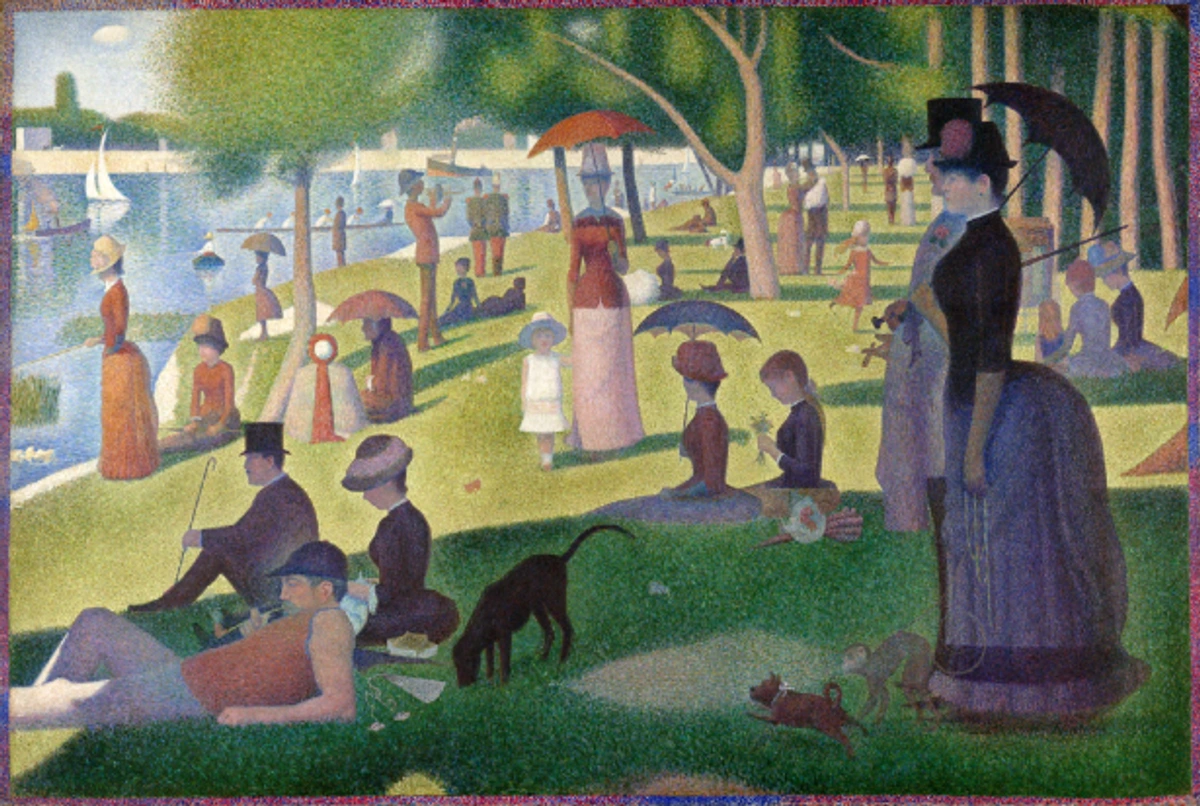
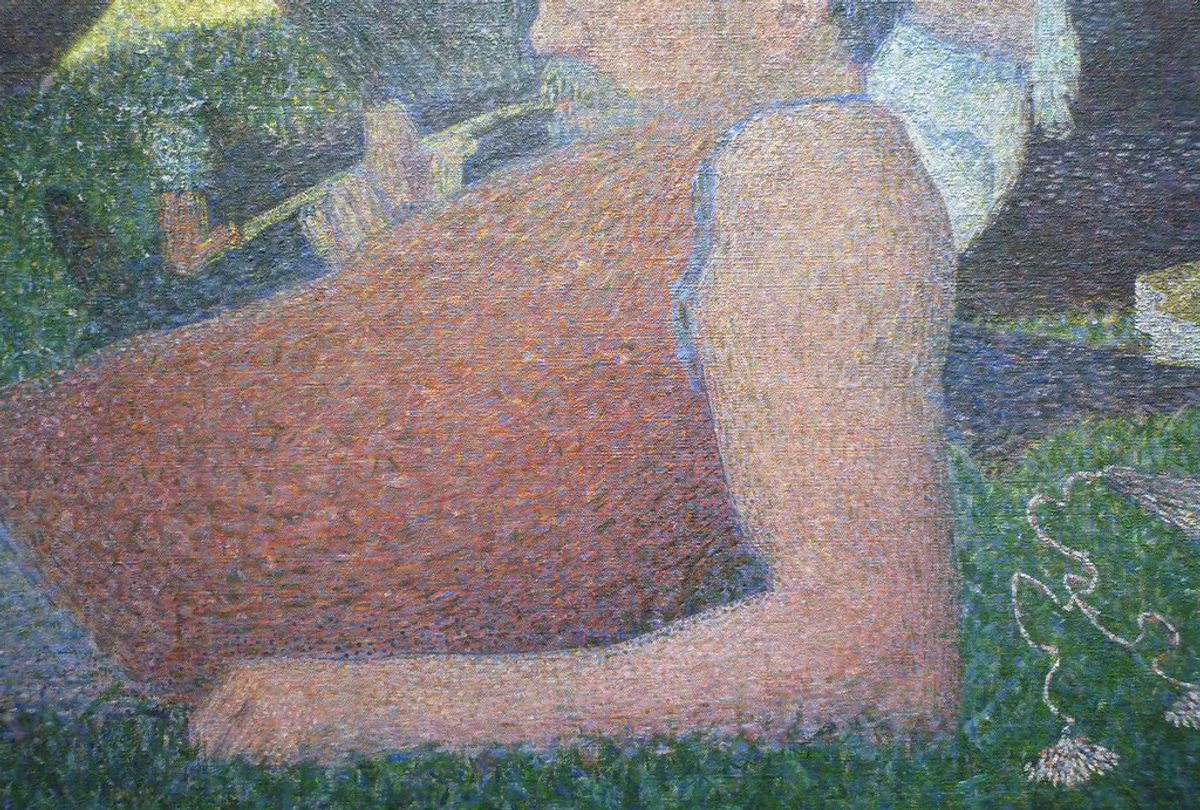
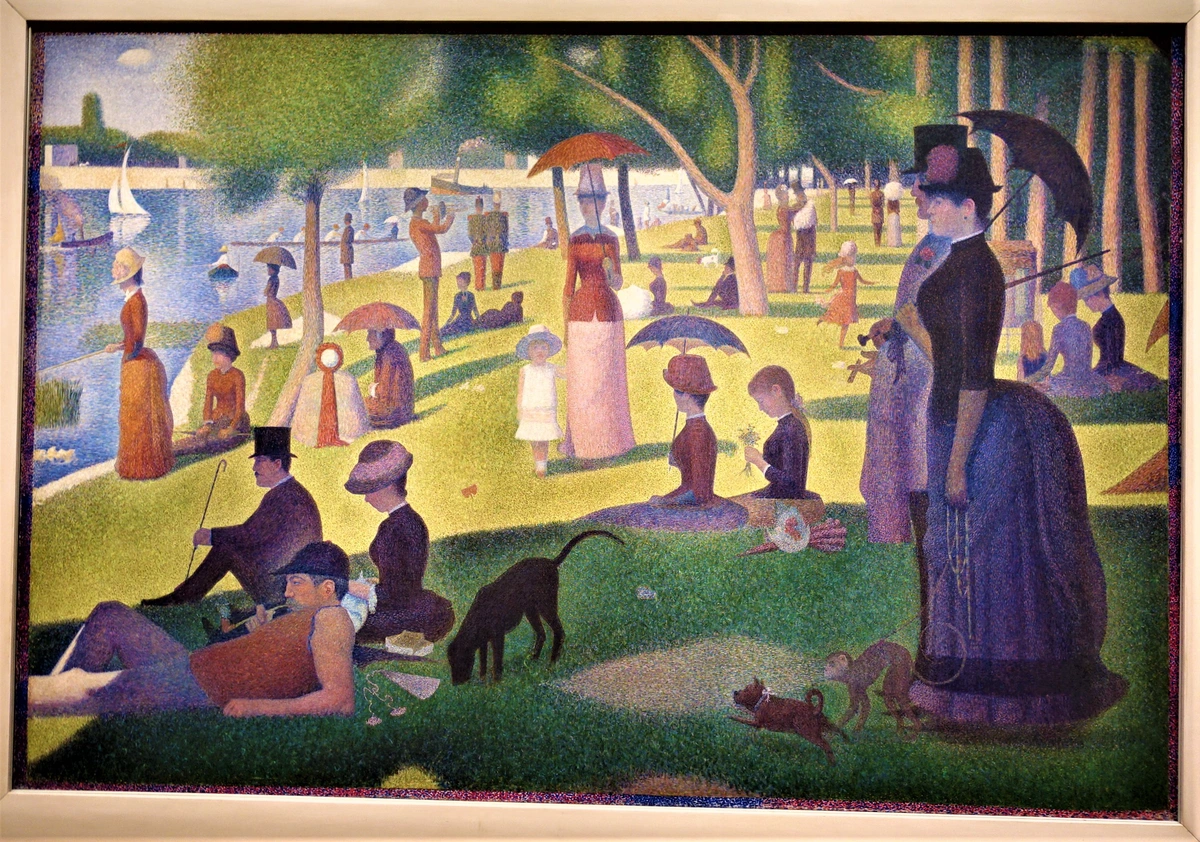
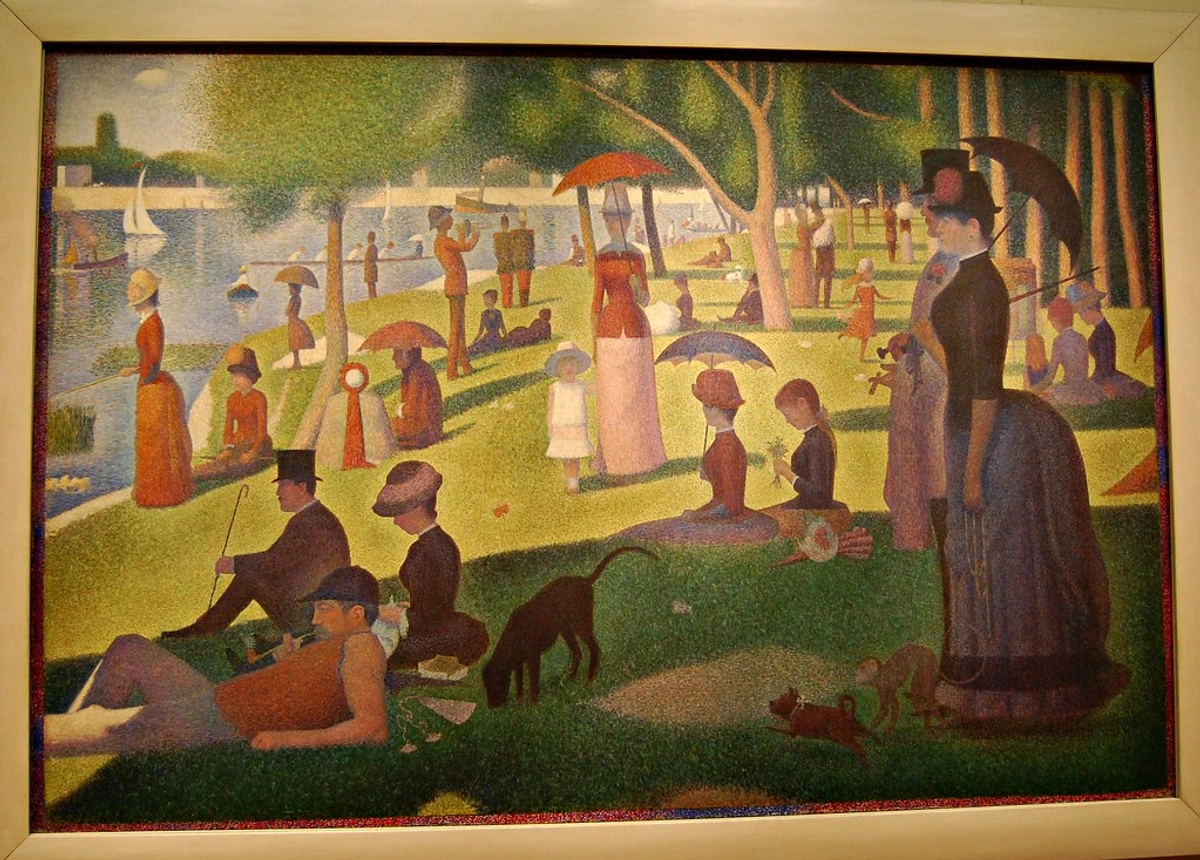
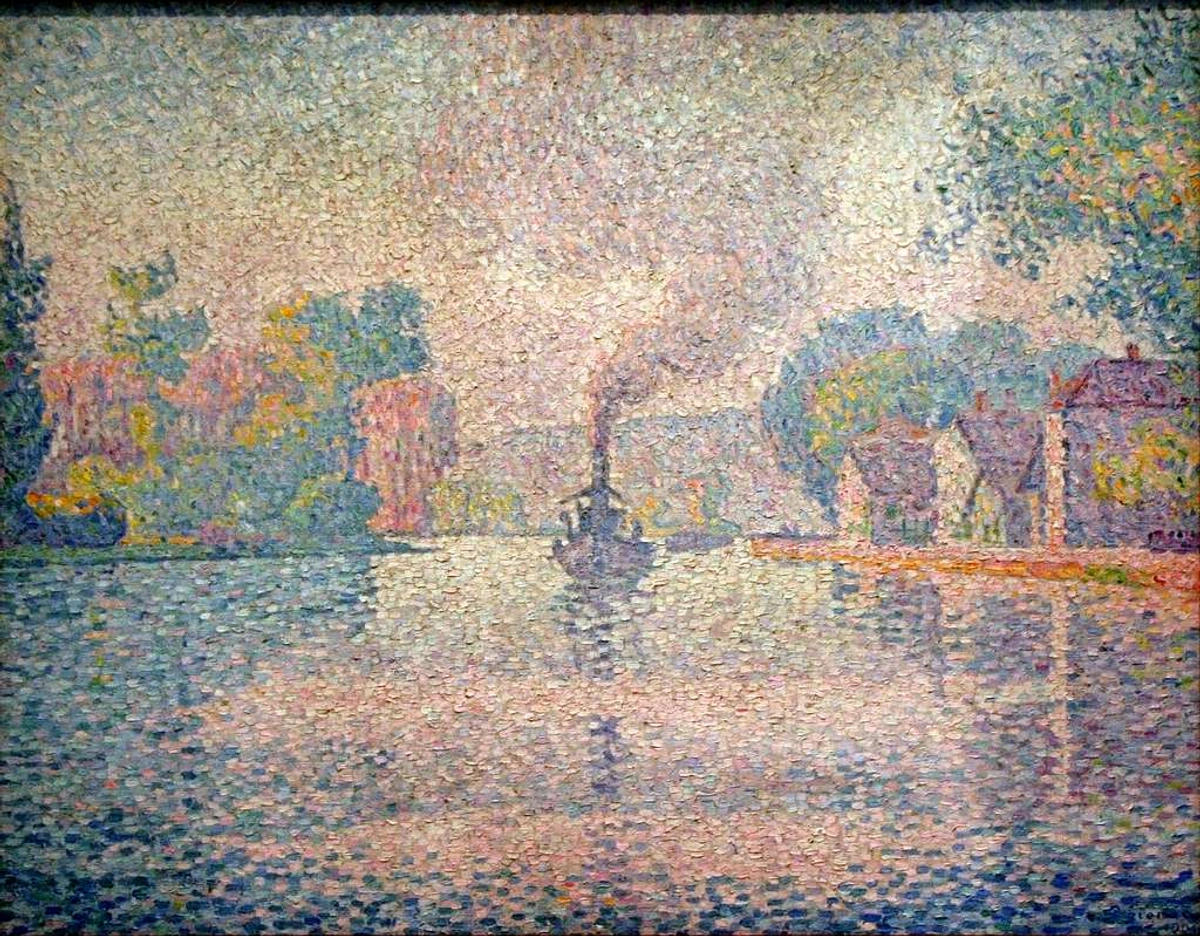
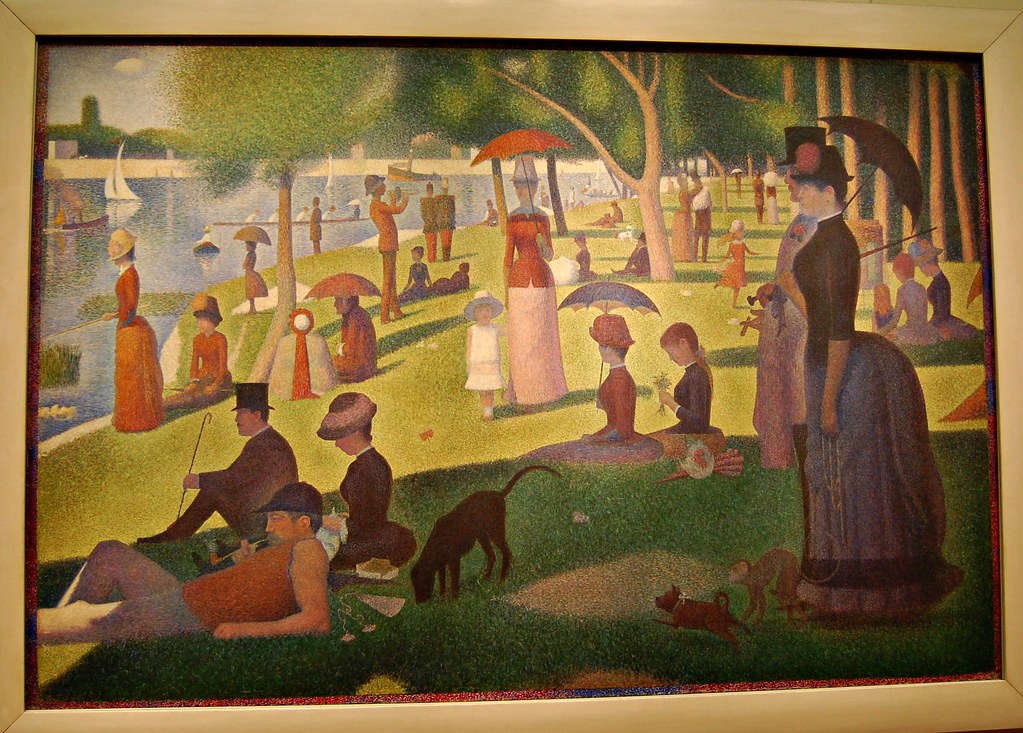
So, in his fifties, he began to study. He became fascinated by the scientific color theories of Georges Seurat and Paul Signac. They were developing a new technique called Pointillism—the application of individual dots of pure color that blend in the viewer's eye. This was the opposite of the intuitive, gestural style Pissarro had championed. It was a structured, almost scientific approach.
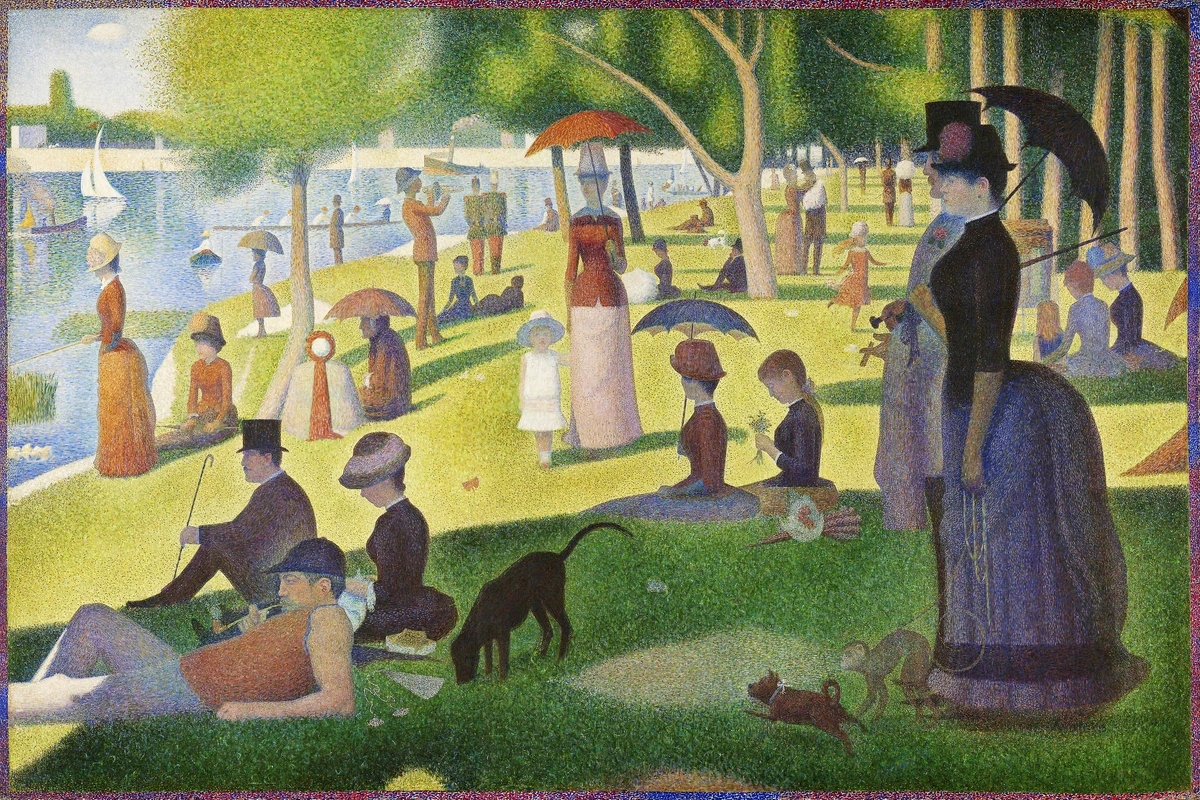
And Pissarro, the father of Impressionism, adopted it wholeheartedly. For several years, his canvases were filled with a meticulous mosaic of colored dots. Art critics threw up their hands in confusion. How could the leader of one movement so completely abandon it for another? Works like Apple Picking at Eragny demonstrate this period: the canvas vibrates with systematic dots of paint, a radical departure from his earlier gestural work. For a time, he even stopped exhibiting with the other Impressionists, feeling his new direction was incompatible. This was a period of familial strife as well, as he tried to convince his own sons, who were also artists, to adopt this more "scientific" method. For those seeking a broader context, you might enjoy the ultimate guide to Impressionism.
But here's the thing: this wasn't a betrayal. This was the essence of the man. He wasn't loyal to a style; he was loyal to the search for truth in painting. He was experimenting, trying to find a more permanent, solid structure for his art. It didn't last. He eventually found the Pointillist technique too rigid, too confining. He missed the direct, emotional connection of his brush with the canvas. Slowly, he returned to his own unique style, but he brought the lessons of Pointillism with him. His colors became even more vibrant, his compositions more structured.
The Final Harvest
Pissarro’s final years were a period of relative peace and growing recognition. Afflicted by a recurring eye infection that made it impossible for him to paint outdoors, he began a stunning series of cityscapes from hotel room windows in Paris, Rouen, and Le Havre. Confined indoors, he brought all his gifts to bear on the urban landscape. He painted the same scenes over and over, capturing the changing light, the bustle of the boulevards, and the modern, vibrating energy of the city. It was Impressionism applied to the new rhythms of modern life.
When he died in 1903, the world of art had been transformed. The revolution he had helped plant had blossomed. Artists like Paul Cézanne, who had once been Pissarro’s shy protégé, openly referred to him as “the humble and colossal Pissarro.” He was the mentor who never stopped being a student.
His influence was immeasurable. Cézanne learned to paint directly from nature under Pissarro’s patient guidance in Pontoise, a tutelage that laid the groundwork for all of modern art. Gauguin, who began as an Impressionist and evolved into Synthetism, always acknowledged Pissarro's early influence. Even younger artists like Matisse and the Fauves would find inspiration in Pissarro’s bold, un-mixed colors and his freedom of expression. He had sown the seeds of Impressionism, but the harvest included the very foundations of Post-Impressionism, Fauvism, and Cubism.
An Unflinching Legacy
So, what is Pissarro's enduring gift? We often talk about his masterful technique, and we should. But his true legacy is one of character. He showed us that an artist doesn't have to be a lone, romantic genius. An artist can be a collaborator, a mentor, a gardener. He demonstrated that it's okay to be an outsider, to be stubborn, and to change your mind. He proved that true innovation isn't a lightning bolt of inspiration; it's the hard, patient work of tending to a vision until it finally bears fruit.
He embodied the principle of constant growth, a mindset that is powerfully relevant for any creator today. He reminds us that you can be both a leader and a learner, that you can be the "father" of a movement and still be its most adventurous student. His embrace of experimentation, even when it meant being misunderstood, encourages us to resist the pressure to find one style and stick with it. He teaches us that our artistic voice is not a static thing to be found, but a living thing to be cultivated, pruned, and allowed to change with the seasons.

You can see his influence rippling through the veins of modern art—from the Fauvists' wild colors to the Post-Impressionists' structural experiments. For a wider perspective on the movements he influenced, take a look at the overview of modern art. He showed them all that the world was more beautiful when you painted it as you saw it, not as you were told it should be.






Ultimately, Pissarro's story is an argument for a different definition of success. He endured decades of poverty, critical scorn, and personal setbacks. He wasn't chasing fame or a comfortable life. He was chasing a feeling, an authenticity, a way to translate the glorious, messy chaos of the visible world onto a two-dimensional surface. He succeeded not because he became celebrated in his lifetime (though he did eventually find buyers), but because he never, ever, compromised on that quest. He was the gardener who tended his own vision so faithfully that he ended up changing the entire landscape.
I often wonder what he would make of our world today, where images are created and discarded in an instant. I imagine he'd tell us to slow down, to look harder, to find the universe of color in that dirt road one more time. His "stubbornness" wasn't just about defiance; it was about devotion.
Frequently Asked Questions (FAQ)
- Why is Camille Pissarro called the "Father of Impressionism"? Pissarro earned this title for several key reasons. He was the oldest and most consistent member of the group, participating in all eight of their groundbreaking exhibitions. He was the only artist to do so, making him the movement's unwavering anchor through its most turbulent years. More importantly, he acted as a mentor and a unifying force. He had a remarkable ability to foster community among a group of fiercely independent artists. He introduced figures like Cézanne to the group and maintained friendships with others as diverse as Degas and Mary Cassatt. It was this rare combination of artistic integrity and communal spirit that truly earned him the title. To explore how other artists collaborated, you might be interested in reading about artist collectives and finding art.
- What is Camille Pissarro's most famous painting? This is a tough question, as his work evolved so much. Many would point to his final series of the Boulevard Montmartre in Paris as his most celebrated works. Painted from his room at the Hôtel de Russie in 1897, this series captures the same sweeping view in different lights and seasons, and is a masterclass in observing urban life. For a broader look at significant works of the era, you can browse our page on famous paintings. However, you shouldn't overlook his foundational rural scenes. The Red Roofs, corner of a village, winter (1877) is a quintessential example of his mature Impressionism, praised for its structural strength and shimmering color. Hoar Frost, the old road to Ennery (1873) is another masterpiece, a low winter sun illuminating a simple rural path with a breathtaking, almost scientific, accuracy. These quieter, foundational works are arguably just as important as his famous cityscapes. For art inspired by city environments, check out art inspired by urban landscapes.
- Did Pissarro only paint landscapes? No, he was far more nuanced than that. While his heart was in the landscape, he was a profound painter of people. In fact, it's more accurate to say he painted the symbiotic relationship between humans and the land. His depictions of peasants and rural laborers—haymakers, washerwomen, fruit pickers—are a core and radical part of his work. He showed them with a dignity rarely seen in the art of his time, not as idealized figures but as real individuals engaged in the toil that sustained society. He also created beautiful portraits of his family and, in his final years, turned his eye to the anonymous figures of the city—the commuters, the shoppers, the flaneurs—cementing his role as a comprehensive chronicler of modern life.
- Why did Pissarro experiment with Pointillism? I think he saw it as a necessary experiment. Despite being a leader of Impressionism, he worried that its style had become too loose and needed more structure. He felt that his own work was becoming "too slight" and wanted to introduce a more rigorous, scientific approach to color and form. His exploration of Pointillism, guided by Seurat and Signac, was an attempt to bring a more solid foundation to his work. When he eventually returned to a more fluid style, it was forever changed. This period enriched his understanding of color theory, leading to a more vibrant palette and a more considered, structural composition in his later work.
- Where can I see Camille Pissarro's artwork in person? His work is held in major museums worldwide, giving you a chance to stand in front of his canvases and see the history of modern art unfold. For the deepest dive, you'll want to visit the Musée d'Orsay in Paris, which houses an unparalleled collection of Impressionist art. The National Gallery in London, the Metropolitan Museum of Art (the Met) in New York, and the Art Institute of Chicago also have significant holdings of his paintings. If you're planning to visit any of these cities, our guides to the best galleries in London and the art lover's guide to New York City might come in handy. For contemporary explorations that resonate with Pissarro's legacy, visit our artist's timeline.
- How did Pissarro influence other artists like Cézanne? His influence on Paul Cézanne was monumental and beautifully documented in their letters. In the early 1870s, he essentially took the shy, frustrated Cézanne under his wing, persuading him to abandon the dark, romantic fantasies of his youth and instead paint directly from nature in Pontoise and Auvers. Cézanne later credited Pissarro as being a "father to him... a man to consult and something like the good Lord." Cézanne's famous method of building forms with small, parallel brushstrokes is a direct evolution of Pissarro’s own structured touch. This approach, which Cézanne called "a sensation of Pissarro," would become the foundation for his revolutionary geometric analysis of nature, which itself laid the groundwork for the entire Cubist movement. Pissarro didn't just teach Cézanne how to paint; he taught him how to see.