
Stieglitz's Galleries: The Revolutionary Art Shaping America
Dive into Alfred Stieglitz's legendary 291 Gallery and its role in birthing modern American art. Discover the artists, exhibitions, and cultural shifts that changed everything.

The Luminous Lens: Inside Alfred Stieglitz's Revolutionary Galleries
You know that feeling? Discovering a tiny room in New York City where walls exploded with radical ideas in 1905? That was 291. Stepping into Alfred Stieglitz’s gallery wasn’t like visiting a museum – it felt like watching childbirth for modern art. I remember standing outside the Fifth Avenue address years later, imagining how that unassuming space rewrote American cultural DNA. What started as a photography salon birthed our first conversations about Picasso, Matisse, and abstract American identity. Let’s unpack how one gallery became America’s art revolution epicenter.
The Architect of Rebellion: Stieglitz Before the Galleries
Before 291, Stieglitz was already a disruptor. This wasn’t some trust-fund dilettante playing with art – this was a technical genius who saw photography as more than documentary. In 1892, he founded the Photo-Secession movement, essentially declaring war on stuffy Victorian photography. His camera felt like an artist’s brush, capturing New York fog and Georgia O’Keeffe’s shoulders with equal emotional intensity.
But here’s where it gets fascinating: Stieglitz believed photography deserved gallery legitimacy. So, while defending Pictorialism, he was quietly planning its glorious demolition. Those early battles? They trained muscle memory for later revolutions at 291. You can almost smell the developer chemicals and ambition.
291: The Unassuming Launchpad That Changed Everything
The Physical Space: More Than Meets the Eye
291 wasn't just a gallery – it was a carefully engineered environment designed to maximize impact. The space occupied three small rooms in a former brownstone at 291 Fifth Avenue, each room serving a specific purpose:
- The Front Room: Used for rotating exhibitions and larger works
- The Middle Room: Featured smaller pieces and served as a meeting space
- The Back Room: Stieglitz's private office and space for experimental installations
The skylights were architectural genius – they provided natural, diffused lighting that was perfect for both delicate photographs and bold paintings. Unlike today's climate-controlled galleries, 291 embraced the changing seasons, with the space feeling different in summer light versus winter gloom. This connection to the natural environment became part of the viewing experience.
The Gallery Experience Then vs. Now
291 Gallery Experience (1905-1946)  | Contemporary Gallery Experience (2020s) |
|---|---|
| Intimate, small space (3 rooms) | Often large, open spaces |
| Natural lighting from skylights | Professional gallery lighting |
| No admission fees (free to public) | Often expensive admission |
| Artists present, interacting | Rare artist presence |
| Focus on challenging, new work | Mix of established and emerging artists |
| Educational programming through gallery talks | Extensive educational programs and events |
| Supported by patrons and subscribers | Revenue from sales, admission, grants |
| Walls painted white or neutral | Often designed with specific color themes |
| No catalogues or wall text | Extensive didactic materials |
| Gallery doubled as living space | Strictly professional environment |
The contrast reveals how much Stieglitz's vision has influenced even our most commercial galleries. The emphasis on artist interaction, public access, and challenging work all trace back to that tiny Fifth Avenue space.
Let’s talk about numbers: 291. That’s not some slick branding – it’s the literal address (291 Fifth Avenue). This wasn’t the Guggenheim. No marble floors. No gift shop. Just a tiny, skylit former brownstone where you might bump into an artist’s elbow. But inside? Explosions of the future.
Stieglitz used this postage-stamp space to redefine “gallery.” He’d show Rodin sketches next to avant-garde photos. European abstraction crashed onto American walls here. That tiny storefront? It became a beacon for artists deemed “too dangerous” elsewhere. My own take? Those cramped quarters amplified the revolution – art wasn’t curated from afar; it lived there.
Exhibitions That Shook America’s Complacency
Stieglitz didn’t just show art – he staged cultural earthquakes. How did he do it? By weaponizing curiosity. He’d sneak controversial European work past customs officials. He’d give unknown American abstractists their first solo shows.
Here’s how pivotal those exhibitions were:
Exhibition Year | Artwork/Artist | Why It Mattered |
|---|---|---|
| 1908 | Rodin Drawings | First Rodin show in US. Shattered “sculpture = marble” mentality. |
| 1910 | Stieglitz’s own Equivalents | Proved photos could be pure emotion, not just records. |
| 1913 | First US Picasso show | Introduced cubism to America. Caused riots. Literally. |
| 1917 | Marcel Duchamp’s Fountain | Made the entire art world question: What is art? |
The Cultural Impact of 291's Revolutionary Shows
The exhibitions at 291 weren't just art shows – they were cultural events that changed how America saw itself. When Picasso's cubist paintings first arrived, critics called them "geometric nightmares" and "insults to human dignity." Yet young artists flocked to see them, realizing this was the future of art.
Duchamp's "Fountain" (1917) created an even bigger scandal. A porcelain urinal signed "R. Mutt" wasn't just art – it was a challenge to everything people thought they knew about creativity. The fact that it was rejected from an art exhibition (though not from 291) proved Stieglitz's point: the art establishment was afraid of change.
These shows didn't just introduce new art – they introduced new ways of thinking. Americans began to understand that art could question assumptions, challenge traditions, and reflect modern life in all its complexity. This shift in thinking laid groundwork for the American Renaissance that followed.
Those weren’t just exhibitions – they were interventions. Imagine seeing Picasso’s fragmented forms for the first time in 1910! Or staring at a porcelain urinal labeled “art”? People lost their minds. And that was the plan.
The Circle Stieglitz Sheltered: Artists as Family
Stieglitz didn’t just curate – he mentored fiercely. His gallery became a salon for the brilliant, the marginalized, and the misunderstood. He turned his home (later the Intimate Gallery) into an artistic commune. You’d find Georgia O’Keeffe painting in one room, Marsden Hartley in another, all while European giants like Matisse sent work through his door.
His loyalty was legendary. When O’Keeffe faced critics calling her work “too sexual,” Stieglitz mounted exhibitions with walls plastered in her most intimate work. When Hartley returned from WWI shattered, Stieglitz gave him space to grieve through abstract landscapes. These weren’t just clients – they were chosen family. And his belief in them birthed careers that reshaped American art.
Stieglitz's Later Years: From Revolution to Reflection
After closing 291 in 1917, Stieglitz continued his mission through two more galleries: the Intimate Gallery (1925-1929) and An American Place (1929-1946). These spaces reflected his mature philosophy – less about shocking the public, more about deep exploration of American artists.
The Intimate Gallery focused exclusively on American artists, giving them the space to develop their voices without European competition. An American Place took this further, featuring work by artists like Georgia O'Keeffe, Arthur Dove, and John Marin who had found their identity through Stieglitz's mentorship.
By this time, Stieglitz had become a legend in the art world. Young artists sought his approval, critics respected his judgment, and museums began acquiring works he had championed decades earlier. Yet he remained true to his original vision: art should be about personal expression, not market trends or public approval.
His later years also saw him develop his own photographic vision through the "Equivalents" series – photographs of clouds that became metaphors for the human soul. This work proved that even after revolutionizing American art, Stieglitz continued to push the boundaries of his own medium.
The Intimate Gallery (1925-1929): American Focus
Located at 130 West 53rd Street, the Intimate Gallery represented a significant shift in Stieglitz's approach. Smaller than 291 but more focused, it showcased exclusively American artists who had come of age through his mentorship.
Key Features:
- Space: Intimate room that felt like an extension of Stieglitz's home
- Mission: To establish American modernism as distinct from European traditions
- Artists Featured: Primarily O'Keeffe, Strand, Dove, and Hartley
- Exhibition Style: Solo shows that allowed deep exploration of each artist's development
- Financial Model: Continued to rely on a small group of dedicated patrons
The gallery's name reflected its philosophy – art should be intimate and personal, not distant and intimidating. Stieglitz had moved beyond the need to shock the public; now he wanted to nurture and deepen American artistic identity.
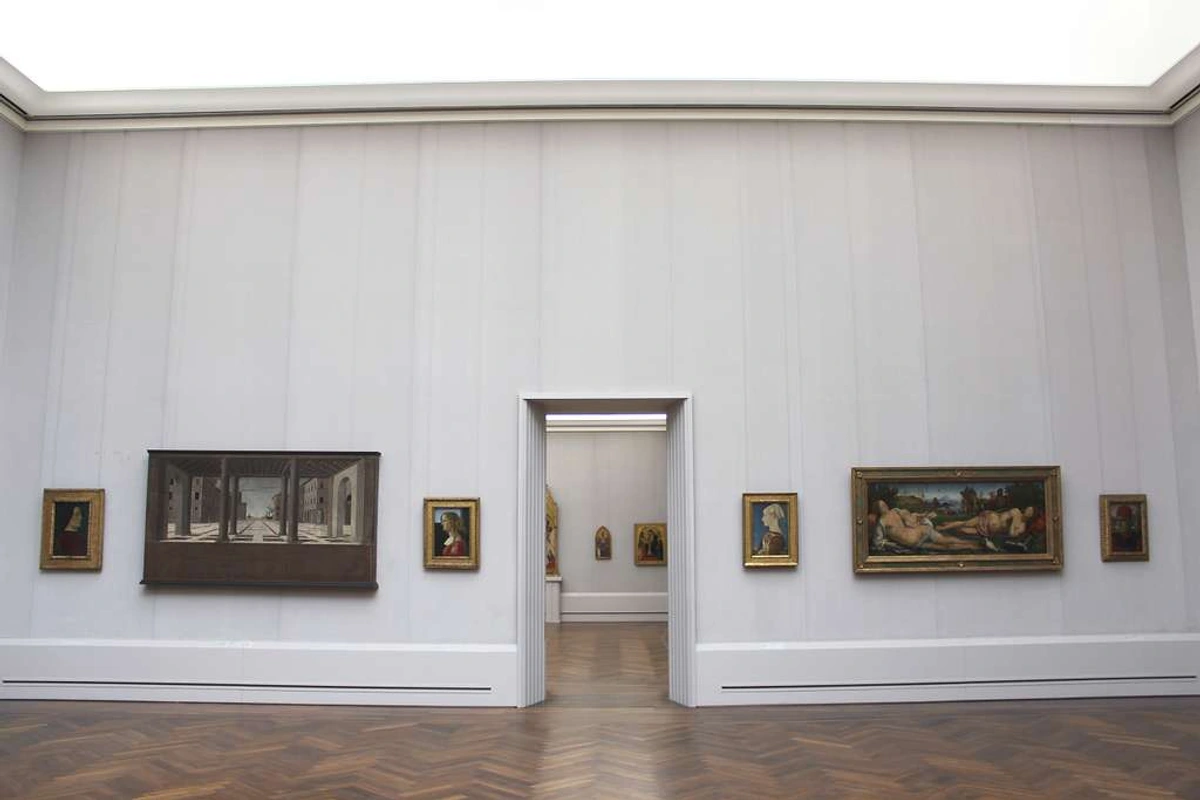
An American Place (1929-1946): The Final Vision
Stieglitz's final gallery represented the culmination of his life's work. Located at 509 Park Avenue (later moving to 461 Park Avenue), An American Place featured the mature work of artists he had championed for decades.
Evolution of the Concept:
Aspect | 291 Gallery (1905-1917) | Intimate Gallery (1925-1929) | An American Place (1929-1946) |
|---|---|---|---|
| Primary Focus | Introducing European modernism | Establishing American identity | Celebrating mature American modernism |
| Artists | Mix of Europeans and Americans | Primarily American proteges | Core group of mature American artists |
| Exhibition Style | Shocking, provocative | Educational, developmental | Reflective, celebratory |
| Stieglitz's Role | Revolutionary, provocateur | Mentor, guide | Elder statesman, chronicler |
| Public Reaction | Controversial, divided | Respectful, academic | Accepting, established |
The final years of An American Place coincided with the Great Depression and WWII – turbulent times that made Stieglitz's commitment to uncompromising art even more remarkable. While other galleries struggled or closed, An American Place continued its mission, proving that great art could thrive even in difficult times.
The Equivalents: Stieglitz's Late Photographic Vision
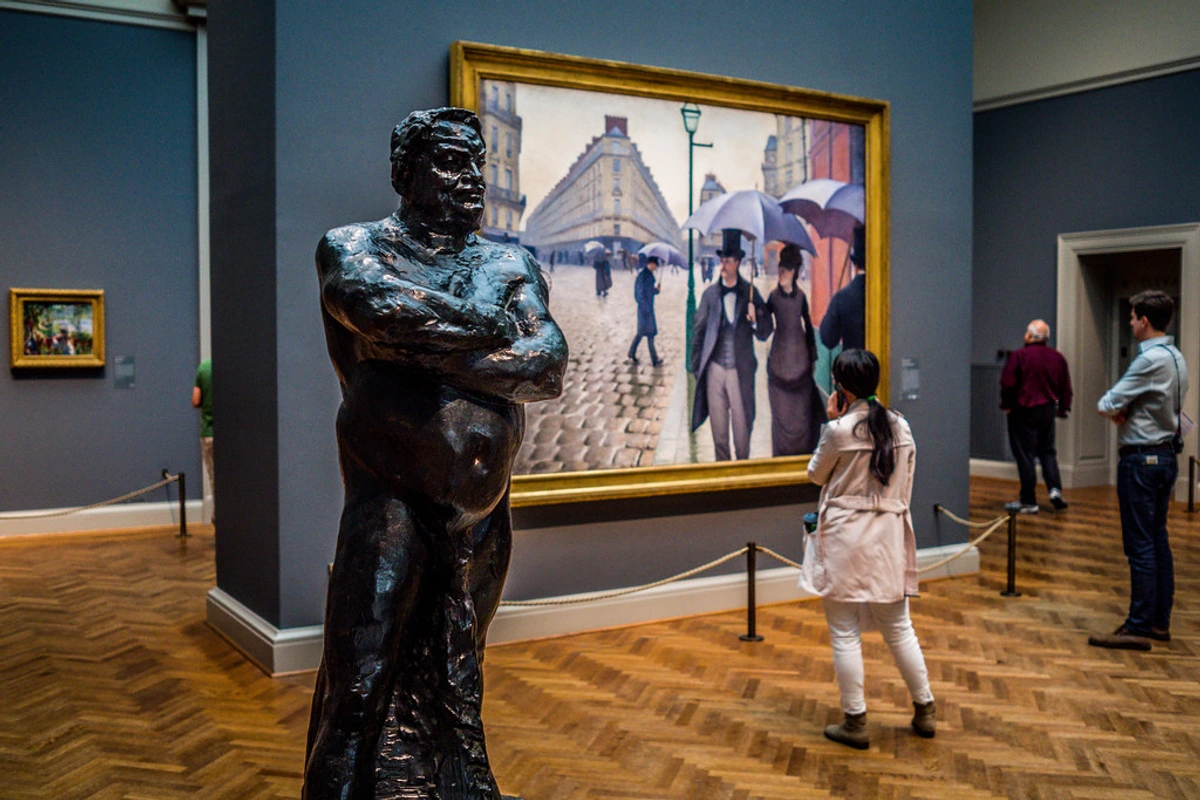
During his later years, Stieglitz developed his most personal and photographic work through the "Equivalents" series – over 300 photographs of clouds taken between 1922 and 1937. These weren't just landscape photographs; they were spiritual meditations.
Technical Innovation:
- Used 8×10 view cameras for maximum detail
- Made multiple exposures of the same cloud formations
- Printed with dramatic contrast to emphasize emotional impact
- Often cropped to focus on the most expressive elements
Philosophical Depth: The Equivalents represented Stieglitz's belief that photography could express spiritual and emotional truths. He saw clouds as metaphors for the human soul – constantly changing, beautiful in their impermanence, revealing deeper meanings through their form and movement.
"I wanted to express my profound reaction to nature," Stieglitz explained. "To equivalent my meaning." The series became one of the most influential bodies of photographic work of the 20th century, proving that photography could be as profound and personal as any fine art medium.
Echoes and Endurance: What Stieglitz Left Us
The legacy feels impossibly large. Those early gallery walls didn’t just show art – they created the infrastructure for American modernism. They taught us that challenging beauty matters more than pleasing it. They proved New York could rival Paris as an art destination. And they remind us that art isn’t spectatorship – it’s provocation.
His later spaces (the Intimate Gallery and An American Place) refined this mission. No more avant-grade shock tactics – instead, deep dives into Paul Strand, Arthur Dove, and his own evolving vision of “equivalents,” where clouds became metaphors for the soul. This wasn’t just historical; it’s alive in how we approach contemporary art today. Even without blockchain hype, the real value of art remains its courage to make us uncomfortable.


Frequently Asked Questions
What made 291 Gallery so revolutionary?
291 shattered artistic isolation. It was the first space to treat photography as fine art while introducing Americans to European modernism – all in a single cramped room. Its true revolution? Creating a community where artists like O’Keeffe, Hartley, and Strand felt they belonged.
Was Stieglitz only interested in photography?
Absolutely not! Though he championed photography through Photo-Secession and later work like his Equivalents, 291’s walls pulsed with European sculpture, African art, American abstractions, and experimental films. His real obsession? Medium-less artistry – the idea behind the form.
Which artists got their start because of Stieglitz?
Many giants. Georgia O’Keeffe’s first major solo show was at 291. Marsden Hartley found his voice there. Arthur Dove and Paul Strand had their careers launched. Even Ansel Adams visited early on. Stieglitz had this uncanny eye for genius before fame.
Where can I see the art from Stieglitz’s galleries today?
Major museums hold key pieces: the Met (O’Keeffe, Stieglitz photos), MoMA (Picasso, Matisse), and the National Gallery of Art (Dove, Hartley). For full immersion, visit the Alfred Stieglitz/291 Collection at the Library of Congress – it’s like walking through his archive.
Were Stieglitz’s galleries financially successful?
Rarely. They ran for barely three decades total, constantly hovering on the brink of closure. His legacy isn’t measured in dollars – it’s in the conversations, the friendships, and the artists he kept afloat. Sometimes the most important galleries are the ones that lose money.
When I trace the arc of American art, I always end up back at 291 and An American Place. Those weren’t just galleries – they were witnesses to art’s refusal to stay still. In a world obsessed with digital ownership and fleeting trends, Stieglitz’s greatest lesson is this: the work that endures is the work that dares us to look differently. That rebellious spirit? It’s what keeps art alive. Not on blockchains, but in the spaces where ideas collide with courage.