
The Broad Museum Los Angeles: Ultimate Guide to Free Contemporary Art & Insider Tips
Unlock The Broad LA's secrets: a comprehensive guide to free contemporary art, Yayoi Kusama's Infinity Rooms, architectural design, booking tickets, parking, and making the most of your visit to this iconic Los Angeles museum.

The Broad Museum Los Angeles: Your Ultimate First-Timer's Guide to Free Contemporary Art & Insider Tips
Stepping into a museum, especially one as celebrated as The Broad in a city as sprawling and dynamic as Los Angeles, always feels like an event. I remember first hearing about it, this incredible contemporary art museum, and honestly, the thought of navigating L.A. traffic just to spend time indoors was a bit of a hurdle. But then, that little whisper started: "It's free." And suddenly, the adventure felt entirely worth it.
"Free? In L.A.? What's the catch?" I thought, and I know you're probably thinking the same. And truthfully, there isn't one. The profound generosity of The Broad's founders, Eli and Edythe Broad, ensures that world-class contemporary art is genuinely accessible to everyone, for the grand price of zero dollars. This commitment to free access isn't just a marketing ploy; it's a core philosophy, aiming to foster a deeper, more widespread engagement with the art of our time, much like a growing movement among cultural institutions to lower barriers to entry. But there are definitely things I wish I'd known before my inaugural trip. So, if you're like me – someone who deeply appreciates art but perhaps gets a little overwhelmed by the sheer scale of the art world, or you simply want the insider's take for visiting a new, world-class institution – then stick around. This is my candid, perhaps slightly philosophical, but ultimately authoritative guide to navigating The Broad and truly making the most of your visit. It will equip you with everything you need to know.
credit, licence
The Vision Behind The Broad: A Gift of Art and Access for Los Angeles
Before we dive into the artworks, let's talk about the driving force behind The Broad: the ambitious vision of philanthropists Eli and Edythe Broad. Their philosophy was clear and impactful: to not just accumulate one of the world's most significant collections of post-war and contemporary art, but to make it accessible to the public for free, actively fostering a deeper engagement with the art of our time. The commitment of Eli and Edythe Broad to making art accessible for free is a cornerstone of The Broad's identity, a bold statement in a city where so much else comes with a price tag. It transforms the museum from an exclusive venue into a truly public commons.
"Post-war art," broadly speaking, refers to art created after World War II, roughly from the mid-1940s to the early 1970s. This era was a crucible of artistic innovation, marked by movements like Abstract Expressionism, where artists explored emotion and subconscious through large-scale, gestural painting, and the early stirrings of Minimalism, which sought purity and simplicity in form. "Contemporary art" then picks up from the 1970s onward, encompassing a vast array of styles, mediums, and conceptual approaches that reflect our current global society, from Pop Art's playful critique of consumerism to highly conceptual installations. The Broads built a collection that reflects this global narrative, focusing on depth within individual artists' oeuvres (that's just a fancy word for their complete body of work). This isn't just a museum; it's a testament to their belief that art can enrich lives and provoke thought, a concept I often reflect upon when considering the purpose of my own [/den-bosch-museum]. Their strategic acquisition often focused on collecting works across an artist's career, allowing visitors to trace their evolution.
The Broad's Architectural Marvel: A "Veil and Vault" Design by Diller Scofidio + Renfro
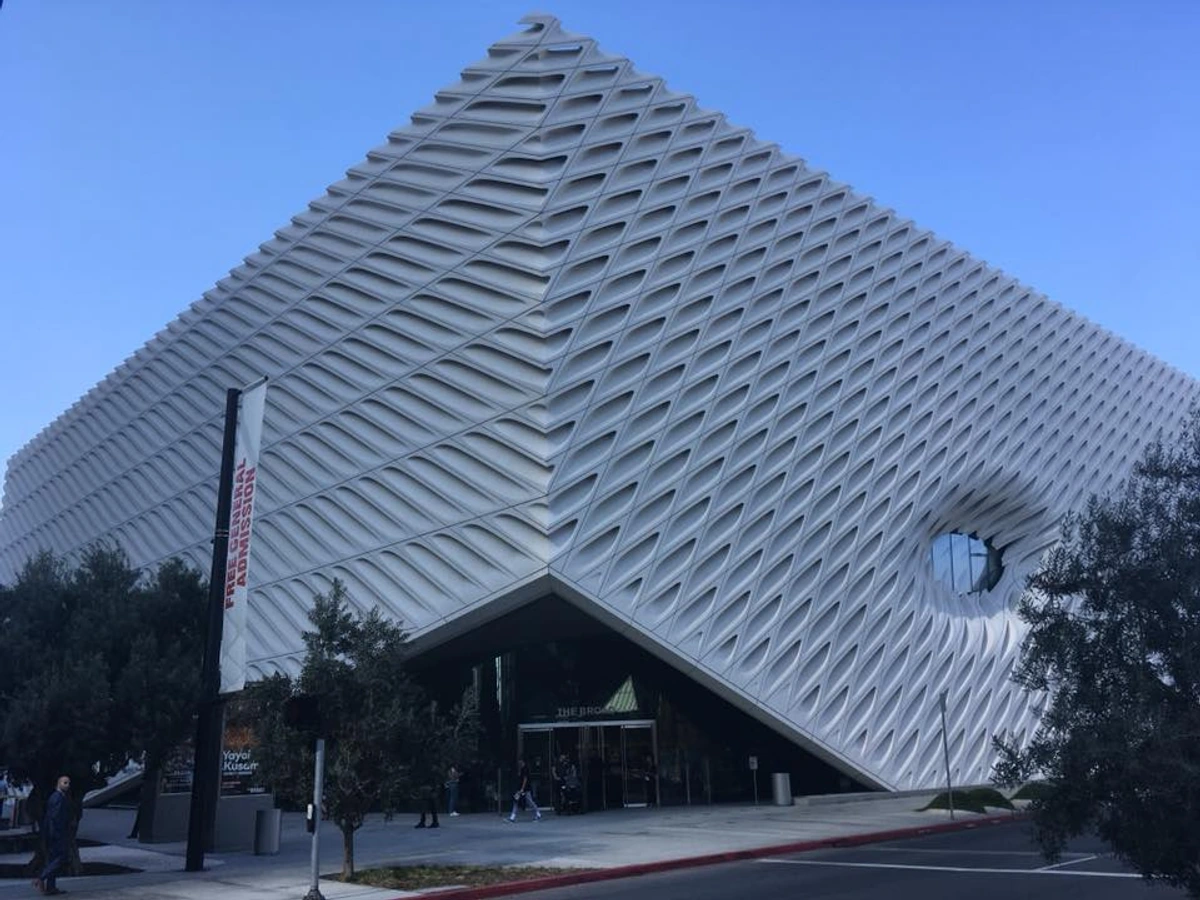
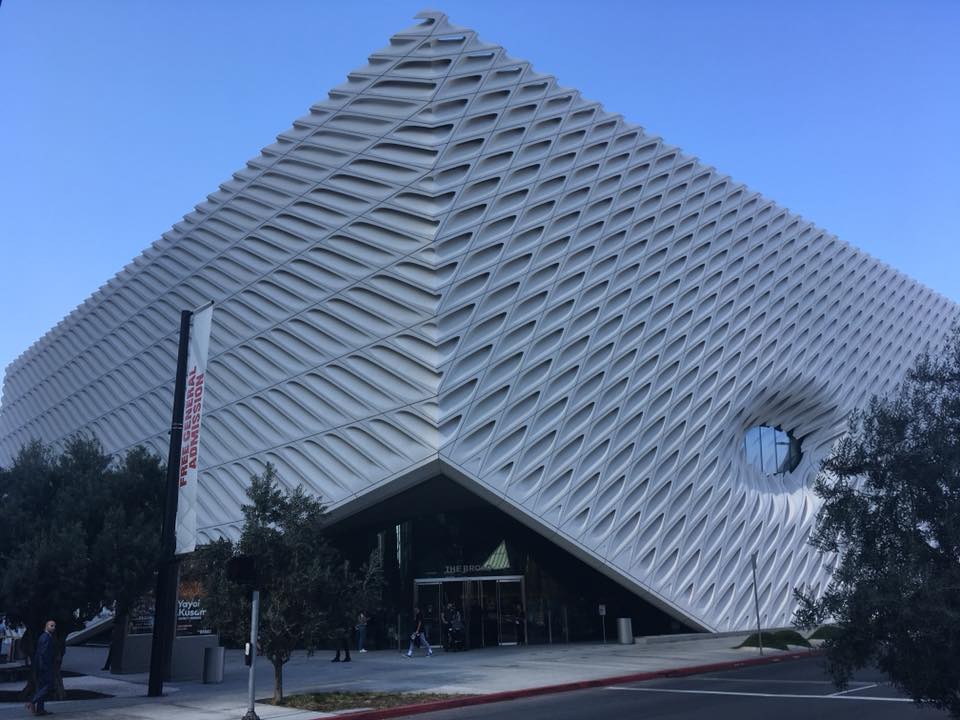
You simply cannot miss The Broad. It's this striking, almost otherworldly structure nestled downtown, immediately commanding attention. I still remember just standing outside for a good five minutes, utterly mesmerized, trying to figure out if it was a giant marshmallow or a super-fancy cheese grater (it's neither, thankfully, but that's half the fun of encountering truly innovative design!). This isn't just another building; it's a sculptural statement that embodies the museum's dual purpose of public display and meticulous preservation.
The building, designed by the avant-garde firm Diller Scofidio + Renfro (known for projects like New York's High Line), is enveloped in what they call a "veil" – a honeycomb-like exterior of 2,500 fiberglass-reinforced concrete panels that's both dramatically aesthetic and ingeniously functional. This distinctive exterior isn't just for show; it masterfully diffuses the harsh California sunlight, ensuring the galleries inside are bathed in soft, natural light – absolutely ideal for viewing delicate art. It's like the building itself is a giant, benevolent filter, protecting the art while enhancing your viewing experience.

Step inside, and the impression continues. The main gallery on the third floor is a vast, column-free expanse flooded with that same beautiful natural light filtering through the skylights peeking through the veil. Below this expansive public gallery space is the "vault" – the opaque, windowless core that houses the majority of the Broad collection not currently on view. Think of it as the art's ultra-secure, climate-controlled off-stage area. This clever "veil and vault" design ensures both optimal display conditions and secure storage, making the building itself a fascinating work of art and engineering, truly enhancing the visitor experience before you even see the first canvas. The vault isn't just storage; it's a testament to the depth of the collection, hinting at a vast, unseen world of art awaiting future exhibitions or scholarly research.
Navigating the Collection: Iconic Works & Contemporary Voices
Right, let's get to what you're really here for: the art. The Broad's collection spans diverse mediums, from painting and sculpture to photography, video, and large-scale installations, each offering a unique perspective on the human experience. As you wander, you'll feel the pulse of recent art history.
Collection Highlights: Giants of Post-War & Contemporary Art
The Broad boasts an incredible permanent collection that truly deserves your undivided attention. You'll encounter works by giants who have shaped the trajectory of contemporary art. While the exact pieces on display rotate, you can always expect to find significant works by these masters, each offering a window into the evolution of modern thought and artistic expression:
- Jeff Koons: The Playful Critic Known for his high-gloss, monumental sculptures that playfully critique consumerism and luxury. Look out for his iconic "Balloon Dog" (Blue) – a truly mesmerizing piece that transforms an everyday object into a luxury icon, challenging our perceptions of art and value. It’s hard to walk past without a smile.
- Jean-Michel Basquiat: The Urban Poet Raw, powerful, and thought-provoking pieces that leap off the canvas, reflecting urban experiences, racial identity, and social commentary with a unique blend of street art and Neo-Expressionism. His monumental painting "Untitled" (1981) is a prime example of his visceral energy that continues to resonate.
- Cindy Sherman: The Master of Disguise Her masterful photographic self-portraits explore the constructed nature of identity, societal roles, and the power of images, often through transformative disguises in her influential "Untitled Film Stills" series. She makes you question what you see and who you are, long after you've moved on.
- Roy Lichtenstein: The Comic Book Philosopher An icon of Pop Art, his works elevate comic book panels to a sophisticated art form, questioning perception and mass media with bold lines and Ben-Day dots. "I...I'm Sorry!" is a classic example that makes you pause and consider the melodrama of everyday life, rendered in a detached, graphic style.
- Andy Warhol: The Pop Art King The undisputed king of Pop Art is exceptionally well-represented, with his iconic explorations of celebrity, consumer culture, and mass production, much like his famous "200 Campbell's Soup Cans" which challenges our perceptions of high art and the mundane. Warhol's work feels as relevant today as it did decades ago, a true barometer of mass culture.
- Kara Walker: The Provocative Narrator Known for her provocative and visually striking black-and-white silhouettes, her work bravely explores race, gender, sexuality, and history, often forcing uncomfortable but necessary conversations about the past and present. Her narratives unfold with a quiet power that demands reflection.
- Jasper Johns: The Everyday Iconographer A foundational figure in Pop Art and Neo-Dada, his work often explores symbols, flags, and targets, blurring the lines between painting and sculpture and challenging traditional artistic representation. His "Flag" series is particularly influential, making you rethink what a simple image can signify, and how we assign meaning.
- Robert Rauschenberg: The "Combine" Innovator His groundbreaking "combines" redefine what a painting can be, incorporating everyday objects, photographs, and found materials, blurring the boundaries between art and life in works like "Bedecked." These were revolutionary, challenging the very definition of artistic mediums and influencing countless artists to come. It's like seeing a whole world assembled on a canvas, each element telling a part of a larger, unconventional story.
- Mark Bradford: The Urban Abstractor Large-scale abstract paintings created from salvaged paper and other found materials, his work powerfully reflects on urban landscapes, social issues, and personal narratives. His expansive piece "Helter Skelter I" is an immersive experience that really pulls you in, a testament to the beauty found in overlooked materials.
- Cy Twombly: The Lyrical Abstractionist His unique style blends drawing, painting, and writing, creating energetic, lyrical, and often enigmatic abstract compositions that evoke classical themes and graffiti. Look for his "Untitled" works that resemble calligraphic scribbles – they feel intensely personal and universal at once, a dialogue between ancient and modern.
- Ed Ruscha: The Quintessential Angeleno An artist synonymous with Los Angeles, known for his deadpan photographs, word paintings, and artist books that capture the city's essence and explore language as a visual motif. His "Standard Station" paintings are quintessential L.A., cool and iconic, just like the city itself.
- John Baldessari: The Conceptual Provocateur A conceptual art pioneer, he provocatively used photography, text, and painting to challenge traditional art-making processes, often with wit and irony. He makes you question the very definition of art, pushing boundaries with playful intellectualism.
Wandering through these galleries, I've often found myself stopping, truly seeing, and staring at pieces that weren't the "big names" – a vibrant painting here, an intriguing sculpture there. That, I believe, is where the real magic often happens: when something unexpected genuinely resonates with you. It’s a similar feeling I get when exploring new artists for my own collection, or when reflecting on the journey that led me to open my own museum, the [/den-bosch-museum]. The collection encompasses an astonishing array of contemporary expression, each offering a unique perspective on the human experience, and sometimes, the quietest pieces speak the loudest.
Among the impressive roster, keep an eye out for works by Agnes Martin, whose minimalist grid paintings offer a serene, contemplative contrast, or the bold, graphic statements of Barbara Kruger, which critique consumerism and power with stark visual language. They represent other crucial threads in the tapestry of contemporary art.
The Lure of the Infinity Mirror Rooms: Yayoi Kusama's Immersive Experience
Everyone, and I mean everyone, talks about Yayoi Kusama's Infinity Mirror Rooms, and for very good reason. They are dazzling, disorienting, and undeniably Instagrammable. The sense of endless space and twinkling lights creates an almost spiritual, profoundly disorienting experience. It’s a true testament to the power of installation art to transport you, even if just for a fleeting moment.
How to Access the Infinity Mirror Rooms
Here's the crucial insider info, and trust me, you need to know this for your The Broad Museum visit: these are separate, timed tickets, and you usually have to reserve them after you get into the museum, often immediately upon arrival at a dedicated kiosk or via their mobile app. My first time, I completely missed out because I didn't know this! Don't be like me. If visiting an Infinity Room is a priority, head straight for that kiosk or check the app the moment you enter. Be prepared to queue, even with a ticket, as their popularity means high demand.

Be warned, though, your visit inside is typically limited to about 60 seconds. It feels like both an eternity and a blink. The rooms are often themed (e.g., "Longing for Eternity" or "Souls of Millions of Light Years Away"), each offering a subtly different cosmic journey. While short, the experience is intense and unforgettable. For many, it's a non-negotiable highlight of their visit to The Broad.
Embracing the "Is This Art?" Moment: Your Personal Guide to Interpretation
One of the most profound joys of contemporary art is precisely that moment of questioning, of wondering, "Is this art?" Seriously, part of the profound joy of contemporary art is learning to let go of preconceived notions. Some pieces will inevitably puzzle you, some will deeply move you, and some might even spark a feeling of bewilderment or frustration. Guess what? All of those reactions are entirely valid. This isn't a test; it's a dialogue, an ongoing conversation between the artist and you, the viewer. There's no single "right" way to interpret most contemporary works. Instead, I encourage you to consider, much like I do in my own creative process:
- The materials: Why did the artist choose that specific medium? Does its texture, weight, or inherent meaning add to the overall message? For instance, with Koons' highly polished surfaces, is the material choice about perfection, commercialism, or something else entirely? Or with Mark Bradford's salvaged paper, is it about urban decay, transformation, or found narratives? The material often tells its own story.
- The title: Does it offer a direct clue, a poetic suggestion, or perhaps even a mischievous red herring? Sometimes an abstract title can open up a world of thought, while other times a very literal one is a deliberate statement. Don't underestimate the power of a few words.
- Your immediate, gut reaction: What raw emotions or spontaneous thoughts does it spark in you before your critical mind kicks in? Don't censor yourself! That initial spark is often the most honest response, a direct line from the art to your subconscious.
- Context (if known): What was happening in the world, culturally or politically, when this piece was created? Understanding, for example, the post-war anxieties or the rise of consumer culture can shed light on works from the 1950s and 60s. (Though sometimes, it's just about the pure, unadulterated visual experience, and that's okay too!)
This approach reminds me a lot of the unexpected connections I try to make in my own abstract pieces, hoping they spark something uniquely personal in each viewer. The Broad's collection, in particular, offers fantastic examples of how design in art evolves, pushing boundaries and redefining aesthetics. If you're looking for art that evokes strong feelings and encourages this kind of introspection, you might even find something interesting to buy for your own home, drawing inspiration from the innovative spirit of these works. Ultimately, understanding a piece, whether it's abstract or representational, can reveal so much about the continuous journey of [/finder/page/the-definitive-guide-to-the-history-of-abstract-art-key-movements-artists-and-evolution].
Dynamic Dimensions: Temporary Exhibitions & Programming
Beyond its celebrated and expansive permanent collection, The Broad consistently hosts dynamic temporary exhibitions that delve into specific artists, compelling themes, or particular periods within contemporary art. These rotating shows offer fresh perspectives and provide a compelling reason for repeat visits. They might feature a retrospective of a single influential artist (like a focused look at Basquiat's early work), a thematic exploration of a specific movement (perhaps "Minimalism in the 21st Century"), or a curated selection of works from the Broad collection that aren't typically on view, offering new dialogues. I remember seeing a fascinating exhibition on Shirin Neshat's powerful photographic work there once; it was a completely different experience from the permanent collection, adding another layer to the museum's offerings. These exhibitions are a key part of how museums keep the conversation around art alive and evolving, much like how an artist continually refines their [/timeline] of creative exploration.
While general admission to the permanent collection is always free, do note that temporary exhibitions sometimes require a separate, ticketed reservation (which may or may not be free). Always check their official website in advance for current exhibitions and ticketing information. They're often fantastic, offering a chance to see works in a new light or discover artists you might not yet know. For those looking to support the museum's ongoing efforts to bring world-class art to the public, The Broad also offers membership programs, which often include priority access to special exhibitions and other exclusive benefits.
Planning Your Visit: Essential Tips for The Broad Museum Los Angeles
So, you're armed with your ticket (hopefully!), and you're ready to experience The Broad. Here are a few things I've picked up along the way – some hard-won lessons, some practicalities – to ensure your visit is as smooth and memorable as possible.
Securing Your Free Timed Ticket: The (Slightly Complicated) Art of Entry
Okay, so general admission to The Broad Museum is free, which is absolutely brilliant. But "free" doesn't mean "walk right in." This is L.A., after all, and popular things come with a side of strategy. My unwavering advice? Book your tickets online well in advance. I'm talking weeks, sometimes even a month or more, especially if you're planning a visit during a peak season or a weekend. They typically release tickets on the first of each month for the following month, and believe me, they vanish faster than a free taco at a food festival. I learned this the hard way, showing up on a whim one Sunday and being met with a queue that snaked around the block, a sight that still haunts my museum dreams. There are standby lines for walk-ins, but honestly, you're gambling. If you're truly determined to try the standby route, get there before opening, bring a hat and water, and be prepared to wait for several hours with no guarantee of entry. Personally, I much prefer a guaranteed entry, especially when I'm on a tight schedule. There's nothing worse than museum FOMO because you didn't click "reserve" fast enough.
For visitors with disabilities, The Broad offers accessible entry and facilities, including wheelchair-friendly ramps, elevators, and restrooms. Specific accessibility details are always available on their official website, and their staff are generally very accommodating. It's always a good idea to check their site or call ahead if you have specific needs.
Practicalities for a Seamless Visit: What to Wear & Bring
Before you head out, consider these quick tips for comfort and convenience:
- Comfortable Shoes: You'll be doing a lot of standing and walking. Trust me, those chic but uncomfortable shoes will betray you quickly.
- Layer Up: L.A. weather can be deceptive. While it might be warm outside, museum interiors are often kept cool to preserve the art. A light jacket or sweater is always a good idea.
- Small Bag Only: Like many museums, The Broad encourages small bags. Large backpacks or cumbersome items might need to be checked in, adding a small delay to your entry.
- Water Bottle: Staying hydrated is key, especially if you end up waiting in a standby line or exploring downtown afterward.
- Phone/Camera (No Flash!): Capture those memories, but always be mindful of signage regarding photography and never use a flash. It can damage delicate artworks and is distracting to other visitors.
Navigating Los Angeles & The Broad: Transport & Timing
Knowing when and how to get there can make a huge difference to your experience at The Broad in LA. L.A. traffic is legendary, and not in a good way, so plan accordingly. It's an intricate dance of freeways and surface streets, but with a little foresight, you can glide right to your destination.
Aspect  | Best Practice | What to Expect |
|---|---|---|
| Best Time to Visit | Weekday mornings (opening) or late afternoons (last entry) | Fewer crowds, more serene viewing. Weekends are always busy and can feel overwhelming. |
| Worst Time to Visit | Weekend afternoons (1 PM - 4 PM) | Peak crowds, longer waits for everything, difficulty fully engaging with art, and generally a less relaxed experience. |
| Parking | Utilize The Broad's underground garage (enter on 2nd St.) or explore nearby public parking options. | Convenient, but not cheap (approx. $17 for 3 hours, prices can vary). Street parking is a rare gem, often metered and hard to find, and definitely not worth the L.A. parking ticket roulette. |
| Public Transport | Metro Red or Purple Line to Civic Center/Grand Park Station | A viable option to avoid traffic and parking hassles, but still involves a bit of an uphill walk. Consider the total cost (fare + walk time) vs. parking convenience. You might connect from a bus line as well, and there are often ride-sharing options in the area. |
While a first-timer's guide to New York City might emphasize walking as the primary mode of transport, L.A. often requires more planning for getting around. The Broad's location in downtown L.A. is, however, fantastic for exploring the burgeoning local art scene. It's right next to the iconic Walt Disney Concert Hall (another architectural marvel) and Grand Park. This cluster of cultural institutions, including The Music Center, means you can easily make a day of it! Grab some lunch at Grand Central Market if you have time, or explore some of the other cultural offerings that make L.A. one of the world's most vibrant [/finder/page/art-capitals-of-the-world]. Don't forget to check out the public art installations often found around Grand Park or even the exterior of the Walt Disney Concert Hall, extending your art experience beyond The Broad's walls. The Broad truly anchors a dynamic and growing cultural district in the heart of the city.
FAQs: Things I Wish I Knew Before I Went to The Broad Museum
To address some of the most common questions and provide quick answers, here's a rundown of essential information:
Question | My Honest Answer |
|---|---|
| Is The Broad really free? | Yes, general admission is free. However, you must reserve timed tickets online, well in advance (released first of the month for the following month). Standby entry is possible but not guaranteed and often involves a long wait. |
| How long does it take to visit? | I'd say plan for 2-3 hours for the main collection. More if you're really delving in, including a temporary exhibition, spending time in the museum shop, or waiting for the Infinity Rooms. |
| Is it kid-friendly? | Absolutely! Kids often have the most uninhibited reactions to contemporary art. Just keep an eye on them around delicate pieces and respect museum etiquette. The vibrant and often playful nature of much of the art appeals to younger visitors. |
| What about the Infinity Rooms? | They're hugely popular! Reserve a separate timed ticket upon arrival at the museum (often at a dedicated kiosk near the entrance or via their app). Expect a short, roughly 60-second visit inside the room, and be prepared for potential waits even with a ticket. This is the top The Broad tip you need. |
| Can I take photos? | Generally yes, without flash, and for personal use. But always check specific signage, especially in temporary exhibitions, as rules can vary. No tripods or selfie sticks are typically allowed. |
| What are the best times to visit to avoid crowds? | Early mornings on weekdays, right at opening, or the last entry slot of the day, are usually your best bet for a more serene experience. Weekends are always bustling. |
| Is there a café or restaurant? | Yes, Otium is a full-service restaurant next door (reservations recommended), and there's usually a coffee cart or simpler options available. Grand Central Market is also a short walk away for diverse food options. |
| What kind of art is at The Broad? | The Broad focuses on post-war and contemporary art, featuring artists from the 1950s to the present day. Think Pop Art, Minimalism, Conceptual Art, Neo-Expressionism, and more. |
| Is there a coat check or lockers? | Yes, a complimentary coat check is available for larger bags, backpacks, and umbrellas. Check their website for current policies on what can and cannot be checked. |
| Is The Broad accessible for disabled visitors? | Yes, the museum is designed with accessibility in mind, offering wheelchair access, elevators, and accessible restrooms. Check their website or contact them directly for specific needs or detailed information. |
| Does The Broad offer membership? | Yes, membership programs are available and often include benefits like priority access to special exhibitions, discounts, and invitations to members-only events. It's a great way to support the museum! |
Final Thoughts: More Than Just a Museum, It's an Experience to Own
The Broad isn't just another art museum; it's a dynamic, often provocative space that truly demands your attention. It's a testament to the power of a single collection to shape a cultural landscape and make world-class contemporary art accessible to everyone. Eli and Edythe Broad's vision didn't just create a building; they created a living, breathing institution that continues to inspire and challenge. Whether you leave feeling enlightened, confused, utterly moved, or somewhere wonderfully in between, you'll definitely leave with something profound to think about.


For me, it solidified my belief that art, in all its diverse forms, is a crucial part of understanding our world and ourselves. And sometimes, after seeing so much incredible art, I can't help but feel inspired to add more to my own [/timeline] of artistic exploration. So, go see it. Experience it. Form your own opinions. It's a journey worth taking, and one that might just inspire you to see art differently, whether it's understanding the elements of design around you or appreciating the rich history of [/finder/page/the-definitive-guide-to-the-history-of-abstract-art-key-movements-artists-and-evolution]. I promise you, a visit to The Broad is more than just looking at art; it's an experience you'll truly own.