The Unseen Muse: How Music Fuels My Abstract Art and Creative Flow
Dive into an artist's world where music is the unseen muse, profoundly shaping abstract art. Discover how diverse genres inspire dynamic brushstrokes, vibrant colors, and unlock elusive creative flow states, from classical harmonies to jazz rhythms, in this deeply personal exploration.

The Unseen Muse: How Music Fuels My Abstract Art and Creative Flow
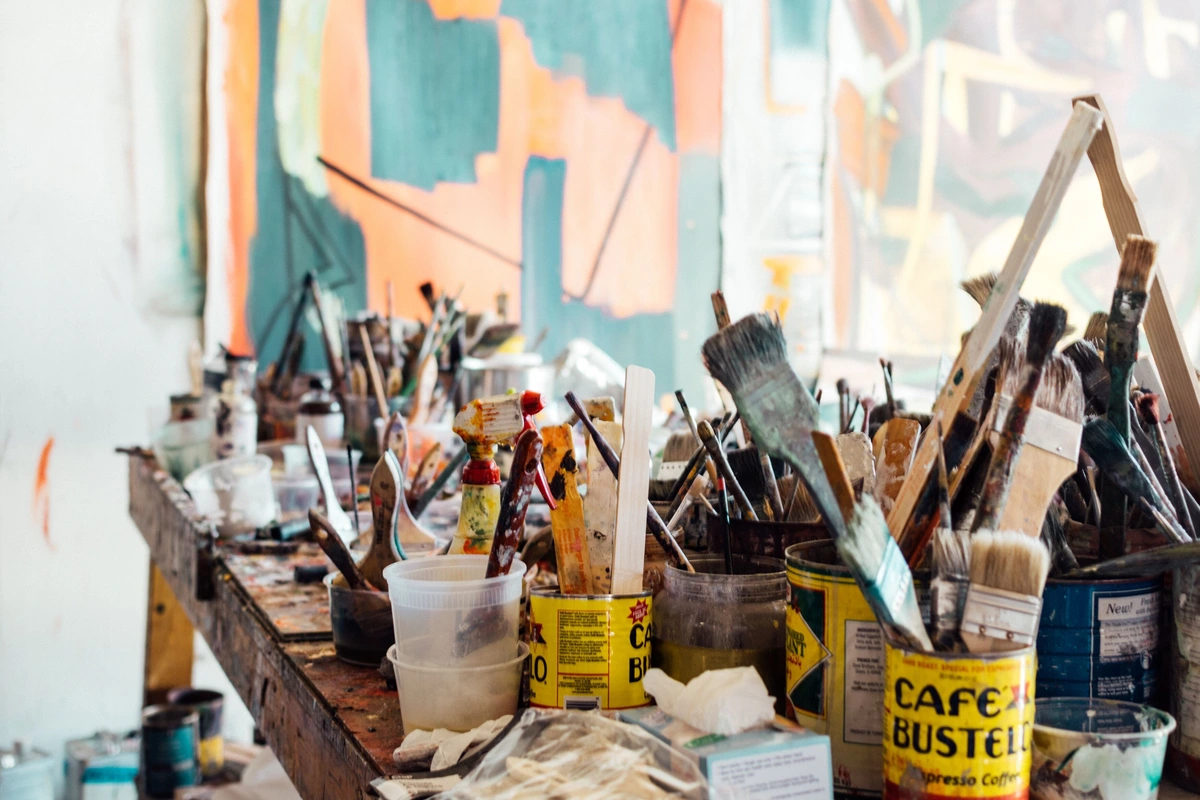
Ever had a song just get you? It hits a chord, stirs a memory, or makes you want to dance like nobody’s watching (even if your suspiciously stoic cat is judging your questionable moves, and your even more questionable singing). For me, music isn't just a soundtrack to life; it's the very pulse of my creative world. It's not just a backdrop; it's the dynamic conductor of my creative process, an unseen muse that dictates the rhythm of my brush and the harmony of my colors. My studio, usually a glorious mess of paints, canvases, and half-formed ideas, often hums with melodies and rhythms as integral to my process as the paint itself. This deeply personal connection to sound isn't just background noise; it's the beginning of every canvas, a vital part of my artistic vision. This article delves into how music, in all its varied forms, profoundly shapes my abstract paintings and unlocks my creative flow.
Why Music? My Personal Soundtrack
It might sound dramatic, but honestly, without music, my studio would feel... naked. Like a canvas stripped of its color. When I walk in, even before I pick up a brush, the first thing I do is set the sonic stage. This isn't just habit; it's a vital, almost ritualistic step. Sometimes it's the pulsating, insistent energy of electronic music that demands big, bold, sweeping strokes, as if the driving bass lines and repetitive synth patterns are pushing my arm across the canvas. Other times, it's the intricate layers and contemplative depth of classical compositions that encourage a more nuanced, detailed approach, each brushstroke a delicate note. And yes, there are days when it's just pure, unadulterated pop that makes me want to splash paint with reckless abandon, humming along badly (and probably off-key).
My studio playlist isn't static; it's a living, breathing entity that evolves with my mood, the weather, and often, the very painting I'm working on. It shifts from the raw, improvisational intensity of jazz to the soothing, expansive flow of ambient sounds. I've found that these different sonic vibrations don't just affect my mood, but literally resonate with distinct creative energies. For example, a heavy, distorted guitar riff might evoke jagged, aggressive lines, while a shimmering orchestral swell might suggest soft, blending washes of color. Imagine trying to paint something furious and chaotic to a lullaby – it just doesn't work! The energy simply doesn't align.
The process of selecting the right music for a piece is itself an act of creative exploration. It’s a dynamic interplay, much like mixing colors or choosing the perfect brush. Sometimes I dive into curated playlists, other times I let algorithms lead me down unexpected sonic rabbit holes, stumbling upon a new artist or genre that suddenly clicks with a nascent idea on my canvas. It’s a hunt for that perfect resonance, that intangible spark that tells me, "Yes, this is the sound of this painting." And sometimes, the hunt takes me down the wrong path entirely. I once tried to force a delicate, ethereal piece while listening to a harsh, industrial track. It was like trying to sculpt mist with a sledgehammer; the energy clashed so violently that my hand literally froze on the canvas. It's a reminder that sometimes, the wrong sound can be worse than no sound at all. Of course, sometimes that rabbit hole leads to a song so distracting I have to hit pause, like that time I accidentally put on an entire album of polka music and my abstract expressionist piece started taking on a suspiciously circular, almost accordion-like, quality. Live and learn, right?
https://freerangestock.com/photos/177284/artists-workspace-filled-with-paint-brushes-and-supplies.html, https://creativecommons.org/public-domain/cc0/
The Rhythm of Creation
You might wonder, how does something as ephemeral as sound translate into something tangible and visual? For me, especially with abstract art, it's not a literal translation, but rather about capturing and expressing that feeling the music evokes. The way a drum beat builds intensity, or a saxophone wails with raw emotion – these aren't just sounds; they're kinetic energy, a palpable hum that vibrates through my fingertips, raw expression that permeates my studio and my very being. I often think about how a sweeping, continuous brushstroke can mimic a drawn-out crescendo, or how a series of quick, choppy, fragmented marks can reflect a staccato rhythm.
It's almost like conducting an orchestra on canvas, each stroke a note, each color a harmony. The rhythm of my studio quite literally becomes the rhythm of my hand. If the music pulsing through the speakers is playful and whimsical, my lines might dance and skip across the canvas. If it's melancholic and deep, my colors might deepen and blend more softly, reflecting that internal quietude. It's not about literally painting to the music, but rather painting from the feeling the music evokes. The sound becomes an internal vibration that guides the external action, a process integral to intuitive painting.
Sometimes, I even feel a sensation akin to synesthesia, where sounds feel like they have a color, texture, or even a tangible weight. A vibrant brass section might evoke a burst of fiery orange or a rough, scratchy texture that practically vibrates in my hands. A deep, resonant cello note might feel like a heavy, velvety blue. While I wouldn't claim full clinical synesthesia, it's this subtle cross-sensory experience that often sparks unexpected visual ideas and deepens the connection between my auditory and visual worlds. This concept isn't new; trailblazers like Wassily Kandinsky, often cited as the father of abstract art, famously explored the direct correlation between music and color, even theorizing about the specific visual equivalences of different instruments and tones. Beyond Kandinsky, many Abstract Expressionists found profound connections between their spontaneous, emotive brushwork and the improvisational freedom of jazz. Think of Jackson Pollock's rhythmic drips or Willem de Kooning's raw, energetic strokes – often likened to visual jazz solos. Movements like Orphism and Futurism also sought to capture the dynamism and rhythm of modern life, often drawing direct inspiration from music and soundscapes. It's a profound connection between the auditory and the visual, a true artist's muse.
credit, licence, https://creativecommons.org/publicdomain/cc0/
Beyond the Studio: Music as Inspiration for Art Itself
While music often guides the process of creation, influencing the very strokes and textures on my canvas, there are times when it steps out of the background and becomes the star – the very subject of the art itself. Think about it: a jazz improvisation, with its wild, unpredictable solos and underlying structural harmony, is inherently visual in its controlled chaos. Or the sweeping grandeur of a symphony, building to a thrilling crescendo. It’s no surprise, then, that I’ve dedicated entire pieces and even collections to the music that moves me.
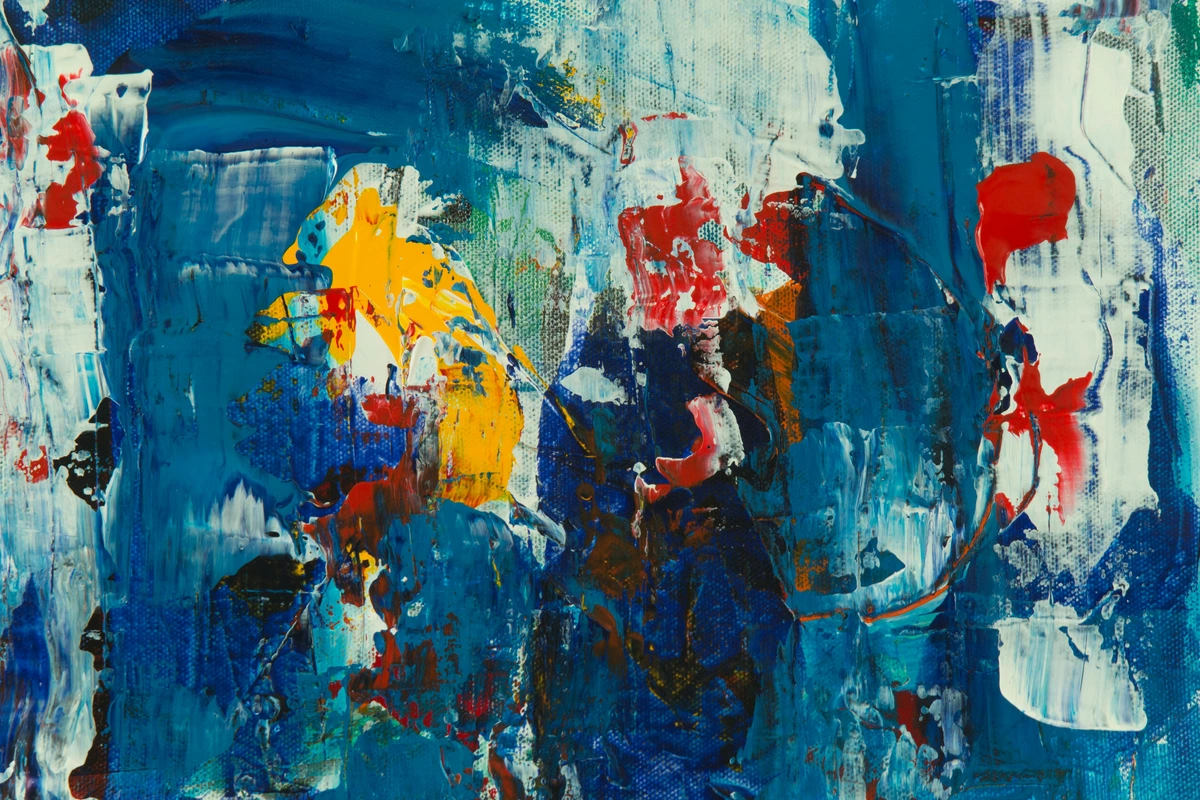
Take for instance, my series titled "Chromatic Harmonies," where each painting is an abstract representation of a specific classical symphony. For example, "Resonance of the Fifth" was directly inspired by Beethoven's 5th Symphony – not a literal depiction of a score or instruments, but an attempt to capture the dark, triumphant energy and dramatic shifts in color and texture that I felt while listening. In that piece, the opening ominous 'fate knocking at the door' motif might be translated into jagged, stark black lines against deep, brooding blues, abruptly giving way to explosive, almost chaotic reds and golds during the triumphant, powerful climax, with layers of energetic brushstrokes mimicking the orchestra's building intensity. Similarly, "Digital Crescendo," another piece, stemmed from the pulsing, evolving soundscapes of a minimalist electronic track, resulting in layers of luminous, overlapping geometric shapes that seem to expand and contract with an unseen beat. Similarly, my series of art for music lovers and specific works inspired by art about jazz aren't just literal interpretations. When I paint about jazz, I'm thinking of the spontaneous, syncopated rhythms, the interplay of instruments like a visual call-and-response, the vibrant bursts of unexpected harmony – all translated into dynamic lines, fragmented shapes, and a palette that sings with improvisation. They're my attempt to distill the essence of a genre, a performance, or even a single, powerful note. It’s about translating the ephemeral beauty of sound into something tangible, something that lives on a wall, silently echoing its vibrant origins. It’s like trying to paint the sound of a trumpet – not the trumpet itself, but its brassy, soaring, almost tangible voice, perhaps using the emotional language of color to convey its feeling.
https://www.flickr.com/photos/42803050@N00/31171785864, https://creativecommons.org/licenses/by-nd/2.0/
Finding My Flow State
This is where the magic truly happens, a culmination of that intuitive, subconscious dialogue I mentioned earlier. You know that feeling when you're so utterly immersed in something that time melts away, the outside world ceases to exist, and you're simply doing? That's the flow state, a concept deeply connected to my creative flow, and for me, music is often the key that unlocks that door. It doesn't just drown out the incessant chatter of the outside world; it silences the internal critic (the one that always asks, "Is this good enough?" or "What are you even doing?") and lets me simply be in the moment with my canvas.
When the right track hits, the studio air itself seems to thicken with possibility. It’s like slipping into another dimension where my hands move without conscious thought, colors seem to mix themselves with an almost magical autonomy, and ideas burst forth from some deep, primal well. It's less "painting" and more "channeling" – a direct conduit for creative energy. It's incredibly freeing and, I have to admit, a little addictive. Yet, even in this blissful immersion, there comes a moment when the silence beckons, offering a different kind of insight.
When I finally emerge hours later, often covered in paint and with the music still echoing in my ears, it feels like I've just returned from a very satisfying journey. My body might be tired, but my mind is exhilarated, filled with the resonance of the art created. It’s moments like these that make the artist's journey worth every single smudge, late night, and questionable paint stain on my favorite shirt.
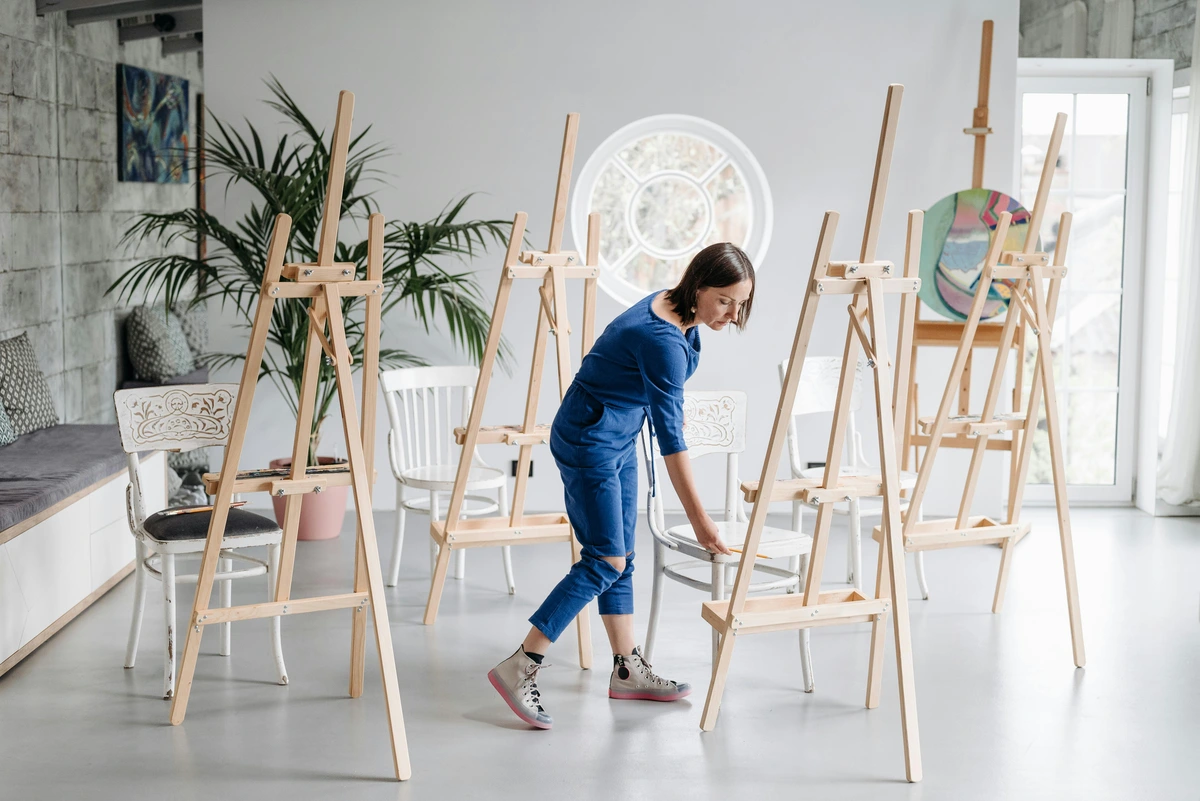

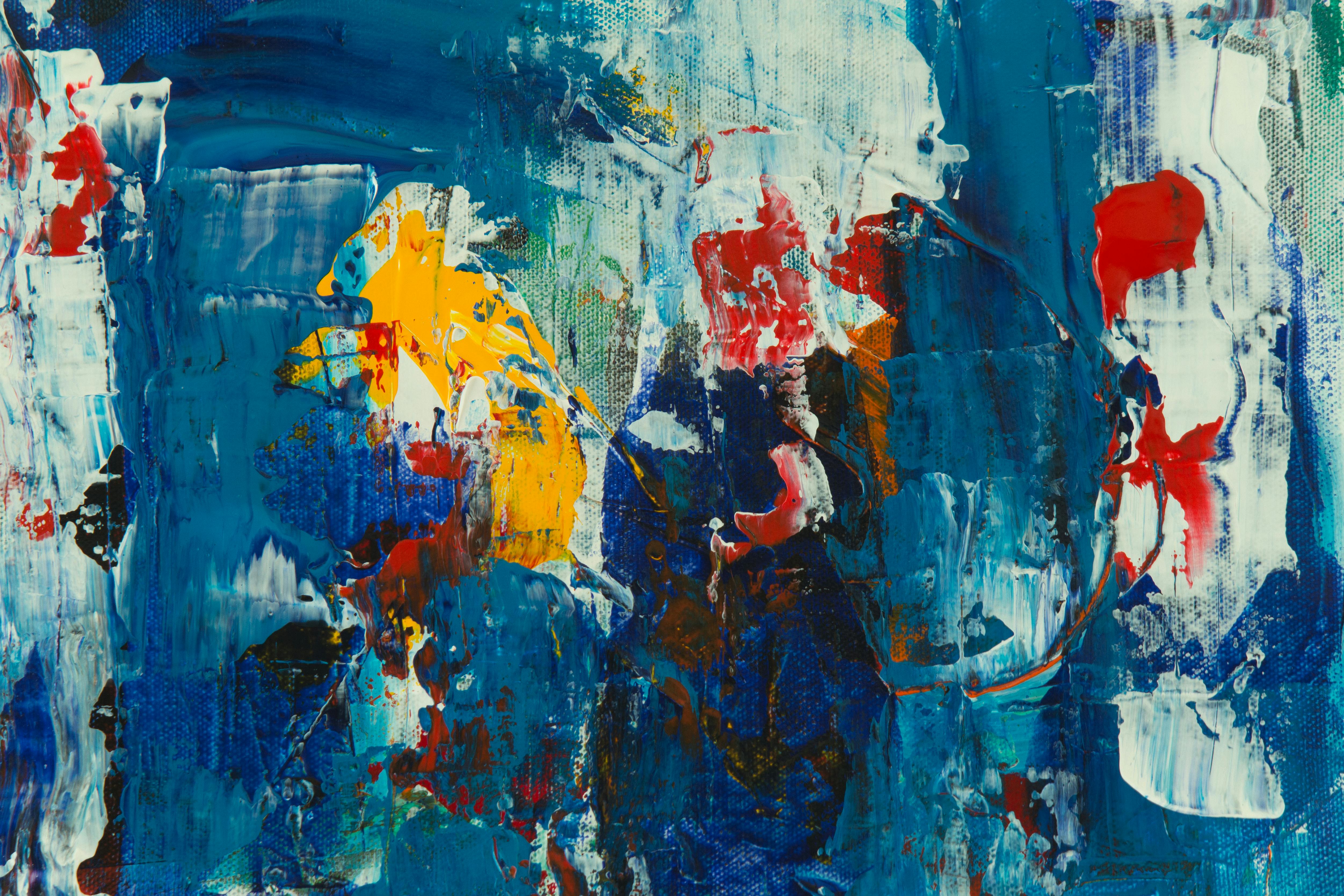
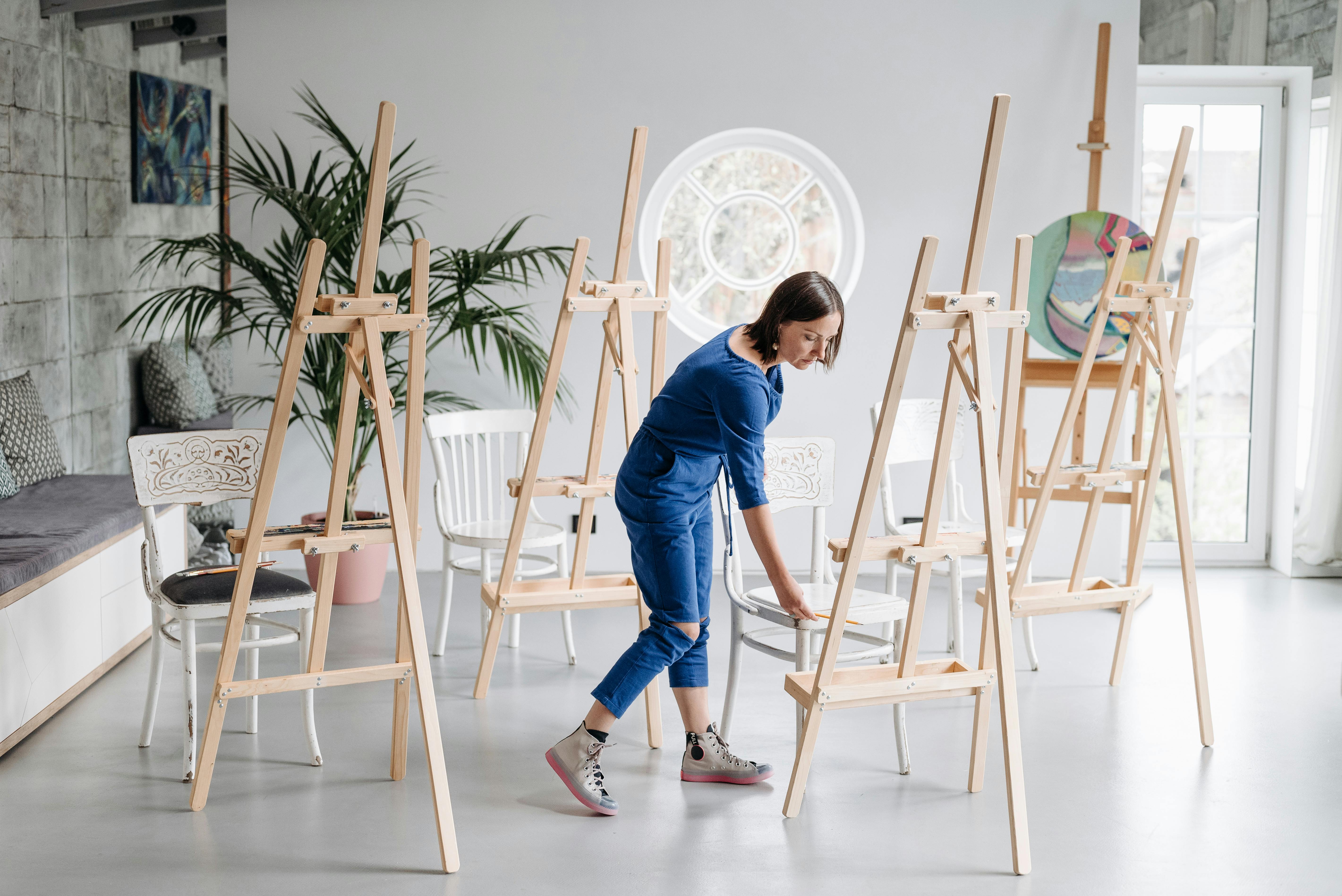
https://www.flickr.com/photos/fabola/41351098495/, https://creativecommons.org/licenses/by-sa/2.0/
The Silent Moments (and why they're important too)
Of course, no symphony is just a continuous blast of sound; there are always pauses, breaths, and moments of quiet anticipation. And so it is with my creative process. While music is my constant companion, there's an equally vital role for the absence of sound.
Now, before you imagine me as a perpetually head-bopping artist, let's be real: sometimes, absolute silence is golden. There are moments when a piece demands quiet contemplation, a critical eye, or just a chance for me to step back and let the work speak for itself without any external input. These are the times for reflection, for evaluating the composition, for deciding if a particular hue is truly singing. Sometimes, silence is not merely an absence, but a deliberate creative tool, allowing a different kind of internal rhythm to emerge, or for the echoes of previous sounds to resonate more clearly in my mind, guiding a subtler form of expression.
I remember one large-scale piece, a triptych, where the left panel felt almost complete, but the right just wasn't clicking. I'd tried every playlist, every genre, but nothing seemed to push it forward. Finally, out of sheer frustration, I turned everything off. In the profound quiet, stepping back, the missing element became clear – it wasn't more color or a different stroke, but the negative space itself that needed to breathe, to resonate with the other panels. That clarity only emerged from the stillness. Even in these silent moments, the echoes of the music that inspired the piece often linger, a subtle vibration within the stillness, like the gentle decay of a cymbal, leaving clarity in its wake. It's a different kind of creative flow, one that requires mindful moments and quiet introspection.
Frequently Asked Questions (FAQ)
You’ve probably got questions buzzing in your head by now! Here are a few common ones I get about my musical habits in the studio – consider them my greatest hits:
Q: Do you always listen to music when you create?
A: Almost always! About 90% of the time. That other 10% is usually reserved for critical review, stepping back to analyze a piece without external influence, or sometimes when I'm just sketching initial ideas and need a completely blank slate in my head. Silence has its own kind of melody, after all.
Q: What genres inspire you most for abstract art?
A: Oh, it’s really varied! Each genre brings a unique palette of energies and rhythms to the canvas. Here's a quick breakdown of what I listen to and why:
Genre Category  | Specific Genres | Visual Translation / Artistic Effect |
|---|