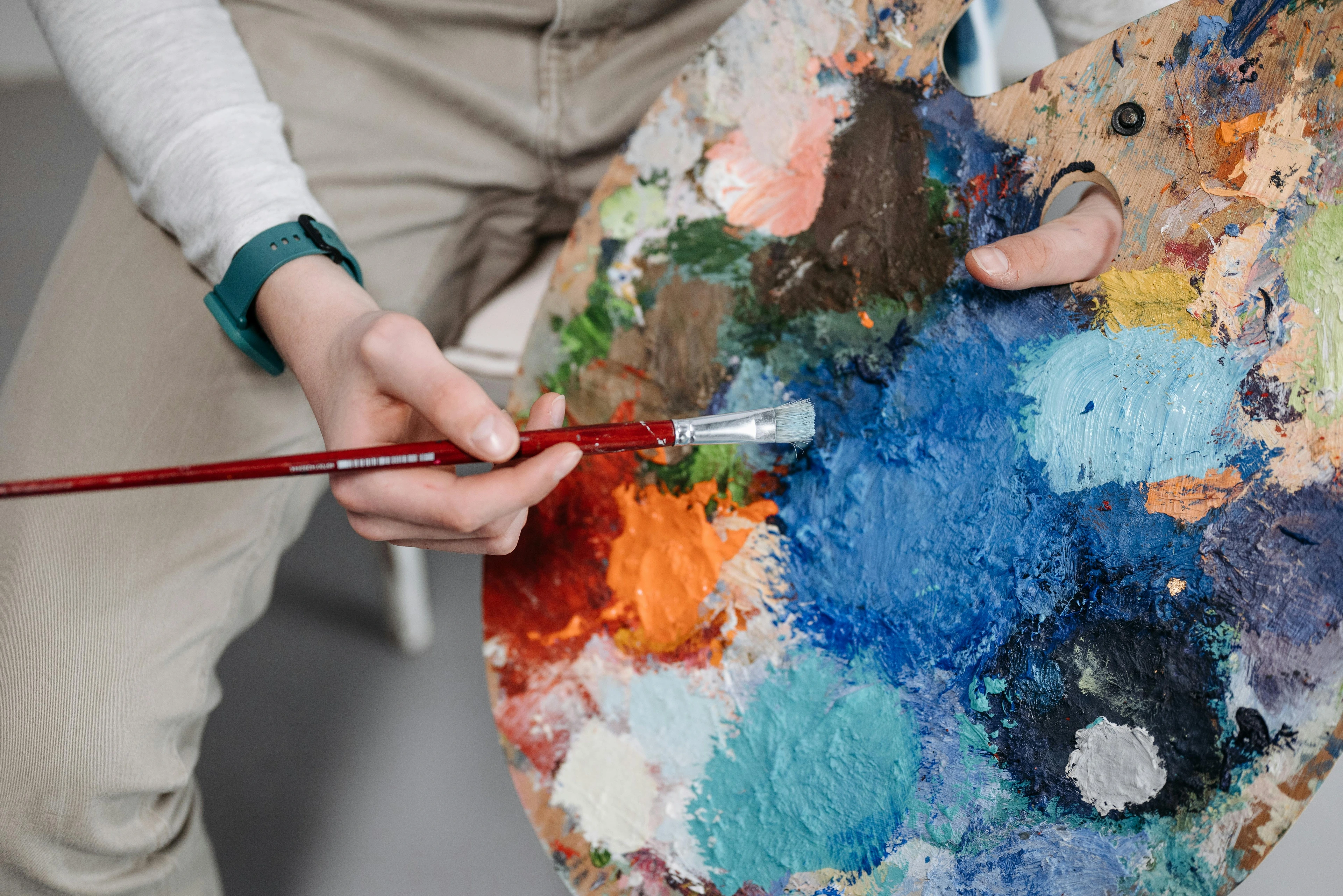
Conquer Artist's Block: The Definitive Guide to Creative Flow & Resilience
Unlock your full creative potential! This master guide provides 10 transformative principles, actionable strategies, and practical tips to cultivate a thriving artist's mindset, overcome creative block, and sustain artistic practice. Dive deep into inspiration, mindset, and flow.

Conquer Artist's Block: The Definitive Guide to Creative Flow & Resilience
Alright, let's talk about it. That gut-wrenching, soul-sucking feeling of being creatively stuck. You know the one, right? It feels like your internal artist has suddenly gone on strike, leaving you adrift in a vast, empty studio of doubt. For me, it used to be a constant, unwelcome companion, a shadow dimming the vibrant potential of every blank canvas. I remember endless days wrestling with the sheer weight of inaction, convinced I was doomed to wander a creative desert forever.
But here's the thing I've learned, often the hard way: while periods of uninspiration might be as natural as the ebb and flow of tides, what is entirely within your power is how you respond to them. Do you let them cripple you, or do you leverage them as catalysts for profound growth? Historically, the quest for inspiration was often shrouded in myth, from ancient Greeks invoking divine muses to Romantics chasing intense emotions. We've all heard tales of the accidental 'stroke of genius' – a mythical lightning bolt that just strikes. Honestly? Those lightning bolts are notoriously unreliable! And frankly, waiting for them is a recipe for creative stagnation. My own journey, and observing countless other artists, has taught me that true inspiration isn’t passively awaited; it’s actively cultivated. It’s about building deliberate habits, fostering a resilient mindset, and crafting an environment that doesn't just invite creativity, but demands it.
This isn't just about making art; it's about embedding a sustainable creative habit into the very fabric of your life, piece after piece, day after day. This isn't just about getting unstuck; it’s about building an artist's mindset – a resilient, curious, and playful approach to creation that thrives on transformation and turns struggle into fuel. This mindset is what ultimately nurtures creativity and paves the way for that profound sense of deep absorption, where time melts away and creation flows effortlessly – that’s the flow state.
This flow state isn't some mystical phenomenon reserved for a chosen few; it’s a peak state of consciousness, extensively studied by psychologists like Mihaly Csikszentmihalyi. He identified three key conditions for achieving it: clear goals (you know exactly what you're trying to achieve, even if it's just 'explore this color'), immediate feedback (your canvas tells you if the paint is too thin, your instrument reveals if the note is off-key, your code shows an error), and a balanced challenge that stretches your skills just enough – not so easy it's boring, not so hard it's frustrating. When you're in flow, your brain releases neurochemicals like dopamine and norepinephrine, enhancing focus and joy, making it a truly powerful engine for sustained artistic growth. In this guide, we'll explore ten transformative principles for cultivating this mindset and achieving consistent creative flow, alongside actionable strategies for conquering every common creative block.
Ten Guiding Principles for a Thriving Creative Life
To truly navigate these sometimes-turbulent creative waters effectively, I've distilled years of both struggle and exhilarating creation into what I consider essential truths for any artist. These aren't rigid dogmas, but rather flexible beacons, designed to adapt to your unique artistic rhythm while always guiding you back to the vibrant path of creation. Think of them as my personal roadmap for cultivating a resilient artist's mindset and making art an enduring, joyful part of your life, a powerful antidote to the fear of the blank canvas. Let's dive in.
1. Make Art Consistently, Not Just When Inspired
This principle sounds like madness, but it's the one that changed everything for me. We often wait for that elusive spark, but I've found that inspiration is frequently a reward for showing up, not a prerequisite. How many times have you let the daily grind dictate your creative output, only to regret weeks later the canvases that remained untouched, the ideas that went unexpressed? I certainly have. That's why I've made art a non-negotiable ritual, like brushing my teeth or making coffee. For me, a day feels incomplete if I haven't engaged with my art in some small way, even on those days when my motivation feels like a shy hermit crab. I vividly remember one particular week, feeling utterly drained, when my "art session" consisted solely of organizing my pigments. The very next day, a breakthrough happened on the canvas simply because the physical act of preparation had primed my mind and cleared the mental clutter. "Progress" isn't about churning out a masterpiece daily – sometimes it's just fifteen minutes of sketching, mixing a new palette, or even just tidying my workspace. This consistent, even minimal, engagement is like exercising a muscle; it strengthens your creative muscle memory and creative flow with every use, leading to surprising artistic growth over time. It's the secret sauce to sustaining artistic practice and a potent way to overcome creative block by simply starting.
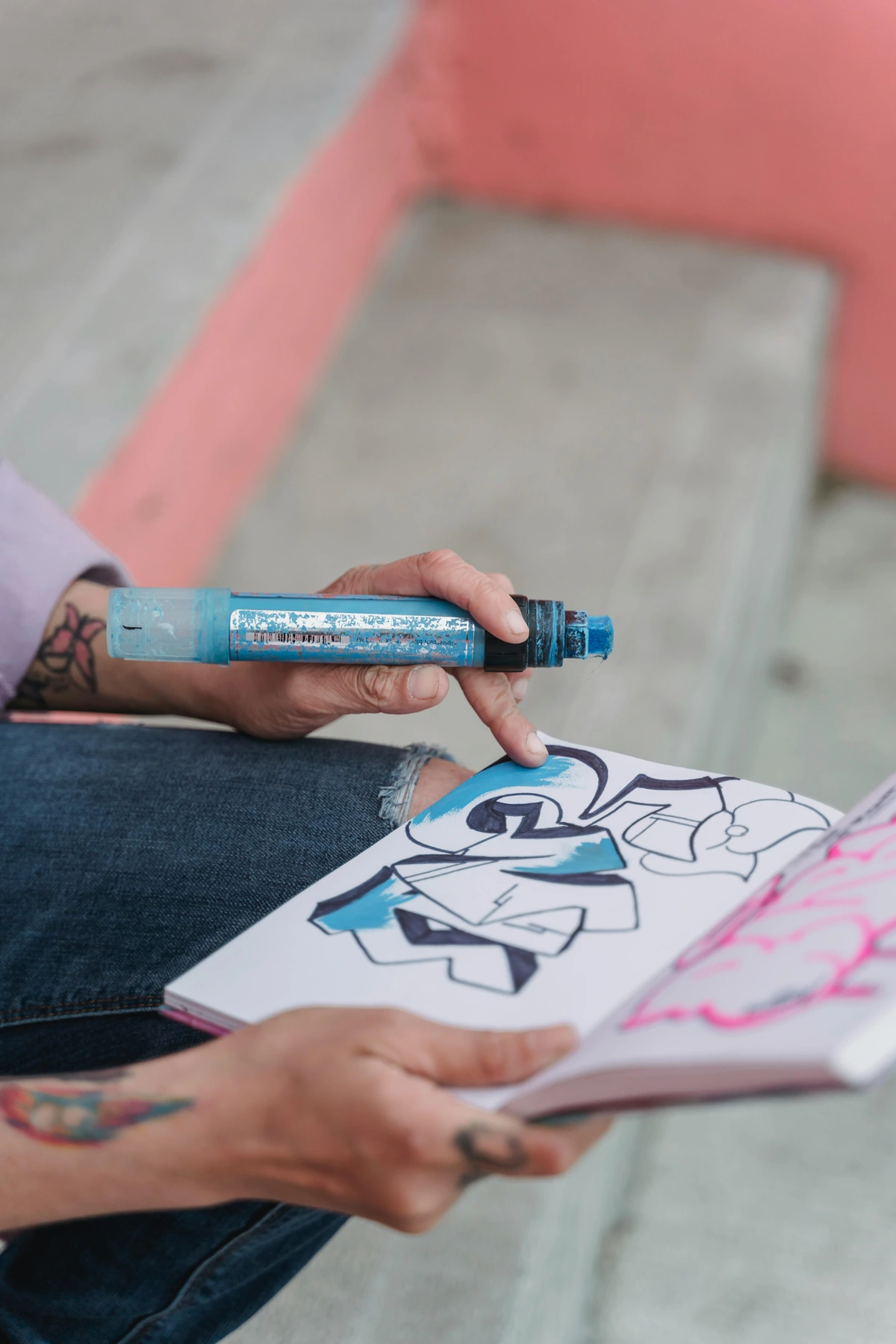
- Actionable Tip: Schedule a daily "creative micro-session" of just 15-30 minutes, regardless of inspiration. Use a timer. The goal is engagement, not perfection.
- Actionable Tip: Keep a small, portable sketchbook or an art app on your phone for quick sketches or visual notes throughout the day, ensuring art is always a few seconds away.
2. Unearth and Embrace What Truly Moves You
Once you commit to showing up (Principle 1), the next vital step is knowing what to show up for. There’s an almost primal force that ignites when you create art rooted in genuine passion. It’s an unstoppable inner drive that external motivators simply can't replicate. What kind of art makes your pulse quicken? What narratives haunt your thoughts, begging to be expressed? What colors, textures, or emotional landscapes resonate deepest within your soul? Don't be shy; dig into this sacred space. Try to articulate it, even if it’s just a whispered thought to yourself. I've found that sitting down and listing things I genuinely can't stop thinking about – be it the way light falls on a specific object, a recurring dream motif, the fractal geometry of a fern, or an emotion I'm grappling with – always provides a rich starting point. This profound clarity isn’t just about making art; it’s your unwavering compass for finding your voice. The pieces I create from this place of authentic love are not only the most impactful for others but also the most deeply sustaining for my own spirit, feeding my creative flow. This principle directly counters the paralysis of not knowing what to create, a common form of creative stagnation and is essential for getting inspiration for art that truly lasts.
- Actionable Tip: Dedicate a "self-discovery art session" to brainstorming. Journal about your earliest memories, recurring dreams, or assemble a mood board with images, sounds, and words that stir something profound within you. Look for recurring themes.
- Actionable Tip: Ask yourself: "If I could only create one type of art for the rest of my life, what would it be?" The answer might surprise you.
3. Give Yourself Permission to Make "Bad" Art
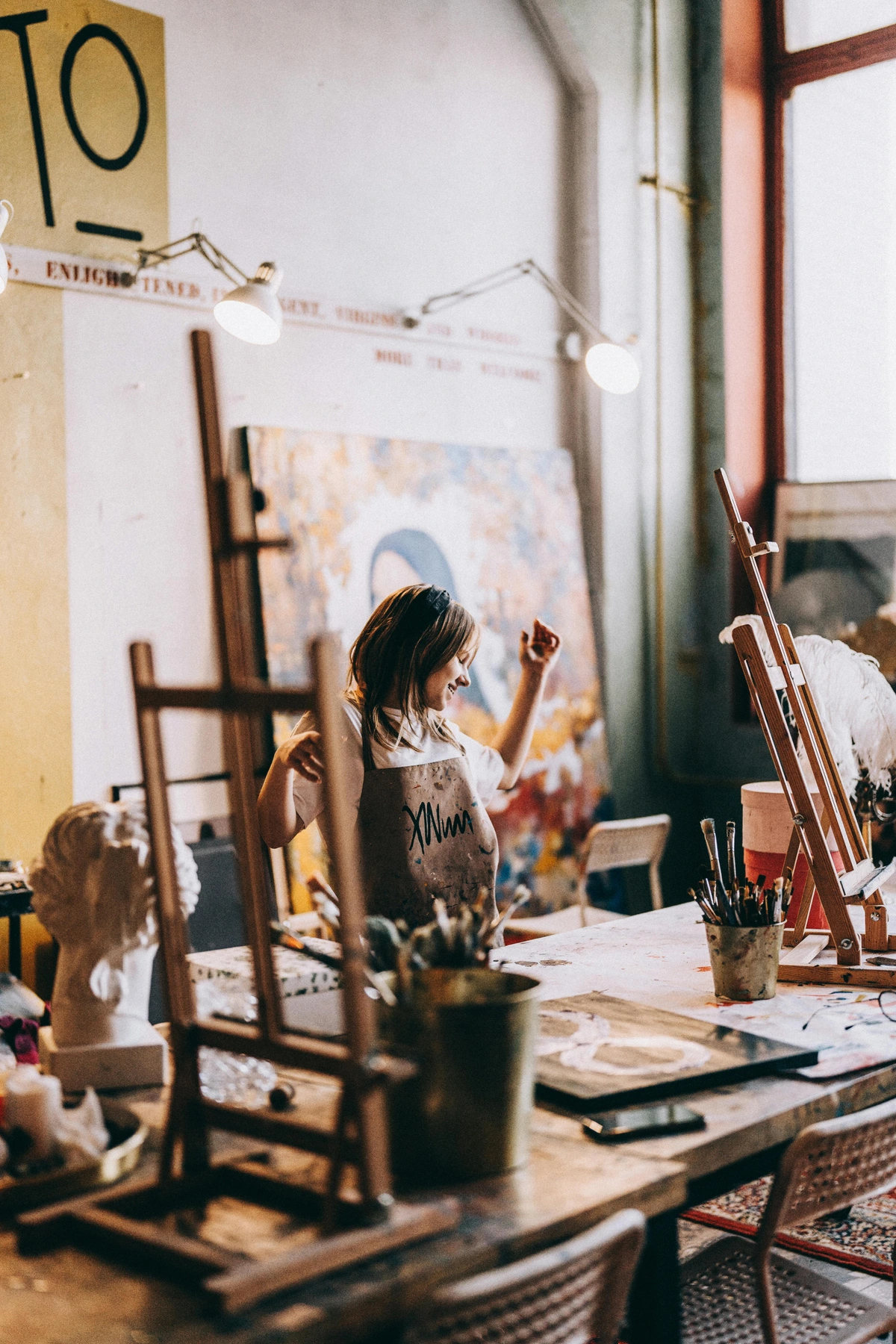
Ah, "bad art." The very thought can make us cringe, can't it? The word itself sounds like a toddler's tantrum in paint form. But let me be blunt: making "bad" art isn't just inevitable; it's utterly essential. Consider it a crucial apprenticeship on the journey to creating good art. Most artists, myself included, have a secret museum of glorious failures tucked away – I certainly do! These pieces – the experimental, the awkward, the outright disastrous – are not mistakes to be hidden, but rather invaluable data points. If I only ever pursued what I knew would "work," my abstract art would quickly become predictable, stagnant, and frankly, a bit dull. It's within the chaos, the unexpected detours, and the outright missteps that breakthroughs often hide. I vividly recall trying to achieve a perfectly smooth gradient in a large abstract piece, only to have the paint run and dry into an unexpected, mesmerizing textured ripple. At first, I was mortified; now, that "happy accident" is a foundational technique in my abstract art. Similarly, for a writer, a "bad" first draft is merely an outline for brilliance, or for a musician, a wild improvisation can uncover a new melody. This permission is your shield against perfectionism, allowing you to simply begin and a vital tool for overcoming creative block.
This principle is fundamental to overcoming creative stagnation and truly understanding the power of imperfection. Embrace the process, not just the pristine outcome.
- Actionable Tip: Designate a "bad art day" once a week where the explicit goal is to create something intentionally unconventional or even ugly. No rules, no judgment, just exploration.
- Actionable Tip: Start every new project with 3-5 quick, loose, small sketches that are purely for ideation, not presentation. Consider them warm-ups; they don't have to be good.
4. Engage Critically and Joyfully with Your Own Creations
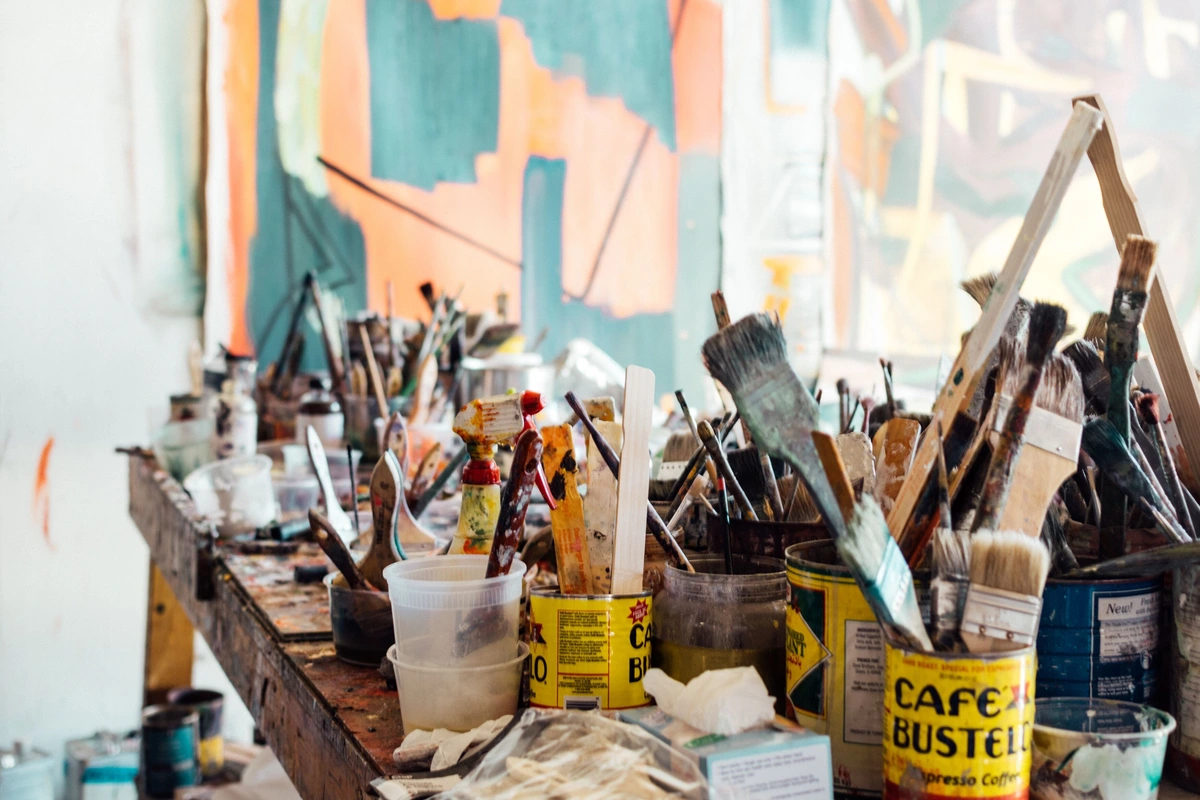
This is where the true alchemy of growth happens. Once the initial fervor of creation subsides, step back. Not just physically, but mentally. Really see your art. What sings? What falters? And most importantly, why? Cultivate the rare ability to be both your fiercest critic and your most ardent champion. I often photograph my work, flip it upside down, view it in different light conditions, or even look at it in a mirror to reveal new perspectives. Sometimes, I'll sketch a piece from memory, which often highlights forgotten or unintentional elements. When seeking external input, don't just ask, "Do you like it?" That's like asking a chef if their food tastes "good." Instead, pose specific, probing questions to trusted friends or fellow artists: "What emotion does this piece evoke for you, and where does that feeling reside most strongly?" or "Does the composition guide your eye effectively, or does it feel disjointed?" I often ask myself, "Where does my eye naturally lead first, and is that intentional?" or "Does the color palette support the intended mood, or does it create a dissonance I didn't plan?" This reflective, iterative phase is absolutely non-negotiable for true artistic growth. It’s how you build an informed, resilient artist's mindset capable of both enjoying and evolving your craft. The ability to give and receive constructive feedback is a superpower, allowing you to refine your vision and strengthen your creative flow.
- Actionable Tip: After completing a piece, write down three things you love about it and one specific area you'd like to improve. Be precise in your observations.
- Actionable Tip: Find a "feedback buddy" – another artist with whom you can regularly exchange thoughtful, critical, and supportive feedback using specific questions, not just vague opinions.
5. Be a Sponge: Study the World Around You
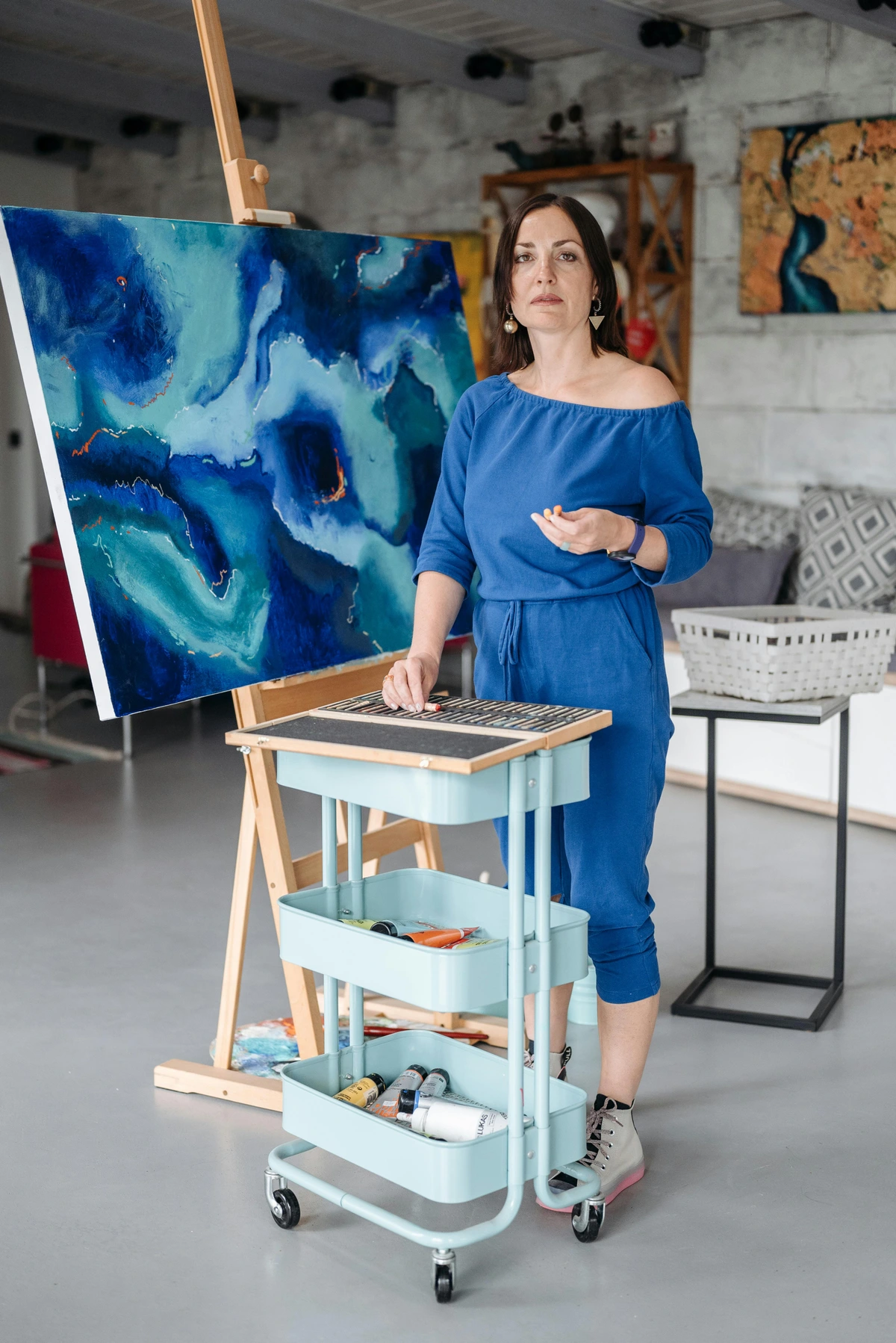
I truly believe that the world outside your studio walls is an inexhaustible wellspring of creative fuel. Inspiration isn't confined; it's everywhere, eagerly awaiting your attention. And I'm not just talking about admiring other artists' work, though that's certainly vital for refining your artistic style. I mean actively immersing yourself in the tapestry of existence:
- Nature: The fractal geometry of a fern, the delicate Fibonacci spirals in a sunflower, the raw power of a thunderstorm, the subtle color palettes of a sunset, or the delicate transition of light at dawn. I've often found abstract shapes for a series simply by studying bark patterns or the way water ripples.
- Urban Landscapes: The stark lines of architecture (think Brutalism vs. Art Deco), the chaotic ballet of crowds, the vibrant narratives of street art, or the unexpected reflections in a puddle. A particular piece of graffiti or the visual rhythm of traffic can ignite an entire color palette or compositional idea.
- Diverse Culture: Dive into museums (both local and virtual), explore global music, read widely in history, science, or philosophy, or just observe human interactions – what makes people tick, what evokes emotion? For instance, studying Japanese Ukiyo-e prints for their compositional dynamism, or exploring the color palettes of Indian miniature paintings, can offer radically new perspectives. A philosophical concept can become the underlying theme for an abstract series, or how different artistic traditions interpret universal themes like love or conflict can spark new approaches.
The objective is to continuously feed your mind with new ideas, fresh perspectives, and evolving visual languages. This constant, deliberate input is your secret weapon for getting inspiration for art, fostering artistic motivation, and preventing creative stagnation. It ensures you're always brimming with creative ideas because your brain is constantly making novel connections, a process neuroscientists call neuroplasticity, where your brain's structure and function are modified by experience, which is crucial for nurturing creativity.
- Actionable Tip: Keep a "visual diary" where you sketch or simply jot down intriguing observations, color palettes, or light patterns you encounter daily, no matter how mundane.
- Actionable Tip: Explore a museum or gallery (online or in person) from a culture entirely unfamiliar to you. Focus on how different societies express beauty, emotion, or narrative through art.
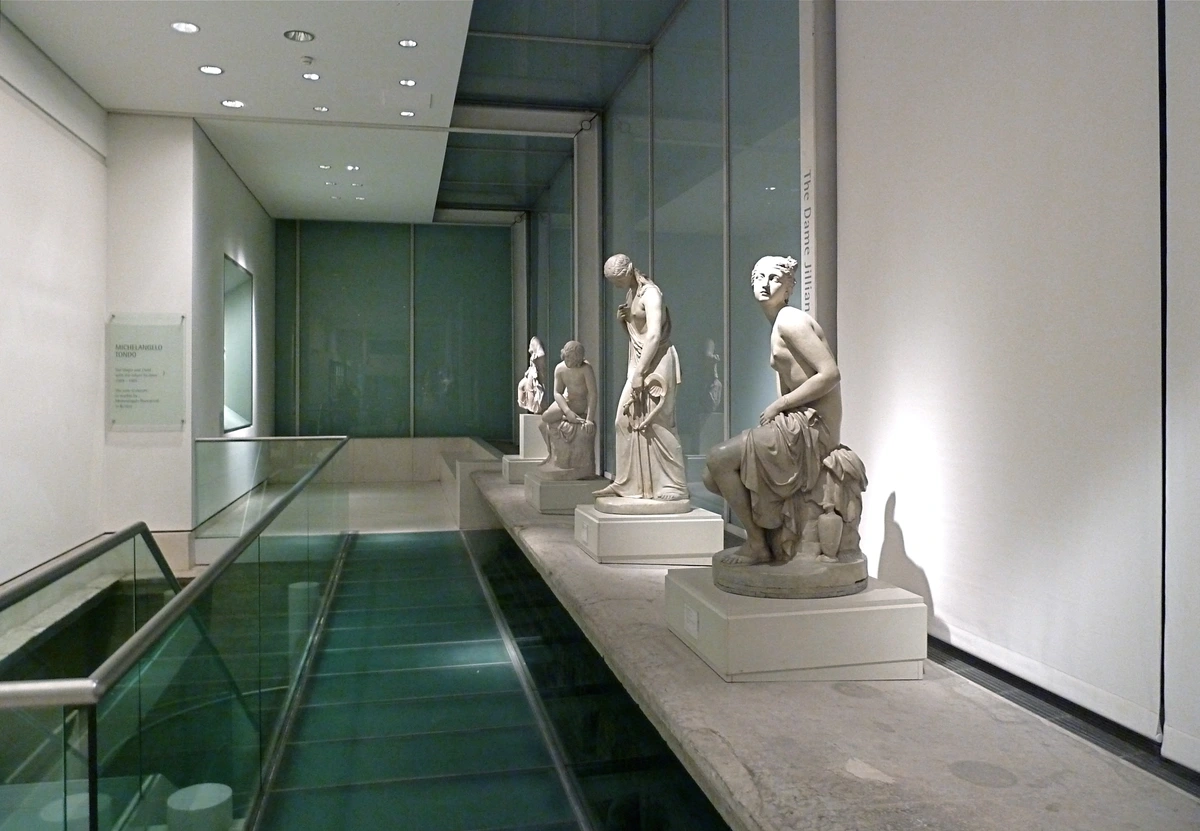
6. Actively Seek What Ignites Your Passion
This principle might seem almost laughably simple, yet it's alarmingly easy to overlook. Many of us passively wait for inspiration to strike like a bolt from the blue (remember those unreliable lightning bolts?). My advice? Stop waiting. Instead, cultivate an active, searching mindset as you move through life, intentionally looking for those tiny sparks of creativity. For example, I challenge you: the next time you leave your home, do so with the conscious intention of discovering something beautiful, peculiar, or inspiring. A unique shadow, an unexpected color palette on a peeling wall, a fleeting moment of human connection, or even an interesting juxtaposition of objects. I guarantee you'll collect more ideas than you have canvases for. It’s about priming your observational filters, consciously adjusting your internal "camera lens" to bring the extraordinary into sharp focus. Try focusing on only textures for five minutes, or the way shadows fall on a single object for three. This proactive, almost meditative, approach is a powerful antidote to feeling creatively depleted and a direct path to getting inspiration for art regularly, consistently filling your mental wellspring with creative ideas, ultimately helping to overcome creative block.
- Actionable Tip: Dedicate a short walk (15-20 minutes) solely to observing one element: shapes, textures, colors, or the interplay of light and shadow. Take photos or mental notes, perhaps specifically looking for interesting juxtapositions or unexpected visual rhythms.
- Actionable Tip: Create an "Inspiration Inbox" – a digital folder or physical box where you collect interesting articles, images, snippets of conversation, or anything that catches your eye. Categorize it (e.g., visual, textual, auditory) and review it regularly – perhaps once a week – to spark new connections.
7. Embrace Mistakes as Stepping Stones, Not Failures
Unless you possess some mythical, infallible creative gene (which, trust me, I don't), profound artistic growth always arrives hand-in-hand with a glorious mess of mistakes. It's truly terrifying, isn't it? The thought of deliberately stepping away from the familiar, from what you know 'works'? My natural inclination is to cling to techniques that yield results I love. But I've learned that if I never venture off-piste, if I never court error, my art quickly becomes safe, predictable, and frankly, a bit lifeless. Mistakes are not failures; they are incredibly valuable data points. They're signposts telling you precisely what doesn't work, thereby guiding you closer to what does. This rings true whether you’re diving into how to abstract art or simply experimenting with a new pigment. While "bad art" (as discussed in Principle 3) is the intentional, raw, experimental output that gives you freedom to play, embracing mistakes means actively learning from the unintended outcomes and errors during those experiments – both the dazzling successes and the spectacular flops – to inform your next, more refined steps. It's an indispensable component of the continuous creative process and central to cultivating an artist's mindset that understands the power of imperfection, ultimately fueling your artistic growth.
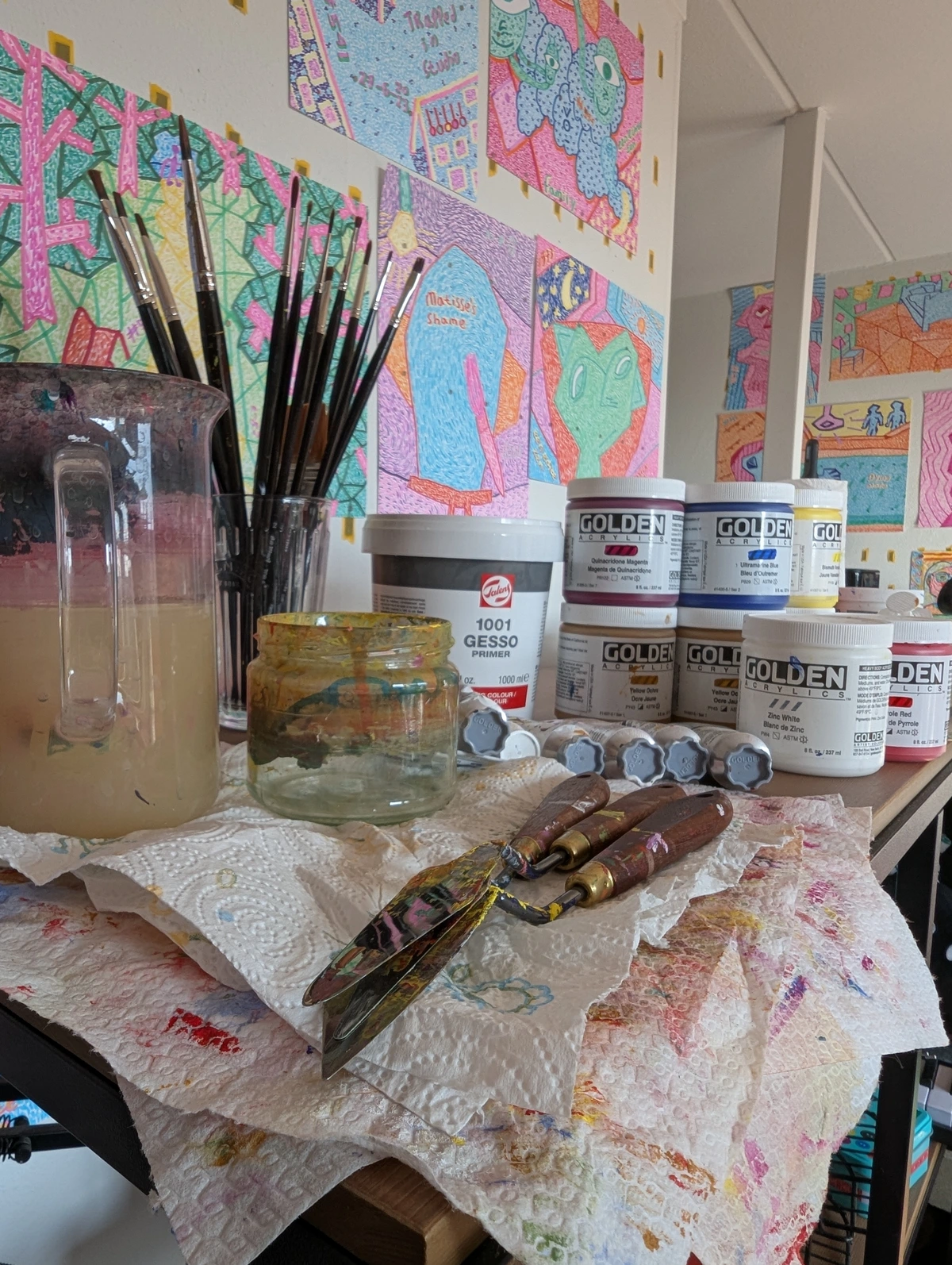
- Actionable Tip: When a mistake happens, pause. Instead of fixing it immediately, ask yourself: "What did I just learn? What unexpected direction could this lead me in?" Document your observations.
- Actionable Tip: Intentionally try a technique or material that you suspect won't work, just to prove yourself wrong (or right!). The learning is the victory, not the outcome.
8. Play with Different Mediums and Approaches
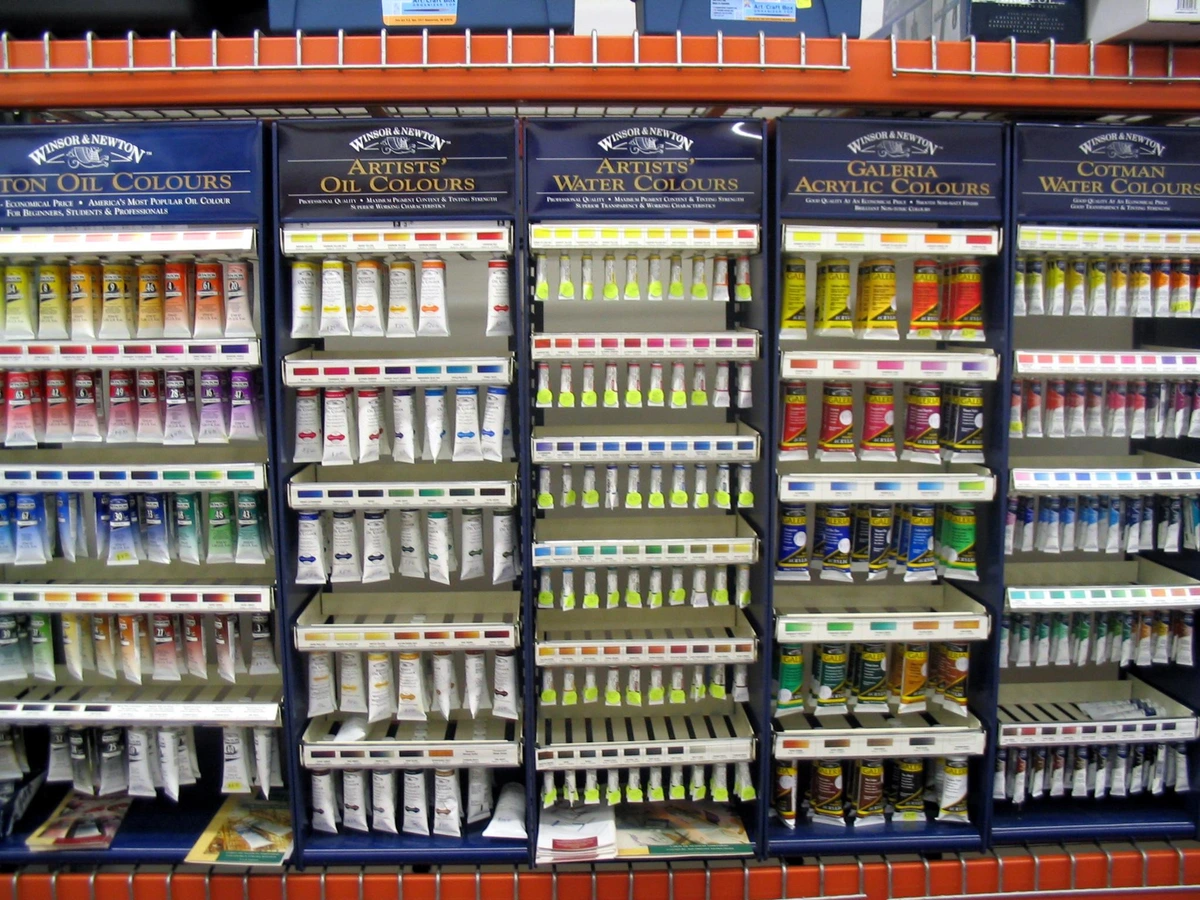
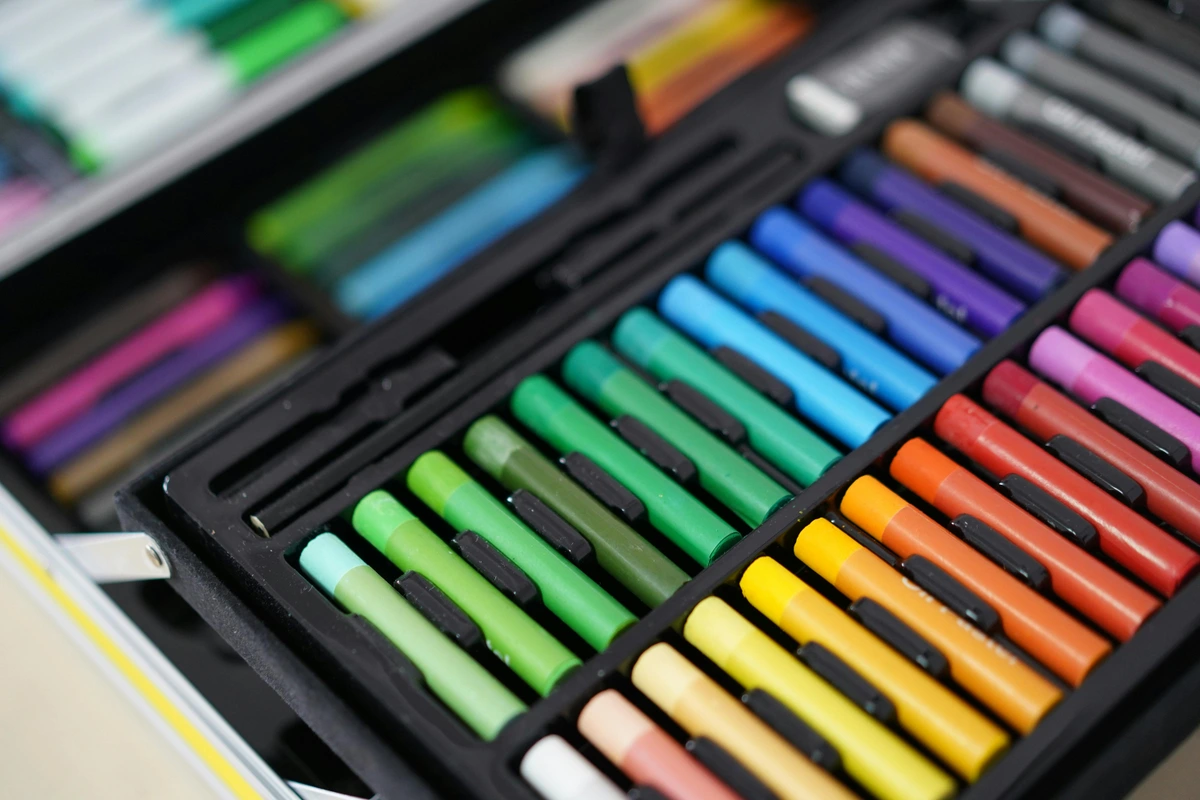
It's perfectly natural, even comforting, to settle into what you excel at, and there’s profound satisfaction in mastering a chosen craft. But the universe of art is a boundless, exhilarating playground of mediums, methods, and possibilities! Deliberately venturing into a new material – whether it's acrylic mediums (like exploring gels or pastes), the stark immediacy of charcoal, the three-dimensional challenge of sculpture, or the infinite canvas of digital art – can be as creatively electrifying as exploring new themes. Each medium presents a unique set of constraints and opportunities, compelling you to think differently and often revealing entirely unforeseen creative avenues. The unforgiving spontaneity of watercolor, for example, can teach you precision and flow in brushwork, while the raw tactility of clay might awaken a sculptural, expressive side you never knew existed, forcing you to think about form and volume in new ways. I've found that the careful layering required in oil painting can dramatically inform my approach to building depth in abstract mixed media, or that the quick, decisive strokes of digital painting translate into bolder choices on a physical canvas. Beyond just exploration, trying new mediums also forces a conceptual reconsideration of why you choose a specific medium for a particular idea – connecting technique to intentionality. So, give yourself permission to just play. Break every rule you know, see what unexpected magic unfolds, and remember that not every foray needs to culminate in a masterpiece. The true value lies in the exploration, the sheer joy of the journey itself. This is a powerful tactic for overcoming creative stagnation and finding fresh sources of artistic motivation, ensuring you always have new avenues for creative expression and a path to overcome creative block.
- Actionable Tip: Commit to a "medium swap" month: for one month, exclusively work in a medium you've never tried or rarely use. Document your discoveries.
- Actionable Tip: Don't invest heavily. Buy the cheapest version of a new medium just to experiment without financial pressure. It's about the experience, not the gear.
9. Optimize Your Creative Environment: Make Art-Making Effortless
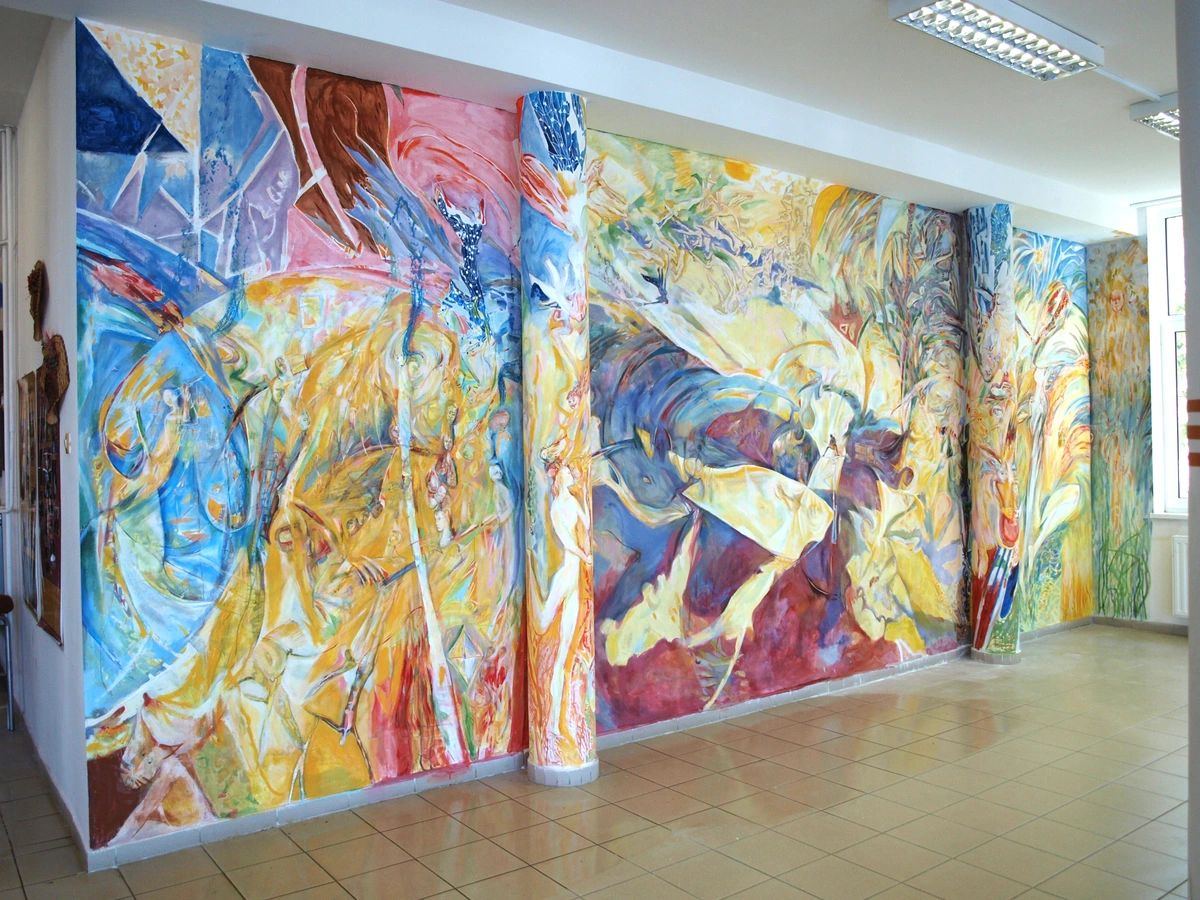
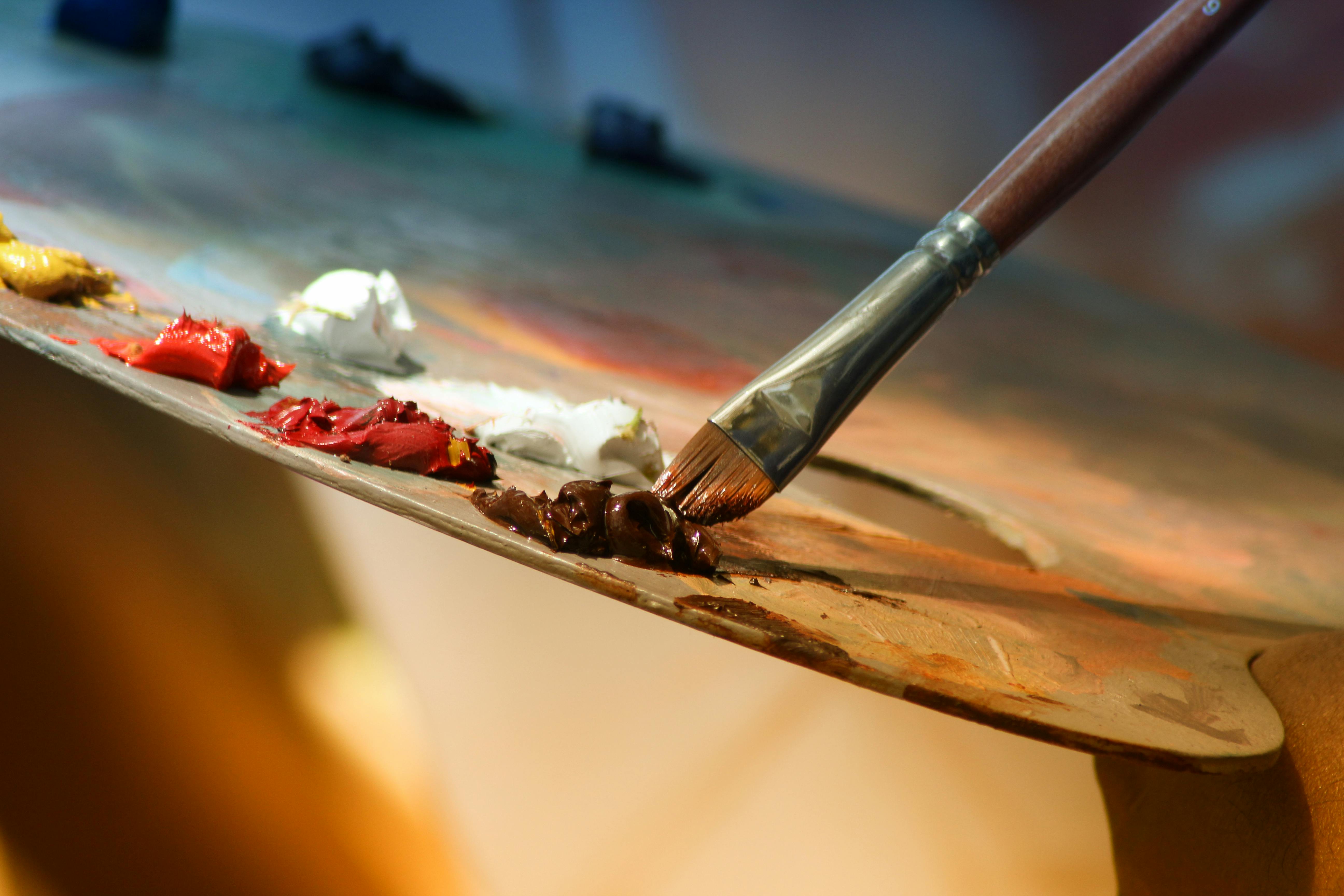
This principle, deceptively simple, holds profound power. The easier you make it to begin creating, the harder it becomes to invent an excuse not to. Cast a critical eye over your workspace. Does it beckon you, or does it feel like a barrier? Are your tools effortlessly within reach, or do you embark on an archaeological expedition every time you want to paint? Investing a small amount of time to cultivate an efficient, inspiring studio – even if it's just a designated corner of a room – is an act of self-kindness. I always ensure my easel is set, my brushes are gleaming, and my palette is prepped. Starting should never feel like a chore. Think about it: would you consistently exercise if you had to meticulously assemble your gear before every workout? It’s precisely the same for art. This also extends to your physical well-being (ergonomic seating, good lighting) and sensory input (a calming scent, a focused studio playlist); ensure everything supports, rather than hinders, your focus. Remove every conceivable barrier between your creative impulse and its manifestation on the canvas (or screen). This is key to nurturing creativity, maintaining creative flow, and a foundational step in sustaining artistic practice.
- Actionable Tip: Perform a "15-minute studio blitz" at the end of each session: clean up, put things away, and set out the tools for your next session. You'll thank your past self.
- Actionable Tip: Experiment with different background music or silence. Some artists thrive with specific playlists, others need quiet. Find what optimizes your focus.
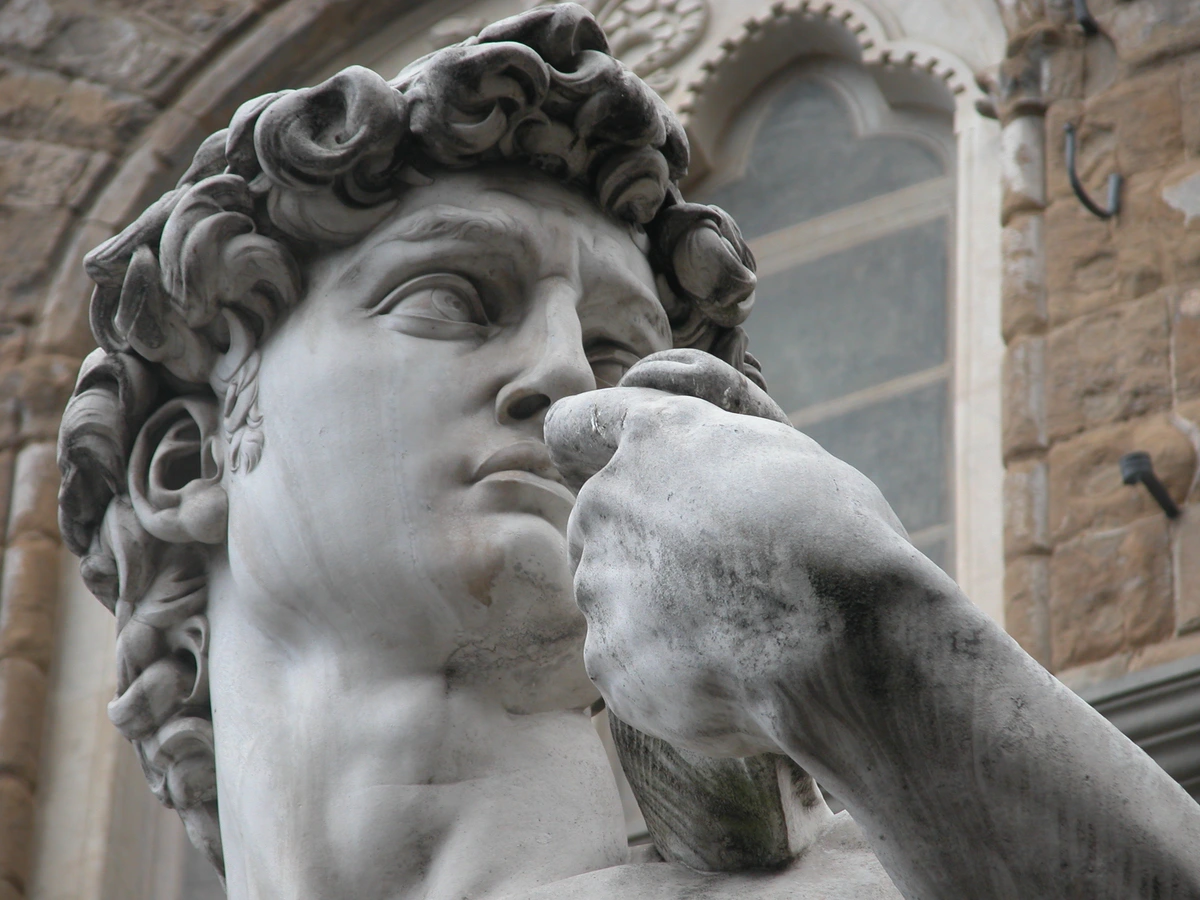
10. Prioritize Joy: Have Fun with Your Art
This might sound like the most obvious advice, yet it's often the very first casualty when we get entangled in goals, external validation, and the relentless pursuit of "good" art. The simplest, most potent way to sustain inspiration, to consistently experience that cherished flow state, is to genuinely revel in the process. How many days do you truly look forward to stepping into your creative space? For me, it’s almost every day. The sheer delight of witnessing how my abstract art unfurls, how an unexpected color combination breathes life into a canvas, or how a nascent idea blossoms – that's the magnetic force drawing me back, day after day. This isn't just about being busy; it’s about deep, nourishing fulfillment. My experiments with color psychology are a testament to the sheer, unadulterated joy of artistic discovery. Remember your initial spark? Why did you pick up that brush, that pencil, that chisel? Return to that wellspring of childlike wonder, that pure, unadulterated pleasure in creation, whether it’s playful exploration or the deep satisfaction of solving a complex visual problem. It’s your most powerful antidote to creative burnout and the ultimate driver of artistic motivation, ensuring you actively overcome creative block by finding the pleasure in the journey.
- Actionable Tip: Dedicate one session a month to pure, uninhibited experimentation with no goals, no expectations, and zero self-criticism. Just play with color, form, and texture.
- Actionable Tip: Revisit old sketchbooks or early works to remind yourself of the journey and the progress you've made. Celebrate how far your artistic voice has evolved.
Your Creative Compass: Key Takeaways from the Principles
Alright, ten principles, a lot to unpack! But if you take nothing else away, remember these guiding stars for powerfully nurturing creativity and sustaining your journey. They aren't just ideas; they're actionable strategies for building an enduring, vibrant artist's mindset.
Principle  | Core Idea & Action | Keywords |
|---|---|---|
| 1. Make Art Consistently | Show up daily, even for 15 minutes. Inspiration is a reward, not a prerequisite. | Consistent practice, Daily ritual, Creative habit, Creative muscle memory |
| 2. Unearth What Moves You | Deeply explore your genuine passions; they are your most reliable muse. | Authentic voice, Inner drive, Passion-driven art, Self-discovery |
| 3. Permission for "Bad" Art | Embrace intentional experimentation. "Bad" art is a crucial learning stage, not a failure. | Overcome perfectionism, Fearless exploration, Learning process, Experimentation |
| 4. Engage Critically & Joyfully | Be your own fierce critic and ardent champion. Seek specific feedback for growth. | Self-evaluation, Constructive feedback, Artistic growth, Refinement |
| 5. Be a Sponge | Continuously feed your mind with diverse inputs from the world around you. | Inspiration sources, Observational skills, Neuroplasticity, Continuous learning |
| 6. Actively Seek Passion | Cultivate an active, searching mindset to find creative sparks daily. | Proactive inspiration, Observational filters, Creative wellspring, Idea generation |
| 7. Embrace Mistakes | View unintended outcomes as valuable data points, guiding your next steps. | Learning from errors, Resilience, Problem-solving, Iterative process |
| 8. Play with Mediums | Explore new materials to unlock fresh perspectives and unforeseen avenues. | Creative versatility, Skill transfer, New techniques, Artistic freedom |
| 9. Optimize Environment | Make starting effortless. Remove barriers between impulse and creation. | Productive workspace, Efficiency, Creative flow support, Habit formation |
| 10. Prioritize Joy | Revel in the process itself. Fun is the ultimate antidote to burnout. | Intrinsic motivation, Creative fulfillment, Anti-burnout, Playfulness |
Community and Mentorship: Fueling Your Artistic Fire
While the creative journey often feels solitary, it doesn’t have to be. For years, I wrestled with my art in isolation, thinking that true genius emerged from a vacuum. What a misguided notion that was! I eventually discovered that surrounding myself with a supportive community of fellow artists and, critically, finding a mentor, transformed my practice in ways I couldn't have imagined. It’s like having a collective brain trust, a sounding board, and a cheerleading squad all rolled into one. A good mentor, someone who has walked the path before you, can offer invaluable perspectives, gently challenge your assumptions, and provide specific guidance when you're adrift. They can help you identify your unique artistic style and navigate the practicalities of an art career. Fellow artists, too, can provide a safe space for honest feedback (Principle 4), collaborative projects, and shared triumphs and struggles. This connection combats self-doubt, provides diverse sources of inspiration for art (Principle 5), and offers a powerful antidote to the isolation that can often accompany the creative life. It’s about building a network that actively nurtures creativity and reinforces a resilient artist's mindset.
Facing the Blank Canvas: Common Artistic Blocks and How to Conquer Them
Even with the most fervent intentions and a burning desire to create, we all, without exception, eventually collide with creative walls. It’s an inherent part of the human, and certainly the artistic, condition. Whether you call it artist's block, creative block, or simply a complete lack of ideas, the experience is universally frustrating. The first, most crucial step to navigating these periods is simply recognizing them. Think of the following table as your tactical guide, a way to transform these seemingly debilitating pitfalls into powerful launchpads for artistic growth and a truly dynamic creative process. Each strategy links back to the principles we just discussed, offering concrete ways to get unstuck. When you find yourself facing a specific block, consult this table for targeted solutions.

Artistic Block | Underlying Cause | Description & Impact | Strategy for Overcoming | Linked Principle(s) |
|---|---|---|---|---|
| Perfectionism | Fear of not meeting unrealistic standards | The paralyzing fear that your art won't be "good enough," leading to procrastination or abandoning projects. You focus solely on the perfect outcome, not the invaluable process. This is a common form of creative stagnation. Example: You spend weeks meticulously planning a painting, but are terrified to make the first brushstroke. | Embrace Principle 3: Give Yourself Permission to Make "Bad" Art. Set strict time limits for initial sketches. Focus on completing a series of small, imperfect pieces rather than one perfect one. Shift your mindset to learning and experimentation over flawless execution. Remember, done is better than perfect! This builds a resilient artist's mindset. | 1, 3, 7, 10 |
| Lack of Ideas | Insufficient input or exploration | Feeling creatively empty, unsure what to create next or how to start. The "well" feels dry, and every idea seems unoriginal or uninteresting – a true creative drought. Example: Staring at a blank canvas, feeling utterly uninspired by any subject or concept. | Actively implement Principle 5: Be a Sponge: Study the World Around You and Principle 6: Actively Seek What Ignites Your Passion. Carry a sketchbook and jot down observations daily. Explore diverse topics: nature, architecture, human emotion, history. Engage with other forms of art and culture. Try brainstorming techniques like mind-mapping or word association. Utilize prompts or creative challenges from online communities or books. Consider a collaborative project to spark new perspectives through community and mentorship. This is essential for getting inspiration for art. | 2, 5, 6, 8 |
| Fear of Failure | Belief that mistakes define ability | Hesitation to try new techniques or subjects due to the fear of producing something subpar or wasting time/materials. This often leads to sticking to familiar, safe methods, limiting your artistic growth. Example: You want to try oil painting but worry you'll ruin expensive materials or simply aren't "good enough" at it. | Double down on Principle 7: Embrace Mistakes as Stepping Stones, Not Failures. Remind yourself that every artist, from beginner to master, creates "failed" pieces, and these are often the most profound teachers. Start small: experiment with inexpensive materials or on scrap paper. View failure as invaluable feedback, not a definitive judgment of your ability. Focus on the learning process. This is the core of the power of imperfection and helps overcome creative block. | 3, 7, 8 |
| Self-Doubt / Imposter Syndrome | Internalized negative self-perception, comparison | A persistent feeling that you're not a "real" artist, or that your work isn't legitimate, despite evidence to the contrary. This can lead to self-sabotage or avoiding sharing your work. This undermines your artist's mindset. Example: You've completed a beautiful piece, but hesitate to share it, convinced it's not as good as others' work. | Revisit Principle 2: Unearth and Embrace What Truly Moves You. Reconnect with your authentic artistic voice. Focus intently on your journey and unique growth, deliberately avoiding comparison to others. Celebrate every small victory. Seek constructive feedback (Principle 4) from a truly supportive community or mentor, and learn to distinguish it from the insidious voice of internal criticism. Keep an "Evidence Log" of positive feedback, completed small projects, or specific skills mastered to refer to. Remember, every master artist started somewhere, and growth is a continuous, beautiful process. This is vital for nurturing creativity. | 2, 4, 10 |
| Procrastination | Overwhelm, lack of structure, fear of starting | Repeatedly delaying art-making, often due to overwhelm, fear, or simply finding other things to do. The desire is there, but the action isn't, leading to creative stagnation. Example: You keep putting off starting a project, finding endless chores or distractions instead of sitting down to create. | Implement Principle 9: Optimize Your Creative Environment: Make Art-Making Effortless and Principle 1: Make Art Consistently. Break down large projects into minuscule, manageable steps. Schedule specific art-making times and treat them as non-negotiable appointments. Ruthlessly eliminate distractions in your workspace. Use accountability partners or public commitments. Employ the Pomodoro Technique for focused work sessions. Remember, even 15 minutes of focused creation is a profound win against the blank canvas. This is how you overcome creative block. | 1, 9 |
| Creative Burnout | Overwork, lack of rest, emotional depletion | Feeling mentally, emotionally, and physically exhausted by the creative process, often after periods of intense work or pressure. Symptoms can include apathy towards art, increased irritability, difficulty concentrating, and a general lack of enthusiasm. A severe form of creative drought. Example: After weeks of intense commission work, you feel no desire to pick up a brush, even for personal projects. | This is precisely where rest, self-care, and deliberate reflection become paramount. Schedule deliberate "creative rest days" well in advance. Step entirely away from your art. Engage in completely different, non-creative activities: mindful nature walks, listening to new genres of music, reading a non-art related book, or even just staring blankly at the ceiling. Prioritize genuine self-care (including adequate sleep and nutrition) and set clear boundaries to avoid overcommitting. When you return, approach your art with Principle 10: Prioritize Joy: Have Fun with Your Art in mind, perhaps exploring a new medium (Principle 8) or subject that feels lighter and less demanding. It's not about stopping; it's about deeply replenishing your well and allowing your subconscious to work its magic, truly nurturing your creative flow and fostering a sustainable artist's mindset. | 8, 10, (and rest/reflection implied) |
| Overwhelm / Too Many Ideas | Lack of focus, paralyzing abundance | A flood of ideas that makes it impossible to choose a starting point, leading to inaction or fragmented work. The abundance becomes a burden, not a blessing. Example: You have 20 brilliant ideas for paintings, but can't decide which one to start, so you start none of them. | Return to Principle 2: Unearth and Embrace What Truly Moves You. Filter ideas through your core passions. Practice Principle 3: Give Yourself Permission to Make "Bad" Art by quickly prototyping several ideas in miniature form. Use mind-mapping or journaling to organize and prioritize. Sometimes, a collaborative project or input from a mentor can help narrow focus. Learn to recognize when an idea is for this project versus one for later – keep an "Idea Bank." Use a "priority matrix" to quickly assess and select ideas. | 2, 3, 5, 6 |
Frequently Asked Questions About Artistic Inspiration
We’ve all experienced it: that frustrating moment staring at a blank page or canvas, wondering where on earth the creative spark vanished to. These are some of the most common, deeply human questions I encounter about kickstarting, cultivating, and ultimately sustaining artistic practice. Here are my insights on how to overcome creative block and consistently get inspiration for art.
Q: Where do artists find new ideas when they feel stuck?
A: This is perhaps the most universal question, isn't it? My answer, and that of most prolific artists I know, is simple: we don't wait for inspiration; we relentlessly cultivate it. This means actively engaging with the world as a constant student: keenly observing the nuances of nature, the vibrant chaos of urban life, and the subtle dance of human emotion. It means deliberately consuming diverse art – from how to abstract art to classical masterpieces – listening to new music, diving into history or philosophy, and deeply reflecting on our own life experiences. The secret lies in constant input and active exploration – a continuous loop of Principles 5 and 6. I always have a small sketchbook or my phone ready to capture anything that sparks my curiosity. You’ll be astonished by the sheer volume of creative ideas you accumulate, often leading to unexpected and profound connections through associative thinking (where your mind links seemingly unrelated concepts) and serendipitous discoveries that help you overcome creative block.
Q: Is inspiration purely emotional, or can it be learned?
A: This is a fantastic, nuanced question! While that initial flicker of inspiration often feels deeply emotional – a sudden surge of excitement, a compelling vision, or an undeniable urge – the sustenance of inspiration, the ability to make it a consistent companion, is undeniably a skill that can be learned, practiced, and profoundly honed. It transcends mere fleeting emotion. It involves cultivating concrete habits: consistent practice (Principle 1), rigorous yet kind self-evaluation (Principle 4), the courageous embracing of mistakes (Principle 7), sculpting an environment that beckons creativity (Principle 9), and actively seeking out experiences that ignite curiosity (Principle 6). Ultimately, it's about forging a resilient artist's mindset that is partnered with discipline, allowing you to consciously tap into that deep, focused creative flow precisely when you need it most. Think of emotion as the initial, volatile fuel, and learned habits as the robust engine that propels your entire artistic journey forward, preventing creative stagnation.
Q: How can I maintain a positive mindset about my art, especially when facing criticism or setbacks?
A: Maintaining a robustly positive mindset is, without a doubt, one of the toughest yet most absolutely crucial elements for sustaining artistic practice. My advice is to relentlessly pivot your focus inward: center on your unique artistic journey and personal growth, rather than fixating on external validation, which can be fickle. Cultivate a "growth mindset" – believing your abilities can be developed through dedication and hard work. Learn to metabolize criticism as impersonal feedback – a tool for refinement (Principle 4) – not a personal attack. Internalize the truth that setbacks are not deviations, but intrinsic components of any genuine creative process (Principle 7), valuable lessons in disguise. Seek out and actively cultivate supportive artistic communities or even a mentor. And perhaps most importantly, consistently return to Principle 10: Prioritize Joy. If you genuinely love the act of creation, that inherent passion will often act as an unbreakable shield against temporary discouragement. Celebrate every small win, every tiny step forward; these incremental triumphs are powerful reminders of your continuous progress and reinforce a positive artist's mindset.
Q: Should artists specialize in one medium or explore many?
A: This is a wonderful dilemma, and refreshingly, there's no single "correct" path. Many artists discover profound satisfaction and deep mastery by specializing, becoming intimately fluent in every nuance of their chosen medium. Think of it as a deep dive. However, I’ve found that deliberately exploring different mediums (Principle 8) can be an incredibly invigorating jolt to the system. It’s a powerful tactic to overcome creative block, introduces entirely new techniques, and often, surprisingly, informs and enriches your primary medium in unforeseen ways. Some artists even blend both, specializing in a primary medium but using others for specific projects or exploration. My philosophy is this: never feel pressured to commit to just one. Let your curiosity be your guide, whether it leads you down a path of deep, singular specialization or encourages broad, joyful experimentation. Sometimes, the quickest route to escaping creative stagnation and finding radically fresh perspectives is simply picking up a tool you’ve never touched before, opening up new avenues for getting inspiration for art.
Q: What role does rest and self-care play in artistic inspiration?
A: A monumental, often underestimated, role! In our relentless, always-on society, we frequently forget that true creativity isn't a factory; it's a delicate ecosystem that absolutely requires periods of dormancy to flourish. Rest, adequate sleep, nutrition, and consciously stepping away from your art provide the crucial space for your subconscious mind to process ideas, untangle complex problems, and regenerate its profound energy. This "mental incubation" is vital. Trying to force inspiration or maintain creative flow when you’re teetering on the edge of creative burnout is like attempting to squeeze water from a stone – it’s futile and damaging. Ruthlessly prioritize self-care, in whatever form it takes: serene walks in nature, immersive reading, dedicated meditation, or even simply allowing yourself to do nothing without guilt. These deliberate pauses are not luxuries; they are fundamental acts of replenishment for your creative well. It’s astonishing how often the most brilliant ideas, the solutions to stubborn blocks, and the clearest visions emerge precisely during these periods of detached rest. This is absolutely vital for your overall artist's mindset and the most powerful antidote to creative stagnation and creative block, paving the way back to that coveted flow state.
Q: How do I navigate artistic integrity and inspiration when facing commercial pressures or commissions?
A: This is a challenging yet common dilemma. The key is to find your unique intersection of personal passion and client needs. When taking commissions, I always try to identify the 'essence' of what the client is seeking and then filter it through my own artistic style. Communicate clearly from the outset what your artistic vision entails and what you can authentically deliver. Sometimes, saying no to a project that fundamentally clashes with your values is a stronger act of artistic integrity than forcing something that will drain your inspiration. For commercial pressures, remember Principle 2: Unearth and Embrace What Truly Moves You. Consistently carve out time for 'pure' creative work, driven solely by your inner muse, even if it's just 15 minutes a day. This keeps your wellspring of authentic inspiration full and prevents market demands from completely dictating your artistic journey. It strengthens your artist's mindset against external influences.
Q: What role do technology and digital tools play in nurturing creativity today?
A: Technology is a fascinating, double-edged sword for creativity. On one hand, digital tools offer incredible new avenues for creative expression: infinite Undo buttons for fearless experimentation (Principle 3), instant sharing for feedback (Principle 4), and new mediums like AI-assisted art or digital painting (Principle 8). They can streamline administrative tasks (Principle 9), freeing up more time for creation. Technologies like blockchain and NFTs have also emerged as new platforms for digital art ownership and sales, though I remain cautious about their long-term stability and environmental impact, focusing instead on the tangible, personal creative process. On the other hand, the constant influx of digital content can be a source of overwhelming comparison (Self-Doubt block) or endless distraction (Procrastination block). The trick is to use technology as a tool, not a master. Curate your digital environment mindfully – follow inspiring artists, but mute those who trigger comparison. Use apps for organization or quick sketches, but don't let them replace tactile, physical creation if that's where your joy truly lies. It's about leveraging its power to enhance, not diminish, your intrinsic creative flow.




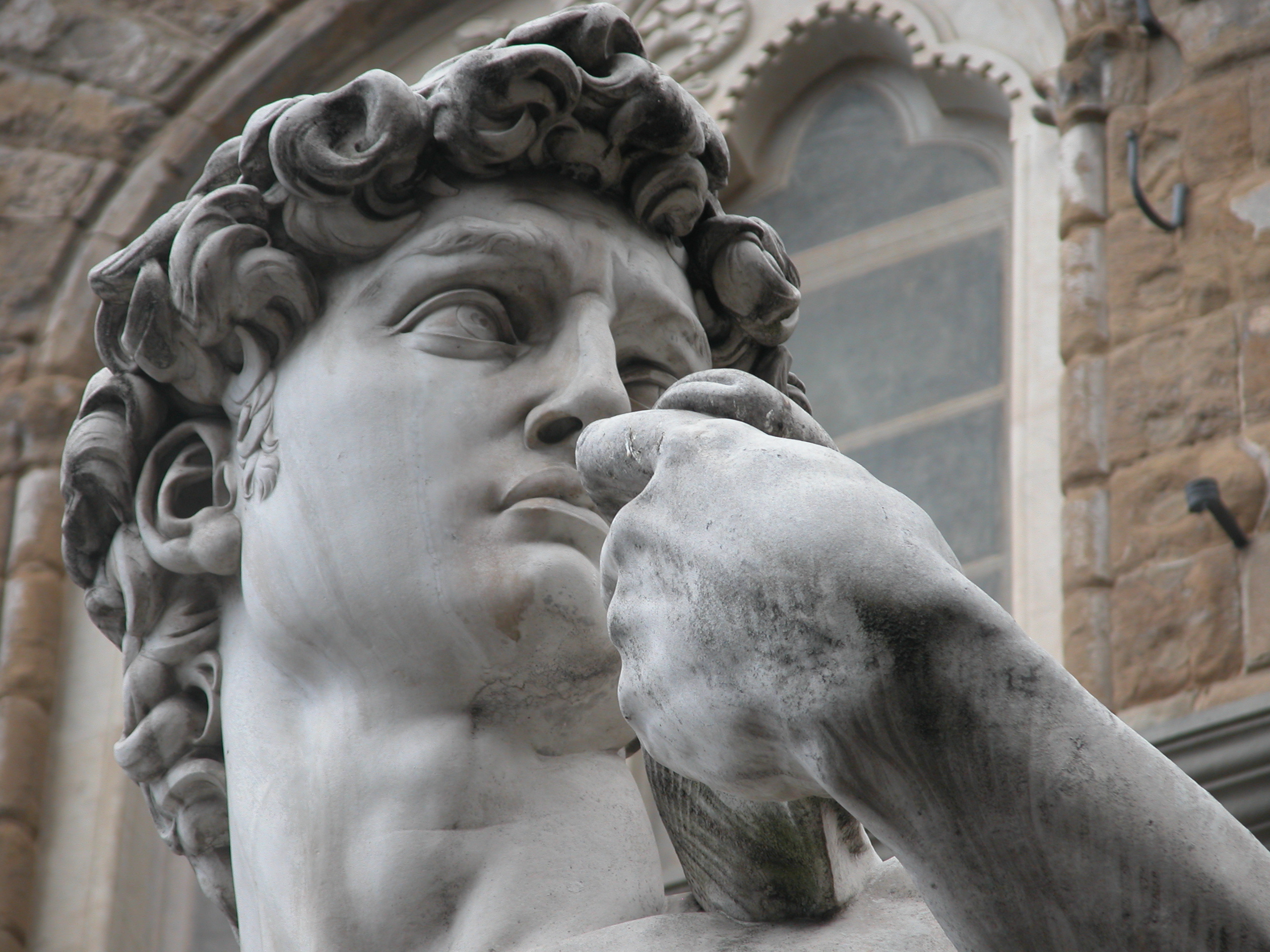


Q: How do artists engage with artistic lineage and influence without merely imitating?
A: This is a crucial aspect of developing a mature artist's mindset. Engaging with lineage isn't about copying; it's about deep conversation across time. I recommend a three-step process:
- Intense Study: Immerse yourself in the work of masters and contemporaries, not just aesthetically, but conceptually. What were they trying to achieve? What societal questions were they asking?
- Deconstruction: Break down their techniques, compositions, and color choices. How did they achieve that particular effect? For example, analyze their brushstrokes for texture, their color mixing for specific moods, or the underlying geometric structures in their compositions. This is different from merely admiring it.
- Synthesis & Departure: Once you understand their 'language,' deliberately mix it with your own unique voice and concerns (Principle 2). Ask, "How would I respond to this idea with my materials and my perspective?" Perhaps a master's use of light inspires your abstract forms, or their thematic concerns resonate with your own contemporary issues. This process allows you to absorb lessons, honor influences, and then powerfully step forward into your own authentic artistic style without imitation. It's an active form of artistic growth that prevents stagnation.
Conclusion: Your Unstoppable Creative Force
What I've come to deeply understand, through years of both struggle and exhilarating creation, is that inspiration is far from a mystical, unpredictable gift bestowed upon a chosen few. It is, instead, a dynamic, accessible interplay of consistent, deliberate effort, open and curious observation, fearless experimentation, and a profound, honest connection to what truly ignites your soul. The artistic journey is never a straight line; it's a magnificent, winding path, replete with soaring peaks of creative euphoria and challenging valleys of doubt. I've traversed that path, often stumbled, but consistently found my way back by grounding myself in these principles, much like the five core tenets we summarized earlier: Show Up Daily, Follow Your Fire, Embrace Imperfection, Be a Student of the World, and Prioritize Joy.
By consciously embracing them – showing up daily, engaging in deep reflection, relentlessly learning, fearlessly playing, and above all, prioritizing pure joy – you arm yourself not just to passively find inspiration, but to actively cultivate it, profoundly nurture it, and transform it into an enduring, vibrant companion on your ever-unfolding creative canvas. These principles, I've found, are deeply embedded in my own work you can see in my gallery. Remember this absolute truth: the real magic isn't in waiting for inspiration to grace you, but in diligently, joyfully building a life and a artist's mindset where it cannot help but thrive. It's about nurturing creativity from within, for life.
If you’re curious to see some of these principles in action, infused into my own work, I invite you to visit my gallery or even consider adding a piece to your collection through [buy]. Now, take a deep breath, perhaps pick one actionable tip from this guide, and go forth. What will you create today? Will it be your next masterpiece, or your next glorious 'bad' piece? The choice, and the magic, is yours!