The Magic of Motion: How Alexander Calder Revolutionized Art with Mobiles
Discover the engineering brilliance and artistic vision behind Alexander Calder's iconic mobiles. Explore his techniques, materials, and the physics that made his sculptures dance—even after 90 years.

The Magic of Motion: How Alexander Calder Revolutionized Art with Mobiles
I remember the first time I stood under a Calder mobile. It wasn’t in a museum—it was in a friend’s sun-drenched living room, and for a moment, I forgot how to breathe. The wire arms swayed gently, casting shifting shadows that felt like living poetry. That’s the thing about Calder’s mobiles: they don’t just hang. They breathe. They argue with the air. They’re like jazz sculptures—chaotic yet harmonious, messy but perfectly balanced. And if you’ve ever been captivated by one, you’re not alone. You’re witness to a revolution in art.
The Day Everything Changed
Imagine being an artist in the 1920s, painting static portraits of stuffy aristocrats. That was Calder. Trained as an engineer, he was making traditional sculptures when a trip to the zoo changed everything. He saw lions pacing, elephants trumpeting—animals alive with motion. Lightbulb moment: What if sculptures could move? Not like clockwork toys, but like nature itself?
That’s when Calder traded bronze for wire and paint for air. His first kinetic pieces were wire animals, but it got wilder. He started hanging delicate, abstract shapes from wires, letting gravity and a gentle breeze do the rest. Marcel Duchamp saw one and called it a “mobile” (French for “mobile”). The name stuck. Today, we can’t imagine art without it.
Calder’s Secret Recipe: Balance, Motion, and Joy
So how did he do it? Mobiles look like magic, but it’s pure physics—Calder just made it look like play. Here’s the breakdown:

1. Engineering as Art
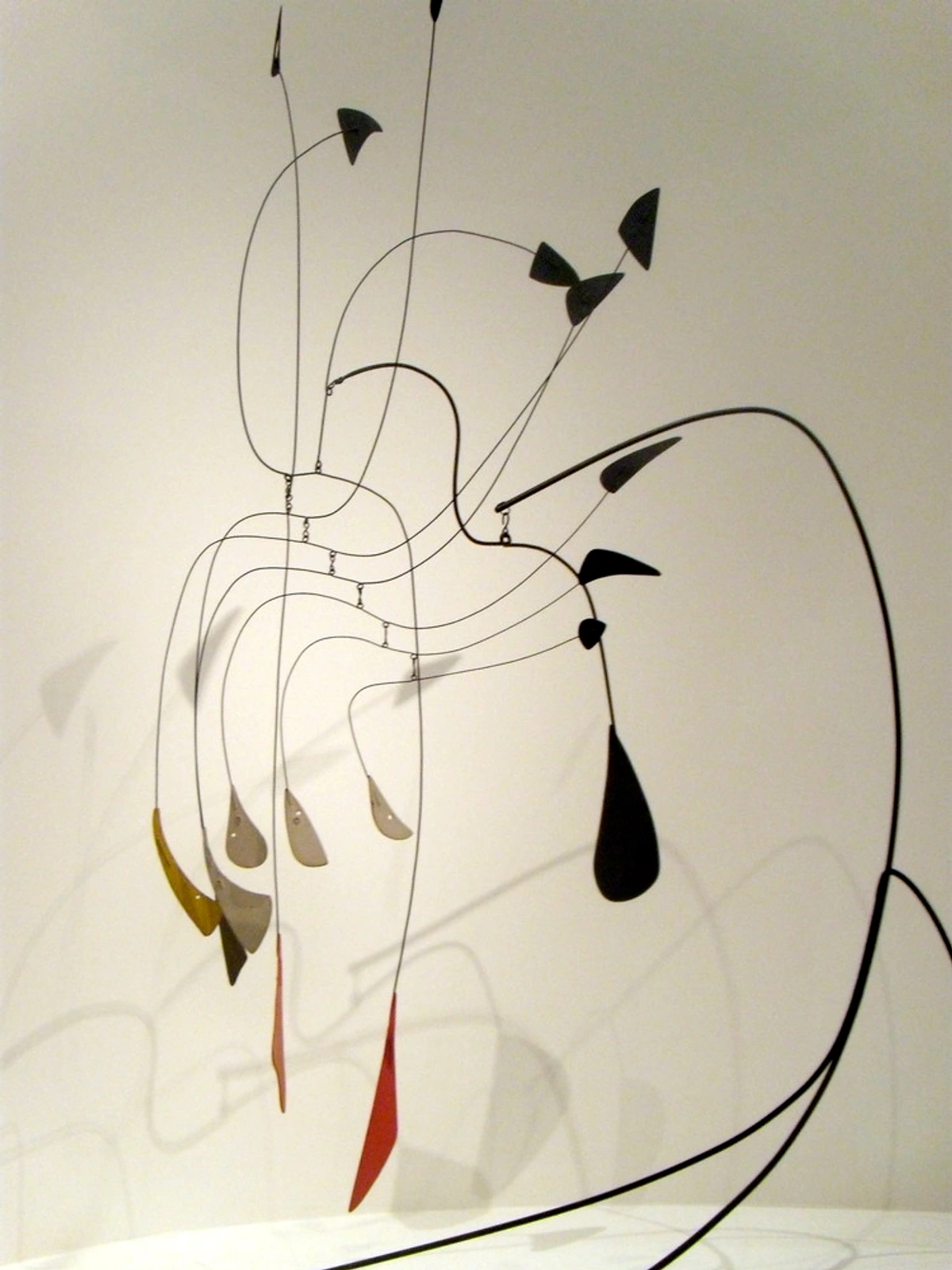
Calder didn’t see himself as artist or engineer. He saw himself as both. Every mobile was a puzzle of counterweights and centerpieces. The wire arms weren’t random—they were calculated to balance like a seesaw. If you push one side gently, it doesn’t fall. It just drifts. That’s because Calder understood torque and gravity intimately. I once tried to do this with a coat hanger and paper clips. My masterpiece collapsed in 3 seconds. Calder’s lasted forever.

2. The Dance of Physics
Motion isn’t an accident in a Calder mobile—it’s the star. Calder used asymmetry to create tension. A heavy red disk on one side? A curved wire on the other. The imbalance makes it sway, but it never tips over. It’s like a tightrope walker mid-balance. The air becomes a collaborator. A breeze in one room? The mobile dances differently. Sunlight through a window? Shadows become part of the art. It never gets old.

3. Color and Form: Calder’s Signature
Calder’s mobiles are like parties. They use flat sheets of steel punched into circles, triangles, and squiggles. Then he’d paint them in pure, unapologetic colors—fire-engine red, lemon yellow, cobalt blue—no shading, no nuance. Why? Because color, for Calder, was emotion. And motion? That was joy. Together, they’re life-affirming. No wonder his sculptures make you grin. Even when the lights are off, they cast colored shadows on the walls. It’s like owning a sunset that moves.
Key Principles Behind Calder's Mobiles
Principle  | How Calder Used It | Real-World Comparison |
|---|---|---|
| Counterweight | Precisely weighted placements to maintain balance without rigid structures | A bird’s wings in flight |
| Asymmetry | Visual imbalance that creates dynamic tension and natural movement | A pendulum clock’s swing |
| Kinetic Flow | Motion designed to interact with light, air, and viewer perception | Ribbons in the wind |
| Color as Form | Flat, vibrant pigments enhancing depth and shadow play | Stained glass windows |
Materials: Simple, But Genius
Calder’s toolkit was shockingly humble: steel sheets, hand-forged wires, and industrial paint. But his technique was revolutionary. He’d cut shapes with shears, drill holes, then connect wires like an organic skeleton. No screws, no welding—just careful bending. The steel sheets were often left raw or powder-coated, while wires were either bare or painted black. The result? Lightweight but durable. A six-foot mobile feels weightless, like a cluster of clouds caught in metal. I tried bending wire once. My fingers screamed. Calder? He did it for hours. Discipline is key.
Calder’s Material Arsenal
Material | Source | Calder’s Treatment | Purpose in Sculpture |
|---|---|---|---|
| Steel Sheets | Industrial suppliers | Cut into shapes, left raw or painted | Primary forms (disks, curves) |
| Iron Wire | Hand-forged or purchased | Bent into loops, arcs, and connectors | Structural framework and movement paths |
| Automotive Paint | Commercial spray paints | Applied in flat, bold, solid colors | Creates visual bounce and light reflection |
| Hand Tools | Shears, drills, pliers | Precision bending and joining | Enables intricate, organic connections |
The Spectrum: From Cradle to Cosmos
Calder’s mobiles weren’t one-size-fits-all. He made them for everyone:
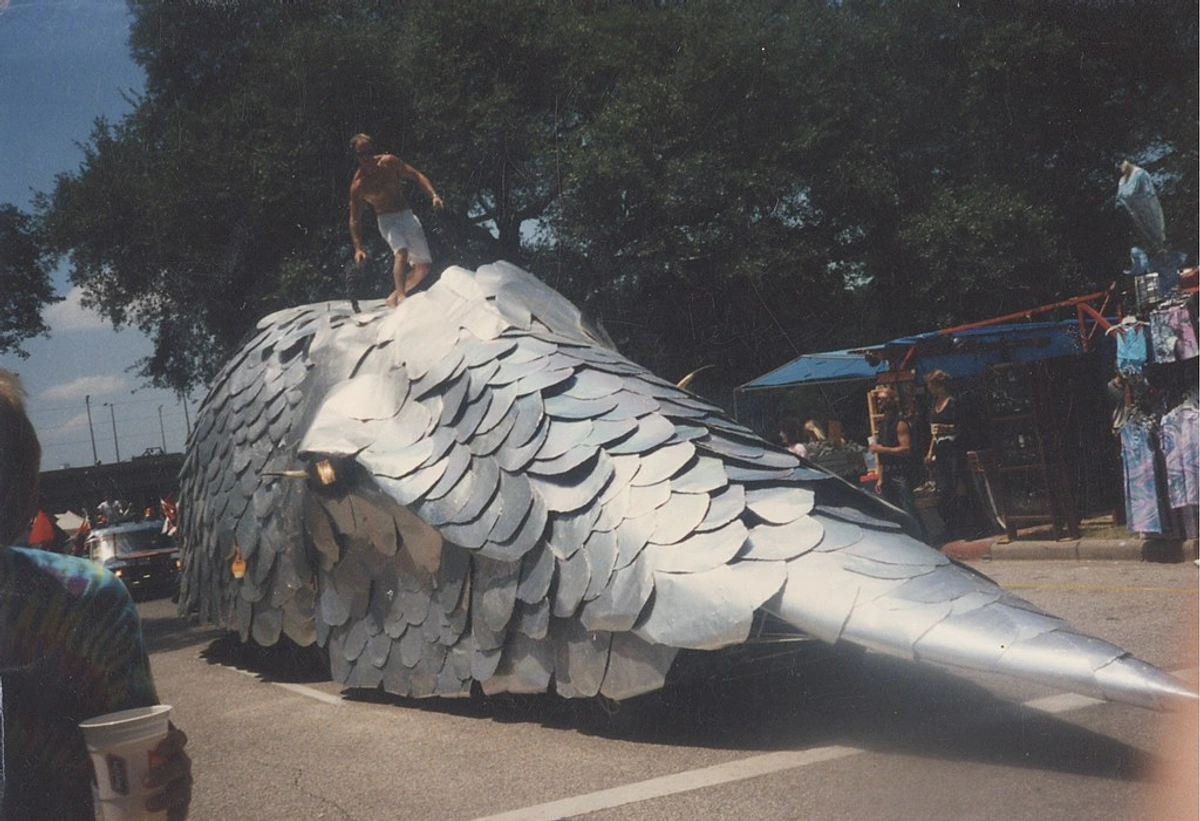
- Tiny Tabletop Mobiles: Delicate enough to sit on a desk, costing a few hundred dollars. Perfect for tiny apartments (hello, city dwellers!).
- Room-Sized Installations: These are room-shapers. In Tate Modern’s Turbine Hall, a Calder becomes the soul of the space. You walk around it, under it. It owns the room.
- Monumental Public Art: A 40-foot mobile in JFK’s airport? It guides travelers. A 60-foot piece in a plaza? It changes with the weather. Calder believed art should belong to people, not palaces. So he made it communal.
Why We Still Chase Calder’s Magic
Calder died in 1976, but his mobiles feel more now than ever. Why? They’re a rebellion against digital noise. In a world of pixels and autoplay videos, a Calder mobile is honestly analog. It responds you—to the beat of your footsteps, the sigh of your breath. No batteries, no apps, just connection.
And let’s be real: we need that. Anymore, I find myself staring at my phone, but Calder reminds me to look up. To notice how light bends steel. How air has personality. His art is a meditation. An act of presence. And in a chaotic world? That’s revolutionary.
FAQ: Your Calder Questions, Answered
Before we dive into the details, let me address some of the most common questions people have about Calder and his mobiles. I've had countless conversations with collectors, students, and casual admirers, and these questions come up again and again.
What makes a mobile different from a kinetic sculpture?
Great question! A mobile is specifically a hanging structure with balanced parts that move freely via air currents. A kinetic sculpture is any art with movement, like Duchamp's Rotoreliefs or a Tinguely machine. Mobiles are weightless; kinetic sculptures often rely on motors or mechanisms. Calder's genius? He made mobiles feel alive, not just mechanical.
But let me add some nuance here. While mobiles are a type of kinetic sculpture, what truly sets them apart is their relationship with gravity and air. Unlike many kinetic sculptures that use motors, gears, or other mechanical systems to create movement, mobiles harness natural forces. This creates a different kind of movement—one that's more organic, more responsive to the environment. Also, mobiles typically achieve their balance through careful weight distribution and leverage, rather than through mechanical constraints. This gives them a sense of freedom and spontaneity that mechanized kinetic sculptures often lack.
Great question! A mobile is specifically a hanging structure with balanced parts that move freely via air currents. A kinetic sculpture is any art with movement, like Duchamp’s Rotoreliefs or a Tinguely machine. Mobiles are weightless; kinetic sculptures often rely on motors or mechanisms. Calder’s genius? He made mobiles feel alive, not just mechanical.
How long do Calder mobiles last?
Forever, really. Steel doesn't rust much, and wire is incredibly durable. The only risk is damage from mishandling. One collector told me his father's 1930s mobile still swings perfectly. Treat them with respect, and they outlive you.
But durability isn't just about materials. Calder's construction methods were incredibly robust. He didn't just weld pieces together—he created interlocking systems where each element supported and complemented the others. This structural integrity means that even after decades, many Calder mobiles continue to move with the same grace and precision as when they were first created. Of course, proper care is essential. Exposure to extreme humidity, corrosive chemicals, or physical impact can damage even the most well-made mobile. But with proper care, a Calder mobile can indeed last for generations.
Forever, really. Steel doesn’t rust much, and wire is incredibly durable. The only risk is damage from mishandling. One collector told me his father’s 1930s mobile still swings perfectly. Treat them with respect, and they outlive you.
Can I make my own Calder-style mobile?
Absolutely! Start simple: Get wires, cardstock, and a small weight (like a washer). Cut shapes, balance them on strings, hang from a branch. The first one might wobble, but that's part of the charm. Calder started with wire animals; you start with paper moons. No wrong moves.
Making your own mobile is actually one of the best ways to truly understand Calder's genius. When you try to balance elements yourself, you begin to appreciate the mathematical precision and artistic intuition involved. You'll find yourself thinking about weight distribution, leverage, and the relationship between elements in ways you never have before. Don't worry about making something that looks "professional"—focus on creating a movement that feels right to you. The joy of mobile-making is in the process, in the dialogue you create between different elements. And who knows? Your first mobile might just be the beginning of a lifelong passion.
Absolutely! Start simple: Get wires, cardstock, and a small weight (like a washer). Cut shapes, balance them on strings, hang from a branch. The first one might wobble, but that’s part of the charm. Calder started with wire animals; you start with paper moons. No wrong moves.
Are Calder mobiles a good investment?
If you're asking about money, yes—iconic ones sell for millions. But Calder wanted his art to be accessible. Smaller pieces are still affordable. As an investment? It's better to buy what makes you happy. A Calder that dances in your living room? Priceless.
Investment considerations are complex with Calder mobiles. The market for his work has been strong for decades, with major pieces regularly setting auction records. However, like with any art investment, provenance, condition, and historical significance all play huge roles. Smaller, more affordable mobiles from later in his career might not appreciate as rapidly as his major iconic works, but they still offer the aesthetic and emotional benefits of owning a Calder. And honestly, if you're buying art purely as an investment, you're missing the point. Calder's mobiles are meant to be lived with, to be experienced daily. The joy of watching a Calder mobile move and change throughout the day—that's the real return on investment.

If you’re asking about money, yes—iconic ones sell for millions. But Calder wanted his art to be accessible. Smaller pieces are still affordable. As an investment? It’s better to buy what makes you happy. A Calder that dances in your living room? Priceless.
What’s the best way to display a Calder mobile?
Light, light, light. Calder mobiles need space and airflow. Hang them near windows or fans (gentle ones!). Avoid dark corners. Let shadows become part of the art. I’ve seen them look magical under skylights at dawn. That’s the sweet spot.
The Lasting Wind
Walk into any modern art museum—MoMA, Centre Pompidou, even Zen’s gallery in Den Bosch—and chances are, a Calder mobile will stop you in your tracks. Not because it’s old, but because it’s alive. Calder didn’t just make art; he gave us a new way to see the world. To see physics as poetry. Motion as a conversation. And if you ever feel stuck, watching a Calder mobile can remind you: even chaos can dance beautifully if you know how to balance it.


P.S. If you want to see how Calder’s legacy lives on in contemporary kinetic art, or find your own colorful, abstract pieces to hang and love, explore our collection here. Art that moves? It’s the kind that stays with you.