
The Winged Victory of Samothrace: A Monument of Wind and Time
Uncover the dramatic history, artistic genius, and enduring legacy of the Winged Victory of Samothrace. Your ultimate guide to this Hellenistic masterpiece.

The Winged Victory of Samothrace: A Monument of Wind and Time
Have you ever stood before a sculpture and felt the wind in your hair? I'm serious. Last summer, I found myself dodging summer crowds at the Louvre when I turned a corner and saw her. Not just "saw" her—felt her. I remember exactly where my feet were planted on that polished marble floor, the air conditioning suddenly feeling inadequate against the energy radiating from this 2,000-year-old masterpiece. It wasn't just visual—it was visceral. That moment reminded me of standing on a cliff edge during a storm, feeling the wind tug at my coat, and suddenly understanding what true power feels like. This isn't a static museum piece; it's a frozen storm, a victory cry captured in marble. And it raises so many questions, doesn't it? Who was this goddess? How did she survive storms, war, and centuries? And why does she still stop people in their tracks? Let's unravel the story of the Winged Victory of Samothrace – a statue that breathes even when you're just looking at her.

The Birth of a Winged Goddess
First things first: who is she, really?
She's Nike, the Greek goddess of victory. Not just any victory, though. We're talking the dramatic, triumphal kind – think generals returning home, naval battles won, athletic achievements celebrated. The artist(s) (we'll get to that mystery) chose to portray her at the absolute peak of her glory. Imagine this: she’s just landed on the prow of a warship after a naval battle. Her wings are spread wide, her robes are whipping back in the wind, and her posture isn't just standing—it's descending. Descending with purpose. You can almost hear the splash of her feet hitting the wet deck.
This isn't a subtle, gentle victory. This is victory as a natural force – untamable, powerful, and utterly compelling. Created in the Hellenistic period (around 190 BC), she represents a shift from the idealized calm of classical Greek art. Hellenistic artists loved drama, emotion, and movement. Victory is all three in marble. Marble that, by the way, came from Paros – an island famous for its pure, luminous stone that catches light like no other.
The Stormy Recovery: A 19th-Century Treasure Hunt
Now for the part that sounds like a movie script. Imagine being on a Greek island in 1863, digging around an ancient temple dedicated to the Great Gods of Samothrace. That's exactly where French diplomat Charles Champoiseau was. He wasn't even looking for a giant statue – he was poking around religious ruins. But then, under piles of stones and dirt, he found fragments: a torso, some drapery, a wing. And the base of a pedestal with an inscription naming the general who commissioned it: Demetrius Poliorcetes.
The problem? The head and both hands were missing. And she was in pieces, scattered like puzzle pieces left out in the rain. Champoiseau shipped everything he found back to France. The Louvre put her on a pedestal and... well, they did their best. For decades, she looked like she was balancing on a staircase, her missing front half making the whole scene feel unfinished.
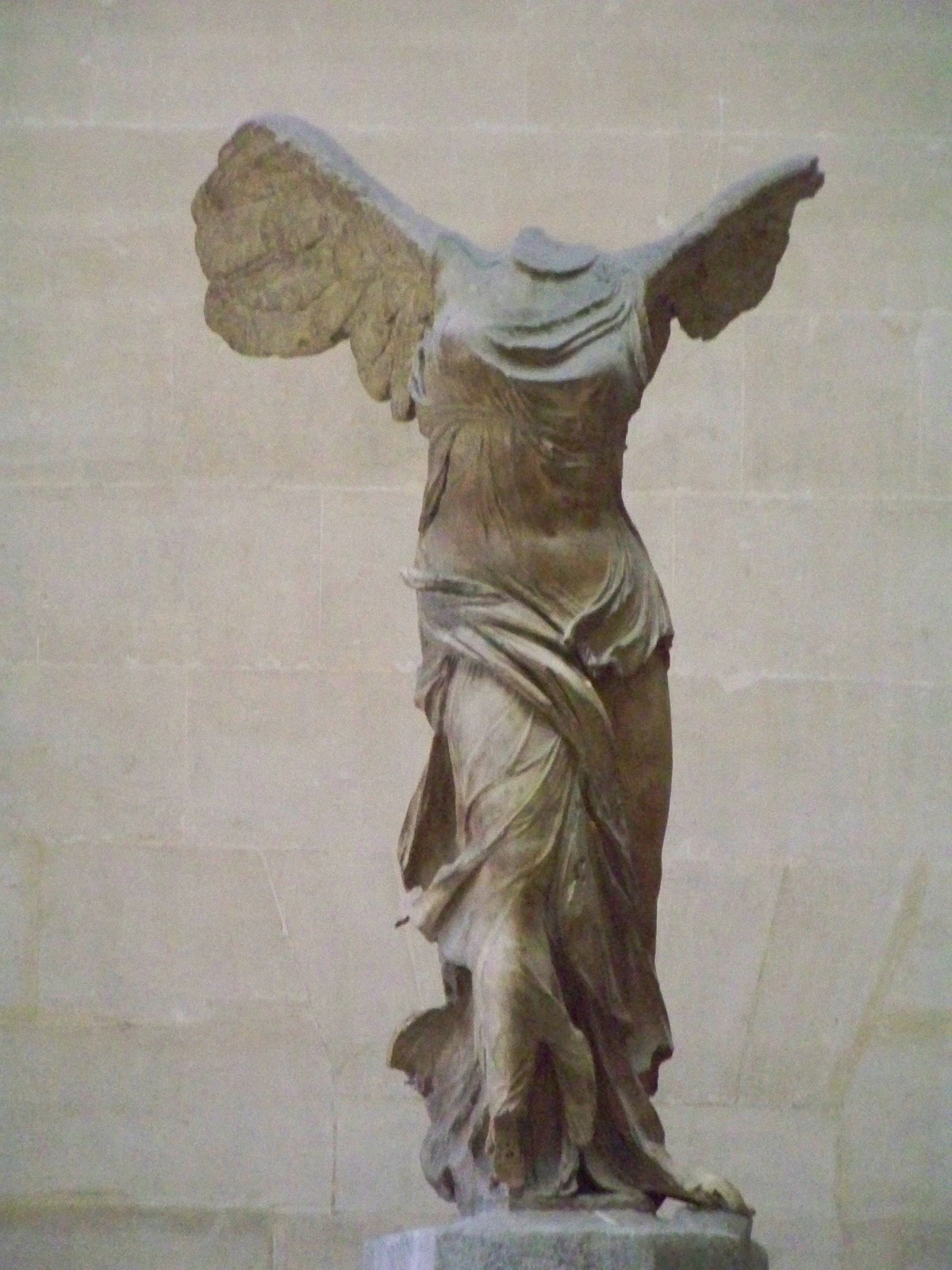
But here's what makes this story even more fascinating: Champoiseau actually found the statue in two separate expeditions. His first discovery in 1863 yielded the major fragments, but it was his second visit in 1875 that revealed even more pieces, including the crucial right wing. This wasn't just luck – it was systematic archaeology at a time when "treasure hunting" was still more common than scientific excavation.
Enter the real detective work. In the 1950s, archaeologists led by Karl Lehmann went back to that same spot on Samothrace. And guess what they found? More pieces! The missing hand, the fingers, the base of the ship. They even found the right front foot, poised as if still touching the ship's deck. Put all together, you get the breathtaking figure we see today – not just a statue, but a complete moment in time, recovered from the earth.
Lehmann's work was revolutionary because he wasn't just looking for art – he was reconstructing the entire monument. He understood that the Victory wasn't meant to stand alone; she was part of a larger architectural complex. His team discovered the ship's base (gala) and the foundation walls of the sanctuary's propylon (monumental gateway), allowing scholars to finally understand how the statue originally appeared in its setting.
The Anatomy of Victory: What Makes Her So Special?
Let's break down her magic. It’s not just one thing; it’s the symphony of details:
- Movement: That forward-leaning stance? It’s called contrapposto. Her weight is on one leg, making the other leg look relaxed as if she’s about to take another step. This isn't frozen; this is captured motion.
- Fabric as Drama: Look at those robes. They aren’t just folded fabric; they’re sculpted to look like they’re being ripped by wind. The deep folds, the tension in the cloth – it’s all designed to show her descent through the sky. Marble that looks like cloth is pure genius.
- The Wings: These aren’t just decorative feathery things. They’re structured, powerful, and create a sense of immense speed. You believe she could be airborne.
- Scale: She’s over 5 meters tall (over 18 feet). She was designed to be monumental, to dominate the space where she stood – on the prow of a ship monument, probably inside a naos, a sacred temple building. She was meant to be seen from afar, her silhouette silhouetted against the sky.
The Victory's Afterlife: From Ancient Ship to Modern Icon
So, why does a 2,000-year-old statue feel so relevant today? Because great art transcends its time. Her image has been borrowed for everything from ship figureheads to political posters, film costumes (think Clash of the Titans), and contemporary art. She’s not just a historical artifact; she’s a symbol of triumph itself.
I remember seeing a print of her in my college art history book. It felt distant. But when I finally saw her in person? I understood the instant connection. There’s a raw, human energy in that posture. It speaks to that feeling of overcoming obstacles, of a hard-won moment of success. It’s art that speaks to the fighter in all of us. You don't need to know ancient Greek history to feel her victory. You just need eyes and imagination.
Samothrace Today: The Original Stage
You can, of course, see the Victory at the Louvre in Paris. But if you want to feel the full story, consider visiting Samothrace itself. That windswept island in the northern Aegean is where it all happened. You can walk the ruins of the Sanctuary of the Great Gods and try to picture her standing tall on her ship monument, the sea breeze lifting her robes just as the sculptor intended. It’s a pilgrimage for anyone who connects with the statue’s spirit.

Frequently Asked Questions
Q: Why are her head and hands missing?
A: That’s one of art history’s great mysteries! They weren’t removed later; she was likely displayed this way. The focus was on the moment of descent and the feeling of wind and power, captured in the torso, wings, and flowing fabric. Adding a perfectly serene head or detailed hands might have disrupted the drama. It’s an artistic choice emphasizing the dynamic whole over realistic completeness.
Q: Is she really standing on a ship?
A: Yes! She was originally the centerpiece of a grand monument celebrating a naval victory. She stood firmly on the prow (front) of a sculpted warship. The ship’s base and a propylon (monumental gateway) were part of the original display on Samothrace. The Louvre display only hints at this ship prow base.
Q: Who exactly was the sculptor?
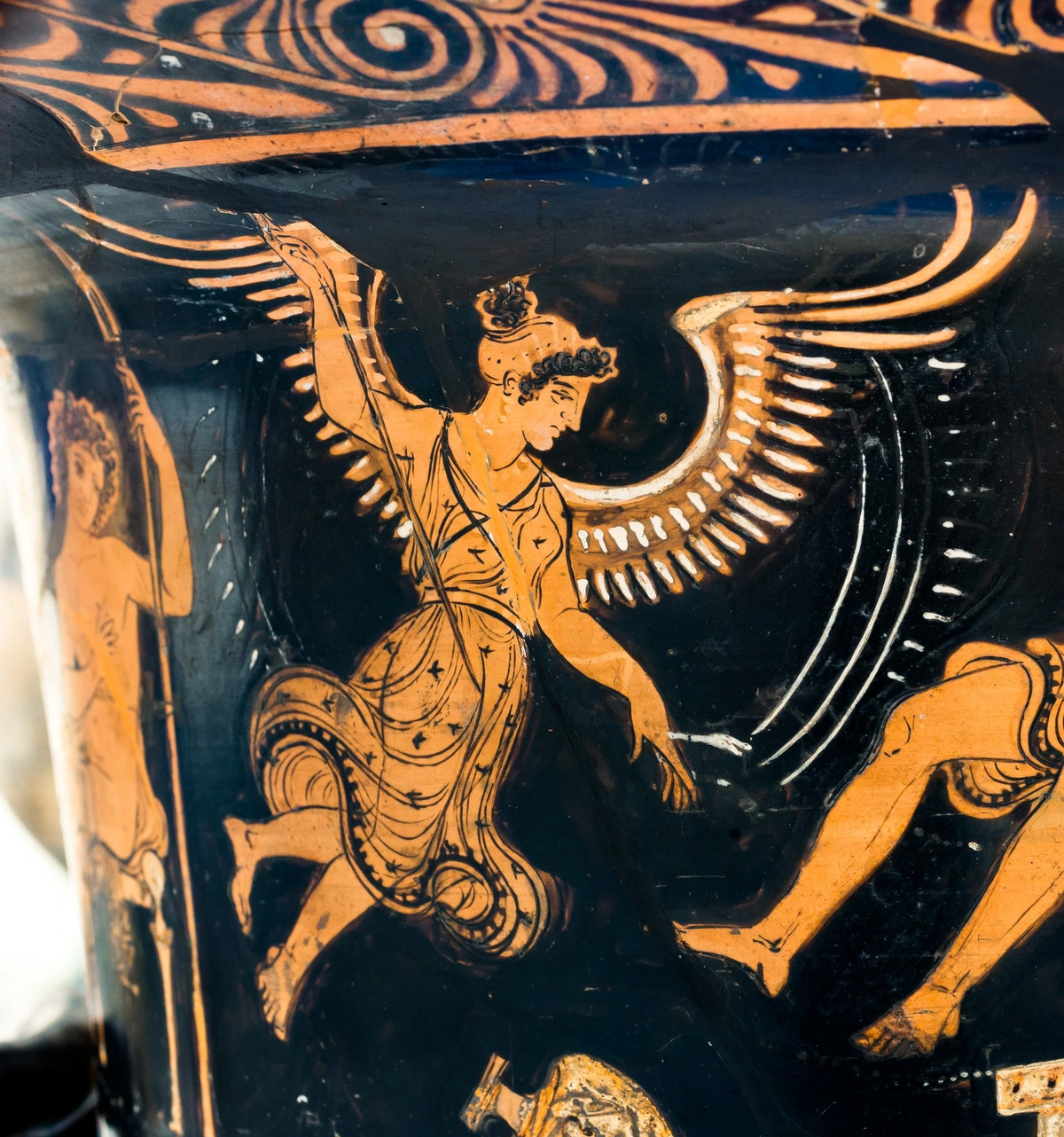
A: We don’t know for sure! No signature was ever found. Art historians attribute her to the Rhodian workshop, a school of sculptors from the island of Rhodes famous for their dramatic, dynamic style of the late Hellenistic period. The level of technical mastery suggests a master sculptor or a leading workshop.
Q: Why is she so often displayed on a staircase?
A: That's a 19th-century choice by the Louvre. When she arrived, she lacked the lower body and the ship prow that would have grounded her naturally. Placing her on the Daru staircase gave her height and made the upward thrust of her wings more prominent. While visually powerful, it doesn't reflect her original context of being firmly planted on a ship.
Interestingly, the staircase display creates a different kind of drama – instead of descending, she appears to be ascending. This was actually quite deliberate by the Louvre curators of the time, who wanted to emphasize her divine, ethereal quality. Today, many art historians argue that while this display is visually striking, it creates a misunderstanding of the statue's original meaning. The Louvre has experimented with different display arrangements over the years, but the staircase has become so iconic that changing it would be like moving the Mona Lisa from her traditional spot.
Q: Were ancient Greek statues really this colorful?
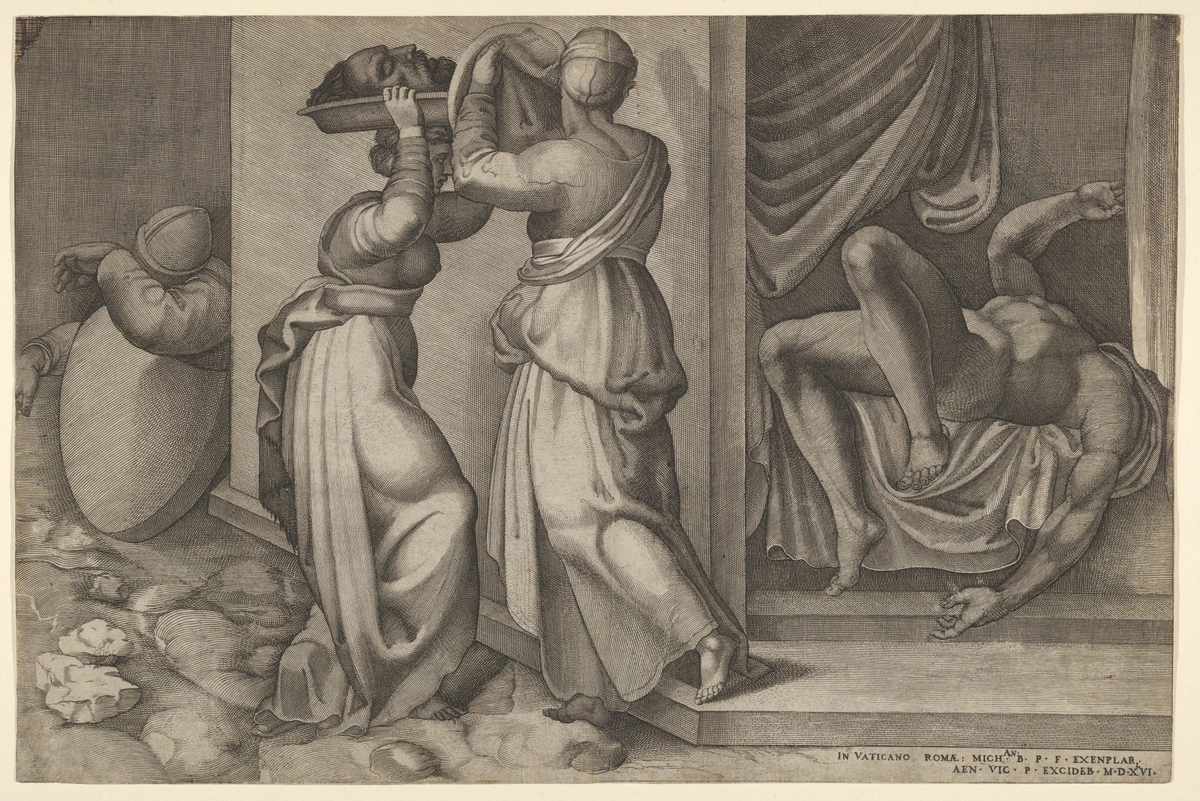
A: Yes! We often think of white marble, but ancient statues were brightly painted (polychromy). Traces of pigment have been found on Victory’s base and other Hellenistic sculptures. Imagine her drapery deep blue, her wings fiery red or gold, her skin subtly tinted. The whiteness we see today is the marble itself revealed after centuries of weathering and cleaning.
Q: Can I buy a replica or inspired art?
A: Absolutely. While genuine ancient artifacts aren't for sale, many artists draw inspiration from Victory’s powerful form and symbolic energy. If you're looking for contemporary pieces that capture that spirit of dynamic triumph, exploring art collections that celebrate movement and form might lead you to something that resonates deeply. You can discover artworks that evoke similar energy here.
The Endless Victory
So, what is the Winged Victory of Samothrace? She's a testament to human skill, capturing a fleeting moment of divine triumph in stone. She’s a survivor, weathering centuries of neglect and rediscovery. She’s an icon, instantly recognizable across centuries and continents. But most importantly, she’s a mirror. She reflects our own desires for victory, our recognition of struggle overcome, our awe at beauty that moves us. She doesn’t stand in a museum; she lands in the imagination. And there, she’s still flying.




[Image: The Winged Victory of Samothrace at the Louvre]
credit: Carole Raddato, licence: CC BY-SA 2.0