Trompe l'oeil: Art's Ultimate Illusion & My Abstract Connection
Explore Trompe l'oeil's history, techniques, and psychological effects. An artist's personal guide to visual deception, linking ancient illusions to modern abstract art.

The Art of Deceiving the Eye: My Deep Dive into Trompe l'oeil & Why We Keep Falling For It
Sometimes, I'm a bit of a sucker for a good trick. Not the malicious kind, mind you, but the delightful, unexpected kind that makes you pause, do a double-take, and then crack a smile. I remember once, walking through an old European town, I swore I saw a cat peering out from a window above a bakery. My brain, bless its heart, was ready to accept this perfectly normal street scene. Then, bam! – the illusion broke, and I realized it was painted directly onto a flat brick wall, complete with a beautifully rendered shadow. That delightful jolt when your eyes insist on one reality, but your brain quickly catches on, processing it as an illusion—that's the feeling that hooks me every time, and it’s the very essence of what Trompe l'oeil artists masterfully achieve. It’s a playful mind game, isn't it?
This fascination with clever visual trickery is precisely what draws me to this art form. The term, by the way, literally means "to deceive the eye" in French, which pretty much sums it up! This concept of playful deception resonates deeply with the abstract world I inhabit as an artist. While I don't paint realistic illusions in the traditional sense, I aim to challenge perception, often creating my own kind of visual 'trick' where depth, emotion, and movement emerge from flat canvases. I invite you to see new realities through color and form, not by fooling your eye about what is there, but by shifting your perception of how something can feel or exist. So, consider this your definitive guide—a journey into what is trompe l'oeil, where we unravel its ancient past, dissect ingenious techniques, trace its evolution to vibrant modern murals, and explore how its playful spirit echoes in my own abstract work, prompting us to question what 'real' truly means in art and beyond.
The Magic Behind the Mirror: How Trompe l'oeil Plays with Our Minds
So, how exactly do artists achieve this remarkable feat of visual deception? What's the secret sauce? It truly comes down to a masterful understanding of the very foundations of perspective in art, light, shadow, and a meticulous, almost obsessive attention to detail. Trust me, getting it right is harder than it looks! (Honestly, my attempts at perfectly aligning perspective often end up looking more like a toddler's finger painting, so I have immense respect for the precision required.)
Artists aren't just painting a picture; they're engineering an illusion, carefully constructing a false reality that often relies on a singular, fixed viewing point for maximum impact. It's why some grand historical works only truly "work" from one specific spot in a room. Step a little to the left or right, and poof!—the magic breaks.
That brief, compelling moment, where your eyes insist on one reality but your brain quickly catches on, grappling with conflicting information – that's the essence of trompe l'oeil's captivation. Our brains are incredibly efficient, constantly taking shortcuts and making automatic assumptions to quickly process the visual deluge we encounter daily. This efficiency, honed by evolution to help us survive and react swiftly, is precisely what trompe l'oeil artists tap into. We're wired to construct a coherent 3D world from 2D input, and these artists are experts at giving us just enough of the right cues to trigger that internal processing, until bam! – the illusion reveals itself, and we realize we've been delightfully tricked.
This isn't just random chance; it taps into how our brains are wired. We're constantly trying to make sense of the world, filling in gaps and making assumptions based on past experiences and visual cues. This is a concept known as perceptual constancy, where our brains automatically adjust for things like distance and angle. It's why you can recognize a friend's face whether they're across the street or right in front of you, or why a dinner plate still looks round even when viewed from an angle. Trompe l'oeil artists understand these shortcuts and cleverly exploit them, providing just enough information for our brains to construct a false but convincing reality. It's like seeing a familiar object in dim light and misidentifying it for a second; your brain jumped to a conclusion too quickly, and the artist played right into that built-in assumption. They also skillfully leverage Gestalt principles of visual perception, such as closure (our tendency to fill in gaps) and proximity (grouping elements close together) to help our brains perceive a complete, three-dimensional form where there is none. Essentially, these are the fundamental building blocks our brains use to make sense of the visual world, and trompe l'oeil artists are masters at gently nudging those blocks into an unexpected configuration.
Artists meticulously render details and expertly employ foreshortening, where objects appear compressed to create that vital illusion of depth. Think of how a train track appears to converge in the distance, or how a painted hand reaching out of a canvas seems to extend convincingly towards you. It makes something like a book painted on a table appear to be physically jutting into your space. This isn't just about making things smaller in the distance; it's about precisely calculating the distortion required for elements closer to the viewer to appear disproportionately large. Imagine a painted figure's leg seemingly kicking directly out of the canvas, or a cylinder's top appearing as an ellipse receding into space. It's all about mimicking the way light and form behave in a true 3D environment, tricking your eye into accepting a flattened reality as multi-dimensional.
They also paint shadows that perfectly mimic how light would fall on a three-dimensional object. For instance, a painted column might seem to recede convincingly into a wall, or a vaulted ceiling might appear to soar into the heavens, all thanks to a carefully calculated application of perspective. Take Andrea Pozzo's awe-inspiring ceiling in the Church of Sant'Ignazio in Rome; he didn't just paint a ceiling, he painted an entire open sky with columns extending upwards, using foreshortening to make them appear to recede into infinity. It's an incredible feat that makes the church feel twice its actual height by creating the illusion of a boundless, painted heaven. This technique, known as quadratura, is a prime example of foreshortening applied to architectural painting, making flat surfaces appear to curve and recede into vast, illusory spaces. Your brain, for a glorious moment, believes it's seeing immense space. When I look at Pozzo's ceiling, I can only imagine the sheer dedication and vision required—it's truly humbling. Beyond Pozzo, another masterful example is Mantegna's Camera degli Sposi in Mantua, where a painted oculus on the ceiling creates the illusion of an open sky with figures looking down, making the room feel like a grand open-air pavilion. And if you're looking for an even more extreme play on perspective, anamorphosis is a fascinating related technique where an image appears distorted unless viewed from a specific angle or with a special mirror, creating an almost magical reveal of the hidden illusion.
Artists also master techniques like chiaroscuro, a painting technique that uses strong contrast between light and dark to create volume and depth, making objects appear to pop off the surface. Think of the dramatic lighting in a Caravaggio painting, where figures seem to emerge from deep shadows—it’s like the dramatic spotlight in a play, making certain elements leap out while others recede into mystery. In trompe l'oeil, chiaroscuro makes a painted curtain appear to billow with palpable weight, or a sculpted figure seem to emerge from the wall with convincing shadows and highlights, even though it's perfectly flat. It’s about building up layers of darks and lights to suggest not just form, but the very texture and materiality of an object that isn’t there. When I consider chiaroscuro, I'm fascinated by its power to create an emotional weight and depth even in abstract forms, where I use contrasting colors and bold lines to achieve a similar dramatic effect, albeit without literal representation. You can dive deeper into this fascinating technique with our guide on chiaroscuro in art. Artists also employ a vanishing point in a mural to extend a corridor into infinity, tricking your mind into seeing far beyond the wall. It's truly mind-bending when done well, relying on our innate visual processing to create a momentary, delightful glitch in our reality.
Historically, artists often worked with fresco or oil paints on plaster and canvas, carefully layering pigments to build up these convincing illusions. Think of the meticulous preparation involved, starting with raw pigments, grinding them into binders, applying layers of gesso to create the perfect ground, then building up glazes with fine brushes—each stroke contributing to the grand deception. This ambition for visual trickery isn't limited by scale either; trompe l'oeil ranges from intimate, cabinet-style pieces, designed to be viewed up close and personal, to grand architectural illusions covering thousands of square feet. The challenge and impact change dramatically with scale, from fooling a single viewer in a private space to transforming an entire public square.
Today, artists might also use acrylics for their quick drying time, vibrant color, and weather-resistant properties – crucial for large-scale outdoor murals, where durability against the elements is paramount. For example, a modern muralist might use acrylics to paint a vast cityscape illusion on a building facade, knowing it will withstand years of sun and rain. Digital tools are frequently employed for precise planning and projection before painting on large surfaces, blurring the lines between traditional craftsmanship and modern technology. Contemporary artists often utilize digital brushes, projectors for initial sketching, and sophisticated stencils to achieve their hyper-realistic effects. These tools allow for unparalleled precision in calculating complex perspectives and foreshortening, ensuring the illusion holds up, even across vast areas. This evolution of tools—from the slow, deliberate layering of fresco to the quick precision of digital aids—is a fascinating story in itself, revealing how the ambition to deceive the eye has always pushed the boundaries of available technology and how artists adapt to new mediums, all in pursuit of that perfect illusion.
And speaking of those wonderful moments of visual trickery, I'll never forget seeing a smaller trompe l'oeil piece that looked like a stack of papers tucked into a frame, almost popping out. My immediate instinct was to reach out and grab one. The slight embarrassment when I realized it was entirely flat was quickly replaced by admiration for the artist's skill. That's the feeling this art form aims for: that delightful, momentary confusion that makes you appreciate the craft even more. It's like a visual riddle, and the artist is always one step ahead. It makes you wonder, doesn't it, what other 'solid' realities are merely artful illusions waiting to be discovered? But how did artists in the past first discover and hone these mind-bending abilities?
A Brief History of Tricking the Eye: From Ancient Legends to Modern Murals
So, how did this playful deception get its start, and how have these techniques evolved through time? This art form has a surprisingly long and rich history, proving our fascination with illusion isn't new. While the term 'trompe l'oeil' is French, the concept of visual trickery is as old as art itself. Even in ancient Egypt, artists used illusionistic techniques in tomb paintings, employing overlapping figures and subtle atmospheric perspective to create a sense of depth and bring scenes of daily life or the afterlife to vivid, almost tangible reality, hinting at a long-standing human desire to bend reality through art.
But legend tells that in ancient Greece, two rival painters, Zeuxis and Parrhasius, competed for the title of the greatest artist. Zeuxis, proud of his skill, painted grapes so realistic that birds flew down to peck at them. A true marvel! But then came Parrhasius. He unveiled his painting, which was hidden behind a curtain. When Zeuxis, confident of his victory, asked him to pull back the curtain to reveal the masterpiece, Parrhasius smiled, because the "curtain" was his painting. He hadn't just fooled birds; he had fooled a fellow artist! Now that's what I call a mic drop moment, a testament to the sheer power of visual illusion. And honestly, it makes me wonder if Zeuxis ever truly forgave him!
This early rivalry set the stage, and centuries later, in ancient Rome, trompe l'oeil truly flourished. It wasn't just decorative; it served practical purposes, making small, windowless rooms feel open to grand vistas or providing the illusion of expensive architectural elements. Imagine transforming a cramped, solid wall into a sprawling, opulent garden or a grand hall with towering marble pillars, simply with paint. This created specific ambiances, turning mundane spaces into playful ludus scenes, or even subtle propaganda, like depicting military triumphs or grand historical narratives to elevate the status of the patron. The ability to seemingly expand space or create costly marble effects with mere paint was a true status symbol.
This tradition of optical trickery continued to subtly influence art through the medieval period. While not always focused on hyper-realistic illusion, medieval artists often employed forms of visual deception to enhance narratives, using symbolic representations to create depth or draw the viewer's eye to specific, spiritually significant elements, before the illusionistic explosion of the Renaissance.
Fast forward to the Renaissance and Baroque periods, often commissioned by wealthy patrons or religious institutions like the Vatican or influential families such as the Medici, trompe l'oeil was used extensively in churches and palaces. These periods, with their emphasis on grandeur and dramatic storytelling, provided the perfect canvas for illusionistic art. Masters like Filippo Brunelleschi and Leon Battista Alberti laid the theoretical groundwork for linear perspective during the early Renaissance, providing the essential tools that later trompe l'oeil artists would exploit with such dazzling effect. Baroque architects and artists, in particular, embraced trompe l'oeil to extend physical spaces and create breathtaking heavenly visions in churches, enhancing the spiritual experience. Think of artists like Andrea Pozzo who perfected quadratura, making ceilings appear to open up to the sky or endless domes, such as his breathtaking work in the Church of Sant'Ignazio in Rome.
Later, in the 17th-century Dutch Golden Age, artists like Samuel van Hoogstraten elevated trompe l'oeil to a fine art, often creating 'perspective boxes'—actual wooden boxes with peepholes, meticulously painted on the inside to create incredibly convincing three-dimensional scenes when viewed from the correct angle. It was like stepping into a miniature, self-contained world of pure illusion, often depicting detailed domestic scenes or fanciful architectural spaces, showcasing incredible technical virtuosity and a deep understanding of optical effects. Even in the 18th and 19th centuries, while grand architectural illusions became less common, the playful spirit of trompe l'oeil found new life in intimate cabinet pictures and quodlibet paintings. These smaller works often depicted arrangements of everyday objects—letters, tools, prints, or even flies—painted so realistically they seemed to be physically present, tucked into a frame or lying on a canvas. Imagine Cornelis Gijsbrechts' Trompe l'oeil with Studio Wall and Eels, where letters, a comb, and other paraphernalia are seemingly tacked to a board, so convincing you'd reach out to touch them. They were designed to surprise and amuse a single viewer, like a visual puzzle, proving that our love for being fooled, even in a small way, never truly fades.
These works not only showcased immense artistic skill but also often served to glorify religious or political power. It's a fascinating leap from fooling birds to elevating deities and monarchs. I always marvel at the sheer dedication required for such large-scale, intricate deceptions. The sheer scale and ambition of these projects, often covering thousands of square feet, required not just artistic talent but also a profound understanding of architecture and engineering, a true collaboration between art and science. Did you know that some Renaissance trompe l'oeil paintings incorporated actual architectural elements, seamlessly blending paint with reality to heighten the illusion? It's a level of commitment that truly blows my mind.
In modern times, its spirit has taken to the streets, the stage, and even digital screens. Muralists around the world use buildings as their canvases, transforming drab brick walls into breathtaking scenes that defy logic and delight passersby. Artists like John Pugh or Julian Beever (or even Edgar Mueller, if you're looking for mind-bending street art) are renowned for their incredible 3D pavement and wall art, using techniques that range from precise chalk work on urban sidewalks to large-scale, intricate spray painting on building facades. They literally make streets appear to open into canyons or characters seem to emerge from flat surfaces, often incorporating the existing architectural features into their illusions. Creating these large-scale outdoor illusions comes with its own set of unique challenges: from precise perspective planning for multiple viewing angles (a much harder task than a single fixed point!), to weatherproofing and material durability, and navigating complex issues like city permits, community approval, and funding! It's enough to make you want to just paint a nice, flat, abstract canvas instead, isn’t it? This evolution of techniques and tools from ancient fresco to modern digital projection and durable acrylics showcases humanity's enduring desire to challenge perception. And it's particularly interesting to consider the ephemeral nature of chalk pavement art, which is designed to be washed away, offering a fleeting, momentary deception, in stark contrast to the permanence sought by traditional fresco painters.
Beyond public art, you'll also find trompe l'oeil subtly at play in film and theatre set design, creating immersive backdrops and props that transport audiences to other worlds without needing elaborate physical constructions. In the digital realm, it's integral to creating immersive environments in video games, virtual reality, and themed venues like amusement parks or escape rooms. It's truly amazing how a technique dating back millennia still finds fresh, relevant expressions in our hyper-visual world, proving that our fascination with illusion is timeless. And it even pops up in advertising or branding, where a clever visual illusion can create an unforgettable, engaging experience, making a product or message literally pop off the page or screen.
Trompe l'oeil vs. Photorealism, Hyperrealism, Surrealism & Magic Realism: Where Do the Lines Blur?
This is where the artistic waters get a little murky, and honestly, pretty fascinating! I often find myself clarifying the distinctions between trompe l'oeil and other art movements that, at first glance, might seem similar because they all play with reality or highly realistic depictions. Before we dive into a comparison, it’s worth a quick mention of Photorealism. Emerging in the late 1960s, Photorealism aimed to reproduce images with the exactness of a photograph, often projecting photos onto canvases to achieve incredible fidelity. It was a groundbreaking step in depicting reality with extreme detail, paving the way for the even more intense focus of Hyperrealism. As an artist, understanding these nuances is crucial, not just for categorization, but for appreciating the distinct intent behind each stroke and choice. So, to really nail down what makes trompe l'oeil unique, let's break down how it stacks up against some of its artistic cousins.
Feature  | Trompe l'oeil | Hyperrealism | Magic Realism | |
|---|---|---|---|---|
| Primary Goal | Create a 3D illusion on a 2D surface. | Create photographic-like reproductions of reality. | Unlock the subconscious, present dreamlike imagery. | Integrate magical elements into realistic settings. |
| Primary Artistic Intent | Playfully deceive the eye about physical presence. | Comment on perception/reality through extreme detail. | Explore psychological reality and dreams. | Elevate the mundane, question perceived reality subtly. |
| Key Differentiator | Manipulates spatial perception directly to fool the eye, aiming for a "gotcha!" moment. | Exaggerates sensory perception through detail to observe reality intensely, often with an uncanny effect. | Dislocates rational perception to reveal inner states, often unsettling reality with bizarre juxtapositions. | Presents the fantastical as normal, blurring reality without overt trickery. |
| Example | Painted window that looks like you can step through. | Highly detailed portrait with visible pores. | Melting clocks, illogical juxtapositions. | A person floating while peeling potatoes, treated as commonplace. |
| "Deception" | A playful wink at physical reality, a momentary visual prank. | An intense, almost startling fidelity to the visible world. | A profound questioning of what constitutes 'real'—often unsettlingly so. | A subtle, matter-of-fact blending of the real and the impossible, without trying to visually fool the eye. |
| Artistic Medium/Approach | Often painting/mural, fresco, digital planning | Painting, sculpture, digital art, photography | Painting, sculpture, photography, film, writing | Painting, literature, film |
| Viewer Experience / Emotional Impact | A delightful jolt of surprise, playful confusion, wonder. | Awe at technical skill, contemplative observation, sometimes an uncanny familiarity or unsettling realism, occasionally a sterile or detached quality. | Intrigue, unsettling, challenging, dreamlike, often profound discomfort. | Wonder, contemplation, a sense of quiet marvel, a subtle questioning of reality. |
So, my take? Trompe l'oeil is definitely the playful trickster of the group. It's a direct, almost cheeky challenge to your eyes, aiming for that "gotcha!" moment where you laugh at being fooled. Hyperrealism, while incredibly skilled, feels more like holding a magnifying glass to reality, urging you to truly see the mundane in extraordinary detail—it’s less about illusion and more about intense, almost unsettling observation and fidelity to the visible world. When I look at a hyperrealistic painting, I'm struck by the sheer technical skill, but it often leaves me with a sense of quiet observation rather than playful interaction. And Surrealism? Well, that's the one that digs deep into your dreams and nightmares, making you question the very fabric of existence, as explored in the enduring legacy of surrealism. It's a psychological journey, not a physical trick. And then there's Magic Realism, which I find particularly interesting because it presents the impossible as simply part of the possible, without trying to deceive your eye or jar your senses, but rather to expand your understanding of reality. Each is fascinating in its own right, but they truly aim for different targets in our minds. In essence, while all these movements play with our perception of reality, trompe l'oeil seeks a momentary visual prank, hyperrealism an intense fidelity, surrealism a profound psychological inquiry, and magic realism a subtle integration of the fantastic into the ordinary.
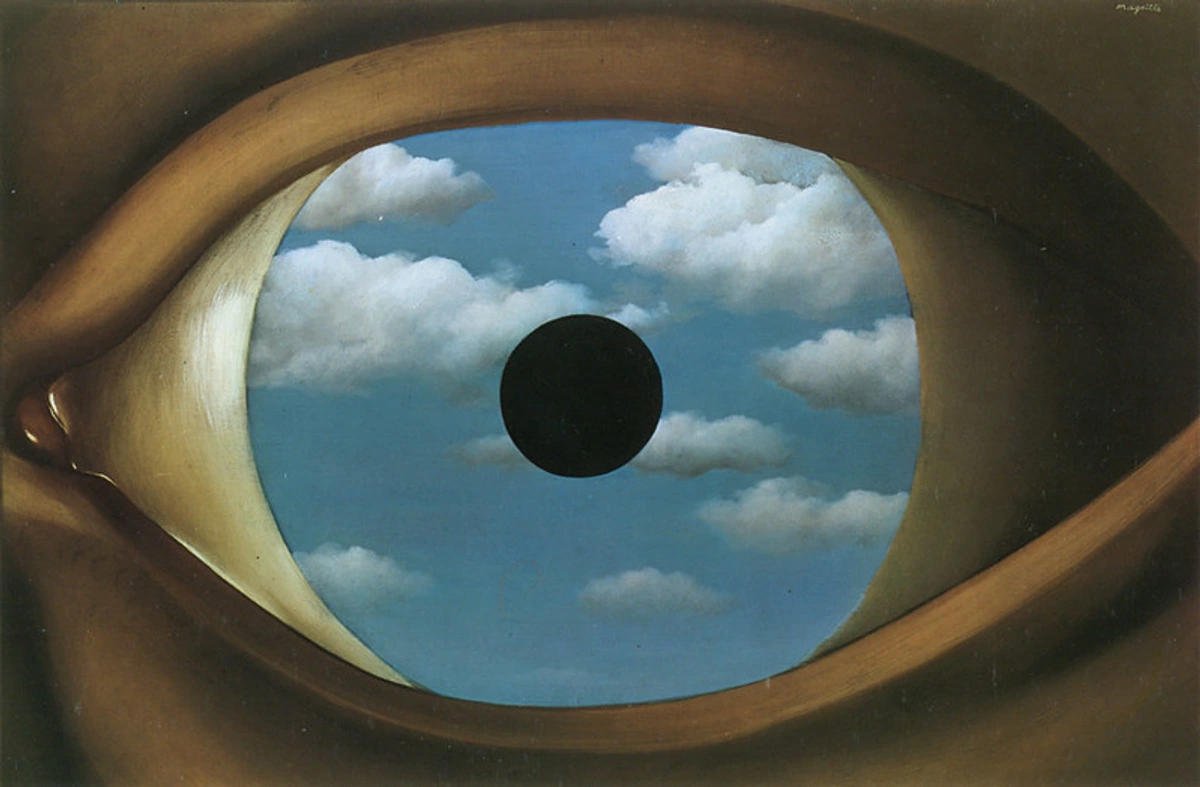
My Own Dance with Illusion: Finding Truth in Abstraction
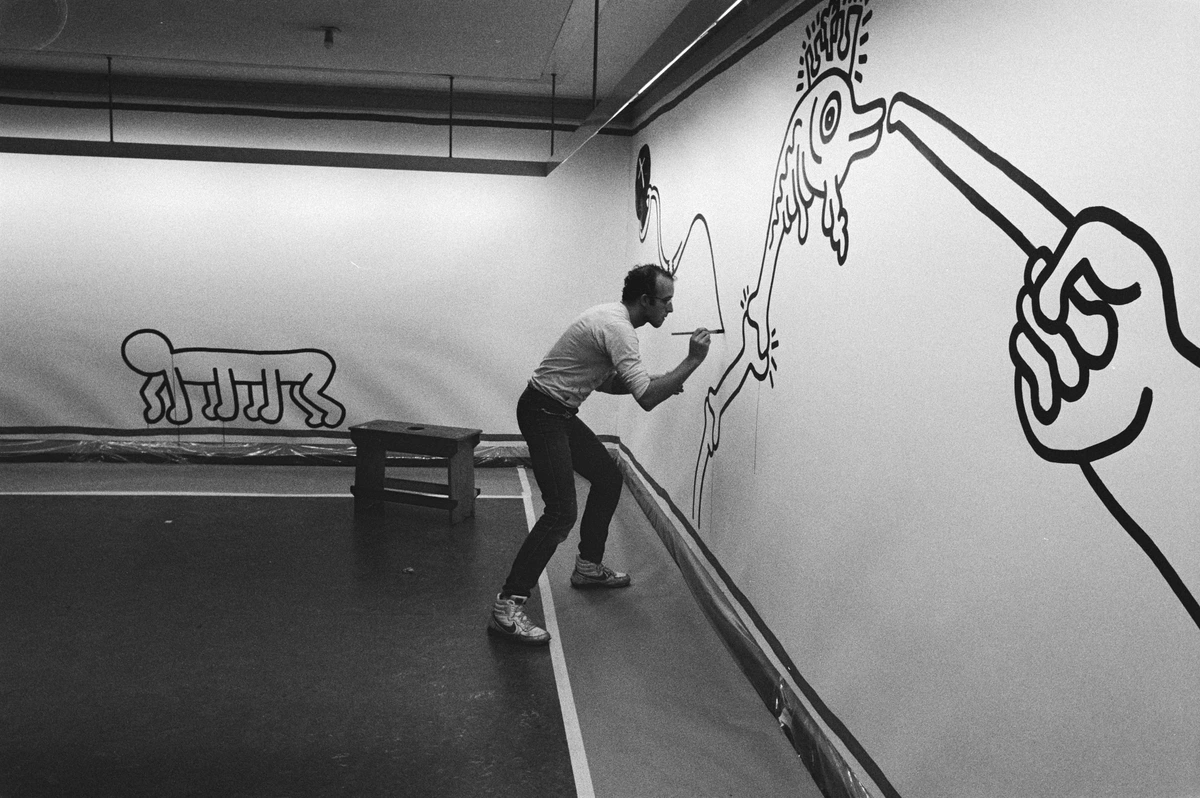
Having explored how artists physically trick the eye, it's fascinating to consider how other art forms, like my own abstract work, play with perception in a different, yet equally profound, way. You might be thinking, and it’s a fair thought, 'Wait a minute, your art is abstract. How on earth does that connect with deceiving the eye?' And honestly, that's a question I've wrestled with myself, so I get it! My work, with its vibrant colors and often non-representational forms, isn't trying to trick your eye into seeing a realistic object. I'm certainly not painting windows on walls, much as I admire those who do! (Honestly, I’d probably mess up the perspective terribly, so best to stick to what I know.)
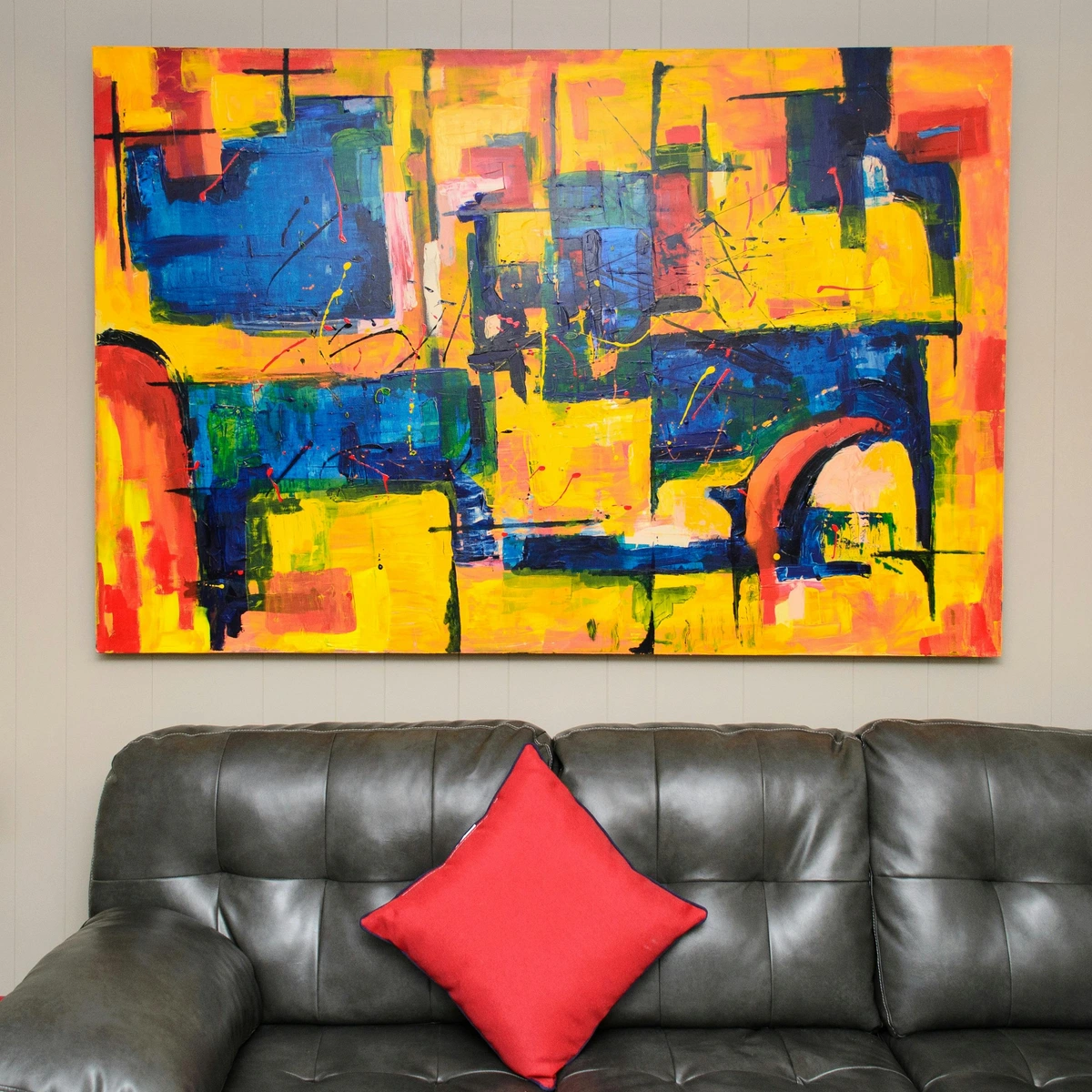
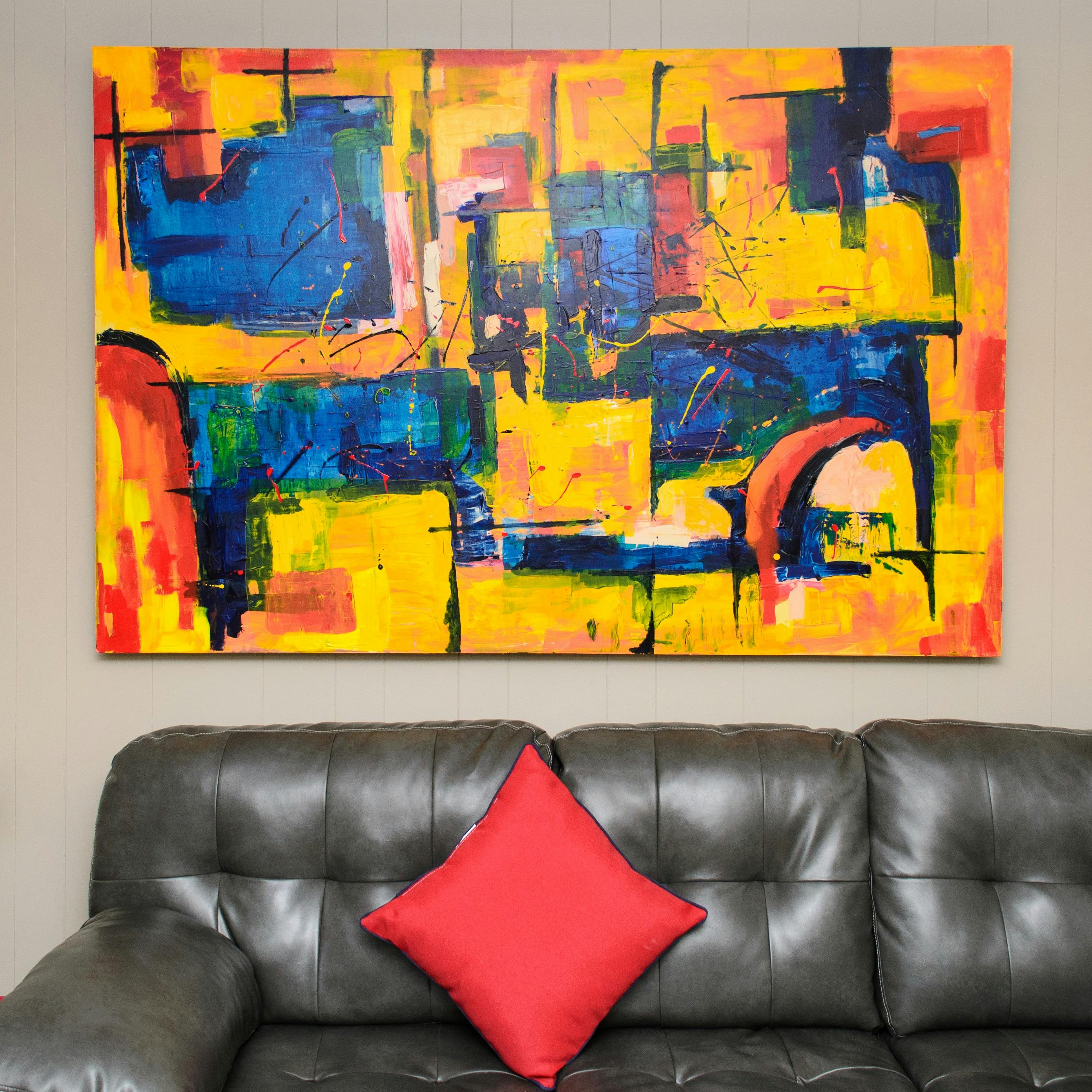
But I believe there's a shared spirit of challenging perception, just in a different, perhaps more whimsical, way. While trompe l'oeil creates the illusion of a physical reality—tricking you into believing a painted door is a real door—abstract art creates a new reality of feeling and form. It doesn't trick you into seeing a specific mountain range, but it does challenge, re-frame, and even re-wire your perception, inviting you to construct a new emotional or visual landscape. When I'm painting, I am trying to evoke that same sense of awe and immensity you'd feel standing before a vast landscape, even without depicting it literally. It's that same rush of shifted perception from trompe l'oeil, but instead of physical objects, it's about shifting your understanding of emotion, space, or energy. My paintings invite you to look beyond the literal, to find emotions, energy, or even stories in colors and shapes that don't depict anything specific. It's a similar surprising revelation, a different kind of shift in perception. Where trompe l'oeil delights in fooling the eye about what it sees physically, abstract art delights in opening the eye to how it feels or perceives new subjective realities.
credit, licence
For instance, a cascade of bold color gradients and sharp compositional choices might not show a towering mountain range, but the interplay of intense light and deep darks, the sheer scale of the canvas, or the almost vibrating hues can evoke the same sense of awe and immensity—that feeling of being dwarfed by something grand. It's a different kind of mental gymnastics, where the "deception" isn't about fooling you into seeing something that isn't there, but rather about guiding you to see something differently—to interpret a new reality. It's about exploring what feelings or thoughts a composition can evoke without a direct narrative, prompting a subjective experience, rather than trying to replicate an objective scene. It's a bit like a playful wink from the canvas, inviting you to construct a new reality of feeling and form, pushing you to question what constitutes 'real' in the realm of emotion and visual experience, much like how the ultimate guide to abstract art movements explores these various approaches. Have you ever looked at an abstract piece and felt a shift in your understanding of space or emotion? That's the feeling I'm after. If you're curious, you can always check out some of my pieces for sale, explore my full artist timeline to see how my approach has evolved, or even visit my small museum in Den Bosch.



credit, licence
Frequently Asked Questions About Trompe l'oeil
- Is it hard to create trompe l'oeil art? Oh, you bet it is! From an artist's perspective, it requires immense skill in drawing, painting, and a profound understanding of perspective, light, and shadow. Every detail, every calculated brushstroke, contributes to convincing the eye. It's a true test of an artist's technical prowess and often a lesson in painstaking patience to convincingly fool the eye. Think about the years of practice required to master the subtle nuances of light falling on a textured surface, or the precise mathematical calculations for architectural foreshortening. My own attempts at such precision often end up looking more like a toddler's finger painting, so I have immense respect for those who can pull it off! Achieving a convincing illusion often relies on a singular, fixed viewing point, making it even trickier for large public works that are seen from multiple angles. It's a journey!
- What psychological effect does trompe l'oeil have? Beyond the initial surprise, trompe l'oeil creates a momentary cognitive dissonance, where your brain grapples with conflicting visual information. For me, it’s a delightful challenge – my eyes say one thing, my brain another, and I get a kick out of unraveling the trick. This active engagement forces you to question your perception and appreciate the artistry involved. It playfully highlights how our brains make assumptions based on visual cues, like our innate expectation of depth or our tendency to assume consistency in objects, even when the visual input is ambiguous. It also taps into fundamental Gestalt principles of visual perception, such as closure (our brain's tendency to fill in gaps) and proximity (grouping elements that are close together). This cognitive dance leverages our confirmation bias—our eagerness to confirm what we expect to see—making the illusion initially convincing before the delightful reveal. It can even evoke pareidolia, where our minds perceive familiar patterns or objects (like faces or animals) in random or ambiguous visual stimuli, further deepening the sense of playful deception. Sometimes, the unresolved tension of a perceived trick can even trigger the Zeigarnik effect, making the image stick in your mind because the puzzle isn't fully "completed" for your brain.
- What is the purpose of trompe l'oeil beyond just trickery? While the primary goal is often playful deception, trompe l'oeil serves many purposes! Historically, it could elevate status or glorify faith by creating grand, illusory spaces. In interior design, it's used to make small rooms feel larger, add faux architectural details, or bring elements of nature indoors—imagine a painted window looking out onto a non-existent, serene garden, transforming a bland wall into a peaceful vista. In theatre and film, it's a powerful tool for set design, creating immersive backdrops and props. You'll also see it in advertising for captivating visuals, in public art for community engagement, and even occasionally as a subtle form of protest art, prompting viewers to look closer and question their surroundings. In modern entertainment, it's integral to creating immersive environments in video games, virtual reality, and themed venues like amusement parks or escape rooms to build truly immersive worlds. It truly enhances storytelling and offers a moment of wonder, inviting us to engage more deeply with the world around us.
- What materials and techniques do modern trompe l'oeil artists use? While fresco and oil paints were the mainstays of the past, contemporary artists embrace a broader palette. You'll often find them using durable acrylic paints for their quick-drying properties, vibrant colors, and resistance to environmental elements, especially for large-scale murals exposed to the outdoors. Digital tools are frequently employed for planning, precise scaling, and projecting initial sketches onto surfaces, ensuring perfect perspective before a single brushstroke. Some artists also use airbrushing for seamless gradients and incredibly smooth finishes, and sophisticated stencils for intricate details, particularly in street art. For more temporary pavement art, chalks and pastels are common, creating ephemeral illusions that interact with passersby and the environment. This blend of traditional skills and modern technology allows for incredible precision and grand scale, pushing the boundaries of illusion further than ever before.
- Is trompe l'oeil still popular today? Absolutely! While you'll find classical examples in museums, its spirit thrives in modern street art and large-scale muralism, with artists like Julian Beever or Edgar Mueller gaining global recognition for their incredible 3D pavement illusions. You'll also see it integrated into interior design (think faux windows or architectural details painted on flat walls), theatrical set design, film production, digital art, and virtual reality, where artists continue to experiment with visual trickery to create immersive or surprising experiences. Its timeless appeal means it's constantly finding new canvases and technologies. From the ancient Greeks to the digital age, trompe l'oeil continues to prove that our desire to be delightfully fooled is a truly timeless human experience.
- What is your favorite trompe l'oeil artwork and why? Oh, that's a tough one! It's like asking a parent to pick a favorite child. But if I had to choose, I'm utterly captivated by Cornelis Gijsbrechts' Trompe l'oeil with Studio Wall and Eels. It's a quodlibet piece, so seemingly simple with its scattered papers and everyday objects, but the level of realistic detail, the way the eels appear to slither right off the canvas, and the sheer audacity of painting something so mundane with such perfection just blows my mind. It's a quiet, intimate deception that makes you want to reach out and rearrange the chaos. That's the kind of playful genius I adore.
The Deeper Illusion: Why We Keep Falling For It
I guess what really fascinates me about trompe l'oeil isn't just the cleverness of the artists, but what it reveals about us—about my own brain, how it interprets the world, and how easily it can be swayed. We want to believe what we see. Our brains are exquisitely wired to interpret visual information in predictable ways, constantly constructing a coherent reality from fragmentary cues. So, when an artist cleverly subverts those deeply ingrained expectations, it's not just a trick; it’s a profound moment of self-discovery.
It taps into a bit of confirmation bias, I think. We're so used to our brains quickly making sense of visual input that we're often eager to confirm what we expect to see. The artist gently, playfully, pulls the rug out from under our visual assumptions, leveraging our confirmation bias to make the illusion initially convincing before the delightful reveal. This cognitive dance can also trigger the Zeigarnik effect, that psychological phenomenon where unresolved tasks or incomplete information stick in our minds. Trompe l'oeil often leaves us with a lingering question, a visual puzzle our brain can't quite dismiss, keeping the 'trick' alive in our perception long after we've consciously identified it. It's a captivating interplay between perception and cognition.
And this, surprisingly enough, brings me back to my own abstract work. While I'm not attempting to literally trick your eye with painted shadows or vanishing points, I am deeply invested in challenging and expanding your perception of reality. Just as trompe l'oeil makes you question the physical space around you, my art invites you to question emotional and visual space, exploring how colors, forms, and compositions can create their own profound realities. It's about opening a different kind of portal, not to a painted room, but to an inner world of feeling and interpretation. Both art forms, in their unique ways, urge us to look beyond the surface, to recognize the constructed nature of our visual world, and to find wonder in the unexpected.
Ultimately, trompe l'oeil reminds me that reality itself is often a matter of perception, constantly shaped by our brains, our experiences, and the clever nudges of those who master the art of seeing differently. It's a timeless conversation between artist and viewer, a playful invitation to question, to marvel, and to delight in the magnificent malleability of what we call 'real.' And isn't that, after all, one of the greatest gifts art can offer?