
Finding Fertile Ground for Creativity
Discover practical strategies to nurture your creative spirit, overcome blocks, and sustain artistic momentum in everyday life

Finding Fertile Ground for Creativity: The Ultimate Guide to Cultivating Your Ideas
I remember that one afternoon staring at a blank canvas for three hours, coffee gone cold, feeling like I’d excavated every creative molecule in my body. Ever been there? That gnawing sense that the well has run dry, that maybe you were never creative to begin with? We've all been sold a lie: that creativity is something that happens to you, a lightning strike from the heavens reserved for the "gifted."

But here's the truth I've unearthed through years of painting, failing, and starting over: creativity isn’t magic dust sprinkled randomly – it’s cultivated ground. It's a practice, a discipline, an environment you build with your own hands. Whether you’re a painter, writer, musician, or someone who just wants to feel that spark again, we’re digging deep into the real mechanics of how to cultivate the fertile soil where ideas actually grow. This isn't about quick fixes or hacks; it's about building a sustainable creative life.

And if you've ever wondered how to actually do that—how to move beyond the hope for inspiration and start building a reliable creative practice—you're in the right place. This guide is for you. We're going to explore not just the mindset, but the exact environments, habits, and systems that high-performing creatives use to consistently produce work that matters.

Debunking the "Lightning Strike": The Neurological Truth of Creative Work
We’ve been sold this romantic idea that creativity strikes like lightning – a sudden, unpredictable, divine moment of brilliance. It's a compelling story, one that lets us off the hook when we're not creating. "I'm just not inspired," we say. But that's not how it actually works for most of us real humans, juggling jobs, responsibilities, and the crushing weight of a blank page. The real story, the one happening inside our skulls, is far more interesting and far more actionable.
Think of your brain as having two creative networks. The first is your Executive Attention Network. This is your laser-focused taskmaster. It's the part of your brain you use when you're learning a new brush technique, mixing a precise color, or editing a sentence. It's deliberate, conscious, and frankly, a bit of a control freak. We spend most of our waking lives parked in this mode.
But breakthrough ideas don't usually come from the taskmaster. They come from a second, much more mysterious network: the Default Mode Network (DMN). The DMN is the brain's background humming. It fires up when you're not focused on a specific external task—when you're showering, walking the dog, or just letting your mind wander. It's the curator of your personal story, your social connections, and, most importantly for us, the wide-ranging connective tissue that links seemingly unrelated ideas.
A "lightning strike" isn't magic. It's the moment a half-formed idea your Executive Network was struggling with gets handed over to your DMN for background processing. Your DMN connects it to a lyric you overheard, the texture of a brick wall you passed, and a memory of a childhood vacation. It forms a new, unpredictable association, and then sends that insight back up to your conscious mind. That is the "aha!" feeling.
The problem is, you can't force the DMN to work on command. You can't shout at your brain, "Connect these ideas now!" What you can do is create the conditions for it to thrive. This means two things: first, doing the hard, focused work with your Executive Network to plant the seeds of a problem. And second, intentionally stepping away to let your DMN do its thing.
This is the real nature of creativity. It's a partnership. The dance between the taskmaster and the dreamer turns out to be a precisely timed neurological collaboration, one you can learn to facilitate instead of waiting for it to strike you by chance.
We’ve been sold this romantic idea that creativity strikes like lightning – a sudden, unpredictable, divine moment of brilliance. It's a compelling story, one that lets us off the hook when we're not creating. "I'm just not inspired," we say. But that's not how it actually works for most of us real humans, juggling jobs, responsibilities, and the crushing weight of a blank page.

That romantic vision conveniently ignores the mechanics behind the magic. I've come to see that breakthrough moments are rarely the start of a creative act. They're almost always the result of accumulated effort—weeks of thinking, observing, experimenting in the dark. The "lightning strike" is just the moment it all clicks, but it only clicks because you've been doing the work all along.
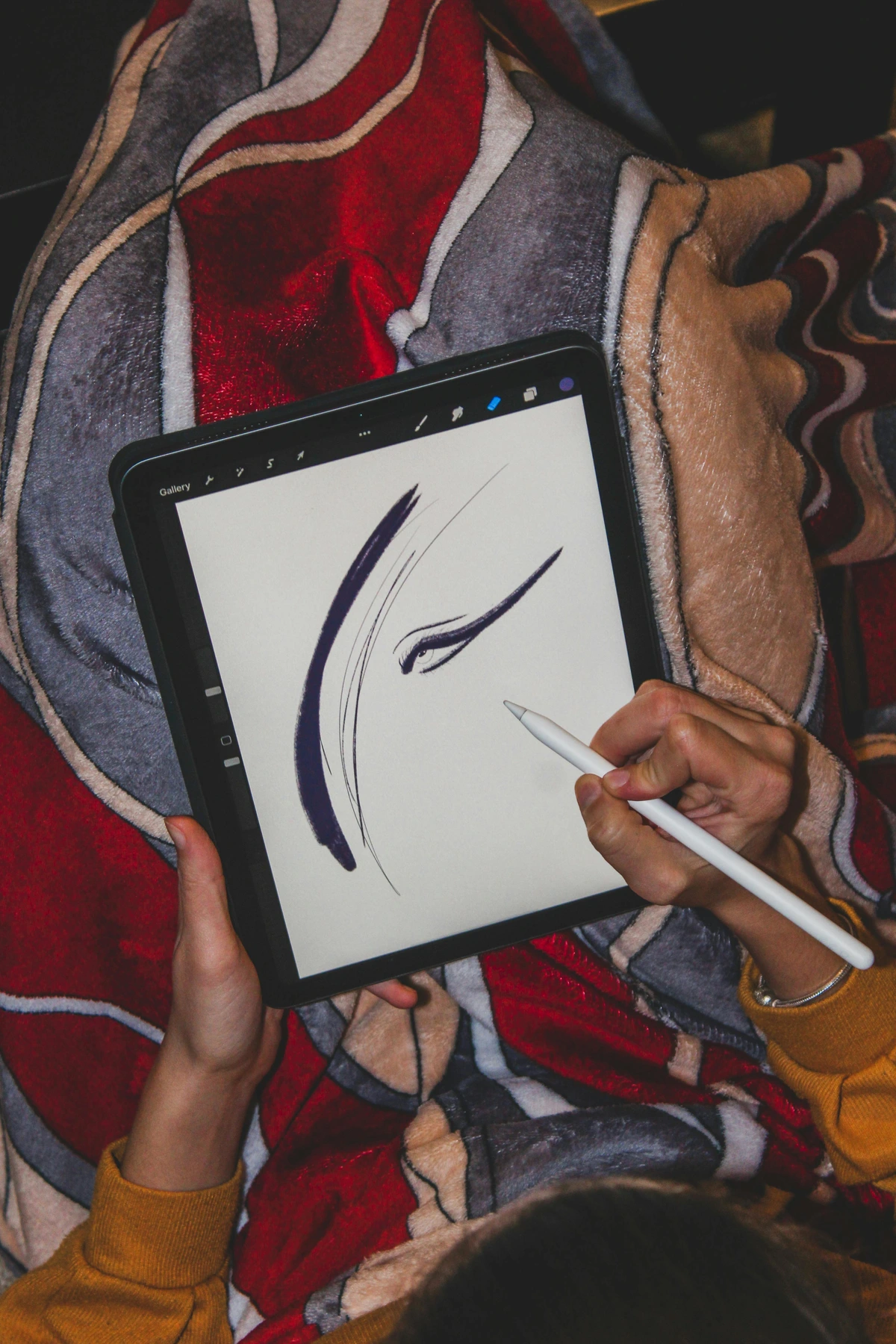
Creativity thrives in systems and environments, not on random inspiration fairy dust. It's less about waiting for bolts from the blue, and more about building consistent practices. Think of it like gardening: you don’t just hope for tomatoes to appear, you prepare the soil, plant the seeds, and tend to them daily. You learn about pH levels, sunlight, and companion planting. You become a student of the process. The lightning strike is just the moment of germination, but the real work—the miraculous work—is everything that comes before it.
And here's the kicker about this process: it operates on a principle of compound interest. A five-minute sketch today might feel insignificant. But that sketch builds a tiny bit of neural pathway. Tomorrow's sketch reinforces it. A week of sketches, a month, a year—these small, consistent investments accrue into something substantial. You aren’t just making a drawing; you're physically rewiring your brain for creative output.
This is why the idea of waiting for inspiration is so bankrupt. It's like trying to get rich by waiting to find a bag of money on the street, instead of investing a small amount from every paycheck. The real wealth, both financial and creative, comes from the steady, unglamorous, daily drip of effort. The "lightning strike," when it arrives, is simply the visible return on an investment you've been making all along.
Just as a farmer prepares the earth, you must prepare your mind. The "lightning strike" rarely hits a barren field. It's the accumulated work—the failed sketches, the half-formed ideas, the time spent just looking—that turns the soil fertile. Preparation is what makes inspiration possible.

The breakthrough isn't the cause of the work; it's the moment when all the hidden work becomes visible. That's the real nature of creativity: consistent preparation meeting a prepared mind.
Common Creativity Killers: Identifying Your Personal Blockers
Let's be honest: creative blocks feel personal. Like a unique failing, a sign that you're not cut out for this. What a cruel trick of the mind. The reality is that creative blocks are almost always environmental or systemic. They're weeds in the garden of your practice, and most of them are easy to spot and pull if you know what you're looking for.
The Inner Critic and the Outer Storm: A Troubleshooter's Guide to Creative Blocks
I used to think the voice in my head pointing out every flaw in my work was just being "helpful." A tough coach, maybe. But that voice, the inner critic, isn't a coach. A coach wants you to improve. A critic just wants you to stop. It's the part of your psyche that mistakes self-criticism for self-protection, and it will shut down your creative practice faster than anything else.
Here's the strange thing: that voice is often just a distorted expression of a real, external problem. An outer storm of stress, comparison, or pressure that gets internalized and amplified."
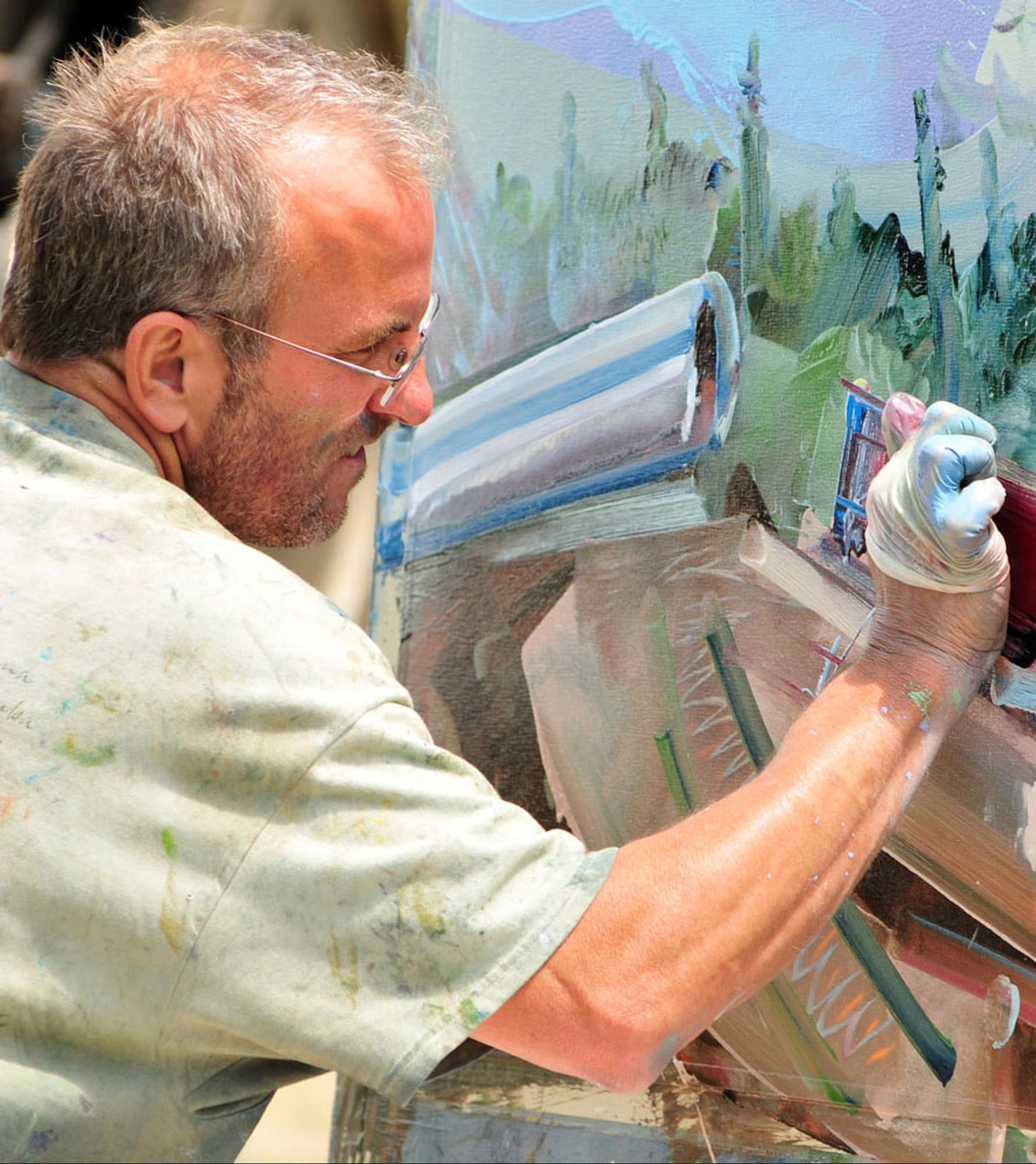
Most creative blocks aren’t mysterious spiritual droughts – they’re usually preventable environmental or psychological mismatches. Think of them as weeds in your garden. Some are quick to pull, simple intruders like crabgrass. Others, like Japanese knotweed, have deep, sprawling root systems that require a more strategic approach.
It's worth understanding the immediate blockers that will ruin your creative session today (the acute problems) along with the deeper, systemic factors that will sap your energy over months (the chronic conditions). Let's break down these afflictions, diagnose their origins, and equip you with the tools to treat them.

Block Type  | Common Triggers | Symptoms | Solutions & Tools |
|---|---|---|---|
| Environmental Clutter | Messy workspace, distracting noises, bad lighting | Difficulty starting, constant procrastination, feeling "foggy" or overwhelmed | Designate a specific creative zone, use noise-canceling headphones or intentional background soundscapes, implement the "60-second reset" before each session, physically clear a small, contained work area to signal your brain to focus. |
| Mental Fatigue | Digital overload, decision burnout, lack of sleep, poor nutrition | Inability to focus, ideas feel shallow, irritability | Schedule digital detoxes (no screens first hour of day), batch decisions the night before, practice doing nothing for 10 minutes, protect sleep as creative fuel, eat protein-rich snacks |
| Perfectionism | Fear of judgment, unrealistic expectations, a loud internal critic | Chronic procrastination, starting but not finishing, feeling "not good enough," endless tweaking | Set "bad art quotas" (goal is to make 5 terrible things this week), separate "play" sessions from "production" sessions, celebrate process over product with a specific "process log," use a kitchen timer to force completion, actively create work you plan to throw away. |
| Isolation | Working solo constantly, lack of feedback, comparing to online feeds | Feeling like an imposter, losing motivation, creative tunnel vision | Join creative communities (r/ArtistLounge, local art groups), find an accountability partner, attend workshops or figure drawing sessions, share work-in-progress |
| Routine Rigidity | No fresh inputs, the same environment or medium, creative autopilot | Ideas feel stale and derivative, boredom, loss of excitement about projects | Schedule mandatory "inspiration hunts" (museums, parks, new neighborhoods), practice artistic cross-training (if you paint, try writing a poem), intentionally change your primary medium every 3 months, implement "non-creative field trips" to break mental patterns. |
| Lack of Play | Taking work too seriously, focusing only on outcomes | Burnout, loss of joy in the process, creative block feels like a chore | Schedule unstructured "play time" with no goal, experiment with new mediums just for fun, make art with children or as a child would, use prompts and constraints |
| Digital Addiction | Social media, constant notifications, multitasking | Shortened attention span, inability to engage deeply, restlessness | Implement "deep work" hours with app blockers, turn off notifications during creative sessions, practice "single-tasking," phone-free zones |
| Decision Fatigue | Too many choices (materials, colors, subject matter) | Procrastination, feeling overwhelmed, spinning wheels | Pre-select palettes, limit your materials, use generative prompts or constraints, batch creative decisions upfront |
| Physical Discomfort | Poor ergonomics, uncomfortable setup, temperature extremes | Distraction, physical pain, inability to sustain work | Invest in ergonomic furniture, optimize temperature/lighting, add movement breaks every 30-45 minutes, use standing desk options |
| Fear of Waste | "Good supplies are too precious to use" mindset | Never using best materials, creative paralysis around new media | Create a "waste quota"—use expensive supplies for play, not perfection; reframe waste as tuition for learning |
| Unprocessed Life Stress | Relationship issues, financial worry, health concerns, major life changes | Creative ideas feel meaningless, lack of energy, inability to start even when you have time, creative work feels trivial compared to real-world problems, difficulty focusing due to intrusive thoughts. | Maintain a dedicated "processing journal" separate from your creative work, schedule designated "worry time" (e.g., 10 minutes in the evening) to contain anxieties, use art as a tool for processing emotions rather than producing a final product, seek professional help if stress is chronic. |
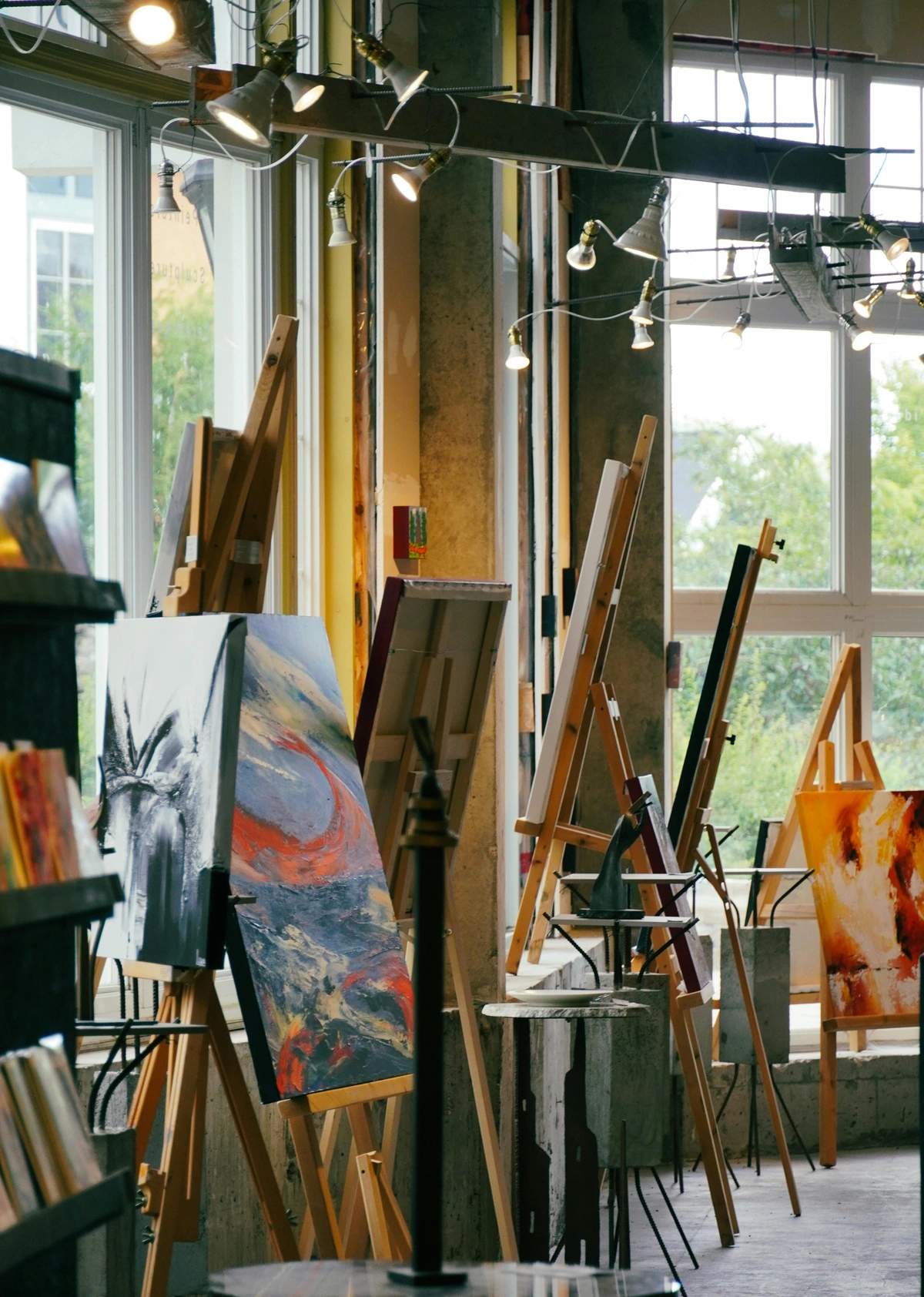
The biggest insight for me was realizing that a creative block is rarely a single problem. It's usually a tag team. It's "I'm a bit tired" (mental fatigue) plus "this corner of my studio is a disaster" (environmental clutter) plus "I haven't looked at any new art in weeks" (routine rigidity). The combination is deadly. The first step to a solution isn't a massive overhaul; it's simply noticing the combination. Once you can name the ingredients of the block, you can start dismantling them one by one. This act of noticing is a creative skill in itself, one that gets sharper the more you practice it. You start to see the early warning signs: a slight reluctance to enter your studio, a tendency to check your phone more than usual, a preference for re-watching old shows instead of seeking new input. These are your personal check-engine lights. Pay attention to them.
Building Your Creative Habitat: A Guide to Sacred Spaces and Rituals
Your environment isn't just where you create; it's an active participant in your creation. Think of it as a co-conspirator. The right habitat can lower the barrier to entry, making it almost effortless to slip into a creative state. The wrong one can build a wall of resistance before you even begin. This isn't about having a studio that looks good on Instagram. It's about engineering a space that, through ritual and design, compels you to begin.
The secret isn't about having a sprawling studio or perfect conditions—it's about designing a system that makes it easier to create than to procrastinate. Most people build their lives for distraction. We're building for focus.
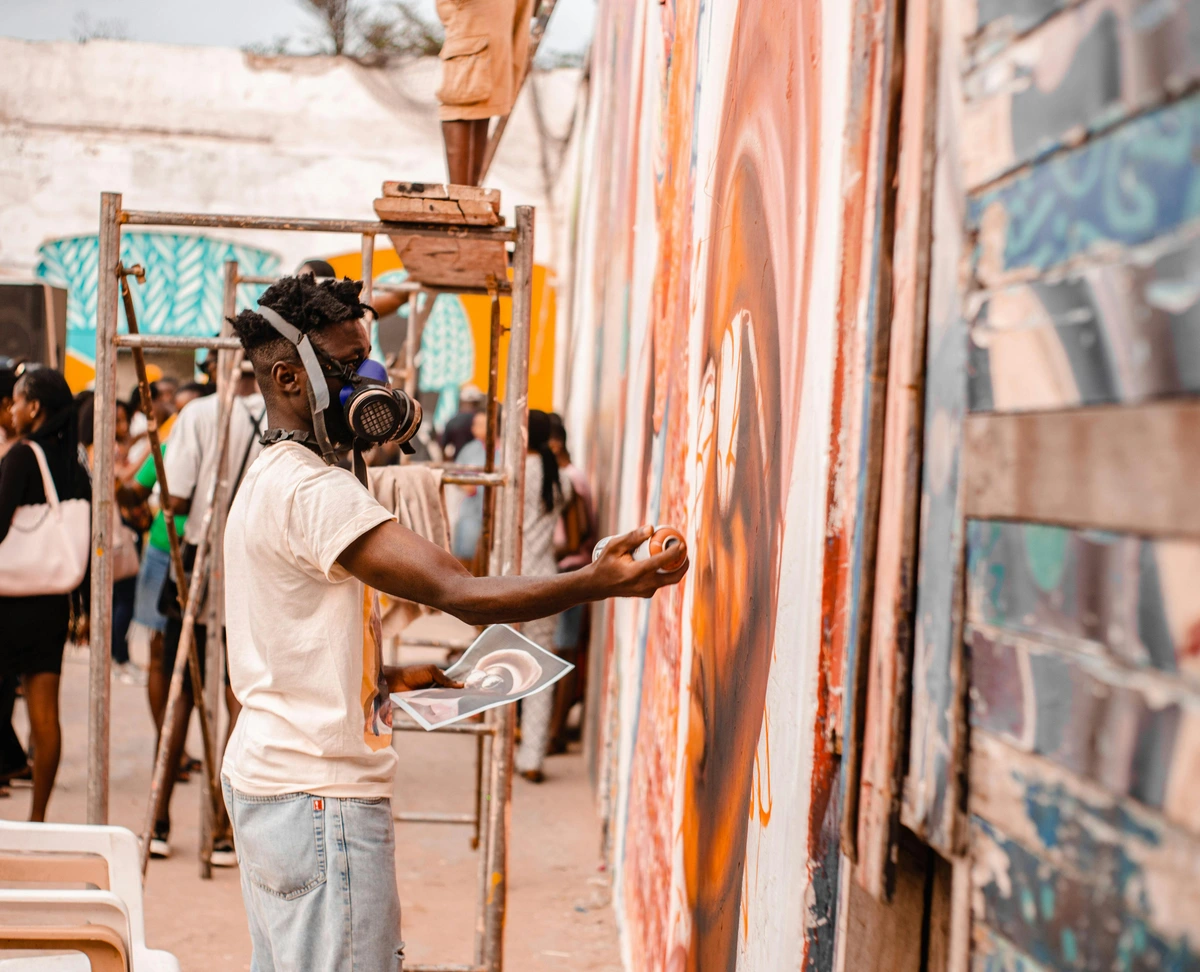
1. Design Your Sacred Space: The Architecture of Access
Your environment isn't just a backdrop; it's a silent co-author of your work. It should be designed not for Instagram, but for access—making it easier to start than to avoid. The perfect space lowers the activation energy required to begin. It's the difference between having to dig your car out of the snow to go to the store versus having a bowl of fruit on your counter.
Here’s how you architect a space for creative access, even if it’s just a corner of a room:
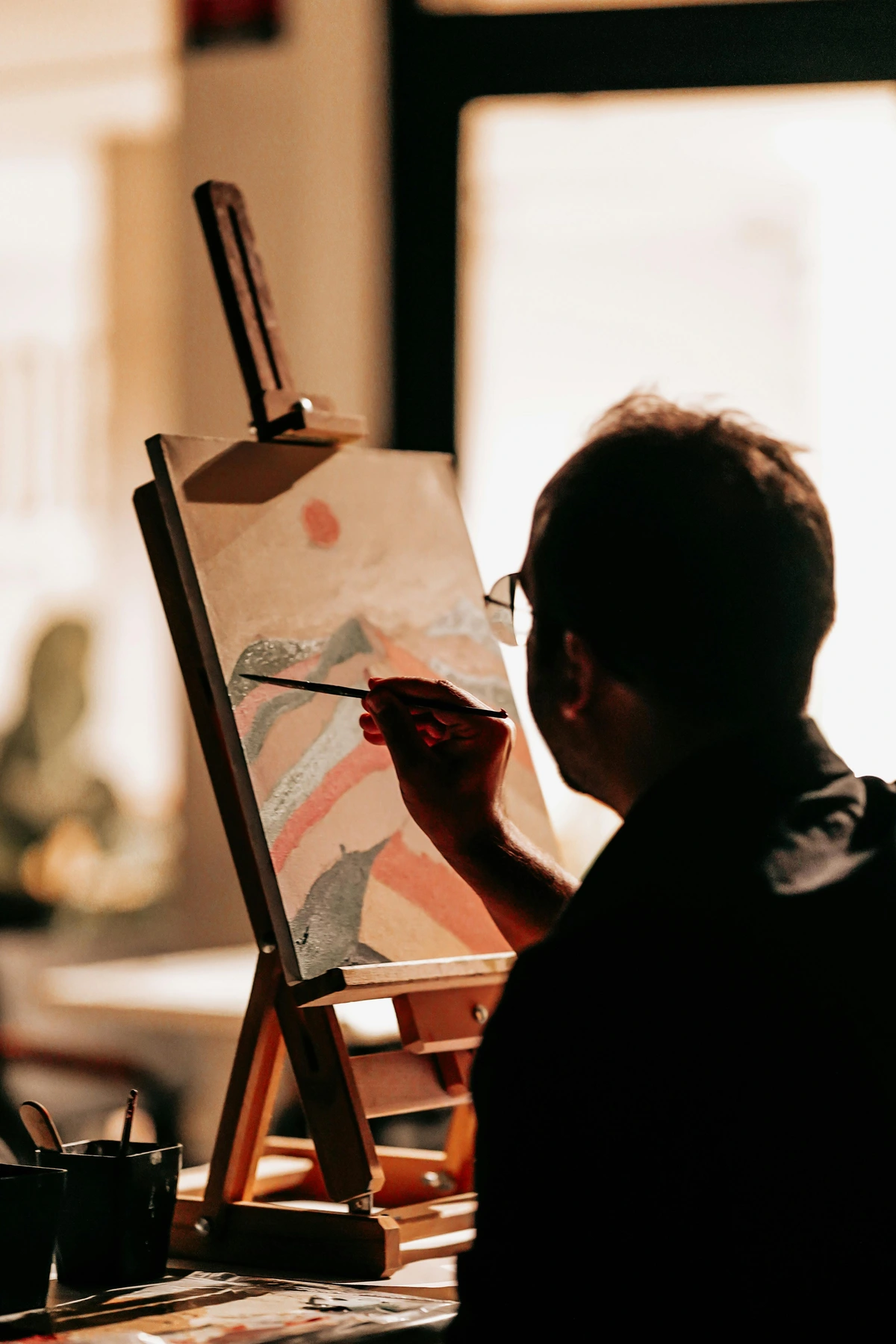
The Psychology of Creative Spaces:
Research in environmental psychology shows our surroundings profoundly influence our cognitive state. A cluttered, chaotic environment increases cognitive load, leaving less mental bandwidth for deep work. Conversely, a space with clear visual order and intentional cues can trigger a state of flow almost automatically.
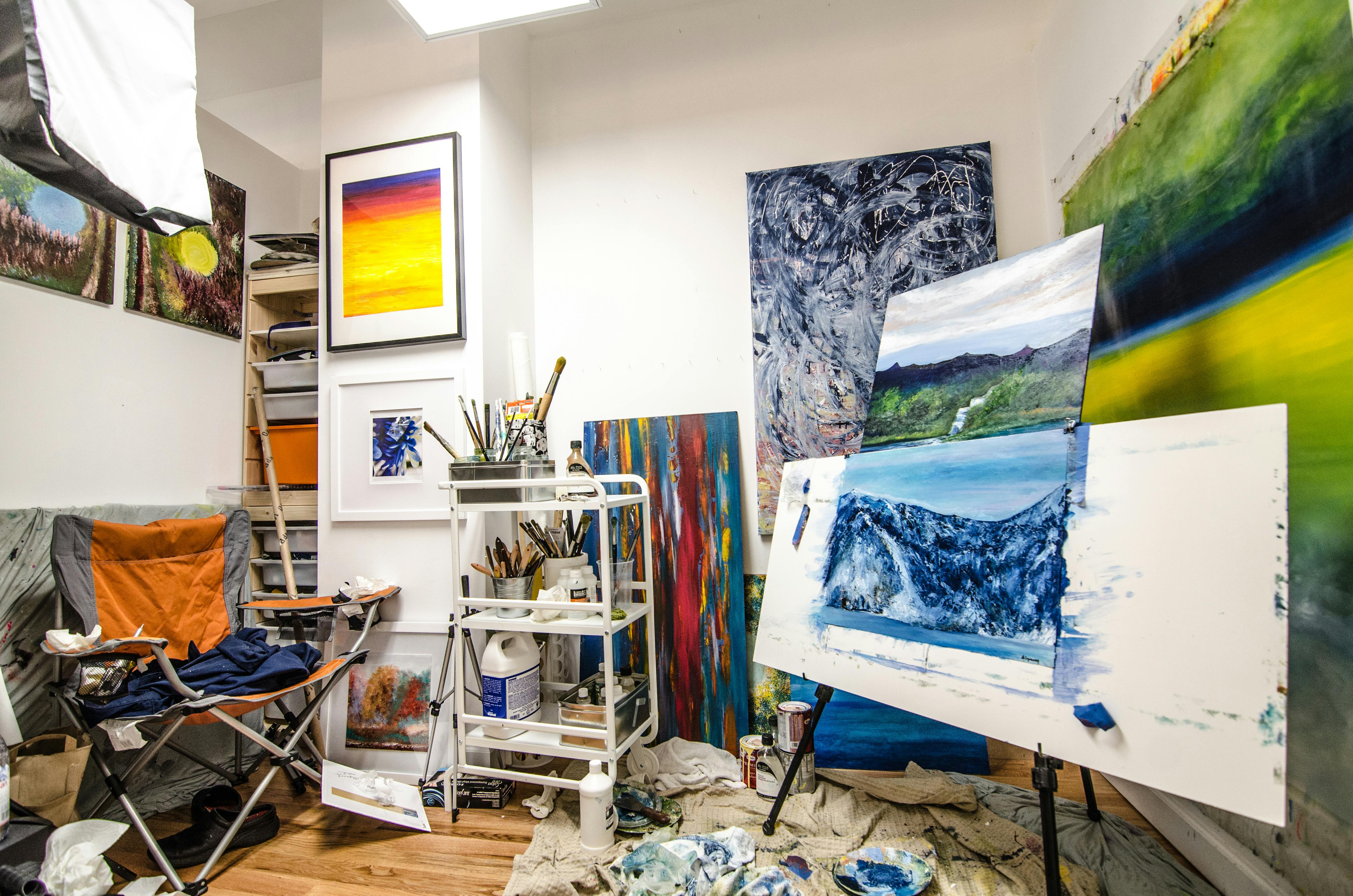
Even a corner of your kitchen can become a creative sanctuary. The key isn’t space – it’s signals. When your brain sees your creative zone, it should switch gears. You're training a Pavlovian response: this spot means making things.
Actionable Steps:
- The 60-Second Reset: Design your space so you can reset it to a "ready state" in under 60 seconds. This means a clear surface, your tools visible and accessible, and a simple storage system for works-in-progress. The goal is to eliminate the friction of "setting up," which is often enough to stop you before you start.
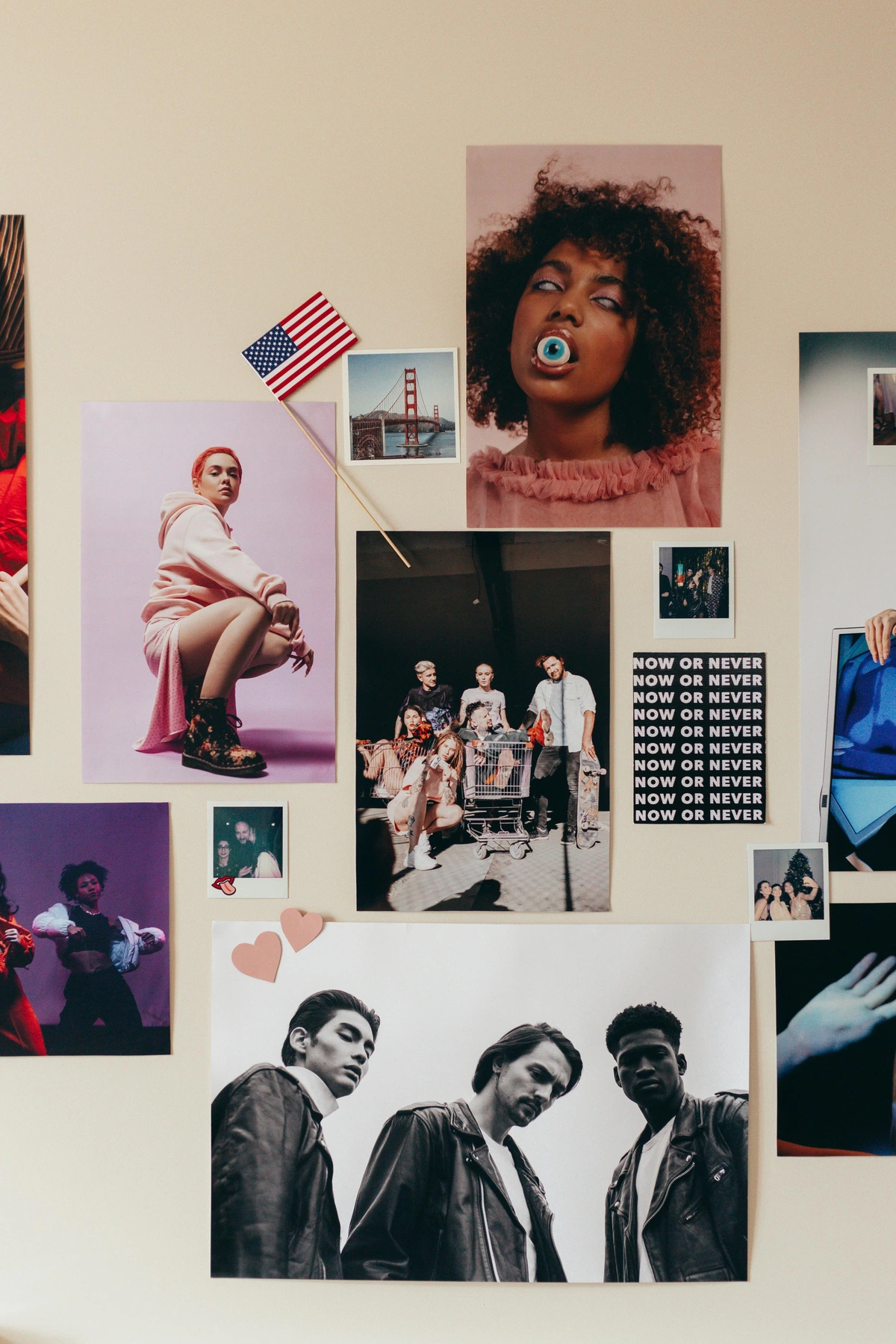
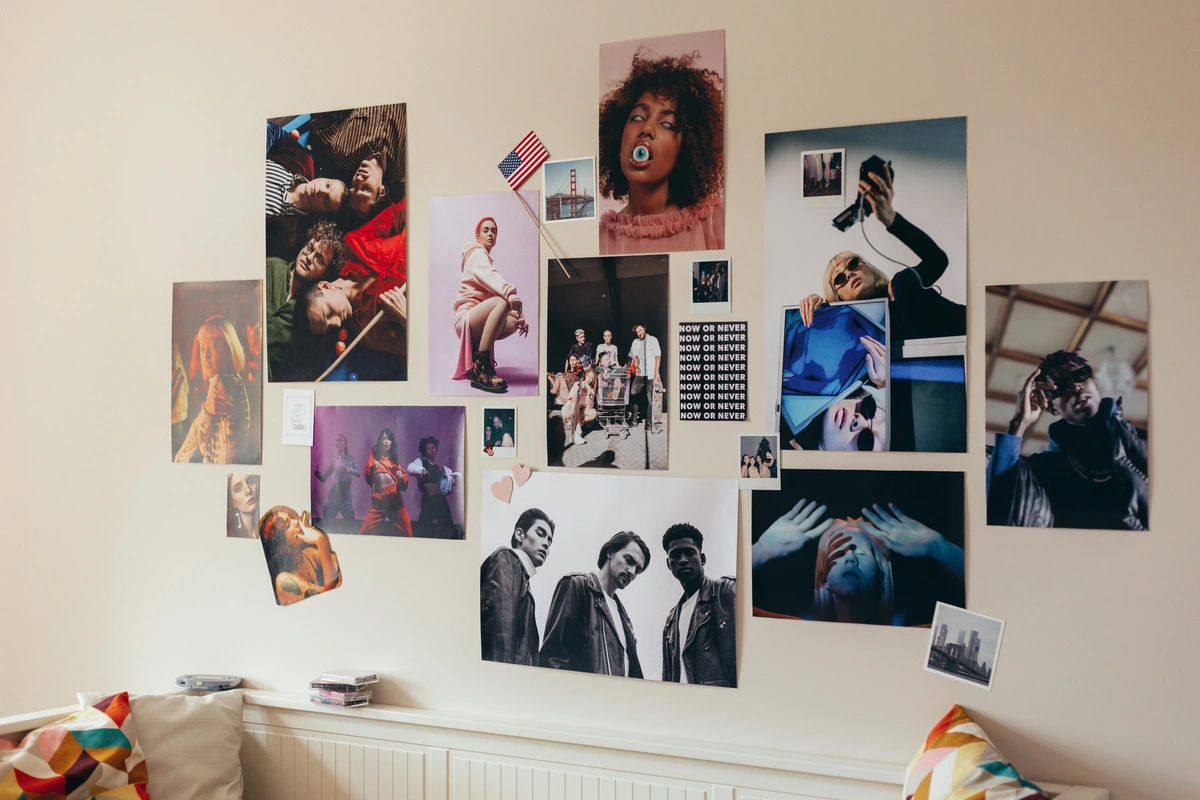
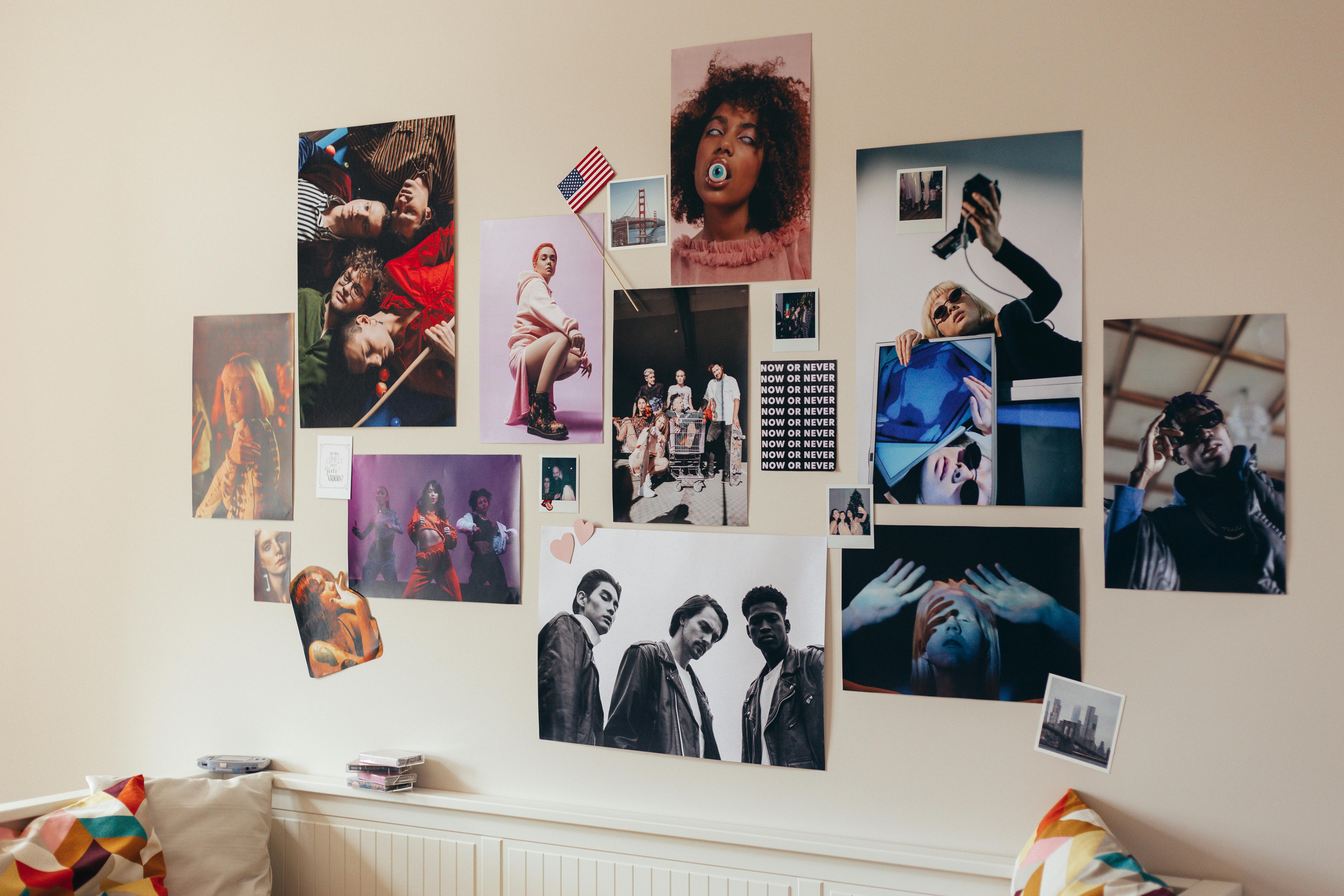
- Minimize Visual Noise: A wall of inspiring pictures can become visual clutter. Limit prominent visuals to 1-3 key pieces that genuinely spark a feeling in you. Think of it as curating a gallery, not covering a wall in a collage. Three non-negotiables:
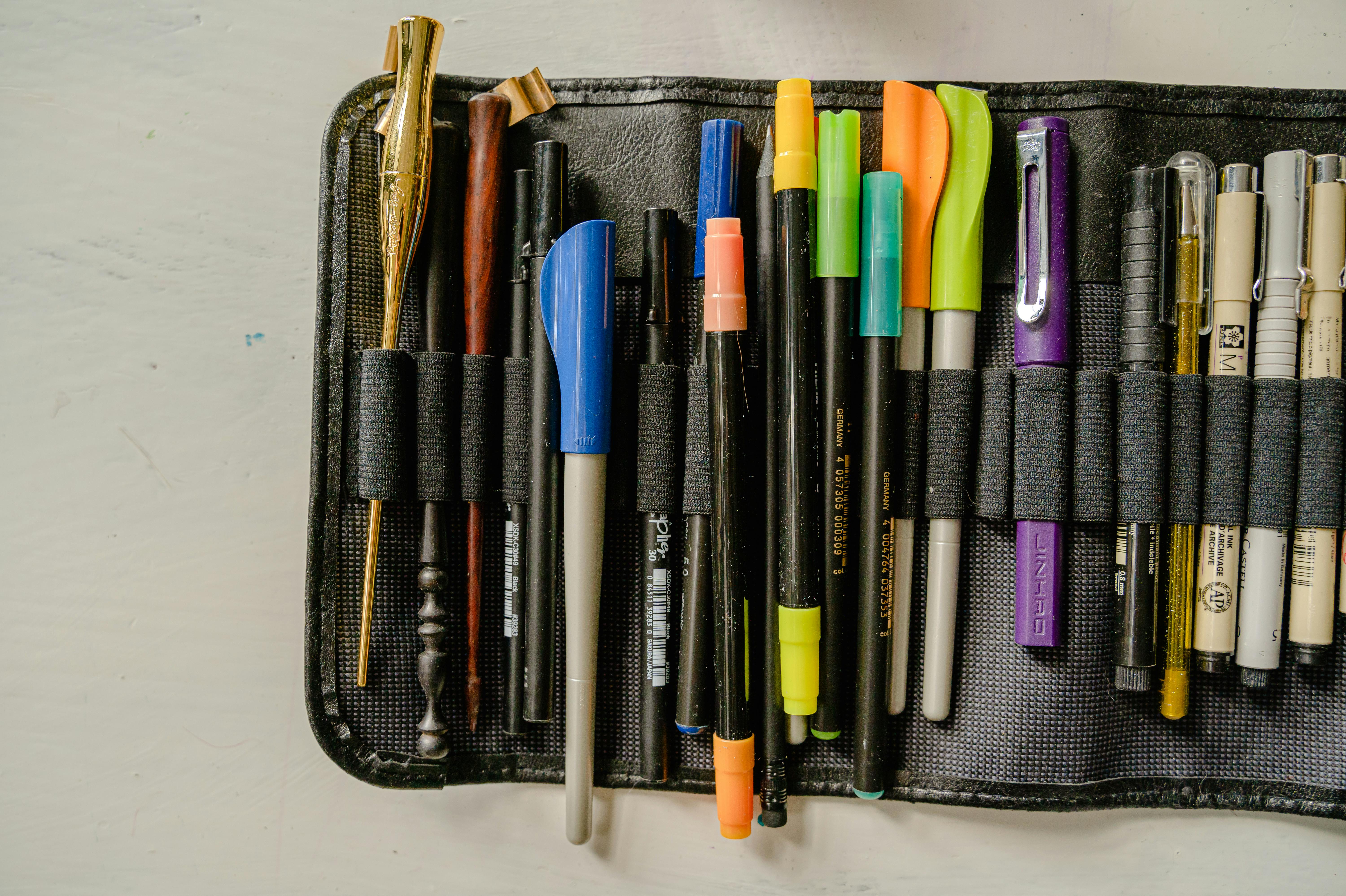
- Tools in View: Don't hide your favorite brushes or pens in a drawer. Put them in a jar or on a shelf where you can see them. They become an invitation, a visual prompt that lowers the barrier to entry.
- Tactile Cues: I have a specific, slightly wobbly wooden stool I've painted on for a decade. The moment my body touches it, my brain clicks into "work mode." Find your version of that—a specific chair, a favorite mug, a textured blanket over your lap.
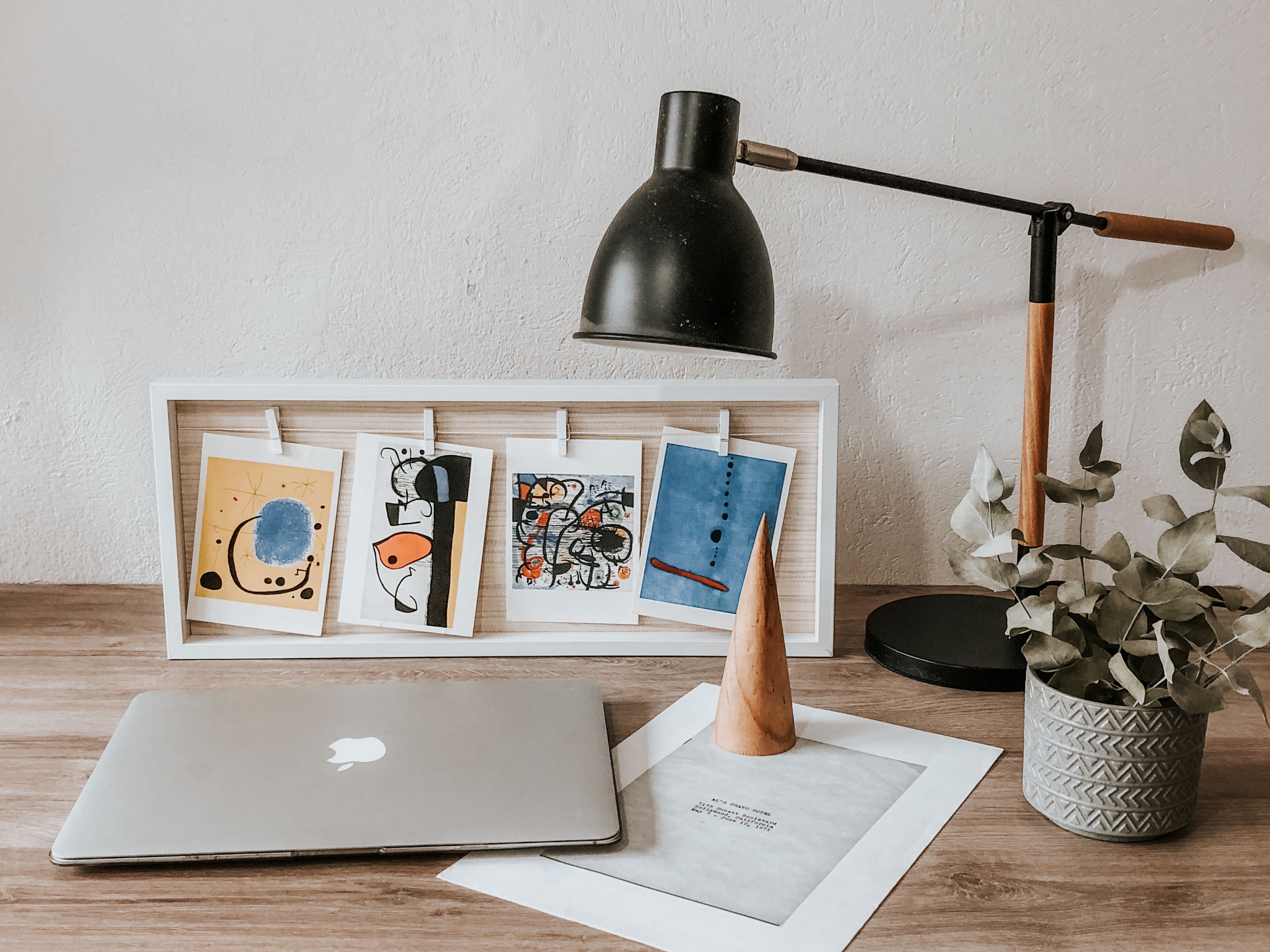
- Psychic Anchors: This is the most important one. Objects that signal why you create. A postcard from a museum that changed your life, a piece of art you love, a weird rock you found on a trip. These are your talismans. They're not for show; they're to remind you of the feeling you're chasing when you're neck-deep in the frustrating middle part of a project.
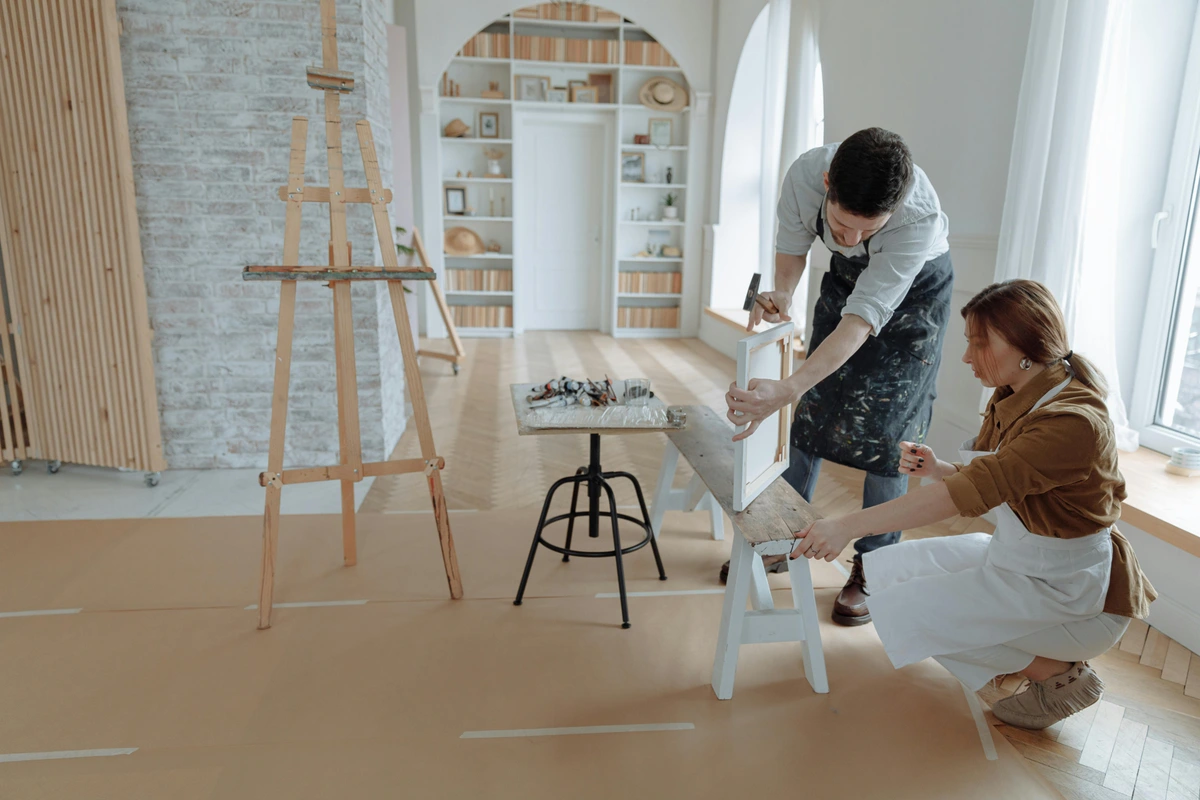
- Visual Triggers: Art supplies, objects that evoke emotion, a piece of art you love, your own work in progress.
- Scent Anchors: Incense, essential oils, even just fresh air. Your sense of smell is directly linked to memory and emotion.
- Tactile Cues: A specific, comfortable chair, a textured blanket, a favorite mug. Your body remembers comfort.
I’ve got a small shelf with shells, weird rocks, and old postcards from friends. It’s not functional storage – it’s a visual handshake with my brain saying "We’re making things now." It's a portal. The moment I sit down, my shoulders drop, and my mind knows it's time to work.
My desk is positioned to face a blank wall, not a window. This wasn’t an accident. It's a strategic choice to minimize external distractions and turn my focus inward. To my right, I have a single shelf with a few found objects: a piece of driftwood, a blue ceramic shard, a postcard of a Rothko painting. They aren't just decorative; they're talismans. Each one is linked to a specific creative feeling I want to access. They are anchors for my state of mind, transforming a simple desk into a dedicated creative cockpit. You can do this anywhere. A kitchen table with a specific tablecloth, a closet-turned-nook, a corner of your bedroom. The square footage doesn't matter. The intentionality does.
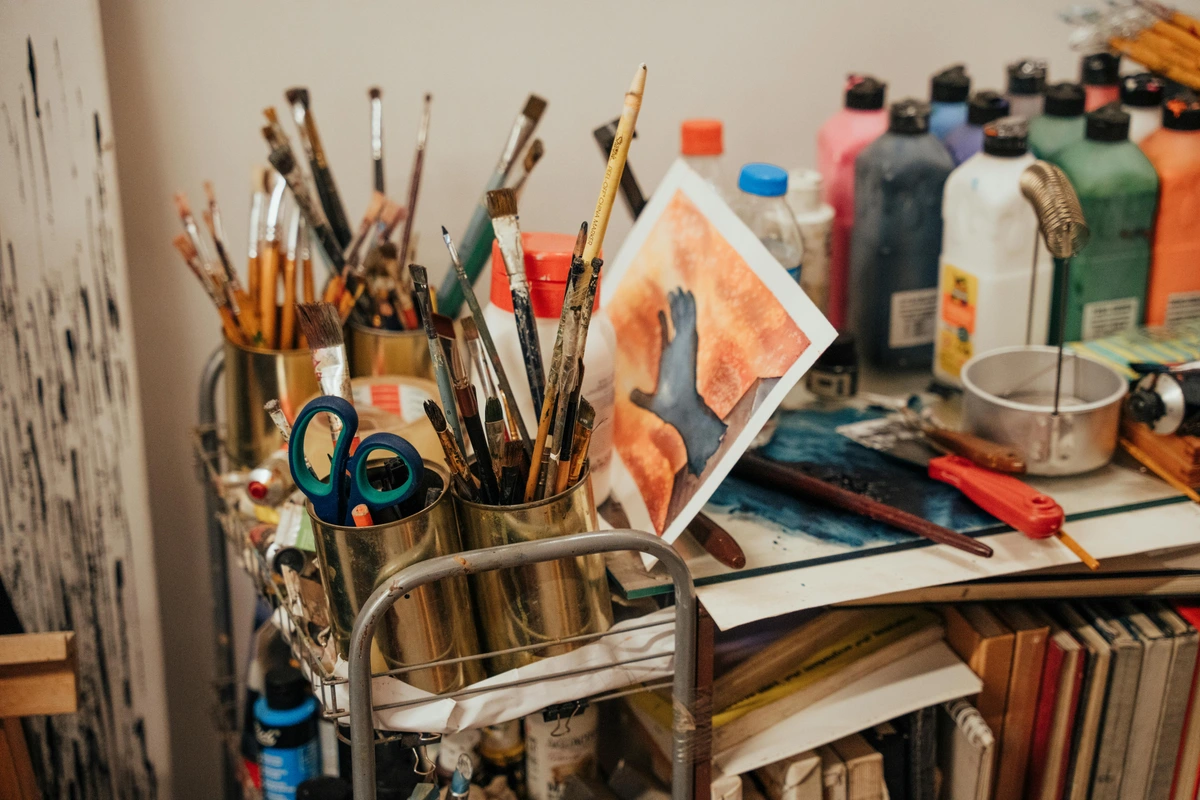
2. The Never-Ending Net: Systems for Capturing Ideas
Your mind is a prolific but terribly organized ideas factory. It will hand you a brilliant insight while you're in the shower, or a perfect line of dialogue while you're driving. And it will forget that idea just as quickly if you don't have a system to catch it. I cannot stress this enough: do not trust your memory. Trust a system.
These fleeting sparks are the raw material for your future work. A notebook or a phone note is not just a tool; it's an external hard drive for your imagination, freeing up your brain's RAM to do the more important work of connecting and creating, not just remembering.
Here are a few of the most effective systems:
- The Commonplace Book (Low-Tech / High-Touch): For centuries, thinkers from Marcus Aurelius to Virginia Woolf have used a "commonplace book"—a central repository for quotes, sketches, observations, and half-baked ideas. The key is that it’s a single, chronological catch-all. Don't worry about organizing it at first. The goal is to have zero friction in capturing an idea. A simple, sturdy notebook you carry with you is the most powerful creative tool you can own. Just make sure it's one you actually love holding and writing in.
- The Digital Hub (High-Tech / Searchable): If you prefer digital, use an app like Notion, Obsidian, or Apple Notes. Create a single, easily accessible note or page called "Spark File" or "Idea Dump." Any time an interesting thought, image, or link crosses your path, throw it in there. The search function will become your best friend for later connecting disparate thoughts.
- The Pocket Archivist (The Voice Memo): For when writing isn't fast enough or practical. Your phone's voice memo app is a lifesaver. When an idea hits you on a walk, record it. I have memos from two years ago that are still gold mines. Labeling them with a keyword makes them searchable later. I have folders for "Palette Ideas," "Article Thoughts," and "Strange Titles."
- The Visual Swipe File: Don't forget the power of images. Create a dedicated folder on your phone or a private Pinterest board. When you see a texture, a color combination, a composition in the wild that resonates—snap a picture and save it there. When you're feeling stuck, you can scroll through your own curated inspiration instead of the algorithm's endless feed.
The Daily Rhythm: Rituals, Systems, and Scaffolding
Now we move from the architecture of the space to the architecture of your time. If the space is the workshop, rituals are the daily opening of the shop, the sharpening of the tools, the sweeping of the floor. They're the on-ramp to a creative state, and without them, you're trying to merge onto a highway from a dead stop.
1. Craft a Launch Ritual: The 60-Second Warm-Up
Before you jump into any creative work, you need a reliable way to transition your brain from "life mode" to "creative mode." I call this a launch ritual—a short, specific sequence that tells your mind it's time to play.

Steven Pressfield, author of The War of Art, famously sharpens pencils before he writes. That isn't procrastination—it's a ritual to enter the state. He's not just preparing the tools; he's preparing the mind. By repeating the same simple, physical actions, he signals to his brain that the boundary between "normal life" and "creative work" is being crossed. You are, in effect, building a drawbridge between your everyday consciousness and a more focused, imaginative state.
Your ritual doesn’t have to be sharpening pencils. It just has to be yours. It should be simple, sensory, and repeatable.
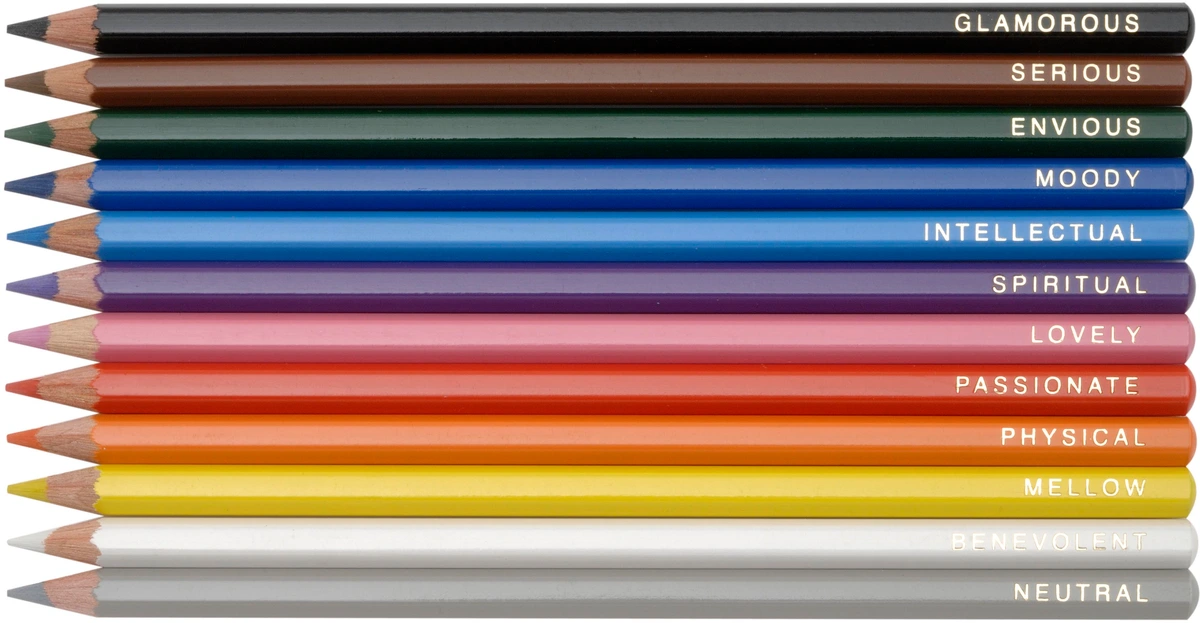
Here is a template for a 60-second launch ritual. Steal it, adapt it, make it your own:
- Prep Your Space (20 seconds): Clear a one-foot circle on your desk. This is the "sacred space within the sacred space." It's a symbolic act of creating order from chaos and clearing the mental deck.
- Activate a Sense (15 seconds): Light a specific candle with a distinct scent. The olfactory bulb has a direct line to the brain's emotion and memory centers. When you light that candle day after day, you are chemically conditioning yourself to enter a creative state.
- Physical Shift (15 seconds): Do five deep, slow breaths. Inhale for four, hold for four, exhale for six. This activates your parasympathetic nervous system, switching your body from "stress mode" to "creation mode."
- State Your Intention (10 seconds): Whisper to yourself: "For the next thirty minutes, I'm going to explore." The magic word here is "explore." It reframes the work from a high-pressure performance into a low-stakes discovery mission.
Do this sequence before every creative session, and you'll find the transition becomes frictionless. It's like stretching before a run—your creative muscles warm up, and you're less likely to strain something.

The "Don't Break the Chain" Method
This classic idea, often attributed to Jerry Seinfeld, is devastatingly simple: mark an X on a calendar for every day you complete your tiny creative act. Your only job is not to break the chain of X's. The goal is no longer the quality of the work, just the act of showing up. This reframes success from "make a masterpiece" to "draw for 5 minutes," which is infinitely easier to achieve.
- 5-minute sketching: Before bed, capture anything – a lamp, your own hand, the view from your window. The subject doesn't matter; the act does.
- Audio scavenging: Record mundane sounds on your phone to remix later (traffic, birdsong, coffee machines). It tunes your ear to the world's rhythm.
- Constraint game: Give yourself arbitrary rules like "use only three colors" or "draw with your non-dominant hand." Constraints set you free from the tyranny of choice.
- Curiosity walks: Wander without destination for 15 minutes. Photograph textures, shadows, or interactions that catch your eye. You are foraging for ideas.
- Morning Dump: Before you even look at your phone, spend 5 minutes doing a stream-of-consciousness brain dump in a notebook. The rule is to just keep your hand moving until the time is up. This is like clearing the cache in your brain before you start the day.
- Evening Sketches: Keep a small sketchbook by your bedside. No masterpiece, no audience. Just make a simple drawing of whatever is in front of you. It's about doing the work almost asleep so you can bypass the critic.
These build creative muscle memory. They’re like mental push-ups – tiny but compound into real strength over weeks and months. The point isn't to create great art; it's to prove to yourself, day after day, that you are a person who makes things.
The compound effect is staggering. A five-minute sketch a day is over 30 hours of practice in a year—enough to fundamentally rewire your hand. The key is removing the weight of needing to be "good." When you show up for five minutes, you're not creating art; you're creating an identity.
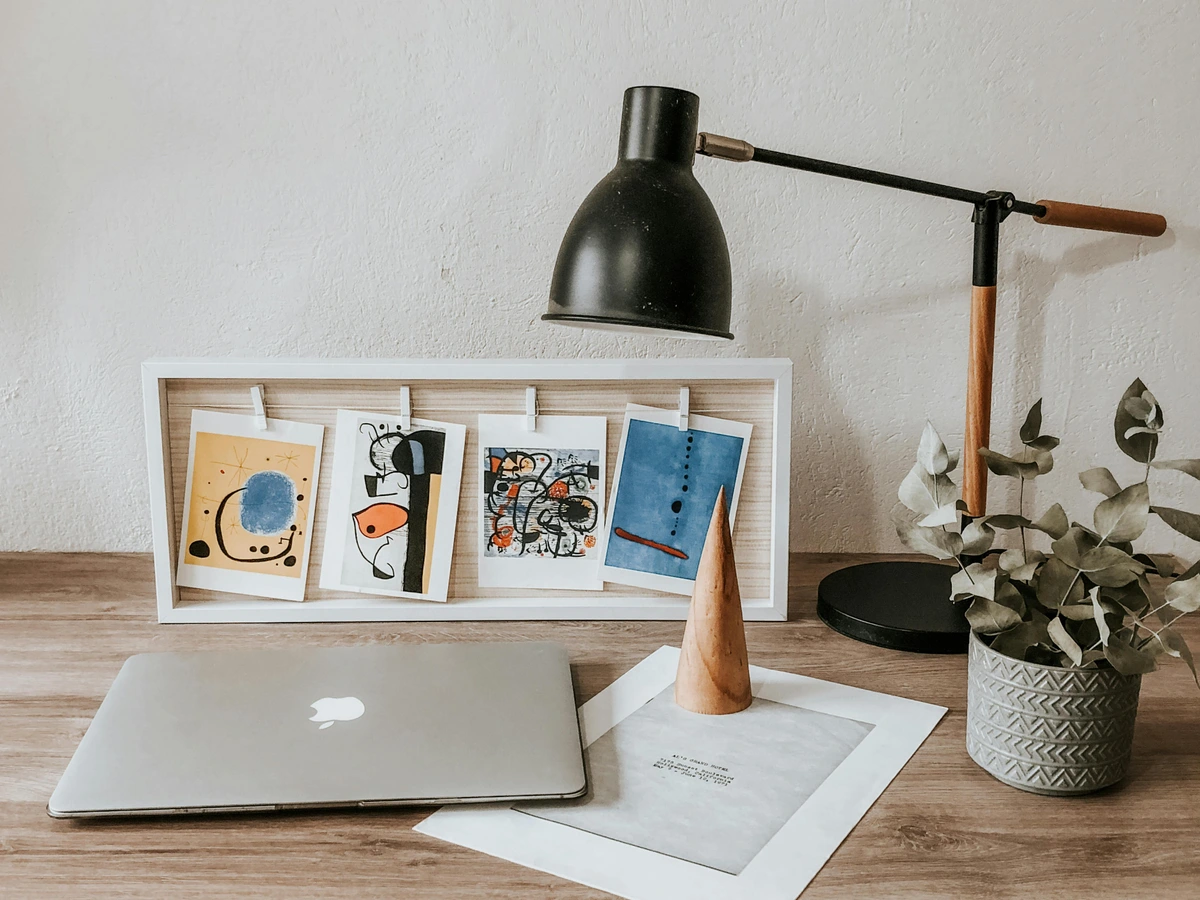
The compound effect of these micro-habits is staggering. A five-minute sketch a day is over 30 hours of practice in a year—enough to fundamentally rewire your hand-eye coordination. The key is removing the psychological weight of needing to be "great." When you show up for five minutes, you’re not creating art; you’re creating an identity. You’re building evidence in your nervous system that you are someone who shows up, even when it’s uncomfortable or uninspired. This is what makes the "Don't Break the Chain" method so powerful. The calendar becomes a visual record of your identity as a working creative.

3. Feast on Unexpected Inputs: Building Your Idea Scaffolding
Great ideas rarely come in vacuum-sealed packages. ### Understanding the Source of the Block
Before you can fix a problem, you have to understand where it comes from. A block isn't a single thing; it's often a symptom.
The Perfectionism-Procrastination Loop: This is the most common killer of creative work. It's a simple, brutal cycle:
- You set an impossibly high standard for your work (perfectionism).
- The thought of starting such a monumental task triggers anxiety.
- Your brain, trying to protect you from that anxiety, suggests a quick, easy distraction (procrastination).
- You feel momentary relief, followed by guilt.
- The guilt reinforces the feeling that you're not good enough, raising the bar for what you "should" produce, and the cycle tightens.
Breaking this loop requires a direct assault on Step 1. You have to lower the stakes. The "bad art quota" works because it reframes success from making a masterpiece to making a mess. It turns failure into the goal, which paradoxically frees you to succeed.

The Energy Drain of Decision Fatigue
Every choice you make depletes a tiny bit of your mental energy. What to wear, what to eat for breakfast, which project to work on, what color to use first—it all adds up. By the time you sit down to create, you may have no mental energy left for the creative work itself, only for deciding about it.
This is why creativity feels like such a struggle sometimes. You haven't even started working, and you're already exhausted from all the deciding about the work. It's like planning a road trip but running out of gas before you even leave the driveway.
This is why habits, rituals, and systems are so powerful. They automate the small decisions, conserving your finite willpower for the big ones. A pre-selected color palette, a designated time to work, a 60-second launch ritual—these aren't constraints. They're shields against decision fatigue.
This is grounded in the scientific concept of adjacent possibilities. Pioneered by theoretical biologist Stuart Kauffman, the idea is that at any given moment, the number of "next steps" in a creative system is constrained by what already exists. Your next idea is tethered to your current knowledge, tools, and experiences. By feeding yourself new inputs, you expand the "adjacent possible" for your work. A painter who studies physics can see light differently. A writer who gardens understands metaphors of growth in a deeper way.
A powerful historical example is Johannes Gutenberg. He didn't invent the printing press from scratch. He connected two existing technologies: the screw press (used for wine) and the concept of movable type. He stood at the intersection of winemaking and writing, and that collision created a revolution. That's what you're trying to do: put yourself at the intersection of your craft and something else entirely.
Here is how you systematically expand your own adjacent possibilities. Think of this as a diet for your imagination, but instead of protein and carbs, you're consuming concepts and forms:
- Artistic Cross-Training: If you’re a painter, listen to poets. A writer? Study dance. A musician? Read about architectural theory. Forcing your brain to translate concepts across disciplines is the fastest way to build a unique vocabulary. It's about becoming multilingual in the language of ideas. This is how you develop a truly original voice.
- Non-Creative Field Trips: Get out of the creative echo chamber. Go to a hardware store, a fish market, a botanical garden, a factory tour. These places are saturated with forms, functions, and processes that don't exist in your art studio. I've gotten more color palette ideas from the produce section than from any art book.
- The "Anti-Study": Consume stuff you absolutely hate. Don't just dismiss a trend you despise; actively study it. Figure out why it's popular. Understanding the appeal of something you dislike forces you to clarify your own aesthetic values and can reveal blind spots in your own taste. It's a fast track to understanding your own convictions.
- Embrace Strategic Boredom: Schedule time with no agenda, no screens, no input. Just walk. Just sit. Let your mind drift. This isn't wasted time; it's the time when your DMN is doing its most important work of connecting the dots. Boredom is the incubator for invention.
It's a kind of creative composting. You're gathering raw, organic material from disparate sources, throwing it all in, and letting it decompose and transform into something rich and new. Your next great idea is probably lurking in a book you'd never normally pick up.

5. The Art of Capturing: Building Your Creative Archive
Inspiration is fleeting. If you don't capture it, it's gone forever, like a dream forgotten by mid-morning. The key is to have systems—both high-tech and ridiculously low-tech—for grabbing these sparks before they vanish. Don't trust your memory. Trust a system.

- The Commonplace Book (or Digital Version): This is your creative catch-all. A physical notebook or a note-taking app (like Obsidian or Notion) where you dump quotes, sketches, article clippings, song lyrics, and half-baked ideas. Don't organize it too much at first. The goal is frictionless capture. Review it once a week to look for patterns.
- The Visual Swipe File: Use a tool like Pinterest or a simple folder on your phone to save images that resonate with you—palettes, compositions, textures, moods. When you're feeling stuck, scroll through your own curated collection instead of the infinite, overwhelming feed of the internet.
- The Voice Memo: Talking is often faster than writing. When an idea hits you on a walk, record it. I have memos from years ago that I still mine for gold when I'm feeling uninspired.
The goal isn't to create a perfect archive; it's to create a net with small enough holes that the good ideas don't slip through.
The Creative Marathon: Strategies for Sustainable Momentum
The biggest challenge of a creative life isn’t starting – it’s continuing. It's showing up on a random Tuesday in February when the initial excitement has worn off and the reality of the work has set in. It's the long game that separates hobbyists from people who build a body of work.
I used to think this required ironclad discipline. I was wrong. Discipline is brittle; it snaps under pressure. Momentum, I've learned, is something different. It's fluid. Think of it like riding a bike. You don't need to pedal as hard once you're already moving. Your job is to keep the bike from stopping completely, and to be willing to pedal hard again when you hit a hill. Momentum comes from flexible consistency, not rigid rules. It's about designing a system that makes it easier to keep going than to stop. The goal isn't a perfect streak of creative days; it's a resilient practice that can handle the chaos of life.
The Momentum Toolkit
Strategy | How It Works | The Psychology Behind It | When to Use |
|---|---|---|---|
| Timeboxing (Pomodoro Technique) | Short, focused bursts of work followed by a short break (e.g., 25 mins work, 5 mins rest). | Lowers the barrier to entry. "25 minutes" feels less intimidating than "make a masterpiece." | Procrastination hits, task feels too big, feeling overwhelmed or tired. |
| Project Sequels | Leave a specific, easy-to-start thread hanging at the end of a session—note the very next step. | Easier to continue a thought than start from cold. Pre-loads tomorrow's creative work. | During slumps, at the end of a productive day to ensure smooth start tomorrow. |
| Creative Companions | Work alongside others (physical or virtual shared Zoom room, like a "creative coworking" session). | Leverages social accountability. Shared energy multiplies individual focus. | When energy is low, isolation feels heavy, need a sense of shared purpose. |
| Failure Rebranding | Reframe "failures" as "research"—a bad outcome is data, not judgment. | Disarms fear of failure, often the root of creative paralysis. Turns judgment into neutral observation. | When feeling discouraged, tempted to quit, inner critic is loud and harsh. |
| Tiny Victories | Celebrate small wins: finished a sketch, wrote 100 words, mixed a color you love. | Provides immediate positive reinforcement, builds a bank of "wins" to draw on during tough times. | Daily momentum building, after completing difficult tasks, training brain to associate work with reward. |
| Creative Sprints | Set a timer for a very short burst (10-15 minutes) with zero expectation of a "good" outcome. | Reduces psychological weight. Ultra-short duration makes starting almost effortless. | When you're completely stuck, feeling uninspired, or procrastinating heavily. |
| Physical Movement | Take a 10-minute walk, do some stretching, or shake out your body. | Increases blood flow to the brain, changes perspective, breaks fixation from creative blocks. | When stuck on a specific problem, feeling restless, or after long sedentary periods. |
| Environmental Reset | Clean your workspace, change locations, or rearrange your materials. | Physically moving items can shift mental patterns. New environments trigger different neural pathways. | When energy feels stale, when habitual patterns are keeping you stuck, or weekly ritual reset. |
| Batching Creative Tasks | Group similar activities together (sketching, color mixing, research). | Reduces mental switching costs and context-shifting, allowing deeper focus. | When you have longer stretches of time available and want to maximize flow state. |
| Seasonal Review | Every 3 months, review what's working and what isn't in your practice. An honest audit. | Prevents stagnation. Allows your practice to evolve with your life and interests. | Quarterly (set a calendar reminder) or when feeling consistently stuck or bored with your work. |
Do you see the pattern here? Every strategy is about lowering the stakes and removing friction. We're not trying to be heroes; we're just trying to keep the engine warm. Some days, "sustaining momentum" is just opening the sketchbook and doodling for five minutes. Other days, it's a four-hour sprint. Both are perfect. The goal is to stay in the game. A practice that survives a bad week is far more valuable than a practice that only works when everything is perfect.
Remember: creativity isn’t linear. Some days your soil will be rich and ready; other days you’ll be hauling compost in the rain. Both are part of the cycle. The goal isn’t avoiding fallow periods – it’s knowing how to prepare for them.
The Skeptic’s Guide to the Art Market: On Value, Trends, and Digital Hype
Now about that bigger conversation – making and sharing your work. The art world can feel like a carnival funhouse, full of distorted reflections and loud, distracting noises. I’m frankly skeptical about chasing trends or digital hype cycles, especially the ones built on technological promises rather than human experience. I've watched too many "revolutionary" platforms rise, only for the artists who built them to be left holding the bag while algorithms and speculators eat the profits.
This isn't a Luddite rant. Technology is a tool. Digital art is real art. But when the conversation shifts from the work to the asset, from the feeling to the flipping, I check out. This isn't just about NFTs, though that's a prime example. It's about any system that encourages you to view your work as a speculative token first and a piece of human expression second. The primary relationship should be between you and the work, then between the work and the viewer. When a market comes between those two things, something essential gets lost.
In my experience, true creative value, the kind that sustains a life in the arts for the long haul, seems to come from three things:
- A Deep, Unshakeable Connection with Your Own Voice: This is the hardest part. It means making work that is authentically yours, not a pastiche of what's popular on Instagram this week. It's about shutting out the noise long enough to hear your own whisper. This is the work of a lifetime, and it requires you to be more interested in your own curiosity than in the approval of others.
- Building Real Relationships with People Who Cherish Your Work: The most meaningful success I've had hasn't been from a viral post. It's been from a slow, steady process of connecting with people who see something in my work that speaks to them. An email from someone who's had a print for five years, telling me what it means to them—that's the real currency. This is about building a community, not just an audience.
- Creating Physical Pieces That Outlive Digital Fads: There's something undeniably powerful about an object in space. A print on a wall, an original painting in a room—art that exists in the real world, that you can touch, that changes with the light of day. It becomes a part of someone's life in a way that a file on a hard drive or a line in a blockchain ledger never quite can. This is why I care so much about the physical print quality of the art prints I sell.
That’s why I focus on creating tangible art prints intended for everyday spaces – not as speculative assets to be flipped for profit, but as daily companions. The real market, the one that matters in the long run, isn’t in code; it’s in human hands holding human-crafted things. It's the slow, patient work of making things you believe in and sharing them with people who believe in you. This is the antithesis of hype. It's a practice rooted in patience, craft, and a faith in the power of physical objects to shape a life.
Tuesday at 9 AM: Your Practical Toolkit
All this theory is fine, but what does it actually look like on a random Tuesday with a looming deadline and a slight headache? Let's get concrete. This is the part of the guide you can dog-ear, screenshot, and actually use.
The key to any sustainable practice is designing a system so simple that it feels almost impossible not to do. We're going to build that system together, starting with the smallest possible step.
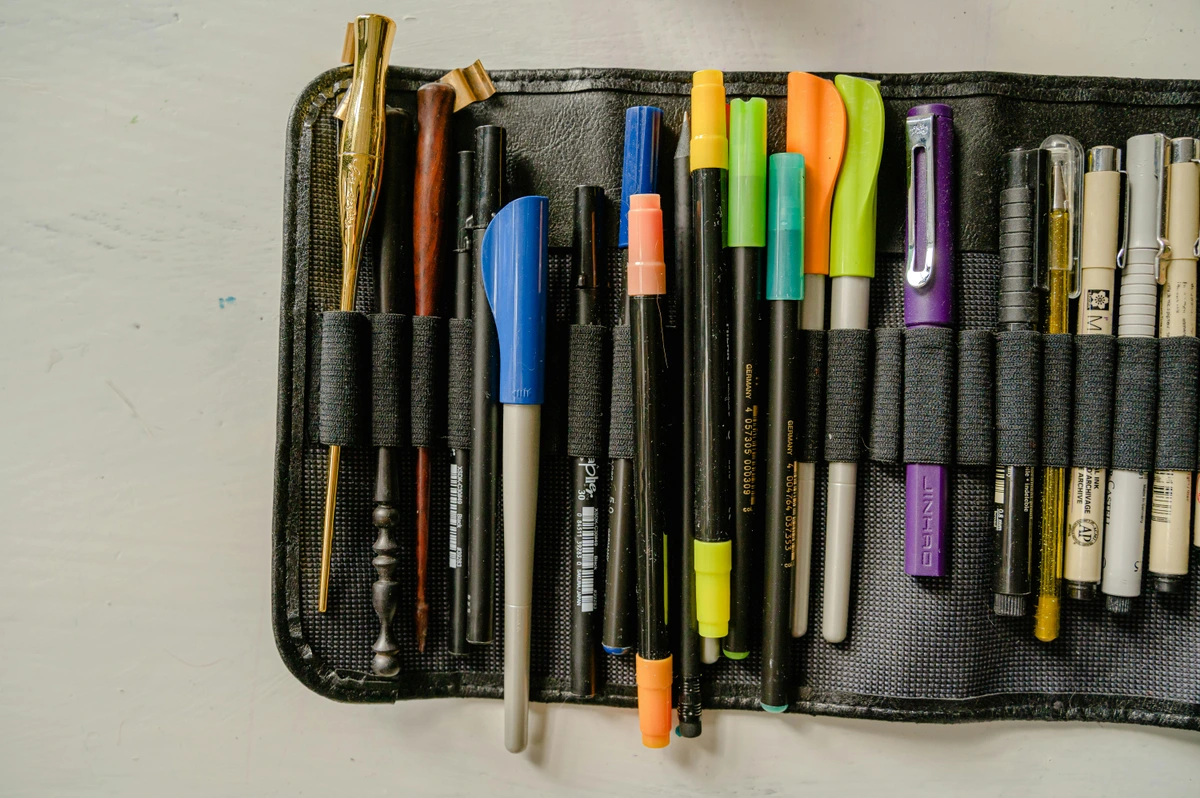
The key to any sustainable practice is designing a system so simple that it feels almost impossible not to do. Here's what we'll cover:
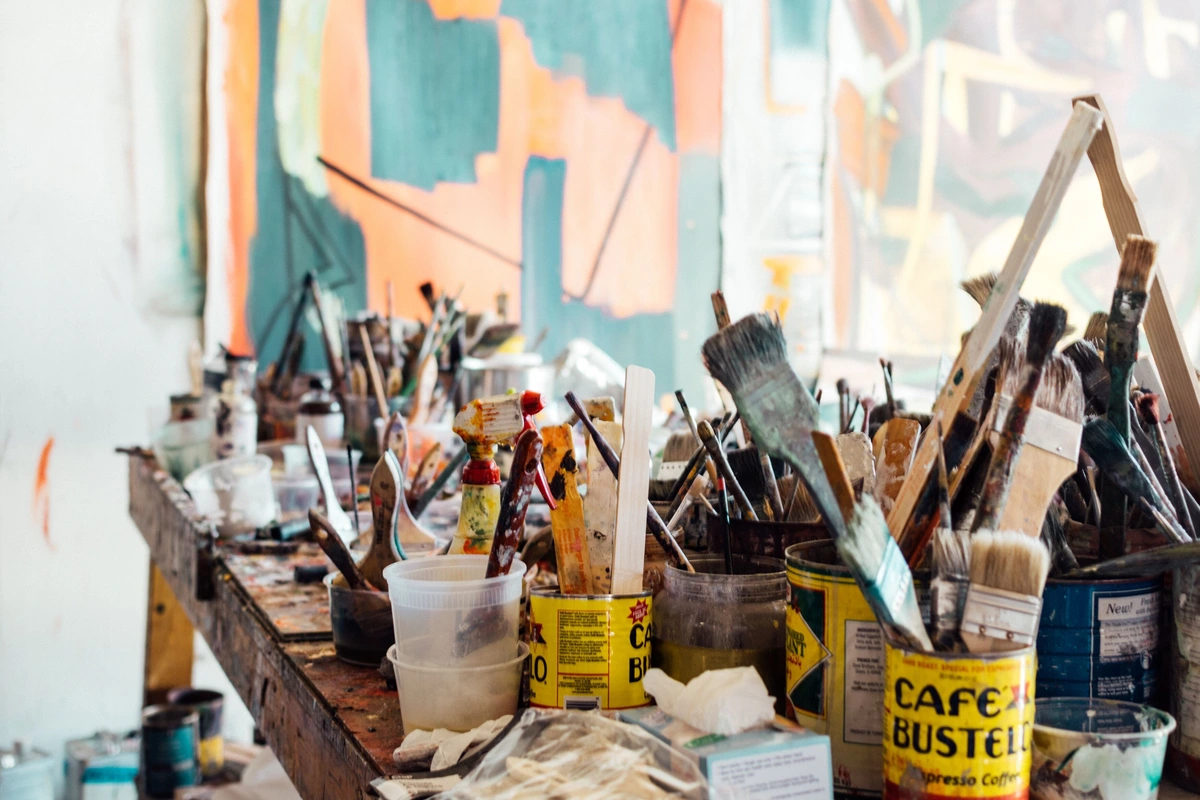
1. The Minimum Viable Practice: Your Daily Creative "Stack"
This is a sequence of actions you can chain together. Start with just one and build from there. The key is consistency, not perfection. I call these "habit stacks" because each action can become a trigger for the next. Lower the cognitive load, increase the creative output.
- Morning Pages (5-10 minutes): Made famous by Julia Cameron in The Artist's Way, this is the practice of brain-dumping three pages of longhand, stream-of-consciousness writing first thing in the morning. The rule is simple: don't think, just write. It's not for reading; it's for clearing the mental gunk. It's the mental equivalent of opening the windows to let fresh air in. If three pages feels like a brick wall, start with one sentence. The point is the action, not the volume.
- The Inspiration Sip (5 minutes, with morning coffee/tea): Before the internet gets its hooks into you, reach for a beautiful art book, a collection of poetry, or a short story. Take one small, deliberate sip of beauty before you expose yourself to the day's chaos. This isn't about research; it's about appetite.
- The Evening Wind-Down Sketch (5 minutes, before bed): Keep a sketchbook and a pen by your bed. No pressure to make "good art." Just draw. A doodle, a shape, a shadow from your lampshade. It's a way of bookending the day with a small act of making, reinforcing the identity: "I am a person who creates."
2. Micro-Habits for Maximum Impact
Think you don't have time? This section is for you. We'll turn those long sessions into tiny, powerful moments.
Let's be honest, the "ideal" routine rarely survives contact with reality. That's fine. The point is to build the muscle of showing up, in whatever form that takes.

- For Morning Pages: A "brain dump" voice memo on your commute is just as effective.
- For the Inspiration Sip: A poetry podcast or an art history talk while you cook breakfast counts.
- For the Sketch: A doodle on a sticky note during a boring work call absolutely counts (nobody has to know).
These aren't "cheating." They're called "coping." They're the way you build a resilient practice that can survive your actual life, not the idealized version of it you have in your head.
2. Time as a Choice: The Myth of "No Time"
It's the most common and most dangerous excuse: "I don't have time." If you find yourself thinking this, I'd challenge you to audit the last 72 hours of your life with utter honesty. For the vast majority of people, there are at least a dozen five-minute windows—the "in-between spaces"—that get filled with low-value digital consumption or anxious scrolling.
The truth is, "I don't have time" is almost always a euphemism for "It's not a priority." And that's okay! Maybe on some days, rest or family should be the priority. But let's call it what it is. The objective here isn't to shame you into sacrificing everything for your art. It's to empower you to see where you are already spending your creative energy—and to ask if you're getting a good return on that investment. Could one of those 10-minute social media sessions be traded for a 10-minute sketch? Only you can answer that.
Conclusion: The Work is the Reward
Finding fertile ground for creativity isn’t about hunting unicorns or waiting for lightning – it's about designing sustainable systems. It's about tilling the soil of your own mind, planting the seeds of discipline and curiosity, and tending to them daily.
Start small. Notice what works. Be willing to fail, to adjust, to try again. The soil is already there within you—in your curiosity, your lived experiences, your unique way of seeing the world. Your job isn't to become a different person; it's to remove the rocks of perfectionism, add the compost of new experiences, and plant the seeds of consistent practice.
The ultimate truth I've learned is that the work itself is the reward. The feeling of connection, the state of flow, the satisfaction of building something with your own hands and mind—that is the prize. The finished piece, the sale, the praise—those are wonderful flowers that sometimes bloom in the garden. But you don't control the flowers. You only control tending the soil.
So I'll leave you with this: starting a creative practice isn't about transforming into a "creative person." It's about giving yourself permission to rediscover the creative person you already were as a child—the one who painted skies purple, who asked "what if?" a hundred times a day, and whose biggest concern was whether the glue would stick.
It's less about building something new and more about clearing away the things that have grown over that original foundation: the fear of being wrong, the pressure to be productive, the belief that you have nothing to say. The child is still in there. Your job is just to make it safe for them to come out and play again.
And remember, sometimes the most creative act is simply showing up again tomorrow.
Q: I keep starting projects but never finishing them. What can I do?
You're in good company—this is one of the most common creative struggles. What you're experiencing isn't a moral failing; it's a systems problem.
First, a radical question: Do you actually need to finish? Not all creative work has to become a polished product. What if the "finishing" is just showing up for the process? Many of history's greatest minds kept voluminous notebooks that were never meant to be seen. The work was the process, not the product. Examine your own urge to finish. Is it coming from you, or from an internal pressure to have something to show for your time?
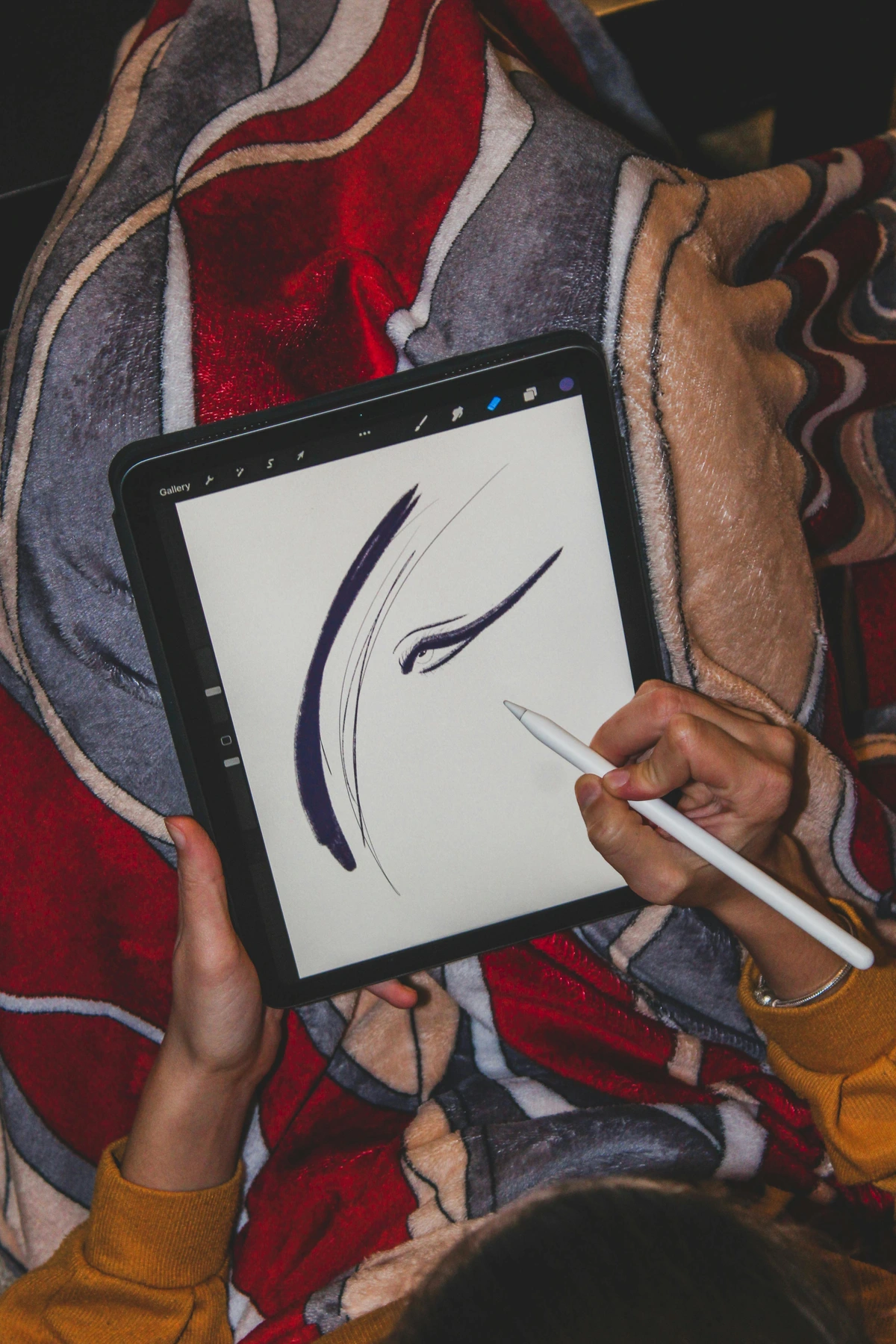




















If completing projects does matter to you (and for many goals, it does), here's the mental and logistical shift:
- Break projects into tiny, complete-able chunks. "Finish the painting" isn't a task. "Block in the background for the vase" is. "Mix the three main colors for the sky" is. The chunks should be so small they feel almost silly.
- Set deadlines for those small chunks, and share them with someone. External accountability is a powerful engine.
- Practice the "rough draft" mentality. Give yourself permission to finish the project at 70% quality, just to prove you can do it. You can always revise later, but you can't revise a project that doesn't exist.
- Recognize the 80/80 rule. Most finished projects feel 80% done at the halfway mark, and that last 20% of polish often takes another 80% of the effort. That's the nature of craft. You need the courage to push through that first 80% before you can even begin the refinement process.
Most importantly: finishing is a skill. You build it by finishing small things again and again, not by trying to finish one giant thing once. Every time you complete a small project, you're writing a new story about yourself: "I am someone who finishes." That story is more valuable than any single piece of art.