The Eiffel Tower: A Canvas of Artistic Significance
Explore the Eiffel Tower's profound impact on art, architecture, and culture, from its controversial beginnings to its iconic status today.

The Eiffel Tower: A Canvas of Artistic Significance
I remember the first time I saw the Eiffel Tower. It wasn’t in person, but through a grainy photograph in an old art book. Even then, its lattice structure seemed to defy gravity, reaching into the sky like a delicate iron lace. It was love at first sight, and I knew I had to understand why this tower, more than any other, had captured the world’s imagination.
The Eiffel Tower is not just a marvel of engineering; it is a symbol of human creativity and ambition. Its story is one of controversy, innovation, and enduring beauty. From its inception to its current status as a global icon, the tower has inspired countless artists, architects, and dreamers.
But what is it about the Eiffel Tower that makes it such a powerful muse? Is it its sheer size, its intricate design, or the way it seems to defy the laws of physics? Or is it something more intangible, like the way it embodies the spirit of an era and the dreams of a nation? These are the questions that have fascinated me for years, and they are the questions I hope to explore in this article.
To truly appreciate the Eiffel Tower, one must delve into its multifaceted role in art, culture, and history. It is not merely a structure but a living testament to human ingenuity and artistic expression.
The Birth of an Icon
The Eiffel Tower was built for the 1889 Exposition Universelle (World’s Fair) to celebrate the 100th year anniversary of the French Revolution. Designed by Gustave Eiffel, Maurice Koechlin, and Émile Nouguier, it was initially met with fierce criticism. Many artists and intellectuals of the time, including Guy de Maupassant and Émile Zola, signed a petition against its construction, calling it a "monstrous" and "useless" eyesore.
But here’s the thing: art isn’t always about immediate acceptance. Sometimes, it’s about challenging perceptions and pushing boundaries. The Eiffel Tower did just that. It was a bold statement of industrial progress, a testament to human ingenuity, and a symbol of France’s technological prowess.
The Controversy and Criticism
The tower’s construction was not just a feat of engineering but also a cultural battleground. Critics argued that it would dominate Paris’s skyline and disrupt the city’s aesthetic harmony. However, Gustave Eiffel defended his creation, emphasizing its temporary nature and its role as a symbol of France’s industrial achievements. Over time, the tower’s critics were won over by its sheer grandeur and the innovative spirit it represented.

The controversy surrounding the Eiffel Tower reflects a broader tension between tradition and modernity. It serves as a reminder that even the most iconic structures were once met with resistance, and that true innovation often requires challenging the status quo.
The Eiffel Tower in Art History
The Eiffel Tower’s artistic significance is as layered as its iron lattice. It has been a muse for countless artists, each interpreting it through their unique lens.
From its early days as a symbol of industrial progress to its current status as a global icon, the Eiffel Tower has inspired artists across generations. Its influence can be seen in a wide range of artistic movements, from Impressionism to contemporary digital art.
Early Representations
Before the tower became a beloved symbol, it was a subject of fascination and debate among artists. Early representations often focused on its sheer size and the contrast it created against Paris’s traditional architecture. These works captured the tension between the old and the new, reflecting the broader cultural shifts of the time.
Artists of the late 19th century were particularly drawn to the tower’s stark contrast with the historic buildings of Paris. This juxtaposition highlighted the rapid changes taking place in society, as industrialization transformed the city’s landscape.

Impressionism and Post-Impressionism
Artists like Claude Monet and Pierre Bonnard captured the tower in their impressionist works, focusing on its interplay with light and atmosphere. Monet’s series of paintings of the Eiffel Tower showcases its changing moods under different weather conditions and times of day.
Monet’s fascination with the tower was not just about its physical presence but also about how it interacted with the natural elements. His paintings often depicted the tower shrouded in mist or bathed in the golden light of sunset, emphasizing its ethereal beauty. Similarly, Bonnard’s works highlighted the tower’s role as a backdrop to everyday Parisian life, blending it seamlessly into the city’s fabric.
Credit, Licence
Modern Art
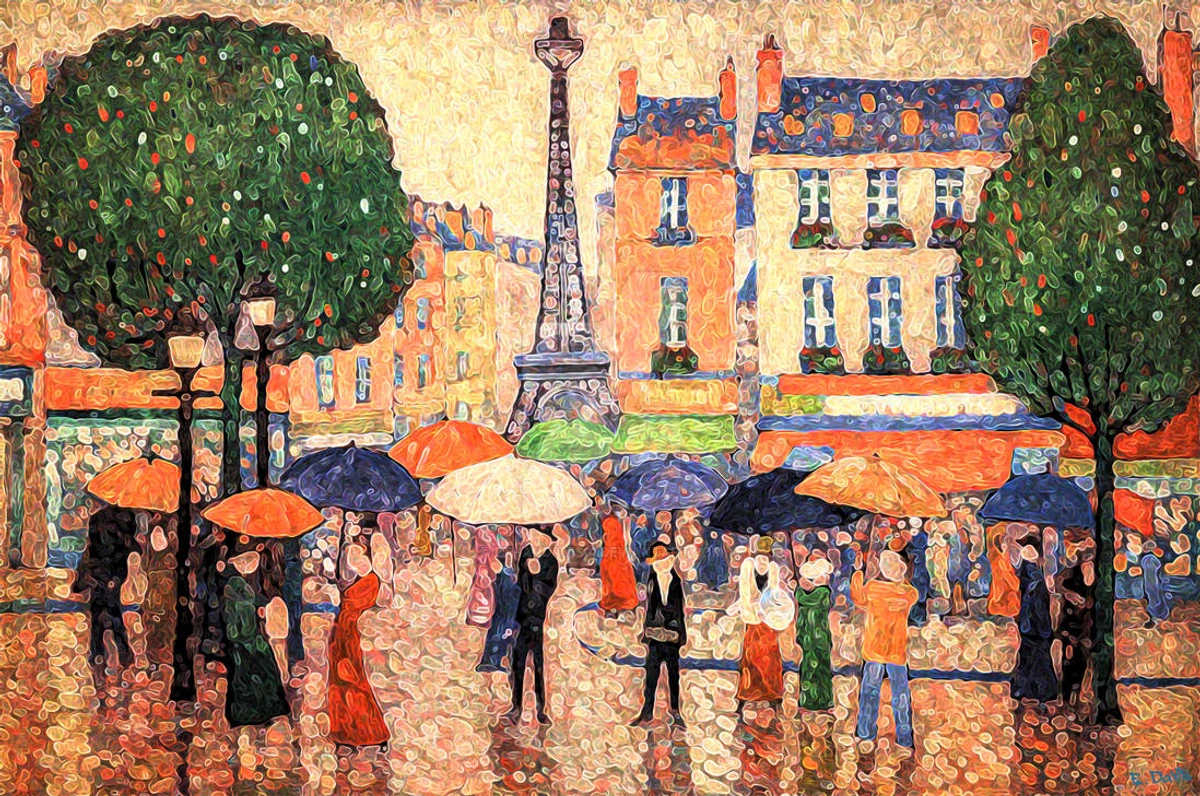
In the 20th century, the Eiffel Tower became a symbol of modernity. Artists like Robert Delaunay and Marc Chagall incorporated it into their works, using it to explore themes of urbanization and progress. Delaunay’s "Eiffel Tower" series is a vibrant celebration of the tower’s geometric forms and its place in the modern cityscape.
Delaunay’s abstract approach to the tower emphasized its dynamic energy and the way it seemed to pulse with the life of the city. His use of bold colors and fragmented forms captured the tower’s essence as a beacon of modernism. Chagall, on the other hand, often depicted the tower in dreamlike scenes, blending it with elements of fantasy and folklore to create a sense of wonder and nostalgia.
Credit, Licence
Architectural Influence
The Eiffel Tower’s design was revolutionary. Its open-lattice structure was not only aesthetically striking but also functionally innovative. It demonstrated the potential of wrought iron as a building material and paved the way for modern skyscrapers.
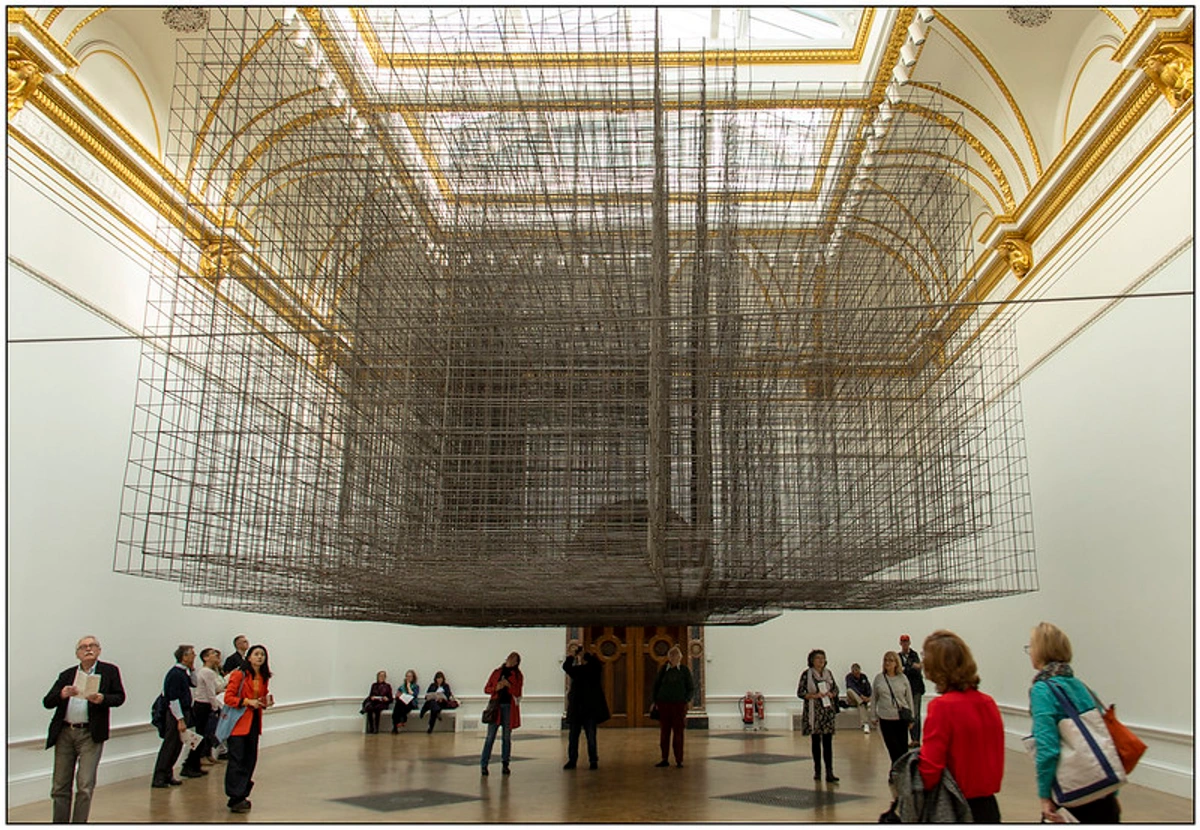
The tower’s design was a departure from the ornate and heavy styles of the past. Its lightweight yet sturdy structure showcased the possibilities of industrial materials, inspiring architects to experiment with new forms and techniques.

Engineering Marvel
The tower’s construction was a testament to the engineering prowess of the late 19th century. Its lattice structure was designed to withstand wind forces, a critical consideration given its height. The use of wrought iron, a material known for its strength and flexibility, allowed the tower to be both lightweight and durable. This innovative approach to construction set a new standard for future architectural projects.
The Eiffel Tower’s engineering achievements were not limited to its structure. The construction process itself was a marvel, with workers assembling the tower’s components with remarkable precision. This feat of engineering demonstrated the potential of industrialization and set the stage for future architectural innovations.
Key Architectural Features
Feature  | Description |
|---|---|
| Height | Originally 300 meters (984 feet), now 330 meters (1,083 feet) with antennas |
| Material | Wrought iron |
| Design | Open-lattice structure |
| Weight | Approximately 10,100 tonnes |
| Construction Time | 2 years, 2 months, and 5 days |
| Number of Visitors Annually | Over 7 million |
| Innovations | Pioneered the use of wrought iron in large-scale construction |
| Cultural Impact | Inspired the Art Deco movement and modern skyscraper design |

Influence on Modern Architecture
The Eiffel Tower’s influence can be seen in numerous modern structures. Its open-lattice design inspired the use of steel frameworks in skyscrapers, allowing for taller and more stable buildings. The tower’s aesthetic also influenced the Art Deco movement, which embraced geometric forms and industrial materials.
The tower’s impact extended beyond architecture. It became a symbol of progress and innovation, inspiring designers and engineers to push the boundaries of what was possible. Its influence can be seen in everything from bridges and stadiums to sculptures and furniture, all of which draw on the tower’s blend of form and function.
The Eiffel Tower in Contemporary Art
Today, the Eiffel Tower continues to inspire artists around the world. Its iconic status makes it a powerful symbol in contemporary art, often used to explore themes of globalization, tourism, and cultural identity.
The tower’s image has been reimagined in countless ways, from traditional paintings to digital art. Its adaptability as a symbol reflects its enduring relevance in a rapidly changing world.
Photography and Film
The Eiffel Tower has been a favorite subject for photographers and filmmakers alike. Its striking silhouette and the way it dominates the Parisian skyline make it a compelling focal point for visual storytelling. From classic black-and-white photographs to modern cinematic masterpieces, the tower has been used to evoke a sense of romance, adventure, and nostalgia.
The tower’s presence in film and photography has helped to cement its status as a global icon. Its image is often used to evoke the spirit of Paris, making it a powerful symbol of romance and adventure.
Street Art and Graffiti
Street artists have embraced the Eiffel Tower as a canvas for their work. From stencils to large-scale murals, the tower’s image is often used to make statements about society and culture. Artists like Banksy have used the tower’s iconic silhouette to comment on issues like immigration and politics.
The tower’s image in street art often serves as a powerful symbol of resistance and change. By reimagining the tower in unexpected contexts, artists challenge viewers to see the world differently and to question the status quo. This fusion of art and activism highlights the tower’s enduring relevance as a symbol of both beauty and controversy.
Digital Art and NFTs
In the digital age, the Eiffel Tower has found a new life in digital art and NFTs. While I’m skeptical about the environmental impact and long-term value of NFTs, there’s no denying their current popularity. Digital artists are creating stunning, futuristic interpretations of the tower, blending its historic significance with modern technology.
Digital art allows for a level of creativity and experimentation that traditional mediums cannot match. Artists can manipulate the tower’s image in ways that were previously unimaginable, creating surreal and fantastical scenes that challenge our perceptions of reality. However, the rise of NFTs also raises important questions about the role of art in the digital world and the ethical implications of blockchain technology.
FAQ
Why was the Eiffel Tower built?
The Eiffel Tower was built for the 1889 Exposition Universelle (World’s Fair) to celebrate the 100th year anniversary of the French Revolution. It was designed to showcase France’s industrial prowess and technological advancements.
Who designed the Eiffel Tower?
The Eiffel Tower was designed by Gustave Eiffel, Maurice Koechlin, and Émile Nouguier. Gustave Eiffel’s company was responsible for its construction.
How tall is the Eiffel Tower?
The Eiffel Tower is originally 300 meters (984 feet) tall. With the addition of antennas, it now stands at 330 meters (1,083 feet).
Why was the Eiffel Tower controversial?
The Eiffel Tower was initially met with fierce criticism from artists and intellectuals who saw it as a monstrous and useless eyesore. However, it eventually became a beloved symbol of Paris and France.
How has the Eiffel Tower influenced art and architecture?
The Eiffel Tower has inspired countless artists and architects. Its open-lattice design influenced modern skyscrapers, and its iconic status has made it a powerful symbol in contemporary art.

What is the significance of the Eiffel Tower in popular culture?
The Eiffel Tower is a symbol of romance, adventure, and innovation. It has been featured in countless films, books, and songs, making it one of the most recognizable landmarks in the world. Its image is often used to evoke the spirit of Paris and the allure of French culture.
How has the Eiffel Tower been used in contemporary art?
In contemporary art, the Eiffel Tower is often used to explore themes of globalization, tourism, and cultural identity. Artists have reimagined the tower in various mediums, from street art and graffiti to digital art and NFTs, highlighting its enduring relevance and adaptability.
Conclusion
The Eiffel Tower is more than just a landmark; it’s a canvas of artistic significance. From its controversial beginnings to its iconic status today, it has inspired generations of artists and architects. Its lattice structure, once deemed monstrous, is now a beloved symbol of Paris and a testament to human ingenuity.
As an artist, I find the Eiffel Tower’s story incredibly inspiring. It reminds me that art isn’t always about immediate acceptance. Sometimes, it’s about challenging perceptions and pushing boundaries. And that’s a lesson worth remembering, whether you’re painting a canvas or building a tower.
The Eiffel Tower’s Legacy
The Eiffel Tower’s legacy is one of resilience and reinvention. It has weathered criticism, wars, and the passage of time to emerge as a timeless symbol of human achievement. Its story is a testament to the power of vision and the enduring appeal of beauty, both in art and in life.
The tower’s legacy extends beyond its physical presence. It has become a symbol of hope, progress, and the limitless potential of human creativity. Its influence can be seen in art, architecture, and culture around the world, making it a true icon of the modern age.









If you’re interested in exploring more about the intersection of art and architecture, check out our timeline or visit our museum in Den Bosch. And if you’re looking to add a touch of artistic significance to your own space, browse our collection of prints and originals.