The Catholic Church: The Ultimate Patron of the Arts
Discover how the Catholic Church shaped art history through centuries of patronage, from Michelangelo's Sistine Chapel to modern interpretations. Your comprehensive guide.

The Catholic Church: The Ultimate Patron of the Arts
Ever stared at a Michelangelo masterpiece and wondered who paid a fortune for such genius? Or maybe you've seen Baroque churches that look like they're dripping in gold and thought: "someone had serious deep pockets." Spoiler alert: it wasn't just "someone." For over a thousand years, the Catholic Church was art history's most consistent, influential, and occasionally controversial patron.
I've spent hours wandering Renaissance vaults and staring at crumbling frescoes, and one thing becomes painfully clear: without bishops, popes, and monastic orders, most of Western art as we know it simply wouldn't exist. Yeah, we romanticize the "starving artist" today, but back then, creativity needed sugar daddies—and no institution played that role longer or better than Holy Mother Church.
The Epic Timeline: How Church Patronage Shaped Art History
The Church's role as patron didn't happen overnight—it evolved across centuries, each era leaving its unique fingerprint on artistic development:
Early Christian Period (c. 200-500 CE)
Before grand cathedrals, there were hidden catacombs. Early Christians commissioned art in secret, using symbols like the fish (ichthys) and dove to communicate faith without persecution. These weren't masterpieces by today's standards, but they were revolutionary—visual theology when written texts could get you killed.
Key Works: Catacomb frescoes in Rome, early sarcophagi with biblical scenes Patrons: Wealthy Christian converts, local bishops Artistic Focus: Symbolic imagery, simple narrative scenes
Byzantine Era (c. 500-1200 CE)
When Rome fell, Constantinople rose. The Byzantine Church developed the iconic golden icon style—flat, stylized figures with backgrounds of solid gold. Why gold? Because heaven wasn't meant to look like earth. It was supposed to feel otherworldly, divine, and utterly unattainable. Artists weren't just craftsmen; they were theologians with brushes.
Key Works: Mosaics in Hagia Sophia, icons of the Virgin Mary Patrons: Byzantine emperors, patriarchs, monasteries Artistic Focus: Spiritual transcendence, standardized religious imagery
Medieval Gothic Period (c. 1150-1400 CE)
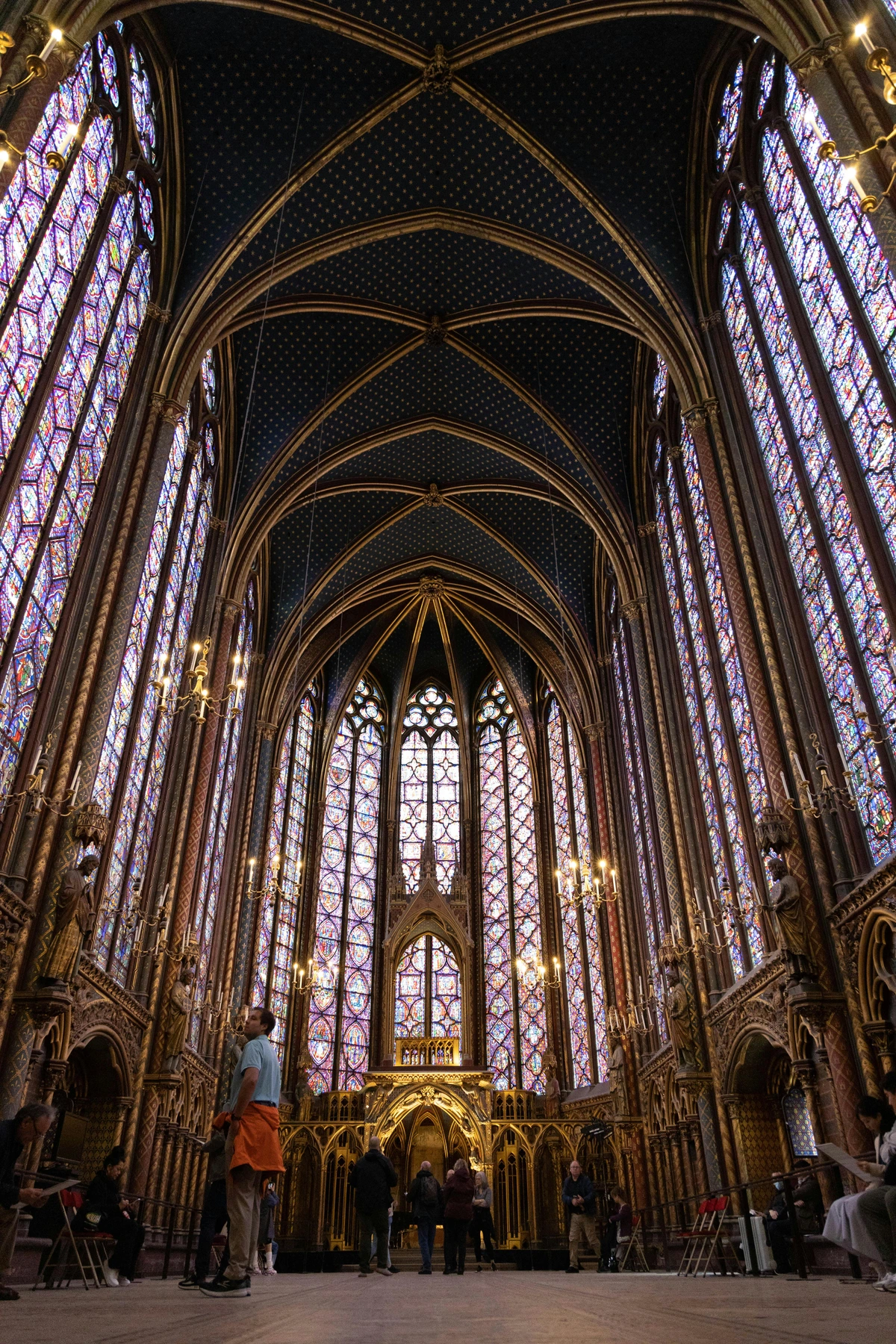
Enter the age of soaring cathedrals. Gothic architecture wasn't just about building up—it was about building heaven on earth. These structures were designed as immersive experiences: stained glass windows telling biblical stories to illiterate masses, flying buttresses making the impossible seem divine, and sculptures lining portals that turned architecture into stone storytelling.
Key Works: Chartres Cathedral, Notre-Dame de Paris, Reims Cathedral Patrons: Bishops, cathedral chapters, wealthy guilds, royal patrons Artistic Focus: Vertical aspiration, light as divine presence, narrative sculpture
Renaissance Explosion (c. 1400-1600 CE)
This is what most people think of when they hear "church patronage." The Renaissance wasn't just about art—it was about reviving classical ideals through the lens of Christian theology. Popes and wealthy merchants competed to have the most glorious chapels, the most talented artists, and the most awe-inspiring art. It was the original "keeping up with the Joneses," except the Joneses were cardinals and the stakes were eternal salvation.
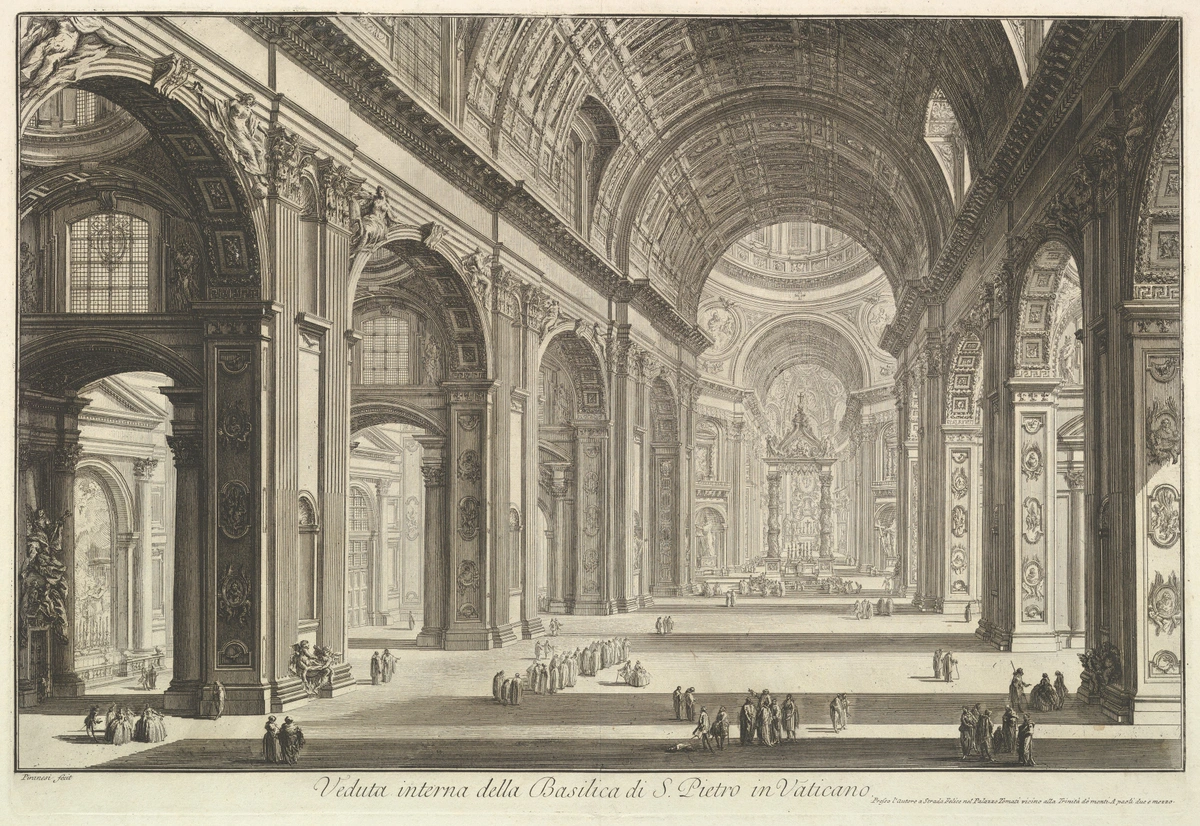
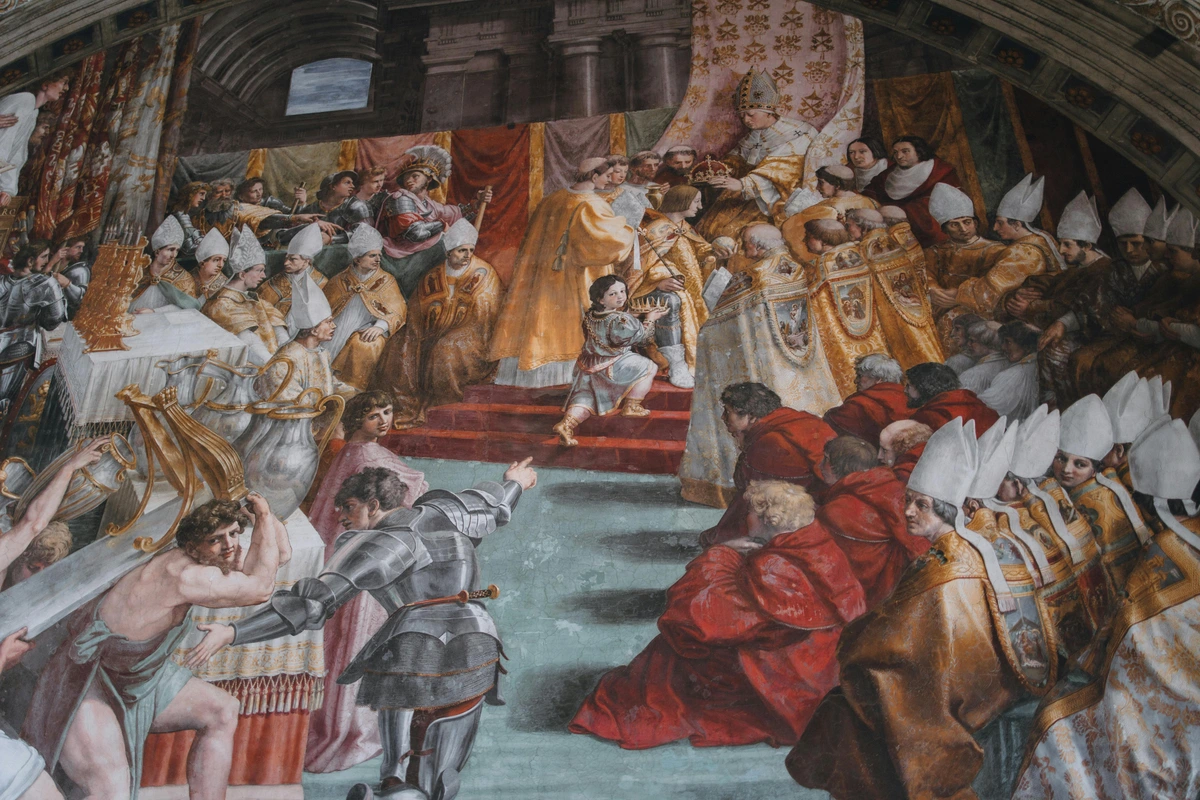
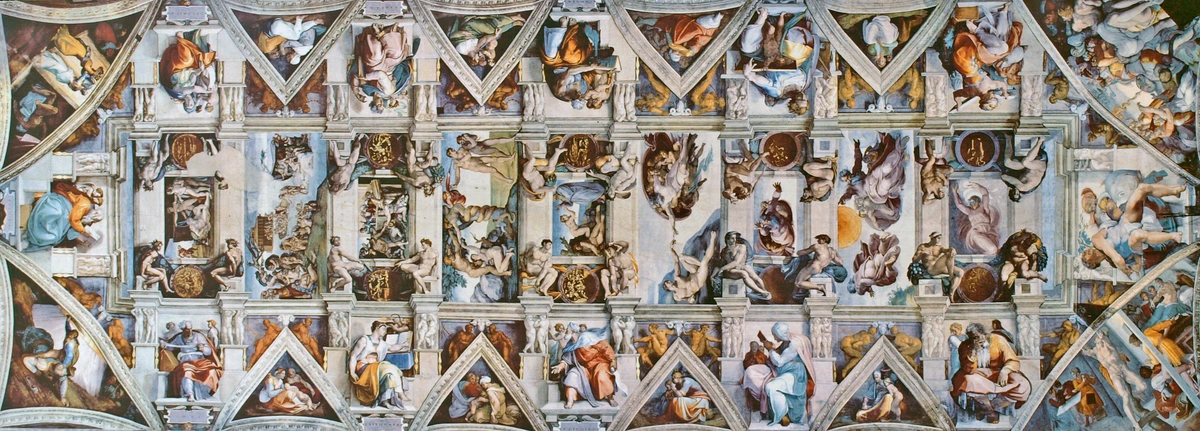
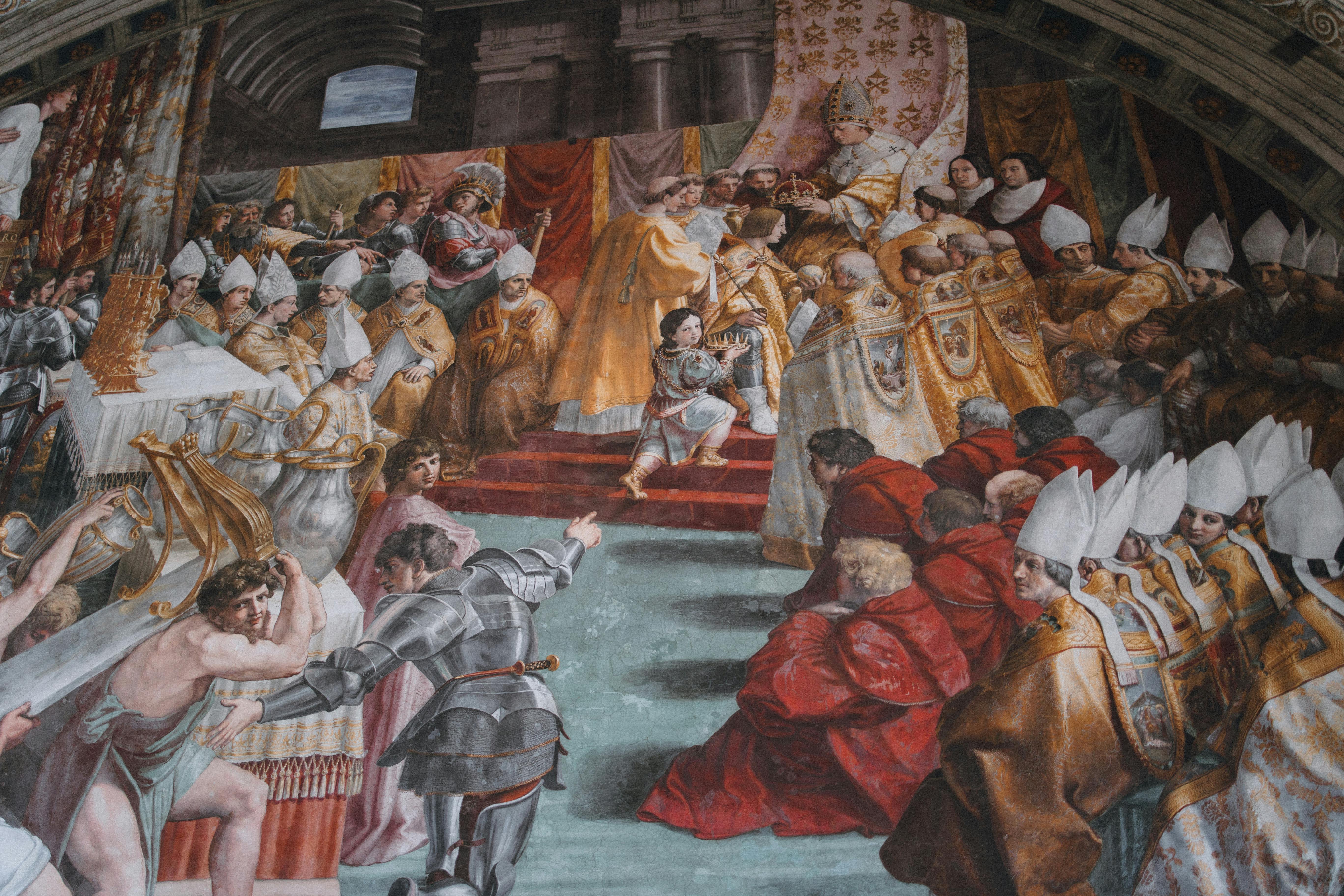
Key Works: Sistine Chapel ceiling, Raphael's Stanze, St. Peter's Basilica Patrons: Popes (Julius II, Leo X), Medici family, wealthy bankers Artistic Focus: Humanism meets theology, perspective mastery, classical forms
Baroque Drama (c. 1600-1750 CE)
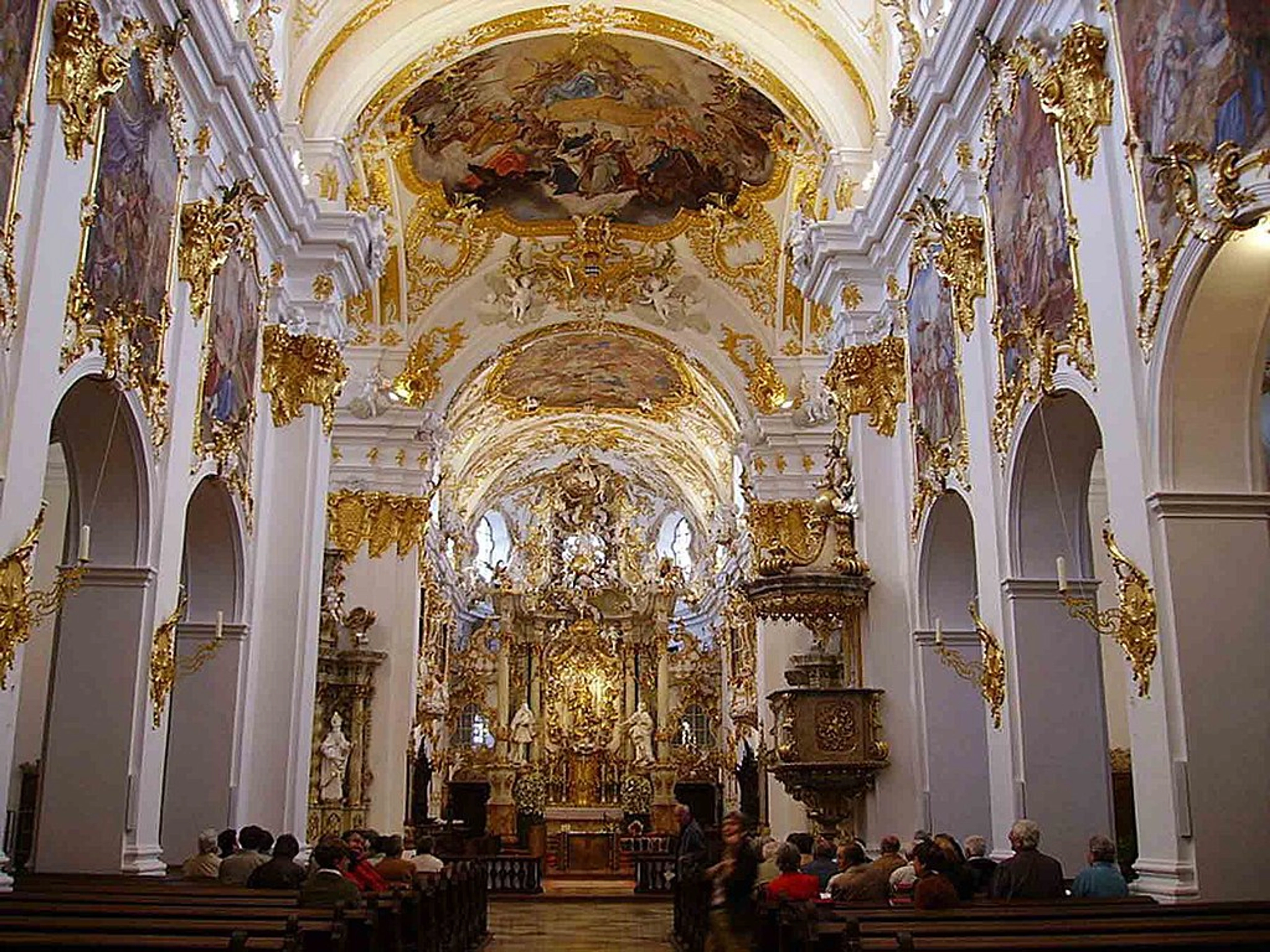
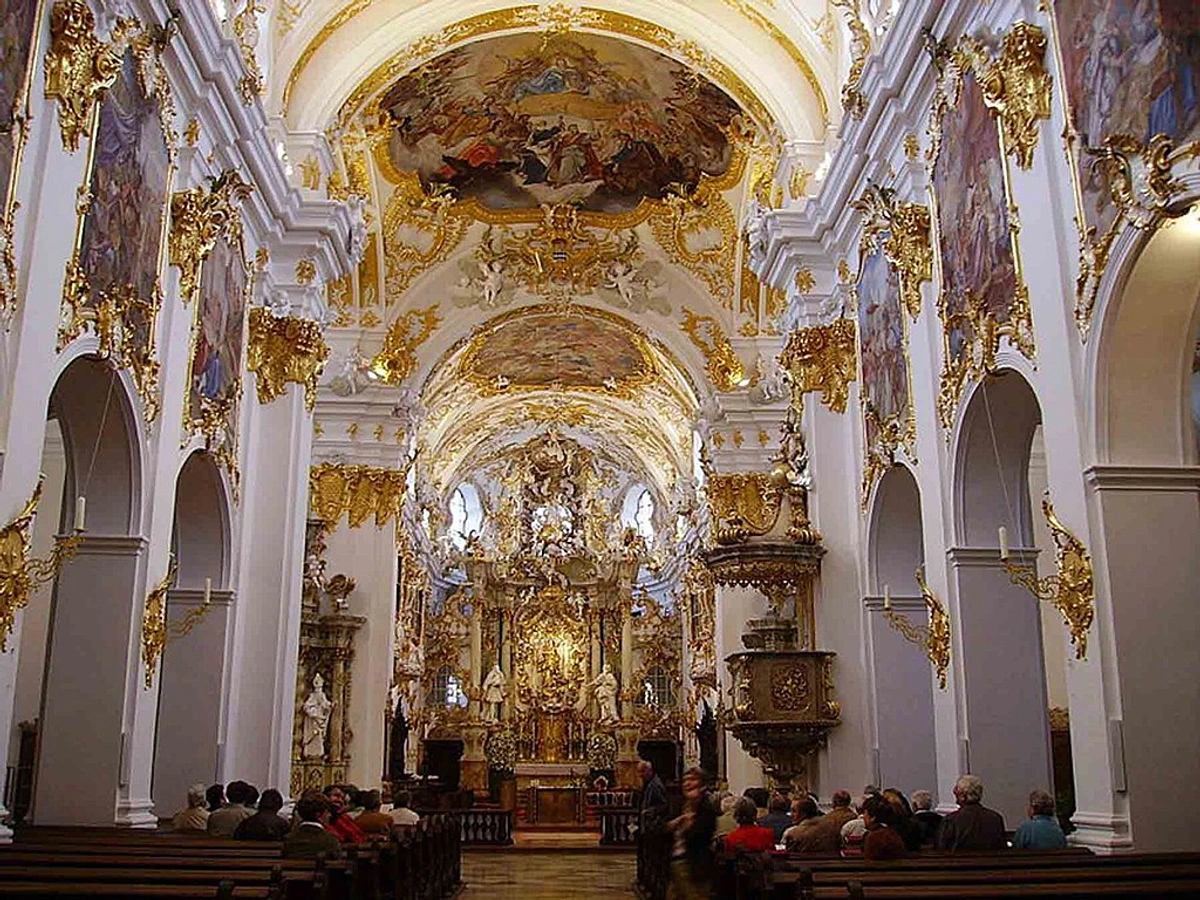
If Renaissance art was harmonious, Baroque art was emotional warfare. The Church needed to counter the Protestant Reformation, and they knew that dramatic, emotional art could win hearts back. Think Bernini's twisted Ecstasies, Caravaggio's dark realism, and churches designed to make you feel like you were witnessing miracles in real-time. This wasn't just art—it was emotional manipulation in the name of God.
Key Works: Bernini's Baldacchino, Caravaggio's religious scenes, Borromini's churches Patrons: Counter-Reformation popes, religious orders (Jesuits), nobility Artistic Focus: Emotional intensity, theatrical lighting, movement and drama
Why the Church? The Dividend on Divine Investment
Let's be pragmatic: the Church didn't commission art just because popes had impeccable taste. They were running the medieval equivalent of a global corporation with deep pockets and a clear mission: communicate theology to the masses. Remember, literacy rates were abysmal. Art was the original PowerPoint presentation, but way sexier and lasted for centuries.
 credit,
licence
credit: Public domain, licence: https://creativecommons.org/publicdomain/mark/1.0/
credit,
licence
credit: Public domain, licence: https://creativecommons.org/publicdomain/mark/1.0/
The logic was brutally simple: visual storytelling worked. A peasant might not read Latin, but they could understand a painting of hellfire or a golden saint. This wasn't vanity; it was pure communication strategy. The Church was also sitting on vast wealth—tithes, land, political power—which they reinvested artfully. (Pun intended.)
The Artistic Tax Codes: Commissioned vs. "Inspired"
Not all church-related art came from commissions—many artists worked "in the style of" religious themes. But the big-ticket projects? Absolutely commissioned. Let's break it down:
The Commissioning Process: From Request to Masterpiece
Getting a church commission wasn't as simple as sending an email. It was a complex process that could take years:
- The Request: A patron (pope, bishop, noble) identifies a need—new altarpiece, cathedral decoration, etc.
- The Competition: Artists submit proposals, sketches, and competitive bids
- The Contract: Detailed specifications about subject matter, materials, deadlines, and payment
- The Work: Years of labor, often with assistants and workshops
- The Payment: Usually staged payments upon completion of milestones
- The Approval: The patron's final approval (which could mean months of waiting or demands for changes)
This process explains why some of history's greatest masterpieces took decades to complete—and why some artists died before seeing final payment.
Types of Church Commissions:
Commission Type  | Example | Key Characteristics | Timeframe | Cost Scale |
|---|---|---|---|---|
| Architectural | Notre-Dame Cathedral | Integrated art, function, and theology. Stone preached the word. | Decades to centuries | Monumental (thousands of workers) |
| Paintings & Frescoes | Raphael's "School of Athens" | Biblical stories, theological debates, heavenly scenes for public viewing. | Months to years | High (master artist + workshop) |
| Sculptures | Bernini's "Ecstasy of St. Teresa" | Emotional, dramatic expressions of faith for churches and private chapels. | Years to complete | Very high (marble, precious materials) |
| Liturgical Objects | Gilded altars, chalices | Made for ritual use, often jewel-encrusted to reflect heavenly glory. | Weeks to months | Extreme (gold, gems, enamel) |
| Private Devotion Art | Altarpieces for nobles | Wealthy donors paid for "merit art"—think "I'll fund this painting to get closer to heaven." | Months to years | High (commissioned prestige) |
| Manuscript Illumination | Book of Kells | Text enhanced with decorative borders, illustrations, and gold leaf | Years per volume | Moderate to high |
| Tapestry & Textiles | Sistine Chapel tapestries | Woven narratives for church interiors and processions | Years per set | High (materials + labor) |
| Mosaics | Byzantine cathedral apses | Thousands of glass pieces creating permanent religious imagery | Years to complete | Very high (materials + installation) |
The Star Players: When Art Met Altars
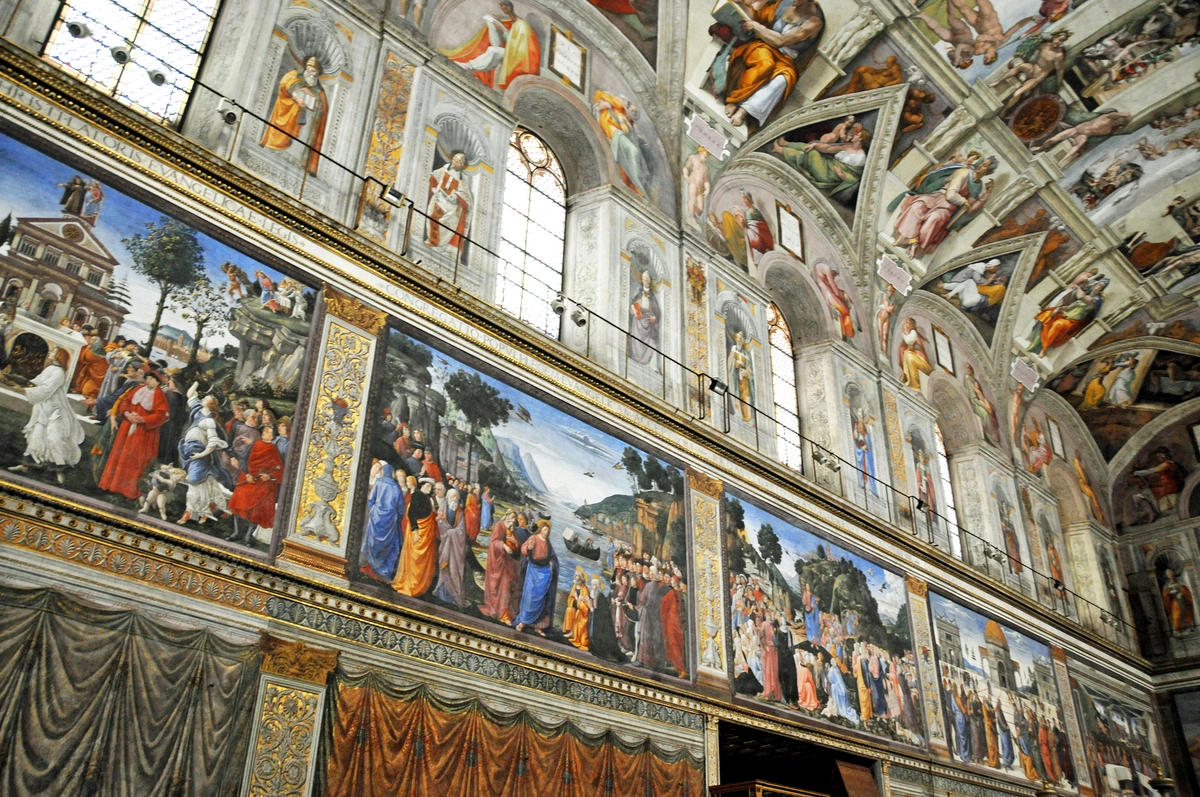
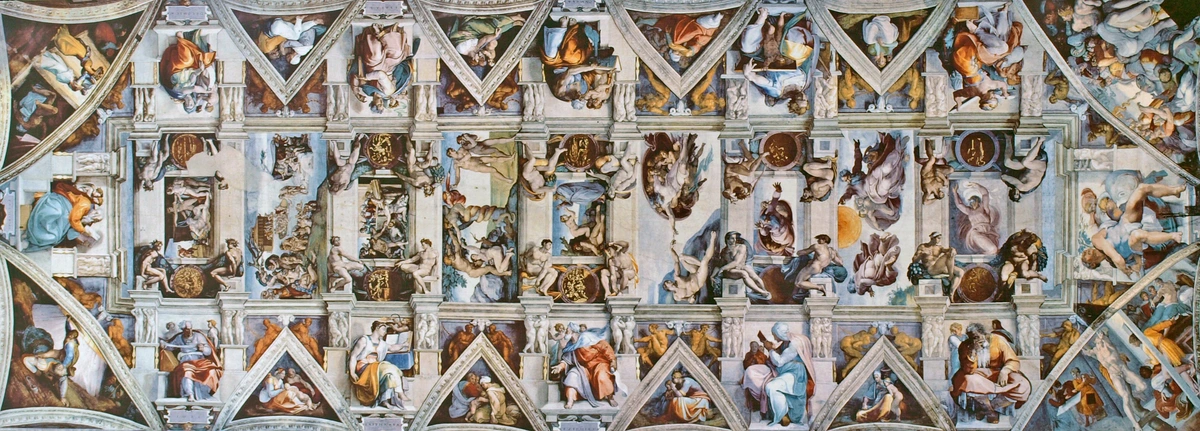
Names like Michelangelo and Caravaggio dominate art history for a reason. But their genius wasn't born in a vacuum—it was funded by popes, cardinals, and monasteries. Michelangelo painted the Sistine Chapel ceiling not because he wanted to, because Pope Julius II basically held a divine gun to his head ("Do this ceiling, or I excommunicate your accountant!").
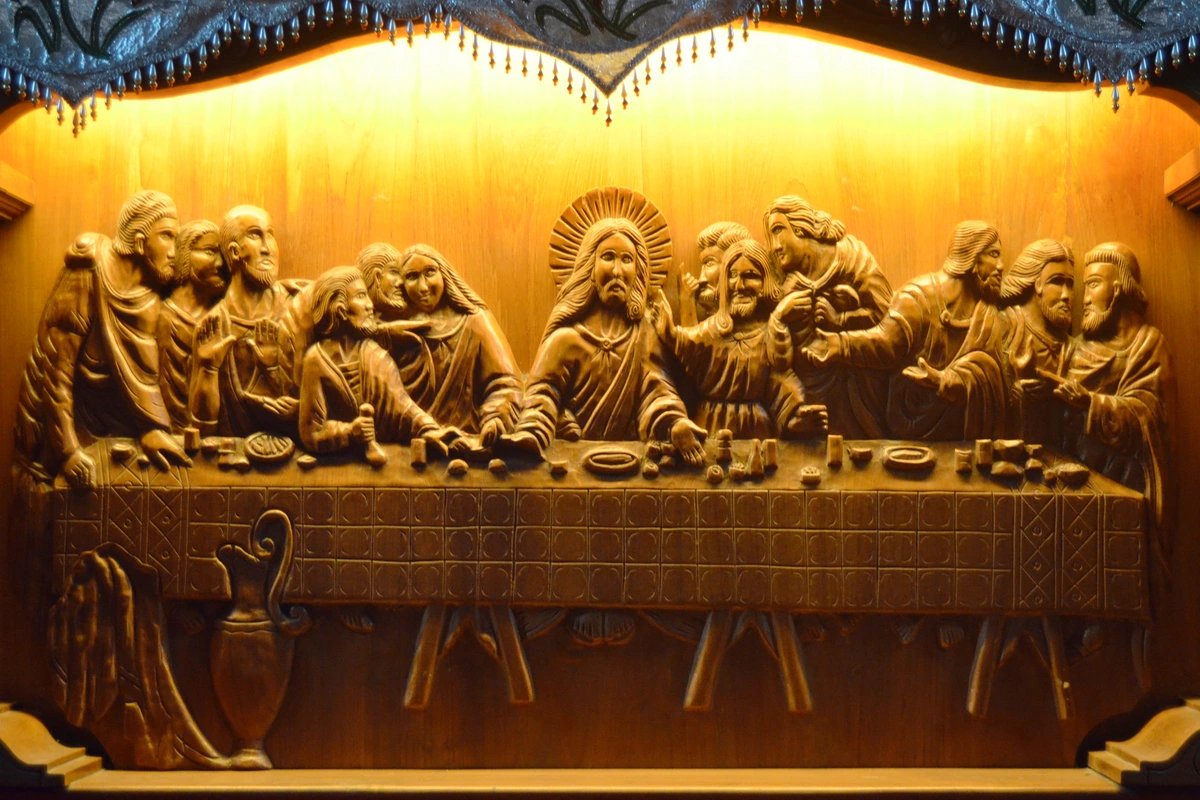
The A-Team of Renaissance Masters
Let's meet the all-stars who defined church art:
Michelangelo Buonarroti (1475-1564)
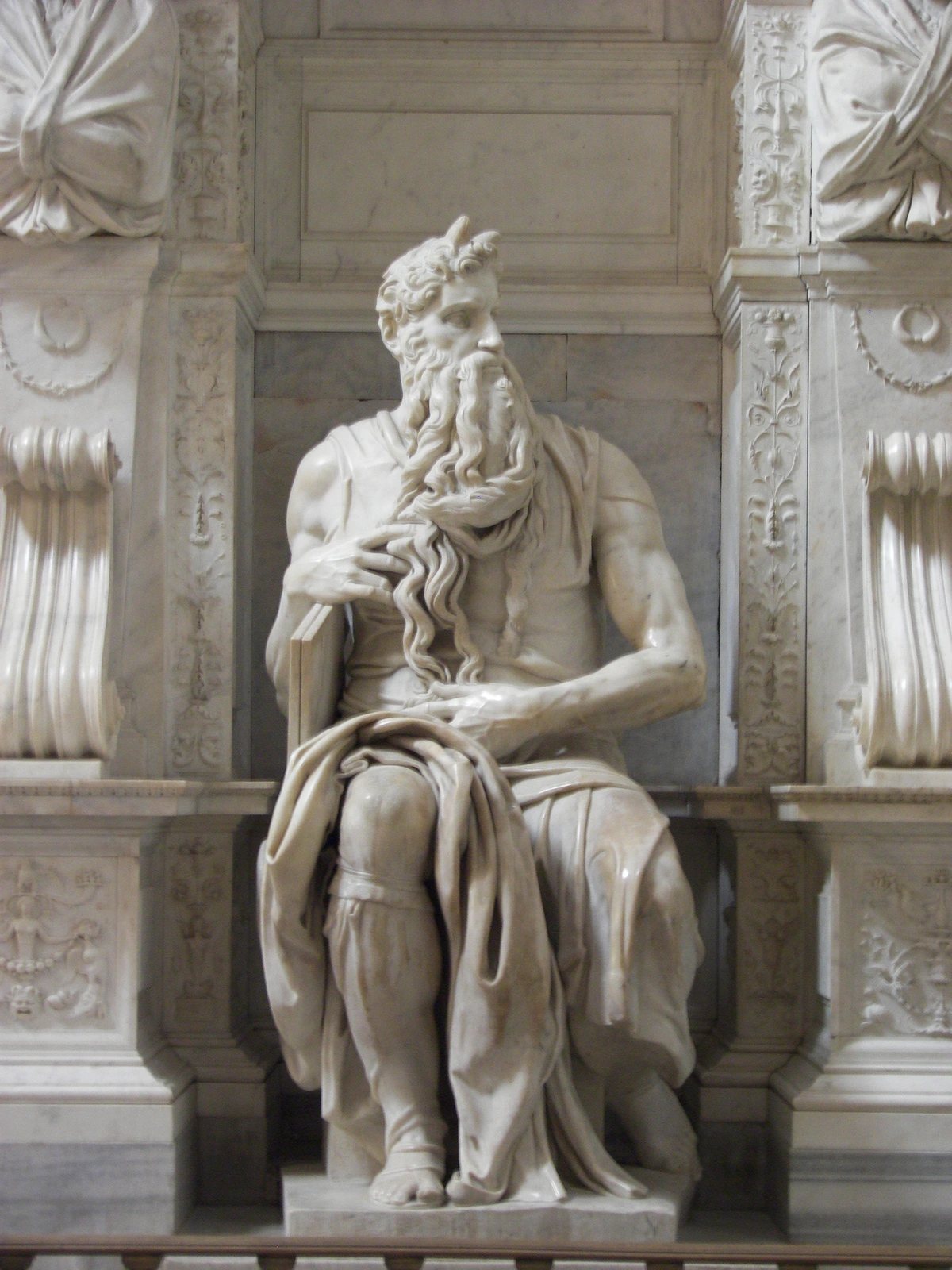
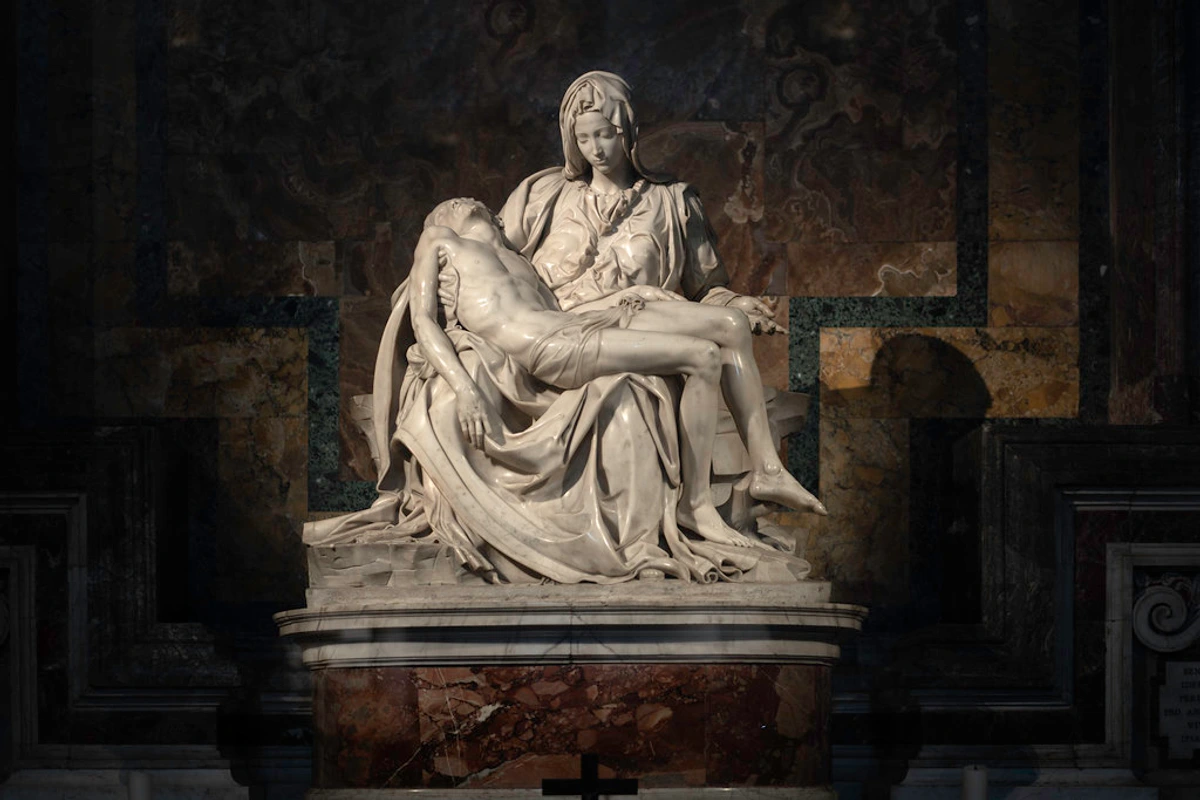
Patron Relationship: Love-hate with Julius II, Leo X, Clement VII Signature Style: Anatomical perfection, muscular figures, emotional intensity Key Church Works: Sistine Chapel ceiling, Last Judgment, Pietà, dome of St. Peter's The Michelangelo Method: He didn't just paint—he sculpted paint. His figures seem to burst from the walls, muscles straining, emotions raw. He worked lying on his back for years, literally pouring his soul into wet plaster.
Famous Quote: "I'm not in a good place with God... I'm not a painter." — Michelangelo, while painting the Sistine Chapel
Raffaello Sanzio (Raphael) (1483-1520)
Patron Relationship: Close friend of Pope Julius II and Leo X Signature Style: Harmonious compositions, idealized beauty, balanced compositions Key Church Works: School of Athens, Transfiguration, various Vatican rooms The Raphael Method: Where Michelangelo was drama, Raphael was harmony. He created perfect worlds where theology and philosophy coexist peacefully. His Madonnas look like they've never known sorrow—aesthetic perfection serving divine message.
Gian Lorenzo Bernini (1598-1680)
Patron Relationship: Worked for eight different popes across 60+ years Signature Style: Dynamic energy, theatrical emotion, marble that seems alive Key Church Works: Baldacchino in St. Peter's, Ecstasy of St. Teresa, Fountain of Four Rivers The Bernini Method: He didn't just make sculptures—he made experiences. His work invites you to walk around it, to see different emotions from different angles. St. Teresa's ecstasy isn't just depicted—it's contagious.
Caravaggio ( Michelangelo Merisi da Caravaggio) (1571-1610)
Patron Relationship: Troubled relationship with church authorities, patronage from del Monte family Signature Style: Dramatic chiaroscuro, realistic figures, sacred meets profane Key Church Works: Calling of St. Matthew, Conversion of St. Paul, Death of the Virgin The Caravaggio Method: He painted saints like they were ordinary people—wrinkled, dirty, real. His light wasn't gentle; it was aggressive, divine intervention in dark spaces. You could smell the taverns and feel the divine grace simultaneously.
Titian (Tiziano Vecellio) (c. 1488-1576)
Patron Relationship: Long career spanning multiple papacies and royal courts Signature Style: Rich colors, atmospheric effects, psychological depth Key Church Works: Assumption of the Virgin, Pesaro Madonna, various altarpieces The Titian Method: Color was his theology. His reds weren't just reds—they were divine passion. His blues weren't just blues—they were heavenly transcendence. He created visual symphonies where color preached the gospel.
Caravaggio? His "Calling of St. Matthew" was painted for a chapel in Rome. His dramatic use of light (chiaroscuro) wasn't just innovative—it was theatrical. But it served a purpose: make faith feel visceral, immediate, and kinda dangerous. The Church wanted sinners to see their own reflection in those canvases and repent. ROI: priceless.
The Dark Stain On the Canvas: Controversy And Control
Let's burst that fluffy halo around church patronage. It wasn't all "hallelujah and wine". The Church was also Europe's original micromanager. Artists faced strict guidelines:
The Censorship Machine: Art Under Theological Scrutiny
Church patronage came with strings attached—very long, very heavy theological strings. The Church operated as the ultimate creative director with veto power over everything:
Doctrinal Enforcement
- Biblical Literalism: Every detail had to match scripture. No creative interpretations of the Holy Family. Mary couldn't look too happy (improper solemnity), Christ couldn't look too angry (divine patience), and saints couldn't look too worldly (heavenly detachment).
- Theological Correctness: The Trinity had to be depicted properly, heresies couldn't be suggested accidentally, and all miracles had to look authentically miraculous.
- Symbolic Compliance: Every gesture, object, and color had theological meaning. A dove wasn't just a dove—it was the Holy Spirit. A lily wasn't just a flower—it was Mary's purity.
Artistic Freedom vs. Dogmatic Requirements
The tension between artistic expression and religious doctrine created some of art history's most fascinating conflicts:
Issue | Artist Example | Church Response |
|---|---|---|
| Too much realism | Caravaggio's "dirty realism" | "Make the saints cleaner" |
| Too emotional | Bernini's dramatic ecstasy | "Tone down the theatricality" |
| Too innovative | Modern abstract styles | "Stick to traditional forms" |
| Too sensual | Titian's voluptuous Madonnas | "Increase the modesty" |
| Too political | Art depicting church corruption | "Commission something else" |
The Financial Stranglehold: Patrons vs. Artists
Church commissions weren't just creative projects—they were business deals with terrible terms for artists:
Payment Nightmares
- Staged Payments: Artists might work for years with only partial payments
- Approval Delays: Patrons could take months to "review" work, delaying final payment
- Change Orders: "We love it, but can you change the entire composition?" (Starting over for no extra pay)
- Withholding Funds: "The budget is tight" after the contract was signed
- Posthumous Payments: Many artists died before receiving final compensation
A Real Example: Michelangelo received only a fraction of his agreed payment for the Sistine Chapel ceiling. He had to repeatedly beg Pope Julius II for what he was owed.
The Workshop Economy: Mass Production of Masterpieces
Most "masterpieces" weren't solo acts. They were industrial operations:
- The Master: Created the design and key elements
- The Workshop: Assistants prepared materials and backgrounds
- The Specialists: Experts in specific techniques (gilding, fresco, etc.)
- The Apprentices: Did the grunt work, learning the craft
This system allowed for massive scale but meant that "Michelangelo's" ceiling was actually the work of dozens of hands under his supervision.
- No heresy, please: Biblical accuracy was non-negotiable. A blue Madonna? Fine. A Mary with six fingers? Off to hell with you.
- No dissent: Art questioning doctrine? Nope. (Sorry, certain "enlightened" Baroque artists.)
- Censorship was real: "We like this painting...except the part where Christ looks mildly annoyed about the crucifixion. Make him ... less uppity?"
And let's talk money. Patrons often insisted on final approval privileges. Ever heard of an artist starving while waiting for a bishop to "finalize their thoughts"? Yeah, that still happens. Just more email-based.
The Modern Echo: When Patrons Became Politics
Fast forward to today. Direct church commissions are rarer, but the influence remains. Think about it:
Controversies That Won't Die
The Church's relationship with art has evolved from patron to provocateur:
The Culture Wars: Art as Battlefield
Modern art often uses religious themes to challenge, provoke, and question—all things the Church originally suppressed:
Artist | Work | Controversy | Church Response |
|---|---|---|---|
| Chris Ofili | "The Holy Virgin Mary" | Virgin Mary with elephant dung | Condemned as blasphemous, Mayor Giuliani tried to remove it from Brooklyn Museum |
| Andres Serrano | "Piss Christ" | Crucifix submerged in urine | Called "disgusting" by Cardinal O'Connor, Vatican called it "trash" |
| Dana Schutz | "Open Casket" | Painting of Emmett Till | Petitions to remove it from Whitney Biennial, debate about racial vs. artistic authority |
| Zhang Xiaogang | "Bloodline Series" | Traditional Chinese aesthetics with Christian themes | Complex relationship - uses Christian imagery in non-Christian context |
| Mona Hatoum | "Lure" | Islamic patterns turned into Christian crosses | Questions cultural appropriation and religious syncretism |
These works aren't just art—they're theological arguments in visual form. The Church may not commission them anymore, but it can't ignore them either.
The Restoration Wars: What's "Authentic" Anyway?
Modern restoration projects have become battlegrounds between historical accuracy, artistic intent, and contemporary aesthetics:
Sistine Chapel Ceiling: The Great Debate
- Before Cleaning (1940s): Dark, mysterious, dramatic atmosphere
- After Cleaning (1980s-1990s): Bright, colorful, almost cartoonish figures
- The Controversy: Did cleaning reveal Michelangelo's true colors, or did it strip away centuries of atmospheric patina?
- The Reality: The original colors were indeed bright, but the cleaning process may have been too aggressive
What We've Lost Through "Restoration"
Many "restorations" have permanently altered masterpieces:
- Medieval overpaintings: Later artists "improved" earlier works
- Cleaning away varnishes: Removed protective layers that aged beautifully
- Reinterpretive restoration: Restorers "fixing" what they think should be there
- Political restoration: Altering art to support contemporary agendas
The Digital Revolution: New Ways to Experience Church Art
Technology has changed how we interact with religious art:
- Virtual Reality: Walking through Chartres Cathedral from your living room
- High-Resolution Scans: Seeing brushstrokes invisible to the naked eye
- 3D Reconstruction: Experiencing destroyed masterpieces digitally
- Interactive Apps: Learning the stories behind frescoes as you explore
- AI Restoration: What might damaged works have originally looked like?
These technologies make church art more accessible than ever, but they also raise questions about authenticity and the "aura" of original works.
The Future: Will the Church Commission Art Again?
Signs of renewal:
- New Basilicas: Modern churches still commission significant works
- Religious Art Resurgence: Growing interest in traditional religious imagery
- Theological Contemporary Art: Artists exploring faith in new ways
- Papal Patronage: Pope Francis supporting modern art that bridges tradition and innovation
The Church may never again dominate artistic production like it did during the Renaissance, but its influence continues to shape how we think about art, faith, and their intersection.

- Conceptual art challenging Catholic norms? Think Chris Ofili's "The Holy Virgin Mary" (virgin Mary with elephant dung—shockingly still controversial).
- Restoration debates over what's "authentic" (looking at you, Sistine Chapel cleaning vs. "Let's re-paint it how we want it to be").
- Contemporary artists wrestling with faith as theme—not as a patron, but as a subject.
The Church isn't your go-to Gallerist anymore, but it's still the elephant in the museum room. And honestly? That's kinda beautiful. Tradition and rebellion in a messy, glorious tango.
FAQ: Everything You Didn't Know About Church Art Patronage
Q: Did artists have creative freedom under church patrons? A: Rarely. Their talent was valued—but not at the expense of doctrine. "Creative freedom" usually meant "choose your shade of blue for Mary's robe." Michelangelo famously complained about being treated like a common laborer, and Caravaggio had a notorious temper when patrons tried to dictate his artistic vision.
Q: Why was so much art focused on saints and martyrdom? A: Saints were the original "influencers." Their dramatic stories (torture, miraculous escapes, talking statues) served as cautionary tales and aspirational models for the faithful. The Church understood that stories of suffering and redemption were more memorable than abstract theological concepts. Plus, martyrdom made for great dramatic art—blood, drama, divine intervention what's not to love?
Q: Were all medieval artists devout? A: Not necessarily. Many treated church commissions as skilled labor—like building a bridge or writing software. They were professionals fulfilling a contract. Some were quite worldly: Tintoretto had illegitimate children, Caravaggio was a known brawler, and many Renaissance artists kept mistresses despite religious prohibitions. Their faith was often more professional than personal.
Q: Did the Church ever "ruin" art? A: Absolutely. Medieval overpaintings, "restorations" that scraped off original work, and censorship altered countless masterpieces. The Church's art was also used as propaganda—depicting heretics as monstrous figures literally demonized. One famous example: the "restoration" of Michelangelo's Last Judgment removed many nude figures and added drapery, "improving" the work according to 16th-century modesty standards.
Q: Can I still visit art originally commissioned by the Church? A: Absolutely. The Vatican Museums, Paris' Notre-Dame, Florence's Uffizi—most iconic house works commissioned by popes or bishops. Just mind the selfie sticks. And bring comfortable shoes. But here's a secret tip: visit during off-hours. The crowds can ruin the experience, and these works deserve to be contemplated, not Instagrammed.
Q: How much did church commissions actually pay? A: It varied wildly, but most artists received a fraction of what their masterpieces are worth today. Michelangelo was underpaid for the Sistine Chapel, and many artists died in poverty despite creating priceless works. The real payment wasn't monetary—it was fame, eternal reputation, and the chance to work on historically significant projects.
Q: Were there any female artists who worked for the Church? A: Surprisingly few, but some did break through. Artemisia Gentileschi painted powerful biblical heroines (like Judith and Holofernes) for church patrons. Sofonisba Anguissola worked for Spanish royalty and the Pope. Most female artists were limited to portrait work or private devotional pieces rather than major church commissions.
Q: Did the Church commission non-Christian artists? A: Occasionally, but with conditions. Jewish artists sometimes worked on Christian commissions, especially in areas where they formed artistic guilds. Muslim artists created decorative elements in Christian buildings, particularly in Spain during the Moorish period. However, there were often restrictions on depicting religious figures.
Q: What materials were considered most valuable for church art? A: The hierarchy of materials reflected heavenly values:
- Gold: For backgrounds, halos, divine figures
- Lapis Lazuli: Deep blue for Mary's robe (imported from Afghanistan at enormous cost)
- Ultramarine: Synthetic blue made from lapis
- Verdigris: Green for foliage and clothing
- Cinnabar: Red for blood and martyrs
- Silver: For highlights and reflective elements
Q: How long did it take to complete major church art projects? A: Longer than you'd think:
- Sistine Chapel ceiling: 4 years (1508-1512)
- St. Peter's Basilica: 120 years (construction)
- Gothic cathedrals: 50-300 years depending on the project
- Large altarpieces: 1-5 years typically
- Manuscript illumination: Up to 10 years for elaborate works
Q: Did artists ever get in trouble for their work? A: Absolutely. Caravaggio killed a man in a brawl and had to flee Rome. Some artists were accused of heresy for their interpretations of biblical stories. Others faced punishment for inappropriate behavior (many Renaissance artists were known for their wild lifestyles). The Church had both spiritual and temporal power to ruin an artist's career.
Q: Are there any "lost" church masterpieces we know about? A: Many! The most famous is probably Leonardo da Vinci's "Battle of Anghiari"—a massive mural in Florence's Palazzo Vecchio that was destroyed when another artist tried to copy it. Countless medieval frescoes were destroyed during church renovations, and many altarpieces were lost during wars, fires, or political upheavals.
The Final Brushstroke: Why This Matters Now
Here’s the kicker: the Church’s approach to patronage invented the blueprint for how we fund and consume art today. Think about it:
- Public art funded by institutions? Thank, bishops.
- Artists needing patrons to survive? Still true.
- Art as social commentary and tool? Church: did it first (and often did it best).
The Catholic Church didn't pay for pretty pictures. They paid for immersion systems—building entire worlds (churches, frescoes, sculptures) to make faith undeniable, inescapable, and visually overwhelming. They understood something we sometimes forget: art isn't decoration. It’s infrastructure for the soul.





So next time you're in church (or just admiring a crucifix in a museum), take a second. That gilded altarpiece? That fresco telling a 2,000-year-old story? Someone risked excommunication, bankruptcy, or just really annoying a bishop to make it happen. And honestly? That’s pretty damn inspiring.