The Revolutionary Legacy of Alfred Stieglitz's Gallery 291: How It Transformed American Art
Discover how Alfred Stieglitz's tiny gallery 291 revolutionized American art by introducing European modernism, showcasing daring artists, and creating America's first avant-garde movement.

The Revolutionary Legacy of Alfred Stieglitz's Gallery 291: How It Transformed American Art
I'll admit it—when I first heard about a gallery tucked away in a building at 291 Fifth Avenue, I pictured something quaint. Maybe a dusty hall with velvet ropes. How wrong I was. Gallery 291 wasn't just a space. It was a seismic shift. It was where American art grew up. And frankly? It's a story that still echoes in every contemporary art space you visit today.
Imagine walking into New York City in 1905, a world where photography was barely considered art, European modernism was unknown, and American artists were painting pretty landscapes for wealthy patrons. Into this staid world stepped Alfred Stieglitz, a photographer-curator with revolutionary ambitions. He didn't just open a gallery—he opened a portal to the future.
What Was Gallery 291, Really?
Imagine squeezing a revolution into a 12x18 foot room. That was 291. Opened by Alfred Stieglitz in 1905, this tiny gallery started life as the "Little Galleries of the Photo-Secession"—fancy jargon meaning it championed photography as fine art. But Stieglitz had bigger ambitions. By 1907, it morphed into the provocatively named "Gallery 291."
Here’s why it mattered:
Era  | What Was Happening In Art | What 291 Did Differently |
|---|---|---|
| Pre-1905 | American art was mostly traditional landscapes and portraits | Proved photography could be "fine art" via Photo-Secession exhibitions |
| 1905-1914 | European modernism was exploding but unknown in the US | Became America's first window into Picasso, Matisse, Cézanne, and Rodin |
| Post-1914 | WWI raged; US art scenes were conservative | Shielded avant-garde artists from criticism, creating a safe harbor for experimentation |
But the real magic? It wasn’t just about hanging art. It was about creating a community of the radical.
The Visionary: Alfred Stieglitz, Gallery 291's Heart
Stieglitz wasn't just a gallerist. He was a force of nature. A photographer-turned-curator who wielded his gallery like a scalpel—cutting through stuffy conventions. His apartment above the gallery became a salon of ideas, where Georgia O'Keeffe, Marcel Duchamp, and Paul Strand debated art over espresso.
Stieglitz's Background: From Photographer to Cultural Revolutionary
Before 291, Stieglitz was already making waves as a photographer. Born in 1864 to a wealthy German-Jewish family, he studied engineering in Berlin but fell in love with photography. He returned to the US in 1890 and immediately began fighting to elevate photography from a technical process to an art form.
His early work captured the energy of New York City—horse-drawn carriages, steam rising from manholes, the geometric patterns of architecture. But his real passion was showing that photography could convey emotion and meaning, just like painting. In 1902, he founded the Photo-Secession movement, a group of photographers who rejected the crisp, commercial style in favor of softer, more artistic images that blurred the line between photography and painting.
This movement led directly to the founding of the Little Galleries of the Photo-Secession (later 291). Stieglitz wasn't just showing his friends' work—he was creating an entire movement that would change how people saw the world.
What set him apart?
- Uncompromising eye: He championed unknown artists now considered legends (like Charles Demuth and Arthur Dove)
- Fearless curator: He risked showing radical European nudes when US museums wouldn't touch them
- Tireless promoter: He published Camera Work magazine, arguing passionately for new aesthetics
One time, he nearly bankrupt himself shipping a massive Rodin sculpture across the ocean during a financial crisis. Because art, to him, wasn’t a business. It was a holy war against "bourgeois" taste.
The Exhibits Daring Enough to Scandalize America
291’s walls were a magnet for the unshowable. When the Metropolitan Museum refused Picasso’s work, where did it go? 291. When Matisse’s "wild" nudes made headlines in Europe, where did they land? 291.
But alongside these Europeans, Stieglitz nurtured American originals:
The Legends 291 Launched
291 wasn't just about importing European stars—it was about discovering and nurturing American talent. Stieglitz had an incredible eye for artists who would become legends:
- Arthur Dove (1880-1946): First abstract American painter shown there. Dove's work used bold colors and organic forms to represent nature in completely new ways. Stieglitz gave his first solo show in 1912, when abstract painting was virtually unknown in America.
- Georgia O'Keeffe (1887-1986): Remember those sensual New Mexico landscapes? Stieglitz gave her her first solo in New York in 1917, launching her career. Their professional relationship blossomed into a personal romance that would dominate both their lives for decades.
- Paul Strand (1890-1976): His radically abstract photos redefined the medium. Strand's close-ups of machinery, architectural details, and human faces broke all the rules of traditional photography. Stieglitz published his work in Camera Work in 1917, helping to establish photography as a serious art form.
- Marsden Hartley (1877-1943): Queer painter whose WWI memorials still stun. Hartley's work evolved from landscapes to abstract compositions influenced by his time in Germany during WWI. Stieglitz showed his work throughout the 1910s, providing crucial support during a difficult period in the artist's life.
- Charles Demuth (1883-1935): Precisionist painter who captured industrial America. Demuth's crisp, geometric paintings of factories and bridges helped define American modernism. Stieglitz recognized his talent early and gave him important solo shows.
- John Marin (1870-1953): Watercolorist who captured the energy of New York. Marin's abstract landscapes and cityscapes used bold brushwork and vibrant colors to convey motion and emotion. Stieglitz showed his work consistently from 1909 onward.
And the shows? They weren’t just hung—they were events. In 1910, Stieglitz wallpapered rooms with drawings by Henri Matisse. Imagine that—wallpaper! In 1914, he exhibited Rodin sculptures alongside Navajo blankets. That collision of high art and "craft"? That was 291: a deliberate provocation.
The Impact: How 291 Shaped Modern America
Every time you walk into a museum wing devoted to abstract art, or see a woman artist featured prominently, you’re seeing 291’s fingerprints. Here’s how it changed art forever:
- It killed provincialism: Before 291, American artists were isolated from European movements. Stieglitz shattered that by treating Parisian modernism as essential, not exotic.
- It gave birth to American abstraction: For the first time, artists believed they could create non-representational art without it being "weird"—thanks to 291’s seal of approval.
- It empowered marginalized artists: Stieglitz showed women (like O’Keeffe and Gertrude Käsebier) and LGBTQ+ creators when mainstream institutions ignored them.
- It redefined "photography": By publishing Camera Work, Stieglitz turned snapshots into profound statements. Pictorialism? Born here.
The Legacy: Why 291 Still Matters
So why should you care about a little gallery that closed in 1917? Because its spirit lives everywhere:
- Every independent gallery pushing boundary-pushing work owes a debt to Stieglitz’s model of risk-taking.
- Every artist who’s ever said "art must evolve" channels his defiance of "what sells."
- And honestly? When I look at my own colorful abstracts hanging next to traditional landscapes in a show, I feel 291’s energy. That tension between the old and new—that’s the pulse of art, then and now.
Frequently Asked Questions (FAQ)
Q: Gallery 291 wasn’t a commercial gallery? Did it even make money?
Hardly. Stieglitz famously lost his fortune supporting radical artists. Profit was never the goal. Influence was.
Q: How did a tiny gallery become so influential?
Control. Stieglitz curated every aspect—down to the lighting. This focus made it a destination. Critics HAD to engage. And when they got angry? More people came. Controversy was marketing.
Q: What ended Gallery 291’s run?
WWI took a financial toll, and Stieglitz’s focus shifted to his relationship with O’Keeffe. But its prime (1905-1914) defined modernism.
Q: Can I still see 291 art today?
Absolutely. Major collections at MoMA, the Met, and the Art Institute of Chicago house its legendary pieces. The archive lives at Yale. The building? 291 Fifth Avenue is now just an address—its spirit immortalized in galleries worldwide.
Conclusion: The Revolution That Fits in One Room
The next time you see a vibrant abstraction or a bold photographic print, remember: it all started in a cramped Manhattan space where passion outweighed profit Alfred Stieglitz didn’t just show art. He built a cathedral for the avant-garde, brick by radical brick. And though 291 closed over a century ago, its legacy? Still loud. Still essential. Still changing the game.
Explore how contemporary creators carry the revolutionary spirit of spaces like 291: Find abstract art that challenges convention
Discover the roots of artistic rebellion through timelines of modernism: View major art movements
Experience where tradition meets innovation in person: Visit our Den Bosch gallery
Additional Resources
Books About Gallery 291:
- Alfred Stieglitz: The Key Set by Sarah Greenough
- Stieglitz: A Memoir/Biography by Sue Davidson Lowe
- Camera Work: A Pictorial Guide by Margaret Morgan Grasselli
Documentaries:
- Stieglitz: The Eloquent Eye (PBS American Masters)
- 291: The Gallery That Changed Art (BBC)
Virtual Exhibitions:
- The Metropolitan Museum of Art's "Stieglitz and His Circle"
- The Art Institute of Chicago's "Modernism in America"
Related Art Movements:
- The Photo-Secession Movement
- American Modernism
- The Armory Show of 1913
- Women in Early Modern Art
Timeline of Gallery 291
Year | Event | Significance |
|---|---|---|
| 1905 | Opens as "Little Galleries of the Photo-Secession" | First gallery dedicated to photography as fine art |
| 1907 | Renamed "Gallery 291" | Stieglitz expands beyond photography |
| 1908 | First European modernist exhibitions | Introduces Matisse, Rodin to America |
| 1910 | Matisse wallpaper exhibition | Creates major controversy and publicity |
| 1912 | Arthur Dove solo show | First major abstract painting exhibition in US |
| 1914 | Rodin sculpture exhibition | Financial disaster but critical success |
| 1917 | Gallery closes | End of an era, but influence continues |
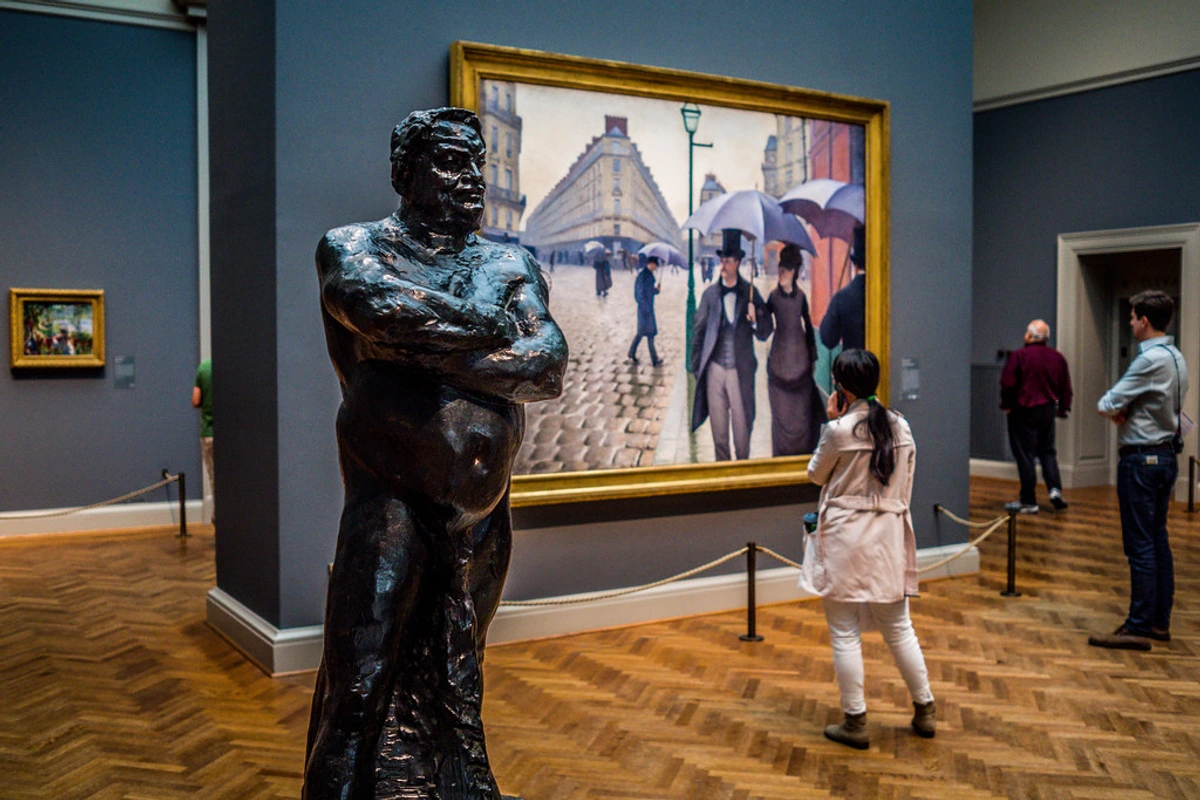


How 291 Influenced Contemporary Artists
Many contemporary artists cite 291 as an influence:
Photographers: Annie Leibovitz, Andreas Gursky, and Cindy Sherman all follow Stieglitz's belief that photography can capture profound meaning.
Painters: Abstract expressionists like Mark Rothko and Jackson Pollock built on the foundation of American abstraction that 291 established.
Installation Artists: Contemporary artists who create total experiences echo Stieglitz's approach to exhibition design.
Art Collectors: The idea of collecting art for its cultural significance rather than investment value comes directly from 291's philosophy.