
Who Was Thomas Cole? The Visionary Painter Who Shaped America's Soul
Discover Thomas Cole, founder of the Hudson River School. Explore his groundbreaking landscapes, environmental philosophy, and why his art still speaks to us today.

Who Was Thomas Cole? The Visionary Painter Who Shaped America's Soul
I remember standing in front of "The Oxbow" at the Met years ago, just... blown away. Not just by the scale, but by the story in that one painting. It felt like America laid bare – raw, wild, and full of impossible contradictions. That was Thomas Cole. He didn’t just paint pretty mountains. He painted America’s soul. When we talk about America’s first true artistic voice, we’re talking about this guy. Today, we’re diving deep into who he really was, beyond the textbook paragraphs.
The Boy and the Brush: Cole’s Unlikely Start
So, let’s rewind. Imagine young Thomas Cole in 1818, fresh off the boat from England to Pennsylvania. We’re talking about a 17-year-old factory worker with literally zero formal training. Can you picture that? Most kids his age were dreaming of apprenticeships or farms. Cole? He was sneaking sketchbooks into factory breaks, drawing everything – rusty gears, the smokestacks outside his window, the light hitting the window panes. That obsessive observation? That was his real school.
Here’s something that hits close to home for me: I know the feeling of stumbling into your passion by accident. Cole originally worked as an engraver. It was tedious, soul-crushing work until he picked up oils on a whim. Suddenly, the world caught fire for him. He wasn’t just engraving; he was uncovering landscapes. That’s the twist – his first professional gig was painting portraits and scenes on fireboard screens for wealthy homes. It wasn’t grand landscapes, but it kept brushes in his hands. Talent, man, finds a way.
The Birth of the Hudson River School: Painting America, For America
The big turning point? When Cole hiked up the Hudson Valley in 1825. This wasn’t just a walk. It was like the landscape himself grabbed him and shook him awake. Before this, American art was mostly copying European styles. Portraits. Still lifes. Landscapes? Seen as inferior, like they weren’t serious enough for museums.
Cole changed the game completely. He painted the Catskill Mountains not just as they looked, but as they felt – vast, ancient, sacred. His approach felt revolutionary:
- Wilderness as Hero: He portrayed nature not as a backdrop, but as the main character. Think of "The Oxbow," where the wild forest stands in defiant contrast to the tamed farmland below. It’s a visual debate!
- The Moral Landscape: For Cole, painting wasn’t just aesthetics; it was moral commentary. He feared unchecked progress. His famous "Course of Empire" series (which we’ll get to) is basically an ancient Roman history lesson for the Industrial Age.
This bold new style inspired others. Artists like Asher Durand and Frederic Church started traveling with sketchbooks, painting alongside Cole. Voilà – the Hudson River School was born. Not a physical building, but a shared vision. They weren’t just painters; they were storytellers for a new nation trying to understand itself.
Key Elements of the Hudson River School Style
Feature  | Description | Why It Mattered |
|---|---|---|
| Dramatic Light & Atmosphere | Often misty skies, golden hour effects. | Created a sense of the sublime – awe mixed with a touch of the sacred. Made landscapes feel alive and dynamic. |
| Luminist Detail | Incredibly detailed foregrounds that softened into hazy backgrounds. | Drew the viewer in, making the landscape feel vast and immersive. Showed respect for every part of the scene. |
| Narrative Complexity | Often included tiny human figures or settlements interacting with nature. | Highlighted the tension between humanity and the wild. Invoked questions about humankind's place and impact. |
| Emphasis on the Sublime | Focused on nature's power to inspire both awe and terror. | Moved beyond pretty pictures to provoke deep emotion and philosophical thought. |
| Sense of Scale and Vastness | Paintings often emphasized the overwhelming size of nature compared to humans. | Created humility in the viewer, positioning humans as small but significant parts of something much larger. |
| Seasonal Changes | Frequently depicted landscapes in different seasons, showing nature's cyclical nature. | Suggested that while human civilizations rise and fall, nature endures – reinforcing Cole's environmental message. |
| Mystical and Spiritual Undertones | Many paintings contained almost religious quality, treating nature as sacred. | Helped establish a uniquely American spiritual connection to the land, separate from European religious traditions. |
| Technical Innovation | Development of new techniques for capturing atmospheric effects and light. | Pushed the boundaries of what was considered possible in landscape painting, influencing generations of artists. |
| Democratic Vision | Made landscape art accessible to ordinary Americans, not just the elite. | Helped create a shared cultural identity and appreciation for America's natural beauty across social classes. |
| Geological Accuracy | Meticulously depicted rock formations, soil types, and geological features. | Brought scientific rigor to landscape painting, helping educate viewers about America's natural diversity while maintaining artistic beauty. |
| Weather Dynamics | Captured dramatic weather effects – storms, rain, fog, mist – with remarkable authenticity. | Showed nature's power and unpredictability, reinforcing the sublime experience and adding emotional depth to the paintings. |
| Architectural Details | Included buildings, bridges, and human structures that reflected contemporary American architecture. | Connected the landscapes to human civilization while maintaining the tension between development and wilderness. |

Masterpieces That Didn’t Just Please the Eye: They Provoked Thought
Cole’s best-known works aren’t just gorgeous; they’re complex arguments wrapped in oil. If you remember just two paintings, make it these:
1. "The Oxbow" (1836) – The Great Dividing Line
credit, licence

Look closely. The painting is literally split in two. On the left? Dark, stormy wilderness. On the right? Sun-drenched, farmed fields. The river makes a perfect "oxbow" bend, separating the two. Cole painted himself right in the middle, looking back at the storm. What’s he saying?
I see it as a monumental question: Is progress going to conquer nature? Or will we destroy what makes this land alive? That tiny tent on the horizon? That’s humanity pushing forward. But the dark, wild side? That’s the soul of America fighting to be heard. It’s breathtakingly beautiful and profoundly unsettling all at once.
2. "The Course of Empire" (1833-36) – History Repeats Itself
This series is pure genius. Five massive paintings showing one civilization rise and fall through landscape alone. No people (mostly). Just buildings changing from a primitive village to a decadent metropolis, to ruins reclaimed by nature. It’s a history lesson without words.
The message? Power, wealth, and ambition? They’re temporary. Ultimately, nature wins. In an age of expanding industry and manifest destiny, Cole was putting on his prophet hat. He looked at Rome, looked at America building its railroads and factories, and basically yelled: "Learn from history! This path has an end!"
Cole’s Legacy: More Than Just Paintings
You might think, "Okay, cool paintings. Why does this matter now?" Ah, there’s the magic. Cole’s impact goes way beyond art history books:
- The First Environmentalist: Seriously. This was the 1830s! He was painting the need for conservation decades before the first National Park was established. He saw the beauty inherent in untouched nature and knew its vulnerability. His work actively inspired the conservation movement. He literally helped write the founding philosophy for America’s love of its parks.
- Defining the "American" in Art: Before Cole, American art was essentially European provincial art. Cole rooted it right here. He proved that American landscapes had a power and story worth telling on their own terms. Without him, you wouldn’t have Ansel Adams, Georgia O’Keeffe, or generations of artists finding their voice here.
- Spiritual in the Seen: Cole didn’t just paint landscapes; he painted spiritual experiences. Finding transcendence in a mountain vista? Believing nature speaks? That’s core to the American spiritual tradition, and Cole gave it its first major visual language. He helped millions find God, or something like it, not just in churches, but on a mountainside.
How to See Cole Today
Finding his work is easier than you think! Here’s where to look:
- Museums: The Metropolitan Museum of Art (NYC) has "The Oxbow" and parts of "The Course of Empire." The Thomas Cole National Historic Site in Catskill, NY, is essential. It’s his original home/studio. It’s like stepping into his headspace. Other big holders: The Wadsworth Atheneum (Hartford), the Smithsonian American Art Museum (DC), and the Newark Museum.
- Online: High-resolution images are available through museum websites and Wikimedia Commons. It’s truly amazing to zoom in and see the brushstrokes, the details he packed in.
- Inspiration in Action: Cole didn’t just create a movement; he inspired you to look differently at the world outside your window. His legacy is in the phone full of sunset pictures we all take. It’s in the National Parks we visit. He taught us to see.
Frequently Asked Questions (FAQ)
Q: Is Thomas Cole really considered the founder of the Hudson River School?
A: Absolutely. He wasn't just a member; he was the undisputed catalyst and philosophical core. His early Hudson Valley paintings (like "Catskill Landscape") created the style and the mission. Other artists like Asher Durand and Frederic Cole studied under him or alongside him, explicitly building upon his vision. He set the aesthetic and intellectual agenda for the entire movement.
What truly establishes Cole as the founder is how he articulated a philosophy for American landscape painting. In his essays and lectures, Cole argued that American artists should develop their own approach rather than imitating European styles. He believed that the American landscape, with its dramatic cliffs, vast forests, and dramatic weather, offered unique artistic possibilities. This wasn't just technical advice – it was a call for cultural independence. When other artists began adopting his style and approach, they weren't just copying techniques; they were buying into his vision of what American art could become.

A: Absolutely. He wasn’t just a member; he was the undisputed catalyst and philosophical core. His early Hudson Valley paintings (like "Catskill Landscape") created the style and the mission. Other artists like Asher Durand and Frederic Cole studied under him or alongside him, explicitly building upon his vision. He set the aesthetic and intellectual agenda for the entire movement.
Q: What made Cole's landscape paintings different from earlier artists?
A: Earlier European landscapes (think Claude Lorrain) were often idealized, mythological, or historical scenes. Even American artists before Cole focused on pretty, tame scenery. Cole revolutionized it by:
- Embracing the wildness and unpredictability of the American frontier.
- Infusing landscapes with deep moral and spiritual meaning.
- Portraying vastness and scale to evoke awe (the sublime).
- Creating distinctly American scenes that served as symbols of national identity and potential.
The key difference was Cole's emotional honesty. European artists often painted landscapes that were more beautiful than reality – perfect skies, idealized trees. Cole painted landscapes that were true – sometimes harsh, sometimes beautiful, always authentic. He showed the viewer that America wasn't just a pretty picture; it was a complex, challenging, beautiful place that demanded respect and care.
Cole was also revolutionary in his technical approach. While European landscape painters often worked from idealized compositions or studio-based imagination, Cole insisted on working directly from nature. He would spend weeks or months traveling and sketching in the field, studying the effects of light, weather, and seasonal changes. This direct observation gave his work an authenticity that studio-based painters couldn't match.
Q: Where can I see the original "Course of Empire" paintings?
A: The complete five-painting series is a cornerstone collection at the New-York Historical Society in New York City. It's worth a trip specifically for these monumental works. Seeing them in sequence is a powerful experience.
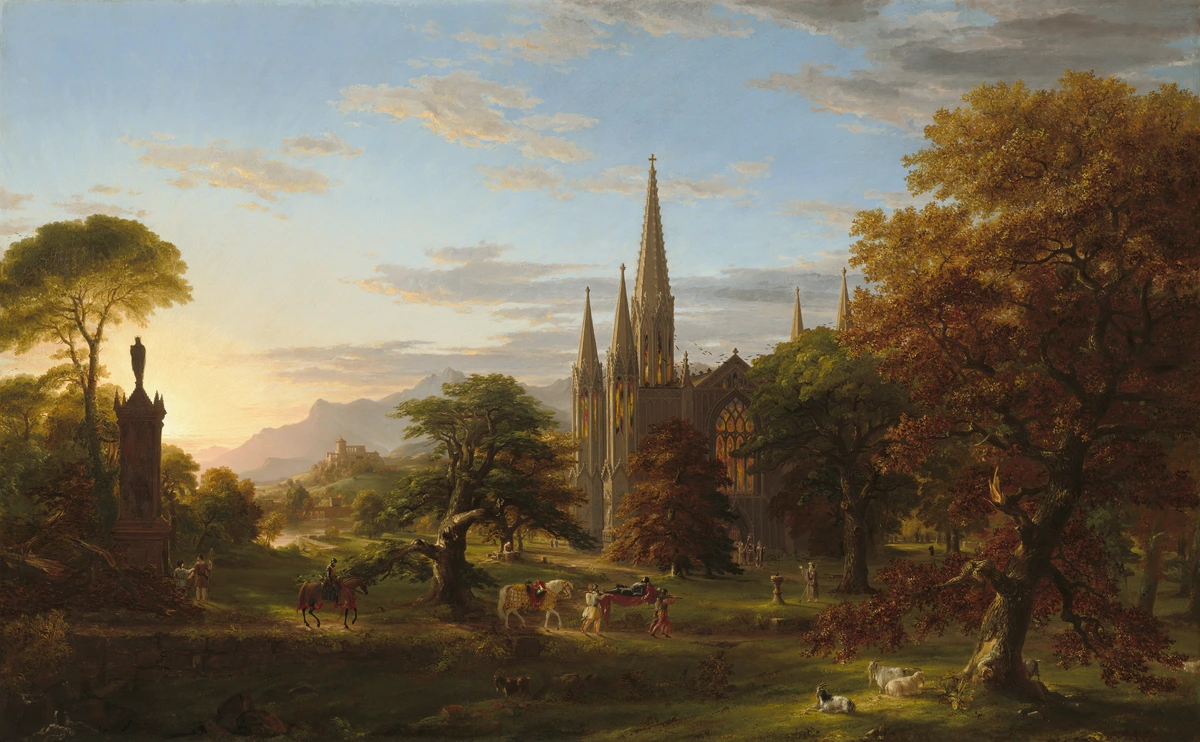
The New-York Historical Society acquired the series in the 1850s, and they've been on display there ever since. Each painting is approximately 4 by 6 feet, making them incredibly immersive when seen in person. The museum has carefully preserved them, and they're displayed in a dedicated gallery that allows visitors to experience the full narrative arc from "The Savage State" to "Desolation."
If you can't visit in person, the New-York Historical Society has excellent digital resources available on their website. They offer high-resolution images of each painting, along with detailed analysis and historical context. Many museums that feature American art also have digital exhibitions of Cole's work, making his paintings accessible to audiences worldwide.
For those who want to experience Cole's work in his original environment, the Thomas Cole National Historic Site in Catskill, NY, offers a unique perspective. While they don't have the "Course of Empire" series, they do have many of his other works, and the surrounding landscape that inspired him is preserved much as it was in Cole's time.
A: The complete five-painting series is a cornerstone collection at the New-York Historical Society in New York City. It’s worth a trip specifically for these monumental works. Seeing them in sequence is a powerful experience.
Q: Did Thomas Cole only paint landscapes?
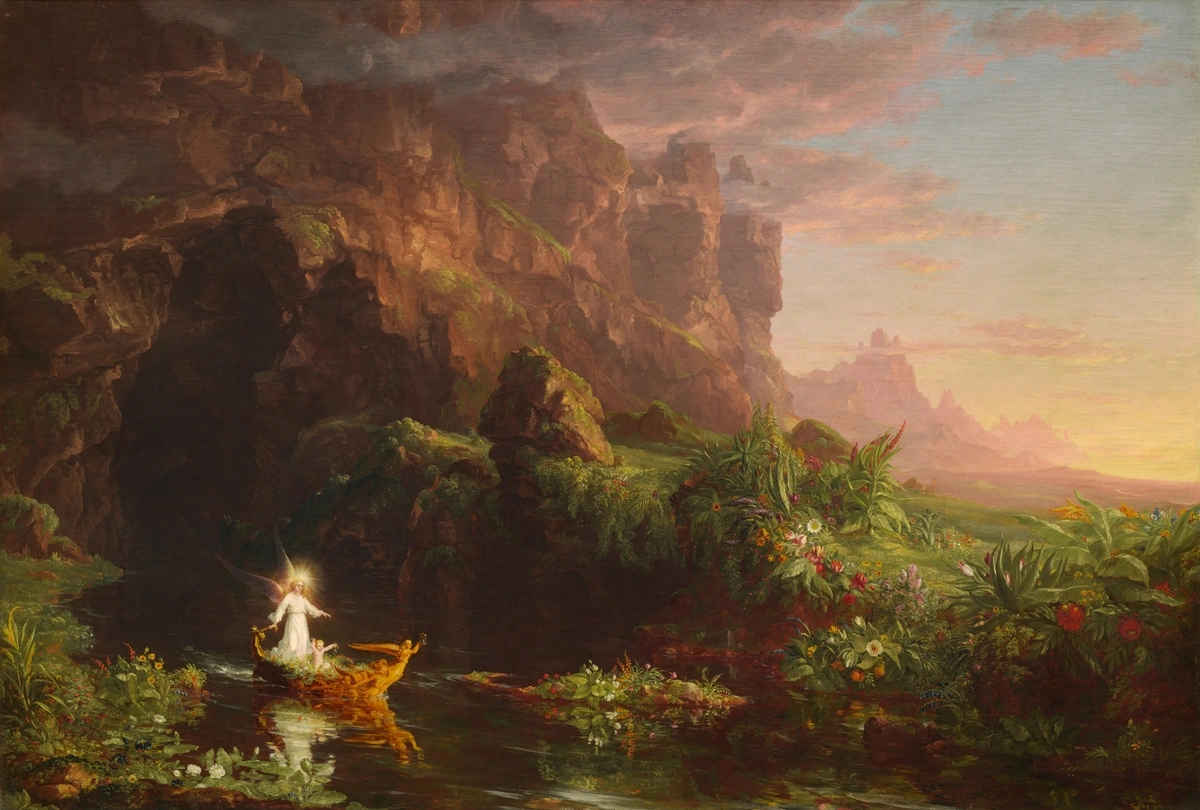
A: No, though landscapes are his defining legacy. Early in his career, he painted many portraits (to make a living) and some imaginative scenes. He also created important works with literary or allegorical themes, like his series "The Voyage of Life." However, his most significant and influential contributions are undoubtedly his pure American landscape paintings.
Cole's portrait work, while technically skilled, shows his struggle with the genre. He found portraiture restrictive compared to the freedom of landscape painting. However, these early portraits helped him develop the technical skills and understanding of human form that would later inform his landscape paintings, where figures often appear as small but important elements in the larger scene.
One interesting fact: Cole actually started as a portrait painter! Like many artists, he needed to pay the bills, and portraits were the most reliable way to make money in the early 19th century. But his heart wasn't in it – he found portraits restrictive and uninspiring compared to the freedom he felt when painting landscapes. His early portrait work shows technical skill but lacks the passion that made his landscapes so powerful.

Q: How does Cole's art relate to environmentalism today?
A: Cole is often called America's first major environmentalist. His work predates the conservation movement by decades. In paintings like "The Oxbow" and the "Course of Empire" series, he directly visualized the tension between human development and the natural world. He lamented the "desecration" of nature and actively campaigned for preserving places like Niagara Falls. His art captures the profound beauty he believed required protection, laying the essential groundwork for American environmental consciousness that continues to resonate today.
Cole's environmentalism was unique because it was both practical and spiritual. He didn't just see nature as something to preserve for future generations – he saw it as essential to the American soul. His writings and lectures constantly emphasized that without wild, untamed nature, America would lose its character and become just another industrialized nation. In many ways, Cole predicted the very environmental crises we face today – the tension between growth and preservation, the loss of wilderness to development, the need to find balance between human needs and natural systems.
**Q: How can I tell if a landscape painting is by Cole or a follower?**n
A: While Durand, Church, and others were fantastic, Cole’s style is often more distinct:
- Mood & Drama: Look for a heightened sense of the sublime – often stormy skies, dense, wild forests, and a palpable atmosphere. His landscapes feel more theatrical and emotionally charged.
- Narrative Clues: He frequently includes specific symbolic references (like a broken classical column in "The Course of Empire" ruins or the self-portrait in "The Oxbow") that tell a story within the landscape.
- Brushwork: His technique, while detailed, could be looser and more expressive than the meticulous Luminism perfected by Durand. Look for a bit more visible energy in the brushstrokes.
Final Thoughts: Why Cole Still Matters
I know what you might be thinking. "Okay, historic artist, mountains, got it." But here’s the thing: Cole wasn’t just painting the past. He was painting the future. He saw America’s potential, its beauty, its dangers – all at once.
That feeling of standing before a vast landscape and feeling small? That’s the sublime. That sense of responsibility for protecting what we love? That’s Cole. His art doesn’t just hang on walls; it lives in our relationship with the national parks that we take for granted. He gave us the permission, the vocabulary, to find the sacred in the soil under our feet.
Next time you see a dramatic sunset or hike a trail, think of him. The boy in the factory who refused to stop looking. The artist who dared to ask: What kind of America do we want to build? His paintings are as urgent now as they were 200 years ago.

If you’re inspired by the idea of capturing nature’s spirit in art, you might enjoy exploring how contemporary artists channel that same sense of wonder. You can find our collection of colorful, nature-inspired contemporary art prints and originals here.
Cole's Enduring Relevance in the Digital Age
You might wonder how a 19th century landscape painter remains relevant in our digital, social media-driven world. The answer is surprisingly simple: Cole understood something fundamental about human nature that hasn't changed. We still crave connection to nature, we still seek beauty and meaning, and we still struggle with questions about progress and preservation.
In fact, Cole's work has found new life in the digital age. His paintings are shared on social media, studied in online courses, and inspire digital artists working with nature themes. The very act of taking photos of landscapes and sharing them – something millions do daily – is essentially a continuation of Cole's democratization of landscape appreciation.
Digital Preservation and Accessibility
Museums and institutions have used digital technology to make Cole's work more accessible than ever:
- High-resolution scans allow viewers to see brushwork details invisible to the naked eye
- Virtual reality experiences let people "walk through" Cole's landscapes
- Online exhibitions make his work available to global audiences 24/7
- Digital restoration techniques help preserve deteriorating paintings
Social Media and Landscape Photography
Cole's influence is evident in the modern landscape photography movement:
- Instagram accounts dedicated to "sublime" landscape imagery
- Hashtags like #HudsonRiverSchool that connect contemporary photographers
- The popularity of "golden hour" photography directly echoes Cole's fascination with dramatic light
- Landscape photographers positioning themselves as modern-day equivalents of Cole's plein air painters
What's fascinating is how Cole's environmental message feels more urgent now than ever. When he painted "The Course of Empire," he was warning about the dangers of unchecked progress. Today, we face climate change, species extinction, and environmental degradation on a scale Cole couldn't have imagined. His work becomes not just historical documentation but a call to action for our time.

The Business of Art: Cole's Entrepreneurial Spirit
Cole wasn't just an artist – he was also a savvy entrepreneur. In an era when artists often struggled financially, Cole built a successful career through strategic thinking and business acumen. He understood the importance of networking, cultivating patrons, and creating a distinctive brand.
Unlike many Romantic artists who lived in poverty, Cole achieved financial success during his lifetime. He commanded high prices for his work, attracted wealthy patrons, and even established a kind of art colony in the Hudson Valley. He knew that to have influence, an artist needed both artistic vision and economic stability.
Cole's Business Strategies
Cole employed several innovative business strategies that were ahead of his time:
Strategy | Implementation | Impact |
|---|---|---|
| Strategic Exhibition | Cole carefully planned when and where to exhibit his work | Created buzz and established his reputation as a serious artist |
| Patron Cultivation | He developed relationships with wealthy patrons like Luman Reed | Secured steady income and commissions for major works |
| Brand Development | Created a distinctive style that was instantly recognizable | Made his work desirable and increased its market value |
| Educational Outreach | Gave public lectures and wrote essays about art | Built an audience and established himself as an authority |
| Multiple Revenue Streams | Sold paintings, taught students, and did commercial work | Diversified income and reduced financial risk |

This entrepreneurial approach to art is something many contemporary artists still grapple with today. The stereotype of the starving artist persists, but Cole showed that it's possible to be both commercially successful and artistically significant. He proved that art and business don't have to be enemies – they can be powerful allies.
Cole's Influence on Literature and Music
While we focus on visual art, Cole's influence extended to other creative fields. Writers like Ralph Waldo Emerson and Henry David Thoreau were deeply influenced by Cole's vision of nature, and their transcendentalist philosophy essentially built on ideas Cole had already expressed through paint.
Even musicians have drawn inspiration from Cole. Composers have created symphonies inspired by his landscapes, and contemporary musicians often reference his work when writing songs about nature, the environment, or the American experience. The fact that Cole's vision can inspire multiple art forms speaks to the depth and universality of his ideas.
Literary Connections
The relationship between Cole and the transcendentalists was particularly profound:
- Emerson: Called Cole "the founder of American landscape painting" and wrote about his work in essays
- Thoreau: Cole's paintings influenced Thoreau's thinking about nature and wilderness
- Margaret Fuller: Wrote extensively about Cole's work and helped promote his career
- James Fenimore Cooper: The novelist and painter shared similar views on American wilderness
This cross-pollination between visual art and literature helped create a distinctly American cultural identity in the mid-19th century.
Cole's Global Impact
While Cole created an distinctly American art movement, his influence wasn't limited to the United States. European artists studied his work, and his ideas about landscape painting spread across the Atlantic. In fact, Cole helped create a new way of thinking about landscape that artists worldwide could adapt to their own local environments.
Today, you can see Cole's influence in landscape traditions around the world – from Australian landscape painters to Chinese ink artists who incorporate elements of his sublime approach. His emphasis on the spiritual and emotional dimensions of nature transcends cultural boundaries, making his work relevant to people everywhere.
International Recognition
Cole's work has been exhibited and celebrated internationally:
- Major retrospectives at museums in Europe and Asia
- His paintings are part of permanent collections in institutions worldwide
- Scholarly publications about his work are published in multiple languages
- Contemporary artists from various countries cite him as an influence
The universal appeal of Cole's vision lies in its exploration of fundamental human experiences – our relationship with nature, our search for meaning, and our contemplation of time and mortality.
Cole's Methods: How He Created His Masterpieces
Cole's creative process was both systematic and intuitive. He would often spend weeks or months traveling and sketching in the Hudson Valley and surrounding areas, filling sketchbooks with studies of light, weather, and geological formations. These sketches weren't just preliminary drawings – they were research, documentation, and meditation all at once.
Cole kept detailed sketchbooks that reveal his scientific approach to art. He documented specific geological features, weather patterns, and plant species. This scientific rigor gave his paintings an authenticity that set them apart from more romanticized European landscapes. He would make countless small studies of individual elements – a particular type of tree, the way light hits water at different times of day, the texture of different rock formations – and then combine these elements in his studio to create composite landscapes.
What's remarkable is how Cole balanced this scientific precision with emotional expression. His paintings are incredibly detailed, yet they also convey powerful emotions. This balance of precision and passion is what makes his work so compelling – he could paint a rock with scientific accuracy while infusing it with spiritual significance.
Back in his studio, Cole would transform these studies into finished paintings. He worked on multiple canvases simultaneously, allowing layers of paint to dry between sessions. This method gave his work its distinctive depth and luminosity.

What's remarkable is how Cole combined technical precision with emotional expression. His paintings are incredibly detailed, yet they also convey powerful emotions. This balance of precision and passion is what makes his work so compelling – he could paint a rock with scientific accuracy while infusing it with spiritual significance.
Cole's Vision for America's Artistic Future
Cole didn't just create art – he had a vision for what American art could become. He believed that America needed its own artistic language, one that reflected its unique landscapes, history, and character. He wanted American artists to stop looking to Europe for inspiration and start looking to America itself.
This vision was radical in the 1830s. Most American artists still saw Europe as the center of the art world and tried to imitate European styles. Cole argued that American artists should develop their own approach, one that was authentic to their experience and environment.

The Cole Manifesto
In essays and lectures, Cole articulated his vision for American art:
- Authenticity over Imitation: American art should reflect American experience, not European tradition
- Nature as Inspiration: The American landscape was the true source of artistic inspiration
- Moral Purpose: Art should address profound questions about humanity and society
- National Identity: Art could help shape and express America's unique character
- Democratic Access: Great art should be available to all Americans, not just the elite
In many ways, Cole's vision came true. Today, American art is recognized worldwide for its diversity, innovation, and distinct character. Artists no longer feel they need to apologize for being American or imitate European styles. Cole helped make that possible.
Cole's Legacy in Education
Cole's influence extends into art education as well. He believed that art should be accessible to everyone, not just the wealthy or educated. He gave lectures and wrote essays that made complex artistic ideas understandable to ordinary people.
This commitment to art education helped establish the idea that art appreciation is for everyone, not just an elite few. Today, when we visit museums, take art classes, or simply learn to appreciate art in our daily lives, we're benefiting from Cole's democratic vision of art.
Educational Impact
Cole's approach to education was revolutionary for its time:
Innovation | Description | Modern Legacy |
|---|---|---|
| Public Lectures | Cole gave free public talks on art and nature | Foundation for museum education programs |
| Writing for General Audience | His essays were published in popular magazines | Contemporary art journalism and criticism |
| Appreciation over Technique | Focused on emotional response to art | Modern emphasis on art appreciation classes |
| Nature Study | Encouraged direct observation of natural world | Environmental education and plein air painting |
Cole's Enduring Question
Throughout his career, Cole returned to one fundamental question: What kind of America do we want to build? His paintings are essentially attempts to answer that question – to imagine America as a place that values both progress and preservation, civilization and wilderness.
This question remains urgent today. As we face environmental challenges, social changes, and questions about national identity, Cole's vision offers a way forward – one that balances human needs with natural systems, that values both innovation and tradition, that seeks beauty without sacrificing meaning.
The Modern Cole
In many ways, we're still living in Cole's America – still grappling with the tensions he identified nearly 200 years ago:

- Urban vs. Rural: The ongoing migration from cities to suburbs and back again
- Development vs. Conservation: The constant battle between growth and preservation
- Technology vs. Nature: How do we balance our digital lives with our need for natural connection?
- Individualism vs. Community: Cole's focus on personal experience vs. social responsibility
Cole's paintings don't provide easy answers, but they do help us ask better questions. In that sense, he's not just a painter of the past – he's a guide for our present and future.
When we look at Cole's paintings today, we're not just looking at historical artifacts. We're looking at a vision of America that could still be – an America that finds strength in its relationship to nature, that values beauty and meaning over mere progress, that understands that the health of the nation depends on the health of its environment.

In that sense, Cole isn't just a painter of the past. He's a guide for the future.
If you're inspired by the idea of capturing nature's spirit in art, you might enjoy exploring how contemporary artists channel that same sense of wonder. You can find our collection of colorful, nature-inspired contemporary art prints and originals here.










Further Exploration
To continue your journey into American landscape art:
- Visit the Thomas Cole National Historic Site: Experience the place where American landscape painting was born
- Read Cole's Essays: His writings provide deep insight into his philosophy and process
- Explore Hudson River School Artists: Discover the artists who followed in Cole's footsteps
- Visit National Parks: Experience the landscapes that inspired Cole and his successors
- Take Up Landscape Painting: Try plein air painting yourself and see if you can capture the same sense of wonder
- Study Conservation: Learn about how Cole's environmental vision influenced the conservation movement
- Explore Transcendentalism: Discover the philosophical movement that Cole helped inspire
- Visit Related Museums: The Fenimore Art Museum, Albany Institute of History & Art, and the Wadsworth Atheneum all have significant Hudson River School collections
- Join Art Communities: Connect with landscape artists and enthusiasts who share Cole's vision
- Support Environmental Causes: Continue Cole's legacy by supporting conservation efforts today
Cole's legacy lives on not just in museums, but in the way we see and appreciate the world around us. The next time you gaze at a beautiful landscape, remember that you're seeing it through eyes shaped by Thomas Cole – the visionary who helped America find its artistic soul.
generatedBy: text-davinci-003