Keith Haring: A Definitive Journey Through His Radiant Art, Urgent Activism, and Enduring Legacy
Dive into Keith Haring's world: from NYC subway art and iconic symbols to his fierce AIDS activism. Discover his democratic art philosophy, the Pop Shop's impact, and how he became a pop culture icon.

Who Was Keith Haring: A Definitive Journey Through His Radiant Art and Enduring Impact
I can still vividly recall the visceral jolt the first time I truly saw a Keith Haring piece. It wasn't just another image; it was a burst of pure, unadulterated energy – a crawling 'Radiant Baby' on a graffiti-covered wall near a subway entrance in my youth, its radiating lines humming with an almost electric life. It was so immediate, so clear, yet so profound. You know that feeling, don't you? Like a secret language you suddenly understand, a universal message that hits you right in the gut. Decades later, seeing that same Radiant Baby on a random T-shirt, I felt a familiar pang: his work, once raw and immediate, has become an almost universal visual shorthand. Haring’s art is everywhere now, almost ubiquitous, but I often worry that in its popularity, we forget the incredible human behind those dancing figures and radiant babies, and the fierce urgency that fueled his every line. He believed art was for everyone – a belief that resonates deeply with me, even today. In this journey, we'll peel back the layers to discover the vibrant soul who championed accessibility, tracing his meteoric path from humble beginnings in Kutztown to becoming a global icon. We'll explore his explosive rise in New York City, his groundbreaking social activism, and the lasting legacy of his democratic approach to art, understanding how his 'secret language' continues to speak volumes, inspiring generations, myself included.
His distinctive imagery began to appear on the streets of New York, transforming the urban landscape and igniting public dialogue, a testament to his belief that art belonged to everyone.
Early Lines and New York's Electric Pulse: From Kutztown to the Concrete Jungle
Born in 1958 in Kutztown, Pennsylvania, Keith Haring’s artistic journey began, as many do, with childhood fascination. He was drawing constantly, inspired by the playful narratives of Walt Disney and Dr. Seuss, and even his father’s own cartooning. I often think about how those early influences, the playful simplicity and clear narratives of cartoons – like the exaggerated movements of a Mickey Mouse or the whimsical world-building of Dr. Seuss – ended up shaping his later, more complex statements. It wasn't just the imagery; it was the power of repetitive, instantly recognizable symbols and clear, accessible narratives that he absorbed. He wasn't just drawing; he was creating stories, often for his younger siblings, which, when I think about it, makes perfect sense for an artist who later communicated profound ideas through universal symbols. It’s a wonderful reminder that even the most impactful artistic voices often start with something innocent and pure, directly linking his cartoon inspirations to his later clarity and directness.
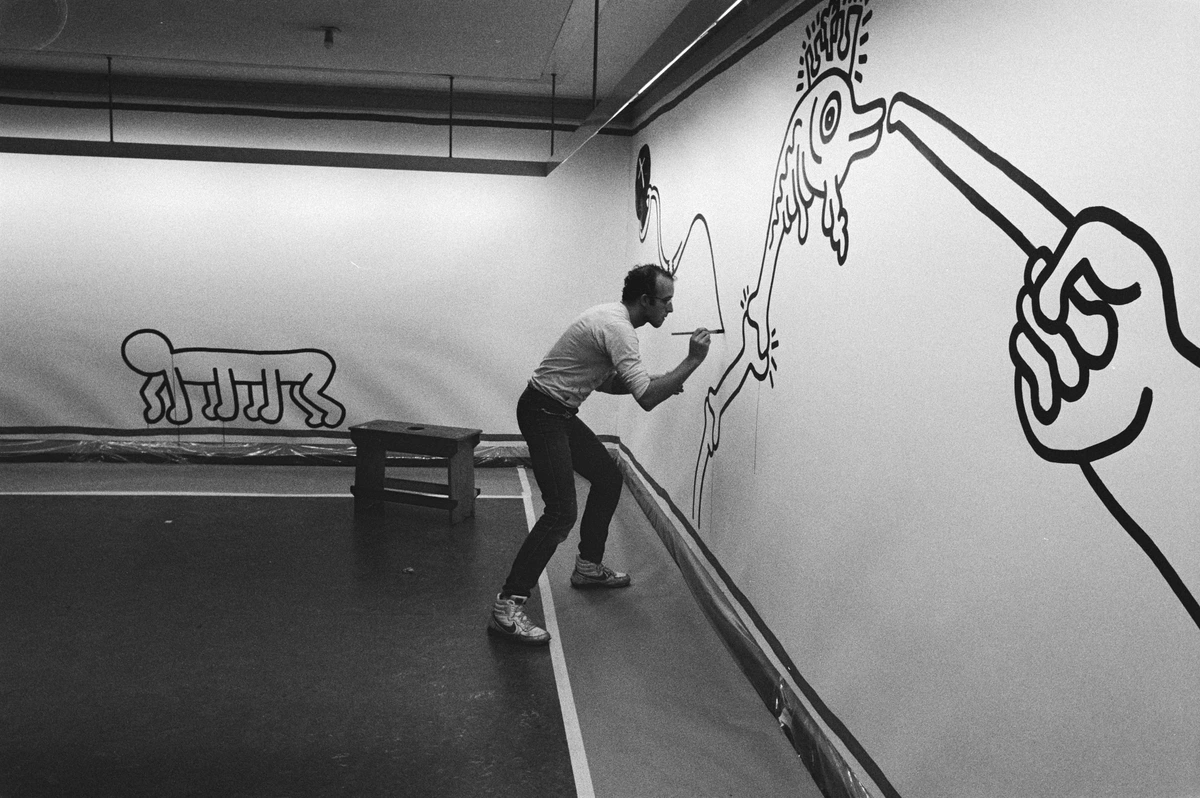
He moved to New York City in 1978 to attend the School of Visual Arts (SVA), and honestly, that’s where the magic truly began. New York in the late 70s and early 80s was an explosion of creativity—graffiti art was everywhere, hip-hop was booming, and the downtown art scene was electric. But it was also a city grappling with economic hardship, urban decay, and a palpable sense of abandonment in many neighborhoods. This gritty backdrop, far from being a deterrent, became fertile ground for defiant self-expression and counter-culture movements. The city itself, raw and vibrant, became his greatest teacher, pulsating with a rhythm that would soon define his chalk lines. He immersed himself in the counter-culture, frequenting legendary venues like Club 57 and the Mudd Club, but also the burgeoning East Village art scene, where experimental galleries like the Fun Gallery championed underground artists, blurring the lines between disciplines. Can you imagine the energy? Walking into a space where every night brought new collaborations and unpredictable performances – this fluid, interdisciplinary approach deeply informed his own belief in art’s boundless potential. The raw energy of the streets, the defiant spirit of graffiti artists like Jean-Michel Basquiat, Futura 2000, and Dondi White, along with fellow SVA students such as Kenny Scharf, deeply informed his developing style. It was raw, unfiltered, and deeply human. This environment, I believe, didn't just influence Haring; it became him. He didn’t just observe; he absorbed the city’s pulse and channeled it directly into his nascent artistic voice.
A Universal Language: Subway Art and Iconic Symbols
What strikes me most about Haring’s work is its immediate recognition. You see those thick, black outlines, the vibrant colors, the dynamic poses, and you just know it’s him. It’s like he bypassed the complex filters of academic art and went straight for the universal. His art speaks directly to your gut, your heart, your playful spirit. How did he achieve this almost telepathic communication, this ability to convey complex ideas at a glance? It began with chalk drawings in the subway, creating spontaneous public art on unused advertising panels – a canvas literally gifted to him by the city. Imagine the scene: a young Haring, armed with a bucket of white chalk, sketching rapidly on blank black advertising panels. These weren't sanctioned artworks; they were defiant, spontaneous acts of public dialogue, created with incredible speed to avoid arrest. Commuters would stop, watch, and engage, often chatting with Haring as he worked. I can only imagine the thrill of seeing a 'Radiant Baby' or a dynamic 'Barking Dog' emerge on your morning commute, a fleeting moment of pure, unadulterated art in the mundane. These weren’t just drawings; they were conversations, shared moments with thousands of commuters every day, creating a direct, democratic connection to art. The constant threat of arrest meant he had to work fast, honing a fluid, decisive line that became his hallmark. This urgency wasn't just about speed; it was about efficiency and clarity. He needed to create an immediate impact, a message understood in a glance, without the luxury of intricate detail or prolonged contemplation. It was a deliberate choice born of necessity, forging a style that was instantly recognizable and universally accessible.
Haring's Signature Style: Speed, Simplicity, and Symbolism
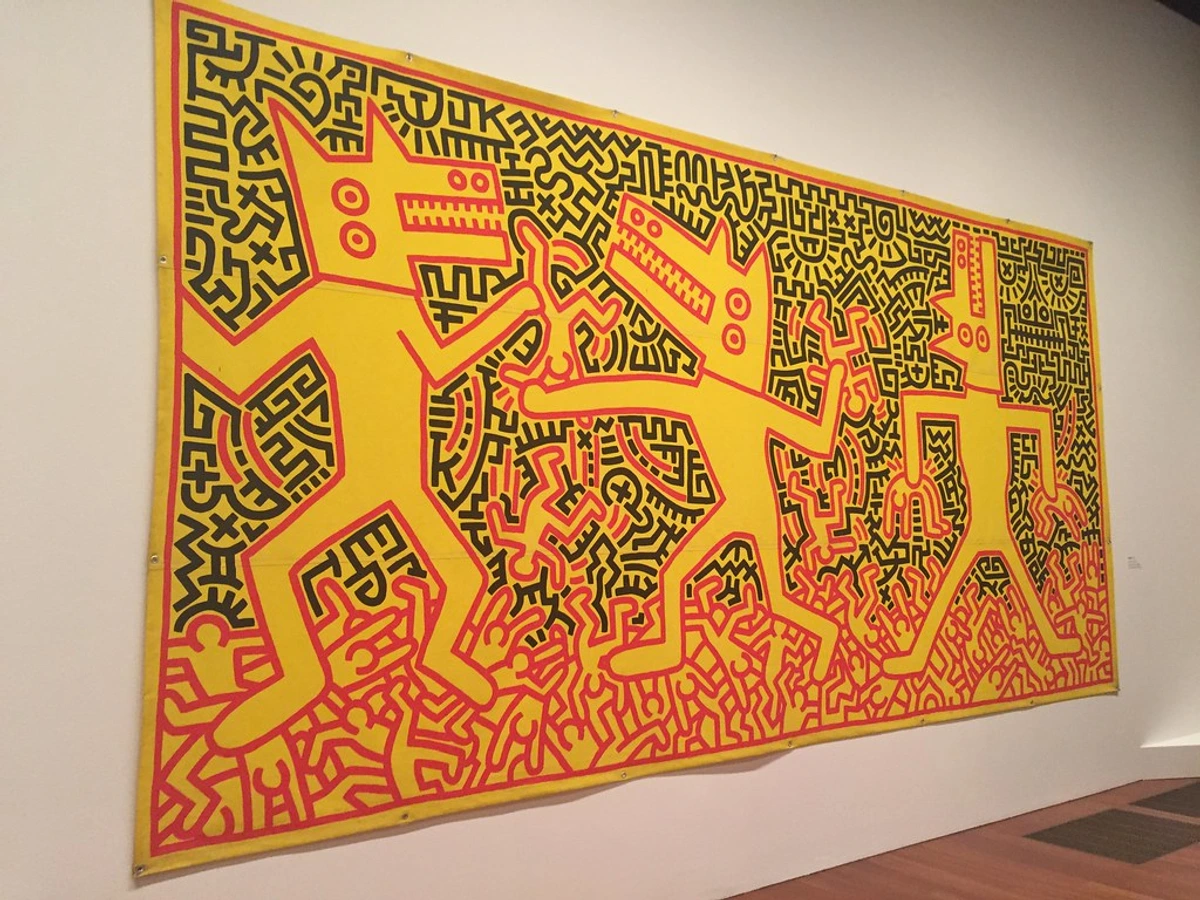
His iconic symbols emerged from these subway sessions, becoming his unique visual vocabulary. The Radiant Baby (a crawling infant with lines radiating from it, symbolizing innocence, purity, and life itself) and the Barking Dog (a stylized dog barking, often representing authority, alarm, or vigilance) became instantly recognizable. They were simple, yes, but loaded with meaning, forming a visual shorthand for his complex ideas. His distinctive technique, characterized by bold, continuous outlines and a limited, vibrant color palette, allowed him to create these works with incredible speed and fluidity, capturing the fleeting attention of a moving audience. He wasn't interested in intricate detail; he wanted immediate impact, a message understood in a glance. This rapid execution and commitment to direct communication were central to his artistic process. It was a clarity, a purity of line, that I strive for in my own work sometimes – that balance between a complex idea and its immediate, emotional resonance.
Let me just say, if you ever feel like your own creative voice is too simple, too direct, too you—look at Haring. He proved that clarity and directness can be the most powerful forms of expression. I think about this often when I’m working on my own art, striving for that balance between complexity and approachability. What does that pure, unadulterated energy of innocence spark in you? If this resonates with your own creative spirit, or if you're drawn to art that speaks directly to the soul, perhaps you'll find something that sparks a similar feeling in my collection.
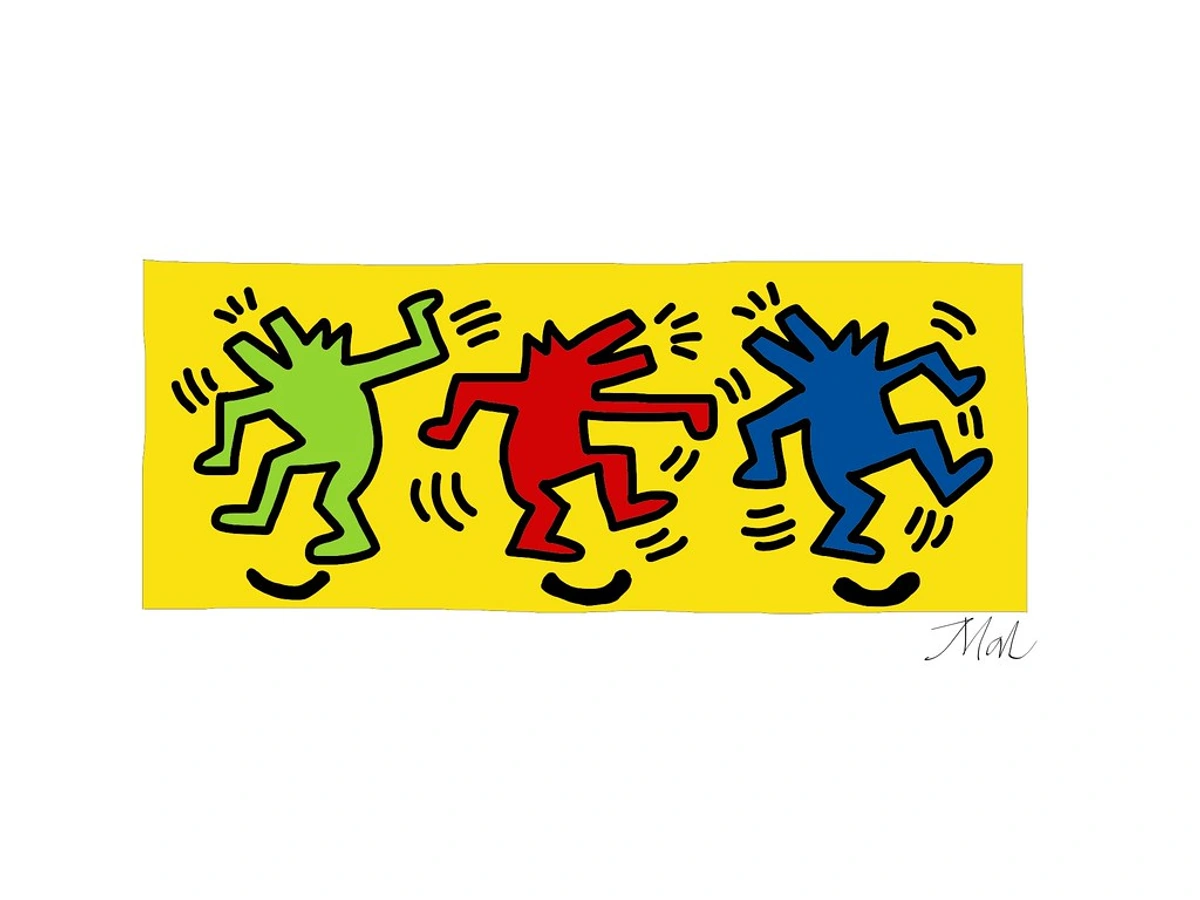
Haring developed a rich visual language of recurring symbols. Here's a breakdown of some of the most significant:
Key Symbols and Their Meanings
Symbol  | Common Interpretation | My Take | Context/Origin & Notable Usage | Notable Artworks |
|---|---|---|---|---|
| Radiant Baby | Innocence, purity, birth, potential, energy. | The primal spark of life, vulnerable yet powerfully alive. For me, it's pure, unadulterated hope and a reminder of our shared humanity and boundless potential. | First appeared in subway drawings around 1980; a universal symbol of goodness. Prominent in early public works, it also became a powerful symbol in later works emphasizing life and hope amidst the AIDS crisis. | "Untitled (Radiant Baby)" (1982), "Free South Africa" (1985) |
| Barking Dog | Authority, oppression, warning, vigilance, fear. | The relentless, sometimes primal, voice of societal control, or an inner warning against injustice; also embodies the constant vigilance needed for freedom. It’s the uncomfortable truth barking at you. | Often seen in political works from the mid-1980s, representing power structures, government, or threats. Frequently appears in anti-apartheid, anti-nuclear pieces, and works critiquing police brutality or authoritarian regimes. | "Untitled (Dog)" (1982), "Crack is Wack" (1986) |
| Human Figures | Community, dance, struggle, connection, love, unity. | All of us, moving through life together – celebrating, striving, mourning, and just being, in all our interconnectedness and shared human experience. They are the universal "everyperson," stripped of individual identifiers to highlight our collective journey. | Ubiquitous throughout his work; these simplified figures reflect human experience, interaction, and often symbolize collective action and solidarity, particularly in works advocating for LGBTQ+ rights and anti-war movements. | "Dancing Figures" series (various), "One Man Show" (1985) |
| Flying Saucer | Mystery, spirituality, otherworldliness, alien perspective, divine intervention. | A wider view, questioning our place in the cosmos, or just a touch of cosmic absurdity and the unknown, inviting us to look beyond the mundane and accept the strange. Sometimes, it feels like a mischievous wink from the universe, or a comment on external pressures. | Used to represent external forces, often divine or alien intervention, or an outside perspective on humanity, sometimes as a symbol of escape or otherness. Frequently seen in pieces exploring themes of religion, technology, or societal alienation, especially in his later years. | "Untitled" (1982, with UFOs), "The Wedding of Jean-Michel Basquiat" (1985) |
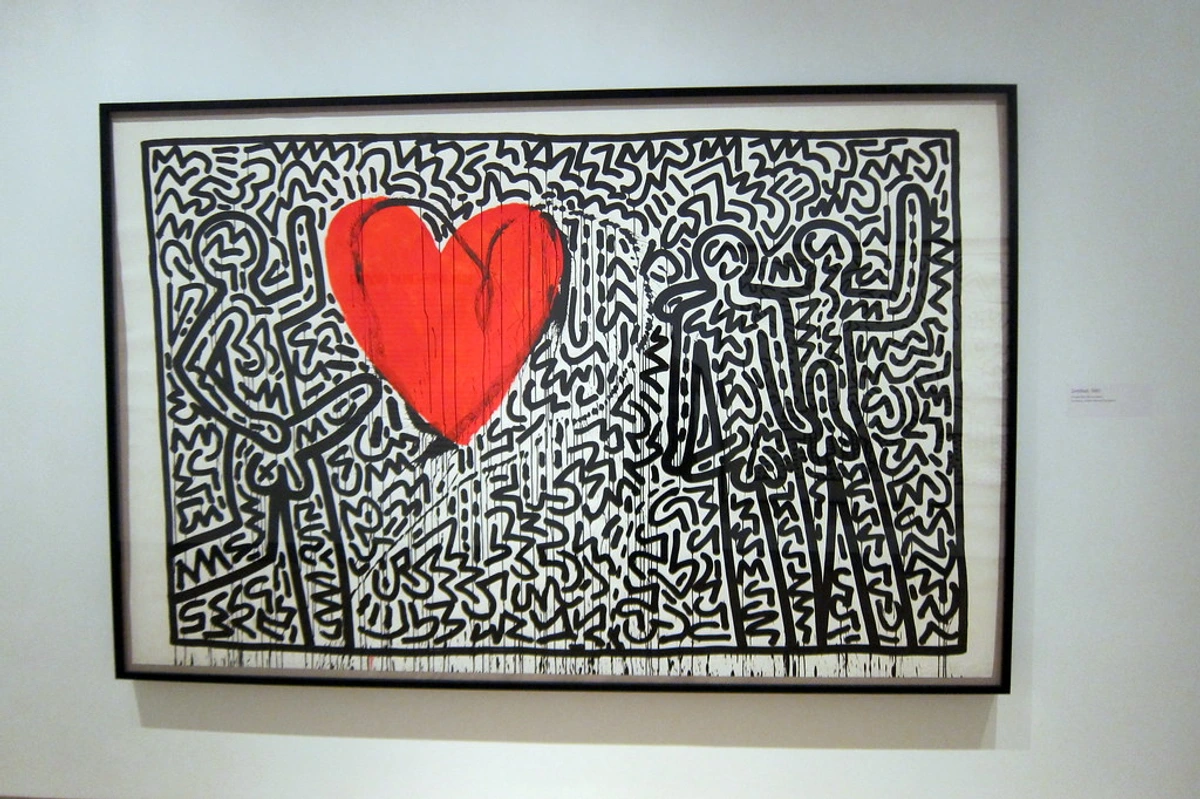
| Hearts | Love, compassion, unity, passion, connection. | The core of everything, the universal feeling that binds us – raw, vulnerable, and beautiful. To me, it's the raw, beating heart of his entire philosophy. | A recurring motif, directly symbolizing love, solidarity, and emotion, particularly in works related to LGBTQ+ rights and AIDS awareness throughout his career. It’s central to pieces like 'Untitled (Heart)' (1982) and appears frequently in his activism posters and murals. | "Untitled (Heart)" (1982), "Safe Sex" (1988) |
| Dollar Sign | Capitalism, greed, commercialism, corruption, money's influence. | The insidious grip of wealth and power, twisting and controlling. It’s a direct critique, a symbol that shouts: "Beware!" | Used in works critiquing consumerism and the art market, often showing figures struggling with or worshipping the symbol. Featured prominently in his 'Untitled' (Money) (1984) series, and frequently alongside the Barking Dog to symbolize oppressive systems. | "Untitled (Money)" (1984), "Greed" (1984) |
| Cross | Religion, spirituality, morality, judgment, sacrifice. | The weight of doctrine, the burden of judgment, or the hope of salvation, depending on its context. It highlights the complexities of faith and its power, both good and ill, in society. | Often used in pieces that critique religious institutions, especially concerning their stance on LGBTQ+ rights or AIDS. Appears in works like 'Untitled (Dog with Cross)' (1982) and in his later pieces addressing mortality and spirituality. | "Untitled (Dog with Cross)" (1982), "Rebel with Many Causes" (1989) |
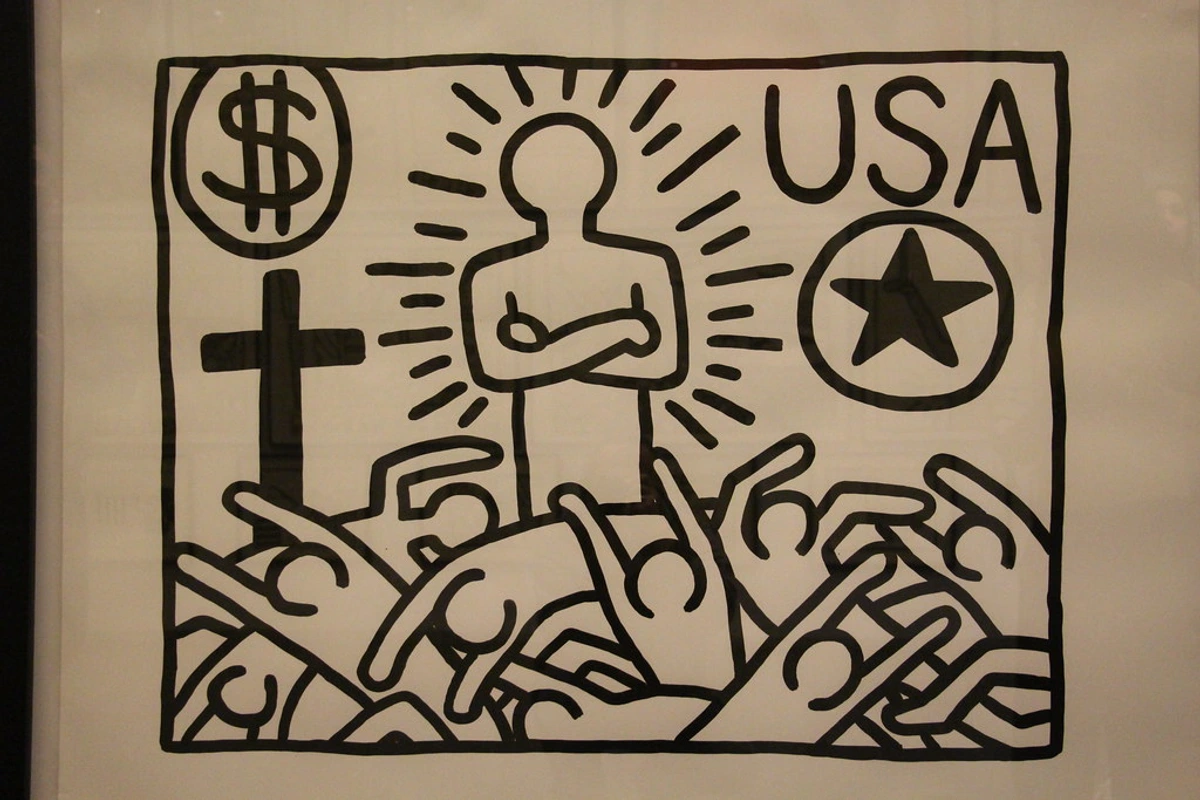
Art for Everyone: Public Murals and Urgent Social Commentary
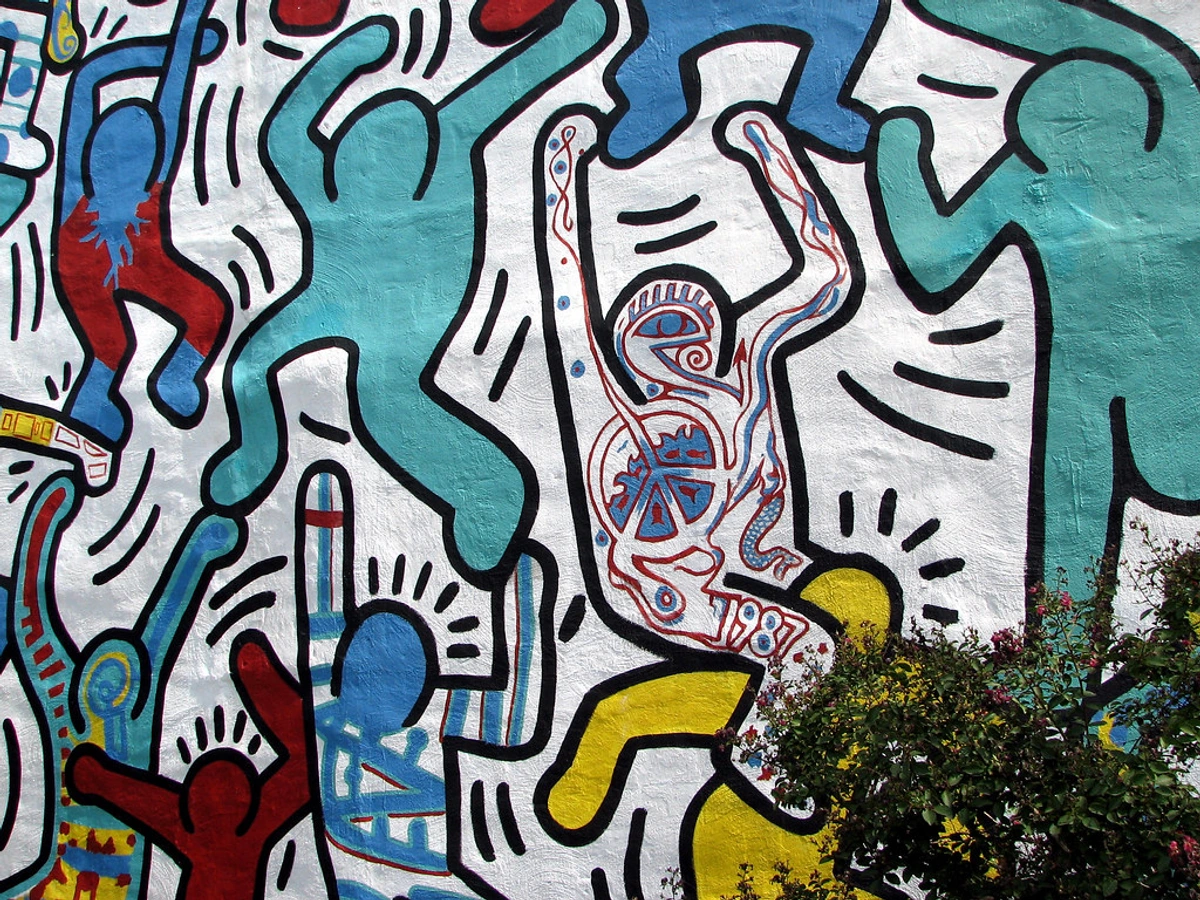
Haring firmly believed that art should be accessible to everyone, not just those who could afford gallery prices. He literally brought art to the people, painting over 50 public murals in hospitals, schools, youth centers, and even on sections of the Berlin Wall. This commitment to public art wasn't just aesthetic; it was deeply democratic. He wanted to engage with society, to provoke thought and inspire change, utilizing public spaces as his canvas for collective dialogue. His murals were often spontaneous acts, sometimes sketched quickly on-site, sometimes planned with a rapid execution in mind. He frequently worked alone, sometimes with a small team of assistants or volunteers, using bold, direct strokes, often painting freehand. The logistics varied from securing paint and scaffolding to battling weather and wary authorities, but his dedication to bringing art to the public always prevailed. It reminds me of the visceral impact of the Mexican Muralists, like Diego Rivera and David Alfaro Siqueiros, who also used public walls to tell powerful stories, showing that art can indeed be a voice for the voiceless, a megaphone for social conscience.
Take the iconic 'Crack is Wack' mural in Harlem, painted in 1986. This wasn't just a piece of art; it was a defiant, urgent warning against the drug epidemic devastating communities, born from a personal tragedy (a friend's crack addiction). He created it illegally on a handball court wall next to the Harlem River Drive, a truly rebellious act. But its immediate resonance with the community was so profound that city officials were compelled to eventually protect and preserve it, transforming a spontaneous act of defiance into a sanctioned public landmark. The community demanded it stay, which speaks volumes about its impact. Other notable public works include a mural for the 1988 Seoul Olympics, a vibrant piece for the Necker-Enfants Malades Hospital in Paris (a children's hospital), and his 'Tuttomondo' mural in Pisa, Italy – his last public work, depicting figures dancing and connecting in a powerful celebration of life. He also brought vibrant color and hope to children's hospitals and community centers globally, from Paris to Melbourne, conducting workshops where kids could create alongside him, making art a truly participatory, joyful experience.
His work was heavily imbued with social and political commentary, a direct challenge to the often-silent apathy of the establishment. He tackled pressing issues of his time with incredible clarity and urgency, often in the face of widespread ignorance: the devastating AIDS epidemic (which he tragically succumbed to), the crack cocaine crisis, apartheid, nuclear disarmament, and LGBTQ+ rights. Diagnosed with AIDS in 1988, his personal struggle infused his later work with an even deeper, heartbreaking sense of urgency and poignancy. Pieces like 'Ignorance = Fear' and 'Silence = Death' became rallying cries, emblazoned on buttons, posters, and T-shirts, distributed freely to raise awareness. These weren't subtle critiques; they were direct, visually arresting pleas for compassion and action, using bold text and stark imagery to cut through denial. He actively challenged the stigma surrounding AIDS with works like 'Safe Sex' and 'Rebel with Many Causes,' transforming abstract political messages into accessible, visually powerful tools for change. He even collaborated with organizations like ACT UP (AIDS Coalition to Unleash Power), designing posters and buttons for their campaigns, using his art as a powerful tool for protest and education. The fear and silence surrounding AIDS, coupled with the government's slow response, fueled his fierce urgency, making his art a beacon for those affected by the epidemic. It’s hard not to feel a profound sense of loss, and immense admiration, when I consider his dedication and courage, especially knowing he was himself living with the virus and racing against time to make his message heard.
He wasn't afraid to use symbols of power (like the dollar sign or a cross) and subvert them, showing how they could be used for both good and ill. His figures often appear to be struggling, dancing, or celebrating, reflecting the full spectrum of human experience. It was a powerful way to engage audiences without needing lengthy explanations; the feeling was immediate, direct, and undeniable, cutting straight to the heart of the matter.
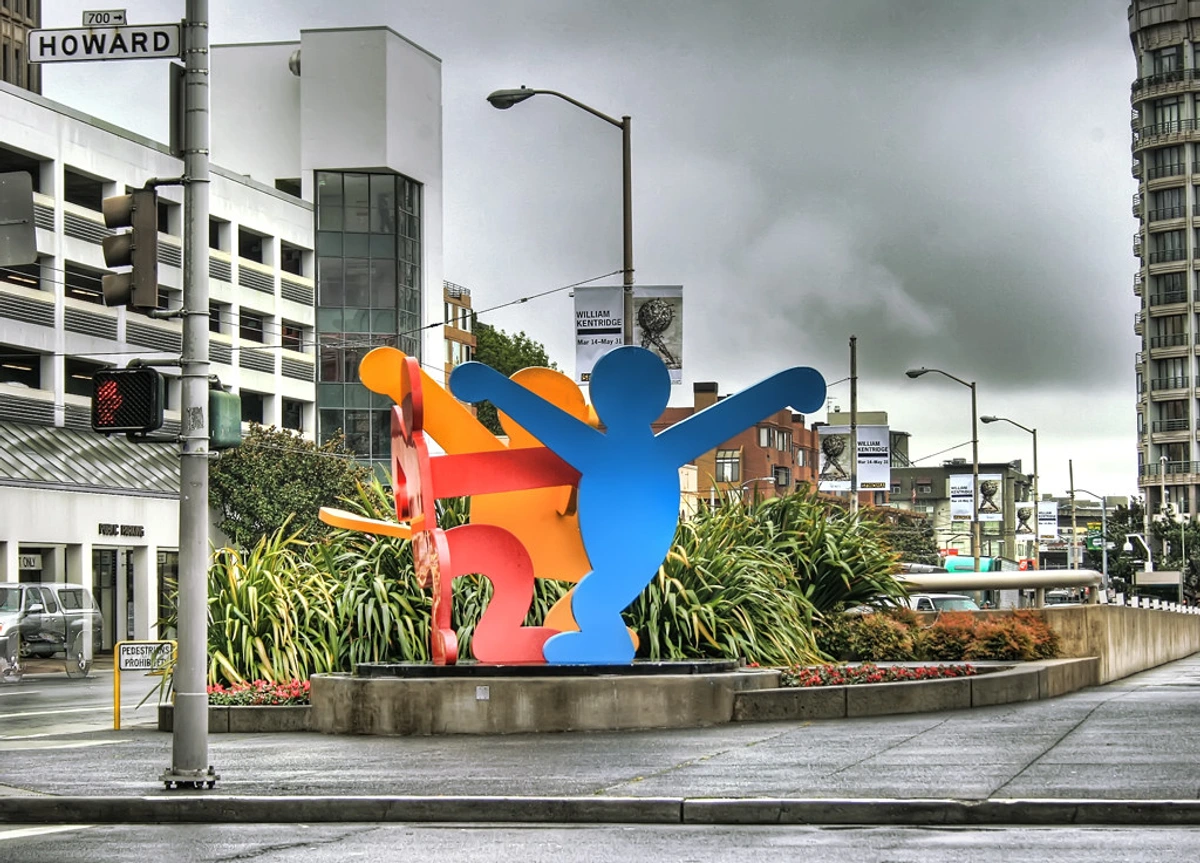
Bridging Art and Commerce: The Pop Shop and Its Purpose
In 1986, Haring opened the Pop Shop in downtown New York. This was a place where people could buy T-shirts, posters, buttons, toys, and other merchandise featuring his designs, all at affordable prices. Think vibrant T-shirts emblazoned with Radiant Babies (often retailing for around $20-30, making them comparable to everyday clothing), posters of dancing figures, or playful pins that could transform an everyday outfit into a statement. It was a controversial move at the time, with many critics accusing him of "selling out," believing he was commercializing his art and diminishing its value by making it widely available outside exclusive galleries. Can you imagine the tut-tutting in the hallowed halls of the art establishment? But Haring, with his characteristic defiance, saw it differently. For him, it was another, even more direct, way to democratize art, to make it available to an even wider audience, directly countering the elitist art market. He famously said, “I could earn more money if I just painted a few things and jacked up the prices. My shop is an extension of what I was doing in the subway, it’s for the people.” He believed that the true value of art wasn't in its exclusivity or a hefty price tag, but in its ability to reach and resonate with as many people as possible, integrating art directly into daily life.
I totally get this perspective. As an artist, you want your work to be seen, to resonate, to be part of people’s lives. The idea that art should be confined to inaccessible galleries always struck me as a bit elitist, to be honest. Haring challenged that, and in doing so, he paved the way for many contemporary artists who seek to bridge that gap between high art and everyday life, showing that mass accessibility doesn't equate to artistic compromise. It makes me think about my own creative journey and the tension between making art for art's sake and wanting it to reach a wider audience. In a world where artists still wrestle with the commercial aspects of their craft, Haring demonstrated that popular reach could amplify an artistic message rather than dilute it. This pursuit of art that speaks directly to the soul is something I explore in my own creations, hoping to evoke a similar resonance. If this democratic spirit of art truly captivates you, I've delved even deeper into Haring’s multifaceted world and his enduring philosophy in my ultimate-guide-to-keith-haring.

A Legacy That Radiates: The Keith Haring Foundation and Enduring Influence
Even facing his own mortality, Haring’s commitment to social causes never wavered. He established the Keith Haring Foundation in 1989, just a year before his death, with a clear mission: to support organizations that assist children, and to fund AIDS research and educational programs. The Foundation actively maintains his legacy, protecting his artwork, archiving his extensive career, and continuing his philanthropic work globally. They manage rights, authorize reproductions, and support exhibitions, ensuring his message continues to reach new generations. They've also been pivotal in maintaining key public installations and funding educational initiatives like art workshops for children and AIDS education programs, truly embodying his philosophy of 'art for everyone' today. For instance, they frequently partner with schools and community centers to bring Haring-inspired art projects to underserved communities, ensuring his spirit of democratic engagement lives on. It’s a powerful testament to how an artist’s vision can outlive their physical presence, radiating positive change long after they’re gone. When I think about what it means to leave a lasting mark, his proactive and deliberate approach to his own legacy is truly awe-inspiring.
Keith Haring's life was tragically cut short in 1990 due to AIDS-related complications, but his impact on the art world and beyond is immeasurable. He left behind a vast body of work—over 50 public murals, countless drawings, paintings, and sculptures—that continues to speak volumes. His influence can be seen vividly in contemporary street art, Pop Art, and in the way artists use their platforms for social change today. Think of artists who deploy bold graphics for activism, or brands that collaborate with street artists – the lineage often traces back to Haring. He taught us that art can be playful and profound, simple and powerful, personal and universal, all at once. Major retrospectives at institutions like the Whitney Museum and the Stedelijk Museum have solidified his critical standing, further highlighting his genius, but his presence is just as strong on T-shirts and skateboards, a testament to his democratic vision.
His legacy isn't just in the art he created, but in the doors he opened. He showed a generation of artists that you don't need formal training or a gallery to make your mark. You just need a message, a medium, and the courage to share it. He was a true innovator, much like his contemporary Jean-Michel Basquiat, who also blurred the lines between graffiti and high art, leaving a vibrant, urgent mark on the 80s art scene. Their friendship was a significant bond forged in a shared cultural moment, pushing boundaries together with unique yet complementary visual languages – Basquiat’s raw, expressive neo-expressionism alongside Haring’s clean, symbolic lines. Unlike some contemporaries, who might have wrestled with the commercial aspects, Haring embraced the idea of accessibility as an extension of his artistic mission. He paved the way for artists today who operate freely between galleries and popular culture, blurring the lines that once rigidly separated 'high art' from 'low art.' If you're ever seeking art with that same vibrant energy, a piece that feels both personal and universally resonant, you might discover something that truly speaks to you in my collection.
Critical Acclaim and Lasting Relevance
Initially, critics struggled to categorize Haring. Was he a graffiti artist? A Pop artist? A children’s illustrator? His direct, accessible style often led to him being underestimated by the more academic art establishment, which sometimes viewed his commercial ventures and public engagement with suspicion. They perceived his mass appeal as a sign of commercial dilution, failing to see it as a deliberate act of democratic outreach. "Surely, if it's everywhere, it can't be real art," I imagine them thinking. However, his profound social commentary and his democratic approach to art quickly garnered widespread popular appeal. After his untimely death, there was a significant re-evaluation of his work. Pivotal exhibitions at major institutions like the Whitney Museum of American Art in New York (1997) and the Stedelijk Museum in Amsterdam (1986, with subsequent retrospectives), alongside rigorous scholarship by art historians such as John Gruen and Alexandra Kolossa, began to unpack the layers of his seemingly simple imagery, revealing a complex artist deeply engaged with the social and political fabric of his time. This critical re-evaluation solidified his place as one of the most important artists of the late 20th century. Today, his work is lauded for its universality, its enduring relevance, and its unique ability to blend joy with urgent social messaging. It's a powerful reminder that true artistic impact sometimes takes time to be fully recognized by all corners of the art world, and that authenticity ultimately triumphs over academic pigeonholing. He didn't dilute his message or compromise his style to fit into preconceived notions of what art 'should' be. He embraced his unique visual language and used it to communicate ideas that truly mattered. That's a huge inspiration, especially in a world that often tries to push us into neat little boxes. His work reminds me to always trust my own artistic voice and to create with intention, whether it's for a large public mural or a small, intimate canvas.
Haring's Enduring Impact on Pop Culture
Beyond the art world's critical circles, Haring's bold aesthetic swiftly permeated mainstream culture, shaping the look and feel of the 1980s and beyond. His iconic imagery, initially disseminated through subway drawings and the Pop Shop, quickly transcended the art market. It appeared on everything from fashion accessories (Adidas collaborations, Swatch watches) and album covers (Run-DMC's 'King of Rock') to advertising campaigns and video games. This ubiquity, far from diminishing his artistic credibility in his own eyes, was the ultimate validation of his philosophy: art truly for everyone. He proved that high art could coexist, and even thrive, within popular culture, influencing countless designers, illustrators, and artists who followed. His visual language became a global shorthand for youth culture, activism, and an irrepressible joy, cementing his status not just as an artist, but as a true pop culture icon of the 1980s.
Key Milestones in Keith Haring's Life and Career
Year | Event |
|---|---|
| 1958 | Born in Kutztown, Pennsylvania. |
| 1978 | Moved to New York City, enrolled at SVA. |
| 1980 | Began making chalk drawings in NYC subway. |
| 1982 | First solo exhibition at Tony Shafrazi Gallery. |
| 1986 | Opened the Pop Shop in NYC. |
| 1986 | Painted the "Crack is Wack" mural in Harlem. |
| 1988 | Diagnosed with AIDS. |
| 1989 | Established the Keith Haring Foundation. |
| 1990 | Died in New York City due to AIDS-related complications. |
Frequently Asked Questions About Keith Haring
What is Keith Haring famous for?
Keith Haring is most famous for his distinctive Pop Art and graffiti-inspired style, characterized by bold lines, vibrant colors, and dynamic figures like the Radiant Baby and Barking Dog. He gained widespread recognition for his spontaneous public chalk drawings in NYC subway stations, creating a direct, democratic connection with commuters. He is equally celebrated for his numerous large-scale public murals worldwide, including iconic works like the 'Crack is Wack' mural in Harlem and the 'Tuttomondo' mural in Pisa, Italy. Beyond aesthetics, he’s revered for his unwavering commitment to using art for social activism, addressing critical issues like AIDS awareness, drug abuse, apartheid, and LGBTQ+ rights with unparalleled clarity and urgency, often distributing his work freely to spread his message.
What themes did Keith Haring explore in his art?
Haring explored a wide range of universal and urgent themes, including birth, death, love, sex, war, and social justice. He often used his art to advocate for AIDS awareness (e.g., 'Ignorance = Fear,' often featuring intertwined figures and hearts), LGBTQ+ rights (through symbols of unity and love, as seen in his 'Silence = Death' poster), and to critique capitalism ('Untitled (Money) (1984)'), political oppression (often using the Barking Dog and Dollar Sign), and environmental concerns (with images of struggling figures amidst pollution or technology). His work frequently conveyed powerful messages of unity, joy, solidarity, and the power of individuals and communities to effect positive change, all delivered with an accessible, immediate visual language intended to resonate with everyone.
How did Keith Haring start his career?
Haring began his career by creating chalk drawings on blank advertising panels in the New York City subway system in the early 1980s. These spontaneous, unsanctioned public artworks were a deliberate act of democratization, bringing art directly to everyday commuters. His iconic Radiant Baby was one of the very first symbols to gain prominence in these subway contexts, instantly recognizable to thousands. The challenge of working quickly to avoid arrest honed his distinctive, bold line work and direct communication style. His prolific output and instantly recognizable style quickly gained him attention from the public and eventually the art world, helping him develop his iconic visual language. He later moved into painting large-scale public murals and exhibiting in galleries, successfully bridging the gap between street art and the established art world while staying true to his core philosophy of accessibility.
Is Keith Haring considered Pop Art?
Yes, Keith Haring is widely considered a key figure in the Pop Art movement, often associated with artists like Andy Warhol. His work shares Pop Art's characteristics of incorporating elements of popular culture, commercialism, mass production, and a focus on accessibility. However, his deep commitment to direct social and political commentary, along with his origins in street art and graffiti, gives his work a unique depth and urgent purpose that extends beyond pure Pop Art aesthetics. Many consider his style a powerful blend of Pop Art, Street Art, and social activism, a unique hybrid that truly defines the spirit of the 1980s.
What was Keith Haring's relationship with fellow artist Jean-Michel Basquiat?
Haring and Jean-Michel Basquiat were prominent figures in the vibrant downtown New York art scene of the 1980s and were close friends, sharing both artistic inspiration and social circles. They frequented venues like Club 57 and the Mudd Club together, influencing each other and challenging artistic norms. Both emerged from the street art and graffiti subcultures, developing distinct yet equally impactful visual languages that blurred the lines between graffiti and high art. While Basquiat's work was often more raw, neo-expressionistic (characterized by intense subjectivity and raw handling of materials), and text-heavy, Haring's was graphically clear, universally symbolic, and highly accessible. They shared a common energy, a critical voice against societal norms, and a meteoric rise to fame, tragically both succumbing to AIDS in their early 30s. Their friendship and parallel paths symbolize a pivotal moment in contemporary art history, a testament to collaboration and shared artistic rebellion.
What was the significance of the AIDS Memorial Quilt in relation to Haring's legacy?
The AIDS Memorial Quilt, a monumental textile art project commemorating those lost to AIDS, deeply resonates with Haring's legacy. Haring himself tragically passed away from AIDS in 1990, and his intense activism and powerful art raising awareness about AIDS mirrored the quilt's mission of remembrance and education. Haring's public art and advocacy, particularly his poignant 'Ignorance = Fear' and 'Silence = Death' campaigns, were instrumental in breaking the silence and stigma surrounding the disease, and advocating for LGBTQ+ rights. Many panels within the quilt feature imagery inspired by Haring's work or directly commemorate him and his partner, reflecting his profound impact on the LGBTQ+ community and AIDS activism during a devastating period. Both the quilt and Haring's work served as vital, public testaments to lives lost and battles fought.
Where can I see Keith Haring’s art?
Keith Haring’s art can be found in major museums and galleries worldwide, including the Museum of Modern Art (MoMA) in New York, the Centre Pompidou in Paris, the Tate Modern in London, and the Stedelijk Museum in Amsterdam. Many of his public murals, like the 'Crack is Wack' mural in Harlem or his 'Tuttomondo' mural in Pisa, still exist globally as powerful outdoor installations. You might also find his work at institutions like the Den Bosch Museum, which often showcases influential contemporary artists, or through exhibitions organized by the Keith Haring Foundation and the Keith Haring Museum in his hometown of Kutztown, Pennsylvania. His legacy ensures his work remains highly visible and accessible to the public.
What is Keith Haring's stance on NFTs and digital art?
While Keith Haring himself passed away long before the advent of NFTs (Non-Fungible Tokens) or the broader boom in digital art, his estate, the Keith Haring Foundation, carefully manages his artistic legacy. It's important to differentiate Haring's original philosophy of art accessibility and public engagement from the speculative market of NFTs. His work has been digitized and explored in various digital formats, reflecting his enduring visual language. The Keith Haring Foundation has stated its cautious approach to NFTs, emphasizing the importance of authenticity and protecting the artist's legacy, and has not yet officially endorsed or created any NFTs. While some projects have attempted to tokenize his work, these are typically unauthorized or inspired by his style, rather than official Foundation initiatives. Given his profound commitment to tangible public art and social change – focusing on direct human connection, not digital scarcity or exclusive ownership – any discussion of his legacy in relation to NFTs would need to be approached with skepticism. His artistic drive was rooted in widespread public access and direct messaging, a stark contrast to digital assets that often emphasize artificial scarcity, speculation, and exclusive ownership, which doesn't fully align with his 'art for everyone' ethos.
The Enduring Pulse of Haring's Radiant Message: A Personal Conclusion
As I wrap up this journey, I'm left thinking about that 'secret language' I mentioned at the start. Haring's lines, simple yet profound, still speak directly to us, transcending time and cultural barriers. He was a supernova, burning brightly and leaving an indelible mark before fading too soon. But his art? It continues to pulsate with life, radiating energy and reminding us that art isn't just about pretty pictures; it’s about communication, connection, and challenging the status quo. It’s about leaving your own unique, radiant mark on the world, much like the defiant glow of his Radiant Baby.
I often wonder what he would create today, how his lines would adapt to our current challenges and joys. Perhaps he'd be projecting art onto buildings, or leading digital campaigns with the same fierce clarity. Maybe he'd even be exploring augmented reality installations or large-scale interactive digital murals, using technology to further amplify his message of accessibility and social change. I suspect he would approach the digital realm with the same democratic spirit, but likely remain skeptical of purely speculative digital assets like NFTs, given his focus on widespread public access over exclusive ownership. His life, though short, was a testament to the power of art as a tool for connection, celebration, and social activism. He lived and worked with an incredible urgency, as if he knew his time was limited, pouring his whole self into every line and every figure. It makes you think about your own time, doesn't it? What kind of radiant legacy are you leaving? His unwavering belief that art should be for everyone, accessible and impactful, remains a guiding light in the often-complex world of art and commerce, echoing in the work of countless contemporary artists who follow his lead in using their voice for change. He wasn't just an artist; he was a conduit for universal truths, a true pioneer in blurring the lines between art, activism, and everyday life.
What an incredible journey he had, and you can explore more artistic journeys on our timeline.
Let his lines continue to inspire us to speak our truths, to dance our own dances, and to spread a little more love and understanding in this beautiful, chaotic world of ours. His message, clear and vibrant, will always echo, urging us to make our own radiant mark.