Painting Landscapes Like Pissarro: Practical Tips for Modern Artists
Discover how Pissarro’s landscape tips can transform your art. I break down his plein air methods and brushwork into practical steps you can try today.

Stealing Pissarro’s Secrets: The One Afternoon That Changed My Landscape Painting
I remember one autumn afternoon, standing in a field, getting thoroughly frustrated. My trees looked like green cotton candy, my sky was a lifeless blue wash, and the whole painting felt like a lie. Sound familiar? We've all had that moment where the landscape in front of us refuses to cooperate on the canvas. It's humbling. That's the paradox, isn't it? The more you try to force a landscape to look 'right,' the more it rebels, stiffening into a lifeless diagram of itself.
It was around then that I stopped trying to be clever and started paying closer attention to the masters. Not just looking at their paintings, but trying to reverse-engineer their thoughts. And no one has given me more practical, no-nonsense advice from beyond the grave than Camille Pissarro. He had a way of seeing a field and turning it into a world of vibrating, honest light. So, let's steal his secrets.
Before we jump into the weeds of technique, let me be clear about one thing. I'm not here to sell you a magic bullet or some secret formula locked away in a dusty art history book. What I learned from Pissarro wasn't a set of rigid rules, but a way of seeing. It was about peeling back the layers of assumption and confronting the world with a kind of patient humility. The kind of humility that stands in a field for twenty minutes before even touching a brush, just watching how the wind combs through the grass. This, I discovered, is the true secret: slowing down enough to let the world reveal itself, instead of forcing it into the boxes we've prepared for it. It's a lesson in surrender as much as it is in observation.
The Guerrilla Painter’s Mindset: From Frustration to Freedom
That day in the field, I wasn’t just fighting my trees; I was fighting myself. I was trying to prove I was a “real artist.” We all carry that baggage. Pissarro’s real lesson began when I stopped trying to be an artist and simply became an observer. It’s about shedding the ego, that voice that demands, “Make this a masterpiece!” and replacing it with a quieter, more curious one that asks, “What is actually here?”
This isn’t some Zen koan. It’s brutally practical. When your goal is to “make a great painting,” every stroke is burdened with expectation. When your goal is simply to “match that pinkish-grey shimmering on the side of that rock,” the task becomes simple, immediate, and strangely peaceful. You trade the anxiety of performance for the deep focus of a craftsman. That shift, from artist-performer to humble observer, is the single most liberating thing that can happen to a painter. The quality of the work follows as a natural byproduct of that state of mind. You stop making a landscape and start participating in one, letting the light and color guide your hand rather than your preconceived notions of what a landscape “should” look like.
Wait, Why Pissarro? (Or, Why I Ditched the Drama for Dirt Roads)
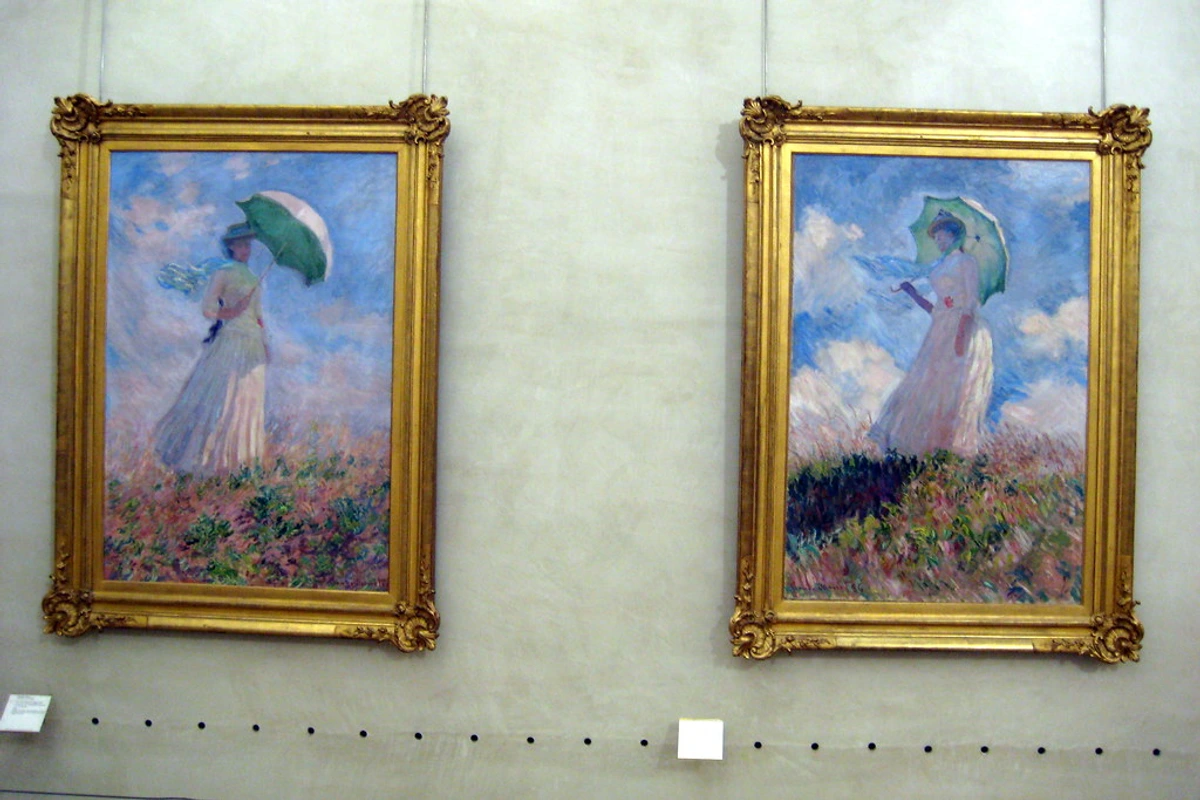
Before we dive in, you might be wondering why we're focusing on Pissarro. The Impressionist circle was full of rockstars, after all. But here’s the thing I’ve learned: while Monet was capturing the shimmer of a moment and Degas the flash of a dancer, Pissarro was often on the ground, painting the truth of a place—the dirt, the labor, the quiet rhythm of rural life. His work feels less like a spectacle and more like a conversation. It’s incredibly grounding.
He was the steady, thoughtful anchor of the Impressionist movement, earning him the nickname, 'the humble and colossal' from Cézanne. He painted the same views near his home over and over, in different lights and seasons, proving that you don't need to travel the world for inspiration. You just need to really see what's in front of you. That’s a lesson every artist needs to hear. This relentless focus turns a location from a mere subject into a trusted co-conspirator, one that reveals its secrets only to those patient enough to return, day after day, with a fresh eye. It’s easy to be seduced by the exotic, to believe that great art requires grand vistas. Pissarro’s life’s work is a quiet, powerful argument for the opposite: that profundity is found not in the far-flung, but in the familiar, deeply understood.
It's also worth noting that unlike many of his contemporaries, Pissarro had real skin in the game politically. He was an avowed anarchist, which sounds radical, but for him, it was deeply connected to his art. It was a belief in the dignity of labor, in the value of the communal over the hierarchical, in the simple, unadorned truth of everyday life. He wasn't interested in painting the estates of the rich; he was drawn to the peasant farmers, the village streets, the quiet dignity of the common world. This political undercurrent isn't just biographical trivia; it's the very reason his art feels so grounded and honest. There's no facade, no pretension. Just a profound respect for the subject and a commitment to capturing its essence, free from romanticization or idealization. He painted farmers because he understood and respected their work, not because he thought they looked picturesque.
This focus on the 'common world' extended to his techniques. He famously advised his son Lucien, 'Don't be afraid of the crude and naive.' He wasn't chasing a polished, academic finish. He was chasing the raw, unvarnished truth of a moment. He taught his peers, including Cézanne and Gauguin, that the most profound subjects were often the most humble, a philosophy that would forever alter the course of modern art. His influence rippled outwards, solidifying his place not just as an artist, but as a foundational teacher of a new way of seeing.
Know Your Toolkit: What You Actually Need to Start
Before you even step into a field, it’s tempting to get lost in the romance of art supplies. I know painters who spend more time researching the perfect brush than they do using the one they already have. Pissarro worked with a remarkably simple and direct set of tools, and we can learn a lot from that. Overthinking your gear is just another form of procrastination.
A basic plein air kit isn’t complicated:
- Paints: Start with a limited palette. Pissarro often used just the basics: a warm and cool of each primary (like Cadmium Red and Alizarin Crimson; Ultramarine Blue and Cerulean Blue; Cadmium Yellow and Lemon Yellow), plus a couple of earth tones (like Burnt Sienna and Raw Umber) and Titanium White. This forces you to learn to mix, which is the cornerstone of color control.
- Brushes: You don’t need many. A few hog bristle brushes in different shapes (a couple of flats, a round for drawing, and a filbert for blending) and maybe a softer sable for details are all you need. The key is to know what each one does. Your brush is your voice; learn its accent and inflection.
- Surface: Panels are better than stretched canvas for plein air. They’re lighter, more rigid, and don’t catch the wind like a sail. A simple pochade box is the modern painter’s best friend—a portable studio that holds everything you need.
- The Humble Journey: A rag, a small bottle of solvent, and your chosen medium (like linseed oil or a modern alkyd medium for faster drying) round out the essentials.
There’s a certain freedom in having less. When your choices are limited, you’re forced to be more creative with your technique. You start to solve problems with your mind and your hand, not with another piece of gear. Your toolkit should facilitate your seeing, not distract you from it.
Pissarro Tip #1: Worship at the Altar of Observation
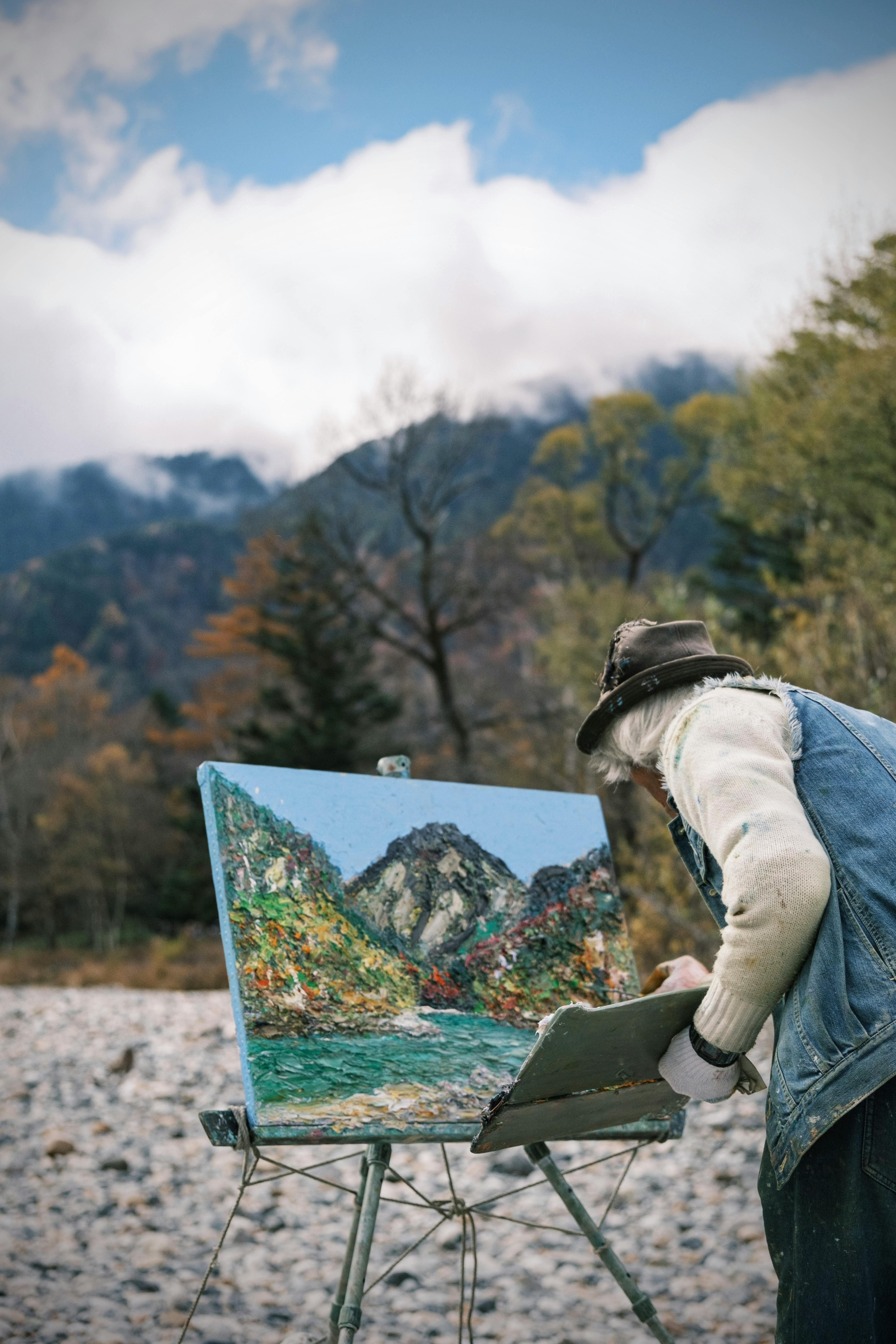
Pissarro’s first rule, if he were here giving a workshop, would be simple: Don't invent. Observe. He would set up his easel in a single spot and paint what he saw, as he saw it. This is the core of plein air painting, and it’s a muscle many of us have let atrophy.
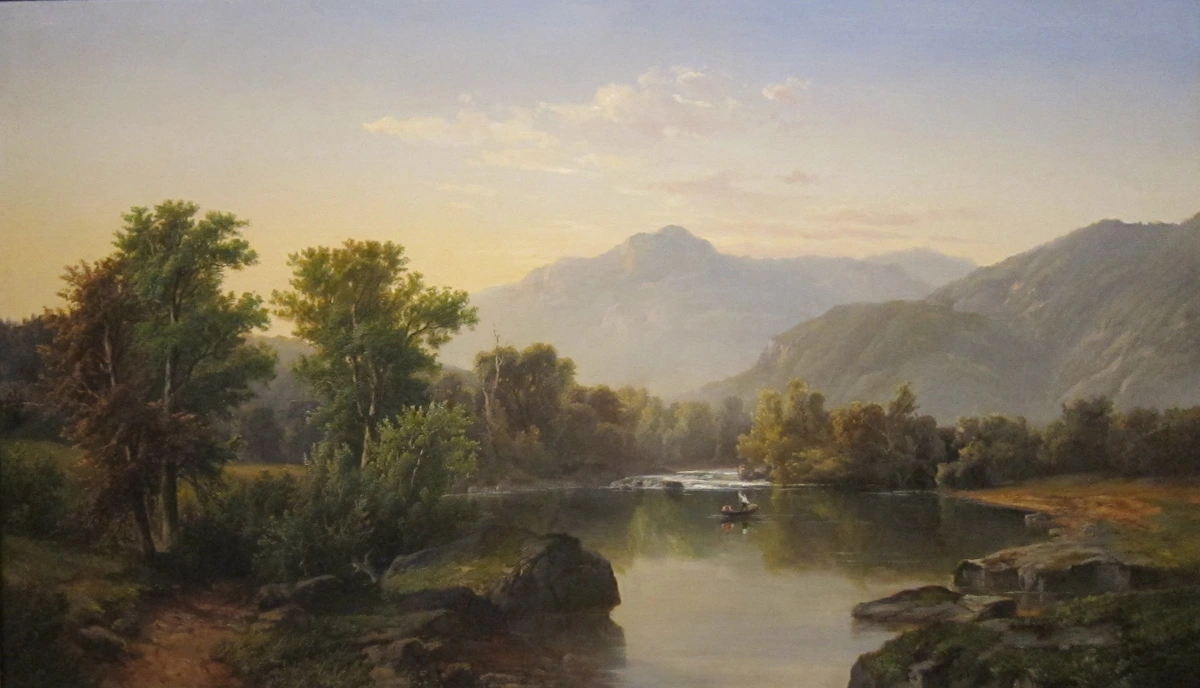
What does this look like in practice? It means sitting still long enough for the scene to stop being a postcard and start being a collection of specific details. The way the light catches the bark of one particular tree. The shadow of a cloud moving across a hill. The subtle pinks and purples hiding in what your brain insists is just a "grey" rock.
So, your challenge for your next painting trip: for the first 20 minutes, your brush doesn't touch the canvas. Just look. Make notes—mental or written—about the light, the colors, the shapes. Be lazy before you start being productive. You’ll find that by the time you do start painting, your decisions are more confident and your colors are more true to life. This forced pause short-circuits the impulse to perform, to immediately start 'making art.' It shifts your brain from production mode into reception mode, which is where all truly authentic painting begins.
The Daily Practice: Cultivating Keen Observation
This practice isn't a one-off exercise; it's a daily discipline. Think of it like a musician practicing scales. Each day you observe, you're training your eye to see beyond the surface, to notice the subtle shifts in value and hue that give a landscape its authentic character. It's not just about seeing the tree; it's about seeing the specific way the light filters through this tree's leaves at this particular hour.
As Pissarro advised his students, "It is only by drawing often, drawing incessantly, that one fine day you discover, to your amazement, that you have rendered something in its true character." This doesn't mean constantly producing finished drawings. It means constantly looking, constantly questioning, constantly translating the three-dimensional world into two-dimensional shapes and colors in your mind's eye until it becomes second nature.
Pissarro knew that our brains are lazy; they rely on symbols for everything. When you glance at a tree, your brain doesn’t register the specific tangle of branches; it just pastes a generic ‘tree’ icon onto your consciousness. His advice was a battle cry against this intellectual laziness. He was telling us to fight the symbol and see the specific truth. This active, questioning observation is a skill that needs constant cultivation. It’s not about having ‘good eyes’; it’s about having a disciplined mind. Every time you sit down to paint, you are training your brain to abandon its shortcuts and see the world as it actually is—a complex, shimmering field of light, color, and form, unique in every single moment.
The key is to build this observational muscle into the fabric of your everyday life. You don't need to be at your easel to practice. When you're waiting for the bus, instead of pulling out your phone, try to mentally mix the exact color of the sky. When you're walking your dog, notice how the late afternoon sun turns the grass from a flat green to a thousand different shades of gold, ochre, and dull emerald. Observe how a streetlight illuminates a puddle at night, or how the color of a distant building shifts as a cloud passes overhead. These micro-sessions of observation are just as valuable as dedicated painting time. They train your brain to default to this heightened state of visual awareness, making it second nature when you finally do pick up a brush.
Let me share a little secret: some of my most productive "painting" sessions involve no paint at all. Sometimes I'll go out with just a small sketchbook and a pencil, and I'll force myself to draw the same cluster of trees for an hour straight. Not a pretty picture, but a study. By the end, I know every branch, every shadow pattern. When I return to that spot with my paints, it's like meeting an old friend—familiar, comfortable, and full of undiscovered stories.
The Editor's Eye: What to Leave Out
This might sound counterintuitive, but one of the most powerful observational skills you can develop is knowing what not to paint. A camera records everything without judgment. An artist must be a ruthless editor. A distracting telephone pole, a garishly parked car, a extra branch that clutters the composition—these are all candidates for the chopping block. Observation isn't just about seeing what's there; it's about understanding the essential character of a scene and then amplifying it by removing everything that isn't essential.
I used to think leaving things out was ‘cheating.’ Now I see it as clarifying. You are not a journalist documenting a crime scene; you are a storyteller. And every good storyteller knows that the details you leave out are just as important as the ones you put in. By strategically omitting elements, you guide the viewer's eye and tell them what's important. You're not just painting a location; you're creating a visual argument for why this particular moment and this particular arrangement of light and form is worthy of attention.
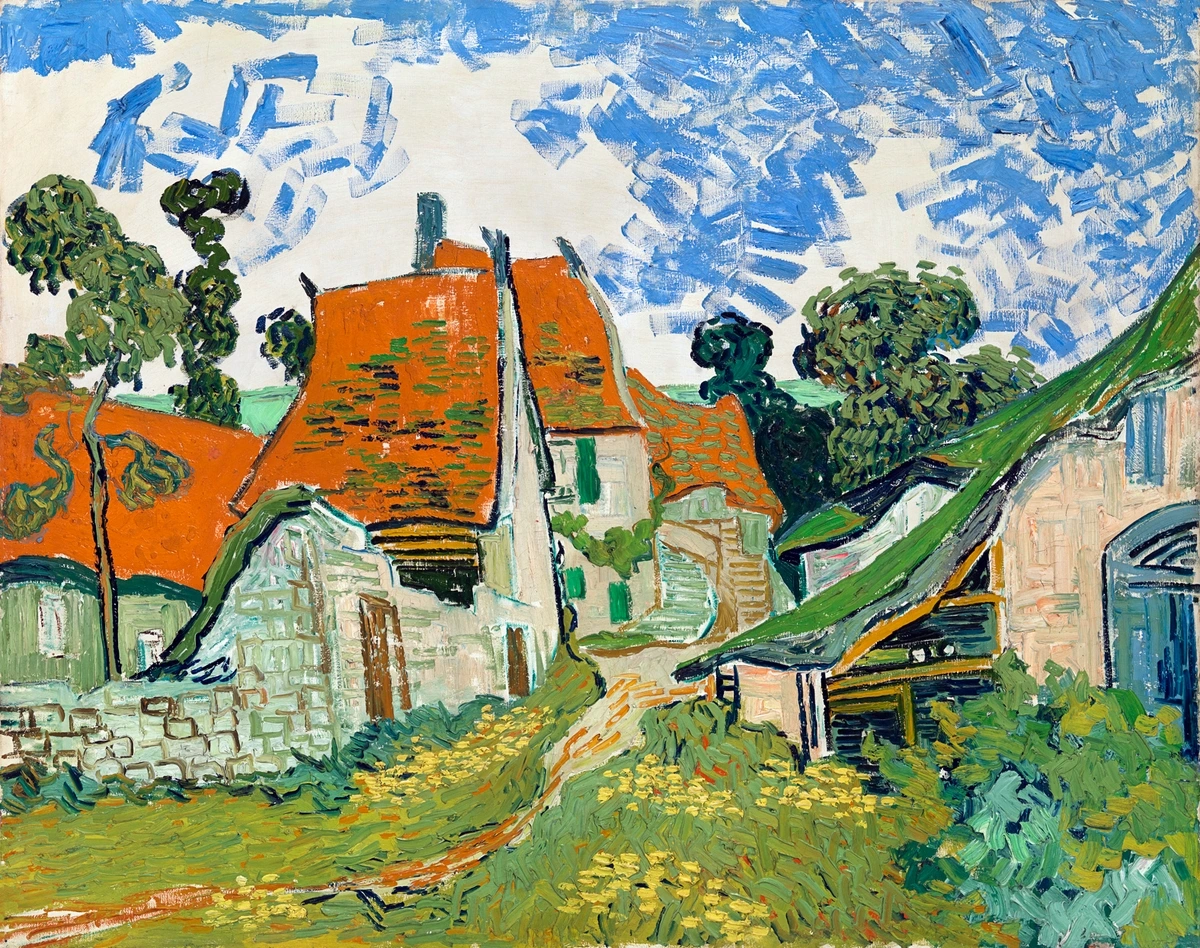
For example, when painting a farmhouse nestled among trees, instead of trying to paint every single leaf, Pissarro would observe the overall pattern of light and shadow, the way the building's roof caught the sun, the dark mass of foliage against the sky. He'd translate these observations into bold compositional choices, guiding the viewer's eye through the painting using his observed understanding of light and form.
This approach transforms landscape painting from mere topographical documentation into a powerful artistic statement. The landscape becomes a stage where light performs its daily drama, and you, the painter, are its attentive audience and faithful chronicler.
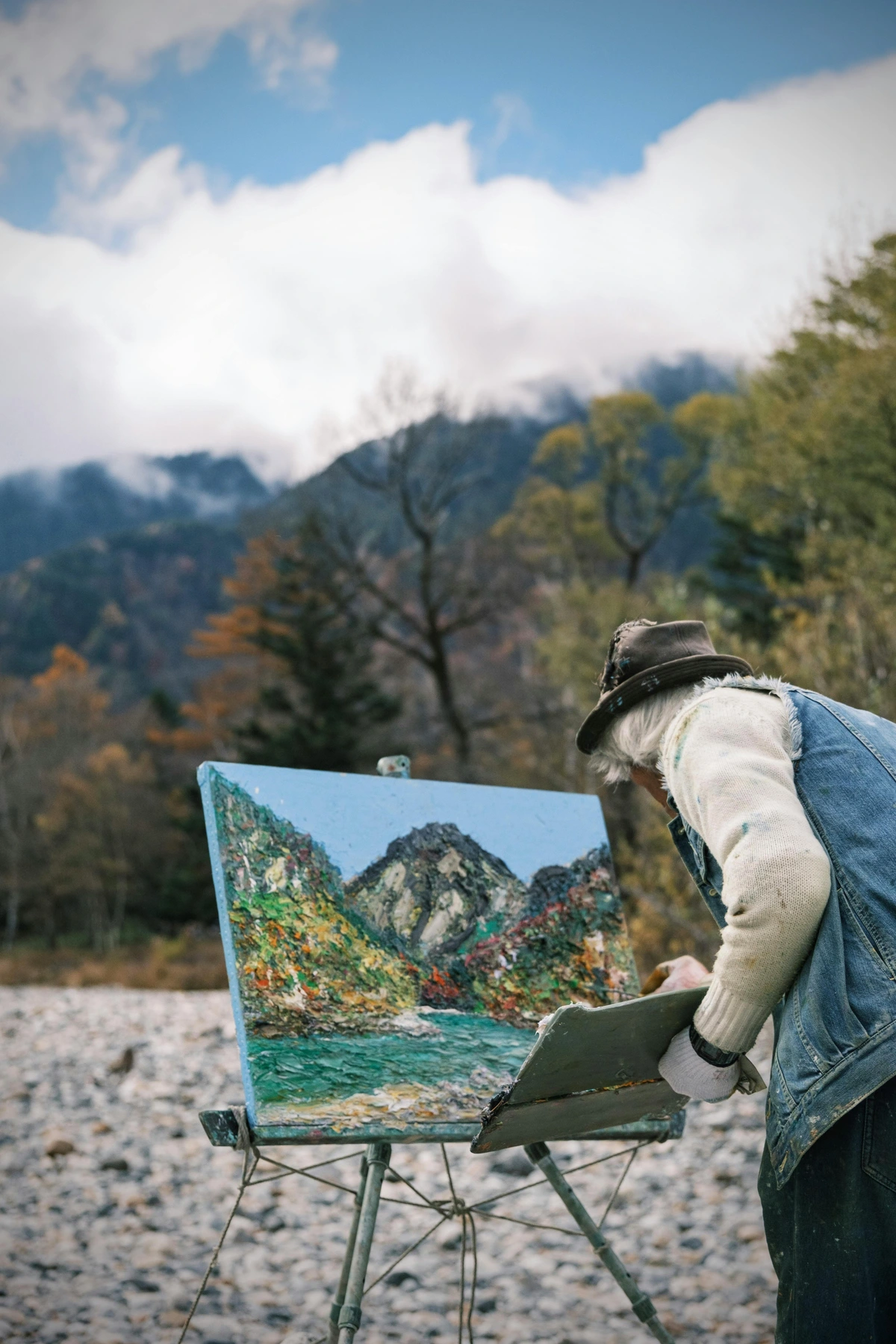
Here's a quick observation checklist I now use, stolen directly from Pissarro's approach, to keep myself honest whenever I'm tempted to start inventing instead of looking:
- Direction and Quality of Light: Where is the sun? Is it direct, filtered, or diffused? How long are the shadows?
- Atmospheric Perspective: How does distance affect color and clarity? Are distant hills bluer, softer, lighter than foreground elements?
- Local Color vs. Perceived Color: What color is an object really (local color), versus what color does the light and atmosphere make it appear to be (perceived color)?
- Value Patterns: If you squint, what are the main light, mid-tone, and dark shapes? How do they organize the composition?
- Temperature Shifts: Where do you see warm colors (yellows, oranges, reds) versus cool colors (blues, violets, greens)?
- Reflected Light: Where is light bouncing from one surface onto another? Notice colored reflections in shadows.
- Specific Texture and Detail: What defines the unique texture of that tree trunk, that patch of grass, that stone wall?
This checklist isn't just a list; it's a mindset. Keep returning to these questions as you paint, and you'll find your landscapes becoming more and more believable. It helps you build an internal 'model' of the scene, a visual understanding that guides your hand far better than any formula could.
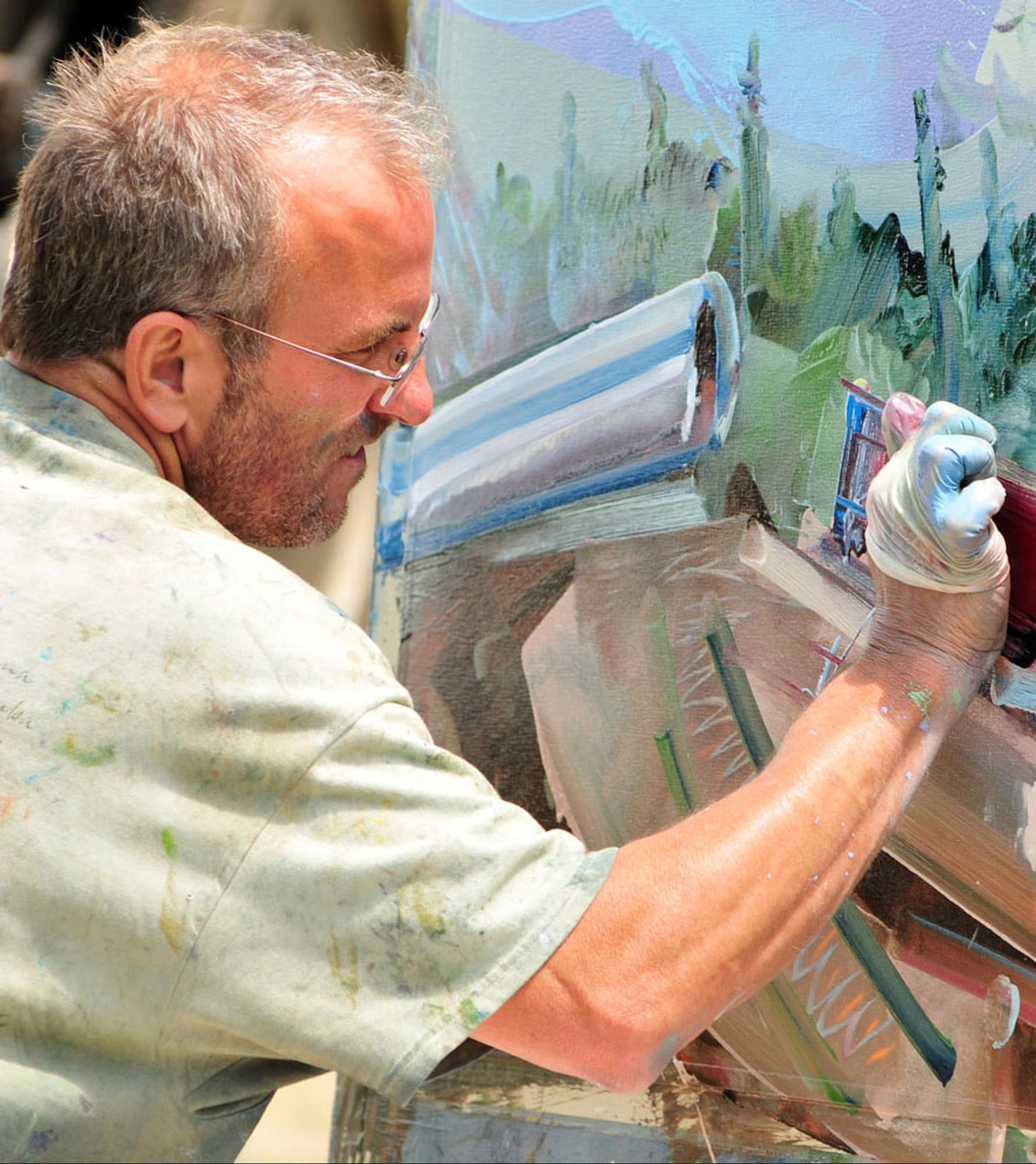
Pissarro Tip #2: Become a Brushwork Linguist
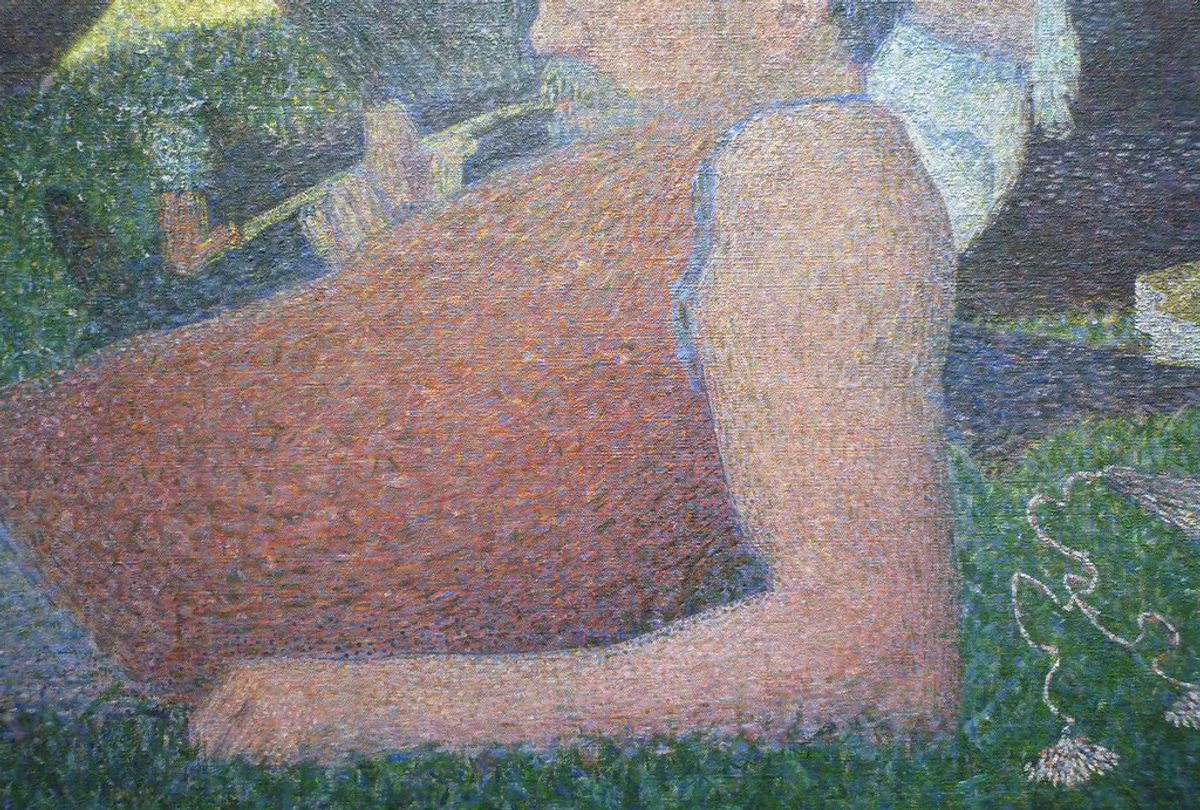
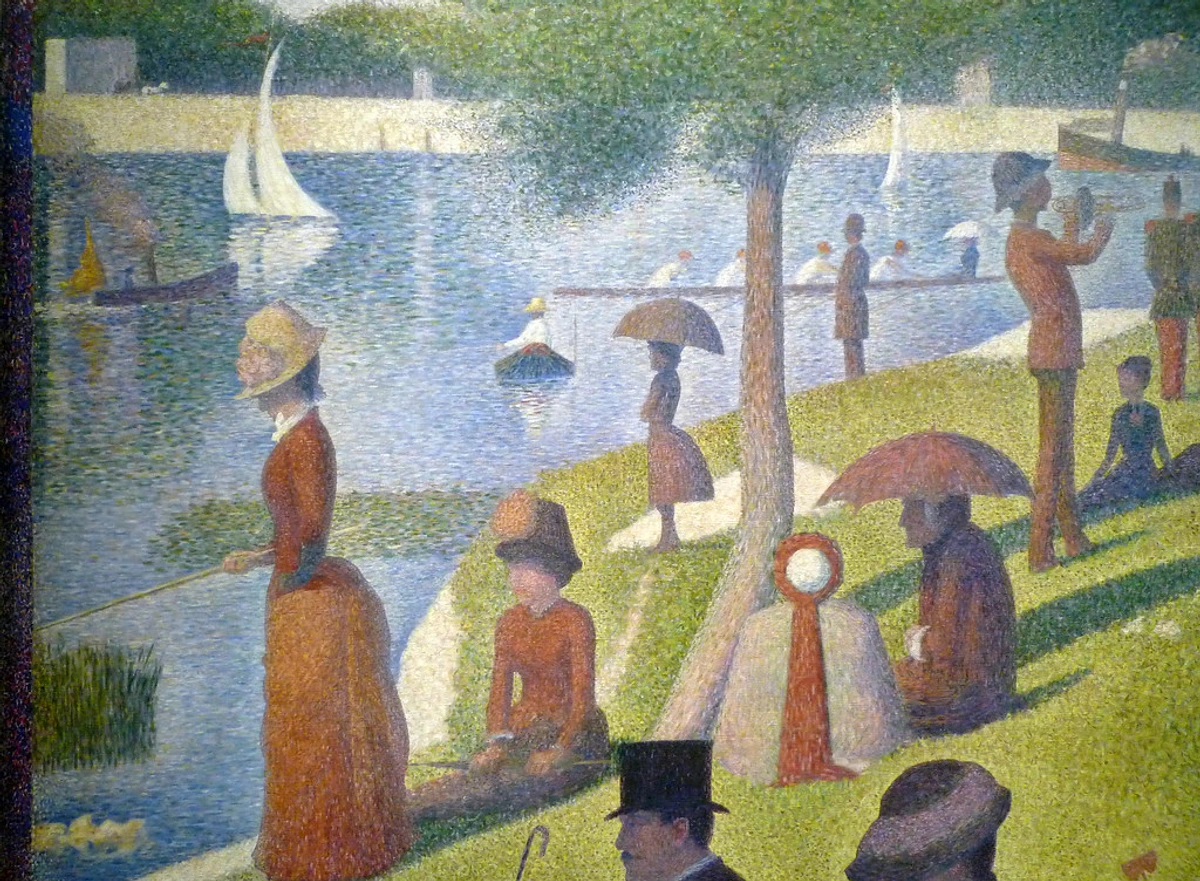
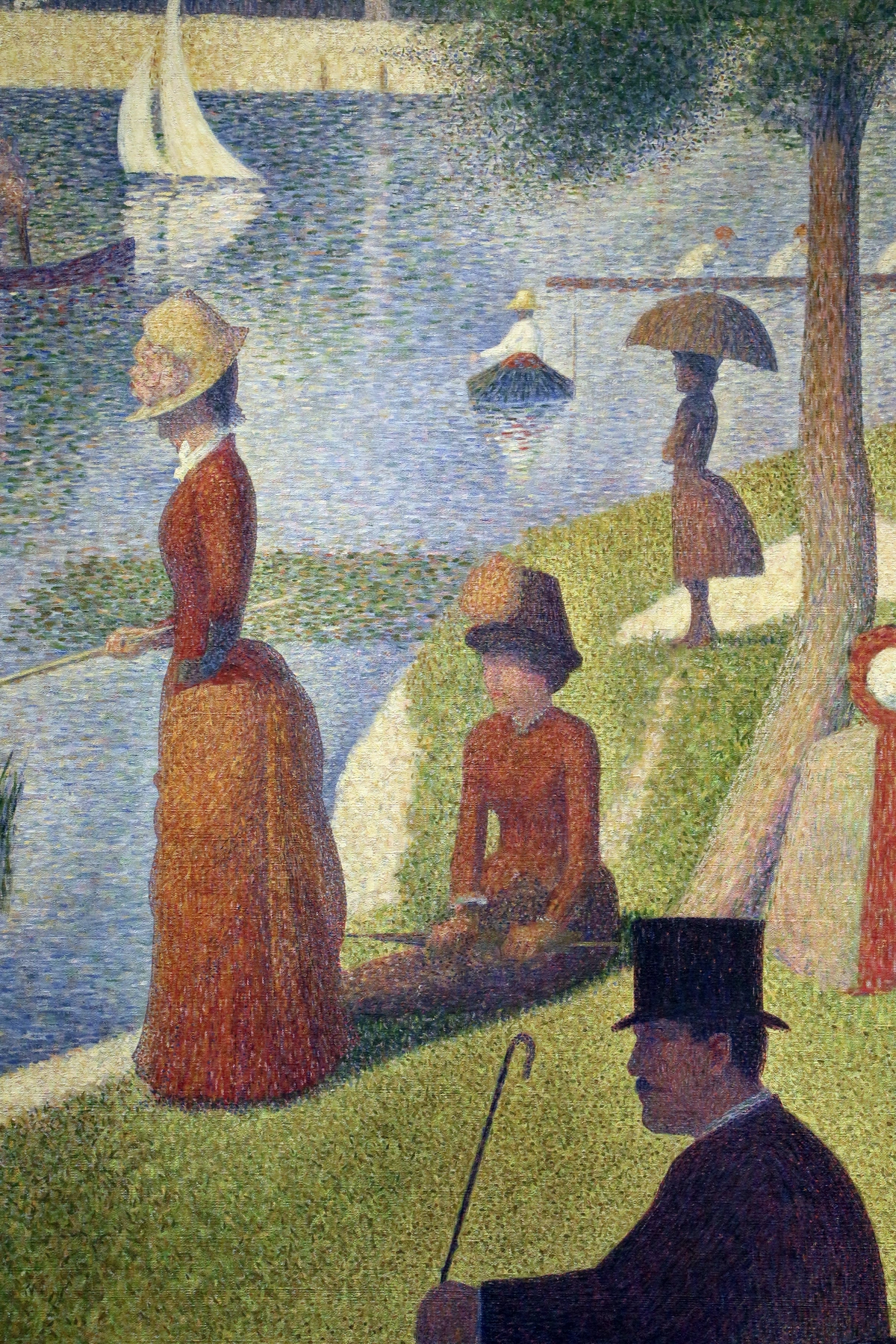
Looking at a Pissarro painting up close is a revelation. From a distance, a field of furrows is peaceful and unified. Up close, it's a controlled riot of individual strokes. He didn't blend everything into a soft, mushy gradient. He built his surfaces with distinct marks. This is his secret language. This deliberate, unblended approach is what gives his surfaces such vitality; the colors mix not on the palette, but in the viewer’s eye, a phenomenon the Impressionists exploited to achieve a dazzling luminosity. Each stroke is a decision, a piece of information. The direction, pressure, thickness, and color of the mark all tell a story about the object it represents.
He used different brushes and strokes to describe different textures and energies:
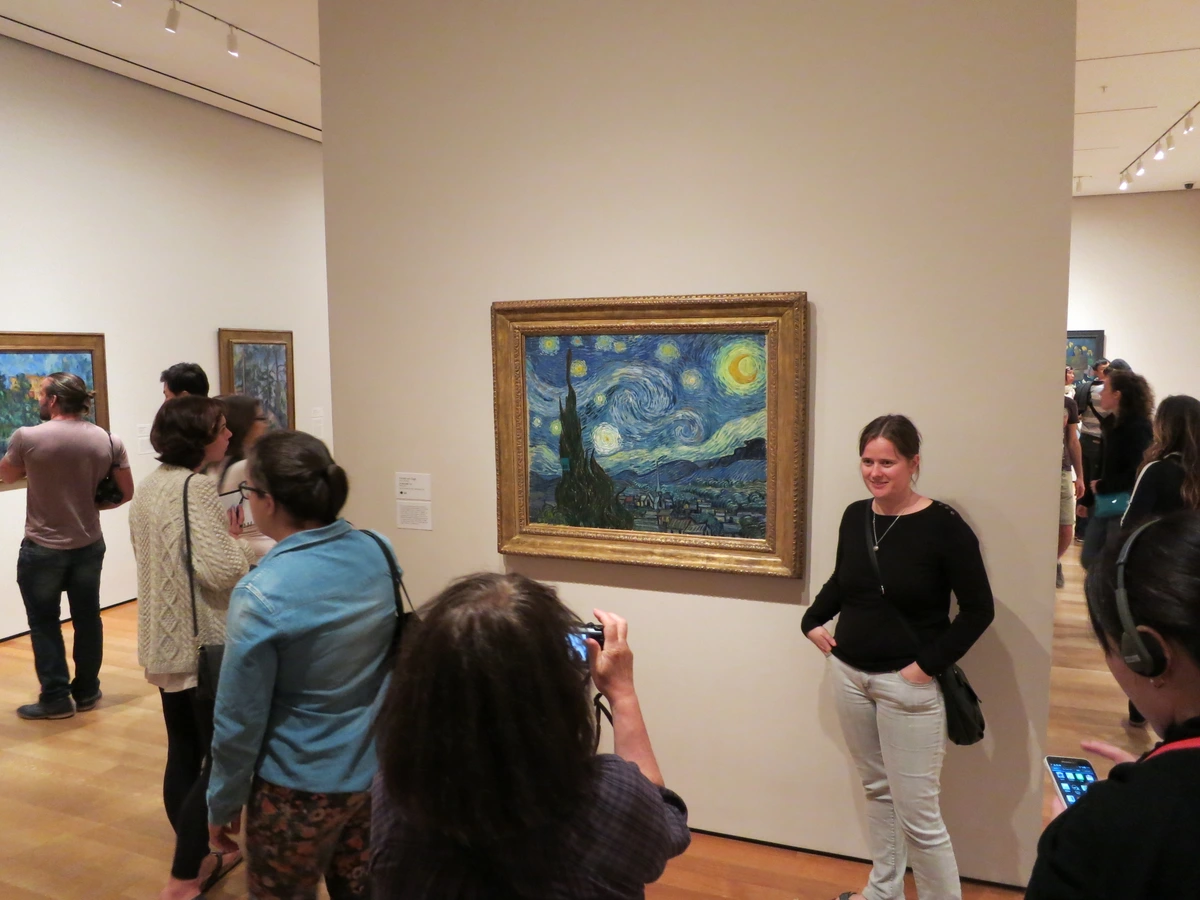
Brushstroke Type  | Sensation/Effect | Example Pissarro Use |
|---|---|---|
| Short, Directional | Energy, growth, texture, direction | Grasses, plowed furrows, receding fields |
| Broken, Hatched | Sparkle, depth, airiness, vibration | Foliage on trees, sun-dappled ground, shimmering water |
| Thick, Impasto | Weight, solidity, permanence, a point of focus | Sunlit sides of buildings, tree trunks, prominent rocks |
| Dry-Brush Scumble | Roughness, age, dryness, worn texture | Dirt paths, weathered stone walls, old bark |
| Soft, Blended | Distance, atmosphere, calm, transition | Hazy skies, distant mountains, mist in the background |
| Flicking, Dabbing | Liveliness, scattered light, fine detail, energy | Leaves catching the sun, flowers in a field, glittering water |
Learning this vocabulary is like learning a new alphabet. Don't just think 'field.' Think, 'what kind of stroke does this field need at this moment?'
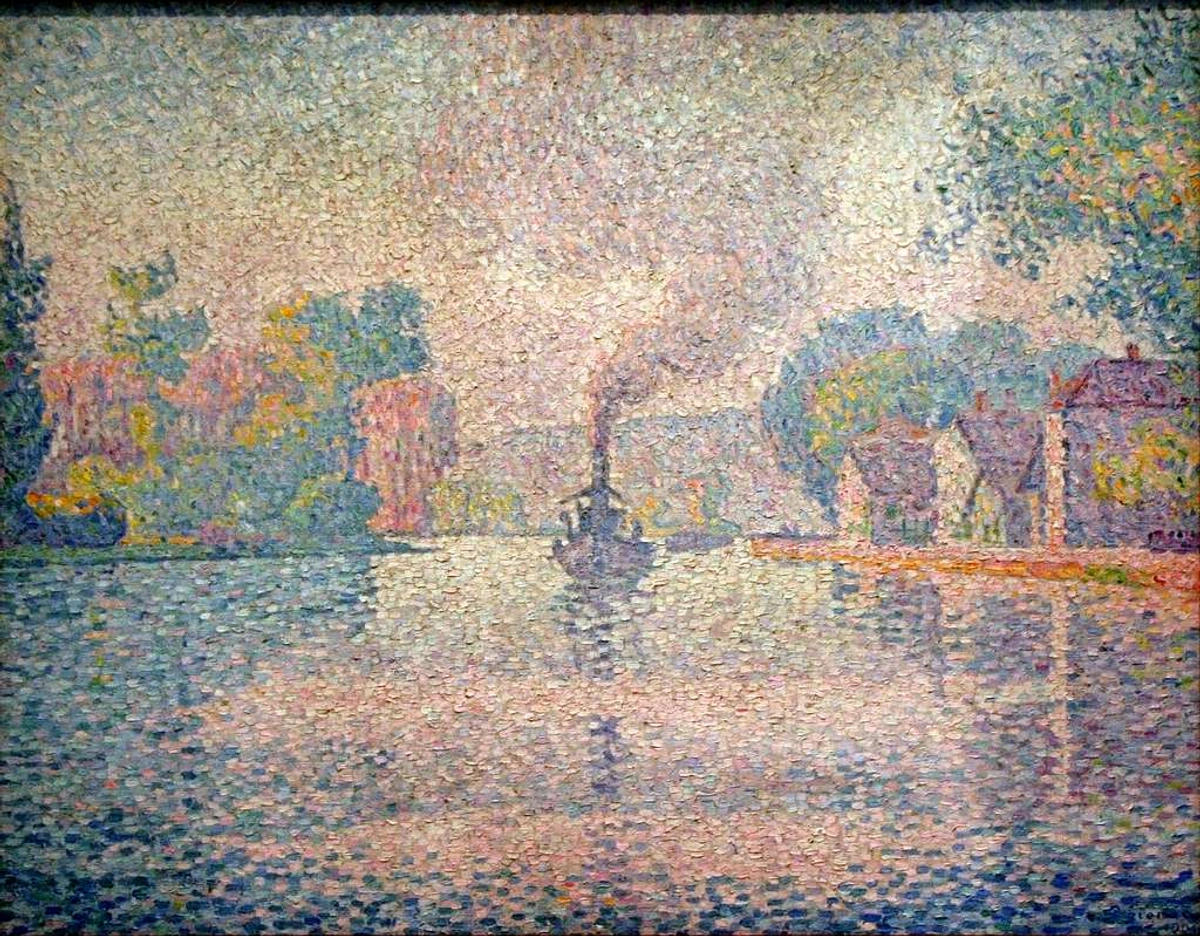
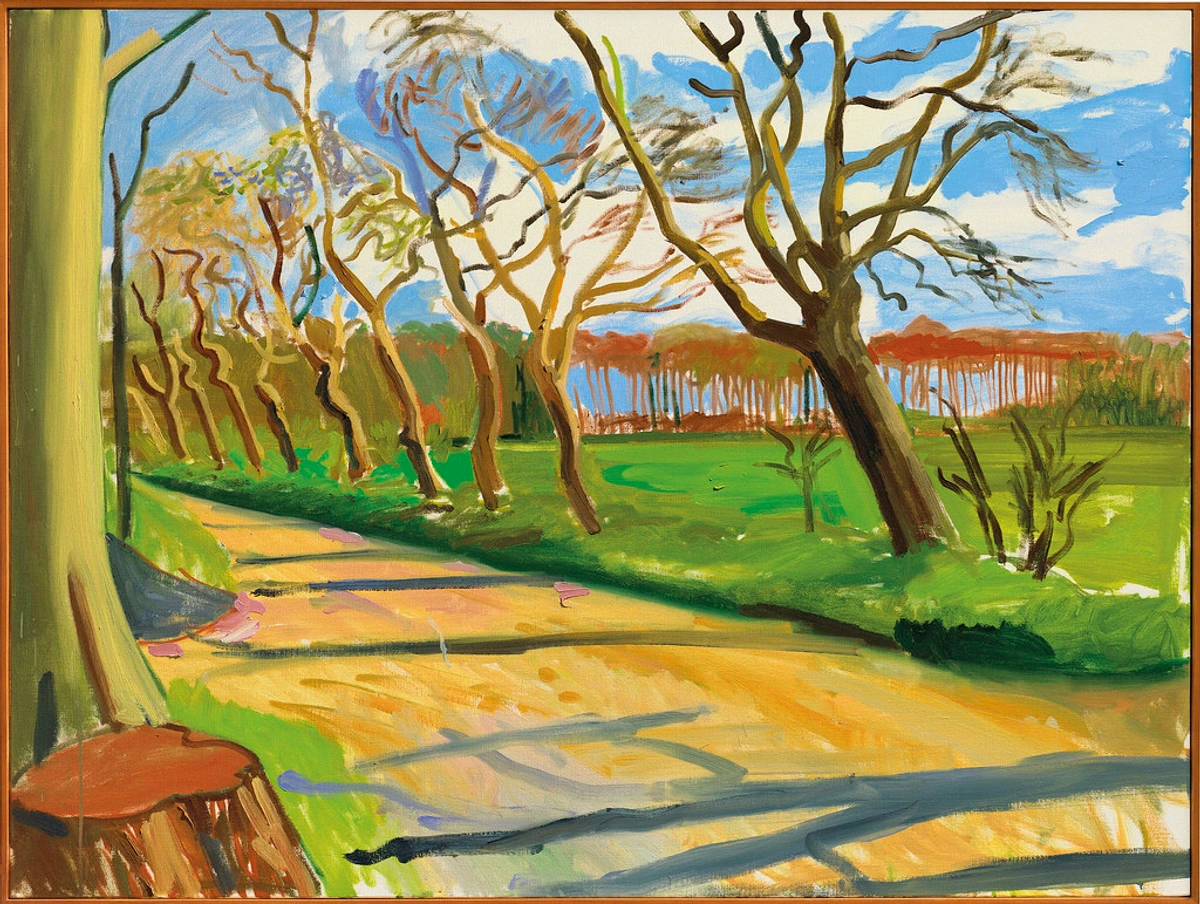
Think of it like this: you wouldn't use the same word to describe the feeling of grass and the feeling of tree bark. Your brush shouldn't either. A thin, dry-brush scumble can convey the roughness of a dirt path. A short, choppy stroke can create the busy texture of distant leaves. A loaded, twisting stroke can shape the roundness of a tree trunk, while a light, flicking motion can suggest the shimmer of leaves in a breeze. Your vocabulary of strokes becomes the very soul of the painting, translating the flatness of canvas into the experience of a world.
Next time you paint, try this: spend a session focusing only on mark-making. Forget the final image. Just practice speaking with your brush. Fill a small canvas with a patchwork of textures. Create a chart of sensations. Make swirls for clouds, stipples for gravel, long vertical drags for smooth bark, and quick dashes for receding fields. This "brushstroke diary" serves as an invaluable reference, a personal dictionary of mark-making that you can consult and expand upon with every painting you make.

Interpreting the Landscape Through Expressive Strokes
Pissarro's brushwork wasn't arbitrary; it was tied directly to his observations of the natural world. He understood that a field of young wheat doesn't move or catch the light in the same way as a field of mature, heavy-headed grain. One demands quick, upward strokes full of life and energy; the other, heavier, more weighted marks conveying a sense of fullness and harvest.
Learning to choose your strokes based on the character of your subject is a skill that takes time, but like learning a new language, it starts with a few basic "words" or strokes. Practice creating a variety of marks on a spare canvas or board before each painting session. Loosen up your wrist and arm. Experiment with different pressures, angles, and speeds. Notice how changing the direction of a stroke can completely alter the feeling of a simple field of grass.
Consider creating a personal "brushstroke dictionary." Take a small canvas or panel and divide it into a grid. In each square, practice a different stroke: short and choppy, long and flowing, thick and buttery, thin and scumbled. Then, label them. This sounds silly, but it's incredibly effective. You'll start to build a vocabulary. When you're out in the field and you see a patch of gravel, you'll think, "Ah, that needs the scumbled stroke." When you see a field of reeds bending in the wind, you'll remember the long, flowing mark you practiced. This transforms brushwork from a technical chore into a form of descriptive writing, where every mark is a deliberate and meaningful word in your visual story.

The Strategic Pause: Knowing When to Stop
Perhaps one of the hardest lessons Pissarro's work teaches us is knowing when to leave a stroke alone. That perfect, energetic stroke describing a shock of autumn grass? If you go back over it to "fix" it, you risk losing its life and freshness. Pissarro's paintings are full of strokes that are left as they were first laid down, preserving their vitality and directness. Honestly, it feels awkward at first, like trying to write with your non-dominant hand. But once you get a few 'words' in your vocabulary, your whole painting starts to have a more authentic voice. This authentic voice is what makes one artist's work distinguishable from another's, even when painting the same scene. It turns technique from a rigid set of rules into a personal handwriting.
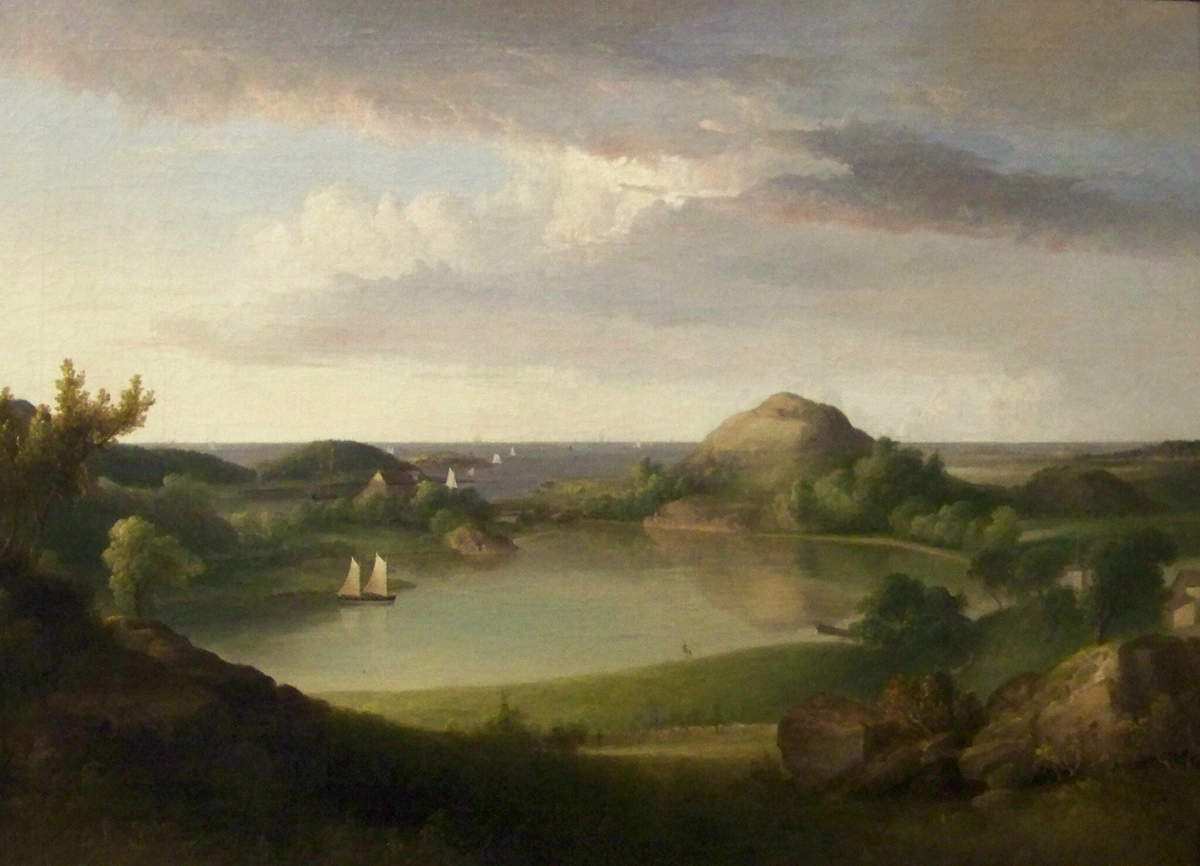
This brings us to a crucial concept: the power of the 'unfinished.' We're so conditioned to believe a painting must be polished, every area filled in, every question answered. But look at Pissarro's work up close. You'll see bare canvas, thin washes next to thick impasto, searching lines that were never erased. This isn't a failure to finish; it's a deliberate choice to preserve the immediacy of the moment. It's a record of the painting process, not just the final product. It tells the viewer, "This is where I was looking," and "This stroke was my honest, first response." It invites the viewer's imagination to fill in the blanks. This can be incredibly liberating. It shifts the goal from creating a perfect, static object to capturing a living, breathing moment in time. Sometimes, the most powerful statement you can make is knowing exactly when to put the brush down and just walk away.
Pissarro Tip #3: The Light Is the Subject. Everything Else Is a Prop.
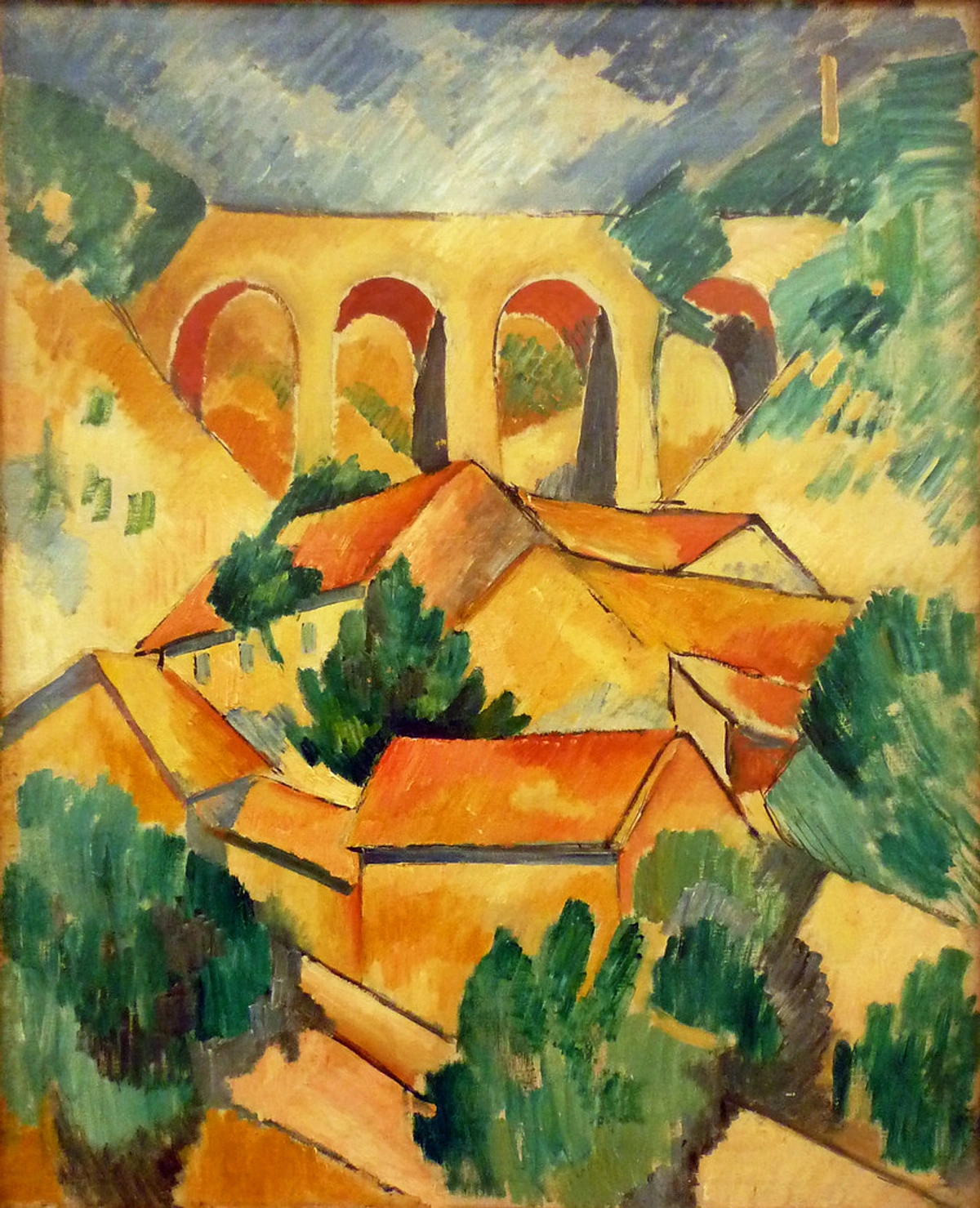
This might be the single most important takeaway. For Pissarro, and for all the great landscape painters, the subject isn't the mountain or the barn. The subject is the light falling on the mountain and the barn. This subtle shift in mindset is a game-changer. It reframes your entire purpose. You are no longer an architect drawing a map of objects; you are a poet describing the ephemeral dance of photons. The barn is merely the stage; the light is the performer.
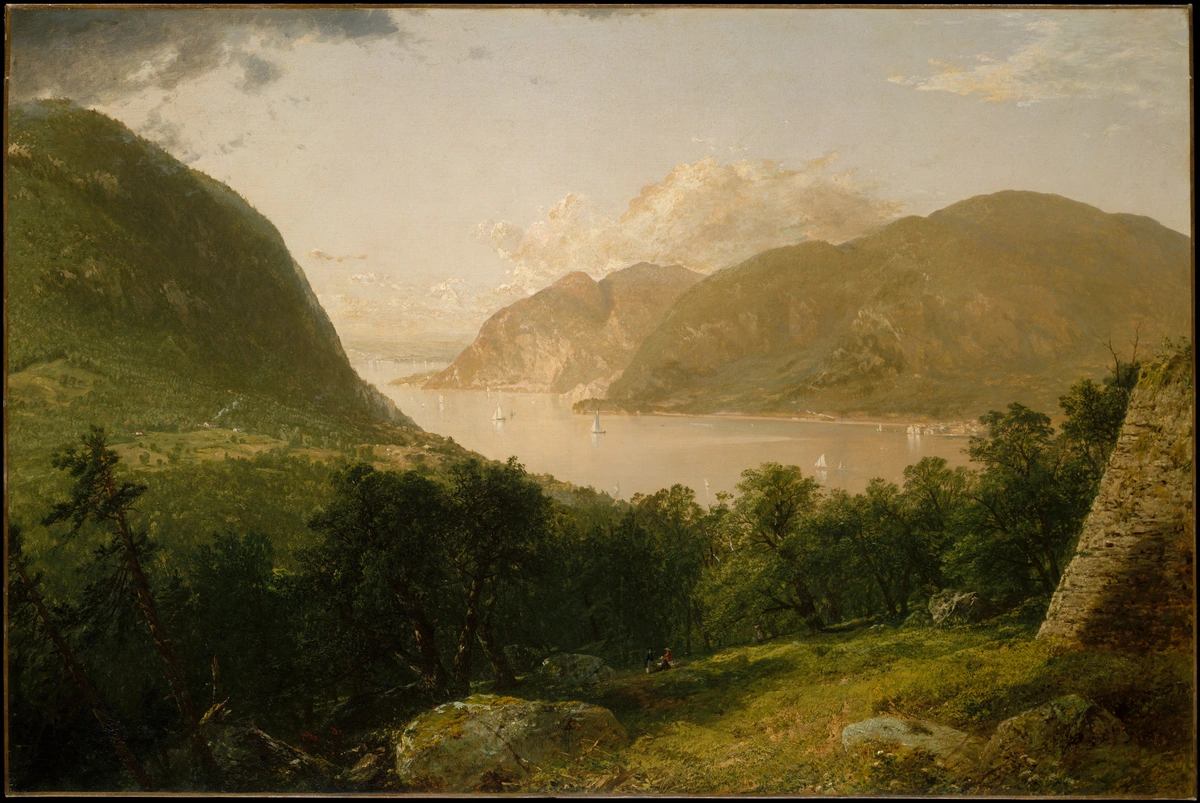
The quality of light defines the painting. Morning light is long and golden, stretching shadows. Midday light is harsh and direct, bleaching colors and hiding subtlety. Evening light is warm and sentimental, wrapping everything in a soft glow.
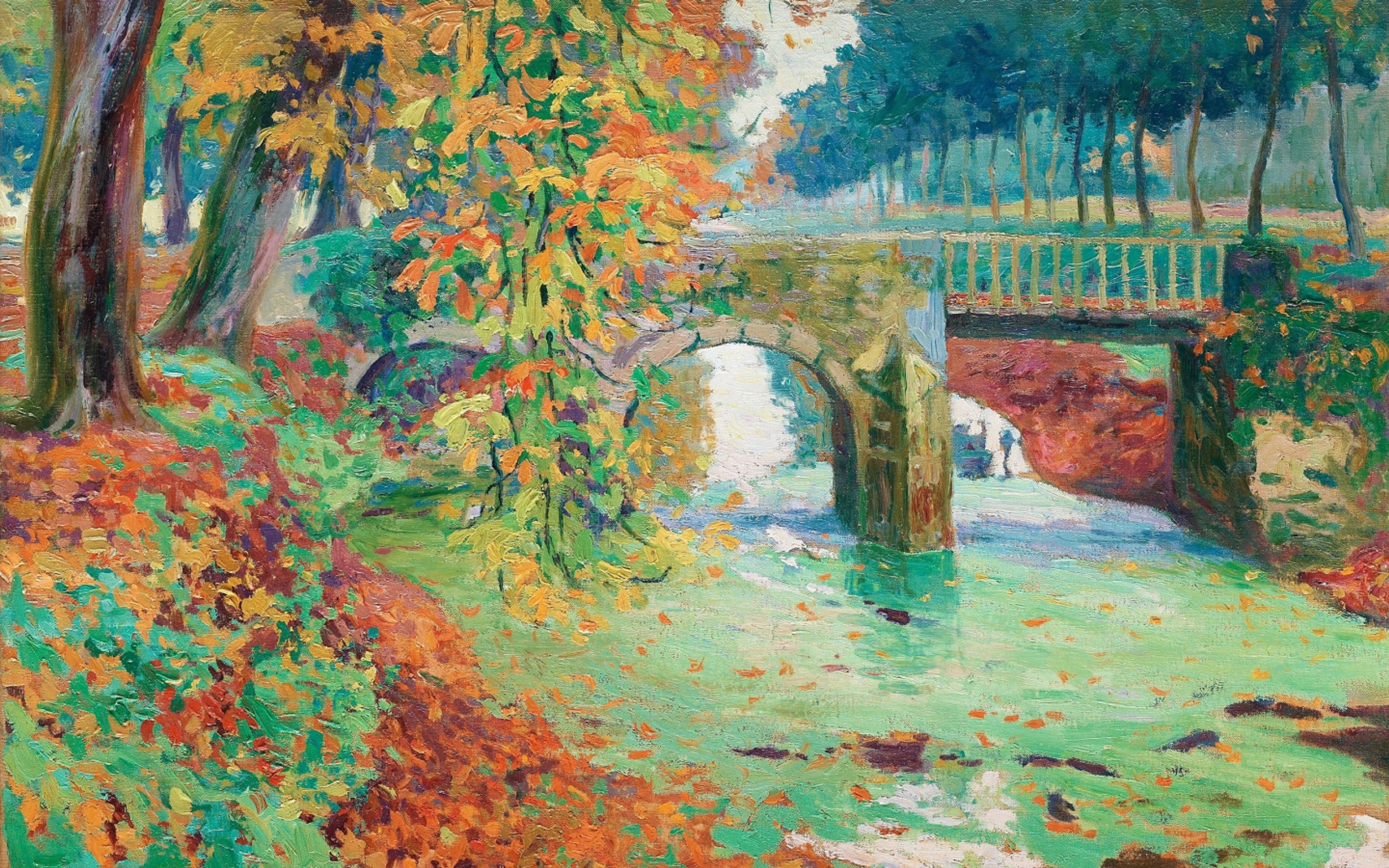
Pissarro would often paint a single motif repeatedly to study this very phenomenon. Two paintings of the same bridge, one in the crisp morning air, one in the hazy afternoon heat, look like completely different worlds. He wasn't just painting the bridge; he was painting the atmosphere.
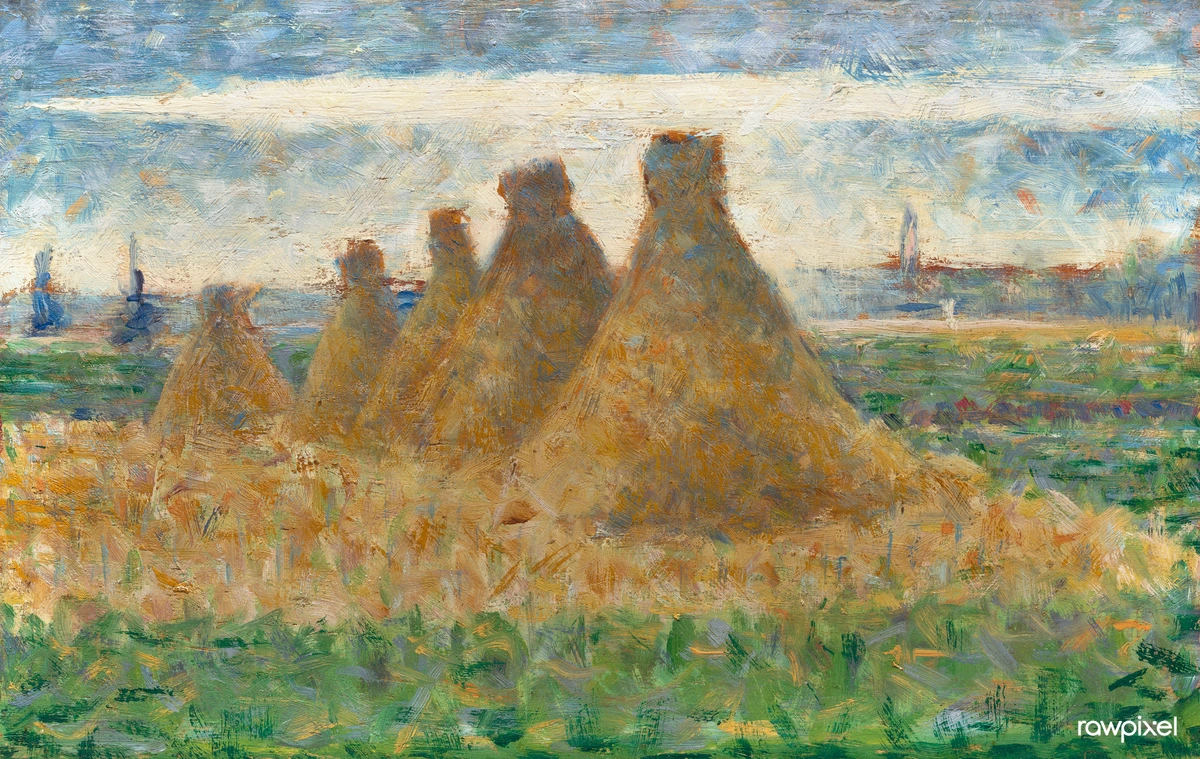
To put this into practice, pay attention to the time of day. If you're painting a scene at 2 PM, don't invent the long shadows of sunset because they look more dramatic. Commit to the truth of that harsh midday light. Show the clear, sharp contrasts. Embrace its particular personality. Your work will become much more believable and compelling for it. This commitment to a moment's specific truth builds a profound trust with the viewer. It tells them you aren't selling a generic fantasy; you're sharing a genuine, observed experience.

A Practical Guide to Reading Light's Narrative
Understanding light is more than just knowing the time of day; it's about reading the subtle clues that tell the story of a specific moment. Let's break down the common types of light you'll encounter in landscape painting and how Pissarro might have approached them:
Time of Day | Light Quality & Color | Characteristics | Pissarros Approach |
|---|---|---|---|
| Golden Hour (Early Morning/Late Afternoon) | Warm, golden-orange, low and diffused | Long, dramatic shadows; intense warm highlights; cool, blue-violet shadows. | Emphasized the warmth with thick, buttery strokes in highlights and cool, transparent washes in shadows, creating powerful temperature contrasts. |
| Midday Sun | Stark, white-blue, high and direct | Short, intense shadows; bleached-out colors; high contrast between sunlit areas and deep shadows. | Simplified forms into strong light and dark patterns. Used the white of the canvas or thin washes for sunlit areas, building up texture in the shadowed sections. |
| Overcast/Diffuse | Cool, silvery-grey, soft and shadowless | Minimal contrast; colors appear more muted and local (their actual color). | Focused on subtle shifts in value and temperature. Built up forms through delicate, layered strokes rather than relying on strong light/dark patterns. |
| Stormy/Shifting | Dramatic, high-contrast, with flashes of warm light against cool darks | Wind-blown shapes; dark, brooding skies; sunlit patches on a dark landscape. | Captured the energy with dynamic, directional brushwork. Isolated bright areas with thick impasto, contrasting them against thinly washed, darker passages. |
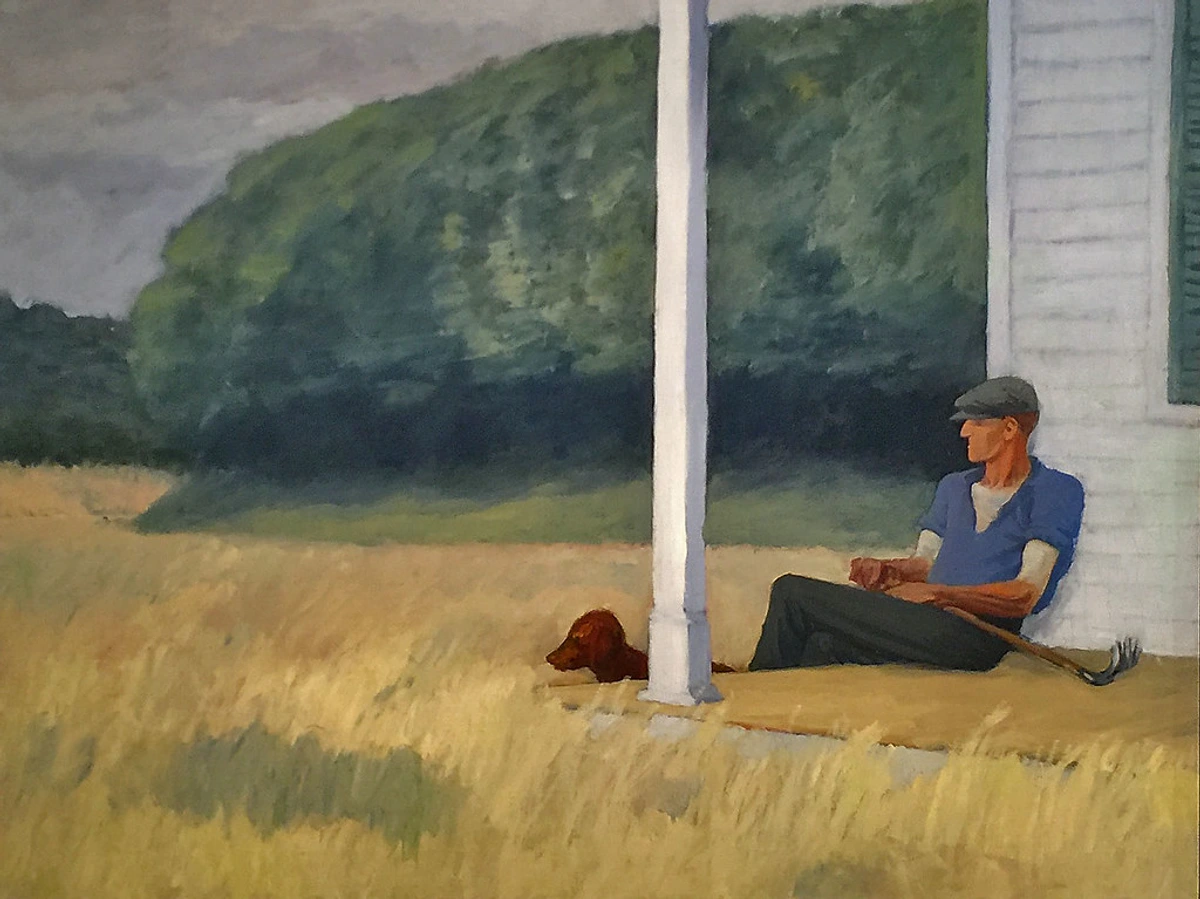
This table isn't just academic. It's a field guide. By learning to identify the type of light you're painting in and understanding how Pissarro translated that light into specific painterly decisions, you're equipping yourself to make bolder, more authentic choices on your own canvas.
The Magic of Series Painting: Seeing Through Pissarro's Eyes
Perhaps no technique is more central to Pissarro's practice than painting in series. He would return to the same subject—a corner of a garden, a village street, a cluster of trees—dozens of times under varying conditions. This wasn't repetition; it was deep exploration, a way of peeling back the layers of a place's personality. He understood something profound: that familiarity does not breed contempt, but rather, a deeper kind of knowing. It allows you to move past the novelty of a place and start to see its essential character, the way its mood shifts not just with the weather, but with the light of each passing hour.
Each painting in a series captures a fleeting moment, but together, they tell a much larger story about the passage of time, the cycle of seasons, and the ever-changing face of a single, humble piece of the world. In his series of the Boulevard Montmartre or the banks of the Seine, we don't just see different times of day; we see how industry, weather, and life itself transform the same patch of ground. It's a cinematic approach to painting, where each canvas is a single frame in a long, quiet film about the passage of time.
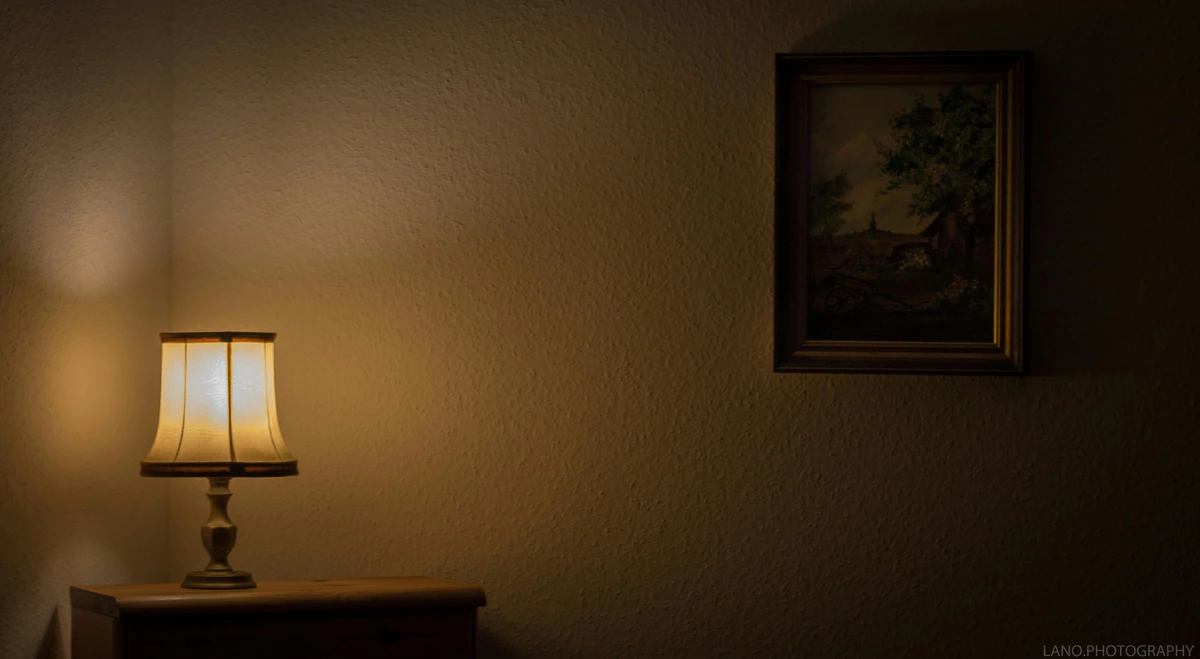
The Haystacks series is probably the most famous example of this method taken to its zenith, but the principle remains the same. The object itself—the haystack, the cathedral, the poplar tree—becomes almost irrelevant. It's just a fixed point, a constant against which the infinite variations of light and atmosphere can be measured. It's a lens through which to observe the ephemeral. This practice teaches you to see the world not as a collection of static objects, but as a fluid, ever-changing performance of light. It's a profound meditation on time, permanence, and the nature of seeing itself. And it all starts with the simple, radical act of looking at the same thing, over and over and over again.

Capturing Time and Atmosphere: Painting the Unseen
When you paint a landscape, you're not just painting what you see; you're painting the atmosphere, the humidity in the air, the time of year. Pissarro's winter scenes feel crisp and cold because of his palette—lean blues, subdued earth tones, touches of pink and violet in the snow. His summer scenes are rich and heavy with the warmth of the sun, built up with thick, lush strokes of green and gold.
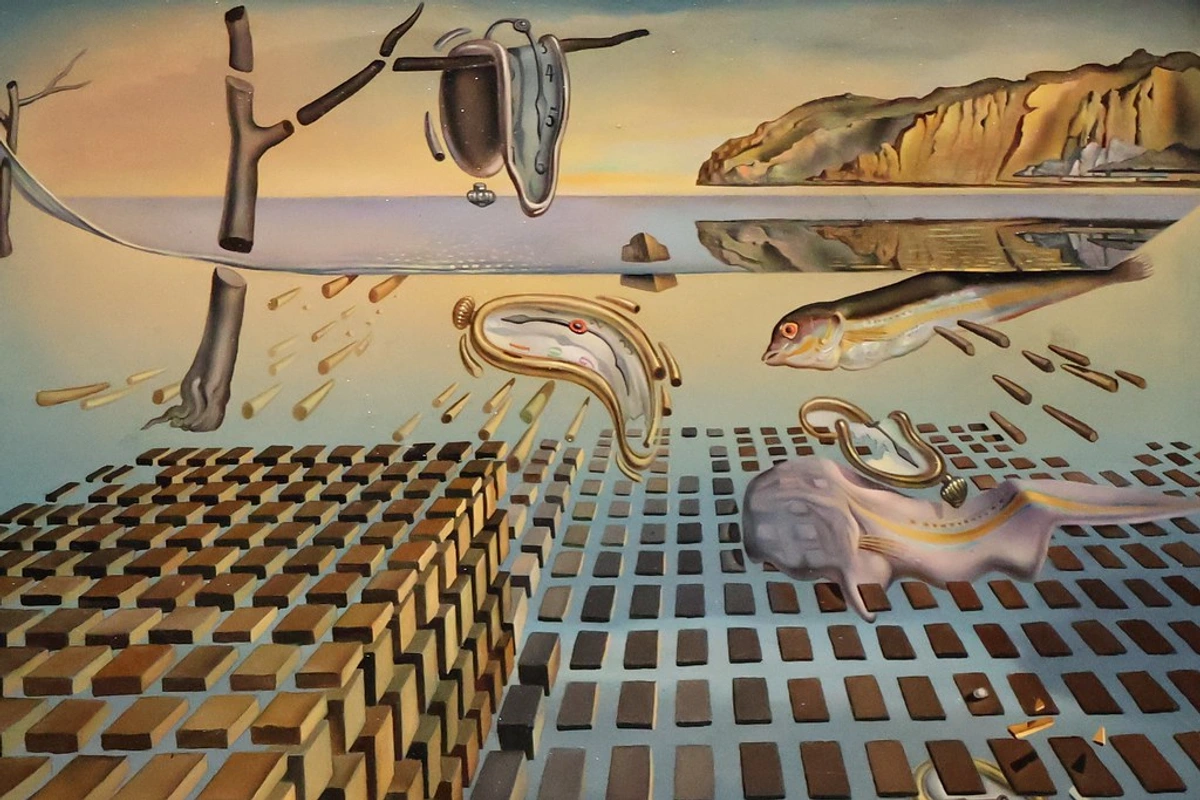
Capturing this feeling of atmosphere requires conscious choices:
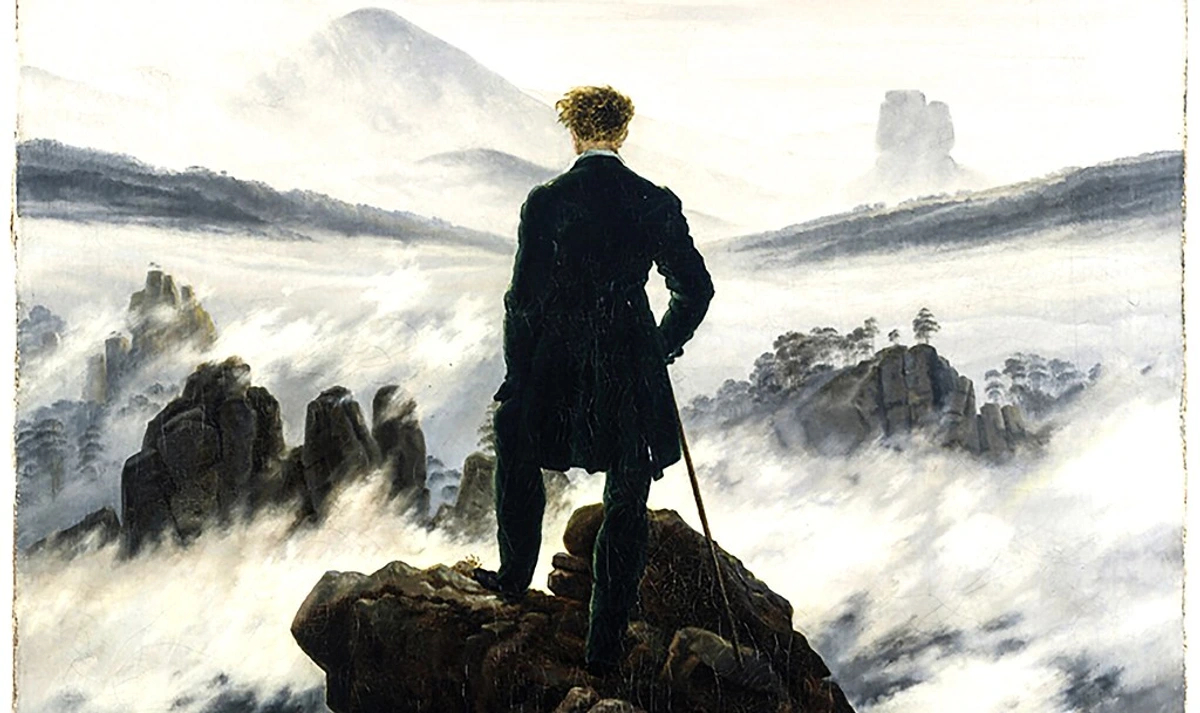
- Color Temperature: Is the overall feeling warm or cool? Lean into that with your palette.
- Edge Quality: Are objects crisp and clear (a dry, sunny day) or soft and hazy (a humid or foggy day)?
- Saturation: Are colors brilliant and intense, or muted and grayed down?
By asking yourself these questions before you even pick up a brush, you're setting an intention for your painting, ensuring that it will capture not just a view, but a specific, unrepeatable sliver of time and sensation.
Start Small, Start Local
You don't need a trip to the French countryside. Pissarro found endless inspiration in the villages and fields right outside his door. I've found my best recent subjects are the areas I walk my dogs in every day, like the spots around the /den-bosch-museum. You pass a place a hundred times, and on the hundred-and-first, the light hits it just right and you see it for the first time. It’s in these unremarkable places that a remarkable kind of seeing can occur. When the novelty of a location wears off, you’re forced to look past the superficial and into the essence of the place—the way the light slants across that particular brick wall, the specific shade of moss on the north side of a certain oak, the rhythmic pattern of fence posts receding into the distance. Genius is often just the act of paying closer attention to something everyone else overlooks.
Find a place near you—a park, a quiet street corner, your own backyard—and commit to painting it multiple times. Go back in different weather, at different times. This practice, of deep looking at a familiar place, is the heart of what Pissarro was all about. It’s about building a relationship with a piece of the world, not just taking a snapshot. A snapshot freezes a single instant; a series of paintings reveals the soul of a place across the relentless march of time. It teaches you that "finishing" a painting is less important than deepening the conversation with your subject.
This might sound limiting, but it is, in fact, one of the most liberating artistic decisions you can make. When you remove the pressure of finding the "perfect" picturesque subject, you free yourself up to see the beauty that's already there. The way the morning sun backlights the weeds growing through a crack in the pavement can be just as profound a subject as a grand mountain vista. It's all in how you see it. By focusing on the local, the overlooked, and the familiar, you train yourself to find inspiration everywhere. You learn that the world is not divided into "painterly" and "non-painterly" subjects, but that everything under the sun is a worthy subject if you are willing to look at it with enough curiosity and care.
Frequently Asked Questions (FAQ)
Q: I'm not great at drawing buildings and people. Can I still paint landscapes like Pissarro? A: Absolutely. For buildings, think of them as simple arrangements of cubes, pyramids, and cylinders—simple solids catching light. For figures, they're often just small accents of color and form that give a sense of scale and life. They don't need to be detailed portraits. Pissarro often simplified complex forms into basic geometric shapes. Focus on the play of light and color first. Get the big shapes and values right, and you can always add or refine details later. The most important thing is capturing the overall feeling of the scene. For buildings, think of them as simple arrangements of cubes, pyramids, and cylinders—simple solids catching light. For figures, they're often just small accents of color and form that give a sense of scale and life. They don't need to be detailed portraits.
Q: What if I can't paint en plein air due to weather or my location? A: Working from photos is a valid tool, but it comes with a warning. Photos flatten scenes and distort color—especially in shadows, which cameras often render as dark, lifeless voids. If you must use a photo, use it as a roadmap, not a strict rule. Refer back to your memory of the real place and adjust the colors and values to match what you felt was there. Better yet, do small color sketches on location and take photos for reference, combining the two. This hybrid approach gives you the structural information of the photo with the authentic color memory from being there. The camera is a mechanical eye; your memory is a human one, infused with emotion and atmosphere. Trust the human eye to correct the machine's shortcomings.
Q: What's the best way to start a Pissarro-inspired landscape? A: The way Pissarro often did: not with a detailed pencil drawing, but with a loose, thin wash of paint (often a neutral earth tone like Burnt Sienna or Raw Umber) to block in the major shapes. Think of it as a basic roadmap of lights and darks. From there, build up your color and texture with more deliberate brushstrokes, letting the underpainting peek through in places. This "wet-on-dry" or "fat-over-lean" approach is a much more painterly way to begin and allows you to establish a strong value structure from the very start.
Q: My landscapes always look messy and muddy. What am I doing wrong? A: This is a common problem, often caused by two things: over-mixing colors on the palette until they become a grayish sludge, or over-blending them on the canvas. Pissarro's work avoids muddiness because he used clean, separate strokes of color that mix optically in the viewer's eye. Try placing two colors side-by-side on the canvas instead of mixing them completely on your palette. Let them sing next to each other. Another trick is to clean your brush thoroughly between picking up very different colors, especially when moving from light to dark areas or warm to cool ones. And finally, a limited palette of just 4-6 colors forces you to mix cleanly and creates a more harmonious painting overall. Mud is the graveyard of over-enthusiasm; restraint and decisiveness are your best tools to avoid it. Be brave enough to place a stroke and then leave it alone.
Q: How did Pissarro create such a sense of depth in his paintings? A: Pissarro was a master of atmospheric perspective. He understood that as objects recede into the distance, they lose contrast, detail, and saturation, and they tend to take on a cooler, bluer hue. He applied this knowledge deliberately:
- In the foreground: Stronger contrasts, more detailed textures, and more intense, saturated local color.
- In the middle ground: Less contrast than the foreground, more generalized shapes, and slightly grayer or cooler color mixtures.
- In the background: The weakest contrasts, the softest edges, and the most muted, blue-violet hues (especially for distant hills).
By carefully controlling these elements, he created a convincing sense of deep, receding space, even in relatively small paintings.
Q: How important was preliminary drawing for Pissarro? A: Generally speaking, Pissarro and the other Impressionists de-emphasized detailed preliminary drawing, preferring to "draw" directly with the brush. They were more interested in capturing the immediate sensation of a scene than in creating a perfectly rendered, linear outline. They'd often start with a loose charcoal or pencil sketch to establish major placements, then move directly into blocking in big shapes with paint. This approach keeps the process spontaneous and painterly. You can often see the initial, searching lines beneath the paint in his work, a testament to this direct and exploratory way of working.
Key Lessons Learned from Camille Pissarro
Embracing Pissarro's methods isn't just about adding techniques to your toolbox; it's about undergoing a fundamental shift in how you approach the act of painting itself.
- Observation is Supreme: The greatest tool an artist possesses is a keen, patient eye. Technique serves observation, not the other way around.
- The Brushstroke is a Unit of Thought: Every mark you make should be a deliberate decision carrying information about form, light, and texture.
- Process Over Product: The goal isn't always a "finished" painting. It's about the deep engagement with a place and a moment. The finished pieces are the byproduct of that engagement.
- The Ordinary is Extraordinary: You don't need epic vistas. The most profound artistic discoveries are often found in the places we see every day.
- Paint the Light, Not the Object: This change in mindset is the key to creating work that feels alive and atmospheric.
- Work in Series: A single painting captures a moment, but a series tells a story about time, change, and the life of a place. It transforms individual canvases into chapters of a larger, more profound narrative.
Reflecting on these principles has fundamentally changed how I interact with the world around me. Every walk, every glance out the window, becomes an opportunity for observation and study.
Finding Your Own Path: Beyond Pissarro
While Pissarro offers an incredible foundation, remember that his ultimate goal was not to create legions of imitators. It was to encourage artists to see and think for themselves. Once you feel comfortable with his core principles, begin to interpret them through the lens of your own personality and your unique corner of the world. The goal isn’t to paint like Pissarro, but to learn to see as Pissarro saw—with curiosity, humility, and unwavering attention—and then to translate that unique vision through the filter of your own life and time.
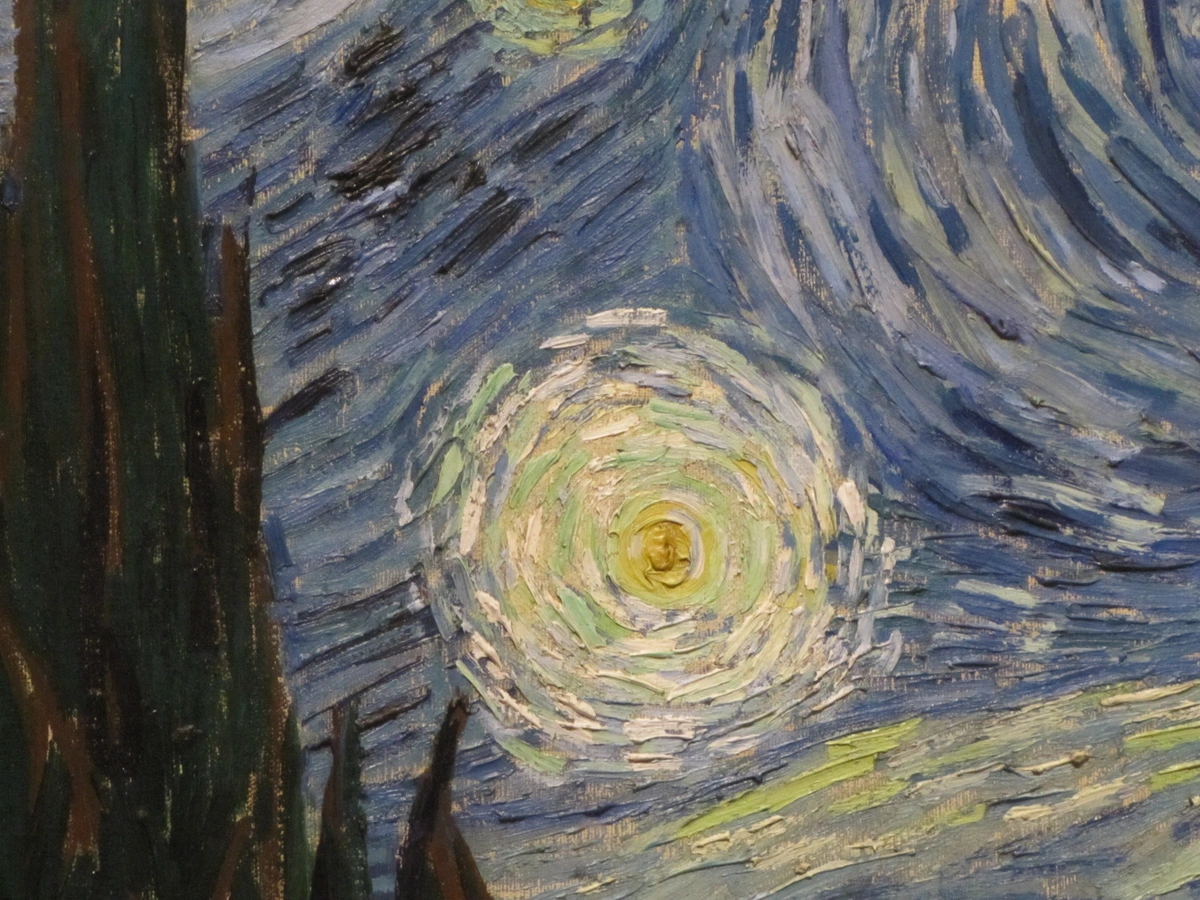
Maybe your brushstrokes will be even bolder. Perhaps your color sense is more vibrant or more subdued. The key is to let your authentic voice emerge from a foundation of disciplined observation and thoughtful mark-making. Pissarro's legacy is a set of tools; what you build with them is entirely, wonderfully, up to you. The techniques are the grammar, but your experience is the poetry. Master the rules, and then feel free to break them in the service of your own unique truth.
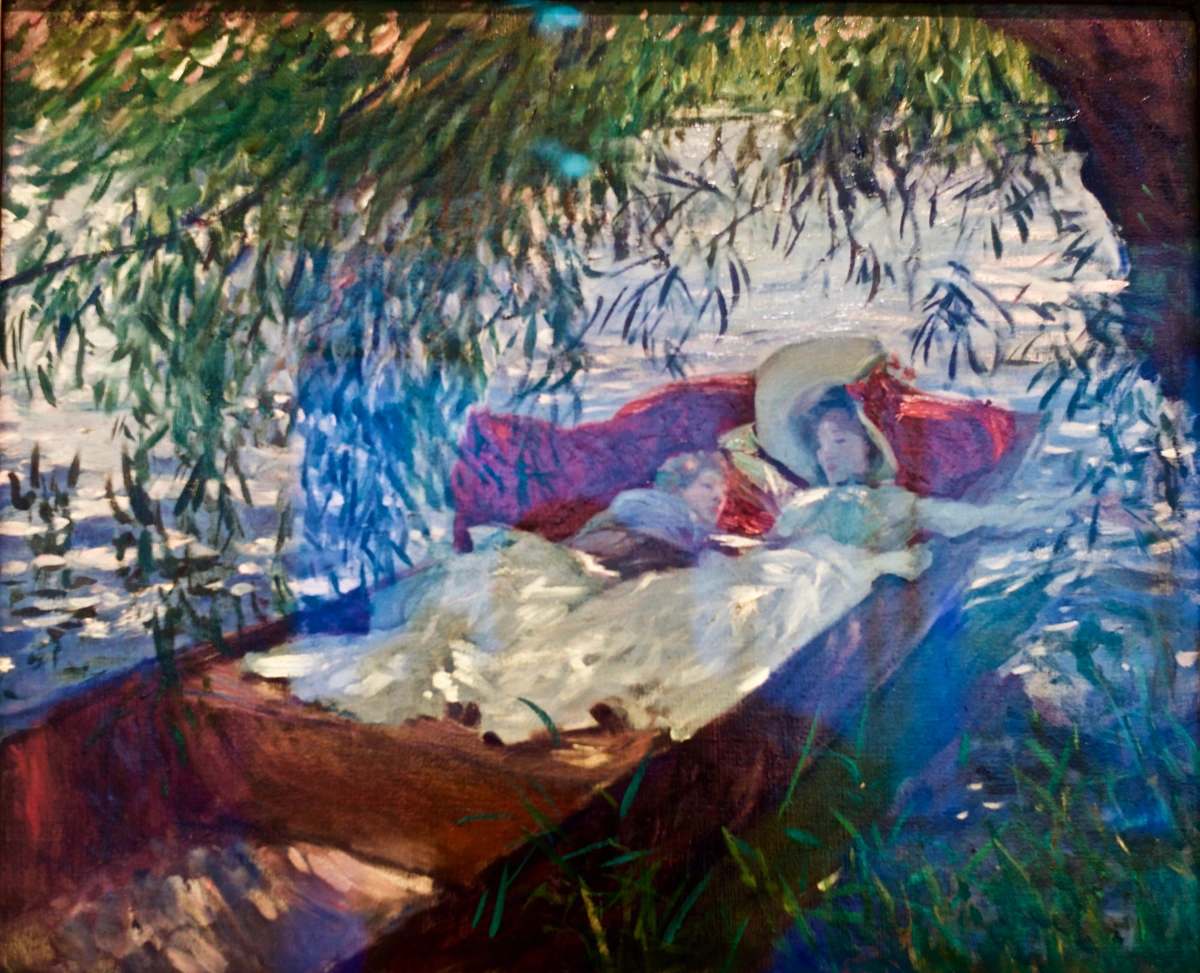
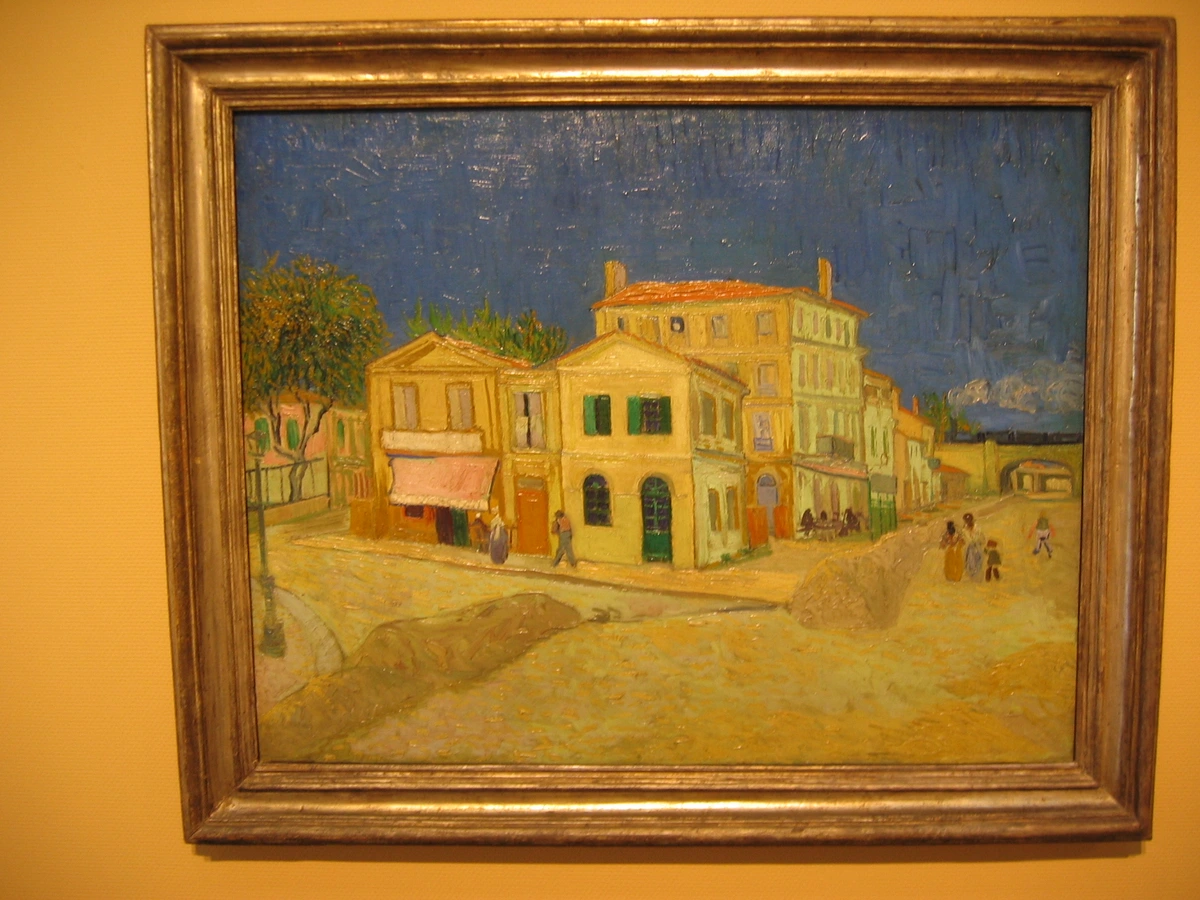
Consider exploring how other artists interpreted these same ideas. Look at the work of his contemporaries and successors. A great next step is to study the most famous post-impressionist painters to see how Cézanne, Van Gogh, and others pushed these concepts even further, breaking new ground in color, form, and emotional expression.
A Final Invitation: Start Your Own Journey
This entire article has been an invitation to see the world as Pissarro did—not as a static postcard to be copied, but as a vibrant, ever-changing performance of light, color, and form. The techniques are learnable, but the true magic lies in the shift of perspective.
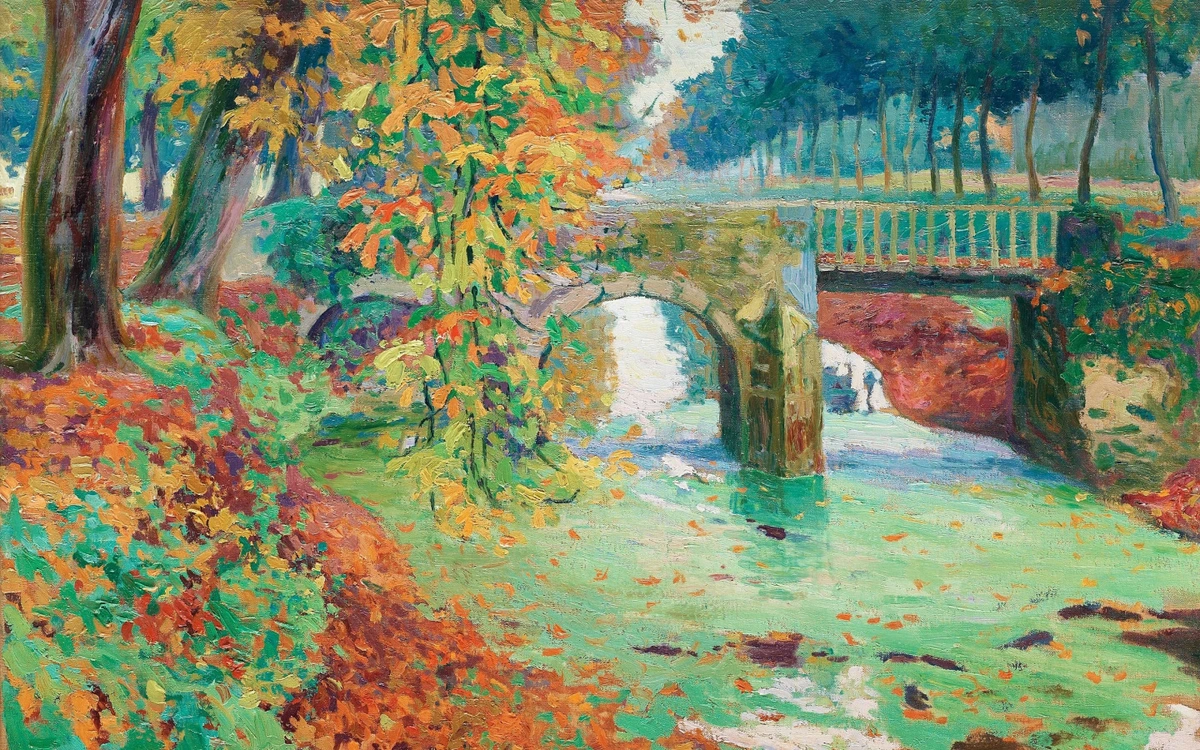
If you're feeling inspired and want to bring a piece of that contemplative beauty into your own life, you can browse and buy landscape-inspired art prints and originals that carry this spirit of thoughtful observation and painterly expression. Supporting other artists on their journeys is one of the best ways to keep this tradition alive.






Finally, remember that every artist's journey is unique. To put Pissarro's life and work into a broader context, you can always explore a comprehensive art history timeline to see how his contributions fit within the grand story of human creativity.
There's a whole world of light waiting right outside your door. Pick up your brush and start the conversation. It’s a conversation that will change not only your art but the very way you move through the world. You will never see a patch of weeds, a shadow on a wall, or the sky at dusk the same way again. And in that new way of seeing, you'll find a deeper connection not just to art, but to the very act of being alive.