What is Ancient Egyptian Art? A Guide to Its Symbols & Meaning
Explore the world of Ancient Egyptian art, from its stiff, iconic style to its deep symbolism. Understand why they drew people that way and what it all meant.

What is Ancient Egyptian Art? More Than Just Mummies and Gold
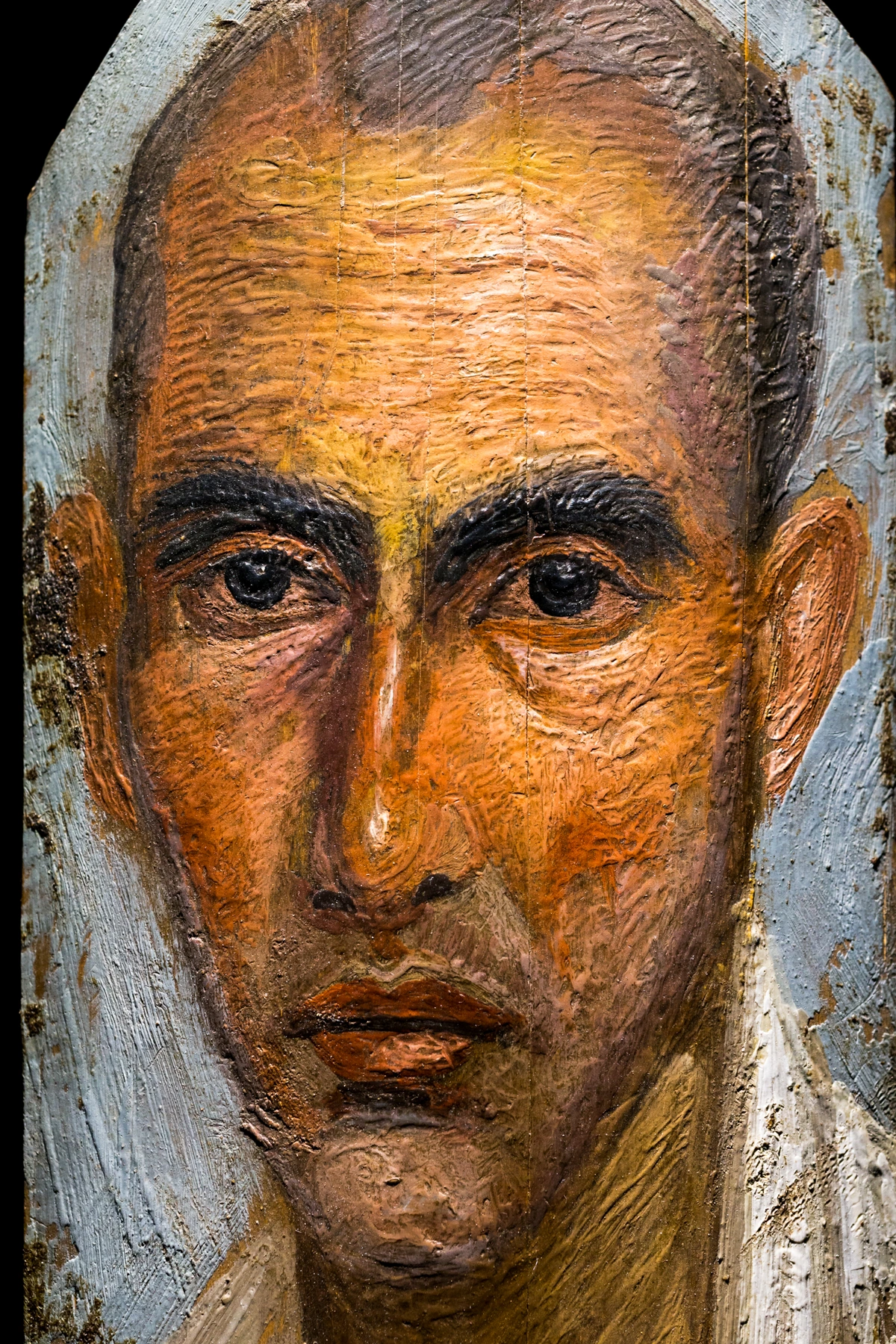
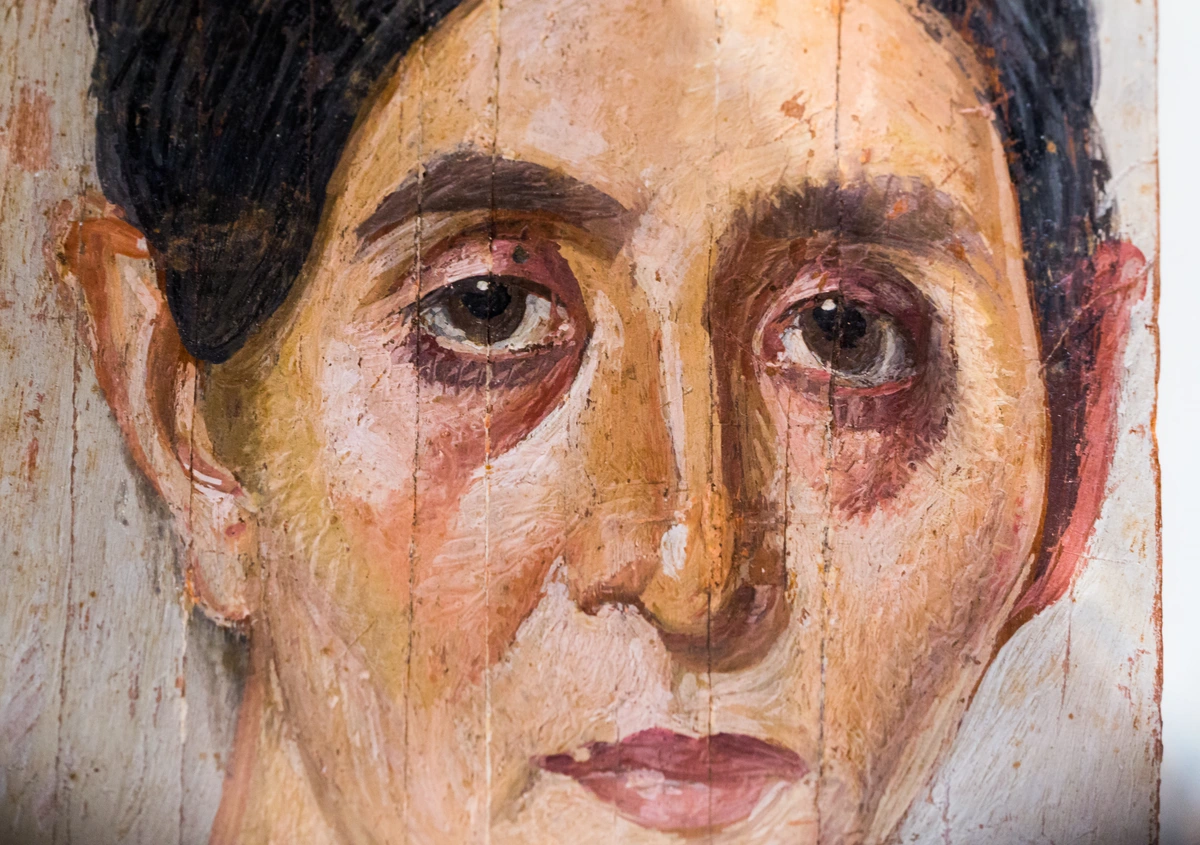
I’ll be honest, for a long time, I thought Ancient Egyptian art was... well, a bit boring. Stuffy, even. You see the gold masks and the stiff, sideways-walking figures in museums, and you think, 'Okay, I get it. Pharaohs, gods, lots of eyeliner.' It felt incredibly rigid, a world away from the expressive, emotional art I gravitate towards. But then, I stumbled upon the 'Fayum mummy portraits,' and everything changed.
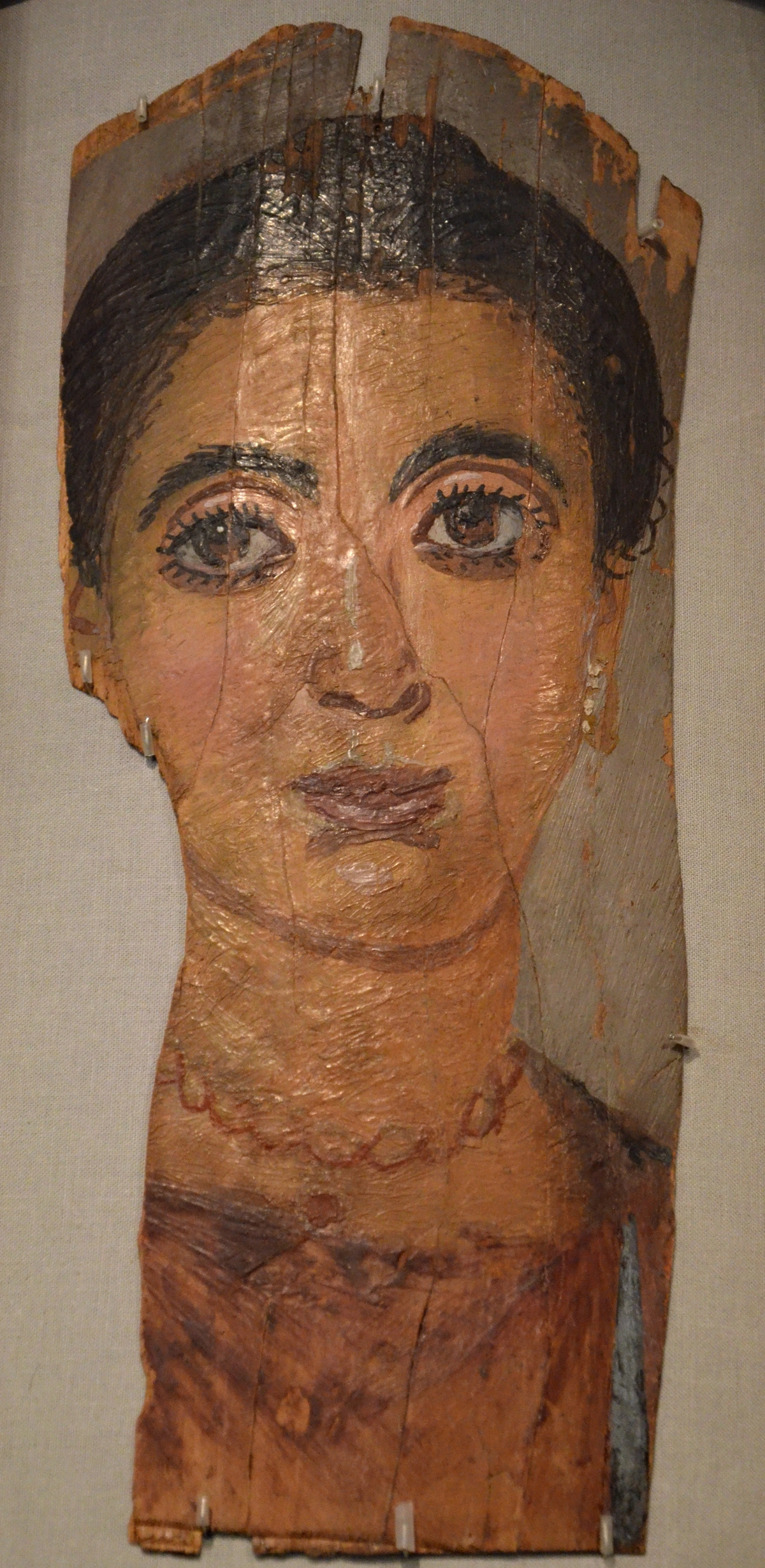
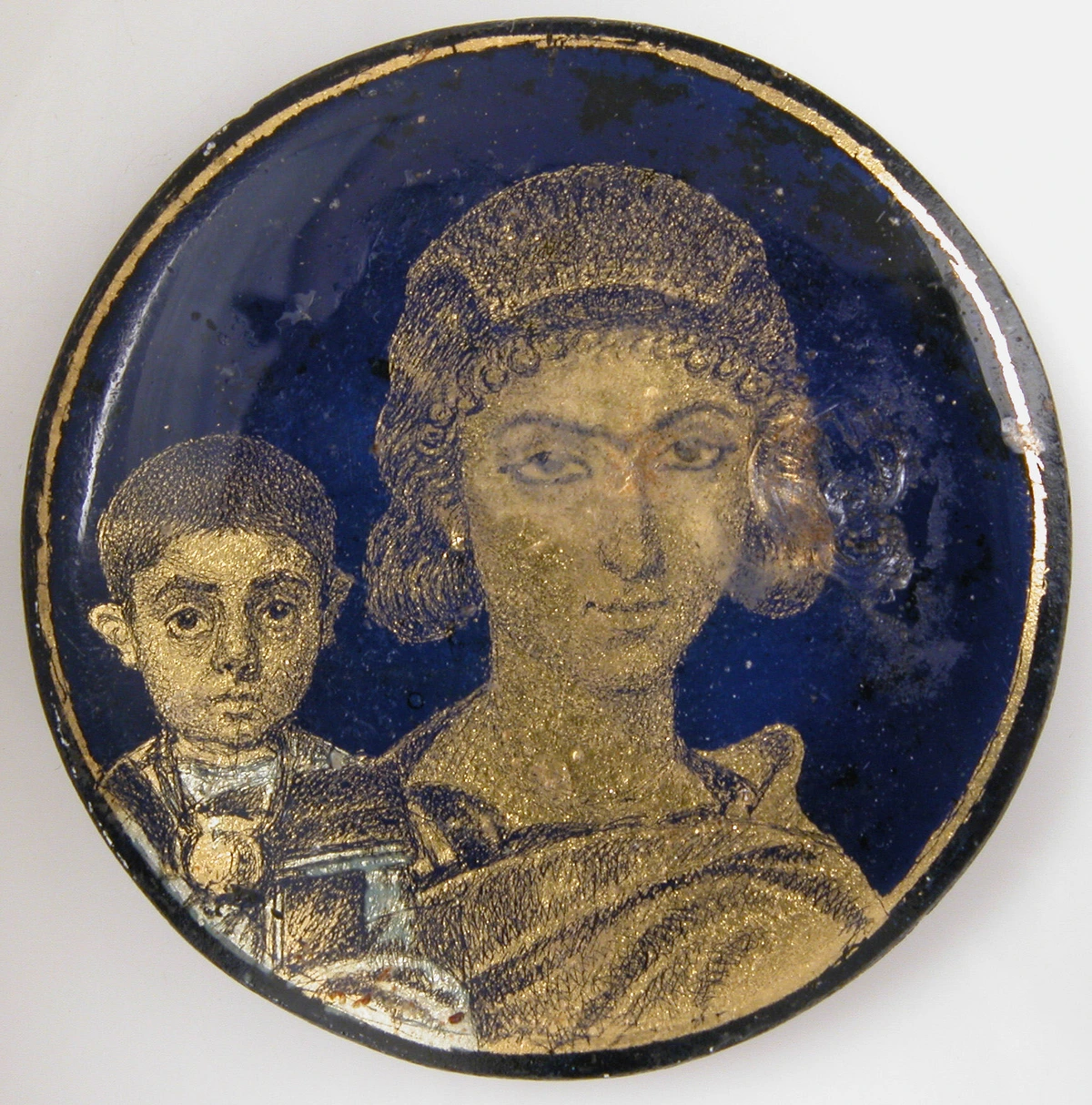
These weren't stiff caricatures; they were paintings of real people, created during the Roman period in Egypt. They had laugh lines, weary eyes, and distinct personalities. Seeing them made me realize I had misunderstood the whole point. Egyptian art isn't about capturing a fleeting moment of reality as we see it. It's about capturing an idea of eternity. And once you get that, the whole subject cracks wide open.
Think about it for a moment: if you were creating art that had to last forever, would you focus on the temporary details of a single moment, or would you try to capture the eternal essence of something? The Egyptians chose the latter. Their art wasn't meant to be a snapshot in time but a blueprint for eternity—a way to ensure that life, food, power, and happiness would continue forever in the afterlife.
This eternal perspective explains so much about why Egyptian art looks the way it does. The stiff poses, the idealized proportions, the endless repetition of symbols—it's all part of a sophisticated system designed to cheat death. Every element was carefully calculated to serve its purpose in the afterlife, making Egyptian art perhaps the most function-driven art form in human history.
The Core Rules of the Game: Why It Looks The Way It Does
Before we dive deeper, let me share a little secret that changed everything for me: Egyptian art wasn't created by "artists" in the way we think of them today. These were highly trained craftspeople who followed strict guidelines passed down through generations. Their goal wasn't self-expression but perfection—creating works that would endure for millennia. This collective approach explains why Egyptian art remained so consistent across thousands of years. It's like they had a universal artistic language that everyone understood and followed perfectly.
What's fascinating is that these "artists" weren't considered free-thinking creators but rather skilled technicians. They were part of a vast, organized system of workshops that produced everything from monumental statues to tiny amulets. The profession was hereditary—fathers taught sons, and mothers taught daughters. This meant that artistic knowledge was preserved with incredible consistency, but it also meant that individual innovation was generally discouraged unless it served the established religious and political order.
To really get Egyptian art, you have to throw out your modern ideas about what art is for. It wasn't about self-expression or decorating a living room. It was functional. It was a tool designed to make eternity work.
Why Does Everyone Look So... Flat? The Canon of Proportion
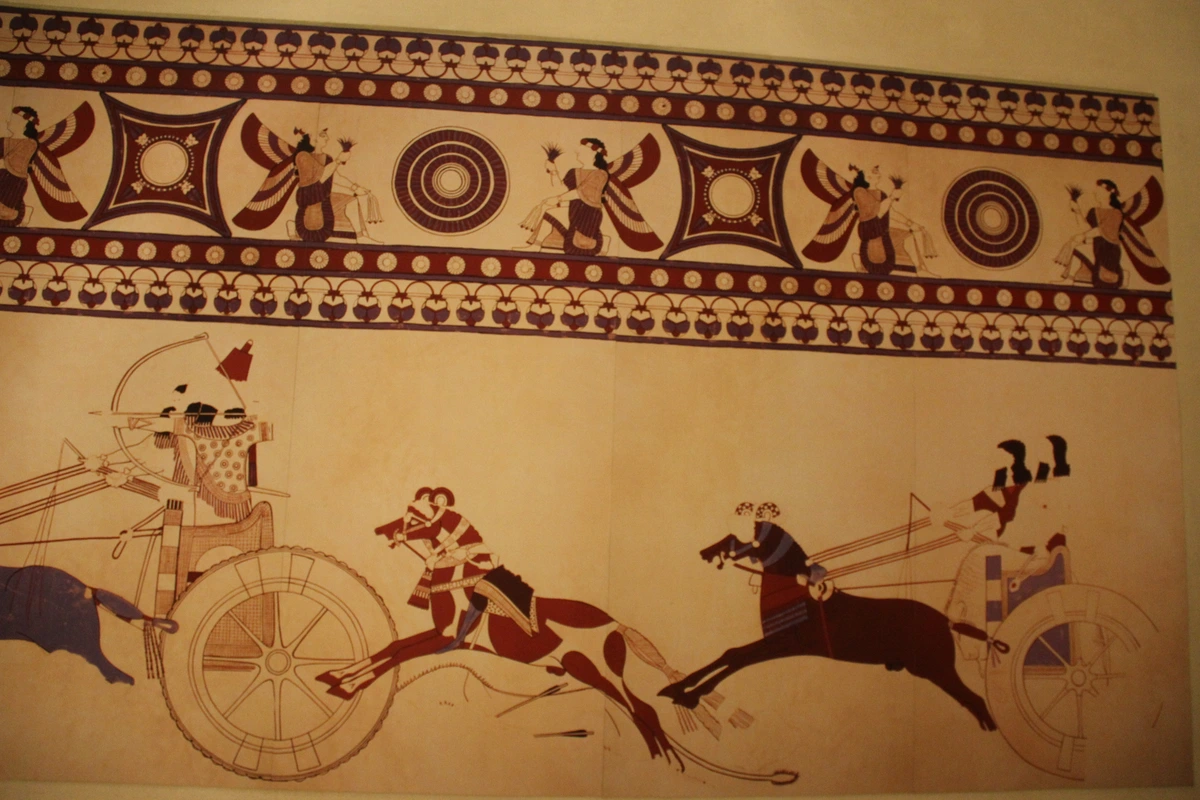
You know the look: head in profile, but the eye is staring right at you. The torso is facing forward, but the legs and feet are going sideways. It's not because they couldn't draw a person in perspective. They chose not to. This style is called composite view or aspective representation.
The idea was to show a person or object in its most complete, recognizable form. Think of it like a diagram. You recognize a person's face best from the side (the profile), but the eye from the front. You understand the shape of the torso from the front, and the action of legs from the side. They were combining all the essential 'data' of a person into one image. It was about clarity, not realism. This rigid structure is a fascinating take on the art of composition.
To keep everything consistent for thousands of years, artists used a grid system, a canon of proportions. This ensured that every figure, whether a god or a pharaoh, was depicted in the correct, divinely ordained way. It was a visual language everyone understood.
The grid system wasn't just a technical guideline—it was a sacred mathematical formula. Each square in the grid represented a specific body measurement, and artists were trained to use these proportions from childhood. During the Old Kingdom, the grid typically had 18 squares; by the New Kingdom, this had expanded to 21 or 22 squares, allowing for more naturalistic proportions. This system was so precise that art historians can often determine the exact period a piece comes from just by analyzing its proportional grid.
The canon wasn't just about people—it governed everything. Buildings, animals, even hieroglyphs all followed proportional rules. During the Old Kingdom, the grid typically had 18 squares; by the New Kingdom, this had expanded to 21 or 22 squares, allowing for more naturalistic proportions. This system was so precise that art historians can often determine the exact period a piece comes from just by analyzing its proportional grid.
It’s All About the Afterlife: The Purpose of the Art
Here’s the biggest mind-bender: most of the art we have from Ancient Egypt was never meant to be seen by living people. It was sealed away in tombs. Its audience was the soul of the deceased and the gods.
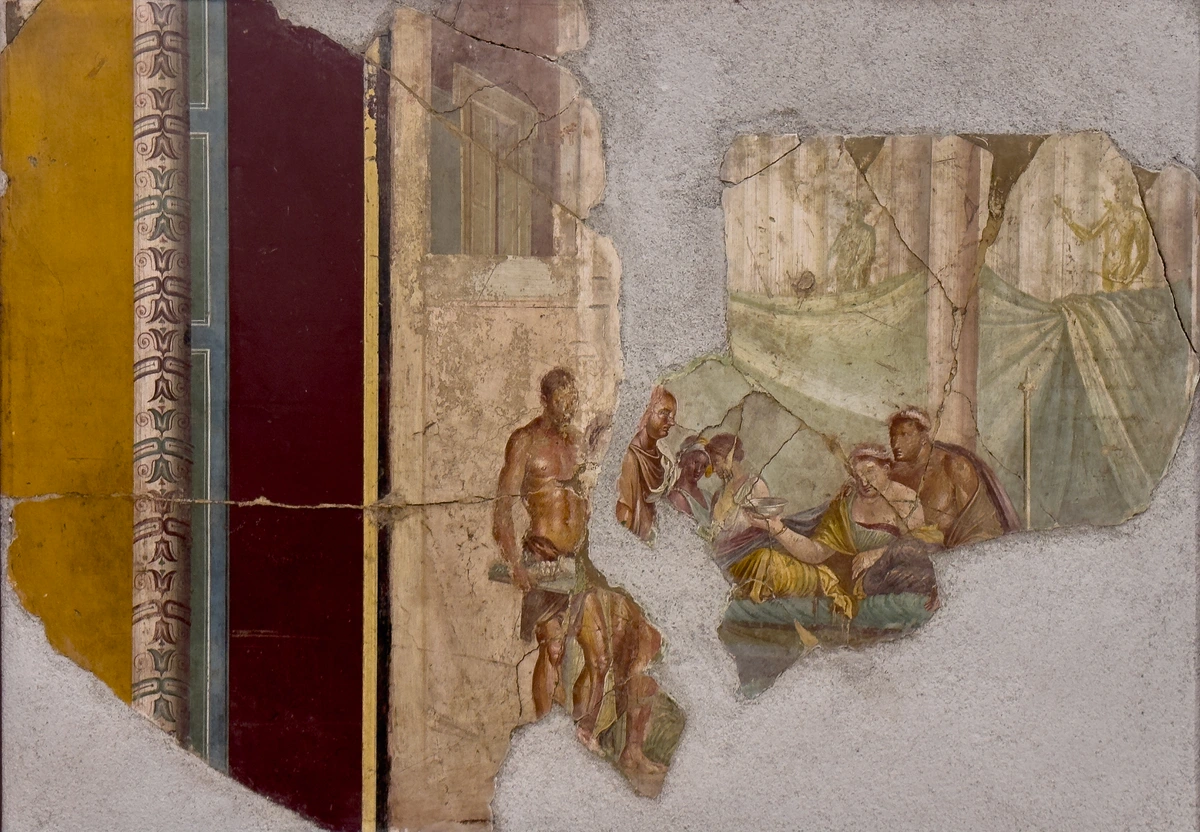
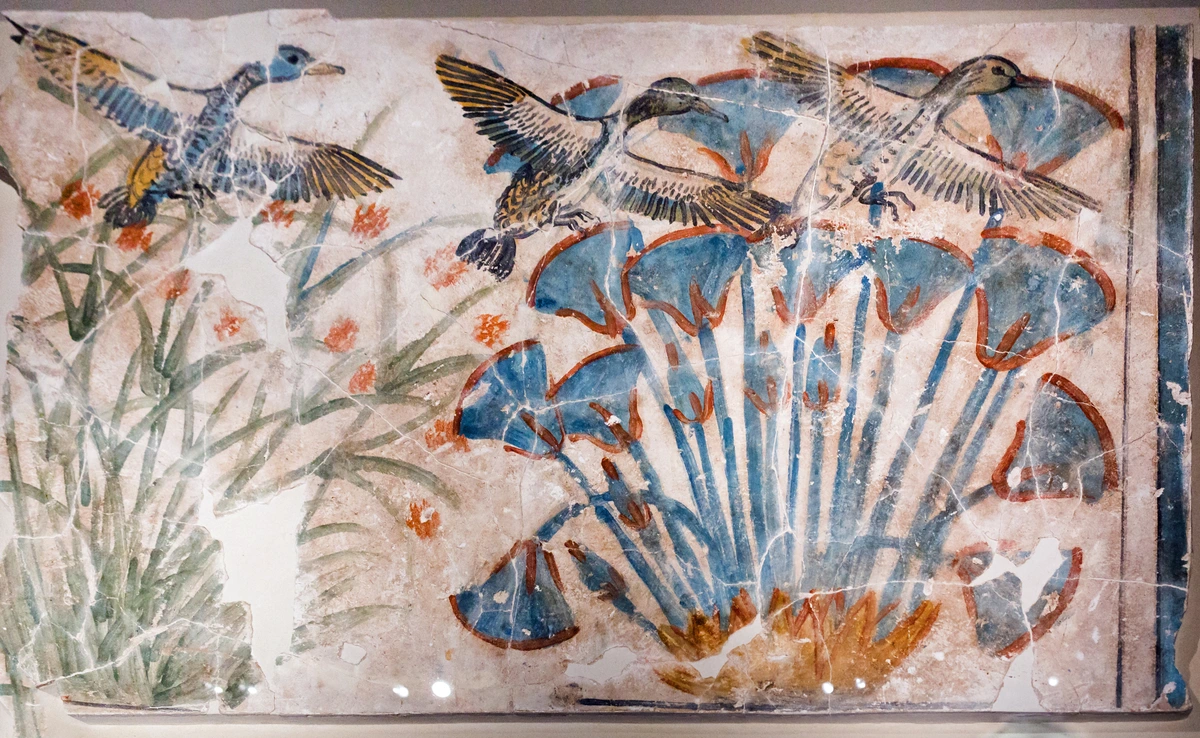
- Tomb Paintings: These weren't just pretty pictures. They were magical menus for the afterlife. A painting of a field of wheat ensured the deceased would have bread forever. A scene of hunting birds provided eternal entertainment and food.
- Shabti Figures: These were magical servant figurals that would come to life in the afterlife and perform any labor the deceased might need, from farming to building.
- Food Offerings: Depictions of food and drink weren't just symbolic—they were magically transformed into actual sustenance for the eternal journey.
- Sculptures: Statues, especially those of the pharaoh, were considered a kind of backup body. The soul, or ka, could inhabit the statue if the mummified body was destroyed. This is why they were made from incredibly durable materials like granite and diorite. They had to last forever. You can see how this focus on permanence is a core element of sculpture.
- Ushebti: These were small figurals that magically came alive to serve the dead in the afterlife, performing any manual labor required.
- Canopic Jars: Containers for preserved organs, each with its own guardian deity—the Four Sons of Horus.
Regional Variations: Upper vs. Lower Egypt
One thing many people don't realize is that Egyptian art wasn't monolithic across the entire country. There were distinct differences between Upper Egypt (the southern part, around Thebes and Aswan) and Lower Egypt (the northern delta region around Memphis and Alexandria). These regional variations reflected different cultural traditions, available materials, and even political tensions.
Upper Egyptian Art tended to be more conservative and traditional, maintaining older artistic styles longer. The art was often more monumental and religious in focus, reflecting the region's strong temple traditions. The stone was typically harder granite and sandstone, leading to more robust, durable works.
Lower Egyptian Art, on the other hand, often showed more innovation and foreign influences. Being closer to the Mediterranean, this region had more contact with other cultures like the Minoans, Greeks, and later Romans. The art was often more decorative and varied in media, with more use of softer stones like limestone and increased use of faience and imported materials.
During periods of national unification, these regional styles would blend, creating a distinctive "royal style" that represented the entire kingdom. But moments of political division often saw a resurgence of regional artistic identities.
Reading the Pictures: Hieroglyphs and Symbolism
In Egypt, writing and art were one and the same. Hieroglyphs were not just letters; they were tiny, detailed pictures. A name written in a cartouche wasn't just a label; it was a piece of art that held the person's essence. The symbolism was layered into everything.
The Egyptians had over 700 hieroglyphs, each representing either a sound, an object, or an idea. The beauty of their writing system was that it could be read in multiple ways—phonetically, semantically, or purely symbolically. This flexibility made it incredibly powerful for religious and magical texts.

Symbol  | Meaning | Why it was important |
|---|---|---|
| Ankh | The symbol of life. | Often held by gods, bestowing the gift of eternal life upon the pharaoh. |
| Scarab Beetle | Rebirth and regeneration. | The beetle rolls dung into a ball and lays its eggs in it, and the young emerge as if from nothing. This mirrored the sun's daily rebirth. |
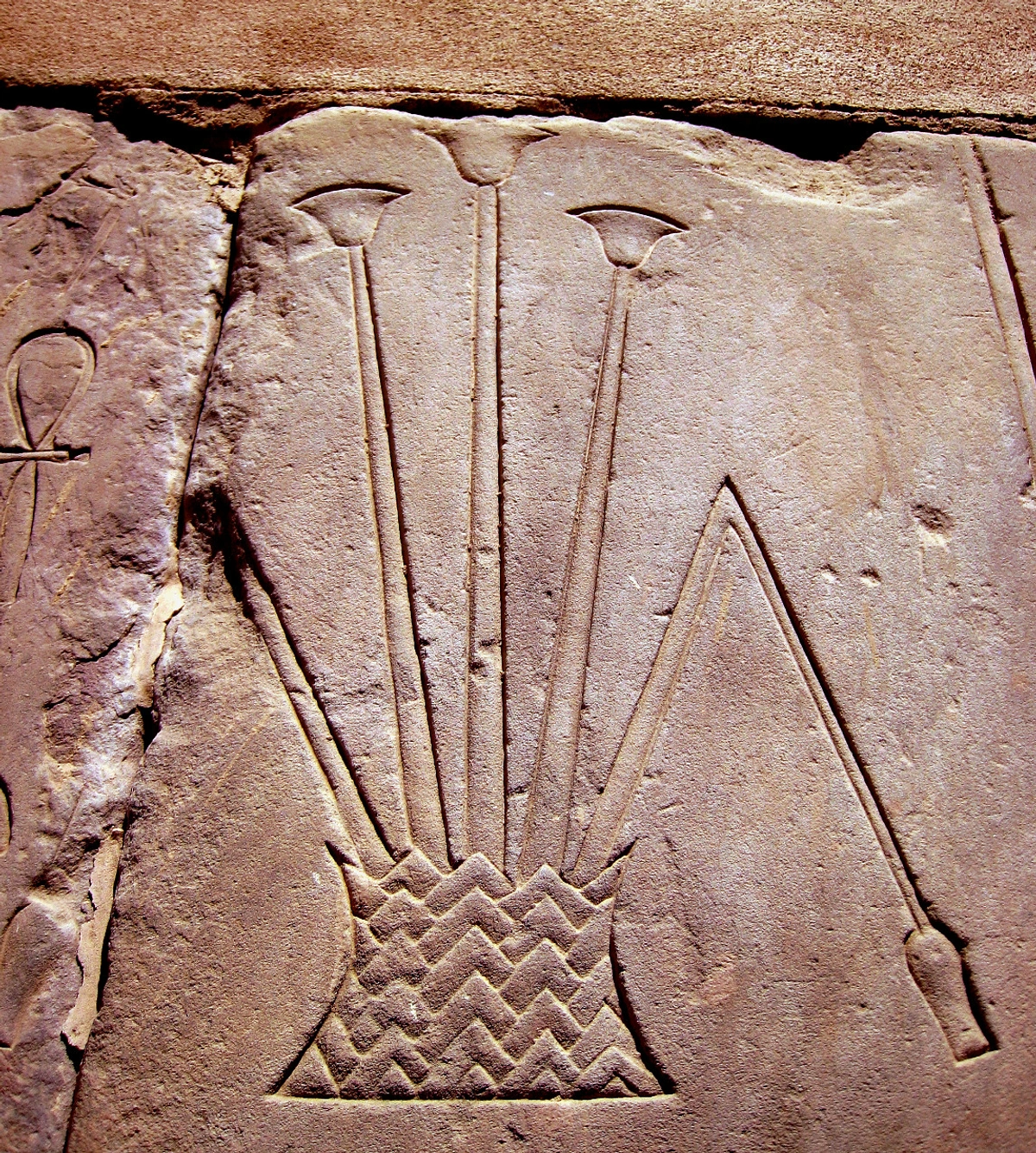
| Lotus Flower | Creation and rebirth. | The lotus closes at night and sinks underwater, only to re-emerge and bloom in the morning. |
| Eye of Horus (Udjat) | Protection, healing, and restoration. | Represents the eye of the god Horus that was torn out by his uncle Set and later restored. |
| Was Scepter | Power and dominion. | Represents divine authority and control over the forces of chaos. |
| Djed Pillar | Stability and endurance. | Represents the backbone of the god Osiris and symbolizes eternal stability. |
| Feather of Ma'at | Truth, justice, and cosmic order. | Represents the ideal state of the universe and the moral law. |
| Uraeus | Protection and royalty. | The rearing cobra worn on pharaohs' crowns to ward off evil and signify divine kingship. |
| Obelisk | Connection between heaven and earth. | Tapered stone monuments representing the rays of the sun god Ra. |
| Scarab Amulet | Protection and transformation. | Worn by living and dead to ensure safe passage through the afterlife. |
| Crocodile | Chaos and destruction. | Represented the forces that threatened Ma'at (cosmic order). |
| Baboon | Wisdom and writing. | Associated with the god Thoth, patron of scribes and knowledge. |
Mathematical Precision: The Geometry of Egyptian Art
Contrary to popular belief, Egyptian art was not primitive but mathematically sophisticated. The Egyptians had a deep understanding of geometry and proportion that underpinned their artistic creations.
The Canon of Proportions: This wasn't just artistic convention—it was mathematical:
- Grid Systems: Used 18, 21, or 22-square grids for human figures
- Mathematical Ratios: Based on the "golden ratio" (1.618) in many compositions
- Geometric Harmony: Balanced compositions using geometric principles
Architectural Mathematics: The pyramids and temples demonstrate advanced knowledge:
- Pyramid Geometry: The Great Pyramid's sides align almost perfectly with cardinal directions
- Trigonometric Knowledge: Understanding of angles and slopes in construction
- Volume Calculations: Precise mathematical planning for large structures
Color Theory: Egyptians understood color relationships:
- Complementary Colors: Using opposite colors for visual impact
- Color Symbolism: Each color had specific meanings and associations
- Pigment Chemistry: Understanding how different pigments interact
Perspective and Depth: While they used composite view, they had systems for depth:
- Layering: Overlapping elements to show depth
- Size Variation: Larger elements appear closer
- Atmospheric Perspective: Subtle color shifts to show distance
Mathematical Tools: They used sophisticated instruments:
- Cord and Peg: For laying out straight lines and right angles
- Water Levels: For ensuring horizontal and vertical alignment
- Surveying Tools: For large-scale architectural projects
The mathematical precision of Egyptian art wasn't accidental—it was the result of centuries of systematic development and refinement, showing that these ancient craftsmen were scientists as well as artists.
The Artisan's Toolkit: Techniques and Processes
While the end result of Egyptian art looks rigid and formulaic, the techniques used to create it were incredibly sophisticated. These weren't primitive people—they were master craftspeople with advanced knowledge of materials and chemistry.
Pigment Preparation: Egyptian artists created some of the most stable pigments in human history. They understood complex chemical reactions:
- Egyptian Blue: The first synthetic pigment, made by heating silica, copper, and calcium carbonate to around 850-1000°C. This created a vibrant blue that has survived for over 4,000 years without fading.
- Malachite and Azurite: Ground from copper ores, these provided green and blue pigments. The grinding process was so precise that particle size affected the color intensity.
- Red and Yellow Ochre: Iron oxide pigments that could be heat-treated to achieve different shades.
Painting Techniques: They used several methods:
- Tempera: Egg-based tempera for fine detail work
- Encaustic: Hot wax-based painting, especially for mummy portraits
- Fresco: Wet plaster painting for tomb walls
- Secco: Dry painting on prepared surfaces
Stone Carving: The precision of Egyptian stone carving is mind-boggling. They used tools made of harder stone like dolerite and diorite, along with copper and bronze chisels. The process involved:
- Marking the outline with red ochre
- Roughing out the form with harder stone tools
- Smoothing with finer abrasives
- Polishing with sand and water
Metalworking: Egyptian goldsmiths were among the most skilled in the ancient world. They mastered:
- Electroplating: Creating gold surfaces on other metals
- Granulation: Fusing tiny gold spheres to surfaces
- Repoussé: Hammering metal from the reverse side
Woodworking: Despite wood being scarce in Egypt, carpenters created incredibly complex furniture, boats, and statues using techniques like:
- Dovetail joints without metal fasteners
- Inlay work with ivory and ebony
- Veneering with precious woods
The most fascinating thing is that these techniques were not developed by individual geniuses but through centuries of systematic workshop practice. Each generation refined and improved upon the knowledge of the previous one.
Egyptian Cosmology and Artistic Symbolism
Egyptian art was deeply connected to their understanding of the cosmos:
- The Duat (Underworld): Depicted in tomb paintings as a complex journey the deceased had to make
- The Heavens: Represented by stars, constellations, and celestial bodies in art and architecture
- The Nile: Central to Egyptian life and art, symbolizing creation, fertility, and eternal renewal
- Ma'at: The concept of cosmic balance, represented by the feather and often shown in judgment scenes
- Isfet (Chaos): The opposite of Ma'at, depicted as disorder and destruction
- Creation Myths: Artistic representations of the creation stories, such as the emergence of the world from primordial waters
- Afterlife Journey: Detailed depictions of the deceased's journey through the Duat to reach the afterlife
These cosmological concepts weren't just religious beliefs—they were fundamental to how Egyptians created and understood their art.
A Walk Through Time: The Big Three Kingdoms
Egyptian art wasn't completely static. While the core rules remained, styles evolved over 3,000 years. We usually break it down into three main periods.
What's fascinating is how these artistic periods correspond directly to Egypt's political history. Art always reflected the current political climate, religious beliefs, and available resources. During times of strength and unity, art became more confident and monumental. During periods of instability or foreign influence, art often became more experimental or incorporated new elements while maintaining traditional Egyptian styles.
These periods represent different political states of Egypt—sometimes unified under a single pharaoh, sometimes divided into competing kingdoms. Art always reflected the current political climate, religious beliefs, and available resources. What's fascinating is how even during periods of foreign rule (like the Persian or Roman periods), Egyptian artists maintained their distinctive style while incorporating new elements.
The Predynastic and Early Dynastic Periods (c. 6000-2686 BCE)
Before the great pyramids, Egyptian art was developing its fundamental characteristics:
- Predynastic Art: Naqada pottery with geometric patterns and animal motifs; palettes for grinding cosmetics; early figurines showing stylized human forms
- Early Dynastic: Development of royal iconography; the first large-scale stone sculptures; mastaba tombs with increasing architectural complexity
- Key Innovations: The establishment of the canon of proportions; the development of hieroglyphic writing; the beginning of large-scale stone architecture
- Social Changes: The rise of a centralized state with a powerful pharaoh; increasing social stratification; the beginning of specialized craft production
- Religious Development: Early forms of Egyptian religion with multiple local gods; the beginning of concepts about the afterlife
- The Old Kingdom (c. 2686–2181 BCE): The age of pyramids. Art was massive, formal, and serene. Think of the Great Sphinx and the statues of Pharaoh Khafre. The focus was on eternal, unshakable power.
- Key Characteristics: Extreme idealism, massive scale, perfect proportions, serene expressions
- Materials: Primarily limestone, granite, and fine sandstone
- Artistic Focus: Creating eternal monuments that would withstand the test of time
- Notable Examples: The Pyramids of Giza, statues of Pharaoh Djedefre, tomb reliefs of Old Kingdom nobles
- Social Context: This was the period of strong centralized rule under the pharaoh. Art reflected the absolute power and divine nature of the king, who was considered a living god.
- Technical Achievements: Development of the true pyramid form; mastery of stone quarrying and transportation; perfecting the canon of proportions; creating the first large-scale stone sculpture
- The Middle Kingdom (c. 2055–1650 BCE): After a period of chaos, the art became more personal. You start to see pharaohs depicted with more realistic, sometimes even worried, expressions. There's a subtle emotional depth that wasn't there before.
- Key Characteristics: More naturalistic proportions, individualized features, emotional expression, literary themes
- Materials: Increased use of softer stones like sandstone and calcite
- Artistic Focus: Expressing individual identity and personal experience
- Notable Examples: Statue of Senusret III with its distinctive "thinking man" pose, tomb paintings of daily life, literature like "The Tale of Sinuhe"
- Social Context: This "reunification" period saw more emphasis on individual merit and personal relationships with the gods. Art became more accessible to non-royal elites, with more private tombs and personal objects.
- Cultural Developments: Rise of a literate class; increased trade with Nubia and the Levant; development of more sophisticated literature; greater emphasis on personal piety
- The New Kingdom (c. 1550–1069 BCE): The golden age of empire. This is the era of Tutankhamun, Ramesses the Great, and grand temples like Karnak and Luxor. The art is opulent, detailed, and shows more international influence from conquered lands.
- Key Characteristics: Opulence and luxury, naturalistic details, international influences, religious fervor
- Materials: Gold, lapis lazuli, precious metals, vibrant pigments
- Artistic Focus: Displaying wealth, power, and divine connection
- Notable Examples: Tutankhamun's tomb treasures, temple complexes of Karnak and Luxor, colossal statues of Ramesses II, detailed tomb paintings of the Valley of the Kings
- Social Context: Egypt's imperial expansion brought wealth and new artistic influences from Nubia, the Levant, and the Aegean. This was a period of intense religious devotion but also of increased social mobility and artistic innovation.
- Architectural Innovations: Development of the hypostyle hall; more complex temple layouts; increased use of monumental sculpture; development of the Valley of the Kings burial style
And then there was the Amarna Period, a bizarre and fascinating blip in the middle of the New Kingdom. Pharaoh Akhenaten threw out the entire pantheon of gods for a single sun god, Aten, and the art style went wild. Suddenly, figures were curvy, elongated, and almost alien-like. The famous bust of his wife, Nefertiti, is a masterpiece of naturalism and grace from this brief, revolutionary time.
Color Symbolism: The Psychology of Egyptian Pigments
Color in Egyptian art was never accidental—each hue carried deep symbolic meaning and psychological weight. The Egyptians were master color psychologists, understanding how different colors affected perception and emotion.
Primary Colors and Their Meanings:
Color | Symbolic Meaning | Psychological Effect | Common Uses |
|---|---|---|---|
| Red (Desher) | Life, blood, fire, danger | Energy, power, vitality | Protective amulets, dangerous gods |
| Green (Wadj) | Growth, fertility, resurrection | Harmony, balance, renewal | Agricultural scenes, rebirth symbols |
| Blue (Khesbedj) | Sky, water, creation, truth | Calm, spirituality, wisdom | Divine figures, heaven, water |
| Yellow (Khenet) | Gold, sun, eternity | Joy, divinity, permanence | Royal imagery, gods, sun |
| Black (kem) | Fertility, earth, night | Mystery, power, regeneration | Osiris, fertile soil, night sky |
| White (Hedj) | Purity, silver, cleanliness | Clarity, purity, truth | Clothing, sacred spaces, liminal |
| Gold | Divine flesh, eternal life | Supreme power, immortality | Royal masks, gods, eternity |
Color Combinations: The Egyptians understood color relationships:
- Red and Green: Complementary colors representing life and death
- Blue and Gold: Divine and royal pairing
- Black and White: Opposites representing duality
Color Psychology: They used colors to affect mood:
- Calming Colors: Blues and greens for sacred spaces
- Energizing Colors: Reds and yellows for active scenes
- Protective Colors: Blacks and reds for amulets
Color Application Techniques: Sophisticated methods:
- Glazing: Multiple thin layers for depth
- Inlay: Precious stone inlays for color
- Mosaic: Small pieces for detailed color work
- Faience: Glazed ceramic for vibrant colors
The color symbolism in Egyptian art was so sophisticated that modern color psychology has only recently begun to catch up to their understanding of how colors affect human perception and emotion.
- Religious Revolution: Akhenaten's worship of Aten (the sun disk) required new artistic forms to express this revolutionary theology
- Artistic Changes: Curvilinear forms, elongated proportions, intimate family scenes, more naturalistic rendering
- Social Themes: Depictions of royal family life, Aten worship scenes, less formal court scenes
- Technical Innovation: More experimental techniques, softer stone carving, new color palettes
- Brief Duration: After Akhenaten's death, traditional art forms were quickly restored, showing how deeply ingrained the artistic canon had become
- Legacy: Despite its brevity, Amarna art represents the closest Egyptian art came to personal expression and naturalism
What makes the Amarna Period so fascinating is that it represents the closest Egyptian art ever came to naturalism. For just a few decades, artists were encouraged to depict the world as they actually saw it rather than according to the established canon. The result is art that feels startlingly modern and personal. Of course, when Akhenaten died and traditional religion was restored, art quickly snapped back to the old styles—proving how deeply ingrained the artistic canon had become.

Art Beyond the Tombs: Daily Life and Everyday Objects
When we think of Egyptian art, we tend to focus on the monumental tomb paintings and statues. But most Egyptians experienced art in their daily lives through objects that were both functional and beautiful.
Household Objects: Even common households had artistry:
- Pottery: From simple storage jars to finely painted cosmetic containers
- Cosmetic Jars: Alabaster and faience containers for kohl, perfumes, and oils
- Mirrors: Polished bronze mirrors with decorative handles
- Furniture: Beds, chairs, and stools with intricate carving and inlay
- Lamps: Clay lamps with decorative designs
Jewelry: Egyptians wore jewelry not just for beauty but for magical protection:
- Amulets: Protective charms shaped like scarabs, eyes of Horus, and sacred symbols
- Necklaces and Bracelets: Made of gold, lapis lazuli, carnelian, and turquoise
- Earrings and Rings: Often featuring religious motifs
Textiles: While few examples survive due to Egypt's climate, we know textiles were highly artistic:
- Linens: Finely woven linen clothing
- Tapestries: Wall hangings with decorative patterns
- Carpets: Elaborate woven floor coverings
Musical Instruments: Artistry extended to sound:
- Harps: Elaborately carved wooden harps
- Flutes: Reed and bone flutes with decorative bindings
- Drums: Ceremonial drums with painted designs
- Sistrums: Rattle instruments used in religious ceremonies
These everyday objects remind us that Egyptian art wasn't just for the afterlife or for the gods—it was integrated into every aspect of daily life, making beauty and meaning accessible to people of all social classes.
- Third Intermediate Period (c. 1069-664 BCE): More decorative, less monumental; increased use of bronze; animal-headed deities become more common
- Late Period (c. 664-332 BCE): Revival of older artistic styles; Persian influence; increased use of faience
- Ptolemaic Period (c. 332-30 BCE): Greek-Egyptian fusion; classical influences blend with traditional Egyptian forms
- Roman Period (30 BCE-395 CE): Mummy portraits show Greco-Roman artistic techniques while maintaining Egyptian funerary traditions
- Byzantine Period: Increasing Christian influence; traditional Egyptian art gradually disappears
Throughout these later periods, despite foreign domination, Egyptian artists maintained their distinctive style and techniques, showing the incredible resilience of their artistic tradition.
Music and Performance: The Art of Ancient Egyptian Entertainment
While we often focus on visual arts, the Egyptians had a rich tradition of music and performance that was deeply connected to their artistic culture.
Musical Instruments: The Egyptians developed a sophisticated array of instruments:
- String Instruments: Harps (the most common), lutes, lyres, and harpsichords
- Wind Instruments: Flutes, clarinets, oboes, and trumpets
- Percussion: Drums, tambourines, sistra (rattles), and clappers
Music in Religion: Music was central to religious ceremonies:
- Temple Music: Professional musicians performed daily rituals
- Funeral Music: Chants and hymns accompanied burial ceremonies
- Festival Music: Celebrations featured large ensembles with multiple instrument types
Dance and Performance: Art extended to movement:
- Religious Dances: Temple dancers performed ritual movements
- Entertainment Dances: Professional dancers entertained at banquets
- Theater: Storytelling through movement and music
- Acrobatics: Street performers and temple acrobats
Musical Notation: While not as advanced as Greek notation, Egyptians had systems for recording music:
- Hieroglyphic symbols for different instruments
- Text descriptions of musical performances
- Visual representations of musicians in tomb paintings
The famous "Harper's Tomb" at Saqqara shows musicians playing harps while a singer performs, giving us insight into how music was integrated into daily life and the afterlife.
What's interesting is how these famous pieces have become so iconic precisely because they break the Egyptian artistic rules. The Nefertiti bust is naturalistic rather than idealized, Tutankhamun's mask is incredibly detailed and personal, and the pyramids represent the ultimate expression of Egyptian artistic ambition. These works stand out precisely because they represent the exceptions rather than the rule in Egyptian art.
Women in Egyptian Art: Creators, Patrons, and Subjects
Unlike many ancient civilizations, Egypt had a more egalitarian approach to art, with women playing significant roles as creators, patrons, and subjects.
Female Artists: Women could be professional artists:
- Textile Artists: Women dominated the production of linen garments and decorative textiles
- Perfume Makers: Creating scented oils and cosmetics was considered an art form
- Jewelry Makers: Many fine jewelry pieces were crafted by female artisans
- Temple Musicians: Women served as musicians and chanters in temples
Female Patrons: Wealthy women commissioned art:
- Queens and Noblewomen: Had private chapels and tomb decorations
- Priestesses: Managed temple art collections and rituals
- Wealthy Citizens: Commissioned personal amulets and funerary objects
Women as Subjects: Egyptian art depicted women in various roles:
- Goddesses: Powerful female deities like Isis, Hathor, and Sekhmet
- Royal Women: Queens often shown equal in size to pharaohs
- Everyday Women: Depicted working, playing, and socializing
- Motherhood: Idealized images of mothers with children
Notable Female Artists: While most artists remain anonymous, some women are known:
- Amenirdis I: A priestess who oversaw artistic projects
- Nitocris: Commissioned extensive building projects and art
- Royal Women: Many queens supervised the creation of their own tomb decorations
This relative gender equality in the arts reflects Egypt's more progressive social structure compared to many other ancient civilizations.
Material | Common Uses | Technical Innovation | |
|---|---|---|---|
| Gold | Divine flesh, eternal life | Masks, jewelry, sarcophagi | Electroplating techniques, granulation |
| Lapis Lazuli | Heavens, gods' hair | Inlays, jewelry, eye markings | Imported from Afghanistan, highly prized |
| Faience | Regeneration, rebirth | Amulets, tiles, vessels | Glazed ceramic technology, vibrant colors |
| Carnelian | Blood, life force | Jewelry, protective amulets | Heat treatment to achieve deep red color |
| Egyptian Blue | Creation, the sky | Wall paintings, ceramics | First synthetic pigment, stable for millennia |
| Ivory | Purity, royalty | Small sculptures, inlays | Fine detail work, often imported |
| Alabaster | Purity, light | Vessels, statues | Translucent quality when thin, beautiful polish |
Children's Art in Ancient Egypt
While we often focus on the grand art of pharaohs and temples, Egyptian children also had their own artistic traditions that reflect their daily lives and development.
Children's Artifacts: Objects made for and by children:
- Toy Figurines: Small clay and wood figures of animals and people
- Game Pieces: Pieces for board games like Senet and Mehen
- Educational Tools: Practice tablets for learning hieroglyphs
- Child-sized Furniture: Small chairs, beds, and toys
Educational Art: Art as a learning tool:
- Practice Tablets: Children practiced writing on ostraca (pottery shards)
- Mathematical Exercises: Geometric designs and calculations
- Copy Books: Copying standard forms and compositions
- Model Making: Creating small versions of larger works
Children in Art: Depictions of childhood:
- Family Scenes: Children shown playing with parents and siblings
- Educational Scenes: Children learning to read and write
- Play Activities: Games, toys, and childhood games
- Coming of Age: Rituals and ceremonies marking childhood transitions
Child Artists: Evidence of young artists:
- Amateur Work: Simple drawings and paintings by children
- School Projects: Educational exercises and compositions
- Family Creations: Objects made with parental guidance
- Play Art: Creative play with materials and colors
The artistic experiences of Egyptian children were integral to their education and development, teaching them not just artistic skills but also cultural values, religious concepts, and practical knowledge needed for adult life.
What many people don't realize is that Tutankhamun's mask is actually a composite of several different materials: gold, lapis lazuli, quartz, obsidian, carnelian, turquoise, and colored glass. Each material was chosen for its symbolic meaning and color properties. The mask weighs over 10 kilograms (22 pounds) and would have been incredibly heavy to wear, but that wasn't its purpose—it was meant to be placed over the mummy's head in the tomb.
The Bust of Nefertiti
Discovered by a German team in 1912, this bust is so lifelike it's almost unnerving. The elegant long neck, the subtle makeup, the realistic modeling of the face—it breaks all the old rules. It was likely a sculptor's master model, never intended for a tomb, which might be why it feels so uniquely alive.
The bust is remarkable for its preservation of original paint—you can still see the blue eye shadow, red lips, and golden details. What's particularly interesting is that Nefertiti is shown wearing the crown of her husband Akhenaten, suggesting she shared his revolutionary religious ideas. The bust was created by the sculptor Thutmose, whose workshop contained many other exquisite pieces that show the high artistic standards of the Amarna Period.
Furniture and Decorative Arts: Beauty in Daily Life
Egyptian art wasn't limited to tombs and temples—it extended to the furniture and decorative objects that filled homes, palaces, and temples. These items were both functional and beautiful, reflecting Egyptian aesthetic values in everyday life.
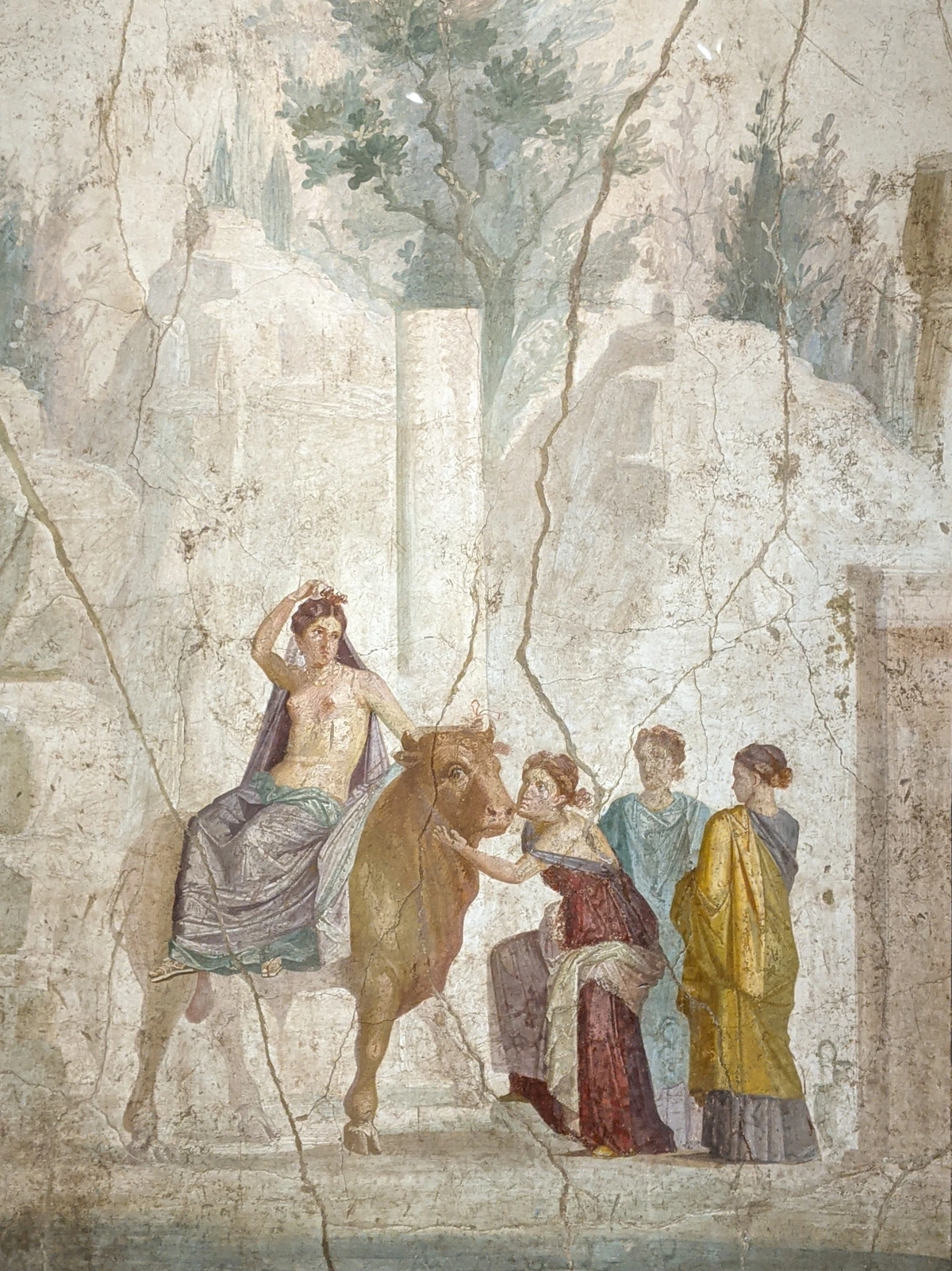
Furniture Design: Sophisticated wooden craftsmanship:
- Chairs and Stools: Often with animal legs (lion, bull) and decorative inlay
- Tables: For eating, working, and displaying objects
- Beds: Raised platforms with woven mats and headrests
- Chests and Cabinets: For storage with carved panels and lock mechanisms
- Screens and Room Dividers: Decorative partitions with geometric patterns
Decorative Techniques: Various methods of embellishment:
- Inlay: Wood, ivory, and bone inlays in geometric and figurative patterns
- Painting: Elaborate painted designs on furniture surfaces
- Gilding: Gold leaf application for royal and religious furniture
- Carving: Relief and high relief carving on wooden surfaces
- Upholstery: Fine textiles and leather for cushions and seats
Materials Used: Different materials for different purposes:
- Woods: Acacia, cedar, ebony, imported woods
- Metals: Gold, silver, bronze for fittings and decoration
- Ivory: Elephant and hippopotamus ivory for inlay
- Stone: For table tops and decorative elements
- Textiles: Linen, wool for cushions and covers
Household Objects: Everyday items with artistic quality:
- Lamps: Clay and metal lamps with decorative designs
- Mirrors: Polished bronze with carved handles
- Cosmetic Containers: Alabaster and faience jars with painted decoration
- Storage Jars: Large pottery vessels with painted bands and symbols
- Drinking Vessels: Cups and goblets of various materials
These household objects show that Egyptian art was integrated into every aspect of daily life, making beauty and meaning accessible to people of all social classes.
The pyramids are mathematical marvels. The Great Pyramid of Giza originally stood 146.6 meters (481 feet) tall—making it the tallest man-made structure in the world for over 3,800 years. Its sides are aligned almost perfectly with the cardinal directions, and the precision of its construction is astonishing when you consider it was built using only copper tools and massive stone blocks. The Sphinx, carved from a single limestone outcrop, represents the fusion of human intelligence (the head) and animal strength (the lion's body)—a perfect symbol of the pharaoh's dual nature as both human and god.
Art Conservation Science: Preserving Ancient Masterpieces
The preservation of Egyptian art is a modern science that combines traditional techniques with cutting-edge technology. These fragile treasures require constant care to survive for future generations.
Environmental Control: The biggest threat to Egyptian art is environmental damage:
- Temperature and Humidity Control: Museums maintain precise environmental conditions
- Light Protection: UV filters prevent fading of pigments
- Air Filtration: Removes pollutants that can degrade organic materials
Conservation Techniques: Modern conservators use advanced methods:
- 3D Scanning: Creates precise digital models for study and virtual exhibitions
- Chemical Analysis: Identifies original pigments, binders, and materials
- Non-invasive Imaging: X-rays, infrared, and multispectral imaging reveal hidden details
- Laser Cleaning: Removes dirt and grime without damaging the surface
- Adhesive Reversal: Carefully removes old restorations that are causing damage
Digital Preservation: Technology is revolutionizing how we preserve knowledge:
- High-resolution Photography: Captures every detail of artworks
- Virtual Reality: Allows virtual visits to inaccessible sites
- Online Databases: Makes Egyptian art accessible worldwide
- Reconstruction Software: Helps visualize damaged or lost artworks
Ethical Considerations: Modern conservation involves difficult questions:
- Repatriation: Should artifacts return to Egypt?
- Restoration Philosophy: How much should we "restore" versus preserve original state?
- Access vs. Preservation: Balancing public access with protection
The Egyptian Museum in Cairo and the Grand Egyptian Museum use these advanced techniques to preserve the world's most important collection of ancient art. The Egyptians understood something fundamental about art: that it doesn't have to be "realistic" to be powerful. Their visual language was so clear and consistent that it could communicate complex ideas across millennia.
What's truly remarkable is how Egyptian principles continue to appear in contemporary art. The idea of using symbolic color, hierarchical scale, and composite view can be seen in everything from comic books to modern graphic design. The Egyptians essentially invented visual branding—their royal iconography was instantly recognizable and emotionally resonant, just like the best corporate logos today.
The visual language of ancient Egypt is so powerful that it's never truly gone away. The Greeks were inspired by the monumental scale of its sculptures. The Romans were obsessed with it, importing obelisks to decorate their cities. There was a huge revival in the 1920s after the discovery of Tutankhamun's tomb, which heavily influenced the Art Deco style. You can still see a hint of that ancient, rigid order in some strains of modernism. In fact, you can explore the enduring influence of ancient Egyptian art on modernism right here on the site.
But the influence goes deeper than just style. Egyptian art teaches us about the power of consistency, the importance of symbolic communication, and the idea that art can have a functional purpose beyond mere decoration. In our age of digital art and endless experimentation, there's something incredibly grounding about studying a tradition that remained consistent for over 3,000 years. It reminds us that art doesn't always have to change to be meaningful—sometimes, perfecting a single, clear vision is the most revolutionary thing an artist can do.
Ancient Egyptian art teaches us that 'realism' isn't the only goal. Art can be a system, a language, a tool for shaping reality itself. It's a 3,000-year-long testament to the power of a clear vision, and a reminder that art created for eternity has a funny way of actually achieving it.
The Modern Art Market: Collecting Egyptian Art
The market for Egyptian art has evolved dramatically from the days of treasure hunters to today's sophisticated collecting scene.
Types of Egyptian Art on the Market:
- Antiquities: Legal pre-1970s artifacts with proper provenance
- Replicas: High-quality reproductions of famous pieces
- Influenced Works: Modern art inspired by Egyptian themes
- Jewelry: Contemporary pieces using Egyptian motifs
Market Trends:
- Growing Interest: Increased fascination with ancient cultures
- Authentication: Rigorous scientific testing required
- Ethical Sourcing: Emphasis on legally acquired pieces
- Online Auctions: Digital platforms expanding access
- Museum Quality: Premium prices for museum-provenanced pieces
Price Ranges:
- Small Amulets: $50-$5,000 for authentic pieces
- Jewelry Reproductions: $200-$20,000
- Large Sculptures: $10,000-$1,000,000+ for museum-quality pieces
- Paintings and Textiles: $1,000-$100,000+ depending on rarity
Collecting Tips:
- Provenance is Key: Always demand documented history
- Scientific Testing: C-14 dating, material analysis
- Legal Compliance: Ensure compliance with international laws
- Expert Consultation: Work with reputable dealers and scholars
- Condition Matters: Original patina and condition affect value
Notable Collections:
- Museums: Metropolitan Museum, British Museum, Louvre
- Private Collectors: Royalty, celebrities, and serious collectors
- Investment Funds: Some treat Egyptian art as alternative investments
The market has become more ethical and scientific, shifting from the "treasure hunting" mentality of the 19th and early 20th centuries to a more sophisticated appreciation of cultural heritage.
- Film and Media: Movies like "The Mummy" franchise and "Cleopatra" bring Egyptian imagery to new audiences, though often with historical inaccuracies
- Video Games: Games like "Assassin's Creed Origins" and "Age of Mythology" recreate Egyptian settings and art styles
- Architecture: Modern buildings sometimes incorporate Egyptian motifs like obelisks, lotus columns, and pyramid shapes
- Fashion Designers: Alexander McQueen, Karl Lagerfeld, and others have drawn inspiration from Egyptian motifs in their collections
- Museum Exhibitions: Major exhibitions continue to draw crowds, showing the enduring fascination with Egyptian art
- Academic Study: New technologies like 3D scanning and chemical analysis help us understand Egyptian art techniques better than ever before
When you think about it, Egyptian art has actually achieved its goal of eternity. The pharaohs who commissioned these works are long gone, but their art continues to inspire, educate, and captivate people thousands of years later. In a way, the artists who created these pieces have achieved a form of immortality—their work continues to live on, speaking across time to new generations of viewers. That's a pretty remarkable legacy for any artist, ancient or modern.
Military Art: Conquest and Power in Egyptian Art
While we often focus on religious and funerary art, military themes were also important in Egyptian artistic tradition. These works served to glorify military achievements and project the power of the Egyptian state.
Battle Scenes: Depictions of warfare:
- Historical Battles: Specific campaigns and victories
- Symbolic Combat: Ritualized representations of military power
- Enemy Defeat: Humiliation of captured enemies
- Divine Intervention: Gods helping Egyptian armies
- Trophy Display: Spoils of war and captured equipment
Military Equipment: Arms and armor as art:
- Weapons: Bows, spears, axes, and daggers with decorative elements
- Armor: Shields, helmets, and body protection with symbolic designs
- Chariots: Battle chariots with elaborate decoration
- Naval Vessels: Ships and boats for river and sea battles
- Siege Equipment: Towers, battering rams, and catapults
Propaganda Purposes: Military art served political goals:
- Royal Image: Projecting pharaoh as warrior and protector
- National Pride: Demonstrating Egyptian military superiority
- Intimidation: Deterring enemies and rebellions
- Legitimization: Justifying expansion and conquest
- Historical Record: Documenting military achievements
Artistic Conventions: Standard ways of depicting military subjects:
- Hierarchical Scale: Pharaohs larger than enemies and soldiers
- Dynamic Poses: Action-oriented compositions
- Symbolic Elements: Standard symbols of victory and power
- Narrative Sequences: Multiple scenes telling the story of battle
- Idealized Warriors: Perfect soldiers serving perfect pharaohs
Famous Examples: Notable military artworks:
- Battle Reliefs: Temple scenes showing pharaoh's victories
- War Monuments: Obelisks and stelae celebrating conquests
- Military Equipment: Decorated weapons and chariots
- Trophy Displays: Captured enemy equipment as symbols
- War Tombs: Tombs of military leaders with battle scenes
Military art in Egypt was never just about recording history—it was about creating the myth of Egyptian invincibility and the divine right of the pharaoh to rule and expand the empire.
These technologies are helping us understand Egyptian art better than ever before, while also ensuring these precious works survive for future generations to study and appreciate.
Comparative Analysis: Egyptian Art vs. Other Ancient Civilizations
To truly appreciate Egyptian art, it helps to compare it with other contemporary civilizations. Each developed its own visual language reflecting different values and environments.
Egyptian vs. Mesopotamian Art:
- Egyptian: Stable, eternal, religious focus
- Mesopotamian: Dynamic, narrative, political focus
- Key Difference: Egyptian art aimed for permanence; Mesopotamian art told stories of conquest and change
Egyptian vs. Greek Art:
- Egyptian: Composite view, symbolic, idealized
- Greek: Naturalistic, perspective, individualized
- Key Difference: Greeks focused on capturing how things appear; Egyptians captured eternal essence
Egyptian vs. Roman Art:
- Egyptian: Traditional, formulaic, religious
- Roman: Pragmatic, eclectic, imperial
- Key Difference: Romans absorbed Egyptian styles but adapted them for Roman purposes
Egyptian vs. Chinese Art:
- Egyptian: Geometric, symbolic, afterlife-oriented
- Chinese: Organic, calligraphic, harmony-oriented
- Key Difference: Both valued tradition but emphasized different aspects of reality
Egyptian vs. Mayan Art:
- Egyptian: Stone-based, monumental, religious
- Mayan: Stone and stucco, architectural, calendrical
- Key Difference: Both created stone monuments but for different cultural purposes
Egyptian vs. Indus Valley Art:
- Egyptian: Public, monumental, religious
- Indus Valley: Private, standardized, trade-oriented
- Key Difference: Egyptian art served the state and religion; Indus Valley art served commerce and daily life
These comparisons show that while Egyptian art had unique characteristics, it shared some universal artistic concerns with other civilizations—all seeking to express their understanding of the world, the divine, and human existence through visual means.
Quick Reference: Egyptian Art Timeline
Period | Dates | Key Artistic Features | Notable Works |
|---|---|---|---|
| Predynastic | c. 6000-3100 BCE | Naqada pottery, palettes, figurines | Narmer Palette, Hierakonpolis murals |
| Early Dynastic | c. 3100-2686 BCE | Royal iconography, mastaba tombs | Palette of King Narmer, Seated statue of Khasekhemwy |
| Old Kingdom | c. 2686-2181 BCE | Idealism, massive scale, pyramids | Great Sphinx, Pyramids of Giza, statues of Khafre |
| First Intermediate | c. 2181-2055 BCE | Regional styles, more personal art | Tomb paintings of local nobles |
| Middle Kingdom | c. 2055-1650 BCE | Naturalism, emotional depth | Statue of Senusret III, Lahun pyramid complex |
| Second Intermediate | c. 1650-1550 BCE | Foreign influences, decorative styles | Hyksos artifacts, Nubian influences |
| New Kingdom | c. 1550-1069 BCE | Opulence, naturalistic details | Tutankhamun's tomb, Karnak/Luxor temples |
| Amarna Period | c. 1353-1336 BCE | Revolutionary naturalism, curvilinear forms | Bust of Nefertiti, Amarna temple art |
| Third Intermediate | c. 1069-664 BCE | Decorative, less monumental | Tanis treasures, animal-headed deities |
| Late Period | c. 664-332 BCE | Revival of old styles, Persian influence | Saite sculpture, Persian occupation art |
| Ptolemaic | c. 332-30 BCE | Greek-Egyptian fusion | Rosetta Stone, Alexandrian art |
| Roman | c. 30 BCE-395 CE | Mummy portraits, traditional styles | Fayum mummy portraits |
Psychological Dimensions: What Egyptian Art Reveals About Ancient Minds
The art of ancient Egypt offers a window into the psychological landscape of its people. Their artistic choices reveal deep-seated beliefs about reality, death, and the self.
Concept of Self: Egyptian art shows a sophisticated understanding of identity:
- Multiple Selves: The Egyptians believed in multiple aspects of the self (ka, ba, akh)
- Eternal Identity: Art preserved the person's essence for eternity
- Idealized Self: Portraits emphasized virtues and divine connections
Relationship to Death: Their art reveals attitudes toward mortality:
- Death as Transition: Not an end but a journey to another realm
- Control Through Art: Creating art gave them control over the afterlife
- Connection to Ancestors: Art maintained bonds with previous generations
Cognitive Style: The artistic approach suggests ways of thinking:
- Holistic Thinking: Combining multiple views into one image
- Symbolic Reasoning: Understanding layers of meaning in symbols
- Systematic Organization: Everything had its place and purpose
Emotional Expression: Despite formal appearances, Egyptian art shows emotion:
- Subtle Emotions: More evident in Middle Kingdom art
- Royal Emotions: Pharaohs shown with characteristic expressions
- Everyday Emotions: Tomb paintings show joy, grief, and work
Collective vs. Individual: The balance between personal and community:
- Collective Identity: Art served the community and religion
- Individual Recognition: Even common people had distinctive features
- Social Harmony: Art reflected the ideal social order
These psychological insights help us understand not just how Egyptians made art, but why they made art the way they did—and what it reveals about universal human concerns with identity, mortality, and meaning.
I've spent years studying Egyptian art, and these are the questions I get asked most frequently. Some come from curious beginners, others from art history students, and some from people who just saw something in a museum and got intrigued. What's great about these questions is that they often reveal how differently we think about art compared to the ancient Egyptians.

Medical Art: Healing and the Body in Egyptian Tradition
Egyptian medicine was advanced for its time, and this medical knowledge is reflected in their artistic tradition. Works depicting medical practices and the human body show the Egyptians' sophisticated understanding of health and healing.
Medical Instruments: Tools of the healing arts:
- Surgical Tools: Knives, scalpels, and forceps for operations
- Diagnostic Instruments: Tools for examining patients
- Therapeutic Devices: Equipment for treatment
- Pharmaceutical Containers: Jars for medicines and ointments
- Measuring Tools: For dosages and prescriptions
Anatomical Knowledge: Understanding of the human body:
- Skeletal Structure: Depictions of bones and joints
- Muscular System: Understanding of muscles and movement
- Organ Systems: Knowledge of internal organs
- Physiological Processes: Understanding of bodily functions
- Pathology: Recognition of diseases and disorders
Medical Deities: Gods associated with healing:
- Imhotep: Deified physician and architect
- Sekhmet: Goddess of healing and plague
- ** Isis**: Goddess of magic and healing
- Thoth: God of wisdom and medicine
- Hathor: Goddess of love, beauty, and healing
Medical Texts: Written medical knowledge:
- Edwin Smith Papyrus: Surgical procedures and cases
- Ebers Papyrus: Medical treatments and prescriptions
- Kahun Gynecological Papyrus: Women's health
- Berlin Medical Papyrus: Magical and medical treatments
- Carlsberg Papyrus: Eye diseases and treatments
Healing Artworks: Images related to medicine:
- Temple Reliefs: Medical scenes in healing temples
- Amulets: Protective charms for health
- Medical Papyri: Illustrated medical texts
- Funerary Texts: Spells for healing in the afterlife
- Surgical Scenes: Depictions of medical procedures
Egyptian medical art shows that their artistic tradition was not limited to religious and funerary themes—it also documented and celebrated the practical knowledge needed to maintain health and heal the sick, reflecting a holistic approach to life that encompassed both the spiritual and physical aspects of existence.
- Time: Egyptians viewed time as cyclical rather than linear. Eternity wasn't a distant future but a continuous present that art could help maintain.
- Reality: They distinguished between peret (the visible, temporary world) and akh (the eternal, spiritual reality). Art aimed to capture the eternal truth, not the temporary appearance.
- Magic: Art wasn't just symbolic—it was magical. Creating an image of something was believed to have power over that thing in reality.
- Order vs. Chaos: The universe was seen as a constant battle between Ma'at (order) and Isfet (chaos). Art helped maintain the proper balance.
- Collective vs. Individual: Individual identity was less important than one's role in maintaining cosmic and social order.
What are the 5 main characteristics of Ancient Egyptian art?
- Composite View: Combining different viewpoints into one figure for clarity.
- Hierarchical Scale: The more important you are (like a pharaoh), the bigger you're drawn.
- Canon of Proportions: A strict grid system for depicting figures consistently.
- Symbolism: Nearly every element, from color to animals, had a deeper meaning.
- Function over Form: Art was made for a specific purpose, usually religious or funerary, not just for beauty.
Bonus characteristics: Frontality (most figures face directly forward), Register system (arranging scenes in horizontal bands), and High relief (figures stand out strongly from the background).
How did Egyptian art change over time? Egyptian art evolved through distinct periods while maintaining core traditions:
- Old Kingdom: Highly idealized, massive scale, perfect proportions
- Middle Kingdom: More naturalistic, individualized features, emotional depth
- New Kingdom: Opulent, detailed, international influences, religious fervor
- Amarna Period: Revolutionary naturalism, curvilinear forms, break from tradition
- Later Periods: Revivals of older styles, foreign influences, decorative emphasis
The key is that while styles changed, the fundamental purpose and symbolic meaning remained consistent across all periods.
These characteristics weren't just artistic choices—they were religious and philosophical statements. The composite view, for example, wasn't about being "primitive" in their understanding of perspective; it was about presenting the most complete, eternal version of reality possible. Every element was chosen for its specific magical and symbolic function.
Why did Egyptians draw people sideways? They didn't, really! They drew people in the composite view to show each body part in its most recognizable form—profile head, frontal eye and torso, profile limbs. It was about creating the most complete and eternal idea of a person, not a realistic snapshot.
How long did it take to create a tomb painting? The timeline varied greatly depending on the size and complexity of the tomb. A simple tomb might take a few weeks, while a royal tomb like those in the Valley of the Kings could take years or even decades to complete. The work was done by teams of skilled artisans working in shifts, often under the direction of a master artist.
Were women artists in Ancient Egypt? Yes! Unlike many ancient civilizations, Egypt had female artists, particularly in the fields of textile production, perfume making, and some forms of sculpture and painting. Women from elite families could receive artistic training and work in royal workshops. In fact, some of the most exquisite jewelry and cosmetic containers were made by female artisans.
Interestingly, this composite view wasn't limited to people. Animals, buildings, and even abstract concepts were depicted using the same principle—showing each element in its most characteristic view. This made Egyptian art incredibly clear and unambiguous, which was crucial for its magical and religious functions.


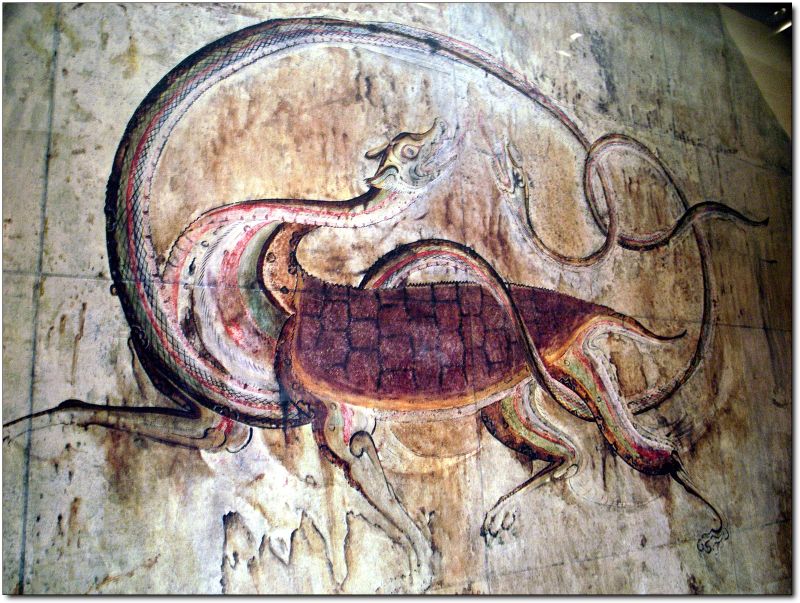

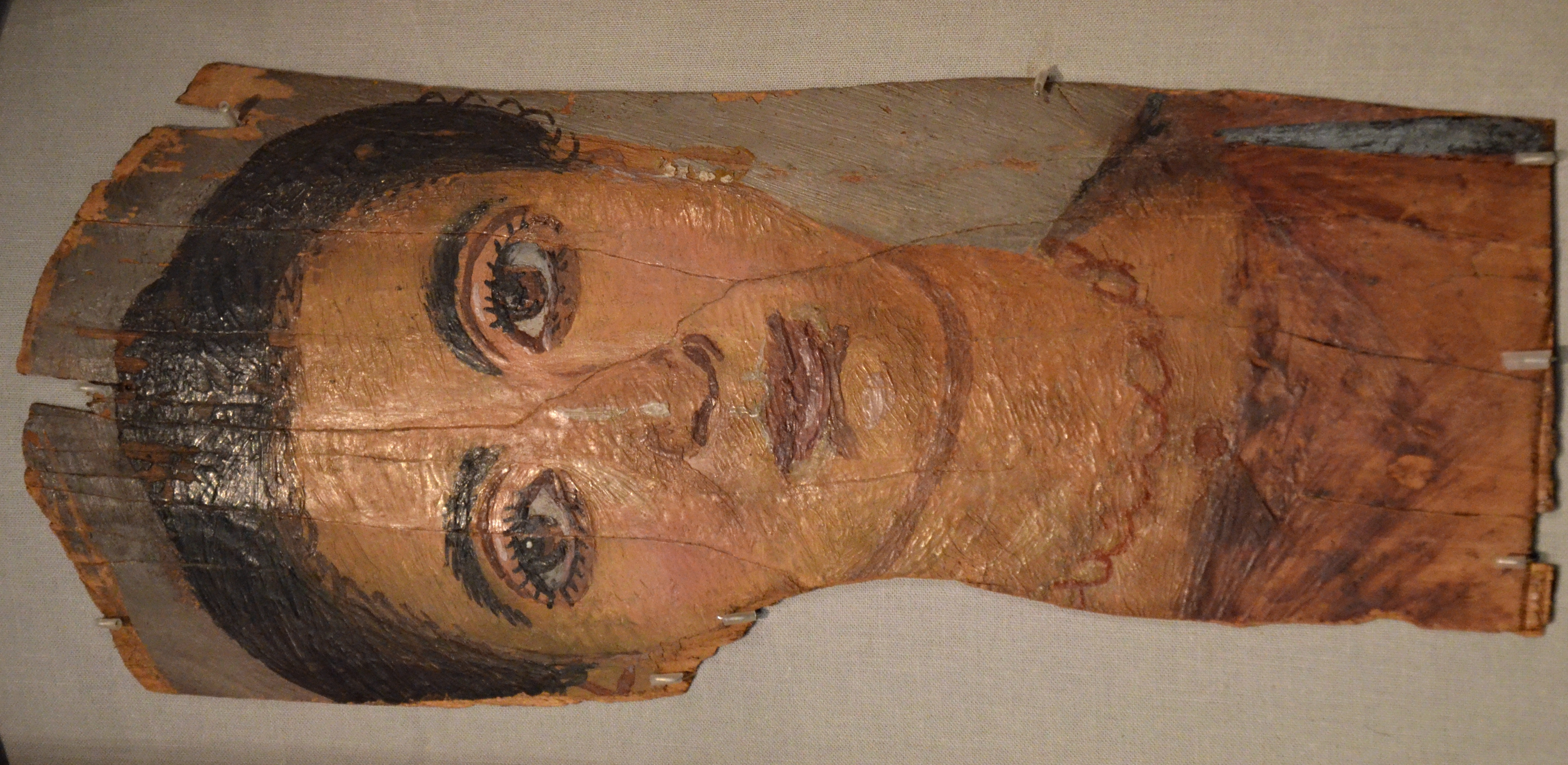


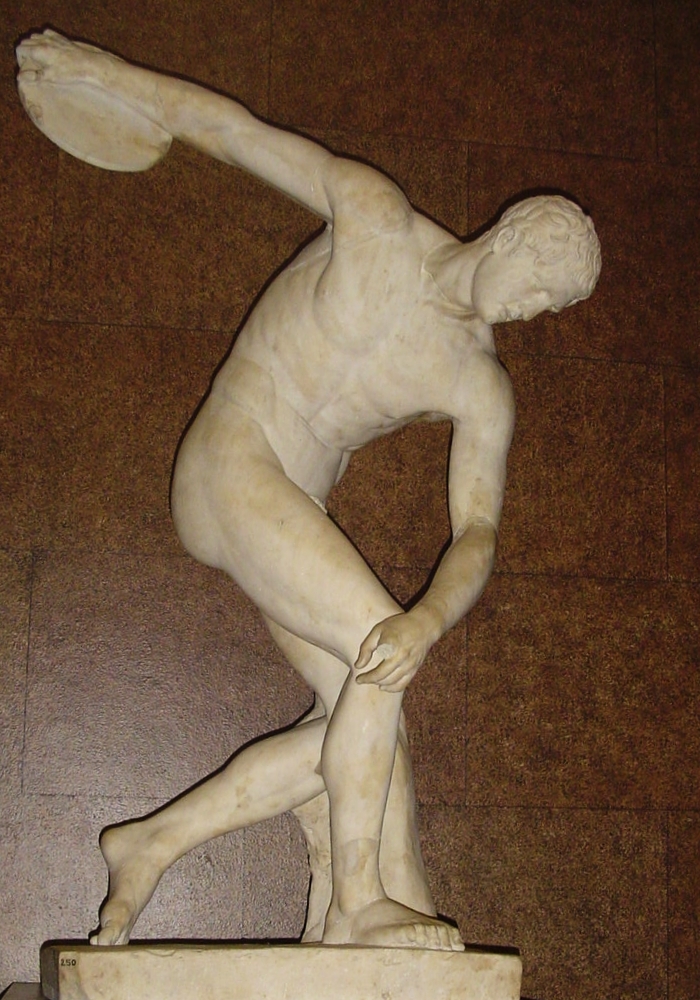

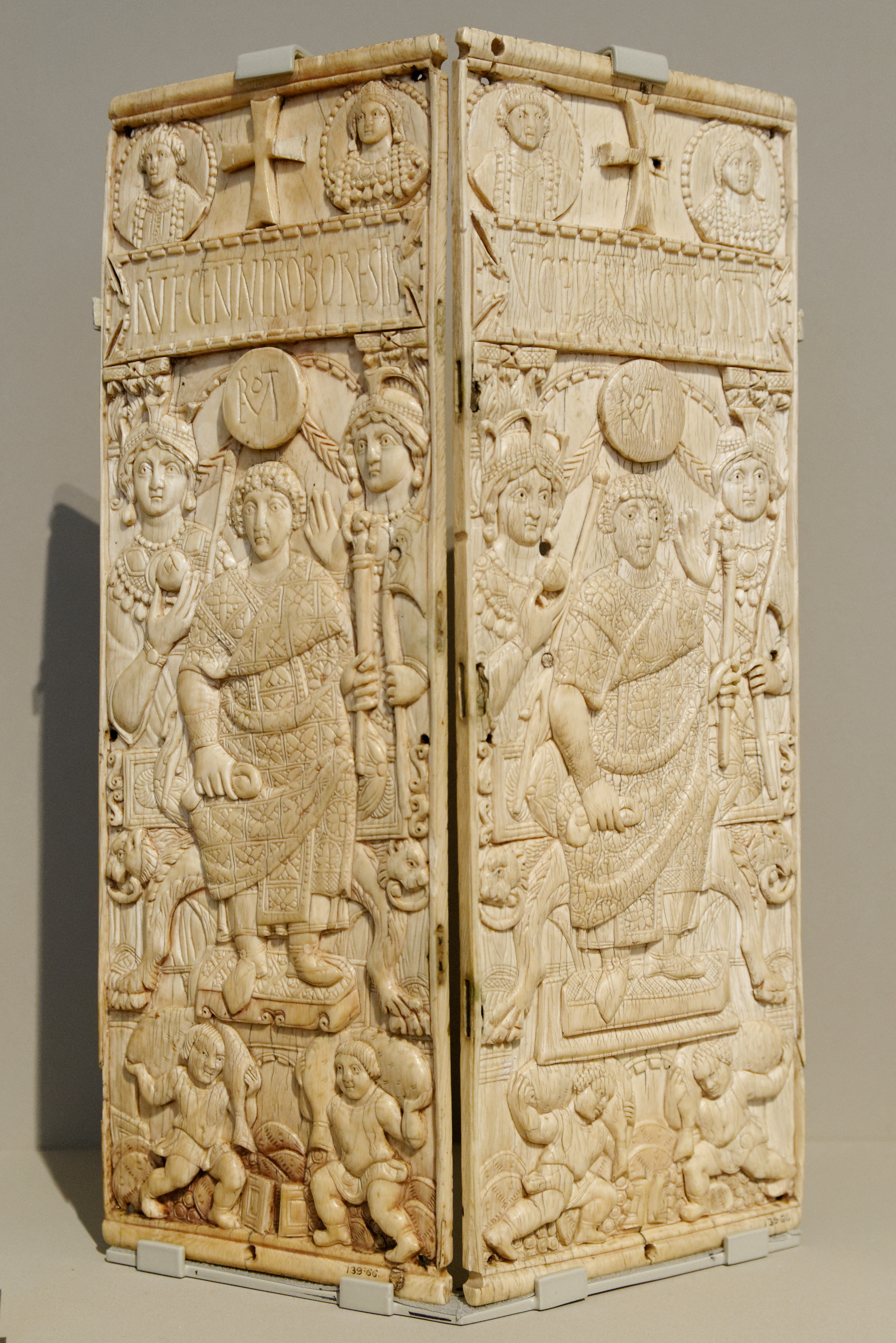


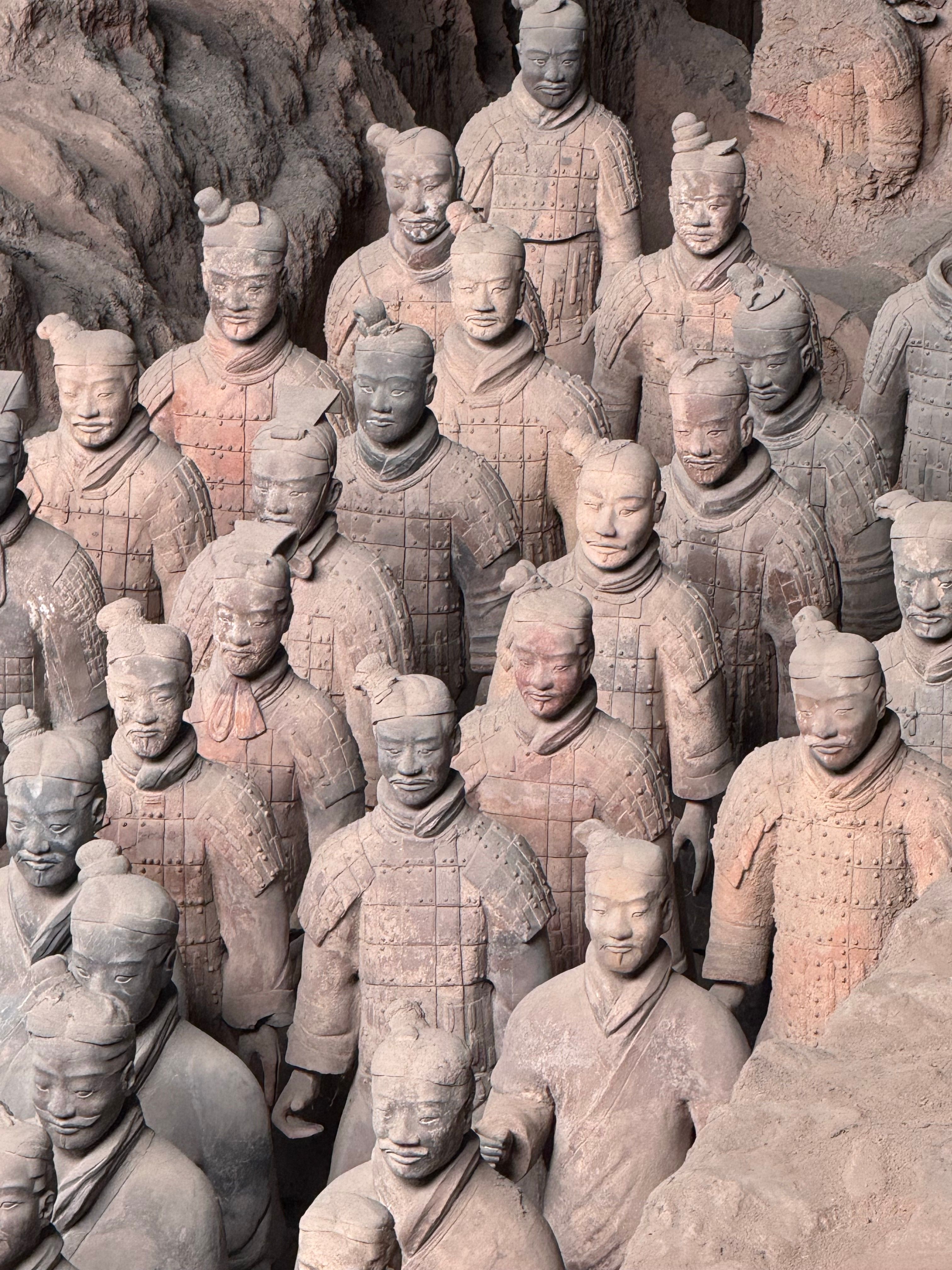


One of the most fascinating examples of this is how they depicted the human face. For statues and paintings of important people, they would combine the most flattering and recognizable features—profile nose, frontal eye, and sometimes even a combination of different views to create the idealized image. This wasn't about what someone actually looked like, but about creating the perfect, eternal representation of their essence.
What was the main purpose of Egyptian art? The main purpose was to ensure an orderly transition to the afterlife and to appease the gods. It was a functional tool to maintain Ma'at—the divine order and balance of the universe. For the dead, it provided a perfected eternal world; for the living, it reinforced the power of the pharaoh and the gods.
Could ordinary people afford art? While most monumental art was commissioned by the pharaoh and elite nobles, ordinary Egyptians did have access to art forms they could afford. This included terracotta figurines, amulets, small stone vessels, and painted wooden items. Even the poorest Egyptians might possess a simple amulet for protection, showing how art was integrated into all levels of society.
How has Egyptian art been preserved over time? The dry Egyptian climate has been incredibly helpful for preservation. Many artifacts have survived because they were buried in tombs, protected from moisture and oxygen. However, many treasures were also destroyed over time—during the Christian period, many temples were converted to churches and their pagan art was damaged or destroyed. Later European excavations sometimes caused damage in their haste to retrieve artifacts.
Ma'at was the central concept in Egyptian religion. It represented truth, justice, cosmic order, and harmony. Maintaining Ma'at was the responsibility of the pharaoh, and art played a crucial role in this process. Every temple relief, tomb painting, and statue was a contribution to maintaining the proper order of the universe. Art wasn't decoration—it was work.
Who were the most famous Egyptian artists? This is a great question because it highlights a huge difference between their culture and ours. We don't know the names of almost any Egyptian artists. They were considered skilled craftspeople, not individual geniuses. Their job was to flawlessly execute a divinely-inspired design, not to express their personal vision. The work was anonymous and collective.
Astronomical Art: Stars, Planets, and Cosmos
Egyptians were keen observers of the heavens, and their astronomical knowledge is reflected in their artistic tradition. These works show how the Egyptians understood their place in the cosmos and used celestial phenomena for practical and religious purposes.
Stellar Imagery: Stars and constellations:
- Decan Stars: 36 stars used for timekeeping
- Constellation Figures: Representations of zodiac signs
- Star Clocks: Diagrams for tracking time
- Celestial Maps: Charts of the night sky
- Star Deities: Gods associated with specific stars
Solar Imagery: Sun worship and solar phenomena:
- Sun Disk (Aten): Representation of the sun god
- Solar Barque: Boat carrying the sun across the sky
- Sunrise and Sunset: Daily solar cycle
- Solar Eclipses: Rare celestial events
- Sun Temples: Structures aligned with solar events
Lunar Imagery: Moon phases and lunar deities:
- Moon Phases: Waxing and waning moon
- Lunar Deities: Gods associated with the moon
- Lunar Calendars: Timekeeping based on lunar cycles
- Moon Temples: Structures aligned with lunar events
- Lunar Magic: Magical practices using lunar power
Cosmological Scenes: Depictions of the cosmos:
- Creation Myths: Origins of the universe
- World Maps: Ancient Egyptian understanding of geography
- Cosmic Order: Representations of Ma'at and cosmic balance
- Afterlife Journey: Path through the heavens
- Divine Realm: Home of the gods and cosmic forces
Astronomical Instruments: Tools for observing the heavens:
- Gnomons: Shadow-casting devices for timekeeping
- Astrolabes: Early astronomical instruments
- Star Charts: Maps of celestial positions
- Calendar Systems: Solar and lunar calendars
- Observation Platforms: Structures for astronomical viewing
Egyptian astronomical art demonstrates that their artistic tradition encompassed not just the terrestrial world but also the celestial realm, showing how the Egyptians understood their relationship to the cosmos and used astronomical knowledge for practical purposes like agriculture, timekeeping, and religious ceremonies.
The workshops were often family-run, with techniques and secrets passed down through generations. This system ensured consistency and quality but also meant that individual artistic expression was generally subordinated to the collective tradition and religious requirements.
However, there are a few exceptions. During the Amarna Period, some artists did gain recognition. The sculptor Thutmose, who created the famous bust of Nefertiti, is one example. Another is the architect Imhotep, who designed the Step Pyramid of Djoser and was later deified as a god of wisdom and medicine. These rare exceptions prove the rule—individual artistic identity was simply not part of the Egyptian artistic tradition.
Is the Bust of Nefertiti in Egypt? No, it is currently in the Neues Museum in Berlin, Germany. Its ownership is a point of major controversy, with Egypt repeatedly demanding its repatriation, claiming it was taken out of the country improperly. It's a classic example of the complex debates surrounding ancient artifacts in foreign museums.
The bust was discovered in 1912 by German archaeologist Ludwig Borchardt, who was working under a permit that allowed him to share finds with the Egyptian Antiquities Service. The dispute centers on whether Borchardt deliberately hid the true value of the bust when Egyptian officials came to inspect the finds. This controversy highlights the complex colonial history of archaeology and the ongoing conversations about cultural heritage and repatriation that continue today.