Francis Bacon: Painting Techniques That Bleed Emotion
Discover the visceral methods behind Francis Bacon's masterpieces—from scumbling and distortion to psychological color palettes. A raw exploration of technique vs. trauma.

The Brutal Truth About Francis Bacon: Painting Techniques That Bleed Emotion
Francis Bacon's paintings are not a passive viewing experience; they are an ambush. They come at you in a language of raw, exposed nerves and physical anxiety, a visceral assault on the senses that leaves you breathless and questioning the very nature of human existence. I remember the first time I stood before a Bacon triptych at the Tate. The air grew thick, my skin prickled. Not because of the gore—not exactly—but because the paint itself felt alive, writhing on the canvas. That’s Bacon’s true genius: his techniques aren’t just methods; they are confessions, dragged screaming from the subconscious and slapped onto a surface that was never meant to contain such fury. Today, let’s dissect how he weaponized texture, distortion, and color to make your stomach twist and your mind race. Buckle up. It gets messy.
Why Listen to Me? A Confession
Before we dive into the grit, a word of warning. I'm obsessed with the mechanics of artistic anarchy. I've spent years studying the methods of painters who break the rules not for applause, but because they have no other choice. What you're reading isn't a sterile academic paper; it's a field guide, written from the trenches of a creative practice that values emotional honesty above all else. We're going to get our hands dirty, because that's the only way to understand an artist who treated paint like a raw nerve.
And here's the thing about Bacon: his surfaces, often thick with impasto, seem to retain the very violence of their application. Every smear, scrape, and incision speaks of a mind grappling with profound torment. The figures, contorted in glass cages or dissolving into murky voids, vibrate with a deep-rooted inner scream. This was an artist plumbing the depths of the human condition, unearthing raw, primal, and profoundly disturbing truths that he then dragged into the light, forcing us to confront the uncomfortable realities we so often choose to ignore.
The Anatomy of Intensity: Why Bacon’s Methods Still Haunt Us
Bacon didn’t paint portraits; he performed autopsies on the human psyche. His work isn’t about how a person looks—it’s about how they feel when broken by existence. And his techniques? They’re the scalpel, the forceps, the bone saw he uses to conduct this psychological surgery right in front of us.
His methods are deliberately crude, even brutal: thick impasto that mimics dried blood, figures melting into prison-like geometric cages, and a relentless cycle of destruction and recreation. He once said, “The more violent the paint, the more it convulses.” This isn’t about aesthetics in the traditional sense—it’s more like therapy. Not his. Ours, forced upon us.
Beyond the Pope: Key Works That Define His Methods
To truly understand his toolkit, you have to see it in action across his most pivotal pieces. Each series serves as a masterclass in controlled pandemonium.
Painting (Series)  | The Core Technique & Its Emotional Punch |
|---|---|
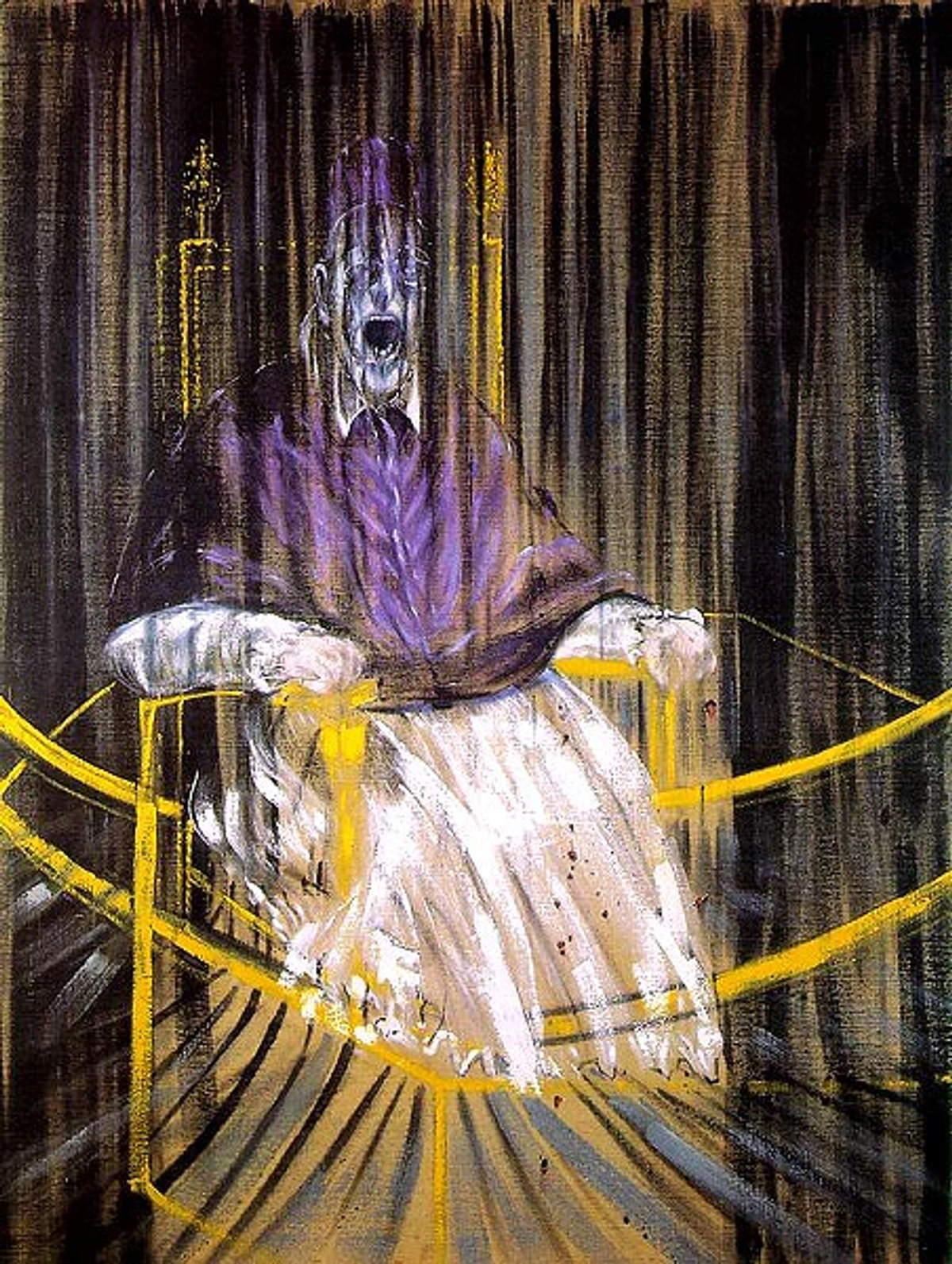
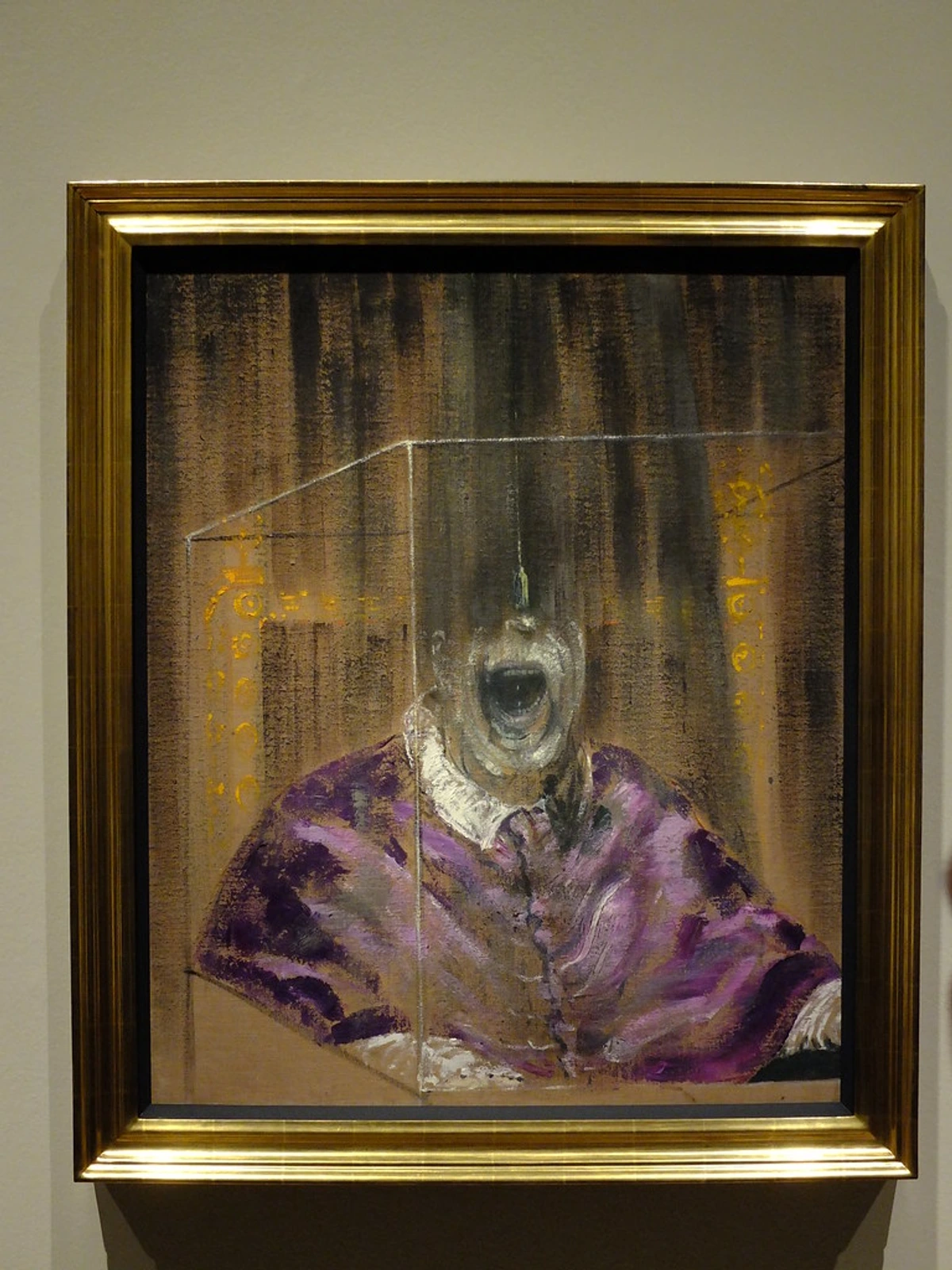
| Screaming Popes (1949-1954) | The raw, open-mouthed scream, rendered in a smear of red and pinks. The geometric cage is used to isolate the figure, creating a sense of pure, concentrated panic. It’s not just a portrait; it’s a dissection of power and terror. |
| Lying Figures (1950s-1970s) | The human form is distorted, almost liquefied, often set within a stark, claustrophobic room. Here, the technique of scumbling and scraping creates a flesh that looks bruised and diseased, suggesting the vulnerability of the body. |
| Triptychs (1960s-1980s) | These are his narrative epics. The format allows him to explore a violent event from multiple, non-linear angles. The paint application becomes even more frenzied, with broad, sweeping gestures that connect the panels and create a pulsating, rhythmic sense of violence and movement. |
Weaponized Paint: The Gritty Toolkit
Bacon’s studio at 7 Reece Mews in South Kensington, London, now meticulously recreated in Dublin City Gallery The Hugh Lane, was less an Atelier and more a chaotic, cluttered battlefield of creativity. He painted standing up, surrounded by a thick carpet of paint splatters and the detritus of his life. He used sponges, rags, and palette knives. Destroyed works with palette knives. Let’s break down his arsenal:
Technique | What It Is | Why It Works |
|---|---|---|
| Scumbling & Overglazing | Dragging thin, translucent layers of paint over dried underpainting. | Creates ghostly, decaying flesh. The layers build up a history of revisions, a palimpsest of failed attempts that adds emotional depth. |
| Rough-Sanded Canvas | Canvas aggressively abraded or prepared with coarse materials before painting, or even using the unprimed back of a canvas, which absorbs pigment unpredictably. | Traps pigment in crevices. This hostile surface creates unpredictable effects, making light dance cruelly across forms and amplifying a sense of physical decay and vulnerability. |
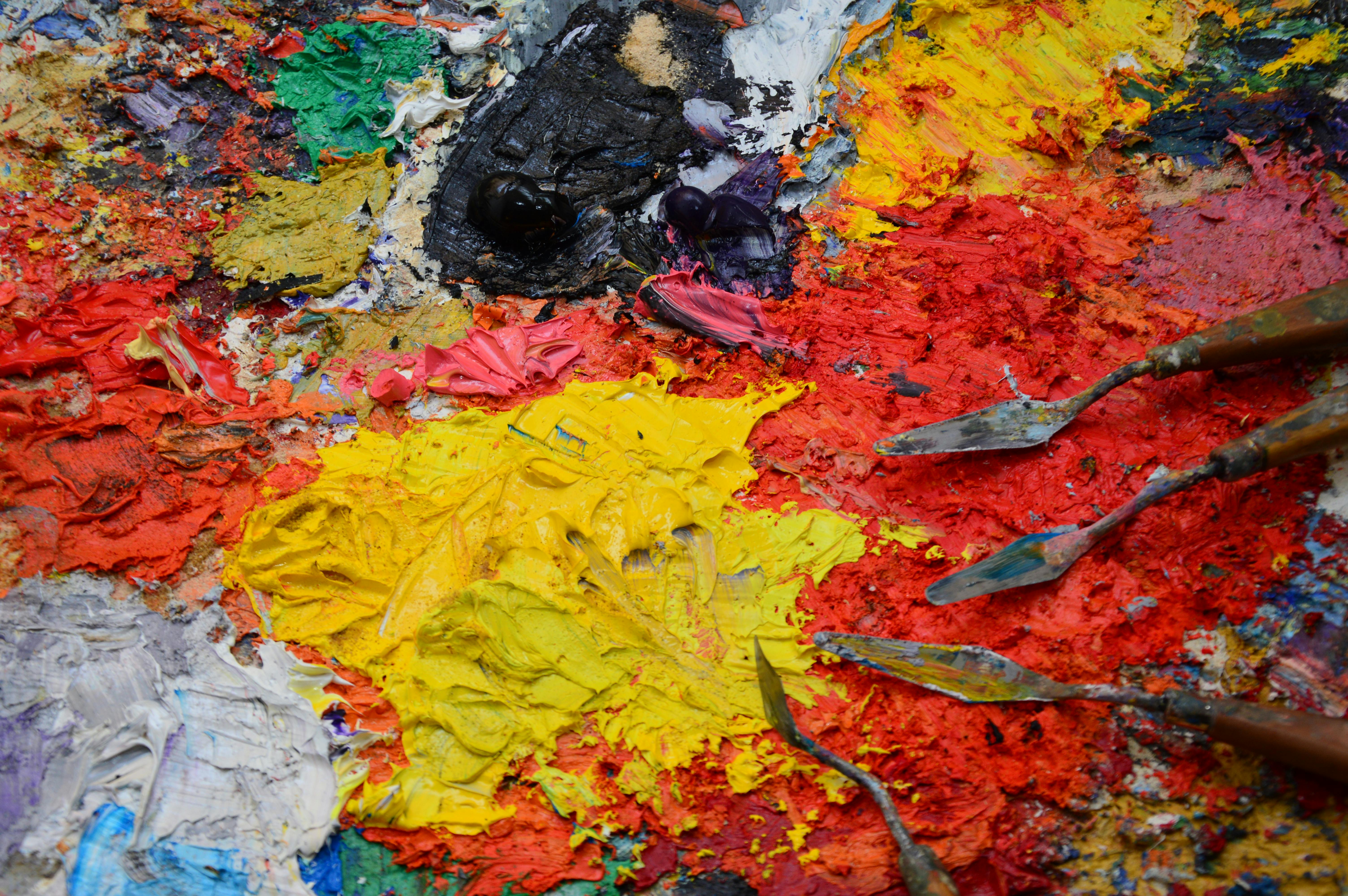
| Impasto Frenzy | Piling pigment thickly with palette knives, rags, or even bare hands. | Evokes a heavy, tactile anxiety. It forces viewers to confront the physical weight and violence of the paint itself, turning color into a tangible, almost sculptural form of matter. |
| Grid Imposition | Drawing linear cages, often using a ruler or pieces of string dipped in paint, directly onto the figure or background. | Evokes intense psychological imprisonment and isolation. The grid acts as a brutal framing device, trapping the subject and focusing the viewer's gaze on their existential torment. Some art historians link this to his brief work in interior design and Bauhaus influences. |
| Accidental Glazes | Dropping, dripping, or pouring turpentine onto wet paint to create chance effects, or wiping the surface with a rag soaked in solvent to dissolve a just-painted area. | Creates organic, grotesque textures that feel uncontrolled, mimicking the unpredictable, chaotic nature of trauma and memory. |
The Dance of Destruction: Why He Burned His Own Artwork
Here’s the secret most people miss: Bacon’s process was a relentless cycle of failure and violence. He painted over his failures. Daily. He’d layer screams on top of screams, trauma upon trauma, until the canvas could barely contain its own history. The 1946 Three Studies for Figures at the Base of a Crucifixion, a landmark of post-war anxiety, didn't spring forth fully formed. Reportedly, he painted it, hated it, then slashed the canvas in a fury before reworking it into the iconic, demonic state that would shock the London art world.
I know what you’re thinking: “Isn’t that just a waste of a perfectly good canvas?” But that’s exactly the point. For Bacon, art was war, and the canvas was the battlefield. He once told an interviewer, “I’d rather destroy good work than keep it mediocre.” He understood that clinging to safety was the real failure. This brutal self-editing is a profound lesson for any creative. Your next edit should be that ruthless. Burn if you must.
The Philosophy of the Accident: Chasing Chaos on Canvas
This entire process was driven by a belief in the power of the accident. He wasn’t just being destructive for its own sake; he was trying to break through the barrier of conscious control to access something more primal and honest. He believed that truly great images couldn’t just be willed into existence; they had to be wrestled from chaos. By smearing, scraping, and dripping, he invited chance to be his collaborator. He'd work on a piece until it felt contrived, then a random splash of turpentine or a stray brushmark would open up a new, unexpected path. This is the core of his method: the willingness to let go, to allow the materials to have a say, and to recognize the final image as something that happened as much as it was made. It’s a method that requires immense courage and a deep trust in one's own instincts, a stark contrast to the more planned approaches of many contemporary artists.
Color Theory: How He Made Your Blood Run Cold
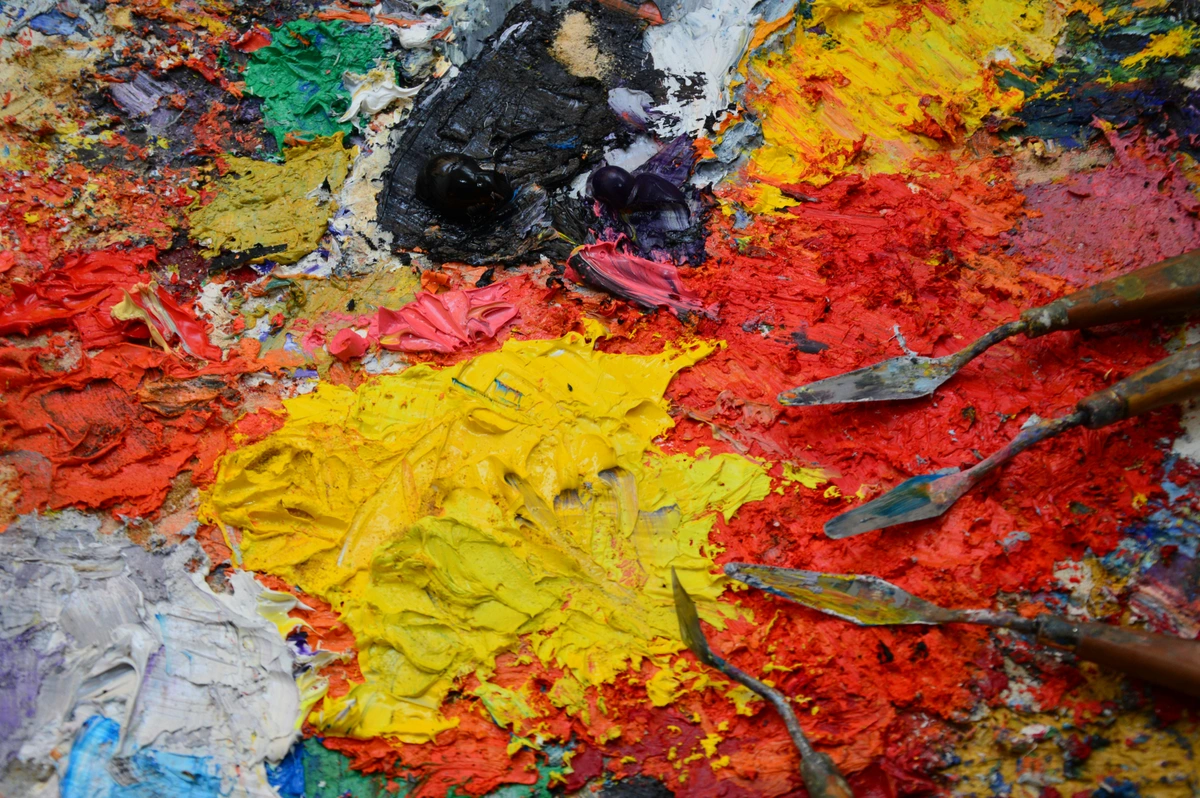
Bacon’s colors aren’t just pigment—they’re emotional landmines, carefully set to detonate in your subconscious. He’d isolate a screaming mouth in a slash of cadmium red, then smear ash gray and dirty umber around it, creating a palette that immediately evokes mortality and decay. Why does this work with such brutal efficiency? Because your brain makes primal, deeply rooted associations. Red is not just a hue; it's blood, it's a wound, it's the very engine of life. Gray isn't just neutral; it's a corpse, it's concrete, it's the final silence of the void.
His trick? Triadic tension, a high-wire act of clashing pigments. He’d vibrate two high-intensity colors (like acid yellow and violent green) against a dark, murky background of black or deep purple. It’s the visual equivalent of a migraine, a sensory overload. And yet, you can’t look away. This jarring color relationship is a key lesson in modern art history. It's fascinating to compare this strategy with the work of other masters; for instance, the Impressionists used color relationships to create light, while Monet's Water Lilies built entire worlds out of reflective harmony. For Bacon, the goal was pure, unadulterated dissonance.

Experiments in Light and Shadow
While his color choices were aggressive, his handling of light was just as critical. He rarely used a single, clear light source. Instead, his figures are often illuminated from harsh, unseen angles that flatten their features and create deep, inky shadows. Think of the clinical, unforgiving light of an abattoir or an operating theater. This isn't light that reveals form; it's light that exposes guilt, anxiety, and the physical reality of being a bag of flesh and bone under a bare bulb.
Can You “Learn” Bacon? The Brutal Reality
Spoiler: You can’t. Not fully. His techniques demand a level of psychological exposure that most of us instinctively avoid. To scumble like him, you’d need a kind of fearless vulnerability, a willingness to sit with profound discomfort for hours on end until the image starts to reveal its secrets. To impasto with that specific fury? You’d need to find a way to channel pure, undiluted existential dread.
But here’s a lifeline: steal his process, not his style. Don't try to paint a screaming pope. Start with his environment. Start with a rough-sanded canvas—a hostile surface that fights back. Let accidents happen, let turpentine drip where it may. Paint a layer, then attack it. Use his grids not just as cages, but as instruments to focus chaos. Then ask yourself the only question that matters: “Does this painting make me uncomfortable? Does it feel dangerous?” If not, destroy it. Or bury it, literally, in a corner of the studio for a few months, then drag it back out and force a new, more brutal truth from it.
The Studio as Confessional: Exploring Bacon's Influences
Bacon's vision was not formed in a vacuum. He was an obsessive collector of images, drawing from a vast and eclectic personal library. His studio, famously chaotic, was filled with hundreds of photographs, medical textbooks, and film stills. These weren't just references; they were catalysts for his imagination. He was deeply influenced by the frozen motion of Eadweard Muybridge's locomotion studies, which he used to animate his own contorted figures, giving them a sense of wrenching, unnatural movement.
And it wasn't just art. He devoured Sergei Eisenstein's Battleship Potemkin, whose Odessa Steps sequence gave him a grammar for chaos and panic. He stared at the screaming mouth of the nurse in that film with the same intensity he brought to Velázquez's Pope, searching for the perfect synthesis of a scream—one that could encapsulate an entire century's worth of horror. These varied sources—high art, cinema, medical journals—were all thrown into a mental blender, emerging on the canvas as something entirely his own.
The raw brutality of his images also owes a significant debt to the traumas of the 20th century. Born in 1909, he lived through an era of unparalleled violence. The photographs from concentration camps, the aftermath of aerial bombardments, and the general sense of a fractured civilization seeped into his work. His paintings are not a direct depiction of war, but rather an archaeological dig into the emotional and psychological landscape it created.

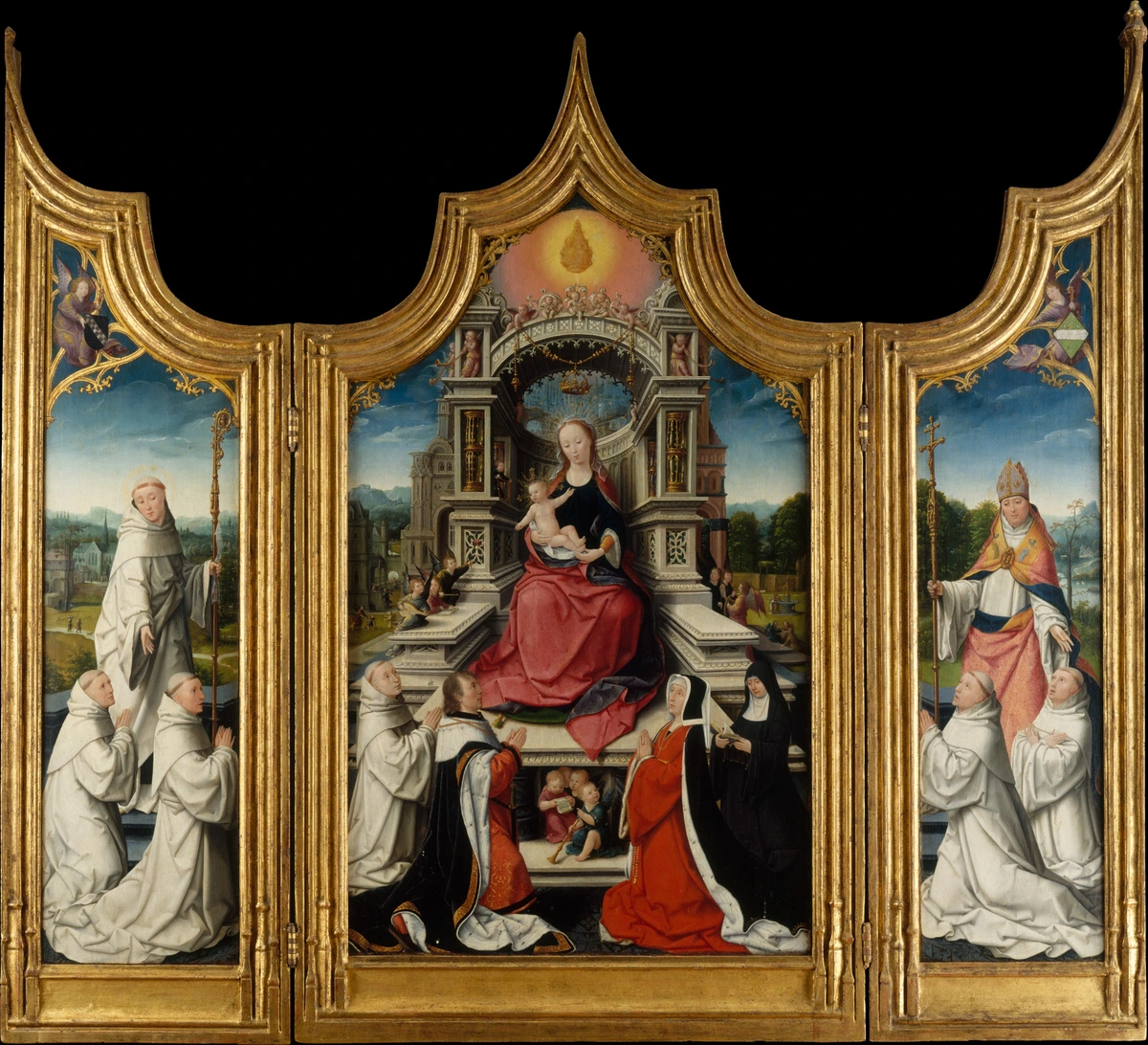
Curiously, his deliberate use of triptychs—a format traditionally reserved for religious altarpieces—can be seen as a deeply, almost blasphemously ironic gesture. He took a structure designed to impart sacred narrative and hope, and filled it with images of profane terror and existential doubt, offering not salvation, but a mirror to our own inner chaos.
This act of channeling disparate influences is central to his genius and a vital lesson. Don't just look at other painters; look at everything. Let your curiosity guide you. Build a personal library of visual triggers, and use them as jumping-off points to find your own voice, much like how the Russian avant-garde forged new languages from the fragments of the old.
FAQ: The Uncomfortable Questions
We've danced around the theory, the angst, the violence. Now, let's get down to the brass tacks with some questions I often hear from artists wrestling with his legacy.
Q: Did Bacon use live models? A: Rarely. He preferred photos, film stills, and medical illustrations. The human body was just a vessel for screaming. He found working from life too limiting, too polite, and perhaps too real. A photograph allowed him to deal with the idea of a person, a frozen moment he could then shatter and reconstitute on his own terms. This detachment was crucial. It allowed him to distort and manipulate the figure more freely, treating it like raw data for his emotional inquiry—a practice that stems from early 20th-century experimental art movements like Cubism, which also fragmented reality.
Q: Why are his figures often stuck in boxes? A: Those “boxes” started as simple geometric framing tools. Over time, they became psychological cages. Bacon called them “instruments of torture.” They are more than mere spatial devices; they create a claustrophobic tension, isolating the figure and focusing the viewer's entire attention on the psychological state of the subject. Think of them less as rooms and more as the isolating architecture of a nightmare from which there is no awakening.
Q: Is his technique messy or intentional? A: Both. He’d layer sludge with surgical precision. The mess is the message. If it doesn’t look like he fought for it, it’s not Bacon. It's a paradox. He would meticulously plan his compositions, sometimes working from studies, but then attack the canvas with a brutal spontaneity, allowing chance and accident to become co-authors of the final image. This dance between control and chaos is the real key to his method.
Q: How can modern artists emulate this without being nihilists? A: Focus on emotional honesty. Ask: “What feeling am I burying?” Let your tools bleed that out. The nihilism comes if you forget the “why.” Bacon was deeply engaged with the world, however critical his view. Emulate his honesty and courage, not his cynicism or style. Find your subject's beating heart amid the chaos, and speak to that.
Q: Any practical beginner exercises to build courage, not just skill? A: Absolutely. This isn't about learning to paint like Bacon; it's about learning to think with his fearlessness.
The Un-Canvas: Don't start with a white, pristine canvas. Degrade it first. Sand it until it's rough as skin, or stain it with coffee grounds or tea. Make it hostile territory from the first second.
The Non-Brush: Apply pigment with anything but a brush—a palette knife, a rag, your fingertips, an old credit card. Embrace a direct, messy, and physical connection with the materials.
The Five-Minute Scream: Set a timer for five minutes. Paint a strong emotion using only three colors. Don't think, just attack the canvas. This bypasses the inner critic. That raw, chaotic gesture is your starting point, not the final result. Like the ethos behind Action Painting, the rest of the work is about refining and focusing that initial, unpremeditated scream, not domesticating it.
The Act of Vandalism: Take a work you consider "finished" or "safe." Now, your only job is to ruin it. Sand it. Scrape it. Pour turpentine on it. Out of that act of destruction, a new, more honest image will often emerge.
The Image Hunt: Like Bacon, don't work in a vacuum. Go find your version of the screaming Pope. Scour old magazines, medical textbooks, or film stills for a single image that unnerves you. Project it. Trace it. Then, distort it. Use it as a starting point, not an end goal. Let the image trigger your own emotional response, and let that guide the paint.
The Final Truth: Art Isn’t Pretty. It’s Alive.
Bacon techniques aren’t a recipe—they’re a rebellion. A middle finger to polite society, to pretty paintings, to the idea that art must console. His work reminds us: creativity is a wound, not a bandage.
His paintings don't resolve. They interrogate, they wound, they leave scars. In a world that constantly demands easy answers and pleasant diversions, Bacon's enduring relevance lies in his refusal to provide either. He stands as a permanent monument to the idea that the most profound truths are often the most difficult to face.
So go ahead. Let your canvas scream. Use that palette knife like a weapon. And if your art doesn’t haunt you just a little? You’re not trying hard enough.





Looking at his body of work, it’s clear that Bacon was less interested in providing answers than in forcing us to confront difficult questions. What is the self? How do we endure in a world saturated with violence? What are the limits of representation? His paintings, with their tormented Popes, screaming businessmen, and contorted lovers, offer no easy solace. They stand as stark, magnificent, and deeply disturbing monuments to the unresolved anxieties of modern life.
For those of us who make art today, his legacy is a challenging one. It’s a call to abandon the safety of the merely decorative, to dig deeper into the rich, messy soil of our own experience, and to find there the raw, unvarnished truth that can make a painting not just something to be seen, but something to be felt. A Bacon painting doesn’t hang on the wall—it bleeds onto the floor.
If his work has ignited a spark of rebellion in you, or even just a morbid curiosity, I encourage you to explore the boundaries of contemporary expression. Perhaps you'll find a kindred spirit in our timeline of artistic rebellions. If you feel compelled to start your own act of artistic rebellion, dive into our guides on how to paint sharp edges in art, or maybe you'll discover a piece that speaks to your own unquiet mind among our curated art prints.