Hearing Colors: Famous Artists with Synesthesia
Ever wondered what music looks like? Or what color a number is? Dive into the world of synesthesia and meet the famous artists who turned their crossed senses into masterpieces.

Hearing in Color: A Personal Dive into the World of Artists with Synesthesia
Have you ever heard a song and seen a flash of blue? Or maybe tasted a word on your tongue? It sounds like something out of a sci-fi movie, but for some people, it's just... Tuesday. This is the wild and wonderful world of synesthesia, a neurological trait that weaves together senses in unexpected ways. And I find it absolutely fascinating because it sits at the very intersection of neurology, perception, and art. It's not just a curious phenomenon; it's a profound lens through which some of the most creative minds perceive and translate reality, often leading to incredibly unique artistic expressions.
It’s this idea that our senses aren't neatly filed away in separate cabinets. For some, the wiring gets a little more creative, and the phone line for 'sound' gets patched directly into the switchboard for 'color' (among other delightful sensory mash-ups). The result isn't confusion, but an extra layer of reality. And for an artist, an extra layer of reality is like finding a whole new tube of paint you never knew existed, opening up an entirely new vocabulary for their craft.
So, What Exactly Is Synesthesia?
At its core, synesthesia is a neurological trait where stimulating one of your senses automatically and involuntarily triggers an experience in another. It's not a metaphor—people with synesthesia don't just think the number 7 is yellow; they genuinely see it as yellow. It’s consistent throughout their life, deeply personal, and crucially, it's not a conscious choice. I like to think of it as a personal, secret code for the world, a unique filter through which reality is perceived. While I might see a symphony as just a collection of sounds, a synesthete might see it as a cascading waterfall of purples and golds. How could that not profoundly influence your art, your daily interactions, and your very understanding of the world?
The Science Behind the Symphony of Senses
So, how does this sensory cross-talk actually happen in the brain? The leading theory, and the one that makes the most intuitive sense to me, involves what researchers call cross-activation. Imagine your brain as a bustling city with different specialized neighborhoods, each responsible for processing a different sense – one for sight, another for sound, and so on. In most people, these neural neighborhoods have clear, distinct boundaries, keeping sensory information neatly separated. But in synesthetes, some of those boundaries are a little more porous, or perhaps there are extra, anomalous pathways connecting them.
This means that when the auditory cortex (the 'sound neighborhood') is stimulated by, say, a trumpet blast, it might also trigger activity in the visual cortex (the 'sight neighborhood'), leading to the vivid experience of chromesthesia – hearing in color. It’s not a faulty connection or a hallucination; rather, it seems to be an inherent, often more efficient, neural connection. Researchers have used advanced techniques like fMRI scans to observe these simultaneous neural firings in real-time, literally seeing specific brain regions light up together. It’s pretty incredible to think about the brain quite literally 'seeing' sound or 'tasting' a word.
It's widely believed that many people are born with these cross-wirings during early brain development, but most of us 'prune' them back as our brains mature. For synesthetes, these connections persist, making it a fundamental and lifelong part of their neurological makeup, rather than something learned, imagined, or acquired later in life. This inherent difference in sensory processing is what makes the synesthetic experience so unique and, for many, a cherished aspect of their identity.

There are dozens of types, each a unique blend of sensory experiences, but here are a few of the more common ones you'll see among artists, alongside their artistic implications:
Type of Synesthesia  | Description | How It Might Appear in Art |
|---|---|---|
| Chromesthesia | Seeing colors, shapes, or patterns in response to sounds (music, voices, environmental noises). | Paintings with compositions that feel musical, rhythmic, and vibrant; visual interpretations of soundscapes. |
| Grapheme-Color | Associating letters, numbers, or words with specific, consistent colors. | A highly specific and often subconscious color palette across an artist's work; unique typographic art. |
| Auditory-Tactile | Feeling physical sensations (like pressure, temperature, or texture) in response to sounds. | Sculptures or paintings with intense, palpable textures, conveying kinetic energy or physical impact. |
| Lexical-Gustatory | Tasting words, names, or sounds. | Art that evokes strong, unexpected sensory reactions; perhaps food-inspired abstract pieces. |
| Spatial-Sequence | Seeing numerical sequences (like dates, numbers, or the alphabet) as points in space. | Large-scale installations that explore concepts of time and memory; sequential narrative art. |
| Personification | Assigning personalities or genders to inanimate objects, letters, or numbers. | Characters within narrative art or abstract forms that carry distinct emotional weight. |
| Mirror-Touch | Experiencing a tactile sensation on one's own body when seeing another person being touched. | Empathetic and deeply human-focused art; possibly sculptures inviting touch and interaction. |
| Emotion-Color | Associating emotions with specific, consistent colors. | Art that uses color as a direct, visceral translation of internal emotional states. |
The Big Names: Artists Who Painted Their Senses
This isn't just a theoretical thing. Some of the most influential artists in history either had confirmed synesthesia or are strongly suspected to have experienced the world this way. Their work gives us a little window into their unique sensory lives.
[Wassily Kandinsky]
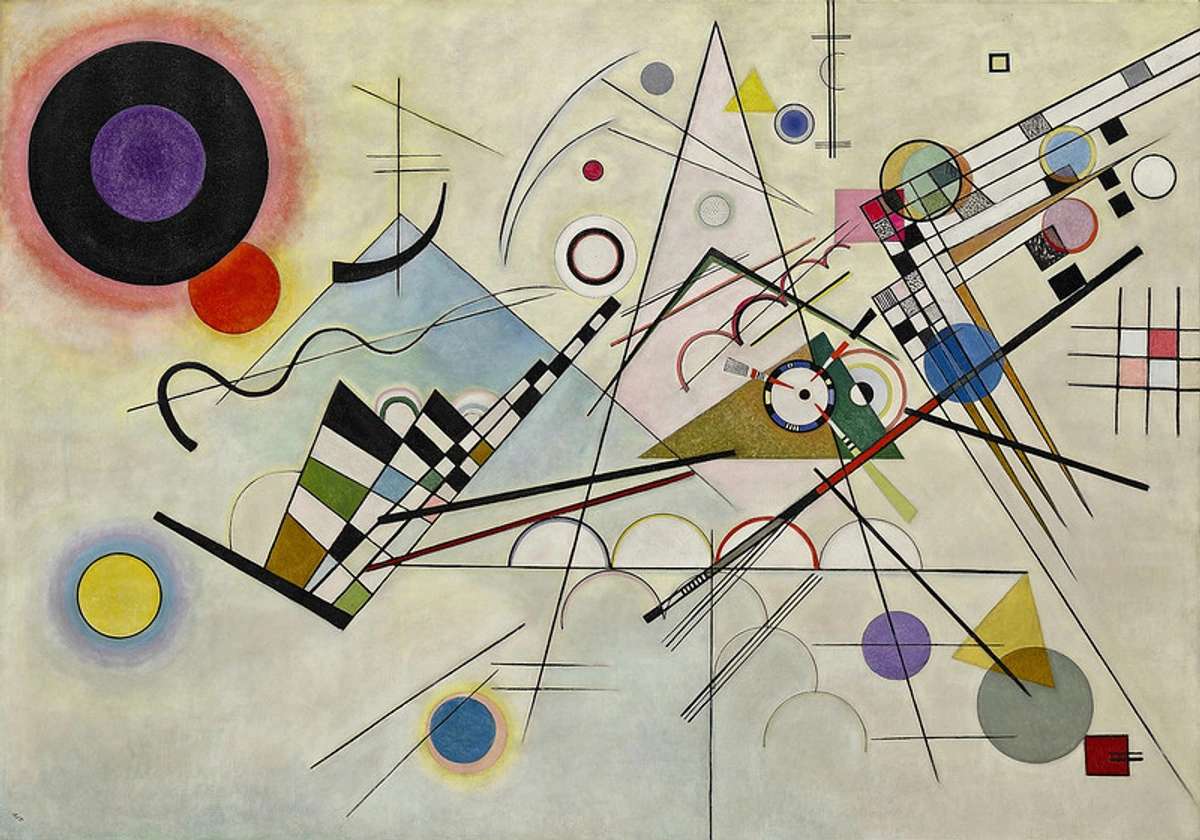
You can't talk about synesthesia and art without starting with Kandinsky. He is absolutely the poster child for chromesthesia, and his pioneering work in abstract art was fundamentally driven by his sensory experiences. He famously said, "Color is the keyboard, the eyes are the harmonies, the soul is the piano with many strings." For him, painting was a direct form of composing music visually, a profound translation of his inner world onto canvas.

When he perceived colors, he didn't just see them; he heard them. A vibrant yellow might sound like a piercing trumpet blast, while a deep blue could resonate with the low, meditative notes of a cello. Looking at his revolutionary abstract works, like Composition VIII (1923) or Impression III (Concert) (1911), isn't just about seeing geometric shapes and lines; it's about experiencing a visual symphony. I often find myself searching for the rhythm in his carefully placed dots and the crescendo in his dynamic lines, feeling the echoes of his chromesthetic perception. His theoretical writings, such as Concerning the Spiritual in Art, further elaborate on these connections, making him one of the most articulate advocates for the link between senses and artistic expression.

Vincent van Gogh
While there's no definitive diary entry from Van Gogh explicitly stating, "I have chromesthesia," the evidence from his letters and the intensity of his work leads many art historians and neurologists to strongly suspect he experienced the world through crossed senses. He frequently wrote to his beloved brother, Theo, about the profound connections he felt between color and music. He once even mentioned his struggle to "render the sounds" of a brass band in a painting, a clear indication of his auditory-visual associations.
When you immerse yourself in works like The Starry Night (1889), with its swirling, energetic yellows, intense oranges, and deep, resonant blues, it's not hard to imagine that he was painting not just the visible night sky, but what he felt and heard in its celestial movements. His incredibly emotional and often tumultuous use of color feels too specific, too deliberate, and too visceral to be anything but a direct translation of a deeper, synesthetic sensory experience. His palette was his emotional and sensory vocabulary.
[Joan Mitchell]
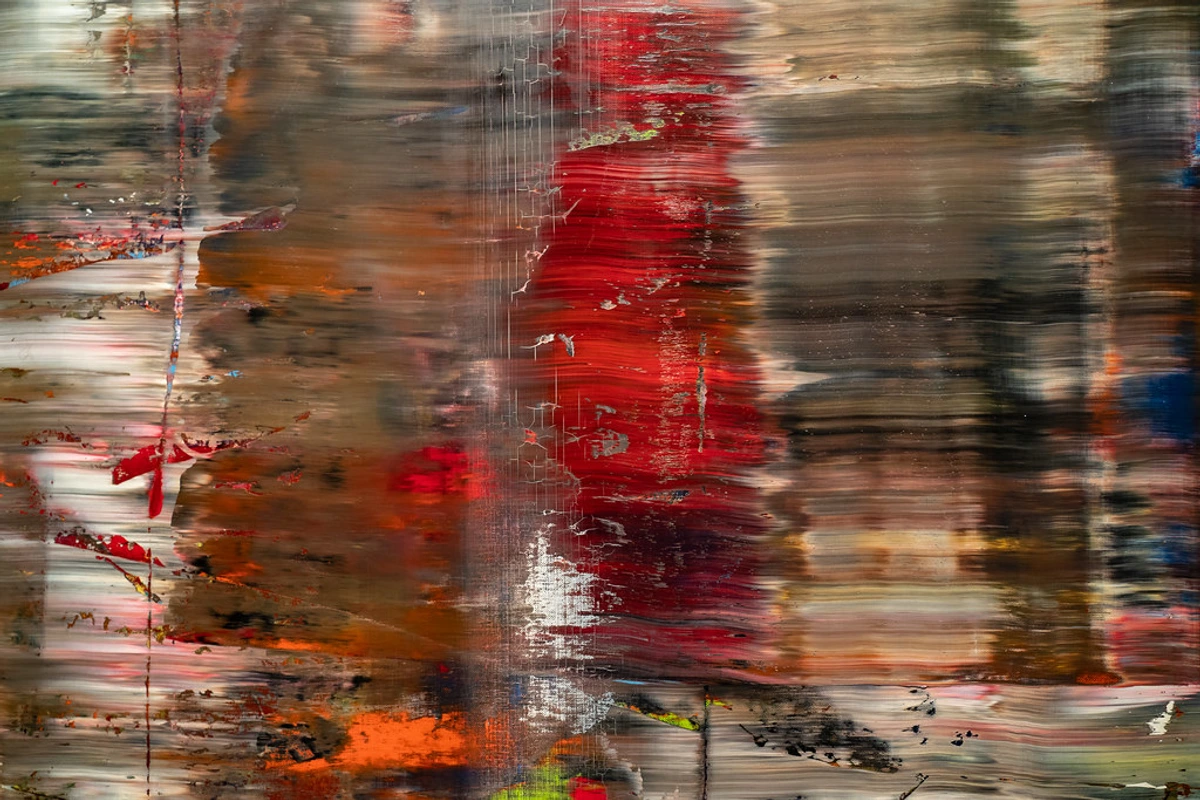
A titan of the Abstract Expressionism movement, Joan Mitchell had a confirmed form of synesthesia where she associated colors with letters and emotions. Her paintings are not just abstract landscapes; she called them "feelingscapes."
She described the letter 'A' as a certain shade of blue, and the feeling of joy as a burst of yellow. Her massive, chaotic, and beautiful canvases are raw emotion and memory translated into a language of color. She wasn't just painting a field of sunflowers; she was painting the sound of their name and the feeling of a summer day all at once.
[David Hockney]
Here's a truly compelling contemporary example: David Hockney, one of Britain's most celebrated living artists, explicitly and masterfully uses his chromesthesia in his prolific body of work. While his paintings are famously vibrant, he's perhaps most renowned for the direct application of his chromesthesia in his elaborate stage designs for operas and ballets.
He listens intently to the musical score, and as the sounds unfold, he literally paints the colors he instinctively sees in response. If a particularly dramatic passage of music is a vibrant splash of green and pink to him, that's precisely the visual language the stage and costumes will adopt. It's a direct, unfiltered, and incredibly honest translation of his sensory experience for the audience to share. This act isn't just creative; it's an incredibly generous invitation to step inside his unique perception, allowing us to glimpse the world through his synesthetic eyes and ears.

Other Notable Synesthetic Artists and Creators
Beyond these painters, many other creative minds across various disciplines have openly shared their synesthetic experiences. It highlights how these unique sensory connections aren't limited to one art form.
Alexander Scriabin (Composer)
The Russian composer Alexander Scriabin (1872-1915) is a fascinating example from the world of music. A devout chromesthete, Scriabin developed an elaborate system of correspondences between musical notes and colors, which he integrated into his compositions. He even designed a "color organ," or clavier à lumières, to project colored lights into the concert hall during his performances, most notably for his symphonic poem Prometheus: The Poem of Fire (1910). For him, a C major chord might be red, while F-sharp was a vivid blue. He wasn't just writing music; he was orchestrating a full sensory experience.

Musicians with Synesthesia
While we often focus on visual artists, many musicians have also experienced synesthesia, claiming it profoundly influences their songwriting and arrangements. Imagine experiencing music not just as sound, but as intricate visual landscapes or even tactile sensations! Notable figures include:
- Pharrell Williams: A self-proclaimed chromesthete, he describes his music as having "textures" and "colors."
- Lorde: She experiences sounds as colors, which helps her visualize and structure her songs.
- Billy Joel: He reportedly sees specific chord progressions and melodies as colors.
- Duke Ellington: The legendary jazz composer and bandleader also spoke of hearing colors in music, guiding his arrangements.
- Kanye West: Has described seeing specific sounds and musical elements as different colors, influencing his production style.
These artists demonstrate that synesthesia is a powerful, underlying current in the vast ocean of human creativity, regardless of the chosen medium.
Does Synesthesia Make You a Better Artist? The Creative Edge
This is truly the million-dollar question, isn't it? And my immediate answer is: I don't think it's a magic superpower that automatically transforms you into [Rembrandt van Rijn]. (Though, who knows, perhaps the Old Masters had their own hidden sensory worlds too!). Simply possessing synesthesia doesn't guarantee artistic genius; talent, dedication, and mastery of craft are still paramount.
However, what synesthesia does seem to consistently provide is a powerful, intrinsic source of inspiration, a unique internal logic, and a remarkable consistency that can profoundly shape an artist's vision and style. If your emotional landscape is inextricably tied to a specific color palette, or if sounds manifest as undeniable forms, your work will naturally possess a coherence and authenticity that is incredibly difficult to replicate by mere aesthetic theory alone. You're not just choosing colors or compositions based on learned principles; you're choosing them based on a fundamental, undeniable reality of your own perception. It's like having an extra sense dedicated to informing your artistic decisions.
Navigating the Sensory Labyrinth: Advantages and Challenges
Beyond the inspirational aspect, synesthesia offers several distinct advantages to artists:
- Enhanced Memory: For some, associating abstract concepts like numbers or names with colors or spatial arrangements can actually aid memory, a valuable asset for retaining complex ideas or details in creative projects.
- Unique Perspective: It grants artists a profoundly unique lens through which to view the world, leading to original interpretations and expressions that transcend conventional representation.
- Intuitive Consistency: The involuntary and consistent nature of synesthetic experiences can lead to a natural, almost effortless stylistic coherence in an artist's body of work, creating a recognizable signature.
- Deep Emotional Connection: When colors are emotions, or sounds are textures, the art created often carries an inherent emotional depth and visceral impact that resonates powerfully with viewers.
But let's be honest, it's not all rainbows and symphonies. I can also imagine it being incredibly overwhelming at times. A cacophony of unwanted colors in a noisy, brightly lit room, or the taste of concrete every time you hear the word "Monday" – these experiences could easily become distractions or even sources of sensory overload. Like any powerful tool or inherent trait, it’s all about how you learn to manage and ultimately master it. The artists we admire didn't just passively have synesthesia; they actively bent it to their creative will, channeling its unique properties into their groundbreaking work. It’s an act of translation, of disciplined interpretation, turning an internal reality into an external, shared experience.

Common Misconceptions About Synesthesia
Before we delve deeper, I wanted to quickly address some frequent misunderstandings I've encountered about synesthesia. Separating fact from fiction helps us appreciate this fascinating trait even more.
- It's a Hallucination: Synesthesia is not a hallucination. Synesthetes know their experiences are internal and often supplementary to their primary sensory input. They don't mistake their inner colors for actual objects in the external world.
- It's a Disorder or Mental Illness: Absolutely not. It's purely a difference in neurological wiring. Most synesthetes consider it a normal, and often positive and enriching, part of their lives. There's no cure because there's nothing to cure.
- It's Rare: While not extremely common, it's not as rare as once thought. Estimates suggest that between 2% and 4% of the population experiences some form of synesthesia, meaning there are millions of synesthetes worldwide.
- You Can Learn It: Generally, no. While some studies suggest certain training might induce synesthetic-like experiences, true synesthesia is believed to be innate and present from early childhood. It's a hardwired trait, not a skill.
- All Synesthetes Are Artists: While there's a higher prevalence of synesthesia among creative individuals, it doesn't mean every synesthete is an artist, nor that every artist is a synesthete. It's a facilitating trait, not a prerequisite for creativity.
Frequently Asked Questions (FAQ)
Here are some quick answers to questions I often hear about this fascinating topic, aiming to cover some of the most common inquiries.
Question | Answer |
|---|---|
| What is the most common type of synesthesia? | [Grapheme-color synesthesia] (associating letters and numbers with specific colors) is widely considered one of the most studied and prevalent forms. |
| Is synesthesia a mental illness or disorder? | Absolutely not. It's a benign neurological trait, simply a difference in how the brain processes sensory information. Most synesthetes consider it a normal, and often enriching, part of their lives. |
| Can you develop synesthesia later in life? | True, innate synesthesia is almost always present from birth or develops in very early childhood. While some research explores inducing synesthetic-like experiences, genuine synesthesia is generally a lifelong, fixed trait. |
| Are there famous musicians or writers with it? | Yes, many! Beyond the visual artists mentioned, a significant number of musicians (like Lorde, Billy Joel, Pharrell Williams, and Duke Ellington) and writers have reported synesthetic experiences, profoundly influencing their creative output. |
| How does it affect daily life? | For many, it's seamlessly integrated into their reality. It can sometimes offer advantages, like enhanced memory (remembering names by their colors) or a richer sensory world. However, it can also be overwhelming in sensory-rich or chaotic environments. |
| Can synesthesia be "cured" or "turned off"? | No, synesthesia is not a disease, so there's no cure. It's an inherent part of one's neurological makeup and cannot be simply "turned off" or suppressed. It's a permanent feature of their perception. |
| Is there a test for synesthesia? | Yes, researchers often use "consistency tests." Since synesthetic perceptions are highly consistent over time, a test that asks an individual to report their color (or other sensory) associations repeatedly will reveal if they are consistently the same, indicating genuine synesthesia. |
| Is it hereditary? | There's strong evidence suggesting a genetic component. Synesthesia often runs in families, indicating that there may be inherited predispositions to these unique neural connections. |
A Final Thought: The Symphony of Perception
So, is synesthesia a gift? A quirk? An evolutionary advantage? I think it's ultimately just another beautiful, intricate variation in the rich tapestry of human experience and neurological wiring. It’s a profound and powerful reminder that none of us are truly perceiving the world in exactly the same way – our realities are uniquely colored by our internal mechanisms. And isn't that, at its very core, the whole point of art? To offer a glimpse into the world through someone else's eyes, or in this wonderfully complex case, through their ears, nose, and even their taste buds, too.











For me, understanding synesthesia deepens my appreciation for the incredible diversity of human perception and the endless wellspring of artistic inspiration. It makes me wonder what colors my own abstract work might sing with, what textures my brushstrokes might evoke in the minds of others. If this journey into the intertwined worlds of senses and art has sparked your curiosity about exploring a world teeming with color, emotion, and unique perspectives, I invite you to delve deeper. Perhaps you'll even begin to notice your own subtle sensory connections. And if you're curious about experiencing art that aims to resonate on multiple sensory levels, you can always take a look at the pieces I have available to /buy.