ASTM Certified Art Materials: A Practical Guide to Safe Studio Practice | Zen Museum
A practical guide to understanding ASTM standards like D4236, with tips on reading labels, choosing safe, certified materials, and their impact on art.

Your Paint Can Talk: What “ASTM Certified” Is Actually Telling You
You've probably been there. You’re standing in a beautiful art supply store, your basket already heavy with possibilities, and you pick up a tube of paint. On the back, squeezed between the pigment info and the company’s website, are four letters: ASTM D4236. Maybe you've seen it a thousand times and never gave it a second thought. I know I didn't. Until one afternoon, a painter friend of mine casually mentioned she only uses “certified” materials for her studio work.
“Certified for what?” I asked, genuinely curious.
Turns out, that little code is your paint having a direct, honest conversation with you about what’s inside. It's not about quality, or lightfastness, or how buttery the paint feels on your brush. It’s a promise, mandated by U.S. law, that the manufacturer has disclosed all the potential health hazards lurking within that gorgeous, gooey medium you're about to spread on your canvas. This article is for anyone who picks up a brush, from the curious beginner to the seasoned professional, and wants to make sure their passion doesn't come with hidden, long-term costs. I want to start with a question that changed my own studio practice: What if the most vibrant, archival, and professional-grade paints are also the most dangerous? The answer isn't a simple yes or no. It’s a story about chemistry, law, and the profound responsibility we take on when we choose to create.
I want to start with a question that changed my own studio practice: What if the most vibrant, archival, and professional-grade paints are also the most dangerous? The answer isn't a simple yes or no. It’s a story about chemistry, law, and the profound responsibility we take on when we choose to create.

The formal name is ASTM D4236: Standard Practice for Labeling Art Materials for Chronic Health Hazards. Let that name sink in. It’s not “The Guarantee of Perfect Safety.” It’s specifically about labeling for chronic hazards—the slow, cumulative damage that can happen over years of exposure. This is a crucial distinction, and it's the key to understanding everything that follows. It's the real-world grammar of staying safe in the studio. It means knowing whether to open a window, wear a glove, or think twice before using cadmium red near a child’s eager hands. It’s about protecting your liver from absorbing trace amounts of heavy metals over a lifetime, or ensuring your lungs stay clear when you're spraying a fixative. Handled incorrectly, the materials themselves can become a kind of social commentary, a silent statement about the sacrifices we accept in the name of creation. I believe we need to be smarter than that.
So let's pull up a stool and talk. What does “ASTM Certified” actually mean for you in your studio? How do you decode those tiny labels? And why should a working artist, from beginner to pro, care deeply? I've learned the hard way that an informed choice is the most powerful tool on your palette. It's what lets you create not just with passion, but with the confidence that your art will be a sustainable, lifelong pursuit.
So, What Is ASTM Anyway? A Quick, Painless History
The story starts not in an art studio, but in the freight yards of 19th-century Pennsylvania. Back in 1898, a group of Pennsylvania Railroad engineers were tired of their trains derailing because of faulty steel rails. One rail might be brittle, another too soft. So they did something revolutionary for the time: they agreed on a common set of standards for testing and quality. They called themselves the American Society for Testing and Materials, or ASTM for short.
That initial focus on making industry safer and more predictable has exploded into a global mission. Today, ASTM International is a global organization. That room full of serious people in lab coats has grown into a network of tens of thousands of technical experts, scientists, and industry professionals from over 140 countries. Their mission is still surprisingly straightforward: they create consensus standards for... well, almost everything. Think of them as the people who decide how wide a train track should be or what “waterproof” actually means on a rain jacket. From playground equipment to medical devices, if it’s a product, there’s a decent chance ASTM had a hand in defining its safety and performance standards.
They don’t make the laws. Instead, they create the detailed recipes and agreed-upon definitions that governments and industries then adopt to make sure products are safe, reliable, and consistently made. It’s the hidden language of the material world, ensuring that a 2x4 piece of lumber in California is the same as a 2x4 in Maine. When the U.S. Consumer Product Safety Commission needed a reliable way to regulate art materials, they didn’t start from scratch; they looked to ASTM’s existing work and ultimately adopted their methods. The D4236 standard was officially born from this collaboration, creating a clear, repeatable process for a complex problem.

In the colorful world of art materials, their most important standard is ASTM D4236: Standard Practice for Labeling Art Materials for Chronic Health Hazards.

The Law Behind the Label: LHAMA’s Heavy Hand
Before we dive into the standard itself, let’s talk about the legal muscle behind it. The entire certification process for art materials in the U.S. isn’t just a suggestion; it’s mandated by federal law under two key pieces of legislation.
The most important one is the Labeling of Hazardous Art Materials Act (LHAMA), passed in 1988. LHAMA is the heavyweight champion. It legally requires that all art materials sold in the United States undergo a toxicological review for their potential to cause chronic adverse health effects. Think of LHAMA as the law that says, “You must have this conversation.” It was a landmark piece of legislation, born from a growing concern about the chemicals children and adults were being exposed to, often unknowingly.
The second is the Federal Hazardous Substances Act (FHSA), which provides the overall framework for classifying and labeling hazardous household products, including art materials. It defines what a “hazardous substance” is. The FHSA sets the stage, and LHAMA provides the specific, non-negotiable script for art materials.
Together, these laws turned ASTM D4236 from a voluntary best-practice guide into the legally recognized rulebook that manufacturers must follow to be compliant. If a product doesn't have proper D4236 certification and labeling, it's considered a misbranded hazardous substance, and its sale is prohibited. It's not a suggestion; it's the law, enforced by the CPSC and inspiring confidence in everything from your studio practice to how you sign a painting.
This is the exact scenario ASTM D4236 was born to manage. Under a U.S. law called the Labeling of Hazardous Art Materials Act (LHAMA), any art material sold in America must undergo a thorough toxicological review. If this review finds a material contains ingredients that could pose a chronic health hazard, that product must be labeled as such.
This is where ASTM D4236 provides the script for that conversation. It translates dense scientific and medical journals into a clear, standardized format that ends up on a product you can hold in your hand.
- The Toxicologist Review: This is the core of the process. An independent, board-certified toxicologist, who is a member of the American Board of Toxicology (ABT), must review the complete formulation of the art material. This review is based on existing scientific and medical literature, not new laboratory testing on the final product.
- Hazard Determination: The toxicologist analyzes the ingredients to determine if any are present in quantities that could pose a chronic health hazard. Key factors include the toxicity of the substance itself (what harm can it cause?), its concentration (how much is there?), its bioavailability (can it be absorbed by your body?), and potential for exposure through inhalation, skin contact, or ingestion. It’s a risk assessment, weighing the dangerousness of an ingredient against the likelihood of you actually coming into contact with it.
- The Cautions: If a chronic hazard is identified, the manufacturer must place clear, easy-to-understand warnings and safe-use instructions on the product. This information block is officially known as the “CLO” or “Cautionary Labeling.”
- The Conformance Statement: The final step is the official declaration, like “Conforms to ASTM D4236,” which is the manufacturer’s public statement that the entire process has been completed correctly. This statement, along with any required warning language, must be permanently affixed to the product, so it can’t easily be removed or covered by packaging.
So, when you see those four little letters, you’re not seeing a stamp of government approval. You’re seeing proof that the product has been through a legally required disclosure process. It’s the difference between a friend promising you “this is completely safe” and a friend telling you, “look, there’s a 5% chance of rain, so maybe bring a jacket.” One is a guess, the other is informed transparency. It’s the manufacturer handing you a detailed medical file on their product and trusting you to read it.

The Players: ACMI and its Seals (AP vs. CP)
So who runs this certification circus? In the United States, the primary organization you’ll encounter is the Art & Creative Materials Institute (ACMI). Think of ACMI as the dedicated translator in this conversation. They take the complex language of toxicology and turn it into a simple, visual symbol you can understand in a glance. Founded in 1936, this non-profit association of art and craft material manufacturers has become the central hub for safety certification in the industry.
Many of their members voluntarily submit their products for a more rigorous review process than the basic law requires. When you see an AP or CP seal on a product, it’s been certified by ACMI. This is where the alphabet soup comes in, and it's crucial to understand the difference. There is also the CPSC (Consumer Product Safety Commission), the federal agency that holds the legal authority. They can recall products, issue fines, and even pursue criminal charges for non-compliance. Their involvement elevates this from a simple industry standard to a serious public health mandate.

- AP (Approved Product) Seal: This is the gold star. When a product earns the AP seal, it means ACMI’s team of toxicologists has determined it is non-toxic. The official definition is that it contains no materials in sufficient quantities to be toxic or injurious to humans, even if ingested. These are the materials you can confidently use with kids, or in a classroom setting without a second thought. The AP seal is your sign that you can relax, an assurance that the manufacturer prioritized safety above all else in their formulation.
- CP (Certified Product) Seal: This is the yellow light. A CP seal means the product does contain compounds that could be toxic or hazardous. This isn’t a failure or a bad thing—it’s an honest disclosure. The CP seal confirms that all necessary warning language is present and correct as required by law and the toxicologist’s review. The CP seal itself is a warning to read the label and take precautions. You’ll see this on professional-grade paints containing cadmium, cobalt, and other beautiful but potent pigments. A common question is whether AP is “better” than CP. For a children's crayon, yes. For an artist's cadmium red, the CP seal is not a mark of lower quality; it’s a testament to the paint’s authenticity and pigment load, and an invitation to use it responsibly.
Here’s a simple table to keep it straight in your studio or classroom:
Label  | What It Means | Who It's For |
|---|---|---|
| AP (Approved Product) | Non-toxic and safe, even if ingested. No hazardous ingredients. | Kids, classrooms, artists who want maximum peace of mind. |
| CP (Certified Product) | Contains potentially hazardous ingredients. Has legally required warning labels. | Professional artists, adults. Requires caution and safe studio practices. |
| ASTM D4236 | The process and standard by which the AP and CP labels are issued. It's the rulebook. | Manufacturers and informed consumers. |
The Global Stage: How Do Other Countries Handle This?
You might be an artist in the U.S., a student in Europe, or a potter in Australia. So how does this play out internationally? The U.S. and its LHAMA law are unique in their strictness and specificity, but other regions have their own systems.
- Europe (EU): The European Union’s approach is less centralized for art materials. It relies on a broader framework called the CLP Regulation (Classification, Labelling and Packaging). It also uses a standard known as EN 71, but it’s crucial to know that EN 71 is primarily a toy safety standard. While some art materials for children must comply with it, it does not specifically address the same range of chronic health hazards for adults that ASTM D4236 does. For professional artists, the responsibility falls more heavily on the individual to understand the CLP/GHS hazard pictograms (like the exclamation mark or health hazard symbols). A product can be perfectly legal and safe for sale in the EU but wouldn’t be compliant for sale in the U.S. without the ASTM D4236 label. I once bought a beautiful French pastel set overseas and was stunned to find no safety warnings, a stark contrast to what I was used to.
- Other Countries: Many other countries, including Canada, Australia, and Japan, often reference or align with aspects of the U.S. FHSA or EU CLP regulations. Canada’s Hazardous Products Act (HPA), for instance, is very similar to its U.S. counterpart, and the ASTM standard is widely recognized there. Australia uses its own system but often adopts international standards like those from ASTM.
The takeaway is this: ASTM D4236 is the most comprehensive and stringent consumer-facing standard for chronic health hazards in art materials. If you're an American artist, your government requires this level of disclosure. If you're shopping internationally or are an artist elsewhere, understanding the ASTM standard gives you a powerful tool for reading between the lines of any art material label. For example, a pigment like Cobalt Blue or Cadmium Yellow has the same chemical properties in Paris, Texas, as it does in Paris, France. The difference is only in how transparently its risks are communicated. ASTM D4236 enforces that transparency.

A Practical Artist’s Guide to the Label
So, with all this knowledge swirling in your head, what do you actually do with it next time you’re shopping? You become a label detective for 30 seconds.

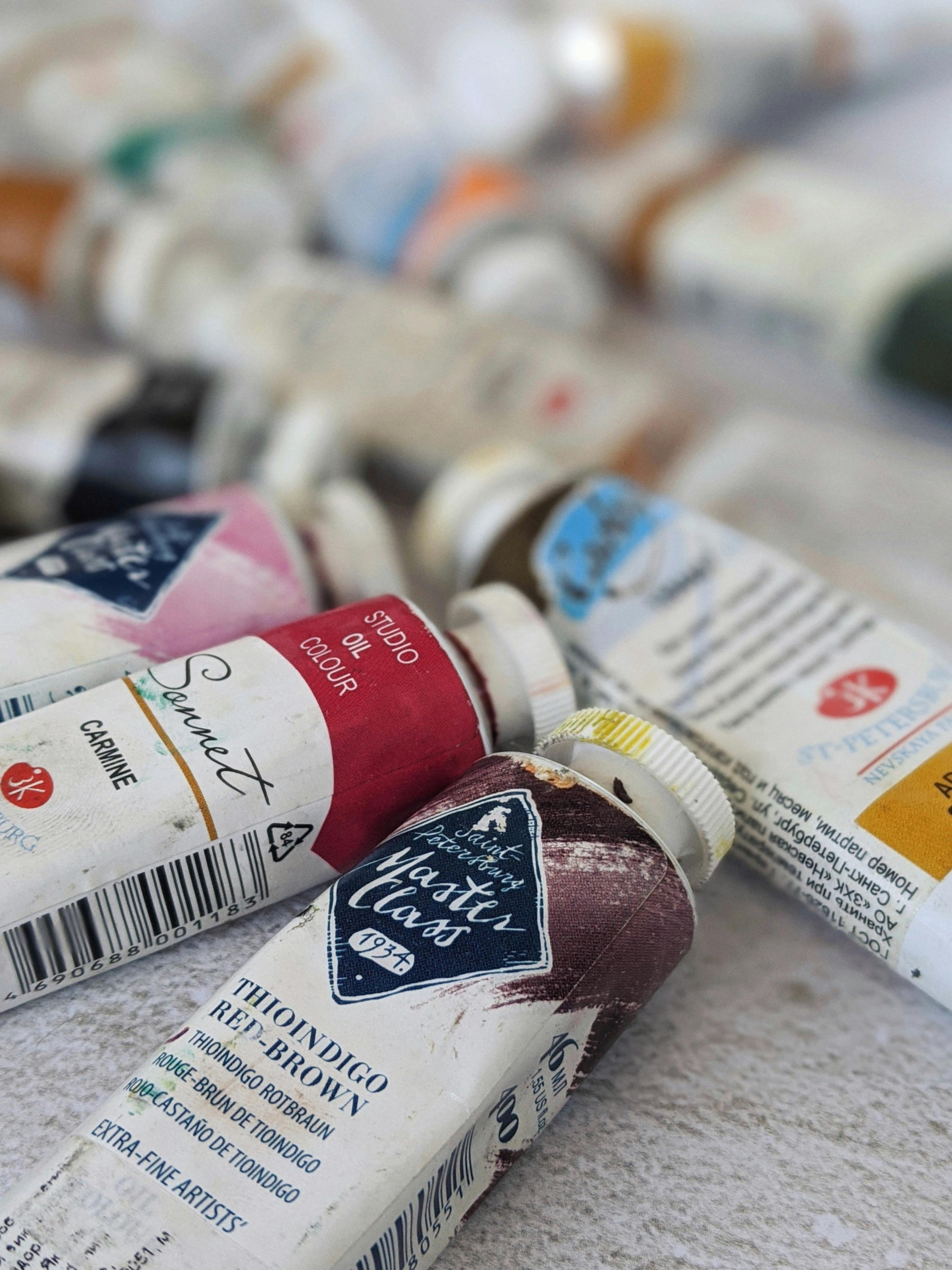
- Find the Conformance Statement: Flip the tube, jar, or pencil over. Look for a sentence that reads “Conforms to ASTM D4236” or “Certified by ACMI to be non-toxic.” The presence of this statement is your first check. Remember, this statement is a legal requirement. Its absence is a glaring red flag about the product’s compliance.
- Look for the Seal: Is there a small, circular AP or CP seal? This is the quickest visual tell. If you see an AP seal, you know you’re in the clear. A CP seal means it’s time to read on. The seals are usually printed directly on the packaging or product to ensure they can’t be separated.
- Actually Read the Warning Paragraph: Don’t just scan for scary words. Look for specific instructions. Does it say “adequate ventilation required”? Does it warn against skin contact? Does it tell you not to eat, drink, or smoke while using the product? These aren’t suggestions; they are the manufacturer’s direct instructions for mitigating the disclosed risk. I keep a small roll of masking tape and a sharpie in my studio solely for labeling older paints that I know need a “VENTILATE” reminder. These warnings are the entire point of the certification.
- Check for Acronyms You Know: Be wary of vague claims like “non-toxic” without an AP seal, or references to other standards like “EN71” (a European toy safety standard) that don’t apply to chronic art material hazards in the same way D4236 does. “Non-toxic” is just a marketing term unless it’s backed by an AP certification.
That's it. Four simple steps to move from grabbing any pretty color to making an informed choice about the chemicals you’re inviting into your creative space. Taking these steps ensures your practice is both sustainable and safe, which can be a source of inspiration, much like discovering techniques for abstract painting.

A Deeper Dive: What “Chronic Hazard” Actually Means
Let’s pause for a moment on that phrase, because it’s the heart of the matter. A chronic hazard is not an immediate one. Acute toxicity is about what happens right now: drinking turpentine will make you violently ill in minutes. Chronic toxicity is about the insidious, slow-motion damage that accumulates over months, years, or even decades of repeated exposure. It’s the difference between a house fire and the slow, creeping decay of termites in the walls. It’s the damage that shows up not after one use, but after a thousand uses.
Anthropomorphizing chemicals is a dangerous game, but if we must, think of acute toxins as predators and chronic toxins as parasites. A predator attacks and it’s over. A parasite lives with you, often unnoticed, siphoning off your health bit by bit until one day you realize the damage is done.
This is precisely what ASTM D4236 and the LHAMA law are designed to protect you from. They force companies to tell you if their product contains substances suspected of being carcinogens (cancer-causing), reproductive toxins (which can affect fertility or a developing fetus), or agents that cause organ damage (liver, kidney, nervous system) with prolonged exposure. We’re talking about the heavy metals that can accumulate in your body’s tissues, the solvents that can cause long-term neurological damage, or the pigments linked to respiratory illnesses.

The name of the standard itself could be clearer. It’s not “Dangerous Materials,” it’s “Labeling Art Materials for Chronic Health Hazards.” What’s the number one chronic health hazard for artists? The cumulative effect of ignoring safety. It’s the thousands of little moments where you think, “It’s just a little bit, it’ll be fine.” It’s the hidden health costs accumulated over a lifetime, the slowly dimming joy of creation because your body can no longer keep up. Ask any artist who's developed a sensitivity to oil paint solvents after years of careless exposure. The cost of ignorance isn't a line item on a receipt; it's paid in quality of life.
Making informed choices based on ASTM certification isn't about being scared. It's about being a professional. It’s about ensuring that your passion for making art is sustainable for the rest of your life. It’s the difference between a short, bright career and a long, healthy one filled with creation. It’s about knowing which materials you can use when painting with a curious child, and which ones you should keep on the top shelf. It’s about empowerment, not fear. It's the same mindset that guides professionals in any field to choose the right tools, from selecting the proper palette knives to using the right markers for adult coloring books.
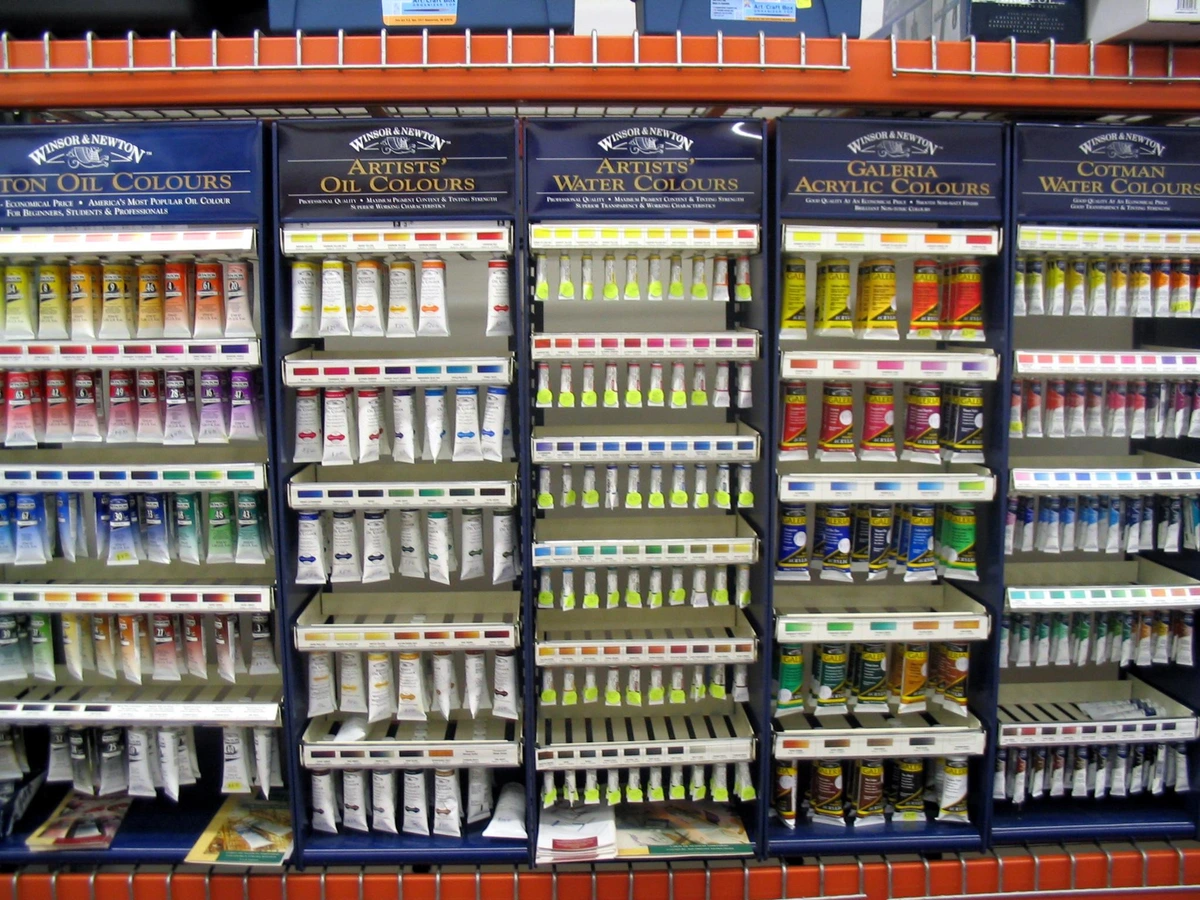
I believe this awareness has a subtle effect on the art we make. When I use materials, especially those with a CP label, I'm acutely aware of their physicality, their chemical nature. It’s a dialogue with a substance that demands my respect. There’s a strange comfort I find in seeing a CP seal on my favorite, most vibrant paints. It tells me the manufacturer isn’t hiding anything. They've done their homework, and now they're trusting me to do mine. That's a relationship built on transparency.

If you're curious to see how these material choices translate into finished work, you can always explore the prints available in the shop or plan a visit to the Den Bosch Museum to see contemporary works up close. Every original piece I create is a testament to this careful negotiation between artistic vision and material safety.
The Canonical List of Nasty Stuff: What to Watch Out For
Okay, you’re convinced. You want to be aware. But which ingredients typically trigger a CP label? While this isn't an exhaustive list (and you should always defer to the specific product label and its toxicologist’s review), here are the usual suspects. The more of these a product contains, and the higher their concentration, the more likely it is to be a CP product.

- Heavy Metals: Cadmium (in vivid reds, yellows, and oranges), Cobalt (in deep blues, violets, and some driers), Lead (historically in white and yellow pigments like Lead White and Chrome Yellow, now mostly banned but still found in some metal alloys or “encapsulated” forms), Chromium (in some greens like Viridian and yellows like Chrome Titanate Yellow), and Manganese (in some driers, blues, and violets). These are often associated with organ damage (liver, kidney) over time.
- Aromatic Solvents (Hydrocarbons): Turpentine, Xylene, and Toluene. These are the classic “paint thinner fumes” associated with long-term neurological effects (brain fog, nerve damage), respiratory issues, and are often flagged as reproductive hazards.
- Pigments based on Benzidine/Diarylide: Certain yellows and oranges (e.g., PY12, PY13, PO16) are known to be potential carcinogens if a significant quantity of dust or pigment is ingested.
- Formaldehyde and Formaldehyde-Releasing Preservatives: Found in some liquid media, gessoes, and acrylic pastes. A known sensitizer (meaning it can trigger allergies) and a potential carcinogen that can off-gas over time.
- Methanol (Methyl Alcohol): Can be found in airbrush cleaning solutions, some inks, and paint strippers. Extremely hazardous if swallowed or inhaled in large quantities, causing blindness or death.
This isn't about fear; it's about knowledge. It's like driving a car: you don't need to know how to build the engine, but you absolutely must know what the brake pedal and the seatbelt are for. I treat my studio like a car—I use my safety equipment every single time—because ignoring it once too often can lead to a lifetime of regret.
This list isn't meant to make you fear your art supplies, but to arm you with knowledge. The beauty of a cadmium red or the intensity of a cobalt blue is undeniable, but knowing they are CP products means using them with the required respect and caution. They are powerful tools. Think of it this way: a race car isn’t 'bad,' but you’d be a fool to drive it without understanding its speed, its handling, and the importance of a seatbelt.

A Microscopic Look: The Toxicology Review Process
So what really happens when an independent toxicologist sits down with the formula for a paint? It’s not a single test. It’s a deep, evidence-based intellectual exercise in risk assessment. The goal isn't to scare you, but to quantify the risk so it can be clearly communicated. I think of it as translating the complex language of chemistry into the simple, actionable language of a warning label.
This entire process is built on the shoulders of giants, going all the way back to a 16th-century alchemist.
So what happens during this crucial toxicology review? While I’m not a toxicologist, understanding the foundational principles they use makes the entire system much clearer. It’s a bit like reverse-engineering a magic trick; once you see the mechanics, it becomes less mysterious and more logical. It all boils down to these five principles of toxicological risk assessment.
- The Dose Makes the Poison (The Paracelsus Principle): This is the first and oldest rule, often attributed to the 16th-century alchemist Paracelsus. The idea is simple: everything is a poison, it just depends on the dose. A tiny amount of arsenic might have been used as a medicine, but a large amount of pure water can kill you. The toxicologist's first job is to calculate the potential dose a user might receive. Is the hazardous ingredient present in a high enough concentration and with enough potential for exposure to cause harm over time?
- Exposure is Everything (The Route of Entry): A chemical is only dangerous if it can get into your body. A hunk of solid lead is far less immediately dangerous than fine lead dust you can inhale. The toxicologist will assess the product for all routes of exposure. Is it dusty (inhalation)? Does it off-gas solvents (inhalation)? Is it easily absorbed through the skin (dermal)? Could it be ingested by a child who mouths a crayon?
- Individual Susceptibility (Who is at Risk?): A substance that's tolerable for a healthy adult might be harmful to a child, a pregnant person, or someone with a pre-existing condition like asthma. The goal of the review is to identify risks for the most sensitive populations. This is why warnings often specifically mention “Keep out of reach of children” or “Those with skin sensitivities should wear gloves.”
- Evidence-Based Hazard Profile (What Does the Science Say?): A toxicologist's review for ASTM D4236 isn't guesswork. It's a rigorous review of decades of scientific literature. They look for evidence of carcinogenicity (cancer-causing), reproductive toxicity (harmful to fertility or a fetus), neurotoxicity (damage to the nervous system), organ damage (liver, kidneys), or sensitization (the potential to trigger allergies).
- Bioavailability (Can the Body Actually Absorb It?): This is a critical, behind-the-scenes factor. Some substances are hazardous in their raw form but are safely “encapsulated” within a paint binder or a crayon wax matrix. A hazardous pigment locked safely inside an acrylic polymer might pose a negligible risk compared to the same pigment in a dusty, dry pastel. The toxicologist determines if the substance is in a bioavailable form—meaning your body can actually absorb it.
So when you see a CP label, you’re not seeing the result of one single test. You’re seeing the conclusion of a systematic, evidence-based review that looked at the ingredients, their concentrations, their potential to get into your body, and all the available scientific evidence about their long-term effects. This decision is typically made by a board-certified toxicologist with years of specialized training.

The Buying Guide: How to Shop with Confidence
Online shopping adds a whole new layer of confusion. How can you check the label when you can’t see the product? While the ideal is to buy from a physical store where you can scrutinize the tube yourself, online shopping is a reality. Here’s how to be a savvy digital shopper.
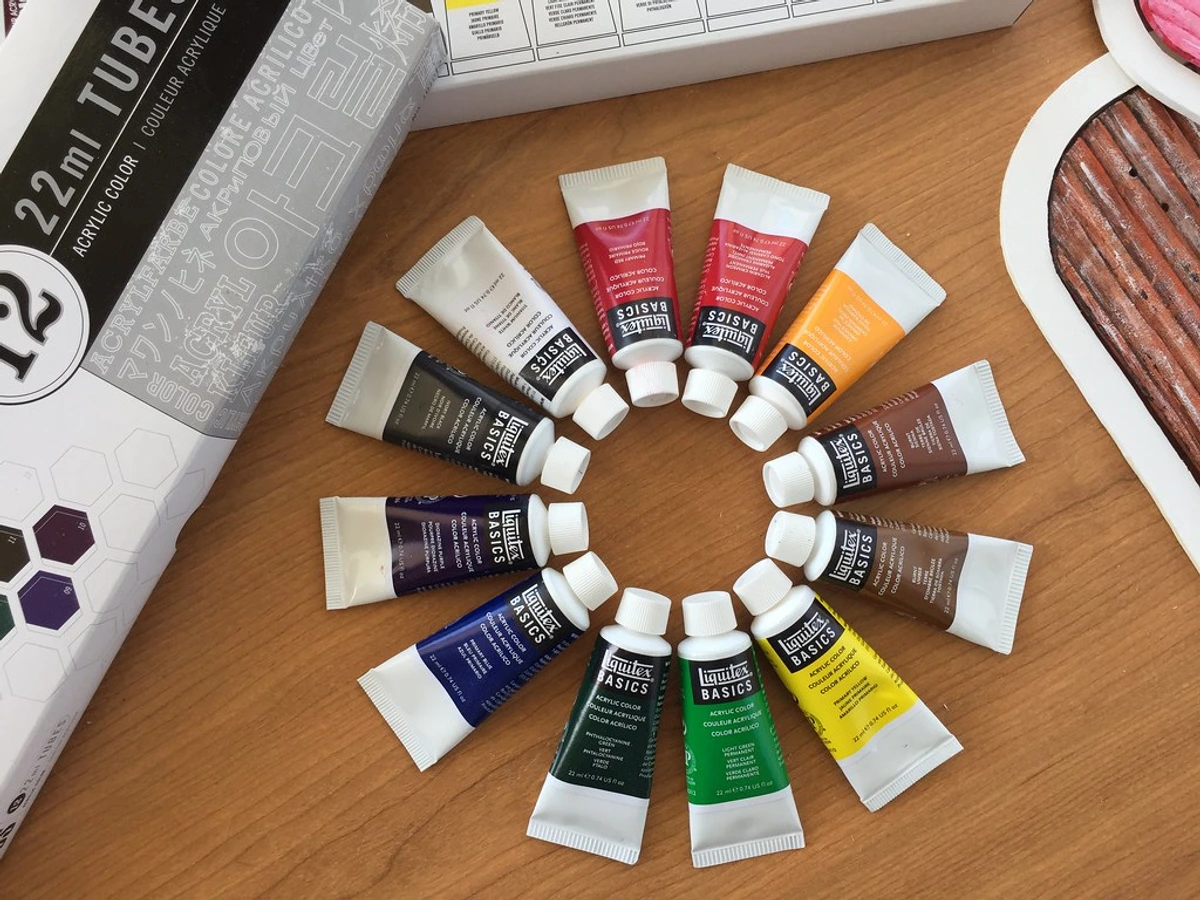
- Stick to Reputable Brands: Major art supply brands like Winsor & Newton, Golden, Holbein, Daniel Smith, and Schminke have built their reputations on quality and safety compliance. They are generally very reliable in their labeling and certification, both in-store and online. This is the easiest way to get peace of mind.
- Use High-Quality Photos: Look for online retailers (like Blick, Jerry’s Artarama, or Jackson’s) that provide large, high-resolution photos of the back and front of the product packaging. A retailer who cares about informed customers will provide this information clearly.
- Check the Product Specs Section: Most reputable online stores have a “Specifications,” “Safety,” or “Features” section on the product page. If a product is AP or CP certified, this is where you should be able to confirm it without a doubt.
- Don’t Hesitate to Contact the Seller: A simple email to customer support—“Does this product conform to ASTM D4236?”—can reveal a lot. A reputable company will respond quickly and confidently. A vague or non-existent answer is a massive red flag.
- A Note on “Greenwashing”: Be particularly wary of sellers who market their products with vague terms like “natural,” “eco-friendly,” or “artisanal.” While their intentions may be good, these are marketing terms, not safety certifications. If a product is truly safe, the maker will be proud to show off its AP certification.
Artist-Grade vs. Student-Grade: A Safety Perspective
There’s a common myth that paying more automatically means you’re getting a safer product. In the world of art materials, the opposite is often true. Let’s break down why.

Artist-Grade paints are formulated for professionals who demand the highest performance. This means intense, pure color made from single pigments, excellent lightfastness, and buttery consistency. To achieve this, manufacturers use the highest-grade pigments available, many of which are the very heavy metals and complex organics that are known chronic hazards. A professional artist’s palette is a chemist’s playground.
Student-Grade paints, on the other hand, are formulated for affordability and safety in classroom settings. They achieve this by using “hue” substitutes—blends of less expensive, and often far less hazardous, pigments to mimic the color of their costly counterparts. They also contain more filler and less pigment overall.
So, does this mean student-grade is always safer? In terms of the specific pigments used, often yes—they are more likely to be AP certified. However, you get what you pay for. The trade-off is color vibrancy, intensity, and longevity. The greatest irony for a professional artist is that their most expensive, artist-grade cadmium red will carry a CP warning, while the cheap, student-grade “cadmium red hue” is perfectly safe.
It’s not a question of “good” vs. “bad,” but of choosing the right tool for the job. And for the professional, that choice comes with the non-negotiable responsibility of using these high-performance, potentially hazardous tools safely. Developing this professional discipline is a sign of an artist’s maturity and commitment to a lifelong practice.

The Materials Matrix: A Guide by Medium
Different mediums come with different risks. Here’s a quick guide to what you should be looking for with the materials you use most.
Medium | Primary Hazards to Look For | Key Safety Practices & Label Check |
|---|---|---|
| Oil Paints | Hazardous pigments (CP), solvents, lead-based driers. | Check your paints for AP/CP seals. Your biggest risk is the solvent. Look for low-odor thinners like Gamsol instead of traditional turpentine. Ensure your studio has excellent ventilation. Wear nitrile gloves. |
| Acrylic Paints | Some heavy metal pigments, preservatives in mediums. | Generally safer than oils. Still, check for CP seals on professional-grade paints. Be cautious with fluid acrylics and mediums (especially texture gels and varnishes) which may contain formaldehyde-releasing preservatives. Good general ventilation is usually sufficient. |
| Watercolors/Gouache | Some hazardous pigments, especially in professional lines. Gum arabic can be a sensitizer. | Even though they are water-based, be wary of professional-grade paints. That beautiful cobalts and cadmiums are often just as hazardous as in oils. Check for AP/CP seals. Good hygiene (no licking the brush!) is key. |
| Pastels/Charcoal | Inhalation of dust containing heavy metal pigments. | This is the biggest risk. All dry media is about dust control. Work in a well-ventilated area, preferably with an air purifier. Use a wet cloth for cleanup, never blow dust off your drawing. Wear a particulate respirator (N95/KN95) if you work with them extensively. Consider this an essential part of your art studio organization. |
| Printmaking Inks | Carcinogenic compounds (e.g., toluidine in some reds), solvents. | Be extremely vigilant with screen printing and lithography inks. Work only in a ventilated area. Wear gloves. Switch to safer, water-based alternatives whenever possible. |
| Aerosols/Airbrush | Inhalation of fine particulates and solvent vapors. | This is non-negotiable. Wear a proper organic vapor/particulate respirator (often a combination cartridge is needed). If you spray in a booth, make sure it is vented to the outside. |
| Encaustics | Inhalation of fumes from heated wax and resins. | Work in a very well-ventilated area. Use a thermometer to prevent overheating and use a respirator to filter fumes. Be aware that some pigments can become more hazardous when heated and aerosolized. |
| Dyes & Inks | Highly concentrated pigments and chemical solvents. | Even small amounts can be potent. Always use gloves. Never work with them near food or drink. Be especially careful with powdered dyes, which pose a significant inhalation risk and should be handled with a mask. |

I always keep a small roll of blue painter’s tape and a sharpie in my studio. When I get a new tube of paint, the first thing I do is check if it’s a CP. If it is, I put a small strip of tape on the cap and write “CP.” It’s a constant, in-my-face reminder to be more careful with that specific color.
Frequently Asked Questions (FAQs)
Here are some of the most common questions I hear in the studio and online, the ones that linger in the back of an artist's mind long after the brushes are clean.
Q: Do I really need to worry about this if my art studio is in my home? A: Yes, absolutely. Having a home studio means your exposure is more frequent and potentially more concentrated. CP-certified materials don't become less hazardous because they're in a residential setting. In fact, it makes proper ventilation and storage even more critical. You owe it to yourself and anyone you live with to treat your home studio with the same respect as a professional workshop.
Q: Is 'Artist-Grade' always more dangerous than 'Student-Grade'? A: It's one of the great ironies of our craft. The most expensive, professional-grade paints often contain the very pigments that are most likely to be classified as hazardous. Student-grade paints use safer 'hue' pigments to mimic the expensive, often more toxic, originals. So yes, in many cases, the 'artist-grade' cadmium red will carry a CP warning, while the 'student-grade' 'cadmium red hue' will not. You are paying for performance and potential risk.
Q: Water-based acrylics are safe, right? That's what I've always heard. A: Generally, they are lower risk than oils, but don’t let the word 'water' lull you into a false sense of security. Many professional-grade acrylics contain the same heavy metal pigments (like cadmium or cobalt) as oils. Many mediums, varnishes, and texture pastes also contain potentially hazardous preservatives. 'Water-based' simply refers to the carrier; it tells you nothing about the nature of the pigments or additives. Never assume “water-based” means “hazard-free.” Always check the label. I learned this the hard way when a batch of "safe" fluid acrylics triggered my allergies—it wasn't the water, it was the additives.
Q: What about breathing in pastel dust? How dangerous is it really? A: Dust from dry media like pastels, charcoal, and colored pencils poses a significant inhalation risk. Many of these media contain the same heavy metal pigments found in paints. Blowing dust off your drawing is one of the worst things you can do. The protocol should be to use a drafting brush or a damp cloth to gently remove residue, to work in a well-ventilated room (or wear a respirator), and to dispose of waste carefully. I've switched to working on a slightly tilted board and tapping the dust into a tray instead of blowing it—it keeps the dust contained and my lungs clear.
Q: Can I just "ventilate the room" by opening a window? A: It depends on the medium. For general acrylic painting, a cross-breeze can be sufficient. But for any solvent-based work (oil painting, printmaking) or heavy dust (pastels), an open window often isn't enough. You need active ventilation—an exhaust fan that pulls contaminated air out of the room, not just a fan that blows it around. For serious work, a proper spray booth or air purifier with a HEPA filter is a worthwhile investment in your health.
Q: What does the future hold for art material safety? A: The future is bright and transparent. We're already seeing more companies investing in research for safer, non-toxic, high-performance pigment alternatives. There will likely be a push for more universal, globally recognized labeling standards, reducing confusion. I think we'll also see a rise in 'green chemistry' in art materials, using bio-based solvents and sustainably sourced pigments. The goal is for every artist to have access to materials that are both brilliantly performative and demonstrably safe. I'm particularly excited about the development of new high-performance organic pigments that can match the legendary properties of traditional heavy metals without the health cost.
Common Misconceptions and Pitfalls
Let’s walk through a few of the most common mental traps and misconceptions that can lull an artist into a false sense of security.

- “The Smell Test”: “It doesn’t smell that bad, so it must be fine.” This is perhaps the most dangerous assumption. Many hazardous fumes are odorless, and for the ones that do have a smell, your nose quickly becomes desensitized. Relying on the absence of a smell is like relying on the absence of a “wet floor” sign to determine if a floor is dry. Always trust the label, not your nose.
- “Natural” Means Safe: Arsenic is natural. Asbestos is natural. Don’t assume that just because a pigment comes from the earth it is automatically safe for you. The source of a material tells you nothing about its toxicology. The only thing that tells you anything is the toxicologist’s review and the label on the box.
- “Washable” is Not the Same as “Safe”: I’ve seen parents buy “washable” markers for their kids thinking it means non-toxic. “Washable” is about stain removal. It has nothing to do with whether the product contains hazardous chemicals. This is a classic marketing misdirection that drives me up the wall.
- Storage and Disposal: Hazardous materials don’t stop being hazardous when you’re done. Old, congealed solvents, pigment-encrusted rags, and empty paint tubes need thoughtful disposal. Leftover oil mediums on rags can spontaneously combust if bunched up due to heat from oxidation. Always lay them flat to dry outside, or store them in a water-filled metal container until you can take them to a hazardous waste facility. Never pour waste down the sink. I learned the hard way about the fire risk when an oily rag in my trash can started to smolder—now I have a dedicated metal can with a tight lid just for them.
Real-Life Scenarios: Stories from the Studio
Let’s ground this in some real-life examples. These are situations every artist faces, where knowing your labels isn’t just an academic exercise—it’s a practical, daily tool.












Scenario 1: The Commissioned Mural. A local elementary school commissions you to paint a large mural in their library. You’ll be working directly with teachers and children present nearby. Do you bring your favorite, intense artist-grade cadmiums and cobalts? Of course not. This is a perfect scenario to design your palette exclusively around AP-certified materials. You can confidently work, explain your choices to the school, and ensure the space is safe for everyone, creating an educational and artistic gift, like a painting fit for a museum.
Scenario 2: The Abstract Acrylic Pour. You’re experimenting with the “dirty pour” technique, mixing dozens of different acrylic paints and pouring mediums together in a small, enclosed basement studio. The process is messy, and there’s little to no ventilation. Even if every paint you use is AP-certified, the sheer volume of chemicals being mixed and released into the air can create a hazardous environment. This is where basic safety—opening a window, using a fan, taking breaks—becomes critical, regardless of any single product’s certification.
Scenario 3: The Life Drawing Class. You sign up for a weekly life drawing class. The instructor provides compressed charcoal and fixative spray. You notice the fixative has a CP label warning of lung damage and central nervous system effects. Half the class is ignoring the warnings and spraying freely. Do you join them? No. You take your drawing out of the room to a well-ventilated area or outside to spray. This isn't just about you; it's about demonstrating professional practice to your peers. It’s these small acts of self-preservation that build a long, healthy career. And honestly, nobody likes the person who fills the room with aerosol fumes, no matter how good their gesture drawings are.
Scenario 4: The Impulse Buy. You're on vacation and find a small, independent art shop. You fall in love with a unique, locally-made ink with no ASTM D4236 label. It's beautiful, and the shop owner assures you it's 'all-natural.' This is a test. Do you risk it? The answer should be no. Without that label, you are flying blind. It means the product hasn't undergone the legally required toxicological review. It isn't worth the risk of a skin reaction or a more serious, long-term health issue. I've made this mistake before with a lovely handmade gouache, and the resulting allergic reaction was a powerful reminder: admire it, but leave it on the shelf.