How Boccioni Shattered Sculpture to Capture Motion | Zen Museum
Dive deep into Umberto Boccioni's revolutionary sculpture techniques that shattered classical traditions. Explore how his Futurist vision translated into groundbreaking forms of motion, materiality, and spatial dynamism.

The Unstill Life: How Boccioni Shattered Sculpture to Capture Motion
You know that feeling when a speeding car blurs past you, and for a split second, it's not a car anymore but a streak of noise and color? It's a moment where form dissolves into pure energy. This artistic obsession—how to render the invisible forces of motion, time, and energy into a static medium like bronze—is exactly what drove Umberto Boccioni. He wasn't just an artist; he was an aesthetic physicist, dissecting the very laws of perception and reassembling them in plaster and bronze. His radical experiments, compressed into a brief five-year period before his tragic death in 1916, didn't just change sculpture; they laid the groundwork for abstract art, kinetic sculpture, and even the motion studies that influence modern animation and design today. But to understand why his work is so revolutionary, you have to start with the manifesto that lit the fuse. That document was his declaration of war on stillness, a battle plan for turning bronze into a blur. It's easy to look at his sculptures today and see them as beautiful, energetic abstractions, but you have to remember—at the time, they were practically an assault on the senses. A balled-up fist of bronze, thrown right at the face of history. In 1909, the poet Filippo Tommaso Marinetti published the Futurist Manifesto. It was a war cry that worshipped speed, technology, and violence, aiming to burn down every museum and library in Italy. A bit extreme, sure, but you have to admire the conviction. The Futurists saw airplanes and racing cars as sacred objects in a new religion of progress, describing a roaring engine as more beautiful than the Winged Victory of Samothrace. This wasn't just empty provocation; it was a direct response to a world being violently reshaped by the Second Industrial Revolution, where electric lights banished night and locomotives shrank continents. The Futurists believed this new, hyper-kinetic reality demanded a new artistic language, one that could finally break free from the "cult of the antique."
Boccioni was hooked, but his genius was to see that painting alone couldn't capture this new reality. Traditional sculpture was still stuck making toga-clad heroes and serene nudes—what he scathingly called "an art of marble shops and cemeteries." It was a dead form. So, in 1912, he fired back with his own Technical Manifesto of Futurist Sculpture. This document is the master key to everything he did, a wildly ambitious blueprint that reads like a cross between an engineering schematic and a philosophical treatise., and for a split second, it's not a car anymore but a streak of noise and color? Umberto Boccioni wanted to carve that exact moment into stone and bronze. Before we had high-speed cameras or CGI, this guy was trying to solve one of art's oldest riddles: how do you make a stationary object feel like it's moving at a hundred miles an hour?
I remember standing in front of Unique Forms of Continuity in Space for the first time, and it felt like the air around me was moving. The sculpture seemed to be creating its own wind, pulling my sense of balance off-kilter. That's the power of Boccioni's work - it doesn't just represent motion, it induces it in your perception.
This question—how to render the invisible forces of motion, time, and energy in a static medium—is what turned Boccioni from a talented painter into a sculptor who would redefine the entire discipline. He wasn't just an artist; he was an aesthetic physicist, dissecting the very laws of perception and re-assembling them in plaster and bronze. And in doing so, he laid the groundwork for abstract art, kinetic sculpture, and even modern digital design, influencing countless artists who would later explore the relationship between form and time.
Think about it: how do you sculpt air? How do you make bronze feel light as smoke? These aren't just technical challenges - they're almost koans for the material world. Boccioni approached sculpture like a mathematician approaching an impossible equation, except his variables were space, time, and human perception.
I’ve spent hours in front of his work, and honestly, my first reaction wasn't awe—it was confusion. It looked like the sculpture was melting or coming apart at the seams. But that’s the entire point. Boccioni wasn't interested in what something looked like; he was obsessed with what it felt like. He wanted to sculpt the very air the object was moving through.
His journey into the third dimension was as radical as it was brief. In a creative burst that lasted little more than five years, roughly from 1911 to his untimely death in 1916, he completely rewrote the rulebook for sculpture. He pushed materials and ideas to their absolute breaking point, challenging centuries of tradition that viewed sculpture as a self-contained, timeless object. What he left behind are more than just sculptures; they are conceptual blueprints for understanding not just movement, but time, force, energy, and the very fabric of our perception in a mechanized world.
The Futurist Manifesto: A Declaration of War on the Past
Manifestos as Blueprints: Words Before Form
Before Boccioni ever modeled a single figure, he wrote it all down. The Futurist approach to art was intensely theoretical and literary, beginning with manifestos that served as blueprints for action. Marinetti's initial Futurist Manifesto provided the sound and fury, but Boccioni provided the technical blueprints. In his Technical Manifesto of Futurist Sculpture, he laid out the radical principles that would define his work. He declared that sculpture needed to be "abolished" as a single, closed form. The new goal was to capture the object's dynamic sensation—the way it interacts with its environment, the way it displaces the air, the very path it carves through space. A classical statue is a snapshot; Boccioni wanted to make a five-second video clip out of solid bronze. He wanted to tear open the figure and fuse it with the space around it, declaring that "the figure must be opened up and fused with its environment."

This wasn't just empty provocation. It was a direct response to a world being violently reshaped by the Second Industrial Revolution. Electric lights were banishing night, airplanes were conquering the sky, and locomotives were shrinking continents. The Futurists didn't just see this change; they felt it in their bones. They believed that this new, hyper-kinetic reality demanded a new artistic language, one that could finally break free from the "cult of the antique" and engage with the beautiful, terrifying chaos of the modern age.
Other Futurists were tackling these themes in painting: Giacomo Balla was painting the almost-invisible motion of a dog's legs, Gino Severini was capturing the frenetic energy of dance halls, and Carlo Carrà was obsessing over the sounds and rhythms of urban life. Each Futurist had their own way of chasing dynamism. But Boccioni saw a gaping hole in their project. All this talk of dynamism, speed, and chaos, yet sculpture—the art of solid, static matter—remained untouched by this revolution. His mission was clear: bring Futurism off the canvas and into the room, forcing physical form to obey the laws of the new modern world.
Boccioni was hooked. He saw a world transformed by automobiles, airplanes, and electric lights, yet sculpture was still stuck making toga-clad heroes and serene nudes. It was, in his words, "an art of marble shops and cemeteries." So, in 1912, he fired back with his own Technical Manifesto of Futurist Sculpture. This document is the master key to everything he did.
If Marinetti provided the sound and fury, Boccioni provided the technical blueprints. His manifesto was his declaration of independence from all previous sculptural tradition, a wildly ambitious document that reads like a cross between an engineering schematic and a philosophical treatise. It was here that he laid out the radical principles—interpenetration of planes, material rebellion, and the abolition of the static form—that he would spend the next four years bringing to life, or rather, bringing life into form.
He declared that sculpture needed to be "abolished" as a single, closed form. The new goal was to capture the object's dynamic sensation—the way it interacts with its environment. He wanted to tear open the figure and fuse it with the space around it. Think of it this way: a classical statue is a snapshot; Boccioni wanted to make a five-second video clip out of solid bronze.
The Sculptor's Toolkit: Boccioni’s Revolutionary Techniques
So, let's get down to the brass tacks. If you wanted to sculpt dynamism in 1912, how would you even start? You'd have to unlearn everything. Boccioni's toolkit wasn't just about new materials; it was a complete re-imagining of what sculpture was. He moved the goalposts from representation to evocation, from depicting a body to charting the energy that body generates. It's the difference between drawing a map of a city and building a machine that makes you feel like you're hurtling through its streets.
So, how do you actually sculpt a feeling? Boccioni developed a whole toolkit of radical approaches that must have seemed completely bonkers at the time.
1. Dynamism: The Philosophy of Unstillness
Dynamism wasn't just a buzzword for the Futurists; it was their entire philosophy. For Boccioni, it meant that no object is ever truly at rest. A figure walking down the street isn't just a person; it's a force that pushes against the air, creating new shapes and rhythms with its movement. His goal was to make this invisible struggle between object and environment visible.
Think of it this way: traditional sculpture shows you the arrow. Boccioni shows you the arc the arrow travels through, the air it displaces, and the force that launched it - all at once. He was essentially trying to collapse time into space, to make the fourth dimension visible in the third. It's like he was sculpting with a strobe light, capturing multiple moments simultaneously.
He achieved this by breaking down solid forms into planes and lines that suggest motion. Look at a work like Unique Forms of Continuity in Space, and you'll see that the human figure is almost unrecognizable. It has been stretched, pulled, and abstracted into a series of flowing, wing-like surfaces. He isn't showing you a man walking; he's showing you the path the man carved through space. It's the visual equivalent of a sonic boom. The technique here is a kind of visual acceleration. The smooth, sweeping lines pull your eye along, forcing it to move at the imagined speed of the figure. It’s an illusion, of course, but it's one that hijacks your perception and makes you feel the rush of motion.
2. Sculpting the Environment with Interpenetration of Planes
This is possibly my favorite of Boccioni’s concepts. Interpenetration of planes (compenetrazione dei piani) is the fancy Italian term for his method of making solid forms and empty space bleed into one another. In traditional sculpture, the background is just a backdrop. For Boccioni, the background—the environment—was an active participant.
Imagine you're looking at a figure from multiple angles at once. As you move, parts of the figure are obscured while new parts are revealed. Boccioni tried to collapse this experience into a single, static object. He would create sculptures where a plane that started as part of an arm would morph seamlessly into a plane that represented the whirling air or the buildings rushing by. The boundary between the self and the world dissolves. This technique fundamentally shifts how you experience the sculpture's volume. Instead of a solid mass, you get a porous, agitated form that seems to be in a constant state of exchanging energy with the void around it. It feels alive because it's not sealed off from its surroundings; it's a system in flux, a moment of interaction frozen in time.
3. Material Rebellion: The New Physicality
If you're going to break the rules of form, you can't stick to the old rules of material. Boccioni was fearless here. He argued that twenty different materials could compete in a single work "to sculpt the atmosphere." Up until this point, the unwritten rules of sculpture were rigid. Marble and bronze were for heroes and gods, lending them a sense of permanence and nobility. Industrial materials like iron, glass, or electrical wire were for factories and bridges, not for "high art." Boccioni didn't just challenge this hierarchy; he dynamited it, then built something new from the rubble.
4. Forced Synthesis: Collapsing Time into Space
If dynamism was the philosophy, forced synthesis was Boccioni's most radical technical innovation, his secret trick for folding time into an object. He wanted to capture an object's movement through time in a single static form. Think of it like a photographic multiple exposure, but rather than just showing you the separate frames (a foot here, a leg there), Boccioni melted them together into a single, seething form that suggests the entire trajectory of movement all at once.
Antigrazioso (1912-1913) is the textbook example. The figure seems to be simultaneously sitting, standing, and moving—a compression of many moments into one impossible, dynamic pose. The planes of the body are forced together in a way that makes no logical sense but creates perfect dynamic sense, like a memory of a gesture rather than the gesture itself. It's not a picture of a person moving; it's the feeling of moving, translated directly into plaster.
In his masterpiece Development of a Bottle in Space, he deconstructs a simple household object with the analytical eye of a surgeon. Using the unprecedented combination of glass, wood, and wire, he spirals the bottle's volume outward. You can see right through it, into it, and around it simultaneously. This was revolutionary. For the first time, the space inside the sculpture was as important as the mass surrounding it. He forced the viewer to consider the object not as a dead shell, but as something that contains and displaces its environment. Glass wasn't just a material; it was a philosophical statement. It allowed light, shadow, and the surrounding space to become active collaborators in the sculpture’s form, creating a dialogue between positive and negative space that was entirely new to sculpture.
And it wasn't just about the shock value. Each material was a conscious choice, a word in his new sculptural language. Glass wasn't just transparent; it felt modern, fragile, like the windscreens of the airplanes he idolized. Iron was brutal and unforgiving, the bones of the industrial age. A wooden table leg, snatched from everyday life, was a deliberate act of rebellion against the preciousness of the art object. By mixing them, he created a kind of sculptural symphony where different textures and properties collided, arguing with each other to generate a more complex, more honest sensation of modern life.
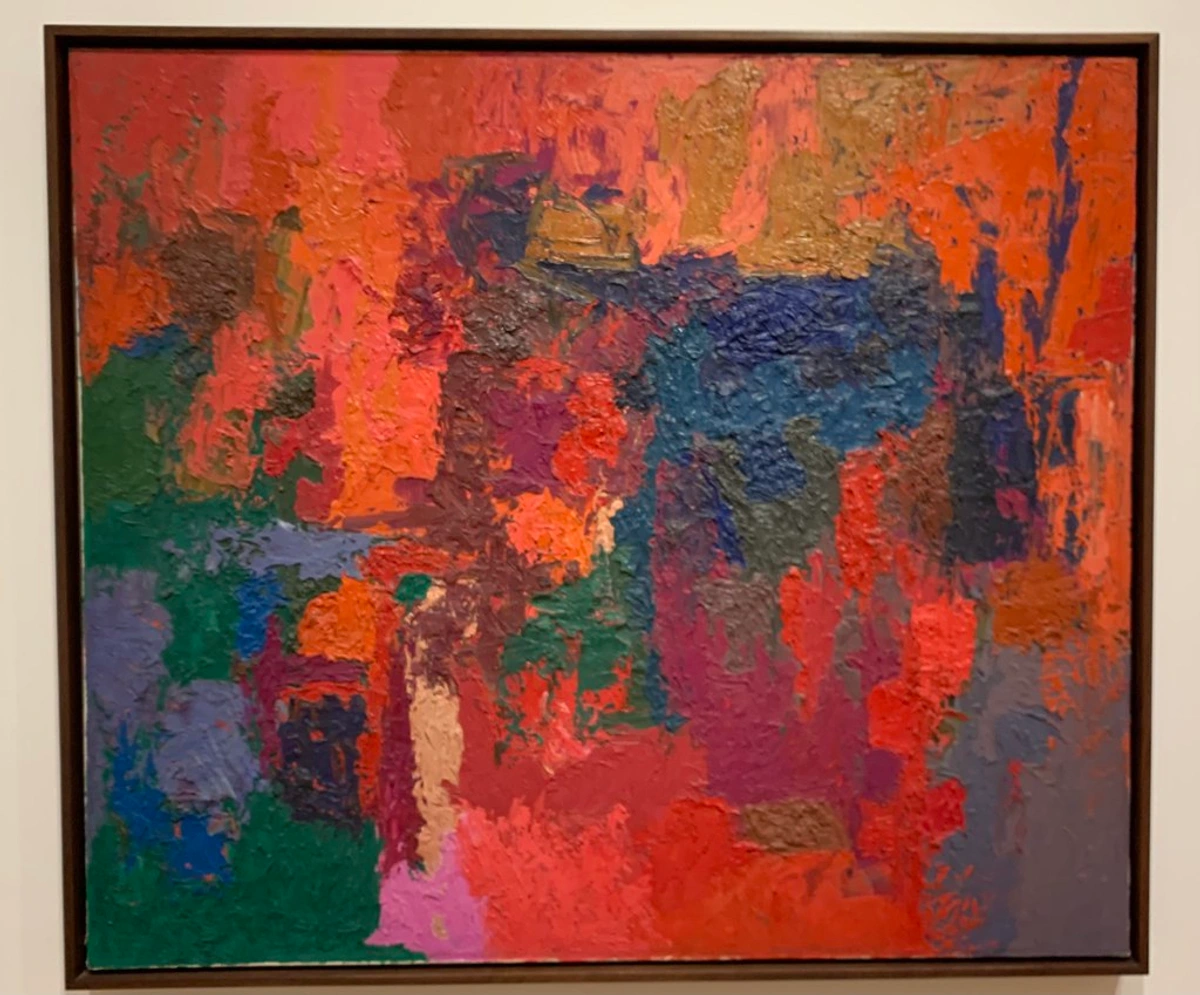
In pieces that survive only as plaster casts today, like Fusion of a Head and a Window, he would incorporate real objects—wooden table legs, pieces of furniture. This act of bringing the everyday world directly into the sculpture was a profound shock to the system, a sculptural Molotov cocktail. It was a forerunner to the Dada assemblages and Surrealist objects that would come later, but with a crucial difference. While Dada used found objects to mock the machine, Boccioni used them to celebrate it. He wasn't just proving that a table could be art; he was arguing that a modern person's emotional state was inextricably linked to the objects and architecture surrounding them—the clatter of a typewriter, the gleam of a factory floor—and that all of this was valid subject matter for sculpture.
Boccioni's Signature Works: A Closer Look
Let’s put all this theory into practice by examining a few of his most important sculptures. These aren't just static objects in a museum; they're experiments frozen in time. When you look at them, you're not just seeing a polished, finished product, you're seeing the frantic energy of discovery. The surfaces still hold the urgency of his process. You can almost feel the desperation, the sheer nerve of an artist who decided to rebuild the world of form from scratch before anyone else had even realized the old one had burned down.

1. Unique Forms of Continuity in Space (1913)
This is his most famous piece, the one you’ll see on posters and book covers. It’s often mistaken for a representation of a specific person, but it’s not a portrait. It's the embodiment of the very idea of a person moving forward with unstoppable momentum. It's a portrait of movement itself. The figure is more than human; it's a streamlined force, a vortex of energy shaped by the air it's slicing through.
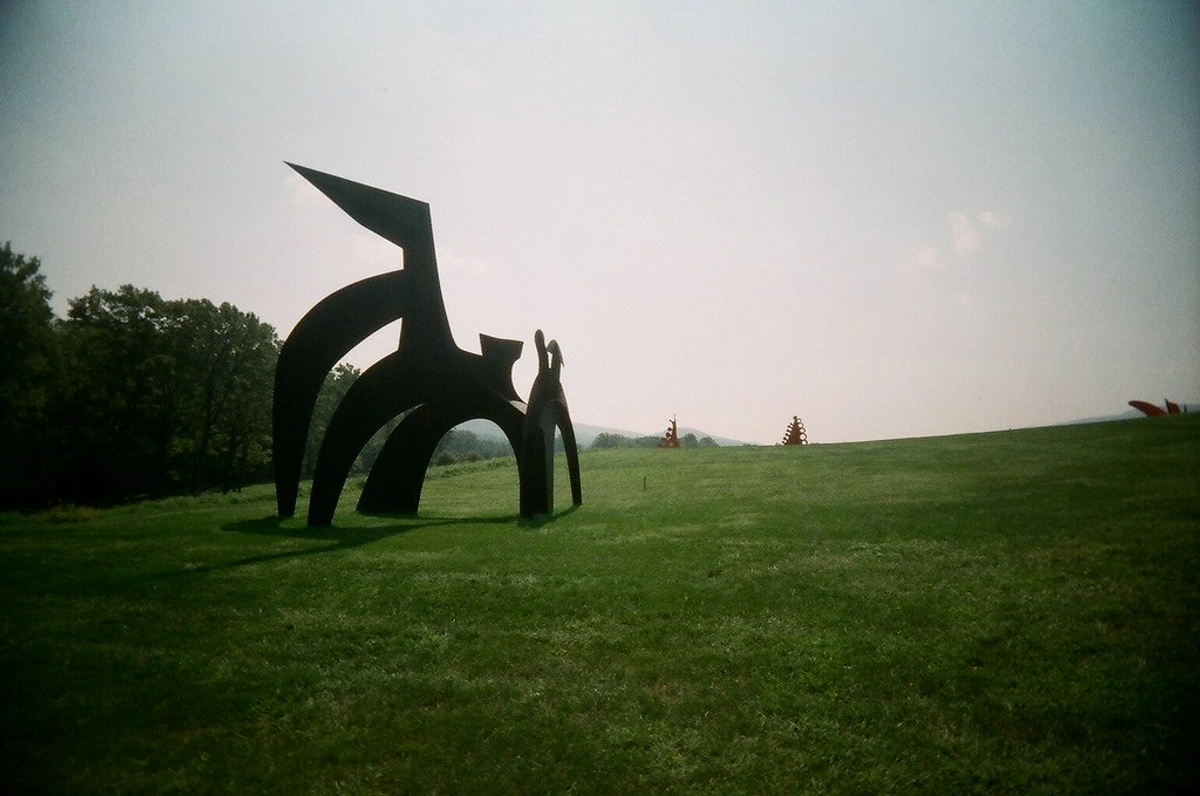
Every surface is in motion. The legs are muscular and piston-like, the chest is streamlined like the hull of a ship, and the body trails off into wing-like shapes that capture the turbulence of air. There's a powerful sense of forward thrust. It’s a human form that has abandoned stillness in favor of sheer, relentless motion. Artists had depicted movement for centuries—think of the fluttering robes in Hellenistic sculptures like the Winged Victory of Samothrace. But those were always the effect of an external force (the wind) on a fundamentally still form. Boccioni did the exact opposite. He made the figure's own internal energy so powerful it seemed to carve its own slipstream. He showed the effect of the form on the wind, on space itself. It's less a "thing" and more an "event," a moment of physical transformation that you can almost hear as a rushing sound.

2. Development of a Bottle in Space (1912)
This is where Boccioni’s material experimentation reaches its peak. He takes a simple, mundane object—a bottle—and subjects it to a Futurist analysis. He spirals the bottle's form outward, turning its solid volume into a series of transparent, concentric planes made from glass. The spiraling shape suggests how the bottle exists not just in space, but through time as our eye moves around it. It’s an X-ray vision of an object, showing its growth and structure all at once.
I love this piece because it answers a simple question with impossible complexity: What is a bottle? A classic sculptor would show you its outer shell. Boccioni shows you its volume, its history, its relationship to the void. It's a radical re-imagining of an everyday object, turning it into a dynamic architectural essay. The use of glass is genius; it proves that space isn't just an absence, but a tangible medium that can be shaped and defined.
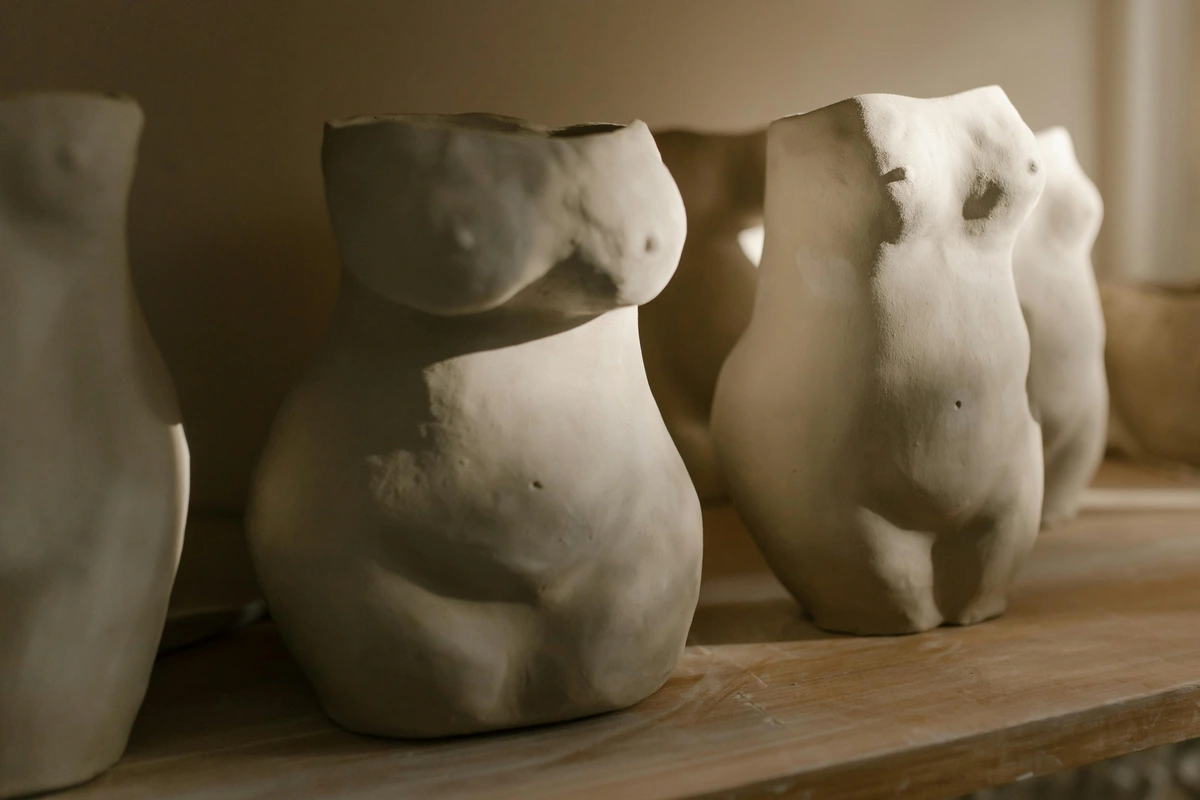
3. Fusion of a Head and a Window (1912)
This piece is a perfect demonstration of interpenetration of planes. The head of a figure is literally fused with the architectural elements of a window. You can't tell where the face ends and the window frame begins. The object and its environment have become a single, inseparable entity. This is a staggering leap in thought. It's the first time, arguably, that psychological space—the fact that our minds merge with our surroundings—is given physical, architectural form.
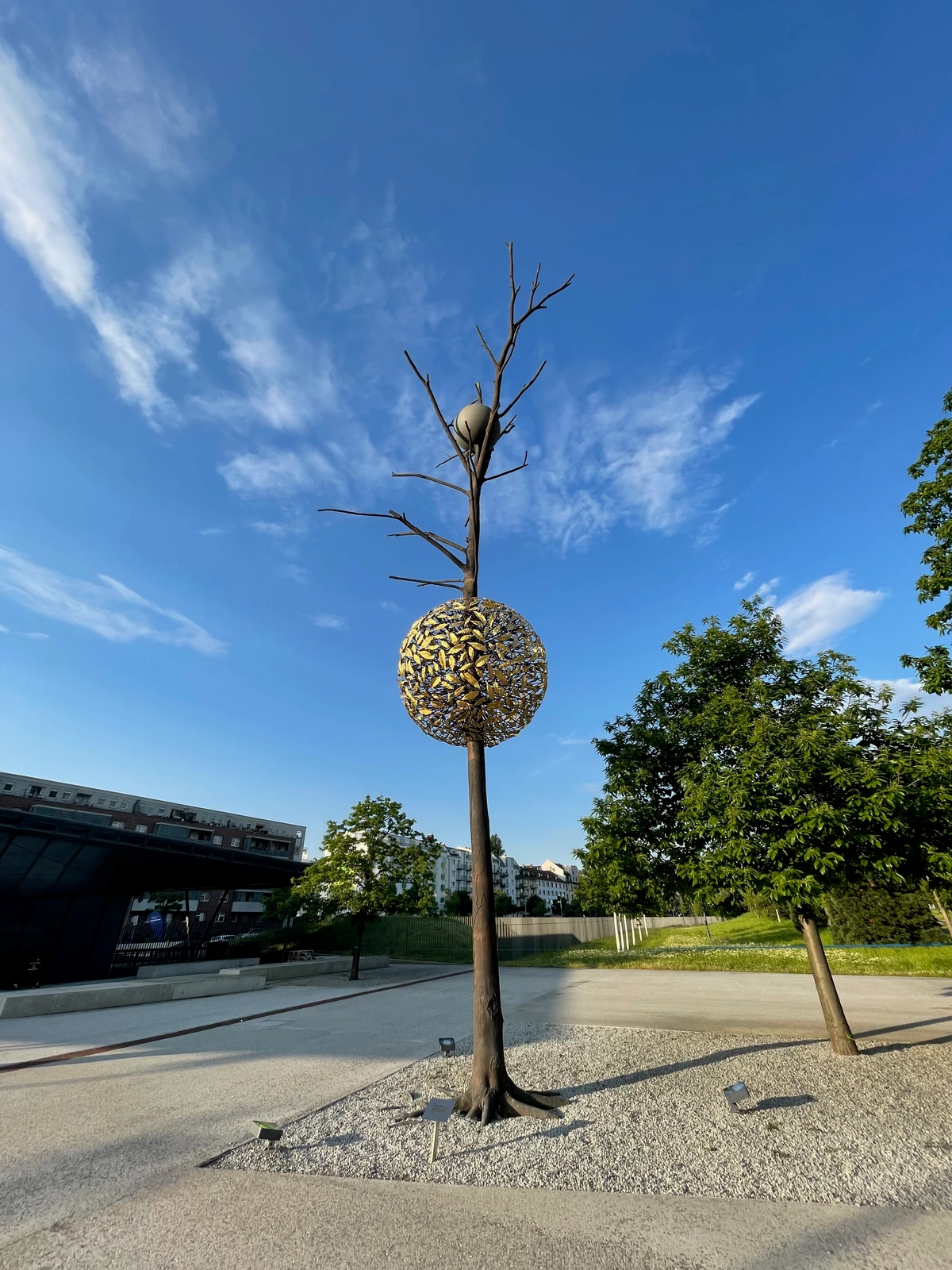
The window isn't just something the figure is looking out of; it's a part of the figure's psychological and physical reality. It's a powerful and disorienting visual metaphor for how we are all shaped by the spaces we inhabit. When I see this, I don't just see a sculpture; I feel the phantom sensation of the window frame around my own vision. It's a physical, almost claustrophobic reminder that our brains are constantly fusing what we see with where we are. Our perception is never raw; it's always a collaboration between our eyes and the architecture that frames them.
The Echoes in a Modern Studio
Look, artists are magpies. We steal what shines and make it ours. And honestly, Boccioni's workshop is still full of bright, irresistible ideas. I can't help but see his fingerprints all over modern and contemporary art. His radical ideas weren't just a dead end; they were a launching pad for a century of innovation. They didn't just influence the next generation; they created a set of problems that artists are still trying to solve today.
I think about the sculptor Anish Kapoor, whose massive, void-like forms don't just occupy space—they seem to erase it, creating a sense of infinite depth that pulls you in. Or Richard Serra's steel behemoths that don't just sit there; they threaten to fall, forcing your body to physically reckon with weight, gravity, and the architectural space you share with them. Even the digital artists working with motion graphics are tilling the same soil Boccioni first plowed, trying to understand how to make a form feel like it's still in the process of becoming. The specific materials change, but the fundamental questions—how do we make static things feel alive, how do we capture time in space—remain exactly the same.
His desire to shatter the solid object and incorporate the environment was like a stone thrown into a pond; the ripples spread wide. They paved the way for Constructivism in Russia, where artists like Naum Gabo and Antoine Pevsner ran with his ideas of transparency and spatial construction, creating sculptures that were more like architectural diagrams of energy and force, stripped of all sentimentalism. A few decades later, the propeller-like motion in his sculptures finds a kindred spirit in the spinning, motorized works of the Kinetic Art movement, where artists like Jean Tinguely abandoned illusion altogether and took the idea of real motion to its literal, clanking, sputtering conclusion.
You can even trace his influence to more unexpected places. The street artist Keith Haring, for instance, with his dancing, vibrating figures, was clearly indebted to Boccioni's approach to the body in motion; Haring just traded the machine age for the disco and public transit. And if you look at the work of a contemporary sculptor like Ishikawa Koyo, the debt is even more direct. His fluid, dynamic forms seem to be caught mid-transformation, a direct descendant of Boccioni's quest to show the act of becoming rather than the state of being.
But the influence isn't just historical or academic. The way contemporary street art can seem to vibrate on a wall, or how some digital art uses motion blur to evoke speed—these are all direct descendants of Boccioni's initial experiment. Whenever I see a sculptor working with flowing, dynamic forms, or when I find myself in the studio trying to capture energy rather than just an image, that restless, ambitious, brilliant ghost of Boccioni is right there with us. He proved that the artist's job isn't to copy reality, but to invent a new one that feels more true. It's a lesson in creative courage that never gets old.
A Practical Guide for Artists: How to Think like Boccioni
Feeling inspired? Good. But "being dynamic" is vague advice. Let's talk about how these principles might translate into actual creative habits. This isn't about copying Boccioni's style—it's about stealing the questions he asked.
The beautiful thing is, you don't need a block of plaster or a welding torch to use these ideas. They're a mindset. A painter can create interpenetration of planes through overlapping, transparent washes of color, letting the canvas show through and become part of the form. A digital artist can explore forced synthesis by creating animated loops that collapse a sequence of events into a single, repeating gesture. A photographer can capture dynamism through intentional motion blur, letting the subject streak and dissolve. The principles are universal because they're not about a material; they're about a way of seeing, a way of perceiving the world as a fluid, energetic system.
Principle  | The Boccioni Question | A Practical Exercise for You |
|---|---|---|
| Dynamism | How does my subject interact with the space around it? | Don't just draw the object. Draw the forces acting on it—the wind, gravity, momentum. Sketch the path it would carve through the air. Try making 10 rapid sketches of something moving, then combine them into one image. |
| Interpenetration | Where does my subject end and the world begin? | Create a piece where the background and the foreground share the same lines or shapes. Make them inseparable. Collapse your composition. Try cutting a shape out of your subject and filling it with background. |
| Material Rebellion | What does this material feel like, not just look like? | Combine materials that oppose each other. Pair something delicate (thread) with something brutal (rough concrete). What story does that friction tell? Go to a hardware store and find the weirdest material combination you can. |
| Forced Synthesis | What does a sequence of events look like when viewed all at once? | Try to paint a memory. Instead of one moment, show multiple moments from different times happening on the same canvas, overlapping. Film something moving and trace every frame onto one sheet. |
| Environmental Awareness | How does light/shadow/space become part of the work? | Create a piece that physically interacts with its display space. Use mirrors, shadows, or cutouts that incorporate the wall behind it. Make the room part of the art. |
| Process as Subject | How can I show the making of the thing, not just the thing? | Leave evidence of your process visible. Show brushstrokes, fingerprints, layering. Make the history of the object's creation part of its present reality. |

This isn't a rigid formula or a checklist to be followed. It's a toolkit for jolting yourself out of habitual seeing, a way to shake the dust off your own perceptions. The real goal is to stop representing things, and start representing your experience of them—the movement, the energy, the noise, the way a room feels when you enter it, the way a sunset isn't just a color but a feeling of the day ending. It's about finding the verb in a world of nouns.
Boccioni in Context: An Artistic Timeline
It's tempting to see Boccioni as an isolated genius, a brilliant meteor flashing across the sky. But he was part of a frantic, global conversation about art and modernity. Placing him in a timeline doesn't diminish his radicalism; on the contrary, it shows how he was like a lightning rod, gathering all the energy in the air and discharging it in one powerful, concentrated bolt.
What is absolutely staggering to me, looking at this timeline, is the sheer compression of his creative life. In just six years (1910-1916), he went from being a talented but unknown painter to completely rewriting the rulebook for sculpture, only to have it all cut short. It's a stark reminder that creative impact isn't about quantity of years, but about the density of ideas packed into them. He lived his entire artistic life in the time it takes most people to finish art school.
Period | Art Movement | Key Idea | Boccioni's Relationship |
|---|---|---|---|
| Early 1900s | Cubism (Picasso, Braque) | Fragmenting objects into geometric planes and multiple viewpoints. | Boccioni saw early Cubist work in Paris. He borrowed the idea of breaking form but said it was too static, too 'intellectual' and not 'dynamic' enough. He wanted to add time and motion. |
| 1909-1916 | Futurism (Boccioni, Balla) | Celebrating speed, technology, and violence; capturing the sensation of motion. | This was his home. He was the movement's primary sculptor and theorist, pushing its ideas further than anyone else. |
| c. 1915-1930s | Constructivism (Gabo, Tatlin) | Art as a practice for social purposes; using industrial materials. | Boccioni's work was a major influence. They took his ideas of transparency and spatial construction into a more utopian, social direction. |
| 1920s | Dada / Surrealism | Rejecting logic and embracing the absurd or subconscious. | A parallel but different path. While Dada mocked the machine age, Futurism worshipped it. Both, however, shared a love for collage and assemblage. |
| Post-WWII | Kinetic Art (Tinguely, Calder) | Art that actually moves, often with motors or air currents. | Boccioni was a clear forerunner. He sculpted the illusion of motion; they decided to just make the thing move. |
| 1960s-70s | Op Art (Vasarely, Riley) | Creating optical illusions of movement through geometric patterns. | Boccioni's influence here is subtle but present. He explored how static forms could create sensations of motion through visual rhythm and dynamic arrangement. |
| 1980s-Present | Digital Art & Motion Graphics | Using technology to create literal motion and transformation in art. | Boccioni's dream of capturing time and motion found its ultimate expression in digital media, where artists can literally sculpt with time as a material. |
The Man Behind the Manifesto: Boccioni's Brief, Intense Life
The work Boccioni produced during the height of his powers feels like that of a man possessed, and in a way, he was. But it's worth remembering the person behind the icon. He wasn't just a machine-age zealot; he was a conflicted, ambitious, and deeply perceptive artist.
From what we know of his personality, Boccioni was intense and competitive, a man whose mind seemed to move faster than his hands could follow. Fellow Futurist Carlo Carrà described him as someone who "burned his own oxygen"—a phrase that perfectly captures a man who lived at such a high intensity that he seemed to consume himself from within. This wasn't someone who dabbled in ideas; he attacked them with a convert's zeal.
He was born in 1882 in Reggio Calabria, Italy, and his early life was nomadic, moving between cities like Rome and Milan. His early work, pre-Futurism, was heavily influenced by Divisionism—an Italian cousin of Pointillism, where colors are applied in distinct strokes to create a shimmering effect. You can see it in his paintings from around 1907-1909. The brushstrokes themselves seem to vibrate with energy, a clear precursor to his later sculptural dynamism.
Everything changed after he read Marinetti's manifesto. It was like a key turning in a lock. He became Futurism's chief polemicist and its most brilliant practitioner, the intellectual muscle of the movement. But the very war he so passionately glorified in his art became his end. In 1916, at the age of only 33, he was not killed by a bullet, but in a freak accident, thrown from his horse during a cavalry exercise. His creative explosion lasted less than a decade. We can only imagine what he might have created had he lived into the post-war era, seeing the world he prophesied become a reality.
Exploring Boccioni Today: Where to See His Work
Feeling a desperate urge to see this stuff in person? A digital image, especially for sculpture, is a poor substitute for standing in front of the actual work. Here are a few places where you can experience Boccioni's revolutionary forms for yourself.
Here's my tip: when you visit these museums, don't just look at the sculpture. Walk around it slowly, watching how the forms change with each step. Notice how the light hits different surfaces, creating shadows that seem to move independently. Crouch down and look up at it. Stand on your toes and look down. Boccioni designed these works to be experienced in motion - your motion - so give yourself permission to move.
- Museum of Modern Art (MoMA), New York: This is the pilgrimage site. MoMA holds the definitive cast of Unique Forms of Continuity in Space. They also have one of the few surviving bronze casts of his other masterpiece, Development of a Bottle in Space. To stand in that room is to stand at the epicenter of 20th-century sculpture. The MoMA piece has a particular glow - the bronze almost seems to absorb and radiate light in a way that makes it feel alive.
- Tate Modern, London: The Tate has an incredible collection of modern art and often has significant Boccioni works on display, including important paintings that show the 2D origins of his sculptural ideas. Check their schedule - they occasionally loan out works, so call ahead if you're making a special trip.
- Pinacoteca di Brera, Milan: For a dose of context, this museum holds an earlier, plaster version of Unique Forms of Continuity in Space. Seeing the original, unadorned plaster is a different experience entirely—it feels more raw, more immediate, like you're watching the idea being born. You can still see the mark of his tools in the plaster, which makes it feel incredibly intimate.
- The Getty Center, Los Angeles: The Getty has a strong collection of European art from this period and occasionally features works by Boccioni and the Futurists in its exhibitions.
- Estorick Collection of Modern Italian Art, London: This hidden gem focuses specifically on modern Italian art and has excellent examples of Boccioni's work in a more intimate setting than the big museums. It's like having a private conversation with the sculpture.
Frequently Asked Questions: Boccioni's Sculpture Techniques
What is Boccioni's most famous sculpture?
Without a doubt, it's Unique Forms of Continuity in Space from 1913. It has become the unofficial icon of the Futurist movement and a masterpiece of 20th-century sculpture. It perfectly captures his idea of dynamism by transforming a striding human figure into a powerful abstract shape that seems to be moving at incredible speed. It's so iconic it's even been featured on the back of Italy's 20-cent euro coin, cementing its status as a national treasure.
What does "interpenetration of planes" mean?
Interpenetration of planes (compenetrazione dei piani) was Boccioni's technique for dissolving the hard boundary between an object and its environment. Instead of a figure standing against a background, he would merge them, allowing the shapes of the figure to blend seamlessly with the shapes of the space around it. It’s a way of showing how things and spaces intermingle in our perception of movement. Think of it as a visual metaphor for how we, as humans, are never truly separate from the spaces we inhabit—we are constantly interacting with and being shaped by them.
What materials did Boccioni use?
He was a revolutionary in his use of materials. Boccioni argued for using a wide range of substances in a single work. He used traditional materials like plaster and bronze, but also incorporated glass, wood, iron, wire, and even everyday objects like bits of furniture. This broke from the tradition of using a single "noble" material like marble. He wanted to create a "symphony of materials," where the unique industrial quality of each substance contributed to the overall sensation of modernity and dynamism.
The irony of course is that many of these mixed-media pieces were incredibly fragile, and the glass and found objects often didn't survive. We mostly know them from photographs and plaster casts that were made after Boccioni's death. It makes me wonder what we're missing - what would his most experimental multi-material works have looked like if they'd survived intact?

How is Boccioni's work Futurist?
His work embodies the core tenets of Futurism: a celebration of speed, technology, and violent dynamism. He rejected the static, reflective art of the past and focused entirely on capturing the sensation of moving through the modern industrial world. His sculptures are fearless, energetic, and look towards the future, completely ignoring classical traditions. They are not just sculptures; they are manifestos in three dimensions, screaming their belief in the beauty of the machine age.
Why did Boccioni want to "abolish" the statue?
Boccioni saw traditional, self-contained statues as relics of a dead culture. He believed that as long as sculpture was confined to a single, solid, unmoving form, it would be unable to express the dynamic, chaotic reality of the modern age. To "abolish the statue" meant to open it up, to let the environment in, and to represent forces and sensations instead of just appearances. He wanted to replace the timeless, placid object with a time-based, energetic event. It was a call to make sculpture as complex, noisy, and alive as the world it existed in.
Did Boccioni make his own sculptures?
This is a great question and gets to the heart of how artists work. Boccioni would create his initial forms in plaster, which is a malleable and fast-paced medium. For works intended to be cast in bronze, like Unique Forms of Continuity in Space, he would then work with specialist foundries to complete the final piece. This is a very common and age-old collaboration between a sculptor's vision and an artisan's skill. Many of his most radical multi-material works only survive today as the original plasters, giving us a direct and tangible link to his frantic, creative process.
How did his studio practice work? From accounts of his working method, it seems Boccioni worked in these intense bursts of energy. He'd create the original plaster models rapidly, sometimes in just a few days, working the material almost like a painter works paint - building it up, carving it away, working spontaneously and intuitively. The technical challenges of turning these plaster originals into bronze or mixed-media pieces were enormous, which explains why many of his most experimental works remained as plasters.
In the end, Boccioni was a meteor. He blazed across the art world for just a few years before his life was tragically cut short in 1916. But in that short time, he changed everything. He didn't just make sculptures; he gave us a new way to see the dance between stillness and motion, and how the world leaves its mark on us as we move through it.








Walking away from his work, you don't just see a sculpture. You feel the wind.