
What Is Consistent Spacing in Art? A Guide to Visual Harmony
Discover the principles of consistent spacing in art, how it creates balance and rhythm, and why it's essential for visual harmony in compositions.

What Is Consistent Spacing in Art? A Guide to Visual Harmony
I remember the first time I stood in front of a painting and felt something click. It wasn’t just the colors or the subject—it was the way everything seemed to breathe. The spaces between the elements were as important as the elements themselves. That, my friends, is the magic of consistent spacing in art.
Art isn’t just about what you see—it’s about what you feel. And often, that feeling comes from the spaces in between. Whether you’re an artist, a designer, or just someone who appreciates beauty, understanding spacing can transform how you experience and create art.
The Psychology Behind Spacing
Spacing isn’t just a visual element; it’s deeply psychological. The way we perceive space in art is tied to how we interpret the world around us. For example, crowded spaces can evoke feelings of anxiety, while open spaces can create a sense of calm. This psychological impact is why spacing is so crucial in art—it shapes the emotional experience of the viewer.
How Spacing Affects Perception
Our brains are wired to recognize patterns and relationships. When spacing is consistent, the brain processes visual information more efficiently, leading to a cohesive and satisfying viewing experience. Conversely, inconsistent spacing can create cognitive dissonance, making it harder for the viewer to engage with the artwork.
Why Spacing Matters in Art
Spacing is the silent conductor of visual harmony. It guides the viewer’s eye, creates rhythm, and establishes balance. Without it, even the most vibrant colors or intricate details can feel chaotic or overwhelming. In this guide, we’ll explore the principles of consistent spacing, its role in art, and how you can use it to elevate your own work.
The Role of Spacing in Storytelling
Spacing isn’t just about aesthetics; it’s also a storytelling tool. Artists use spacing to create narratives within their work. For example, the distance between characters in a painting can suggest relationships or emotions, while the spacing of objects can imply movement or stillness.
The Role of Spacing in Different Art Forms
Spacing plays a unique role in various art forms:
- Painting: In painting, spacing can dictate the flow of the viewer’s eye across the canvas. For example, the gaps between brushstrokes can create texture and depth.
- Sculpture: In sculpture, the space around and between forms can define the piece’s presence and interaction with its environment.
- Digital Art: In digital art, spacing is controlled with precision using tools like grids and alignment guides, allowing for experimentation and adjustments.
- Typography: In typography, spacing affects readability and visual appeal. Kerning and leading are essential for creating a harmonious text layout.
- Photography: In photography, spacing can influence the composition of a shot. The distance between subjects and the use of negative space can create a sense of depth and focus.
What Is Consistent Spacing?
Consistent spacing refers to the deliberate and uniform arrangement of intervals between elements in a composition. Whether it’s the gap between brushstrokes, the distance between objects, or the margins around a focal point, spacing dictates how a viewer’s eye moves across the artwork. It’s not just about empty space—it’s about active space.
Think of it like music. Notes on a page mean little without the rests between them. Those silences create rhythm, tension, and harmony. In art, spacing does the same.
The Importance of Active Space
Active space is the area between elements that contributes to the overall composition. It’s not just a void; it’s a dynamic part of the artwork that interacts with the elements around it. By treating space as an active component, artists can create more engaging and harmonious compositions.
Key Principles of Consistent Spacing
- Uniformity: Ensuring that the gaps between elements are equal or follow a deliberate pattern.
- Balance: Distributing elements evenly to create a sense of equilibrium.
- Rhythm: Using spacing to guide the viewer’s eye smoothly across the composition.
- Harmony: Creating a cohesive visual experience where all elements feel interconnected.
- Contrast: Using varying spacing to create emphasis and highlight specific elements within the composition.
- Proportion: Ensuring that the spacing between elements is proportional to their size and importance.
- Hierarchy: Using spacing to establish a visual hierarchy, guiding the viewer’s attention to the most important elements first.
The Science of Spacing
Research in visual perception has shown that consistent spacing can enhance the brain’s ability to process and interpret visual information. When elements are evenly spaced, the brain can more easily recognize patterns and relationships, leading to a more cohesive and satisfying viewing experience. This is why artists often use grids or other spacing tools to create compositions that feel balanced and intentional.
The Role of Gestalt Principles
The Gestalt principles of perception explain how our brains organize visual information. Principles like proximity, similarity, and closure are directly influenced by spacing. For example, elements that are close together are perceived as a group, while those that are spaced farther apart are seen as separate entities. Understanding these principles can help artists create more effective and engaging compositions.
Key Principles of Consistent Spacing
- Uniformity: Ensuring that the gaps between elements are equal or follow a deliberate pattern.
- Balance: Distributing elements evenly to create a sense of equilibrium.
- Rhythm: Using spacing to guide the viewer’s eye smoothly across the composition.
- Harmony: Creating a cohesive visual experience where all elements feel interconnected.
- Contrast: Using varying spacing to create emphasis and highlight specific elements within the composition.
- Proportion: Ensuring that the spacing between elements is proportional to their size and importance.
The Role of Spacing in Art
Spacing isn’t just a technical detail—it’s a fundamental aspect of composition. It can influence how we perceive balance, rhythm, and harmony in a piece. Without it, even the most vibrant colors or intricate details can feel chaotic or overwhelming.
Spacing and Emotional Resonance
The emotional impact of spacing is profound. Tight spacing can create a sense of tension or urgency, while open spacing can evoke feelings of calm and expansiveness. Artists use spacing to manipulate the viewer’s emotional response, making it a powerful tool in storytelling and expression.
Emotional Impact
The emotional impact of spacing cannot be overstated. Tight spacing can create a sense of tension or urgency, while open spacing can evoke feelings of calm and expansiveness. Artists use spacing to manipulate the viewer’s emotional response, making it a powerful tool in storytelling and expression.
Balance
Balance in art is about distributing visual weight evenly. Consistent spacing ensures that no single element dominates the composition, creating a sense of equilibrium. Imagine a seesaw: if one side is too heavy, it tips over. The same principle applies to art. Even spacing ensures that the composition feels stable and intentional.
Types of Balance
- Symmetrical Balance: Elements are mirrored on either side of a central axis, creating a sense of stability and formality.
- Asymmetrical Balance: Elements are balanced through contrast and variation, creating a dynamic and engaging composition.
- Radial Balance: Elements radiate from a central point, creating a sense of movement and energy.
- Crystallographic Balance: Elements are repeated in a pattern that creates a sense of order and symmetry, often seen in geometric and abstract art.
Rhythm
Rhythm in art is created through the repetition of elements and intervals. Consistent spacing acts like the beat of a drum, guiding the viewer’s eye smoothly across the piece. It can speed up or slow down the visual experience, much like tempo in music. For example, tight spacing can create a sense of urgency, while open spacing feels calm and expansive.
Creating Visual Rhythm
- Repetition: Repeating elements at consistent intervals creates a sense of rhythm and movement.
- Variation: Introducing slight variations in spacing can add interest and prevent monotony.
- Contrast: Using contrasting spacing can create emphasis and highlight specific elements.
- Gradation: Gradually changing the spacing between elements can create a sense of movement and progression, guiding the viewer’s eye through the composition.
Visual Harmony
Harmony in art isn’t just about colors or shapes. It’s about how elements coexist. Consistent spacing ensures that every part of the composition feels intentional and interconnected. It’s the invisible thread that ties everything together, creating a cohesive and pleasing visual experience.
Achieving Harmony
- Consistency: Maintaining consistent spacing throughout the composition creates a sense of unity.
- Variety: Introducing subtle variations in spacing can add depth and interest.
- Intentionality: Every spacing decision should be intentional, contributing to the overall harmony of the piece.
- Unity: Ensuring that all elements, including spacing, work together to create a cohesive and harmonious whole.
Why Does Consistent Spacing Matter?
Balance
Without consistent spacing, a composition can feel chaotic or overwhelming. Imagine a room where furniture is crammed into one corner—it’s uncomfortable, right? The same goes for art. Even spacing ensures that no single element dominates unfairly, creating a sense of equilibrium.

Clarity
Consistent spacing enhances clarity by making it easier for the viewer to distinguish between elements. This is especially important in complex compositions where multiple elements vie for attention. Clear spacing helps the viewer navigate the artwork and understand its structure.
The Role of Spacing in Readability
In typography and design, spacing plays a crucial role in readability. Proper spacing between letters, words, and lines ensures that text is easy to read and visually appealing. This is why kerning and leading are essential tools in typography.
Rhythm
Spacing introduces rhythm. Repetition of intervals—like the steady beat of a drum—guides the viewer’s eye smoothly across the piece. It can speed up or slow down the visual experience, much like tempo in music.
The Role of Spacing in Movement
Spacing can create a sense of movement by varying the intervals between elements. For example, tighter spacing can suggest speed, while wider spacing can imply a slower, more deliberate pace. This technique is often used in abstract art to create a sense of dynamism and energy.
Emphasis
Spacing can be used to create emphasis by highlighting specific elements. For example, increasing the space around a focal point can draw the viewer’s attention to it, making it stand out within the composition.
The Role of Spacing in Focus
By manipulating spacing, artists can guide the viewer’s focus to specific areas of the artwork. This is particularly useful in complex compositions where multiple elements compete for attention. Strategic spacing ensures that the viewer’s eye is drawn to the most important parts of the composition.
Visual Harmony
Harmony in art isn’t just about colors or shapes. It’s about how elements coexist. Consistent spacing ensures that every part of the composition feels intentional and interconnected.
How to Achieve Consistent Spacing
1. Use a Grid System
Many artists, especially those working in abstract or geometric styles, rely on grids. A grid acts as an invisible framework, ensuring that spacing remains uniform. It’s like the skeleton of your artwork—hidden but essential.
Types of Grids
- Square Grids: Useful for creating balanced and symmetrical compositions.
- Golden Ratio Grids: Based on the golden ratio, these grids create harmonious and visually pleasing layouts.
- Custom Grids: Artists can create their own grids tailored to their specific needs and artistic vision.
- Isometric Grids: Used in technical and architectural drawings, these grids create a sense of depth and perspective.

2. Measure with Your Eyes (and Tools)
While intuition plays a role, tools like rulers or digital guides can help maintain precision. Even a simple trick—like using your thumb to gauge distances—can keep spacing consistent.
Tools for Measuring Spacing
- Rulers and Protractors: Traditional tools for measuring distances and angles.
- Digital Guides: Software tools that provide precise measurements and alignment guides.
- Grid Paper: Useful for sketching and planning compositions with consistent spacing.
- Laser Levels: Used in large-scale installations and sculptures to ensure precise spacing and alignment.
3. Play with Negative Space
Negative space (the empty areas around and between subjects) isn’t just filler. It’s a powerful tool. By treating negative space as an active part of the composition, you can enhance the impact of your spacing.
Techniques for Using Negative Space
- Silhouetting: Using negative space to create striking silhouettes and outlines.
- Framing: Using negative space to frame and highlight specific elements.
- Layering: Creating depth and dimension by layering negative space with other elements.
- Contrast: Using negative space to create contrast and emphasize the positive space, making the subject stand out more prominently.
Examples of Consistent Spacing in Art
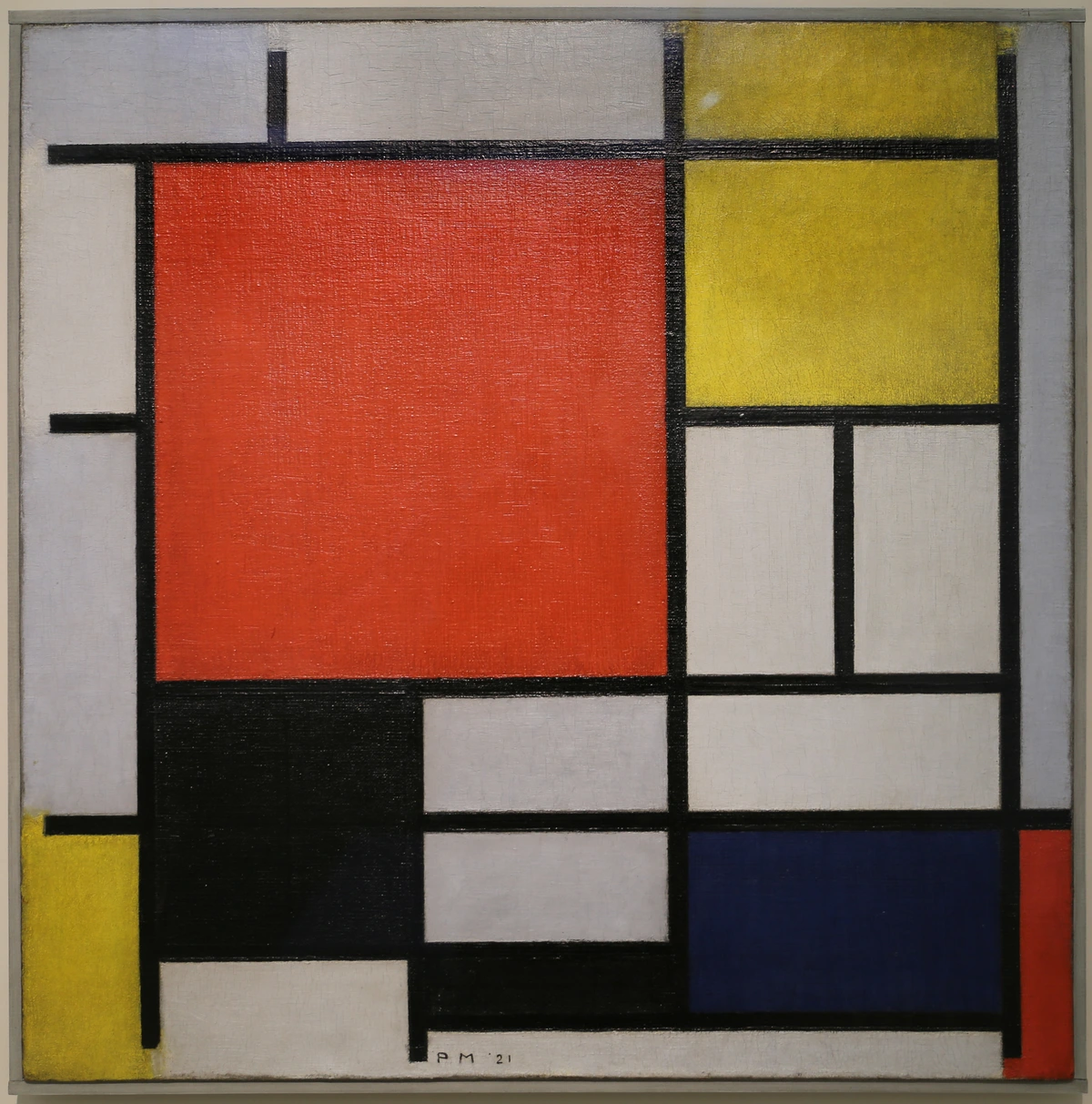
Piet Mondrian’s Composition with Red, Blue, and Yellow
Mondrian’s iconic grids are a masterclass in consistent spacing. The black lines create a rhythm, while the colored blocks sit within the structure like notes in a musical score.
Analysis of Mondrian’s Work
- Grid Structure: Mondrian’s use of a grid system ensures that the spacing between elements is consistent and deliberate.
- Color Placement: The placement of colored blocks within the grid creates a sense of balance and harmony.
- Visual Rhythm: The repetition of lines and intervals creates a rhythmic flow that guides the viewer’s eye across the composition.
credit, licence
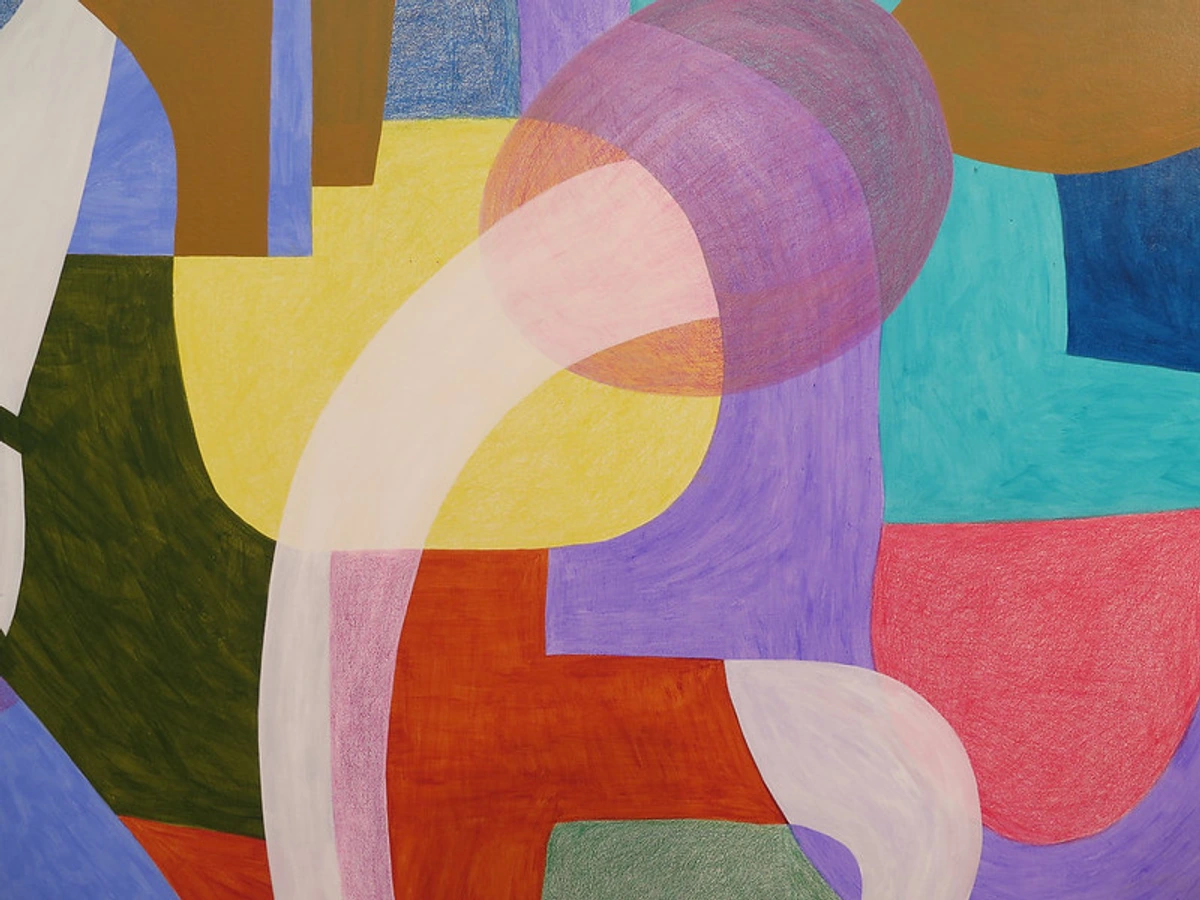
Agnes Martin’s With My Back to the World
Martin’s subtle, hand-drawn lines and soft washes of color rely on meticulous spacing. The result is a meditative, almost breath-like quality.
Analysis of Martin’s Work
- Hand-Drawn Lines: Martin’s hand-drawn lines create a sense of organic rhythm and movement.
- Soft Washes: The soft washes of color enhance the meditative quality of the artwork.
- Meticulous Spacing: The careful spacing between lines and elements creates a sense of harmony and balance.
credit, licence
Common Mistakes to Avoid
- Overcrowding: Too many elements with insufficient spacing can make a piece feel cluttered.
- Inconsistent Gaps: Random spacing disrupts flow and can confuse the viewer.
- Ignoring Margins: Forgetting the edges of your canvas can throw off the entire balance.
- Over-Reliance on Symmetry: While symmetry can be pleasing, it’s not the only way to achieve balance. Experiment with asymmetrical spacing to create dynamic compositions.
- Neglecting Negative Space: Failing to consider negative space can result in a composition that feels unbalanced or incomplete.
- Lack of Intentionality: Spacing decisions should be intentional and contribute to the overall harmony of the piece.
- Overuse of Grids: While grids are useful, over-reliance on them can make a composition feel rigid and mechanical. Use them as a guide, not a rule.
How to Fix Common Spacing Issues
- Step Back and Assess: Sometimes, taking a break and returning with fresh eyes can help you spot spacing issues.
- Use a Grid: If you’re struggling with consistency, try overlaying a grid on your composition to guide your spacing.
- Experiment with Cropping: If a piece feels unbalanced, try cropping it to see if adjusting the margins improves the overall harmony.
- Seek Feedback: Ask others for their input. Sometimes, a fresh perspective can reveal spacing issues you might have missed.
- Adjust Negative Space: Experiment with adjusting the negative space to create a more balanced and harmonious composition.
- Refine Spacing Decisions: Review and refine your spacing decisions to ensure they contribute to the overall harmony of the piece.
- Practice and Experiment: The more you practice, the better you’ll become at intuitively understanding spacing. Don’t be afraid to experiment and try new techniques.
FAQ
What’s the difference between consistent spacing and symmetry?
Consistent spacing ensures uniform intervals, while symmetry is about mirroring elements. You can have consistent spacing without symmetry (e.g., abstract art with even gaps but no mirrored shapes).
Can spacing be too consistent?
Yes! Overly rigid spacing can feel mechanical. The key is balance—enough consistency to create harmony, but with room for organic variation.
How does spacing affect emotion in art?
Tight spacing can create tension or intensity, while open spacing feels calm or expansive. Experiment to see how spacing shifts the mood of your work.
How can I practice consistent spacing?
Start by studying artworks you admire and analyzing their spacing. Try recreating them with a focus on spacing. Over time, your eye will develop a natural sense for it.
What tools can help with spacing?
Tools like grid paper, digital design software, and even simple rulers can help you maintain consistent spacing. Don’t be afraid to use them!
How does spacing work in digital art?
In digital art, spacing can be controlled with precision using tools like layers, grids, and alignment guides. These tools allow artists to experiment with different spacing arrangements and make adjustments easily.
Can spacing be used to create optical illusions?
Yes! Spacing can be used to create optical illusions, such as making elements appear closer or farther apart than they actually are. This technique is often used in abstract art to create a sense of depth and movement.
How does spacing relate to typography?
In typography, spacing refers to the gaps between letters, words, and lines. Consistent spacing is crucial for readability and visual appeal. For example, kerning (the space between individual letters) and leading (the space between lines of text) play a significant role in typography.
How does spacing impact the perception of depth?
Spacing can create the illusion of depth by varying the distance between elements. This technique is often used in landscape paintings and digital art to create a sense of distance and perspective.
What role does spacing play in abstract art?
In abstract art, spacing is often used to create rhythm, balance, and harmony. Artists use spacing to guide the viewer’s eye and create a sense of movement and energy within the composition.
How can I use spacing to create emphasis?
By increasing the space around a focal point, you can draw the viewer’s attention to it, making it stand out within the composition. This technique is often used in advertising and graphic design to highlight key messages.
How does spacing influence the perception of movement?
Spacing can create a sense of movement by varying the intervals between elements. For example, tighter spacing can suggest speed, while wider spacing can imply a slower, more deliberate pace.
What is the relationship between spacing and composition?
Spacing is a fundamental aspect of composition. It helps to organize elements, create balance, and guide the viewer’s eye through the artwork. Without proper spacing, a composition can feel disjointed or overwhelming.
How can I use spacing to create a sense of rhythm?
By repeating intervals or varying them in a deliberate pattern, you can create a rhythmic flow that guides the viewer’s eye smoothly across the piece. This is similar to how a musical rhythm guides the listener’s ear.
What are some common tools for achieving consistent spacing?
Common tools include rulers, grid paper, digital design software, and alignment guides. These tools help artists maintain precision and consistency in their spacing decisions.
Conclusion
Consistent spacing isn’t just a technical rule—it’s the invisible thread that ties a composition together. Whether you’re a seasoned artist or just starting, paying attention to spacing will elevate your work from good to unforgettable.
Final Thoughts
As you continue to explore the world of art, remember that spacing is more than just a technical detail. It’s a powerful tool that can transform your work and elevate your creative vision. Whether you’re working on a painting, a design project, or even a piece of writing, paying attention to spacing will help you create something truly remarkable.







Final Thoughts
As you continue to explore the world of art, remember that spacing is more than just a technical detail. It’s a powerful tool that can transform your work and elevate your creative vision. Whether you’re working on a painting, a design project, or even a piece of writing, paying attention to spacing will help you create something truly remarkable.
And if you’re curious about how spacing plays into my own work, check out my timeline or explore the pieces in my collection.