
What Are ASTM Standards for Art Materials? (And Why Should You Care?)
Find out what ASTM standards really mean for artists and why they matter. I delve into how these standards affect the quality, safety, and longevity of the art materials you use every day.

What Are ASTM Standards for Art Materials? (And Why Should You Care?)
I have a confession to make. For the longest time, I saw the little ASTM acronym on the back of paint tubes and brushes and my eyes just glazed over. It was a piece of alphabet soup I associated with hard hats and steel beams. It turns out, I couldn't have been more wrong. Those four letters are one of the most important shields an artist has. They’re a quiet promise that the materials you're trusting—the ones you're pouring your time, money, and creative soul into—aren’t secretly plotting to fade, crumble, or poison you.
Think of it this way: if you're cooking a masterpiece, you don't want to wonder if your ingredients are actually edible. You just want to create. ASTM standards are what let artists do exactly that. They let us focus on the vision, not on whether our Prussian Blue will turn brown in five years or if the cadmium in our favorite red is leaking out of the tube.

But here's the thing most artists miss. It's not just about safety. It's about quality, longevity, and getting what you paid for. When a paint says "lightfast," do you know what that actually means? ASTM does. When a canvas claims it won't deteriorate for a century, who's checking that math? ASTM is, or at least, they set the rules so someone can.
This isn't about industry jargon. This is your creative legacy. The difference between a painting that lasts five years versus five hundred often comes down to the specific, boring, brilliantly organized standards we're about to unpack. So let's strip away the jargon and talk about what this actually means for your art, your studio practice, and your peace of mind.

Decoding ASTM Standards for Art Materials
What is ASTM? From Steel Beams to Studio Easels
Okay, first things first. ASTM International stands for the American Society for Testing and Materials. Today, it operates globally, with members in over 140 countries. The name itself offers a clue: it's about testing, creating methods anyone can use to verify that materials perform as expected. Born in 1898 from a need to standardize steel rails for an expanding railroad, its evolution is fascinating—a group of engineers worried about train derailments laid the groundwork for the durability of your favorite cerulean blue. It has since evolved into one of the world's most influential standards development organizations. You and I probably don't lie awake at night thinking about tensile strength or UV exposure, but someone does. That's what ASTM has been doing for over a century.

They are a global organization that creates voluntary technical standards for an almost comically wide range of materials, products, systems, and services—from playground equipment and medical devices to, yes, the archival quality of your favorite sketchbook. Their whole mission is to improve product quality, enhance safety, build trust, and generally make sure that when you buy a thing, it does what it says on the tin. For artists, this means your paintbrush won't shed, your canvas won't rot, and your paints won't fade before you're ready to declare your masterpiece finished.

It’s a huge collaborative process. Imagine getting thousands of engineers, scientists, academics, and even users (yes, artists are included!) into a giant virtual room to argue for years about the perfect way to measure whether a paint film cracks. This process ensures that standards are robust, practical, and widely accepted, preventing any single entity from setting rules that unfairly benefit them. This consensus-based approach means no single company or government can dictate standards to their own advantage. The final document they agree on is a standard. It's a specific, repeatable, and rigorously documented way of testing something to ensure every manufacturer is playing by the same rules.

For art materials, this often means real working artists are in the room, explaining why a particular drying time or flexibility standard matters in practice, not just in theory. They bring studio realities into the world of technical specifications, ensuring standards serve the actual creation of art.
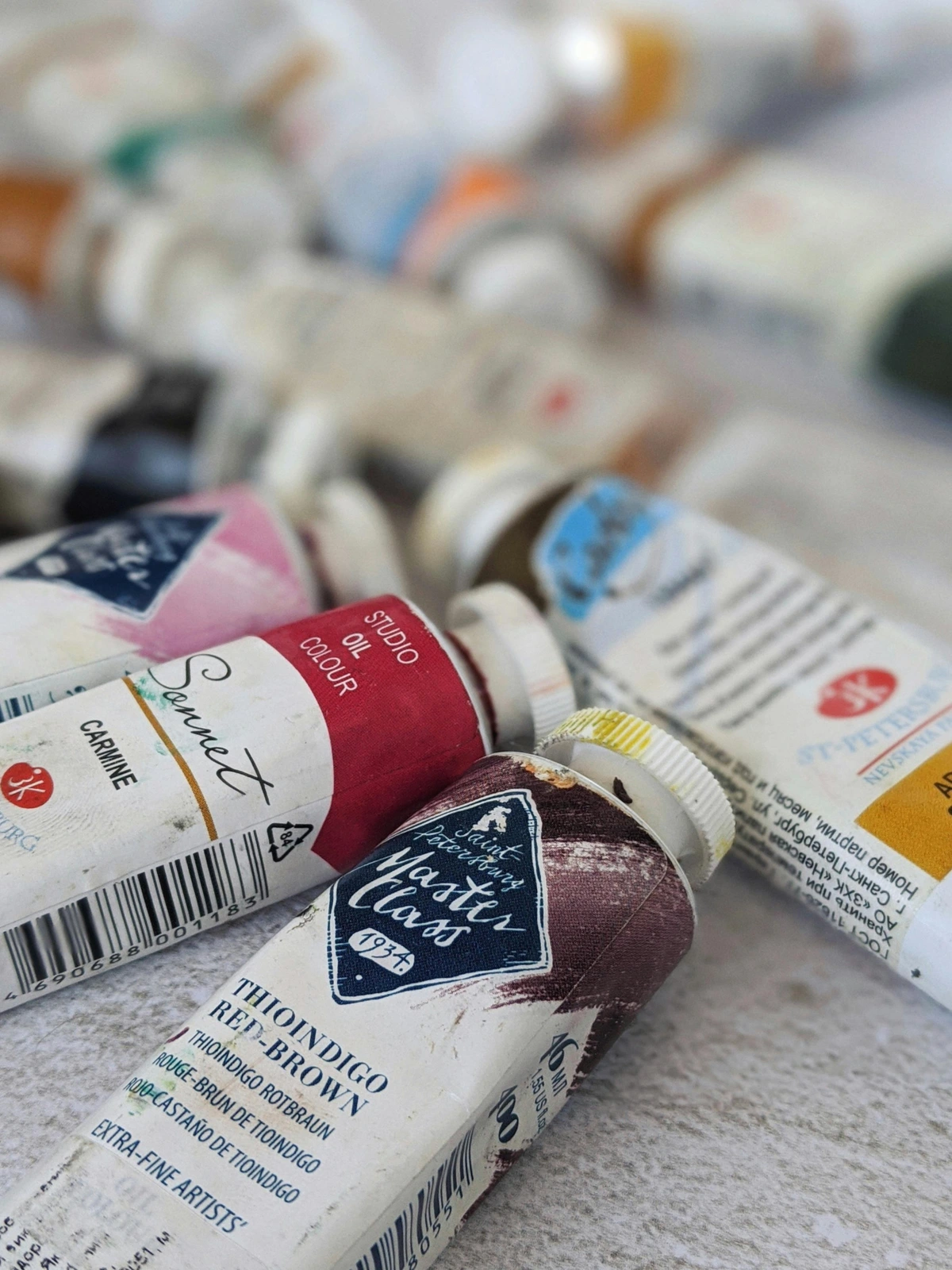
Here’s the key: these standards are technically voluntary. A company doesn't have to follow them. But in the world of art materials, ignoring them is commercial suicide. The ASTM D4236 standard - the one for the chronic health hazards of art materials - is actually legally mandatory for any product sold in the US under the Labeling of Hazardous Art Materials Act (LHAMA). So, in a way, it's voluntary in name only.
Beyond legal requirements, adherence signals quality. When you see that AP (Approved Product) or CP (Certified Product) seal from the Art & Creative Materials Institute (ACMI), it means the product has been tested by a qualified toxicologist and is certified non-toxic according to ASTM D4236. It's a shorthand you can trust, saving you from having to become a part-time toxicologist yourself. This system is your silent guardian, turning complex toxicological data into a simple, trustworthy seal.

The Superpower of Standards: Why ASTM is Your Friend
Beyond just translating marketing claims, ASTM standards shape the very materials you use in countless invisible ways. They influence how pigments are ground for optimal dispersion, how binders are formulated to ensure proper film formation, how canvases are primed for archival stability, and even how brushes are shaped and secured. Without these standards, every material choice would be a gamble. It's a comprehensive system designed to make your artistic life more predictable and your outcomes more durable. This engineering within each brushstroke ensures that your creative vision isn't limited, compromised, or sabotaged by materials.
So why does this matter to you, standing there with a paintbrush in hand? Because ASTM standards answer the questions you're too busy to ask, and they solve problems you didn't even know you had. They bring a level of predictability and trust to a world often ruled by subjective preferences and marketing claims. This reliability allows you to explore the outer limits of your creativity—you can be confident that your materials will perform, so you can focus entirely on expression.

Embracing these standards lets you become a more informed consumer, asking the right questions and making choices that align not just with your immediate needs, but with your artistic ambitions decades from now—whether you're a weekend hobbyist creating for joy or a full-time professional building a body of work to sell at galleries or on my /buy page. It's about empowering you to demand better quality, ensuring your creative efforts are built on a solid foundation. You learn to see past the hype and into the molecular structure of what you’re using.

1. They Translate Marketing Hype into Hard Facts. They give you a fighting chance against vague marketing language and unsubstantiated claims, ensuring your expensive art supplies actually perform as promised.
Ever seen a paint labeled "archival quality" or "museum-grade" and wondered what that actually means? It's infuriatingly vague, like describing a car as 'very fast.' Without a standard, those words are just marketing fluff. They're legally empty.
ASTM standards force manufacturers to prove it. When a company says its oil paint is lightfast (meaning it won't fade), it has to test it according to a specific standard like ASTM D4303. This involves blasting painted samples with intense light for hundreds of hours in a special machine called a xenon-arc fading apparatus. It’s essentially an artificial sun, aging your paint in days instead of decades. To pass, the colors must show a specific, measurable resistance to fading. It turns a subjective marketing term like "archival" into a verifiable fact, which is a superpower for you as a buyer. This brutal honesty in testing is what separates true artist-grade materials from hobby-grade imposters.
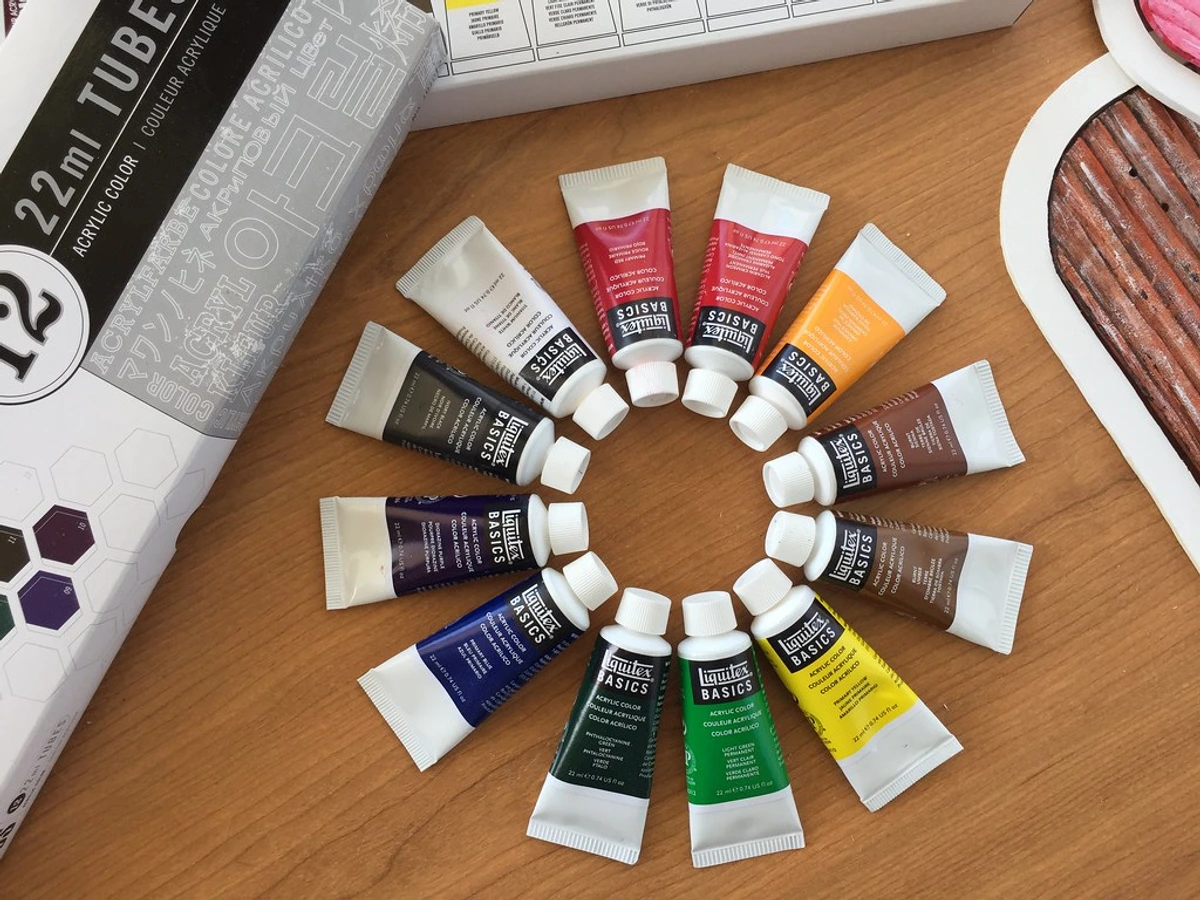
Now, when you see "ASTM D4303" on the side of a tube, you know it's not just hype. It's a claim backed by a specific, brutal testing process that any competitor can repeat. It turns a subjective marketing term like "archival" into a verifiable fact. That’s a superpower for you as a buyer.
2. Your Health is Not a Guessing Game.
This one is personal. I used to paint in a tiny, unventilated room, blissfully unaware that some of my paints contained heavy metals like cadmium and cobalt. A little bit of dust here, a splash of solvent there. It felt harmless until I learned what was really in them.
That's why ASTM D4236, the standard for chronic health hazards, is non-negotiable. The US Federal Hazardous Substances Act (FHSA) makes it mandatory for any art material sold in the country. This is the big one. Ignoring it isn't an option for manufacturers, and you shouldn't ignore it either.
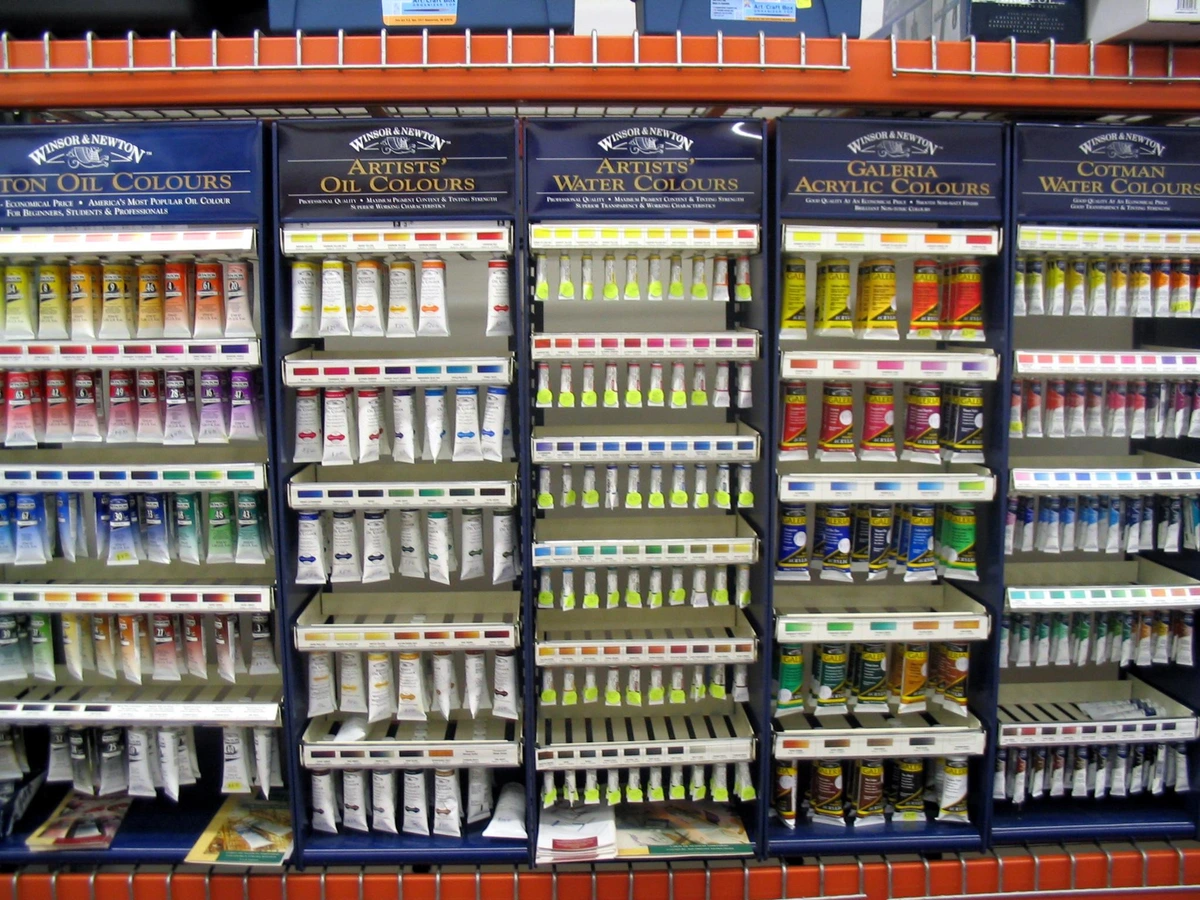
Here’s what it forces manufacturers to do:
- A toxicological review: A board of medical experts reviews the ingredients of every single product.
- Proper labeling: If a product contains even a tiny amount of a substance that could be harmful with long-term exposure, it must be clearly marked on the label.
- Warning phrases: You'll see precise warnings like "May cause cancer by inhalation" or "Harmful if swallowed." These aren't casual suggestions; they are legally required by the standard.
That skull and crossbones, or the statement "Conforms to ASTM D4236," is your guardian. It's your assurance that a team of scientists has looked at the product and forced the manufacturer to be honest about the risks. It allows you to make an informed choice, manage your exposure, and protect your long-term health without having to become a toxicologist yourself.

3. Your Art Can Last for Generations.
Imagine pouring your heart into a painting, only to have the colors start to fade and the canvas begin to deteriorate after just a few years. It's heartbreaking, and it happens more often than you'd think when cheap, untested materials are used.
ASTM standards are the silent guardians of your artistic legacy. They provide the scientific framework that helps ensure your work will last—exactly the kind of thing institutions like the /den-bosch-museum consider when preserving art. It's not about making your art look good today; it's about making sure it is good a hundred years from now.
Concern  | What Happens Without Standards | How ASTM Standards Help |
|---|---|---|
| Lightfastness | Your vibrant reds turn to muddy browns when exposed to light. | ASTM D4303 and D5067 test pigments against a powerful artificial sun to guarantee they won't fade prematurely, giving you a Lightfastness Rating (I = Excellent, II = Very Good, III = Fair). |
| Durability | Your paint film cracks, peels, or becomes brittle over time. | ASTM D1640 tests a paint's ability to resist cracking and withstand flexing without breaking down. Helps ensure your artwork survives without damage during transport or climate changes. |
| Canvas Stability | The fabric support for your painting rots due to acid in the paint or primer. | ASTM D5098 (Standard Specification for Artist's Stretched Canvas) ensures priming layers protect canvas from corrosive paint ingredients. Creates acid-free barrier between paint and fabric. |
| Pigment Permanence | Colors shift or fade over time even without light exposure. | ASTM D5383 evaluates pigments for their resistance to atmospheric contaminants and other environmental factors beyond just light exposure. |
| Binder Integrity | Your paint medium breaks down, causing adhesion failure. | ASTM D6901 (for artists' acrylic paints) ensures proper film formation, drying time, and flexibility of the paint binder. |

This isn't just about "artist-grade" versus "student-grade." Even within professional lines, different pigments behave differently. A tube of Alizarin Crimson, for instance, is notoriously fugitive (meaning it fades easily) unless it's a modern, lightfast version. An ASTM rating cuts through the confusion, telling you exactly how durable your materials are so you can plan for posterity, not posterity's disappointment. You're not just buying paint; you're investing in permanence.
4. They Guarantee Consistency, So Your Colors Are Always Your Colors.
Have you ever fallen in love with a specific shade of a color, bought a new tube, and found that it looks completely different? It's infuriating, especially when you're in the middle of a series of works. A lack of consistency can throw off your entire creative process.
ASTM standards create a baseline of consistency. They standardize things like pigment concentration, viscosity (how thick or thin it is), and tinting strength. This means that when a reputable manufacturer like Golden or Winsor & Newton promises their "Cadmium Red Light" is a certain shade, they are making that promise based on rigorous, standardized tests. Buy a tube in New York, and its twin in Tokyo will perform identically. This global consistency is invaluable whether you're teaching workshops internationally or simply want to replicate a color mix from a piece you created years ago.

This reliability is the foundation of your creative control. It means your palette is stable. You can mix colors with confidence, knowing the results will be repeatable. It frees you from technical inconsistencies and lets you focus on the only thing that should ever matter in your studio: your art. It's what allows you to develop a consistent color language across multiple works, creating the cohesive body of work that galleries and collectors value.
5. They Help Us Budget Smarter.
Art supplies are expensive. There’s no way around it. And nothing is more soul-crushing than spending your hard-earned money on a premium product only to find out it’s no better than the cheap stuff.
ASTM standards give you the power to be a smarter consumer. Understanding the difference between a student-grade paint that meets basic safety standards and a professional paint that meets the highest lightfastness and durability standards helps you allocate your budget effectively.





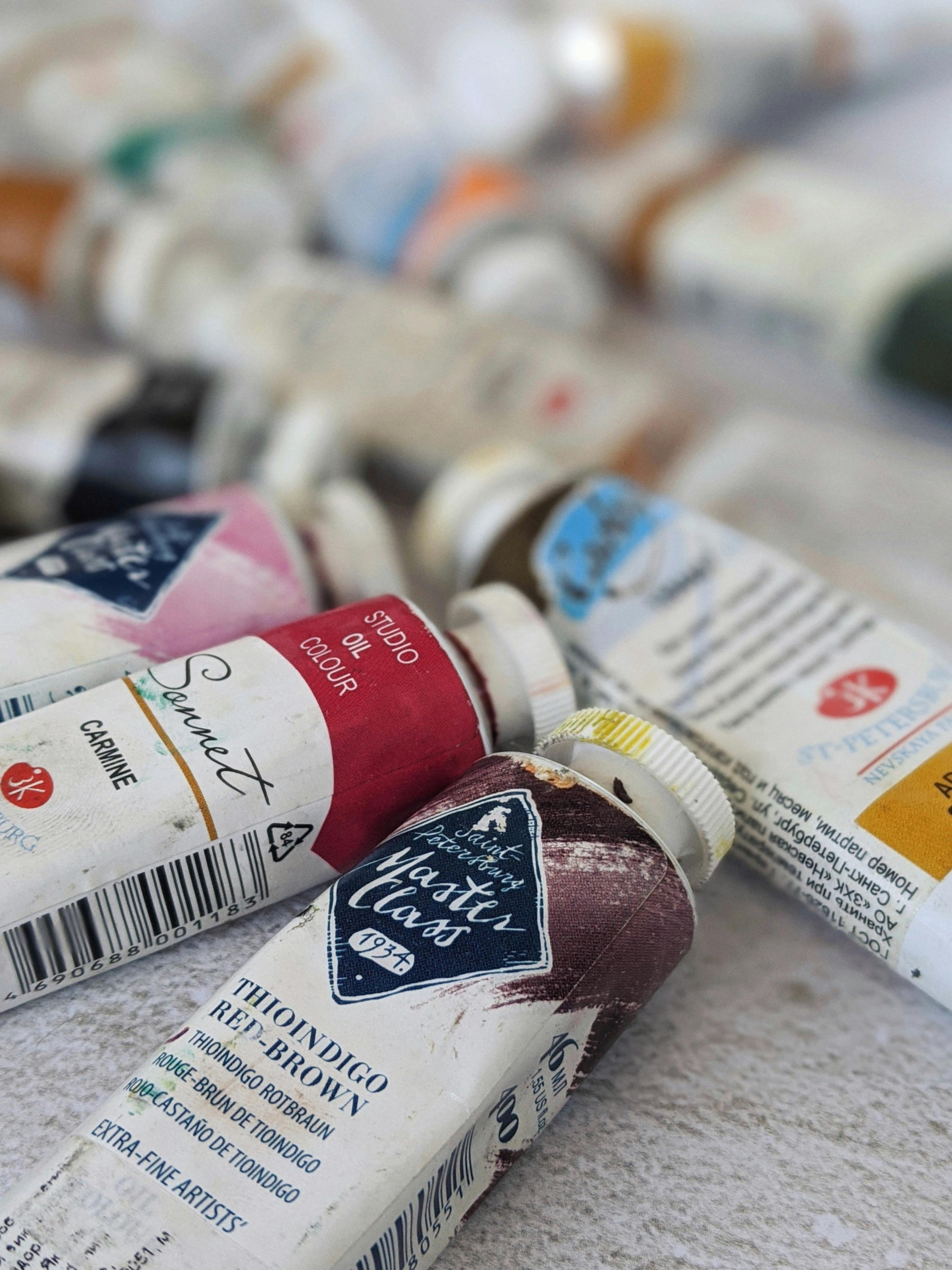




You can train yourself to spot quality. You might decide to buy a large, expensive tube of a high-performance, ASTM-rated cadmium yellow for the key areas of your painting, and use a less expensive, but still safe, alternative for under-painting or studies. You can make informed decisions instead of just guessing. It's about getting what you actually paid for, whether that's a $5 tube of watercolor or a $50 tube of oil paint.
And look, I'm not saying you should never buy a cheap paint. Sometimes you need a specific color for a one-off project, or you're just experimenting and don't want to commit to an expensive tube. That's fine. The point is, ASTM standards give you the knowledge to know exactly what you're compromising on when you do. You’re making a conscious trade-off, not an ignorant mistake. "for professional artists" or "high permanence"? Without a standard, those are just words a marketing department likes. They might mean something, they might not. But when a paint tube mentions ASTM D4236 (for health labeling) or ASTM D4303 (for lightfastness), you're suddenly looking at a product that has undergone rigorous, documented testing by an independent third party. These aren't just manufacturer promises; they're verifiable claims backed by scientific protocols.