Beyond the Brush: Unlocking Creativity with Unconventional Tools
Discover surprising art tools beyond brushes & pencils. Learn how everyday objects, food, and nature can transform your creative process.

Beyond the Brush: Unlocking Creativity with Unconventional Tools
Ever stand before a blank canvas and feel like your old habits have turned into creative handcuffs? I remember once, in a fit of frustration, I grabbed a rubber spatula from my kitchen and started scraping oil paint across a canvas. The chaotic textures that emerged shook me awake—creation doesn't obey tool catalogs.
Traditional art tools are wonderful foundations, but true breakthroughs often hide in plain sight in the aisles of hardware stores, kitchens, or even junk piles. Let's explore how embracing this unpredictability isn't just fun—it's a strategic revolution for any artist.
[credit] by Benjavic, licence
Why Break the Rules? The Philosophy of Unconventional Tools
Standard tools have predictable outcomes, making them safe. But safety isn't where innovation hides. Unconventional tools force serendipity into your process by introducing variables you can't control. That's not chaos—it's a collaboration with the universe.
Consider how a child's crayon drawn across wet paper creates a bloom of color impossible to replicate with controlled strokes. Or how a stick dragged through sand leaves an organic narrative no ruler could script. These tools don't just mark surfaces; they co-create with physics and materiality, turning mistakes into breakthrough moments.
The Psychology of Creative Constraint
Working with unconventional tools triggers a fascinating psychological shift. When you abandon the precision of a fine brush, you enter a state of creative surrender. This isn't about losing control—it's about redirecting it. The famous "action painters" of the 1950s understood this: Jackson Pollock dripped paint not out of laziness, but because the controlled chaos of his process unlocked new visual languages.
Your brain adapts to limitations differently than it does to possibilities. When you use a credit card instead of a palette knife, you're not just changing tools—you're changing how you think about mark-making. The constraints become catalysts for innovation, forcing your artistic intuition to work overtime.
The Toolkit of the Unconventional: 7 Game-Changing Categories
Category  | Tools Example | Best For | Pro Tip |
|---|---|---|---|
| Kitchens | Spatulas, sponges, salt | Texture experimentation | Freeze vegetables for ice-carving |
| Hardware | Putty knives, wire brushes | Aggressive mark-making | Use rusted metal for oxidation |
| Natural | Leaves, feathers, soil | Eco-friendly prints | Coat with acrylic for durability |
| Waste/Recycled | Discarded CDs, cardboard | Collage and relief work | Laser-cutter for precision cuts |
| Body/Body Parts | Fingers, hair, feet | Large-scale gestural works | Apply pigment directly for raw |
| Office Supplies | Paperclips, push pins, staples | Linear patterns and pointillism | Melt plastic with heat gun for unique textures |
| Technology | Old phone screens, computer parts | Digital-analog hybrid work | Use LED lights to create light-sensitive surfaces |
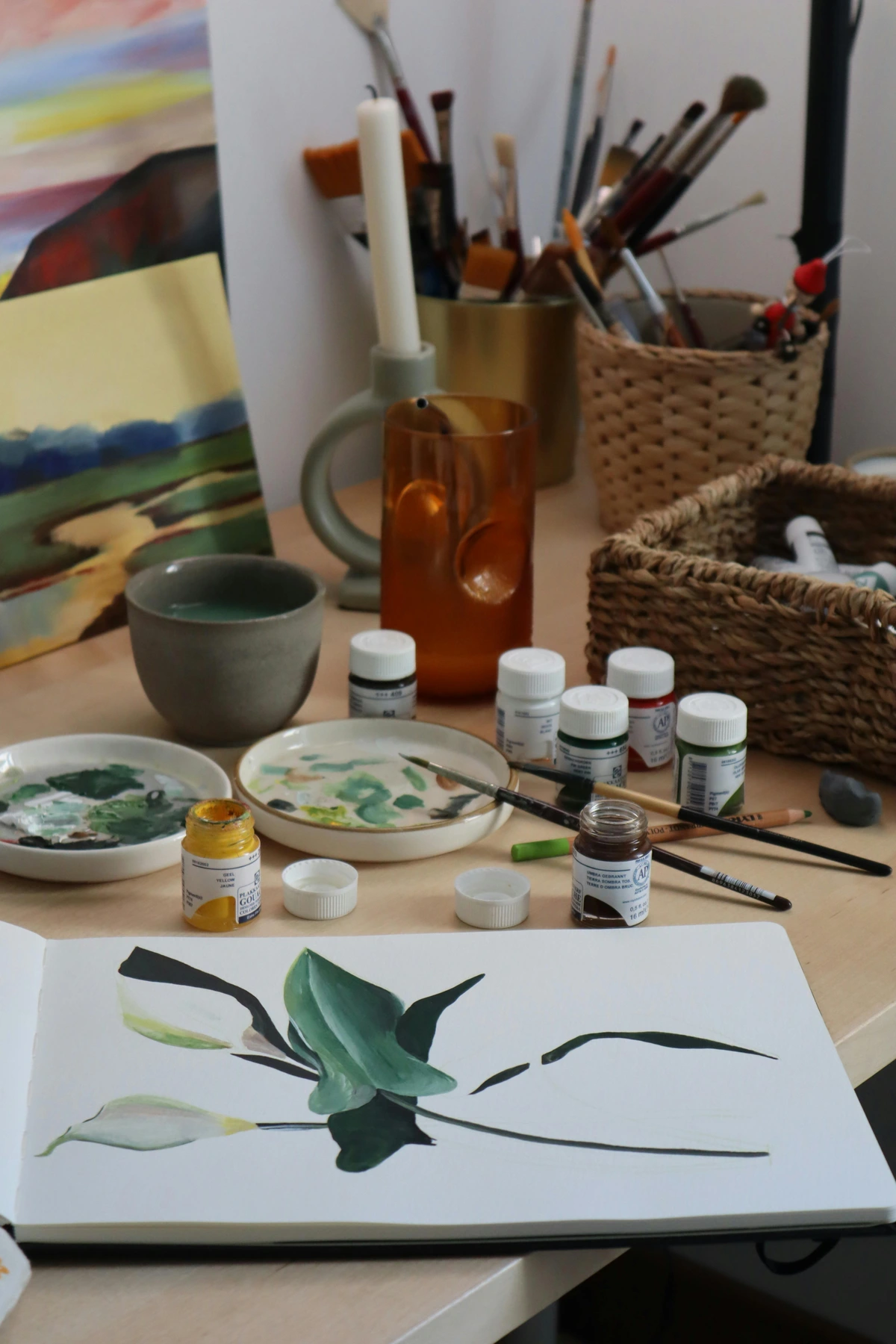
Kitchen Chemistry: More Than Just Spilled Paint
I once made a "still life" using only coffee grounds, turmeric, and beet juice on watercolor paper. The earth pigments bled in glorious, unpredictable ways—like emotions rendered in pigment. Kitchens are nature's labs: salt absorbs water to create starburst patterns, while wax resists dye for batik effects. Even your non-dominant hand can create strokes your dominant hand never would, bypassing your internal censor.
Advanced Kitchen Techniques
Food as Art Medium: Beyond the basics, consider how everyday foods can become artistic mediums. Egg whites create luminous glazes when mixed with pigments, while yogurt cultures can produce organic, living textures on canvas. The fermentation process itself becomes part of the artwork—a concept explored by contemporary artists like Anselm Kiefer.
Temperature Manipulation: The kitchen offers unique temperature control opportunities. Try:
- Freezing and thawing paint layers to create crackle effects
- Heating honey or syrup to create viscous, slow-moving stains
- Steaming vegetables over paper to create delicate botanical prints
- Blowtorching spices to create aromatic, colored smoke patterns
Chemical Reactions: The kitchen is full of chemical opportunities:
- Vinegar and baking soda reactions create bubbly, textured surfaces
- Citrus acid reacts with metallic salts to create patina effects
- Yeast and sugar mixtures can bubble and rise, creating 3D textures
- Oxidation of fruits creates natural color gradients that evolve over time
Nature's Collaborators: Leaves, Rocks, and Sunshine
Remember doing leaf rubbings in school? That simple technique morphed into a whole series for me where I pressed leaves into clay, fired them, and gilded the impressions. Photosensitive prints using sunlight and water on treated paper (cyanotype) turn plants into ghostly blue negatives. A walk in the rain can become an art session using wet newspaper as watercolor paper.
Beyond the Basics: Advanced Nature Techniques
Weather as Collaborator:
- Thunderstorms can create dramatic effects when working with water-soluble materials outdoors
- Frost patterns form on surfaces left overnight in cold weather
- Wind can scatter materials in unpredictable ways
- Humidity levels dramatically affect how pigments spread and dry
Organic Material Processing:
- Composting materials can create rich, textural surfaces
- Moss growth on treated surfaces creates living art
- Fungal patterns emerge on natural materials over time
- Insect activity (beetle trails, ant paths) creates natural mark-making
Geological Processes:
- Crystal formation in saturated salt solutions
- Erosion simulation using sand and water
- Sedimentation layers created by pouring materials
- Weathering effects using natural acids and abrasives
How to Embrace the Weird: Your Action Plan
- Tool Audit: Walk through your home with "artist eyes." What ordinary object makes an interesting mark? A broken umbrella? A bottle cap? A cheese grater?
- Process Experimentation: Don't aim for masterpiece results. Spend 20 minutes just exploring what spatula scrapes do against sponge daubs. Measure nothing, observe everything.
- Material Pairing: Combine unconventional tools with unexpected bases: soy sauce on parchment paper, mud on birch bark, ketchup on ceramic tiles.
- Document Your Discoveries: Keep a "tool journal" where you test combinations. Note what smears, resists, oxidizes, or dissolves. This becomes your personal alchemy guide.
- Share the Accident: When brilliant mistakes happen, replicate them! Pin down the variables: Was it the humidity? A specific brand? The tool's angle?
The Unspoken Challenges: Navigating the Practicalities
Let's be real—this gets messy. You will stain countertops, confuse roommates, and waste "good" materials. Your inner critic will scream "This looks childish!" Here's the truth: childishness is often where genius hides. The famous "spilled paint" paintings of Helen Frankenthaler began as "accidents."

Material Safety and Conservation
Archival Concerns: Some tools may be archival foes. Food attracts pests; untreated metals corrode. Always finish pieces with archival varnishes or sealants. Test first! Here's a quick guide:
Material Type | Conservation Risk | Solution |
|---|---|---|
| Organic materials (food, plants) | Pest attraction, decay | Seal with UV-resistant varnish, freeze for pest removal, use archival adhesives |
| Metal | Corrosion, oxidation | Apply anti-corrosion coatings, use anodized metals, create controlled oxidation effects |
| Synthetic materials | Chemical breakdown, fading | Use UV-protective coatings, store away from direct sunlight |
| Water-soluble materials | Damage from moisture | Apply multiple protective layers, create sealed environments |
Studio Safety: Working with unconventional materials often involves chemicals, sharp objects, or biological materials. Always:
- Work in well-ventilated areas
- Wear appropriate PPE (gloves, goggles, masks)
- Keep safety data sheets for chemicals
- Have proper waste disposal systems
- Know basic first aid for materials you use
Neighbor Relations: Unconventional artmaking can be noisy, smelly, or messy. Consider:
- Working at off-peak hours
- Using containment strategies (plastic tarps, sealed containers)
- Communicating with neighbors about your artistic process
- Having a cleanup plan ready
If your timeline has you chasing perfection? Save play days for when deadlines aren't breathing down your neck.
Frequently Asked Questions: The Real Questions Artists Ask
Isn't this just a hobbyist gimmick?
Not at all. Major artists like Jean Dubuffet used mud and asphalt, while Anselm Kiefer incorporated straw and ash. These tools carry rich symbolic weight beyond mere novelty. The art world has a long history of artists pushing boundaries with unconventional materials—from Duchamp's readymades to contemporary artists using social media data as artistic material.
How do I avoid pieces looking amateurish?
Intentionality over technique. The mark matters less than the emotion driving it. Consider Rothko's color fields achieved with housepaint and sponges—mastery lies in composition, not tool complexity. The key is making conscious choices about your tools and materials, not just using them randomly. Keep a sketchbook to plan your unconventional approaches before committing to larger works.
Where can I find specialized unconventional tools?
Salvage yards, restaurant supply stores, and dollar stores are goldmines. My favorite spatula came from a flea market—covered in oil paint history before I even started. Also consider:
- Medical supply stores for interesting tools and materials
- Scientific supply companies for precision instruments
- Theatrical prop houses for specialized effects materials
- Industrial surplus stores for unique fabrication tools
- International markets for culturally specific tools and materials
Can someone who sells art prints use this?
Absolutely! Many experimental techniques photograph beautifully. A scraped acrylic surface can become a repeating pattern. Think in multiples: what looks chaotic at 12x18" might read as dynamic wallpaper at 4x6". The key is understanding how unconventional textures and surfaces translate to digital reproduction. Test your techniques with different lighting setups and camera angles to find what photographs best.
Do I need special training?
Nope! The greatest teacher is playfulness. Picasso said "Every child is an artist; the problem is staying one." Reclaim that state. However, consider supplementing your play with some structured learning:
- Materials science courses to understand how different materials interact
- Safety training for working with potentially hazardous materials
- Basic chemistry for understanding reactions and processes
- Traditional art techniques to build a foundation before breaking rules
How do I price unconventional art?
Pricing unconventional art follows similar principles to traditional art, but consider these factors:
- Material costs including the unusual materials themselves
- Process complexity and time investment
- Documentation requirements for unusual materials
- Conservation concerns and preservation costs
- Market research for similar unconventional works
Will collectors value unconventional art?
Yes, but you need to educate your market. Collectors value:
- Artist statement explaining your unconventional approach
- Documentation showing the process and materials used
- Conservation guidance for long-term preservation
- Provenance tracking the unique journey of each piece
- Artist reputation built through consistent, intentional work
What about copyright issues with found objects?
When using found objects or materials, consider:
- Transformation doctrine - significant alteration changes copyright status
- Fair use - using elements in transformative ways
- Attribution - giving credit to original creators when appropriate
- Commercial use restrictions on certain found materials
- Ethical sourcing - ensuring materials were obtained legally and ethically
How do I store unconventional artworks?
Proper storage is crucial:
- Climate control for sensitive materials
- Containment systems for potentially harmful materials
- Custom supports for unusual shapes and weights
- Rotation systems to prevent permanent damage
- Documentation of storage conditions over time
A Final Thought from the Studio
Creativity isn't about having the best tools; it's about seeing potential everywhere. That dent in your car? Reminds me of an artist who used car bodies as canvases. The wobble in your dining table? Maybe the universe wants you to make tilted paintings.
Sometimes breaking free means using the spatula instead of the brush. Or your elbow instead of your wrist. Or visiting Den Bosch Museum and seeing medieval altarpieces made with everything from gold leaf to ground insects. The past masters knew: true alchemy happens when you let materials speak through unexpected tools.
The Evolution of Your Unconventional Journey
Your relationship with unconventional tools will evolve. What starts as playful experimentation may develop into a signature style. Consider this a three-stage journey:
- Discovery Phase (0-6 months): Pure exploration, no rules, just curiosity
- Integration Phase (6-18 months): Combining unconventional techniques with traditional skills
- Mastery Phase (18+ months): Developing a unique artistic language based on your unconventional approach
Building Your Unconventional Community
You're not alone in this journey. Connect with other artists pushing boundaries:
- Online communities dedicated to experimental art
- Local maker spaces with shared tools and materials
- Art residencies that encourage unconventional approaches
- Collaborative projects with artists from different disciplines
- Social media platforms where you can share your process and results
The Business of Unconventional Art
If you're looking to sell your unconventional work, consider these strategies:
- Niche marketing targeting collectors who value innovation
- Process documentation showing the story behind your unusual materials
- Educational content teaching others your techniques
- Portfolio diversification mixing experimental and traditional works
- Strategic pricing reflecting the uniqueness and labor involved
Final Encouragement
Remember that every tool you've ever used was once unconventional. The paintbrush, the camera, the printing press—all were innovations that challenged artistic norms of their time. Your willingness to experiment puts you in good company with history's greatest innovators.
The world doesn't need another perfect painting. It needs something authentic, something that couldn't have been made any other way. That's the power of unconventional tools—they force authenticity.




Now go spill something intentional. And when you do, take a picture. Share it. Because someone out there needs to see that beautiful, messy mistake that became your breakthrough.