In Plain Sight: How Marilyn Monroe Became the Most Complicated Woman in Art History
Explore Marilyn Monroe's evolution from Hollywood icon to a powerful, complex subject of modern art. Dive into Pop Art's fascination with her image and how artists have redefined her legacy beyond the glamour.

In Plain Sight: How Marilyn Monroe Became the Most Complicated Woman in Art History
You don't need a degree in art history to know her face. It's one of the most reproduced, recognizable, and relentlessly analyzed images of the 20th century. But I've always been fascinated by a particular question: when we look at Marilyn Monroe, are we seeing the woman, or are we seeing the art?
The quick answer is usually "both"—but that's too easy, isn't it? It's like saying a mirror shows both your face and the glass. Technically true, but it completely misses the strange magic happening in between.
What I've discovered after diving down this particular rabbit hole is that Marilyn Monroe didn't just inspire artists; she became a kind of living canvas—a mirror that reflected back every cultural obsession, anxiety, and desire of postwar America. And long after her death, that mirror keeps refracting, creating new meanings that say more about us than they do about her.
This is the story of how a woman became an icon, and how that icon became one of art history's most complicated, contested, and endlessly fascinating subjects. It's about sex, death, capitalism, feminism, and the strange alchemy that transforms a human being into a symbol.
The Alchemy of Iconography: From Norma Jeane to Marilyn
Before she was art, she was a person—Norma Jeane Mortenson. And that transformation, from flesh-and-blood woman to luminous symbol, is where our story begins.
The Hollywood Star System as Art Factory
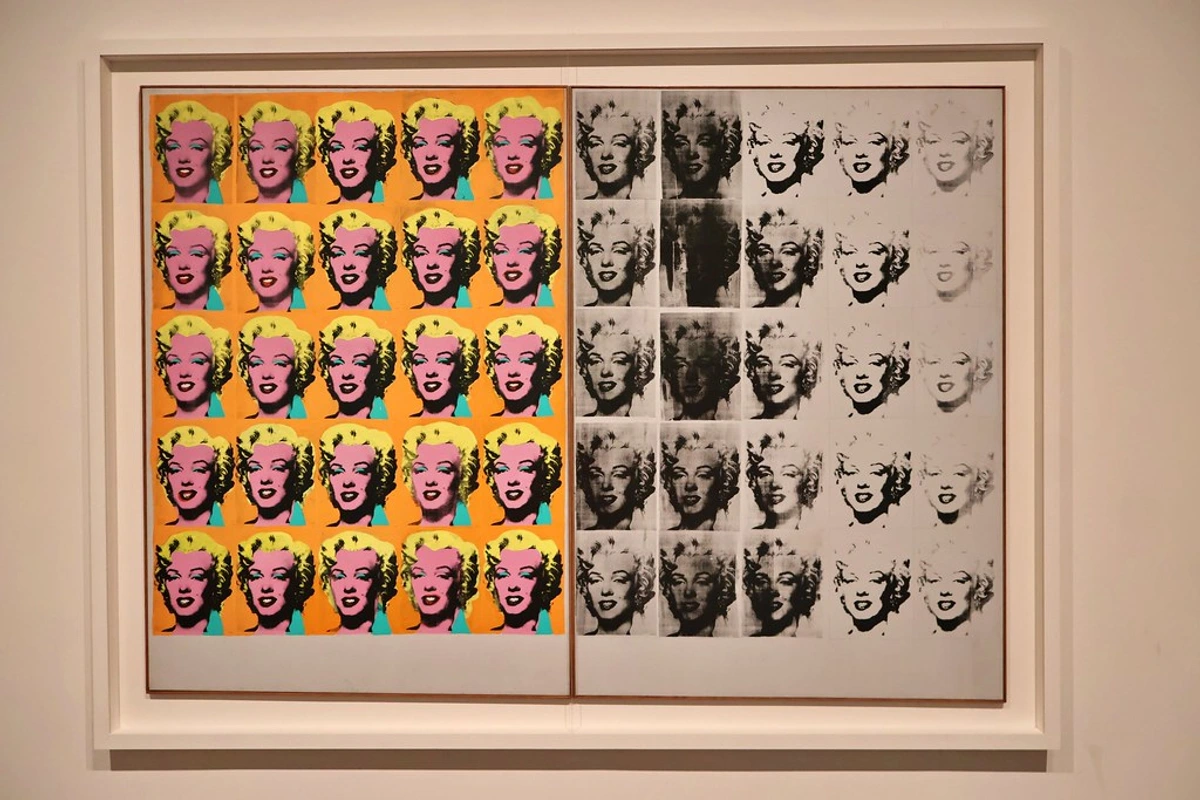
I've always been struck by how the old Hollywood studio system operated like a Renaissance workshop. They didn't just discover talent; they manufactured it. They changed her name, plucked her eyebrows, bleached her hair, and taught her to speak, walk, and smile in a specific way. In many ways, the studio became her first artist, and Marilyn Monroe was their masterpiece.
This wasn't just about creating a movie star—it was about creating a visual archetype. The platinum blonde hair, the breathy voice, the way she moved... these weren't accidents. They were carefully crafted aesthetic choices designed to maximize a very particular kind of appeal.
The fascinating part? Once this image escaped the studio gates and entered the public imagination, it stopped belonging to Hollywood. It became raw material—a set of visual symbols that artists could use, subvert, and reimagine.
The Birth of an American Venus
By the early 1950s, Marilyn had achieved something remarkable: she had become a living myth. But here's what most people miss—myths aren't born from nothing. They tap into something deeper in the culture.
Marilyn's image resonated because it connected to ancient archetypes: the goddess of love, the nurturing mother, the dangerous seductress. She was Venus rising from the Pacific waves, Aphrodite in a white dress standing over a subway grate. Artists immediately recognized this mythic quality, and they began depicting her not just as a celebrity, but as a contemporary incarnation of these eternal feminine ideals.
The irony, of course, is heartbreaking. The woman who struggled with her own identity became a symbol of Everywoman—or at least, of how men wanted to see women.
Pop Art's Revolution: Marilyn as Mass Production
If Marilyn's star was born in Hollywood, it was cemented into art history by a group of artists who saw in her something else entirely: the perfect subject for the age of mechanical reproduction.

Andy Warhol's Marilyn Diptych: The Death of the Original
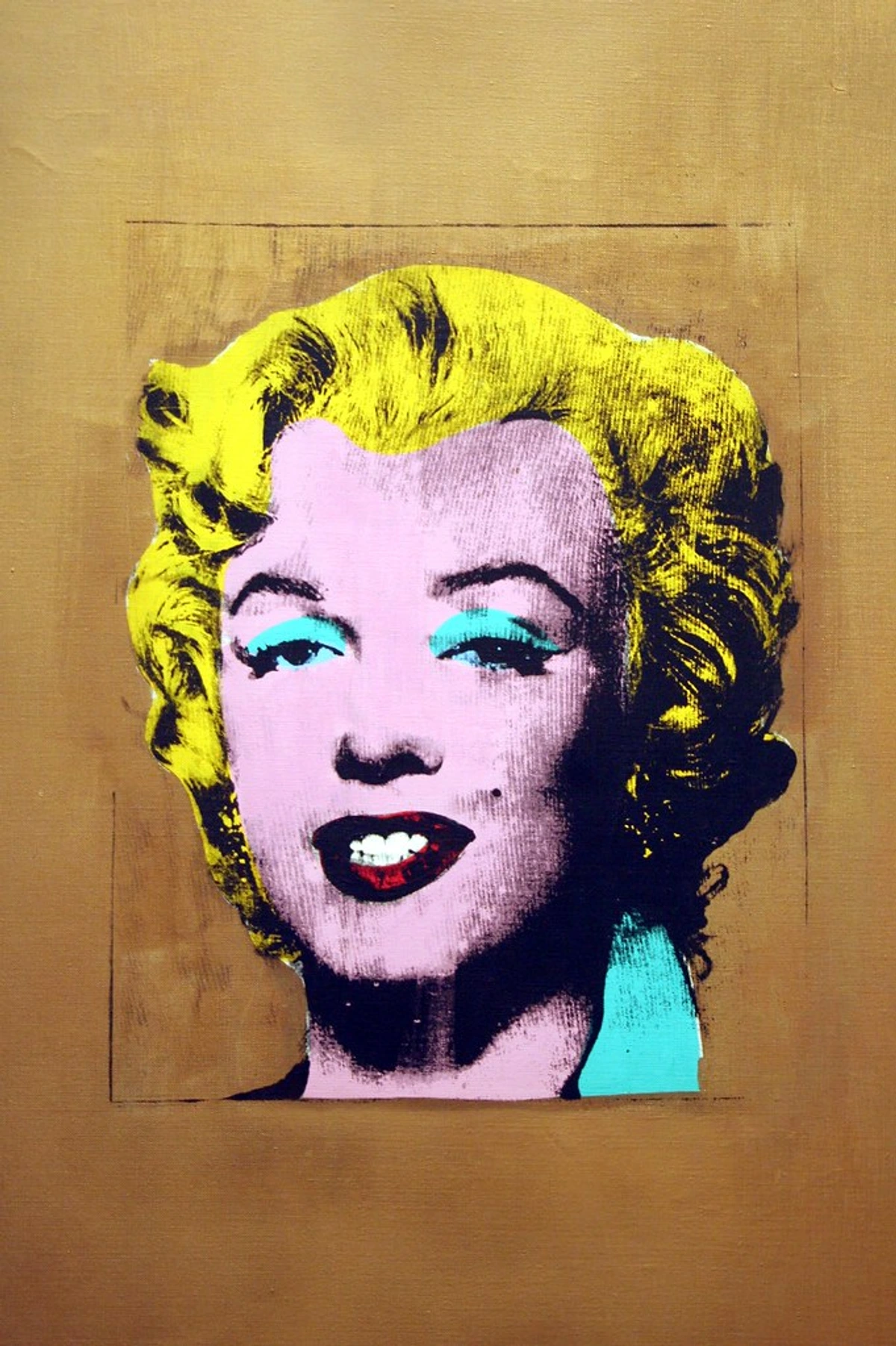
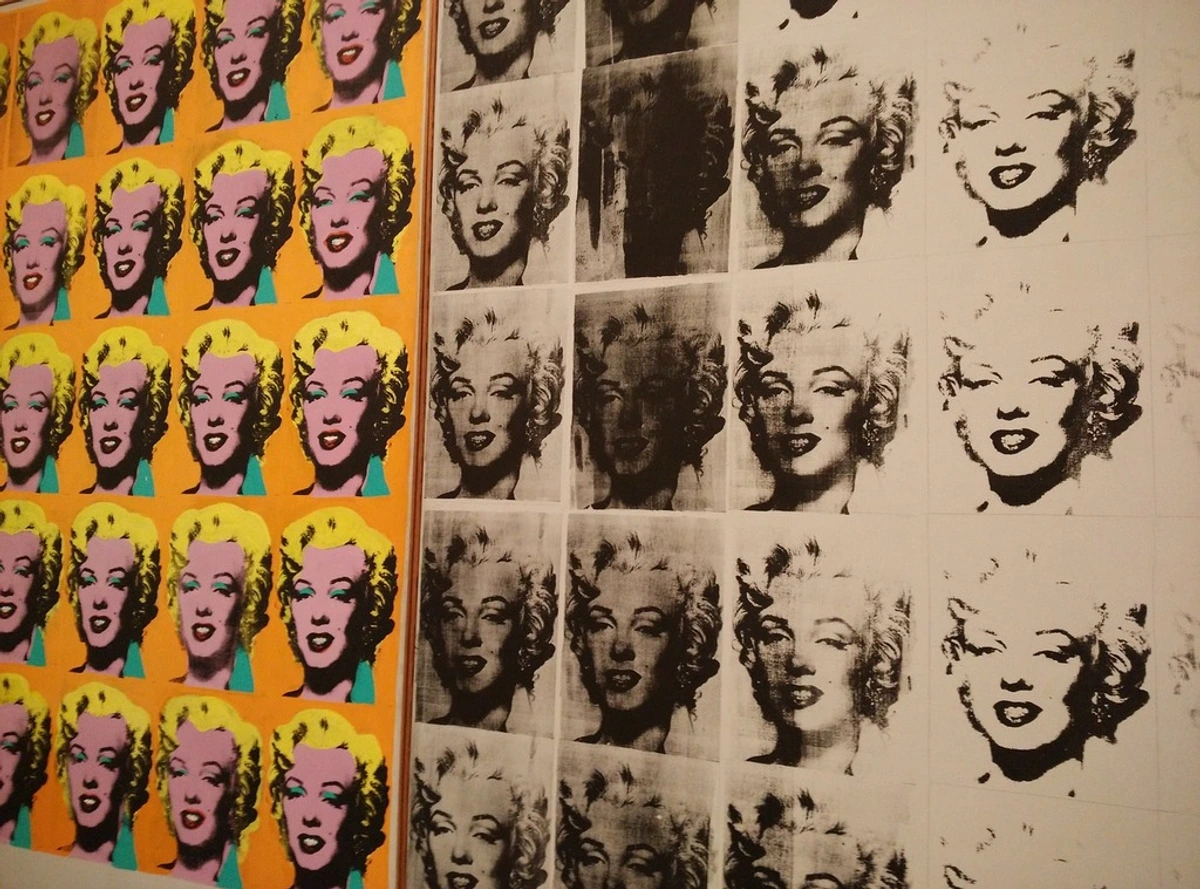
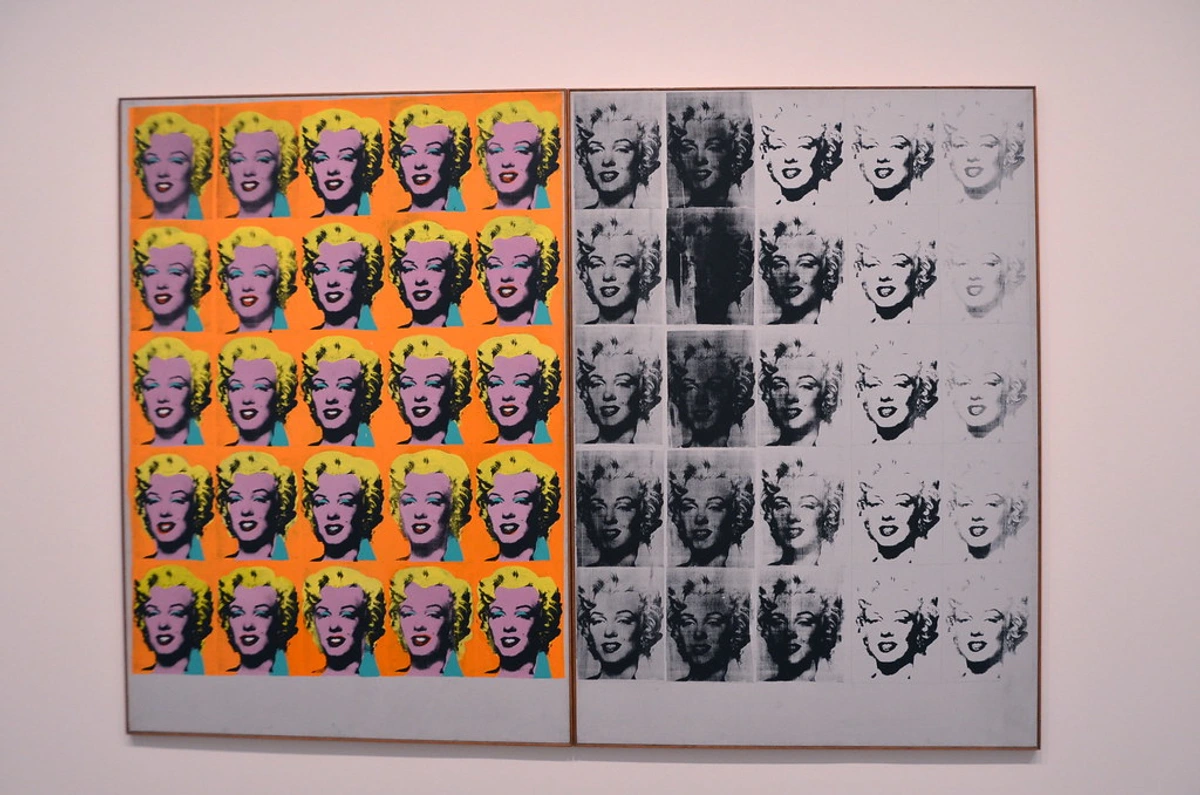
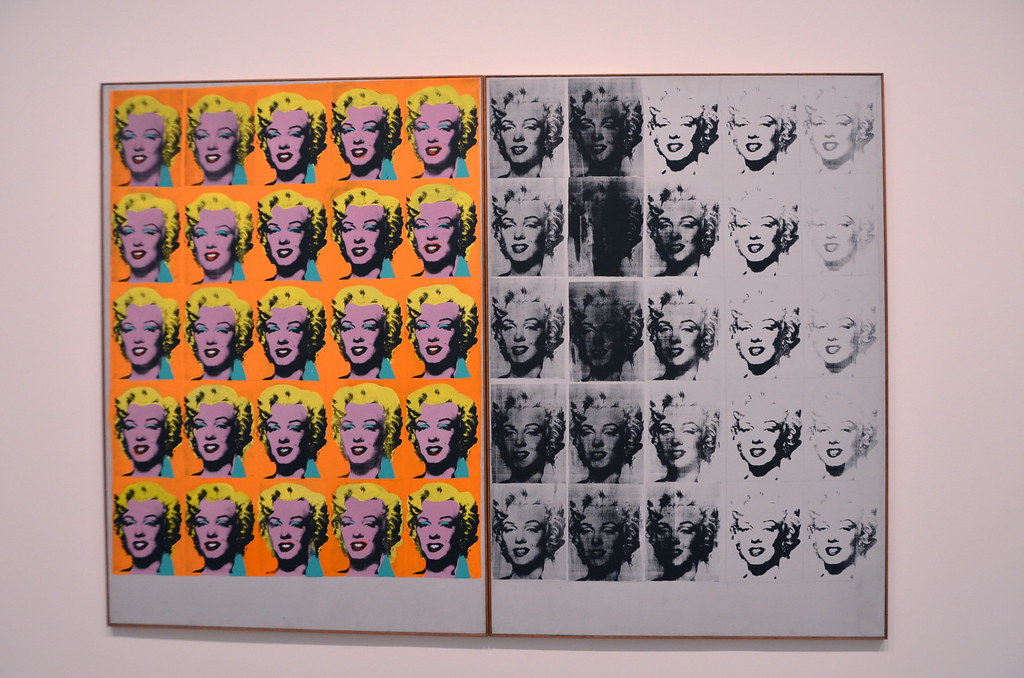
Most people know Warhol's Marilyn prints, but I don't think many truly grasp what he was doing. The Marilyn Diptych from 1962 is perhaps the most important work here—not just because it's beautiful, but because it perfectly captures the central tragedy of Marilyn's relationship with art.
Warhol made this piece immediately after Marilyn's death. He took a single publicity photo—already a mass-produced image—and reproduced it fifty times. But here's the genius part: half the images are in vivid color, while the other half are fading to black-and-white, some barely visible.
The colored half represents the living, breathing sex symbol. The fading half represents her death, her literal disappearance—but also something more profound: the way repetition empties an image of meaning. By forcing us to confront Marilyn as a commodity, as something to be endlessly reproduced and consumed, Warhol exposed the dark side of fame.
What I find chilling about the piece is how it predicted our current moment. We live in a world of infinitely reproducible images, where authenticity feels like a quaint antique. Warhol saw this coming, and Marilyn was his perfect vehicle for showing us what we were becoming.
Roy Lichtenstein: Marilyn as Cultural Code
While Warhol used Marilyn as a symbol of mechanical reproduction, Roy Lichtenstein approached her differently. In his Ben-Day dot paintings, Marilyn became part of the visual language of comics—a kind of cultural shorthand for beauty, desire, and tragedy.
Lichtenstein's work fascinates me because it treats Marilyn not as a person, but as a set of visual codes that everyone already understood. The dots themselves are interesting—they reference the cheap printing process of mass media, suggesting that Marilyn's image was always already a kind of printed matter, something distant and mediated.
It's worth noting that Lichtenstein worked from existing images, just like Warhol. But while Warhol emphasized the repeated image, Lichtenstein emphasized the way these images become flattened, simplified, and emotionally distant—perfect icons for an age increasingly mediated by screens and printed matter.
James Rosenquist: Fragmented Desire
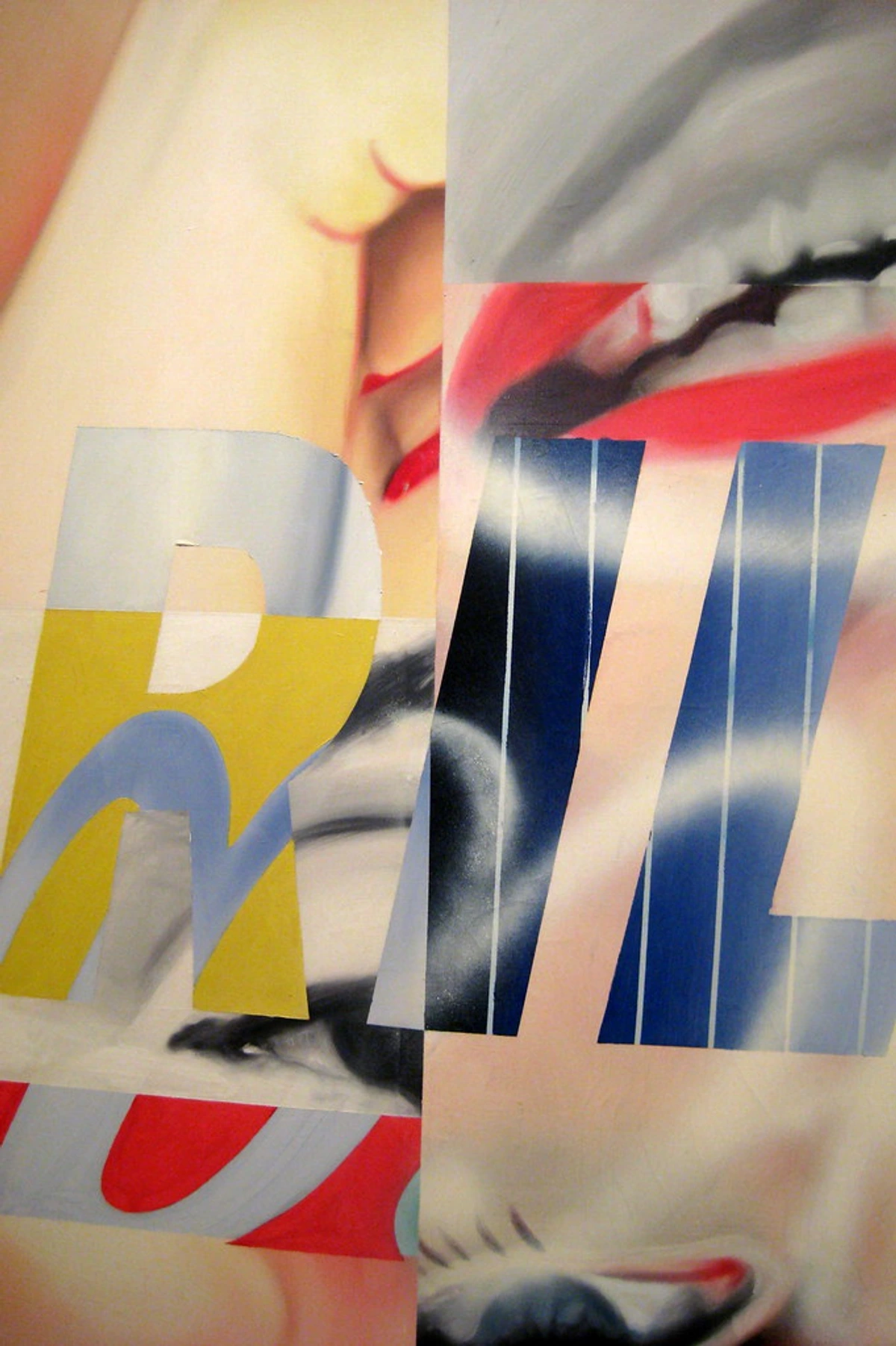
Rosenquist took yet another approach. In works like Marilyn Monroe I from 1962, he fragments her face, showing us only pieces—an eye here, a mouth there—juxtaposed with commercial products and other cultural ephemera.
This fragmentation is brilliant because it captures something essential about modern visual culture: we rarely see anything whole anymore. Our attention is fragmented, our desires are fragmented, and Marilyn's image became the perfect vehicle for exploring this postmodern condition.
The fragments also suggest something darker: they hint at violence, at the way fame literally tears a person apart. It's no coincidence that these works emerged during Vietnam, during the assassinations of JFK and MLK—Rosenquist's fragmented Marilyn reflects a fragmented world.
Beyond Pop: Marilyn in Contemporary Art
While Pop Art made Marilyn famous in art history, she continued to inspire artists long after the 1960s. Each generation has found something new in her image.
The Feminist Reclamation
One of the most significant developments in how Marilyn gets depicted came from feminist artists who refused to accept her as either sex symbol or victim. Instead, they began asking a different question: how do we separate the woman from the myth?
Artists like Cindy Sherman and Eleanor Antin began using their own bodies to explore Marilyn's image, inhabiting her roles and personas while maintaining an critical distance. This was revolutionary—it suggested that Marilyn's image could be a space for exploring female identity itself, rather than just a symbol created by men for male consumption.

What I love about this work is how it gives Marilyn a kind of agency, even posthumously. By using her image to critique the very system that produced it, these artists transformed Marilyn from passive object to active subject.
Conceptual Approaches: Marilyn as Text
Some of the most interesting recent work on Marilyn comes from artists who treat her as a conceptual problem. They're less interested in her image than in her cultural function—the way her name and face operate in our collective consciousness.
I've seen pieces that collect every word ever written about her, or that document the location of every photograph, or that recreate her lost films from production stills. This work fascinates me because it suggests that Marilyn has transcended visual representation entirely—she's become a kind of cultural algorithm, endlessly generating new meanings and associations.
Digital and AI Reimaginings
In our current moment, Marilyn has found new life in digital art and AI-generated imagery. Artists are now able to imagine her in contexts she never inhabited—as a 21st century influencer, as a video game character, as someone aging naturally into old age.
I have complicated feelings about some of this work. There's something ghoulish about using technology to resurrect the dead, to make them perform for us once more. But there's also something genuinely interesting happening: the digital Marilyn forces us to confront questions about authenticity, celebrity, and the porous boundary between the real and the artificial—questions that feel increasingly urgent in our age of deepfakes and AI.
The Artist's Marilyn: Key Themes and Interpretations
If we step back from individual artists and movements, certain themes keep recurring in Marilyn's artistic afterlife.
Sexuality and the Male Gaze
This is perhaps the most obvious theme, but it's more complex than it appears. Early depictions of Marilyn often reduced her to her sexuality—she was the ultimate object of the male gaze, designed for male consumption.
But as feminist theory developed, artists began to complicate this. They asked: whose gaze are we talking about? Marilyn herself was an active participant in creating her image—she understood its power and wielded it deliberately. More recent work explores this tension, refusing to see her as purely victim or agent.
Fragility and Mental Health
Many artists have been drawn to Marilyn's vulnerability—the famous photos of her looking sad or lost, the stories of her psychological struggles. This work raises difficult questions about empathy, exploitation, and our seemingly endless fascination with celebrity suffering.
I find myself conflicted about some of this work. On one hand, it feels important to acknowledge the real human cost of fame. On the other, I worry that it risks repeating the same exploitation it claims to critique—turning private pain into public spectacle.
Politics and Power
Marilyn's alleged affairs with powerful men—particularly John F. Kennedy—have made her a symbol of the intersection between sex and politics, desire and power. Artists have used her image to explore everything from political corruption to the sexual politics of the Cold War.
What makes this work interesting is how it reveals the hidden mechanisms of power. Marilyn's image becomes a way to talk about things that are otherwise unspeakable—the erotic dimensions of political power, the way sex gets used as a currency, the vulnerability of even the most powerful people.
Mortality and Image Immortality
Marilyn died young, at the height of her fame, which means she never aged in public. This has created a strange phenomenon: Marilyn remains forever young, forever beautiful, forever suspended at that moment just before decline.
Artists have been obsessed with this paradox—the mortal woman who achieved a kind of image-immortality. Some have imagined her aging, showing us what might have been. Others have used her death as a meditation on the relationship between art and life, image and reality.
It's worth noting that Marilyn isn't unique in this—James Dean, Princess Diana, and other celebrities who died young occupy similar positions in our cultural imagination. But there's something particularly haunting about Marilyn's case, perhaps because her image was always about vitality, sex, and life force.
Major Museums and Marilyn: Cultural Canonization
Here's where things get really interesting from an art historical perspective: when and how did Marilyn become "serious" art?

Early Institutional Resistance
It's worth remembering that in the 1960s, when Warhol and others first started making Marilyn art, many critics and institutions hated it. They saw it as frivolous, commercial, not "real" art. The idea that celebrity could be a serious artistic subject seemed absurd.
This resistance tells us something important about how the art world operates. It also explains why it took decades for Marilyn art to enter museum collections—and why, when it finally did, it was in specific contexts (Pop Art retrospectives, shows about media and consumer culture) that framed it as social commentary rather than pure aesthetic celebration.
Museum Blockbusters and Marilyn
More recently, major museums have embraced Marilyn with a vengeance. We've seen shows dedicated entirely to her cultural impact, her influence on fashion, her depiction in art. The Metropolitan Museum of Art, the Tate Modern, SFMOMA—pretty much every major institution has mounted shows that feature Marilyn prominently.
I think this institutional acceptance is important because it legitimizes Marilyn as an art historical subject. But it also raises questions: why now? What does it mean that museums are finally ready to take Marilyn seriously? I suspect it has something to do with our current moment—with #MeToo, with discussions about representation and the male gaze, with our increasingly sophisticated understanding of how images work in politics and culture.
The Market: Marilyn as Investment
Of course, museum acceptance has market consequences. In recent years, Marilyn artwork has fetched astronomical prices at auction. Warhol's Shot Sage Blue Marilyn sold for $195 million in 2022, making it one of the most expensive artworks ever sold.
This creates a strange dynamic. On one hand, high prices mean Marilyn has achieved the ultimate art world recognition. On the other, there's something unsettling about watching her image being traded like a stock portfolio. It raises questions about commodification that Marilyn herself would have understood all too well.
Iconic Marilyn Artworks You Should Know
Andy Warhol, Marilyn Diptych (1962)
As discussed earlier, this is perhaps the most important Marilyn artwork ever created. It's in the Tate collection and regularly appears in major museum shows.
Andy Warhol, Shot Sage Blue Marilyn (1964)
This single-panel Marilyn comes from Warhol's later, more refined Marilyn series. The story goes that a visitor to Warhol's studio shot a stack of Marilyn canvases with a pistol (hence "Shot Sage Blue"). I've always loved this because it literalizes the violence embedded in celebrity—the way fame literally penetrates and damages.
Richard Hamilton, My Marilyn (1965)
Hamilton, a British Pop artist, created this piece by marking up contact sheets of Marilyn photos with rejection marks—the kind of marks photographers use to indicate which images they don't want printed. It's a brilliant commentary on selection, rejection, and the editorial process that creates celebrity images.
Elaine Sturtevant, Warhol Marilyn (1966)
Sturtevant was a conceptual artist who became famous for re-making works by other artists. Her Warhol Marilyn is, in many ways, more Warhol than Warhol—it perfectly captures the repetitive, mechanical quality of his work, while also being a piece of original art in its own right. It raises fascinating questions about originality and authorship.
Marisol, The Family (1962)
Marisol, a Venezuelan-American artist, created numerous works featuring Marilyn Monroe alongside other pop culture figures. Her work is interesting because it offers a more personal, handmade counterpoint to Warhol's mechanical reproduction.
George Segal, The Movie Poster (1967)
Segal was known for his plaster casts of real people in everyday situations. In this piece, he shows a man standing next to a movie poster of Marilyn—capturing that moment of encountering celebrity as a kind of boundary between the real and the imaginary.
Richard Avedon, Marilyn Monroe, Actress, New York (1957)
While primarily known as a photographer rather than a fine artist, Avedon's portraits of Marilyn are so psychologically rich and formally sophisticated that they function as art objects in their own right. His famous portrait of her looking tired and vulnerable has become iconic.
Tom Wesselmann, Great American Nude #52 (1964)
Wesselmann's Great American Nude series references Marilyn's image through fragmented body parts, bold colors, and a general sense of American optimism and sexual energy. The work captures Marilyn's influence even as it departs from her literal image.
Marilyn in Global Perspective: Beyond American Pop
While Marilyn is often discussed as an American phenomenon, her impact was global. Artists from Latin America, Asia, Europe, and beyond have used her image to talk about everything from American cultural imperialism to the global reach of Hollywood.
In Japan, for example, artists associated with the Gutai group were fascinated by American popular culture, including Marilyn. In Latin America, artists used her image to talk about the USA's influence on their own cultures. And in the Soviet Union, Marilyn represented forbidden American glamor—a symbol of the cultural battle of the Cold War.
What I find interesting about this global reception is how it complicates the idea that Marilyn is purely an American icon. She became a symbol for global capitalism, for American power, for the universal appeal of Hollywood glamor—but also for resistance to American cultural dominance.
The Marilyn Effect: Influence on Contemporary Artists
Marilyn's influence continues into the 21st century, appearing in the work of contemporary artists who never knew her in life.
Refik Anadol: Marilyn as Data
Turkish-American media artist Refik Anadol has used data visualization and AI to explore Marilyn's cultural presence. By feeding her entire filmography, interviews, and photographs into machine learning algorithms, Anadol creates abstract visualizations that transform Marilyn into pure information—suggesting that in the digital age, even humans become data.
Gillian Wearing: Self-Portrait as Marilyn Monroe
British artist Gillian Wearing, associated with the Young British Artists movement, created a series where she photographs herself dressed as Marilyn Monroe. This work continues the feminist tradition of Cindy Sherman while also exploring contemporary questions about identity fluidity and the performance of self.
Mickalene Thomas: Marilyn Reimagined
Contemporary artist Mickalene Thomas reimagines Marilyn through the lens of Black femininity and queer desire. In Thomas's work, Marilyn becomes a starting point for exploring beauty standards, desirability, and the politics of representation in art history.
What fascinates me about Thomas's approach is how it honors Marilyn while also challenging the white-centeredness of art history. It suggests that icons can be reimagined, that they can serve different communities and speak to different experiences.
Behind the Lens: Marilyn Monroe Photography as Art
So far I've mostly focused on Marilyn in painting and other media, but photography is perhaps the most important medium for understanding her artistic legacy.

The Great Photographers
Marilyin was photographed by some of the 20th century's greatest photographers: Richard Avedon, Eve Arnold, Bert Stern, Cecil Beaton, Douglas Kirkland, and many others. These photographers didn't just document her—they created artistic interpretations that have entered museum collections worldwide.
What's striking about this photographic record is its diversity. Marilyn could be innocent and playful, sultry and knowing, fragile and vulnerable, powerful and in control—sometimes within the span of a single photo shoot. This range suggests that Marilyn was an active collaborator in creating her image, not just a passive subject.
The Last Sitting: Bert Stern's Vogue Session
Arguably the most famous Marilyn photo shoot happened just six weeks before her death. Bert Stern photographed her for Vogue in what became known as "The Last Sitting." These photographs show Marilyn in various states—clothed and nude, smiling and serious, playful and introspective.
Looking at these images now, with the knowledge that Marilyn would soon die, creates a powerful sense of pathos. But even without that biographical knowledge, they're stunning works of art that capture something essential about photography's relationship with celebrity, mortality, and desire.
Photography as Collaboration
What I think gets lost in many discussions of Marilyn photography is the collaborative nature of these sessions. Marilyn was famous for being late, difficult, and unpredictable—but when she showed up, she brought intelligence, creativity, and a deep understanding of how to perform for the camera.
The result is that Marilyn photographs function differently from other celebrity photography. They feel less like documents and more like collaborations between two artists—the photographer and the subject—both working to create a specific kind of image.
Marilyn Monroe Art for Sale: The Contemporary Market
Given Marilyn's importance in art history, it's no surprise that her image remains commercially popular. From museum-quality prints to more affordable reproductions, Marilyn art is readily available at various price points.
Where to Buy Marilyn-Inspired Art
Several contemporary artists create work that references or is inspired by Marilyn Monroe:
- Limited edition prints from contemporary artists who work with Marilyn themes
- Photography prints (authorized reproductions of classic Marilyn photographs)
- Original artworks by artists working in Marilyn's legacy
If you're interested in collecting Marilyn art, I'd recommend starting with established galleries that specialize in contemporary or Pop Art. Many museums also offer prints of Marilyn artworks from their collections.

Considerations for Collectors
A few things to think about if you're considering buying Marilyn art:
- Authenticity: Make sure you're dealing with reputable dealers who can provide proper documentation
- Limited editions: Look for numbered editions with certificates of authenticity
- Copyright: Be aware that Marilyn's estate controls her image rights, which affects what can be reproduced
- Investment potential: Like any art, prices can fluctuate, but Marilyn's enduring popularity makes her a relatively safe choice
If you're looking for something more accessible, many museums offer high-quality reproductions of Marilyn artworks that are perfect for home display.
Supporting Living Artists
While Marilyn Monroe art has a rich history, remember that contemporary artists continue to explore her legacy in interesting ways. Supporting these living artists—whether by buying their work, attending their shows, or simply following their careers—helps ensure that Marilyn's artistic legacy continues to evolve and grow.
If you're interested in contemporary art that engages with celebrity, femininity, and popular culture, check out some contemporary artists working in similar themes. While they may not all work explicitly with Marilyn's image, they're part of the same artistic conversation.
Marilyn Monroe in Art: Frequently Asked Questions
Why is Marilyn Monroe so important in art history?
Marilyn Monroe represents a perfect storm of factors that make her significant in art history: her manufactured image reflects the rise of celebrity culture; her tragic life and death provide emotional depth; the timing of her career coincided with Pop Art's emergence; and her image has proven endlessly adaptable for different artists' purposes.
What makes Warhol's Marilyn paintings so famous?
Warhol's Marilyn paintings are famous because they perfectly capture the intersection of celebrity, death, and mechanical reproduction. Made immediately after her death, they transform a human tragedy into a meditation on how images work in mass media culture. The repeated image reflects our endless appetite for celebrity while also suggesting how repetition empties images of meaning.
How has the feminist movement affected Marilyn Monroe artwork?
Feminist artists have been crucial in reinterpreting Marilyn Monroe. Early feminist art tended to critique the way Marilyn's image served the male gaze, but more recent feminist approaches have explored her agency—how she participated in creating her own image—and used her as a starting point for examining broader questions about female representation, sexuality, and power.
Are there any museums with major Marilyn Monroe art collections?
Several major museums have significant Marilyn Monroe artworks:
- Tate Modern (London): Warhol's Marilyn Diptych
- Museum of Modern Art (New York): Various Pop Art works featuring Marilyn
- The Andy Warhol Museum (Pittsburgh): Extensive collection of Warhol's Marilyn works
- Metropolitan Museum of Art (New York): Marilyn-themed fashion and photography
- National Portrait Gallery (London): Iconic Marilyn portraits
Can I legally use Marilyn Monroe's image in my own art?
This is complicated. Marilyn Monroe's image is controlled by her estate, which actively enforces copyright and trademark rights. Commercial use generally requires licensing. However, artistic use sometimes falls under fair use doctrines, particularly if the work is transformative commentary or critique. If you're planning to use Marilyn's image in your artwork, I'd strongly recommend consulting with a lawyer who specializes in intellectual property.
How has digital technology changed Marilyn Monroe art?
Digital technology has enabled entirely new ways of working with Marilyn's image: AI can generate "new" Marilyn photographs, digital artists can insert her into contemporary contexts, and the internet has democratized access to her image while also accelerating its global spread. Some artists use these technologies to explore questions about authenticity and simulation, while others simply extend the tradition of Marilyn imagery into new media.
What should I look for when viewing Marilyn Monroe-themed art?
When looking at Marilyn Monroe art, consider:
- Context: When was it made, and what was happening culturally at that time?
- Medium: How does the choice of medium (painting, photography, digital, etc.) affect the meaning?
- Repetition: How does the work handle Marilyn's repeated image, and what does this repetition signify?
- Agency: Does the work present Marilyn as active subject or passive object?
- Contemporary relevance: How does this work speak to current cultural conversations?
Who are some contemporary artists still working with Marilyn Monroe imagery?
Contemporary artists who continue to engage with Marilyn Monroe include:
- Mickalene Thomas: Explores Marilyn through the lens of Black femininity and queer desire
- Gillian Wearing: Performs Marilyn in photographic self-portraits
- Refik Anadol: Uses machine learning to visualize Marilyn as data
- Various digital artists: Create new Marilyn imagery using AI and other technologies
Why did Marilyn Monroe become more famous after her death?
Marilyn's death at age 36 crystallized her image into a kind of eternal present. By dying young, she never aged or declined in public view, allowing her to remain permanently suspended at the height of her beauty and fame. This "arrested development," combined with the mysterious circumstances of her death, has created an endlessly fascinating subject for artists and cultural commentators.
What role did photography play in Marilyn Monroe's artistic legacy?
Photography was absolutely central to Marilyn Monroe's artistic legacy. Unlike previous eras, where celebrity images were primarily paintings or drawings, Marilyn came of age during photography's golden era. She worked with the greatest photographers of her time, who created images that have become canonical works of art in their own right. These photographs established Marilyn's visual archetype—the specific look, poses, and expressions that subsequent artists would endlessly reinterpret.
Conclusion: The Mirror and the Mask
I started this essay asking whether we see the woman or the art when we look at Marilyn Monroe. After writing thousands of words and examining hundreds of artworks, I'm even less sure of the answer.
What I can say is this: Marilyn Monroe has become something like a cultural mirror. Artists hold her up to reflect our obsessions back at us—our anxious relationship with media, our simultaneous attraction to and suspicion of celebrity, our evolving ideas about gender and power, our fear of mortality, our longing for transcendence.
The woman herself—Norma Jeane—seems to recede further into the distance with each passing year, replaced by an ever-expanding constellation of images, interpretations, and reimaginings. Maybe this is exactly what she wanted. Maybe it's the ultimate tragedy. Or maybe the distinction between Norma Jeane and Marilyn, between the woman and the art, was never useful to begin with.
What strikes me most, sitting here surrounded by books about Marilyn Monroe and art history, is that her story isn't over. Every time an artist picks up a brush, a camera, or a digital tool to engage with her image, Marilyn gets reborn. Every generation discovers her anew and finds something different—something that speaks to their particular moment, their particular anxieties and desires.








And in this sense, Marilyn Monroe really has achieved a kind of immortality. Not the Hollywood kind—fame and wealth and beauty—but something stranger and more lasting. She's become a permanent part of our cultural vocabulary, a symbol flexible enough to mean almost anything to almost anyone.
I suspect this is what the great artists have always understood about her: that Marilyn Monroe was never just Marilyn Monroe. She was, and remains, a question about what it means to be human in an age of images, a mirror for our deepest fears and wildest dreams, a canvas waiting for our next projection of meaning.
Whether we've treated her memory with the dignity she deserved is another question entirely—one that future artists will undoubtedly continue to explore.