The World in a Second of Silence: A Personal Biography of John Cage
Explore the extraordinary life of John Cage, composer and artist, in a personal and comprehensive biography that reveals the mind behind 4'33". Discover his philosophy, major works, and lasting influence.

The World in a Second of Silence: Thinking About John Cage
When was the last time you sat in a quiet room and heard it teem with noise? The hum of a laptop fan, the faint rumble of plumbing, the unceasing ring of tinnitus in your own ears—we imagine silence is empty, but it’s rarely ever truly there. John Cage didn’t just discover this truth; he weaponized it. He turned this fundamental absence into his most potent tool, teaching us that listening isn’t passive. It’s a radical act of attention in a world perpetually shouting for our focus.
I often think about his questions now, in our age of curated playlists and constant digital bombardment. Cage was a composer, yes, but also a reluctant artist, an anti-authoritarian philosopher, and an evangelist for simply being present. His work presents a challenge: are we brave enough to stop and truly hear the symphony already playing, all around us, all the time? This article peels back the layers of his quiet revolution, exploring the man, his methods, the artists and thinkers who shaped him, and the enduring echo of his ideas.

An Unlikely Beginning: The Man Who Would Be Nothing
Born John Milton Cage Jr. on September 5, 1912, in Los Angeles, Cage's story is one of intellectual rebellion from the start. His father, John Sr., wasn't just any inventor; he held a patent for a submarine that could run on diesel fuel underwater, a groundbreaking concept for its time. This environment of solving problems through sheer intellectual curiosity shaped Cage profoundly. He started piano lessons at a young age, but his path was anything but linear. He dabbled at Pomona College, dropped out after two years, and traveled to Europe, where his ambitions swerved from writing to architecture and, crucially, to a deep fascination with the music of Bach and the modernists.
Returning to the US in 1931, Cage was adrift but determined. He tried his hand at painting, lectured on modern art, and even worked washing walls at a YWCA. Then, in 1933, he made a bold decision. He presented some of his early compositions to the great composer Henry Cowell. Cowell, impressed by the raw talent, advised him to seek out Arnold Schoenberg. This meeting changed everything. Schoenberg, the formidable architect of the twelve-tone system, was teaching in Los Angeles. Famously, Cage couldn't afford the fees. So he proposed a deal: he would take the class for free but would dedicate his life to music. Schoenberg agreed. Years later, Schoenberg would conclude his student had 'no feeling for harmony.' For a traditional composer, this would be a death sentence. For Cage, it was a profound liberation, forcing him to ask, 'If I can't use that old system, what can I use?' The answer was everything else: rhythm, structure, timbre, and especially, noise.
This period also saw his growing fascination with technology. In the late 1940s, he began experimenting with magnetic tape at the RTF studios in Paris, creating some of the earliest examples of what we now call musique concrète, collaging found sounds to create entirely new soundscapes.
A New Vocabulary: The Art of Noise and Chance
In the 1930s and 40s, the world was loud with the sounds of industry and war. Cage wanted to make art that reflected that reality. He famously declared, "I believe that the use of noise to make music will continue and increase until we reach a music produced through the aid of electrical instruments which will make available for musical purposes any and all sounds that can be heard." It was a radical idea. He started with the prepared piano, a brilliant stroke of invention famously born from a lack of space. Around 1940, while working on a piece for the dancer Syvilla Fort, he was limited to a small stage that couldn’t accommodate a full percussion ensemble. The solution? He placed bolts, rubber bands, and pieces of weather stripping between the strings of a grand piano, transforming it into a one-man percussion orchestra. Suddenly, the familiar sound of the piano became a chorus of muted thuds, plinks, and buzzes. It was, to me, like watching a painter decide to use mud and leaves instead of oil and canvas. It changed the definition of the instrument forever.
His curiosity then led him East, to Indian philosophy and, most pivotally, Zen Buddhism. This wasn’t a passing interest; it fundamentally rewired his brain. In the late 1940s, he began attending the lectures of Japanese scholar D.T. Suzuki at Columbia University, a foundational experience that steered his artistic goals toward Zen principles. Suzuki's teachings on non-attachment, acceptance, and the illusory nature of the self struck a deep chord. He became fascinated with the idea of non-intention, or what he sometimes called 'purposelessness.' What if an artist could remove their own ego, their own likes and dislikes, from the work? What if the goal wasn’t to express a personal feeling, but to simply create a space—a structured situation—where something unique and unplanned could happen? This question led him to his most controversial tool: chance.
He began using the I Ching, the ancient Chinese 'Book of Changes,' as a compositional tool around 1951. He would formulate a question, divine an answer using the complex system of tossing coins or yarrow stalks, and then use those hexagram numbers to determine everything from which notes to play, how long a silence should be, to the very structure of a piece. This process was meticulous and time-consuming. To create his monumental work Music of Changes, for instance, Cage spent over a year with the I Ching, often working for hours to determine the parameters for just a few seconds of music. This method of surrendering was not about creating chaos; it was about freeing art from his own limited personality and letting the world in.
The Silence Heard 'Round the World: The Story of 4'33"
We have to talk about it. It's the piece that made him infamous, a cultural iconoclast, for better or for worse. In 1952, in the intimate Maverick Concert Hall in Woodstock, New York, the pianist David Tudor walked onto the stage, sat down at the piano, and did nothing. He opened the lid to signal the beginning of the first movement. He sat, motionless, for precisely four minutes and thirty-three seconds, making no sound. The "piece" was divided into three movements, marked only by the closing and opening of the piano lid.
It’s easy to dismiss it. I know what you’re probably thinking: "That’s not music. That’s a prank." But Cage’s intention was the opposite of a prank. The piece isn't about the silent performer; it's about the audience and their environment. In that absence of planned sound, the other sounds of the world become the music: the creak of a chair, the whisper of a confused neighbor, the distant sound of rain on the roof, the beating of your own heart. 4'33" is a frame. It’s a mirror. It holds up a space and asks you to truly listen to the life that is already happening all around you. For three movements, the audience was the orchestra.
The premiere, on August 29, 1952, at the benefit for the Foundation for Contemporary Performance Arts, was met with bewilderment and fury. One outraged audience member reportedly said he had 'lost all respect for his ability as a serious artist.' But it sparked a conversation about what art is, what music can be, and who gets to decide—a conversation that shows no sign of stopping.
Radical Notes: Cage's Most Formative Works
The period around 4'33" was a crucible of creativity. Cage moved beyond the prepared piano, diving into an even wider world of sound. His Imaginary Landscape No. 4 (1951) is a perfect snapshot of this. The score calls for two performers to manipulate the dials of twelve radios. What the audience hears is entirely dependent on the chance broadcasts in the airwaves at that exact moment—a symphony plucked from the ether.
His collaborations with his lifelong partner, the choreographer Merce Cunningham, were another cornerstone. They first met in 1938 and became a couple, their personal and professional lives deeply intertwined. In 1953, they co-founded the Merce Cunningham Dance Company, which became a laboratory for their radical ideas. They pioneered a non-hierarchical relationship between dance and music. Instead of music supporting a narrative, Cage and Cunningham often worked independently. Cage would create a score, and Cunningham would create choreography. The two would meet for the very first time on stage, during the performance. The result was a kind of artistic double-exposure, where sight and sound coexisted in the same time and space but created their own, autonomous meanings.
If 4'33" was his philosophical masterpiece, and the prepared piano his ingenious invention, then the ethereal Sonatas and Interludes (1946–48) represent his compositional peak within that medium. He saw these sixteen sonatas and four interludes as a representation of the 'permanent emotions' of Indian aesthetics: the heroic, the erotic, the wondrous, the mirthful, and—most importantly—their common tendency toward tranquility. He prepared the piano for these pieces with extreme care, using 45 different objects—including bolts, screws, and pieces of rubber and plastic—to transform it into a shimmering, gamelan-like instrument that feels both ancient and impossibly modern.
The Artist's Eye: Beyond the Concert Hall
While we often put him in the "composer" box, Cage was deeply immersed in the visual art world. He was close friends with visionaries like Marcel Duchamp and Robert Rauschenberg. Their ideas flowed in all directions. In the 1960s, he began creating his own visual works: serene prints and watercolors that feel like a visual extension of his musical philosophy.
He was particularly drawn to working with fire and smoke. He would place paper over a candle or use lit cigarettes to scorch the paper, creating ethereal, chance-determined patterns of soot and burn marks. He called these the "Smoke Stories" and "Fire Writings." In these works, he was still a composer, but his materials were randomness, time, and the elements themselves. He wasn't trying to draw a picture of something; he was creating a record of a process, a moment of collaboration with the unpredictable.
Looking at his prints, like the series based on the I Ching or his use of rock formations, you see the same mind at work. The focus is on texture, on imperfection, and on allowing the natural world to have a say in the final product. His visual art wasn't a separate hobby; it was all part of his lifelong exploration of letting go of control.

A Ripple in Time: The Echo of Cage's Ideas
Cage's philosophy wasn't confined to the concert hall; it spilled over into his daily practices. He was an avid amateur mycologist, a collector of mushrooms. Along with his partner, Louis Greger, he was a founding member of the New York Mycological Society. For Cage, mushroom hunting was another form of paying attention, of listening to the world's subtle cues. This same spirit permeates his legacy. You can't walk through a contemporary art museum or a modern music festival without feeling his presence. His fingerprints are everywhere, even if his name isn't on the wall.
- In Music: He laid the groundwork for everything from avant-garde composition to ambient music. Bands like Sonic Youth have talked about his influence. The idea of drone, noise, and found sound in music owes a huge debt to his work.
- In Art: His embrace of chance and process influenced movements like Fluxus, a group of radical artists who believed that art could be a simple event, a gesture, or an idea. His collaborations with choreographer Merce Cunningham, his lifelong partner, forever changed the relationship between music and dance, freeing them from each other's narrative constraints.
- In Philosophy: More than anything, he gave us a new way to think about attention. He argued for a life lived with eyes and ears wide open. He taught us that meaning isn't something you impose on the world, but something you discover within it.
A Life of Questions: The Legacy of a Quiet Revolutionary
John Cage passed away in New York City on August 12, 1992, just weeks before his 80th birthday. He had remained prolific until the end, continuing to challenge audiences with new works. The questions he asked are more relevant than ever. We live in a world of constant, curated noise. He was the ultimate champion of the opposite: radical attention.
He was a walking paradox: a composer who didn't want to compose (in the traditional sense of imposing his will), an artist who sought to erase his own ego, a thinker who believed that listening was a more profound act than speaking. His most [famous work](/finder/page/famous abstract art) is silent, yet it asks us to hear everything. His most influential tool was chance, yet he created a body of work that is unmistakably his own, unified by a consistent, questioning spirit.
For me, his greatest gift wasn't a specific piece of music or art. It was a simple, terrifyingly powerful invitation: to pay attention. To listen not just to the melody, but to the spaces between the notes. To find beauty in the accident and wisdom in the random. In doing so, you might just discover that the world is a far stranger, more complex, and more musical place than you ever imagined.
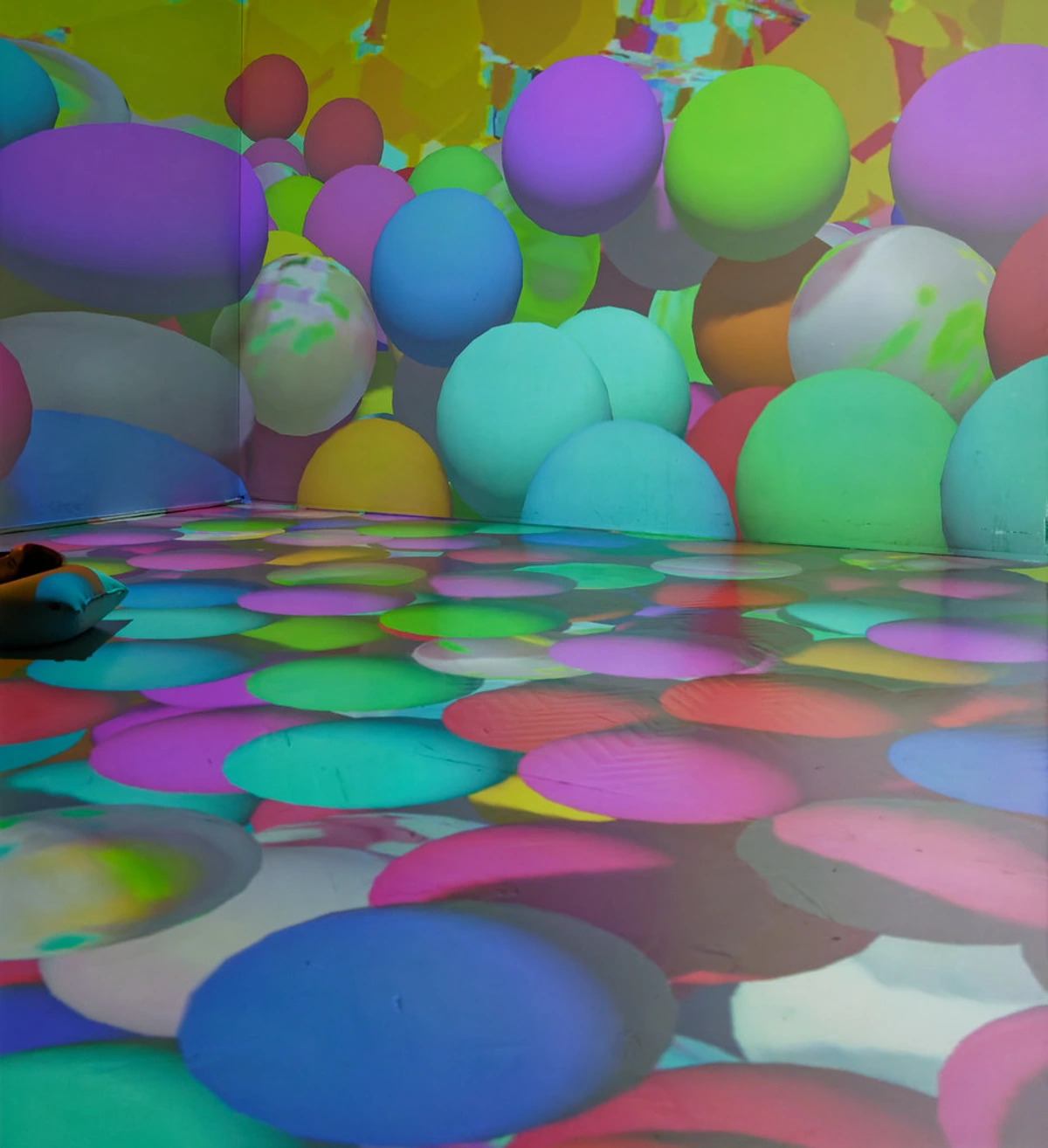
And if you’re inspired by that spirit of seeing the world differently—a spirit that lives in the colors and forms of abstract art—you can explore some of that feeling right here on our website. Perhaps you'll find something that makes you stop, look, and listen.
Digging Deeper: A Glossary of Cagean Concepts
To fully appreciate Cage's world, it helps to understand a few key terms that were central to his work. Think of this as a mini-dictionary for navigating his unique artistic language.
Concept  | Definition | Why It Matters to Cage |
|---|---|---|
| Indeterminacy | A compositional method where some elements of a piece are left open to chance or the performer's spontaneous choices. | It was his ultimate tool for removing his own ego and personal taste from the music, allowing a piece to be different every time it's performed. |
| I Ching | An ancient Chinese divination text. Cage used its system of 64 hexagrams as a tool for chance operations to make compositional decisions. | It provided a structured, ancient, and non-Western framework for making "non-intentional" choices, replacing his own will with that of the cosmos. |
| Prepared Piano | A grand piano with objects (e.g., bolts, rubber, felt) inserted between its strings to alter its timbre and make it sound like a percussion ensemble. | It was a practical, ingenious solution to a space problem that fundamentally changed the sound palette of a familiar instrument, making it new again. |
| Musique Concrète | A form of electroacoustic music that uses recorded sounds (natural, industrial, or human) as raw material. | It embodied his idea that "all sound is music." It allowed him to use the ambient sounds of the world as his orchestra, blurring the line between art and life. |
| Non-Intention | A Zen-derived principle of letting go of personal desire and preference to allow things to be as they are. | This was the philosophical core of his work. By giving up control, he believed he could create art that was more truthful and connected to reality. |
| Happenings | Performance events that blur the lines between visual art, music, and theater, often with no clear narrative or script. | While often associated with Allan Kaprow, Cage's experimental concerts were direct precursors. They broke down the "fourth wall" and made the audience a crucial, unpredictable part of the event. |
This table just scratches the surface, but I find it's a good way to wrap your head around the interconnected ideas that fueled his creativity.
The Enduring Conversation: Why Cage Still Matters
It’s tempting to file Cage away as a historical figure, a mid-century provocateur whose shock value has faded. But that would be a profound mistake. His questions feel sharper and more necessary now than ever before. I think his relevance lies in three key challenges he poses to our modern lives.
First, in an era of algorithm-driven content, Cage champions radical receptivity. We are constantly served music and art that an AI predicts we will like. It’s a perfectly tailored cage. Cage’s use of chance was the opposite—a tool to break open his own habits and expose himself to possibilities he never would have chosen. His work asks us to actively seek out the unfamiliar, to find beauty not in the echo of our own preferences, but in the chaotic, beautiful noise of the world.
Second, in a world saturated with noise, he reframes silence as a resource. He didn’t see silence as empty, but as full. The modern equivalent isn’t just the absence of sound; it’s the absence of notifications, of pings, of digital chatter. 4’33” is a lesson in mindfulness, a practice of clearing a space to simply perceive what is already there. It’s an argument for digital detox, for creating moments of intentional space, long before such a concept existed.
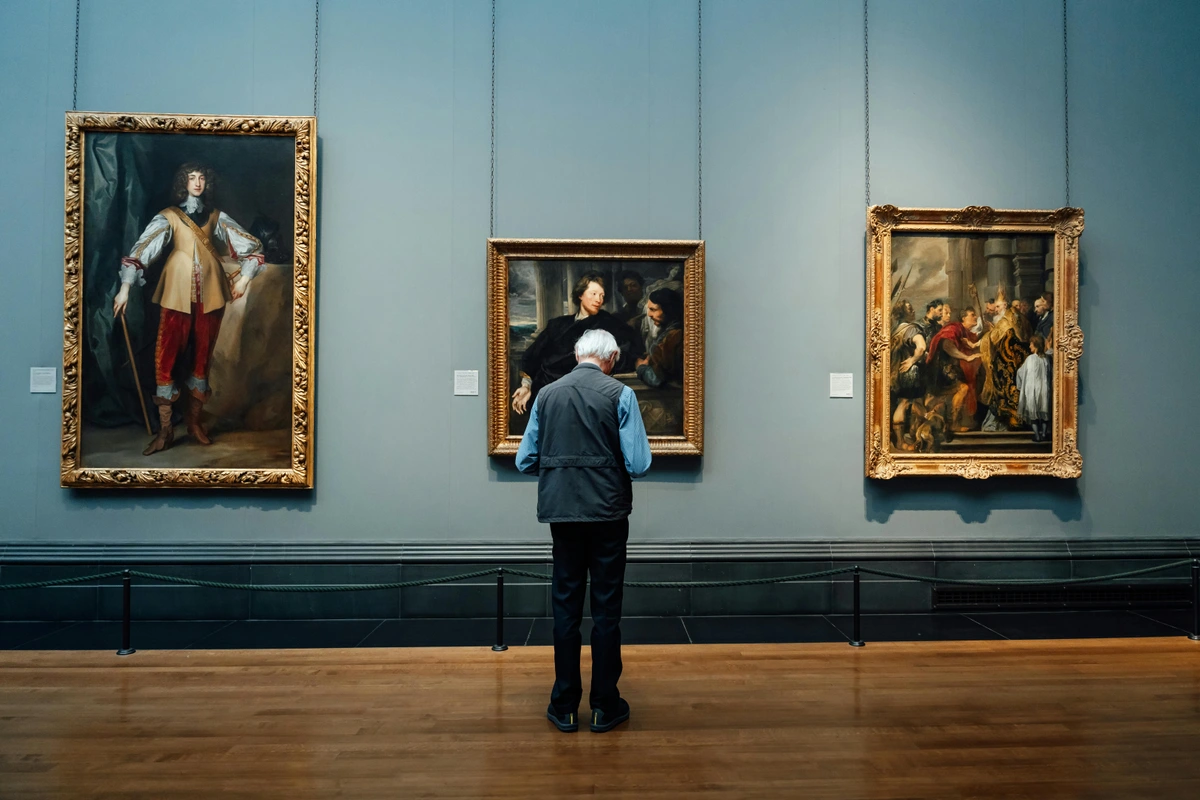
Finally, he democratized art. He argued that listening is a creative act. The audience isn’t a passive consumer; they are an active participant, co-creating the artwork with their own perceptions and the environment. In a culture that often professionalizes creativity, Cage reminds us that art can be a frame for experience. It’s an empowering idea: you don’t have to be a trained artist to have a meaningful aesthetic experience. You just have to pay attention.
Cage's Circle: The Artists and Thinkers Who Shaped Him
No artist is an island, and Cage’s genius was in constant conversation with the minds around him. To understand him is to understand the web of influence he inhabited.
- Arnold Schoenberg:* His reluctant teacher, Schoenberg’s dismissal of Cage’s harmonic sense was a founding trauma. Instead of destroying him, it liberated him from the tyranny of traditional harmony and set him on his unique path.
- Merce Cunningham:* His life partner and most important collaborator. Their work together, creating dance and music independently, redefined both fields and reinforced Cage’s belief in non-hierarchical, co-existing arts.
- Marcel Duchamp:* The ultimate chess-playing provocateur. Duchamp’s readymades, which turned everyday objects into art, showed Cage how to question the very definition of a medium. They were intellectual sparring partners, united by a deep love for play and paradox.
- Robert Rauschenberg:* A kindred spirit. Rauschenberg’s all-white and all-black paintings were a visual analogue to 4’33”, acting as mirrors for their environment. They shared a belief in erasing the artist’s hand to make room for the world.
- D.T. Suzuki:* The Japanese scholar of Zen Buddhism whose lectures Cage attended at Columbia University. Suzuki gave Cage the philosophical language for his intuitive ideas about non-intention, non-dualism, and accepting the world as it is.
- Henry Cowell & Edgar Varèse:* These earlier 20th-century composers were his musical forefathers. Cowell’s experiments with tone clusters and playing the piano’s strings directly paved the way for Cage’s prepared piano. Varèse’s vision of music as “organized sound” validated Cage’s own explorations into noise.
This list is far from complete; the printmakers at Crown Point Press, the musicians in his ensembles, and countless others all played a role. But these individuals formed the core constellation of his intellectual and artistic universe.
Experiencing Cage Today: How to Engage with His Work
Reading about Cage is one thing, but his work demands to be experienced. If you’re curious to dive in, here’s a guide to getting closer to his radical, wonderful world.
To See His Visual Art:
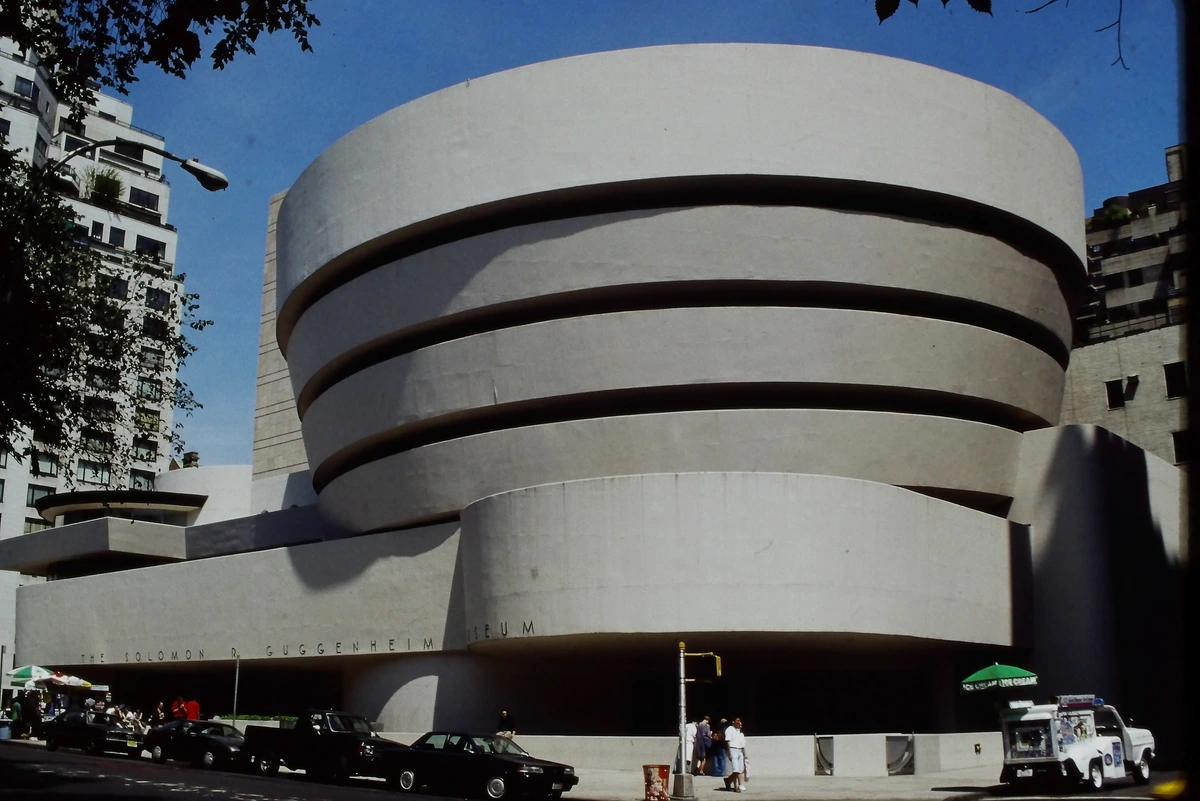
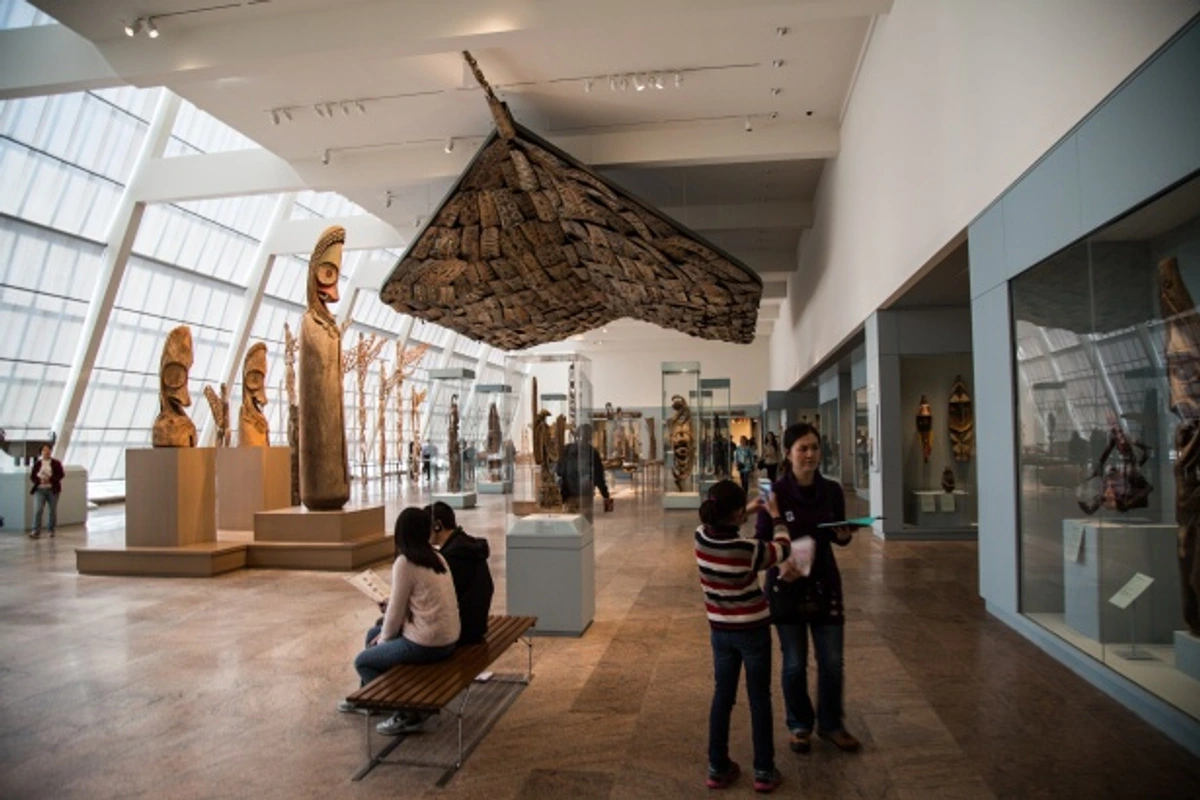
- Museum of Modern Art (MoMA), New York: Holds a significant collection of his scores, prints, and archival materials. Seeing his delicate smoke drawings or his meticulously detailed Notated Bird Songs in person reveals a side of him that pure description can’t capture.
- The Menil Collection, Houston: The archives of his longtime patron, Dominique de Menil, contain a wealth of his visual work.
- Crown Point Press, San Francisco: A great resource. This was his main printmaking studio, and their website and publications offer deep insight into his visual art process.
To Hear His Music:
- Listen to Sonatas and Interludes: This suite for prepared piano is one of the most accessible and beautiful entry points. Find a good recording and you’ll hear the piano transformed into a miniature orchestra of gongs, bells, and drums.
- Watch a Performance of 4’33”: Don’t just read about it. Find a video on YouTube, or better yet, perform it for yourself. Sit silently for four minutes and thirty-three seconds. I guarantee it will change the way you hear the world, even if just for a moment.
- Explore Roaratorio (1979): An incredible late-career work. This piece is a sound collage built from recordings Cage made around the world, layered with an Irish folk musician reading from his book, Finnegans Wake. It’s chaotic, joyful, and a powerful example of his musique concrète style.
To Read His Ideas:
- Get his books: Silence: Lectures and Writings is the essential collection of his thoughts. It’s full of quirky diagrams, profound koans, and his unique philosophy. A Year from Monday and Empty Words are also fantastic.
- Find a Documentary: Listen (1992) or John Cage: Journeys in Sound (2012) offer wonderful introductions, letting you see him at work and hear the stories from those who knew him.
If you’re feeling inspired to bring a piece of that exploratory spirit into your own space, you can always find art that challenges and calms the mind right here on our site. It’s all part of that same endless conversation Cage started.







Who were John Cage's influences?
He was deeply influenced by Eastern philosophies, especially Zen Buddhism. Musically, he studied with Arnold Schoenberg and was inspired by the percussive innovations of Henry Cowell and Edgar Varèse. In the art world, his closest friends and influences were Marcel Duchamp and Robert Rauschenberg.