Expressing Existential Dread Through Art: An Artist's Guide
Ever felt life's a beautifully chaotic canvas? This guide shares a personal, practical path for turning existential dread into captivating abstract and contemporary art—from color and line to starting your own piece.

Expressing Existential Dread Through Art: A Practical Guide for Artists
You know that feeling. It’s 3 AM, the world is quiet, and suddenly the vast, silent weight of existence settles on your chest. Not as a crisis, but as a profound, almost beautiful emptiness. The question that hums beneath everything: What’s the point? I’ve learned the answer isn't to find a point, but to put that feeling on the canvas. To give it a home.
This isn't about shock value or making 'dark' art. It's about translating an intangible, universal human experience into a visual language. It's about letting the void speak, and in doing so, making it a little less vast and a little more... understood. If you've ever stared at a blank page feeling that specific weight, this is for you. My goal here isn't just to give you techniques, but to share a framework for how to think about your own work—and to show you how that quiet hum of existential dread can become a compass, guiding you toward your most honest and compelling work yet.

The Raw Ingredients: What is Existential Dread, Anyway?
Before we pick up a brush, it helps to know what we're working with. This isn't just 'being sad.' It’s deeper, more philosophical. It's the unsettling awareness of our own freedom and the profound responsibility that comes with it. It's the vertigo of choice, the groundlessness of being, the silent hum of the universe asking, “Now what?”
I want to ground this in a specific philosophy, because it helps clarify what we're talking about. The "dread" we're dealing with isn't just a bad mood; it’s the very engine of a school of thought called Existentialism. Thinkers like Jean-Paul Sartre, Simone de Beauvoir, and Albert Camus argued that existence precedes essence—meaning, we aren't born with a purpose, we're just born. We are, as Sartre put it, "condemned to be free."
That’s the dizzying thrill and the terror of it. There's no pre-written script. This weight you feel? It’s the profound, staggering responsibility of having to create your own meaning in a universe that offers no easy answers. Forget the pop-culture image of a brooding philosopher in a black turtleneck. For the artist, this philosophical groundlessness isn't a problem to be solved; it's raw creative material. It's high-octane fuel.
Artists who understood this weren't just depicting sadness. They were building new realities from the ground up. When you look at Giacometti’s impossibly thin, isolated figures, you see the struggle of the individual to define themselves in space. When you read Camus, you get the philosophical argument for why life is absurd; when you see Rodin’s The Thinker, you see the physical manifestation of that unbearable mental weight. Understanding this link transforms your art-making from a hobby into a deeply human, philosophical act.
Your Toolkit: Mediums for the Malaise
Not every medium feels right for every feeling. Dread isn't a single note; it's a chord. Here’s how different tools can help you hit those notes.

Painting: Where Color Becomes a Mood
Painting was my first love, and for this topic, it's a powerhouse. It allows for a physical conversation with your materials—a slow, deliberate process of excavation. You're not just depicting a feeling; you're using your whole body to feel your way through it with pigment.
- Oils: The slow drying time of oils is a perfect metaphor for this feeling. It lingers. It allows you to work and rework a section, scraping back layers to reveal what was buried—much like how these thoughts peel back the layers of our everyday consciousness. It's messy, physical, and unforgivingly direct.
- Acrylics: Maybe you need to work faster, to capture the frantic energy of the thought before it slips away. Acrylics' immediacy is perfect for that. You can build up layers quickly, creating a dense, textured surface that feels like a crowded mind.
- Watercolor: Don’t underestimate the power of watercolor. Its uncontrollable flow, the way colors bleed into each other, can mirror the feeling of boundaries dissolving, of the self becoming fluid and meaningless. It’s a dance between control and chaos.
Drawing: The Intimacy of Line
Sometimes color is too much. Sometimes the raw honesty of a line on paper is what you need. Drawing strips everything back to its essence.
- Charcoal: Smudgy, dusty, and immediate. Charcoal lets you make bold, dark marks and then erase them into ghostly remnants. It’s perfect for exploring themes of presence and absence, of the solid form dissolving into nothing. I often find my hand moving more instinctively with charcoal, letting the lines find their own way.
- Ink (Pen & Brush): Ink is commitment. Every line is permanent. It forces you to accept the marks you make, which can be a powerful parallel to accepting the realities of existence. A single, unwavering brushstroke can hold all the tension in the world.
Digital & Mixed Media: Blurring Reality's Edges
For a feeling that questions reality, why limit yourself to the purely physical?
- Digital Art: The ability to layer, to copy, to repeat elements endlessly can be a profound way to explore themes of meaninglessness and repetition. Imagine creating a complex digital piece, and then duplicating it, distorting it, and watching the 'original' meaning get lost in the copies. It's a very modern kind of existential malaise.
- Collage: What could be more existential than taking fragments of other realities—magazines, old photos, text—and assembling them into a new, disorienting whole? It’s a direct way to say: meaning isn't found, it's built from pieces.
Medium  | Best For Exploring... | Key Characteristic |
|---|---|---|
| Oil Paint | Lingering, layered thought, depth, time | Slow-drying, blendable, rich texture |
| Acrylic Paint | Urgency, anxiety, frantic energy | Fast-drying, versatile, builds texture |
| Watercolor | Dissolution, groundlessness, fragility | Uncontrollable flow, transparency |
| Charcoal | Impermanence, presence/absence, immediacy | Smudgy, erasable, direct |
| Ink | Commitment, starkness, finality | Permanent, high-contrast, fluid |
| Digital | Repetition, artificiality, layered realities | Infinitely malleable, non-physical |
| Collage | Fragmentation, assembling meaning | Juxtaposition, found objects |

The Visual Language of Dread: A Complete Visual Grammar
Okay, you've got your tools. Now, how do you make the feeling visual? This is where you translate the intangible into a language the eyes can understand. Think of these not as rules, but as the words and grammar of a vocabulary we all intuitively know. Let’s expand this from just composition, color, and form into a more complete toolkit.
Compositional Anxiety: How to Arrange the Unraveling
The way you arrange elements on the canvas can create a sense of psychological space—the emotional map of the world you're building.
- The Vanishing Point to Nowhere: A classic technique, but with a twist. It’s not just about a road disappearing. Imagine the lines of a building converging on a point and then just... stopping. The logic of the scene collapses. It’s a visual representation of a path that leads only to a dead end.

- Crushing Negative Space: This is a personal favorite. Don't just surround your subject with empty space; use that space to feel like a physical pressure. I’ll often build up thin washes of color around a central figure, making the "emptiness" feel dense and heavy, as if it’s squeezing the life from the focal point.
- Disorienting & Conflicting Perspective: Tilt the horizon to make the viewer feel physically seasick. Better yet, give different parts of your piece their own, conflicting vanishing points. Have the floor recede to the left while the ceiling recedes to the right. This isn't a mistake; it's a statement that reality itself is unreliable.
- Fragmentation & The Grid: Break the image apart. Reassemble it with gaps. Place a scene within a rigid, uniform grid. The contrast between the organic content and the cold, mathematical structure of the grid can create a powerful sense of being trapped, catalogued, or dehumanized.
The Chromatics of Numbness & Anxiety
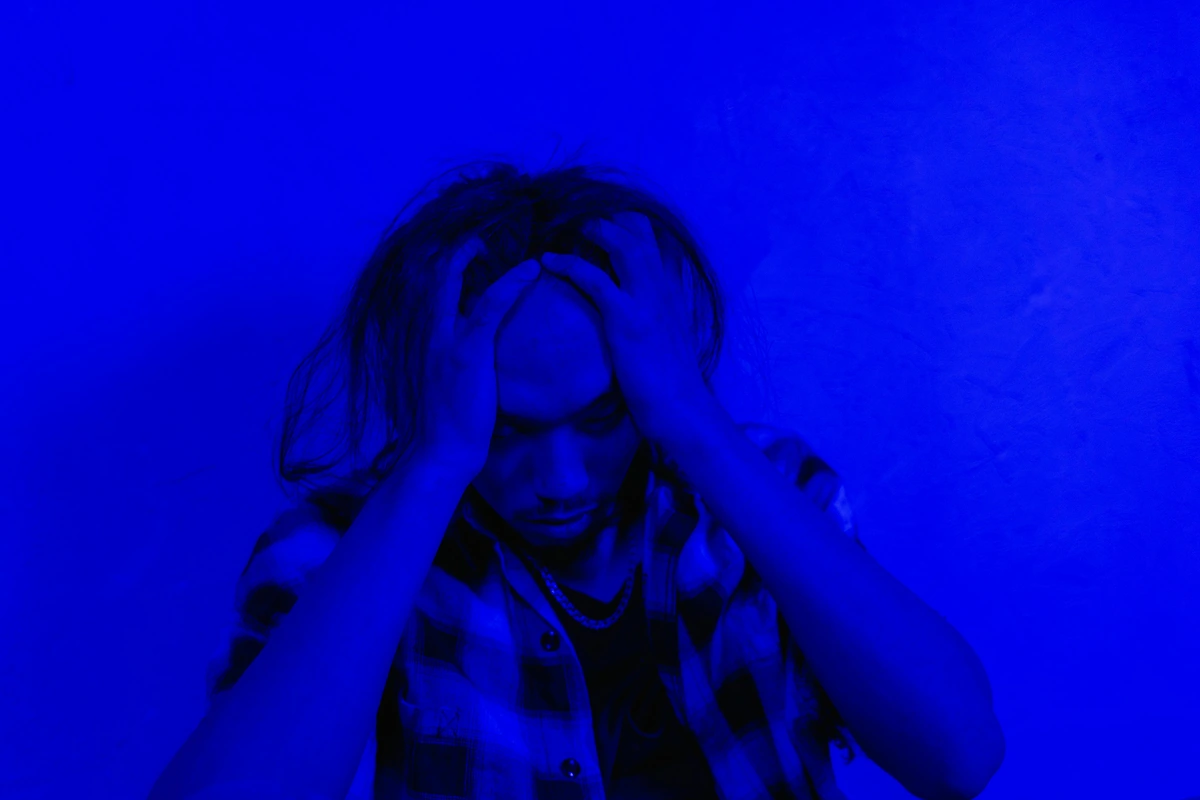
Color isn't just emotion. For existential work, color is a direct line to our nervous system. Forget what you were taught about "happy" or "sad" colors. This is about something more primal. Think about the feeling’s texture.
- Desaturation as Sensory Deprivation: A washed-out, desaturated palette of greys, beiges, and dusty blues isn't the absence of color, but the memory of it. It’s the color of a photocopy of a memory. It speaks of faded importance, of things losing their vitality. The more muted the palette, the more any small, vibrant mark you do make will scream with significance.
- Clashing, Sickly Neons: Sometimes dread isn't quiet. Sometimes it’s the piercing jolt of the 3 AM notification. It’s a synthetic, wrong-feeling anxiety. A toxic, inorganic green set against a queasy, fleshy orange can be far more unsettling than simple black. These are the colors of our digital age—the light of a screen on a tired face.
- Deep, Void-Like Tones: Not just black. Prussian blue, dark umber, maroon. These are colors so deep you feel you could fall into them. They pull the eye and the mind inward. Think of Rothko’s work; you don't look at his dark paintings, you look into them. You are standing at the edge of a formless depth. The color itself is the psychological landscape.
Form, Symbolism & Metaphor
You don't have to paint a person screaming. The feeling can be encoded directly into the shapes you use. The art is in making a visual language so potent it bypasses the brain's language center and speaks directly to the gut.
- Biomorphism: Use shapes that are fleshy, cellular, or organ-like but don't make sense. They can evoke biology, decay, and the uncomfortable reality of our own bodies.
- Hard Geometry vs. Chaos: Pitting rigid, man-made structures (like grids or perfect circles) against messy, chaotic, organic shapes can illustrate the tension between our desire for order and the universe's inherent chaos.
- The Absurd Object: A single, mundane object, repeated or placed in a nonsensical environment. A chair floating in an empty sky. A thousand spoons. It’s the visual equivalent of the question, "Why?"
The Artists Who Paved the Way: A Gallery of Masters
It’s one thing to talk about concepts; it’s another to see them embodied by masters. Let’s look at a few artists who have spent their careers mapping this interior territory. These aren't just names for an art history test; they are potential guides and conversation partners for your own work.
Artist | Key Work(s) | What They Teach Us | Core Idea |
|---|---|---|---|
| Caspar David Friedrich | Wanderer above the Sea of Fog | The Sublime and the Insignificant Self: He shows us how to use landscape not as a backdrop, but as a psychological state. You don't paint the mountain; you paint the feeling of the mountain. | The Self vs. The Infinite. |
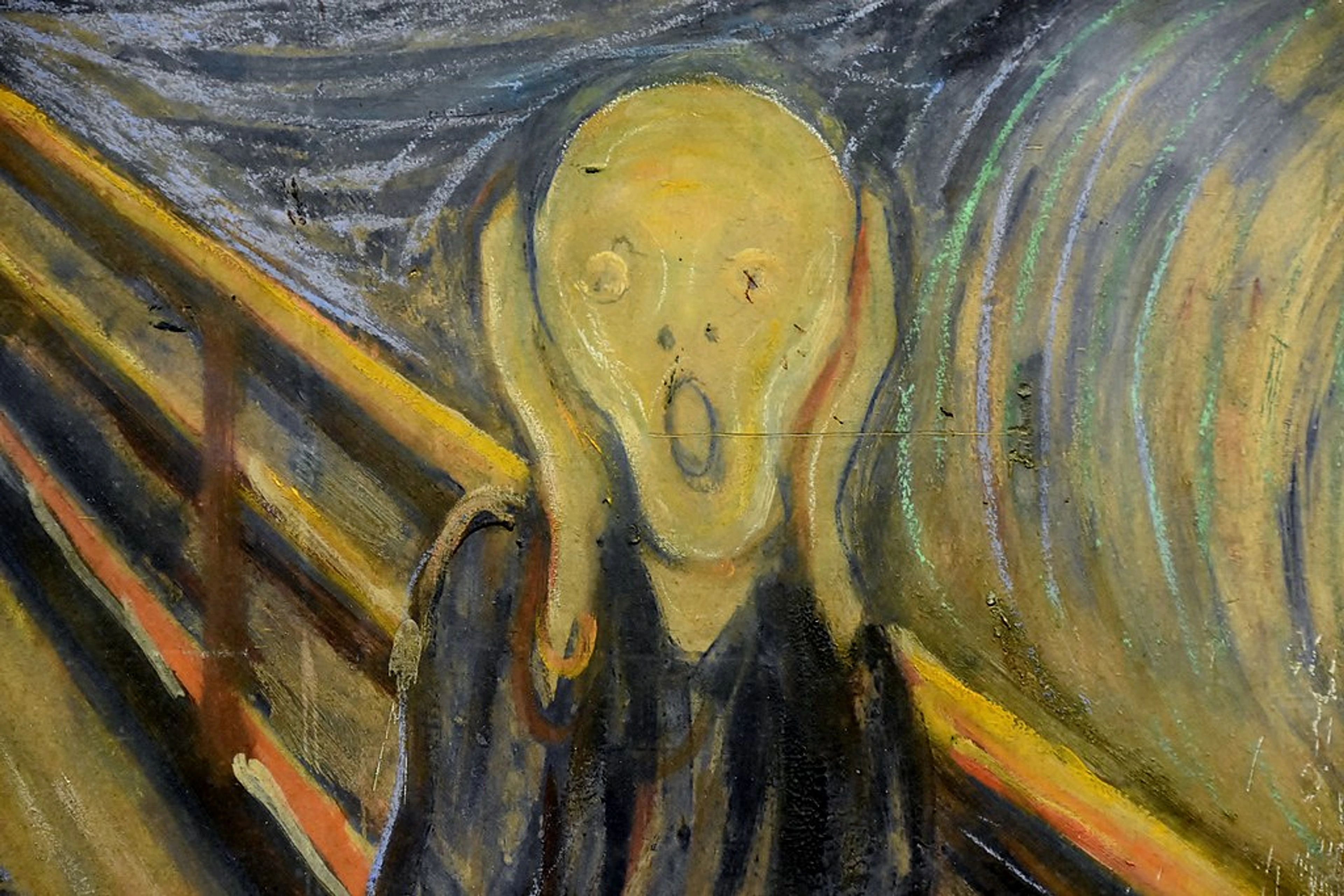
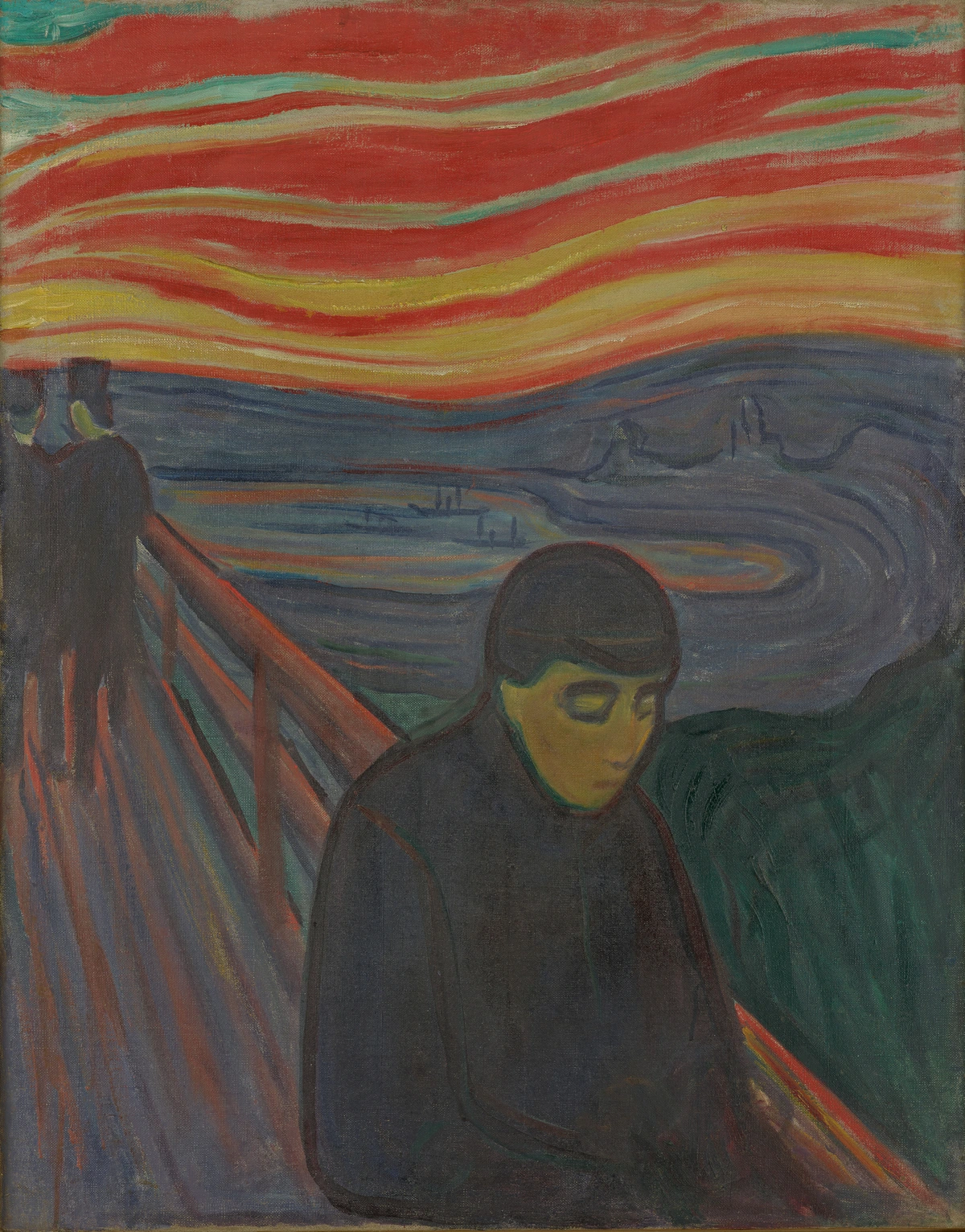
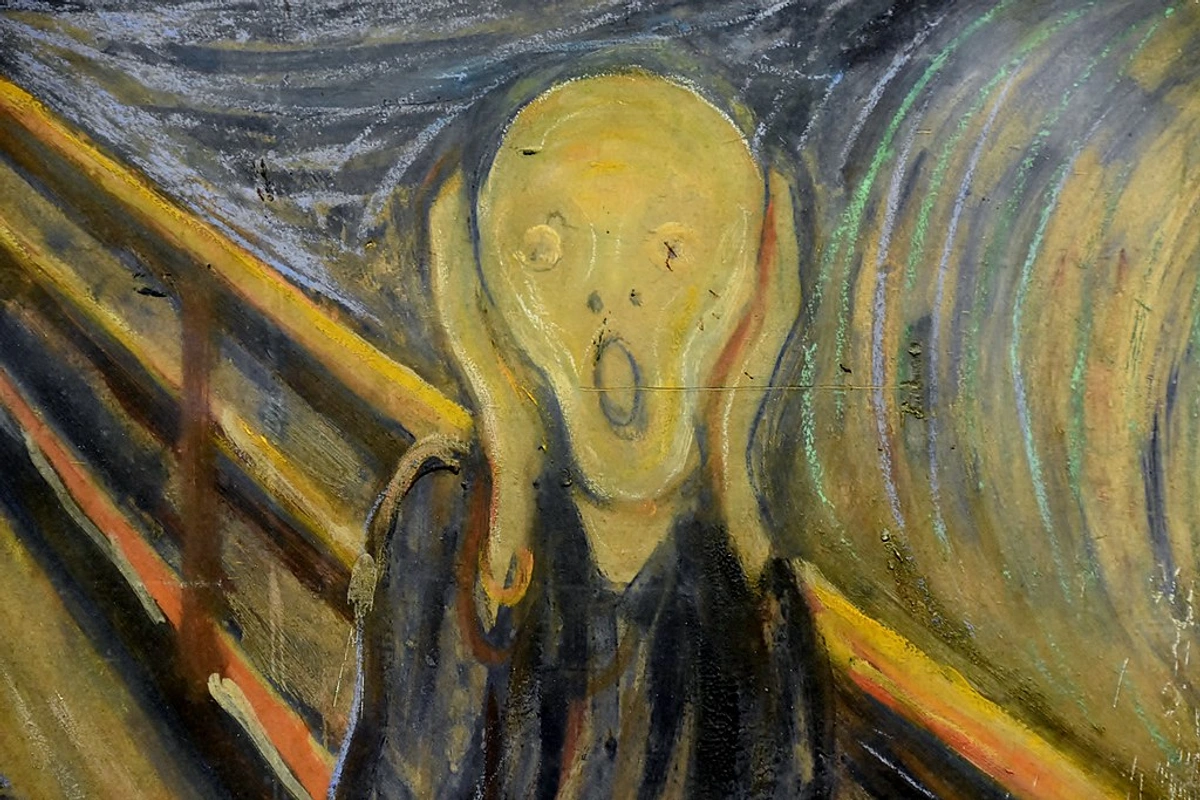
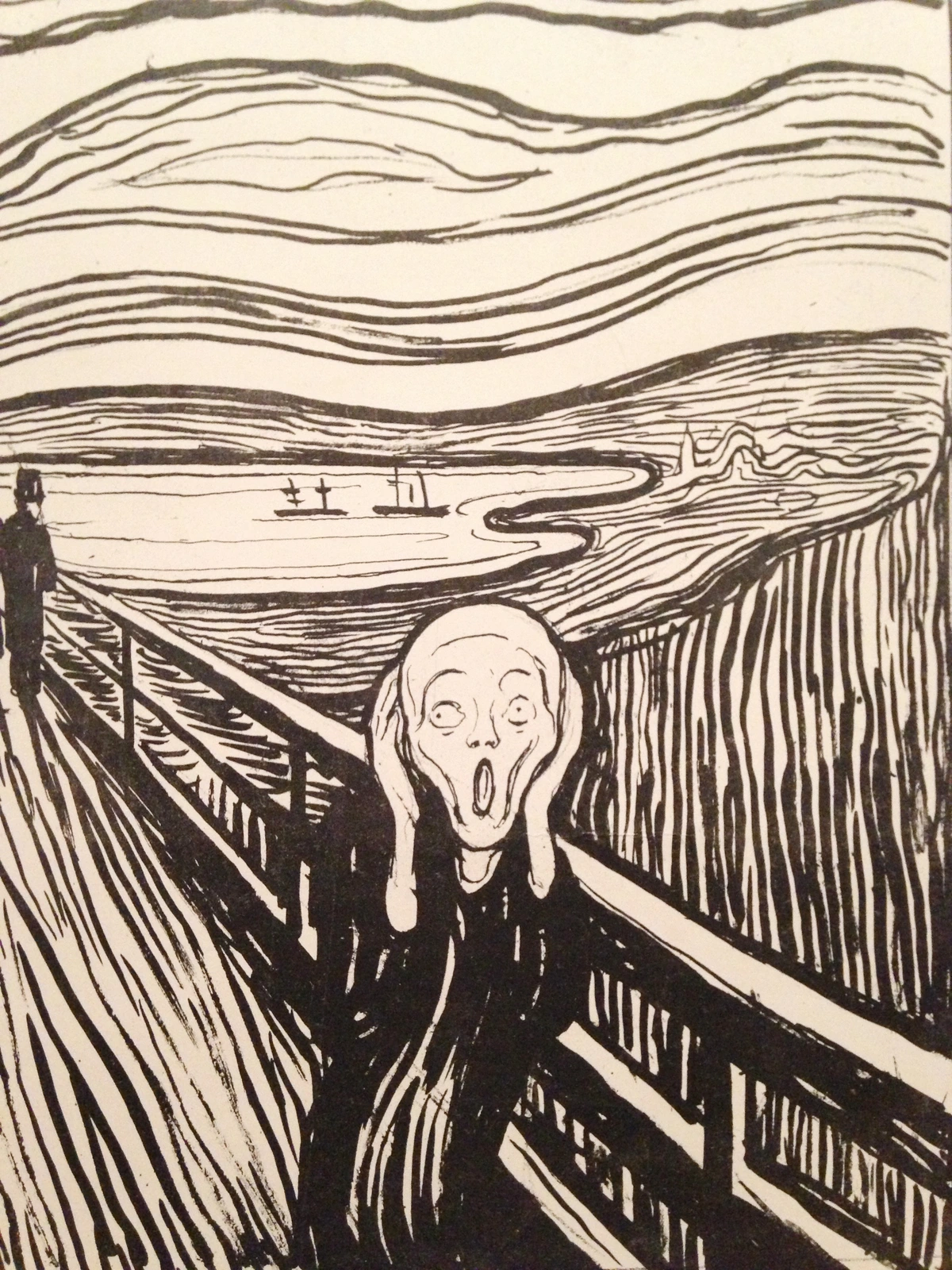
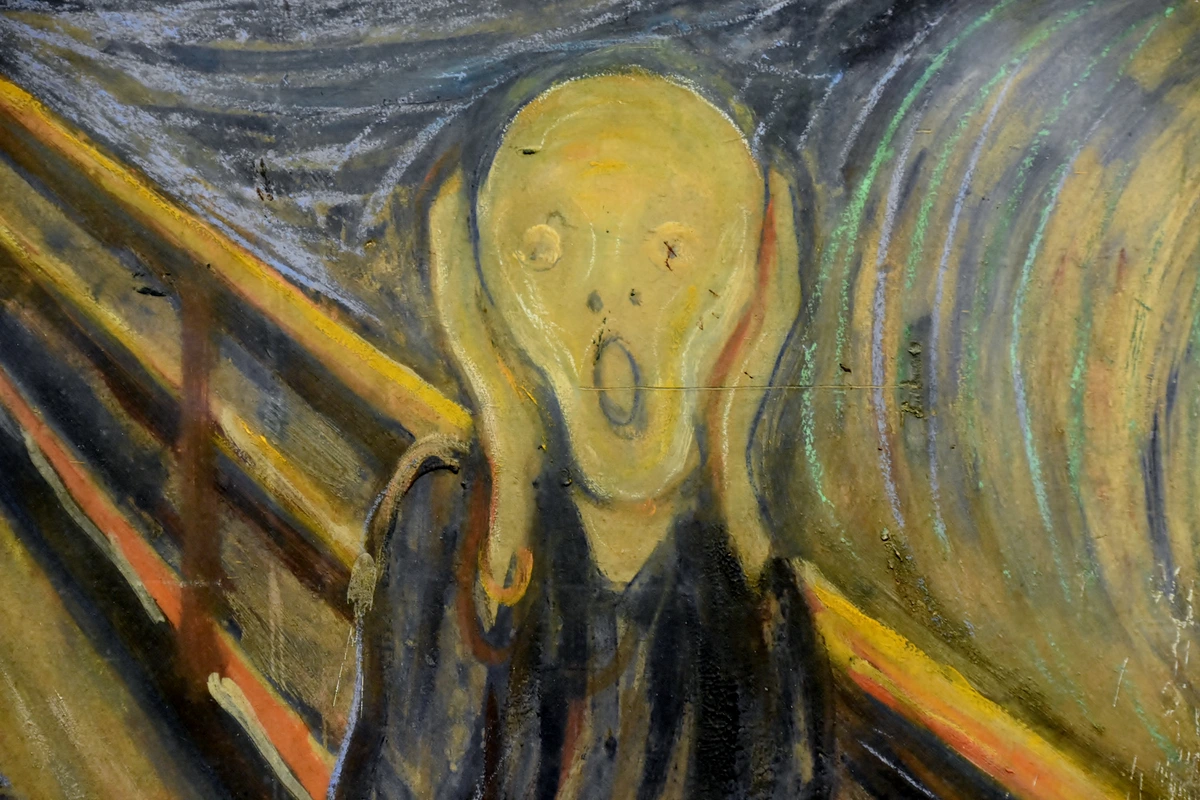
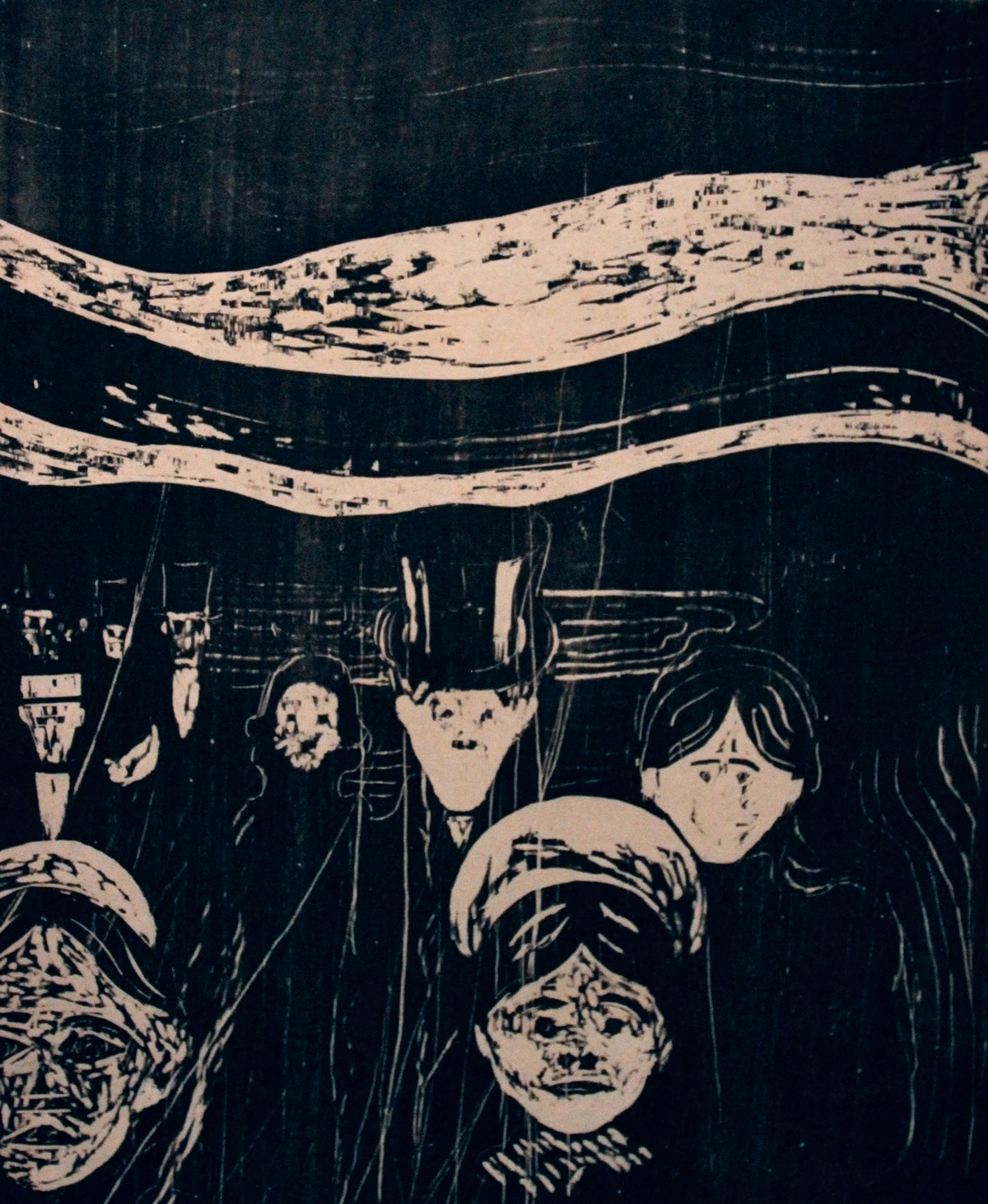
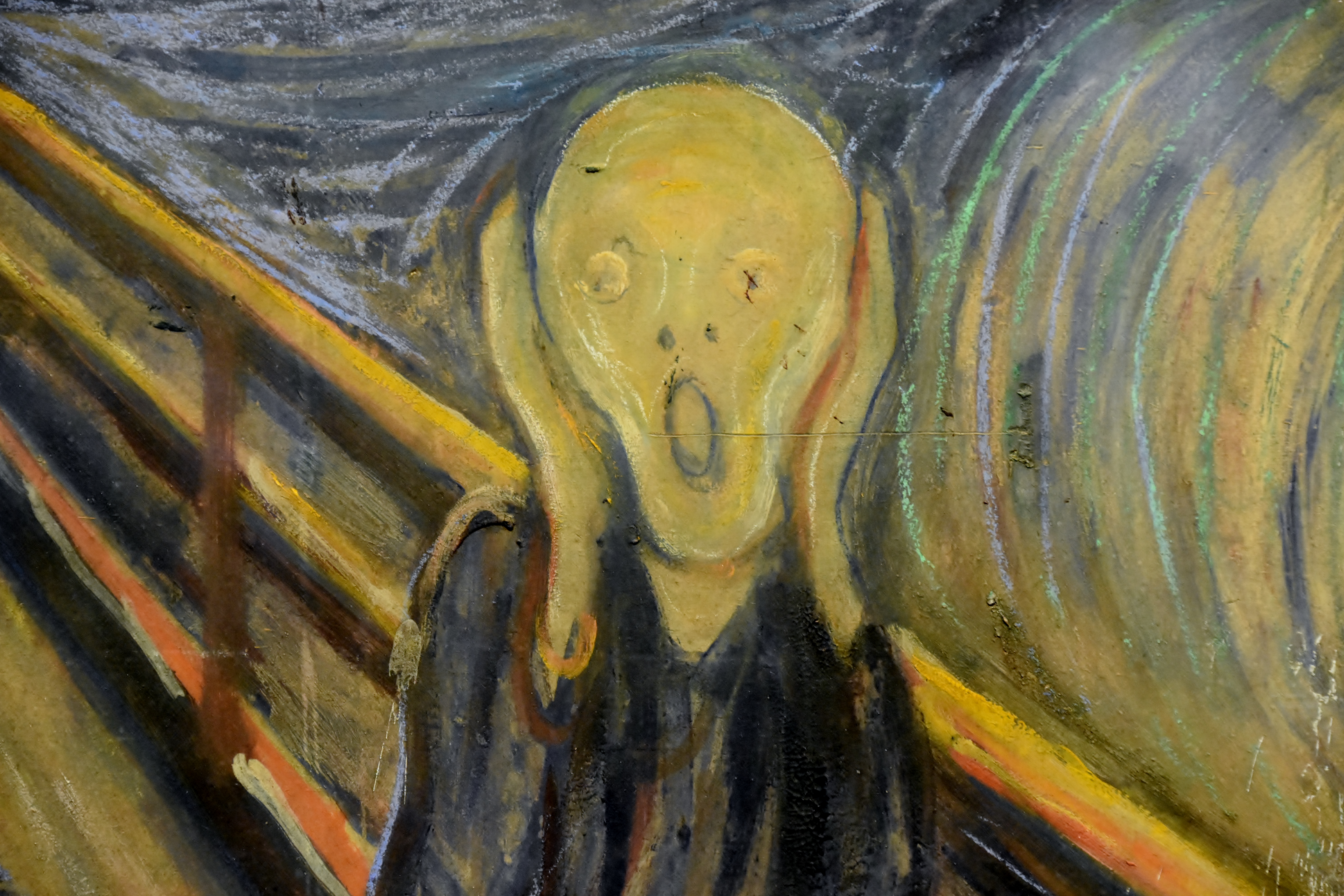
| Edvard Munch | The Scream | Anxiety as a Vibration: Munch teaches us that the feeling can distort reality itself. The world in The Scream isn't stable; it's a visual echo of an internal shriek. | The Self Dissolved by Anxiety. |
| Francis Bacon | Three Studies for Figures at the Base of a Crucifixion | The Body as a Site of Horror: He shows the physical body not as a vessel for the self, but as a piece of meat, a source of terror and pity. It’s a raw look at our biological reality. | The Self Trapped in Flesh. |
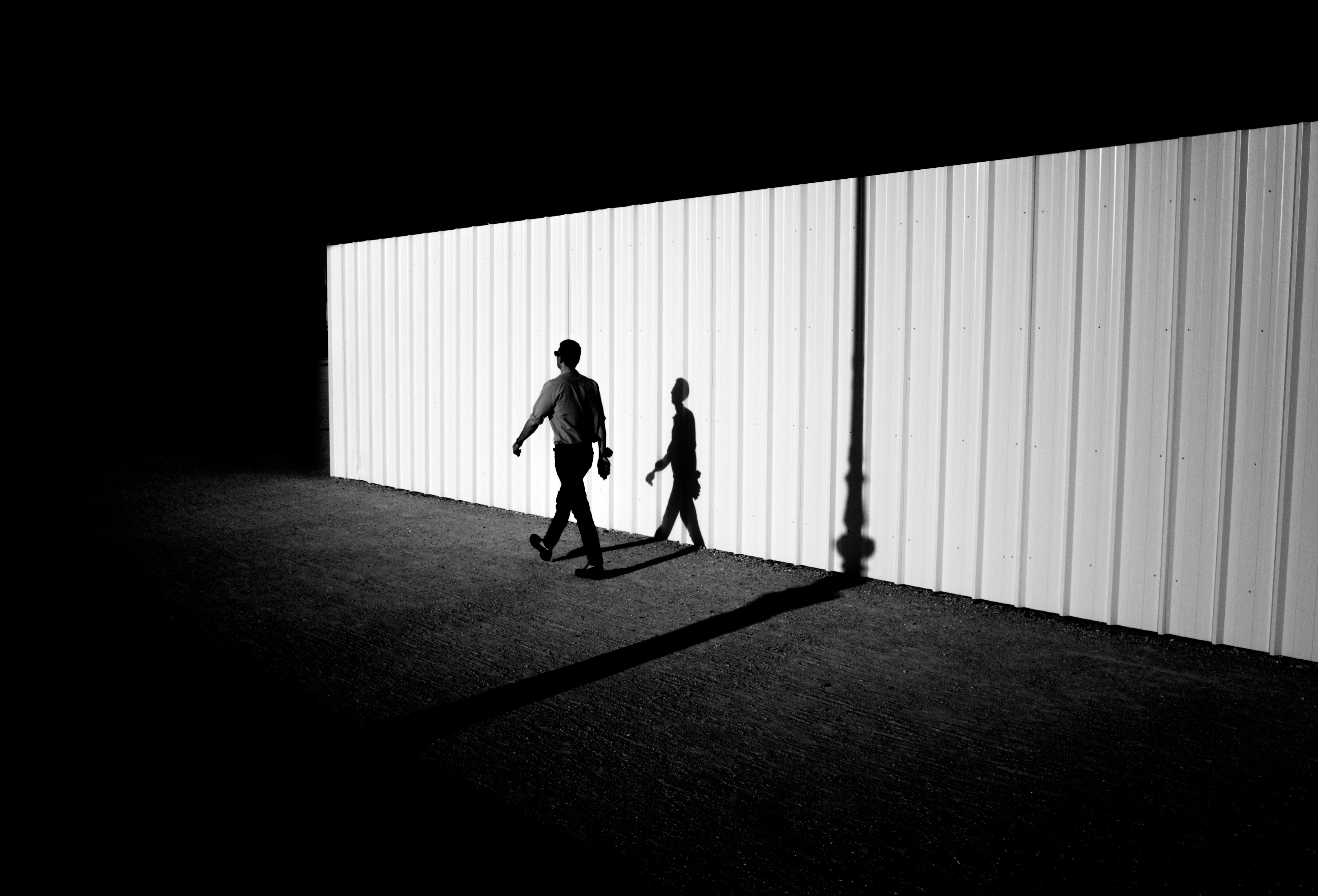
| Alberto Giacometti | Walking Man series | The Isolated Self in Space: His impossibly thin figures show the self as a fragile, isolated line moving through an immense, empty space. They are the very form of existential loneliness. | The Self as an Isolated Line. |
| Mark Rothko | Seagram Murals | Feeling as Pure Color: Rothko proves you don't need an image. Pure color, applied with emotional weight, can become a space you enter. His paintings are voids you can feel with your whole body. | The Self Dissolved in Feeling. |
| Agnes Martin | The Tree | Order as a Defense Against Chaos: Her quiet, meticulous grids are not cold. They are a deeply personal, repeated attempt to find peace and order in a chaotic universe through obsessive, meditative repetition. | The Self Seeking Order. |
Looking at their work isn't about copying them. It’s about seeing a problem—How do I make the invisible visible?—and observing the unique, brilliant solutions they each found. It’s about finding your own place in that conversation.
Practical Steps: How to Start Your Own Piece
All this theory is great, but let’s get your hands dirty. This isn't a rigid formula; it's a loose framework, a ritual I use to move from an abstract feeling to a concrete action. The goal is to create a bridge from your mind to your materials.
1. The Feeling Check-In (A 5-Minute Ritual): Before you touch any material, sit with the feeling for five minutes. No pressure to create, just pressure to observe.
- Ask yourself: If this feeling was a texture, what would it be? (Cold and slick? Rough and jagged? Electric and buzzing?)
- If it was a sound, would it be a low hum, a grating static, or a deafening silence?
- If it was a color, would it be a shout or a whisper? What color is guilt? What color is the 3 AM sky?
- Write a few messy, nonsense notes with a pencil on a scrap of paper. Don't write sentences, just words: "static," "heavy," "falling." This isn't poetry; it's data.
2. The Material Instinct: Based on your texture and sound notes, trust your gut. This step is about listening to that instinct.
- Rough and textured? Heavy-body acrylics or charcoal you can grind into the paper.
- Slick and cold? Ink, or even a digital brush that feels frictionless.
- A need to erase, to have a conversation? A soft pencil or charcoal that can be smudged and reshaped. Don’t overthink this. The right tool has a magnetic pull. Just reach for it.
3. The First Mark (The Ritual Kill of the Blank Canvas): The blank canvas is the enemy of the raw feeling. It demands perfection. Your job is to break its authority immediately. Put on a song that feels like the feeling. Stand up. Then make the first mark without any intention of it being 'good.' Let it be a mess. A violent slash of charcoal. An angry splatter of ink. A dark, heavy block of color dragged straight from the tube. This isn't an act of creation yet; it's an act of destruction—destroying the possibility of a "nice picture" and freeing yourself to make an honest one.
4. Work It, Then Walk Away (The Unconscious Conversation): For the next hour, have a conversation with that first mark. It made a smudge? The smudge looks like a figure, so hint at the figure. The splash of red feels too loud, so mute it with a wash. A shape suggests itself? Add it. A color feels wrong? Cover it. Try to operate in a state of "no-mind." Don't think. Just react. The moment you feel yourself getting frustrated, tired, or overly precious about it, stop. Put the piece somewhere you will see it in passing but won't focus on it—on a shelf, by the door. Let it simmer in your peripheral vision for a day or two. Your subconscious needs this time to process it.
5. Return with an Editor's Eye (The Conscious Sculpting): Come back to the piece after a day or two of not looking at it directly. This is the hard part. Now, you switch from pure feeling to thoughtful craft.
- What lines or shapes feel true to that initial, raw feeling?
- What parts feel forced, dishonest, or like you were just trying to make it "look like art"?
- Be ruthless. Scrape away the dishonest parts. Refine the parts that sing. Cover up the bits you hate. Don't fix mistakes, edit them. You are now shaping the initial emotional outburst into a coherent image.
6. The "Done" Threshold: You'll know the piece is 'done' not when it looks like a nice picture, but when you look at it and feel a jolt of recognition. It's a mirror. It should give you back a little bit of that original, un-nameable feeling. That's the signal.
Beyond Expression: Art as Contemplative Practice
So why bother transforming this heavy feeling into art? The usual answer is "emotional release" or "alchemy"—turning a negative into a positive. But I think that sells the process short. For me, it’s less about alchemy and more about archaeology. Art-making becomes a contemplative practice, a structured way to sit with an uncomfortable question without demanding an answer.
Think of it like a form of meditation where the feeling is your mantra. By focusing on it, trying to translate it into line, color, and form, you aren't getting rid of it. You are observing it with radical honesty. You are asking it questions: "Where do you hurt? What do you look like?" This process of deep attention changes your relationship to the feeling. It transforms an abstract anxiety into a concrete object of study—a problem that can be explored, not just a monster to be feared.
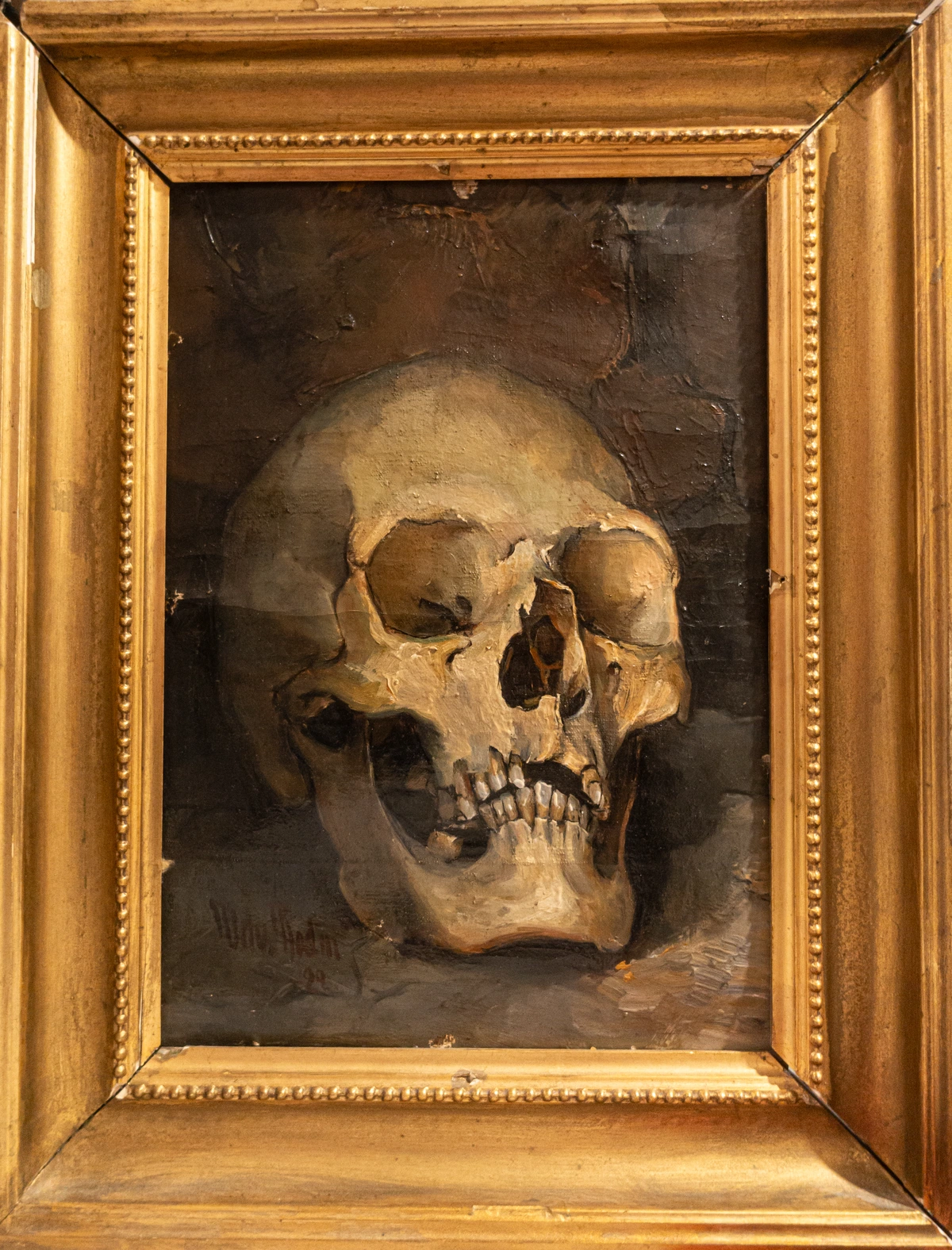
It becomes a ritual for courage. Every time you confront the blank canvas and choose to put your truth on it, you are practicing the act of asserting your own meaning in a world that often seems to offer none. In that sense, the finished piece is almost secondary. The real act of creation was the courage it took to sit with the void and answer with a mark. It’s not a monument to despair; it's a monument to your own capacity for observation and creation.



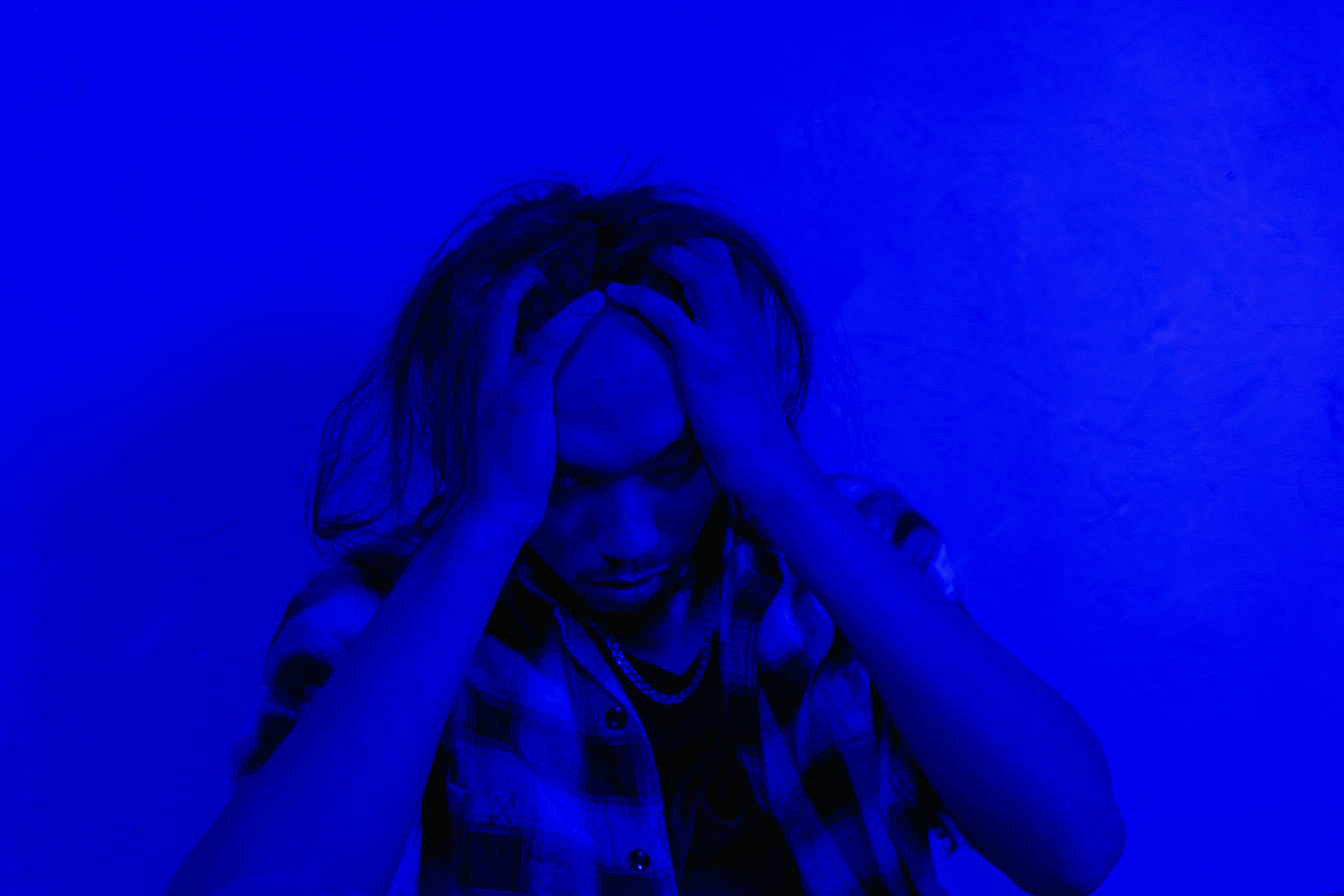


The Final Question: Audience and Audience
This brings us to the final, uncomfortable question: Who is this art for? The honest answer is a paradox. It’s for you, and it’s for everyone else.
For You: The process, first and foremost, must be a private conversation. If you start making the work for an imaginary audience—imagining what a critic will say, what your friends will think, what will sell—you have already lost the thread. The work has to be true to the feeling, not to a market or a trend. It is a private ritual before it is a public statement.
For Everyone Else: But this deeply private work is also universal. Precisely because you have drilled down into your own specific, personal experience of this feeling, you tap into the human condition. Others will recognize themselves in your work because they have felt something similar, even if their circumstances were different. The art’s power comes from its specific authenticity. It's a paradox: the more personal and vulnerable you are, the more universal your work becomes.
So when you stand in your studio, just make the work. Don't think about an audience. Make the marks you need to make. The conversation with the viewer can happen later. The conversation with yourself is the one that matters right now.
Explore more of my journey and the themes that fuel my work on my /timeline. If a particular piece of art I've made speaks to you, you can learn more about it on my /buy page. And for a deeper dive into the world of contemporary art that challenges and inspires, visit my page on the /den-bosch-museum.